October 26, 1918 Talking in Code

In 1917, Colonel Bloor heard two of his Choctaw soldiers talking to each other, and realized he didn’t have the foggiest notion of what they were saying. If he didn’t understand their conversation, the Germans wouldn’t have a clue.

During the twentieth century, the United States and others specially recruited bilingual speakers of obscure languages, then applying those skills in secret communications based on those languages.  Among these, the story of the Navajo “Code Talkers” are probably best known.   Theirs was a language with no alphabet or symbols, a language with such complex syntax and tonal qualities as to be unintelligible to the non-speaker. The military code based on such a language proved unbreakable in WWII. Japanese code breakers never got close.

The United States Marine Corps recruited some 4-500 Navajo speakers, who served in all six Marine divisions in the Pacific theater.  Guadalcanal, Tarawa, Peleliu, Iwo Jima:  Navajo code talkers took part in every assault conducted by the United States Marine Corps, from 1942 to ‘45.

160907143620-navajo-code-talkers-3-exlarge-169.jpgThe history of the Navajo code talkers of WWII is relatively well known, but by no means, unique.  Indigenous Americans of other nations served as code talkers in WW2, including Assiniboine, Lakota and Meskwaki soldiers, who did service in the Pacific, North African, and European theaters of the war.

Fourteen Comanche soldiers took part in the Normandy landings.  As with the Navajo, these substituted phrases when their own language lacked a proper term.  Thus, “tank” became “turtle”.  “Bombers” became “pregnant airplanes”.  Adolf Hitler was “Crazy White Man”.

The information is contradictory, but Basque may also have been put to use, in areas where no native speakers were believed to be present.  Native Cree speakers served with Canadian Armed Services, though oaths of secrecy have all but blotted their contributions, from the pages of history.

The first documented use of military codes based on native American languages took place during the Second Battle of the Somme in September of 1918, employing on the language skills of a number of Cherokee troops.

The government of Choctaw nation will tell you otherwise, contending that Theirs was the first native language, used in this way.  Late in 1917, Colonel Alfred Wainwright Bloor was serving in France with the 142nd Infantry Regiment. They were a Texas outfit, constituted in May of that year and including a number of Oklahoma Choctaws.

The Allies had already learned the hard way that their German adversaries spoke excellent English, and had already intercepted and broken several English-based codes. Colonel Bloor heard two of his Choctaw soldiers talking to each other, and realized he didn’t have the foggiest notion of what they were saying. If he didn’t understand their conversation, the Germans wouldn’t have a clue.

ChoctawCoders
Choctaw soldiers in training in World War I for coded radio and telephone transmissions

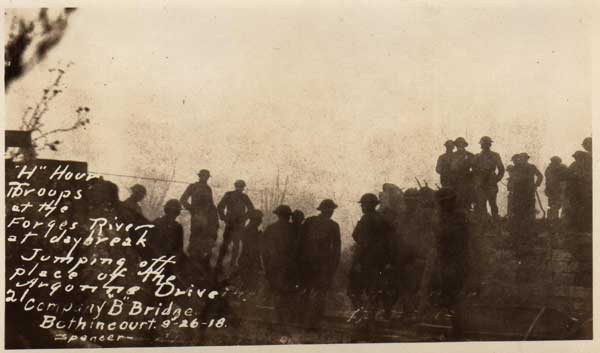
The first test under combat conditions took place on October 26, 1918, as two companies of the 2nd Battalion performed a “delicate” withdrawal from Chufilly to Chardeny, in the Champagne sector. A captured German officer later confirmed the Choctaw code to have been a complete success. We were “completely confused by the Indian language”, he said, “and gained no benefit whatsoever” from wiretaps.

Choctaw soldiers were placed in multiple companies of infantry. Messages were transmitted via telephone, radio and by runner, many of whom were themselves native Americans.

As in the next war, Choctaw would improvise when their language lacked the proper word or phrase. When describing artillery, they used the words for “big gun”. Machine guns were “little gun shoot fast”.
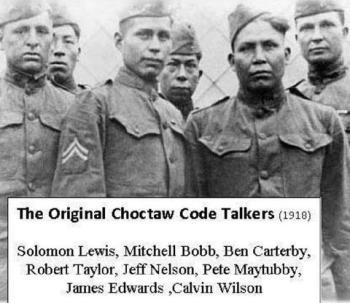
Choctaw code talkersThe Choctaw themselves didn’t use the term “Code Talker”, that wouldn’t come along until WWII. At least one member of the group, Tobias W. Frazier, simply described what they did as, “talking on the radio”.  Of the 19 who served in WWI, 18 were native Choctaw from southeast Oklahoma. The last was a native Chickasaw. The youngest was Benjamin Franklin Colbert, Jr., the son of Benjamin Colbert Sr., one of Teddy Roosevelt’s “Rough Riders” of the Spanish American War. Born September 15, 1900 in the Durant Indian Territory, he was all of sixteen, the day he enlisted.

Another was Choctaw Joseph Oklahombi, whose name means “man killer” in the Choctaw language. Six days before Sergeant York’s famous capture of 132 Germans in the Argonne Forest, Joseph Oklahombi charged a strongly held German position, single-handed. Oklahombi‘s Croix de Guerre citation, personally awarded him by Marshall Petain, tells the story:

“Under a violent barrage, [Pvt. Oklahombi] dashed to the attack of an enemy position, covering about 210 yards through barbed-wire entanglements. He rushed on machine-gun nests, capturing 171 prisoners. He stormed a strongly held position containing more than 50 machine guns, and a number of trench mortars. Turned the captured guns on the enemy, and held the position for four days, in spite of a constant barrage of large projectiles and of gas shells. Crossed no man’s land many times to get information concerning the enemy, and to assist his wounded comrades”.

Unconfirmed eyewitness accounts report that 250 Germans occupied the position, and that Oklahombi killed 79 of them before their comrades decided it was wiser to surrender. Some guys are not to be trifled with.
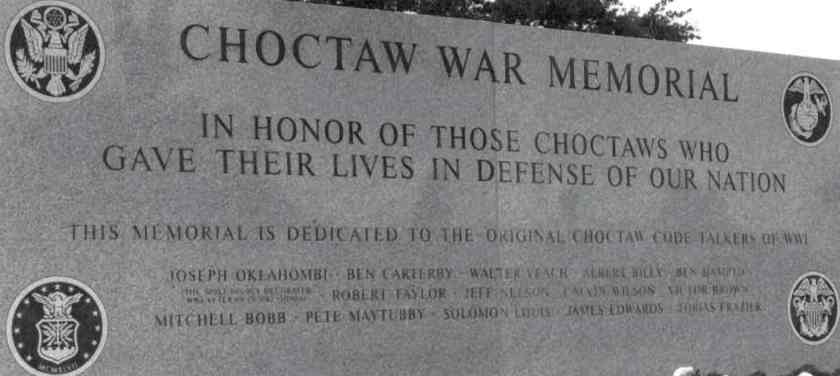
choctawwarmemorial

October 22, 1914 Massacre of the Innocents

A million men had been brought to this place, for the purpose of killing each other.     The first Battle for Ypres, (there would be others), was the greatest clash in history, or one of them, bringing together more manpower and more firepower than entire wars of the previous century.

“Sitzkrieg”. “Phony War”. Those were the terms used to describe the September 1939 to May 1940 period, when neither side of what was to become World War 2, was yet prepared to launch a major ground war against the other.

The outbreak of “The Great War” twenty-five years earlier, was a different story. Had you been alive in August of 1914, you could have witnessed what might be described as the simultaneous detonation, of a continent.  France alone suffered 140,000 casualties over the four day “Battle of the Frontiers”, where the River Sambre met the Meuse.  27,000 Frenchmen died in a single day, August 22, in the forests of the Ardennes and Charleroi.

Battle-of-the-Frontiers-1914-7
Battle of the Frontiers, 1914

The British Expeditionary Force escaped annihilation on August 22-23, only by the intervention of mythic angels, at a place called Mons.  In the East, a Russian army under General Alexander Samsonov was encircled and so thoroughly shattered at Tannenberg, that German machine gunners were driven to insanity at the damage inflicted by their own guns, on the milling and helpless masses of Russian soldiers.  Only 10,000 of the original 150,000 escaped death, destruction or capture.  Samsonov himself walked into the woods, and shot himself.

The “Race to the Sea” of mid-September to late October was more a series of leapfrog movements and running combat, in which the adversaries tried to outflank one another.  This would be some of the last major movement of the Great War, ending in the apocalypse of Ypres.

When governments make war, It’s the everyday John and the Nigel down the street, the Fritz, the Ivan and the Pierre next door, who must do the fighting, and the bleeding, and the dying.

The battle for the medieval textile town of Leper, most of the battle maps were drawn in French and so we know the place as “Ypres”, began on October 20 and lasted about three weeks, pitting a massive German force of some 600,000 against a quarter-million French, 100,000 British, and 65,000 Belgians.

flanders_october_20-24

A million men had been brought to this place, for the purpose of killing each other.     The first Battle for Ypres, (there would be others), was the greatest clash in history, or one of them, bringing together more manpower and more firepower than entire wars of the previous century. The losses are hard to get your head around. The British Expeditionary Force (BEF) alone suffered 56,000 casualties, including 8,000 killed, 30,000 maimed and another 18,000 missing, of whom roughly one-third, were dead.

The breakdown is harder to get at for the other combatants but, all in, Germany suffered 135,000 casualties, France 85,000 and Belgium, 22,000. Assuming the same percentage distribution of killed, wounded and missing, the three week struggle for Ypres cost the lives of 75,000 men, enough to fill the Athens Olympic Stadium, in Greece.

A story comes down from the fighting of October 22, destined to become German and later Nazi, mythology.  French, British and Belgian troops were by this time, digging into the ground to shelter themselves from what Private Ernst Jünger later called the “Storm of Steel”.   German Generals, desperate to break through the Allied line and capture Calais and the other French ports on the English Channel, attacked.

German reserve divisions comprised of student volunteers:  inexperienced, untrained college students fired with patriotic zeal and singing songs of the Fatherland, marched to the attack against a puny British force, dug into shallow holes around the village of Langemarck.  What the BEF lacked this day in numbers, were more than made up, in firepower. Let William Robinson, a volunteer dispatch driver with the British Army, describe what came to be known as the “Kindermord bei Ypern”  The Massacre of the Innocents at Ypres.

“The enemy seemed to rise out of the ground and sweep towards us like a great tidal wave, but our machine guns poured steel into them at the rate of six hundred shots per minute, and they’d go down like grass before the scythe… The Germans were climbing over heaps of their own dead, only to meet the same fate themselves.”

Overwhelming German numbers succeeded in forcing the British back and capturing Langemarck on October 22, but the cost was appalling.  Some regiments lost 70% of their strength.

5393774889_6b9037d2a6_bDoubt has been cast on the “Myth of Langemarck”, and the tragic bravery of idealistic German boys, happily defending the Fatherland.  The numbers of dead and maimed are real enough, but most reservists were in fact comprised of older working class men, not the fresh-faced youth, of the Kindermord.  Be that as it may, a story must be told.  Excuses must be made to the home team, for the crushing failure of the War of Movement, and the four-year war of attrition, to follow.

Two short months later, some of these same men would step out of their trenches and across the frozen fields of Flanders, to shake the hand of the man he’d been sent there, to kill.  The unofficial “Christmas Truce” of 1914 would last a day or two in some sectors and a week or two in others.  And then it was back, to the business at hand.  For Four. More. Years.

Christmas Truce

The Man He Killed
BY THOMAS HARDY

“Had he and I but met
By some old ancient inn,
We should have sat us down to wet
Right many a nipperkin!
“But ranged as infantry,
And staring face to face,
I shot at him as he at me,
And killed him in his place.
“I shot him dead because —
Because he was my foe,
Just so: my foe of course he was;
That’s clear enough; although
“He thought he’d ‘list, perhaps,
Off-hand like — just as I —
Was out of work — had sold his traps —
No other reason why.
“Yes; quaint and curious war is!
You shoot a fellow down
You’d treat if met where any bar is,
Or help to half-a-crown.”

October 15, 1917 Mata Hari

Historians differ whether she passed on intelligence or merely gossip, a courtesan and middle-aged debutante, and convenient excuse for French failures in the face of the German war machine. 

mata-daughterMargaretha Geertruida Zelle, “M’greet” to family and friends, was born in the Netherlands on August 7, 1876, the eldest of four children.
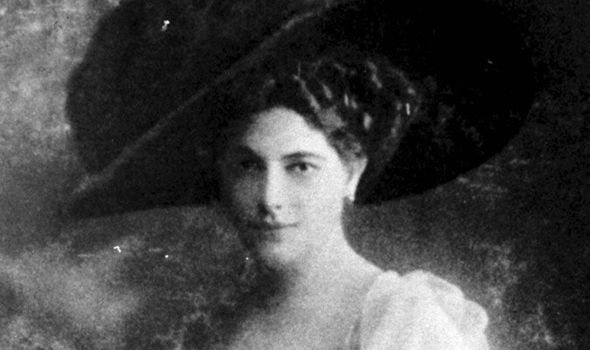
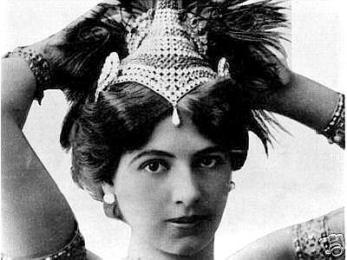
Adam Zelle, Margaretha’s father, was once a prosperous hat merchant.  By 1891, a series of bad investments had cost him his fortune.  He left the family, never to return.  Mother Antje Zelle, died.  Margaretha and her three brothers were broken up, and sent to live with relatives.  She was fifteen.

As a young woman, Margaretha answered a newspaper ad placed by Dutch Colonial Army Captain Rudolf MacLeod, then stationed in the Dutch East Indies, in modern day Indonesia.

Becoming a “mail order bride” must have seemed like the way to financial security.  Strikingly beautiful with raven hair and olive skin, she sent him a photograph, of herself.  Despite a twenty-one year age difference, the couple was wed on July 11, 1895.  She was not yet nineteen.

The marriage produced a daughter, and a son.  MacLeod was a drunk and frequently flew into rages, over the attentions his young wife received from other officers.  The boy was killed in 1899, poisoned by a household worker for reasons which remain unclear.  The marriage was dead by the early 1900s and MacLeod fled, taking the couple’s daughter with him.  The divorce became final, in 1905.

mata_hari-469562

Zelle-MacLeod moved to Paris becoming mistress to a French diplomat, who encouraged her to support herself, as an exotic dancer.  She took the name: “Mata Hari”, Indonesian for “sun” (literally, “eye of the day”), in Sanskrit.

mata-hari2All things “Oriental” were all the rage in early 1900s Paris.  Mata Hari played the more exotic aspects of her background to the hilt, projecting a bold and in-your-face sexuality that was unique and provocative for her time.
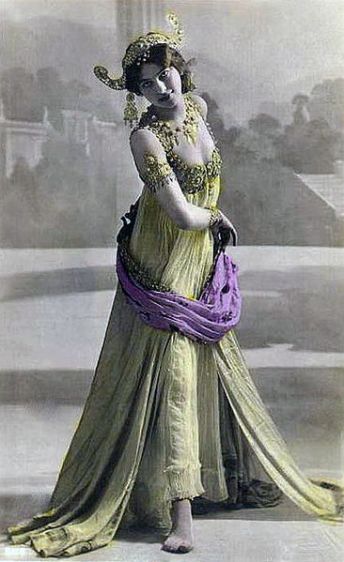
She claimed to be a Java princess of priestly Hindu birth, immersed since childhood in the sacred art of Indian dance.

One Vienna reporter described Mata Hari as “slender and tall with the flexible grace of a wild animal, and with blue-black hair.” Her face, he wrote, “makes a strange foreign impression.” Another writer described her performance as “so feline, extremely feminine, majestically tragic, the thousand curves and movements of her body trembling in a thousand rhythms.”

Carefree and thoroughly uninhibited, Mata Hari was photographed in the nude or the next thing to it on many occasions, becoming the long-time mistress of the millionaire Lyon industrialist Émile Étienne Guimet.

Mata_Hari_postcardThe world stood still at the beginning of World War I, but not Mata Hari.  Her dancing days were over by 1914, but her neutral Dutch citizenship allowed her to move about without restriction.  But not without a price. Mata Hari’s sexual conquests knew no border, naively including officers and government officials of every nationality, and both sides of the Great War.

Rumors of espionage followed and she was taken to Scotland Yard for interrogation in 1916, but later released.

That year, Mata Hari accepted a lucrative assignment to spy for France, from army captain Georges Ladoux.

She would seduce her way into the German High Command but the Germans suspected as much and set her up, releasing a cable labeling Mata Hari, as a German double agent.

She was arrested again on February 13, 1917, in her room at the Hotel Elysee Palace, in what is now the banking giant HSBC’s French headquarters. She was kept in a rat infested prison as the case was prepared against her, all the while writing to the Dutch Consul in Paris, proclaiming her innocence. “My international connections are due to my work as a dancer, nothing else”, she wrote. “I really did not spy, it is terrible that I cannot defend myself”.

In a bombshell confession which probably sealed her fate, Mata Hari admitted during interrogations by Captain Pierre Bouchardon, that a German diplomat had paid her 20,000 francs.  She said the money meant nothing, that she saw it as compensation for furs and other clothing lost on a train, while she was being hassled by German border guards.  “A courtesan, I admit it. A spy, never!” she insisted. “I have always lived for love and pleasure.”

matahariMata Hari’s elderly defense attorney and former lover Edouard Clunet, never really had a chance. He couldn’t cross examine the prosecution’s witnesses, or even directly question his own.
The trial took place during a string of French military defeats.  Spies both real and imagined, were convenient scapegoats.  By some accounts, Captain Ladoux even tampered with evidence, to put her case in the worst possible light.

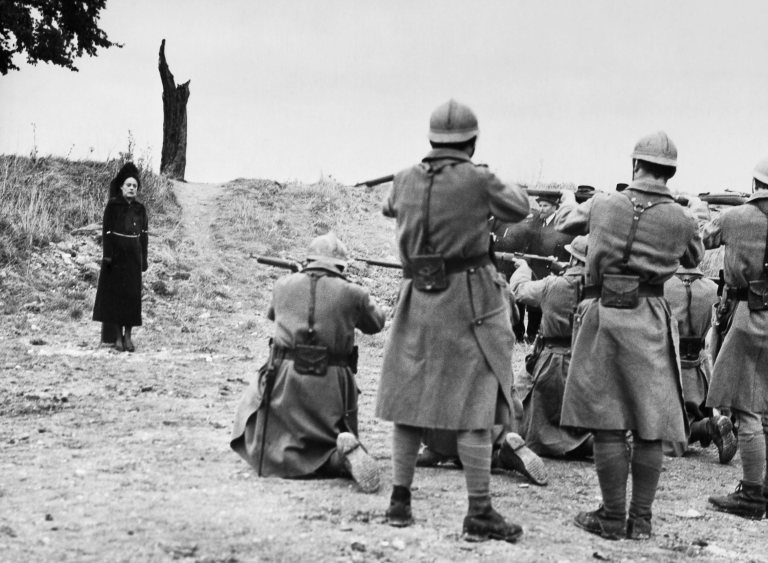
The conviction was a foregone conclusion. The military tribunal took forty-five minutes to reach a verdict of guilty.  Margaretha Geertruida Zelle was executed by firing squad on October 15, 1917.  Legend has it, that she blew them a kiss.  She was 41.

British reporter Henry Wales described the execution, based on an eyewitness account:

“Unbound and refusing a blindfold, Mata Hari stood alone to face her firing squad.  After the shots rang out, Wales reported that “Slowly, inertly, she settled to her knees, her head up always, and without the slightest change of expression on her face. For the fraction of a second it seemed she tottered there, on her knees, gazing directly at those who had taken her life. Then she fell backward, bending at the waist, with her legs doubled up beneath her.” An NCO walked up to her body, pulled out his revolver, and shot her in the head to make sure she was dead”.

MataHari

German documents unsealed in the 1970s hint that Mata Hari may have been a German spy, but many disagree with that conclusion.  Historians differ whether she passed on intelligence or merely gossip, a courtesan and middle-aged debutante, and convenient excuse for French failures in the face of the German war machine.  The whole truth may never be known but, the real-life exotic dancer who later became a lethal double agent, is a story that’s hard to resist.

If you enjoyed this “Today in History”, please feel free to re-blog, “like” & share on social media, so that others may find and enjoy it as well. Please click the “follow” button on the right, to receive email updates on new articles.  Thank you for your interest, in the history we all share.

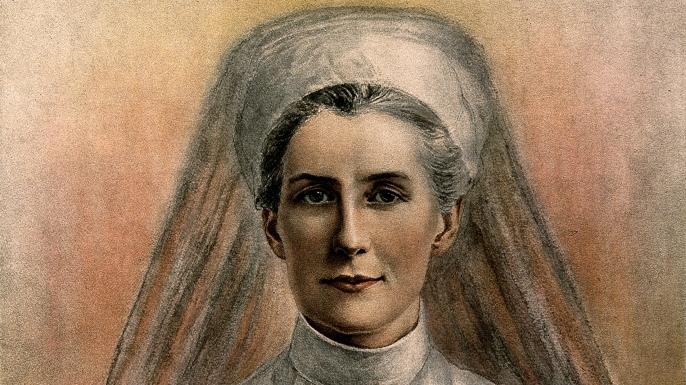
October 11, 1915 The Execution of Edith Cavell

“Standing as I do in view of God and Eternity, I realise that patriotism is not enough, I must have no hatred or bitterness towards anyone”. – Edith Cavell, October 11, 1915

ec1
The Cavell vicarage in Swardeston is now a private home

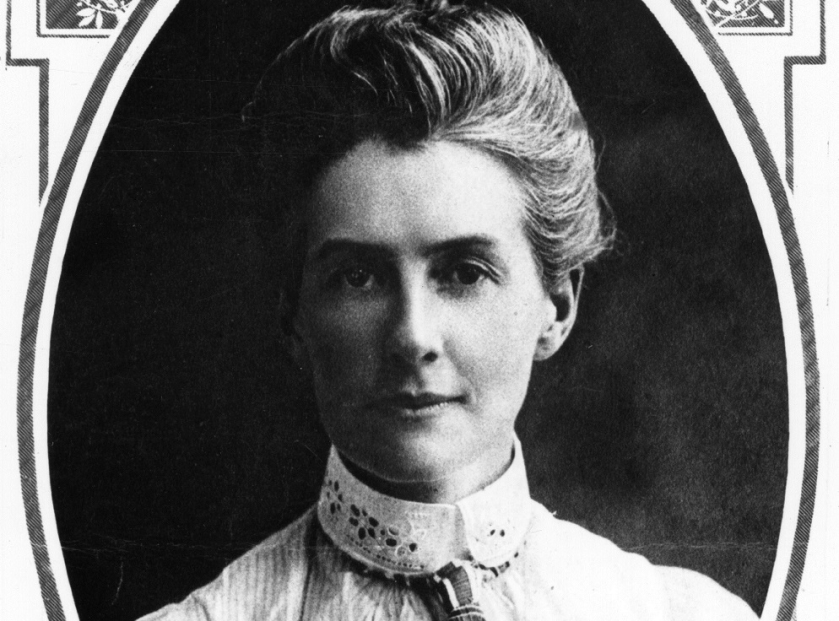
As a little girl growing up in Swardeston, Norfolk, Edith Cavell was no saint.  Nor was she a “bad girl “.  Just a normal kid, growing up in Victorian England.   The daughter of a Vicar of the Church of England, she thought her father’s sermons were ‘boring’. Even so, she would hold her Christian faith until the day she died.

Reverend Frederick Cavell was something of a Puritan and nearly ruined the family finances, building the vicarage with his own money.  Yet, this was no crabbed and dour man of the cloth.  He was easily tempted into roaring like a bear and chasing the three Cavell sisters and their brother about the house, to squeals of children’s laughter.

ec3
Chalk drawing by Edith Cavell

A gifted artist, Edith loved to paint and draw, the birds, flowers and even fellow villagers, frequent subjects. She and her sister once painted and sold cards to finance a new room in their father’s Sunday school, raising the impressive sum of £300.

As a young woman, she once danced until her feet bled, and destroyed a new pair of shoes, in the process.

Edith worked a number of jobs as governess, including one in Brussels, Belgium.  The children under her care remembered her as wonderfully kind and always smiling, and great fun to be with.

On Summer breaks she’d return to Swardeston, where she loved to play tennis, and to paint.  It was there that she cared for her father in 1895, nursing the parson through a brief illness.  Reverend Cavell recovered, but the experience convinced Edith, she was cut out for a career in nursing.

ecdepage
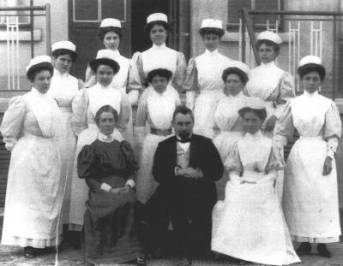
Edith Cavell with Dr. LePage at the Berkendael Institute

Following training at Royal London Hospital, Edith worked a number of positions, rising through the ranks and becoming matron of Queen’s District Nursing Homes, in 1906. The following year, Edith returned to Brussels at the request of Dr. Antoine Depage, to nurse a child patient under his care. That October, Depage opened the nursing school ‘L’École Belge d’Infirmières Diplômées’ based in his Berkendael Institute, and asked Edith to run it.

In 1913, Cavell’s educational program was producing exceptionally qualified professional nurses, providing for the staffing needs of three hospitals, 24 communal schools and 13 kindergartens. When Queen Elizabeth of Belgium fell and broke her arm, one of Edith’s nurses was personally requested, to provide her care.

On top of it all. she was still giving four lectures a week to doctors and nurses, and still finding time to care for a friend’s daughter who was addicted to morphine, providing for a runaway girl, and for her two dogs, Don and Jack.

Nurse_Edith_Cavell_1865-1915_Q32930

In June 1914, a tubercular nineteen-year-old named Gavrilo Princip murdered the heir-apparent to the dual monarchy of the Austro-Hungarian Empire, in Sarajevo. As diplomats bungled their way through the “July Crisis” of 1914, Edith returned to Norfolk, to visit with her now widowed mother. She was pulling weeds from the garden on August 1, when she learned that Austro-Hungarian troops had invaded Serbia.

Entangling alliances and mutual distrust drew a continent into war in the days that followed, as Edith returned to Brussels, feeling her nursing skills were now needed, more than ever.

ec5
Edith Cavell with some of her nurses, in Belgium

German soldiers invaded and occupied Brussels later that August, and the wounded came pouring into Edith’s clinic.  The International Red Cross took over the hospital at this time, the neutral organization established to care for the wounded of all nationalities.  Medical personnel were strictly forbidden from taking sides.  Edith cared for all who needed her services, regardless of uniform or nationality.

The German violation of Belgian neutrality was an outrageous provocation, the single cause for which England entered the war.  German troops were afraid of Belgian guerrilla fighters, the francs-tireurs, believing them to be every bit as dangerous, as the French soldiers they were fighting. Allied propaganda magnified tales of German brutality into the “Rape of Belgium”, but such atrocities against civilians were very real, particularly in places like Liège, Andenne, Leuven and foremost, Dinant.

The Battle of Mons of August 23 was a crushing defeat for the badly outnumbered British Expeditionary Force (BEF), the first such confrontation on European soil since the Battle of Waterloo, in 1815. Hundreds of British and allied soldiers were cut off and stranded, behind enemy lines. Word got back to the Red Cross hospital about allied soldiers being shot by German troops, while locals took others into their homes to hide them from harm.

800px-British_Empire_Union_WWI_poster

That September, Edith took in two British soldiers, hiding them for two weeks in her clinic.  She was later asked to join an underground organization, dedicated to hiding these stranded soldiers and spiriting them across borders into neutral territories.  Despite the danger to herself, she agreed.  She was now in violation of the law.

For the rest of 1914 until the following September, Edith hid 200 stranded soldiers at the Berkendael Institute, while architect Philippe Baucq secretly organized their evacuation to neutral Holland.

Edith Cavell

Now enters this story, a name which must be remembered with the likes of Judas Iscariot,  Ephialtes of Trachis and Vidkun Quisling, as Traitor.  Five years later, Georges Gaston Quien would be tried and convicted by Parisian authorities of collaborating with the enemy, and put to death.  Quien had betrayed Edith Cavell’s organization, to German secret police.

Baucq was arrested on July 31, 1915, with another member of the escape-route team.  Letters found in their possession incriminated Edith Cavell and she was arrested, on August 5.  German interrogators tricked her into confession, claiming that they knew everything, already.  The best thing she could do, was save her friends.  Confess.

She was placed in solitary confinement for the rest of that month, and tried for treason, in early October.  At trial, Edith freely confessed to helping allied soldiers escape German occupied territory.

ec6

Edith Cavell’s Brussels cell

Edith Cavell was convicted of treason on October 11, 1915, along with Philippe Baucq, and three others. The sentence was death. Neutral governments in the United States and Spain protested, and attempted to get the sentence reduced. Such efforts came to nothing.

The English chaplain Stirling Gahan visited her cell on the last day of her life, and found her calm, as she received the Sacrament.  “I am thankful to have had these 10 weeks of quiet to get ready”.  she told him.  “Now I have had them and have been kindly treated here. I expected my sentence and I believe it was just. Standing as I do in view of God and Eternity, I realise that patriotism is not enough, I must have no hatred or bitterness towards anyone”. 

Her final words were as worthy, as those of that hero of the American Revolution, Nathan Hale, who regretted only that he had but one life to give for his country.  In the last moments of her life, she calmly spoke to the German Lutheran prison chaplain, Paul Le Seur.  “Ask Father Gahan to tell my loved ones later on that my soul, as I believe, is safe, and that I am glad to die for my country.”

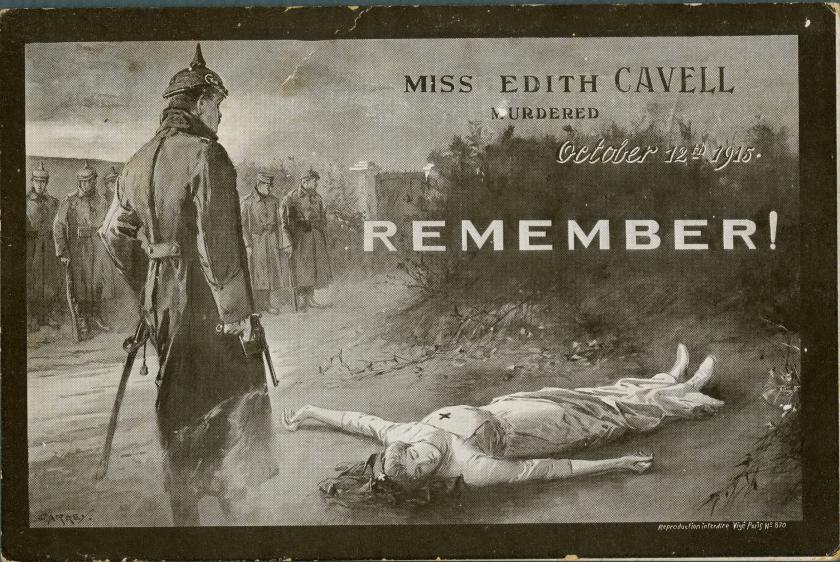
Edith Louisa Cavell was executed by firing squad at 2:00am on October 12, at the Tir National shooting range, in Schaerbeek.  She was forty-nine.

e-19960034-008

Hat tip to www.edithcavell.org.uk, from which I have learned much of this story, and drawn many of these images.

If you enjoyed this “Today in History”, please feel free to re-blog, “like” & share on social media, so that others may find and enjoy it as well. Please click the “follow” button on the right, to receive email updates on new articles.  Thank you for your interest, in the history we all share.

October 4, 1918 First Division Rags

The Big Red One marched down Broadway in 1928, part of the First Division’s 10th anniversary WW1 reunion.  The French street dog who had lost an eye in their service, in the lead.

Private James Donovan was AWOL. He had overstayed his leave in the French town of Montremere, and the ‘Great War’, awaited.

When the MPs found him, Donovan knew he had to think fast. He reached down and grabbed a stray dog, explaining to the two policemen that he was part of a search party, sent out to find the Division Mascot.

rags-figure13-jpg

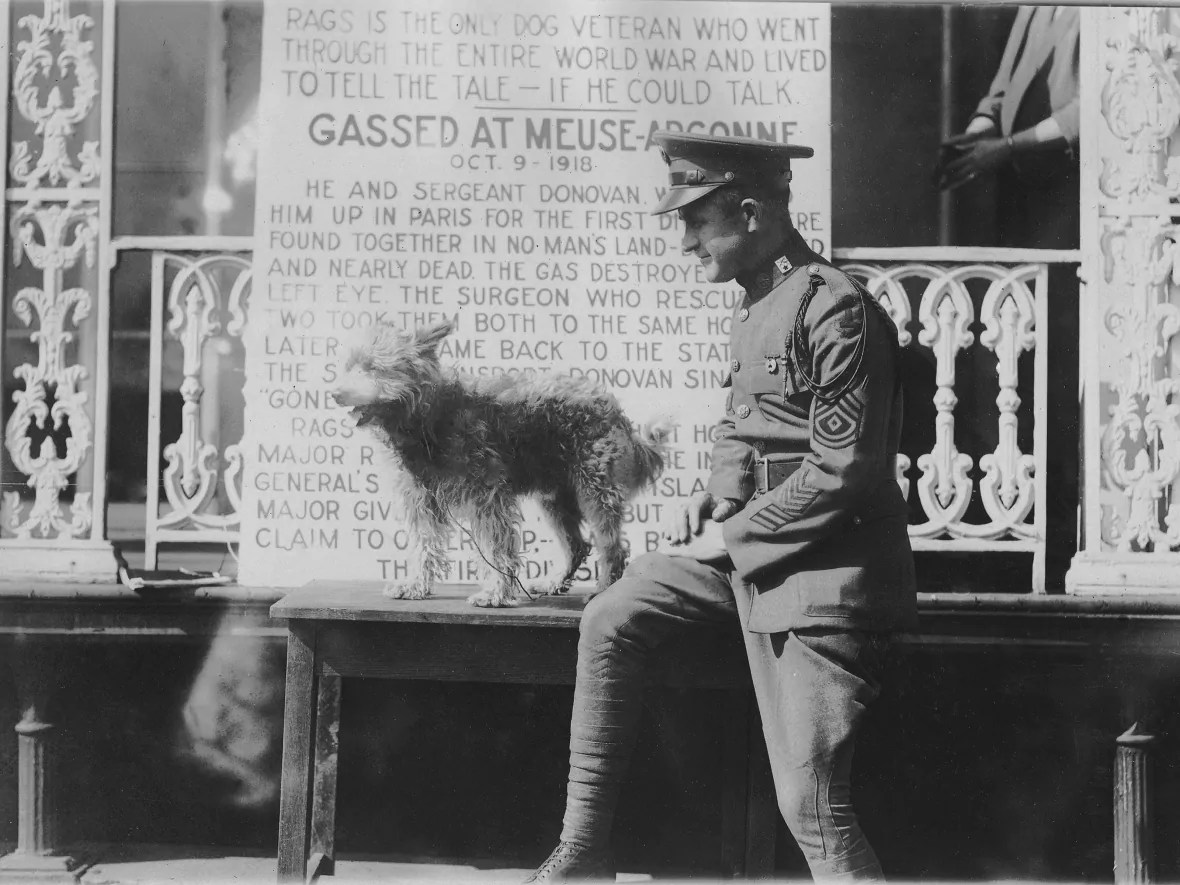
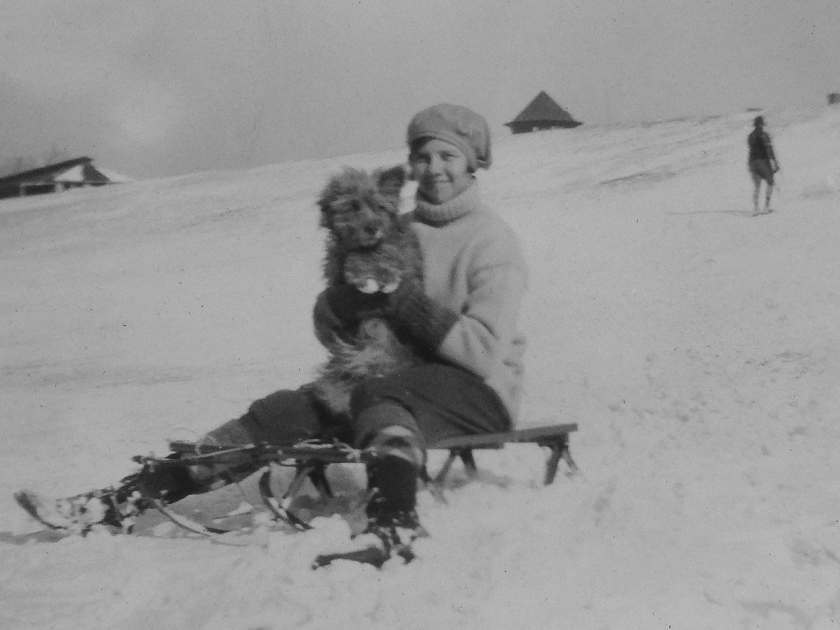
It was a small dog, possibly a Cairn Terrier mix, about twenty-five pounds. He looked like a pile of rags, and that’s what they called him. The dog had gotten Donovan out of a jam, now he would become the division mascot, for real. Rags was now part of the US 1st Infantry Division, the Big Red One.

Instead of “shaking hands”, Donovan taught the dog a sort of doggie “salute”. Rags would appear at the flag pole for Retreat for years after the war, lifting his paw and holding it by his head. Every time the flag was lowered and the bugle played, there was that small terrier, saluting with the assembled troops.

The dog learned to imitate the men around him, who would drop to the ground and hug it tightly during artillery barrages. He would hug the ground with his paws spread out, soon the doughboys noticed him doing it before any of them knew they were under fire. Rags’ acute and sensitive hearing became an early warning system, telling them that shells were incoming, well before anyone heard them.

rags-the-dog

Rags was disdainful of doggie tricks, he was more interested in Doing something.  In the hell of life in the trenches, barbed wire was often all that stood between safety and enemy attack.  Wire emplacements were frequent targets for bombardment, and a break in the wire represented a potentially lethal weak point in the lines.  Somehow, Rags could find these breaks in the wire, and often led men into the darkness, to effect repairs.

Thousands of dogs, horses and pigeons were “enlisted” in the first world war, with a number of tasks.  The French trained specialized “chiens sanitaire” to seek out the dead and wounded, and bring back small bits of uniform so that aid could be delivered, or the body recovered.  Somehow, Rags figured this job out, for himself.  Once he found a dead runner, and recovered the note the man had died, trying to deliver.  Not only was his body found, but that note enabled the rescue of an officer, cut off and surrounded by Germans.

rags-figure18-jpg

Donovan’s job was hazardous. He was out on the front lines, stringing communications wire between advancing infantry and supporting field artillery. Runners were used to carry messages until the wire was laid, but these were frequently wounded, killed or they couldn’t get through the shell holes and barbed wire.

Donovan trained Rags to carry messages attached to his collar. On this day in 1918, British and French forces were engaged in heavy fighting from St. Quentin to Cambrai. French and Americans in the Champagne region advanced as far as the Arnes, as the American attack ground on, west of the River Meuse. Around this time, Rags was given a message from the 26th Infantry Regiment for the 7th Field Artillery. The small dog completing his mission, resulting in an artillery barrage and leading to the capture of the Very-Epinonville Road.

An important objective had been taken, with minimal loss of life to the American side.

rags-figure19-jpg

The terrier’s greatest trial came five days later, during the Meuse-Argonne Campaign. The small dog ran through falling bombs and poison gas to deliver his message. Gassed and partially blinded, shell splinters damaged his right paw, eye and ear. Rags survived and, so far as I know, got his message where it needed to be.

Rags survived the deadliest battle in American military history, with the loss of an eye.  Now-Sergeant James Donovan, wasn’t so lucky.  He was severely gassed and the two were brought to the rear. If anyone asked about expending medical care on a dog, they were told that it was “orders from headquarters”.

18-03-23-thumb

Rags recovered quickly, but Donovan did not.  He was transferred to the hospital ship in Brest, as Rags was forced to look on, from the docks.  Animals were thought to carry disease and were strictly forbidden from hospital ships.  Those animals who were smuggled on board, were typically chloroformed and thrown overboard.

Nevertheless, Rags was smuggled on board to be with his “Battle Buddy”.  How many entered into the conspiracy of silence in his defense, can never be known.

The pair made it back to United States, and to the Fort Sheridan base hospital near Chicago, where medical staff specialized in gas cases. It was here that Rags was given a collar and tag, identifying him as “1st Division Rags”.  Donovan died of his injuries, in early 1919.  Rags moved into the base fire house becoming “post dog”, until being adopted by Major Raymond W. Hardenbergh, his wife and two daughters, in 1920.

rags-the-dog, sledding

The Big Red One marched down Broadway in 1928, part of the First Division’s 10th anniversary WW1 reunion.  The French street dog who had lost an eye in their service, in the lead.

Rags lived out the last of his years in Maryland. A long life it was, too, the dog lived until 1934, remaining with the 1st Infantry Division, for all his 20 years.  On March 22, 1934, the 16-paragraph obituary in the New York Times began: “Rags, Dog Veteran of War, Is Dead at 20; Terrier That Lost Eye in Service is Honored.”

Canadian writer Grant Hayter-Menzies has written a book about 1st Division Rags, from which I have drawn some of these details. The book is entitled From Stray Dog to World War I Hero: The Paris Terrier Who Joined the First Division.  Eleven-minute audio from a fascinating CBC interview, may be found HERE.

Hat tip to the Canadian Broadcasting Corporation, from whose website I have drawn most of these images.

If you enjoyed this “Today in History”, please feel free to re-blog, “like” & share on social media, so that others may find and enjoy it as well. Please click the “follow” button on the right, to receive email updates on new articles.  Thank you for your interest, in the history we all share.

October 2, 1918 Lost Battalion

Lieutenant James Leak compared those six days lost in the Ardennes with the 1836 siege of the Alamo, and the legendary 300, at Thermopylae.

The Argonne Forest is a long strip of wild woodland and stony mountainside in northeastern France, a hunting preserve since the earliest days of the Bourbon Kings.  For most of WWI, the Argonne remained behind German lines.  On October 2, 1918, nine companies of the US 77th “Metropolitan Division” came to take part of it back.

whittlesey
Major Charles White Whittlesey

Their objective was the Charlevaux ravine and a road & railroad on the other side, cutting off German communications in the sector.  As heavy fighting drew to a close on the first day, the men found a way up hill 198 and began to dig in for the night.

Major Charles White Whittlesey, commanding, thought that things were too quiet that first night.  Orders called for them to be supported by two American units on their right and a French force on their left/  That night, the voices drifting in from the darkness, were speaking German.

They had come up against a heavily defended double trench line and, unknown at the time, allied forces to their left and right had been cut off and stalled. The Metropolitan Division was alone, and surrounded.

The fighting was near constant on day two, with no chance of getting a runner through.   Whittlesey dispatched a message by carrier pigeon, “Many wounded. We cannot evacuate.”  The last thing that German forces wanted was for an enemy messenger to get through, and the bird went down in a hail of German bullets.

cher-ami
Cher Ami

Whittlesey grabbed another pigeon and wrote “Men are suffering.  Can support be sent?”/  That second bird would be shot down as well.

On day three, the “lost battalion” came under fire from its own artillery.  Whittlesey grabbed his third and last carrier pigeon, “Cher Ami”, and frantically wrote out his message.

German gunfire exploded from the high ridges above them as this bird, too, fluttered to the ground.  Soon she was up again, flying out of sight despite the hail of bullets.  She arrived in her coop 65 minutes later, shot through the breast and blind in one eye.  The message, hanging by a single tendon from a leg all but shot off, read:  “WE ARE ALONG THE ROAD PARALELL 276.4. OUR ARTILLERY IS DROPPING A BARRAGE DIRECTLY ON US. FOR HEAVENS SAKE STOP IT”.

Drops of food and supplies were attempted from the air, but they all ended up in German hands.

the_lost_battalion_1919_-_1

By October 7, food and ammunition were running out.  554 had entered the Ardennes five days earlier, now fifty per cent were either dead, or wounded.  Water was available from a nearby stream, but only at the cost of exposure to German fire.  Bandages had to be removed from the dead in order to treat the wounded. Medicine was completely out and men were falling ill.  Even so, survivors continued to fight off German attacks from all sides.

Out of the forest emerged a blindfolded American prisoner, carrying a white flag.  He’d been sent with a message, from the German commander:

The suffering of your wounded men can be heard over here in the German lines, and we are appealing to your humane sentiments to stop. A white flag shown by one of your men will tell us that you agree with these conditions. Please treat Private Lowell R. Hollingshead [the bearer] as an honorable man. He is quite a soldier. We envy you. The German commanding officer.

Though he later denied it, Whittlesey’s response was remembered as “You go to hell!”.  White sheets placed to help allied aircraft find their position were pulled in, lest they be mistaken for flags of surrender.  The meaning was unmistakable.  When they were finally relieved the following day, only 194 were fit to walk out on their own.
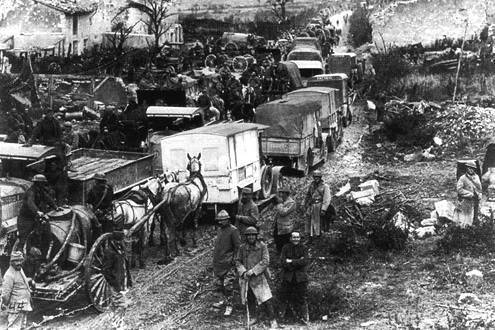
The Meuse-Argonne offensive of which it was part would last forty seven days, and account for the greatest single-battle loss of life, in American military history.

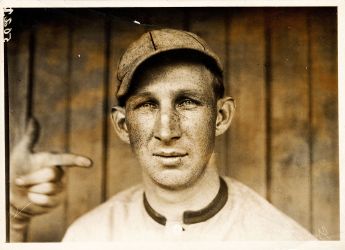
Edward Leslie Grant attended Dean Academy in his home town of Franklin, Massachusetts, and later graduated from Harvard University.  “Harvard” Eddie Grant became a Major League ballplayer, playing utility infielder for the Cleveland Indians as early as 1905.

1920px-_Harvard__Eddie_Grant,_Cincinnati_Reds_third_baseman,_by_Paul_Thompson,_1911
“Harvard Eddie” Grant

Grant delighted in aggravating his fellow infielders, calling the ball with the grammatically correct “I have it”, instead of the customary “I got it”.

Grant played for the Philadelphia Phillies and the Cincinnati Reds, before retiring from the New York Giants and opening a Law Office in Boston. He was one of the first men to enlist when the US entered WWI in 1917, becoming a Captain in the 77th Infantry Division, A.E.F.
Sixty former ballplayers were killed during the Great War, including nine former Major League players, twenty-six minor players, three negro leaguers and a number who played college, semi-pro and amateur. Another four played in the Australian League. Harvard Eddie Grant was killed leading a search for the Lost Battalion on October 5, the first Major League ball player to be killed in the Great War.

Eddie Grant was honored on Memorial Day, 1921, as representatives of the US Armed Forces and Major League Baseball joined with his sisters to unveil a plaque in center field at the Polo Grounds. From that day until the park closed in 1957, a wreath was solemnly placed at the foot of that plaque after the first game of every double header.  He is memorialized by the Edward L. Grant Highway in The Bronx, and by Grant Field at Dean College in Franklin, Massachusetts.

lost-battalion

Major Whittlesey, Captain George McMurtry, and Captain Nelson Holderman all received the Medal of Honor for their actions atop hill 198.  Whittlesey was further honored as a pallbearer at the interment ceremony for the Unknown Soldier, but his experience weighed heavily on him.

In what is believed to have been a suicide, Charles White Whittlesey disappeared from the SS Toloa bound for Havana in 1921, leaving instructions in his stateroom as to what to do with his bags.  Whittlesey’s cenotaph is located at Pittsfield Cemetery in his home town of Pittsfield, Massachusetts.  It is an ‘IMO’ marker (In Memory Only).  His body was never found.

In prepared remarks before a gathering at Abilene Christian College in 1938, Lieutenant James Leak compared those six days lost in the Ardennes with the 1836 siege of the Alamo, and the legendary 300, at Thermopylae.   “[T]he “Lost Battalion””, he said, “is entirely a misnomer…it was not “Lost”. We knew exactly where we were, and went to the exact position to which we had been ordered“.

1200px-LostBattalionMonument
Monument to the Lost Battalion
If you enjoyed this “Today in History”, please feel free to re-blog, “like” & share on social media, so that others may find and enjoy it as well. Please click the “follow” button on the right, to receive email updates on new articles.  Thank you for your interest, in the history we all share.

September 30, 1918 Gold Star Mother’s Day

They are so few, who pick up this heaviest of tabs on behalf of the rest of us.

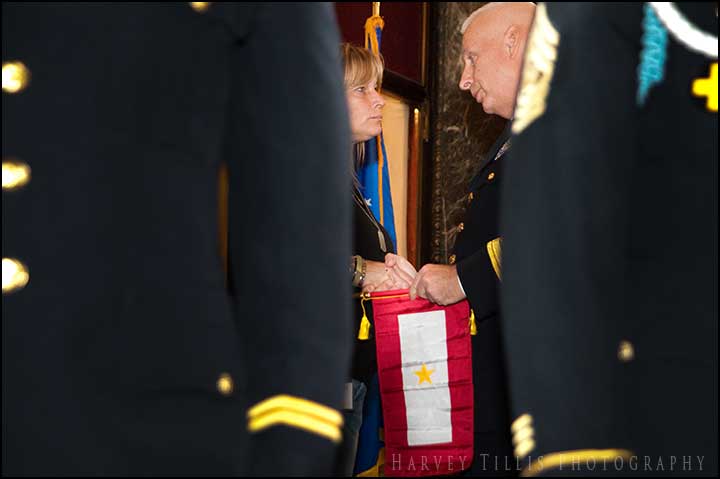
Today, Sunday, September 30, 2018, is Gold Star Mother’s Day.  I wish to dedicate this “Today in History”, to those women who have made the greatest sacrifice a mother can make, in service to the nation.  The rest of us owe them a debt which can never be repaid.

Suppose you were to stop 100 randomly selected individuals on the street, and ask them:  “Of all the conflicts in American military history, which single battle accounts for the greatest loss of life“.  I suppose you’d get a few Gettysburgs in there, and maybe an Antietam or two.  The Battle of the Bulge would come up, for sure, and there’s bound to be a Tarawa or an Iwo Jima.  Maybe a Normandy.  I wonder how many would answer, Meuse-Argonne.

80th-Div-No3

The United States was a relative late-comer to the Great War, entering the conflict in April 1917, when President Woodrow Wilson asked permission of the Congress, for a “War to end all wars”.  American troop levels “over there” remained small throughout the rest of 1917, as the formerly neutral nation of  fifty million ramped up to a war footing.

US_Marines_during_the_Meuse-Argonne_Campaign
US Marines during Meuse-Argonne offensive of 1918

The trickle turned to a flood in 1918, as French ports were expanded to handle their numbers.  The American Merchant Marine was insufficient to handle the influx, and received help from French and British vessels.  By August, every one of what was then forty-eight states had sent armed forces, amounting to nearly 1½ million American troops in France.

After four years of unrelenting war, French and British manpower was staggered and the two economies, nearing collapse.  Tens of thousands of German troops were freed up and moving to the western front, following the chaos of the Russian Revolution.  The American Expeditionary Force was arriving none too soon.

Gun crew , 1918
“Gun crew from Regimental Headquarters Company, 23rd Infantry, firing 37mm gun during an advance against German entrenched positions. , 1918”, H/T Wikipedia

Following successful allied offensives at Amiens and Albert, Allied Supreme Commander Ferdinand Foch ordered General John J. “Black Jack” Pershing to take overall command of the offensive, with the objective of cutting off the German 2nd Army. Some 400,000 troops were moved into the Verdun sector of northeastern France.  This was to be the largest operation of the AEF, of World War I.With a half-hour to go before midnight September 25, 2,700 guns opened up in a six hour bombardment, against German positions in the Argonne Forest, along the Meuse River.

Montfaucon American Monument, World War I, France
Butte de Montfaucon, today

Some 10,000 German troops were killed or incapacitated by mustard and phosgene gas attacks, and another 30,000 plus, taken prisoner.  The Allied offensive advanced six miles into enemy territory, but bogged down in the wild woodlands and stony mountainsides of the Argonne Forest.

dc582ea834d6854175ae8bb8b2a316b1
Meuse-Argonne American cemetery near Romagne, in France

The Allied drive broke down on German strong points like the hilltop monastery at Montfaucon and others, and fortified positions of the German “defense in depth”.

Pershing called off the Meuse-Argonne offensive on September 30, as supplies and reinforcements backed up in what can only be termed the Mother of All Traffic Jams.

MeuseArgonneTraffic

Fighting was renewed four days later resulting in some of the most famous episodes of WW1, including the “Lost Battalion” of Major Charles White Whittlesey, and the single-handed capture of 132 prisoners, by Corporal (and later Sergeant) Alvin York.

20150618_wp_meuseargonne_ABMC_0146
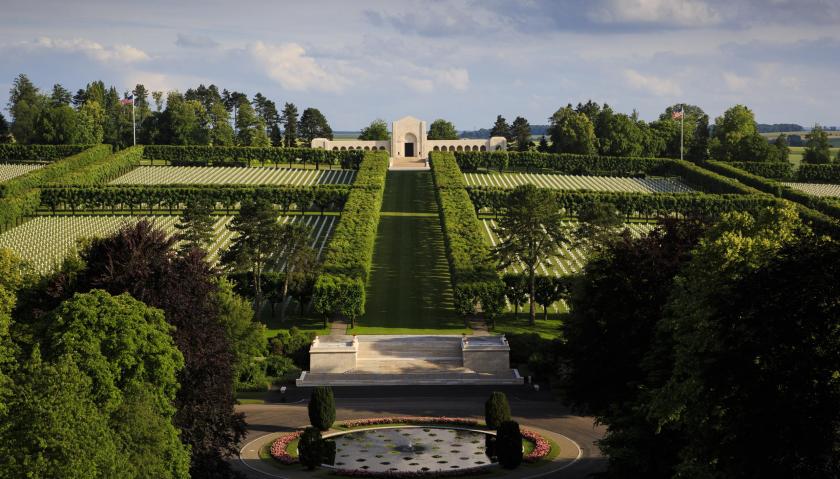
Meuse-Argonne American Cemetery, outside of Romagne, France

The Meuse-Argonne offensive would last forty-seven days, resulting in 26,277 American women gaining that most exclusive and unwanted of distinctions, that of being a Gold Star Mother.  More than any other battle, in American military history.  95,786 others would see their boys come home, mangled.

gold-star-mothers-monument-at-the-putnam-county-veteran-memorial-park-james-connor
Gold Star Mother’s Monument At The Putnam County (NY) Veteran Memorial Park, photograph by James Connor

In May of that year, President Woodrow Wilson approved a suggestion from the Women’s Committee of the Council of National Defenses, that American women were asked to wear black bands on the left arm, with a gilt star for every family member who had given his life for the nation.

GoldStar1

Today, Title 36 § 111 of the United States Code provides that the last Sunday in September be observed as Gold Star Mother’s Day, in honor of those women who have made the ultimate sacrifice. (April 5 is set aside, as Gold Star Spouse’s Day).  Recently, both President Barack Obama and Donald Trump have signed proclamations, setting this day aside as Gold Star Mother’s and Family’s Day.

Gold-Star-Mothers-Day-Last-Sunday-in-September

At first a distinction reserved only for those mothers who had lost sons and daughters in WW1, that now includes a long list of conflicts, fought over the last 100 years.  At this time the US Army website reports  “The Army is dedicated to providing ongoing support to over 78,000 surviving Family members of fallen Soldiers”.

Seventy-eight thousand, out of a nation of some 320 million.  They are so few, who pick up this heaviest of tabs on behalf of the rest of us.

If you enjoyed this “Today in History”, please feel free to re-blog, “like” & share on social media, so that others may find and enjoy it as well. Please click the “follow” button on the right, to receive email updates on new articles.  Thank you for your interest, in the history we all share.

September 15, 1916 Tanks of the Great War

At first code-named “Water Carriers”, no self-respecting Brit wanted to be riding around in a “WC”, (“Water Closet”), so it was that these contraptions were destined to be known as “Water Tanks”, or just plain Tanks.

Leonardo da Vinci drew sketches of a man-powered, wheeled vehicle encased in armor and bristling with cannon, as early as the 15th century. The design was limited, since no human crew could generate enough power to move it for long, and the use of animals in such confined spaces was fraught with problems..

image11

H.G. Wells’ December 1903 short story “The Land Ironclads”, depicted huge military land vessels, capable of disrupting military defenses and clearing the way for infantry. Wells’ machine was equipped with 8 giant pedrail wheels, each 10′ in height, and armed with cannon and machine-guns.

thelandironcladsEarly armored cars were fine for moving personnel over smooth roads, but there was a need for a vehicle capable of navigating the broken terrain of no man’s land. In the run-up to WWI, several soon-to-be belligerents were conducting experiments with “land ships”, with varying degrees of success.


ILN0-1919-0517-0008-001-004

A French captain named Levavasseur proposed a crawler-tracked armored vehicle equipped with artillery as early as 1903, but the project was abandoned by the Artillery Technical Committee. Later French attempts included the Breton-Pretot machine, sporting huge 10’ x 13’ tracks and the Aubriot-Gabet “Fortress”. Electrically powered, each of these things required its own power supply cable. Needless to say, the idea was not widely imitated.

tumblr_njssestuEC1s7e5k5o1_1280

In 1911, Austrian engineering officer Günther Burstyn and Australian civil engineer Lancelot de Mole independently developed working models of such vehicles, but both designs were rejected by their governments. They too would never be built.

Tsar_tankThe most unusual tank of WWI was the tricycle designed “Lebedenko” or “Tsar Tank”. Developed by pre-Soviet Russia, the armament and crew quarters on this thing were 27′ from the ground, making them irresistible targets for enemy artillery.

Russian shipyard engineer Vasily Mendeleev designed a 170-ton monster while aero-engineer Aleksandr Porokhovschikov developed a small cross-country vehicle running on a single rubber track called the “Vezdekhod”, translating as “He who goes anywhere“.

Vezdekhod_Porokhovshikov

The Russian Revolution would overtake the project before the thing got out of prototype, but post-revolutionary Russian propagandists would seize on the vehicle as “proof” that Russia had designed the first Tank.

1481810086_tritton-trench-crosser-2

The British had the greatest degree of success, after a failed experiment with the “Tritton Trench-Crosser” in May, 1915. This beast had 8′ tractor wheels carrying 15’ girders on a chain, which were lowered into a trench so that the back wheels could roll over it. Girders would then drag behind, until the machine could back over them and rewind.

Caterpillar_3

Finally, British work with the Holt Manufacturing Company of Stockton, California paid off with the most consistently successful track design. These “Caterpillar” treads had long been used on tractors. By 1916, the British army was using about 1,000 of Holt’s Caterpillar tractors on the Western Front.

a-ww1-holt-gun-tractor-towing-a-howlitzer-artillery-gun-replica-passing-E8YFWE

These were the pet project of Winston Churchill, First Lord of the Admiralty, who described them as “Water Carriers” to mask their intended purpose.

battle-cambrai-ww1-007

No self-respecting Brit wanted to be riding around in a “WC”, (“Water Closet”), so it was that these contraptions were destined to be known as “Water Tanks”, or just plain Tanks. The name stuck. The “No1 Lincoln Machine” gave way to “Little Willie” and finally the Mark I “Big Willie”, the familiar Rhomboid shaped caterpillar track design which first appeared on the Somme Front on this day in 1916.

Mark_IV

49 Mark Is were committed in that first tank battle, of which 32 were mechanically sound enough to take part in the advance. German lines fell back in confusion before “der Wagen des Teufels“, “the Devil’s Wagon”, but they were too few to hold.

4266442481_cffb6111dd_b

With no suspension, the bone jarring ride on one of these monsters was just the beginning of what crews were forced to endure.

8e83ac663bebacd82d991cd5da5a3075--british-tanks-wwi-tanks

The interior was so loud that communication was only possible via hand signal. When bullets stuck the metal plates, splinters called “spall” would break away from the interior and fly about the cabin, requiring crew members to protect themselves with thick leather clothing and chain mail masks.

tumblr_m543poyPqo1rxhnogo1_400Interior temperatures rose to 122° Fahrenheit and more, making me wonder if these things weren’t as dangerous to their own crews as they were to the other side.

It was not until November 20 the following year at Cambrai, that the British Tank Corps had their first major success. Over 400 tanks penetrated 6 miles on a 7-mile front. The infantry failed to exploit the tanks’ gains, and almost all territory was recaptured by the Germans. The British scored a far more significant victory on August 8, 1918, with 600 tanks at the Battle of Amiens. General Erich Ludendorff called it a “Black Day” for the German Army.

4182483750_d5b8861719_z

In all, the French fielded about 3,600 light Renault FT tanks in WWI, the British over 2,500 of their heavy Mark I-Vs.

The German General Staff was slow to adopt the tank, concentrating instead on anti-tank weapons. The majority of the 50+/- tanks fielded by Germany in WWI, were captured British vehicles.

mk4germThe only German project to be produced and fielded in WWI was the A7V. They only made 20 of these things in the armored, “Sturmpanzerwagen Oberschlesien“, “Upper Silesia Assault Armored Vehicle” version, and a few more in the unarmored “Überlandwagen”, “Over-land vehicle”, used for cargo transport.

t27It would be very different, in the next war.

If you enjoyed this “Today in History”, please feel free to re-blog, “like” & share on social media, so that others may find and enjoy it as well. Please click the “follow” button on the right, to receive email updates on new articles.  Thank you for your interest, in the history we all share.

July 31, 1917  Did we really send men to fight in That?

Following the battle of Passchendaele, staff officer Sir Launcelot Kiggell is said to have broken down in tears.  “Good God”, he said, “Did we really send men to fight in That”?! 

The “War to end all Wars” exploded across the European continent in the summer of 1914, devolving into the stalemate of trench warfare, by October.

The ‘Great War’ became Total War, the following year.  1915 saw the first use of asphyxiating gas, first at Bolimow in Poland, and later (and more famously) near the Belgian village of Ypres.  Ottoman deportation of its Armenian minority led to the systematic extermination of an ethnic minority, resulting in the death of ¾ of an estimated 2 million Armenians living in the Empire at that time, and coining the term ‘genocide‘.

Battle-of-Passchendaele
Battle of Passchendaele

Kaiser Wilhelm responded to the Royal Navy’s near-stranglehold of surface shipping with a policy of unrestricted submarine warfare, as the first zeppelin raids were carried out against the British mainland.  German forces adopted a defensive strategy on the western front, developing the most sophisticated defensive capabilities of the war and determined to “bleed France white”, while concentrating on the defeat of Czarist Russia.

Russian Czar Nicholas II took personal command that September, following catastrophic losses in Galicia and Poland.  Austro-German offensives resulted in 1.4 million Russian casualties by September with another 750,000 captured, spurring a “Great Retreat” of Russian forces in the east, and resulting in political and social unrest which would topple the Imperial government, fewer than two years later.   In December, British and ANZAC forces broke off a meaningless stalemate on the Gallipoli peninsula, beginning the evacuation of some 83,000 survivors.  The disastrous offensive had produced some 250,000 casualties.  The Gallipoli campaign was remembered as a great Ottoman victory, a defining moment in Turkish history.  For now, Turkish troops held their fire in the face of the allied withdrawal, happy to see them leave.

The-third-battle-of-Ypres-1917-9
Passchendaele, 1917

A single day’s fighting in the great battles of 1916 could produce more casualties than every European war of the preceding 100 years, civilian and military, combined. Over 16 million were killed and another 20 million wounded, while vast stretches of the Western European countryside were literally torn apart.

1917 saw the resumption of unrestricted submarine warfare, and a German invitation to bring Mexico into the war, against the United States.  As expected, these policies brought America into the war on the allied side.  The President who won re-election for being ‘too proud to fight’ asked for a congressional declaration of war, that April.

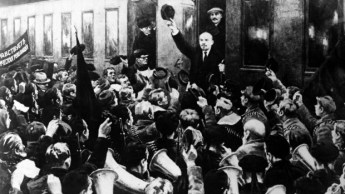
Sealed TrainMassive French losses stemming from the failed Nivelle offensive of that same month (French casualties were fully ten times what was expected) combined with irrational expectations that American forces would materialize on the western front led to massive unrest in the French lines.  Fully one-half of all French forces on the western front mutinied.  It’s one of the great miracles of WW1 that the German side never knew, else the conflict may have ended, very differently.
The sealed train carrying the plague bacillus of communism had already entered the Russian body politic.  Nicholas II, Emperor of all Russia, was overthrown and murdered that July, along with his wife, children, servants and a few loyal friends, and their dogs.

This was the situation in July 1917.

third-battle-of-ypres-passchendaele-ww1-007For eighteen months, British miners worked to dig tunnels under Messines Ridge, the German defensive works laid out around the Belgian town of Ypres.  Nearly a million pounds of high explosive were placed in some 2,000′ of tunnels, dug 100′ deep.  10,000 German soldiers ceased to exist at 3:10am local time on June 7, in a blast that could be heard as far away, as London.
Buoyed by this success and eager to destroy the German submarine bases on the Belgian coast, General Sir Douglas Haig planned an assault from the British-held Ypres salient, near the village of Passchendaele.

general

British Prime Minister David Lloyd George opposed the offensive, as did the French Chief of the General Staff, General Ferdinand Foch, both preferring to await the arrival of the American Expeditionary Force (AEF).  Historians have argued the wisdom of the move, ever since.

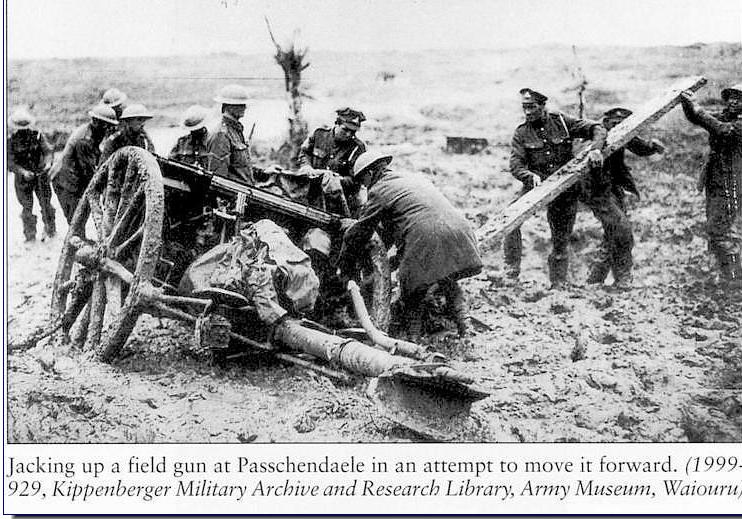
The third Battle of Ypres, also known as the Battle of Passchendaele, began in the early morning hours of July 31, 1917. The next 105 days would be fought under some of the most hideous conditions, of the entire war.

In the ten days leading up to the attack, some 3,000 guns fired an estimated 4½ million shells into German lines, pulverizing whole forests and smashing water control structures in the lowland plains.  Several days into the attack, Ypres suffered the heaviest rainfall, in thirty years.

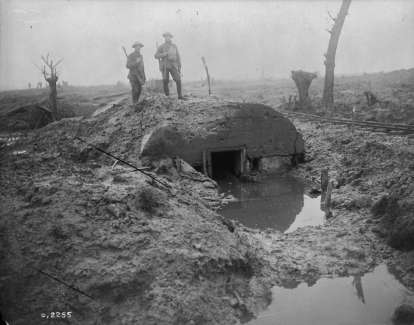
pillbox
German pillbox, following capture by Canadian soldiers.

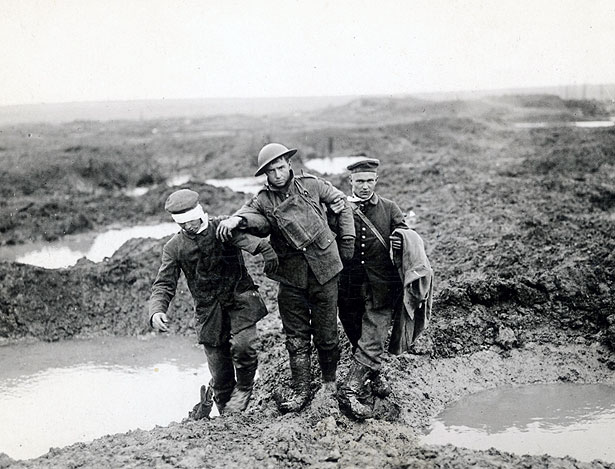
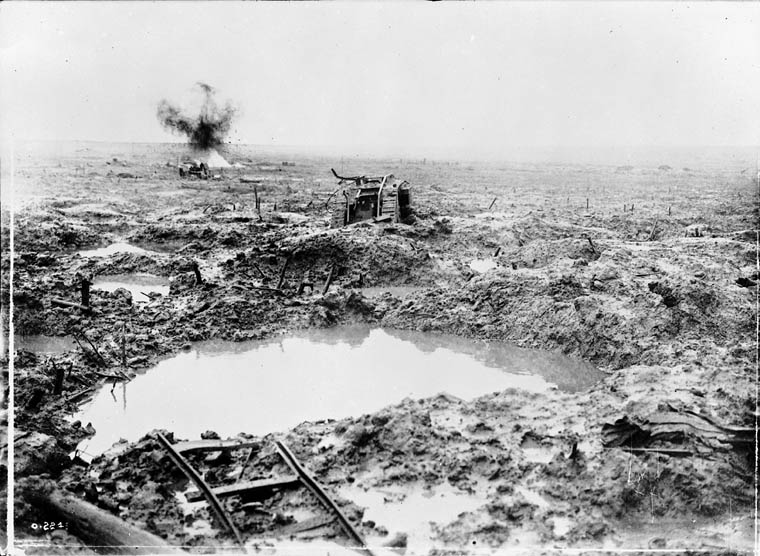
Conditions defy description. Time and again the clay soil, the water, the shattered remnants of once-great forests and the bodies of the slain were churned up and pulverized, by shellfire.  You couldn’t call the stuff these people lived and fought in mud – it was more like a thick slime, a clinging, sucking ooze, capable of claiming grown men, even horses and mules.  Most of the offensive took place across a broad plain formerly crisscrossed with canals, but now a great, sucking mire in which the only solid ground seemed to be German positions, from which machine guns cut down sodden commonwealth soldiers, as with a scythe.

Soldiers begged for their friends to shoot them, rather than being left to sink in that muck. One sank up to his neck and slowly went stark raving mad, as he died of thirst. British soldier Charles Miles wrote “It was worse when the mud didn’t suck you down; when it yielded under your feet you knew that it was a body you were treading on.”

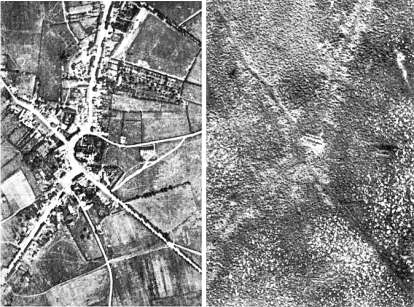
Passchendaele, aerial
Passchendaele, before and after the offensive. H/T Imperial War Museums/Wikimedia Commons

In 105 days of this hell, Commonwealth forces lost 275,000 killed, wounded and missing.  The German side another 200,000.  90,000 bodies were never identified.  42,000 were never recovered and remain there, to this day.  All for five miles of mud, and a village barely recognizable, after its capture.

Following the battle of Passchendaele, staff officer Sir Launcelot Kiggell is said to have broken down in tears.  “Good God”, he said, “Did we really send men to fight in That”?!  The soldier turned war poet Siegfried Sassoon reveals the bitterness of the average “Joe Squaddy” whom his government had sent sent to fight and die, at Passchendaele.  The story is told in the first person by a dead man, in all the bitterness of which the poet is capable.  It’s called:

Memorial Tablet – by Siegfried Sassoon
Sassoon“Squire nagged and bullied till I went to fight,
(Under Lord Derby’s Scheme). I died in hell (They called it Passchendaele). My wound was slight,
And I was hobbling back; and then a shell
Burst slick upon the duck-boards: so I fell
Into the bottomless mud, and lost the light.

At sermon-time, while Squire is in his pew,
He gives my gilded name a thoughtful stare;
For, though low down upon the list, I’m there;
‘In proud and glorious memory’…that’s my due.
Two bleeding years I fought in France, for Squire:
I suffered anguish that he’s never guessed.
Once I came home on leave: and then went west…
What greater glory could a man desire?”

If you enjoyed this “Today in History”, please feel free to re-blog, “like” & share on social media, so that others may find and enjoy it as well. Please click the “follow” button on the right, to receive email updates on new articles.  Thank you for your interest, in the history we all share.


July 30, 1916 Black Tom

The explosion at Black Tom was the most spectacular, but by no means the only such attack. The archives at cia.gov reports that “[B]etween 1915 and spring 1917, 43 American factories suffered explosions or fires of mysterious origin, in addition to the bombs set on some four dozen ships carrying war supplies to the Allies”.

In the early months of World War I, Britain’s Royal Navy largely swept the seas of the Kaiser’s surface ships and blockaded ports in Germany. The United States was neutral at the time, and more than a hundred German ships sought refuge in American harbors.

The blockade made it impossible for the Central Powers of Germany and Austria-Hungary to import war materiel from overseas, while Great Britain, France, and Russia continued to buy products from US farms and factories. American businessmen were happy to sell to any foreign customer who had the cash, but for all intents and purposes, such trade was limited to the allies.

British-blockadeTo the Central Powers, such trade had the sole purpose of killing their boys on the battlefields of Europe.
The first and most overt reaction from the Kaiser came in the form of unrestrained submarine warfare, when even vessels flying the flags of neutral countries were attacked. Less apparent at the time, was the covert campaign of sabotage carried out by German agents on US soil.

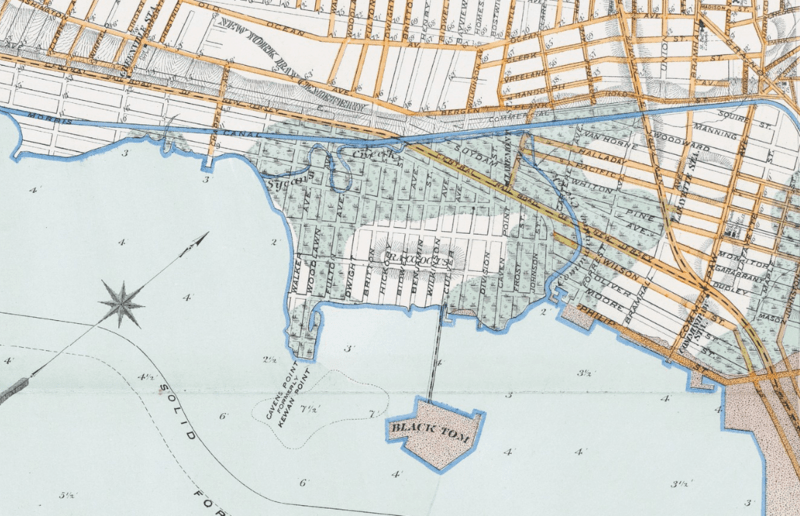
“Black Tom” was originally an island in New York Harbor, next to Liberty Island. So called after a former resident, by WWI, landfill had expanded the island to become part of Jersey City. The area contained a mile-long pier with warehouses and rail lines operated by the Lehigh Valley Railroad, and served as a major hub in the trade of war materiel to the allies.

Sanitary_&_Topographical_Map_of_Hudson_County,_N.J
Black Tom Island, 1880

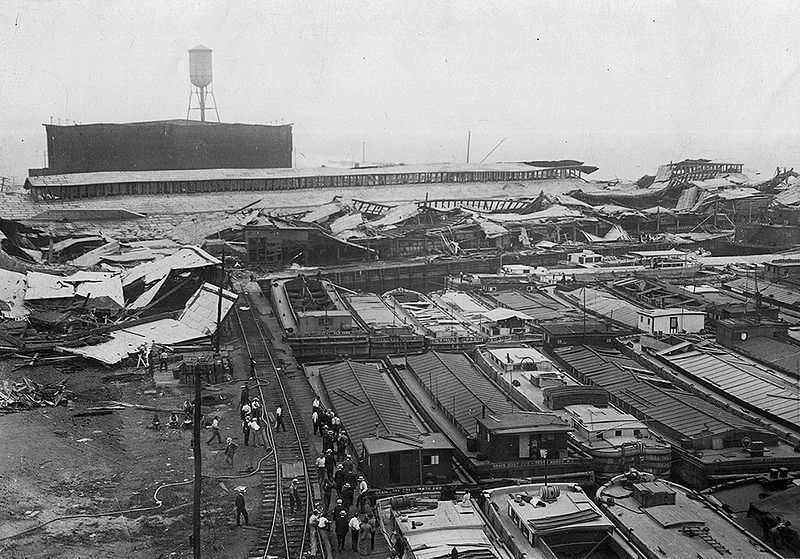
On July 30, 1916, the Black Tom terminal had over two million pounds of small arms and artillery ammunition in freight cars, and one hundred thousand pounds of TNT on a nearby Barge.

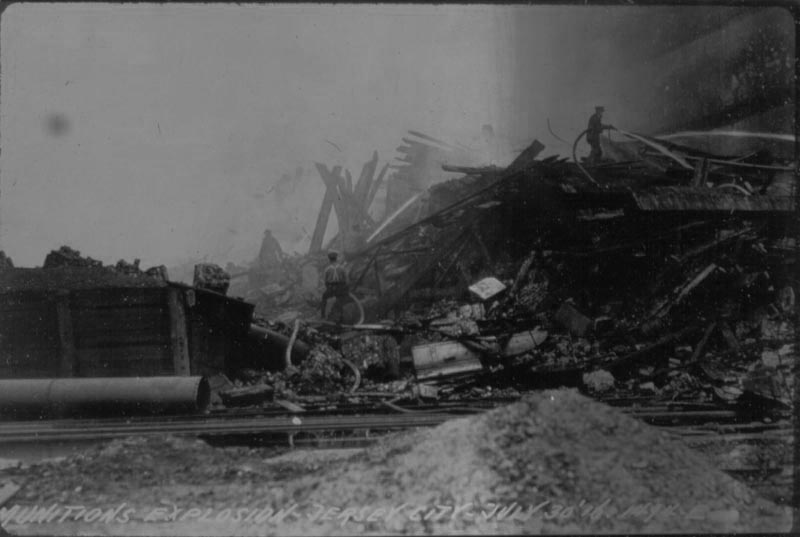
Guards discovered a series of small fires around 2:00am. Some tried to put them out while others fled, fearing an explosion. The first and loudest blast took place at 2:08am, a detonation so massive as to be estimated at 5.5 on the Richter scale. People were awakened from Maryland to Connecticut in what many thought was an earthquake. The Brooklyn Bridge shook and the walls of Jersey City’s municipal building were cracked as shrapnel flew through the air. Windows broke as far as 25 miles away, while fragments embedded themselves in the clock tower at the Jersey Journal building in Journal Square, over a mile away. The clock stopped at 2:12 am.

Black_Tom_explosion_-_firefighters_-_1916
Firefighters were unable to fight the fires until the bullets and shrapnel stopped flying. Photo: Wikimedia Commons

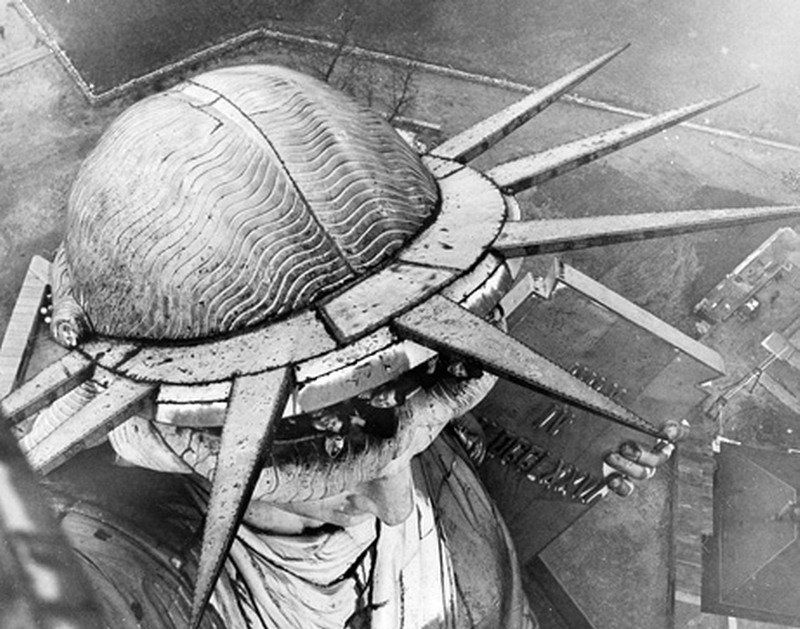
Stained Glass windows were shattered at St. Patrick’s Church, and Ellis Island was evacuated to Manhattan. Damage to the skirt and torch carried by the Statue of Liberty alone, came to over $2¼ million in 2017 dollars. To this day, the ladder to “Lady Liberty’s” torch, remains off limits to visitors.

The enormous vaulted ceiling of Ellis Island’s main hall, collapsed.  According to one Park officer, damage to the Ellis Island complex came to $500,000 “half the one million dollars it cost the government to build the facility.”

Wrecked_warehouses_and_scattered_debris_after_the_Black_Tom_Explosion,_1916Known fatalities in the explosion included a Jersey City police officer, a Lehigh Valley Railroad Chief of Police, a ten week old infant, and the barge captain.
The explosion at Black Tom was the most spectacular, but by no means the only such attack. The archives at cia.gov reports that “[B]etween 1915 and spring 1917, 43 American factories suffered explosions or fires of mysterious origin, in addition to the bombs set on some four dozen ships carrying war supplies to the Allies”.

Responsibility for the Black Tom explosion was never proven, conclusively. Early suspicions centered on accidental causes. Legal wranglings would climb the judicial ladder all the way to the United States Supreme Court, and continue well into the second World War. Anna Rushnak, an elderly Czechoslovak immigrant who ran a four-bits-a-night boarding house in Bayonne was thrown from her bed by the explosion, to find then-23-year-old Michael Kristoff sitting on the edge of his bed, mumbling “What I do? What I do?”

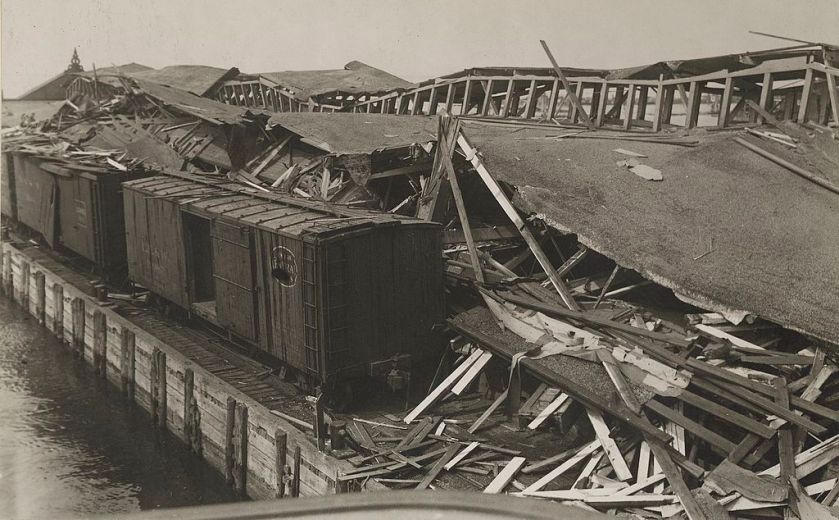
View_of_the_debris_of_the_Lehigh_Valley_pier_after_Black_Tom_explosion_(cropped)
Lehigh Valley Railroad pier, after the explosion

Kristoff, a Slovakian subject of the Austro-Hungarian Empire, (Germany’s principle ally in WW1), was arrested by Bayonne Police and interrogated, and judged to be “insane but harmless.”

In 1922, the Lehigh Valley Railroad was buried in lawsuits, and looking to fix blame on a German act of sabotage. Kristoff came into the judicial spotlight once again, and located in an Albany jail where he was serving time for theft. Kristoff admitted working for the Germans “for a few weeks” back in 1916, but was released before the claim could be investigated. Kristoff was finally traced to a pauper’s grave in 1928 and there ends his story, yet that ‘insane but harmless’ label may be open to question. Papers carried on the body exhumed from that potter’s field were indeed those of Michael Kristoff, but the dental records didn’t match.

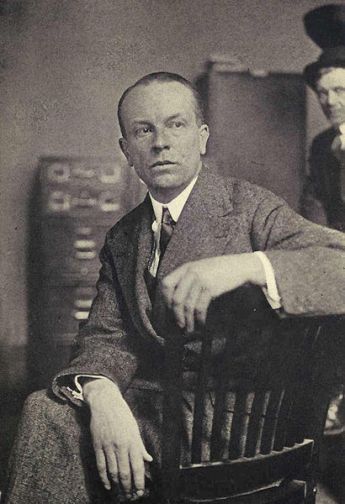
410px-Franz_von_Rintelen
“German Master Spy Franz Von Rintelen and his “pencil bomb” were responsible for acts of sabotage in the United States during World War I”. H/T Smithsonian

Meanwhile, suspicion fell on the German-born naturalized citizen Kurt Jahnke who ran sabotage operations for the German Admiralty out of bases in San Francisco and Mexico City, and his assistant, Imperial German Navy Lieutenant Lothar Witzke. Witzke was arrested on February 1, 1918 in Nogales, Arizona and convicted by court martial. He was sentenced to death, though the war was over before sentence could be carried out. President Wilson later commuted the sentence, to life.

By 1923, most countries were releasing POWs from the “Great War”, including spies. A report from Leavenworth prison shows Witzke heroically risking his life, entering a boiler room after an explosion and probably averting disaster. It may be on that basis that he was finally released. Lieutenant Lothar Witzke was pardoned by President Calvin Coolidge on November 22, 1923, and deported to Berlin, where a grateful nation awarded him the Iron Cross, 1st and 2nd Class.

The U.S.–German Peace Treaty of 1921 established the German-American Mixed Claims Commission, which declared in 1939 that Imperial Germany had, in fact been responsible and awarded a judgement of $50 million.  The Nazi government refused to pay and the matter was finally settled in 1953, with a judgement of $95 million (including interest) against the Federal Republic of Germany. The final payment was made in 1979.

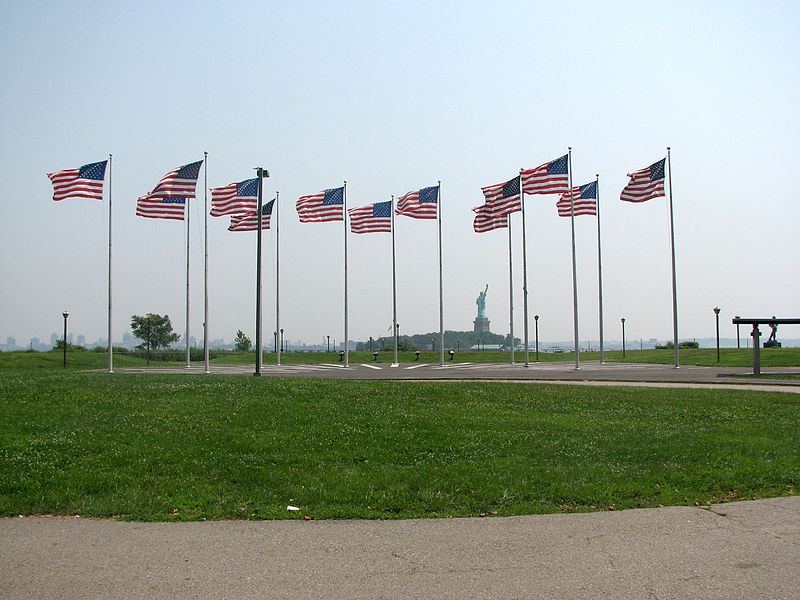
The Black Tom explosion and related acts of pro-German espionage resulted in the Federal Espionage Act signed into law in June 1917, creating, among its other provisions, a “Bureau of Investigation” under the United States Department of Justice.  Now, nothing remains of the Black Tom terminal or the largest foreign terrorist attack on American soil until 9/11, save for a plaque, as seen in the photograph below.  That, and the FBI.

Feature image, top of page: Shrapnel damage can be seen in this image of the Statue of Liberty
800px-StatueOfLibertyFromBlackTomIslandToday
View of the Statue of Liberty from the site of the Black Tom explosion
If you enjoyed this “Today in History”, please feel free to re-blog, “like” & share on social media, so that others may find and enjoy it as well. Please click the “follow” button on the right, to receive email updates on new articles.  Thank you for your interest, in the history we all share.