November 30, 1939 Operation Polka

The effect was electric. Patriotic. Dance music as military counter-measure, played in two-quarter time.

Tensions between Russia and the Scandinavian nations are nothing new, dating back to the age of the Czars when modern-day Finland was a realm of the Swedish King.

As the result of the Russo-Swedish war of 1808-09, Sweden ceded the eastern third of its territory to the Russian Empire of Czar Alexander I, to be administered as the autonomous Duchy of Finland.

Encouraged by the collapse of the Czar and the birth of the communist state, Finland declared independence in 1917. For the first time in its history, Finland was now a sovereign state. 

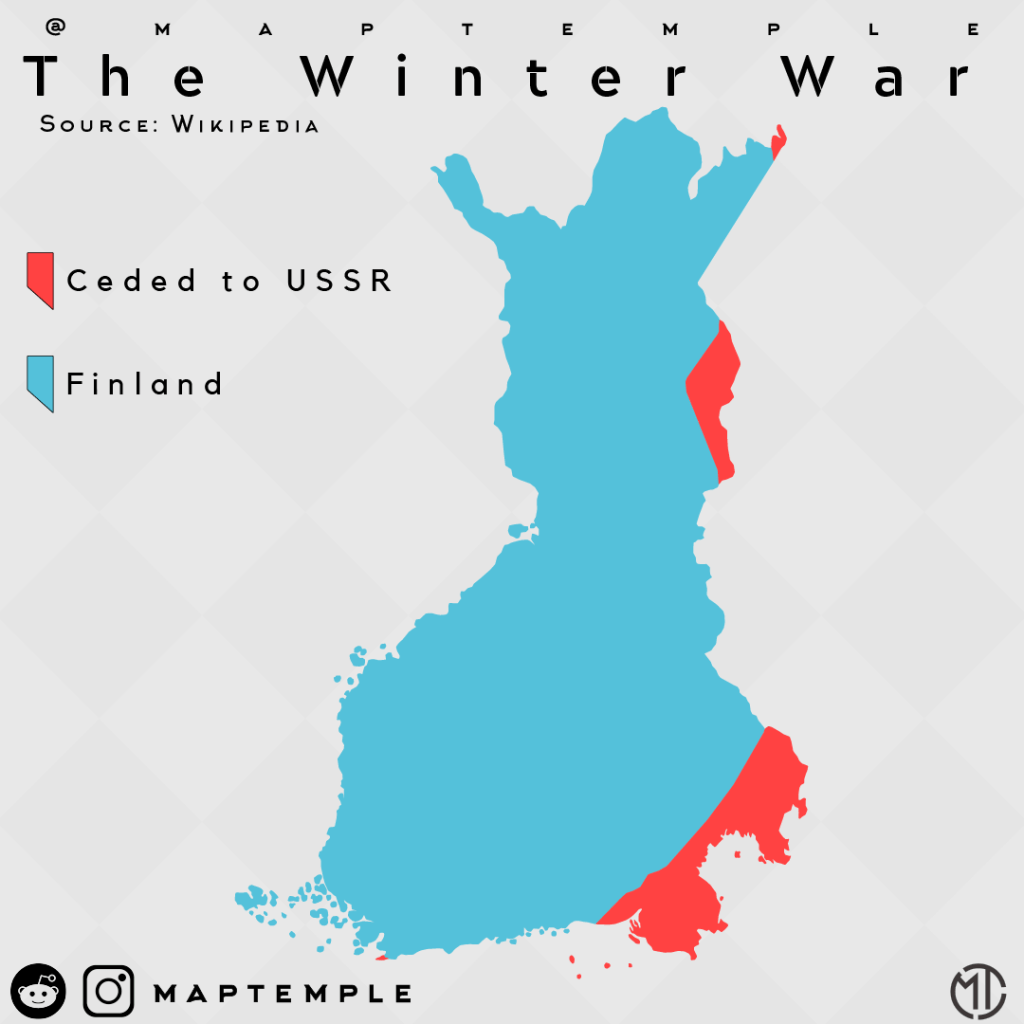
Soviet leader Josef Stalin was wary of Nazi aggression and needed to shore up defenses around the northern city of Leningrad. In 1939, Stalin demanded a 16-mile adjustment of the Russian-Finnish border along the Karelian Isthmus, plus several islands in the Gulf of Finland, on which to build a naval base.
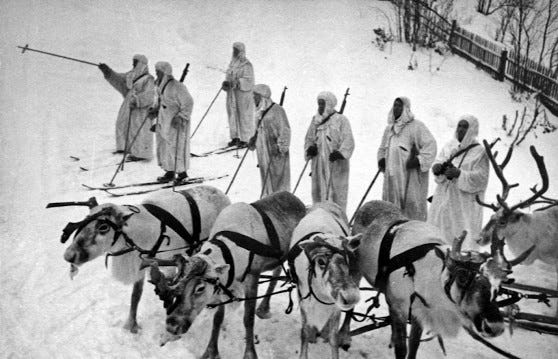
The Soviet proposal ceded fully 8% of Finnish territory. Unsurprisingly, the Finns refused. Stalin saw his opportunity with the German invasion of Poland that September. The Soviet Union attacked on November 30, 1939.  The “Winter War” had begun.
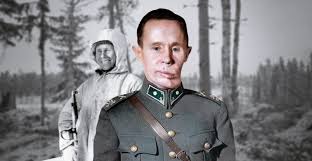
Finnish sniper Simo Häyhä The “White Death”, is credited with 505 confirmed kills in 100 days. That, in a part of the world with limited sunlight.

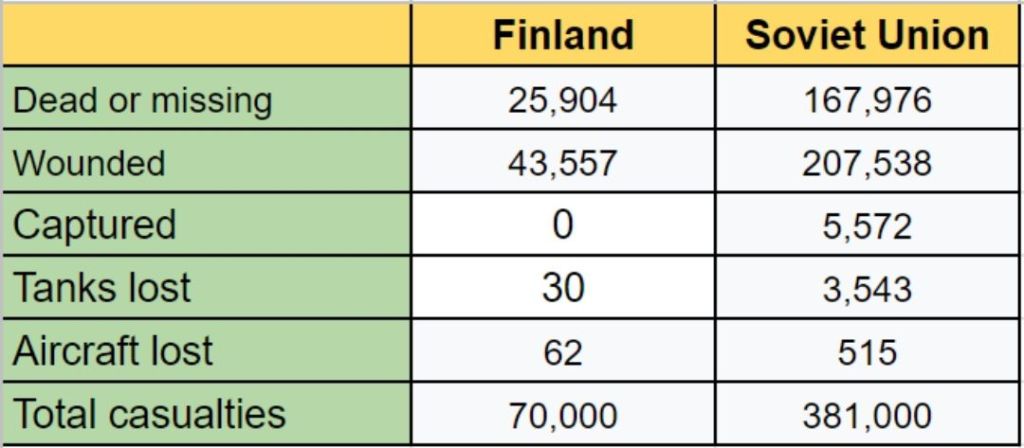
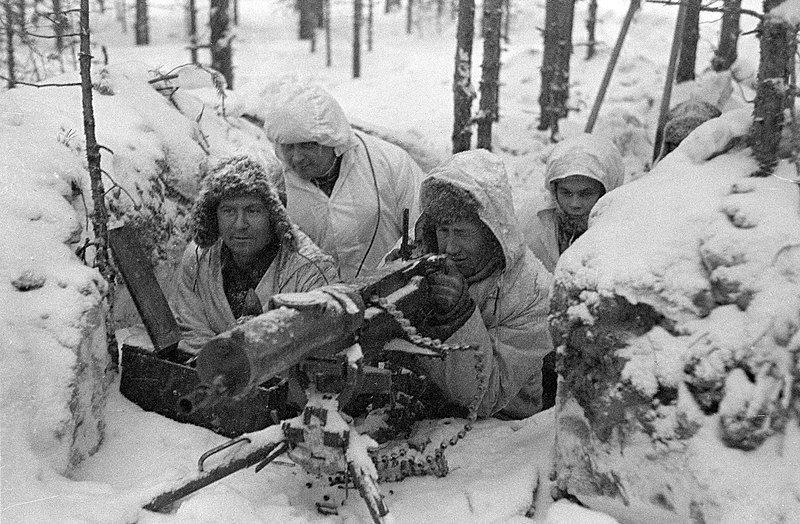
Massively outnumbered, outgunned, Finnish forces nevertheless inflicted horrendous casualties on the Soviet invaders. Clad in white camouflaged gear, the Finnish sniper Simo Häyhä alone ran up an impressive 505 confirmed kills in only 100 days, after which he was shot in the face.

According to most accounts, Häyhä is the deadliest sniper in history, for which he is remembered as ‘The White Death’.
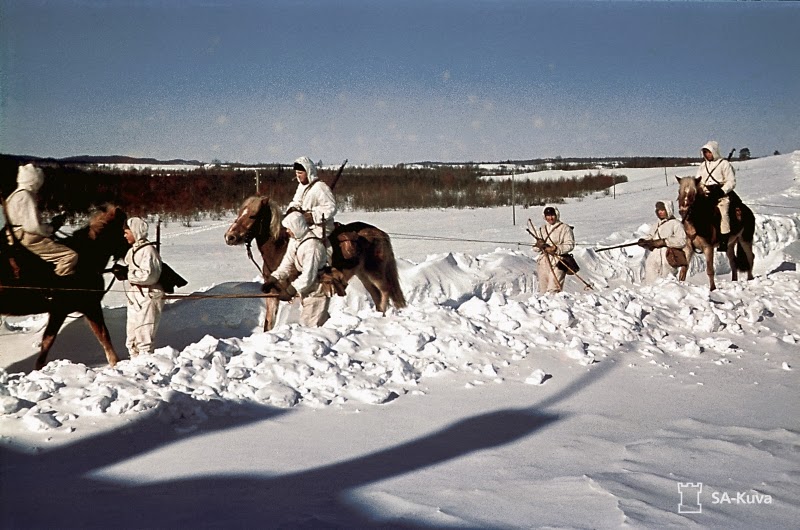
Over the night of December 10-11, Soviet forces attacked Finnish supply lines near Tolvajärvi. Famished after 5 days’ marching in the sub-zero cold, soldiers stopped to devour sausage stew left by retreating Finns.

This gave Finnish Major Aaro Pajari time to muster forces for the counterattack, including dispersed cooks and medics.   The ensuing Battle of Varolampi Pond is also remembered as the “Sausage War”, one of few instances of bayonet combat from the Russo-Finnish war. 20 were killed on the Finnish side at a cost of five times that number for the Russians.

Despite such lopsided casualties, little Finland never had a chance.  The Winter War ceased in March 1940 with Finland losing vast swaths of territory.
Winter War of November 1939 to January 1940.

The dismal Soviet performance persuaded the German Fuhrer that the time was right for “Operation Barbarossa.”  Hitler’s invasion of his Soviet “ally” began on June 22, 1941.
Three days later, Soviet air raids over Finnish cities prompted a  Finnish declaration of war.

The ‘Continuation War’ was every bit the David vs. Goliath contest of the earlier Winter War.  And equally savage.  Soviet casualties are estimated as high as a million plus to approximately one fourth of that for the Finns.
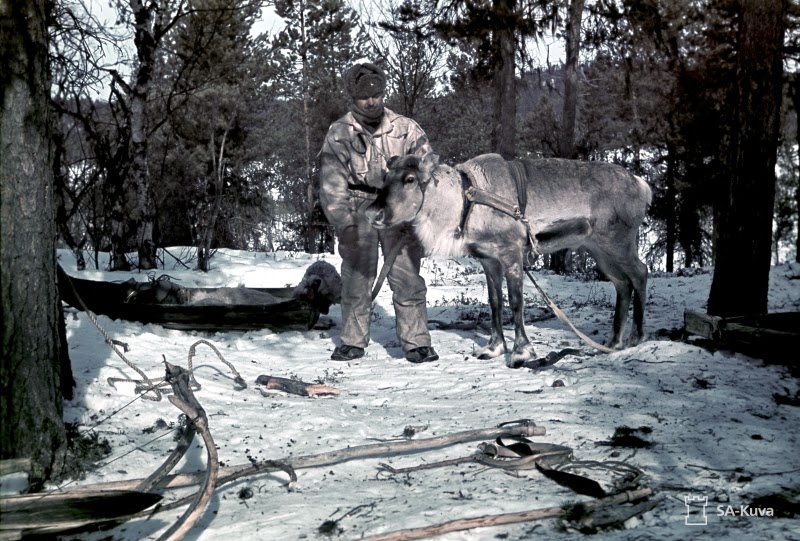
At one point, the Soviets were forced to evacuate the Karelian city of Viipuri, known today as Vyborg. On retaking the city, Finnish forces encountered hundreds of mines. Military personnel were being blown to bits by hundreds of these things, seemingly set to explode at random. 
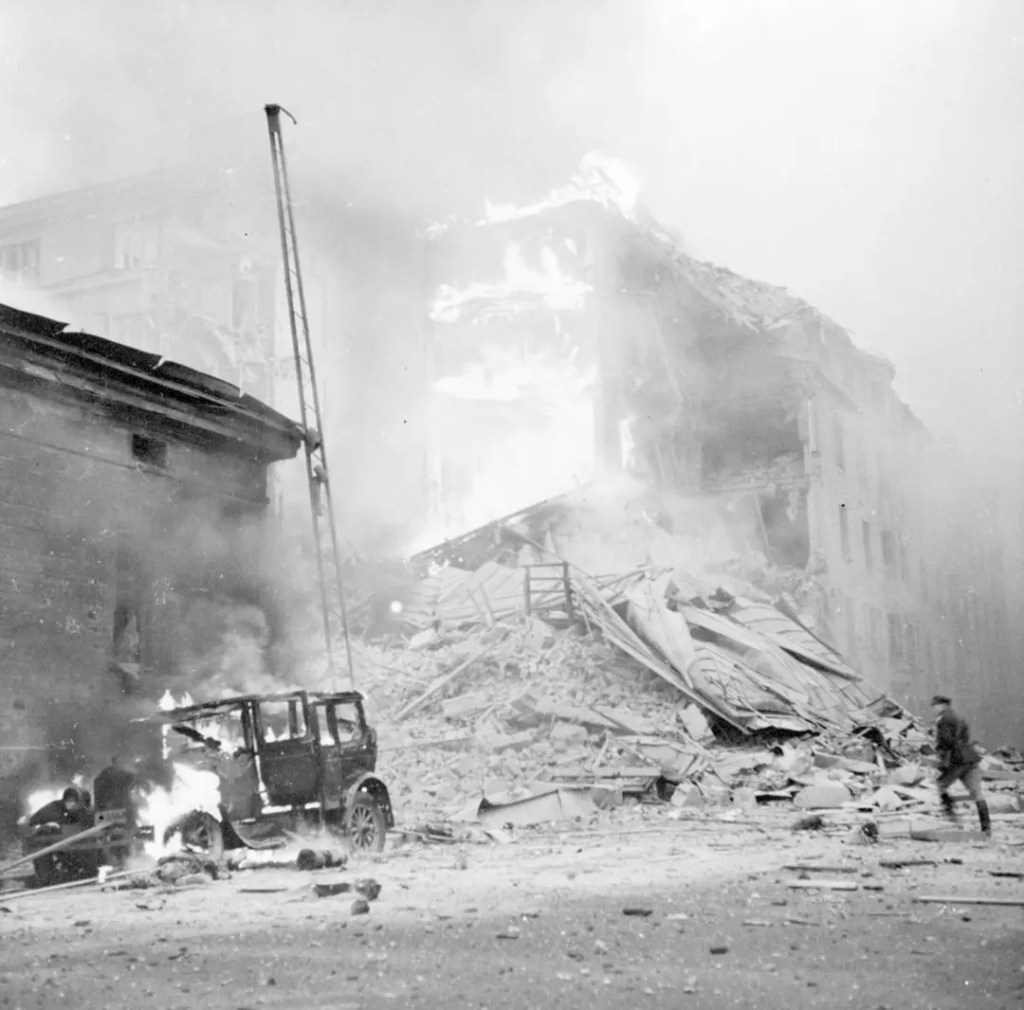
Soviets bomb the Finnish capital of Helsinki

One such bomb was discovered intact under the Moonlight Bridge.  Some 600kg of explosives with an unusual timer.   Jouko Pohjanpalo examined the device, an electronics wiz kid known as the “father of Finnish radio”, Pohjanpalo discovered this was no timer at all. This was a radio receiver with three tuning forks, set to oscillate at frequencies unique to each mine.
The devices were detonated by sound, transmitted by radio.  One three-note chord was all that was needed… and… Boom.

A countermeasure was required. Musical notes played hard and fast, overriding those three tones.

Accordion music.

A truck was rigged to transmit a popular dance tune of the era, an REO 2L 4 210 Speedwagon, broadcasting the Säkkijärvi polka.

Russians switched to a second radio frequency and then a third. In the end, three broadcast vehicles crisscrossed the streets of Viipuri plus, additional 50-watt stationery transmitters.
Broadcast in three frequencies the polka played on in endless loop from September 9, 1941 until February 2, 1942. The effect was electric. Patriotic. Dance music as military counter-measure, played in two-quarter time. If you’re an American reading this, picture Lee Greenwood’s song.  I’m proud to be an American. On repeat. Hell yeah. You got the idea.

Protected by that sonic umbrella, bomb disposal techs raced to deactivate the devices. Some 1,200 bombs were discovered.  Over three months, only 20 exploded.  By then it didn’t matter.  The rest of the batteries were dead.

Fifty years later, the Finnish telecommunications company Nokia introduced the 2110, the first cell phone with selectable ringtones. Among the choices programmed into the phone – The Säkkijärvi Polka.

November 14, 1975 Wreck of the Edmund Fitzgerald

The largest fresh water system on the planet, the Great Lakes of North America are estimated to hold no fewer than 6,000 shipwrecks with the loss of some 30,000 lives. Lake Superior alone forms the watery grave for some 350 wrecks, fewer than half of which have ever been found.

As early as 1888, the largest cargo on the Great Lakes shipping routes was Iron Ore. Great quantities of the stuff were brought up from mines in Minnesota and Michigan to be processed in iron works in Toledo, Ohio, Detroit, Michigan and other ports. A great fleet of freighters known as “lakers” provide the transportation.

In 2019, iron ore remained the third highest value metal mined in the US behind only gold and copper. Most of it is mined in the upper Midwest.

In the life insurance business, revenues are earned by assessing and properly pricing risk, and reinvesting those revenues into tangible assets. Small wonder then that the Northwestern Mutual Life Insurance Company would be invested in iron ore.

In 1954, construction began on the St Lawrence Seaway, a system of locks, channels and canals linking Montreal Quebec to the Great Lakes, as far inland as Duluth Minnesota. Three years later, Northwestern Mutual commissioned the construction of the largest freighter of its time, designed to be “within a foot of the maximum length allowed” by the system of locks.

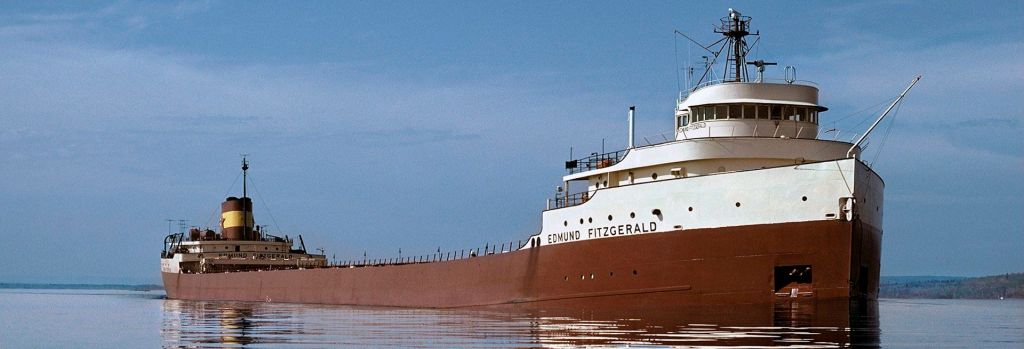
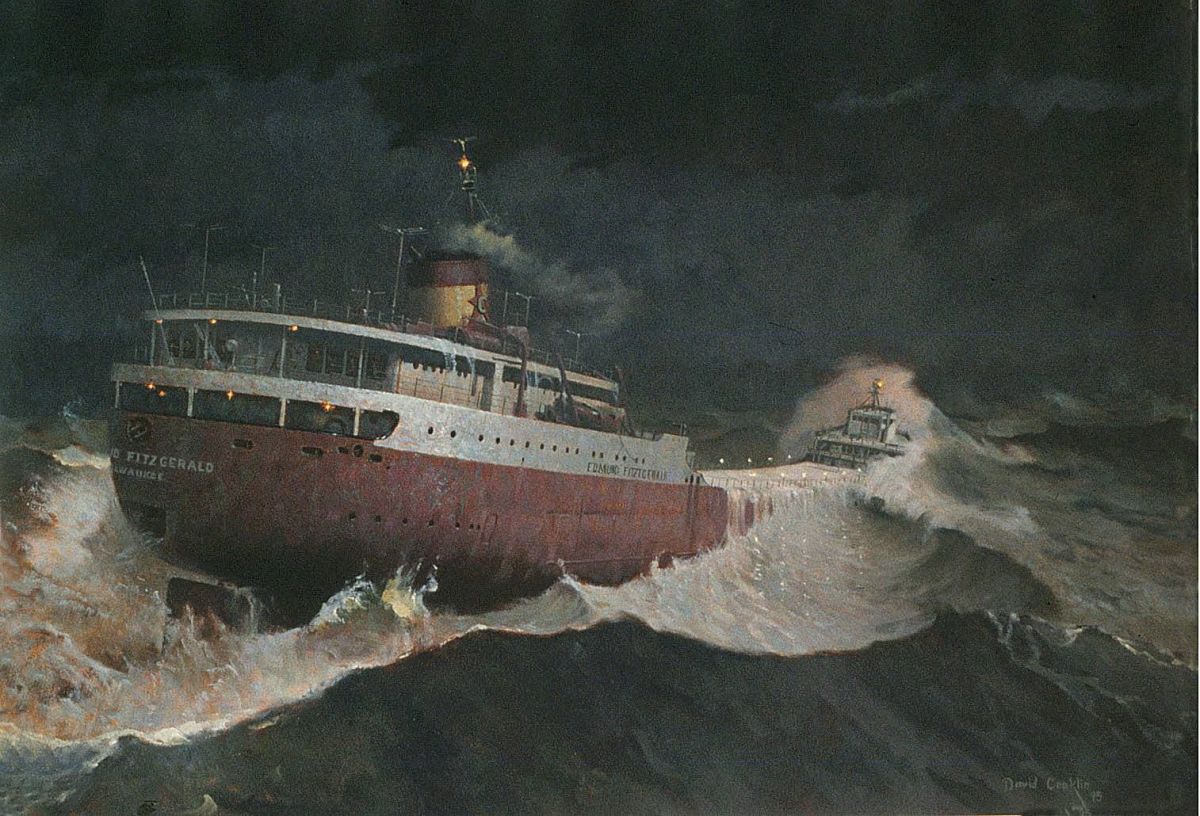
Measuring 729 feet long and weighing over 13,600 tons without cargo, she was the ‘Queen of the Great Lakes’. On June 8, 1958, the vessel was christened SS Edmund Fitzgerald, after the firm’s president.

A favorite of Great Lakes boating enthusiasts “the Big Fitz”, “the Mighty Fitz”, set out on her maiden voyage on September 24, 1958. For 17 years she plied the Great Lakes carrying taconite pellets, a form of iron ore.

According to NASA, major hurricanes form ‘the greatest storm on earth’, expending energy equivalent to 10,000 nuclear bombs over the life of the storm.

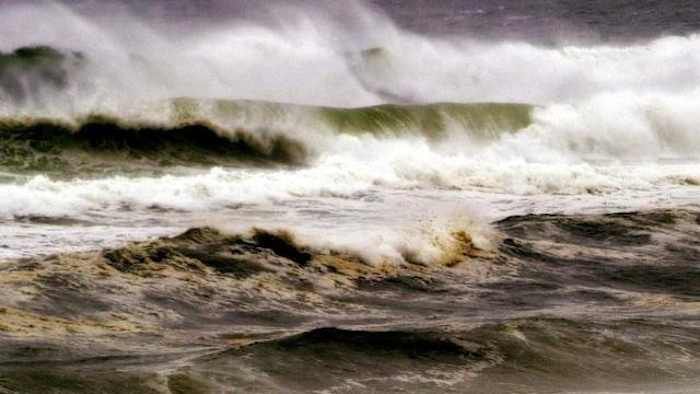
Every year around this time, violent weather systems rise up mid-continent when frigid air masses from the north collide with warmer fronts coming up from the Gulf of Mexico, resulting in inland weather systems equivalent to low-level hurricanes. These ‘mid-latitude cyclones’ are capable of producing sustained winds of 84 miles per hour and mountainous seas. To Great Lakes sailors, these late-season gales howling across the largest freshwater system on the planet, are the ‘Witch of November’.

‘The wind in the wires made a tattle-tale sound
When the wave broke over the railing
And every man knew, as the captain did too
‘Twas the witch of November come stealin’’

The National Weather Service published an advisory on November 9, 1975, even as the Fitz was loading iron ore.  With 26,116 tons in her holds and Captain Ernest McSorley in command, she set out at 2:30 that afternoon.  McSorley was at the end of a long and successful career as a mariner. This was to be his last voyage.

The 647-ft freighter Arthur M. Anderson departed shortly after the Fitz, with Captain Jesse B. Cooper at the helm. 

The storm gathered strength throughout that night and the following day. Throughout it all, the two vessels remained in radio contact, Anderson trailing by 10-15 miles. 

With howling winds and towering seas, Captain Cooper inquired at 7:10pm on the 10th, about Fitzgerald and her crew.   McSorley replied, “We are holding our own”. Ten minutes later, the Mighty Fitz disappeared.

Does anyone know where the love of God goes, when the winds turn the minutes to hours…

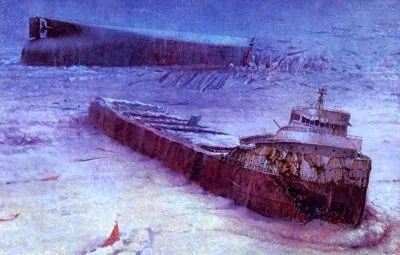
The search dragged on for four days, finding nothing more than debris and a few empty lifeboats.  The wreck was discovered on November 14 by a US Navy Lockheed P-3 Orion turboprop aircraft using the same equipment submarines use to identify magnetic anomalies. 

Edmund Fitzgerald lay 530 feet below the surface of the lake, 17 miles from the safety of Whitefish Bay.

In a musty old hall in Detroit they prayed
In the maritime sailors’ cathedral
The church bell chimed ’til it rang twenty-nine times
For each man on the Edmund Fitzgerald

Thirty years later, a computer simulation run by the National Oceanic and Atmospheric Administration and the National Weather Service estimated that wind gusts ran as high as 86 mph that night with waves up to 46 feet high.

The Edmund Fitzgerald was the largest vessel ever claimed by the Great Lakes, but not the greatest loss of life.  That dubious honor goes to the SS Eastland which rolled over while tied to a pier in 1915, killing 844.

Today, the death of the 29 who served aboard the decks of that the greatest of all the lakers may be as unknown as any of the other 30,000 lost souls, save for the loved ones left behind and a few maritime historians. And a Canadian singer/songwriter, named Gordon Lightfoot.

The legend lives on from the Chippewa on down
Of the big lake they call Gitche Gumee
Superior, they said, never gives up her dead
When the gales of November come early

November 12, 1943  The Unluckiest Ship in the American Navy

We’ve all experienced that “oh shit” moment. Words you wish you hadn’t said. The text or email you wish you could unsend. Take heart. You will never be that sailor who accidentally fired a live torpedo. At the president of the United States.

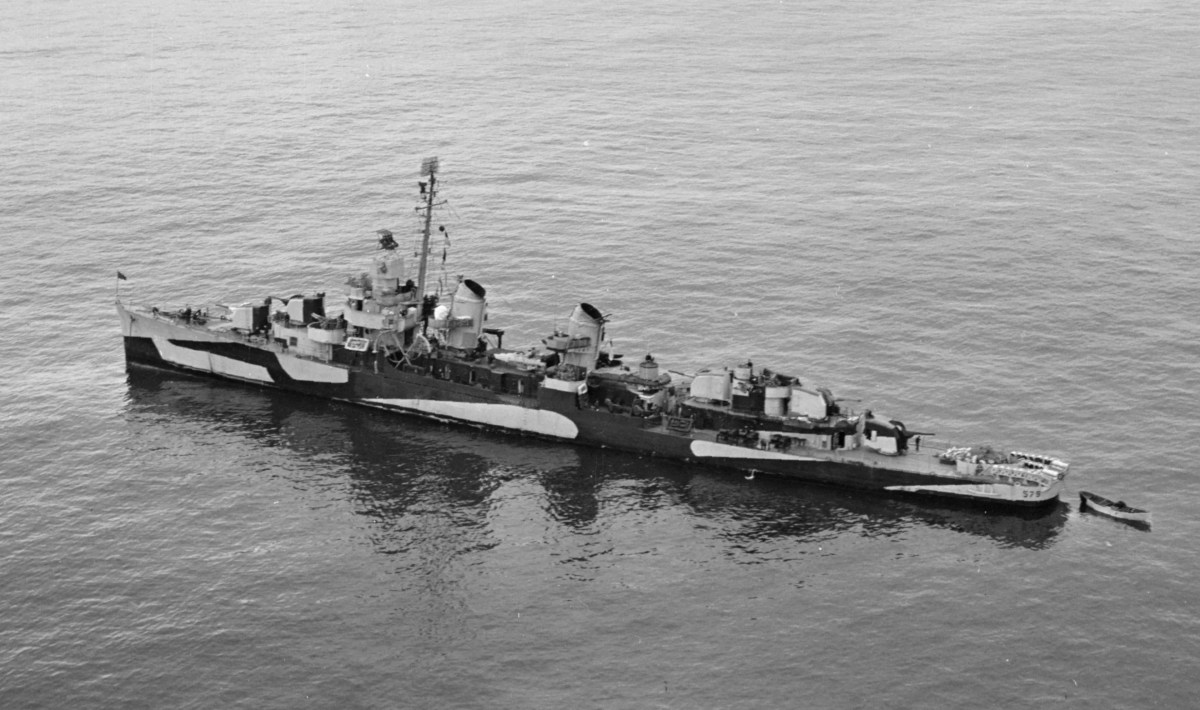
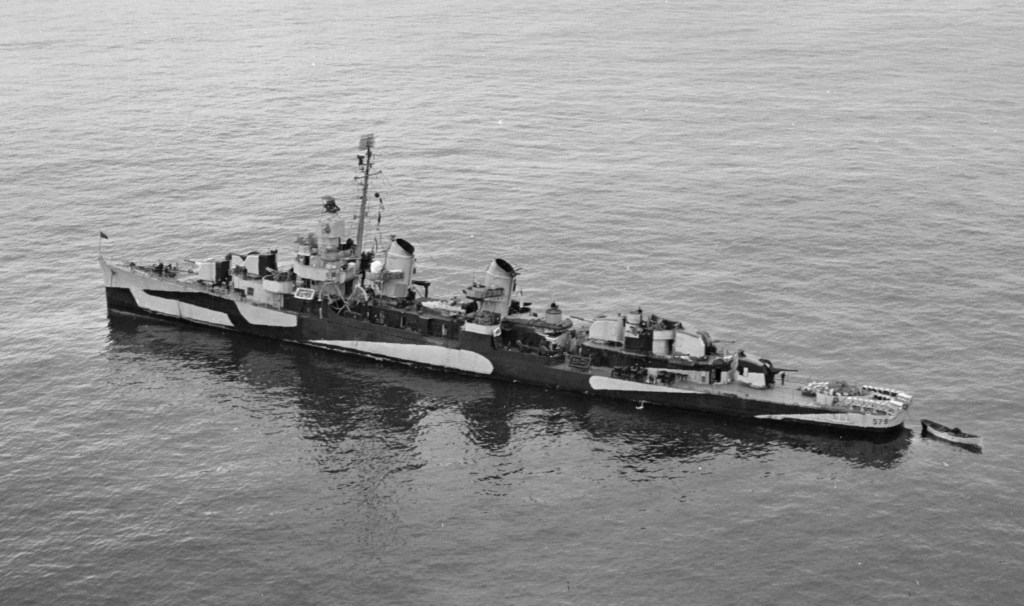
The Fletcher class destroyer DD-579 was built by the Consolidated Steel Corporation of Orange, Texas, the 11th such vessel built for service in World War 2. Commissioned on July 6, 1943 she was christened USS William D. Porter in honor of the Civil War admiral. To the sailors who served on her decks, she was “Willy Dee”.

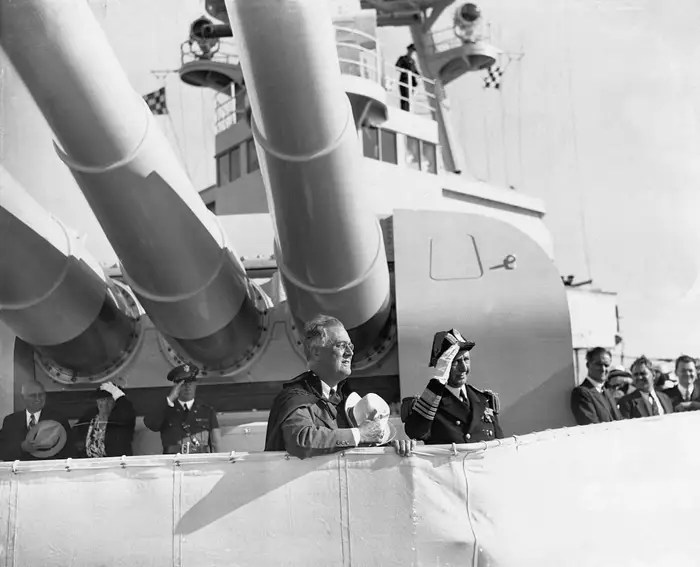
On November 12, 1943, the Porter departed Charleston for Norfolk to rendezvous with a fleet, departing Norfolk. On board the flagship USS Iowa was the President of the United States, Franklin Delano Roosevelt.

If sailors are a superstitious lot, perhaps it’s for good reason. Problems began even while leaving port. Willy Dee improperly raised an anchor, tearing off the railing and lifeboat mount from a neighboring vessel.

The following day an explosion caused the entire fleet to take evasive maneuvers from German submarines, lurking below. But no. There was no submarine. Willy Dee had accidentally dropped a live depth charge.

On the afternoon of November 14th, President Roosevelt requested a demonstration of Iowa’s anti-aircraft capabilities. Balloons were released for the purpose, most of which were shot down by the battleship’s gunners. Some that “got away” were shot down by other vessels, including USS William D. Porter.

The U.S. Navy destroyer USS William D. Porter (DD-579) in Massacre Bay, Attu, Aleutian Islands, 9 June 1944. US Navy Photo

Now in an unprecedented third term with a fourth less than a year away, the most successful figure in the history of American party politics was heading to Cairo and Tehran for top level meetings with Allied leaders.

Escort ships then commenced a torpedo demonstration. That’s when it all went off the rails. The simulated release of a torpedo requires that a launch primer be disarmed. Porter “fired” one, then two…so far so good…but nobody’d disarmed #3.

Oops.

A fully armed torpedo was now in the water and closing fast on the president of the United States. Not only the chief executive but virtually every senior military staff member then conducting the war was on that boat, including Secretary of State Cordell Hull, Chief of Staff Admiral William D. Leahy, Chief of Staff of the Army General George C. Marshall, Chief of Naval Operations Ernest King, Commanding General of the U.S. Army Air Forces Henry “Hap” Arnold, Secretary of Commerce Harry Hopkins, and many other high ranking officials.

Gun shy about breaking radio silence after the depth charge incident, frantic messages were sent via signal light, resulting in the unlikely misunderstanding that Porter was backing up at full speed.

With the situation rapidly going from bad to worse Porter at last broke radio silence, communicating the situation as it was. President Roosevelt heard what was happening and asked his secret service detail to wheel his chair to the rail. He wanted to watch.

Iowa turned hard and the torpedo exploded harmlessly, some 3,000 feet astern of the battleship. The episode took less than 5 minutes.

Porter was ordered to Bermuda for investigation of the “assassination plot” against the president. In the end, torpedoman Lawton Dawson was court-martialed and sentenced to 14 years hard labor. President Roosevelt gave the man a full pardon, as no harm was done.

The William D. Porter served in the Pacific for much of 1944 without incident, but that no longer mattered. For the rest of her days left afloat, other vessels would hail the Willy Dee “Don’t shoot, we’re Republicans!”

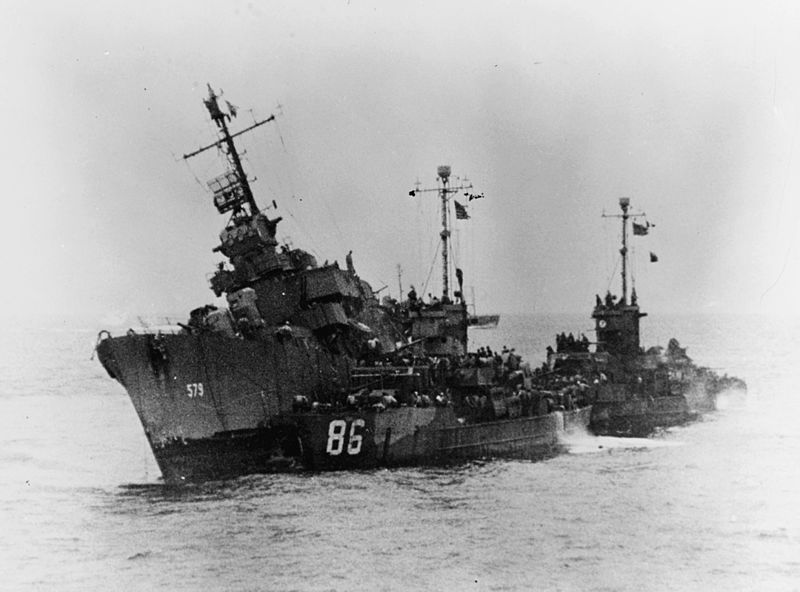
“Damaged William D. Porter listing heavily. Landing Craft Support ships LCS(L)(3)-86 and LCS(L)(3)-122 (behind) are assisting:. – H/T Wikipedia

Willy Dee met her final stroke of bad luck at the battle of Okinawa, managing to shoot down a kamikaze who exploded beneath her hull. Not a single sailor was lost, but this was the end for the Willy Dee. Three hours later she rolled and sank by the stern. The unluckiest ship in the American Navy, was gone.

April 6, 1933  New Beers Eve

At long last, Prohibition was coming to an end on April 7. Thirsty patrons lined up the night before, waiting for their first legal beer in 13 years.  So it is we remember April 6 as New Beer’s Eve.

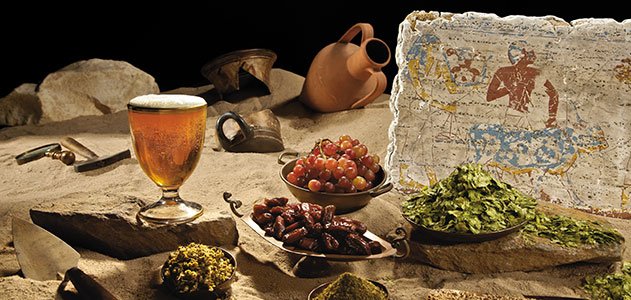
Given the right combination of sugars, almost any cereal will undergo simple fermentation due to the presence of wild yeasts in the air.  Our cave-dwelling ancestors likely experienced their first beer as the result of this process.

Starch dusted stones were found with the remains of doum-palm and chamomile in the 18,000-year old Wadi Kubbaniya in upper Egypt.  While it’s difficult to confirm, University of Pennsylvania archaeologist Dr. Patrick McGovern asserts, “it’s very likely they were making beer there”.

Chemical analysis of pottery shards date the earliest barley beer back to 3400BC, in the Zagros Mountains of Iran.

beer-ingredients

Tacitus maligned the bitter brew of Germanic barbarians.  Wine seemed better suited to the sensibilities of the Roman palate.  Nevertheless, the letters of Roman cavalry commanders from the Roman Britain period, c. 97-103 AD, include requests for more “cerevisia“, for the legionaries.

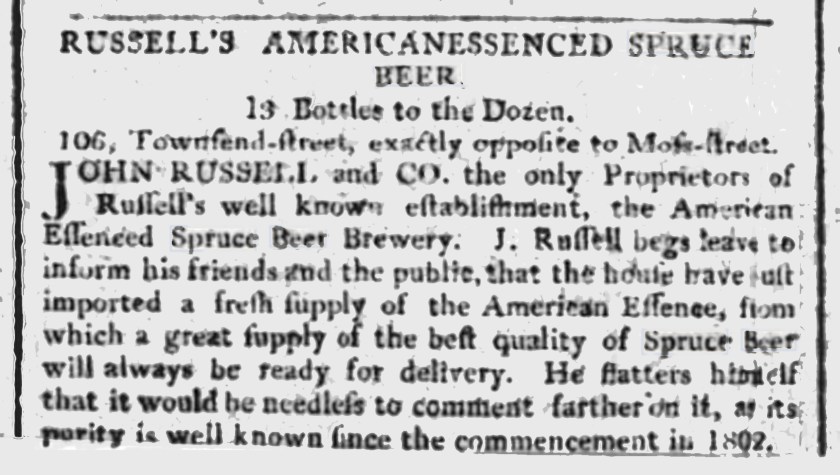
In North and South America, native peoples brewed fermented beverages from local ingredients including agave sap, the first spring tips of the spruce tree, and maize.

Pilgrims left the Netherlands city of Leiden in 1620, hoping not for the frozen, rocky soil of New England, but for rich farmland and a congenial climate in the New World.  One Mayflower passenger wrote in his diary: “We could not now take time for further search… our victuals being much spent, especially our beer…” Lookouts spotted the wind-swept shores of Cape Cod on November 9, 1620 and may have kept going, had there been enough beer.  

Prior to the drum roaster’s invention in 1817, malt was typically dried over wood, charcoal, or straw fires, leaving a smoky quality which would seem foreign to the modern beer drinker.  William Harrison wrote in his “Description of England” in 1577, “For the wood-dried malt, when it is brewed, beside that the drink is higher of colour, it doth hurt and annoy the head of him that is not used thereto, because of the smoke“.

download (67)

Fun fact: “God made beer because he loves us and wants us to be happy.” The quote is erroneously attributed to Benjamin Franklin. In a circa-1779 letter to the Abbé Morellet, what Franklin really said was, “Behold the rain which descends from heaven upon our vineyards; there it enters the roots of the vines, to be changed into wine; a constant proof that God loves us, and loves to see us happy.”

Smoky flavor didn’t trouble the true aficionado of the age.  When the Meux Brewery casks let go in 1814 spilling nearly 400,000 gallons onto the street, hundreds of Britons hurried to scoop it up in pots and pans.  Some even lapped it up off of the street, doggy-style.

2926-London-Beer-Flood1

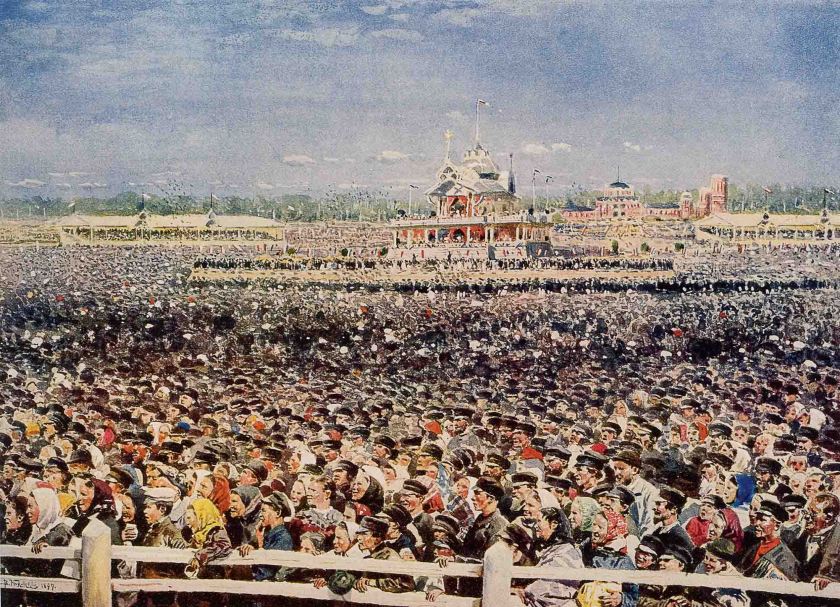
1,389 unfortunates were trampled to death and another 1,300 injured in a stampede for the suds, when someone thought the beer had run out at the coronation of Czar Nicholas II, in 1896.

download (66)

The 18th amendment, better known as “prohibition”, went into effect at midnight, January 16, 1920. For thirteen years it was illegal to import, export, transport or sell liquor, wine or beer in the United States.

Portable stills went on sale within a week. Organized smuggling was quick to follow. California grape growers increased acreage by over 700% over the first five years, selling dry blocks of grapes as “bricks of Rhine” or “blocks of port”. The mayor of New York City sent wine-making instructions to his constituents.

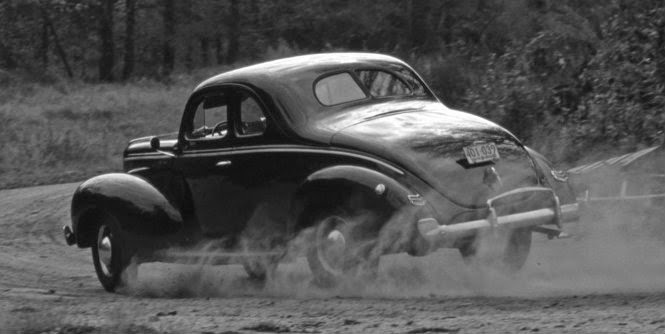
Smuggling operations became widespread, as cars were souped up to outrun “the law”. This would lead to competitive car racing, beginning first on the streets and back roads and later moving to dedicated race tracks.  It’s why we have NASCAR, today.

Moonshine-Cars

Organized crime became vastly more powerful due to the influx of enormous sums of cash.  The corruption of public officials was a national scandal.

Gaining convictions for breaking a law that everyone hated became increasingly difficult. New York alone saw over 7,000 prohibition-related arrests between 1921 and 1923.  Only 27 resulted in convictions.

download (65)

Federal government busybodies went so far as to deliberately poison alcohol leading to the death of hundreds, but all in vain. In the end even lifelong teetotaler John D. Rockefeller, Jr., a man who contributed $350,000 to the Anti-Saloon League, had to announce his support for repeal.

It’s difficult to compare rates of alcohol consumption before and during prohibition.  If death by cirrhosis of the liver is any indication, alcohol consumption never decreased by more than 10 to 20 per cent.

FDR signed the Cullen–Harrison Act into law on March 22, 1933, commenting “I think this would be a good time for a beer.”  The law went effect on April 7, allowing Americans to buy, sell and drink beer containing up to 3.2% alcohol.

A team of draft horses hauled a wagon up Pennsylvania Avenue, delivering a case of beer to the White House. This was the first public appearance of the now-famous Budweiser Clydesdales.

fd3cb0f1f05a3b17a69799cd32a01bcb

In 1941, “dry” leaders tried to prohibit consumption of alcohol on military bases.  Authorities pushed back, claiming it was good for morale. Brewers were required to allocate 15% of total annual production to be used by the armed forces. So essential were beer manufacturers to the war effort, that teamsters striking Minneapolis breweries were ordered to end their strike. Near the end of WWII, the army developed plans to operate recaptured French breweries to ensure adequate supplies for the troops.

18 states continued prohibition at the state level, the last state finally dropping it in 1966. Nearly two out of three states adopted some form of local option, enabling residents of political subdivisions to vote for or against local prohibition.  Some counties remain dry to this day. 

Ironically, the home of the Jack Daniel distillery is one such dry county, though Shirl and I can tell you from personal experience. Special dispensation is given for tastings, JD being the largest taxpayer in Lynchburg County.

But I digress.

Beer toast

The night before Roosevelt’s law went into effect, April 6, 1933, beer lovers lined up at their favorite watering holes, waiting for the first legal beer in thirteen years.  A million and a half barrels of the stuff were consumed on April 7, a date remembered today as “National Beer Day”.

So it is that, from that day to this, we celebrate April 6 as “New Beer’s Eve”.  Sláinte.

For every wound, a balm.
For every sorrow, cheer. 
For every storm, a calm.
For every thirst, a beer. – Irish toast, author unknown

April 3, 1860 Pony Express

Six riders died in service to the Pony Express, but that wasn’t the most dangerous job.

From the time of Lewis and Clark, a growing nation expanded ever westward. First came the trappers and the traders. In 1834, merchant Nathaniel Wyeth led the first religious group westward along what would become the Oregon Trail. In 1848, James W. Marshall discovered gold at a place called Sutter’s Mill. Countless prospectors swelled the ranks of homesteaders flooding ever westward. The California Gold Rush was on.

That same year, the Postal Department awarded a contract to the Pacific Mail Steamship Company to deliver mail to the western territories. Under the contract, a letter would ship south from New York, transferred by horseback and rail across the Isthmus of Panama or the Isthmus of Tehuantepec in Mexico before returning to sea, destined for San Francisco. The process required three to four weeks under the best of circumstances, but it was more reliable than the old stage coach.

California became the 31st state in 1850. Ten years later some 380,000 people lived there. With coast-to-coast rail still years away, simmering tensions hurtling the nation toward Civil War proved the new system inadequate, even as the rapid transfer of information became ever more important.

Businessmen William Russell, Alexander Majors and William B. Waddell were in the shipping business, employing some 75,000 oxen, thousands of wagons and 6,000 men. One of those was the pioneer, future banker and Mayor of el Paso, Charles Robert Morehead. With experience running wagon trains through Wyoming and Utah, several attacked by Indians, Morehead was dispatched to Washington DC to meet with President Hames Buchanan. The subject, a proposed relay carrying mail to the west and back. A Pony Express.

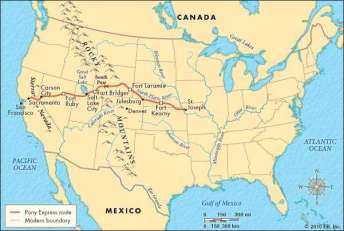
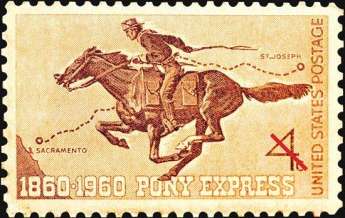
The Central Overland California & Pike’s Peak Express Company officially opened on April 3, 1860, horse-and-rider relays carrying letters the 1,966-mile distance from St. Joseph, Missouri to Sacramento, California, and back.

89987-004-3A10E441

Individual riders covered 75 – 100 miles at a time changing horses every 10-15 miles, at relay stations. Westbound delivery was compressed from weeks to ten days, on average. Riders carrying President Abraham Lincoln’s inaugural address covered the run in 7 days, and 17 hours.

Alone in a wilderness of bandits and sometimes hostile natives, riders traveled around the clock, their way lit only by lighting, or the light of the moon. In May 1860, 20-year old Robert “Pony Bob” Haslam finished a 75-mile run only to learn his replacement, as terrified of Paiute Indians, who’d been attacking stations along the way. Jumping on a fresh horse, Haslam encountered another station burned out by Paiutes. Pony Bob covered 370 miles in 40 hours before it was over, a Pony Express record.

Six riders died along the way, but even that wasn’t the most dangerous job. Livestock stations were little more than dirt floor hovels in remote locations with corrals for horses. Stationery and unmoving, livestock handlers were constantly at risk of ambush by desperados, and raiding Indians. In 18 months as many as 16 stock hands lost their lives.

80 to 100 riders aged 11 to 40 covered some 650,000 miles before it was over, delivering some 35,000 pieces of mail for an average of $100-$150 per month. Riders themselves were required to weigh 125-pounds or less and swear out the following oath, on pain of termination:

“I, (name), do hereby swear, before the Great and Living God, that during my engagement, and while I am an employee of Russell, Majors, and Waddell, I will, under no circumstances, use profane language, that I will drink no intoxicating liquors, that I will not quarrel or fight with any other employee of the firm, and that in every respect I will conduct myself honestly, be faithful to my duties, and so direct all my acts as to win the confidence of my employers, so help me God.”

Oath sworn by Pony Express Riders
138706-004-0303CD27

Costs started out at $5.00 per ½ ounce and dropped to $1.00 per ½ ounce, after the introduction of a newer, lighter-weight paper. Even so, $5.00 in 1860 is equal to $130 today. The system was a financial disaster. 

In the 19th century, the Pony Express was to the old methods as email is to snail mail. Even so, the system never did turn a profit. Far too expensive for ordinary people, the Pony Express carried mostly newspaper reports, business documents and government dispatches. For everyone else, the Central Overland California and Pike’s Peak Express Co. (C.O.C.&P.P.) stood for “Clean Out of Cash & Poor Pay!”

An expensive stopgap leading to the first transcontinental telegraph, the founders declared bankruptcy in only 18 months. The Pony Express came to a halt 18 months after it began, ending service in October 1861.

March 29, 1848 The Day Niagara ran Dry

Fish flopped in the dry riverbed as, upstream, factories ground to a halt.  Souvenir hunters and daredevils walked out on the dry river bed.  Some even drove buggies.   One unit of the United States Army cavalry paraded back and forth across the river.  Treasure hunters found artifacts from the War of 1812:  muskets, bayonets, even tomahawks.

Even as Athens and Sparta vied for control of the Peloponnese, half a world away the earliest of indigenous peoples settled the Niagara valley of modern-day Ontario and western New York.  These were the Onguiaahra, a farming people growing corn, beans and squash in the rich soil of the Niagara escarpment, hunting deer and elk and fishing the tributary waterways of the Niagara valley.

The Onguiaahra were some 12,000 in number when the French explorer Samuel de Champlain came to the region in 1615.  French explorers called them “Neutrals”, the peace makers between the perpetually warring tribes of the Seneca, Cayuga, Onondaga, Oneida and Mohawk Nations to the south, and the Huron to the north.  Vying for control of the rich French fur trade, peoples of this “Iroquois Confederacy” systematically destroyed the villages of the neutrals, killing their people or driving them east, toward Albany.  By 1653 the Onguiaahra had ceased to exist in any meaningful sense but their name lives on, in a word translating as “Thunder of Waters”.

Niagara_falls_panorama

Niagara Falls are three in number, 3,160 tons of water cascading over the precipice every second, hitting the bottom at American and Bridal Veil Falls with 280 tons of force and an astonishing 2,509 striking the Canadian side, at the famous Horseshoe Falls.

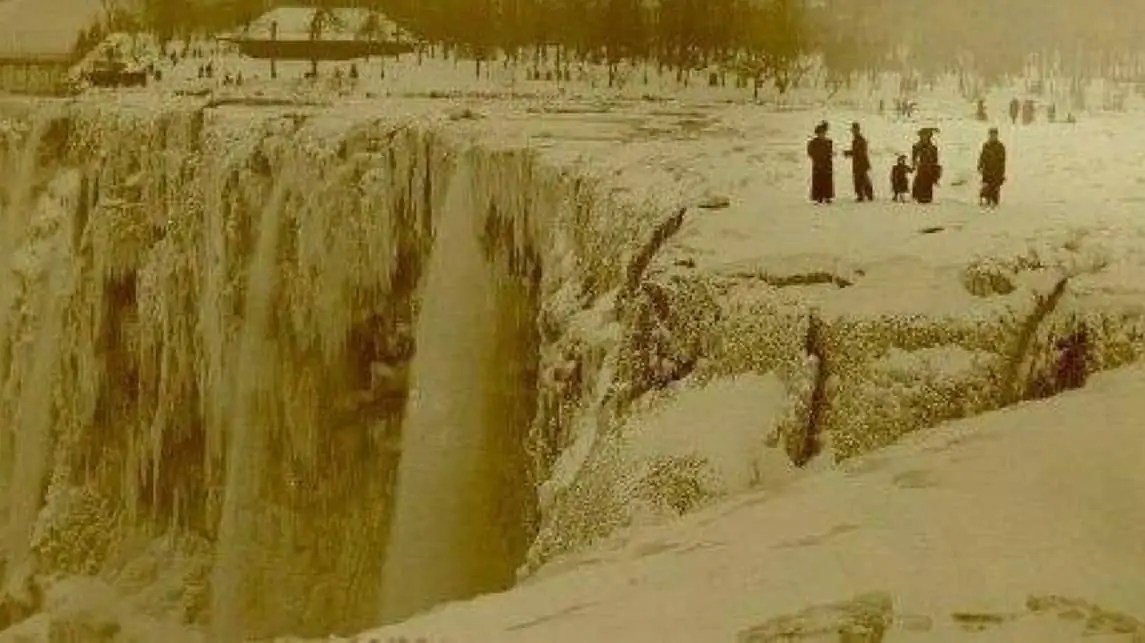
Pictures have been around since the age of photography, purporting to show Niagara Falls “frozen solid”.  That’s not so unusual.  The Washington Post reports:

niagara-frozen-2017-1

“Niagara Falls gets cold every year. The average temperature in Niagara Falls in January is between 16 and 32 degrees. Naturally, it being that cold, ice floes and giant icicles form on the falls, and in the Niagara River above and below the falls, every year. The ice at the base of the falls, called the ice bridge, sometimes gets so thick that people used to build concession stands and walk to Canada on it. It’s nothing out of the ordinary. It is not, to put it bluntly, big polar vortex news”.

niagara-frozen-2017-2
niagara-frozen-2017-3
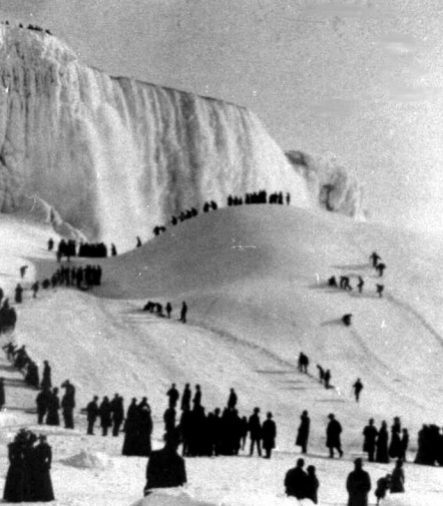
Niagara “Frozen” in 1906, 1902 and 1936.  Hat Tip Snopes.com

Despite outward appearances, water flows in abundance under those bridges of ice.  Only once in recorded history did Niagara Falls run dry.  On this day in 1848, roughly 212,000 cubic feet per second dried, to a trickle.  Not dried, really, nor did it freeze.  Strong southwest winds had driven massive amounts of ice to the head of Niagara River, effectively putting a cork in the bottle.

March 29, 1848 When Niagara Falls Ran Dry

Fish flopped in the dry riverbed as, upstream, factories ground to a halt.  Souvenir hunters and daredevils walked out on the dry river bed.  Some even drove buggies.   One unit of the United States Army cavalry paraded back and forth across the river.  Treasure hunters found artifacts from the War of 1812:  muskets, bayonets, even tomahawks.  At the base of the Falls, Maid of the Mist owners took the opportunity to dynamite rocks which had endangered their boat.

Meanwhile upstream the pressure built, an that much water is not to be denied.  The ice dam broke on March 31. By that evening, the flow was back to normal.

Lifelong “Stooges” fans will appreciate this classic comedy bit, “Niagara Falls”

The Falls “dried up” once again in 1961 but, this time, it happened on purpose.  Over three days and 1,264 truckloads of fill, the US Army Corps of Engineers built a cofferdam that June, diverting water to the Canadian side.  There was concern that rock falls were going to cause erosion, “shutting down” the Falls. 

Dryniagara

On inspection, engineers determined that removing the rocks would accelerate erosion.  The idea was abandoned by November and the cofferdam, blown up.  To this day, the waters of Niagara flow, unvexed, to the sea.

A Trivial Matter
In 1901, Schoolteacher Annie Edson Taylor became the first person to go over Niagara Falls in a barrel.  Sixteen others have followed, at least on purpose.  Five of them died, including the guy who went over in a kayak, and one on a jet ski.  On Saturday, July 9, 1960, 7-year-old Roger Woodward was accidentally swept over Horsehoe Falls. He miraculously survived the 162-foot plunge wearing only a bathing suit and a life jacket. James Honeycutt did not, losing his life in the attempt to rescue the boy.  They say that 90% of the fish who go over the Falls live to tell the tale.