

The term “Blowout” was first applied to sports in 1965, to describe a 40-minute inning in which the St. Louis Cardinals scored seven unearned runs in a 12-2 victory over the Milwaukee Braves. Over time, there have been plenty games that deserve that description.
– Russia’s 1976 Olympic victory over Japan in men’s basketball, 129-63.
– The St. Francis College Fighting Saints 1996 baseball season run record of 71-1.
– Secretariat’s 1973 Belmont Stakes victory, of 31 lengths.
The most lopsided college football game ever was in 1916, when Georgia Tech rushed for 1,650 yards and didn’t allow a single first down by Cumberland College. Final score, 222-0.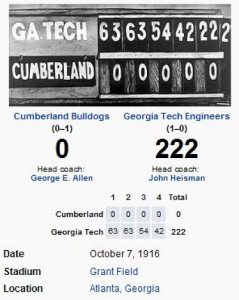
In 1927, Kansas City’s Haven High School beat Sylvia High 256-0. In a record-setting season of blowouts, the 1901 Michigan Wolverines football team defeated all opponents by a combined score of 550-0.
In 1940, Chicago Bears coach George Halas showed his players newspaper clippings, in which the Washington Redskins’ owner called Bears players “crybabies and quitters” after losing 7-3 in regular season. Chicago went on to beat Washington 73-0 in post-season, in a game so lopsided it had to be finished with practice balls. Chicago had kicked them all into the stands, kicking extra points.
The Chicago Colts of the National League defeated Louisville, 36-7 in 1897. The modern Major League Baseball record for margin of victory was set in 2007, when the Texas Rangers defeated the Baltimore Orioles, 30-3. Those 30 runs are also a modern-era record for runs scored in a nine-inning MLB game by one team.
On this day in 1956, the Minnesota Lakers scored one of the most lopsided round ball victories ever over the St. Louis Hawks, 133-75. The blowout was second only to the 1991 Cleveland Cavaliers victory over the Miami Heat, 148-80.
In 2009, Dallas’ Christian Covenant High School girls basketball skunked Dallas Academy, 100-0. The victory was widely condemned: Dallas Academy, a school for students with learning disabilities, had a team of eight out of an entire student body population of 20 girls, yet Covenant continued a full-court press with three-point shots well after taking a halftime lead of 59-0. Covenant’s administration called for a forfeit of its own win, calling it “shameful and an embarrassment.” The coach was fired after he declined to apologize.
Three players have won PGA Tour matches by 16 strokes: J.D. Edgar at the 1919 Canadian Open; Joe Kirkwood, Sr., at the 1924 Corpus Christi Open; and Bobby Locke at the 1948 Chicago Victory National Championship. Tiger Woods has the largest margin of victory in the modern era, with a 15-stroke win at the 2000 U.S. Open.
The Detroit Red Wings beat the New York Rangers 15-0 in 1944, but some of the worst sports disasters ever, have been in international hockey. The 2007 Slovakia women’s team defeated Bulgaria 82-0 in a 2010 Winter Olympics qualifying tournament. At the 1998 Asia-Oceania Junior Championships, South Korea skunked Thailand 92-0. South Korean forward Donghwan Song scored 31 goals, by himself.
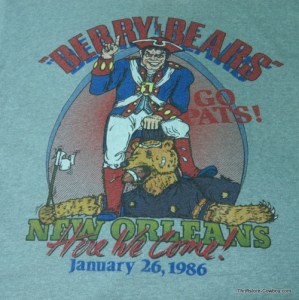 For those of us who rooted for the New England Patriots during the losing years, the 1986 Super Bowl XX was the worst moment ever. We all had our “Berry da Bears” shirts on. Life was good when New England took the earliest lead in Super Bowl history, with a field goal at 1:19.
After that, the room got quiet. Real quiet. New England was held to -19 yards in the first half. Game MVP went to a defensive end with the perfect name of Richard Dent, as “Da Bears” set or tied Super Bowl records for sacks (7) and fewest rushing yards allowed (also 7). Final score, 46-10.
It was the most humiliating loss in Super Bowl history, until the Denver Broncos took us out of our misery with a 55-10 loss to the San Francisco 49ers, in Super Bowl XXIV.


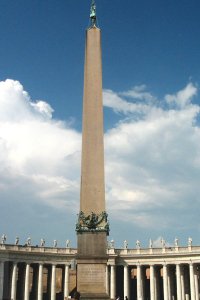 On this day in the year 37, the Roman Senate annulled the will of the Emperor Tiberius, proclaiming 24 year old Caligula, Emperor. After years of purges and treason trials, Caligula’s ascension to the throne was seen as a welcome breath of fresh air. His first two years were relatively peaceful and prosperous.
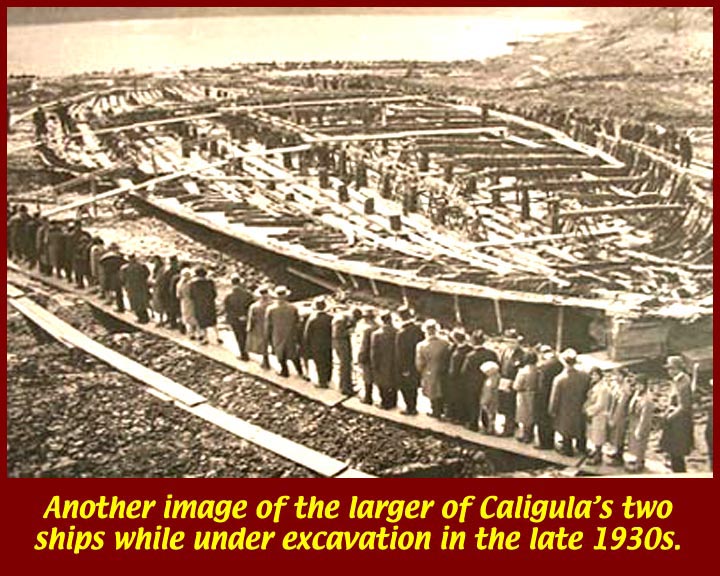
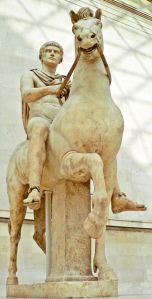 using ships as pontoons, stretching for over two miles from the resort of Baiae to the neighboring port of Puteoli. Though he could not swim, he rode his favorite horse, Incitatus, across the bridge, wearing the breastplate of Alexander the Great. The act was in defiance of a prediction by Tiberius’ soothsayer Thrasyllus of Mendes, that Caligula had “no more chance of becoming emperor than of riding a horse across the Bay of Baiae”.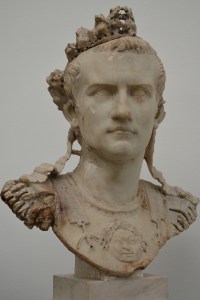


 Saint Patrick’s Day is observed on March 17, the date generally agreed to correspond with the date of his enslavement in 432, and with his death in 460. The date is celebrated in Ireland as both a liturgical and non-liturgical holiday, where in some diocese it is both a solemnity and a holy day of obligation. Outside of Ireland, the day has become a general celebration of all things Irish.
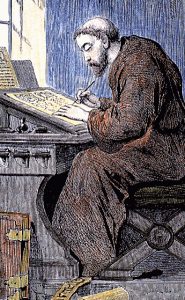 Christian Ireland, with its green color evoking rebirth and eternal life. The three leaves symbolize the “triple goddess” of ancient Ireland. Patrick is said to have taught the Irish about the Holy Trinity, using the three leaves of the shamrock to illustrate the Christian teaching of three persons in one God: the Father, the Son, and the Holy Spirit.
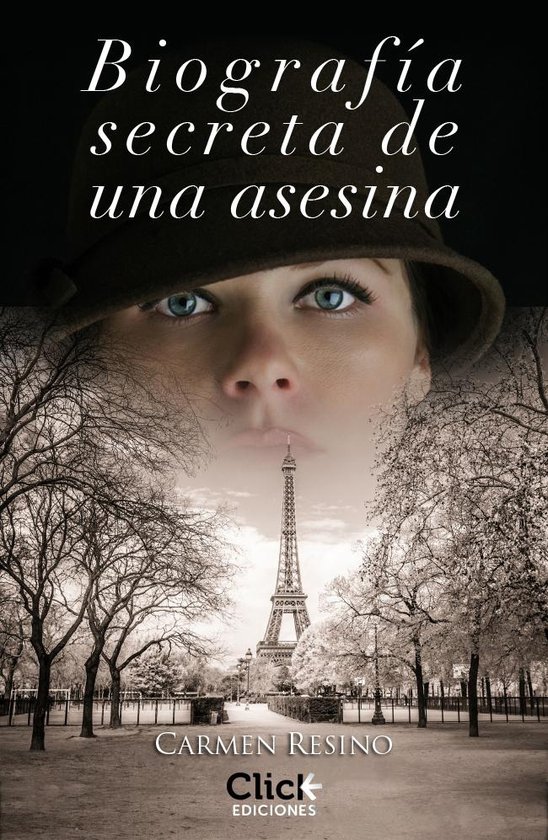
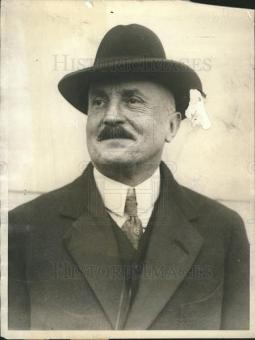
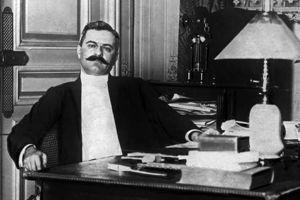
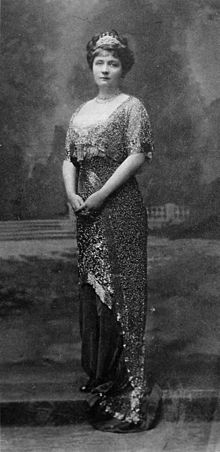
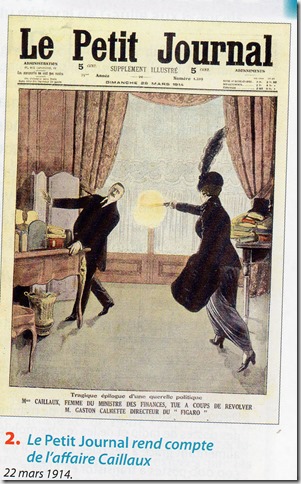 Right, the fall of the powerful, and all the salacious details anyone could ask for. Most of France was riveted by the Caillaux affair in July 1914, ignorant of the European crisis barreling down on them like the four horsemen of the apocalypse. Madame Caillaux’s trial for the murder of Gaston Calmette began on July 20.


 The partnership was doomed to fail, given the egos and animosities of the three. Crassus was killed in 52BC as Pompey became increasingly hostile to his co-ruler, who was then on campaign in Gaul. A string of military successes against Celtic and native Germanic tribes caused Caesar’s popularity to soar, posing a threat to the power of the Senate and to Pompey himself.
 Cimber presented him with a petition, as Senators crowded around. Cimber grabbed the Emperor’s shoulders and pulled down his tunic. “Ista quidem vis est!” said Caesar, “Why, this is violence!” Casca pulled a dagger and stabbed at the dictator’s neck. Caesar turned and caught him by the arm. “Casca, you villain, what are you doing?” Frightened, the Senator shouted “Help, brother!” in Greek “adelphe, boethei!” In seconds the entire group was striking at the dictator. Caesar attempted to get away but, blinded by his own blood, he tripped and fell. The men continued stabbing at him as he lay defenseless on the steps of the portico. According to Eutropius, 60 men participated in the assassination. Caesar was stabbed 23 times, though only one wound was fatal.

 As with cartoonist Charles M Shulz, those who knew Jacob Rubenstein called him “Sparky”. Some say the nickname was due to a resemblance to “Sparkplug”, the old nag with the patchwork blanket, from the Snuffy Smith cartoon strip. Rubenstein hated the nickname and was quick to fight anyone who called him that. It may have been that quick temper, that made the name stick.
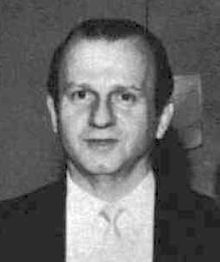 prostitution. There were rumored associations with Mafia boss Santo Trafficante. The less-than-honest part of the Dallas police force knew that Ruby was always good for free booze, prostitutes, and other favors. This was one unsavory guy.
 Part of the roof had either blown off this joint, or burned off, depending on which version you read. Jack, the owner, tore off the rest of it and kept the insurance money, calling it the “Skyline Lounge”. There was no need to pay for security, even without the roof. Jack said “Boys, this building ain’t exactly secure enough for you to leave your musical equipment unattended.” Band members were told they’d best stay overnight, with guns, lest anyone come over the wall to steal their equipment. Problem solved.
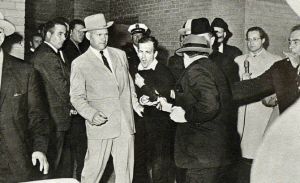 Half the country watched on live TV, as a man came out of the crowd, firing a single bullet from his .38 into the belly of Lee Harvey Oswald. Four musicians were shocked to realize the shooter was the man they had worked for months earlier, at that burned out dive bar. Jack Ruby.
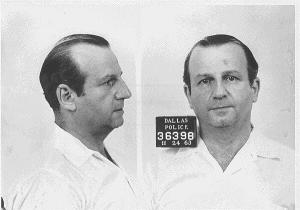 Jack Ruby was sentenced to death in the murder of Lee Harvey Oswald, on March 14, 1964. The Texas Court of Criminal Appeals overturned Ruby’s conviction in October 1966, on the grounds that the trial should have taken place in a different county than that in which his high profile crime had taken place. Ruby died of lung cancer the following January, while awaiting retrial.


 The most famous rivalry in the soft drink business began in the 1930s, when Pepsi offered a 12oz bottle for the same 5¢ as Coca Cola’s six ounces.
 “no sacred cows” among their products. He meant it. The company launched the top secret “Project Kansas”, to test and perfect the flavor for a new version of Coke. The company’s marketing department fanned out, holding taste tests, surveys, and focus groups.
 On an April Friday in 1985, Coke let the media know that a major announcement was coming the following Tuesday. Coca Cola officials spent a busy weekend preparing for the re-launch, while Pepsi Executives announced a company-wide holiday, taking out a full page New York Times ad proclaiming that “Pepsi had Won the Cola Wars”.


 On the morning of March 11, 1918, most of the recruits at Fort Riley, Kansas, were turning out for breakfast. Private Albert Gitchell reported to the hospital, complaining of cold-like symptoms of sore throat, fever and headache. By noon, more than 100 more had reported sick with similar symptoms.
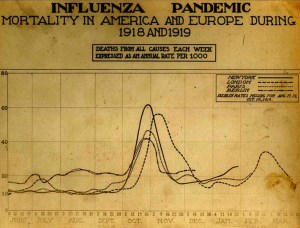 within hours of the first symptoms. There’s a story about four young, healthy women playing bridge well into the night. By morning, three were dead of influenza.
 Around the planet, the Spanish flu infected 500 million people. A third of the population of the entire world, at that time. Estimates run as high 50 to 100 million killed. For purposes of comparison, the “Black Death” of 1347-51 killed 20 million Europeans.
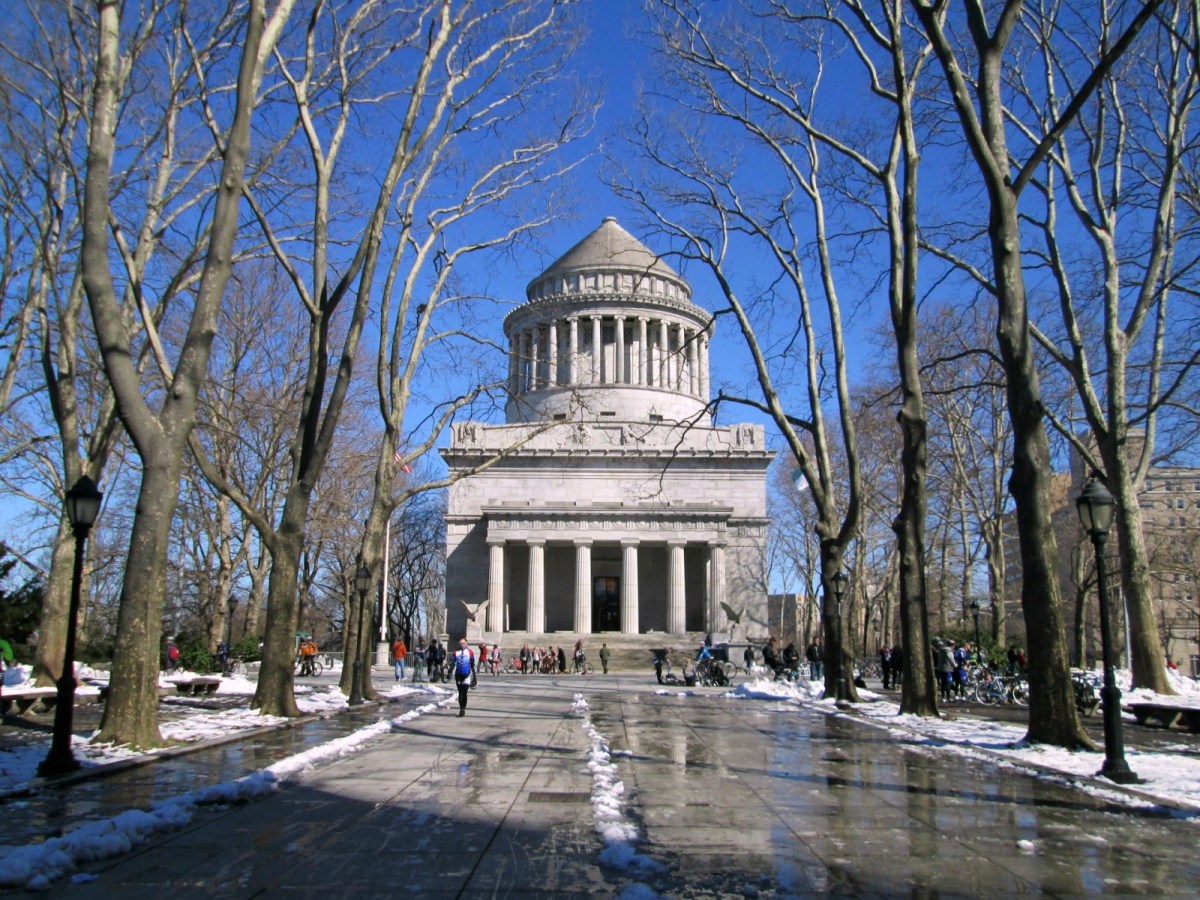
 The 1862 Civil War Battle of Fort Donelson secured the name, when then-Brigadier General Ulysses S. Grant received a request for terms from the fort’s commanding officer, Confederate Brigadier General Simon Bolivar Buckner. Grant’s reply was that “no terms except an unconditional and immediate surrender can be accepted. I propose to move immediately, upon your works.” The legend of “Unconditional Surrender” Grant, was born.
 later, going on to serve two terms after becoming, at that time, the youngest man ever so elected.
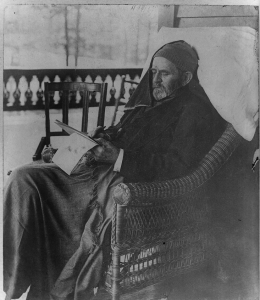 In June 1885, as the cancer spread through his body, the family moved to Mount MacGregor, New York, to make him more comfortable. Propped up on chairs and too weak to walk, Grant worked to finish the book as friends, admirers and even former Confederate adversaries, made their way to Mount MacGregor to pay their respects.

 The Alaska Territory was particularly vulnerable. The Aleutian Island chain was only 750 miles from the nearest Japanese base, and there were only 12 medium bombers, 20 pursuit planes, and fewer than 22,000 troops in the entire territory. An area four times the size of Texas.
 equipment to Dawson Creek, the last stop on the Northern Alberta Railway. At the other end, 10,670 American troops arrived in Alaska that spring, to begin what their officers called “the biggest and hardest job since the Panama Canal.”
 A route through the Rockies hadn’t even been identified yet.
 On October 25, Refines Sims Jr. of Philadelphia, with the all-black 97th Engineers was driving a bulldozer 20 miles east of the Alaska-Yukon line, when the trees in front of him toppled to the ground. He slammed his machine into reverse as a second bulldozer came into view, driven by Kennedy Texas Private Alfred Jalufka. North had met south, and the two men jumped off their machines, grinning. Their triumphant handshake was photographed by a fellow soldier and published in newspapers across the country, becoming an unintended first step toward desegregating the US military.

 Historical Easter Eggs - Today in History
You must be logged in to post a comment.