June 18, 1815 A Handful of Nails

For want of a nail the battle was lost…

The Napoleonic Wars began in 1799, pitting the Grand Armée of Emperor Napoleon Bonaparte against a succession of international coalitions. The first five such coalitions formed to oppose him would go down to defeat.

The empire of Czar Alexander I had long traded with Napoleon’s British adversary. Napoleon invaded Russia in 1812 intending to cut off that trade, but made the same mistake which Adolf Hitler would make, 130 years later. He failed to account for Russia’s greatest military asset – General Winter.

Night_Bivouac_of_Great_Army
The Night Bivouac of the Great Army, by Vasily Vereshchagin

For months, Napoleon’s army pressed ever deeper into Russian territory, as Cossack cavalry burned out villages and fields to deny food or shelter to the advancing French army. Napoleon entered the Russian capital of Moscow that September, with expectations of capitulation.  Instead, he got more scorched earth.

French_invasion_of_Russia_collage
French invasion of Russia


With the dread Russian winter coming fast, there was no choice but to turn about. Starving and exhausted with no winter clothing, stragglers were frozen in place or picked off by villagers or pursuing Cossacks. From Moscow to the frontiers you could follow their retreat, by the bodies they left in the snow. 685,000 had crossed the Neman river on June 24. By mid-December, barely 27,000 straggled home from Russian soil.

The War of the 6th Coalition ended in 1814 with Bonaparte’s defeat and exile to the Mediterranean island of Elba, and the restoration to the throne of the Bourbon King Louis VXIII. The Emperor returned at the head of another army, in 111 days.

Tuscan_archipelago

The Congress of Vienna declared Napoleon an outlaw on March 13, 1815, when Austria, Prussia, Russia and the United Kingsom bound themselves to put 150,000 men apiece into the field to end his reign.

Napoleon struck first, taking 124,000 men of l’Armee du Nord on a pre-emptive strike against the Allies in Belgium. Intending to attack Coalition armies before they combined, he struck and defeated the Prussian forces of Gebhard von Blücher near the town of Ligny.

Napoleon then turned his attention to the coalition forces under Lord Arthur Wellesley, Duke of Wellington, who fell back to a carefully selected position on a long east-west ridge at Mont St Jean, a few miles south of the village of Waterloo.

waterloo_battle

It rained all day and night, that Saturday. Napoleon waited for the ground to dry on the morning of June 18, launching his first attack before noon.  Wellington’s Prussian allies were still five hours away. The 80 guns of the Grande batterie opened fire at 11:50, while Wellington’s reserves sheltered out of sight on the reverse slope of the Mont St. Jean ridge. French infantry swarmed the stone buildings of the Château Hougomont on Wellington’s right, and La Haye Sainte on his left.

Waterloo, Chateau Battle

Most French infantry reserves were committed by 4:00pm, when Marshall Ney ordered the massed cavalry assault. Colonel Cornelius Frazer watched the mass of riders  and thought to himself: “They are going to roll over us.” In a flash, Frazer ordered: “Form squares!”  9,000 cuirassiers charged up the hill as Wellington’s artillery responded with canister and shot, turning their cannon into giant shotguns tearing holes in the French ranks.

waterloo-cavalry-charge

It was common practice of the time to “spike” enemy cannon, driving a nail into the touchhole and disabling the weapon. Marshal Ney’s aide Colonel Pierre-Agathe Heymès, frantically cried out “Les clous!” “Nails! Spike the guns!”

Not one rider had thought to bring them.

Eleven times French cavalry gained the hill and surrounded those guns. Eleven times the gunners retreated into defensive infantry squares, bristling with spears. Eleven times they returned to their pieces, to fire into French cavalry as it withdrew.

Waterloo_Cavalry

Newly arrived Prussians were pouring in from the right at 7:30 when Napoleon committed his 3,000 man Imperial Guard. These were Napoleon’s elite soldiers, almost seven feet tall in their high bearskin hats. Never defeated in battle, they came up the hill intending to roll up Wellington’s center, away from their Prussian allies. 1,500 British Foot Guards were lying down to shelter from French artillery. As the French lines neared the top of the ridge, the English stood up, appearing to rise from the ground and firing point blank into the French line.

The furious counter assault which followed caused the Imperial Guard to waver, and then retreat. Someone shouted “La Garde recule. Sauve qui peut!” (“The Guard retreats. Save yourself if you can!”), as the Allied army rushed forward and threw themselves on the retreating French.

There is a story, possibly apocryphal, concerning Henry Paget, 2nd Earl of Uxbridge. One of the last cannon balls fired that day hit Uxbridge just above the knee, all but severing the limb. Lord Uxbridge was close to Wellington at the time, exclaiming “By God, sir, I’ve lost my leg!”. Wellington replied “By God, sir, so you have!” There’s another version in which Wellington says “By God, sir, you’ve lost your leg!”. Looking down, Uxbridge replied “By God, sir, so I have!”

waterloo

As night fell, hundreds of locals emerged with hammers, pliers and chisels, combing the battlefield to remove the teeth of tens of thousands of dead and dying soldiers. Demand for human teeth was high and looters sold them by the tens of thousands, to dentists, who formed them into dentures. According to England’s National Army Museum, British dentists did nothing to conceal where they came from, advertising their appliances as “Waterloo teeth.” As late as the American Civil War, English dentists continued to do a brisk trade in “Waterloo ivory.”

Estimates of the total killed and wounded in the Napoleonic wars range from 3.5 to 6 million. Until Waterloo, Napoleon Bonaparte participated in, and won, more battles than Julius Caesar, Hannibal, Frederick the Great, and Alexander the Great.  Combined.

51FJajZqFIL._SL300_Austrian military history professor Erik Durschmied wrote in his excellent book`The Hinge Factor‘, of the times when serendipity,  ‘chance and stupidity have changed history.’  According to Wellington, the Battle of Waterloo was “the nearest-run thing you ever saw in your life.” The French defeat was comprehensive.  Bonaparte was captured and exiled, this time to a speck in the North Atlantic called Saint Helena.  All, for a handful of nails.

If you enjoyed this “Today in History”, please feel free to re-blog, “like” & share on social media, so that others may find and enjoy it as well. Please click the “follow” button on the right, to receive email updates on new articles.  Thank you for your interest, in the history we all share.

June 17, 1462 Son of the Dragon

In a time and place remembered for near-cartoonish levels of violence, Vlad Țepeș stands out for extraordinary cruelty.

Count Dracula, favorite of Halloween costume shoppers from time immemorial, has been with us since the 1897 publication of Bram Stoker’s novel, of the same name.  Stoker’s working titles for the manuscript were “The Un-dead”, and “Count Wampyr”. He nearly kept one of them too, until stumbling into the real-life story of Vlad Țepeș (TSE·pesh), a Wallachian Prince and front-line warrior, against the Jihad of his day.

In modern Romanian, “Dracul” means “the Devil”. In the old language, it meant “the Dragon”, the word “Dracula” (Drăculea) translating as “Son of the Dragon”.

166-vlad-tepes_246_9379154c5086651cL.jpgStoker wrote in his notes, “in Wallachian language means DEVIL”. In a time and place remembered for near-cartoonish levels of violence, Vlad Țepeș stands out for his extraordinary cruelty. There are tales of Țepeș disemboweling his own mistress. That he collected the noses of vanquished adversaries.  Some 24,000 of them. That he dined among forests of victims, spitted on poles. That he even impaled the donkeys they rode in on.
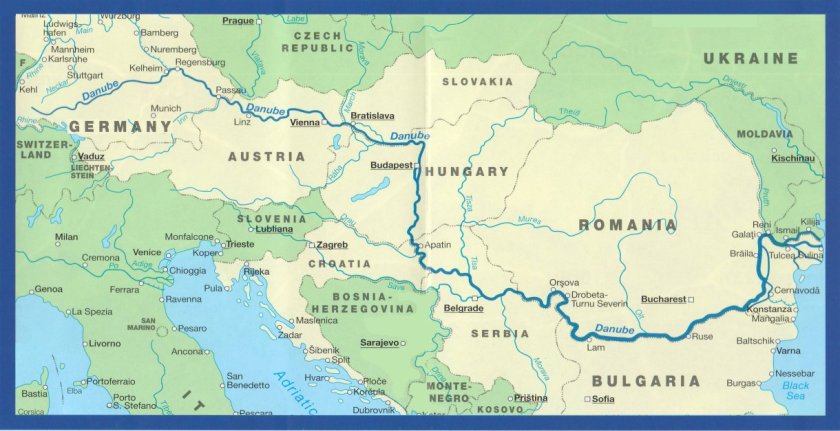
In 1436, Vlad II became voivode (prince) of Wallachia, a region in modern-day Romania situated between the Lower Danube river and the Carpathian Mountains.  The sobriquet “Dracul” came from membership in the “Order of the Dragon” (literally “Society of the Dragonists”), a monarchical chivalric order founded by Holy Roman Emperor Sigismund in 1408, and dedicated to stopping the Ottoman advance into Europe.

A crossroads between East and West, the region was scene to frequent bloodshed, as Ottoman forces pushed westward into Europe, and Christian forces pushed back..

A weakened political position left Vlad II no choice but to pay homage to Ottoman Sultan Murad II, in the form of an annual Jizya (tax on non-Muslims) and a contribution of 500 Wallachian boys to serve as Janissaries in the elite slave army of the Ottoman Empire.

Vlad was taken hostage by the Sultan in 1442, along with his two younger sons, Vlad III and Radu.  The terms of the boys’ captivity were relatively mild by the standards of the time and both became skilled horsemen and warriors. Radu went over to the Turkish side, but Vlad hated captivity, developing an incandescent hate for his captors which would last all his life.

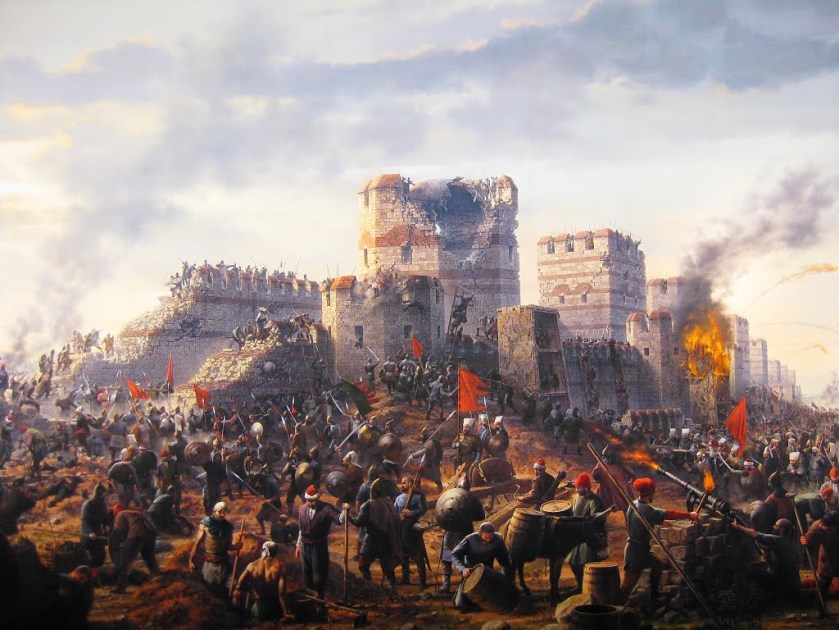
Following the fall of Constantinople in 1453, Sultan Mehmed II set his sights on the invasion of all Europe.

84086982
Fall of Constantinople

The younger Vlad gained the Wallachian throne three years later and immediately stopped all tribute to Sultan Mehmed II, by now risen to 10,000 ducats per year, and 1,000 boys.  When a group of visiting Ottoman envoys declined to remove their turbans in Vlad’s court, the Prince ordered the turbans nailed to their skulls.

Vlad now consolidated power as his reputation for savagery, grew.  According to stories circulated after his death, hundreds of disloyal boyars (nobles) and their allies met their end, impaled on spikes.

Mehmed II, conqueror of Constantinople, now amassed power of his own, setting his sights on campaigns against Anatolia, the Greek Empire of Trebizond and the White Sheep Turkomans of Uzun Hasan.   Throughout this period, Romanian control of the Danube remained a thorn in his side.

danuberiver2016x007
Danube River

Pope Pius II declared a new Crusade against the Ottoman in 1460, but Vlad Țepeș was the only European leader to show any enthusiasm.  The Hungarian General and Ţepeş’ only ally Mihály Szilágyi was captured by the Turks, his men tortured to death and Szilágyi himself sawed in half.

Țepeș invaded the Ottoman Empire the following year.  In a letter to Hungarian king Matthias Corvinus dated February 11, 1462, Țepeș wrote:  I have killed peasants men and women, old and young, who lived at Oblucitza and Novoselo, where the Danube flows into the sea, up to Rahova, which is located near Chilia, from the lower Danube up to such places as Samovit and Ghighen. We killed 23,884 Turks without counting those whom we burned in homes or the Turks whose heads were cut by our soldiers…Thus, your highness, you must know that I have broken the peace with him (Sultan Mehmed II).

The Sultan invaded Wallachia at the head of a massive army, only to find a “forest of the impaled”.  The Byzantine Greek historian Laonikos Chalkokondyles writes: “The sultan’s army entered into the area of the impalements, which was seventeen long and seven stades wide”.

To give a sense of scale to such a horror, a “stade” derives from the Greek “stadeon” – the dimensions of an ancient sports arena.

Vlad DraculaOutnumbered five-to-one, Ţepeş employed a scorched earth policy, poisoning the waters, diverting small rivers to create marshes and digging traps covered with timber and leaves. He would send sick people among the Turks, suffering lethal diseases such as leprosy, tuberculosis and bubonic plague.
From his years in captivity, Ţepeş understood Ottoman language and customs as well as the Turks themselves.  Fearless, he would disguise himself as a Turk and freely walk about their encampments, gaining valuable intelligence on the Sultan’s organization.

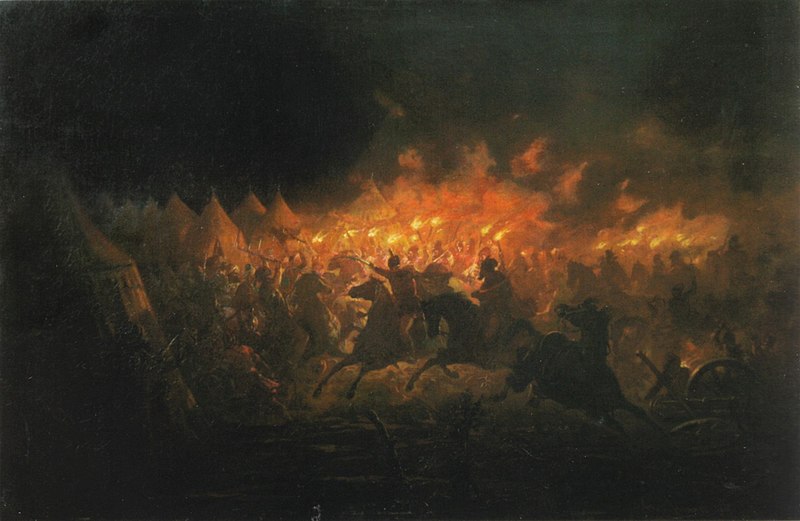
On this day in 1462, the Son of the Dragon launched a night attack on the Ottoman camp near the capital city of Târgoviște, in an effort to assassinate Mehmed himself.  Knowing that the Sultan forbade his men from leaving their tents at night, a force of some 7,000 to 10,000 horsemen fell on Mehmed’s camp three hours after sunset.  The skirmish lasted all that night until 4 the next morning, killing untold numbers of Turks, their horses and camels.  Ţepeş himself aimed for the Sultan’s tent, but mistook it for that of two grand viziers, Ishak Pasha and Mahmud Pasha.

800px-AtaculdeNoapte
The Battle With Torches by Romanian painter Theodor Aman. It depicts the The Night Attack of Târgovişte,

Mehmed II “The Conqueror” survived the Night Attack at Târgovişte.  In the end, the Romanian principalities had little with which to oppose the overwhelming force of the Ottoman Empire. Vlad III Țepeș would twice be deposed only to regain the throne but never able to defeat his vastly more powerful adversary.

“Vlad the Impaler” was exiled to Hungary where he spent much of his time, in prison.  He died fighting against the Ottomans in December 1476 or January 1477, his body cut into pieces and his head delivered to the Sultan.  Drăculea is buried in an unknown grave, stories of his cruelty told and retold in Russian, German and a hundred other languages.  Five hundred years later, the Son of the Dragon is remembered as the un-dead vampire, Count Dracula.


If you enjoyed this “Today in History”, please feel free to re-blog, “like” & share on social media, so that others may find and enjoy it as well. Please click the “follow” button on the right, to receive email updates on new articles.  Thank you for your interest, in the history we all share.

June 16, 1775 Act Worthy of Yourselves

“You are to decide the important question, on which rest the happiness and liberty of millions yet unborn.  Act worthy of yourselves.”

The city of Charlestown, Massachusetts occupies a hilly peninsula to the north of Boston, at the point where the Mystic River meets the Charles. Like Boston itself, much of what is now Charlestown was once Boston Harbor.  In 1775 the town was a virtual island, joined to the mainland only by a thin “neck” of land.

bunkerhilllg

Thousands of Patriot Militia poured into the area following the April battles of Lexington and Concord, blocking British forces in control of Boston and its surrounding waterways.

The Massachusetts Provincial Congress received word on June 13 that a massive assault was planned for the 18th, intending to take the high ground at Dorchester Heights to the south, and Charlestown to the north. Major General Israel Putnam was directed to set up defenses on Bunker Hill, on the northwest end of Charlestown.

Col. William Prescott led 1,200 men onto the peninsula on the night of the 16th, with orders to construct fortifications on Bunker Hill.  Some work was performed on the hill which gives the battle its name, but it was farmer Ephraim Breed’s land 1/3rd of a mile closer to Boston, which offered the more tenable hill from which to defend the peninsula.

Shovels could be heard throughout the night.  The sun rose on the morning of June 17 to reveal a six-foot-high defensive earthwork running the length of Breed’s hill.  Peering through the early morning fog, General Howe was astonished at what he saw. “The rebels,” he said, “have done more work in one night than my whole army would have done in one month.”

The warship HMS Lively opened fire on the redoubt shortly after 4am, with little effect, as Prescott’s men continued work on the entrenchment. 128 guns joined in as the morning bore on, including incendiary shot, setting fire to the town.

hms-somerset-bunker-hill

Ten miles to the south, a 7-year-old future President of the United States stood atop a hill with his mother Abigail, listening to the thunder of the guns and watching the smoke rise above Charlestown. John Quincy Adams would later write that he “witnessed the tears of my mother and mingled with them my own.”

Militia continued to reinforce the high ground throughout the morning hours, as Regulars commanded by Major General William Howe and Brigadier General Robert Pigot crossed the Charles River and assembled for the assault.

Battle_of_Bunker_HillThe British line advanced up Breed’s Hill twice that afternoon, Patriot fire decimating their number and driving the survivors back down the hill to reform and try again.

Militia supplies of powder and shot began to give out as the Redcoats advanced up the hill for the third assault. “Don’t fire until you see the whites of their eyes”. The quote is attributed to Prescott, but the order seems to have originated with General Putnam and passed along by Prescott, Seth Pomeroy, John Stark and others, in a desperate attempt to conserve ammunition.

BunkerHill2

Finally, there was nothing left with which to oppose the British bayonets.  In desperate hand to hand fighting, the Militia was forced to retreat.

Most of the colonists’ casualties occurred at this time, including Boston physician and President of Massachusetts’ Provincial Congress, Dr. Joseph Warren. Warren had been appointed Major General on June 14, but declined command, believing Putnam and Prescott to be more experienced soldiers.  On this day, Dr. Warren fought as a private soldier.

Two months before the battle, Joseph Warren had spoken to his men. “On you depend the fortunes of America”, he said. “You are to decide the important question, on which rest the happiness and liberty of millions yet unborn.  Act worthy of yourselves.”

That they did. The Americans had gone toe-to-toe with the most powerful military of its time, suffering 452 killed and wounded.  Lieutenant Lord Rawdon recognized Dr. Warren on the third assault, and killed him with a musket ball to the head.  Warren’s body was bayoneted beyond recognition and thrown into a ditch.

Dr. Warren’s body was exhumed some ten months later after the British evacuation of Boston, and identified by a false tooth made for him by the amateur dentist, Paul Revere.  It may be the first instance of forensic dentistry, in American history.

800px-The_Death_of_General_Warren_at_the_Battle_of_Bunker's_Hill
The Death of General Warren at the Battle of Bunker Hill, by John Trumbull

The Battle of Bunker Hill was a military victory for the British side, but it was a Pyrrhic victory.  Howe lost 226 men killed and 828 wounded, over a third of his number and over twice that of the Militia. One-eighth of all the British officers killed and one-sixth of those injured during the entire Revolution, occurred on Breed’s Hill.

General Thomas Gage wrote after battle, “The loss we have sustained is greater than we can bear.”  Private Nathanael Greene, destined to become one of the Continental Army’s most important Generals, quipped “I wish [we] could sell them another hill at the same price.”


If you enjoyed this “Today in History”, please feel free to re-blog, “like” & share on social media, so that others may find and enjoy it as well. Please click the “follow” button on the right, to receive email updates on new articles.  Thank you for your interest, in the history we all share.

June 15 1904 A Community, no More

The General Slocum disaster killed fewer than one per cent of the overall population of Little Germany, yet these were the women and children of some of the community’s most established families.  

In the first full century of American independence, three great waves of European and later Asian immigrants left their homes in the ‘old country’, headed for a life in the new world.

The-Scotch-Irish-the-Eighteenth-Century-Irish-Diaspora-1Starvation, shipwreck and disease killed no fewer than 1 in 10 during the period 1790 – 1820, without any so much as setting foot in the new world. And still they came.
The largest non-English speaking minority were the ethnic Germans, escaping economic hardship and in search of political freedom.  At the time of the Civil War, nearly one-quarter of all Union troops were German Americans, some 45% of whom were born in Europe.

German migration rose faster than any other immigrant group through the latter part of the 19th century and into the 20th, many in pursuit of agricultural opportunity while others settled in major cities such as New York and Philadelphia.

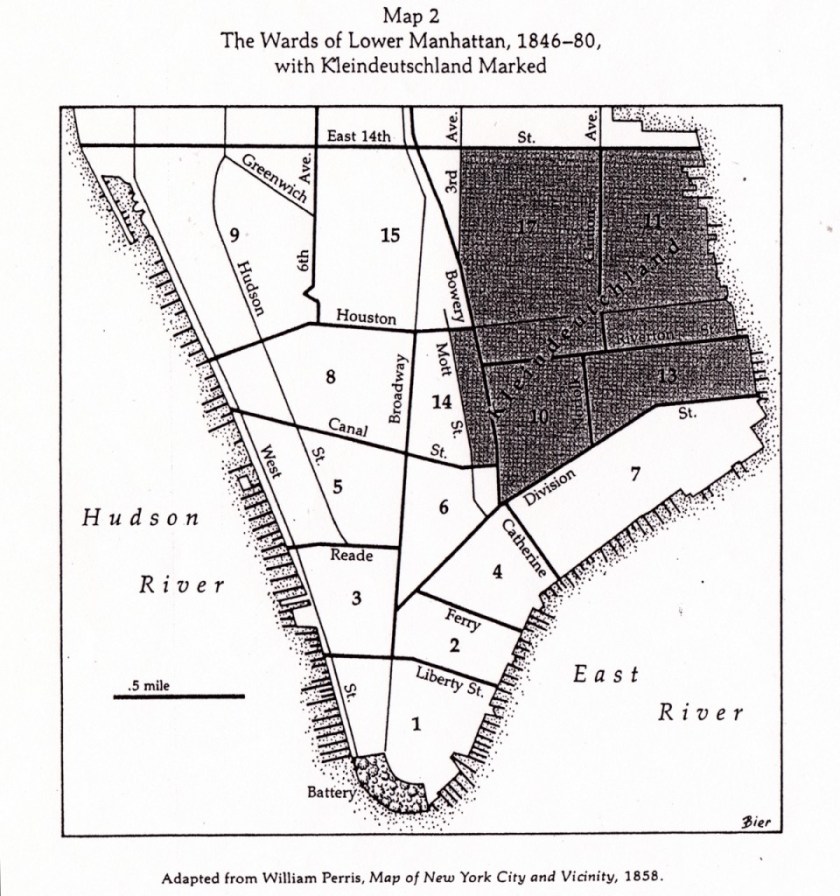
Kleindeutschland, or “Little Germany”, occupied some 400 blocks on the Lower East Side of Manhattan, in what is now the East Village. “Dutchtown”, as contemporary non-Germans called the area, was home to New York’s German immigrant community since the 1840s, when they first began to arrive in significant numbers. By 1855, New York had the largest ethnically German community in the world, save for Berlin and Vienna.

Little Germany

June 15, 1904 dawned bright and beautiful on Little Germany, a beautiful late spring morning when the sidewheel Passenger Steamboat General Slocum left the dock and steamed into the East River.

PS General Slocum was on a charter this day, carrying German-American families on an outing from St. Mark’s Lutheran Church on a harbor cruise and picnic. Over a thousand tickets were sold, not counting 300+ children who were sailing for free.

general_slocum_1

There were 1,342 people on board, mostly women and children, including band, crew and catering staff.

The fire probably started when someone tossed a cigarette or match into the forward section lamp room. The flames spread quickly, fueled by lamp oil and oily rags.  A 12-year old boy first reported the fire, but the Captain didn’t believe him.  The fire was first noticed at around 10:00am.

The ships’ operators had been woefully lax in maintaining safety equipment. Now it began to show. Fire hoses stored in the sun for years were uncoiled, only to break into rotten bits in the hands of the crew. Life preservers manufactured in 1891 had hung unprotected in the sun for 13 years, their canvas covers splitting apart pouring useless cork powder onto the floor. Survivors reported inaccessible life boats, wired and painted into place.

slo-345x180

Crew members reported to Captain William van Schaick that the blaze “could not be conquered.” It was “like trying to put out hell itself.” The captain ran full steam into the wind trying to make it to the 134th Street Pier, but a tug boat waved them off, fearing the flames would spread to nearby buildings.

The wind and the speed of the ship itself whipped the flames into an inferno as Captain van Schaick changed course for North Brother Island, just off the Bronx’ shore.
Many jumped overboard to escape the inferno, but the heavy women’s clothing of the era quickly pulled them under.

Slocum 1

Desperate mothers put useless life jackets on children and threw them overboard, only to watch in horror as they sank. One man, fully engulfed in flames, jumped screaming over the side, only to be swallowed whole by the massive paddle wheel.

One woman gave birth in the confusion, and then jumped overboard with her newborn to escape the flames. They both drowned.

A few small boats were successful in pulling alongside in the Hell’s Gate part of the harbor, but navigation was difficult due to the number of corpses already bobbing in the waves.

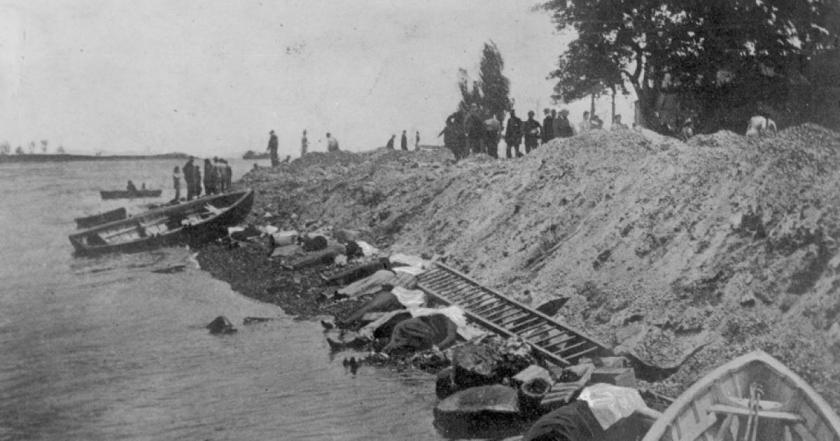
general-slocum-disaster

Holding his station despite the inferno, Captain van Schaick permanently lost sight in one eye and his feet were badly burned by the time he ran the Slocum aground at Brother Island.

Patients and staff at the local hospital formed a human chain to pull survivors to shore as they jumped into shallow water.

1,021 passengers and crew either burned to death, or drowned. It was the deadliest peacetime maritime disaster, in American history.

220px-Wotherspoon_01
Adella Liebenow

There were only 321 survivors.

The youngest survivor of the disaster was six-month-old Adella Liebenow. The following year at the age of one, Liebenow unveiled a memorial statue to the disaster which had killed her two sisters and permanently disfigured her mother.

The New York Times reported “Ten thousand persons saw through their tears a baby with a doll tucked under her arm unveil the monument to the unidentified dead of the Slocum disaster yesterday afternoon in the Lutheran Cemetery, Middle Village, L.I.”

Both of Liebenow’s sisters were among the unidentified dead.

The General Slocum disaster killed fewer than one per cent of the overall population of Little Germany, yet these were the women and children of some of the community’s most established families.

There were more than a few suicides.  Mutual recriminations devoured much of a once-clannish community, as the men began to move away.  2600326453_0eae4732c8

There was no longer anything for them, in that place.

Anti-German sentiment engendered by WW1 finished what the General Slocum disaster, had begun. Soon, New York’s German-immigrant community, was no more.

Deep inside the East Village, amidst the hipsters and the poets’ cafes of “Alphabet City”, stands a forgotten memorial.  A 9′ stele erected in Tompkins Square Park, sculpted from pink Tennessee Marble. The relief sculpture shows two children, beside them are inscribed these words: “They were Earth’s purest children, young and fair.

Once the youngest survivor of the disaster, Adella (Liebenow) Wotherspoon passed away in 2004, at the age of 100, the oldest survivor of the deadliest disaster in New York history.  Until September 11, 2001.


If you enjoyed this “Today in History”, please feel free to re-blog, “like” & share on social media, so that others may find and enjoy it as well. Please click the “follow” button on the right, to receive email updates on new articles.  Thank you for your interest, in the history we all share.


June 14, 1775 Army Strong

The “olive branch petition” adopted by the 2nd Continental Congress three months after the “shot heard ’round the world’ was a last-ditch attempt to prevent full-on war, but too late.  The die was cast. 

This “Today in History” is dedicated to United States Army Lieutenant Colonel (retired) Richard B. “Rick” Long, Sr., the man for whom this writer is namesake.  Rest in Peace, Dad.  You left us too soon.

February 25, 1937 – March 31, 2018

—————

When Caesar crossed the Rubicon River at the head of an army, everyone understood what it meant. A strife of interests would no longer be carried out by civil or legal means.  Caesar had crossed the military threshold and there was no turning back.  There would be civil war.  Republic would give way to Empire. Two thousand years later, to “Cross the Rubicon” still means to take a step which cannot be reversed.

Johnadamsvp.flipped
Future President John Adams defended the British soldiers accused in the “Boston Massacre”. Six of the eight were acquitted, the other two sentenced to branding, on the hand.

The British colonies in North America crossed a Rubicon of their own in April, 1775.  Before Lexington & Concord, there had always been a benefit of the doubt.  The ‘Boston Massacre‘ of five years earlier resulted not in insurrection but in trial, with Boston attorney John Adams acting for the defense.

The “olive branch petition” adopted by the 2nd Continental Congress three months after the ‘shot heard ’round the world’ was a last-ditch attempt to prevent full-on war, but too late.  The die was cast.

The first Continental Congress of 1774 convened in response to the ‘Coercive Acts”, imposed by the English Parliament to bring the colonists into line with Crown tax policy.  The 2nd Continental Congress gathered in Philadelphia the following year, had come for the conduct of war.

The fledgling United States had no Army at this time, relying instead on ad hoc militia units organized by the colonies themselves. At this time there were approximately 22,000 armed colonials surrounding some 4,000 British troops occupying Boston, and another 5,000 or so in New York.

The Continental Congress established the ‘American Continental Army’ on this day in 1775, authorizing 10 companies of ‘expert riflemen,’ to serve as light infantry in the siege of Boston. The next day the Congress unanimously chose George Washington to be General and Commander-in-Chief of all continental forces.

14-1-87_s

During those first years of the war, American ground forces more closely resembled a ragtag assemblage of state militias, than a professional army.

Following the 1779 Battle of Stony Point, Brigadier General Anthony Wayne was able to write to Washington, “Dear Gen’l: The fort and Garrison with Col. Johnston are ours. Our officers and men behaved like men who are determined to be free.”

Most of the Continental Army was disbanded following the Treaty of Paris, formally ending the war in 1783. The 1st and 2nd Regiments remained, becoming the basis of the Legion of the United States in 1792 and forming the foundation of the United States Army in 1796, an organization since evolved into the premier fighting force, of all the world.

Battle-Streamers
United States Army flag, with campaign streamers

The Army’s official banner features the original War Office Seal in blue on a white field over a scarlet banner displaying the words “United States Army” and the year, ‘1775’. The flag was adopted by President Dwight Eisenhower on June 12, 1956, officially dedicated and unfurled before the general public on June 14, 1956, the 181st birthday of the United States Army.

The concept of individual campaign streamers first came about during the Civil War. When on full display, the US Army flag currently includes 190 such streamers.

The Navy came about in October of 1775, the Marine Corps a month later. 18th century revenue cutter and rescue operations led to the formation of the United States Coast Guard in January, 1915.

According to the website www.usmma.edu, the federal government first began training its citizens for naval service during the Grant administration.  Congress passed the landmark Merchant Marine Act in 1936.  The Air Force spun off of the Army Air Corps, eleven years later.

MILITARY-4-1075x806


On August 31, 1949, Defense Secretary Louis Johnson announced the creation of Armed Forces Day, the 3rd Saturday in May, to recognize the contributions of the United States military and its constituent branches. Speaking at an Armed Forces Day event in 1953, President Dwight David Eisenhower remarked that: “It is fitting and proper that we devote one day each year to paying special tribute to those whose constancy and courage constitute one of the bulwarks guarding the freedom of this nation and the peace of the free world.

220px-Nobel_PrizeFrom the dawn of the 20th century, the Nobel Peace prize was awarded to individuals and organizations which have “done the most or the best work for fraternity between nations, for the abolition or reduction of standing armies and for the holding and promotion of peace congresses.”

After two World Wars, is it possible that the United States military has done more to promote peace than all of those individuals and organizations, combined?

If you are so inclined, it would be proper to pay tribute and thank a teacher, that you are able read this essay.  On this, the birthday of the United States Army, you might thank a soldier that you can read it, in English.

—————

A Personal Note:
While I never served my country in uniform, on this day I pay a personal debt of gratitude, to those of my family circle, who have.
I remember my ancestor, the farmer who left to fight the most powerful military of his time, that this nation might gain its independence.
The Tyner brothers: my twice-great grandfather James and his brothers, Nicholas, Benjamin and William, who fought for what each considered to be their country, in the war between the states. Nicholas alone would survive, laying down his arms under General Lee’s orders at Appomattox and walking home to the Sand hills of North Carolina, there to help his wife and three widowed sisters-in-law raise their 28 kids.
armyflagGreat Uncle Jacob Deppin was also there at Appomattox, wearing Blue. He served for the duration, save for the year and one-half spent in captivity.
Twice-great Grandfather Wilhelm Christian was the first to change the family surname from “Lang” to “Long”. Blacksmith to the 17th PA Cavalry, his name may be found with those of fifty-six other ‘Langs’, ‘Langens’ and ‘Longs’, on the Pennsylvania monument at Gettysburg. How many are relations, is anyone’s guess.
I honor my grandfather Norman. Wounded in the Great War, he’s earned his final rest in our most hallowed ground, at Arlington.
I honor my Uncle Woodrow, killed in Anzio. Uncle Gary, who helped to fight the explosions and the fires that day in 1967, as the USS Forrestal burned. I honor my father-in-law Ken, the Airman who served with honor, in time of peace.
I honor my brothers’, Norm and Dave, with over 50 years service between them. Even now in retirement, both maintain themselves in a state of fitness and readiness, in case that call comes in one more time.
I honor my son in law Nate and his ‘battle buddy ‘Zino’, the four-year-old German Shepherd turned Tactical Explosives Detection Dog, trained to detect up to 64 explosive compounds. Theirs was to protect a Forward Operating base in Soltan Kheyl, in the Wardak Province of Afghanistan. Together the pair found and neutralized more improvised explosive devices than any other team in their sector. There can be no knowing how many lives were saved by this pair.
And I honor the family members, most often the wives and mothers. It is they who are left to run the family unit and the household alone, never knowing if it will be for a time, or forever.
Rick Long

June 13, 1777 An Indispensable Man

The two men bonded almost immediately, forming a relationship closely resembling that of father and son.  The fatherless young French officer, and the father of his country who went to his grave, childless.

There are a handful of men who were indispensable to the American Revolution, men without whom the war effort would have been doomed to failure.

One, of course is George Washington, who became commander in chief before he had an army, before there was even a country. Washington took command of a rebel army with barely enough powder for nine shots per man, knowing all the while that, if caught, the penalty at that time for high treason was to be drawn, quartered and disemboweled, before the dying eyes of the prisoner so convicted.

La_Fayette_by_Weyler
LaFayette by Weyler

Another Indispensable would have to be Benjamin Franklin, whose diplomatic skills and unassuming charm elevated him to the status of a rock star among the circles of power at Versailles. It was Benjamin Franklin who transformed the French nation from mildly interested spectator to a  crucially important ally.

A third would arguably be Marie-Joseph Paul Yves Roch Gilbert du Motier, better known as the Marquis de Lafayette.

Lafayette was all of nineteen when he arrived in North Island South Carolina on June 13, 1777.

The French King had forbidden him from coming to America, fearing his capture by British agents. Lafayette wanted none of it. His own father, also the Marquis de Lafayette, was killed fighting the British when the boy was only two. The man was going to take part in this contest, if he had to defy his King to do it.

Lafayette disguised himself on departure, and purchased the entire ship’s cargo with his own money, rather than landing in Barbados and thus exposing himself to capture.

Lafayette and Washington_at_Mount_Vernon,_1784

Franklin had written to Washington asking him to take the young man on, in hopes of securing an increase in French aid to the American war effort.

The two men bonded almost immediately, forming a relationship closely resembling that of father and son.  The fatherless young French officer, and the father of his country who went to his grave, childless.

Lafayette wrote home to his wife in 1778, from Valley Forge. “In the place he occupies, he is surrounded by flatterers and secret enemies. He finds in me a trustworthy friend in whom he can confide and who will always tell him the truth. Not a day goes by without his talking to me at length or writing long letters to me. And he is willing to consult me on most interesting points.”

Lafayette served without pay, spending the equivalent of $200,000 of his own money for the salaries and uniforms of staff, aides and junior officers. He participated in several Revolutionary War battles, including Brandywine, Monmouth Courthouse and the final siege at Yorktown.

All the while, Lafayette periodically returned to France to work with Franklin in securing thousands of additional troops and several warships to aid in the war effort.

Lafeyettes wife Marie_Adrienne_FrancoiseLafayette’s wife Adrienne gave birth to their first child on one such visit, a baby boy the couple would name Georges Washington Lafayette.

It was a small force under Lafayette that took a position on Malvern Hill in 1781, hemming in much larger British forces under Lord Cornwallis at the Yorktown peninsula.

The trap was sprung that September with the arrival of the main French and American armies under the Comte de Rochambeau and General George Washington, and the French fleet’s arrival in the Chesapeake under the Comte de Grasse.

Cornwallis surrendered on October 19, 1781, after which Lafayette returned to France.

The Marquis played an important role in his own country’s revolution, becoming a Commander of the French National Guard. When the Bastille was stormed by an angry mob in 1789, Lafayette was handed the key. Lafayette later sent the key to the Bastille to George Washington, as a “token of victory by Liberty over Despotism”. Today that key hangs in the main hallway at Washington’s mansion at Mount Vernon.

img_3767

When the French Marquis died in 1834, President Andrew Jackson ordered that he be accorded the same funeral honors which President John Adams bestowed on George Washington himself, back in 1799. John Quincy Adams delivered the three-hour eulogy in Congress, saying “The name of Lafayette shall stand enrolled upon the annals of our race high on the list of the pure and disinterested benefactors of mankind.”

Lafayette-grave

The Marquis de Lafayette lies under several feet of earth shipped to France from Bunker Hill on the Charlestown peninsula, in obedience to one of his last wishes.  He had always wanted to be buried under American soil.

lafayette

If you enjoyed this “Today in History”, please feel free to re-blog, “like” & share on social media, so that others may find and enjoy it as well. Please click the “follow” button on the right, to receive email updates on new articles.  Thank you for your interest, in the history we all share.

June 12, 1928 The Luckiest Man on the Face of the Earth

Sports reporter James Kahn wrote: “I think there is something wrong with him. Physically wrong, I mean. I don’t know what it is, but I am satisfied that it goes far beyond his ball-playing”.

The Lane Tech high school baseball team was at home on June 26, 1920. 10,000 spectators had assembled to watch the game at Cubs Park, now Wrigley Field. New York’s Commerce High was ahead 8–6 in the top of the 9th, when a left handed batter hit a grand slam out of the park. No 17-year-old had ever hit a baseball out of a major league park before, and I don’t believe it’s happened, since. It was the first time the country heard the name Lou Gehrig.

lou-gehrig-columbia-universityGehrig was pitching for Columbia University against Williams College on April 18, 1923, the day that Babe Ruth hit the first home run out of the brand new Yankee Stadium. Though Columbia would lose the game, Gehrig struck out seventeen batters to set a team record.

The loss didn’t matter to Paul Krichell, the Yankee scout who’d been following Gehrig. Krichell didn’t care about the arm either, as much as he did that powerful left-handed bat. He had seen Gehrig hit some of the longest home runs ever seen on several eastern campuses, including a 450′ home run at Columbia’s South Field that cleared the stands and landed at 116th Street and Broadway.

NY Giants manager John McGraw persuaded a young Gehrig to play pro ball under a false name, Henry Lewis, despite the fact that it could jeopardize his collegiate sports eligibility. Gehrig played only a dozen games for the Hartford Senators before being found out, and suspended for a time from college ball. This period, and a couple of brief stints in the minor leagues in the ’23 and ’24 seasons, were the only times Gehrig didn’t play for the New York team.

Gehrig started as a pinch hitter with the Yankees on June 15, 1923. He came into his own in the ‘26 season. In 1927 he batted fourth on “Murderers’ Row”, the first six hitters in the Yankee’s batting order: Earle Combs, Mark Koenig, Babe Ruth, Lou Gehrig, Bob Meusel and Tony Lazzeri.

Murderers--Row

He had one of the greatest seasons of any batter in history that year, hitting .373, with 218 hits: 52 doubles, 18 triples, 47 home runs, a then-record 175 RBIs, and a .765 slugging percentage. Gehrig’s bat helped the 1927 Yankees to a 110–44 record, the American League pennant, and a four game World Series sweep of the Pittsburgh Pirates.

On this day in 1928, Gehrig hit 2 triples and a pair of home runs, leading the Yankees in a 15-7 victory over the Chicago White Sox.  At Comiskey Park, no less.

lou-gehrig

He was the “Iron Horse”, playing in more consecutive games than any player in history. It was an “unbreakable” record, standing for 56 years, until surpassed in 1995 by Cal Ripken, Jr. Gehrig hit his 23rd and last major league grand slam in August 1938, a record that would stand until fellow Yankee Alex Rodriquez tied it in 2012.

lou-gehrig-5Lou Gehrig collapsed in 1939 spring training, going into an abrupt decline early in the season. The Yankees were in Detroit on May 2 when Gehrig told manager Joe McCarthy “I’m benching myself, Joe”. It’s “for the good of the team”. McCarthy put Babe Dahlgren in at first and the Yankees won 22-2, but that was it. The Iron Horse’s streak of 2,130 consecutive games, had come to an end.

Sports reporter James Kahn wrote: “I think there is something wrong with him. Physically wrong, I mean. I don’t know what it is, but I am satisfied that it goes far beyond his ball-playing”.

Gehrig left the team in June, arriving at the Mayo Clinic on the 13th. The diagnosis of Amyotrophic Lateral Sclerosis (ALS) was confirmed six days later, on June 19. It was his 36th birthday. It was a cruel prognosis: rapidly increasing paralysis, difficulty in swallowing and speaking, and a life expectancy of fewer than three years.

Yankees Tigers Gehrig Ends Streak

Gehrig briefly rejoined the Yankees in Washington, D.C. He was greeted by a group of Boy Scouts at Union Station, happily waving and wishing him luck. Gehrig waved back, but he leaned forward to a reporter. “They’re wishing me luck”, he said, “and I’m dying.”

Gehrig appeared at Yankee Stadium on “Lou Gehrig Appreciation Day”, July 4, 1939. He was awarded trophies and other tokens of affection by the New York sports media, fellow players and groundskeepers. He would place each one on the ground, already too weak to hold them. Addressing his fans, Gehrig described himself as “The Luckiest Man on the Face of the Earth”.

Henry Louis Gehrig died on June 2, 1941.  He was 37.

I drove by Yankee Stadium back in 2013, the week after the Boston Marathon bombing. The sign out front said “United we Stand”. With it was a giant Red Sox logo. That night, thousands of Yankees fans interrupted a game with the Arizona Diamondbacks, to belt out Neil Diamond’s “Sweet Caroline,” a staple of Red Sox home games since 1997.

terror30n-3-web

I thought about Lou Gehrig, and how the man compares with some of these guys today.  I’ve always been a Boston guy myself.  I think I’m required by state law, to hate the Yankees.  But, all kidding aside.  The man and the club.  They’re a pair of Class Acts.

Gehrig

If you enjoyed this “Today in History”, please feel free to re-blog, “like” & share on social media, so that others may find and enjoy it as well. Please click the “follow” button on the right, to receive email updates on new articles.  Thank you for your interest, in the history we all share.

June 11, 1775 The Lexington of the Sea

Called by some the “Lexington of the Sea”, the little-known episode was the first naval battle of the American Revolution, and ended in victory for the Patriot side. 

In the Passamaquoddy tongue, “Machias” roughly translates into “bad little falls”, after the river that runs through the place. Five hours and 15 minutes drive-time from Boston, Machias Maine sports a campus for the University of Maine, a municipal airport and, even today, a year-round population barely exceeding 2,000.

BAD LITTLE FALLS KC.JPG
Machias-area residents who discussed downtown revitalization Tuesday evening said the Bad Little falls was the town’s most distinctive element. (KATHERINE CASSIDY PHOTO)

Not necessarily a place where you’d expect the first naval combat of the American Revolution.

In 1775, the modern state of Maine was still part of Massachusetts. Machias itself, a small fishing village on the “Downeast” New England coast, had been a thorn in the British side, since the earliest days of the Revolution.   A local pilot intentionally grounded the coastal patrol schooner HMS Halifax that February, in Machias Bay.  The place also served as a base from which privateers preyed on British merchant shipping.

In April, a British foray from the occupied city of Boston had culminated in the Battle at Lexington Green.  While the King’s troops held the ground in the wake of the early morning skirmish, the decision of the afternoon’s battle at nearby Concord was quite different.  The colonial’s response to the column of “Regulars” was that of a swarming behive, resulting in a Patriot victory and a British retreat under fire, all the way back to Boston.

Siege-of-Boston-1-ABBoston was all but an island in those days, connected to the mainland only be a narrow “neck” of land.  A Patriot force some 20,000 strong took positions in the days and weeks that followed, blocking the city and trapping four regiments of British troops (about 4,000 men) inside of the city.
For General Thomas Gage, in charge of all those troops, the best hope for resupply was by water.

British Royal Navy Admiral Samuel Graves wanted the guns from the wreck of the Halifax, concerned they would otherwise fall into rebel hands.  Gage wanted lumber, with which to build barracks.  So it was that the wealthy merchant and Tory loyalist Ichabod Jones was enlisted to help, blissfully unaware of the dim view in which his activities were held by fellow colonials.

Jones arrived at Machias on June 2 aboard the merchant ships Unity and Polly, under guard of the armed schooner HMS Margaretta, commanded by Midshipman James Moore.  They had come to trade food for lumber but the townspeople were split, and voted against doing business with Jones.  This provoked a threat from the Margaretta, which moved into range to bombard the town.  The action resulted in a second vote and the trade was approved, but Jones’ response was ham-fisted.   The merchant would only do business, with those who had voted with him in the first place.

margaretta
HMS Margaretta

Local militia leader Colonel Benjamin Foster conceived a plan to seize the merchant, and saw his opportunity on June 11, when Jones and Moore were in church.  They almost had the pair too, but Jones saw some twenty men approaching, and fled for the woods.  Moore was able to get back to the Margaretta, but events soon spun out of control.

Colonel Foster and his brother, a man with the delightful name of Wooden Foster, seized the Unity.  A group of thirty began to construct breastworks to serve as protection, while others commandeered the coastal packet Falmouth.   There was gong to be a fight.

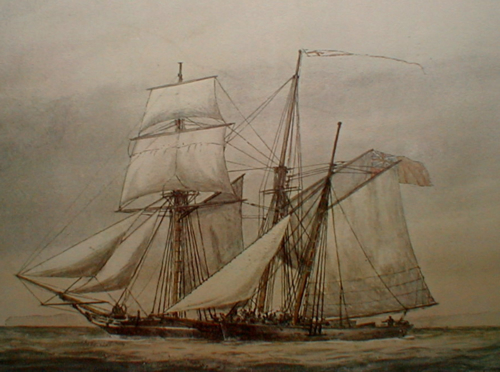
machias_meA group of Machias men approached Margaretta from the land and demanded her surrender, but Moore lifted anchor and sailed off in attempt to recover the Polly.  A turn of his stern through a brisk wind resulted in a boom and gaff breaking away from the mainsail, crippling the vessel’s navigability. Unity gave chase followed by Falmouth.
Musket fire was exchanged from both sides and hand grenades were thrown onto the decks of the Unity.   Soon, the Margaretta was boarded from both sides, the fighting hand to hand.

Called by some the “Lexington of the Sea”, the little-known episode was the first naval battle of the American Revolution, and ended in victory for the Patriot side.  Four Royal Navy seamen were killed outright and another ten wounded including Moore himself, who received a musket ball to the chest and died the following day.

Patriot losses amounted to ten killed and another three wounded.

HMS Margaretta served out the remainder of the Revolution as the renamed Machias Liberty.  British payback came on October 18 when Falmouth Massachusetts, the modern-site of Falmouth Maine and not to be confused with either of the modern-day towns of  Falmouth Massachusetts, or Falmouth Maine, was burned to the ground.

British forces attempted a second assault on Machias, with an amphibious landing of 1,000 troops over the 13th – 14th of August, 1777.  The attempt was beaten back by local militia and their Passamaquoddy and Penobscot allies, with both sides claiming victory.  The nearby village of Castine would be occupied in 1779 as would Machias itself during the War of 1812.  On both occasions, captured territories were re-dubbed the Crown Colony of “New Ireland”, a refuge for Loyalists and a base for future military operations.

The Crown Colonies of New Ireland survived for four years in the first instance and eight months in the second.  The failed Penobscot expedition of 1779 to retake the colony would result in the most catastrophic defeat suffered by American Naval forces until the Japanese attack on Pearl Harbor 162 years later, but that must be a story for another day.

800px-PenobscotExpeditionBySerres
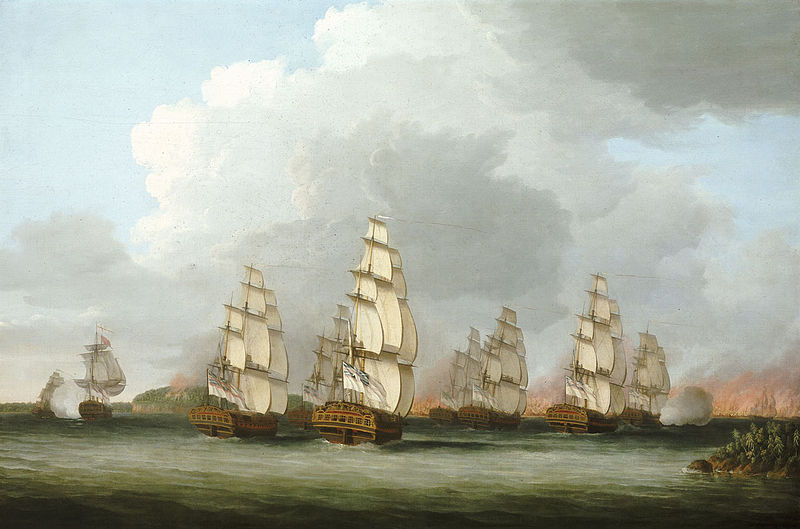
Britain defending New Ireland from the Penobscot Expedition by Dominic Serres
If you enjoyed this “Today in History”, please feel free to re-blog, “like” & share on social media, so that others may find and enjoy it as well. Please click the “follow” button on the right, to receive email updates on new articles.  Thank you for your interest, in the history we all share.

June 10, 1944 Ghost Village

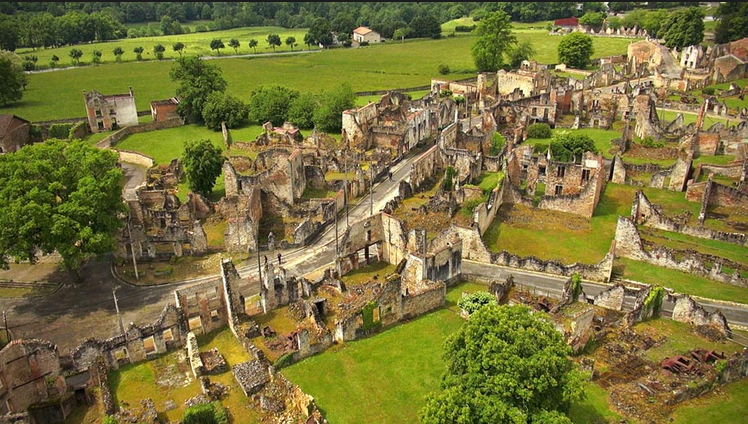
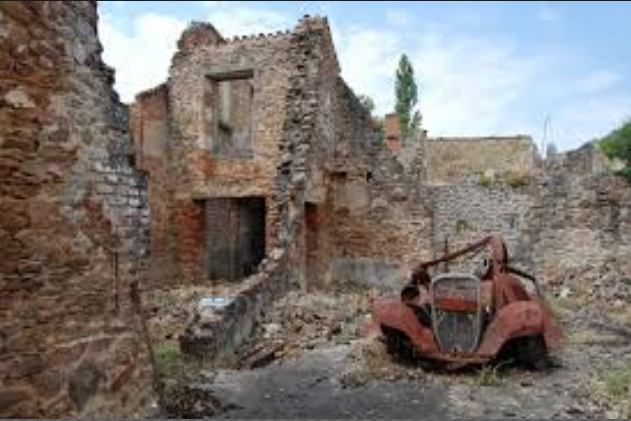
The village stands today as those Nazi soldiers left it, seventy-four years ago today.  It may be the most forlorn place on earth.

On D+4 after the Normandy invasion of WW2, the 2nd Panzer Division of the Waffen SS was passing through the Limousin region, in west-central France.  “Das Reich” had been ordered to help stop the Allied advance, when SS-Sturmbannführer Adolf Diekmann received word that SS officer Helmut Kämpfe was being held by French Resistance forces in the village of Oradour-sur-Vayres.

Oradour-sur-Glane-Hardware

Diekmann’s battalion sealed off the nearby village of Oradour-sur-Glane, seemingly unaware of their own confusion between the two villages.

Everyone in the town was ordered to assemble in the village square, for examination of identity papers. The entire population of the village was there, plus another half-dozen unfortunates, caught riding their bicycles at the wrong place, and the wrong time.

Oradour-sur-Glane-ChurchThe women and children of Oradour-sur-Glane were locked in a village church while German soldiers looted the town.  The men were taken to a half-dozen barns and sheds, where the machine guns were already set up.

The Germans aimed for the legs when they opened fire, intending to inflict as much pain as possible. Five escaped in the confusion before the SS lit the barn on fire. 190 men were burned alive.

Oradour-sur-Glane.jpg 3Nazi soldiers then lit an incendiary device in the church, and gunned down 247 women and 205 children as they tried to escape.
47-year-old Marguerite Rouffanche escaped out a back window, followed by a young woman and child.  All three were shot.  Rouffanche alone escaped alive, crawling to some pea bushes where she hid until next morning.

642 inhabitants of Oradour-sur-Glane, aged one week to 90 years, were shot to death, burned alive or some combination of the two, in a few hours.  The village was then razed to the ground.

Raymond J. Murphy, a 20-year-old American B-17 navigator shot down over France and hidden by the French Resistance, reported seeing a baby who’d been crucified.

After the war, a new village was built on a nearby site.  French President Charles de Gaulle ordered that the “old” village remain as it is;  a monument for all time to criminally insane governing ideologies, and the malignity of collective punishment.

Oradour-sur-Glane.jpg 4

Generals Erwin Rommel and Walter Gleiniger, German commander in Limoges, protested the senseless act of brutality.  Even the SS Regimental commander agreed and began an investigation, but that came to naught.  Within days, Diekmann and most of the men who had carried out the massacre, had been killed in combat.

The ghost village at the old Oradour-sur-Glane stands mute witness to this day, to the savagery committed by black-clad Schutzstaffel units in countless places like the French towns of Tulle, Ascq, Maillé, Robert-Espagne, and Clermont-en-Argonne; the Polish villages of Michniów, Wanaty and Krasowo-Częstki and the city of Warsaw; the Soviet village of Kortelisy; the Lithuanian village of Pirčiupiai; the Czechoslovakian villages of Ležáky and Lidice; the Greek towns of Kalavryta and Distomo; the Dutch town of Putten; the Yugoslavian towns of Kragujevac and Kraljevo and the village of Dražgoše, in what is now Slovenia; the Norwegian village of Telavåg; the Italian villages of Sant’Anna di Stazzema and Marzabotto.

Oradour-sur-Glane.jpg 2

And on.  And on.  And on.

Oradour-sur-Glane-StreetsFrench President Jacques Chirac dedicated a memorial museum in 1999, the “Centre de la mémoire d’Oradour“. The village stands today as those Nazi soldiers left it, seventy-four years ago today.  It may be the most forlorn place on earth.

The story was featured on the 1974 British television series “The World at War”, narrated by Sir Laurence Olivier, who intones these words for the first and final episodes of the program: “Down this road, on Oradour-sur-Glane.jpg 5a summer day in 1944. . . The soldiers came. Nobody lives here now. They stayed only a few hours. When they had gone, the community which had lived for a thousand years. . . was dead. This is Oradour-sur-Glane, in France. The day the soldiers came, the people were gathered together. The men were taken to garages and barns, the women and children were led down this road . . . and they were driven. . . into this church. Here, they heard the firing as their men were shot. Then. . . they were killed too. A few weeks later, many of those who had done the killing were themselves dead, in battle. They never rebuilt Oradour. Its ruins are a memorial. Its martyrdom stands for thousands upon thousands of other martyrdoms in Poland, in Russia, in Burma, in China, in a World at War”.

Oradour-sur-Glane2

June 9, AD721 Odo

The story is familiar.  Despite all odds, the Frankish force emerged victorious.  Charles “The Hammer” Martel had saved western civilization.  Forgotten in this narrative, is the story of the man who made it all possible.

In AD732, a Frankish military force led by Charles Martel, the illegitimate son of Pippin II of Herstal, met a vastly superior invading army of the Umayyad Caliphate, led by Abd Ar-Rahman al Ghafiqi.

The Umayyad Caliphate had recently defeated two of the most powerful militaries of the era.  The Sassanid empire in modern day Iran had been destroyed altogether, as was the greater part of the Byzantine Empire, including Armenia, North Africa and Syria.

Islamic+Conquests+By+the+7th+century+Islamic+people+overran+the+Sasanid+empire+and+threatened+Constantinop+le+(674-678,+717-718)

As the Caliphate grew in strength, European civilization faced a period of reduced trade, declining population and political disintegration, characterized by a constellation of new and small kingdoms, evolving and squabbling for suzerainty over the common people.

The “Banu Umayya”, the second of four major dynasties established following the death of Muhammad 100 years earlier, was already one of the largest, most powerful empires in history. Should it fail, no force stood behind the Frankish host, sufficient to prevent a united Islamic caliphate stretching from the Atlantic coast of Spain to the Indian sub-continent, from Sub-Saharan Africa to the North Sea.


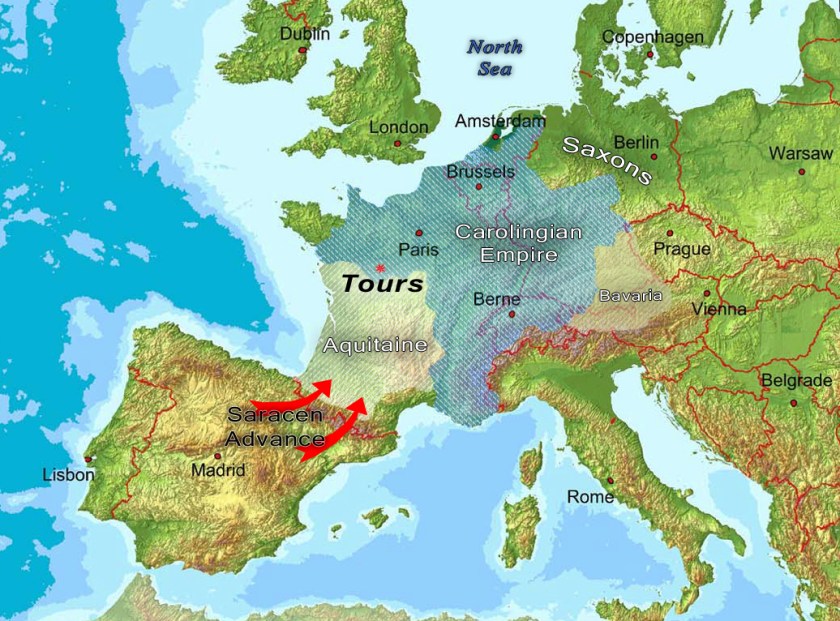
Carolingian Empire Map

With no cavalry of his own, Charles faced a two-to-one disadvantage in the face of a combined Islamic force of infantry and horse soldiers.  History offers few instances of medieval armies withstanding the charge of cavalry, yet Charles had anticipated this moment. He had trained his men, they were ready.

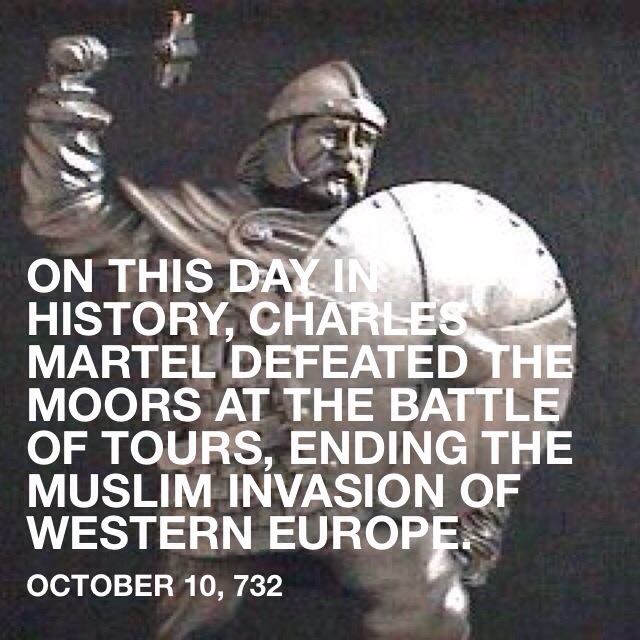
The story is familiar.   Charles “The Hammer” Martel met the invader, at a spot between the villages of Tours, and Poitiers.  Despite all odds, the Frankish force emerged victorious, from the Battle of Tours (Poitiers). Western civilization, was saved.

Battle of Tours, 732

Forgotten in this narrative, is the story of the man who made it all possible.

Twenty years earlier, a combined force of 1,700 Arab and North African horsemen, the Berbers, landed on the Iberian Peninsula led by Tariq Ibn Ziyad.  Within ten years, the Emir of Córdoba ruled over most of what we now call Portugal and Spain, save for the fringes of the Pyrenean mountains, and the highlands along the northwest coastline.

In AD721, Al-Samh ibn Malik al-Khawlani, wali (governor) of Muslim Spain, built a strong army from the Umayyad territories of Al-Andalus, and invaded the semi-independent duchy of Aquitaine, a principality ostensibly part of the Frankish kingdom, but for all intents and purposes ruled as an independent territory.

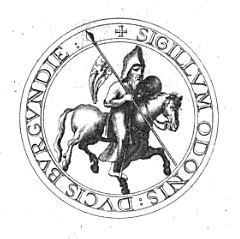
Odo_I
Duke Odo, I

Duke Odo of Aquitaine left his home in Toulouse in search of help, from the Frankish statesman and military leader, Charles Martel.  This was a time (718 – 732) of warring kingdoms and duchys, a consolidation of power in which Martel preferred not to step up on behalf of his southern rival, but to wait, and see what happened. Odo, Duke of Aquitaine, was on his own.

At this time, Toulouse was the largest and most important city in Aquitaine.  Believing Odo to have fled before their advance, the forces of al-Andalus laid siege to the city, secure in the belief that their only threat lay before them.  For three months, Odo gathered Aquitanian, Gascon and Frankish troops about him, as his city held on.

Overconfident, the besieging army had failed to fortify its outer perimeter, or to scout the surrounding countryside.  On June 9 with Toulouse on the verge of collapse, the armies of Duke Odo fell on the Muslim rear, as defenders poured from the city gates, an avenging army.    Sources report Duke Odo’s forces numbered some 300,000, though the number is almost certainly exaggerated.

bataille_de_toulouse2

Caught at rest without weapons or amour, the surprise was complete.  Some 350,000 Umayyad troops are said to have been cut down as they fled, but again, the number is probably inflated.  Al-Samh himself was mortally wounded, and later died in Narbonne.

Be that as it may, the battle of Toulouse was an unmitigated disaster for the Arab side.  Some historians believe that this day in 721 did more to check the Muslim advance into western Europe, than did the later battle at Tours.  For 450 years,  Muslim chroniclers at Al-Andalus described the battle as Balat al Shuhada (‘the path of the martyrs’), while Tours was remembered as a relatively minor skirmish.

Ch-MartelOne of those to escape with his life, was a young Abd Ar-Rahman al Ghafiqi.  Eleven years later in 732, the now – governor of Al-Andalus would once again cross the Pyrenees, this time at the head of a massive army of his own.  Al Ghafiqi’s legions laid waste to Navarre and Gascony, first destroying Auch, and then Bordeaux.  Duke Odo “The Great” would be destroyed at the River Garonne and the table set for the all-important decision of Tours.

In history as in life, time and place is everything.  Today, Duke Odo of Aquitaine is all but forgotten. We remember Charles “The Hammer” Martel as the savior of western civilization, as well we should. Yet, we need not forget the man who made it possible, who gave Martel time to gather the strength, to forge the fighting force which gave life to such an unlikely outcome.


If you enjoyed this “Today in History”, please feel free to re-blog, “like” & share on social media, so that others may find and enjoy it as well. Please click the “follow” button on the right, to receive email updates on new articles.  Thank you for your interest, in the history we all share.