

In 1831, Mexican authorities gave the settlers of Gonzales, Texas a small cannon, a defense against Comanche raids. The political situation deteriorated in the following years. By 1835, several Mexican states were in open revolt. That September, commander of “Centralist” (Mexican) troops in Texas Colonel Domingo de Ugartechea, came to take it back.
Dissatisfied with the increasingly dictatorial policies of President and General Antonio Lopez de Santa Anna, the colonists had no intention of handing over that cannon. One excuse was given after another to keep the Mexican dragoons out of Gonzalez, while pleas fr assistance secretly went out to surrounding communities. Within two days, 140 “Texians” had gathered in Gonzalez, determined not to give up that gun.

Militarily, the skirmish of October 2 had little significance, much the same as the early battles in the Massachusetts colony, some sixty years earlier. Politically, the “Lexington of Texas” marked a break between Texian settlers, and the Mexican government.
Settlers continued to gather, electing the well-respected local and former legislator of the Missouri Stephen F. Austin, as their leader. Santa Anna sent his brother-in-law, General Martin Perfecto de Cos to reinforce the settlement of San Antonio de Béxar, near the modern city of San Antonio. On the 13th, Austin led his Federalist army of Texians and their Tejano allies to Béxar, to confront the garrison. Austin’s forces captured the town that December, following a prolonged siege. It was only a matter of time before Santa Anna himself came to take it back.

Two forts – more like lonely outposts – blocked the only approaches from the Mexican interior into Texas: Presidio La Bahía (Nuestra Señora de Loreto Presidio) at Goliad and the Alamo at San Antonio de Béxar. That December, a group of volunteers led by George Collinsworth and Benjamin Milam overwhelmed the Mexican garrison at the Alamo, and captured the fort The Mexican President arrived on February 23 at the head of an army of 3,000, demanding its surrender. Lieutenant Colonel William Barret “Buck” Travis, responded with a cannon ball.
Knowing that his small force couldn’t hold for long against such an army, Travis sent out a series of pleas for help and reinforcement, writing “If my countrymen do not rally to my relief, I am determined to perish in the defense of this place, and my bones shall reproach my country for her neglect.” 32 troops attached to Lt. George Kimbell’s Gonzales ranging company made their way through the enemy cordon and into the Alamo on March 1. There would be no more.
Estimates of the Alamo garrison have ranged between 189 and 257 at this stage, but current sources indicate that defenders never numbered more than 200.

The final assault began at 5:00am, on Sunday, March 6, 1836. 1,800 troops attacked from all sides. Santa Anna’s troops were shattered by concentrated artillery fire, but the numbers were overwhelming. The walls were breached and to hand fighting moved to the barracks, ending in the chapel. As many as seven defenders remained alive when it was over. Many believe former Congressman Davy Crockett was among them.
Santa Anna ordered them all, executed.

By 8:00am there were no survivors, saving a handful of noncombatant women, children, and slaves, slowly emerging from the smoking ruins. These were provided with blankets and two dollars apiece, and given safe passage through Mexican lines with the warning: a similar fate awaited any Texan who continued in their revolt.
On April 21, a force of 800 Texans shouting “Remember the Alamo!” and led by Sam Houston defeated Santa Anna’s force of some 1,500 at San Jacinto, near modern day Houston. The victory secured Texan independence. Mexican troops occupying San Antonio were ordered to withdraw by May. Texas became the 28th state of the United States on December 29, 1845.

Santa Anna went on to lose a leg to a cannon ball two years later, fighting the French at the Battle of Veracruz. following amputation, the leg spent four years buried at Santa Anna’s hacienda, Manga de Clavo, in Veracruz. When Santa Anna resumed the presidency in late 1841, he had the leg dug up and placed in a crystal vase, brought amidst a full military dress parade to Mexico City and escorted by the Presidential bodyguard, the army, and cadets from the military academy. This guy was nothing if not a self-promoter.
The leg was reburied in an elaborate ceremony in 1842, including cannon salvos, speeches, and poetry read in the General’s honor. The state funeral for Santa Anna’s leg was attended by his entire cabinet, the diplomatic corps, and the Congress.

Antonio Lopez de Santa Anna served 11 non-consecutive terms as Mexican President, spending most of his later years in exile in Jamaica, Cuba, the United States, Colombia, and St. Thomas. In 1869, the 74-year-old former President was living in Staten Island, trying to raise an army to return and take over Mexico City. In a bid to raise the money, Santa Anna brought the first shipments of chicle to the United States, a gum-like substance made from the tree species, Manilkara chicle. This, he proposed to use as rubber on carriage tires.
Thomas Adams, the American assigned to aid Santa Anna’s stay in the US, also experimented with chicle as a substitute for rubber. He bought a ton of the stuff from the General, but those experiments would likewise prove, unsuccessful. Instead, Adams helped to found an American chewing gum industry with a product he called “Chiclets”.


 A man who should have gone into history among the top tier of American Founding Fathers, the future turncoat Benedict Arnold, arrived with Connecticut militia to support the siege. Arnold informed the Massachusetts Committee of Safety that Fort Ticonderoga, located along the southern end of Lake Champlain in northern New York, was bristling with cannon and other military stores. Furthermore, the place was lightly defended.


 Twelve of the thirteen original states ratified these “Articles of Confederation” by February, 1779. Maryland would hold out for another two years, over land claims west of the Ohio River. In 1781, seven months before Cornwallis’ surrender at Yorktown, the 2nd Continental Congress formally ratified the Articles of Confederation. The young nation’s first governing document.

 It’s interesting to note the priorities of that first Congress, as expressed in their original 1st and 2nd amendments. The ones that were thrown out. The first had to do with proportional representation, and would have led us to a 6,000-member House of Representatives, instead of the 435 we currently have. The second most important thing in the world, judging by the priorities of that first Congress, was that any future Congress could not change their own salaries. Any such change could affect only future Congresses.


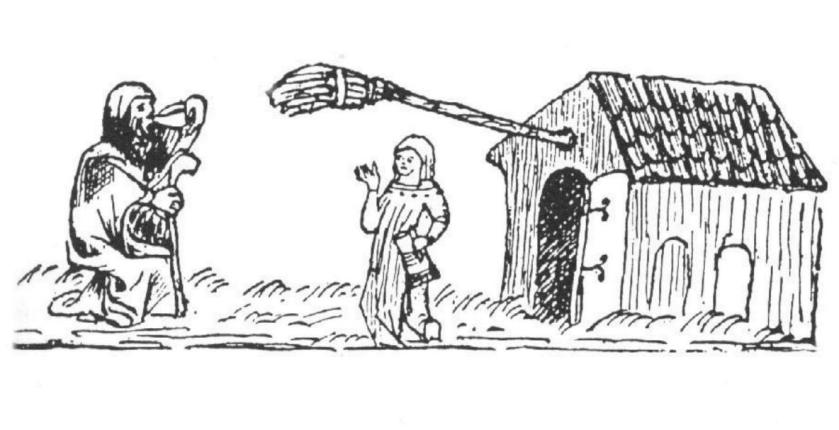
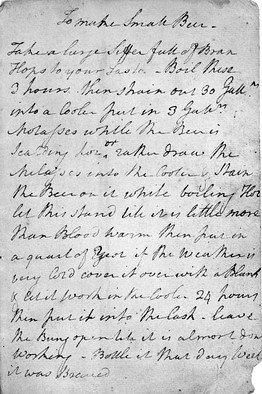

 “Filled with mingled cream and amber


 Post journalist Carl Rowan insists the FBI sent at least one anonymous letter to Reverend Martin Luther King, Jr., urging the man to commit suicide.




 The doors to the Soviet Gulags opened after June 22, 1941, following Hitler’s surprise invasion of his Soviet “Ally”. While tens of thousands of free Poles worked their way to the assistance of France and Great Britain, these former POWs became the core of the Polish II Corps, numbering some 100,000 soldiers by 1945.
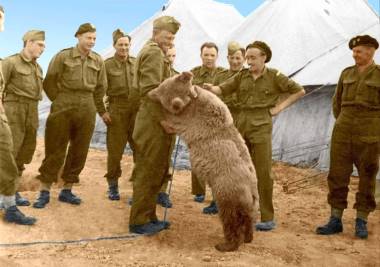 Wojtek was small in the beginning, yet to be weaned from his mother’s milk and having trouble swallowing. Soldiers fed him condensed milk from an old vodka bottle, leading to honey or syrup and marmalade and whole fruit.


 My fellow children of the cold war will remember. A favorite complaint of the era was the semi-professional status of Soviet bloc athletes. Particularly those from East Germany and the Union of Soviet Socialist Republics.
 The Soviet attack was relentless, but Craig let nothing past. Team USSR took 39 shots on goal to the Americans’ 16, but the score held.


 Historical Easter Eggs - Today in History
You must be logged in to post a comment.