March 26, 1958 How can they Hate me, when they don’t even Know me

“In a real sense we must all live together as brothers, or we will all perish together as fools”. – Reverend martin Luther King, Jr.

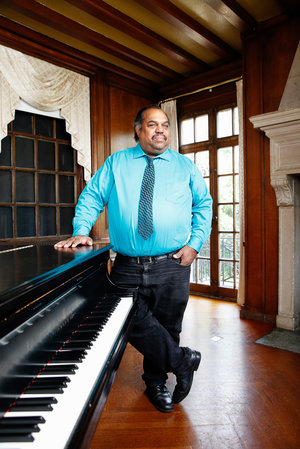
Daryl Davis is an American R & B musician, a master of Delta & Chicago Blues and the boogie-woogie style, on piano. The man can sing too, well enough to perform with the likes of Chuck Berry, Muddy Waters, Jerry Lee Lewis and BB King.

“Both Pinetop Perkins and Johnnie Johnson, considered to be the greatest Blues & Boogie Woogie and Blues and Rock’n’Roll pianists respectively, both have claimed DARYL as their godson”. – daryldavis.com/musician-biography/

Davis has acted on stage, film and television. He’s a Christian, a writer, an activist and lecturer, who’s spent the last thirty years befriending members of the Ku Klux Klan and. Oh…Did I mention, he’s black?

Daryl Davis was born this day in 1958, the son of a State Department foreign service officer.  His first ten years were spent in the world of foreign diplomats where children of every race and nationality were schooled together.  This was a world of easy integration, not so the world he entered on returning to the United states, at age ten.

Daryl-Davis-KKK-Whisperer

As a member of an all-white Cub Scout troop in the racially backward Boston suburb of Belmont Massachusetts (you thought I was going to say “Selma”), Davis speaks of being struck with rocks and bottles thrown by the crowd, until encircled by members of the troop.

Lest anyone object to my characterizing the “Liberal” bastion of Massachusetts as “racially backward”, the affront to common decency below was photographed in Boston in 1976, nineteen years after President Dwight Eisenhower sent Federal troops into Little Rock, Arkansas.
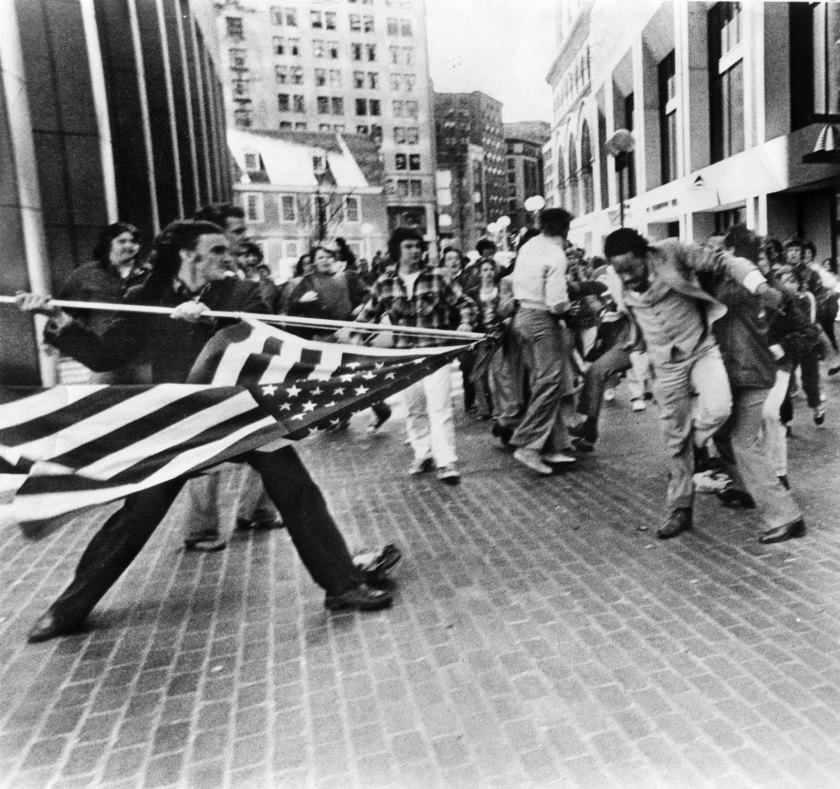
The_Soiling_of_Old Glory_1976
“The Soiling of Old Glory is a Pulitzer Prize-winning photograph taken by Stanley Forman during the Boston busing crisis in 1976” – H/T Wikipedia

Any fool can mistrust and even dislike those unlike himself.  Most fools do.  At ten years old, Daryl Davis understood as much and asked his father about the cub scout incident.  The conversation led to a lifelong impression in Davis’ mind, that it made no sense.  How can they Hate me, when the don’t even Know me.

Davis’ career as an activist began in a “white” bar in Frederick, Maryland, in 1983. Davis was playing Country & Western music when a white man commented, he’d never “heard a black man play as well as Jerry Lee Lewis“. Davis explained “Jerry Lee learned to play from black blues and boogie woogie piano players and he’s a friend of mine.” The patron was skeptical and, over drinks, admitted to being a member of the Ku Klux Klan. Eventually, the pair became friends, a relationship which would guide Daryl to leaders of the KKK.

3258E1E800000578-3499658-image-m-11_1458344520932Years later, Davis decided to write a book, answering the question that had dogged him, all those years: ‘Why do you hate me when you know nothing about me?’ That question had never been answered from my youth.” To satisfy his own curiosity, Davis reached out to Roger Kelly, Imperial Wizard of the KKK in Maryland. Let him tell the story:

“My secretary called him, and I told her, ‘do not tell Roger Kelly I’m black. Just tell him I am writing a book on the Klan.’ I wanted her to call because she’s white. I knew enough about the mentality of the Klan that they would never think a white woman would work for a black man. She called him and he didn’t ask what color I was, so we arranged to meet at a motel”.

The human brain is an awesome thing, the mind a strange and impenetrable place. Weighing in at about 3-pounds, the organ is comprised of some 86 billion neurons, each made of a stoma or cell body, an axon to take information away from the cell, and anywhere between a handful and a hundred thousand dendrites bringing information in. Chemical signals transmit data over minute gaps between neurons called synapses, about 1/25,000th to 1/50,000th the thickness of a sheet of paper.
20170629_daryl_davis_015_custom-b6e5c20f962425b2d795ba585f3cc5e5943ef0f0-s300-c85There are roughly a quadrillion such synapses in any given brain, meaning any given thought could wend its way through more pathways than there are molecules in the known universe.

The possessors of such organs are themselves, strange and impenetrable beings.  Some among us are impervious to new information. We all know the kind. Others are capable of the most gut-wrenching honesty, of challenging even the most deeply held beliefs in the face of new information.

When Confederate Major General Patrick Cleburne, the “Stonewall of the West” made the “Monstrous proposal” of arming slaves in the waning days of the Civil War, General and former Georgia Governor Howell Cobb gave us the faintest glimpse through that keyhole: “You cannot make soldiers of slaves, or slaves of soldiers. The day you make a soldier of them is the beginning of the end of the Revolution. And if slaves seem good soldiers, then our whole theory of slavery is wrong.”

“And if slaves seem good soldiers, then our whole theory of slavery is wrong.”

Roger Kelly himself was a man, capable of looking through that keyhole.  What he saw didn’t make sense to him either.  Kelly arrived with an armed bodyguard, himself armed and wearing military-style fatigues.  That first meeting must have been as tense as two cats in a wet sack.  In time, the man’s views began to soften.  Later on, Davis invited Kelly to be godfather, to his daughter.  Kelly left the Klan and gave his outfit to Davis, who kept the robes in hopes of one day showing them in a “Museum of the Klan”.
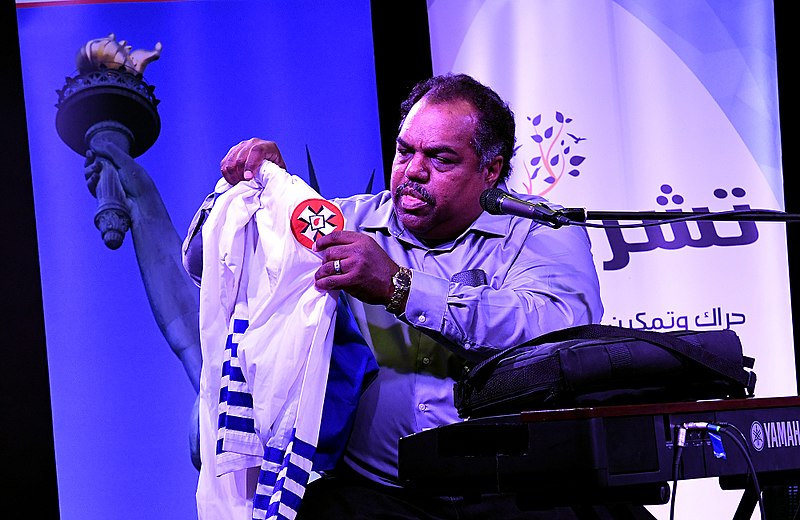
800px-Daryl_Davis_Robes_Blues_and_Rock_for_Humanity._November_2017_(26512537739)

Davis claims to have befriended over 20 members of the Ku Klux Klan.  He claims direct responsibility for 40 to 60 of them leaving and indirectly, another 200. Davis believes Klansmen hold misconceptions about blacks based on brainwashing and unfamiliarity.  He wrote of one such conversation in his 1998 book, Klan-destine Relationships: A Black Man’s Odyssey in the Ku Klux Klan:

One Klansman informed Davis, “All black people have a gene in them that makes them violent “.  Davis responded, ‘You know, it’s a fact that all white people have within them a gene that makes them serial killers. Name me three black serial killers.’ He could not do it. I said ‘you have the gene. It’s just latent.’ He said, ‘Well that’s stupid.’ I said, ‘It’s just as stupid as what you said to me.’ He was very quiet after that and I know it was sinking in.”

The man left the Klan several months later, giving Davis his robes.  They were the first he ever received.

Daryl-Davis

In an age of political race baiters and racial arsonists, (they’re a dime-a-dozen on TV), Daryl Davis is a man with the strength of character, the intellectual curiosity and the physical courage to challenge long-held stereotypes that many among us, hold about one another.

The man is a living tribute to the idea that if we just ignore the crazies, the rest of us can figure out how to get along.


Afterward
The documentary film Accidental Courtesy: Daryl Davis, Race & America debuted on the PBS TV series Independent Lens, in 2016. Frank Ancona, Imperial Wizard of the Missouri-based Traditionalist American Knights of the Ku Klux Klan was depicted at the opening and close of the documentary. Ancona was shot and killed in his bed on February 11, 2017, two days before the airing of the film.  Ancona’s wife and step-son have been charged in the murder.
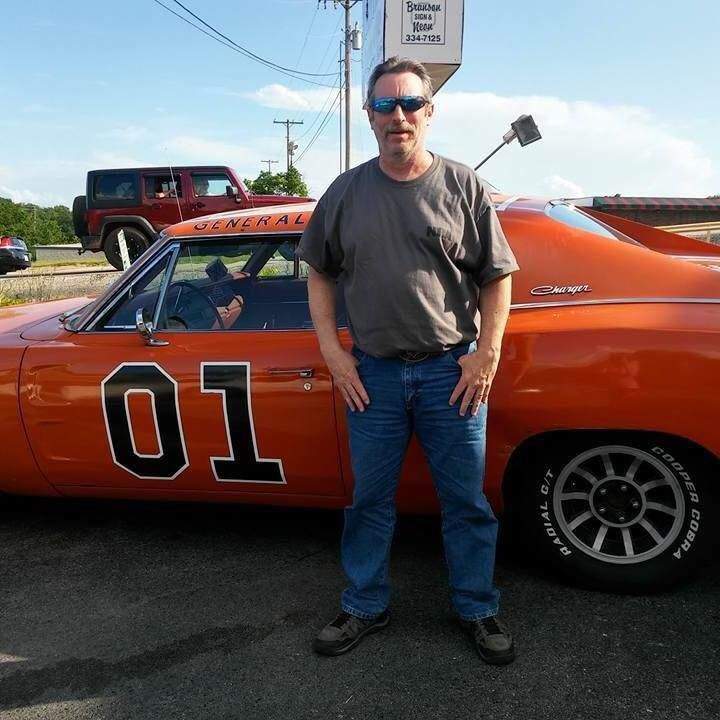
frank-ancona-3
Imperial Wizard of the Traditionalist American Knights of the Ku Klux Klan, Frank Ancona
“In a real sense we must all live together as brothers, or we will all perish together as fools”. – Reverend martin Luther King, Jr.

March 25, 2019 National Medal of Honor Day

Today, March 25, 2019, we honor those recipients of our nation’s highest award for military valor.  Seventy-nine of them are alive, today.  Possibly without exception, these are people who will tell you, they are not the heroes.  They were simply doing a job and those who would not come home alive, are the real heroes.

At the time of the American Revolution, European armies bestowed honors, only on high-ranking officers who achieved victory in battle. There was no such honor for the common soldier.  As General, George Washington wrote the “road to glory in a patriot army and a free country is…open to all”.

There was precedent for such an award in the Colonial military, but only under limited circumstances.  Congressional medals were awarded to Washington himself on March 25, 1776, following the British evacuation of Boston;  to General Horatio Gates in November 1777 in recognition of his victory over British General John Burgoyne at Saratoga;  and to Major-General “Light-Horse Harry” Lee, father of Civil War-era Confederate General Robert E. Lee, in recognition of his 1779 attack on the British position at Paulus Hook, New Jersey.

A “Fidelity Medallion” was awarded to three militia men in 1780, for the capture of John André, the British officer and spy whose capture uncovered the treachery of General Benedict Arnold.

MeritThe future 1st President’s general orders of August 7, 1782 established a “Badge of Military Merit” to recognize those members of the Continental Army who performed “any singular meritorious action”.
In time, Washington’s Badge of Military Merit morphed into what we now know as the Purple Heart, but the precedent had been set.  This was the first such honor available to any U.S. military service member, who had distinguished himself by act of valor.

Congress created the “Meritorious Service Citation Certificate” around the time of the Mexican-American war, recognizing “any private soldier who had distinguished himself by gallantry performed in the presence of the enemy”.  The award would come in and out of use in the decades that followed, later becoming the Distinguished Service Medal, an award available to United States and foreign military service personnel and, in limited circumstances, civilians.

National-Medal-of-Honor-Day
H/T http://www.worldnationaldays.com/national-medal-of-honor-day-2019/

In the early days of the Civil War, General-in-chief of the army Winfield Scott was against such an award.  Secretary of the Navy Gideon Welles adopted the idea on behalf of the Navy, following Scott’s retirement in October 1861.  President Abraham Lincoln signed “Public Resolution #82” on December 21, 1861, creating a Navy Medal of Honor.

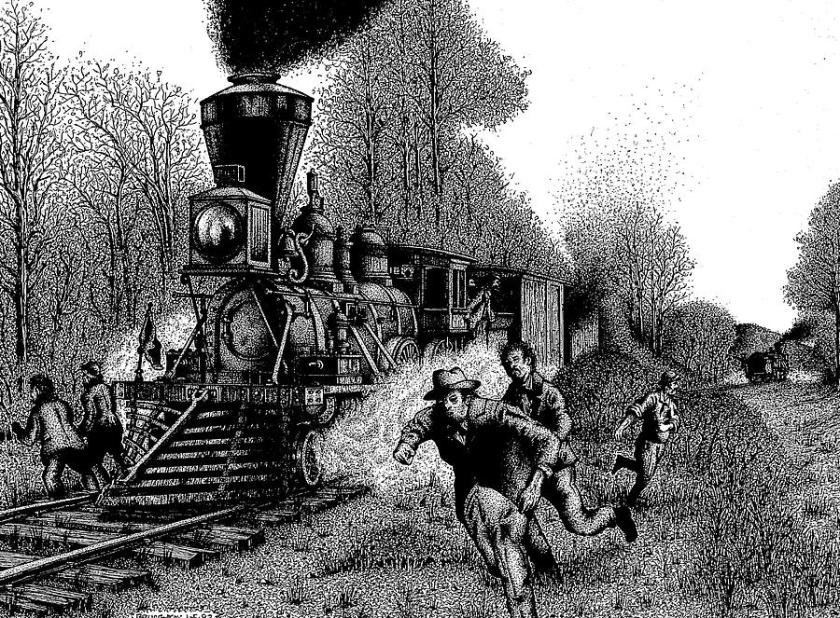
An Army version of the medal was created the following July, first awarded to six federal soldiers for hijacking the Confederate locomotive, “The General”.  Leader of the raid James Andrews was caught and hanged as a Union spy.  Andrews alone was deemed ineligible for the Medal of Honor, as he was a civilian.

the-great-locomotive-chase-bruce-kay
The Great Locomotive Chase, by Bruce Kay

Medals of Honor are not awarded casually.  The award is reserved only for the bravest of the brave, and for well-documented acts of valor. Permit me to share a few examples, each from his own moment in history.

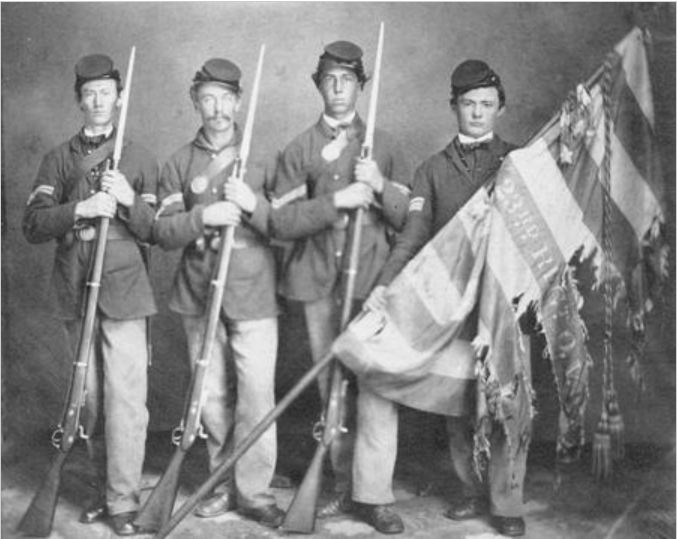
Few soldiers on the Civil War battlefield had a quicker route to death’s door than the color bearer.  National and regimental flags were all-important sources of inspiration and communication.

Reverend W. Jamison Thomson of Hartford, Connecticut described the importance of the battle flag: “It represents the cause, is the rallying point, while it is aloft proclaims that victory is still intended, is the center of all eyes, is the means of communication between soldiers, officers, and nation,” he said, “and after the engagement, and after many of them, is their marked memento so long as its identity can be preserved.

civil-war-soldiers-with-tattered-flag

Pvt. Joseph E. Brandle served as regimental color bearer, with the 17th Michigan Infantry.  Private Brandle earned the Medal of Honor for his actions of November 16, 1863, near Lenoire, Tennessee…”…[H]aving been twice wounded and the sight of one eye destroyed, [he] still held to the colors until ordered to the rear by his regimental commander.”

During the Boxer Rebellion of 1900, Chaplain’s assistant and regimental musician Calvin Pearl Titus of Vinton, Iowa, volunteered to scale the 30-ft walls of Peking, raising the American flag over the outer walls of the city.  President Theodore Roosevelt awarded Titus the medal of Honor, for “Gallant and daring conduct in the presence of his colonel and other officers…”  He was “the last color bearer”.

800px-siege_of_peking_boxer_rebellion

york
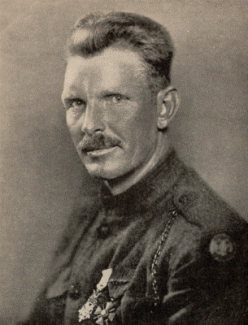
Sergeant York

On October 8, 1918, Tennessee native Corporal Alvin Cullum York of the 82nd Division lead a group of seventeen against a numerically superior German force, dug in at Chatel-Chehery, France.

Let York’s citation tell the story: “…After his platoon had suffered heavy casualties and three other non-commissioned officers had become casualties, Cpl. York assumed command. Fearlessly leading seven men, he charged with great daring toward a machine gun nest, which was pouring deadly and incessant fire upon his platoon. In this heroic feat the machine gun nest was taken, together with four officers and 128 men and several guns.

Audie_Murphy
Audie Murphy

Kingston Texas 2nd Lieutenant Audie Murphy found himself senior officer of a company of 18, whittled down from 235 by disease, wounds and casualties.  On January 26, 1945, Murphy’s small force found itself under assault by six German tanks and a large infantry force.

A man the Marine Corps had once turned down for being underweight and underage, Murphy climbed aboard a burning tank destroyer.  Out in the open and exposed to German fire from three sides, the 19-year old single-handedly fought off the entire assault, killing or wounding fifty and causing the German tanks to withdraw.

The Medal at LastFather Emil Kapaun selflessly sacrificed himself on behalf of his fellow prisoners in 1951, in the frozen hell of a North Korean prison camp.  President Barack Obama awarded Kapaun’s family the Medal of Honor during a ceremony in the east wing of the White House, on April 11, 2013.

Chaplain Kapaun’s body lies in an unmarked mass grave, somewhere in Pyoktong county.

2827
Sammy Lee Davis

PFC Sammy Lee Davis distinguished himself during the small hours of November 18, 1967, when the 4th Artillery of 9th Infantry Division came under heavy attack west of Cai Lay, Republic of Vietnam.

Repeatedly knocked to the ground by enemy mortar fire and suffering multiple injuries, the Cannoneer from Dayton, Ohio fought back first with a heavily damaged, burning howitzer, and then with recoilless rifle and machine gun.

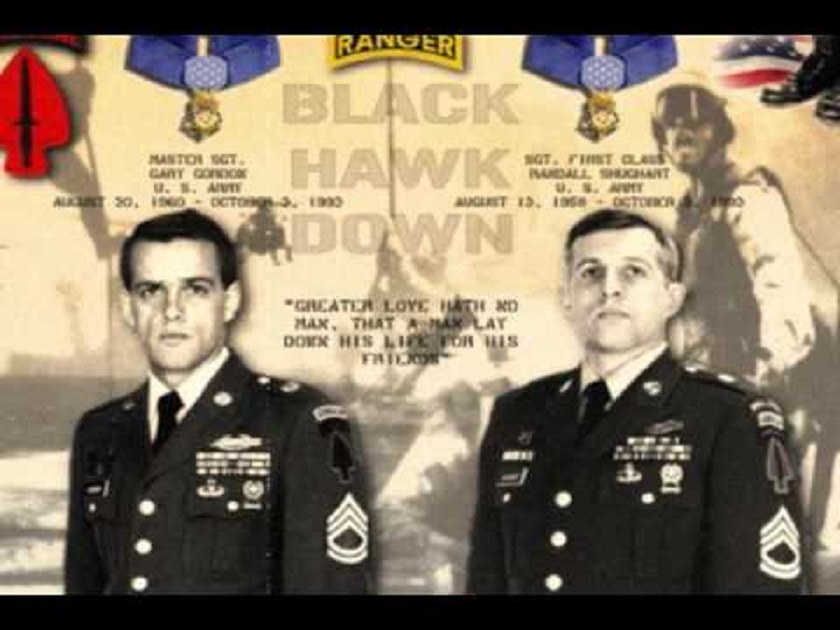
Two Medals of honor were awarded posthumously, to Delta Force snipers Gary Gordon and Randy Shugart, for their hopeless defense of the crash site of a downed UH-60 Blackhawk helicopter, against hundreds of fighters loyal to the Somali warlord Mohamed Farrah Aidid.

Corporal Jason Lee Dunham of Scio New York deliberately threw himself on an Iraqi grenade on April 14, 2004, saving the lives of fellow Marines at the sacrifice of his own life.  He was twenty-two.

0422C5
Corporal Jason Lee Dunham

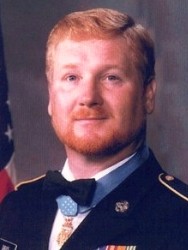
Sergeant 1st class Jared Monti of Abington Massachusetts was killed in the mountains of Nuristan Province in Afghanistan, while attempting to rescue a wounded soldier from a hail of small arms and rocket-propelled grenade fire.

Jared Monti
Jared Monti

Monti was the sixth person from the wars in Iraq and Afghanistan, to be awarded the Medal of Honor.  The Lee Brice song “I Drive your Truck” voted Song of the Year at the 49th annual Academy of Country Music Awards, is Jared’s story and that of his father Paul Monti, a former science teacher at the Stoughton High School, in Stoughton Massachusetts.

The nation’s highest medal for military valor has been awarded 3,493 times since its inception in 1861, to 3,474 distinct recipients.  621 were awarded posthumously. Jack Lucas became the youngest Medal of Honor recipient of the last century, jumping on not one but Two grenades, in Iwo Jima.

Today, March 25, 2019, we honor those recipients of our nation’s highest award for military valor.  Seventy-nine of them are alive, today.  Possibly without exception, these are people who will tell you, they are not the heroes.  They were simply doing a job and those who would not come home alive, are the real heroes.

If that is not the very definition of heroism, it should be.


A Trivial Matter
“The award is not called the Congressional Medal of Honor.  Contrary to popular belief, the official title of the highest U.S. military distinction is simply the Medal of Honor, not the Congressional Medal of Honor. The confusion may have arisen because the president presents the award “in the name of Congress.” There is also a Congressional Medal of Honor Society, which represents recipients of the Medal of Honor, maintains their records and organizes reunion events, among other responsibilities”. H/T History.com

March 24, 1921 The Civil War, Laid to Rest

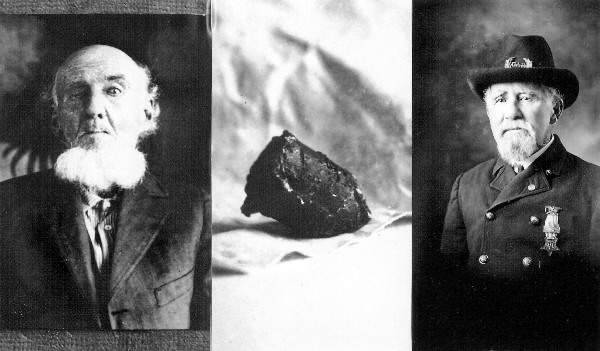
As young men, these two had been mortal enemies, each bent on killing the other.  Now as aging veterans, the pair spent their last years exchanging family photographs and wishing the other, continued good health.

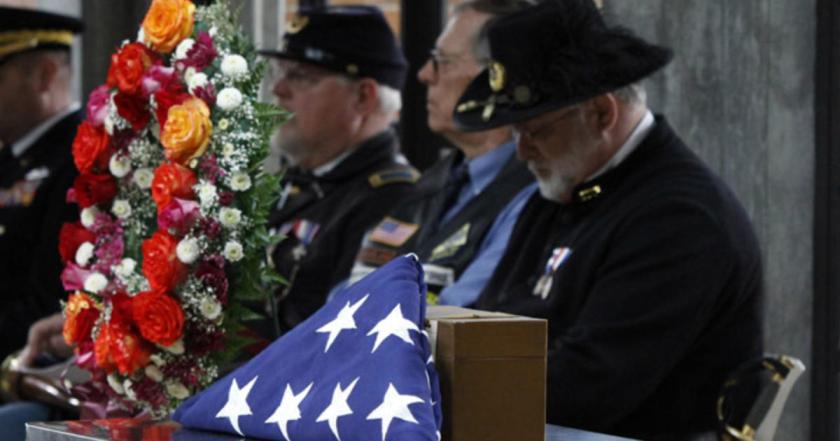
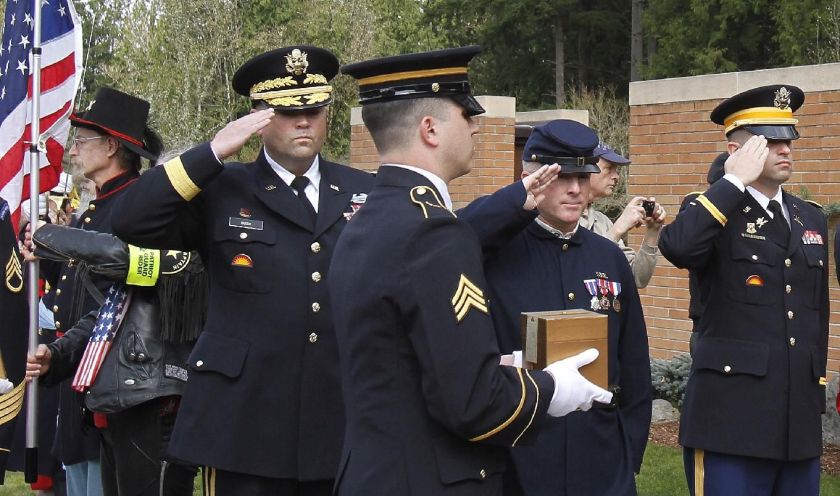
The past met the present that April Friday, seven short years ago.  Re-enactors dressed and equipped for another age, leading the hearse carrying twin gold boxes down roads lined with Patriot Guard riders.  There the blue sack coats and slouch hats of another era met the black berets and service caps, the crisp, midnight blue of the ASU, the modern “dress blues” of the United States Army.   There were uniforms new and old, veterans and historians and children and throngs of the curious, with cell phone cameras.

The last veteran of the Civil War was being laid to rest.  That doesn’t even begin to tell the story.

download - 2019-03-24T092425.684

Willis Meadows was nineteen in the spring of 1862, joining his brothers and cousins in Company G of the 37th Alabama Volunteer Infantry, assigned to the western front along the Mississippi and defending what he would have described as the “War of Northern Aggression”.

On July 1, 1863, the Union armies of General US Grant made the final drive on the “Gibraltar of the Mississippi”, the fortified strong point of Vicksburg.

Meadows watched the oncoming blue uniforms, the sharpshooter sheltered behind the iron boiler plate, picking off his enemy through a hole in the iron.

Peter Knapp was 21 that day, approaching from the east with three other Union soldiers from Company H of the 5th Iowa Volunteer Infantry.  Their job was to take out Confederate snipers. Knapp spotted Meadows firing from his shelter and took aim, firing at that peephole. Willis Meadows fell over with blood running down his face, the bullet entering through his eye and coming to a rest, near his brain.

The battle moved on leaving Meadows where he lay. There was no question the man was dead, except, he wasn’t. Federal troops picking up the dead afterward discovered this one, still breathing. Union surgeons probed for the bullet with no success before deciding to quit. Such a procedure was far too dangerous. Meadows was placed on a POW ship and later paroled to a Confederate hospital where he spent the rest of the war, first as a patient and later as nurse’s aid.

Knapp was captured a few months after Vicksburg and held in a number of Confederate POW camps, including the dread hell on earth known as Andersonville.

After the war, Meadows returned to the farm in Lanett Alabama, just over the Georgia state line. He later married though the marriage bore no children and may have died in obscurity, except it wasn’t meant to be.

Knapp farmed for a time in Michigan and married in 1887 before moving to Kelso, Washington.

The decades came and went. The assassinations of three Presidents. The panic of 1893. The War to end all wars. Willis Meadows was seventy-eight this day in 1921, when he began to choke. He grasped his throat with both hands as violent spasms wracked his old body.  The fear that this was the end turned to certainty as the lights began to dim, and then the object flew from his mouth and clattered across the floor.  It was that bullet, lodged in his head nigh on sixty years.

The “Coughs Up Bullet” story was national news in 1921.  Eleven years later, the “Ripley’s Believe It or Not” cartoon was published in 42 countries and 17 languages.

tumblr_nlupqst3IF1rd3evlo1_640

Mr. Ripley missed the most surprising part.

The story came and went with the next twenty nine years, until one Henry Kilburn brought a diary to the attention of a Washington state newspaper editor, in 1950.  Seems Kilburn’s family fell on hard times and the Knapp family, childless, adopted Kilburn’s sister, Minnie Mae.

It was Mae Knapp who gave that diary to her brother.  It was Peter Knapp’s diary.

Peter Knapp had seen that story back in 1921 and realized, he had to have been the man who fired that bullet. The pair met months later and compared stories. It was true.  As young men, these two had been mortal enemies, each bent on killing the other.  Now as aging veterans, the pair spent their last years exchanging family photographs and wishing the other, continued good health.

Alice Knapp of Nehalem Oregon was the child of another era, a woman born into the age of DNA who loved to study genealogy.  Alice was investigating her husband’s roots in 2009 when she came upon Peter’s story, now dead some eighty-five years. Inquiring as to where the man had been buried, Alice was stunned to learn that he wasn’t. Even more astonishingly, neither was his wife, Georgianna.  Childless, the cremated ashes of the couple were sitting on a storage shelf, unclaimed and forgotten all those years.

Alice explained, “I felt the ashes had to be buried or at least scattered somewhere.  Not sitting in some storage locker.”

9fddcab78fc6c00a0c0f6a706700357c

In April 2012, CBSnews.com reported:

“The Sons of the Union Veterans of the Civil War performed a ritual for the dead based on a Grand Army of the Republic ceremony from 1873. The funeral also included a bagpiper playing “Amazing Grace,” a bugler…performing “Taps,” and the laying of wreaths. Following a musket salute, a folded U.S. flag was presented to Alice Knapp”.

So it is the last known veteran of the Civil War was laid to rest, only seven short years ago. 151 years to the day, following the Confederate victory at Fort Sumter.


A Trivial Matter
In October 1861, William Tecumseh Sherman told US Secretary of war Simon Cameron he needed 60,000 men to defend the Kentucky territory, and 200,000 to go on the offensive. Cameron considered the request “insane” and cashiered the commander, very nearly leading to Sherman’s death by his own hand. General Ulysses S Grant, long rumored to have a problem with alcohol, did not see craziness in the disgraced commander, but a unique sort of quiet competence. Later in the war, a civilian ran his mouth at General Grant’s expense. Sherman came to the defense of his friend and commander, saying “Grant stood by me when I was crazy, and I stood by him when he was drunk, and now we stand by each other“.

March 23, 1994 The Heroes of Green Ramp

“Ammunition was going off. I couldn’t tell where it was. I looked to my left and there was a man on fire. I looked to my right and there was a man on fire.” – Sgt. Gregory Cowper of the 2d Battalion, 505th Infantry

It was a good day for a jump. March 23, 1994. The skies were clear with moderate winds of five to seven MPH, temperatures a comfortable mid-sixties.

POPE1A
H/T History.army.mil

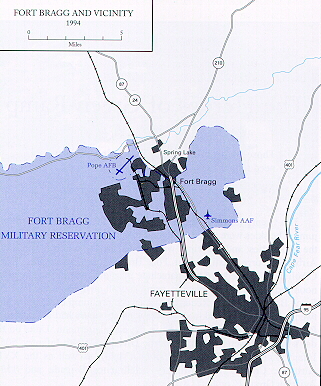
Some 500 paratroopers of the 82nd Airborne Division were assembled around the parking area known as “Green Ramp”, part of a joint exercise between Fort Bragg North Carolina, and nearby Pope Air Force base.

There were two parachute drops scheduled that day. The sky above was filled with aircraft, General Dynamics F-16 Fighting Falcons, Fairchild Republic A-10 Thunderbolts and C-130 aircraft, conducting training.

On the ground, paratroops of the First Brigade, 504th Infantry Regiment, and 505th Infantry Regiment prepared to board Lockheed C-130 Hercules and Lockheed C-141 Starlifter aircraft parked on Green Ramp, or practiced jumps from one of several concrete tail mock-ups or just waited, resting in a large personnel shed called the “PAX”, or surrounding lawns.

An F-16D Fighting Falcon was conducting a simulated flame-out on final approach to the runway, with two pilots at the stick. 300-feet above tree level, the giant four-engine turboprop military transport known as the C-130E Hercules, was making the same approach.

The Fighter’s nose struck the tail of the transport, severing the C-130E’s right elevator.  F-16 pilots applied full after burner trying to recover the aircraft, as its frame began to disintegrate. The transport was able to recover, veering off to circle the air field and assess the damage. Meanwhile both F-16 pilots ejected with the fighter still on afterburner, hurtling toward Green Ramp.

AR-303239710
H/T Fayettville Observer

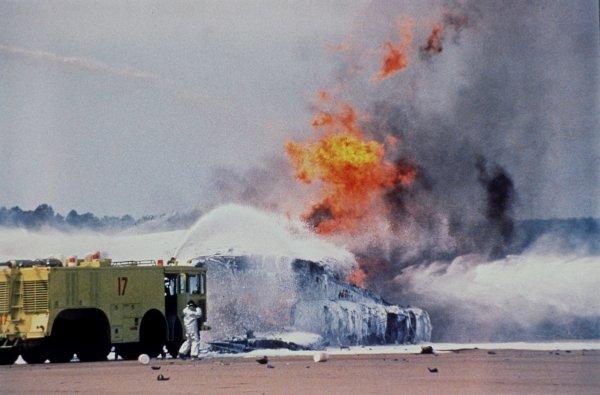
The shattered wreckage of the F-16 hit the ground between two parked C-130s before striking the right wing of the C-141B Starlifter, puncturing 55,000 gallon fuel tanks. A great fireball of flaming wreckage some 75-feet in diameter ricocheted across the tarmac, hurtling toward 82nd Airborne personnel staging for that second jump.

“S. Sgt. Daniel E. Price of the 2d Battalion, 505th Infantry, sacrificed his life to save a female soldier he had never met before. Spc. Estella Wingfield, an information systems operator with Headquarters and Headquarters Detachment, 525th Military Intelligence Brigade, remembered:

He looked me in the eye, grabbed me by the shirt, threw me several feet in the air and jumped on top of me…. An instant later, I heard the blast, felt the extreme heat from the explosion and the debris falling on us…. After the explosion and the rounds stopped going off, he whispered in my ear, “Crawl out from underneath me.”” I did and took off running. History.army.mil

Captain Gerald K. Bebber, Chaplain to the 525th Military Intelligence Brigade chaplain, remembers he:

“heard the high pitched screech of a jet fighter airplane at open throttle from beyond the pack shed [sic] suddenly give way to a deep reverberating thud and massive explosion. I recognized the sound from my experience in battle in Desert Storm. As soon as I could think this, a great roaring rush of fire entered my sight above and to the left of the pack shed. It was at tree-top level, slanting down as it gushed into the mockup area at terrific speed…. The flame came though the tops of the trees that stood in a small open area beside the pack shed. In the torrent of flame I saw pieces of wreckage and machinery hurling along. As the torrent rushed in I could hear cries of alarm, curses, and someone yelling “run” from the mock-ups. The fire blast crackled as it blasted in, and at its sides it curled outward as it went forward. I was standing perhaps thirty feet beside the edge of the blast, and could see eddies of the flame curling out toward me. I turned and ran from the flame, to just beyond the right end of the pack shed, where . . . I no longer felt the intense heat, so I stopped. To my left, out on the aircraft ramp, now in my line of sight I could see a parked C-141 engulfed in flames. It was the left one of a pair of C-141s parked there”.

AR-303239663
H/T Fayetville Observer

Jump master Captain James B. Rich was conducting a pre-jump briefing by one of those concrete mock-ups, and remembers the “overwhelming understanding that there was no way in hell I could outrun the oncoming debris…” Captain Rich “felt fully exposed” as flaming chunks of white hot metal, rained down. It was like “heavy pipes clanging against each other, mixed with a handful of steel marbles thrown against a road sign“.

2d Battalion S. Sgt. Michael T. Kelley remembered nuclear event training and hit the ground as the fireball rolled over him. When he got up he was on fire. Sergeant Kelley dropped and rolled as a would-be rescuer jumped on his body, to put out the flames. A second beat back the fire with “a wrap of some kind” while a third came up with water. When the flames went out, Sgt. Kelly had severe burns over 70 per cent of his body, including the lower one-third of his face.

green-ramp-disaster-photo-for-post-e1458750308225.png

Sgt. Gregory Cowper of the 2d Battalion, 505th Infantry, began to roll when the fire caught up with him. “Ammunition was going off”, he said, “I couldn’t tell where it was. I looked to my left and there was a man on fire. I looked to my right and there was a man on fire.

Rank held no distinction that day, Privates to Captains age eighteen to forty, pulling one another from the flames and shielding the wounded, with their bodies. Twenty three were killed outright, another eighty severely injured. One badly burned soldier survived nine agonizing months before succumbing, to his wounds.

original (1)

82d Airborne commander Major General William M. Steele, remembered:

“It was soldiers saving soldiers. Soldiers putting out fires on other soldiers; soldiers dragging soldiers out of fires; resuscitating; giving soldiers CPR; putting tourniquets on limbs that had been severed; putting out fires on their bodies, sometimes with their own hands. Anything they could do to care for their buddies that were more seriously injured they were doing. They can’t do that without knowing how. They responded the way they would in combat”.

The Green Ramp disaster of March 23, 1994 was the greatest single-day loss of life suffered by the 82nd Airborne division, since the Battle of the Bulge.

qCj2tf

A Trivial Matter
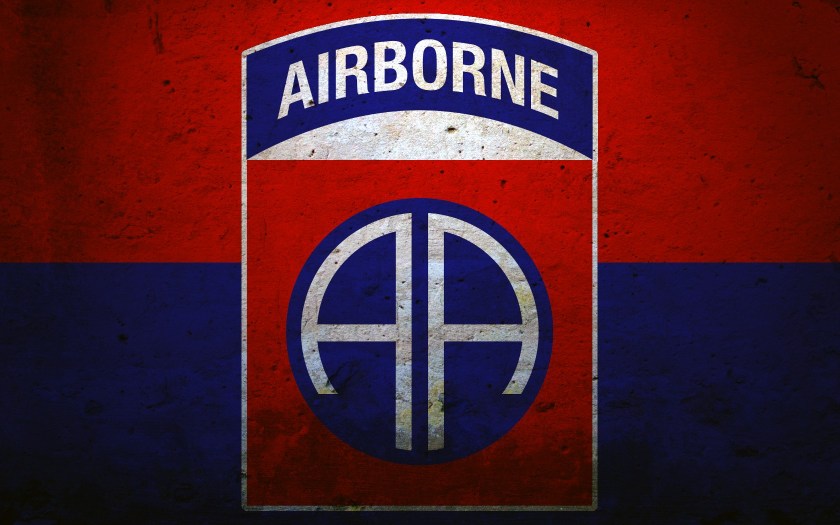
Originally constituted as the 82nd Division following the American entry into World War 1, The 82nd Airborne Division was organized on August 25, 1917, at Camp Gordon, Georgia. The “AA” on the arm patch stands for “All American”. Now based out of Fort Bragg North Carolina, the All Americans have participated in virtually every American conflict, of the last 100 years.

March 22, 1790 Jefferson

“Ladies and gentlemen, I want to tell you how welcome you are to the White House. I think this is the most extraordinary collection of talent, of human knowledge, that has ever been gathered together at the White House, with the possible exception of when Thomas Jefferson dined alone”. President John F Kennedy, addressing a White House Dinner honoring Nobel Prize recipients, 1962.

In April 1962, President John Fitzgerald Kennedy addressed a White House Dinner, to a group of Nobel prize winners.  Some of the greatest intellects of the era were assembled in that room.  The President began:

Ladies and gentlemen“, he said, “I want to tell you how welcome you are to the White House. I think this is the most extraordinary collection of talent, of human knowledge, that has ever been gathered together at the White House, with the possible exception of when Thomas Jefferson dined alone“.

800px-Thomas_Jefferson's_Grave_Site

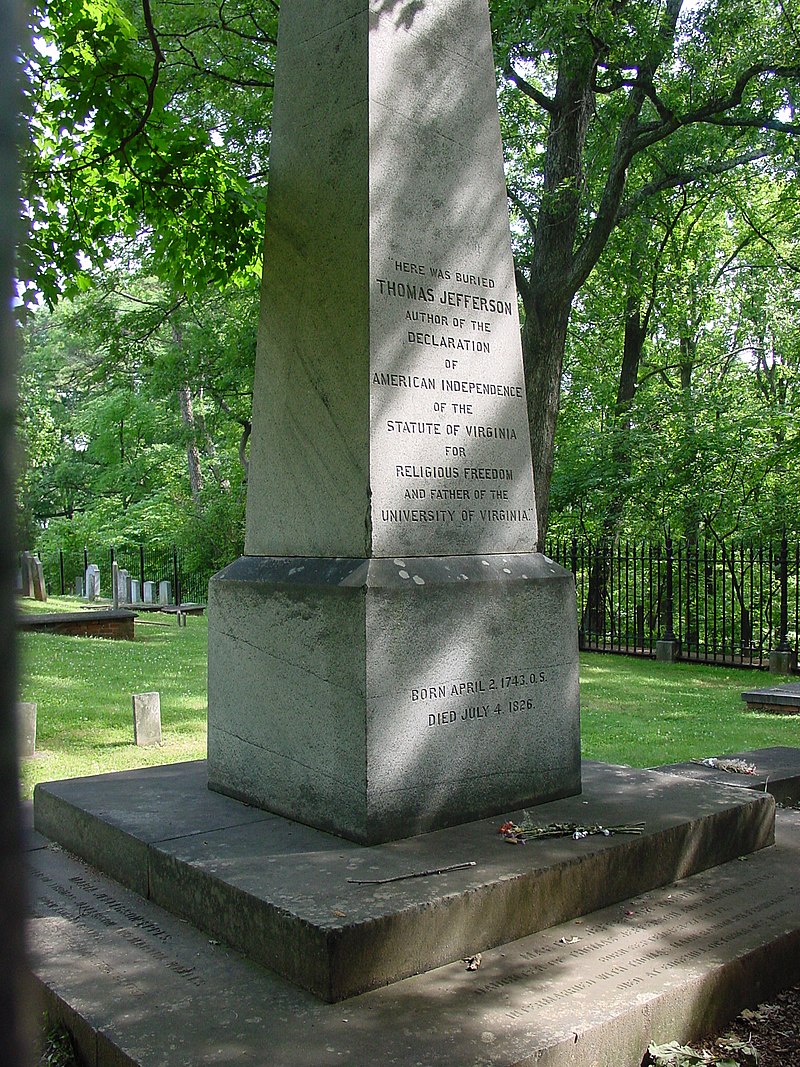
Jefferson himself knew how he wished to be remembered.  He left specific instructions.  Three accomplishments the founding father himself saw as his own legacy, inscribed on the stone which marks his grave:

Here was buried
Thomas Jefferson
Author of the Declaration of American Independence
of the Statute of Virginia for religious freedom
& Father of the University of Virginia

Thomas Jefferson served two terms as President of the United States, but didn’t put it among his top three accomplishments.  That’s how much he couldn’t stand politics.

The public life of Thomas Jefferson reads like a timeline for the founding of this nation.

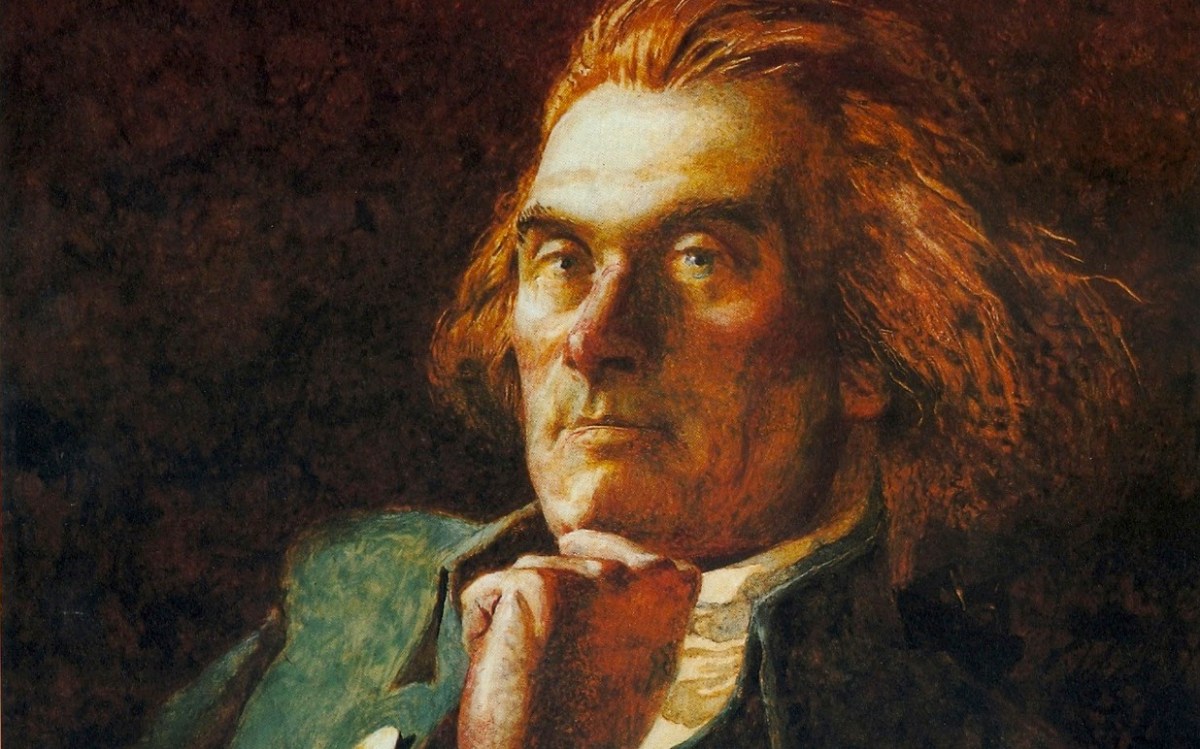
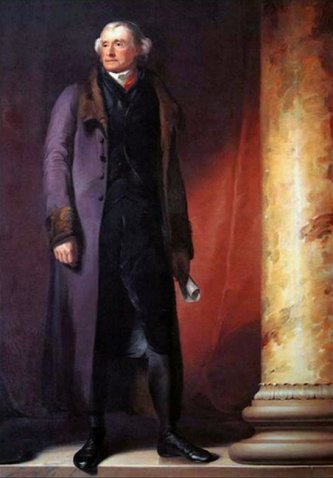
220px-Official_Presidential_portrait_of_Thomas_Jefferson_(by_Rembrandt_Peale,_1800)(cropped)In a time when colonists considered themselves to be Englishmen, Jefferson sought to disestablish the Anglican communion of the Church of England, seeking from the earliest days of his public career to establish a freedom from state-sponsored religion.
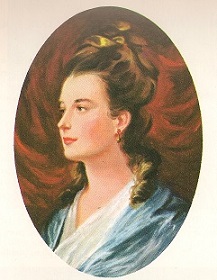
The preamble to the Statute of Virginia for religious freedom written in the man’s own hand, states “that our civil rights have no dependance on our religious opinions, any more than our opinions in physics or geometry“.

Jefferson expanded on the principle decades later, in a letter to the Baptist church of Danbury, Connecticut.  Referring to the United States Constitution, Jefferson writes:

I contemplate with sovereign reverence that act of the whole American people which declared that their legislature should “make no law respecting an establishment of religion, or prohibiting the free exercise thereof,” thus building a wall of separation between Church & State“.

Jefferson drafted no fewer than 126 bills in three years as Virginia state legislator and later governor, introducing measures for public education and religious freedom. Alarmed at the growing power of the landed aristocracy, Jefferson took aim at laws of entail and primogeniture, that permanent, hereditary and near-feudal system of increasingly large plantations worked by white tenant farmers and African slaves.

Assigned to a committee of five to write the Declaration of Independence, it is Jefferson’s hand we see on our national birth certificate.

Jefferson fled when the Patriot turned traitor Benedict Arnold burned the city of Richmond at the head of a British Army, and narrowly escaped a cavalry force under “Bloody Banastre Tarleton”, sent for his capture.

Martha Jefferson
A 1965 oil portrait of Martha Wayles Skelton Jefferson by artist George Geygan, based on contemporary descriptions of her physical attributes and executed 183 years after her death. H/T Firstladies.org

Martha Skelton, née Wayles, became Mrs. Jefferson in 1772, following the death of her first husband.   The marriage lasted ten years until her death in 1782 and produced six children, two of whom lived, to adulthood.

Jefferson was inconsolable on the death of his wife and withdrew for weeks, from the public eye.  He later burned their correspondence, leading some commentators to describe the relationship as “enigmatic’.

I don’t think so.  On his death some forty years later, Thomas Jefferson still wore a locket about his neck, containing a lock of Martha’s brown hair.

Jefferson was minister to France in the early days of the French Revolution, and witnessed the storming of the Bastille.  He was a regular companion of the Marquis de Lafayette and contributor to Lafayette’s Declaration of the Rights of Man and of the Citizen.  It’s here in 1787, that Jefferson is believed to have begun a sexual relationship with one of his slaves, sixteen-year-old Sally Hemings.  Modern DNA analysis has demonstrated a connection along the male Jefferson line, with at least one of Hemings’ children.

Thomas Jefferson became the nation’s 1st Secretary of State on this day in 1790, serving the first administration of  President George Washington.

Jefferson_Portrait_West_Point_by_Thomas_Sully
Thomas Jefferson at 78

As President of the United States, Jefferson personally tutored Corps of Discovery Meriweather Lewis of the Lewis and Clark Expedition, in the sciences of mapping, botany, natural history, mineralogy, and astronomy and navigation, and gave the man unlimited access to his library at Monticello, at that time the largest collection of geography and natural history books in the world.

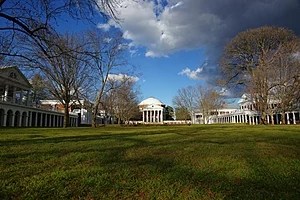
In 1819, the 76-year-old Jefferson founded the University of Virginia, personally organizing its state charter and planning for the course curriculum, while designing the architecture for ten Roman and Greek pavilions forming a quadrangle connected by colonnades and surrounded by serpentine walls.

As if that wasn’t enough, the man cut 791 verses from the King James bible with a razor, and rearranged them into the 46-page volume The Life and Morals of Jesus of Nazareth, commonly known as the Jefferson Bible.  He then translated the thing into French, Greek, Latin and back to English.  It interested him to do so.

UVa_colorful_winter_sun_2010
The University of Virginia, Jefferson’s “Academical Village” H/T Wikipedia

On the subject of slavery, the man remains an enigma.  Jefferson referred to the “execrable commerce …this assemblage of horrors” while he himself owned slaves.  As many as 600, over the course of his life.

In an ending no fiction writer would dare to contemplate, Jefferson and fellow founder John Adams died on July 4, 1826, fifty years to the day from the birth of the Republic they had helped create.

It is fashionable today, to judge the past by the standards of our day.  As if the present were somehow exempt from the just scorn of future generations.

The founder’s ideal of freedom Of religion has somehow morphed into an imagined freedom From religion.  Candidates argue for abolishing the Electoral College, transforming this self-governing Republic to a Democracy.  Somehow the image of five wolves and a lamb voting on what to have for lunch, comes to mind.

A week ago, a member of the United States House of Representatives criticized the third President, for believing African slaves to be 3/5ths of a person.

I would not condone the odious practice of one human being “owning” another, any more than I’d endorse those places where the practice continues, to this day.  I don’t know anyone who does.  It’s worth mentioning though, Spanish and Portuguese settlers brought the first African slaves to the new world, 275 years before the “Shot Heard ’round the World“.   Every New World economy from Canada to Argentina was engaged in slavery.  The first English colony to legally adopt the practice was Massachusetts, with the ironically named “Massachusetts Body of Liberties,” of 1641.

The 3/5ths compromise of the United States Constitution was a political concession.  The young nation was broke in the wake of the late Revolution, in need of new forms of taxation.  Southern states argued that slaves should be counted as persons for purposes of apportionment.  More seats meant more votes in Congress, more electors in the Electoral College.

6-three-fifthsThe more industrialized states to the north saw such a measure as placing a disproportionate burden of taxation, on themselves.  The 3/5ths compromise kicked the can down the road, passing the Gordian knot to be settled by another generation, in rivers of blood.

The connection between Jefferson and the 3/5ths compromise stems from the election of 1800.  Jefferson defeated Aaron Burr through disproportionate electoral support from the southern states, though it took 36 ballots, to do so.  The Congressman’s claim seems a bit of a stretch:  the third President was away in France while the Constitution was being written.

In a perfect world, our self-appointed ruling class would have cracked a book.  Candidates for political office would better understand our shared history.   The real thing is so much more interesting than the pop culture and political varieties.


A Trivial Matter
While a brilliant writer, Thomas Jefferson received no such gift when it came to public speaking. It’s not that his speeches were’t well written and meaningful, he was just a lousy speaker. His voice was halting and often inaudible, barely better than a mumble. John Adams once said, “During the whole time I sat with him in Congress, I never heard him utter three sentences together.” Unlike his predecessor, President Jefferson delivered the State-of-the-Union address in writing, beginning a practice which would continue until Woodrow Wilson’s first term, in 1913.

March 2, 1942  The Great Escape

For POWs of officer rank, escape was the first duty.

Stalag Luft III was a German POW camp in the province of Lower Silesia, built to house captured Allied airmen.  The first “Kriegsgefangene” (POWs), arrived on March 21, 1942. The facility would grow to include 10,949 “kriegies”, comprising some 2,500 Royal Air force officers, 7,500 United States Army Air officers, and about 900 from other Allied air forces.

Barracks were built on pilings to discourage tunneling, creating 24” of open space beneath the buildings. Seismic listening devices were placed around the camp’s perimeter. In the German mind, the place was the next best thing, to airtight.

Kriegies didn’t see it that way, three of whom concocted a gymnastic vaulting horse out of wood from Red Cross packages.

photo-showing-a-trolley-in-the-famous-harry-escape-tunnel-originally-built-by-allied-airmen-at-the-german-stalag-luft-iii-prisoner-of-war-camp-in-zagan-poland-136388730557403901-14032510

A Trojan horse was more like it. Every day, the horse would be lugged out to the perimeter. Above ground, prisoners’ gymnastic exercises masked the sound while underground, kriegies dug with bowls into the sand, using the horse itself to hide diggers, excavated soil and tools alike.  Iron rods were used to poke air holes to the surface.

Every evening for three months, plywood was placed back over the hole, and covered with the gray-brown dust of the prison yard.

On October 19, 1943, the three British officers made their escape.  Lieutenant Michael Codner and Flight Lieutenant Eric Williams reached the port of Stettin in the West Pomeranian capital of Poland, where they stowed away on a Danish ship. Flight Lieutenant Oliver Philpot boarded a train to Danzig, and stowed away on a ship bound for neutral Sweden. Eventually, all three made it back to England.

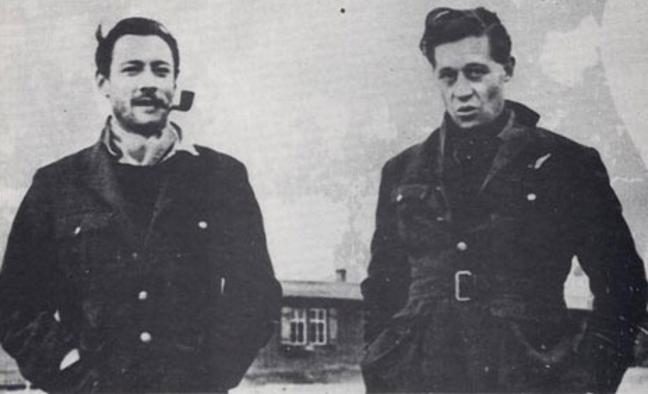
RAF Squadron Leader Roger Bushell was shot down and forced to crash land on his first engagement in May 1940, but not before taking two Messerschmitt Bf 110 fighters with him. Taken to the Dulag Luft near Frankfurt, Bushell formed an escape committee along with Fleet Air Arm pilot Jimmy Buckley, and Wing Commander Harry Day.

squadron-leader-roger-bushell-right-pictured-with-wing-commander-bob-tuck-136388730549803901-140325100231
Roger Bushell, (right), the Cambridge-educated son of British parents, was born and brought up in South Africa. Bushell was the inspiration for the film character “Bartlett”, played by Richard Attenborough

For POWs of officer rank, escape was the first duty. Roger Bushell escaped twice and almost made it, but each time his luck deserted him. By October, Bushell found himself in the north compound of Stalag Luft III, where British officers were held.

By the following spring, Bushell had concocted the most audacious escape plot in the history of World War Two. “Everyone here in this room is living on borrowed time”, he said. “By rights we should all be dead! The only reason that God allowed us this extra ration of life is so we can make life hell for the Hun… In North Compound we are concentrating our efforts on completing and escaping through one master tunnel. No private-enterprise tunnels allowed. Three bloody deep, bloody long tunnels will be dug – Tom, Dick and Harry. One will succeed!”

stalag-luft-iii---imperial-war-museum-136388730561803901-140325100959

The effort was unprecedented. Previous escape attempts had never involved more than twenty individuals. Bushell, soon to be known by the code name “Big X” was proposing to get out with two hundred.

Civilian clothes had to be fashioned for every man.  Identification and travel documents forged. “Tom” began in a darkened hallway corner. “Harry’s entrance was hidden under a stove, “Dick”‘s entrance was concealed in a drainage sump.

Stalag-Luft-III-Tunnel-Harry-entrance-from-the-camp

The Red Cross distributed high calorie, dehydrated whole-milk powder called “Klim” (“Spell it backwards”) throughout German POW camps. Klim tins were fashioned into tools, candle holders and vent stacks.  Fat was skimmed off soups and molded into candles, using threads from old clothing for wicks.

Of fifteen hundred prisoners in the compound, six hundred were involved in the attempt.  200 “penguins” made 25,000 trips into the prison yard, sacks sewn from the legs of long underpants, disposing of soil.  The tunnels were some kind of engineering marvel.  30′ down to avoid seismic detection equipment, and only two-feet square, the three tunnels extended outward for the length of a football field and more.

W-GreatEscape-7-HT-Jan12
Prisoners rigged an electric lighting system and shored up the tunnel sides, using bedboards

Penguins were running out of places to put all that soil, around the time the camp was expanded to include “Dick’s” planned exit-point.  From that time forward, “Dick” was refilled from the other two.  “Tom” was discovered in September 1943, the 98th tunnel in the camp to be found out.

Flight Lieutenant Nathaniel Flekser reflected on his own experience: “How lucky I really was dawned on me when I later met RAF prisoners who were shot down while on bombing missions over Germany. They were attacked by angry civilians, brutally interrogated by the Gestapo, and packed into cattle cars. One crew was thrown into a furnace.” H/T warfarehistory.com

The escape was planned for the good weather of summer, but a Gestapo visit changed the timetable.  “Harry” was ready by March.   The “Great Escape” was scheduled for the next moonless night.  March 24-25, 1944.

W-GreatEscape-9-HT-Jan12
German soldier demonstrates trolley system used to transport soil for dispersal

Contrary to the Hollywood movie, no Americans were involved in the escape.  At that point, none were left in camp.

The great escape was doomed, nearly from the start.  First the door was frozen shut, then a partial collapse required repair.  The exit came up short of the tree line, further slowing the escape.  When guards spotted #77 coming out of the ground, it was all over.

W-GreatEscape-8-HT-Jan12
German crawls out of tunnel entrance, following discovery

German authorities were apoplectic on learning the scope of the project.  90 complete bunk beds had disappeared, along with 635 mattresses.  52 twenty-man tables were missing, as were 4,000 bed boards and an endless list of other objects. For the rest of the war, each bed was issued with only nine boards, and those were counted, regularly.

Gestapo members executed German workers who had not reported the disappearance of electrical wire.

In the end, only three of the 76 made it to freedom:  Norwegians Per Bergsland and Jens Muller made it back to England via Sweden.  Dutch pilot Bram van der Stok made it to Gibraltar.   Hitler personally ordered the execution of the other 73, 50 of which were actually carried out.

stone-marking-the-spot-where-the-harry-tunnel-emerged-beyond-the-wire-136388730554203901-140325140243

General Arthur Nebe is believed to have personally selected the 50 for execution.  They were 22 Brits (including Bushell), 6 Canadians, 6 Poles, 4 Australians, 3 South Africans, 2 Norwegians, 2 New Zealanders, and one man each from Belgium, Czechoslovakia, France, Greece, and Lithuania.  All but seven were RAF airmen.

Nebe himself was later implicated in the July 20 plot to assassinate Adolf Hitler and executed on this day in 1945.  Roger “Big X” Bushell and his partner Bernard Scheidhauer were caught while awaiting a train at the Saarbrücken railway station.  They were murdered by members of the Gestapo on March 29, who were themselves tried and executed for war crimes, after the German surrender.

Dick Churchill
Dick Churchill, last surviving veteran of the “Great Escape”, died on February 12, 2019.

New camp Kommandant Oberst Franz Braune was horrified that so many escapees had been shot. Braune allowed those kriegies who remained to build a memorial, to which he personally contributed. Stalag Luft III is gone today, but that stone memorial to “The Fifty”, still stands.

Dick Churchill was an HP.52 bomber pilot and RAF Squadron Leader.  One of the 76 who escaped, Churchill was recaptured three days later, hiding in a hay loft.  In a 2014 interview, Churchill said he was fairly certain he’d been spared execution, because his captors thought he might be related to Prime Minister Winston Churchill.

The last surviving veteran of the daring escape which inspired the 1963 movie died at his home near Crediton, Devon, England, on February 12.  Five weeks ago.  Dick Churchill was ninety-nine years old.


A Trivial Matter
Rumors that Stalag Luft III’s American POWs were to be moved to another compound sped up work on Tom, raising German suspicions and leading to the tunnel’s discovery in September 1943. The tunnel was blown up using dynamite, causing a nearby guard tower to sink into the hole. The discovery was bad news for the Kriegies, but no end of amusement from watching how much work went into rebuilding that tower.

March 20 1870 The Lion of Africa

The Lion of Africa, the German officer and conquering hero of WW1, who once told the upstart Adolf Hitler to perform an anatomically improbable act.

Paul Emil von Lettow-Vorbeck was born into minor Prussian Nobility on this day in 1870. Joining the Corps of Cadets as a teenager, Lettow-Vorbeck worked his way up the German Imperial Army chain of command, becoming a general by 1914.

general-paul-von-lettow-vorbeckAt the outset of the “Great War”, a map of Africa looked nothing like it does today. From the Belgian Congo to Italian Somaliland, most of the continent was carved into colonies of the various European powers. France, Britain, Germany, Italy, Portugal, Belgium and Spain.  All administered parts of the African continent.
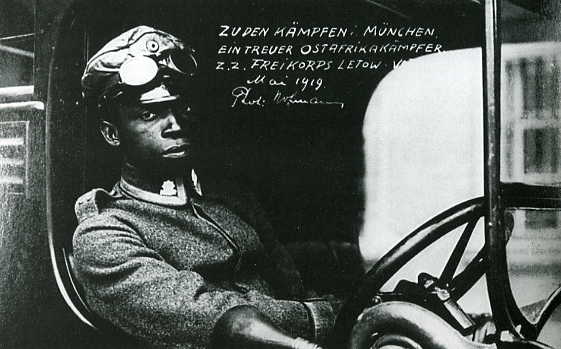
Stationed in German East Africa and knowing that his sector would be little more than a side show in the greater war effort, Lettow-Vorbeck determined to tie up as many of his adversaries as possible.

With a force never exceeding 14,000 (3,000 Germans and 11,000 Askari warriors), “Der Löwe von Afrika” tied up as many as 300,000 British, Belgian, and Portuguese troops, who wore themselves out in the pursuit.

Like the famous Lawrence of Arabia, Lettow-Vorbeck became a master of guerrilla warfare. He never lost a single battle, though it was not unheard of for combatants to break and flee a charging elephant or rhinoceros.

Askari-in-car1

To his adversaries, disease and parasites were often more dangerous than enemy soldiers. In one month (July, 1916) Allied non-battle casualties ran 31 to 1 compared with combat-related injuries.

In 1956, Brazilian scientists attempted to cross African honey bees with indigenous varieties, to produce an insect better suited to the South American tropics.  Today, we call the results of these failed experiments “Africanized” or “killer” bees.

Askari-on-MarchAt one point in the battle for Tanga (November 7-8, 1914), a British landing force and their Sepoy allies were routed and driven back to the sea by millions of African bees, disturbed by rifle and machine gun fire. There’s a story about a British radioman, I don’t know if it’s true.  This guy held his station, directing the evacuation from the beach while being stung to death by thousands of angry bees. He would be posthumously awarded the Victoria Cross for “gallantry under aerial attack”.

Lettow's_surrender
Lettow-Vorbeck surrendering his forces to the British at Abercorn, as drawn by an African artist. H/T Wikipedia

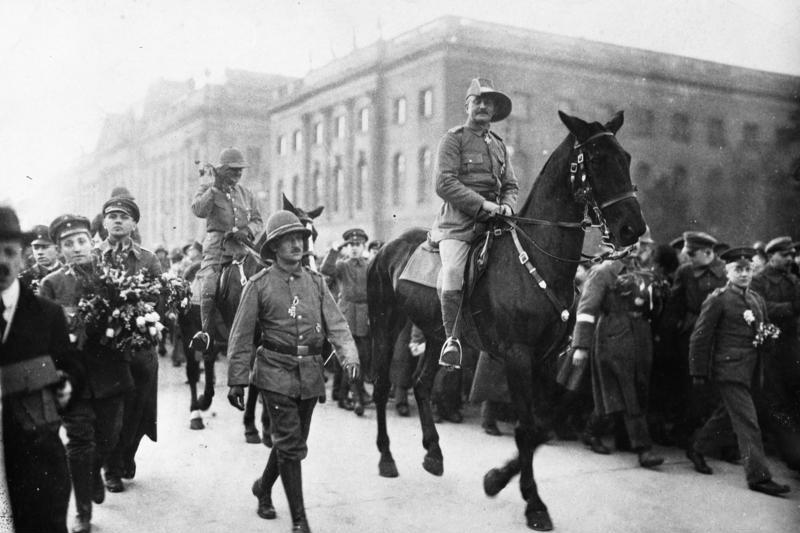
Returning home after the war, Vorbeck was greeted as a conquering hero.  Of all German commanders in World War One, “der Löwe von Afrika” (the Lion of Africa) alone remained undefeated in the field.  The only German commander to successfully invade imperial British soil during the Great War.

General Paul von Lettow-Vorbeck

Lettow-Vorbeck developed a deep distrust of the upstart Adolf Hitler. When then-Chancellor Hitler offered him an ambassadorship to the Court of St. James in 1935, Lettow-Vorbeck told Hitler to go “f**k yourself.” Describing the interview afterward, Lettow’s nephew explained “That’s right, except that I don’t think he put it that politely.

3e09a5714b91efd1037b5c3067a1c003

Following such a blunt refusal, Lettow-Vorbeck was kept under continual surveillance by the Nazi regime. His home and office were searched, his person subject to constant harassment. The Lion of Africa was destitute by the end of WWII. His two sons killed in service to the Wehrmacht, his home in Bremen destroyed by Allied bombs.

For a time, Vorbeck lived on food packages from British Intelligence Officer Richard Meinertzhagen and South African Field Marshal Jan Christiaan Smuts, two of his former adversaries in the East Africa campaign.  It was a token of the respect these two had, for a man who had once been their enemy.

letvorIn 1964, the year Lettow-Vorbeck died, the Bundestag voted to give back pay to former African warriors who had fought with German forces in WWI. Some 350 elderly Ascaris showed up. A few could produce certificates given them back in 1918, some had scraps of old uniforms.  Precious few could prove their former service to the German Empire.

The German banker who had brought the money had an idea. As each man stepped forward, he was handed a broom and ordered to perform the German manual of arms. Not one man failed the test.

Lettow-Vorbeck formed a lifelong friendship during his time in Africa, with the Danish author Karen Blixen, best known by her pen name Isak Dinesen, author of “Out of Africa”. Years later, Blixen recalled, “He belonged to the olden days, and I have never met another German who has given me so strong an impression of what Imperial Germany was and stood for”.


massaquoiA Trivial Matter
Following years of colonial, military and diplomatic interaction, romantic relationships between Germans and Africans, were inevitable. Though rare as hen’s teeth, Adolf Hitler’s Reich included the children of such relationships. One such was Hans J. Massaquoi, a self-described “kinky-haired, brown-skinned, eight-year-old boy amid a sea of blonde and blue-eyed kids filled with patriotism”. Though prohibited from joining by racial “purity” laws, the eight-year-old Hans was entirely caught up in the excitement of the Hitler Youth.
Mr. Massaquoi tells his unusual and fascinating story in Destined to Witness: Growing Up Black in Nazi Germany.

March 19, 1227 The Catapocalypse

The effect of the papal Bull, was as a commandment.  “Thou shalt not suffer a cat, to live”.

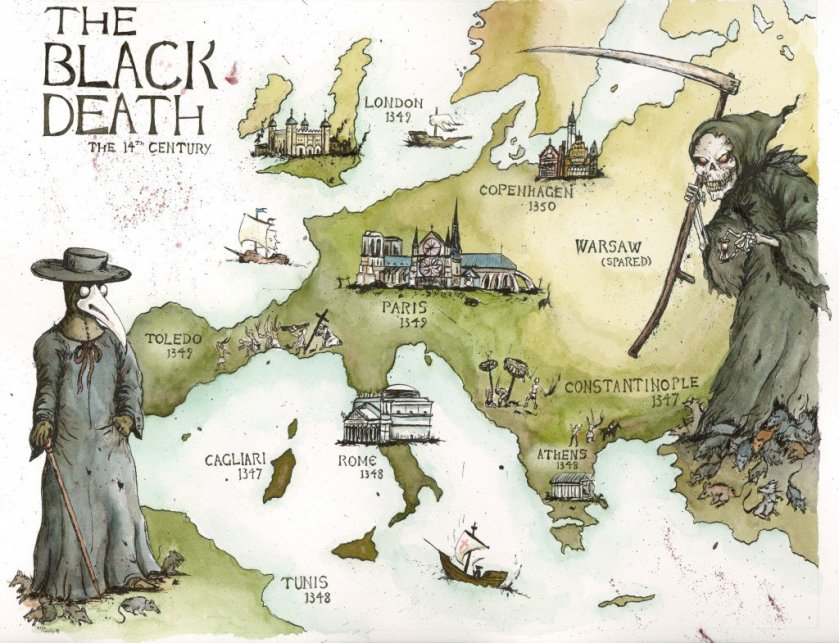
In the early 1330s, a deadly plague broke out on the steppes of Mongolia. The gram-negative bacterium Yersinia Pestis preyed heavily on rodents, whose fleas would transmit the disease to people, the infection then rapidly spreading to others. High fever would precede the appearance of “buboes”, a painful swelling of the lymph glands, especially in the armpit, neck and groin. Spots appeared on the skin turning from red to black, often accompanied by necrosis and gangrene in the nose, lips, fingers and toes.

In some cases, bubonic plague will progress from the lymphatic system to the lungs, resulting in pneumonic plague. Y. Pestis can progress to the blood system as well, a condition known as septicemic plague. In medieval times, septicemic mortality rates ran as high as 98%-100%.

ac6f251bd90701951df52373bea2b11f
H/T Historythings.com

Plague broke out among a besieging force of Mongols on the Black Sea city of Caffa, in 1346. Italian merchants fled with their ships in the Spring of 1347, carrying in their holds an untold number of rats and the fleas which came with them.

The disease process unfolded with horrifying rapidity. The Italian writer Boccaccio wrote that plague victims often “ate lunch with their friends and dinner with their ancestors in paradise.”

This was the experience of individual sufferers.  So, what allowed the pandemic to spread with such rapidity?

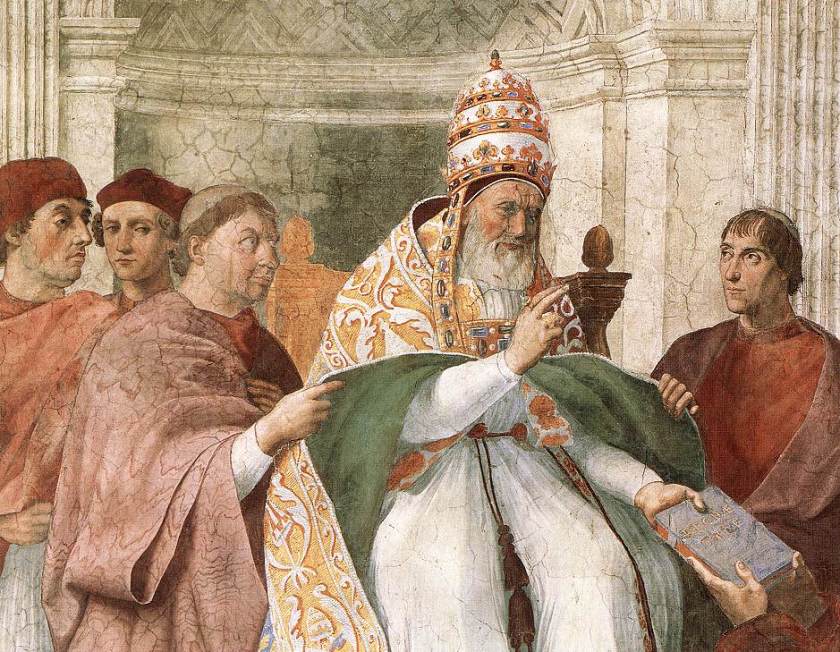
The story begins one-hundred years earlier.  On this day in 1227, eighty-year-old Cardinal Ugolino di Conti was elected Supreme Pontiff, taking the name Pope Gregory IX.  Gregory’s papal ordination came at a time of spreading heresy, the earliest reverberations of what came to be known some three hundred years late, as the Protestant Reformation.

6_6gregor1
Pope Gregory IX, H/T Historythings.com

The Waldenses, founded in 1170 by Peter Waldo, claimed that individuals could commune with directly with God. Other sects such as the Cathars followed similar beliefs. Such heresies challenged the authority of the One True Church, and could not be left unchecked.

Today, Gregory is best remembered for his organization of Canon law, the formalization of practices later forming the basis of the medieval inquisition. At the time, a more immediate problem was the rise of what were seen as satanic cults.

The German priest and nobleman Conrad of Marburg was an early leader in the persecution of heretics, claiming to have rooted out a number of Luciferian cults around the cities of Mainz and Hildesheim. The first Bull of the new papacy, the Vox in Rama, beseeched the bishops to come to Conrad’s aid, and went on to describe in some detail, the depraved rituals of such cults.

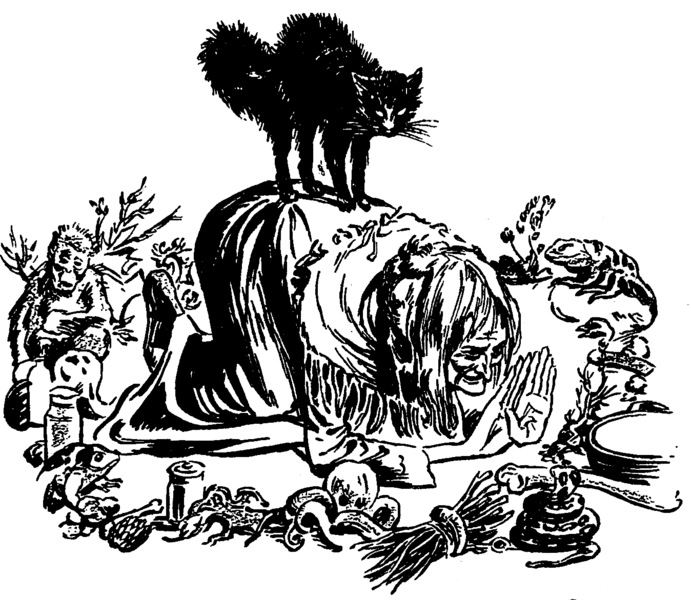
The devil at the center of it all was a shadowy figure, half man and half cat.

691px-WeirdTalesv36n1pg044_Witch_and_Cat
A witch and her cat. Weird Tales, Vol 36. Public Domain. Wikimedia Commons

From the mists of antiquity, the cat was worshiped as some kind of deity. The Vox reshaped the European view to where cats were now seen, as agents of hell.  The French theologian Alain de Lille piled on, falsely claiming the Cathar sect took its name from the animal and not the real source, the Greek katharoi or ‘pious ones’.

The effect was as a commandment.  “Thou shalt not suffer a cat, to live“.

The orgy of cruelty which followed, makes for some tough reading.  Cats were hurled from high cathedrals and set on fire, ritually tortured or summarily stomped or clubbed, to death.

In Denmark, the festival of Fastelavn held at the start of Lent, held that Spring would not come until evil, was banished from the land. Black cats were ritually beaten to death, to purge evil spirits. Cat killing became a folk practice all over Europe. During the festival of cats or Kattenstoet held in the Belgian city of Ypres, the custom was to hurl cats from the belfry of local churches, before setting them on fire. The hideous practice carried on until 1817 with live cats and continues to this day, only now, they’re stuffed.

black-rat-19th-century-engraving-spl

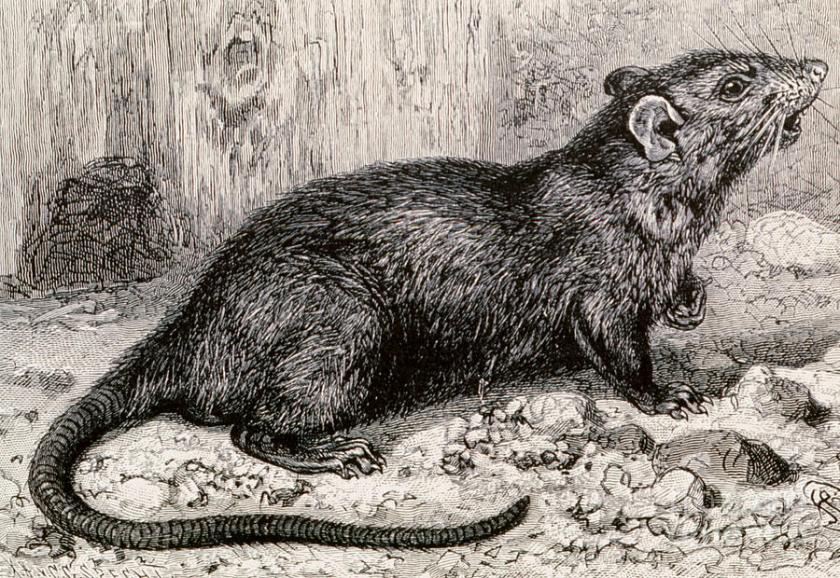
So it is that nature’s most efficient hunter of rodents was all but exterminated from the land, paving the way for the rat-borne apocalypse, to come.

One-third of the world’s population died in the rat-borne plague of 1347-’52.  It’s as if  over two billion were to sicken and die, today.

Feature image, top of page:  Hat tip historythings.com


A Trivial Matter
The term ‘Black Death’ was not adopted until some time later. For years, the plague was known as “the Pestilence” or simply “the Great Mortality”.

March 18, 1837 Big Steve

The Presidential election of 1884 was as close as any in history and Republicans made hay with the Halpin scandal.  “Ma, Ma, where’s my Pa”?

Born this day in 1837, Stephen G. “Big Steve” Cleveland was 33 the day he left his practice of law to become Sheriff of Erie County, in western New York.

As Sheriff, Cleveland was responsible for carrying out the sentence of death, either with his own hands, or by that of a deputy. For this, the hangman was paid a fee of ten dollars.

PCLEV001-009
Stephen G. Cleveland in an undated photograph

Sheriff Cleveland took care of this job himself, personally releasing the trap door on September 6, 1872 and hanging one Patrick Morrissey, who’d been convicted of stabbing his mother to death in a drunken rage. He executed another convicted murderer six months later, hanging John Gaffeny on February 14, 1873.

The fees for these and other services were surprisingly lucrative, amounting to $40,000 over a two year term, equivalent to $836,556, today.

A lifelong Democrat, Cleveland had a reputation for ‘shooting straight” at a time of rampant political corruption, by both parties.

Elected Mayor of Buffalo in 1871, Cleveland was called upon to approve a street cleaning contract awarded to the highest bidder. The difference between high and low bids came to the considerable sum of $100,000, a pot of money which could be expected to find its way back to the politicians who’d approved it.

This sort of graft had long been a feature of political life in New York, but not now. Mayor Cleveland vetoed the measure, describing the scheme “as the culmination of a most bare-faced, impudent, and shameless scheme to betray the interests of the people, and to worse than squander the public money“.

This reputation for honesty propelled Big Steve’s political career from the Mayoralty of Buffalo to the Governor’s mansion, in New York.

Maria Halpin
Maria Halpin

Talk about corruption. Five years earlier, one New York city alderman’s committee estimated that Boss Tweed’s Tammany Hall machine fleeced New York taxpayers to the tune of $25 to $45 million. Later estimates ranged as high as an astonishing $200 million, equivalent to a jaw-dropping $2.8 Billion, today. As Governor, Cleveland earned the ire of the city’s Tammany Hall machine, with eight vetoes in his first two months in office.

In 1884, the “Buffalo Hangman” found himself Democratic nominee for President of the United States. Boston Globe columnist and political commentator Jeff Jacoby notes that “Not since George Washington had a candidate for President been so renowned for his rectitude.”

Despite all that rectitude, the candidate was not without skeletons in his closet. One was a relationship with one Maria Crofts Halpin which produced a son, named Oscar Folsom Cleveland.

Halpin insisted to the end of her days, that she’d been raped. Big Steve claimed she was crazy and overly generous with her affections, accepting paternity only as a way of doing right by an old girlfriend. Cleveland did manage to get the woman involuntarily committed, for a time, and the boy taken away to be raised in anonymity, by his adoptive family.

Ma, Ma, Where's my Pa
1884 political cartoon asks “Ma, Ma, Where’s my Pa”

The Presidential election of 1884 was as close as any in history and Republicans made hay with the Halpin scandal.  “Ma, Ma, where’s my Pa“?

Despite all of it, Stephen Grover Cleveland won the popular vote by one quarter of one per cent, and an electoral college victory of 219-192, leading to the rejoinder “Ma, Ma, where’s my Pa?  Gone to the White House, ha ha ha“.

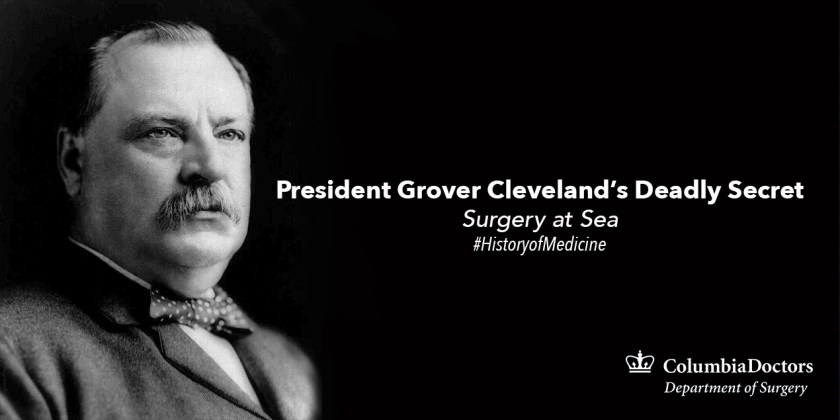
Fun fact:  The only former executioner ever elected President of the United States, Grover Cleveland is best remembered for being the only President to ever serve two non-consecutive terms.  The 22nd and 24th President of the United States was also, something of a medical miracle.

President Grover Cleveland was inaugurated for the second time in the midst of a disastrous recession known as the Panic of 1893.  The nation suffered vast unemployment, with hundreds of businesses closing down.  The railroad industry was devastated.  With Americans struggling everywhere, many looked to the new President to provide hope and a new direction.

Early in his second term, the President noticed a bumpy and rapidly growing patch, on the roof of his mouth.   White House physician Dr. Robert Maitland O’Reilly took one look and pronounced:  “It’s a bad looking tenant, and I would have it evicted immediately”.

The health of the famously rotund, cigar chomping President was already a matter of public concern. Cleveland feared a cancer diagnosis would set off a panic.  The tumor would have to be removed and the whole procedure, kept secret.

121015_HistoryofMedicine_PresidentCleveland

The only answer to the prying eyes of the press was to do it on the move, and there could be no scar.  President Cleveland  announced a four-day vacation aboard a friend’s yacht, a cruise through Long Island Sound to Buzzard’s Bay and on to the President’s summer home, on Cape Cod.

A surgical team of six boarded the yacht in disguise.  On July 1, 1893, the President was strapped into a chair and anesthetized, with ether.  The tumor was removed in a ninety minute procedure, along with the entire left side of the upper jaw, and five teeth.  For all that, there was no external incision.  The President’s life was saved, the trademark mustache undisturbed.

The operation remained secret until 1917, nine years after the death of the former President.  A medical miracle for the time, the President’s surgery is studied, to this day.


A Trivial Matter
Theodore Roosevelt was the first president to call the official residence, the “White House.” Prior to that, the building was called the Executive Mansion or the President’s House.

March 17, 1968 Skull Valley Sheep Kill

“From 1951 through 1969, hundreds, perhaps thousands of open-air tests using bacteria and viruses that cause disease in human, animals, and plants were conducted at Dugway … It is unknown how many people in the surrounding vicinity were also exposed to potentially harmful agents used in open-air tests at Dugway”. – GAO report, 1994

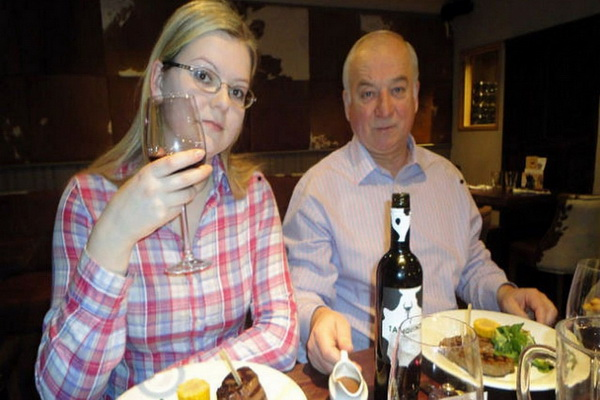
The father-daughter pair had just finished a meal at the Zizzi restaurant in the cathedral city of Salisbury, ninety miles southwest of London. The two took ill two hours before sunset.  A passing doctor and nurse found the couple on a park bench.

Sergei Skripal, age 66, and his daughter Yulia (33) were slipping in and out of consciousness, foaming at the mouth with eyes wide open, but entirely white.  Sergei and Yulia Skripal were weeks in intensive care before regaining consciousness. In a May 23 interview with CBS News, Yulia said “I don’t want to describe the details, but the clinical treatment was invasive, painful and depressing.”

Skripal
Sergei and Yulia Skripal

Though Vladimir Putin’s Russia vehemently denies the charge, the incident has been classified as an attempted assassination carried out against the former spy and his daughter, using the military grade nerve agent, Novichok.

The terrifying history of “Nerve “Agents” began in 1936, when the German biochemist Dr. Gerhard Schrader was working on pesticides.  Schrader first experienced problems with his eyesight, and soon had difficulty breathing. Symptoms included involuntary muscular spasms, the scientist’s arm was fully paralyzed, days later.

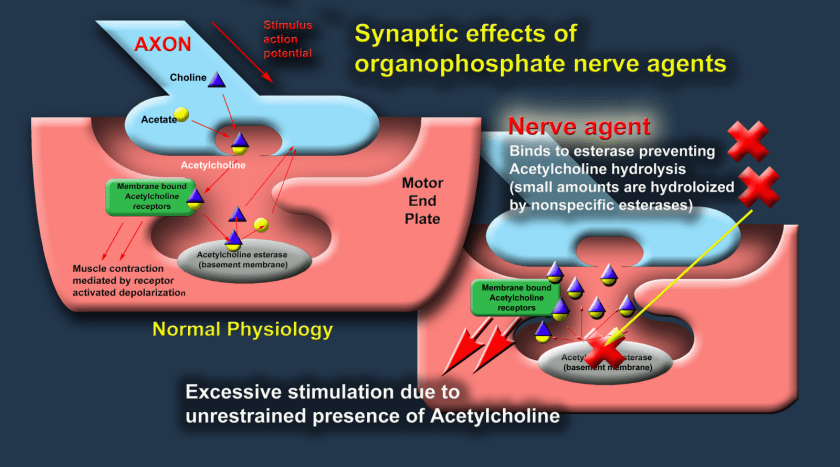
Dr. Schrader had discovered a class of chemical compounds known as organo-phosphates.

Nerve agent final

Organo-phosphates are a class of organic chemical which block nerve signals to bodily organs. Nerve agents are generally clear to a golden amber in color, tasteless liquids which may be evaporated, into a gas. The Sarin gas used in the 1995 Aum Shinrikio attack on the Tokyo subway was odorless as was the VX used to assassinate the brother of Kim Jong-un. in 2017.

Symptoms of nerve agent poisoning begin with constriction of pupils and convulsions, leading to involuntary urination and defecation. Death by asphyxiation or cardiac arrest follows within minutes.

British chemist Dr. Ranajit Ghosh discovered the “V”series of organophosphate compounds in the 1950s, sold as a pesticide in 1954 under the trade name Amiton. The stuff was soon taken off the market, as it was too dangerous for safe use. British Armed Forces took control of the compound at Porton Downs and traded it to the United States  in 1958, for information on thermo-nuclear weapons.

The American military went into full-scale production of VX gas as a chemical weapon of war in 1961. The Russian military developed an analog of VX called VR in 1963, later developed into the Novichok group, including the most toxic molecules ever developed.

800px-Dugway_Proving_Ground
Dugway Proving Ground

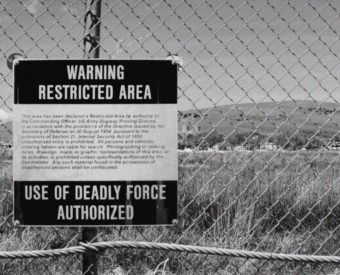
The Dugway Proving Ground near Salt lake City Utah was established in 1941 and used for hundreds if not thousands of open-air tests of nuclear, biological and chemical compounds.

A 1994 GAO (US General Accounting Office) reports:

“From 1951 through 1969, hundreds, perhaps thousands of open-air tests using bacteria and viruses that cause disease in human, animals, and plants were conducted at Dugway … It is unknown how many people in the surrounding vicinity were also exposed to potentially harmful agents used in open-air tests at Dugway”.

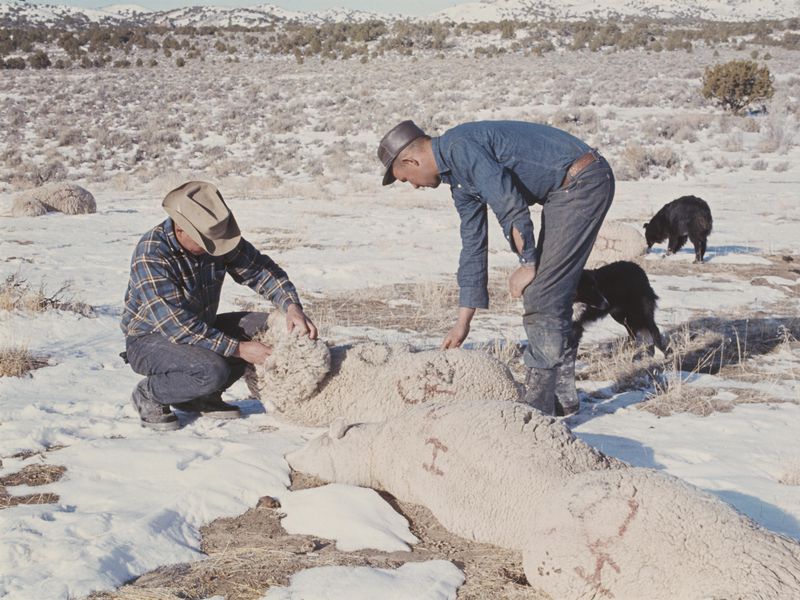
On this day in 1968, the manager of a Skull Valley livestock company phoned the department of ecology and epidemiology at Dugway to report the unexplained death of 3,000 sheep.  The animals had been grazing in the Skull Valley area, some 27 miles from the proving ground.

The Dugway safety office compiled a count of 3,843 dead animals. Exact cause of death was at first difficult to determine, since “no other animals of any type, including cows, horses, dogs, rabbits, or birds, appeared to have suffered any ill effects, a circumstance that was hard to explain if VX had in fact caused the sheep deaths.”

gettyimages-595692841_master
View of two farmers checking the corpses of dead sheep on a farm ranch near the Dugway Proving Ground in Utah. (Rolls Press/Popperfoto/Getty Images) H/T Smithsonian.com

Necropsies revealed the presence of VX nerve agent, as did grass and snow samples taken, some three weeks after the incident.  Total sheep deaths were counted at 6,000-6,400 including those humanely euthanized.  With even the suspicion of VX nerve agent, the animals had no market value whatever, either for their meat, or for wool.

Military Accidentally Ships Anthrax To Labs In Nine StatesA report which remained classified for thirty years, blamed a faulty nozzle left open, as the test aircraft gained altitude.

Public backlash was vehement against the US Army Chemical Corps, and nearly lead to its disbanding.  President Richard Nixon ordered a halt to open air testing of “NBC” agents, in 1969.

Today, few nations possess stockpiles of  nerve agents, a hellish weapon of war which may, with a mere puff of wind, turn on those who would use it.  The use of such an agent would almost certainly lead to nuclear retaliation, should any nation so attacked, posses the capability.  So it is the nations of the world hold the proverbial wolf by the ears, desperately afraid to hang on, and unable to let go.