December 23, 1884 American Hippo

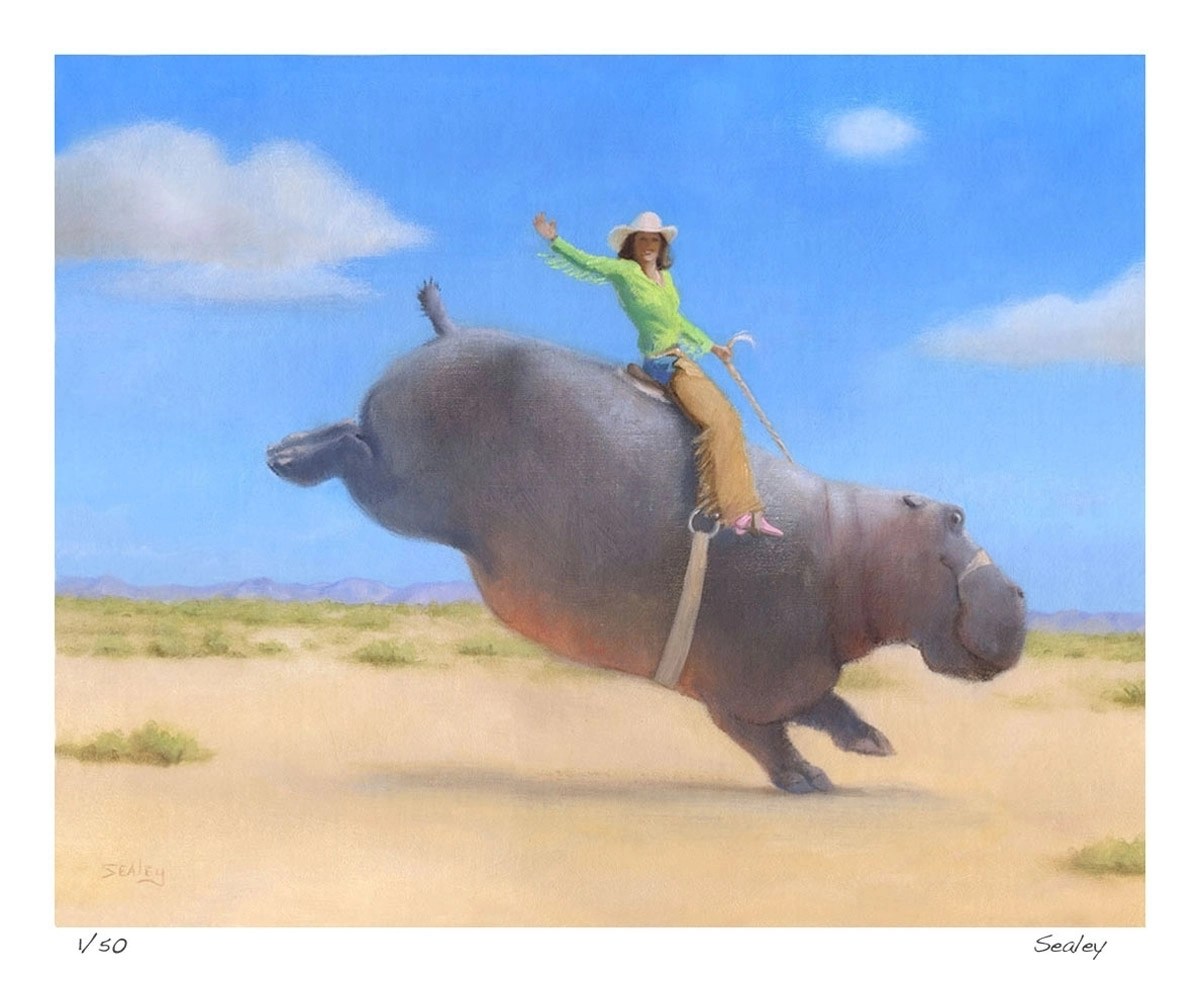
Lippincott’s monthly magazine, waxed rhapsodic:  “This animal, homely as a steamroller, is the embodiment of salvation.  Peace, plenty and contentment lie before us, and a new life with new experiences, new opportunities, new vigour, new romance, folded in that golden future, when the meadows and the bayous of our southern lands shall swarm with herds of hippopotami”.

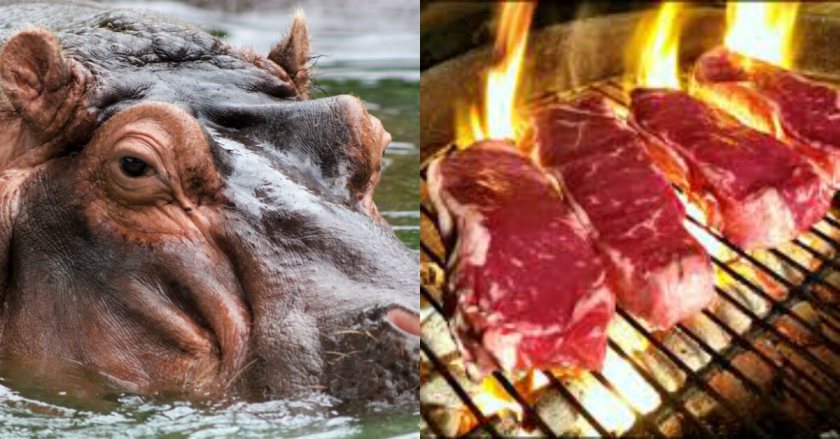
Only hours from now, families will gather far and near around, the Christmas table.  There will be moist and savory stuffing, and green bean casserole.  Creamy mashed potatoes and orange cranberry sauce.  And there, the centerpiece of the feast.  Slow-roasted and steaming in that silver tray the golden brown, delicious, roast hippopotamus.

Wait…Umm…What?

water-hyacinth-eichornia-crassipes
Water Hyacinth

On this day in 1884, the World Cotton Centennial and World’s Fair was beginning its second week, in New Orleans. Among the many wonders on display was the never-before seen Eichornia crassipes, a gift of the Japanese delegation.  The Water Hyacinth.

Visitors marveled at this beautiful aquatic herb, its yellow spots accentuating the petals of delicate purple and blue flowers floating across tranquil ponds on a mat of thick, dark green leaves.

The seeds of Eichornia crassipes are spread by wind, flood, birds and humans and remain viable, for 30 years.  Beautiful as it is to look at, the Water Hyacinth is an “alpha plant”, an aquatic equivalent to the Japanese invasive perennial Kudzu, the “vine that ate the south”.  Impenetrable floating mats choke out native habitats and species while thick roots impede the passage of vessels, large and small.  The stuff is toxic if ingested by humans and most animals, and costs a fortune to remove.

This plant native from the Amazon basin quickly broke the bounds of the 1884 World’s Fair, spreading across the bayous and waterways of Louisiana, and beyond.

Eichhornia_crassipes_field_at_Langkawi

During the first decade of the 20th century, an exploding American population could barely keep up with its own need for food, especially, meat.  The problem reached crisis proportions in 1910, with over grazing and a severe cattle shortage.  Americans were seriously discussing the idea, of eating dogs.

Enter Louisiana member of the House of Representatives, New Iberia’s own Robert Foligny Broussard, with a solution to both problems.  Lake Bacon.

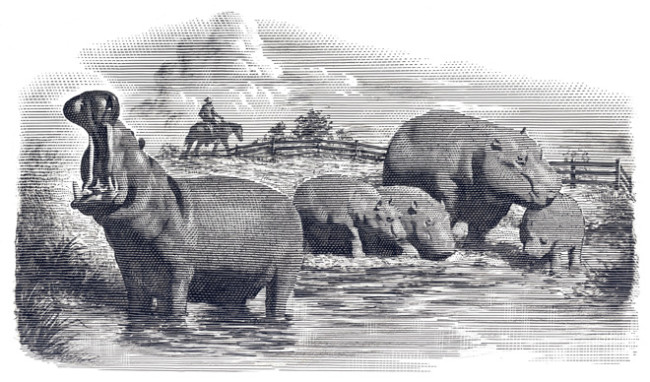
The attorney from Louisiana’s 3rd Congressional district proposed the “American Hippo” bill, H.R. 23621, in 1910, with enthusiastic support from Theodore Roosevelt and the New York Times.  One Agricultural official estimated that a free-range hippo herd could produce up to a million tons of meat, per year.

Lippincott’s monthly magazine, waxed rhapsodic:  “This animal, homely as a steamroller, is the embodiment of salvation.  Peace, plenty and contentment lie before us, and a new life with new experiences, new opportunities, new vigour, new romance, folded in that golden future, when the meadows and the bayous of our southern lands shall swarm with herds of hippopotami”.

With a name deriving from the Greek term “River Horse”, the common hippopotamus is the third largest land animal living today.  Despite a physical resemblance to hogs and other even-toed ungulates, Hippopotamidae’s closest living relatives are cetaceans such as whales, dolphins and porpoises.

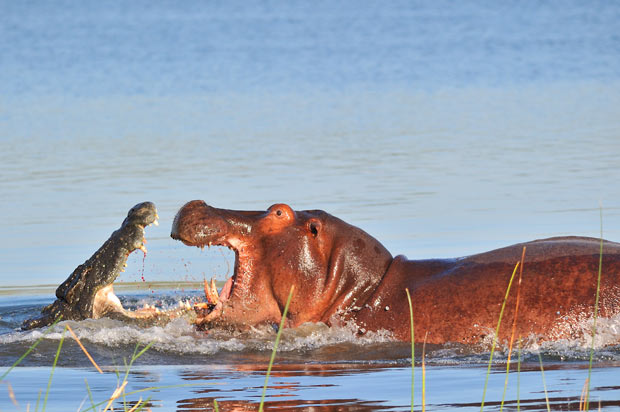
All well and good.  The problem is, those things are dangerous.

hippo-crocodile_1887702i

The adult bull hippopotamus is extremely aggressive, unpredictable and highly territorial.  And heaven help anyone caught between a cow, and her young.  Hippos can gallop at short sprints of 19 mph, only slightly less than Jamaican Sprinter Usain Bolt, “the fastest man who ever lived”.

To search the “10 most dangerous animals in Africa” is to learn that hippos are #1, responsible for more human fatalities than any other large animal, in Africa.

p-hippo-1_1467398c

Be that at it as it may, the animal is a voracious herbivore, spending daylight hours at the bottom of rivers & lakes, happily munching on vegetation.

Back to Broussard’s bill, what could be better than taking care of two problems at once?  Otherwise unproductive swamps and bayous from Florida to Louisiana would become home to great hordes of free-range hippos.  The meat crisis would be averted.  America would become a nation of hippo ranchers.
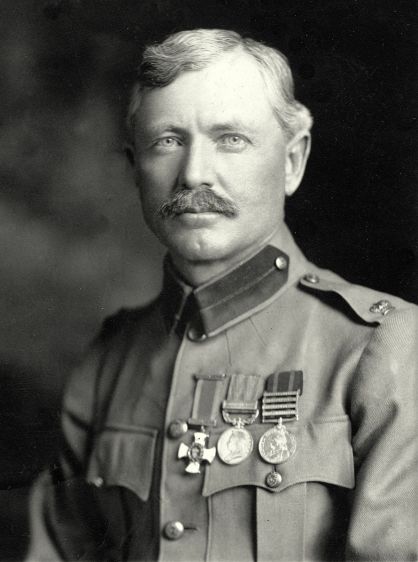
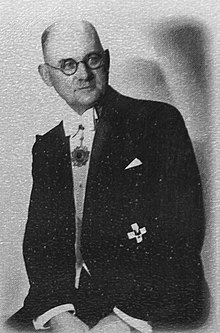
As Broussard’s bill wended its way through Congress, the measure picked up steam with the enthusiastic support of two men, mortal enemies who’d spent ten years in the African bush, trying to kill each other. No, really.

Frederick Russell Burnham had argued for four years for the introduction of African wildlife into the American food stream.  A freelance scout and American adventurer, Burnham was known for his service to the British South Africa company, and to the British army in colonial Africa. The “King of Scouts’, commanding officers described Burnham as “half jackrabbit and half wolf”.  A “man totally without fear.”  One writer described Burnham’s life as “an endless chain of impossible achievements”, another “a man whose senses and abilities approached that of a wild predator”.  He was the inspiration for the Indiana Jones character and for the Boy Scouts.  Forget the Dos Equis guy. Frederick Burnham really was the “most interesting man in the world“.

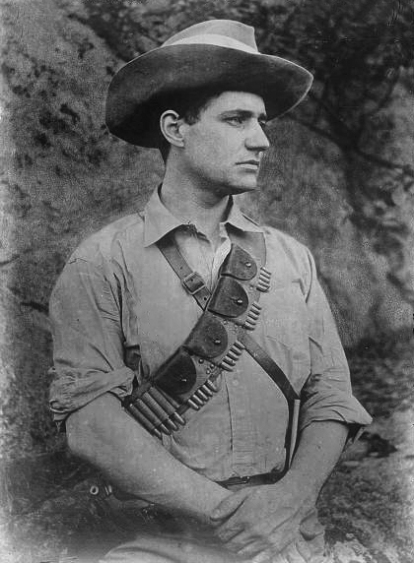
Fritz Duquesne? Well that’s another matter. Frederick “Fritz” Joubert Duquesne was a Boer of French Huguenot ancestry, descended from Dutch settlers to South Africa.  A smooth talking guerrilla fighter, the self-styled “Black Panther” once described himself as every bit the wild African animal, as any creature of the veld.  An incandescent tower of hate for all things British, Duquesne was a liar, a chameleon, a man of 1,000 aliases who once spent seven months feigning paralysis, just so he could fool his jailers long enough to cut through his prison bars.

Destined to become a German spy it is he who lends his name to the infamous Duquesne Spy Ring.  Frederick Burnham described this, his mortal adversary, thus:  “He was one of the craftiest men I ever met. He had something of a genius of the Apache for avoiding a combat except in his own terms; yet he would be the last man I should choose to meet in a dark room for a finish fight armed only with knives“.

in-1910-President-Roosevelt-supported-a-bill-that-would-have-released-hippopotamuses-into-Louisiana-to-eat-an-invasive-plant-species-and-to-provide-delicious-hippo-bacon-to-hungry-Americ

During the 2nd Boer war, the pair had sworn to kill each other.  In 1910, these two men became partners in a mission to bring hippos, to America’s dinner table.

Biologically, there is little reason to believe that Hippo ranching couldn’t have worked along the Gulf coast.  Colombian officials estimate that, within a few years, the hippo descendants of drug kingpin Pablo Escobar’s exotic animal menagerie will number 100 or more individuals.

Hippo Steak

Broussard’s measure went down to defeat by a single vote but never entirely went away.  Always the political calculator, Representative and later-Senator Broussard died with the bill on his legislative agenda, waiting for the right moment to reintroduce the thing.

Over time, the solution to the meat question became a matter of doubling down on what was already happening, as factory farms and confinement operations took the place of free ranges and massive use of antibiotics replaced the idea of balanced biological systems.

We may or may not have “traded up”.  Today, we contend with ever more antibiotic-resistant strains of “Superbugs”. Louisiana spends $2 million per year on herbicidal control of the water hyacinth. The effluent of factory farms from Montana to Pennsylvania works its way into the nation’s rivers and streams, washing out to the Mississippi Delta to a biological dead zone, the size of New Jersey.

13453_gulf-of-mexico-dead-zone-image-credit-noaa
Gulf of Mexico dead zone, image credit NOAA

That golden future of Lippincott’s hippo herds roam only in the meadows and bayous of the imagination.  Who knows, it may be for the best.  I don’t know if any of us could’ve seen each other across the table, anyway.  Not when the hippopotamus came out of the oven.

December 20, 1812 The Horrors of the German Language

“In early times some sufferer had to sit up with a toothache, and he put in the time inventing the German language”. – Mark Twain

Planning a business trip from Sunny Cape Cod™ to Presque Isle Maine I found myself pondering. What shall I do with the eternity it will take me to get there, or six hours, fifty minutes, whichever comes first? I hit upon the idea of teaching myself German, and why not? Books on Tape are free at my local library. I shall arrive at my meeting with mind fresh and horizons expanded by new adventures, in learning.

Right.

I emerged from my rolling inquisition some seven hours later, blinking like a marmot, flummoxed, exhausted and thoroughly convinced, of my own inadequacy. How the hell is anyone supposed to learn that stuff?

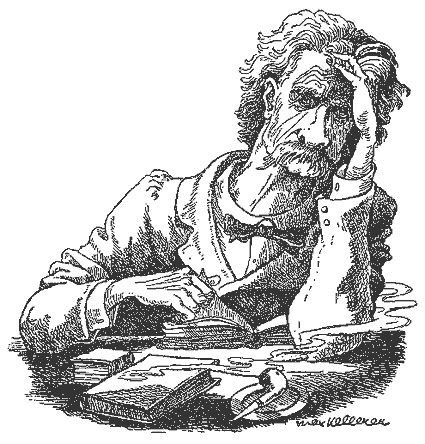
Illustration by Max Kellerer from German edition of Die Million Pfund-Note from the Dave Thomson collection

Turns out, I was not alone. No less a giant of the literary world than Mark Twain once said a person of modest gift could learn English in 30 hours, French in thirty days and German, in thirty years.

“I would rather decline two drinks than one German adjective.”

Mark Twain

Consider for example, verb separation. The German verb ankommen is a separable verb, a trait wisely shunned by the rest of the world’s 6,500 languages save Dutch, Afrikaans and Hungarian:

a. Sie kommt sofort an. she comes immediately at – ‘She is arriving immediately.’
b. Sie kam sofort an. she came immediately at – ‘She arrived immediately.’
c. Sie wird sofort ankommen. she will immediately at.come – ‘She will arrive immediately.’
d. Sie ist sofort angekommen. she is immediately at.come – ‘She arrived immediately.’

Der Zungenbrecker: Tongue Twister, or literally, The Tongue Breaker

And forget about Gender. Every noun has a gender in German for which there are no means save brute memorization, to learn. Then it turns out, a young lady has no gender at all while a turnip, does. A fish scale has a gender but a fishwife, an actual female, does not.

“Surely there is not another language that is so slipshod and systemless, and so slippery and elusive to the grasp. One is washed about in it, hither and thither, in the most helpless way; and when at last he thinks he has captured a rule which offers firm ground to take a rest on amid the general rage and turmoil of the ten parts of speech, he turns over the page and reads, “Let the pupil make careful note of the following exceptions.” He runs his eye down and finds that there are more exceptions to the rule than instances of it”.

Mark Twain, a Tramp Abroad

Take an art class sometime and the first thing you’ll learn about, is perspective. In the German language whole sentences run together into single words so long as themselves, to have perspective. Consider “Generalstaatsverordnetenversammlungen“. For the German as a second language learner, what does that even mean!? The native speaker will tell you that means, General Assemblies. For the rest of us it’s all in the perspective.

‘Never knew before what eternity was made for. It is to give some of us a chance to learn German.’

Mark Twain

Today we remember Jacob and Wilhelm Grimm for their collection of folklore and fairy tales, first published on this day in 1812 and expanded seven times, by 1857. Snow White and the Seven Dwarves, Red Riding Hood, Rapunzel. There are few among us not steeped in the work of these two but, did you know? The Grimm brothers also wrote the dictionary of the German language? Well, sort of.

Jacob and Wilhelm, the Brothers Grimm

In 1837, the Brothers Grimm needed to pay the rent. Taking a local publisher up on its offer to create a dictionary of the German language the first part was released on this day, in 1852. Two years later, the project included ‘A’ all the was to “Biermolke”. (Beer whey). “Biermolke” through E came about in 1860 the year after Wilhelm, died. Jacob died three years later with the last entry, “Frucht,” (Fruit).

The Grimm brothers project outlived the formation of the German state and two world wars coming at last to completion, in 1961.

The “Deutsches Wörterbuch“, the dictionary of the German language fills a whopping 330,000 headwords in 32 volumes, but that’s not all. The structure of the language allows users to stay within grammatical rules and yet combine words in ways bewildering to the non-native speaker. This tower of babel amounts to a befuddling 5.3 million words according to some sources with as many as a third, introduced in the last 100 years.

By way of comparison, the Oxford English Dictionary is enough to make a bookshelf groan with 171,146 words plus another 47,156 obsolete terms all contained, in 20 bound volumes. 

124 years in compiling and THAT, was by native speakers. So, about that 30 years thing, to learn the German language. Sure thing, Mark ol’ buddy . Sure thing.

December 18, 1944 Typhoon

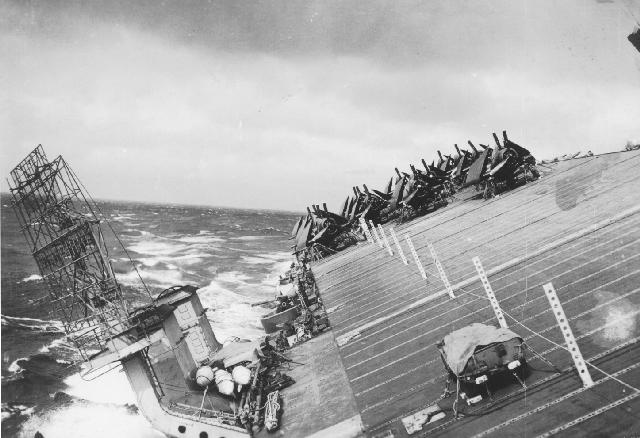
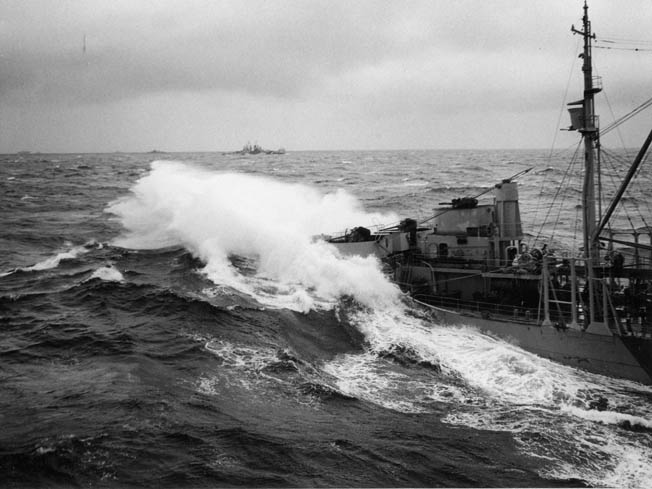
Hulls would creak and groan with the pounding and rivets popped. Captains in wheelhouses would order course headings, but helmsmen could do no better than 50° to either side of the intended course. Some ships rolled more than 70°. The 888-ft carrier USS Hancock, scooped tons of water onto its flight decks, 57-feet above the surface.


In September 1935, the Imperial Japanese Navy was caught in foul weather while conducting wargame maneuvers. By the 26th, the storm had reached Typhoon status.  The damage to the Japanese fleet was near catastrophic. Two large destroyers had their bows torn away by heavy seas. Several heavy cruisers suffered major structural damage.  Submarine tenders and light aircraft carriers developed serious cracks in their hulls. One minelayer required near total rebuild and virtually all fleet destroyers suffered damage to superstructures. 54 crewmen lost their lives.

Nine years later, it would be the turn of the American fleet.

The war in the Pacific was in its third year in December 1944. A comprehensive defeat only weeks earlier had dealt the Imperial Japanese war effort a mortal blow at Leyte Gulf, yet the war would slog on for the better part of another year.

Carrier Task Force 38 was a massive assembly of warships, a major element of the 3rd Fleet under the Command of Admiral William “Bull” Halsey.  In formation, TF-38 moved in three eight-mile diameter circles, each with an outer ring of destroyers, an inner ring of battleships and cruisers and a mixed core of 35,000-ton Essex class and smaller escort carriers. TF-38 was a massive force fielding eighty-six warships, all told.

By mid-December 1944, Task Force 38 was underway for three weeks, having just completed three days of heavy raids against Japanese airfields in the Philippines, suppressing enemy aircraft in support of American amphibious operations against Mindoro.  Ships were badly in need of re-supply.  A replenishment fleet, 35 ships in all, was sent to the nearest spot near Luzon still outside of Japanese fighter range. 

Rapid movement into previously enemy-held territory made it impossible to establish advance weather reporting.  By the time that Task Force meteorological service reports made it to ships in the operating area, weather reports were at least twelve hours old.

Cobra 9

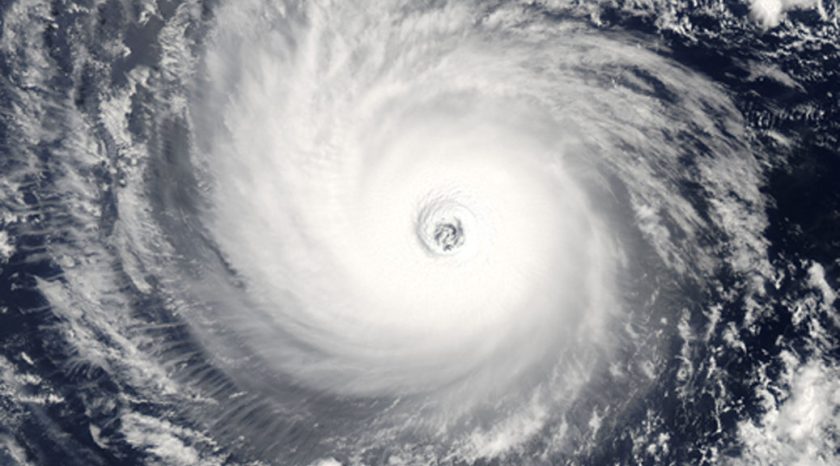
Three days earlier, a barometric low pressure system had begun to form off Luzon, fed by the warm waters of the Philippine sea.  High tropospheric humidity fed and strengthened the disturbance as counter-clockwise winds began to develop around the low pressure center.  By the 18th, this once-small “tropical disturbance” had developed into a compact but powerful cyclone.

Replenishment operations began the morning of the 17th as increasing winds and building seas made refueling increasingly difficult.  Refueling hoses were parted in several locations. Thick hawsers had to be cut to avoid collision as sustained winds built to 40 knots.  Believing the storm center to be 450 miles to his southeast, Admiral Halsey declined a return to base.  It would take too long and beside, and combat operations were scheduled to resume, two days later.  Halsey needed the carrier group refueled and on station, so it was decided.  Task Force 38 and the replenishment fleet would proceed to a second replenishment point, hoping to resume refueling operations on the morning of the 18th.

Cobra

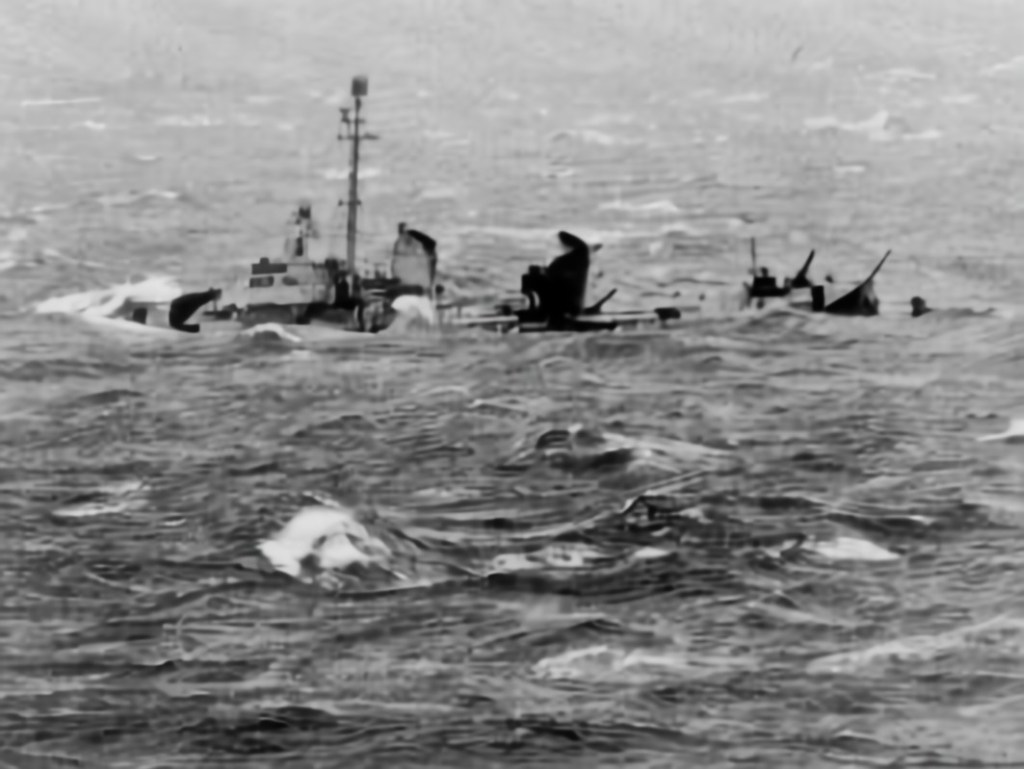
Four times over the night of December 17-18, course was corrected in the search for calmer water.  Four times the ships of Task Force 38 and it’s attendant resupply ships turned each time moving closer to the eye of the storm.  2,200-ton destroyers pitched and rolled like corks, towering over the crest of 70-foot waves only to crash into the trough of the next, shuddering like cold dogs as decks struggled to shed thousands of tons of water.

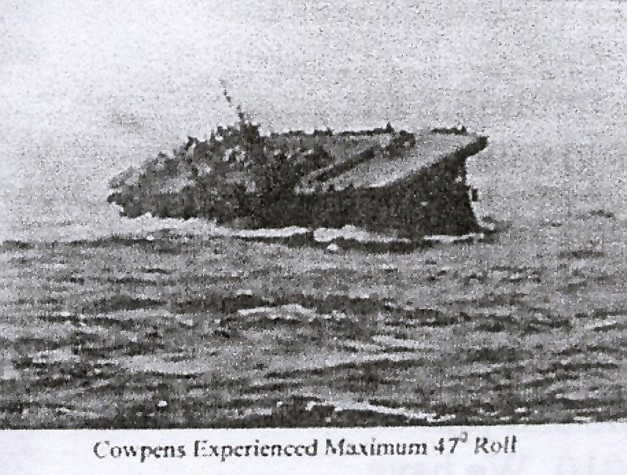
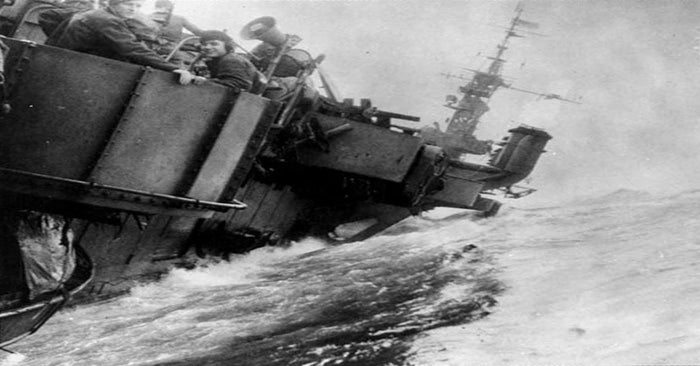
Hulls creaked and groaned with the pounding. Rivets popped.  Captains in wheelhouses order course headings but helmsmen could do no better than 50° to either side of the intended direction.  Some ships rolled more than 70°.  The 888-ft carrier USS Hancock scooped tons of water onto its own flight decks, 57-feet up.

USS Cowpens during Typhoon Cobra

Typhoon Cobra reached peak ferocity between 1100 and 1400 with sustained winds of 100mph and gusts of up to 140.

The lighter destroyers got the worst of it, finding themselves “in irons” – broad side to the wind and rolling as much as 75° with no way to regain steering control.  Some managed to pump seawater into fuel tanks to increase stability, while others rolled and couldn’t recover, water cascading down smokestacks and disabling engines.

Cobra 4

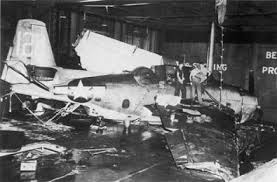
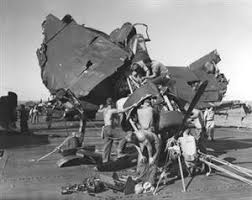
146 aircraft were either wrecked or blown overboard.  The carrier USS Monterrey nearly went down in flames as loose aircraft crashed about on hanger decks and burst into flames.  One of those fighting fires aboard Monterrey was then-Lieutenant Gerald Ford, the former Michigan Wolverine center and future President of the United States.

Cobra 10

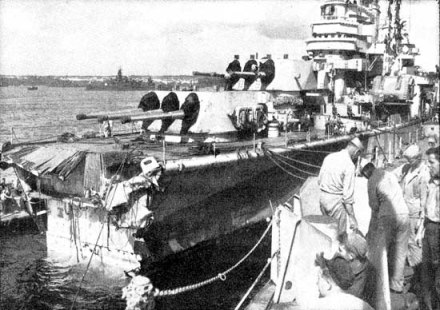
Many of the ships of TF-38 sustained damage to above-decks superstructure, knocking out radar equipment and crippling communications.

Cobra 8

790 Americans were killed by Typhoon Cobra:

USS Hull – with 70% fuel aboard, capsized and sunk with 202 men drowned. There were 62 survivors.
USS Monaghan – capsized and sunk with 256 men drowned. There were 6 survivors.
USS Spence – rudder jammed hard to starboard, capsized and sunk with 317 men drowned after hoses parted attempting to refuel from New Jersey because they had also disobeyed orders to ballast down directly from Admiral Halsey. There were 23 survivors.
USS Cowpens – hangar door torn open and RADAR, 20mm gun sponson, whaleboat, jeeps, tractors, kerry crane, and 8 aircraft lost overboard. One sailor lost.
USS Monterey – hangar deck fire killed three men and caused evacuation of boiler rooms requiring repairs at Bremerton Navy yard
USS Langley – damaged
USS Cabot – damaged
USS San Jacinto – hangar deck planes broke loose and destroyed air intakes, vent ducts and sprinkling system causing widespread flooding. Damage repaired by USS Hector
USS Altamaha – hangar deck crane and aircraft broke loose and broke fire mains
USS Anzio – required major repair
USS Nehenta – damaged
USS Cape Esperance – flight deck fire required major repair
USS Kwajalein – lost steering control
USS Iowa – propeller shaft bent and lost a seaplane
USS Baltimore – required major repair
USS Miami – required major repair
USS Dewey – lost steering control, RADAR, the forward stack, and all power when salt water shorted main electrical switchboard
USS Aylwin – required major repair
USS Buchanan – required major repair
USS Dyson – required major repair
USS Hickox – required major repair
USS Maddox – damaged
USS Benham – required major repair
USS Donaldson – required major repair
USS Melvin R. Nawman – required major repair
USS Tabberer – lost foremast
USS Waterman – damaged
USS Nantahala – damaged
USS Jicarilla – damaged
USS Shasta – damaged “one deck collapsed, aircraft engines damaged, depth charges broke loose, damaged“

It could have been worse.  The destroyer escort USS Tabberer defied orders to return to port, Lieutenant Commander Henry Lee Plage conducting a 51-hour boxed search for survivors despite the egregious pounding being taken by his own vessel.  USS Tabberer plucked 55 swimmers from the water, survivors of the capsized destroyers Hull and Spence.

Cobra 7, Pittsburgh

Typhoon Cobra moved on overnight, December 19 dawning clear with brisk winds. Admiral Halsey ordered “All ships of the Task Force line up side-by-side at about ½ mile spacing and comb the 2800-square mile area” in which they’d been operating.  Carl M. Berntsen, SoM1/C aboard the destroyer USS DeHaven, recalled that “I saw the line of ships disappear over the horizon to starboard and to port”. The Destroyer USS Brown rescued six survivors from the Monaghan and another 13 from USS Hull.  18 more would be plucked from the water, 93 in all, by ships spread across fifty to sixty miles of open ocean.

When it was over, Admiral Chester Nimitz said typhoon Cobra “represented a more crippling blow to the Third Fleet than it might be expected to suffer in anything less than a major action.”

Afterward

CARL MARTIN BERNTSEN PASSED AWAY ON OCTOBER 13TH, 2014 IN KITTY HAWK, NORTH CAROLINA. HE WOULD HAVE BEEN 94, THE FOLLOWING MONTH. I AM INDEBTED TO HIM AND HIS EXCELLENT ESSAY FOR THIS STORY.  VIRTUALLY ALL SHIPS OF TASK FORCE 38 WERE DAMAGED TO VARYINHG DEGREEs.

December 11, 1919 Monument, to a Bug

It was hardly coincidental that the thing was installed outside of Fleming’s General Store, but hey. This was a guy who let guinea hens loose inside his store and offered a discount, to anyone who could catch one. Roscoe Fleming had style.

Few machines have changed the course of history, like Eli Whitney’s cotton gin.

The long, hot summers of the southeastern United States have always been ideal for growing cotton, but there was a time when the stuff was extremely expensive to produce.  Cotton comes out wet from the boll, the protective capsule requiring about ten man hours just to remove the seeds to produce a pound of cotton.

By comparison, a cotton gin can process about a thousand pounds a day, at comparatively little expense.

slide_10

In 1792, the year that Whitney invented his machine, the southeastern United States exported 138,000 pounds a year to Europe and to the northern states.  Two years later, that number had risen to 1,600,000 pounds.  By the time of the Civil War, Britain alone was importing ¾ of the 800 million pounds it consumed every, from the American south.

Enterprise, Alabama got its start when John Henry Carmichael first settled there, in 1881.  Within a few years the Alabama Midland Railway came to Enterprise.  By the turn of the century the place was a major cotton growing hub.

Anthonomus grandis, the Boll Weevil, is a small beetle, about the size of the nail on your little finger. Indigenous to Mexico, the beetle crossed the Rio Grande near Brownsville, sometime around 1892.  The insect spread rapidly, producing eight to ten generations in a single growing season and preying mainly on the young cotton boll.

weevil in a ball of cotton

The insect is capable of destroying entire cotton crops and did just that in 1915, the year the insect reached Enterprise and most of Coffee County.  Facing economic ruin, local farmers were forced to diversify their crops, just to recoup the losses caused by this wretched insect.

Within two years, Enterprise became one of the leading peanut producers in the nation.  Not only had farmers been able to stave of disaster, but they were already becoming prosperous as a result of the thriving new crop base.

Town fathers decided to build a monument, their “herald of prosperity”, to the boll weevil.  The bug that had almost ruined them.

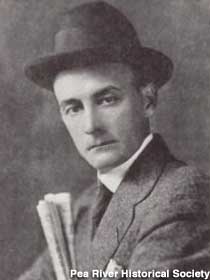
Roscoe Owen “Bon” Fleming

The idea was the brainstorm of one Roscoe Owen “Bon” Fleming, a man roadsideamerica.com describes as a “businessman, city councilman, and rogue promoter of the town of Enterprise”.

It was hardly coincidental that the thing was installed outside of Fleming’s General Store, but hey. This was a guy who let guinea hens loose inside his store and offered a discount, to anyone who could catch one. Roscoe Fleming had style.

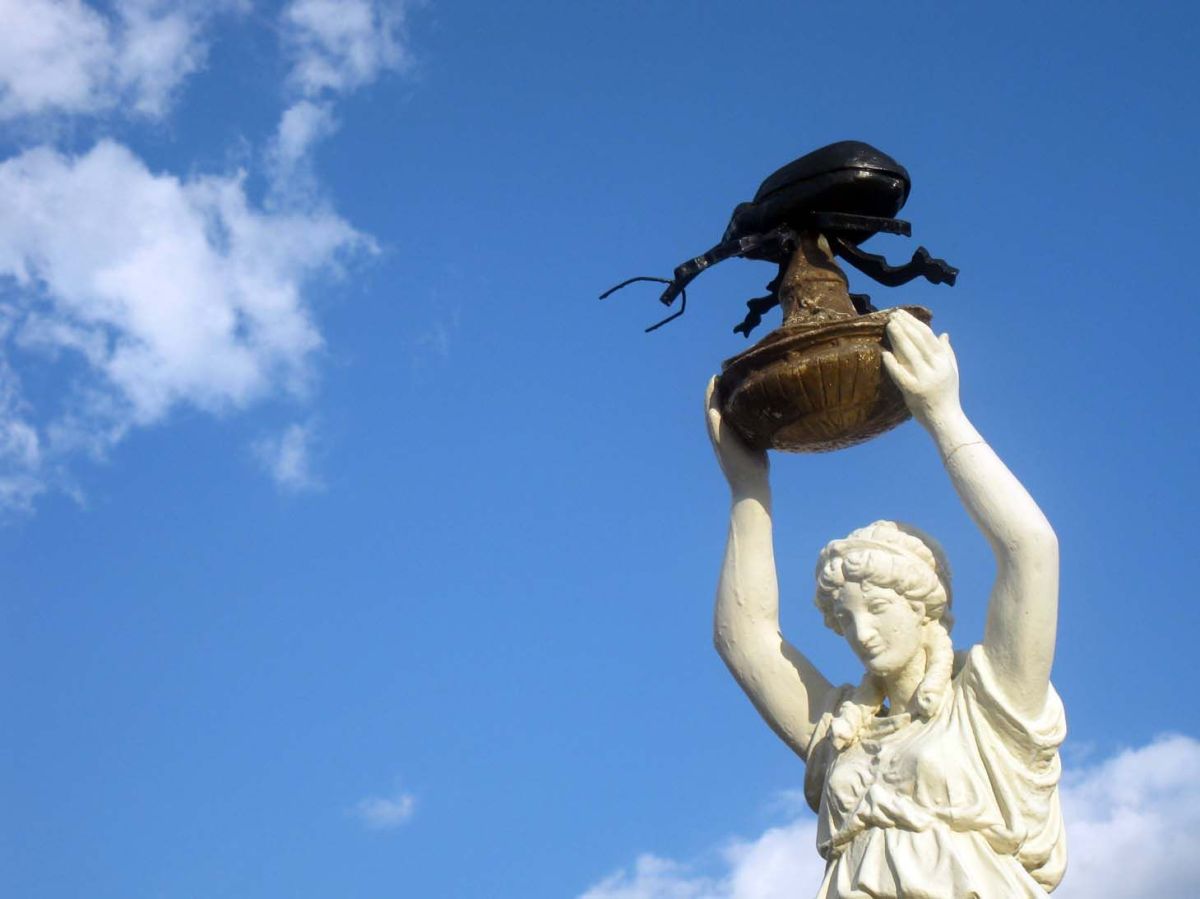
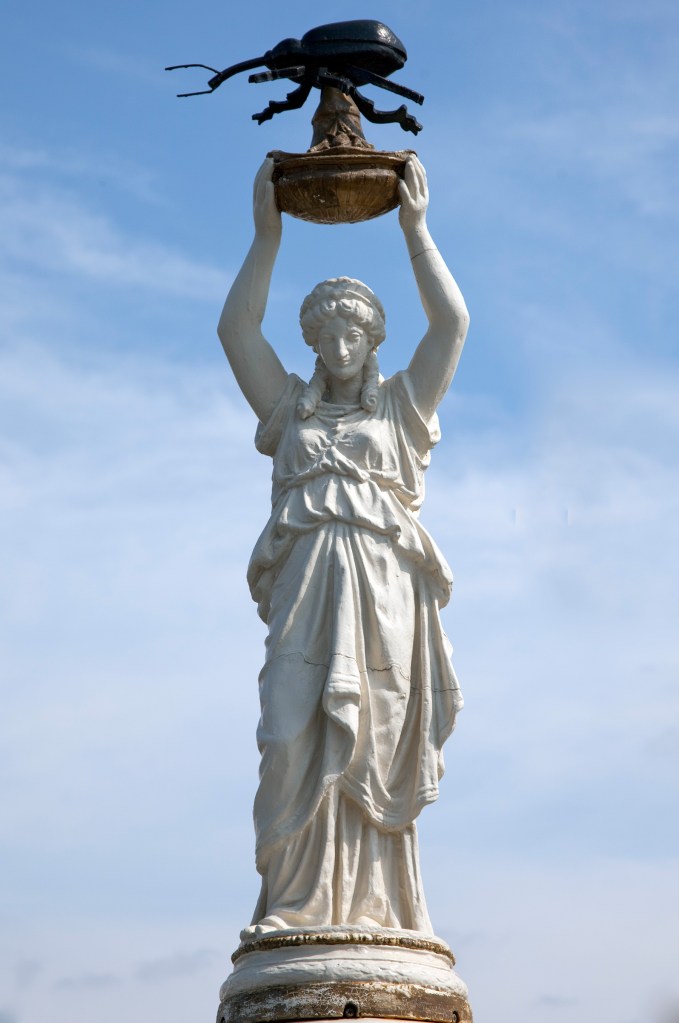
Designed in Italy (or maybe not), the monument depicts a female figure in a flowing gown, arms stretched high over her head and holding in her hands, a trophy. Maybe the whole thing came from the Bama Iron Works 90 miles down the road, who knows. There’s nothing like a good story.

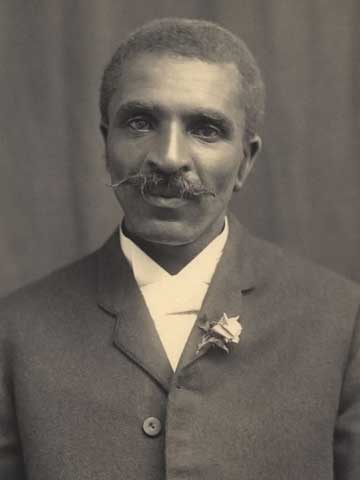
George Washington Carver

Critics railed against the $1,800 cost of the project, half of which came out of Fleming’s own pocket. The punditry also took aim at the subject of the monument. Why would you have a statue of a boll weevil in segregated Alabama when you could honor George Washington Carver, the African American agronomist who championed the peanut, in the first place?

Bon Fleming was not insensitive to such criticism and invited Carver to be the principal speaker, at the unveiling. It wasn’t meant to be. Rain washed out the tracks into town and Carver never made it.

So it is, a monument to a bug was dedicated on December 11, 1919 at the intersection of College and Main Street, in the heart of the business district, of Enterprise Alabama.

Now, you can’t have a boll weevil monument without a boll weevil, right?  Thirty years later one Luther Baker added a bug to the top of the trophy.  A big one, about the size of a Bassett hound. At the base of the memorial appears this inscription: 

“In profound appreciation of the Boll Weevil and what it has done as the herald of prosperity this monument was erected by the citizens of Enterprise, Coffee County, Alabama.”

The original has been vandalized so many times it was moved it to a protected facility and a replica, put in its place.  So it is you can drive down the Main Street of Enterprise Alabama, and there you will find a monument…to a bug.

December 10, 1986 Toxic Sanctuary

Ironically, the threat posed by humans outside the exclusion zone is greater for some species than that posed by radiation, within the zone.

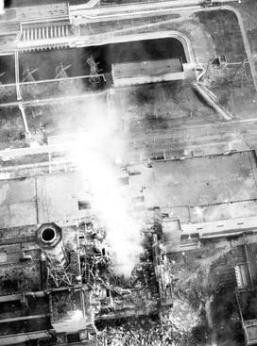
The accident began as a test. A carefully planned series of events intending to simulate a station blackout at the Chernobyl Nuclear Power Plant, in the Soviet Socialist Republic of Ukraine.

This most titanic of disasters began with a series of smaller mishaps. Safety systems intentionally turned off, reactor operators failing to follow checklists, inherent design flaws in the reactor itself.

Chernobyl_burning-aerial_view_of_core

Over the night of April 25-26, 1986, a nuclear fission chain reaction expanded beyond control at reactor #4, flashing water to super-heated steam resulting in a violent explosion and open air graphite fire. Massive amounts of nuclear material were expelled into the atmosphere during this explosive phase, equaled only by that released over the following nine days by intense updrafts created by the fire.  Radioactive material rained down over large swaths of the western USSR and Europe, some 60% in the Republic of Belarus.

It was the most disastrous nuclear power plant accident in history and one of only two such accidents classified as a level 7, the maximum classification on the International Nuclear Event Scale.  The other was the 2011 tsunami and subsequent nuclear disaster at the Fukushima Daiichi reactor, in Japan.

One operator died in the steam-blast phase of the accident, a second resulting from a catastrophic dose of radiation.  600 Soviet helicopter pilots risked lethal radiation, dropping 5,000 metric tons of lead, sand and boric acid in the effort to seal off the spread.

Remote controlled, robot bulldozers and carts, soon proved useless. Valery Legasov of the Kurchatov Institute of Atomic Energy in Moscow, explains: “[W]e learned that robots are not the great remedy for everything. Where there was very high radiation, the robot ceased to be a robot—the electronics quit working.”

20120409-3-Kiev-Chernobyl_Museum_(30)
Hat tip, Chernobyl Museum, Kiev , Ukraine

Soldiers in heavy protective gear shoveled the most highly radioactive materials, “bio-robots” allowed to spend a one-time maximum of only forty seconds on the rooftops of surrounding buildings. Even so, some of these “Liquidators” report having done so, five or six times.

In the aftermath, 237 suffered from Acute Radiation Sickness (ARS), 31 of whom died in the following three months.  Fourteen more died of radiation induced cancers, over the following ten years.

liquidators_chernobyl4
Chernobyl “Liquidators”, permitted to spend no more than a one-time maximum of forty seconds, cleaning the rooftops of surrounding structures.

The death toll could have been far higher, but for the heroism of first responders.  Anatoli Zakharov, a fireman stationed in Chernobyl since 1980, replied to remarks that firefighters believed this to be an ordinary electrical fire.  “Of course we knew! If we’d followed regulations, we would never have gone near the reactor. But it was a moral obligation – our duty. We were like kamikaze“.

The concrete sarcophagus designed and built to contain the wreckage has been called the largest civil engineering project in history, involving no fewer than a quarter-million construction workers, every one of whom received a lifetime maximum dose of radiation.  By December 10 the structure was nearing completion. The #3 reactor at Chernobyl continued to produce electricity, until 2000.

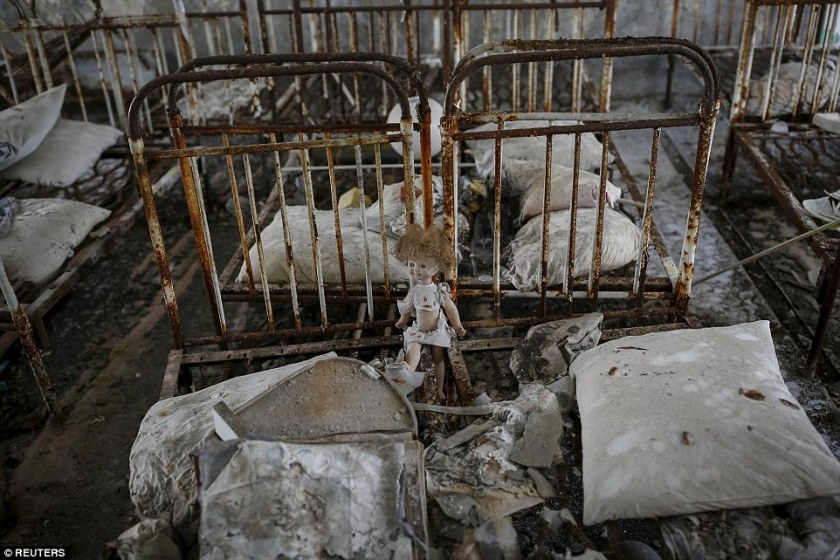
Abandoned nursery
A plastic doll lies abandoned on a rusting bed, 30 years after the town was evacuated following the Chernobyl disaster. H/T Dailymail.com

Officials of the top-down Soviet state first downplayed the disaster.  Asked by one Ukrainian official, “How are the people?“, acting minister of Internal Affairs Vasyl Durdynets replied that there was nothing to be concerned about: “Some are celebrating a wedding, others are gardening, and others are fishing in the Pripyat River.

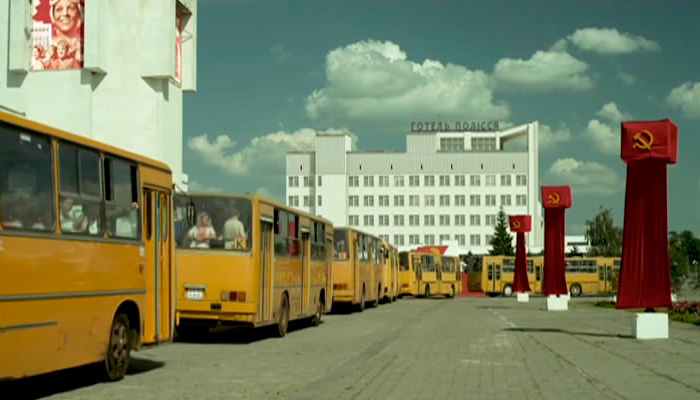
As the scale of the disaster became apparent, civilians were at first ordered to shelter in place.  A 10-km exclusion zone was enacted within the first 36 hours, resulting in the hurried evacuation of some 49,000.  The exclusion zone was tripled to 30-km within a week, leading to the evacuation of 68,000 more.  Before it was over, some 350,000 were moved away, never to return.

evacuation_of_pripyat
Evacuation of Pripyat

The chaos of these evacuations, can scarcely be imagined.  Confused adults.  Crying children.  Howling dogs.  Shouting soldiers, barking orders and herding the now-homeless onto waiting buses, by the tens of thousands.  Dogs and cats, beloved companion animals, were ordered left behind.  Evacuees were never told.  There would be no return. 

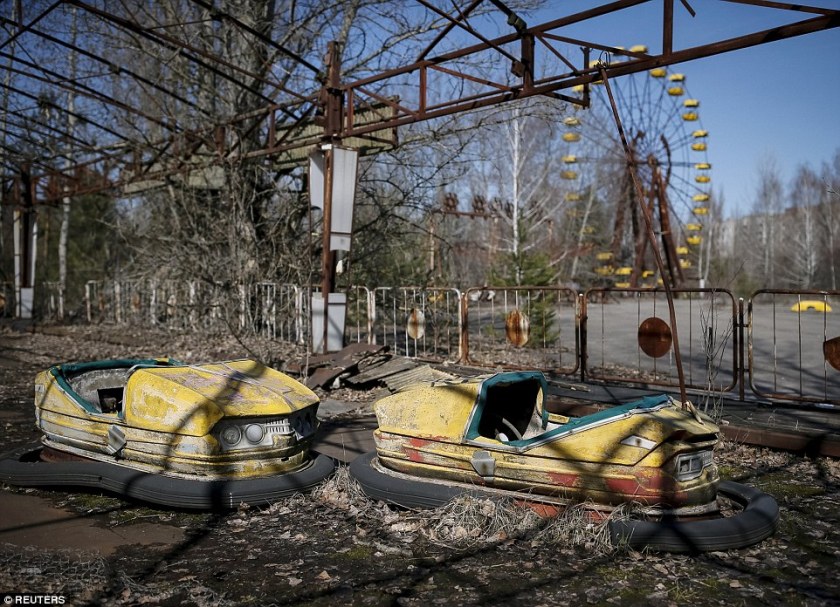
Abandoned amusement park
Two bumper cars lie face to face in the rusting remains of an amusement park in the abandoned town of Pripyat near Chernobyl

There were countless and heartbreaking scenes of final abandonment, of mewling cats, and whimpering dogs.  Belorussian writer Svetlana Alexievich compiled hundreds of interviews into a single monologue, an oral history of the forgotten.  The devastating Chernobyl Prayer tells the story of: “dogs howling, trying to get on the buses. Mongrels, Alsatians. The soldiers were pushing them out again, kicking them. They ran after the buses for ages.” Heartbroken families pinned notes to their doors: “Don’t kill our Zhulka. She’s a good dog.”

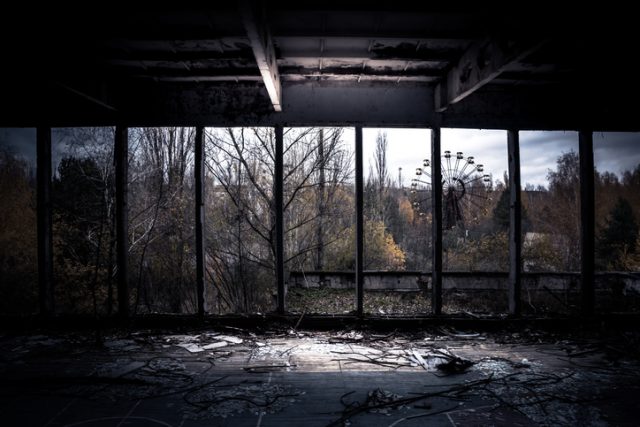
Abandoned gym
View from an abandoned gym in the Prypyat ghost town, of Chernobyl. H/T Vintagenews.com

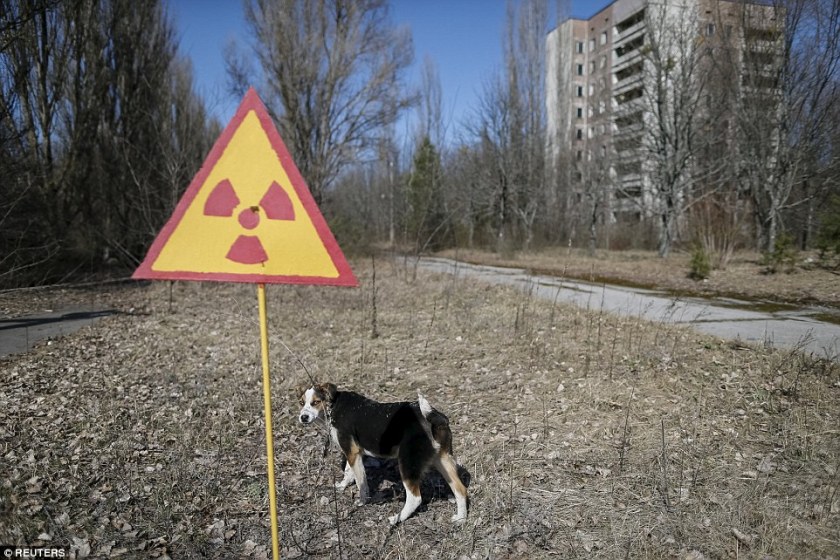
There would be no mercy.  Squads of soldiers were sent to shoot those animals, left behind.  Most died.  Some escaped discovery, and survived.

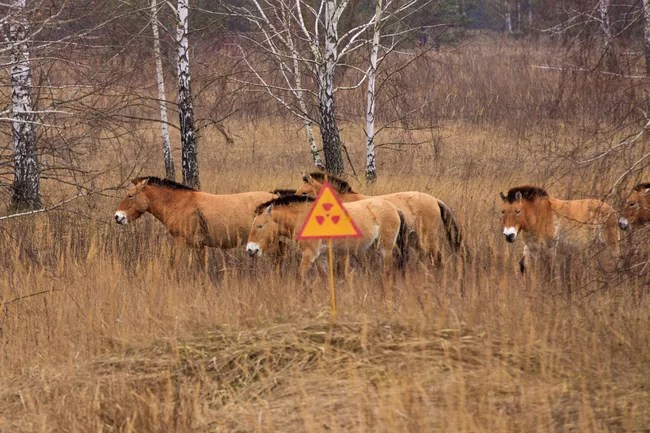
Today the descendants of those dogs, some 900 in number occupy an exclusion zone some 1,600 square miles, slightly smaller than the American state, of Delaware. They are not alone.

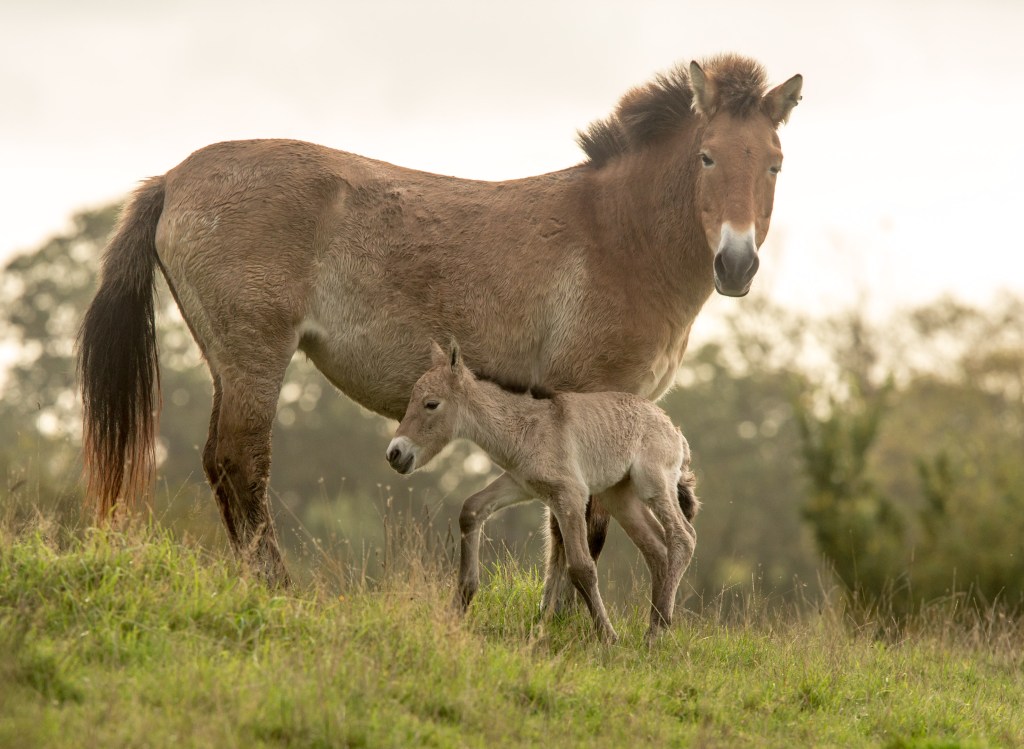
329F772A00000578-0-image-a-37_1459248391912

In 1998, 31 specimens of the Przewalski Horse were released into the exclusion zone which now serves as a de facto wildlife preserve. Not to be confused with the American mustang or the Australian brumby, the Przewalski Horse is a truly wild horse and not the feral descendant, of domesticated animals.

Named by the 19th century Polish-Russian naturalist Nikołaj Przewalski, Equus ferus przewalskii split from ancestors of the domestic Equus caballus some 38,000 to 160,000 years ago, forming a divergent species where neither taxonomic group is descended, from the other. The last Przewalski stallion was observed in the wild in 1969. The species is considered extinct in the wild, since that time.

Today approximately 100 Przewalski horses roam the Chernobyl Exclusion Zone one of the larger populations of this, possibly the last of the truly wild horses, alive today.

In 2016, US government wildlife biologist Sarah Webster worked at the University of Georgia. Webster and others used camera traps to demonstrate how wildlife had colonized the exclusion zone, even the most contaminated parts. A scientific paper on the subject is linked HERE, if you’re interested.

Ironically, the threat posed by humans outside the exclusion zone is greater for some species than that posed by radiation, within the zone. Wildlife spotted within the exclusion zone include wolves, badgers, swans, moose, elk, turtles, deer, foxes, beavers, boars, bison, mink, hares, otters, lynx, eagles, rodents, storks, bats and owls.

Not all animals thrive in this place. Invertebrates like spiders, butterflies and dragonflies are noticeably absent, likely because of eggs laid in surface soil layers which remain, contaminated. Radionuclides settled in lake sediments effect populations of fish, frogs, crustaceans and insect larvae. Birds in the exclusion zone have difficulty reproducing. Such animals who do successfully reproduce often demonstrate albinism, deformed beaks and feathers, malformed sperm cells and cataracts.

Tales abound of giant mushrooms, six-pawed rabbits and three headed dogs. While some such stories are undoubtedly exaggerated few such mutations survive the first few hours and those who do are unlikely to pass on the more egregious deformities.

Far from the post-apocalyptic wasteland of imagination the Chernobyl exclusion zone is a thriving preserve for some but not all, wildlife. Which brings us back to the dogs. Caught in a twilight zone neither feral nor domestic the dogs of Chernobyl are neither able to compete in the wild nor are many of them candidates for adoption, due to radiation toxicity.

Since September 2017, a partnership between the SPCA International and the US-based 501(c)(3) non-profit CleanFutures.org has worked to provide for the veterinary needs of these defenseless creatures.  Over 450 animals have been tested for radiation exposure, given medical care, vaccinations, and spayed or neutered, to bring populations within manageable limits.  Many have been socialized for human interaction and successfully decontaminated, available for adoption into homes in Ukraine and North America.

For most there is no future beyond this place and a life expectancy unlikely to exceed a span of five years.

Thirty five years after the world’s most devastating nuclear disaster a surprising number of people work in this place, on a rotating basis. Guards are stationed at access points whose job it is to control who gets in and to keep out unauthorized visitors, known as “stalkers”.

BBC wrote in April of this year about the strange companionship sprung up between these guards, and the dogs of Chernobyl. Jonathon Turnbull is a PhD candidate in geography at the University of Cambridge. He was the first outsider to recognize the relationship and gave the guards disposable cameras, with which to record the lives of these abandoned animals. The guards around this toxic sanctuary had but a single request: “please, please – bring food for the dogs”.

December 9, 1952 The Great Smog

Visibility was down to a meter at times and driving, all but impossible. Public transportation shut down requiring those rendered sick by the fog, to transport themselves to the hospital.

schwarzenegger-ap-18337474166966
“Actor Arnold Schwarzenegger delivers a speech during the opening of COP24 UN Climate Change Conference 2018 in Katowice, Poland, Monday, Dec. 3, 2018. Czarek Sokolowski / AP” H/T CBS News, Inc.

In 2018, climate activists and world leaders gathered in Poland to discuss carbon pollution resulting from the use of fossil fuels, and ways to combat what they see as a future of anthropogenic global warming.

In a speech before the assembly, Arnold Schwarzenegger swore that he’d go back in time if he could and “terminate” oil, coal, gasoline and natural gas. “The biggest evil is fossil fuels” Schwarzenegger thundered, “it’s coal, it’s gasoline, it’s the natural gas”.

A doubling of average life expectancy in the US from 39.41 in 1860 to 78.81 in 2020 went entirely, unremarked. Perhaps allowing actors to direct public policy is a greater evil than fossil fuels, but I digress.

Adherents to currently fashionable climate change theories hold onto such ideas with a fervor bordering on the religious while skeptics raise any number of questions, but one thing is certain. There was a time when the air and the water around us was tainted with impunity, with sometimes deadly results.

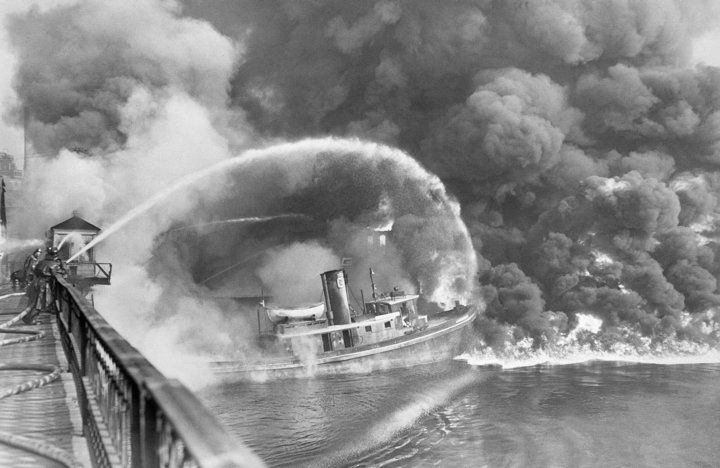
In 1969, the Cuyahoga River in Cleveland Ohio caught fire, resulting in property damage worth $100,000, equivalent to nearly $700,000, today. The fire resulted in important strategies to clean up the river, but this wasn’t the first such fire. The Cuyahoga wasn’t even the first river to catch fire. There were at least thirteen such incidents on the Cuyahoga, the first occurring in 1868. The Rouge River in Michigan caught fire in the area around Detroit in 1969, and a welder’s torch lit up the Buffalo River in New York, the year before. The Schuylkill River in Philadelphia caught fire from a match tossed into the water, in 1892.

Fire on the Cuyahoga River
Cuyahoga River burning, in 1952. H/T Getty Images

Today, the coal silts, oil and chemical contaminants at the heart of these episodes are largely under control in the developed world, but not the world over. One section of Meiyu River in Wenzhou, Zhejiang China burst into flames in the early morning of March 5, 2014. Toxic chemical pollution and other garbage dumped into Bellandur Lake in Bangalore India resulted in part of the lake catching fire the following year, the fire spreading to the nearby Sun City apartments.

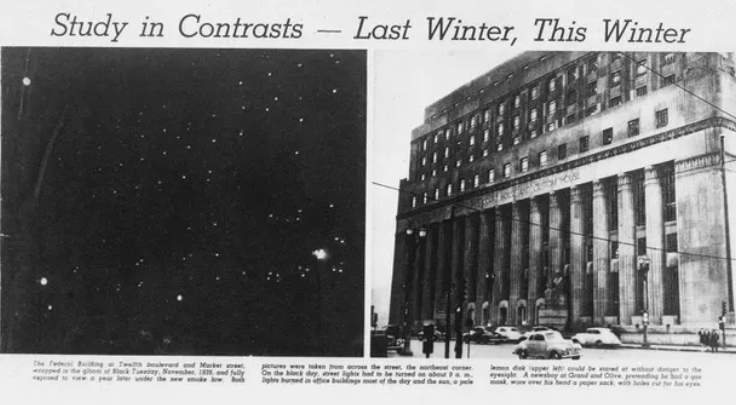
If you happen to visit the “Iron City”, Pittsburgh Pennsylvania, photographs can be easily found of streetlights turned on in the middle of the day. In November 1939, St. Louis brought a new meaning to the term “Black Tuesday”, when photographs of the Federal building at Twelfth Boulevard and Market Street show the sun little more than a “pale lemon disk” and streetlights on at 9:00 in the morning.

Federal Building, St. Louis

Air pollution turned deadly in the early morning hours of October 26, 1948 when atmospheric inversion trapped fluorine gas over Donora Pennsylvania, home of US Steel Corporation’s Donora Zinc Works and American Steel and Wire. By the 29th, the inversion had trapped so much grime that spectators gathered to watch a high school football game, couldn’t see the kids on the field. The “Death Fog” hung over Donora for four days killing 22 and putting half the town, in the hospital.

mid-day
Donora Smog at Midday with streetlights on. H/T Donora Historical Society

The Donora episode was caused by an “anticyclone”, a weather event in which a large high pressure front draws air down through the system and out in a clockwise motion.

When such a weather system occurs over areas with high levels of atmospheric contaminants, the resulting ground fog can be catastrophic. 63 people perished during a similar episode in 1930 in the Meuse River Valley area, of Belgium. In 1950, 22 people were killed in Poza Rica, Mexico. In 1952, the infamous “Great Smog of London” claimed the lives of thousands over a course of five days.

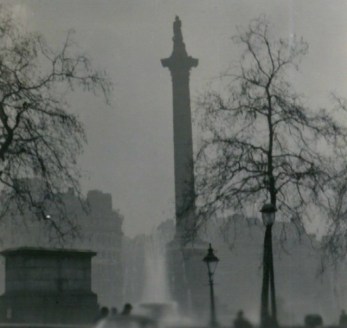
Nelson's_Column_during_the_Great_Smog_of_1952
Nelson’s Column during the Great Smog of 1952

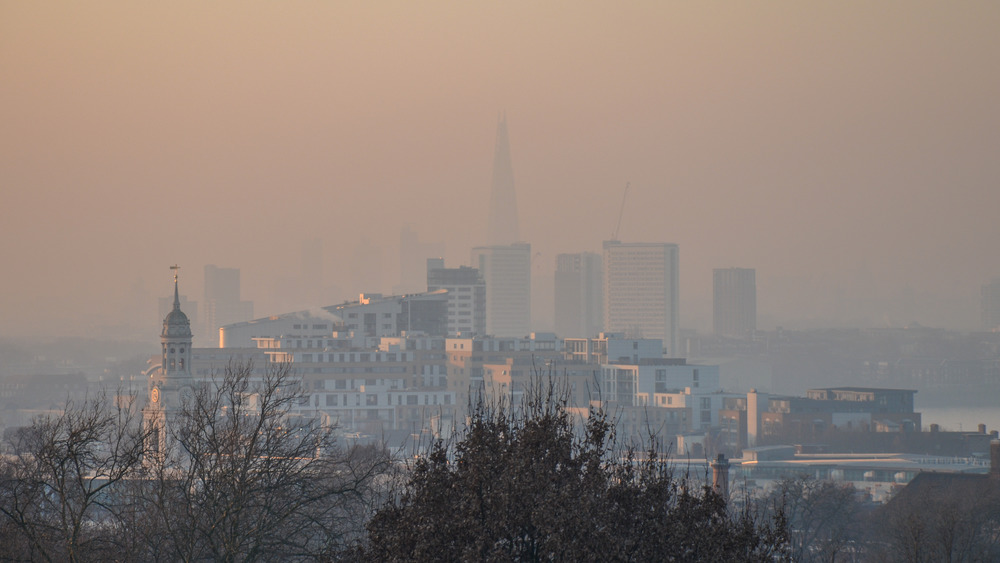
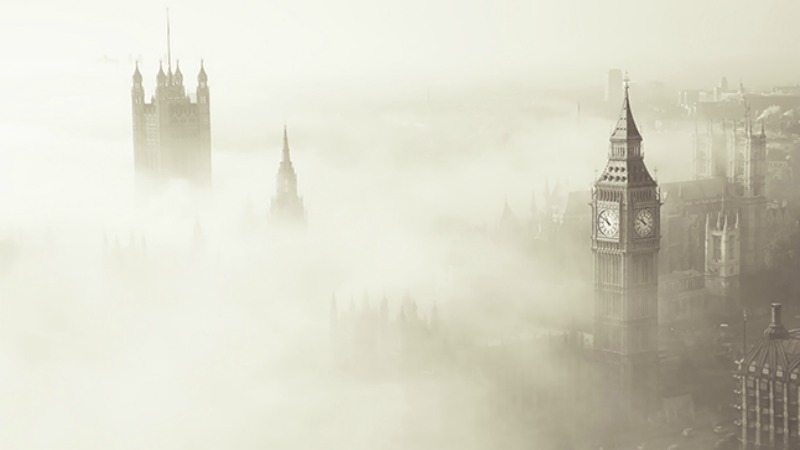
On December 5 of that year, a body of cold, stagnant air descended over a near-windless London, trapped under a “lid” of warm air. London had suffered poor air quality since the 13th century and airborne pollutants had combined to create “pea soupers” in the past, but this was unlike anything in living memory. The smoke from home and industrial chimneys and other pollutants such as Sulphur dioxide combined with automobile exhaust, with nowhere to go.

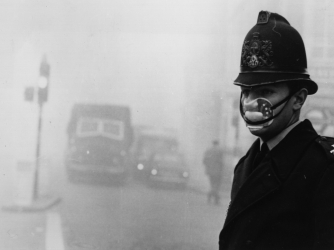
Yellow-black particles of the stuff built and accumulated at an unprecedented rate. Visibility was down to a meter and driving, all but impossible. Public transportation shut down requiring those rendered sick by the fog, to transport themselves to the hospital.  Outdoor sporting events were canceled and even indoor air quality, was affected.  Weather conditions held until December 9 when the fog finally dispersed.

There was no panic. Londoners are quite accustomed to the fog, but this one was different. Over the weeks that followed, public health authorities estimated that 4,000 people had died as a direct result of the smog by December 8, and another 100,000 made permanently ill. Later research pointed to another 6,000 losing their lives in the following months, as a result of the event.

More recently, research puts the death toll of the Great Smog at 12,000.

hith-london-fog-2660357-AB

A similar event took place about ten years later in December 1962, but without the same lethal impact. A spate of environmental legislation in the wake of the 1952 disaster began to remove black smoke from chimneys.  Financial incentives moved homeowners away from open coal fires toward less polluting alternatives such as gas or oil, or less polluting coke.

Today, the wealthier, developed nations have made great strides toward improvement in air and water quality, though problems persist in the developing world.  In the United States, the Environmental Protection Agency reports that:

“[B]etween 1980 and 2017, gross domestic product increased 165 percent, vehicle miles traveled increased 110 percent, energy consumption increased 25 percent, and U.S. population grew by 44 percent. During the same time period, total emissions of the six principal air pollutants dropped by 67 percent”.

EPA

The same report shows that, during the same period, CO2 emissions have increased by 12 percent.  Policy makers continue to wrangle over the long-term effects of carbon.  At this point, it’s hard to separate the politics from the science.

http://news.webshots.com/photo/2994485830056011884sJDkxX

While politicians and climate activists jet around the planet to devise trillion dollar “solutions” for “Global Warming”, let us hope that cooler heads than that of Arnold Schwarzenegger, will prevail.  There is scarcely a man, woman or child among us who do not want clean air and clean water and a beautiful, natural environment around us, for ourselves and our posterity.  It is only a matter of how we get there.

December 8, 1941 The Game that Never Was

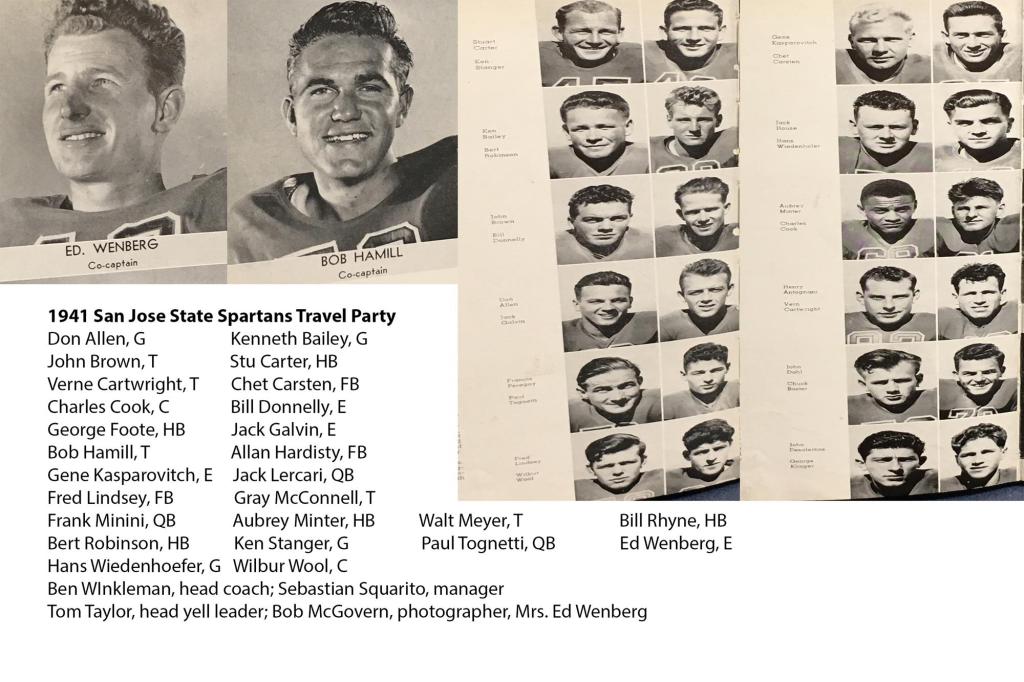
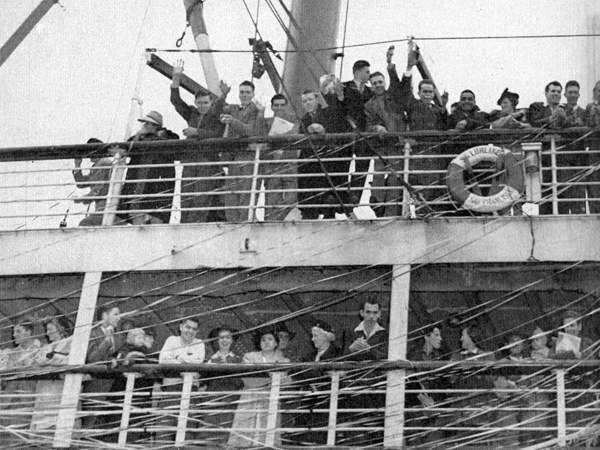
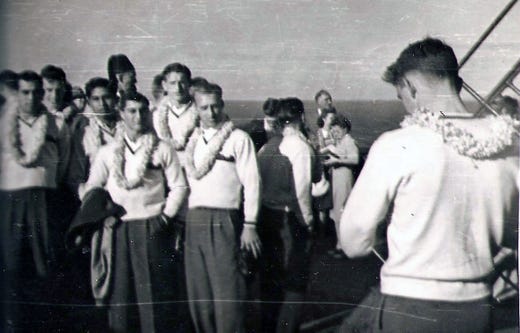
The two teams departed November 27 aboard the SS Lurline along with an entourage of fans, dignitaries and coaching staff. An outing like that was once in a lifetime. An unforgettable trip and so it was, only not for the reason any of them expected.

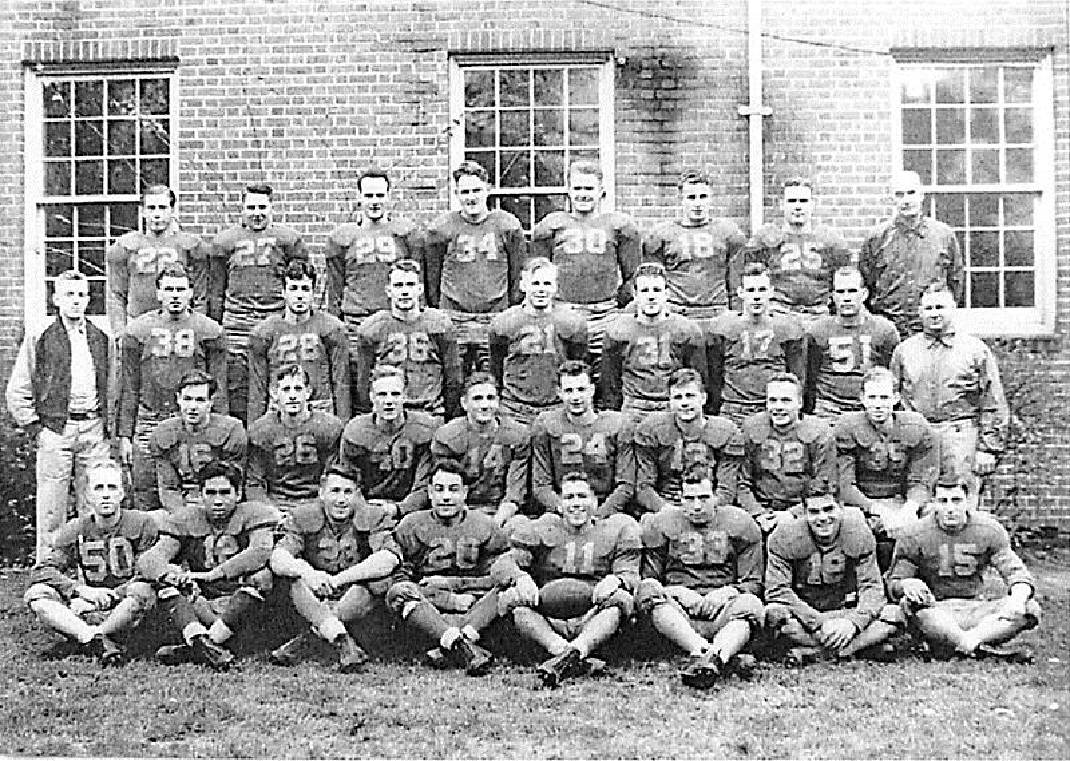
In December 1941, the San Jose Spartans and the Willamette Bearcats of Oregon, went on the road. They were college kids, enjoying a few days in paradise and a chance to play, the game they loved. What could be better than that?

The two teams departed November 27 aboard the SS Lurline along with an entourage of fans, dignitaries and coaching staff. The Rainbow Warriors of Hawaii defeated Willamette 20-6 on Saturday, December 6. The Warriors were scheduled to play San Jose State on December 13, followed by a Spartans- Bearcats matchup, on December 16.

An outing like that was once in a lifetime. An unforgettable trip and so it was, only not for the reason any of them expected.

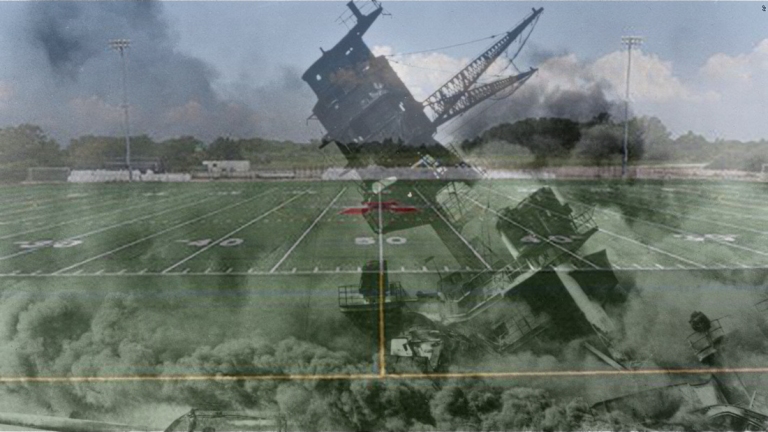
On December 7, 1941 a great sucker punch came out of the southeast. 353 Imperial Japanese warplanes attacked Hickam Air Field and the US Pacific Naval anchorage at Pearl Harbor, lying at peace in the early morning sunshine of a quiet Sunday morning. The sneak attack carried out 80 years ago yesterday destroyed more American lives than any foreign enemy attack on American soil, until the Islamist terrorist attack of September 11, 2001.

The President of the United States addressed a joint session of Congress on December 8, requesting a declaration of war against the Empire of Japan.

Back on the mainland, the families of players now stranded in Hawaii, received no word. There were no communications. None could know with certainty, that brothers and sons were alive or dead. Hawaii was locked down, under Martial Law.

Meanwhile, the visiting teams were mobilized to perform wartime duties. San Jose state players were sent to work with Federal authorities and Honolulu police to round up Japanese, Italian and German citizens, and to enforce wartime blackout orders. Willamette players were assigned World War 1-vintage Springfield rifles and tin hats, and ordered to string barbed wire on the beaches.

If you’ve heard of Punahou High School it probably involves the school’s most famous alumnus, the former US President Barack Obama. 80 years ago today all hell, was about to break loose at Punahou high.

United States Army Corps of Engineers troops began to appear at the Punahou gates at 1:00am, on December 8. By 5:00am, Dole Hall Cafeteria Manager Nina “Peggy” Brown was ordered to prepare breakfast, for 750 men. For the next ten days Willamette players stood 24-hour guard, around the school.

Many players had never so much as handled a gun. Now in the darkness every shadow carried the menace, of an enemy soldier. Wild gunfire would break out at the sound of a stealthy invader which turned out to be nothing, but a falling coconut. Shirley McKay Hadley was a Willamette student in 1941 accompanied by her father, then serving as state Senator. She joked it all, many years later, “They were lucky they didn’t shoot each other.”

Female members of the entourage were assigned nursing duties. Spartan Guard Ken Stranger delivered a baby, on December 7.

On December 19, players received two-hours notice. It was time to go. The civilian liner SS President Coolidge had been commandeered to transport gravely wounded service members. This would be the kids’ ride home complete with Naval escort, a defense against Japanese submarine attack.

Seven San Jose players stayed behind and joined the Honolulu police force , for which each was paid $166 a month. Willamette coach Roy “Spec” Keene refused to let any of his players stay behind as none had been able to speak with their parents, first.

Nearly every member of both squads went on to fight for the nation. Willamette Guard Kenneth Bailey was killed over Bari Italy in 1943 and awarded the Purple Heart, posthumously.

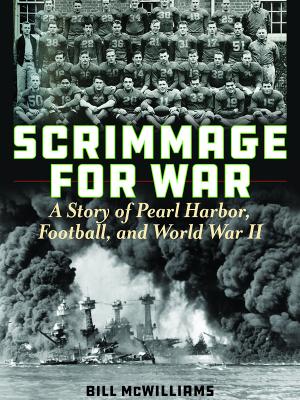
Bill McWilliams served 27 years in the United States Air Force, as a fighter bomber pilot. He’s written a book about 12 of these guys who went on to fight the conflict, of the “Greatest Generation”.

The book came out in 2019 and it’s still in print, if you’re interested. It looks like one hell of a story.

Andy Rogers played for the Willamette squad and went on to serve for the duration of the war, with the 3rd division of the United States Marine Corps. Mr. Rogers is 98 today and lives in Napa Valley, California. The only living member of either traveling squad who would have played that day, in the game that never was.

December 7, 1941 USS Oklahoma

14 Marines and 415 sailors aboard Oklahoma lost their lives immediately, or in the days and weeks to come. Bulkhead markings would later reveal that, at least some of the doomed would live for another seventeen days in the black, upside-down hell. The last mark was drawn by the last survivor, on Christmas Eve.


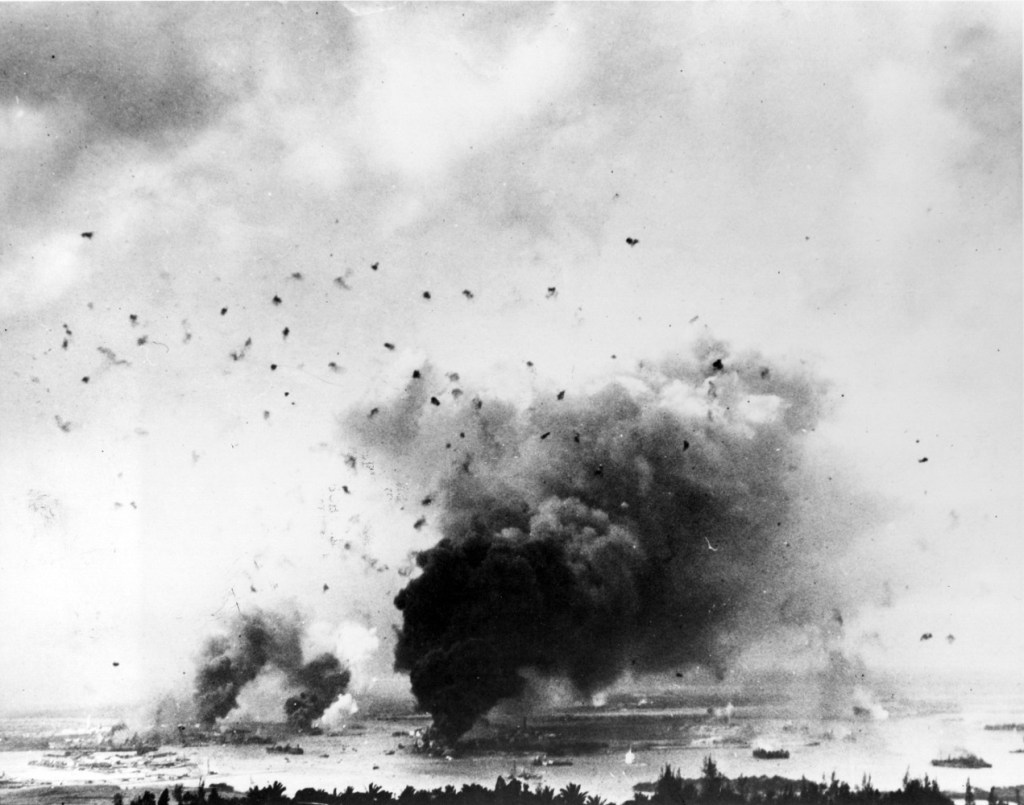
It was literally “out of the blue” when the first wave of enemy aircraft arrived at 7:48 am local time, December 7, 1941. 353 Imperial Japanese warplanes approached in two waves out of the southeast, fighters, bombers, and torpedo aircraft.  Across Hickam Field and over the still waters of Pearl Harbor. Tied in place and immobile, the eight vessels moored at “Battleship Row” were easy targets.

In the center of the Japanese flight path, sailors and Marines aboard the USS Oklahoma fought back furiously, as holes as wide as 40-feet were torn into her side. Eight torpedoes smashed into her port side, each striking higher on the hull as the great Battleship began to roll.

She never had a chance.

_oahu

Bilge plates had been removed for a scheduled inspection the following day, making counter-flooding to prevent capsize, impossible. The ninth torpedo slammed home even as Oklahoma rolled over, and died. Hundreds scrambled out across the rolling hull, jumped overboard into the oil covered, flaming waters of the harbor, or crawled out over mooring lines in the attempt to reach USS Maryland, tied in the next berth.

The damage was catastrophic. Once the pride of the Pacific fleet, all eight battleships were damaged. Four of them sunk. Nine cruisers, destroyers and other craft were damaged, another two sunk. 347 aircraft were damaged, most caught while still on the ground. 159 of those, were destroyed. 2,403 were dead or destined to die from the attack, another 1,178 wounded.

Nine Japanese torpedoes struck USS Oklahoma’s port side, in the first ten minutes.

HT John F DeVirgilio for this graphic
The last moments of USS Oklahoma.  H/T John F DeVirgilio for this graphic

Frantic around the clock rescue efforts began almost immediately, to get at 461 sailors and Marines trapped within the hull of the Oklahoma. Tapping could be heard as holes were drilled to get at those trapped inside. Thirty-two were delivered from certain death.

14 Marines and 415 sailors aboard Oklahoma lost their lives immediately, or in the days and weeks to come. Bulkhead markings would later reveal that, at least some of the doomed would live for another seventeen days in the black, upside-down hell. The last mark was drawn by the last survivor, on Christmas Eve.

Of sixteen ships lost or damaged, thirteen were destined to be repaired, and returned to service. USS Arizona remains on the bottom to this day, a monument to the event and to the 1,102-honored dead who remain entombed within her hull. USS Utah defied salvage efforts. She too is a registered War Grave, 64 honored dead remaining within her hull, lying at the bottom not far from the Arizona.

Of necessity, such repairs were prioritized. For the time being, USS Oklahoma was beyond help. She, and her dead, would have to wait.

Oklahoma Diver

Recovery of the USS Oklahoma was the most complex salvage operation ever attempted, beginning in March, 1943.  With the weight of her hull driving Oklahoma’s superstructure into bottom, salvage divers descended daily to separate the tower, while creating hardpoints from which to attach righting cables.

The work was hellishly dangerous down there in the mud and the oil at the bottom of Pearl Harbor.  Several divers lost their lives and yet, another day would come and each would descend yet again, into that black water.

21 giant A-frames were fixed to the hull of USS Oklahoma, 3-inch cables connecting compound pulleys to 21 electric motors, each capable of pulling 429 tons.

Two pull configurations were used over 74 days, first attached to these massive A-frames, then direct connections once the hull had achieved 70°. In May 1943, her decks once again saw the light of day, for the first time in over two years.

rightng-strategy
USS Oklahoma, righting strategy

Fully righted, the ship was still ten-feet below water. Massive temporary wood and concrete structures called “cofferdams” closed cavernous holes left by torpedoes, so the hull could be pumped out and re-floated. A problem even larger than those torpedo holes were the gaps between hull plates, caused by the initial capsize and righting operations. Divers stuffed kapok into gaps as water was pumped out.

Individual divers spent 2-3 years on the Oklahoma salvage job. Underwater arc welding and hydraulic jet techniques were developed during this period, which remain in use to this day. 1,848 dives were performed for a total of 10,279 man hours under pressure.

9781591147244

CDR Edward Charles Raymer, US Navy Retired, was one of those divers. Raymer tells the story of those men in Descent into Darkness: Pearl Harbor, 1941 – A Navy Diver’s Memoir, if you’re interested in further reading.  Most of those men are gone now, including Raymer himself.  They have earned the right to be remembered.

Ken Hartle died in January 2017 in an Escondido, California Alzheimer’s and dementia center. He was 103, possibly the oldest of those divers. Before the age of SCUBA, Hartle and his fellow divers worked in heavy canvas suits and brass helmets weighing together, over 200 pounds. He regularly risked death, towing away unexploded bombs and torpedoes. He suffered the bends and nearly lost his life one day, when an anchor chain exploded into flying shards of metal. The part he’d never talk about even after all those years, was the hardest part. ‘Bringing up our boys’.

Salvage workers entered the pressurized hull through airlocks wearing masks and protective suits. Bodies were in advanced stages of decomposition by this time and the oil and chemical-soaked interior was toxic to life. Most victims would never be identified.

Divers standing in front of a decompression chamber, while they were working to salvage ships sunk in the 7 December 1941 Japanese air raid on Pearl Harbor. Note warrant officer standing at right. Official U.S. Navy Photograph, from the collections of the Naval History and Heritage Command.

Twenty 10,000 gallon per minute pumps operated for 11 hours straight, re-floating the battleship on November 3, 1943.

Oklahoma entered dry dock the following month, a total loss to the American war effort. She was stripped of guns and superstructure, sold for scrap on December 5, 1946 to the Moore Drydock Company of Oakland, California.

The battered hulk left Pearl Harbor for the last time in May 1947, destined for the indignity of a scrapyard in San Francisco bay. She would never make it.

Taken under tow by the ocean-going tugs Hercules and Monarch, the three vessels entered a storm, 540 miles east of Hawaii. On May 17, disaster struck. Piercing the darkness, Hercules’ spotlight revealed the former battleship to be listing, heavily. Naval base at Pearl Harbor instructed them to turn around, when these two giant tugs suddenly found themselves slowing, to a stop. Despite her massive engines, Hercules began to move backward. She was being dragged astern with no warning, hurtling past Monarch, herself swamped at the stern and being dragged backward at 17 mph.

the-tug-boat-hercules-william-havle
Ocean-going tug Hercules, photograph by William Havle

Fortunately for both tugs, skippers Kelly Sprague of Hercules and George Anderson of Monarch had both loosened the cable drums connecting 1,400-foot tow lines, to Oklahoma. Monarch’s line played out and detached. Hercules’ line didn’t do so until the last possible moment. With tow line straight down and sinking fast, Hercules’ cable drum exploded in a shower of sparks directly over Oklahoma’s final resting place, the 409-ton tug bobbing to the surface like the float on a child’s fishing line.

Postcard image of USS Oklahoma (BB-37) from the service of AMM2c Durrell Wade“. H/T nationalww2museum.org

“Okie” was stabbed in the back, attacked and mortally wounded even before she knew she was at war.  The causes leading to her final descent, remain uncertain.  Most will tell you, her plates couldn’t hold.  The beating of six years earlier, was just too much.   Those who served on her decks, might tell you differently. Maybe she just preferred, to die at sea.

Afterward

Jesus Garcia of Guam died at age 21 on December 7, 1941, a sailor serving aboard the USS Oklahoma. William Eugene Blanchard of Tignall Georgia, was 24.

In 1947, “Okie’s” honored dead were disinterred. Dental records and dog tags were used to identify thirty-five. The other 391 including Blanchard and Garcia were reburied in 61 caskets, in Hawaii’s National Military Cemetery of the Pacific. Their names were known, only to God.

Nearly sixty years later, scientific advances in DNA analysis made further identifications, possible. Veteran Ray Emory was serving aboard the USS Honolulu on that day in 1941 and persuaded the D.o.D., to make the attempt.

Exhumations began in 2015. Mitochondrial DNA was enough for many identifications, but not all. Mitochondrial DNA comes from the maternal side. Shared ancestral lines means that sometimes, that’s not enough. One DNA sequence matched 25 victims.

Further DNA was collected from paternal lines, combining with the mitochondrial to identify many of Oklahoma’s dead. William Blanchard was laid to rest with full military honors on June 7, 2021 in Elizabeth City, North Carolina.

As I write this it is December 7, 2021. 80 years after the fact some ninety percent of those who gave their lives on board USS Oklahoma once again, have their names.

Jesus Garcia went to his final rest in San Diego on October 6, 2021. Gilbert Nadeau, 95, was the only WW2 veteran able to attend.

December 6, 1240 Mongol

The Celtic warrior Calgacus once said of the Roman conquests, “They make a desert, and they call it peace”. Likewise could be said of the Mongol Empire. A time when “A maiden bearing a nugget of gold on her head could wander safely throughout the realm.” A time of peace for those who would submit, and pay tribute. 

The Eurasian Steppe is a vast region of grasslands and savannas, extending thousands of miles east from the mouth of the Danube, nearly to the Pacific Ocean. There is no clearly defined southern boundary, as the land becomes increasingly dry as you move south. To the north are the impenetrable forests of Russia and Siberia.

The 12th century steppe was a land of inter-tribal rivalry, immersed in a poverty so profound that many inhabitants went about clad in the skins of field mice. Ongoing acts of warfare and revenge were carried out between a kaleidoscope of ever-changing tribal confederations, compounded and egged on by the interference of foreign powers such as the Chinese dynasties of the Song and the Jurchen, to the south.

Mongol Golden Horde

Into this land was born the son of the Mongol chieftain Yesügei, born with a blood clot grasped in his fist. It was a sign, they said, that this child was destined to become a great leader. By 1197, the boy would unite the nomadic tribes of northeast Asia into the largest contiguous empire in history, extending from Korea in the east, through Baghdad and Syria all the way into eastern Europe.  One-fifth of the inhabited land area, of the entire planet.

His name was Temujin. He is known to history as the Great Leader of the Mongol Empire, Genghis Khan.

NatGeo Cover, Afghan girl

The Steppes have long been a genetic crossroad, the physical features of its inhabitants as diverse as any in the world. The word “Rus”, from which we get Russia, was the name given to Viking invaders from earlier centuries. History fails to record what Genghis himself looked like, though he’s often depicted with Asian features.  There is evidence suggesting he had red hair and green eyes. Think of that beautiful young Afghan girl, the one with those killer eyes on that National Geographic cover, a few years back.

The Mongols called themselves “Tata”, while others called them after the people of Tartarus, the Hell of Roman mythology. They were “Tatars” to the people they terrorized: “Demons from Hell”.

tumblr_inline_njkn8eqTh61rea0r5

The two most prominent weapons in the Mongol arsenal can be found in the words, “Horse Archer”.  Imagine an army of circus riders, equipped with composite bows and a minimum of 60 arrows apiece, every man capable of hitting a bird in flight. Stirrups allowed the rider to fire in any direction, including to the rear. Each rider has have no fewer than 3-4 small, fast horses, and is able to transfer mounts in mid-gallop in order to keep his mounts, fresh. 

While medieval armies encumbered with long baggage trains sometimes averaged only single digits and rarely exceeded twelve miles at a time, Mongol riders could cover 100 miles and more, in a day.  Vast hordes of these people could appear outside of city gates often, even before news of their presence.

Horse Archer

The bow, a laminated composite of wood, horn and sinew, combined the compression of the interior horn lamina with the stretching of animal sinews, glued to the exterior.  The weapon was capable of aimed shots at five times the length of an American football field.  High, arching ballistic shots into large groups were common as far as 2½ times that distance. The average draw weight of a first-class English longbow is 70-80 pounds.  The Mongol composite bow ranged from 100 to 160 lbs, depending upon the physical strength of its user.

Following the death of Genghis’ eldest son Jochi, who pre-deceased his father, the Great Khan installed his grandson Batu as Khan (Chief of State) of the Kipchak Khanate to the north. In 1235, the Great Khan Ögedei, who had succeeded his father on Genghis’ death in 1229, ordered his nephew Batu and an army of 130,000 of these circus riders to conquer Europe, beginning with the Rus.

Mongol Invasion of the Rus

13th century Russia was more a collection of principalities than a single nation. One by one these city-states fell to the army of Batu, known as the “Golden Horde”. Ryazan, Kolomna and Moscow. Vladimir, Rostov, Uglich, Yaroslavl, and a dozen others. Some of the names are familiar today, others were extinguished for all time. All fell to the Golden Horde.  Smolensk alone escaped, having agreed to submit and pay tribute. The city of Kitezh, as the story goes, submerged itself into a lake with all its inhabitants, at the approach of the Horde.  On this day, December 6, 1240, Mongols under Batu Khan occupied & destroyed Kiev in modern Ukraine, following several days’ struggle.

By the end of 1241, Mongol armies crushed opposing forces from the Plains of Hungary, to Eastern Persia, to the outskirts of Austria. That December, plans were being laid for the invasion of Germany, Austria and Italy, when news arrived informing the Mongol host of the death of the Great Khan, Ögödei.  Batu wanted to continue, but the Law of Yassa required all Princes of the Blood to return to Karakorum and the Kurultai, the meeting of Mongol Chieftains.

The Abbasid Caliphate of Islam, descended from the uncle of Muhammad Al-Abbas ibn Abd al-Muttalib and established in 750, was the third Islamic Caliphate since the time of Muhammad. Centered in Baghdad, the Abbasid Caliphate became a center of science, culture, philosophy and invention, in what has come to be known as the Golden Age of Islam.

Since 1241, the Abbassids paid tribute to the Khanate in the form of gold, military support, and, according to rumors, Christian captives of the Crusades. That all came to a halt in 1258, when Caliph Al-Musta’sim refused to continue the practice. The Abbassid Caliphate ceased to exist on February 10, following a twelve-day siege by the Mongol army of Hulagu Khan, brother of the Khagan (great kahn) Möngke.

591db11cb4831eaddd0ec6b0858997b1--baghdad-islam

The Mongols first looted and then destroyed mosques, palaces and hospitals.  The “House of Wisdom”, the grand library of Baghdad, compiled over generations and  comparable in size and scope to the modern-day Library of Congress, the British Library in London or the Nationale Bibliotheque in Paris, was utterly destroyed.  Survivors said the muddy waters of the Tigris ran black with the ink of all those books, and red from the blood of the slain.

Estimates of the number killed in the fall of Baghdad range from 90,000 to an eye-popping one million.  Hulagu needed to move his camp to get upwind, so overwhelming was the stench of the dead.

Believing the earth to be offended by the spilling of royal blood, Mongols rolled Caliph Al-Musta’sim himself up in a carpet and trampled him to death, with their horses.

In 1281, a massive Mongol fleet of some 4,000 ships and 140,000 men set out under Kublai Khan, to invade Japan. This was the second such attempt, the largest naval invasion in history and not to be eclipsed until the 20th century D-Day invasion, of Normandy. As with the previous attempt, a great typhoon came up and destroyed the Mongol fleet. As many as 70,000 men were captured.  The Mongols never again attempted the invasion of Japan. To this day, we know this “Divine Wind”, as “Kamikaze”.

Tamerlane
Tamerlane

Berke, grandson of Ghenghis and brother of Batu, converted to Islam, creating a permanent division among the descendants of the Great Khan.

Timur-i-leng, “Timur the Lame”, or “Tamerlane”, professed to be a good Muslim, but had no qualms about destroying the capitals of Islamic learning of his day.  Damascus, Khiva, Baghdad and more he destroyed.  Many, have never entirely recovered.  Best known for pyramids of skulls left behind, as many as 19 million fell to the murderous regime, of Tamerlane.

The violence of the age was so vast and horrific it’s hard to get your head around. World War 2, the deadliest conflict in human history, was a time of industrialized mass slaughter.  From the battlefields to the death camps, WWII ended the lives of 40 to 72 million souls, killed in a few short years.  Roughly 3% of the inhabitants of earth.  By comparison, the Mongol conquests killed 30 million over 162 years, mostly one-by-one with edged or pointed weapons. When it was over, 17% of the entire world’s population, had vanished.

The Celtic warrior Calgacus once said of the Roman conquests, “They make a desert, and they call it peace”. Likewise could be said of the Mongol Empire. A time when “A maiden bearing a nugget of gold on her head could wander safely throughout the realm.” A time of peace for those who would submit, and pay tribute. 

Catalan-Atlas-depicting-Marco-Polo-traveling-to-the-East-during-the-Pax-Mongolica
The Catalan Atlas depicts Marco Polo traveling to the East during the ‘Pax Mongolica’.

This “Pax Mongolica” lasted through the reign of the Great Khan and his several successors, making way for the travels of Marco Polo. The 4,000-mile “Spice Roads”, the overland trade routes between Europe and China, flourished under Mongol control throughout the 14th and 15th centuries.

In the 14th century, the “Black Death” began to change the balance of power on the Eurasian steppe. 100 years later, the fall of Byzantium and marauding bands of Muslim brigands were making the east-west overland trade routes increasingly dangerous. In 1492, the Spanish Crown hired an Italian explorer to find a water route to the east.

Black Death

Mongols ruled over parts of Russia until the time of Ivan IV “Grozny” (The Terrible), but never regained the high ground of December 1241 as chieftains fell to squabbling, over bloodlines.

And yet, the Mongols never went away. Not entirely. Modern DNA testing reveals up to 8 percent of certain populations across the Asian subcontinent, about one-half of one per cent of the world’s population at this time, to descend directly from that baby with the blood clot, grasped in his tiny little fist.  Genghis Khan.

December 1, 2013 The First Full Day of Forever

Something sacred and wonderful happened back in 2013, and few of us heard about it, at the time.

November 11, nineteen short days ago, marked the end of World War One. Before they had numbers. “The Great War”. The “War to end all Wars”. There is barely a piece of 20th century history, you cannot trace back to that conflict.

International Communism was borne of the Great War, without which there would be no cold war, no Korean War, no war in Vietnam. The killing fields of Cambodia would remain in this alternative universe, mere fields. The spiritual descendants of Chiang Kai-shek’s brand of capitalism would today run all of China, and not some communist cabal.

In Flanders Fields

The modern boundaries of the Middle East arose from the Great War. While the region’s tribal alliances and religious strife are nothing new those conditions would exist in a very different form, if not for those boundaries.

World War II, a conflagration which left more dead, wounded or missing than any conflict in human history (WWI ranks only number 5), was little more than the Great War, part II. A Marshall of France, on looking at the Versailles Treaty formally ending WWI, said “This isn’t peace. This is a cease-fire that will last for 20 years”.

He was off, by something like 36 days.

It’s hard to know how any of us can be participating citizens of a self-governing Republic, how we can know where we want the country to go, if we don’t understand where it’s been. It’s a principle reason to study, history. It’s why I believe something wonderful happened back in 2013, and few of us heard about it.

In the summer of 2013, over 1,000 British and Belgian schoolchildren visited seventy battlefields of the Great War. Ypres. Passchendaele. Verdun. The Somme. All over Northern France and Belgium, the region known as “Flanders”. There those children collected samples of the sacred soil from those fields of conflict.

_77985394_020167620-1

The soil was placed in WWI-style burlap sandbags, each stenciled with a red poppy, where it came from, and the dates. 70 sandbags were transported to London and brought to Wellington Barracks, the central London home to some of the most elite regiments in the British military, regiments dating back to the time of the English Civil Wars who gave so many of their own, to the soil of Flanders Fields.

There at Wellington Barracks next to Buckingham Palace a garden was being built. The soil of the Great War would nourish and support that garden, planted to be made ready for the following year, and the solemn 100-years’ remembrance of the War to end all Wars.

_71447576_soil4_getty

That day, December 1, 2013, was for the Flanders Fields Memorial Garden, the first full day of forever.

I cannot think of anything more fitting than that it was children, our own future and posterity, who retrieved the sacred soil of Flanders and brought it to that garden.

It is now for that posterity to keep our shared history alive, and never let it fade into some sepia-toned remnant of a forgotten past.