

Somewhere in the English midlands, during the reign of Edward the Confessor, there lay the Kingdom of Mercia. It was 1054 or thereabouts, and Leofric, Earl of Mercia, had a problem. Leofric was the kind of ruler who never saw a tax he didn’t like, his latest the “Heregeld”, a tax to pay for the King’s bodyguard. His wife was Godgyfu, in the Olde English, meaning “Gift of God”. Today we call her “Godiva”. Take pity on the people of Coventry, she said, they are suffering under all this oppressive taxation.
A guy can only take so much, even if he is an Earl. Tired of her entreaties, Leofric agreed to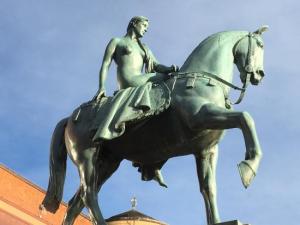 repeal the tax on one condition; that she ride a horse through the streets of town, dressed only in her birthday suit and her long hair. Lady Godiva took him at his word. She issued a proclamation that all townspeople stay indoors and shut their windows, and then she took her famous naked ride through town.
The story probably isn’t true, any more than the one about Tom, the guy who drilled a hole in his door so he could watch and lost his sight at what he saw. But a thousand years later, we still use the term “Peeping Tom”.
Tax revolts are nothing new. Neither are the many and sometimes novel ways that politicians have concocted to fleece those of us who pay taxes.
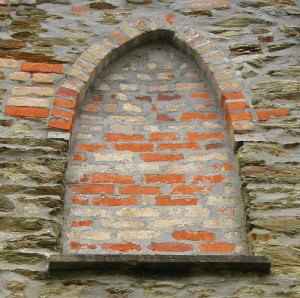 On December 31, 1695, King William III decreed a 2 shilling tax on each house in the land. Not wanting to miss an opportunity to “stick-it-to-the-rich”, there was an extra tax on every window over ten, a tax that would last for another 156 years.
It must have been a money maker, because the governments of France, Spain and Scotland followed suit with similar taxes. To this day, you can see homes where owners have bricked up windows, preferring darkness to the payment of yet another tax.
In Holland, they used to tax the frontage of a home, the wider your house the more you

paid. If you’ve ever been to Amsterdam, narrow houses rise several stories, with hooks over windows almost as wide as the building itself. Those are used to haul furniture up from the outside, since the stairways are too narrow. The narrowest home in Amsterdam can be found at Singel #7, the house barely wider than its own front door.
You can find the same thing in the poorer quarters of New Orleans, where the “shotgun single”, a home so narrow you can fire a shotgun in the front door and pellets will go out the back, and the “Camelback” (second story out back) are the architectural results of tax policy.

The Roman Emperor Vespasian, who ruled from 69 to 79AD, levied a tax on public toilets.

When his son, the future Emperor Titus wrinkled his nose, Vespasian held a coin under the boy’s nose. “Pecunia non olet”, he said. “Money does not stink”. 2,000 years later, his name is still attached to public urinals. In France, they’re called vespasiennes, in Italy vespasiani. If you need to piss in Romania, you could go to the vespasiene. History fails to record the inevitable push-back on Vespasian’s toilet tax, but I’m sure that ancient Romans had to look where they walked.
Environmentalists in Venice, Italy have been pushing a tax on tourism, claiming that the city’s facing “an irreversible environmental catastrophe as the subsequent increase in water transport has caused the level of the lagoon bed to drop over time”. Deputy mayor Sandro Simionato said that “This tax is a new and important opportunity for the city,” explaining that it will “help finance tourism”, among other things. So, the problem borne of too much tourism is going to be fixed by a tax to help finance tourism. I think. Or maybe it’s just another money grab.
As of December 2015, state and territory tax rates on cigarettes ranged from 17¢ per pack in Missouri to $4.35 in New York, on top of federal, local, county, municipal and local Boy Scout council taxes (kidding). Philip Morris reports that taxes run 56.6% on average, per pack. Not surprisingly, tax rates make a vast difference in where and how people buy their cigarettes. There is a tiny Indian reservation on Long Island, measuring a few miles square and home to a few hundred people. Tax rates are close to zero there, on a pack of butts. Until recent changes in the tax law, they were selling 100 million cartons per year.
If all those taxes are supposed to encourage people to quit smoking, I wonder what income taxes are supposed to do?
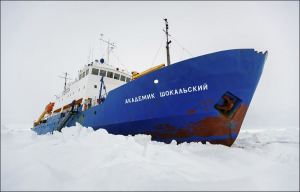 Back in 2013, EU politicians were discussing a way of taxing livestock flatulence, as a means of curbing “Global Warming”. At that time there was an Australian ice breaker, making its way to Antarctica to free the Chinese ice breaker, that got stuck in the ice trying to free the Russian ship full of environmentalists. They were there to view the effects of “Global Warming”, before they got stuck in the ice.
Honest, I wouldn’t make this stuff up.




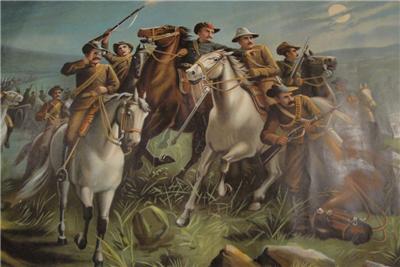
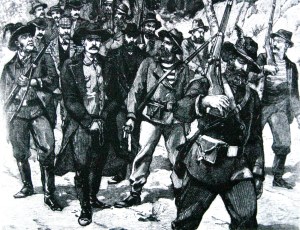 the raiders entered Pretoria on January 2, in chains. The Transvaal government received almost £1 million compensation from the British South Africa Company, turning their prisoners over to be tried by the British government. Jameson was convicted of leading the raid and sentenced to 15 months in prison. During the whole ordeal, he never revealed the degree to which British politicians supported the raid, or the way they betrayed him in the end.


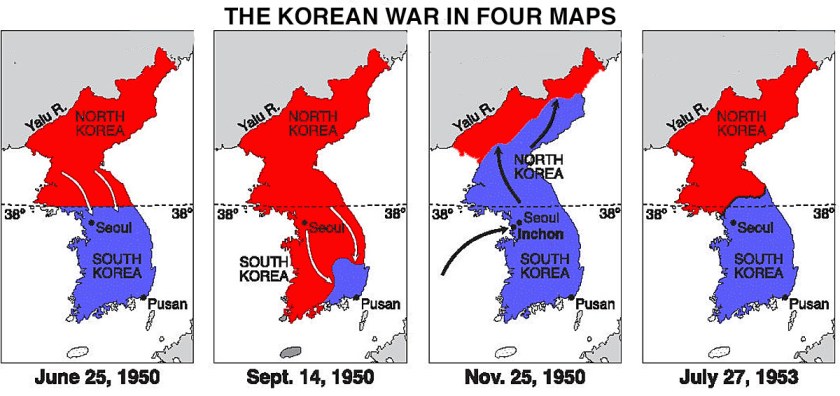 Sixteen countries sent troops to South Korea’s aid, about 90% of them Americans. The Soviets sent material aid to the North, while Communist China sent troops. The Korean War lasted three years, causing the death or disappearance of over 2,000,000, combining military and civilian.
 South Korea went through a series of military dictatorships from the ‘60s to the ‘80s, since developing into a successful Republic. In the North, Kim Il-sung built a communist hellhole, a cult of personality established under a North Korean ideology known as “Juche”, (JOO-chay).
 that would make Caligula blush, he had South Korean film maker Shin Sang-ok kidnapped along with his actress ex-wife, Choi Eun-hee. After four years spent starving in a North Korean gulag, the couple accepted Kim’s “suggestion” that they re-marry and go to work for him, producing the less-than-box-office-smash “Pulgasari”, a kind of North Korean Godzilla film.
 North Korea broke ground on what foreign media called “the worst building in the world” in 1987, just in time for the Seoul Olympics the following year. With 105 stories and eight revolving floors, the Ryugyong would have been the tallest hotel in the world, if it ever opened. Construction shut down in 1992, partly because Soviet funding dried up, and partly because construction was so bad that it’s unsafe to stand within 10 blocks of the thing. In 2008, Orascom Telecom of Egypt agreed to spend $180 million to put glass on the outside, in exchange for a $400 million contract to build the nation’s first 3G cellular network. Whether there will ever be more than one customer, is unclear. Perhaps 2017 will be the year that the Ryugyong becomes more than the world’s largest telecommunications antenna, but so far the place remains “too popular to take reservations”.
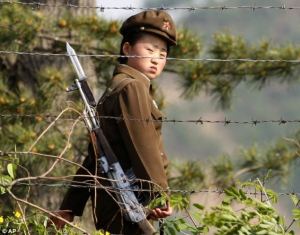 Anywhere from 1 to 3 million North Koreans starved to death during the ‘90s, while it’s estimated that one in every hundred North Korean citizens are incarcerated in a system of gulags, torture chambers and concentration camps.


 Ambrose Bierce was born in Horse Cave Creek, Ohio, to Marcus Aurelius and Laura Sherwood Bierce, the 10th of 13 children, all with names beginning with the letter “A”.
 number on speed dial. In Bierce’s day, he’d better carry a gun. Ambrose Bierce didn’t shy away from politics, he jumped right in, frequently using a mock dictionary definition to lampoon his targets. One example and my personal favorite, is “Politics: A strife of interests masquerading as a contest of principles. The conduct of public affairs for private advantage”.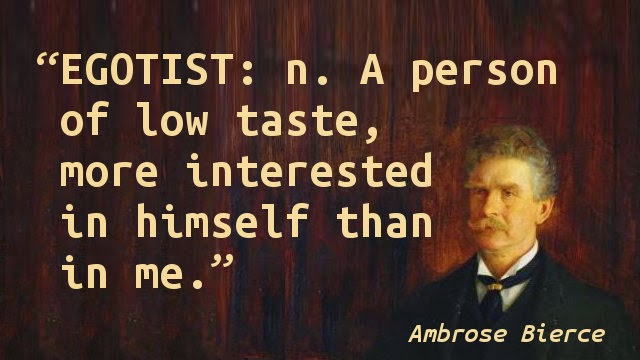
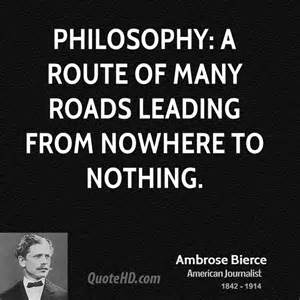 off limits. Politics was a favorite target of his columns, such as: “CONSERVATIVE, n: A statesman who is enamored of existing evils, as distinguished from the Liberal who wishes to replace them with others”, or “POLITICIAN, n. An eel in the fundamental mud upon which the superstructure of organized society is reared. When he wriggles he mistakes the agitation of his tail for the trembling of the edifice. As compared with the statesman, he suffers the disadvantage of being alive”.
 Gwinnett Bierce was executed by firing squad in the town cemetery. It’s as good an ending to this story as any, as one hundred and three years ago today is as good a day as any on which to end it. The fact is that in that 103 years, there’s never been a trace of what became of him, and probably never will be.


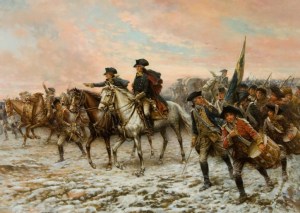 As the army began the famous crossing of the Delaware that Christmas night, the
 many of them lacked boots, the soaked and freezing rags wrapped around their feet not enough to keep them from leaving bloody footprints in the snow.
 The Patriot force arrived at Trenton at 8am December 26, completely surprising the Hessian garrison. There is a story about the Hessians being drunk or hungover after Christmas celebrations, but the story is almost certainly untrue. Unaware of Washington’s march on Trenton, 50 Americans had attacked a Hessian outpost earlier that morning. While Washington worried that his surprise was blown, Colonel Rall apparently believed that this was the attack he’d been warned about. He expected no further action that day.
 under Generals Cornwallis and Grant, proving on January 3rd at a place called Princeton, that they could defeat a regular British army in the field.

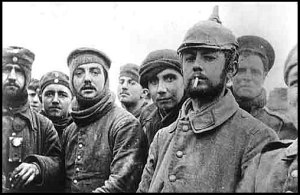 Captain Bruce Bairnsfather later wrote: “I wouldn’t have missed that unique and weird Christmas Day for anything. … I spotted a German officer, some sort of lieutenant I should think, and being a bit of a collector, I intimated to him that I had taken a fancy to some of his buttons. … I brought out my wire clippers and, with a few deft snips, removed a couple of his buttons and put them in my pocket. I then gave him two of mine in exchange. … The last I saw was one of my machine gunners, who was a bit of an amateur hairdresser in civil life, cutting the unnaturally long hair of a docile Boche, who was patiently kneeling on the ground whilst the automatic clippers crept up the back of his neck.”
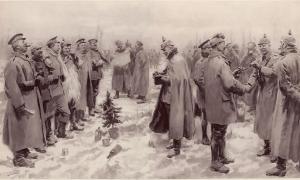 December 24-25, 1914, lasting in some sectors until New Year’s Day.


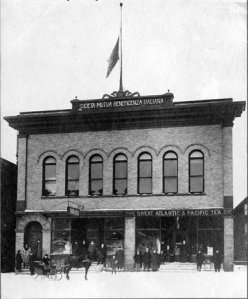 families gathered on Christmas Eve at the “Societa Mutua Beneficenza Italiana”, the Italian Hall in Calumet, Michigan, for a Christmas party sponsored by the Ladies Auxiliary of the WFM.
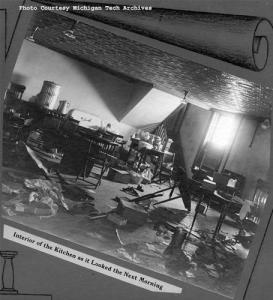 Miners Charles Moyer publicly accused members of the pro management “Citizens Alliance” of responsibility for the disaster. He was subsequently assaulted by members of the Alliance, who shot and kidnapped him, placing him on a train with instructions to leave Michigan and never return. Moyer would later receive medical attention in Chicago, holding a press conference where he displayed his gunshot wound before returning to Michigan and resuming his work with the WFM.
 1st amendment right to free speech. It’s a paraphrasing of Justice Oliver Wendell Holmes, Jr.’s opinion in the 1919 SCOTUS decision, Schenck v. United States, a case which turned, in part, on the Italian Hall disaster of seven years earlier.
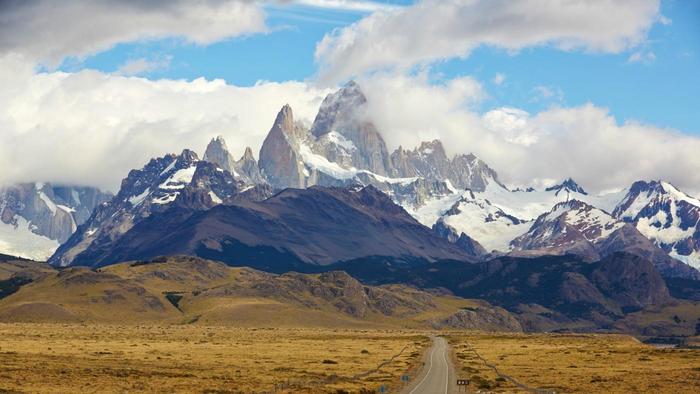
 Poor mountain weather forced an overnight stop. They resumed flight on Friday the 13th, making their way through a mountain pass that afternoon. The pilot notified air controllers that he was over Curicó, Chile, but it was a fatal error. With zero visibility, he was forced to rely on dead reckoning, but strong headwinds had slowed them significantly. Cleared to descend 55 miles east of where he thought he was, the plane clipped two peaks at 13,800′, first losing a wing, then the vertical stabilizer, and finally the other wing. The battered fuselage crashed down on an unnamed peak, later called “Glaciar de las Lágrimas”, “Glacier of Tears”.
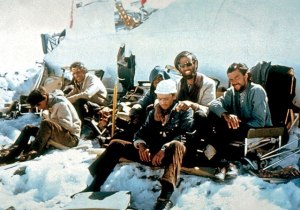 Stranded and alone in the high Andes, meager supplies soon gave out. A few chocolate bars, assorted snacks and several bottles of wine. It was gone within days, as the survivors scoured the wreckage for crumbs. They ate leather from suitcases, tore apart seats hoping to find straw, finding nothing but inedible foam. Nothing grew at this altitude. There were no animals. There was nothing in that desolate place but metal, glass, ice and rock, and the frozen bodies of the dead.
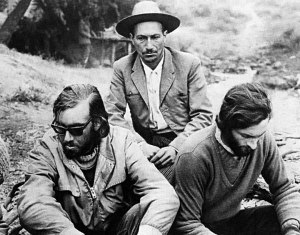 The Juan Valdez of the coffee commercials is an “arriero”, a person who transports goods using pack animals. Parrado and Canessa had hiked for almost two weeks when they were building a fire by a river, and they spotted such a man on the other side. Sergio Catalán probably didn’t believe his eyes at first, but he shouted across the river. “Tomorrow”.
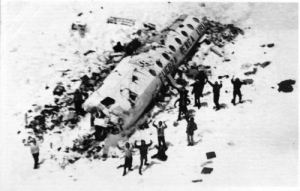 site heard the news on their transistor on December 22, that they were saved. The first helicopters arrived that afternoon, flying out with the weakest of the survivors. Altitude sickness, dehydration, frostbite, broken bones, scurvy and malnutrition. They were one decrepit bunch, but they were alive. The second expedition arrived on the morning of December 23, removing the last survivors around daybreak.


 For two days, a desperate defense of the nearby villages of Noville and Foy held back the 2nd Panzerdivision, as 11,000 men and 800 officers of the 101st joined a combined force of 11,000 converging on Bastogne. By the 21st, Bastogne’s field hospital was overrun, they were surrounded by forces outnumbering them 2½ to one. Poorly supplied for the cold winter conditions with air supply made all but impossible by weather conditions, the citizens of Bastogne gave their blankets to the American soldiers, along with white linens which they used for camouflage.
 later, ending the German encirclement.
 entire siege tending to the wounded, along with Dr. Jack Prior. Once, she even ran through enemy fire to collect the wounded from the field. On Christmas eve, she was blown off her feet and through a wall. She got up and went back to it, despite the direct hit that killed 30 American wounded, along with the only other nurse at the Rue Neufchatel aid station, Renée Lemaire.
  Bastogne. Chiwy married after the war, and rarely talked about her experience in Bastogne. It took King a full 18 months to coax the story out of her. The result was the 2015 Emmy award winning historical documentary, “Searching for Augusta, The Forgotten Angel of Bastogne”.
 Historical Easter Eggs - Today in History
You must be logged in to post a comment.