A list of memorials at Arlington reads like a history of the nation itself. The Argonne Cross commemorates the honored dead of the “War to end all Wars” in 1917-1918, some 2,100 of whom were re-interred in Section 18 after the war. The Battle of the Bulge memorial reads, “To World War II American Soldiers who fought in the Battle of the Bulge – The greatest Land Battle in the history of the United States Army”. The Beirut Memorial honors 241 American service members killed in the October 23, 1983 bombing of the Marine barracks in Lebanon, twenty-one of whom went to their final rest, at Arlington National Cemetery.
The Oxford English Dictionary defines Monument as “A statue, building, or other structure erected to commemorate a notable person or event”.
Arlington National Cemetery is itself such a monument; Memorial Avenue extending across the Potomac, connecting Arlington House, the former home of a Confederate general, with the Lincoln Memorial at the opposite end, symbolizing the immutable bond between North and South.
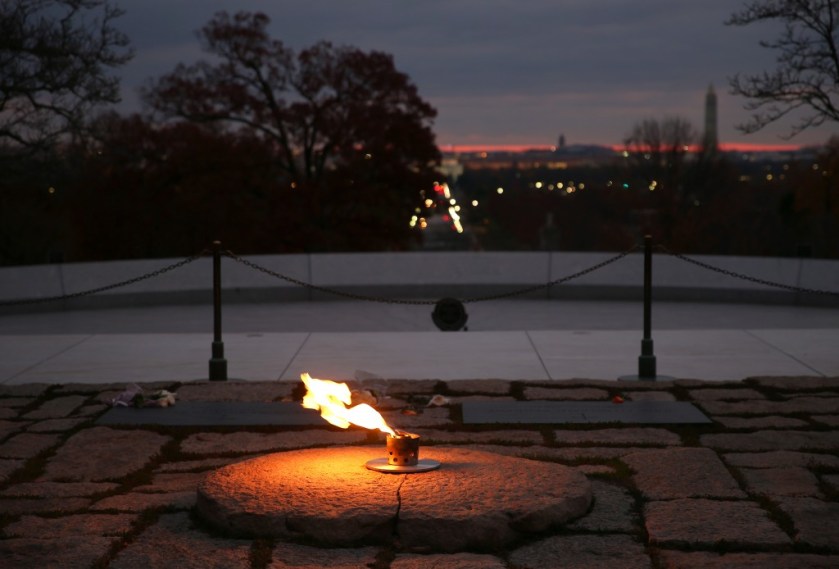
Approach Arlington at night, and the eternal flame marking the grave of JFK can be seen on the hillside, like some faraway beacon of light.
A list of memorials at Arlington reads like a history of the nation itself. The Argonne Cross commemorates the honored dead of the “War to end all Wars” in 1917-1918, some 2,100 of whom were re-interred in Section 18 after the war. The Battle of the Bulge memorial reads, “To World War II American Soldiers who fought in the Battle of the Bulge- The greatest Land Battle in the history of the United States Army”.
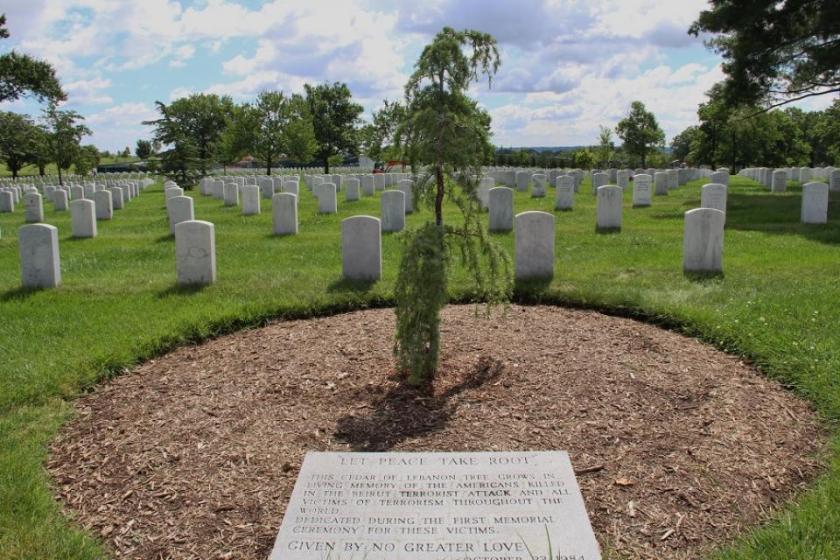
The Beirut Memorial honors 241 American service members killed in the October 23, 1983 bombing of the Marine barracks in Lebanon, twenty-one of whom went to their final rest, at Arlington National Cemetery. The inscription reads:
“Let Peace Take Root”
This Cedar of Lebanon tree grows in living memory of the Americans killed in the Beirut terrorist attack and all victims of terrorism throughout the world. Dedicated during the first memorial ceremony for these victims.
Given by: No Greater Love October 23, 1984 A time of remembrance
“This Cedar of Lebanon tree grows in living memory of the Americans killed in the Beirut terrorist attack and all victims of terrorism throughout the world. Dedicated during the first memorial ceremony for these victims”.
On Chaplain Hill stands a row of four memorials, bearing the names of four Chaplainswho laid down their lives in four wars. The Cenotaph, (“an empty tomb or a monument erected in honour of a person or group of people whose remains lie elsewhere”), bears this inscription: “Greater Love Hath No Man Than This, That A Man Lay Down His Life For His Friends.” Written there are the names of the only two chaplains ever awarded the Medal of Honor: Major Charles Joseph Watters, killed in Vietnam, while rendering aid to fallen comrades, and Captain Emil Joseph Kapaun, the “Shepherd in Combat Boots” who remains to this day in some unmarked North Korean grave site.
I have barely scratched the Cs. Altogether, there are 28 major and 142 minor Memorials and monuments at Arlington National Cemetery, to say nothing of the 400,000+ military grave sites, stretching across the landscape. Each of them across the 624 acres of Arlington, equivalent to 472 football fields, is dedicated to a person, place or event which has earned the right to be remembered.
It has long seemed to this writer that, irrespective of political persuasion, an informed citizen of a free Republic can’t cast an informed vote, can’t know where he wants his country to go, without an understanding of where it’s been. If you haven’t had the opportunity to visit Arlington National Cemetery recently, I highly recommend the trip. Leave yourself plenty of time to take it all in. It would be hard to find more heritage, tradition and history, in any other single place.
Feature Image Credit, Navin Sarma Photography. “Snow and wind mix in with purple city glow at sunset at the Air Force Memorial”
The Cuban Missile Crisis was never reflected on the doomsday clock. The deadlock had broken before circumstances could be fully determined and the clock reset. The events of October 1962 brought us closer to the brink than any time in history, before or since. Seconds to go, to nuclear extinction.
In 1947, members of the Science and Security Board of the Bulletin of Atomic Scientists envisioned a “Doomsday Clock”, a symbolic clock face, to dramatize the threat of global nuclear catastrophe. Initially set at seven minutes to midnight, the “time” has varied from seventeen minutes ’til with the 1995 collapse of the Soviet Union, to two minutes before midnight with “Operation Ivy”, the first American thermonuclear detonation, in 1952.
The Cuban Missile Crisis was never reflected on the doomsday clock. The deadlock broke before circumstances could be fully determined and the clock reset. Yet the events of October 1962 brought us closer to the brink than any time in history, before or since. Seconds to go, to worldwide nuclear extermination.
All that needs to be known about Cuban Dictator Fulgencio Batista, is that he fled office with $300,000,000 US, on December 31, 1958. The triumphant rebel columns streaming out of the Sierra Maestra Mountains, were quick to establish themselves in power. By February 1959, Fidel Castro had installed himself as Prime Minister.
Castro dismissed the need for elections, proclaiming his government to be a “direct democracy”. The Cuban people could assemble demonstrations and express their democratic will to him personally, he said. Who needs elections?
“Trials” were carried out across the country, some in sports arenas, in front of thousands of spectators. Hundreds of Batista supporters were executed or imprisoned as Castro’s “Revolutionary Socialist State” purged itself of the former regime. When Castro didn’t like the outcome, he’d personally order a retrial.
Earl Smith, former American Ambassador to Cuba, described the Ambassadorship as “the second most important man,” in Cuba. Now, the Castro administration distanced itself from the US, adopting an increasingly leftist posture and seizing US controlled oil installations, banks and sugar refineries. By October 1960 the government had “nationalized” 166 such businesses, including Coca Cola and Sears, Roebuck.
Since the Presidency of James Monroe, US foreign policy has opposed outside intervention in the American hemisphere. The government was not about to permit a communist state, 90 miles from its shore.
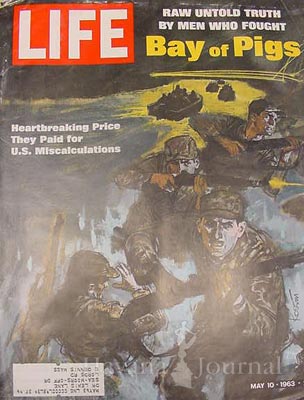
A secret operation to overthrow the Cuban government was conceived and initiated by the Eisenhower administration, and put into motion in April 1961. 1,400 CIA backed Cuban exiles landed on Cuba’s “Playa Girón“ (Bay of Pigs), intending to overthrow the communist government.
The effort was doomed to failure. The New York Times had been reporting on the “secret invasion”, for a month.
Following the Bay of Pigs fiasco, the Kennedy administration sought other means of removing communists from power. “Operation Mongoose” sought to embarrass and discredit Castro personally, with tactics ranging from print & radio propaganda, to hallucinogenic chemical-laced cigars. Someone even had the hare-brained idea of lining Castro’s shoes with thallium salts, to make his beard fall out.
The Communist government consolidated power, taking control of trade unions, jailing opponents, suppressing civil liberties, and sharply limiting freedom of speech and of the press. Secretary of State Christian Herter described Castro’s single-party political system as “following faithfully the Bolshevik pattern”.
Soviet Premier Nikita Khrushchev concluded from the Bay of Pigs fiasco, that the American President was impotent and indecisive. One Soviet adviser described Kennedy as “too young, intellectual, not prepared well for decision making in crisis situations… too intelligent and too weak.”
Cuban and the Soviet officials reached a secret arms agreement in July, 1962. By late summer, American intelligence discovered Soviet Ilyushin Il-28 jet bombers in Cuba.
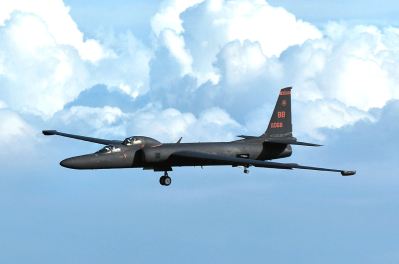
Worse yet, construction had begun on several missile sites. On October 14, ultra-high-altitude Lockheed U–2R reconnaissance aircraft photographs revealed the presence of medium and intermediate range ballistic nuclear missile sites under construction in Cuba.
A redesigned version of the U-2, the U-2R, was used from the late 1960s through the 1990s
President Kennedy warned of the “gravest consequences” resulting from the introduction of Soviet offensive weapons in Cuba, while Foreign Minister Andrei Gromyko insisted that Soviet aid was purely defensive. U-2 photographs gave lie to Gromyko’s protestations. Images taken on the 17th revealed the presence of 16-32 missiles.
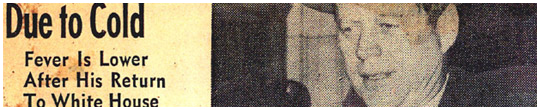
The administration went to great lengths to portray “business as usual”, while behind the scenes, policy makers wrangled over options from quarantine to tactical air strike to outright military invasion. President Kennedy himself suddenly departed a political event in Chicago, his aids concocting a “cold” diagnosis to explain his sudden absence.
In a televised speech on October 22, Kennedy publicly revealed the presence of Soviet missiles in Cuba, and called for their removal. A naval quarantine would close off the island, Kennedy said, until Soviet leaders agreed dismantle missile sites, and to make certain that no additional missiles were shipped to Cuba.
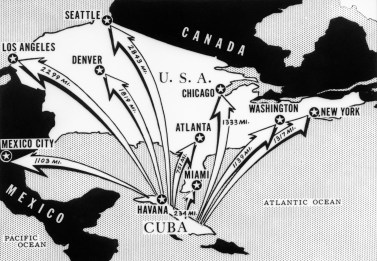
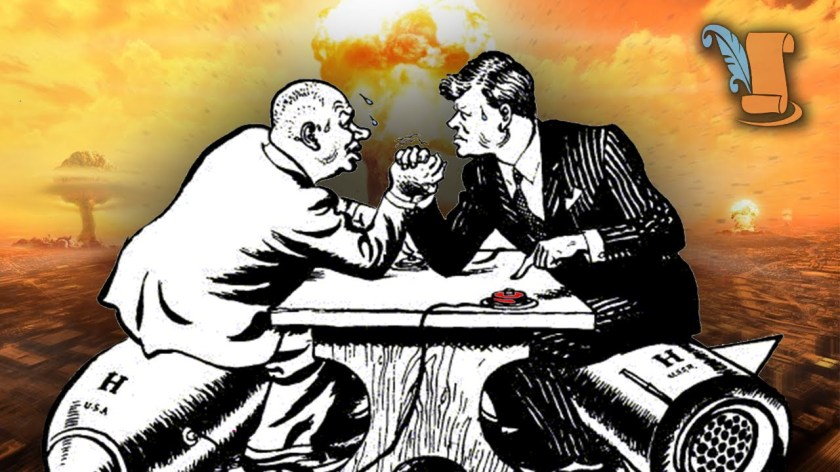
From the Soviet perspective, Cuba was a small ally behind enemy lines, the same situation the Americans experienced, in West Berlin. Besides, the Americans had missiles in Italy and Turkey.
Kruschev had gambled and lost, that he could “[I]nstall nuclear warheads in Cuba without letting the United States find out they were there until it was too late to do anything about them”.
The President warned “It shall be the policy of this nation to regard any nuclear missile launched from Cuba against any nation in the Western Hemisphere as an attack by the Soviet Union on the United States, requiring a full retaliatory response upon the Soviet Union.” There was no mistaking American intent.
Kruschev replied, “I hope that the United States Government will display wisdom and renounce the actions pursued by you, which may lead to catastrophic consequences for world peace…”
Soviet nuclear submarines moved in response to the quarantine, as Cuban waters became the scene of a tense, naval standoff.
Kruschev responded on the 24th, describing the US blockade as an act of aggression. Castro urged the Soviet leader to initiate a nuclear first strike, should the Americans invade his island. The Joint Chiefs of Staff announced a “Defense Readiness Condition” status of DEFCON 3. The United States Air Force was now ready to mobilize in 15 minutes.
U-2 photographs of the 25th & 26th showed accelerated construction on the island, with several silos approaching operational readiness. US air forces were placed at DEFCON 2. War involving Strategic Air Command, was now “imminent”.
On day twelve of the standoff, October 27, an American U-2 was shot out of the sky by a Soviet supplied surface-to-air missile. The pilot, Major Rudolph Anderson Jr, was posthumously awarded the first Air Force Cross in history, as well as the Air Force Distinguished Service Medal, the Purple Heart, and the Cheney Award.
Anderson’s was the only combat death of the Cuban Missile Crisis, but he wasn’t alone. Three reconnaissance-variant Stratojets crashed between September 27 and November 11, killing 11 airmen. Seven more died on October 23, when their C-135B Stratolifter stalled and crashed delivering ammunition to the Naval Base on Guantanamo Bay.
The most dangerous phase of the Cuban Missile Crisis ended on October 28, when Radio Moscow announced that Cuban missiles would be removed in exchange for an American pledge not to invade. In a secret “side deal”, the Kennedy administration also agreed to remove American “Jupiter” missiles, from Turkey.
The most dangerous thirteen days in world history, had passed. The American quarantine would continue until November 20, when the Soviets agreed to remove their bombers. The Americans removed Turkish missiles, the following April.
Throughout this period, a blizzard of communications both direct and indirect, were exchanged between Washington and Moscow. With little to go on but mutual distrust, Kennedy, Kruschev and their aids sought to understand the true intent of their adversary.
“If there is no intention,” wrote Kruschev, “to doom the world to the catastrophe of thermonuclear war, then let us not only relax the forces pulling on the ends of the rope, let us take measures to untie that knot. We are ready for this.”
The American and Soviet governments established the Washington-Moscow Direct Communications Link in 1963, from a mutual desire that we never again, get that close to the brink. Contrary to popular culture, this “hotline” has no “red phone”, and never did. The Moscow–Washington hotline was at first a dedicated teletype, replaced by direct-link fax machine in 1986. Since 2008, the Pentagon maintains a secure computer link with the Russian Federation, and messages are exchanged by email.
Freshly restored and re-fitted, Old Ironsides took her first sail in three years only yesterday. 220 years since her own launch, and to honor the 242nd birthday, of the United States Navy.
When the United States won its independence from Britain in 1783, the young nation soon learned that freedom was not without disadvantages. One being that America had lost its protector at sea.
British and French vessels harassed American merchant shipping, often kidnapping American sailors and forcing them to serve in their own navies.
Barbary pirates were a problem for Mediterranean shipping, and throughout parts of the Atlantic. Predominantly North African Muslims with the occasional outcast European, the Barbary pirates operated with the blessing of the Ottoman Empire, the Barbary Coast states of Algiers, Tunis & Tripoli, and the independent Sultanate of Morocco. The Barbary Corsairs had long since stripped the shorelines of Spain and Italy in search of loot and Christian slaves.
Many villages wouldn’t be re-inhabited until the 19th century. Between the 16th and the 18th centuries, thousands of ships were captured and held for ransom. Somewhere between 800,000 and 1.25 million Europeans disappeared into the Arab slave markets of North Africa and the Middle East.
Barbary pirates began to harass American shipping as early as 1785. They captured 11 American vessels in 1793 alone, holding the ships and crew for ransom.
Congress passed the Naval Act of 1794, appropriating funds to build a fleet of 6 three-masted, heavy frigates for the United States Navy. The act included a clause halting construction, in the event of a peace treaty with Algiers. No such treaty was ever concluded.
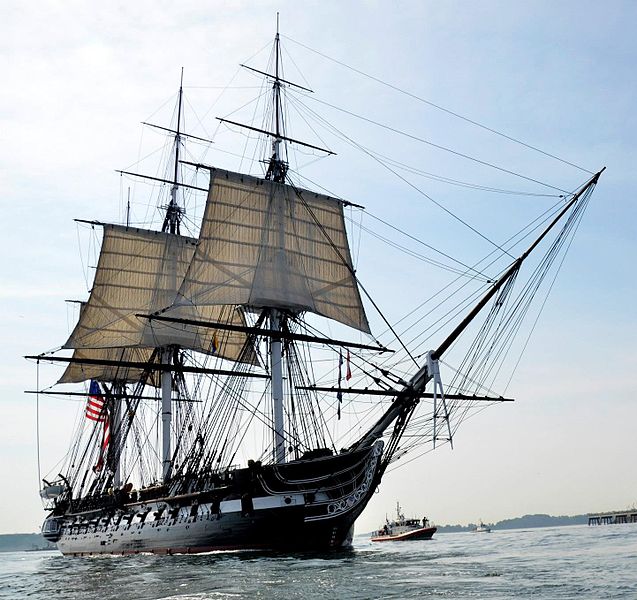
Launched this day in 1797 and named by George Washington himself, USS Constitution was one of these six. Her hull was made of the wood from 2,000 Georgia live oak trees, and built in the Edmund Hartt shipyard of Boston, Massachusetts.
Constitution’s first duties involved the “quasi-war” with France, but this was not the France which helped us win our independence. France had been swallowed up in a revolution of its own by this time. Leftists calling themselves “Jacobins” had long since sent their Bourbon King and his Queen Consort to the guillotine. Marie-Joseph Paul Yves Roch Gilbert du Motier, Marquis de Lafayette and Hero of the American Revolution, languished in an Austrian prison.
The French Monarchy would one day be restored, but not before a Corsican Corporal rose to the rank of Emperor to meet his Waterloo, fighting (and winning) more battles than Julius Caesar, Frederick the Great, Alexander the Great, and Hannibal, combined. But I digress.
The Barbary pirates were paid “tribute” during this time to keep them quiet, but that ended in 1800. Yusuf Karamanli, Pasha of Tripoli, demanded $225,000 from the incoming Jefferson administration. Jefferson refused, and Constitution joined in the Barbary Wars in 1803, a conflict memorialized in a line from the Marine Corps Hymn “From the Halls of Montezuma to the Shores of Tripoli.”
Two months after the War of 1812 broke out in June, Constitution faced off with the 38 gun HMS Guerriere, about 400 miles off the coast of Halifax. Watching Guerriere’s shots bounce off Constitution’s 21” thick oak hull, an American sailor exclaimed “Huzzah! her sides are made of iron!” Guerriere was reduced to an unsalvageable hulk in twenty minutes, and the nickname “Old Ironsides” was born.
The month before, Constitution had put to sea intending to join a five ship squadron off the coast of New Jersey. Spotting five sails and thinking that they had found their squadron on July 17, Constitution was disabused of that notion when lookouts reported the next morning that they were 5 British warships, and they were giving chase.
That soon to be famous “iron” hull would have been useless in a five to one fight. A common naval tactic of the day was to close to short range and fire at the masts and rigging of opposing vessels, disabling the ship’s “power plant”. A disabled vessel could then be boarded and a bloody fight would ensue with cutlass and pistol. Those 5 British captains would have considered Constitution to be a great prize; the ship faced a race for survival and the stakes were life and death.
Conditions were near dead calm and all six vessels were wetting sail, trying to get the most out of light winds. In a process called “kedging“, Constitution’s boats were rowed out ahead of the ship, dropping small “kedge anchors”. Sailors would then haul the great ship up the anchor chain, hand over hand, repeating the process over and over. The British ships soon imitated the tactic. What followed was a slow motion race lasting 57 hours in the July heat.
Constitution’s crew dumped everything they could find overboard to lessen the weight, including 2,300 gallons of drinking water. Cannon fire was exchanged several times, though the shots fell short of their mark. Constitution pulled far enough ahead of the British ships that they abandoned the pursuit on July 19.
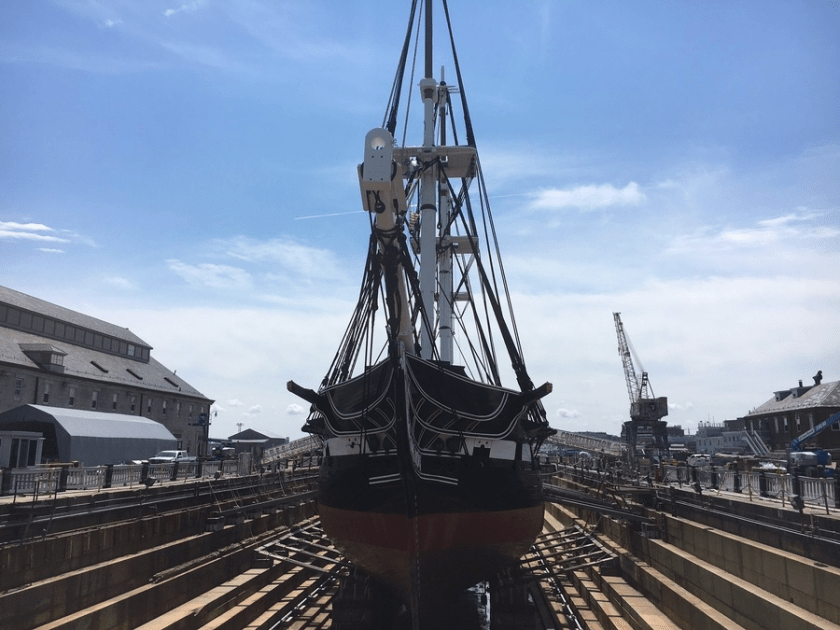
Old Ironsides, in Drydock
USS Constitution is still in service today, the world’s oldest commissioned naval vessel still afloat. She went into dry dock for major overhaul in October 2014 and re-floated on July 23 this year. Freshly restored and re-fitted, Old Ironsides took her first sail in three years only yesterday. 220 years since her own launch, and honoring the 242nd birthday, of the United States Navy.
The violent uprising of the early 50s was called “Mau Mau”, an anagram of Uma Uma, translating as “Get out, Get out”.
By the 1940s, the Kikuyu people of Kenya had been under British Colonial rule for nearly fifty years. At this time, there were primarily three political blocs among Kenyan Africans. First, the conservatives, who tended to support the status quo. Next were moderate nationalists, those who sought an orderly return to indigenous rule over African soil. Last were the radical nationalists. These wanted African rule, Right Now, no matter the cost.
The first attempt to form a country-wide political party began in 1944, with the formation of the KASU, the Kenya Africa Study Union. KASU was anti-colonial from the beginning, becoming increasingly radicalized through the WW2 period and into the late 1940s.
The violent uprising of the early 50s was called “Mau Mau”, an anagram of Uma Uma, roughly translating as “Get out, Get out”. The first “blow against the Colonial regime” was struck on October 3, 1952, when a white woman was stabbed to death near her home in Thika, in the Kiambu County of Kenya.
Senior Chief Waruhiu wa Kungu was shot to death in his car less than a week later. Governor Evelyn Baring declared a state of emergency on October 20, arresting hundreds of suspected leaders of the uprising.
There was little reason and less restraint in the events that followed. Thousands of black Africans were hacked, burned or shot to death by Mau Mau militants, many of them mutilated and horribly tortured before death. Militants attacked the settlement of Lari on the night of March 25-26, herding Kikiyu men, women and children into huts before setting them on fire. Anyone who tried to escape was hacked with machetes, and thrown back into the flames.
The scene played out on dozens of occasions. Massacres were met with retaliatory raids by African security forces, at least partially overseen by British commanders.
There was even biological warfare, when Mau Mau radicals used the poisonous milk of the African milk bush, to kill cattle.
Displeased with the government’s response to the uprising, settler groups formed their own “Kenya Police Reserve’s Special Branch”. God help the unlucky militant who fell into their hands.
Black Africans were victims of most of the violence, their deaths numbering in the thousands. Combined with those who “disappeared”, their number may have run into the tens of thousands, by the time the violence ended in 1956. 62 Asians, predominantly Indians, were also killed, along with 58 whites.
Barack Obama wrote in his memoir “Dreams from my Father”, that his grandfather Hussein Onyango Obama was captured and tortured by British authorities during the Mau Mau uprising. The now-former President wrote that his father was “selected by Kenyan leaders and American sponsors to attend a university in the United States, joining the first large wave of Africans to be sent forth to master Western technology and bring it back to forge a new, modern Africa“.
The elder Obama’s real history seems to differ from the public version, though the American media is remarkably quiet on the subject. The UK Daily Mail reports, under the headline “Obama’s grandfather tortured by the British? A fantasy (like most of the President’s own memoir)“, that Onyango was inclined to create “[H]istory to conform with the image he wished for himself…Following on from his forebears on both sides”.
If you’re interested in a little pop culture sauce for this turkey, the Mau Mau uprising inspired a number of similar rebellions throughout the region. One of them occurred in the East African coastal city of Zanzibar.
Thousands of Arabs and Indians were murdered in the 1964 Zanzibar rebellion, while thousands more fled for their lives.
Among those to escape were Bomi and Jer Bulsara, along with their 17-year-old son, Farrokh. The Bulsaras were Parsis from the Gujarat region of India, who had sent Farrokh to piano lessons from the age of 7. By the time he was 12, the boy had formed a school band, called “The Hectics”.
Farrokh was attending St. Peter’s boarding school at the time of the rebellion, and calling himself “Freddie”.
After fleeing Zanzibar, the family settled in Feltham, Middlesex, in England. Freddie Bulsara resumed his studies while joining in a series of bands through the late sixties. First “Ibex”, then “Wreckage” and finally, “Sour Milk Sea”.
In April 1970, Bulsara changed his name to “Mercury”, forming a band with guitarist Brian May, bassist John Deacon, and drummer Roger Taylor. The group went on to record 18 #1 rock music albums, 18 #1 singles and 10 #1 DVDs. The group sold close to 300 million albums, being inducted into the Rock & Roll Music Hall of Fame in 2001, as “Queen”.
The $1 million the Confederate government sunk into their Canadian office, probably did them more harm than good. Those resources could have been put to better use.
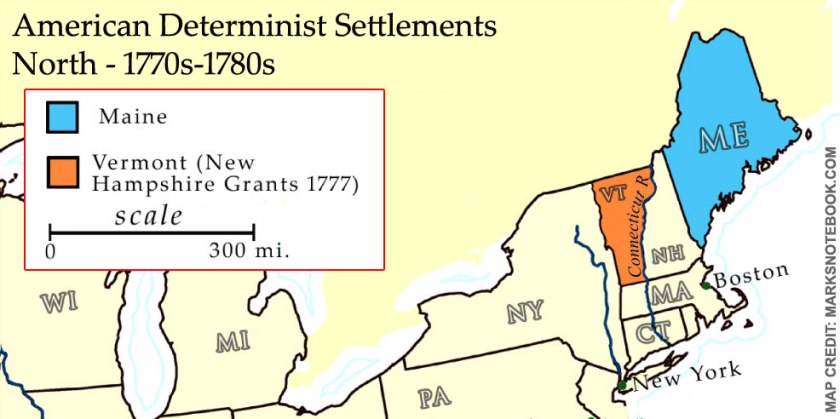
In the late 18th century, lands granted by the governor of New Hampshire led the colonial province into conflict with the neighboring province of New York. Conflict escalated over jurisdiction and appeals were made to the King, as the New York Supreme Court invalidated these “New Hampshire grants”. Infuriated residents including Ethan Allen and his “Green Mountain Boys” rose up in anger. Two natives of Westminster Vermont, then part of the New Hampshire land grants, were killed on March 13, 1775, by British Colonial officials. Today, the event is remembered as the “Westminster Massacre”.
The battles at Lexington and Concord broke out a month later, ushering in a Revolution and eclipsing events to the north. New York consented to admitting the “Republic of Vermont” into the union in 1790, ceding all claims on the New Hampshire land grants in exchange for a payment of $30,000. Vermont was admitted as the 14th state on March 4, 1791, the first state so admitted following the adoption of the federal Constitution.
Organized in 1785, St. Albans forms the county seat of Franklin County, Vermont. 15 miles from the Canadian border and situated on the eastern shore of Lake Champlain, it’s not the kind of place you’d expect, for a Civil War story.
St. Albans Vermont, 1864
The Confederate States of America maintained government operations in Canada, from the earliest days of the Civil War. Toronto was a logical relay point for communications with Great Britain, from whom the Confederate government sought unsuccessfully to gain support.
Secondly, Canada provided a safe haven for prisoners of war, escaped from Union camps.
Former member of Congress and prominent Ohio “Peace Democrat” Clement Vallandigham fled the United States to Canada in 1863, proposing to detach the states of Illinois, Indiana and Ohio from the Union, in exchange for sufficient numbers of Confederate troops to enforce the separation. Vallandigham’s five-state “Northwestern Confederacy” would include Kentucky and Missouri, breaking the Union into three pieces. Surely that would compel Washington to sue for peace.
In April 1864, President Jefferson Davis dispatched former Secretary of the Interior Jacob Thompson, ex-Alabama Senator Clement Clay, and veteran Confederate spy Captain Thomas Henry Hines to Toronto, with the mission of raising hell in the North.
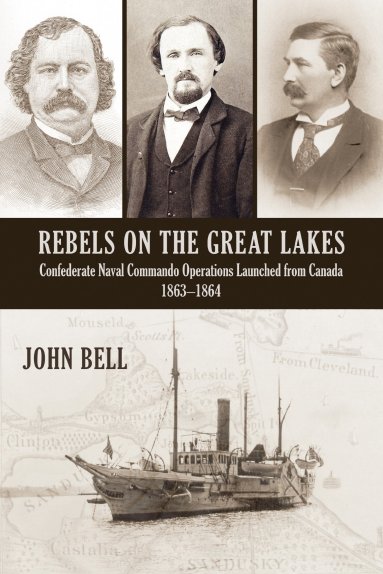
This was no small undertaking. A sizeable minority of Peace Democrats calling themselves “Copperheads” were already in vehement opposition to the war. So much so that General Ambrose Burnside declared in his General Order No. 38, that “The habit of declaring sympathy for the enemy will not be allowed in this” (Ohio) “department. Persons committing such offenses will be at once arrested with a view of being tried. . .or sent beyond our lines into the lines of their friends. It must be understood that treason, expressed or implied, will not be tolerated in this department“.
Hines and fellow Confederates worked closely with Copperhead organizations such as the Knights of the Golden Circle, the Order of the American Knights, and the Sons of Liberty, to foment uprisings in the upper Midwest.
In the late Spring and early Summer of 1864, residents of Maine may have noted an influx of “artists”, sketching the coastline. No fewer than fifty in number, these nature lovers were in fact Confederate topographers, sent to map the Maine coastline.
The Confederate invasion of Maine never materialized, thanks in large measure to counter-espionage efforts by Union agents.
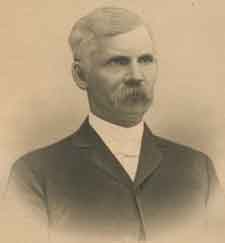
J.Q. Howard, the U.S. Consul in St. John, New Brunswick, informed Governor Samuel Cony in July, of a Confederate party preparing to land on the Maine coast.
The invasion failed to materialize, but three men declaring themselves to be Confederates were captured on Main Street in Calais, preparing to rob a bank.
Disenchanted Rebel Francis Jones confessed to taking part in the Maine plot, revealing information leading to the capture of several Confederate weapons caches in the North, along with operatives in Maine, Massachusetts, New York, Pennsylvania, Maryland, Illinois, Kentucky, Tennessee and Ohio.
Captain Hines planned an early June uprising in the Northwest, timed to coincide with a raid planned by General John Hunt Morgan. Another uprising was planned for August 29, timed with the 1864 Democratic Convention in Chicago. It seems the conspirators’ actions didn’t quite live up to the heat of their rhetoric, and both operations fizzled. A lot of these guys were more talk than action, yet Captain Hines continued to send enthusiastic predictions of success, back to his handlers in Richmond.
The Toronto operation tried political methods as well, supporting Democrat James Robinson’s campaign for governor of Illinois. If elected they believed, Robinson would turn over the state’s militia and arsenal to the Sons of Liberty. They would never know. Robinson lost the election.
Bennett Henderson Young
All this cost money, and lots of it. In October 1864, the Toronto operation came to St. Albans, to make a withdrawal.
Today, St. Albans is a quiet town of 6,918. In 1864 the town was quite wealthy, home to manufacturing and repair facilities for railroad locomotives. Located on a busy rail line, St. Albans was also home to four banks.
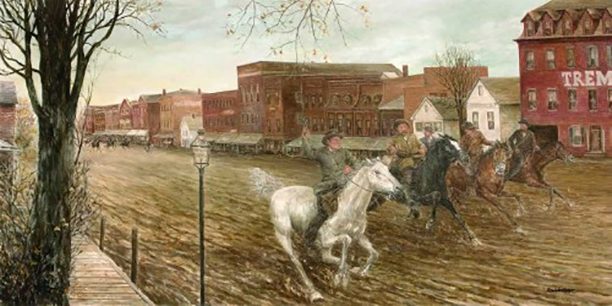
Nicholasville, Kentucky native Bennett Henderson Young was a member of the Confederate 8th Kentucky Cavalry, captured during Morgan’s 1863 raid into Ohio. By January, Young had escaped captivity and fled to Canada. On October 10, Bennett crossed the Canadian border with two others, taking a room at the Tremont House, in St. Albans. The trio said they had come for a “sporting vacation”.
In the following days, small groups filtered into St. Albans, quietly taking rooms across the town. There were 21 of them, former POWs and cavalrymen all, hand selected by Young for their daring and resourcefulness.
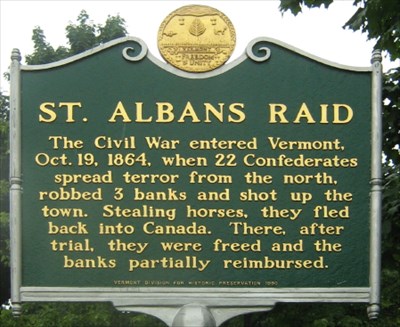
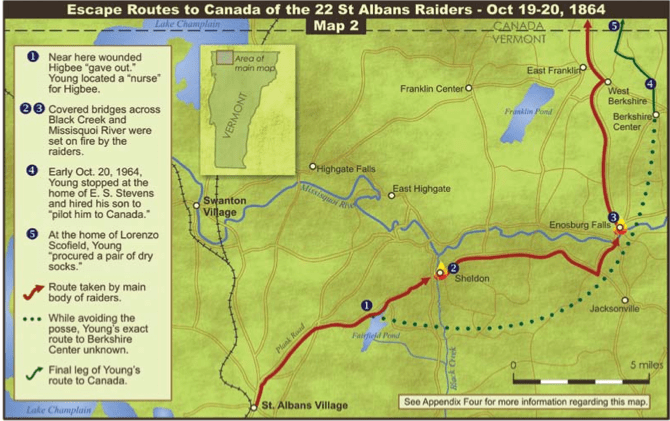
On October 19 the group split up. Announcing themselves to be Confederate soldiers, groups of them simultaneously robbed three of St. Albans’ four banks, while eight or nine held the townspeople at gunpoint, on the village green. One resident was killed before it was over and another wounded. Young ordered his troops to burn the town, but the bottles of “Greek Fire” they carried for the purpose, failed to ignite. Only one barn was burned down and the group got away with a total of $208,000, and all the horses they could find. It was the northernmost Confederate action of the Civil War.
The group was arrested on returning to Canada and held in Montreal. The Lincoln administration sought extradition, but the Canadian court decided otherwise, ruling that the raiders were under military orders at the time, and neutral Canada could not extradite them to America. The $88,000 found with the raiders, was returned to Vermont.
The $1 million the Confederate government sunk into their Canadian office, probably did them more harm than good. Those resources could have been put to better use, but we have the advantage of hindsight. Neither Captain Hines nor Jefferson Davis could know how their story would turn out. In the end, they both fell victim to that greatest of human weaknesses, of believing what they wanted to believe.
Christians and Jews had had relatively cordial relations with the Caliphs who had come before, but Al-Hakim was different. Some believed his every action to be right and just, others that he was overcompensating for being borne of a Christian mother. Many believed he was simply insane.
According to Christian tradition, Jesus of Nazareth was condemned to death in the year 33AD. He was crucified on Mount Golgotha, his body buried in a tomb carved out of the rock of a nearby garden. After three days, Jesus rose from the dead. From that moment to this, the Tomb of the Resurrection has been at the center of all Christian faith.
In 132, the Roman Emperor Hadrian all but erased all sign of Jewish and Christian presence, in the old city of Jerusalem. Golgotha and the Tomb were obliterated, and a pagan temple to Venus Aphrodite was raised in their place.
Constantine the Great, Rome’s first Christian Emperor, destroyed the pagan temple in the 330s, bringing the tomb back to light and building a magnificent complex on the site. The Church of the Holy Sepulchre.
It was almost 300 years later that, according to Islamic faith, the Angel Gabriel revealed the Word of God (Allah) to the prophet Muhammad. In the years following the death of Muhammad in 632, the armies of the Rashidun or “Rightly Guided” Caliphs swept across the Arabian peninsula and laid siege to Jerusalem, conquering the city in 637. The Rashidun Caliphate was replaced by the Umayyad a short 24 years later, only to be replaced by the Abbassid, in 750. Within 400 years, these first three Caliphates in the history of Islam had expanded the faith from the borders of China and India, to Visigothic Spain. Five million square miles, larger than any modern state, with the sole exception of the Russian Federation.
In the years that followed, Jews and Christians were able to practice their faith in the conquered city with varying degrees of freedom. That came to an end in 1009.
Al-Hakim bi-Amr Allah, (literally “Ruler by God’s Command”) was the 6th Caliph of the Fatimid Dynasty, coming to power in October of 996.
He was the “Mad Caliph”, the “Nero of Islam”. In September of 1009, Al-Hakim ordered the destruction of all churches, synagogues, Torah scrolls and other religious artifacts throughout Jerusalem, Syria and Egypt. Most especially the Church of the Holy Sepulchre, whose destruction was carried out on this day, October 18, 1009.
The Church of Calvary and the Martyrium were demolished, and the Edicule of the Tomb dismantled. Furnishings and equipment were stolen or destroyed. So complete was its destruction that the rock beneath its foundation was hacked, and then the rubble set ablaze. Only remnants of the Constantinian structures of the Anastasis remained, submerged under demolition debris.
All of Christendom recoiled in horror, at the desecration. It was no small part of what led to the 1st Christian Crusade to retake Jerusalem, though that wouldn’t take place for another 100 years.
Unlike the Fatimid Caliphs who came before, Al-Hakim persecuted the “dhimmis” under his control, launching campaigns of destruction throughout Palestine and Syria in 1011 and again in 1013-14.
The reasons are unclear. Christians and Jews had had relatively cordial relations with the Caliphs who had come before, but Al-Hakim was different. Some believed his every action to be right and just, others that he was overcompensating for being borne of a Christian mother.
Many believed he was simply insane.
Al-Hakim became increasingly erratic in the following years, issuing edicts forbidding the eating of certain foods, dictating what fishermen were permitted to catch, and prohibiting chess. Women were proscribed from going outside. Shoemakers were forbidden from making women’s shoes. One day he ordered Christians and Jews to convert to Islam, the next day he’d rescind the order. Hakim would personally murder or cut off the hands of slave or dignitary, without warning, and without reason. He was feared by Muslim and Christian emissaries alike.
The Church of the Holy Sepulchre was rebuilt between 1042-1055 with funding from Byzantine emperor Constantine IX Monomachus, though it would never regain the magnificence of Constantine’s original structure.
Church of the Holy Sepulchre
Al-Hakim himself went out for a ride one night in October 1021, and never returned. All that was ever found of him was his blood stained clothing, and his donkey.
Nine people lost their lives altogether, including one man who died of alcohol poisoning, apparently leading a heroic one-man effort to drink the entire flood.
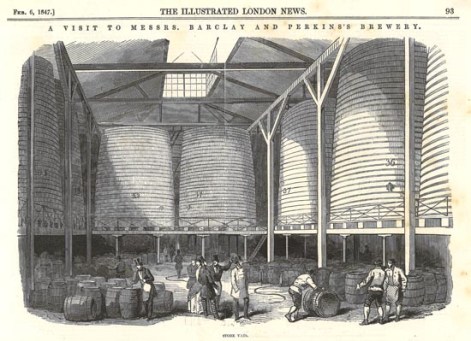
On April 1, 1785, the Times of London reported: “There is a cask now building at Messrs. Meux & Co.’s brewery…the size of which exceeds all credibility, being designed to hold 20,000 barrels of porter; the whole expense attending the same will be upwards of £10,000”.
The Meux’s Brewery Co Ltd, established in 1764, was a London brewery owned by Sir Henry Meux. What the Times article was describing was a 22′ high monstrosity, held together by 29 iron hoops.
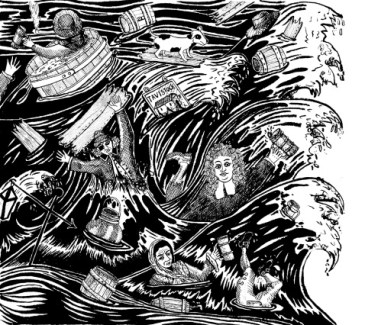
When completed, this would be one of several such vats, each designed to hold 3,500 barrels of brown porter ale.
The brewery was located in the crowded slum of St. Giles, where many homes contained several people to the room.
On October 17, 1814, storehouse clerk George Crick noticed one of those 700-pound iron hoops had slipped off a cask. This happened two or three times a year, and Crick thought little of it, writing a note to another employee, to fix the problem.
It was a bad decision.
The explosive release of all that hot, fermenting liquid could be heard five miles away, causing a chain reaction as the other vats went down like exploding dominoes.
323,000 imperial gallons of beer smashed through the brewery’s 25′ high brick walls, gushing into the streets, homes and businesses of St. Giles. The torrent smashed two houses and the nearby Tavistock Arms pub on Great Russell Street, where a 14-year-old barmaid named Eleanor Cooper was buried under the rubble.
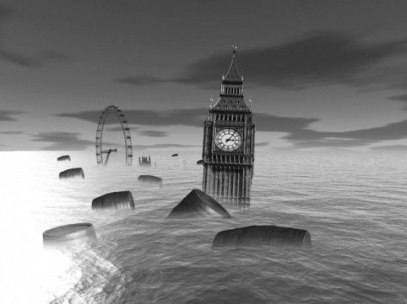
One brewery worker was able to save his brother from drowning in the flood, but others weren’t so lucky.
Mary Mulvey and her 3-year-old son Thomas were drowned, while Hannah Banfield and Sarah Bates, ages 4 and 3, were swept away in the flood. Both died of their injuries. Nine people lost their lives altogether, including one man who died of alcohol poisoning, apparently leading a heroic one-man effort to drink the entire flood.
As the torrent subsided, hundreds of people came outside carrying pots, pans, and kettles – whatever they had on hand to scoop up some of it. Some just bent low and lapped at the dirty, warm beer as it washed through the streets. Meanwhile, several injured were taken to the nearby Middlesex Hospital, where a near-riot broke out as other patients demanded to know why they weren’t getting some of it, too.
In the days that followed, the crushing poverty of the slum led some to exhibit the corpses of their family members, charging a fee for anyone who wanted to come in and see. In one house, too many people crowded in and the floor collapsed, plunging them all into a cellar full of beer.
The stink lasted for months, as the Meux Brewery Company was taken to court over the accident. Judge and jury ruled that the flood was an ‘Act of God’ and the deaths were just a ‘casualty’, leaving no one responsible. Meux & Co. survived, though the financial loss was made worse by the fact that they had already paid tax on the beer. The company successfully applied to Parliament for a refund, and continued to brew beer on the same site.
The brewery was closed in 1921 and demolished the following year. Since 2012, a local tavern called the “Holborn Whippet” marks the event with its own vat of porter, brewed specially for this day. Cheers.
Marie-Antoinette’s hair was cut off on October 16, 1793. She was driven through Paris in an ox cart, taken to the Place de la Révolution, and decapitated. She accidentally stepped on the executioner’s foot on mounting the scaffold. Her last words were “Pardon me sir, I meant not to do it”.
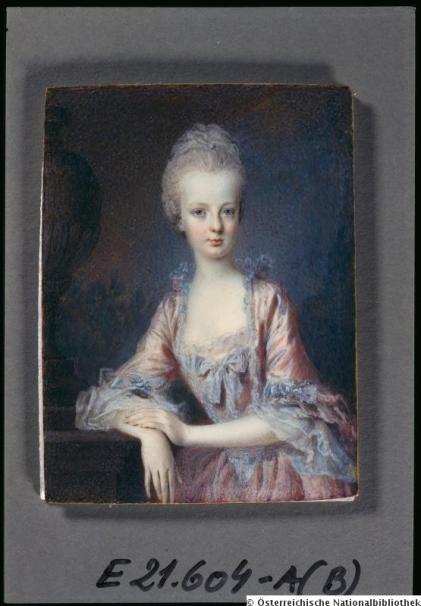
Alliances came and went throughout 18th century Europe, and treaties were often sealed by arranged marriages. One such alliance took place in 1770 when Francis I, Holy Roman Emperor and his wife Maria Theresa, the formidable Queen of Hungary and Bohemia, married their daughter Maria Antonia to Louis-Auguste, the son of Louis XV, King of France.
The happy couple had yet to meet when the marriage was performed by proxy, the bride remaining in Vienna while the groom stayed in Paris. At 12 she was now the Dauphine, Marie Antoinette, wife of the 14-year-old Dauphin, future King of France.
There was a second, ceremonial wedding held in May, after which came the ritual bedding. This wasn’t the couple quietly retiring to their own private space. This was the bizarre spectacle of a room full of courtiers, peering down at the proceedings, to make sure the marriage was consummated.
It was not, and that failure did damage to both of their reputations.
The people liked their new Dauphine at first, but the Royal Court was another story. They had promoted several Saxon Princesses for the match, and called Marie Antoinette “The Austrian Woman”. She would be called far worse.
The stories you read about 18th century Court intrigue make you wonder how anyone lived like that. Antoinette was naive of the shark tank into which she’d been thrown. Relations were especially difficult with the King’s mistress, the Comtesse du Barry, and Antoinette was somehow expected to work them out. The King’s daughters, on the other hand, didn’t care for du Barry’s unsavory relations with their father. Antoinette couldn’t win. The sisters complained of feeling “betrayed” one time, when Antoinette commented to the King’s mistress “There are a lot of people at Versailles today”.
Court intrigues were accompanied by reports to Antoinette’s mother in Vienna, the Empress responding with her own stream of criticism. The Dauphin was more interested in lock making and hunting, she wrote, because Antoinette had failed to “inspire passion” in her husband. The Empress even went so far as to tell her daughter that she was no longer pretty. She had lost her grace. Antoinette came to fear her own mother more than she loved her.
Louis-Auguste was crowned Louis XVI, King of France, on June 11, 1775. Antoinette remained by his side, though she was never crowned Queen, instead remaining Louis’ “Queen Consort”.
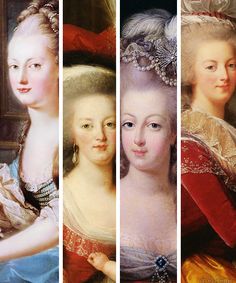
With her marriage as yet unconsummated, Antoinette’s position became precarious when her sister in law gave birth to a son and possible heir to the throne. Antoinette spent her time gambling and shopping, while wild rumors and printed pamphlets described her supposedly bizarre sexual romps.
France had serious debt problems in the 1770s, the result of endless foreign wars, but Antoinette received more than her share of the blame. As first lady to the French court, Antoinette was expected to be a fashion trendsetter. Her shopping was in keeping with the role, but rumors wildly inflated her spending habits. Her lady-in-waiting protested that her habits were modest, visiting village workshops in a simple dress and straw hat. Nevertheless, Antoinette was rumored to have plastered the walls of Versailles with gold and diamonds.
The difficult winter of 1788-89 produced bread shortages and rising prices as the King withdrew from public life. The marriage had produced children by this time, but the legend of the licentious spendthrift and empty headed foreign queen took root in French mythology, as government debt overwhelmed the economy.
French politics boiled over in June 1789, leading to the storming of the Bastilleon July 14. Much of the French nobility fled as the newly formed National Constituent Assembly conscripted men to serve in the Garde Nationale, while the French Constitution of 1791 weakened the King’s authority.
Food shortages magnified the unrest. In October, the King and Queen were placed under house arrest in the Tuileries Palace. In June they attempted to flee the escalating violence, but were caught and returned within days. Radical Jacobins exploited the escape attempt as a betrayal, and pushed to have the monarchy abolished altogether.
Unrest turned to barbarity as Antoinette’s friend and supporter, the Princesse de Lamballe, was taken by the Paris Commune for interrogation. She was murdered at La Force prison, her head fixed on a pike and marched through the city.
Louis XVI was charged with undermining the First Republic in December 1792, found guilty and executed by guillotine on January 21, 1793. He was 38.
Marie-Antoinette became prisoner #280, her health deteriorating in the following months. She suffered from tuberculosis by this time and was frequently bleeding, possibly from uterine cancer.
Antoinette was taken from her cell on October 14, subjected to a sham trial whose outcome was never in doubt. She was accused of molesting her own son, a charge so outrageous that even the market women who had stormed the palace demanding her entrails in 1789, spoke in her support. “If I have not replied”, she said, “it is because nature itself refuses to respond to such a charge laid against a mother.”
Marie-Antoinette’s hair was cut off on October 16, 1793. She was driven through Paris in an ox cart, taken to the Place de la Révolution, and decapitated. She accidentally stepped on the executioner’s foot on mounting the scaffold. Her last words were “Pardon me sir, I meant not to do it”.
“Let them eat cake” is often attributed to Marie Antoinette, but there’s no evidence that she ever said it. The phrase appears in the autobiography of Jean-Jacques Rousseau, “Les Confessions”, attributed to a “Grande Princesse” whom the book declines to name. Considering the lifetime of cheap and mean-spirited gossip to which Marie Antoinette was subjected, it’s easy to believe that this was more of the same.
Despite problems at home, the Dutch mail order bride found herself moving among the upper classes. She immersed herself in Indonesian culture and traditions, even joining a local dance company. It was around this time that she revealed her “artistic” name in letters home: “Mata Hari”, Indonesian for “sun” (literally, “eye of the day”), in Sanskrit.
Margaretha Geertruida Zelle was born in the Netherlands on August 7, 1876, the eldest of four children. “M’greet” to family and friends, she answered a newspaper ad placed by Dutch Colonial Army Captain Rudolf MacLeod, then stationed in the Dutch East Indies, in modern day Indonesia.
She’d come from a broken home. Being a “mail order bride” must have seemed like the way to financial security. The marriage was a disappointment, MacLeod was a drunk and openly kept a mistress. Margaretha moved in with another Dutch officer some time in 1897.
Despite problems at home, the Dutch mail order bride found herself moving among the upper classes. She immersed herself in Indonesian culture and traditions, even joining a local dance company. It was around this time that she revealed her “artistic” name in letters home: “Mata Hari”, Indonesian for “sun” (literally, “eye of the day”), in Sanskrit.
Margaretha Zelle was divorced by 1905, and becoming known as an exotic dancer. She was a contemporary of dancers Isadora Duncan and Ruth St. Denis, leaders in the early modern dance movement. As Mata Hari, she played the more exotic aspects of her background to the hilt, projecting a bold and in-your-face sexuality that was unique and provocative for her time.
She claimed to be a Java princess of priestly Hindu birth, immersed since childhood in the sacred art of Indian dance. Carefree and thoroughly uninhibited, she was photographed in the nude or the next thing to it on many occasions during this period, becoming the long-time mistress of the millionaire Lyon industrialist Émile Étienne Guimet.
The world stood still at the beginning of World War I, but not Margaretha Zelle. By 1914 her dancing days were over, but she was a famous courtesan, moving among the highest social and economic levels of her time. Her neutral Dutch citizenship allowed her to move about without restriction, but not without a price. Zelle’s movements brought her under suspicion of being a German Agent, and she was arrested in the English port of Falmouth. She was taken to Scotland Yard for interrogation in 1916, but later released.
French authorities arrested her on February 13, 1917, in her room at the Hotel Elysee Palace, in what is now the banking giant HSBC’s French headquarters. She was kept in prison as the case was prepared against her, all the while writing to the Dutch Consul in Paris, proclaiming her innocence. “My international connections are due to my work as a dancer, nothing else”, she wrote. “I really did not spy, it is terrible that I cannot defend myself”.
Her defense attorney, Edouard Clunet, never really had a chance. He couldn’t cross examine the prosecution’s witnesses or even directly question his own. Her conviction was a foregone conclusion.
Margaretha Geertruida Zelle was executed by a French firing squad on October 15, 1917. She was 41.
British reporter Henry Wales described the execution, based on an eyewitness account. Unbound and refusing a blindfold, Mata Hari stood alone to face her firing squad. After the shots rang out, Wales reported that “Slowly, inertly, she settled to her knees, her head up always, and without the slightest change of expression on her face. For the fraction of a second it seemed she tottered there, on her knees, gazing directly at those who had taken her life. Then she fell backward, bending at the waist, with her legs doubled up beneath her.”
An NCO walked up to her body, pulled out his revolver, and shot her in the head to make sure she was dead.
German documents unsealed in the 1970s indicate that Mata Hari did, in fact, provide information to German authorities, though it seems to have been of limited use. It is possible to believe that she was little more than a young woman, with a fondness for men in uniform. French authorities built her up as “the greatest woman spy of the century”, though that may have been little more than covering up for their own disastrous performance in the Nivelle offensive.
French officers from whom she ostensibly got all that information, seem not to have been questioned.
The whole truth may never be known, but the tale of the real-life exotic dancer working as a lethal double agent, is a story that’s hard to resist.
The 9000+-member audience was stunned when Roosevelt announced “I don’t know whether you fully understand that I have just been shot—but it takes more than that to kill a Bull Moose!”
The first “Progressive” era began as a local movement in the 1890s, largely in response to the corruption of the political machines, and the monopolistic corporate excesses of the “gilded age”. By the 1920s, Progressivism had come to dominate state and national politics, bringing with it the national income tax, direct election of Senators, and Prohibition, with the 16th, 17th and 18th amendments, respectively.
Great believers in the perfectibility of the public sphere, Progressives eschewed old methods as wasteful and inefficient, leaning instead toward the advice of academics and “experts”, looking for that “one best way” to get things done.
Progressive politicians covered both sides of the political aisle, with leaders such as Wisconsin Senator Robert M. La Follette Sr. and Chief Justice Charles Evans Hughes on the Republican side, and Woodrow Wilson, and the attorney, politician and orator William Jennings Bryan (he of the famous “Monkey Trial”), on the side of the Democrats.
When Theodore Roosevelt first appeared on the political scene at age 23, there was little to hint at the Progressive he would later become. “TR” was sworn into office in 1901, following the assassination of President William McKinley. At 42 he was the youngest man to ever take the oath of office, and possibly the most energetic.
As President, Roosevelt pushed executive power to new heights, attacking “Captains of Industry” with a two-pronged strategy of anti-trust legislation, and regulatory control. TR was the “Conservation President”, creating the United States Forest Service (USFS) and establishing no fewer than 150 national forests, 51 federal bird reserves, 4 national game preserves, 5 national parks, and 18 national monuments. All told, Roosevelt protected approximately 230 million acres of public land.
Roosevelt retired from politics after two terms to go on African safari, backing William Howard Taft for the Republican nomination.
Taft easily defeated Democratic candidate William Jennings Bryan in the 1908 election, but his presidency proved to be a disappointment to the Progressive wing of the party.
The more conservative Taft didn’t take the expansive view of his predecessor. By 1910, Roosevelt had returned to a public speaking tour against his own hand-picked successor.
The federal government needed to assume a larger role in the lives of every-day Americans, argued Roosevelt, who, despite repeated assurances that he was done with politics, challenged Taft for the 1912 Republican nomination. When asked if he was up to another campaign season, Roosevelt replied he was ready and felt as “fit as a bull moose”.
The final split came with the June Republican party convention in Chicago, when the party rejected Roosevelt’s “New Nationalism” platform, nominating Taft as its standard bearer for re-election. Roosevelt and his reform-minded supporters broke with the party, forming the “Progressive”, or “Bull Moose” party, as the Democratic convention selected former Princeton University President and New Jersey Governor Woodrow Wilson, to be its candidate. This was going to be a three-way race.
1912 Election
John Flammang Schrank emigrated to America in 1885, at the age of 9. His parents died a short time after, leaving him to work for an uncle, a tavern keeper in the Kleindeutschland, (“Little Germany”) section of New York. Schrank’s aunt and uncle left him a sizeable inheritance on their passing, in hopes that he would live a quiet and peaceful life. Schrank was heartbroken at losing this, his second set of parents. When his first and only girlfriend Emily Ziegler died in the General Slocum disaster of 1904, John Schrank became unhinged.
He drifted up and down the east coast for several years. In September 1912, he became obsessed with Theodore Roosevelt. For three weeks, John Schrank followed the Roosevelt campaign, stalking the candidate across eight states. On the afternoon of October 14, Roosevelt was in Milwaukee, dining with local dignitaries at the Hotel Gilpatrick, before a planned speech at the Milwaukee Auditorium. As the former President was getting into his vehicle, he turned to wave to well-wishers. Schrank was four or five feet away when he fired his .38 caliber revolver, hitting the former President in the chest.
John Flammang Schrank smiles as he’s taken into custoy for the attempted assassination of Theodore Roosevelt
The bullet pierced the fifty folded pages of Roosevelt’s speech and a metal spectacle case, before lodging in his chest. The former President coughed once into his hand, to see if there was blood. Seeing none, TR concluded that his lungs were fine, and decided to give the speech. The 9000+-member audience was stunned when the candidate announced “I don’t know whether you fully understand that I have just been shot—but it takes more than that to kill a Bull Moose!” Roosevelt spoke for 80 minutes, before going to a Milwaukee hospital for treatment.
Roosevelt x-ray
Theodore Roosevelt lived the rest of his life with that bullet in his chest. Six more years. As for John Schrank, he claimed in a letter found on his person, that the ghost of William McKinley had instructed him to avenge his death with the assassination of his former Vice President. He would live out the rest of his days at the Central State Mental Hospital for the criminally insane, in Waupun, Wisconsin.
Woodrow Wilson easily defeated his opponents to become the 28th President of the United States, garnering 435 electoral votes to his opponents’ combined total, of 96.
Fifty pages long and folded in half, Elbert Martin holds the speech that saved TR’s life
You must be logged in to post a comment.