

The Federal Government passed the Merchant Marine act of 1936, “to further the development and maintenance of an adequate and well-balanced American merchant marine”.
The act served multiple purposes. Among them was the modernizing what was at that time a largely WWI vintage merchant marine fleet, and serving as the basis for a naval auxiliary that could be activated in time of war or national emergency.
Two years later, the first keel laid under the Merchant Marine act was the SS America, built by the United States Line and operated as a passenger liner until America entered WWII in 1941.
Naval interiors of the age tended to be stodgy and overwrought. SS America has the almost unique distinction of having its interiors designed entirely by women, as naval architect William Francis Gibbs turned to the all-female team of Miriam Smyth, Ann Urquhart & Dorothy Marckwald. “It is not without reason”, according to team leader “Dot” Marckwald, “the majority of the passengers are women, and no man could ever know as much about their comfort problems and taste reactions as another woman.”
SS America was christened by Eleanor Roosevelt and launched on August 31, 1939, the day before Adolf Hitler invaded Poland.
She would serve as a passenger liner for the two years remaining for US neutrality, with American flags painted on both sides of her hull. At night she’d sail while fully illuminated.
Where there are government subsidies, there are strings. For SS America, those strings  were pulled on May 28, 1941, while the liner was at Saint Thomas in the US Virgin Islands. The ship had been called into service by the United States Navy, and ordered to return to Newport News.
Re-christened the USS West Point, she served as a transport for the remainder of the war, carrying in excess of 350,000 troops and other passengers by 1946. Hers was the largest total of any Navy troop ship in service during WWII, and included USO entertainers, Red Cross workers, and prisoners of war. As America, she had even carried two Nazi spies as part of her crew, until their discharge on America’s return to Virginia. The two spies, Franz Joseph Stigler and Erwin Wilheim Siegler, were members of the Duquesne spy ring, reporting allied movements in the Panama Canal Zone until they and 31 of their cohorts were found out late in 1941.
 During her service to the United States Navy, West Point was awarded the American Defense Service Medal, American Campaign Medal, European-African-Middle Eastern Campaign Medal, Asiatic-Pacific Campaign Medal, and World War II Victory Medal.
Returned to civilian service in 1946 and re-christened America, the ship remained a favorite for cruise ship vacationers through most of the fifties. By 1964, the competition from larger, faster ships and the airlines had put the best years behind the aging liner. Sold and then sold again, she had come full circle by 1978, when new owners tried to capitalize on the old ship’s mystique. She was in terrible condition and her refit nowhere near complete when America set sail on her first cruise on June 30, 1978. There was rusted metal, oil soaked rags and backed up sewage. There were filthy mattresses and soiled linens, and so many complaints that the ship turned back after barely clearing the Statue of Liberty.
Impounded for non-payment of debts and receiving an inspection score of 6 out of a possible 100 points by the Public Health Service, the US District Court ordered America to be sold at auction.
One new owner after another bought the hulk during the eighties, only to default. First it was going to be a prison ship, and then sold and renamed Alferdoss, which means “paradise” in Arabic. She was anything but at this point. The next buyer intended to scrap her, only to become the latest in a long line of financial defaults.
Sold yet again in 1993 and renamed the American Star, the new owners planned to convert her to a five-star hotel ship off Phuket, Thailand. A planned 100 day tow began on New Year’s Eve of 1993, but the lines broke. On January 17, 1994, the former SS America was  adrift in foul seas, running aground in the Canary Islands the following day.
Discussions of salvage operations were soon squashed, as the ship broke in two in the pounding surf.
The National WWII Museum in New Orleans reports on its website that the men and women who fought and won the great conflict are now passing at a rate of 550 per day. The Frank Buckles of their era, the last living American veteran of WWI, is expected to pass some time in the 2030s. How many, I wonder, might think back and remember passage on the most successful troop transport of their day.
By the spring of 2013, the only time you could tell there’s a wreck on the beach, was at low tide.


 For two days, a desperate defense of the nearby villages of Noville and Foy held back the 2nd Panzerdivision, as 11,000 men and 800 officers of the 101st joined a combined force of 11,000 converging on Bastogne. By the 21st, Bastogne’s field hospital was overrun, they were surrounded by forces outnumbering them 2½ to one. Poorly supplied for the cold winter conditions with air supply made all but impossible by weather conditions, the citizens of Bastogne gave their blankets to the American soldiers, along with white linens which they used for camouflage.
 later, ending the German encirclement.
 entire siege tending to the wounded, along with Dr. Jack Prior. Once, she even ran through enemy fire to collect the wounded from the field. On Christmas eve, she was blown off her feet and through a wall. She got up and went back to it, despite the direct hit that killed 30 American wounded, along with the only other nurse at the Rue Neufchatel aid station, Renée Lemaire.
  Bastogne. Chiwy married after the war, and rarely talked about her experience in Bastogne. It took King a full 18 months to coax the story out of her. The result was the 2015 Emmy award winning historical documentary, “Searching for Augusta, The Forgotten Angel of Bastogne”.
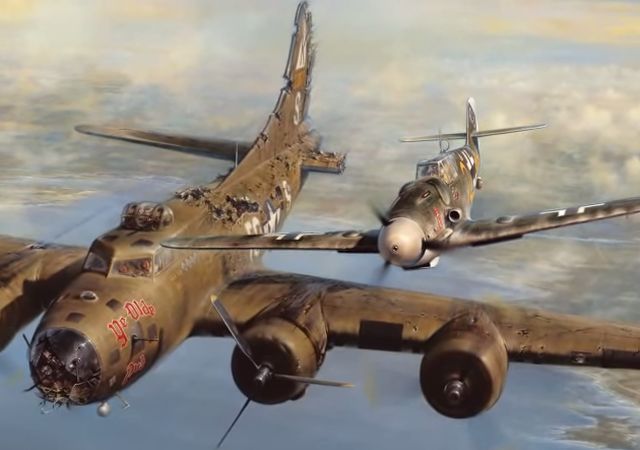
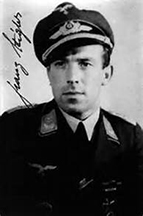 At the age of 26, Franz Stigler was an Ace. The Luftwaffe pilot of a Messerschmitt Bf-109 fighter, some of his kills had been revenge, payback for the death of his brother August earlier in the war. But this man was no Nazi. He was a German Patriot with 22 confirmed kills. On December 20, 1943, he needed one more for a Knight’s Cross. He tossed his cigarette aside and climbed into his fighter as the crippled American B17 bomber lumbered overhead. This was going to be an easy kill.
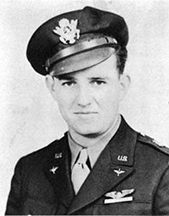 named “Ye Olde Pub”. The earlier attack on the munitions factory in Bremen had been a success, but the pilot and crew paid a heavy price for it. Their aircraft had been savaged by no fewer than 15 German fighters. Great parts of the air frame were torn away, one wing severely damaged and part of the tail torn away. The aircraft’s Plexiglas nose was shattered and the #2 engine seized. Six of the ten-man crew were wounded and the tail gunner dead, his blood frozen in icicles over silent machine guns. Brown himself had been knocked out at one point, coming around just in time to avert a fatal dive.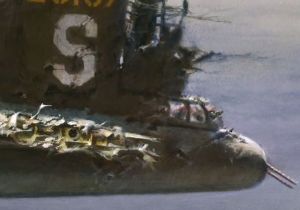
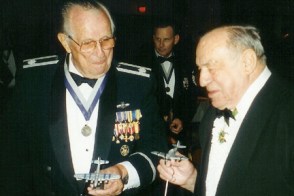 took out an ad in a fighter pilots’ newsletter. It said that he was searching for the man ‘who saved my life on Dec. 20, 1943.’ Stigler saw the ad, and the two met for the first time in 1987. “It was like meeting a family member”, Brown said at their first meeting, “like a brother you haven’t seen for 40 years”.
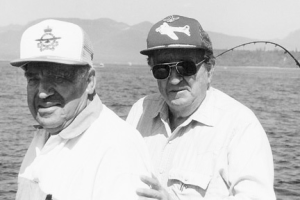 The two became close friends and occasional fishing buddies until their passing in 2008, six months apart. Stigler was age 92 and Brown 87. Their story is told in a book called “A Higher Call”, if you want to know more about it. In their obituaries, both were mentioned as the other man’s “special brother”.
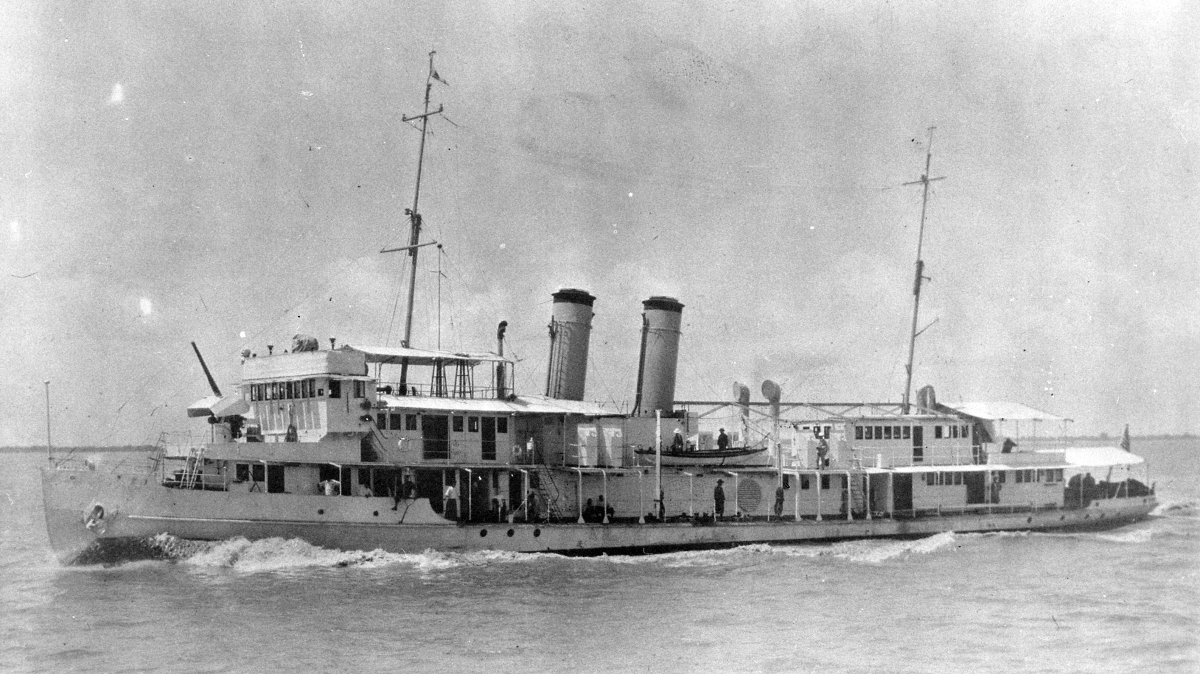
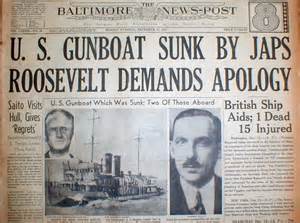 than old enough to remember how the sinking of the Maine in Havana Harbor brought the US into war with Spain in 1898. Grew hoped to avoid a similar outcome following the Panay sinking, though Japanese authorities were less than helpful. US cryptographers uncovered information shortly after the attack indicating that aircraft were operating under orders, while the Japanese government continued to insist that the attack had been accidental.

 problem. Roosevelt was fond of his 1939 Lincoln V12 Convertible. Roosevelt called it the “Sunshine Special,” but the car was anything but secure. Armored Presidential cars would not come into regular use for another 20 years, after the assassination of President Kennedy.
 making sure that it would safely get the Commander in Chief the few short blocks to Capitol Hill. It apparently did, because Roosevelt continued to use it until his old car could be fitted with the same features. To this day, Presidential limousines have flashing police lights hidden behind their grilles.
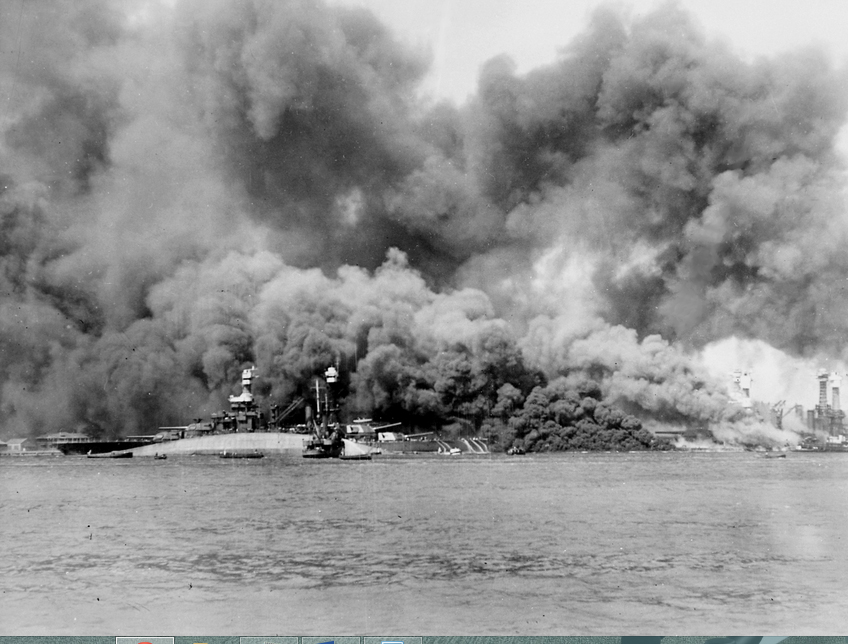
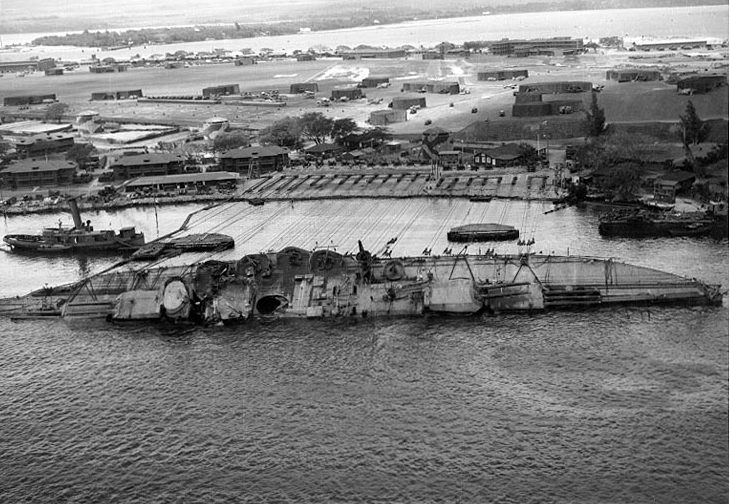 battleship USS Oklahoma was raised from the bottom, but was never repaired. In 1947 she would sink under tow to the mainland, very nearly taking two ocean going tugs to the bottom, with her.
 Historical Easter Eggs - Today in History
You must be logged in to post a comment.