

The largest amphibious attack in history began on June 6, 1944, on the northern coast of France. British and Canadian forces came ashore at beaches code named Gold, Juno and Sword. Americans faced light opposition at Utah Beach, while heavy resistance at Omaha Beach resulted in over 2,000 American casualties.
By end of day, some 156,000 Allied troops had successfully stormed the beaches of Normandy. Within a week that number had risen to 326,000 troops, over 50,000 vehicles and more than 100,000 tons of equipment.
The success of “Operation Overlord” resulted from lessons learned from the largest amphibious training exercise of the war, the six phases of “Operation Fabius”, itself following the unmitigated disaster of a training exercise that killed more Americans, than the actual landing at Utah beach.

Slapton is a village and civil parish in the River Meadows of Devon County, where the southwest coast of England meets the English Channel. Archaeological evidence suggests human habitation from at least the bronze age. The “Domesday Book”, the recorded manuscript of the “Great Survey” of England and Wales completed in 1086 by order of William the Conqueror, names the place as “Sladone”, with a population of 200.
In late 1943, 750 families, some 3,000 locals, were evacuated with their livestock to make way for “Operation Tiger”, a D-Day landing rehearsal scheduled for the following spring. Some had never so much as left their village.
Thousands of US military personnel were moved into the region during the winter of 1943-44. The area was mined and bounded with barbed wire, and patrolled by sentries. Secrecy was so tight, that even those in surrounding villages, had no idea of what was happening.
Exercise Tiger was scheduled to begin on April 22, covering all aspects of the “Force U” landing on Utah beach, culminating in a live-fire beach landing at Slapton Sands at first light, on April 27.

Nine large tank landing ships (LSTs) shoved off with 30,000 troops on the evening of the 26th, simulating the overnight channel crossing. Live ammunition was used in the exercise, to harden troops off to the sights, sounds and smells of actual battle. Naval bombardment was to commence 50 minutes before H-Hour, however delays and scheduling confusion resulted in landing forces coming under direct naval bombardment. An unknown number were killed in this “friendly fire” incident. Fleet rumors put the number as high as 450.
Two Royal Navy Corvettes, HMS Azalea and Scimitar, were to guard the exercise from German “Schnellboots” (“S-Boots” – the allies called the “E-Boats”), the fast attack craft based across the channel, at Cherbourg.

Scimitar withdrew for repairs following a collision with an LST on the 27th. In the earlymorning darkness of the following day, the single corvette was leading 8 LSTs carrying vehicles and combat engineers of the 1st Engineer Special Brigade through Lyme Bay, when the convoy was spotted by a nine vessel E-Boat patrol.
8 landing craft in single-file didn’t have a chance against fast-attack craft capable of 55mph. LST-531 was torpedoed and sunk in minutes, killing 424 Army and Navy personnel. LST-507 suffered the same fate, with the loss of 202. LST-289 made it to shore in flames, with the loss of 123. LST-511 was damaged in yet another friendly fire incident.
Unable to wear their lifebelts correctly due to the large backpacks they wore, many men placed them around their waists. That only turned them upside down in the water and that’s how they died, with nothing but legs visible above the waves. Dale Rodman, who survived the sinking of LST-507, said “The worst memory I have is setting off in the lifeboat away from the sinking ship and watching bodies float by.”
Survivors were sworn to secrecy due to official embarrassment, and the possibility of revealing the real invasion, scheduled for June. Ten officers with high level clearance were killed in the incident, but no one knew that for sure until their bodies were recovered. The D-Day invasion was nearly called off. Any of them could have been captured alive, revealing pending invasion plans to German interrogators. Particularly under torture.
There’s a surprising amount of confusion about the final death toll. Estimates range from 639 to 946, nearly five times the number killed in the actual Utah Beach landing. Some or all of the personnel from that damaged LST may have been aboard the other 8 on the 28th, but log books went down along with everything else. Many of the remains, have never been found.
Even that number would surely have been higher, had not Captain John Doyle disobeyed orders and turned his LST-515 around, plucking 134 men from the frigid water.
 Today the Exercise Tiger disaster is largely forgotten. Some have charged official cover-up, though information from SHAEF press releases appeared in the August edition of Stars & Stripes. At least three books contain the information. It seems more likely that the immediate need for secrecy and subsequent D-Day invasion swallowed the Tiger disaster, whole. History has a way of doing that.
Some of Slapton’s residents came home to rebuild their lives after the war, but many never returned. In the early 1970s, Devon resident and civilian Ken Small discovered an artifact of the Tiger exercise, while beachcombing on Slapton Sands.
With little or no help from either the American or British governments, Small purchased rights to a submerged Sherman tank from the 70th Tank Battalion, from the United States Government. The tank was raised in 1984 with the help of local residents and dive shops, and now stands as a memorial to Exercise Tiger, not far from a monument remembering those villagers who never came home.
A plaque was erected at Arlington National Cemetery in 1995, inscribed with the words “Exercise Tiger Memorial”. A 5,000-pound LST stern anchor bears silent witness to Exercise Tiger in Mexico, Missouri, as does an M4 Sherman tank at Fort Rodman Park in New Bedford, Massachusetts.
In 2012, a granite memorial was erected at Utah Beach, engraved with the words in French and English: “In memory of the 946 American servicemen who died in the night of 27 April 1944 off the coast of Slapton Sands (G.B.) during exercise Tiger the rehearsals for the D-Day landing on Utah Beach”.


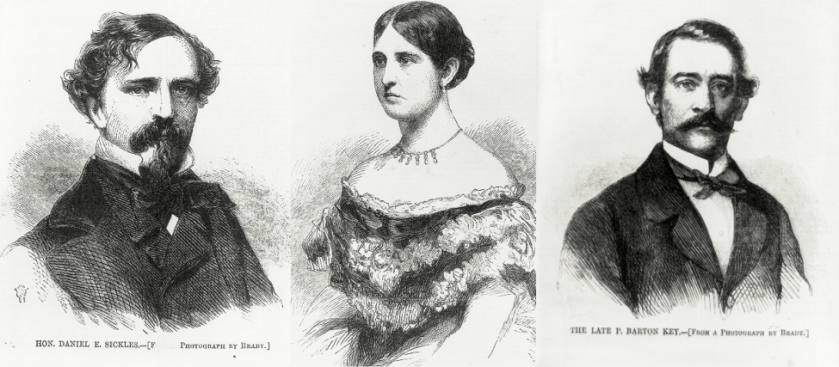
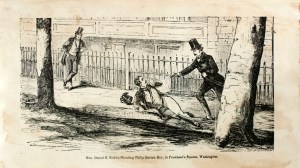 Carrying on with a known prostitute was one thing, but the Mrs. having an affair with a United States District Attorney, was quite another.
 Sickles donated his leg to the newly founded Army Medical Museum in Washington, DC, along with a visiting card marked, “With the compliments of Major General D.E.S.” He visited his leg for several years thereafter, on the anniversary of the amputation.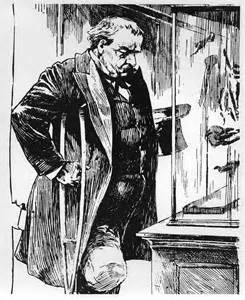


 Richthofen chased the rookie Canadian pilot Wilfred “Wop” May behind the lines on April 21, 1918, when he found himself under attack. With a squadron of Sopwith Camels firing from above and anti-aircraft gunners on the ground, he was shot once through the chest with a .303 round, managing to land in a beet field before dying several minutes later. He was still wearing his pajamas, under his flight suit.


 Founded by Byzas, son of the Greek King Nisos circa 657BC, the earliest days of Byzantium are clouded by legend. Located on the easternmost peninsula where Europe becomes Asia, the city is surrounded on three sides, by water.
 21-year-old Mehmed II began the final siege of Constantinople on April 6, 1453. Commanding 120,000 attackers with an estimated 126 ships, Ottoman forces faced 7,000 to 12,000 Christian defenders with 26 ships, defending almost 3½ miles of land wall and another 9 miles of sea wall facing the Sea of Marmara and the Golden Horn.
 Mehmed placed his cannon into positions facing the wall. The largest, the monster “Basilica” was 27′ long, weighed 18 tons, and required a team of 60 oxen and 400 men to move it. It had a diameter of 30″, large enough for a grown man to crawl inside. Its 150lb powder charge was capable of hurling a half-ton stone ball a distance of over a mile. While the weapon did catastrophic damage to the city walls, it took over three hours to reset after firing, and frantic efforts by the defenders were able to repair much of the damage between shots.
 Serbian Sappers dug tunnels under the city, intending to undermine and blow out the walls, but Christian counter-miners broke into the tunnels and attacked them with swords, axes and Greek fire, an early form of napalm.
 These were the cannon fodder, their purpose to wear down the defenders in preparation for attacks by professional soldiers, the Bashi-Bazouks. Then came the Janissaries, Christian slave warriors raised from childhood to be the elite of the Ottoman army, Attackers stormed the walls by the tens of thousands, while Ottoman ships pounded the city from the harbor.


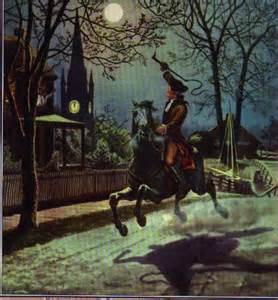 Boston Patriots had been preparing for such an event. Sexton Robert John Newman and Captain John Pulling carried two lanterns to the steeple of the Old North church, signaling that the Regulars were crossing the Charles River to Cambridge. Dr. Joseph Warren ordered Paul Revere and Samuel Dawes to ride out and warn surrounding villages and towns, the two soon joined by a third rider, Samuel Prescott. It was Prescott alone who would make it as far as Concord, though hundreds of riders would fan out across the countryside before the night was through.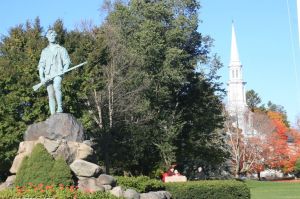
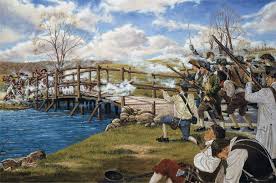 Some British soldiers marched 35 miles over those two days, their final retreat coming under increasing attack from militia members firing from behind stone walls, buildings and trees. One taking up such a firing position was Samuel Whittemore of Menotomy Village, now Arlington Massachusetts. At 80 he was the oldest known combatant of the Revolution.


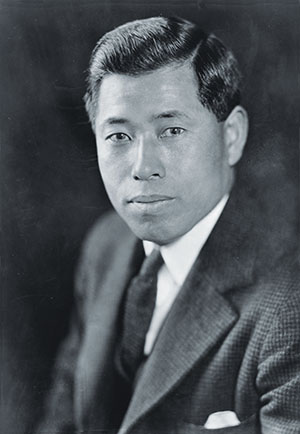 Isoroku Takano was born in Niigata, the son of a middle-ranked samurai of the Nagaoka Domain. His first name “Isoroku”, translating as “56”, refers to his father’s age at the birth of his son. At this time, it was common practice that samurai families without sons would “adopt” suitable young men, in order to carry on the family name, rank, and the income that came with it. The young man so adopted would carry the family name. So it was that Isoroku Takano became Isoroku Yamamoto in 1916, at the age of 32.
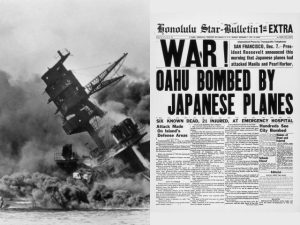 Many believed that Yamamoto’s career was finished when his old adversary Hideki Tōjō ascended to the Prime Ministership in 1941. Yet there was none better to run the combined fleet. When the pro-war faction took control of the Japanese government, he bowed to the will of his superiors. It was Isoroku Yamamoto who was tasked with planning the attack on Pearl Harbor.
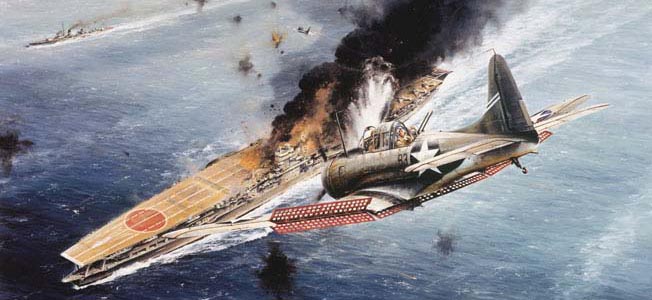 American carrier based Torpedo bombers were slaughtered in their attack, with 36 out of 42 shot down. Yet Japanese defenses had been caught off-guard, their carriers busy rearming and refueling planes when American dive-bombers arrived.
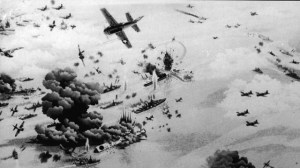 Midway was a disaster for the Imperial Japanese navy. The carriers Akagi, Kaga, Soryu and Hiryu, the entire strength of the task force, went to the bottom. The Japanese also lost the heavy cruiser Mikuma, along with 344 aircraft and 5,000 sailors. Much has been made of the loss of Japanese aircrews at Midway, but two-thirds of them survived. The greater long term disaster, may have been the loss of all those trained aircraft mechanics and ground crew who went down with their carriers.
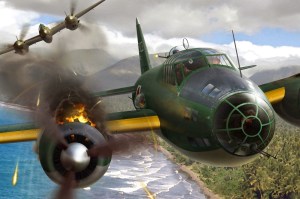 tour throughout the South Pacific. US naval intelligence intercepted and decoded his schedule. The order for “Operation Vengeance” went down the chain of command from President Roosevelt to Secretary of the Navy Frank Knox to Naval Operations Admiral Ernest King to Admiral Chester Nimitz at Pearl Harbor. Sixteen Lockheed P-38 Lightnings, the only fighters capable of the ranges involved, were dispatched from Guadalcanal on April 17 with the order: “Get Yamamoto”.
 intercepted over Rabaul on April 18, 1943. Knowing only that his target was “an important high value officer”, 1st Lieutenant Rex Barber opened up on the first Japanese transport until smoke billowed from its left engine. Yamamoto’s body was found in the wreckage the following day with a .50 caliber bullet wound in his shoulder, another in his head. He was dead before he hit the ground.


 Castro proclaimed his administration to be an example of “direct democracy”, and dismissed the need for elections. The Cuban people could assemble demonstrations and express their democratic will to him personally, he said. Who needs elections?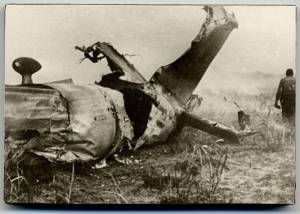
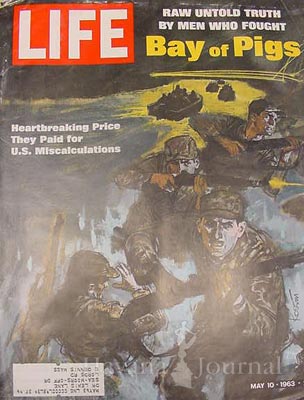 Kennedy was finally persuaded to authorize unmarked US fighter jets from the aircraft carrier Essex to provide escort cover for the invasion’s B-26 bombers, most of which were flown by CIA personnel in support of the ground invasion. Fighters missed their rendezvous by an hour, due to a misunderstanding about time zones. Unescorted bombers are easy targets, and two of them were shot down with four Americans killed. Fighting ended on April 20, 1961 in what had become an unmitigated fiasco.

 President James Buchanan attempted to reinforce and resupply Anderson, via the unarmed merchant vessel “Star of the West”. Shore batteries opened up on the effort on January 9, 1861, effectively trapping Anderson and his garrison inside the only federal property in the vicinity.


 Charleston Mercury Newspaper, offered to personally eat the bodies of all the slain in the coming conflict. Not wanting to be outdone, former Senator James Chesnut, Jr. said “a lady’s thimble will hold all the blood that will be shed,” promising to personally drink any that might be spilled.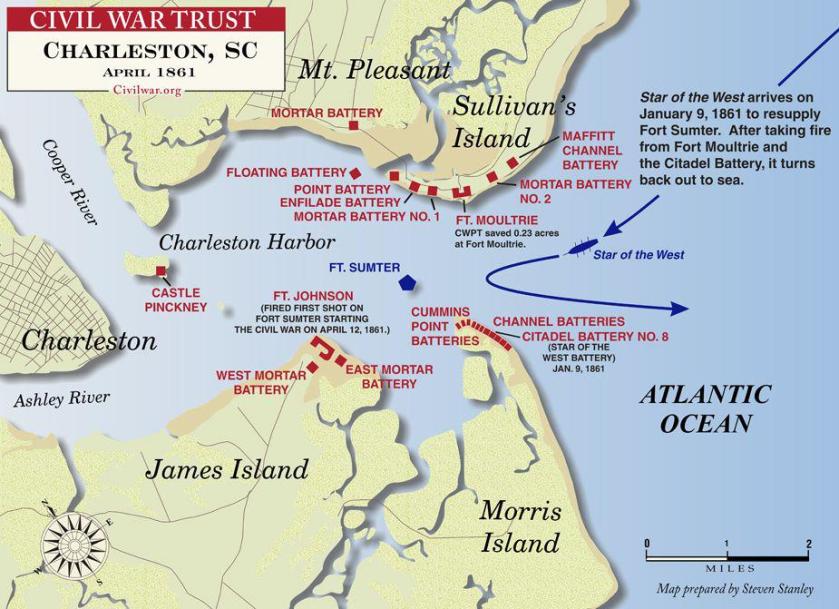


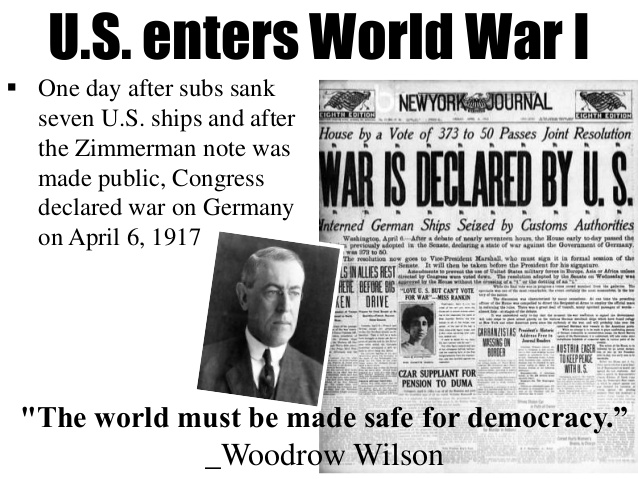
 In the early days of WWI, Imperial Germany attempted to comply with standards of maritime warfare, as established by the Hague Conventions of 1899 and 1907.
 The “Zimmermann Telegram” was intercepted and decoded by British intelligence and revealed to the American government on February 24. The contents of the message outraged American public opinion and helped generate support for the United States’ declaration of war.

 Historical Easter Eggs - Today in History
You must be logged in to post a comment.