
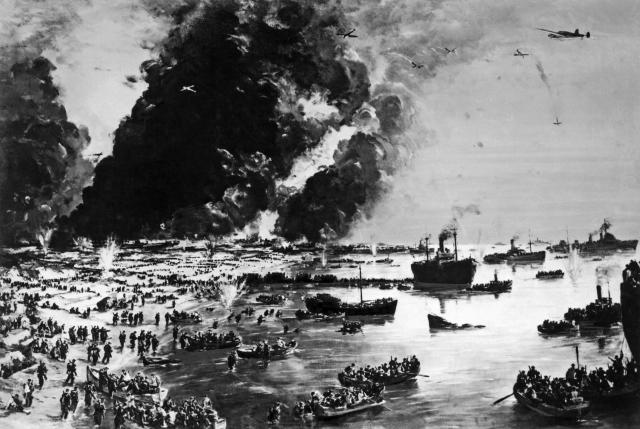
The Nazi conquest of Europe began with the Sudetenland in 1938, the border districts of Bohemia, Moravia, and German speaking parts of Czechoslovakia. Within two years, every major power on the European mainland was either neutral, or under Nazi occupation.
The island nation of Great Britain alone escaped occupation, but its armed forces were shattered and defenseless in the face of the German war machine.
 In May of 1940 the British Expeditionary Force and what remained of French forces occupied a sliver of land along the English Channel. Field Marshall Gerd von Rundstedt called a halt of the German armored advance on May 24, while Hermann Göring urged Hitler to stop the ground assault, let the Luftwaffe finish the destruction of Allied forces. On the other side of the channel, Admiralty officials combed every boatyard they could find for boats to ferry their people off of the beach.
Hitler ordered his Panzer groups to resume their advance on May 26, while a National Day of Prayer was declared at Westminster Abbey. That night Winston Churchill ordered “Operation Dynamo”. One of the most miraculous evacuations in military history had begun from the beaches of Dunkirk.
The battered remnants of the French 1st Army fought a desperate delaying action against the advancing Germans. They were 40,000 men against seven full divisions, 3 of them armored. They held out until May 31 when, having run out of food and ammunition, the last 35,000 finally surrendered. Meanwhile, a hastily assembled fleet of 933 vessels large and small began to withdraw the broken army from the beaches.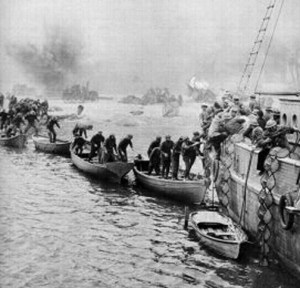
Larger ships were boarded from piers, while thousands waded into the surf and waited in shoulder deep water for smaller vessels. They came from everywhere: merchant marine boats, fishing boats, pleasure craft, lifeboats and tugs. The smallest among them was the 14’7″ fishing boat “Tamzine”, now in the Imperial War Museum.
A thousand copies of navigational charts helped organize shipping in and out of Dunkirk, as buoys were laid around Goodwin Sands to prevent strandings. Abandoned vehicles were driven into the water at low tide, weighted down with sand bags and connected by wooden planks, forming makeshift jetties.


7,669 were evacuated on May 27, the first full day of the evacuation. By day 9 a total of 338,226 soldiers had been rescued from the beach. The “Miracle of Dunkirk” would remain the largest such waterborne evacuation in history, until September 11, 2001.
It all came to an end on June 4. Most of the light equipment and virtually all the heavy stuff had to be left behind, just to get what remained of the allied armies out alive. But now, with the United States still the better part of a year away from entering the war, the allies had a fighting force that would live to fight on. Winston Churchill delivered a speech that night to the House of Commons, calling the events in France “a colossal military disaster”. “[T]he whole root and core and brain of the British Army”, he said, had been stranded at Dunkirk and seemed about to perish or be captured. In his “We shall fight on the beaches” speech of June 4, Churchill hailed the rescue as a “miracle of deliverance”.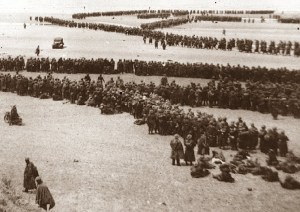
On the home front, thousands of volunteers signed up for a “stay behind” mission in the weeks that followed. With German invasion all but imminent, their mission was to go underground and to disrupt and destabilize the invaders in any way they could. They were to be the British Resistance, a guerrilla force reportedly vetted by a senior Police Chief so secret, that he was to be assassinated in case of invasion to prevent membership in the units from being revealed.
Participants of these auxiliaries were not allowed to tell their families, what they were doing or where they were. Bob Millard, who passed in 2014 at the age of 91, said that they were given 3 weeks’ rations, and that many were issued suicide pills in case of capture. Even Josephine, his wife of 67 years, didn’t know a thing about it until the auxiliaries’ reunion in 1994. “You just didn’t talk about it, really”, he said. “As far as my family were aware I was still in the Home Guard. It was all very hush hush. After the war, it was water under the bridge”.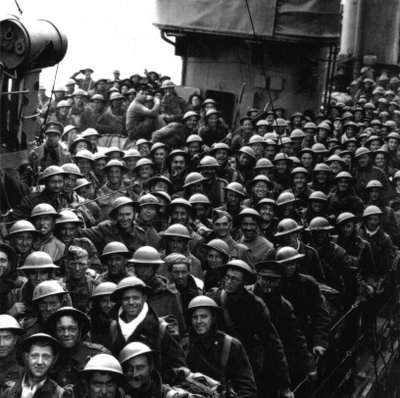
The word “Cenotaph” literally translates as “Empty Tomb”, in Greek. Every year since 1919 and always taking place on the Sunday closest to the 11th day of the 11th month, the Cenotaph at Whitehall is the site of a remembrance service, commemorating British and Commonwealth servicemen and women who died in 20th century conflicts. Since WWII, the march on the Cenotaph includes members of the Home Guard and the “Bevin Boys”, the 18-25 year old males conscripted to serve in England’s coal mines. In 2013, the last surviving auxiliers joined their colleagues, proudly marching past the Cenotaph for the very first time.
Historians from the Coleshill Auxiliary Research Team (CART) had been trying to do this for years.
CART founder Tom Sykes said: “After over 70 years of silence, the veterans of the Auxiliary Units and Special Duties Section, now more than ever, deserve to get the official recognition that has for so long been lacking. ‘They were, in this country’s hour of need, willing to give up everything, families, friends and ultimately their lives in order to give us a fighting chance of surviving”.


 Hathcock developed Multiple Sclerosis in his later years, and passed away on February 23, 1999. He was decorated with the Silver Star, the Purple Heart and Navy and Marine Corps Commendation Medal. The honor he would perhaps treasure most, was that of having a rifle named after him, a variant of the Springfield Armory M21 called the M25 “White Feather”.


 The bizarre and hideous acts of cruelty that Mengele performed in the name of “science” are beyond the scope of this essay, but seven dwarves didn’t come along every day. The Angel of Death treated the Ovitz siblings differently than other camp inmates.


 It was literally “out of the blue”, when the first wave of enemy aircraft arrived at 7:48 local time, December 7, 1941. 353 Imperial Japanese warplanes approached in two waves out of the southeast, fighters, bombers, and torpedo planes, across Hickam Field and over the waters of Pearl Harbor. Tied in place and immobile, the eight vessels moored at “Battleship Row” were easy targets.


 USS Oklahoma was designed to fight at the most extreme ranges expected by gunnery experts. Commanded by Charles B. McVay, Jr., father of the ill-fated skipper of the USS Indianapolis Charles Butler McVay III, Oklahoma’s role in WW1 was limited, due to the unavailability of oil in major theaters of operation. Notable among her exploits of the Great War, were the memorable fist fights that crew members got into with Sinn Féin members in Berehaven, and casualties sustained during the


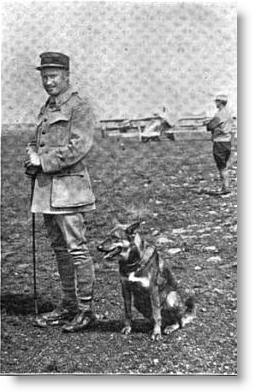
 Escadrille N.124 changed its name in December 1916, adopting that of a French hero of the American Revolution. Marie-Joseph Paul Yves Roch Gilbert du Motier, Marquis de Lafayette. Five French officers commanded a core group of 38 American volunteers, supported by all-French mechanics and ground crew. Rounding out the Escadrille were the unit mascots, the African lions Whiskey and Soda.
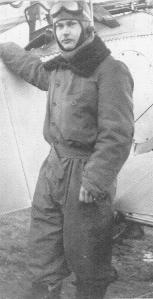
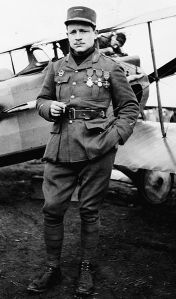


 VE Day wasn’t the end of WWII, only the end of the war in Europe. Fighting in the Pacific would continue until the Japanese surrender on the 15 August 1945, the date celebrated as VJ Day.

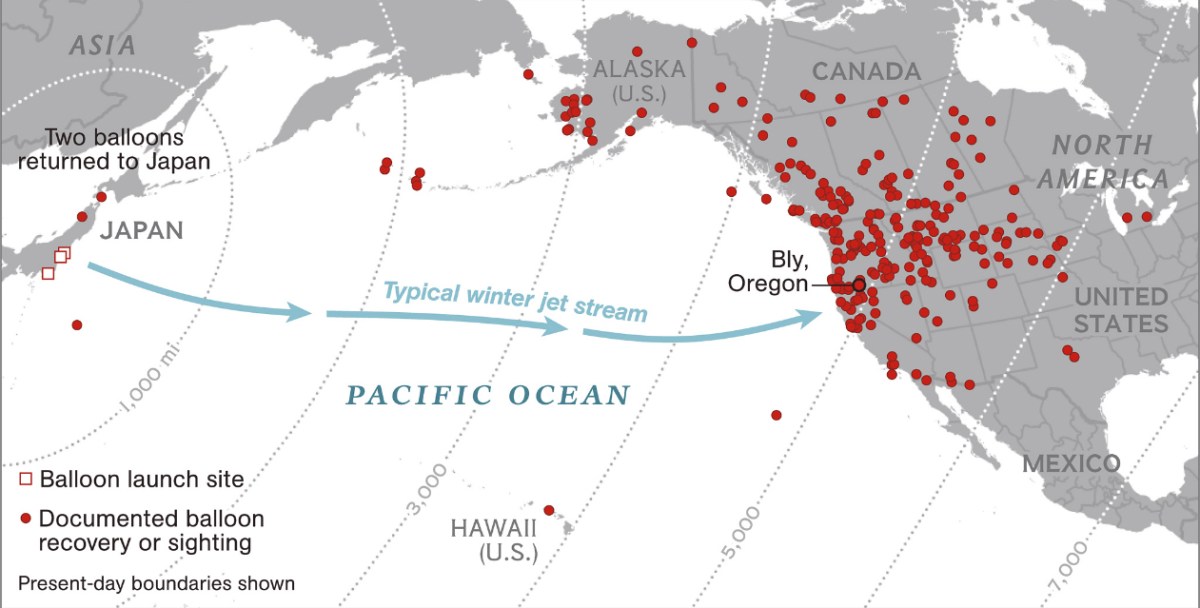
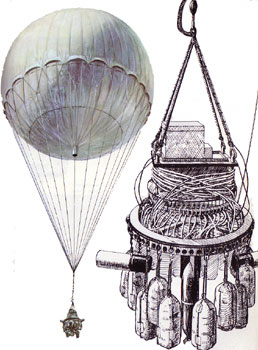 In the latter half of WWII, Imperial Japanese military thinkers conceived the fūsen bakudan or “fire balloon”, a hydrogen filled balloon device designed to ride the jet stream, using sand ballast and a valve system to navigate the weapon system onto the North American continent.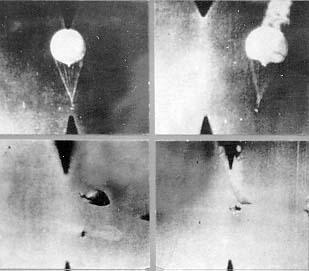


 Itter Castle appeared in the land records of the Austrian Tyrol as early as 1240. When Germany annexed Austria in 1938, Schloss Itter was first leased and later requisitioned outright by the German government, for unspecified “Official use”.

 It was late afternoon as the convoy left for Castle Itter. Leaving Boche Buster and a few Infantry to guard the largest bridge into town. What remained of the convoy fought its way through its last SS roadblock in the early evening, roaring across the last bridge and lurching to a stop in front of Itter’s gate as night began to fall. Itter’s prisoners looked on in dismay. They had expected a column of American tanks and a heavily armed infantry force. What they had here, was a single tank with seven Americans, and a truckload of armed Germans.
 concentration camp administration for the Third Reich and some of the most fanatical soldiers of WWII. Even at this late date SS units were putting up fierce resistance across northern Austria. 100-150 of them attacked on the morning of May 5. Fighting was furious around Castle Itter, the one Sherman providing machine-gun fire support until it was destroyed by a German 88mm gun. By early afternoon Lee was able to get a desperate plea for reinforcements through to the 142nd Infantry, before being cut off. Aware that he’d been unable to give complete information on the enemy’s troop strength and disposition, Lee accepted Jean Borotra’s gallant offer of assistance.
 Literally vaulting over the castle wall, the tennis star ran through a gauntlet of SS strongpoints and ambushes to deliver his message, before donning an American uniform to help fight through to the castle’s defenders. The relief force arrived at around 4pm, as defenders were firing their last ammunition.

 McCrae fought in one of the most horrendous battles of WWI, the second battle of Ypres, in the Flanders region of Belgium. Imperial Germany launched one of the first chemical attacks in history, attacking the Canadian position with chlorine gas on April 22, 1915. The Canadian line was broken but quickly reformed, in near-constant fighting that lasted for over two weeks.


 The vivid red flower blooming on the battlefields of Belgium, France and Gallipoli came to symbolize the staggering loss of life in that war. Since then, the red poppy has become an internationally recognized symbol of remembrance of the lives lost in all wars. I keep a red poppy pinned to my briefcase and another on the visor of my car. A reminder that no free citizen of a self-governing Republic, should ever forget where we come from. Or the prices paid by our forebears, to get us here.


 Be that as it may, the cause of death was difficult to detect, the condition of the corpse close to that of someone who had died at sea, of hypothermia and drowning. The dead man’s parents were both deceased, there were no known relatives and the man died friendless. So it was that Glyndwr Michael became the Man who Never Was.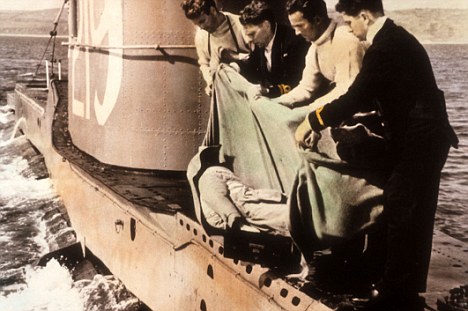
 The non-existent Major William Martin was buried with full military honors in the Huelva cemetery of Nuestra Señora. The headstone reads:
 Historical Easter Eggs - Today in History
You must be logged in to post a comment.