July 30, 1916 Black Tom

The explosion at Black Tom was the most spectacular, but by no means the only such attack. The archives at cia.gov reports that “[B]etween 1915 and spring 1917, 43 American factories suffered explosions or fires of mysterious origin, in addition to the bombs set on some four dozen ships carrying war supplies to the Allies”.

In the early months of World War I, Britain’s Royal Navy largely swept the seas of the Kaiser’s surface ships and blockaded ports in Germany. The United States was neutral at the time, and more than a hundred German ships sought refuge in American harbors.

The blockade made it impossible for the Central Powers of Germany and Austria-Hungary to import war materiel from overseas, while Great Britain, France, and Russia continued to buy products from US farms and factories. American businessmen were happy to sell to any foreign customer who had the cash, but for all intents and purposes, such trade was limited to the allies.
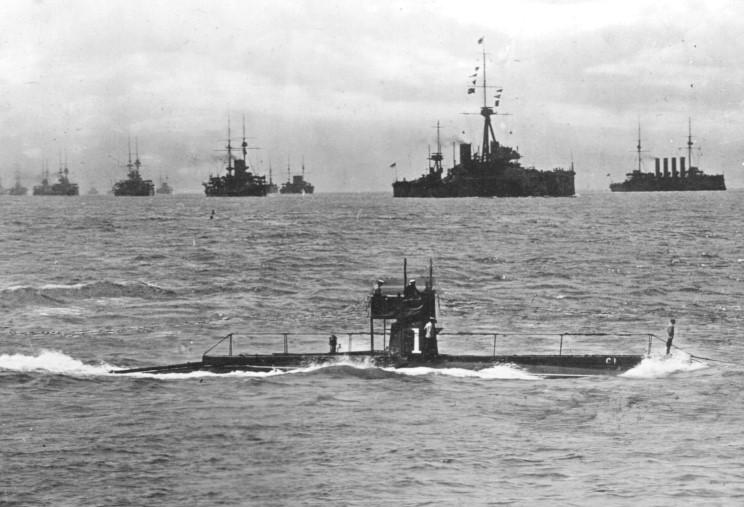
British-blockadeTo the Central Powers, such trade had the sole purpose of killing their boys on the battlefields of Europe.

The first and most overt reaction from the Kaiser came in the form of unrestrained submarine warfare, when even vessels flying the flags of neutral countries were attacked. Less apparent at the time, was the covert campaign of sabotage carried out by German agents on US soil.

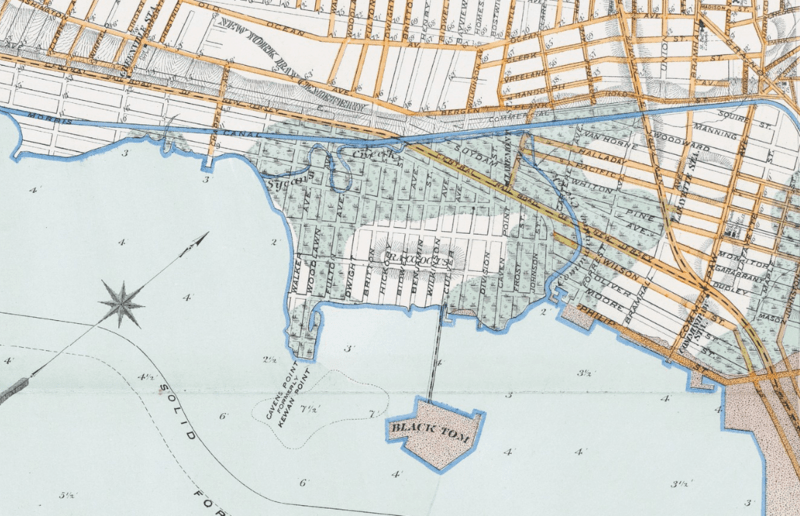
“Black Tom” was originally an island in New York Harbor, next to Liberty Island. So called after a former resident, by WWI, landfill had expanded the island to become part of Jersey City. The area contained a mile-long pier with warehouses and rail lines operated by the Lehigh Valley Railroad, and served as a major hub in the trade of war materiel to the allies.
Sanitary_&_Topographical_Map_of_Hudson_County,_N.J
Black Tom Island, 1880

On July 30, 1916, the Black Tom terminal had over two million pounds of small arms and artillery ammunition in freight cars, and one hundred thousand pounds of TNT on a nearby Barge.

Guards discovered a series of small fires around 2:00am. Some tried to put them out while others fled, fearing an explosion. The first and loudest blast took place at 2:08am, a detonation so massive as to be estimated at 5.5 on the Richter scale. People were awakened from Maryland to Connecticut in what many thought was an earthquake. The Brooklyn Bridge shook and the walls of Jersey City’s municipal building were cracked as shrapnel flew through the air. Windows broke as far as 25 miles away, while fragments embedded themselves in the clock tower at the Jersey Journal building in Journal Square, over a mile away. The clock stopped at 2:12 am.
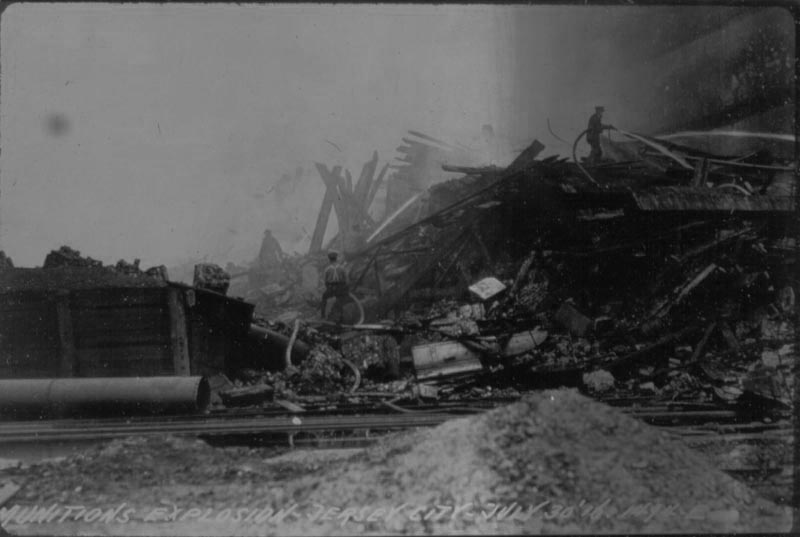
Black_Tom_explosion_-_firefighters_-_1916
Firefighters were unable to fight the fires until the bullets and shrapnel stopped flying. Photo: Wikimedia Commons

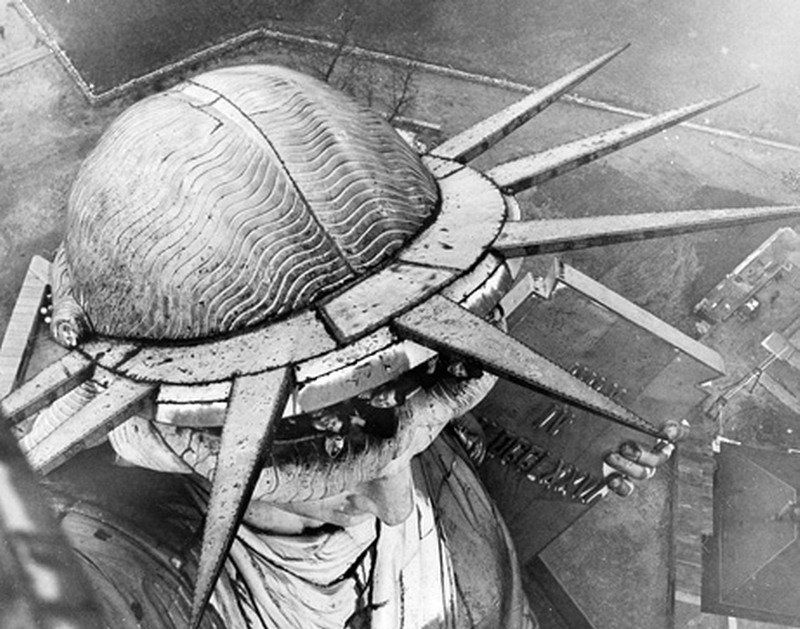
Stained Glass windows were shattered at St. Patrick’s Church, and Ellis Island was evacuated to Manhattan. Damage to the skirt and torch carried by the Statue of Liberty alone, came to over $2¼ million in 2017 dollars. To this day, the ladder to “Lady Liberty’s” torch, remains off limits to visitors.

The enormous vaulted ceiling of Ellis Island’s main hall, collapsed.  According to one Park officer, damage to the Ellis Island complex came to $500,000 “half the one million dollars it cost the government to build the facility.”
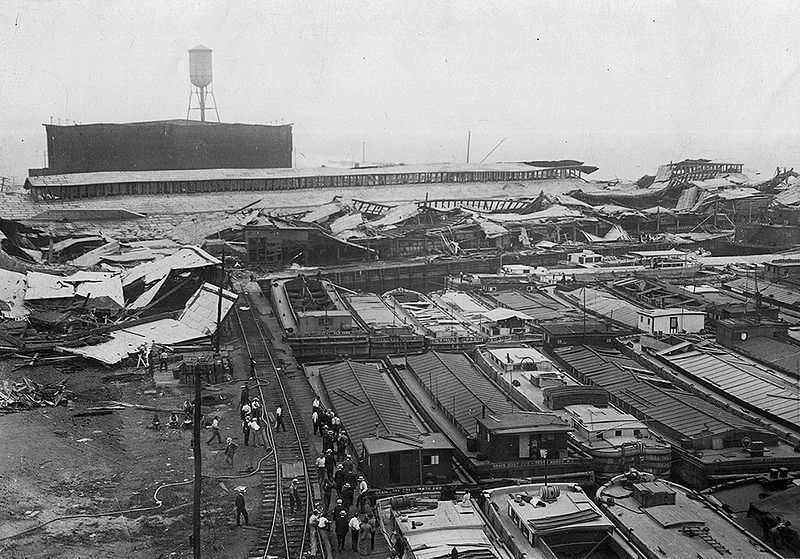
Wrecked_warehouses_and_scattered_debris_after_the_Black_Tom_Explosion,_1916Known fatalities in the explosion included a Jersey City police officer, a Lehigh Valley Railroad Chief of Police, a ten week old infant, and the barge captain.

The explosion at Black Tom was the most spectacular, but by no means the only such attack. The archives at cia.gov reports that “[B]etween 1915 and spring 1917, 43 American factories suffered explosions or fires of mysterious origin, in addition to the bombs set on some four dozen ships carrying war supplies to the Allies”.

Responsibility for the Black Tom explosion was never proven, conclusively. Early suspicions centered on accidental causes. Legal wranglings would climb the judicial ladder all the way to the United States Supreme Court, and continue well into the second World War. Anna Rushnak, an elderly Czechoslovak immigrant who ran a four-bits-a-night boarding house in Bayonne was thrown from her bed by the explosion, to find then-23-year-old Michael Kristoff sitting on the edge of his bed, mumbling “What I do? What I do?”
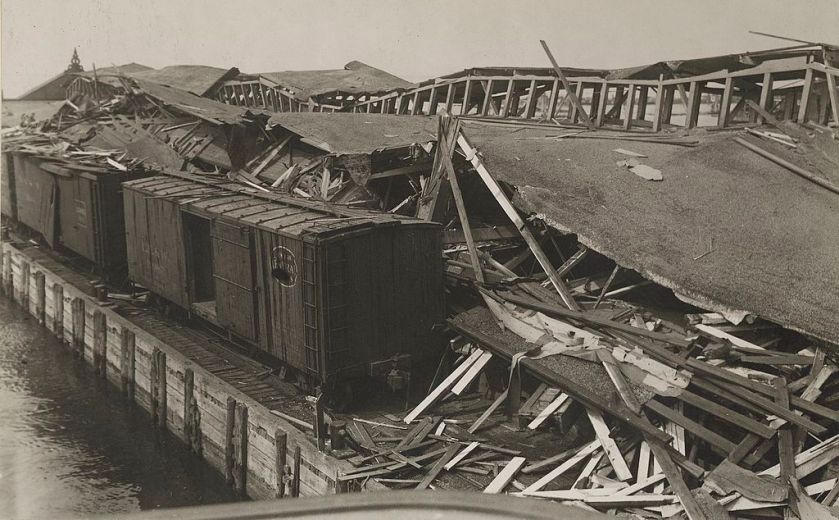
View_of_the_debris_of_the_Lehigh_Valley_pier_after_Black_Tom_explosion_(cropped)
Lehigh Valley Railroad pier, after the explosion

Kristoff, a Slovakian subject of the Austro-Hungarian Empire, (Germany’s principle ally in WW1), was arrested by Bayonne Police and interrogated, and judged to be “insane but harmless.”

In 1922, the Lehigh Valley Railroad was buried in lawsuits, and looking to fix blame on a German act of sabotage. Kristoff came into the judicial spotlight once again, and located in an Albany jail where he was serving time for theft. Kristoff admitted working for the Germans “for a few weeks” back in 1916, but was released before the claim could be investigated. Kristoff was finally traced to a pauper’s grave in 1928 and there ends his story, yet that ‘insane but harmless’ label may be open to question. Papers carried on the body exhumed from that potter’s field were indeed those of Michael Kristoff, but the dental records didn’t match.
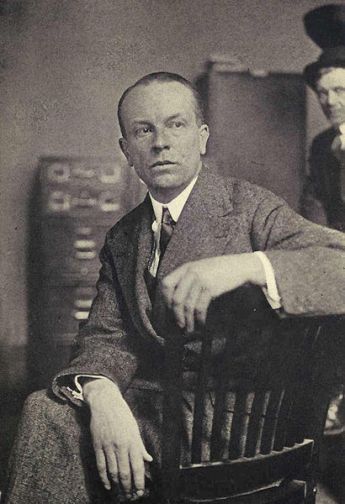
410px-Franz_von_Rintelen
“German Master Spy Franz Von Rintelen and his “pencil bomb” were responsible for acts of sabotage in the United States during World War I”. H/T Smithsonian

Meanwhile, suspicion fell on the German-born naturalized citizen Kurt Jahnke who ran sabotage operations for the German Admiralty out of bases in San Francisco and Mexico City, and his assistant, Imperial German Navy Lieutenant Lothar Witzke. Witzke was arrested on February 1, 1918 in Nogales, Arizona and convicted by court martial. He was sentenced to death, though the war was over before sentence could be carried out. President Wilson later commuted the sentence, to life.

By 1923, most countries were releasing POWs from the “Great War”, including spies. A report from Leavenworth prison shows Witzke heroically risking his life, entering a boiler room after an explosion and probably averting disaster. It may be on that basis that he was finally released. Lieutenant Lothar Witzke was pardoned by President Calvin Coolidge on November 22, 1923, and deported to Berlin, where a grateful nation awarded him the Iron Cross, 1st and 2nd Class.

The U.S.–German Peace Treaty of 1921 established the German-American Mixed Claims Commission, which declared in 1939 that Imperial Germany had, in fact been responsible and awarded a judgement of $50 million.  The Nazi government refused to pay and the matter was finally settled in 1953, with a judgement of $95 million (including interest) against the Federal Republic of Germany. The final payment was made in 1979.

The Black Tom explosion and related acts of pro-German espionage resulted in the Federal Espionage Act signed into law in June 1917, creating, among its other provisions, a “Bureau of Investigation” under the United States Department of Justice.  Now, nothing remains of the Black Tom terminal or the largest foreign terrorist attack on American soil until 9/11, save for a plaque, as seen in the photograph below.  That, and the FBI.

Feature image, top of page: Shrapnel damage can be seen in this image of the Statue of Liberty
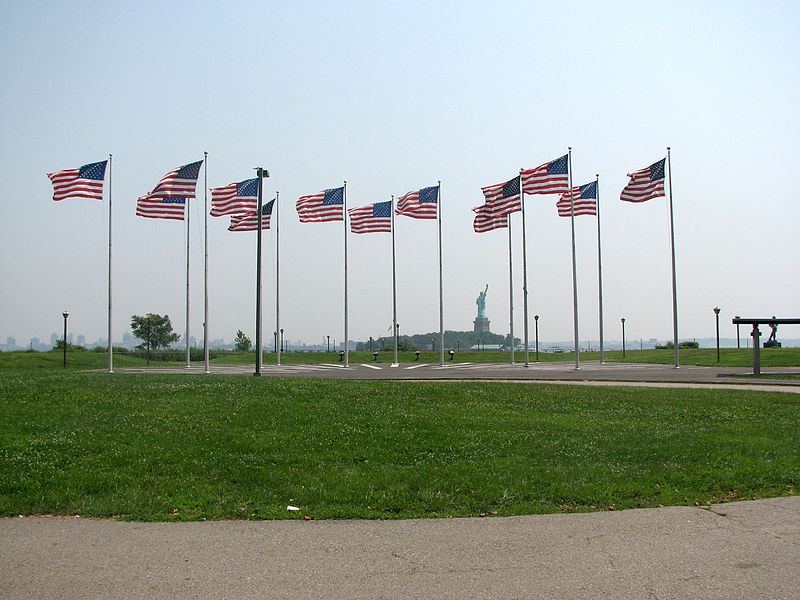
800px-StatueOfLibertyFromBlackTomIslandToday
View of the Statue of Liberty from the site of the Black Tom explosion
If you enjoyed this “Today in History”, please feel free to re-blog, “like” & share on social media, so that others may find and enjoy it as well. Please click the “follow” button on the right, to receive email updates on new articles.  Thank you for your interest, in the history we all share.


July 29, 1967 Inferno at Sea

Damage Control Chief Gerald Farrier “simply disappeared” in the first of a dozen or more explosions, in the first few minutes of the fire.  By the third such explosion, Damage Control Team #8 was wiped out.

The Super Carrier USS Forrestal departed Norfolk in June 1967, with a crew of 552 officers and 4,988 enlisted men. Sailing around the horn of Africa, she stopped briefly at Leyte Pier in the Philippines, before sailing on to “Yankee Station” in the South China Sea, arriving on July 25.

Before the cruise, damage control firefighting teams were shown training films of navy ordnance tests, demonstrating how a 1000-lb bomb could be directly exposed to a jet fuel fire for a full 10 minutes. Tests were conducted using the new Mark 83 bomb, featuring a thicker, heat resistant wall compared with older munitions, and “H6” explosive, designed to burn off at high temperatures, like an enormous sparkler.

Along with Mark 83s, ordnance resupply had included sixteen AN-M65A1 “Fat Boy” bombs, Korean war era surplus intended to be used on the second bombing runs of the 29th.  These were thinner skinned than the newer ordnance, armed with 10+ year-old “Composition B” explosive.  Already far more sensitive to heat and shock than the newer ordnance, composition B becomes more volatile as the explosive ages.  The stuff becomes more powerful as well, as much as 50%, by weight.

250px-Yankee_Station_Location_1These older bombs were way past their “sell-by” date, having spent the better part of the last ten years in the heat and humidity of Subic Bay depots.  Ordnance officers wanted nothing to do with the Fat Boys, with their rusting shells leaking paraffin, and rotted packaging.  Some had production date stamps as early as 1953.

Handlers feared the old bombs might spontaneously detonate from the shock of a catapult takeoff.

In 1967, the carrier bombing campaign was the longest and most intense such effort in US Naval history.   Over the preceding four days, Forrestal had already launched 150 sorties against targets in North Vietnam.  Combat operations were outpacing production, using Mark 35s faster than they could be replaced.

When Forrestal met the ammunition ship Diamond Head on the 28th, the choice was to take on the Fat Boys, or cancel the second wave of attacks scheduled for the following day.

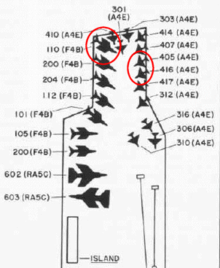
220px-CVA-59_fire_aft_deck_planIn addition to the bombs, ground attack aircraft were armed with 5″ “Zuni” unguided rockets, carried four at a time in under-wing rocket packs.   Known for electrical malfunctions and accidental firing, standard Naval procedure required electrical pigtails to be connected, at the catapult.

Ordnance officers found this slowed the launch rate and deviated from standard procedure, connecting pigtails while aircraft were still, “in the pack”. The table was set, for disaster.

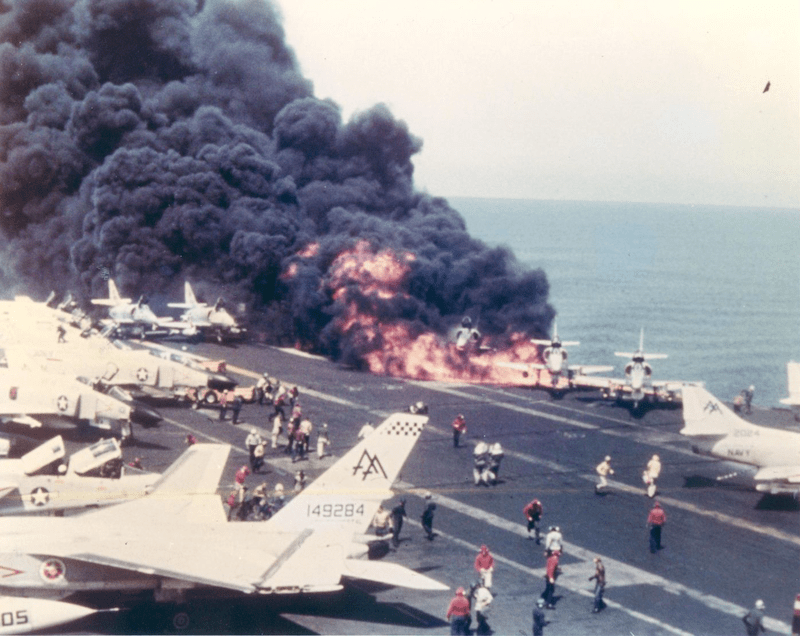
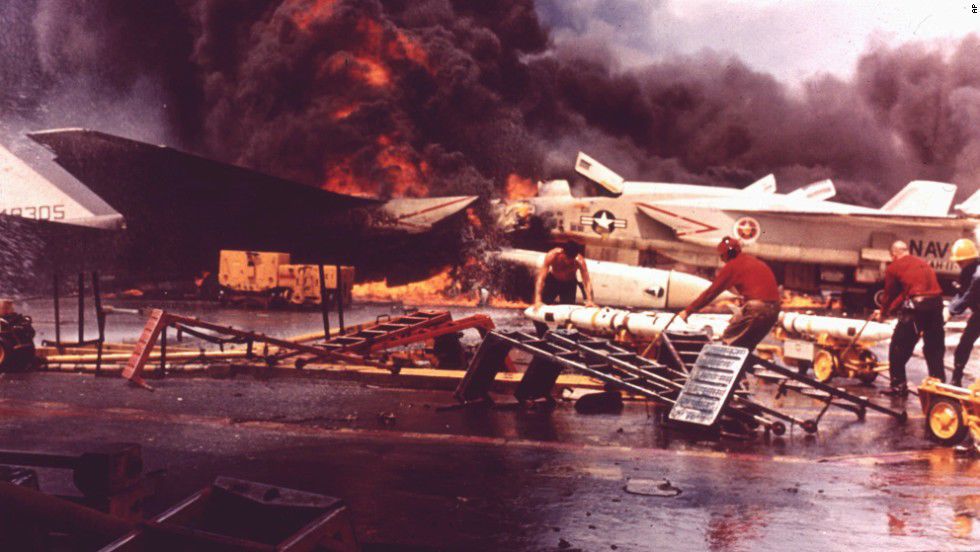
At 10:50-am local time, preparations were underway for the second strike of the day.  Twenty-seven aircraft were on deck, fully loaded with fuel, ammunition, bombs and rockets.  An electrical malfunction fired a Zuni rocket 100′ across the flight deck, severing the arm of one crewmember and into the 400-gallon external fuel tank of an A-4E Skyhawk, awaiting launch.

The rocket’s safety mechanism prevented the weapon from exploding, but the A-4’s torn fuel tank was spewing flaming jet fuel onto the deck. Other tanks soon overheated and exploded, adding to the conflagration.

800px-USS_Forrestal_A-4_Skyhawk_burning.png

In WW2, virtually all American carrier crew were trained firefighters.  This changed over time and, by 1967, the United States Navy had adopted the Japanese method at Midway, relying instead on specialized and highly trained damage control and fire fighting teams.

Damage Control Team #8 came into action immediately, as Chief Gerald Farrier spotted one of the Fat Boy bombs turning cherry red in the flames.  Farrier  was working without benefit of protective clothing, there had been no time.  Farrier held his PKP fire extinguisher on the 1000-lb bomb, hoping to keep it cool enough to prevent its cooking off as his team brought the conflagration under control.

USS_Forrestal_fire_1_1967

Firefighters were confident that their ten-minute window would hold as they fought the flames, but the composition B explosives proved as unstable as the ordnance people had feared.  Farrier “simply disappeared” in the first of a dozen or more explosions, in the first few minutes of the fire.  By the third such explosion, Damage Control Team #8 was wiped out.

Future United States Senator John McCain managed to scramble out of his cockpit and down the fuel probe.  Lieutenant Commander Fred White made it out of his own aircraft a split-second later, but he was killed in that first explosion.

The port quarter of the Forrestal ceased to exist in the violence of the explosions, office furniture thrown to the floor as much as five decks below.  Huge holes were torn into the flight deck while a cataract of flaming jet fuel, some 40,000 US gallons of the stuff, poured through ventilation ducts and into living quarters below.

Ninety-one crew members were killed below decks, by explosion or fire.

800px-USS_Forrestal_explosion_29_July_1967

With trained firefighters now dead or incapacitated, sailors and marines fought heroically to bring the fire under control, though they sometimes made matters worse.  Without training or knowledge of fire fighting, hose teams sprayed seawater, some washing away retardant foam being used to smother the flames.

With the life of the carrier itself at stake, tales of incredible courage, were commonplace. Medical officers worked for hours in the most dangerous conditions imaginable. Explosive ordnance demolition officer LT(JG) Robert Cates “noticed that there was a 500-pound bomb and a 750-pound bomb in the middle of the flight deck… that were still smoking. They hadn’t detonated or anything; they were just setting there smoking. So I went up and defused them and had them jettisoned.” Sailors volunteered to be lowered through the flight decks into flaming and smoked-filled compartments, to defuse live bombs.

The destroyer USS George K. MacKenzie plucked men out of the water as the destroyer USS Rupertus maneuvered alongside for 90 minutes, directing on-board fire hoses at the burning flight and hangar decks.

800px-USS_Repertus_assists_USS_Forrestal

Throughout the afternoon, crew members rolled 250-pound and 500-pound bombs across the decks, and over the side.  The major fire on the flight deck was brought under control within four hours, but fires burning below decks would not be declared out until 4:00am the following day.

Panel 24E of the Vietnam Memorial records the names of 134 crewmen who died in the conflagration. Another 161 were seriously injured.  26 aircraft were destroyed and another 40, damaged.  Damage to the Forrestal itself exceeded $72 million, equivalent to over $415 million today.

Gary Childs of Paxton Massachusetts, my uncle,  was among the hundreds of sailors and marines who fought to bring the fire under control.  Gary was below decks when the fire broke out, leaving moments before his quarters were engulfed in flames. Only by that slimmest of margins did Uncle Gary and an untold number of others escape being #135.

If you enjoyed this “Today in History”, please feel free to re-blog, “like” & share on social media, so that others may find and enjoy it as well. Please click the “follow” button on the right, to receive email updates on new articles.  Thank you for your interest, in the history we all share.
July 28, 1914 Four Horsemen of the Apocalypse

Few could imagine a war in which a single day’s fighting, could produce casualties equal to that of every war of the preceding 100 years, combined. 

In 1869, Germany had yet to come into its own as an independent nation. Forty-five years later, she was one of the Great Powers, of Europe.

Great Powers, 1914

Alarmed by the aggressive growth of her historic adversary, the French government had by that time increased compulsory military service from two years to three, in an effort to offset the advantage conferred by a German population of some 70 million, contrasted with a French population of 40 million.

Joseph Caillaux was a left wing politician, once Prime Minister of France and, by 1913, a cabinet minister under the more conservative administration of French President Raymond Poincare.

Never too discreet with his personal conduct, Caillaux paraded through public life with a succession of women, who were not Mrs Caillaux. One of them was Henriette Raynouard.  By 1911, Madame Raynouard had become the second Mrs Caillaux.

A relative pacifist, many on the French right considered Caillaux to be too “soft” on Germany. One of them was Gaston Calmette, editor of the leading right-wing newspaper Le Figaro, who regularly excoriated the politician.

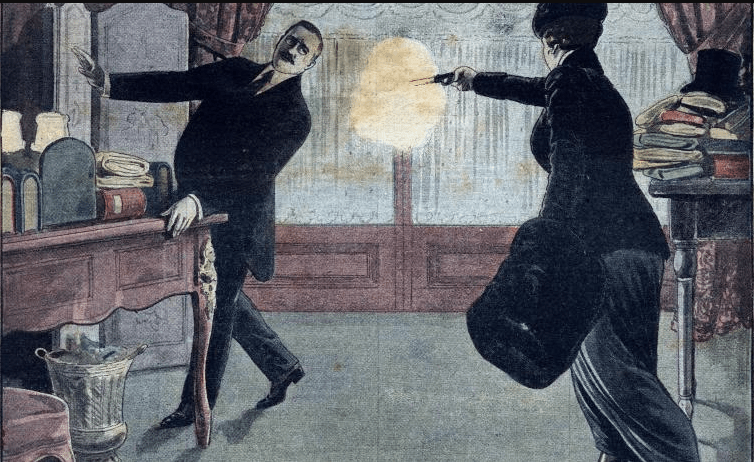
On March 16, 1914, Madame Caillaux took a taxi to the offices of Le Figaro. She waited for a full hour to see the paper’s editor, before walking into his office and shooting him at his desk. Four out of six rounds hit their mark.  Gaston Calmette was dead before the night was through.

Cailloux Affair

It was the crime of the century.  This one had everything: Left vs. Right, the fall of the powerful, and all the salacious details anyone could ever ask for. It was the OJ trial, version 1.0, and the French public was transfixed.

The British public was similarly distracted, by the latest in a series of Irish Home Rule crises.

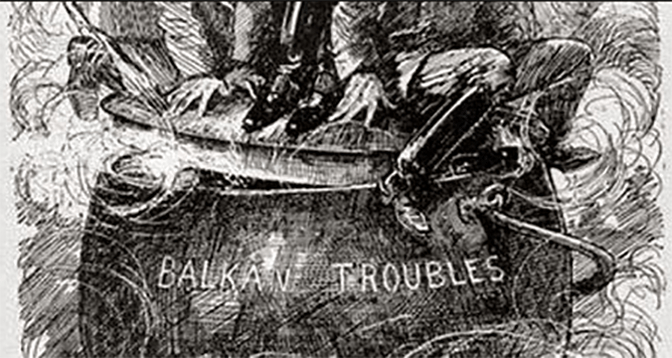
The Austro-Hungarian Empire, a sprawling amalgamation of 17 nations, 20 Parliamentary groups and 27 political parties, desperately needed to bring the Balkan peninsula into line, following the June 28 assassination of the heir apparent to the dual monarchy. That individual Serbians were complicit in the assassination is beyond doubt, but so many government records of the era have disappeared that, it’s impossible to determine official Serbian complicity. Nevertheless, Serbia had to be brought to heel.

Balkan Troubles

Having given Austria his personal assurance of support in the event of war with Serbia, even if Russia entered in support of her Slavic ally, Kaiser Wilhelm of Germany left on a summer cruise in the Norwegian fjords. The Kaiser’s being out of touch for those critical days in July has been called the most expensive maritime disaster in naval history.

The Austro-Hungarian Empire delivered a deliberately unacceptable ultimatum to Serbia on the 23rd, little more that a bald pretext for war.  Czar Nicholas wired Vienna as late as the 27th proposing an international conference concerning Serbia, but to no avail. Austria responded that same day.  It was too late for such a proposal.

The Austro-Hungarian Empire declared war on Serbia the following day, the day on which Madame Caillaux was acquitted of the murder of Gaston Calmette, on the grounds of being a “crime of passion”.

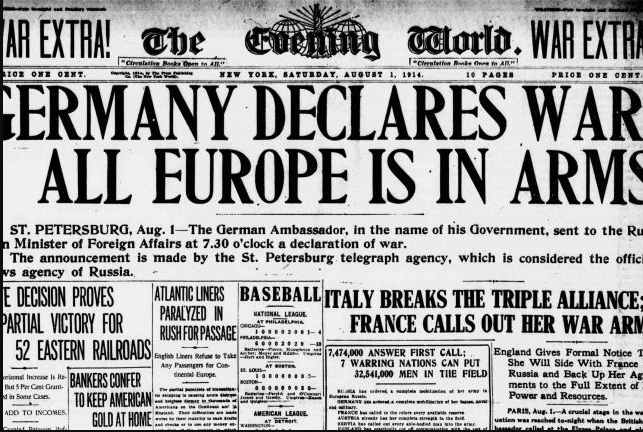
As expected, Russia mobilized in support of Serbia.  For her part, Imperial Germany feared little more than a two-front war, with the “Russian Steamroller” to the east, and the French Republic to the west.  Germany invaded neutral Belgium in pursuit of the one-two punch strategy by which she sought first to defeat France, before turning to face the far larger Russian adversary.

russ-mob

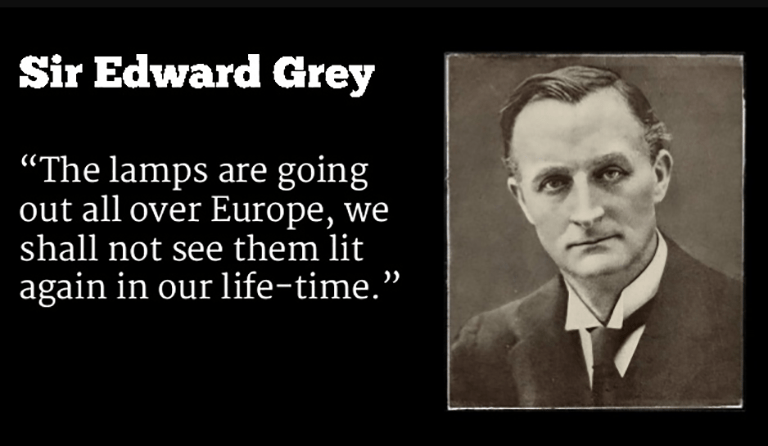
On August 3, British Foreign Secretary Sir Edward Grey announced before Parliament, his government’s intention to defend Belgian neutrality, a treaty obligation German diplomats had dismissed as a “scrap of paper”.

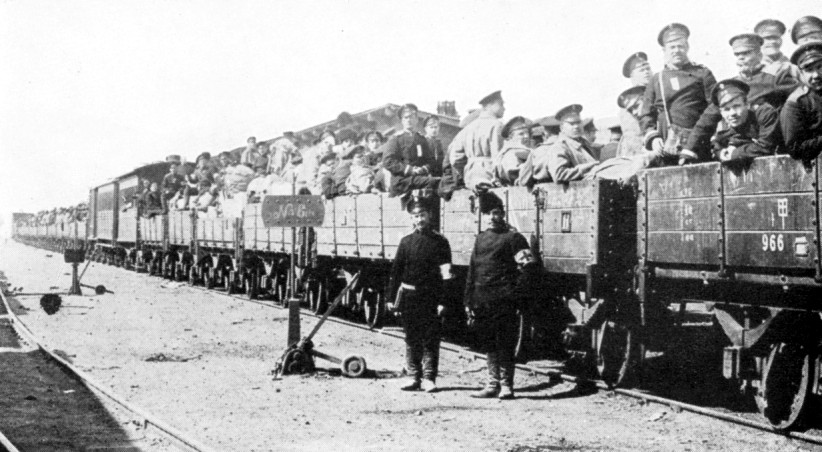
Pre-planned timetables took over – France alone would have 3,781,000 military men under orders before the middle of August, arriving at the western front on 7,000 trains arriving as often as every eight minutes.

Declaration

This time there would be no “Phoney War”, no “Sitzkreig”, as some wags were wont to call the early days of WWII.   Few could imagine a cataclysm to rock a century and beyond, a war in which a single day’s fighting could produce casualties equal to that of every war of the preceding 100 years, combined.  Fewer still understood on this date, one-hundred and four years ago, today.  The four horsemen of the Apocalypse, were only days away.

Sir Edward Grey

If you enjoyed this “Today in History”, please feel free to re-blog, “like” & share on social media, so that others may find and enjoy it as well. Please click the “follow” button on the right, to receive email updates on new articles.  Thank you for your interest, in the history we all share.

July 26 1945 USS Indianapolis

The United States Navy lost over 350 ships to combat operations during WW2.  Not one  resulted in court martial but, on this occasion, someone was going to pay. 

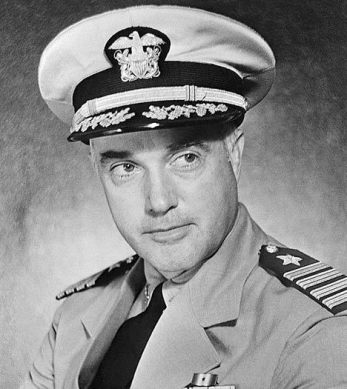
The Portland class heavy cruiser USS Indianapolis set out on its secret mission on July 16, 1945, under the command of Captain Charles Butler McVay III.  She was delivering “Little Boy” to the Pacific island of Tinian, the atomic bomb which would later be dropped on Hiroshima.

Indianapolis made her delivery on July 26, arriving at Guam two days later and then heading for Leyte to take part in the planned invasion of Japan. She was expected to arrive on the 31st.

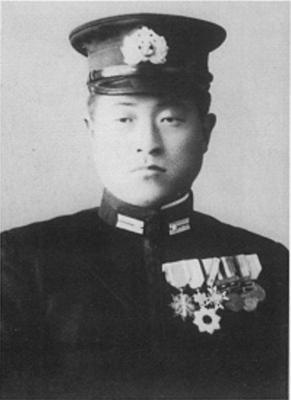
Indianapolis SubThe Japanese submarine I-58, Captain Mochitsura Hashimoto commanding, fired a spread of six torpedoes at the cruiser, two striking Indianapolis’ starboard bow at fourteen minutes past midnight on Monday, July 30. The damage was massive.  Within 12 minutes, the 584-ft, 9,950-ton vessel had rolled over, gone straight up by the stern, and sunk beneath the waves.
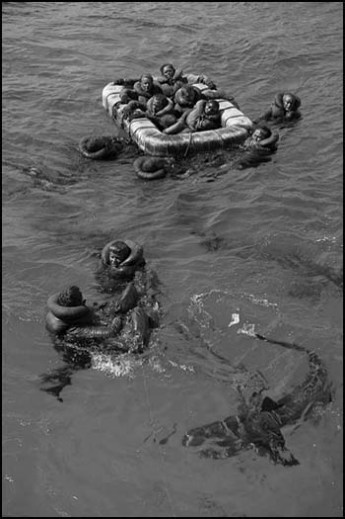
Approximately 300 of Indianapolis’ 1,196-member crew were killed outright, leaving nearly 900 treading water. Many had no life jackets.  There had been no time, and there were few life boats.

indianapolis_2
Caribbean Reef sharks circling the sailors in reenactment scene after USS Indianapolis had been sunk by Japanese submarine. As seen on OCEAN OF FEAR: WORST SHARK ATTACK EVER. H/T photographer: Tim Calver

The ordeal faced by the survivors, is beyond description.  Alone and stranded in open ocean, these guys treaded water for four days, hoping and praying for the rescue that did not come.

Shark attacks began on the first day, and never let up. Kapok-filled life vests became waterlogged and sank after 48 hours, becoming worse than useless. Exhaustion, hypothermia, and severe sunburn took their toll as the hours turned into days. Some men went insane and began to attack their shipmates, while others found the thirst so unbearable that they drank seawater, setting off a biological chain reaction which killed them within a few hours. Some simply swam away, following some spectral vision that only he could see. Through it all, random individuals would suddenly rise up screaming from the ocean, then to disappear forever, as the sharks claimed another victim.

Navy Command had not the slightest idea of what happened to Indianapolis, nor why she didn’t show up on the 31st.  A random patrol aircraft passing the area that Thursday afternoon, that finally discovered men floating in open ocean. The last Indianapolis survivor was plucked from the ocean Friday afternoon, well past half-dead after nearly five days in the water. Of the 900 or so who survived the sinking, only 316 remained alive at the end of the ordeal.

mochitsura-hashimoto
Mochitsura Hashimoto

The Navy had committed multiple errors, from denying McVay’s requested escort to informing him that his route was safe, even when the surface operations officer knew there were at least two Japanese submarines, operating in the area.

No captain in the history of the United States Navy was subjected to court-martial for losing a ship sunk by an act of war.  The United States Navy lost over 350 ships to combat operations during WW2.  It didn’t matter.  On this occasion, someone was going to pay.

A hastily convened court of inquiry was held in Guam on August 13, leading to McVay’s court-martial. There was evidence that the Navy itself had put the ship in harm’s way.  When prosecutors flew the I-58 commander in to testify, Hashimoto swore that zigzagging would have made no difference. The Japanese Commander even became part of a later effort to exonerate McVay, but to no avail. Charles Butler McVay III was convicted of “hazarding his ship by failing to zigzag“, his career ruined.

450729-charles-mcvay
Charles Butler McVay, III

McVay had wide support among Indianapolis’ survivors, but opinion was by no means unanimous. Birthdays, anniversaries and holidays would come and go and there was always some piece of hate mail, blaming him for the death of a loved one. One Christmas missive read “Merry Christmas! Our family’s holiday would be a lot merrier if you hadn’t killed my son”.

McVay began to doubt himself.  By 1968 he must have felt the weight of Indianapolis’ dead, like a great stone upon his shoulders.

On November 6, 1968, Charles Butler McVay III sat down on his front porch in Litchfield Connecticut, took out his Navy revolver, and killed himself.  He was cremated, his ashes scattered at sea.

It would take more than 20 years, for the evidence which exonerated him to be declassified.

Afterward:
Hunter Alan Scott was eleven and living in Pensacola when he saw the movie “Jaws”, in 1996. He was fascinated by the movie’s brief mention of the Indianapolis’ shark attacks, the next year, he created his 8th grade “National History Day” project on the USS Indianapolis sinking. The boy interviewed nearly 150 survivors and reviewed 800 documents.  The more he read, the more he became convinced that Captain McVay was innocent of the charges for which he’d been convicted.

Scott’s National History Day project went up to the state finals, but it was rejected because he had used the wrong type of notebook to organize the material.

artbHe couldn’t let it end there. Scott began to attend Indianapolis survivors’ reunions, at their invitation, and helped to gain a commitment in 1997 from then-Representative Joe Scarborough that he would introduce a bill in Congress to exonerate McVay the following year.
Senator Bob Smith of NH joined Scarborough in a joint resolution.  Hunter Scott and several Indianapolis survivors were invited to testify before Senator John Warner and the Senate Armed Services committee on September 14, 1999.

Holding a dog tag in his hand, Scott testified “This is Captain McVay’s dog tag from when he was a cadet at the Naval Academy. As you can see, it has his thumbprint on the back. I carry this as a reminder of my mission in the memory of a man who ended his own life in 1968. I carry this dog tag to remind me that only in the United States can one person make a difference no matter what the age. I carry this dog tag to remind me of the privilege and responsibility that I have to carry forward the torch of honor passed to me by the men of the USS Indianapolis”.

The United States Congress passed a resolution in 2000, signed into law by President Bill Clinton on October 30, exonerating Charles Butler McVay III of the charges which had led to his court martial, humiliation and suicide.

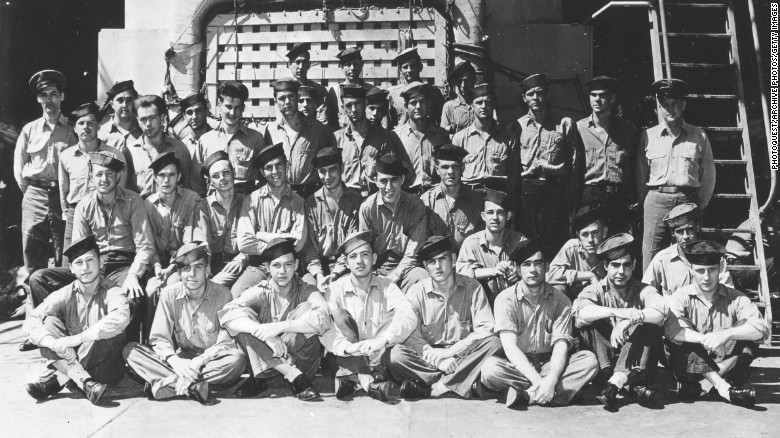
170819163129-02-uss-indianapolis-crew-restricted-exlarge-169
Some of Indianapolis’ crew, before her sinking.

The record cannot not be expunged.  Congress has rules against even considering bills altering military records, and there is no means by which to reverse a court-martial.  It’s never happened.  Yet Captain McVay had exonerated, something that the Indianapolis survivors had tried to accomplish without success.  Until the intervention of a 12-year-old boy.  Who said one person can’t make a difference?

Today, only 22 of  Indianapolis’ survivors remain alive.  The wreck of the “Indy” was discovered in August 2017, in 18,000-feet of water.  Leader of the civilian expedition which located the wreck, Microsoft co-founder Paul Allen, said”To be able to honor the brave men of the USS Indianapolis and their families through the discovery of a ship that played such a significant role in ending World War II is truly humbling”.

If you enjoyed this “Today in History”, please feel free to re-blog, “like” & share on social media, so that others may find and enjoy it as well. Please click the “follow” button on the right, to receive email updates on new articles.  Thank you for your interest, in the history we all share.


July 25, 1944 Most III

“This is the decisive weapon of the war. Humanity will never be able to endure it,” Hitler said, “If I had this weapon in 1939 we would not be at war now.”

In the early years of WWII, Nazi Germany fired 10,000 V1″Doodlebug” rockets at England, killing over 6,000 Londoners alone, by 1943. The subsonic V1 was an effective terror weapon but, bad as it was to be the target of one of these things, the “low and slow” trajectory and the weapon’s short range lacked the strategic punch needed by Nazi Germany to end the war in its favor.

The V2 was a different story.  This was the dawn of the ballistic missile era, and Nazi Germany was first off the starting line.

The Peenemünde Aggregat A4 V2 was an early predecessor of the Cruise Missile, delivering a 2,148 pound payload at 5 times the speed of sound over a 236-mile range. While you could hear the V1 coming and seek shelter, victims of the V2 didn’t know they were under attack, until the weapon had exploded.

When Wernher von Braun showed Adolf Hitler the launch of the V2 on color film, Hitler jumped from his seat and shook Braun’s hand with excitement. “This is the decisive weapon of the war. Humanity will never be able to endure it,” Hitler said, “If I had this weapon in 1939 we would not be at war now.”

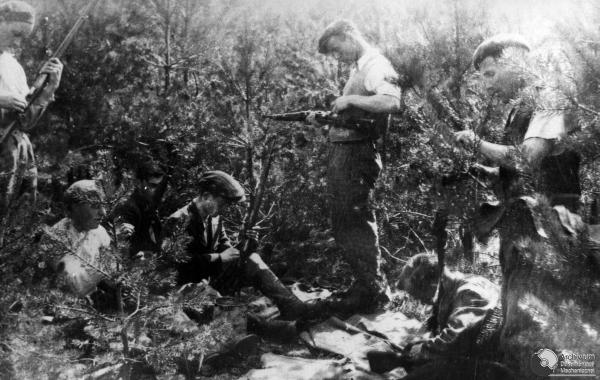
Allies were anxious to get their hands on the secret weapon and, in early 1944, they had their chance. A V2 had crashed into a muddy bank of the Bug River in Nazi-occupied Poland, without exploding. The Polish underground had been waiting for such an opportunity and quickly descended on the rocket, covering it with brush. Desperate to retrieve it, Germans conducted a week long aerial and ground search for the weapon, but failed find it under all that camouflage.

Polish Partisans preparing for battle_WW2
Polish Partisans preparing for battle, WW2

After what must have seemed an eternity, the search came to an end and partisans returned to the site. This time they brought four Polish scientists who carefully disassembled the weapon, packing the pieces in barrels. The parts were then shipped to a barn in Holowczyce, just a few miles away.

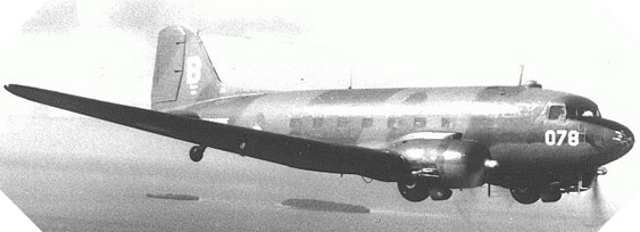
The allied effort to retrieve the stolen missile, code named “Most III”, got underway on this day in 1944, when Royal New Zealand Air Force 1st Lt Stanley George Culliford landed his Dakota C47 in the early morning darkness, at a secret air strip near Tarnow.

1920px-Home_Army_intelligence_on_V1_and_V2
Home Army intelligence on V1 & V2

The V2 chassis and several technical experts were loaded on board, but it was too much weight.  The overloaded C47 couldn’t move on the wet, muddy field – the port wheel stuck fast in the mud.  Everything had to be offloaded, Polish partisans working desperately to free the aircraft as dawn approached. They stuffed the wheel track with straw, and then laid boards in the trench.  Nothing worked.

Co-pilot Kazimierz “Paddy” Szrajer thought the parking brake must be stuck, so the hydraulic leads supplying the brake, were cut. That didn’t work, either. In the end, partisans were frantically digging trenches under the aircraft’s main wheel. Two attempts failed to get the aircraft off the ground, and Culliford was thinking about blowing up the plane and burning all the evidence.  There would be one last attempt.

The aircraft lumbered off the ground on the third try.  The last of the partisans scattered into the night, as the headlights of Nazi vehicles could be seen, approaching in the early morning darkness.

18lfbi20zpunyjpgThere would be 5 hours of unarmed, unescorted flight through Nazi-controlled air space and an emergency landing with no brakes, before those V2 rocket components finally made it to England.

Today, few remember the names of these heroes, struggling in the dark to defeat the forces of Nazi Tyranny.  We are left only to imagine a world, in which Nazi Germany remained in sole possession of the game changing super weapons, of WWII.

If you enjoyed this “Today in History”, please feel free to re-blog, “like” & share on social media, so that others may find and enjoy it as well. Please click the “follow” button on the right, to receive email updates on new articles.  Thank you for your interest, in the history we all share.

July 16, 1945 Destroyer of Worlds

“Now I am become death, the destroyer of worlds”. – Bhagavad Gita

Now I am become death, the destroyer of worlds“.

The words come down to us from the Bhagavad Gita, the Hindu epic Mohandas Gandhi would describe as his “spiritual dictionary”. On this day in 1945, these were the words of “Manhattan Project” director J. Robert Oppenheimer as he witnessed “Trinity”, the world’s first nuclear detonation.

The project had begun with an August 2, 1939 letter, written by the prominent physicists Leo Szilárd and Albert Einstein to President Franklin Roosevelt, warning that Nazi Germany may be working to develop a secret “Super Weapon”. It ended with that single explosion in the Jornada del Muerto (loosely, “Journey of the Dead Man”) desert, equal to the explosive force of 15,000 – 20,000 tons of TNT.

330px-Einstein-Roosevelt-letter
Einstein–Szilárd letter

The Manhattan project, the program to develop the Atomic Bomb, was so secret that Vice President Harry Truman was unaware of its existence. President Roosevelt passed away on April 14, when Harry Truman was sworn in as President. He was fully briefed on the Manhattan project 10 days later, writing in his diary that night that the United States was perfecting an explosive great enough to destroy the whole world.

Nazi Germany surrendered on May 7, but the war with Japan ground on. By August, Truman faced the most difficult decision ever faced by an American President.  Whether to drop an atomic bomb on a population of human beings.

h13_36

The morality of the decision has been argued ever since, and will continue to be, I’m sure. In the end, it was decided that to drop the bomb would end the war faster with fewer lives lost (on both sides), compared with an invasion of the Japanese home islands.

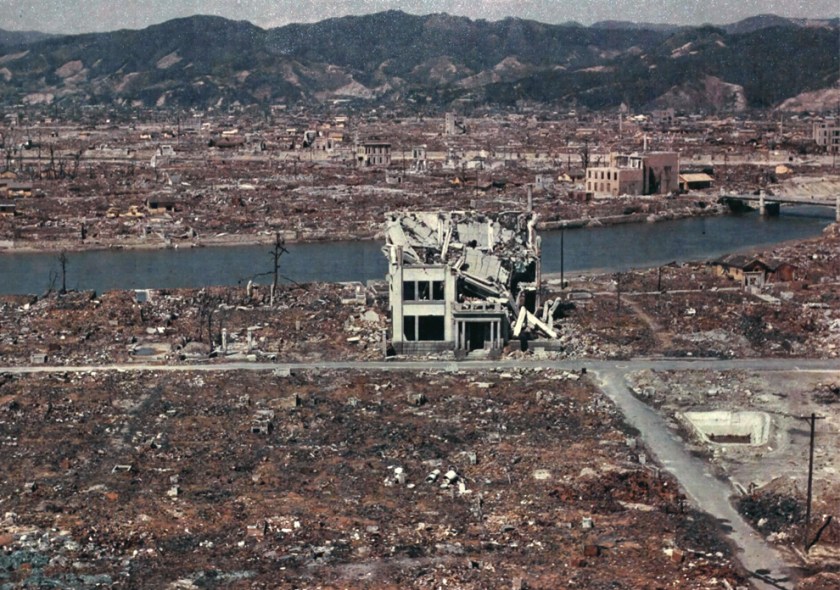
The second nuclear detonation in history took place on August 6 over Hiroshima, Japan. “Little Boy”, as the bomb was called, was delivered by the B29 Superfortress “Enola Gay”, named after the mother of United States Army Air Forces pilot Lieutenant Colonel Paul Tibbets. 66,000 Japanese citizens were vaporized in an instant, or died within the following days from the effects of the bomb.  Another 100,000 later died from injuries and the delayed effects of radiation.

7A_Nagasaki_Bomb_Cloud

Even then, the Imperial Japanese Government refused to surrender.  ‘Fat Man’, a plutonium bomb carried by the B29 “Bockscar”, was dropped on Nagasaki on August 9.

The intended target was Kokura, but local weather reduced visibility.  393d Bombardment Squadron Commander Major Charles Sweeney bypassed Kokura and chose the secondary target, Nagasaki. Half of Nagasaki was destroyed in the blast, and another 70,000 people killed.

Japan surrendered unconditionally on the 14th of August, ending the most destructive war in history.

During the 1920s, the University of Göttingen was one of the world’s leading centers for theoretical physics. American-born J. Robert Oppenheimer was himself educated there, along with the likes of Enrico Fermi, Edward Teller, and the English-born Paul Dirac, regarded as “one of the most significant physicists of the 20th century”.

The academic landscape of 1920s Germany was such that the Nazi regime may very well have been first to the nuclear finish line, but for the politicization of the universities themselves, brought on by National Socialist policy.

German+experimental+nuclear+pile+at+Haigerloch

On April 7, just 67 days after Adolf Hitler’s appointment as Chancellor, the ‘Civil Service Law’ of 1933 established the framework for the removal of ‘undesirables’ in civil service, medicine, education and the legal profession. A series of increasingly draconian anti-Jewish laws left tens of thousands of Jews including that pillar of modern theoretical physics Albert Einstein himself, no choice but to flee.

More than 133,000 German Jewish émigrés moved to the United States between 1933 and 1944, many of them highly educated and some holding Nobel prizes. In a research paper for the University of Stanford, assistant Professor of Economics Petra Moser reported a 31% increase in the number of US patents in the physical sciences, after 1933.

The Nazi nuclear weapons project began on December 17, 1938 when German physicist Otto Hahn and assistant Fritz Strassmann discovered the atomic fission of heavy elements. The first real push to develop a nuclear weapon began the following April but fizzled months later, when a number of notable physicists were drafted into the Wehrmacht.

Nazi-Nuclear-Weapons-Adolf-Hitler-Third-Reich-Test-Bomb-Drop-V2-Ludwigslust-Britain-Rocket-590825

A second such effort began on September 1, 1939, the day that Hitler invaded Poland. While the Nazi nuclear program received funding throughout the war, it never received the concentrated effort of a Manhattan project. Instead, the program was carved into three separate pieces, and personnel were always subject to the recruiting needs of the military, irrespective of education, training or skills.

This series of decisions, no doubt taken in some conference room somewhere, put Nazi Germany behind in the nuclear arms race. How different the world would be, if Little Boy and Fat Man displayed swastikas, painted on their sides.


If you enjoyed this “Today in History”, please feel free to re-blog, “like” & share on social media, so that others may find and enjoy it as well. Please click the “follow” button on the right, to receive email updates on new articles.  Thank you for your interest, in the history we all share.

July 14, 1987 The Other Hitler

William Patrick Hitler petitioned President Roosevelt for permission to fight on the American side, receiving permission in 1944.  Drafted into the Navy, the induction officer asked his name.  The reply came, “Hitler”. “Glad to see you Hitler,” the officer replied, “My name’s Hess.”

Suppose for a moment, that Gallup or Ipsos were to conduct a survey, naming the top ten bad guys, in all history. One name I daresay would top every list, would be that of the National Socialist German Workers’ Party leader, Adolf Hitler.

Hitler himself wouldn’t have the term, “Nazi”. That was bitter insult, coined long before the rise of the Nazi party. In German, Hitler would have referred to the Nationalsozialistische Deutsche Arbeiterpartei, or NSDAP for short.

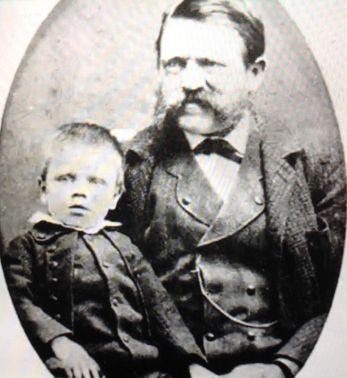
Alois Johann Schicklgruber was born on June 7, 1837, to the 42-year-old unmarried peasant Maria Schicklgruber.  The boy’s father was known to her, the priest wrote “illegitimate” on the baptismal certificate. Johann Georg Hiedler married the peasant woman when the boy was five.  By ten, Alois was sent to live with Heidler’s brother, Johann Nepomuk Hiedler. Three years later, Alois  Schicklgruber moved to Vienna where he worked as a cobbler’s apprentice, finally becoming a low level civil servant in the Austrian Finance Ministry.

There are plenty of variations on the Hiedler family surname. ‘Hiedler’ apparently derives from an Austro-Bavarian dialect, meaning one who lives by a Hiedl, or underground spring. Other derivations come from the German Hutte (hut), as in “one who lives in a hut”.  Be that as it may, the variations appear to have been interchangeable.  Common variations included Hitler, Hiedler, Hüttler, Hytler, and Hittler.

5025565e94b0d956cd32e9326850bdf6There are plenty of tales regarding the man’s paternity, but none are any more than that. Alois Schicklgruber ‘legitimized’ himself in 1877, adopting a variant on the name of his stepfather and calling himself ‘Hitler”.
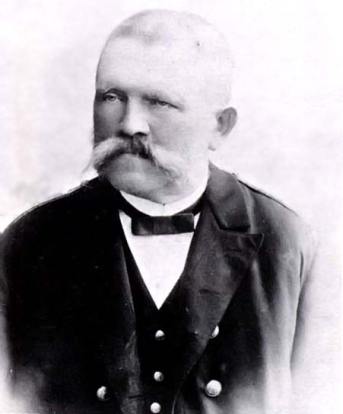
Historian Alan Bullock has described Alois Hitler as “hard, unsympathetic and short-tempered”. He seems to have had a problem with marital fidelity, as well. Alois was thirty-six when he married Anna Glasl-Hörer, the 50-year-old, invalid daughter of a customs official. By age 43, he was carrying on with the 19-year-old servant girl, Franziska “Fanni” Matzelsberger, with whom he had an illegitimate son, Alois Jr.

Alois Sr. was for all intents and purposes ‘married’ to the Matzelsberger girl for the next two years, while his lawful wife Anna, sickened and died. Hitler, 45, married Matzelsberger, age 21 in May, 1883. The couple’s second child Angela, was born two months later.

Sixteen-year-old Klara Pölzl moved in years earlier as household servant, and no woman was going to do to the new Mrs. Hitler, that which she had done to another woman.  Frau Hitler demanded that the “servant girl” be sent away but Pölzl would return the following year, as Fanni herself sickened and died.

170px-Bundesarchiv_Bild_183-1989-0322-506,_Adolf_Hitler,_Kinderbild_retouched

Pölzl was by this time pregnant with the first of the couple’s four children, but there was a problem. There are many candidates for Alois (Schicklgruber) Hitler’s biological father. If Hitler’s step-father was in fact his real sire as implied by the name change, that made Klara Pölzl his first cousin once removed, at least by law. The couple was too close to marry.

Alois petitioned the church for a humanitarian waiver. The waiver was granted and Klara Pölzl became the third Frau Hitler in January 1885. The first-born child was born five months later.

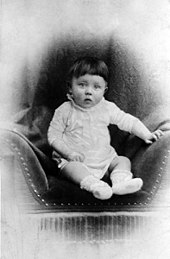
Adolf Hitler as an infant

The future leader of the National Socialist Party was born fours later, by that time the only child born to his mother Klara.  Her first three children Gustav, Ida and Otto, all died in childhood.

Alois Hitler, Sr. seems to have been a thoroughly unlikable man, lording it over neighbors and brutalizing his own family. Historian Robert Waite notes that, “Even one of his closest friends admitted that Alois was ‘awfully rough’ with his wife and ‘hardly ever spoke a word to her at home’.” The man would berate Klara and children alike, and apparently beat them on a regular basis.  Alois Jr. left home never to return, following a violent argument with his father. The elder Alois swore that he would never give the boy a single mark of inheritance, over what the law required. The youngest, Adolf, grew up a frail and sickly child, doted on by his mother and often at the center of violent rages by his father.

Alois-Hitler-2
Alois Hitler

Alois tried to browbeat his youngest into following him, into the civil service. The boy feared and detested his father, and wanted nothing to do with him.  Adolf Hitler would follow the path which would bring him to that list of the great monsters of the 20th century, as his brother Alois Jr., made his own way in the world.

Some apples don’t fall far from the tree. Alois Hitler Jr. went to Ireland, where he met Bridget Dowling at the Dublin Horse Show. Nothing more than a poor kitchen porter at the Shelbourne Hotel, Hitler managed to convince her that he was, in fact, a wealthy hotelier, touring Europe. The couple eloped to London in June 1910. Bridget’s father William threatened to bring Hitler up on charges of kidnapping, and only relented when Bridget pleaded with him to stop.

It was a decision she would come to regret.

Dowling-Hitler
Dowling-Hitler

The couple had their only child in 1911, William Patrick Hitler. Alois left home in Liverpool in May 1914 to establish himself in the safety razor business.  He had become violent by this time and begun to beat the boy.  Bridget refused to go with William’s father and would end up, raising the boy alone.

War descended over Europe in 1914, when the elder Hitler met and (bigamously) married his second wife, Hedwig Heidemann.

heinz-640x462
Heinz Hitler was captured by Soviet Forces in 1942, and tortured to death

Alois’ second marriage  produced a son, Heinz, who went on to become a committed Nazi. In 1933, William moved to Germany, in an effort to take advantage of his uncle’s rise to power.  He got a job at an Opel factory and later worked as a car salesman, but  badgered his uncle for a better job. At last, he threatened to sell embarrassing family stories to the newspapers, if Uncle Adolf didn’t do something to improve his “personal circumstances”.

Ironically, Nazi party regulations precluded Adolf Hitler himself from proving his own “Aryan Purity”, based on his father’s unknown paternity.  For years, Hitler had been dogged by hushed speculation about “Jewish blood”.  Quiet rumor became front-page headline this day in 1933, when Austrian newspapers published reports that the German Chancellor, sworn enemy of all things Jewish, was himself, a Jew.  That same day, all political parties but the Nazi party, were banned from Germany.

William-Patrick-Hitler
Pharmacists Mate William Patrick Hitler

Der Führer of the fledgling thousand-year Reich promised his nephew a “high ranking post” in 1938, in exchange for renunciation of his British citizenship. Suspecting a trap, the younger Hitler fled Germany, traveling to the United States in 1939. William Patrick Hitler petitioned President Roosevelt for permission to join the American side, receiving permission in 1944.

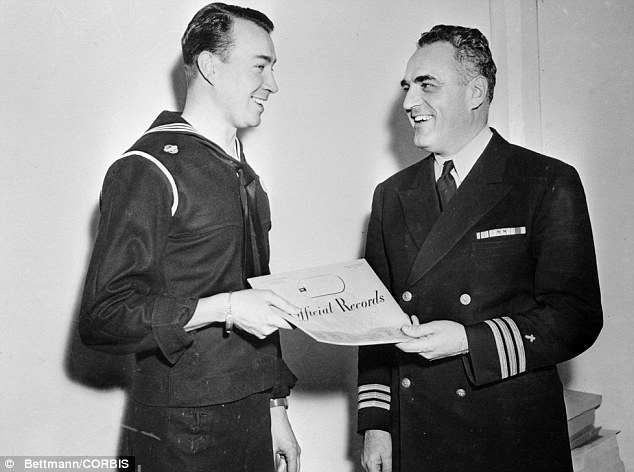
Drafted into the Navy, the induction officer asked his name.  The reply came, “Hitler”. “Glad to see you Hitler,” the officer replied, “My name’s Hess.”

William Patrick Hitler served honorably for the duration of the war, holding the rank of Pharmacists Mate (a designation later changed to Hospital Corpsman) and earning a purple heart in the process.    Hitler’s half-brother Heinz was captured by Soviet forces in 1942, and tortured to death. Their more famous uncle took his own life in 1945 and died, childless.

Ironically, Hitler’s childhood home in Liverpool was destroyed in the last air raid of the Liverpool Blitz, in 1942.

IMG_20170811_0005-300x207
Alexander

Wishing to live a life of anonymity, “Willy” Hitler changed his name to William Patrick  Stuart-Houston at the end of the war, and married fellow German emigre Phyllis Jean-Jacques in 1947.  The couple made a home in Patchogue, New York and raised four sons: Alexander Adolf (b. 1949), Louis (b. 1951), Howard Ronald (1957–1989), and Brian William (b. 1965).

William Patrick Stuart-Houston, nephew to one of the worst dictators in history and a man who fought with honor on the side of his uncle’s mortal enemy, died this day in 1987, leaving no grandchildren.

Alexander Adolf Stuart-Houston,, an American social worker, dismissed speculation of a pact to end the Hitler line. There was no such agreement among the last four boys in the family.  Things just turned out that way.

If you enjoyed this “Today in History”, please feel free to re-blog, “like” & share on social media, so that others may find and enjoy it as well. Please click the “follow” button on the right, to receive email updates on new articles.  Thank you for your interest, in the history we all share.

July 9, 1943 The Most Decorated K-9 of WW2

The machine gun episode ended with a final score of Chips 4, Italian machine-gun team 0, but he wasn’t done. Before the day was over, Chips had helped to bag ten more.

By the end of the “Great War”, France, Great Britain and Belgium had at least 20,000 dogs on the battlefield, Imperial Germany as many as 30,000. Some sources report that over a million dogs served over the course of the war.

Dogs performed a variety of roles in WWI, from ratters in the trenches, to sentries, scouts and runners. “Mercy” dogs were trained to seek out the wounded on battlefields, carrying medical supplies with which the stricken could treat themselves. Sometimes, these dogs simply provided the comfort of another living soul, so that the gravely wounded should not die alone.

dog-19-1600x1200-4-opt897x579o00s897x579.jpg
French propaganda postcard of WW1

The famous Rin Tin Tin canine movie star of the 1920s was rescued as a puppy, from the bombed out remains of a German Army kennel, in 1917.

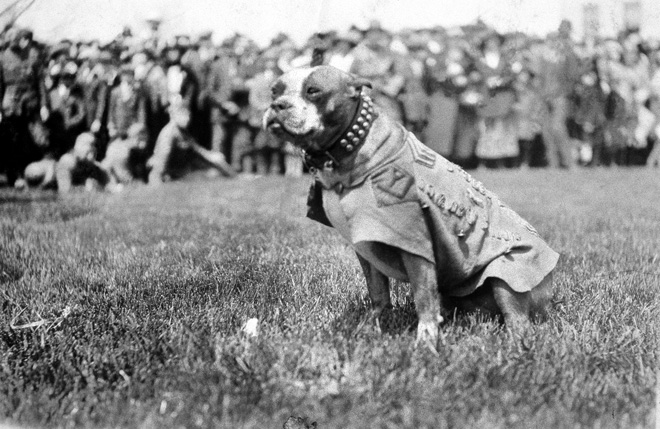
Leaders of the American Expeditionary Force (AEF) discussed the use of dogs as sentries, messengers and draft animals, but the war was over before US forces put together any kind of a War Dog program.  America’s first war dog, “Sgt. Stubby”, went “over there” by accident, serving 18 months on the Western Front before coming home to a well-earned retirement.

sgt_stubby_5
Sergeant Stubby

In March 1942, the US Army Quartermaster Corps began training dogs for an American “K-9 Corps.” In the beginning, the owners of healthy animals were encouraged to “loan” their dogs to the Quartermaster Corps, where they were trained for service with the Army, Navy, Marine Corps and Coast Guard.

Chips.jpgOne such dog was “Chips”, the German Shepherd/Collie/Husky mix who would become the most decorated K-9 of WWII.
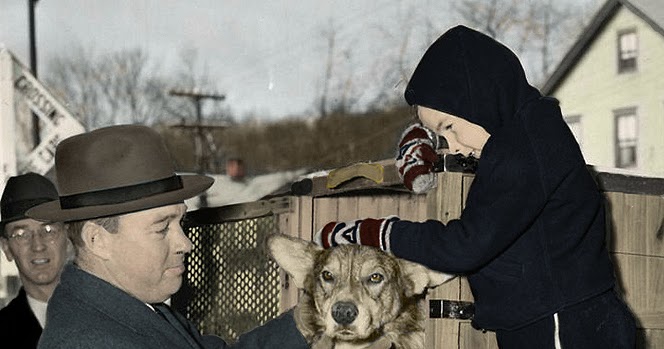
Chips belonged to the Wren family of Pleasantville New York, who “enlisted” their dog in the “Dogs for Defense (DfD) program in 1942. He was trained at the War Dog Training Center in Front Royal Virginia, and served in the 3rd Infantry Division of Patton’s 7th Army, along with with his handler, Private John Rowell.

Tip of the hat to my son-in-law Nate who also served in the 3rd ID in the Wardak Province of Afghanistan, partnered as handler and “battle buddy” with a four-year-old German Shepard and Tactical Explosives Detection Dog (TEDD) named “Zino”.

Back to WW2.  Chips and his handler took part in North Africa, Italy, France and Germany.  He served as a sentry dog for the Casablanca Conference of 1943, where he met the American President Franklin Roosevelt and the British Prime Minister Winston Churchill.

The Allied invasion of Sicily was a large scale amphibious and airborne operation, beginning this day in 1943 and lasting through the 17th of August.  The Rowell/Chips team was part of the landings, beginning six weeks of land combat in an action code named “Operation Husky”.

chips (1)
Chips

During the night landing phase on July 10, Private Rowell and Chips were pinned down in the darkness by an Italian machine gun team, operating out of a nearby hut. The dog broke free from his handler as the platoon dived for shelter, covering the beach in a flash and jumping into the building.

Private Rowell described the scene.  “There was an awful lot of noise and the firing stopped. Then I saw one soldier come out of the door with Chips at his throat. I called him off before he could kill the man.”

Three others were quick to follow, hands up.  Chips had grabbed the Italian’s machine gun by the barrel, knocking the gun off its mount before turning his attentions on the team. The dog sustained a scalp wound and powder burns, demonstrating that someone had tried to shoot him during the brawl.  How many lives were spared by the actions of a single dog, is anyone’s guess.

That episode ended with a final score of Chips 4, Italian machine-gun team 0, but he wasn’t done. Before the day was over, Chips had helped to bag ten more.

chips war dog
“Chips” goes to war, 1942

Chips was awarded the Distinguished Service Cross, Silver Star, and Purple Heart, but those awards were later revoked. At that time the army didn’t permit commendations to be given to animals. His unit awarded him a Theater Ribbon with an Arrowhead for the assault landing anyway, along with eight Battle stars. One for each of his campaigns.

Chips was discharged in December, 1945, and returned home to live out the rest of his days with the Wren family in Pleasantville, New York.  In 1990, Disney produced a made-for-TV movie based on the life of the most highly decorated K-9 of WW2, calling it “Chips, the War Dog”.

Afterward

In 1917, the British animal welfare pioneer Maria Dickin founded the People’s Dispensary for Sick Animals (PDSA), to “provide care for sick and injured animals of the poor”. Today, the PDSA is the largest veterinary charity in England, carrying out a million or more free veterinary visits every year and employing the largest number of veterinary surgeons and nurses in the United Kingdom.

Dickin_Medal
Dickin_Medal

The Dickin Medal was established in 1943, to recognize animals displaying “conspicuous gallantry or devotion to duty while serving or associated with any branch of the Armed Forces or Civil Defence Units“.  Sometimes referred to as “the animals’ Victoria Cross”, the Dickin medal has been awarded only 75 times as of November 2017, plus an honorary Dickin Medal for all animals who served during WW1.

On January 15, 2018, seventy-five years to the day following the Casablanca Conference, Chips was posthumously awarded the Dickin Medal.  John Wren, who was only four when Chips went to war, accepted the award in Chips’ honor.  United States Army Lieutenant Colonel Alan Throop and Military Working Dog (MWD) Handler Staff Sergeant Jeremy Mayerhoffer of the United States Air Force were also there, along with MWD Ayron, who stood in for Chips to wear his Dickin Medal.

The medal reads “For Gallantry” and “We Also Serve.” Previous recipients include 33 dogs, 32 messenger pigeons, four horses and a ship’s cat.

4828E71D00000578-5270495-image-a-40_1516019598733
“John Wren (left), who was four years old when Chips the family pet returned from the war effort, with military working dog Ayron and his handler Staff Sergeant Jeremy Mayerhoffer (centre) and US Lieutenant Colonel Alan Throop (right) in London today”  H/T Daily Mail

July 7, 1798  The X-Y-Z Affair

America’s “quasi-war” with France, begun this day in 1798, would see the first combat service of the heavy frigate USS Constitution, better known as “Old Ironsides” and today, the oldest commissioned warship in the world, still afloat. 

Imagine that you’ve always considered your own beliefs to be somewhere in the political center.  Maybe a little to the left. Now imagine that, in the space of two years, your country’s politics have shifted so radically that you find yourself on the “Reactionary Right”, on the way to execution by your government.

And your personal convictions have never changed.

America’s strongest Revolution-era ally lost its collective mind in 1792, when France descended into a revolution of its own.    17,000 Frenchmen were officially tried and executed during the 1793-94 “Reign of Terror” (la Terreur) alone, including King Louis XVI himself and his queen, Marie Antoinette.  Untold thousands died in prison or without benefit of trial.  The monarchical powers of Europe were quick to intervene.  For the 32nd time since the Norman invasion of 1066, England and France once again found themselves at war.

the-reign-of-terror-french-revolution-17931794-1-638

France had been the strongest ally the Americans had during the late revolution, yet the United States remained neutral in the later conflict, straining relations between the former allies.  Making matters worse, America repudiated its war debt in 1794, arguing that it owed the money to “l’ancien régime”, and not to the French First Republic which had overthrown it, and executed its King.

Lafayette_Prison_reunion
The Marquis de Lafayette was shocked on October 15, 1795, when his cell door opened and in walked his wife and three daughters. The four women would remain with him in his prison cell, for another two years

By this time, Revolution-era America’s most important French allies were off the stage, the Comte de Grasse dead, the Marquis de Lafayette and the Comte de Rochambeau languishing, in prison.

Both sides in the European conflict seized neutral ships which were trading with their adversary.  The “Treaty of Amity, Commerce, and Navigation” with Great Britain, ratified in 1795 and better known as the “Jay Treaty”, put an end for now to such conflict with Great Britain, but destroyed relations with the French Republic.

French privateers cruised the length of the Atlantic seaboard preying on American merchant shipping, seizing 316 civilian ships in one eleven-month period, alone.

At this point, the United States had virtually no means of fighting back.  The government had disbanded the Navy along with its Marine contingent at the end of the Revolution, selling the last warship in 1785 and retaining only a handful of “revenue cutters” for customs enforcement.  The Naval Act of 1794 had established a standing Navy for the first time in American history and begun construction on six heavy frigates, the first three of which would launch in 1797:  the USS United States, USS Constellation, and USS Constitution.

In 1796, France formally broke diplomatic relations with the United States by rejecting the credentials of President Washington’s representative, Ambassador Charles Cotesworth Pinckney.

The following year, President John Adams dispatched a delegation of two, with instructions to join with Pinckney in negotiating a treaty with France, on terms similar to those of the Jay treaty with Great Britain.

Pinckney
Charles Cotesworth Pinckney

These were the future Chief Justice of the Supreme Court John Marshall, and future Massachusetts Governor Elbridge Gerry, a man who later became the 5th Vice President and lent his name to the term “Gerrymander”.

The American commission arrived in Paris in October 1797, requesting a meeting with French Foreign Minister Charles Maurice de Talleyrand.  Talleyrand, unkindly disposed toward the Adams administration to begin with, demanded bribes before meeting with the American delegation.  The practice was not uncommon in European diplomacy of the time, but the Americans refused.

Documents later released by the Adams administration describe Nicholas Hubbard, an English banker identified only as “W”.  W introduced “X” (Baron Jean-Conrad Hottinguer) as a “man of honor”, who wished an informal meeting with Pinckney.  Pinckney agreed and Hottinguer reiterated Talleyrand’s demands, specifying the payment of a $12 million “loan” to the French government, and a personal bribe of some $250,000 to Talleyrand himself.  Met with flat refusal by the American commission, X then introduced Pierre Bellamy (“Y”) to the American delegation, followed by Lucien Hauteval (“Z”), sent by Talleyrand to meet with Elbridge Gerry.  X, Y and Z, each in their turn, reiterated the Foreign Minister’s demand for a loan, and a personal bribe.

Believing that Adams sought war by exaggerating the French position, Jeffersonian members of Congress joined with the more warlike Federalists in demanding the release of the commissioner’s communications.  It was these dispatches, released in redacted form, which gave the name “X-Y-Z Affair” to the diplomatic and military crisis which followed.

American politics were sharply divided over the European war.  President Adams and his Federalists, always the believers in strong, central government, took the side of the Monarchists.  Thomas Jefferson and his “Democratic-Republicans” found more in common with the liberté, égalité and fraternité espoused by French revolutionaries.

In the United Kingdom, the ruling class appeared to enjoy the chaos.  A British political cartoon of the time depicted the United States, represented by a woman being groped by five Frenchmen while John Bull, the fictional personification of all England, looks on in amusement from a nearby hilltop.

XYZ cartoon

Adams’ commission left without entering formal negotiations, their failure leading to a political firestorm in the United States.  Congress rescinded all existing treaties with France on July 7, 1798, the date now regarded as the beginning of the undeclared “Quasi-War” with France.

Four days later, President John Adams signed “An Act for Establishing and Organizing a Marine Corps,” permanently establishing the United States Marine Corps as an independent service branch, in order to defend the American merchant fleet.

quasi-war-1798-1801

Talleyrand himself raised the stakes, saying that attacks on American shipping would cease if the United States paid him $250,000 and gave France 50,000 pounds sterling and a loan for $100 million. At a 1798 Philadelphia dinner in honor of John Marshall, South Carolina Congressman Robert Goodloe Harper’s toast, spoke for the American side: “Millions for defense but not one cent for tribute.”

America’s “quasi-war” with France, begun this day in 1798, would see the first combat service of the heavy frigate USS Constitution, better known as “Old Ironsides” and today, the oldest commissioned warship in the world, still afloat.  The undeclared war would be fought across the world’s oceans, from the Atlantic to the Caribbean, to the Indian Ocean, and the Mediterranean Sea.

United_States_Marine_escorting_French_prisoners
20th century illustration depicts American Marines escorting French prisoners

The Convention of 1800 ended the Quasi-War on September 30, nullifying the Franco-American alliance of 1778 and ensuring American neutrality in the Napoleonic wars. $20,000,000 in American “Spoliation Claims” would remain, unpaid.

For the United States, military escalation proved decisive.  Before naval intervention, the conflict with France resulted in the loss of over 2,000 merchant ships captured, with 28 Americans killed and another 42 wounded.   Military escalation with the French First Republic cost the Americans 54 killed and 43 wounded, and an unknown number of French.  Only a single ship was lost, the aptly named USS Retaliation, and that one was later recaptured.

If you enjoyed this “Today in History”, please feel free to re-blog, “like” & share on social media, so that others may find and enjoy it as well. Please click the “follow” button on the right, to receive email updates on new articles.  Thank you for your interest, in the history we all share.

July 6, 1863 Sallie was a Lady…

There was barely a man in the regiment, who wouldn’t have walked over the proverbial “bad road & broken glass”, for that dog.   

NY-Irish-4c-451-0271
Irish Brigade Memorial sculpted by William R. O’Donovan, a former Confederate soldier who fought at Gettysburg  H/T Gettysburg.stonesentinels.com

Sallie was four weeks old in 1861, when she was given as a gift to 1st Lieutenant William Terry, of the 11th Pennsylvania Volunteer Infantry.  Terry made her the regimental mascot, a post she would hold for the duration of the Civil War.

Sallie was a Staffordshire Bull Terrier, or possibly a Pit Bull, brindle in color.  She would tag along on long marches, and kept the men of the regiment company in their camps.  She learned the drum roll announcing reveille, and loved to help wake the sleeping soldiers in the morning.

If you’ve ever had a dog in your life, you know how that goes.

There was barely a man in the regiment, who wouldn’t have walked over the proverbial “bad road & broken glass”, for that dog.   Sallie’s first battle came at Cedar Mountain, in 1862. No one thought of sending her to the rear before things got hot, so Sallie took up a position along with the colors, barking ferociously at the adversary.

There she remained throughout the entire engagement, as she would do at Antietam, Fredericksburg, Chancellorsville and Spotsylvania.

Sallie(1)
Sallie, the smallest member of the 11th PA Infantry Regiment, is one of only two dogs so memorialized at Gettysburg, the only dog who was actually In the battle.

It was said that Sallie only hated three things:  Rebels, Democrats, and Women.

Sallie marched with “her” soldiers in review, in the spring of 1863.  Abraham Lincoln was reviewing the army at the time, when he spotted the dog from the center of the reviewing stand, and raised his famous top hat in salute.

At Gettysburg, Sallie was separated from her unit in the chaos of the first day’s fighting. They found her five days later, on July 6, parched with thirst and weakened by hunger.

She’d been standing guard over her dead and dying comrades, since July 1.

It’s been said that only a dog is capable of that kind of loyalty, yet virtue in one is capable of inspiring virtue in another. So it was on February 5, 1865. Sallie was struck in the head by a bullet at Hatcher’s Run. She was killed instantly.  Several men of the 11th PA laid down their arms and buried her, right then and there.  Even though they were still under fire from the Confederate side.

There is a tale about Sallie, I don’t know if it’s true.  Probably not but it’s a nice story.

After the battle in which Sallie was killed, the soldiers were moving out when a small whining was heard from within a hollowed-out tree.  Someone went to the tree and found several small puppies, believed to be Sallie’s.  They’d had no idea that she was pregnant, or how puppies came to be in that hollowed out tree.  The soldiers gave them to local civilians, so that Sallie’s bloodline might live on.

Sallie statueTwenty-seven years after Gettysburg, surviving veterans of the regiment returned to dedicate a memorial to those members of the 11th Pennsylvania, who lost their lives on that field of battle.

Today, 1,320 memorial statues, monuments and markers dot the landscape of the Gettysburg battlefield.  Among all of them there are only two, raised in the memory of a dog.  The first is a Celtic cross, erected in honor of New York’s Irish Brigade.  Ironically, it is sculpted by a Confederate veteran of the battle.  At the foot of the cross rests a life-sized likeness of an Irish wolfhound, symbolizing honor and fidelity..

66be53833fa8c6663ee4542b2d28d73cThe other includes a brindle colored Terrier, named Sallie.  The only one of the two to have actually participated in the battle.

The monument depicts an upright Union soldier, rifle at the ready.  By unanimous consent of the veterans themselves, Sallie’s likeness looks out from the foot of the statue, where she guards over the spirits of “her boys”, for all eternity.

“Sallie was a lady,
she was a soldier too.
She marched beside the colors,
our own red white and blue.
It was in the days of our civil war,
that she lived her life so true”.

Feature image, top of page:  Only known picture of Sallie, herself.  Photographer unknown.
If you enjoyed this “Today in History”, please feel free to re-blog, “like” & share on social media, so that others may find and enjoy it as well. Please click the “follow” button on the right, to receive email updates on new articles.  Thank you for your interest, in the history we all share.