November 18, 1978 Drinking the Koolaid

The Jonestown murder/suicide of November 18, 1978 produced the largest loss of civilian life in American history. Until the Islamist terrorist attacks of September 11, 2001.

Those who knew him as a child remembered a “really weird kid“, obsessed with religion and death. He’d hold elaborate, pseudo-religious ceremonies at the house, mostly funerals for small animals. How Jim Jones got all those dead animals was a matter for dark speculation.

1536936987137.jpeg

This was depression-era rural Indiana, in the age of racial segregation. Father and son often clashed over issues of race. The two didn’t talk to each other for years one time, after the elder Jones refused to allow one of the younger Jones’ black friends, into the house.

Jim Jones was a bright student, graduating High School with honors in 1949. He was a voracious reader, studying the works of Stalin, Marx, Mao, Gandhi and Hitler and carefully noting the strengths and weaknesses, of each.

Jones married Marceline Baldwin in 1949 and moved to Bloomington, Indiana, where he attended Indiana University and later Butler University night school, earning a degree in secondary education.

A long-standing interest in leftist politics heightened during this period, and Jones became a regular at Communist Party-USA meetings. There he’d rail against the McCarthy hearings, and the trials of Julius and Ethel Rosenberg.

Jones recalled he later asked himself, “How can I demonstrate my Marxism? The thought was, infiltrate the church.”

jim-jones-red-robe-ht-jef-180925_hpEmbed_21x16_992.jpg

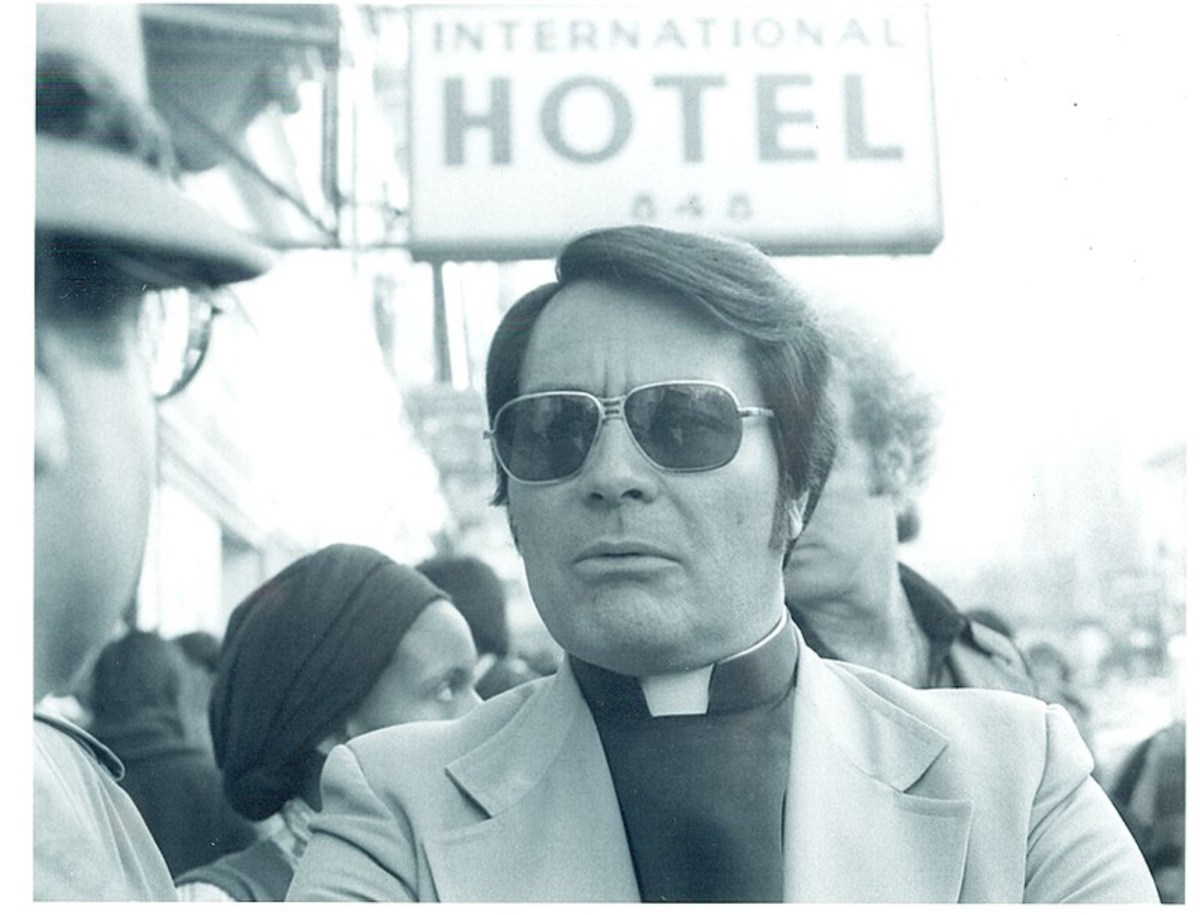
“Reverend” Jim Jones got his start as a student pastor at the Sommerset Southside Methodist Church but soon left, over issues of segregation.  He was a Social Justice Warrior in the age of Jim Crow.

636150546188409893-1492665.jpg

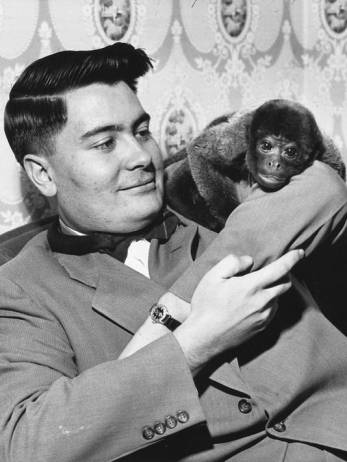
The New York Times reported in 1953, “declaring that he was outraged at what he perceived as racial discrimination in his white congregation, Mr. Jones established his own church and pointedly opened it to all ethnic groups. To raise money, he imported monkeys and sold them door to door as pets.”

Jones witnessed a faith-healing service and came to understand the influence to be had, from such an event.  He arranged a massive convention in 1956, inviting the Oral Roberts of his day, as keynote speaker. Reverend William Branham did not disappoint.  Soon, Reverend Jones opened his own mission with an explicit focus on racial integration. 

Thus began the Peoples Temple of the Disciples of Christ.

Jones’ integrationist politics did little to ingratiate himself in 1950s rural Indiana.  Mayor and commissioners alike asked him to tone it down, while he received wild applause at NAACP and Urban League conventions with speeches rising to a thundering crescendo:  “Let My People GO!!!”

Jones spoke in favor of Kim Il-sung’s invasion of South Korea, branding the conflict a “war of liberation” and calling South Korea “a living example of all that socialism in the north has overcome.

Jim and Marcelline adopted three Korean orphans, beginning what would become a family of nine including their only biological child, Stephan Ghandi.  The couple adopted a black boy in 1961 and called him Jim Jr., the Jones’ “rainbow family” a reflection of the pastor’s congregation.

jim-jones-family-pic-01-ht-jef-180925_hpMain_4x3_992

An apocalyptic streak began to show, as Jones preached of nuclear annihilation. He traveled to Brazil for a time, in search of a safe place for the coming holocaust. He even gave it a date: July 15, 1967. On returning from Brazil, the “Father” spoke to the flock. The “children” would have to move. To northern California, to a new and perfect, socialist, Eden.

4710360004_3f8f97efbd_o
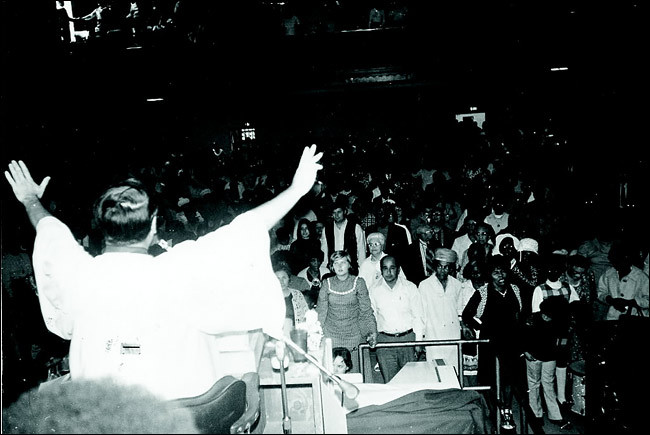
Jim Jones preaching, 1971

For Jim Jones, religion was never more than a means to an end. ”Off the record” he once said in a recorded conversation, “I don’t believe in any loving God. Our people, I would say, are ninety percent atheist. Uh, we— we think Jesus Christ was a swinger…I must say, I felt somewhat hypocritical for the last years as I became uh, an atheist, uh, I have become uh, you— you feel uh, tainted, uh, by being in the church situation. But of course, everyone knows where I’m at. My bishop knows that I’m an atheist.

Faith healing.  The California days

Jones referred to himself as the reincarnation of Gandhi. Father Divine. Jesus, Gautama Buddha and Lenin. “What you need to believe in is what you can see…. If you see me as your friend, I’ll be your friend. As you see me as your father, I’ll be your father, for those of you that don’t have a father…. If you see me as your savior, I’ll be your savior. If you see me as your God, I’ll be your God.”

The years in California were a time of rapid expansion from Temple Headquarters in San Francisco to locations up and down the “Golden State”.  Jones hobnobbed with the who’s who of Democratic politics, from San Francisco Mayor George Moscone to Presidential candidate Walter Mondale. Even First Lady Rosalynn Carter.

“If you’re born in capitalist America, racist America, fascist America, then you’re born in sin. But if you’re born in socialism, you’re not born in sin.”

California Assemblyman Willie Brown called Jones a combination of Martin Luther King, Jr., Angela Davis, Albert Einstein and Mao Tse Tung. Harvey Milk wrote to Jones after one visit: “Rev Jim, It may take me many a day to come back down from the high that I reach today. I found something dear today. I found a sense of being that makes up for all the hours and energy placed in a fight. I found what you wanted me to find. I shall be back. For I can never leave.

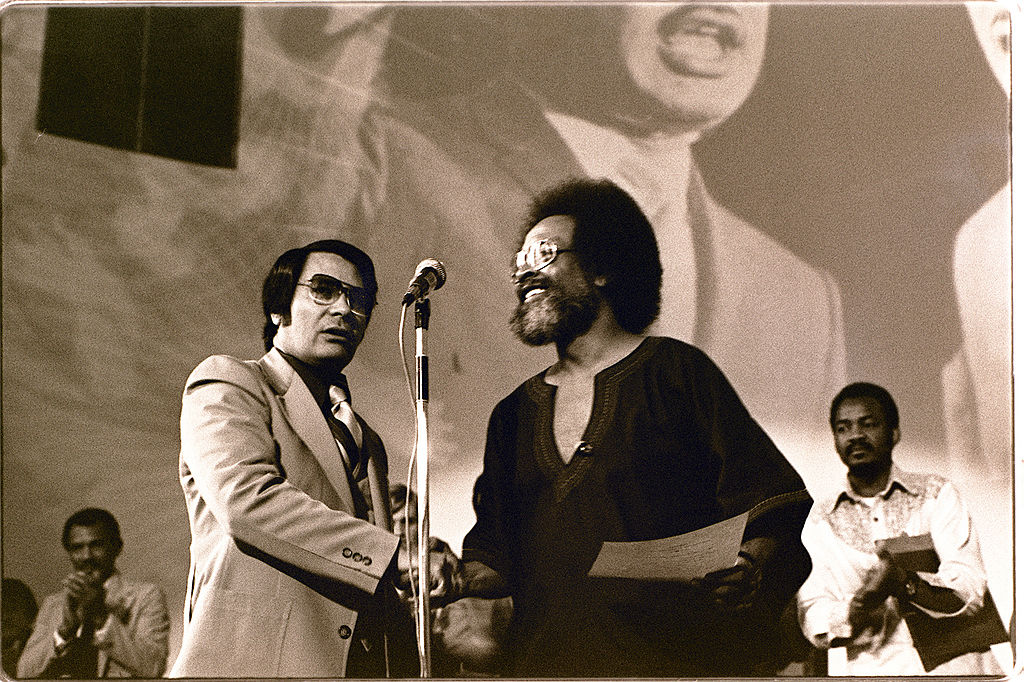
Jim_Jones_shakes_hands_with_Cecil_Williams_-_January_1977
Humanitarian award from Pastor Cecil Williams, 1977” H/T Wikipedia

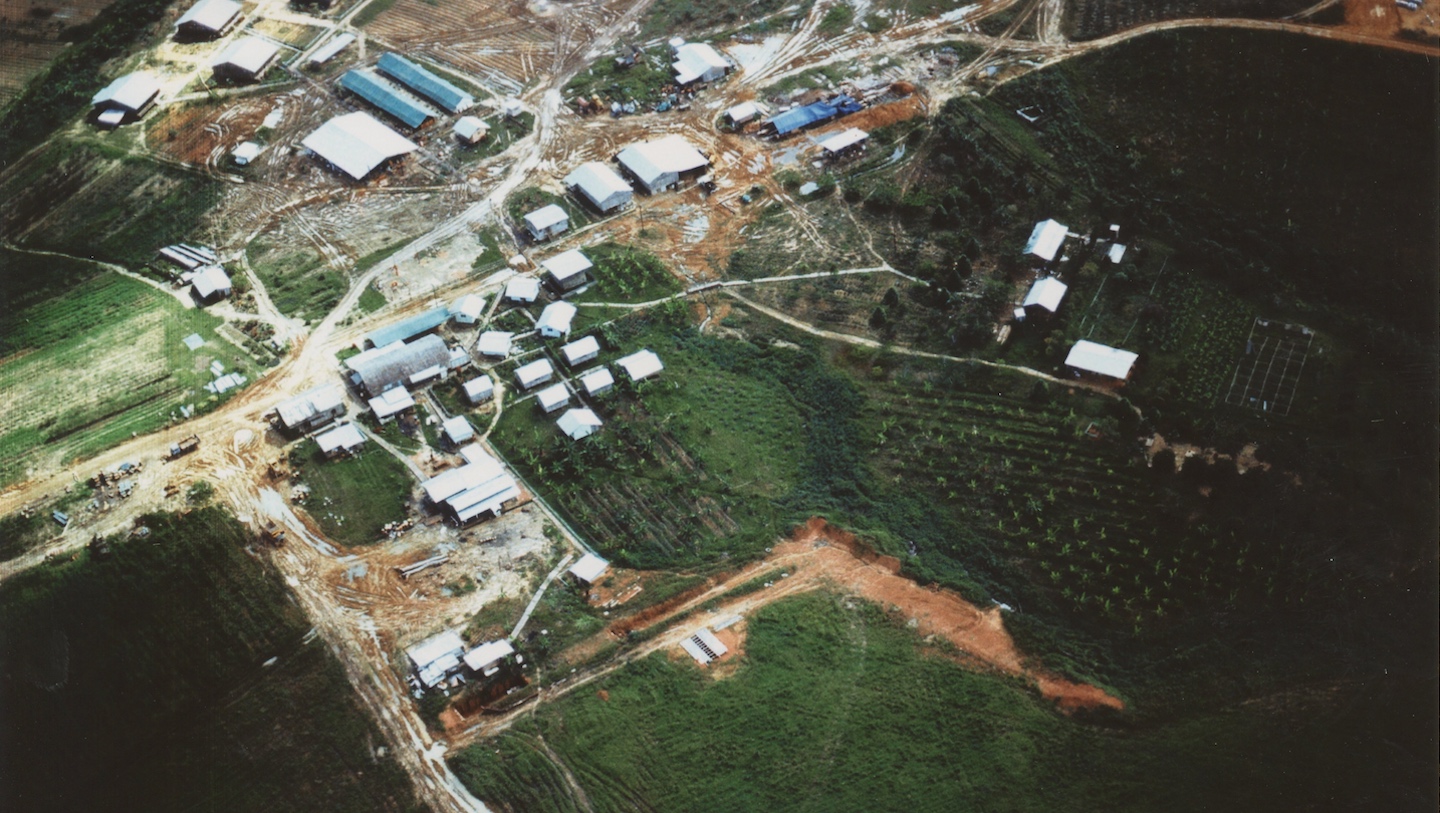
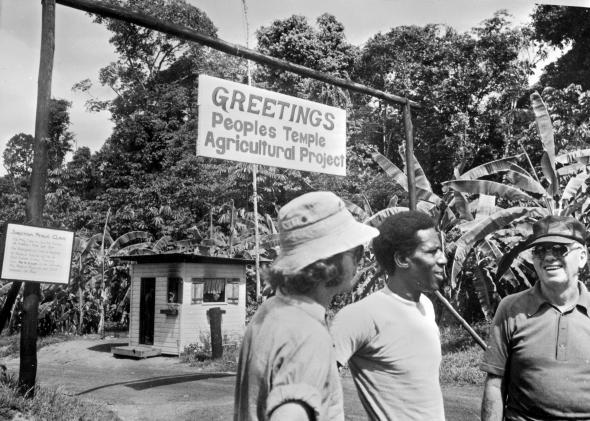
Meanwhile, Jones was building the perfect socialist utopia in the South American jungles of Guyana, formally known as the “Peoples Temple Agricultural Project”.  Most simply called the place, “Jonestown”.

San Francisco Chronicle reporter Marshall Kilduff wrote in the summer of 1977, telling a grotesque tale of physical and sexual abuse, of brainwashing and emotional domination. Chronicle editors balked and Kilduff published the piece in the New West Magazine.

That was when Jones and his congregation left town and fled.  To Guyana.

A long standing drug addiction became more pronounced in Jonestown where the preacher spoke of the gospel of “Translation”, a weird crossing over from this life to some other, finer plane.

Some 68% of Jonestown faithful were black at this time, congregants who felt they got something from this place, they couldn’t get at home. Inclusion. Fulfillment. Acceptance. Whatever it was, the cult of Jonestown was mostly, a world of willing participants.

Mostly, but not entirely. Those who entered Jonestown were not allowed to leave. Those who did escape told outlandish tales of abuse: mental, physical and sexual.

1506309501695-jonestown-commune
Jonestown compound, Guyana

Former members of the Temple formed a “Concerned Relatives” group in the Fall of 1977, to publicize conditions afflicting family members, still in the cult.

Concerned Relatives produced a packet of affidavits in April 1978, entitled “Accusation of Human Rights Violations by Rev. James Warren Jones“. Jones’ political support began to weaken as members of the press and Congress, took increasing interest.

California Congressman Leo Ryan led a fact-finding mission that November, to see things for himself. The Congressional Delegation (CoDel) arrived at the Guyanese capital on November 15, with NBC camera crew and newspaper reporters, in tow.

a35dea6f-37bc-473b-977f-b1edb580da9d
Congressman Ryan arrives at Jonestown

The delegation traveled by air and drove the last few miles by limo, to Jonestown. The visit of the 17th was cordial at first, with Jones himself hosting a reception in the central pavilion. Underlying menace soon came to the surface as a few Temple members expressed the desire, to leave with the delegation. Things went from bad to worse when temple member Don Sly attacked Congressman Ryan with a knife, the following day.

Ryan’s hurried exit with fifteen members of the Temple met no resistance, at first. The CoDel was boarding at the small strip in Port Kaituma, when Jones’ “Red Brigade” pulled up in a farm tractor, towing a trailer.   The new arrivals opened fire, killing Congressman Ryan and four others.  One of the supposed “defectors” produced a weapon, and wounded several more.

BobBrownKaituma
NBC photographer Bob Brown took this shot, of the shooters

Back at the compound, Jones lost an already tenuous grasp on reality.

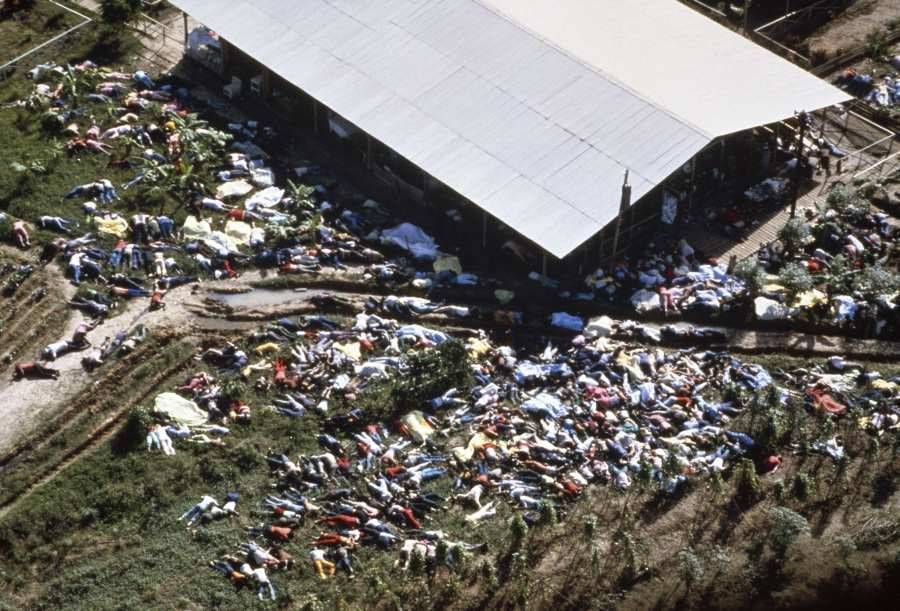
Fearing assault by parachute, lethal doses of cyanide were distributed along with grape “Flavor Aid” for 912 members of the People’s Temple. 276 of those, were children.

download - 2019-11-18T082734.667.jpg

This wasn’t the first time the Jonestown flock believed they were ingesting poison for The Cause. It was about to be the last.

Jones spoke with an odd lisp which seemed to grow more pronounced, at times of excitement. You can hear it in the 45 minute “death tape“ below, his words sometimes forming a perfect “S“ and at other times, lapsing into a soft “TH” or some combination, of the two.

You can hear it clearly, in the recording.  Heads up dear reader.  If you care to listen, it’s 45-minutes of tough sledding.

Jonestown “Death Tape”. November 18, 1978

Babies and children were brought up first, the poisonous punch poured down their throats. Then came the mothers., and then the others. Should any be reluctant to die there were guards there with guns and crossbows, to help them along.

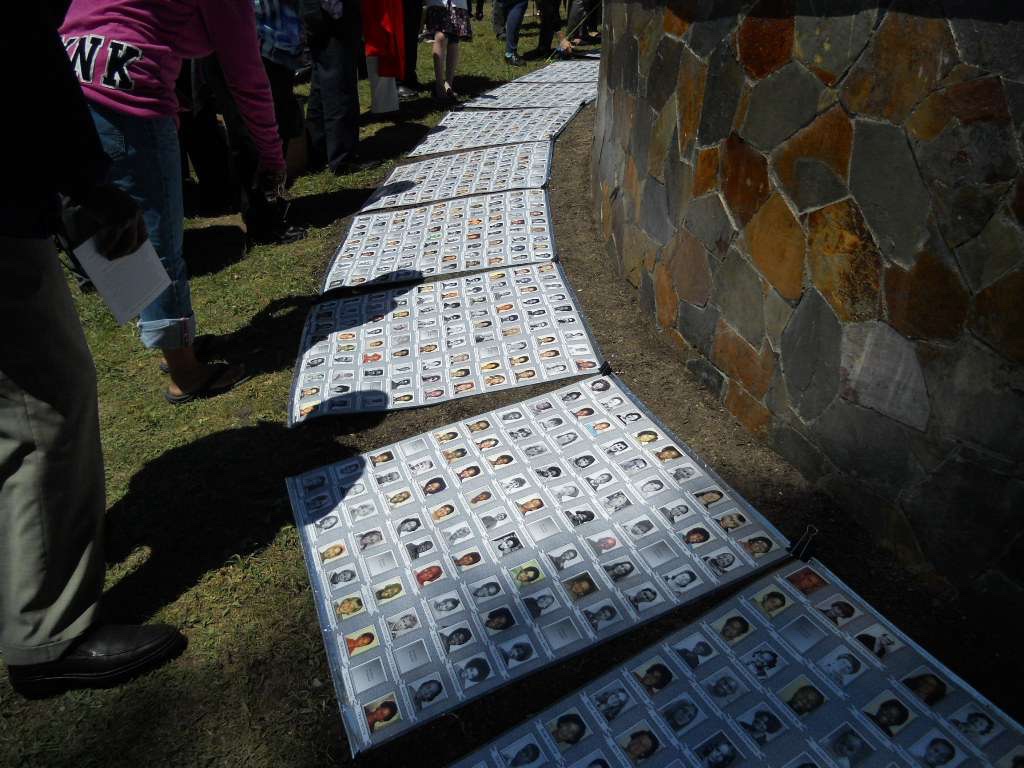
Each person thus poisoned at the compound, took five minutes to die. When it was over some 918 souls lay dead, either at the compound, or the air strip.

The murder/suicide of November 18, 1978 produced the largest loss of civilian life in American history, until the Islamist terrorist attacks of September 11, 2001.

interesting-historical-events-jonestown.jpg
“A lot of people are tired around here, but I’m not sure they’re ready to lie down, stretch out and fall asleep”. Jim Jones
Jones: How very much I’ve loved you. How very much I’ve tried, to give you the good life…We are sitting on a powder keg…I don’t think that’s what we wanted to do with our babies…No man takes my life from me, I lay my life down…If we can’t live in peace, then let us die in peace.
Christine [Miller]: Is it too late for Russia?
Jones: Here’s why it’s too late for Russia. They killed. They started to kill. That’s why it makes it too late for Russia. Otherwise I’d said, “Russia, you bet your life.” But it’s too late.
Unidentified Man: Is there any way if I go, that it’ll help?
Jones: No, you’re not going. You’re not going.
Crowd: No! No!
Jones: I haven’t seen anybody yet that didn’t die. And I’d like to choose my own kind of death for a change. I’m tired of being tormented to hell, that’s what I’m tired of.
Crowd: Right, right.
Jones: Tired of it.
Unidentified Man: It’s over, sister, it’s over … we’ve made that day … we made a beautiful day and let’s make it a beautiful day … that’s what I say.

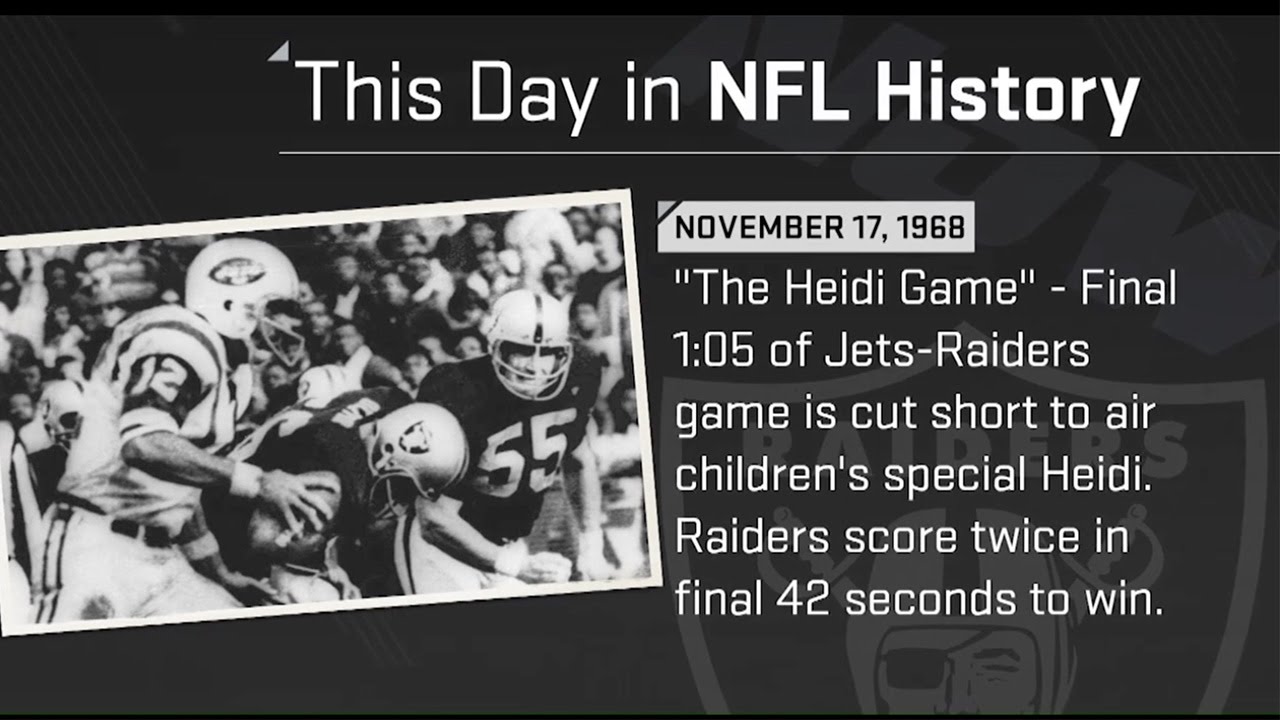
November 17, 1968 The Heidi Bowl

If half the nation hated NBC at that moment now the other half did, as well.

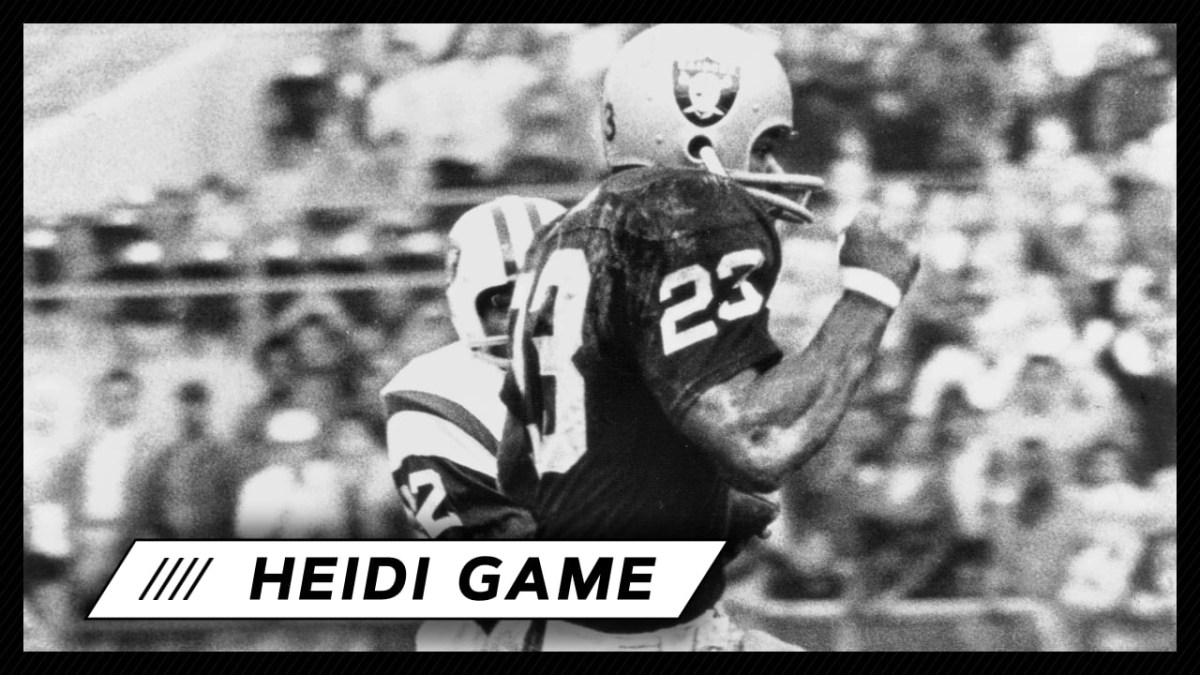
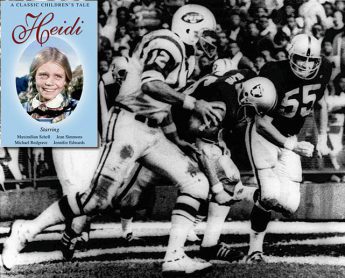
For football fans, November 17, 1968 was shaping up to be one hell of a game.  The second-best team in the world Oakland Raiders if the results of Super Bowl II were any indication, against the future American Football League champion and Super Bowl III winner, New York Jets.

raiders-jets-heidi-bowl

NBC executives were thrilled. The AFL was only eight years old in 1968 and as yet unproven, compared with the older league. At this time the NFL/AFL merger was still two years in the future.

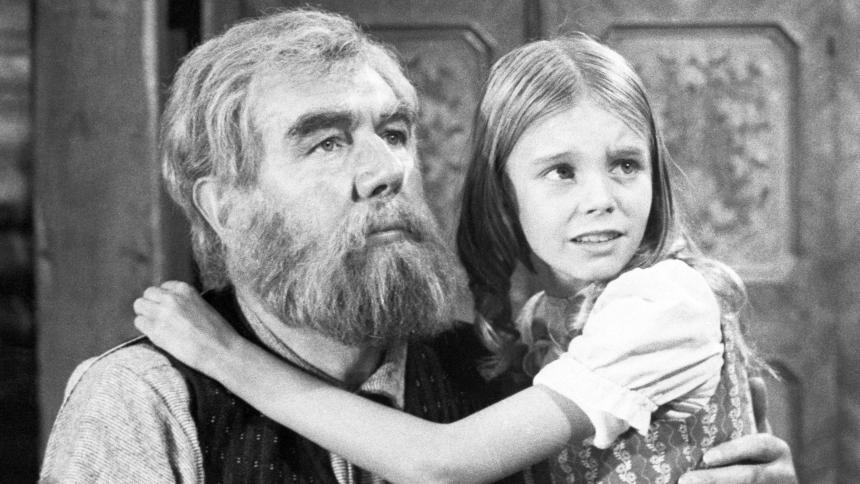
This game was expected to keep viewers in their seats, adding to the already large audience anticipated for the 7:00pm presentation of Heidi, a modern remake of the children’s classic from 1880.

In those days, most pro football games were played in 2½ hours. Network executives scheduled this one, for three. The contract with Heidi prime sponsor Timex specified a 7:00 start. The order went out to network affiliates, across the fruited plain. There will be no delays.

The game didn’t disappoint, In fact the matchup was voted among the ten most memorable games in professional football history in 1997, and the most memorable regular season contest, ever. The rivalry between the two clubs was intense. This was a high-scoring game where the lead changed, no fewer than eight times.

image-952333-860_poster_16x9-yegb-952333

As early as 6:20, network brass began to worry that the game wouldn’t end on time. 7:00 arrived with a minute and five seconds left to play. The Jets were ahead, 32-29.

Network and affiliate switchboards began to light up, with fans demanding the game be broadcast in its entirety. Others wanted to know if Heidi would begin, on time.

NBC Sports executive producer Don “Scotty” Connal and network president Julian Goodman had by this time agreed to “slide the network”, to begin Heidi as soon as Curt Gowdy signed off from the game.

All well and good but by this time, phone switchboards were jammed. Solid. NBC’s CIrcle-7 phone exchange blew twenty-six fuses in one hour. Even NYPD switchboards broke down. Broadcast Operations Control (BOC) supervisor Dick Cline nervously watched the clock as Connal frantically redialed, but couldn’t get through.

The television audience watched Oakland running back Charlie Smith return the kickoff from the end zone to the Oakland 22-yard line with 1:01 remaining on the clock. And then the feed…ended.

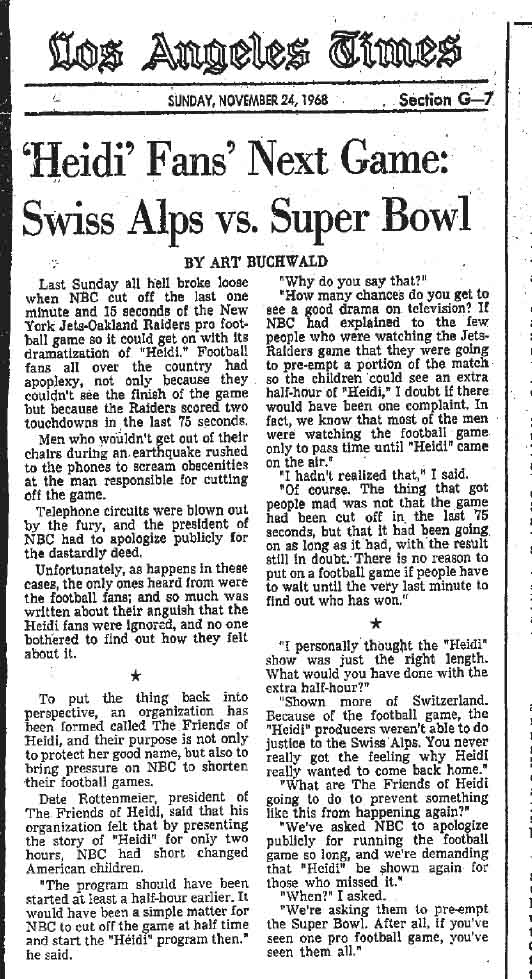
Heads exploded across the nation as callers reached out to newspapers and television stations, even local police departments, to demand the score. And Loooord, did they bitch. Humorist Art Buchwald wrote “Men who wouldn’t get out of their chairs in an earthquake rushed to the phone to scream obscenities [at the network].”

Meanwhile, the Oakland Raiders staged the most amazing come-from-behind rally in the history of sports, scoring two touchdowns in 42 seconds. Gamblers were apoplectic on learning the news, that the Raiders had beat the 7½ point spread.

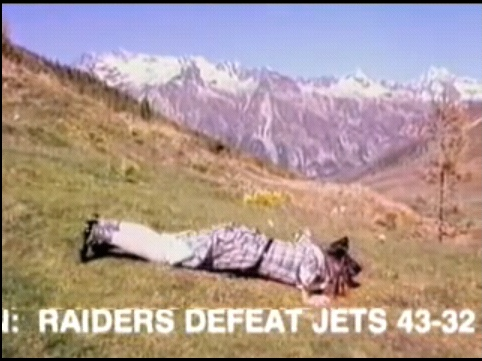
Meanwhile, the film was reaching that most tear-jerking moment as Heidi’s paralyzed cousin Clara took her first halting steps, and then: SPORTS BULLETIN: RAIDERS DEFEAT JETS 43-32”.

If half the nation hated NBC at that moment, now the other half did as well. Sportswriter Jack Clary quipped, “The football fans were indignant when they saw what they had missed. The Heidi audience was peeved at having an ambulatory football score intrude on one of the story’s more touching moments. Short of pre-empting Heidi for a skin flick, NBC could not have managed to alienate more viewers that evening.”

The “Heidi Bowl” was prime time news the following night, on all three networks. NBC’s Huntley-Brinkley Report aired the last sixty seconds. ABC Evening News anchor Frank Reynolds read excerpts from the movie, with clips of the Raiders’ two touchdowns cut in. CBS Evening News’ Harry Reasoner announced the “results” of the game: “Heidi married the goat-herder“.

NBC had no option but self-mockery at this point, to redeem itself from the fiasco. One testimonial read “I didn’t get a chance to see it, but I hear it was great”. The statement was signed by Jets quarterback, Joe Namath.

A special “Heidi phone” was installed in the BOC, to prevent future such disasters. In 2005, TV Guide listed the Heidi Bowl at #6 of the “100 Most Unexpected TV Moments” in television history.

Actress Jennifer Edwards in the title role of the film, may have the final word in this story: “My gravestone is gonna say, ‘She was a great moment in sports’”.

maxresdefault (18)

November 14, 1943 Don’t Shoot – We’re Republicans

We’ve all experienced that “oh sh*t” moment. Words you wish you hadn’t said. If only you could unsend that text, or email. Take heart. You will never be that sailor who accidentally fired a live torpedo. At the president of the United States.

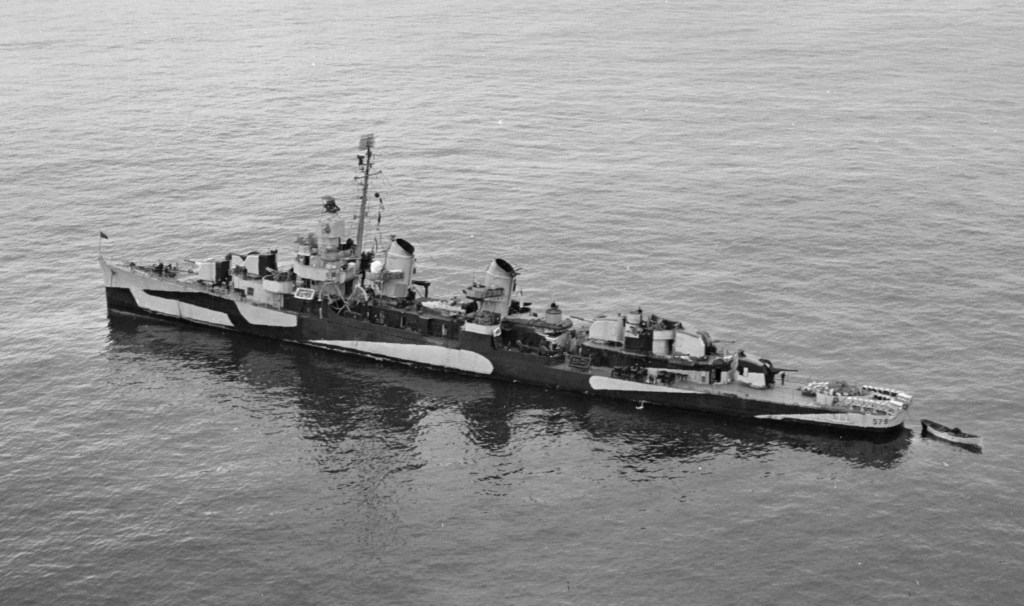
The Fletcher class destroyer DD-579 was built by the Consolidated Steel Corporation of Orange, Texas, the 11th such vessel built for service in World War 2. Commissioned on July 6, 1943 she was christened USS William D. Porter in honor of the Civil War admiral. To her sailors, she was “Willy Dee”.

The U.S. Navy destroyer USS William D. Porter (DD-579) in Massacre Bay, Attu, Aleutian Islands, 9 June 1944. US Navy Photo

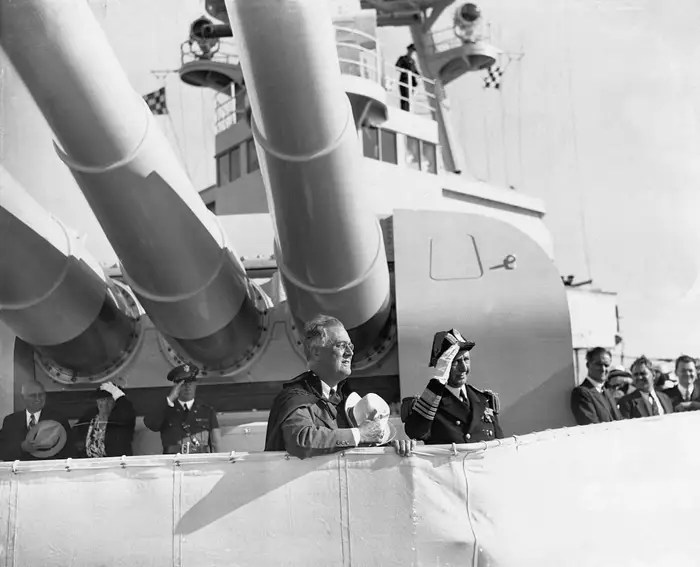
On November 12, 1943, the Porter departed Charleston for Norfolk to rendezvous with a fleet, departing Norfolk. On board the flagship USS Iowa was the President of the United States, Franklin Delano Roosevelt.

Now in an unprecedented third term with a fourth less than a year away, the most successful figure in the history of American party politics was heading to Cairo and Tehran for top level meetings with Allied leaders.

If sailors are a superstitious lot then perhaps it’s for good reason. Problems began even while leaving port when Willy Dee improperly raised an anchor, tearing off a railing and lifeboat mount from a neighboring vessel.

The following day an explosion caused the entire fleet to take evasive maneuvers from German submarines, lurking below. But no. There was no submarine. Willy Dee had accidentally dropped a live depth charge.

On the afternoon of November 14th, President Roosevelt requested a demonstration of Iowa’s anti-aircraft capabilities. Balloons were released for the purpose, most of which were shot down by the battleship’s gunners. Some that “got away” were shot down by other vessels, including USS William D. Porter.

Escort ships then commenced a torpedo demonstration. That’s when it all went off the rails.

The simulated release of a torpedo requires that a launch primer be disarmed. Porter “fired” one, then two…so far so good…but nobody disarmed #3.

Oops.

A fully armed torpedo was now in the water and closing fast, on the president of the United States. Not only the chief executive but virtually every senior military staff member then conducting the war was on that boat including Secretary of State Cordell Hull, Chief of Staff Admiral William D. Leahy, Chief of Staff of the Army General George C. Marshall, Chief of Naval Operations Ernest King, Commanding General of the U.S. Army Air Forces Henry “Hap” Arnold, Secretary of Commerce Harry Hopkins, and many other high ranking officials.

Gun shy about breaking radio silence after the depth charge incident, frantic messages were sent via signal light, resulting in the unlikely misunderstanding that Porter was backing up, at full speed.

With the situation rapidly going from bad to worse Porter at last broke radio silence, communicating the situation as it really was. President Roosevelt heard what was happening and asked his secret service detail to wheel his chair to the rail. He wanted to watch.

Iowa turned hard and the torpedo exploded harmlessly, some 3,000 feet astern of the battleship. The episode took less than 5 minutes.

Porter was ordered to Bermuda for investigation of the “assassination plot” against the president. In the end, torpedoman Lawton Dawson was court-martialed and sentenced to 14 years hard labor. President Roosevelt gave the man a full pardon, as no harm was done.

The William D. Porter served in the Pacific for much of 1944 without incident, but that no longer mattered. For the rest of her time left afloat she was hailed by other ships “Don’t shoot, we’re Republicans!”

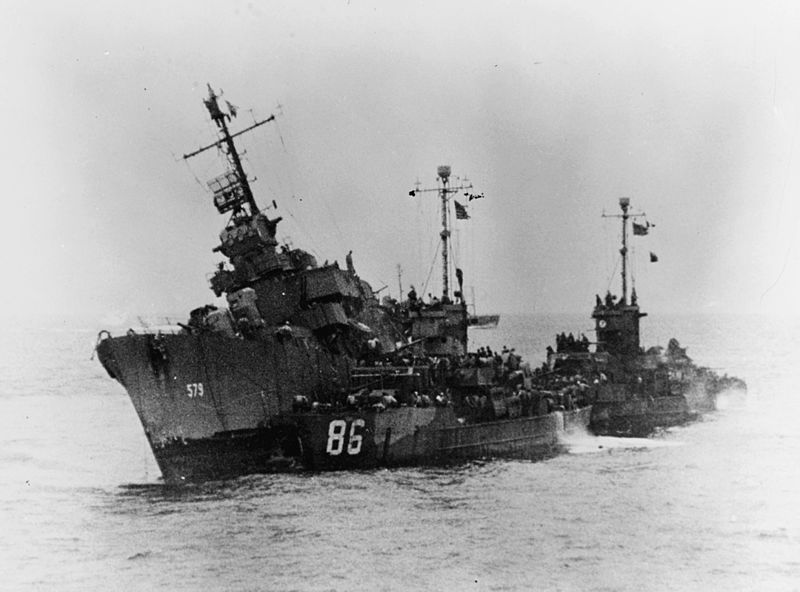
Willy Dee met her final stroke of bad luck at the battle of Okinawa, when she managed to shoot down a kamikaze who exploded anyway, beneath the hull of the ship. Not a single sailor was lost but this was the end, for the Willy Dee. Three hours later she rolled and sank by the stern. The unluckiest ship in the American Navy, was gone.

“Damaged William D. Porter listing heavily. Landing Craft Support ships LCS(L)(3)-86 and LCS(L)(3)-122 (behind) are assisting:. – H/T Wikipedia

November 11, 1918 The 11th Hour

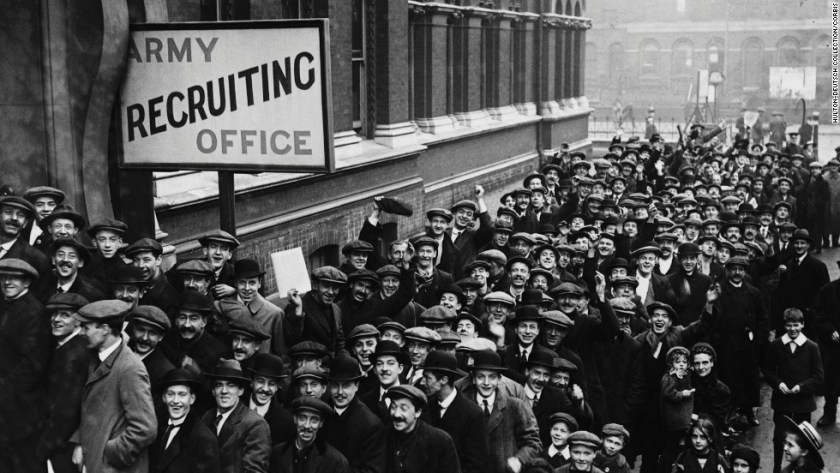
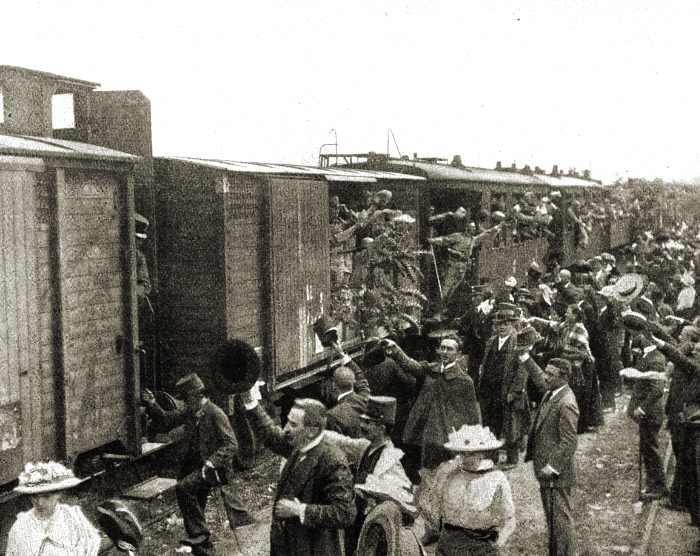
Many of the soldiers who went off to war in those days, viewed the conflict as some kind of grand adventure. Many of them singing patriotic songs, the young men and boys of Russia, Germany, Austria and France stole last kisses from wives and sweethearts, and boarded their ships and trains.

The final surrender was signed at 5:10am on November 11, and back-timed to 5:00am Paris time, scheduled to go into effect later that morning. The 11th hour, of the 11th day, of the 11th month.

In an alternate history, the June 1914 assassination of the heir-apparent to the Habsburg Empire could have led to nothing more than a regional squabble.  A policing action, in the Balkans.

As it was, mutual distrust and entangling alliances combined with slavish obedience to mobilization timetables, to draw the Great Powers of Europe, into the vortex.  On August 3, the “War to End All Wars” exploded across the European continent.

Many of the soldiers who went off to war in those days, viewed the conflict as some kind of grand adventure. Many of them singing patriotic songs, the young men and boys of Russia, Germany, Austria and France stole last kisses from wives and sweethearts, and boarded their ships and trains.

140604153439-19-wwi-main-timeline-0604-restricted-horizontal-large-gallery

Believing overwhelming manpower to be the key to victory, British Secretary of State for War Lord Horatio Kitchener recruited friends and neighbors by the tens of thousands into “Pal’s Battalions”, to fight for King and country.The signs could have been written in any number of languages, in the early phase of the war

Four years later, an entire generation had been chewed up and spit out, in pieces.

Many single day’s fighting during the great battles of 1916 produced more casualties than every European war of the preceding 100 years, civilian and military, combined.

6,503 Americans lost their lives during the savage, month-long battle for Iwo Jima, in 1945. The first day’s fighting during the 1916 Battle of the Somme, killed three times that number on the British and Commonwealth side, alone.Over 1.5 million shells were fired in the days leading to the battle of the Somme

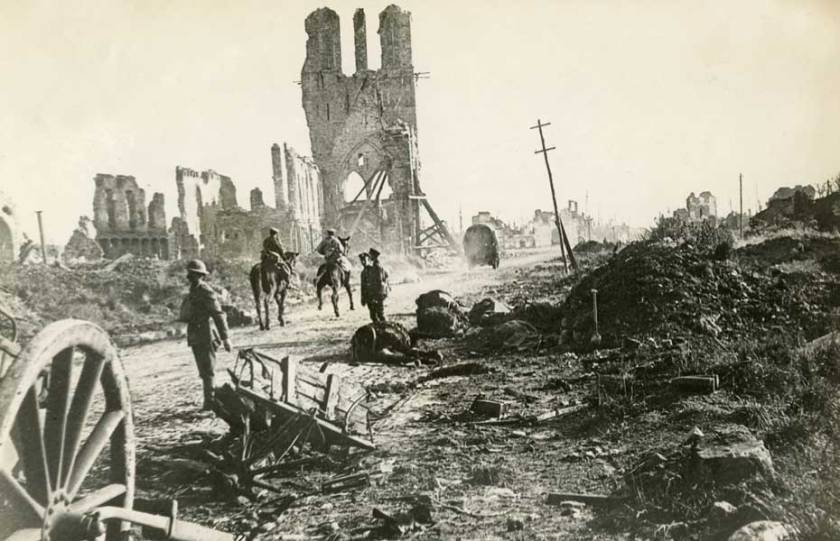
Over 16 million were killed and another 20 million wounded, while vast stretches of the European countryside were literally, torn to pieces. Tens of thousands remain missing, to this day.

battle_of_the_somme_in_pictures_1

Had you found yourself in the mud and the blood, the rats and the lice of the trenches during the New Year of 1917-’18, you may have heard a plaintive refrain drifting across the barbed wire and frozen wastes of no man’s land, sung to the tune of ‘Auld Lang Syne”.

We’re here, because we’re here,
because we’re here, because we’re here,
we’re here, because we’re here,
because we’re here, because we’re here.

cher-ami

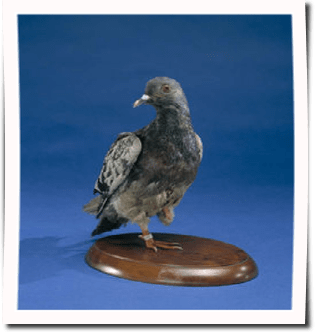
Those who fought the “Great War”, were not always human.  The carrier pigeon Cher Ami escaped a hail of bullets and returned twenty-five miles to her coop despite a sucking chest wound, the loss of an eye and a leg that hung on, by a single tendon.  The message she’d been given to carry, saved the lives of 190 men.

“Warrior” was the thoroughbred mount to General “Galloper” Jack Seely, arriving in August 1914 and serving four years “over there”. “The horse the Germans can’t kill” survived snipers, poison gas and shellfire to be twice buried alive in great explosions, only to return home to the Isle of Wight, and live to the ripe old age of 33.First division Rags

18-03-23-thumb

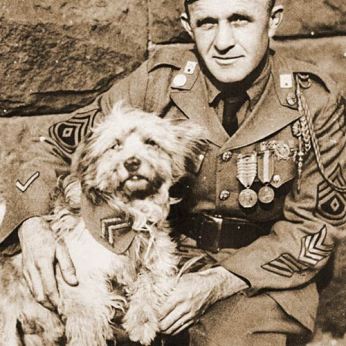
First Division Rags” ran through a torrent of shells, gassed and blinded in one eye, a shell fragment damaging his front paw, yet still, he got his message through.

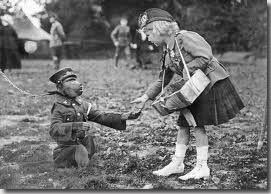
Jackie the baboon lost a leg during heavy bombardment from German guns, while frantically building a protective rock wall around himself, and his comrades.

Tirpitz the German pig jumped clear of the sinking light cruiser SMS Dresden, to become mascot to the HMS Glasgow.

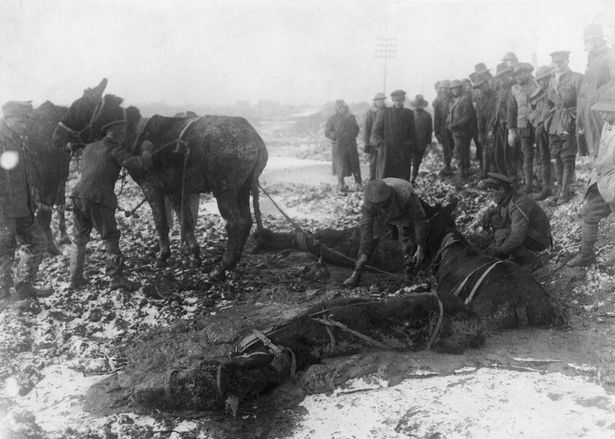
Sixteen million animals served on all sides and in all theaters of WW1:  from cats to canaries, to pigeons and mules, camels, donkeys and dogs.  As “dumb animals”, these were never given the choice to “volunteer”.  And yet they served, some nine million making the supreme sacrifice by decision, other than their own.

In the end, starvation and malnutrition stalked the land at home as well as the front, with riots at home and mutiny in the trenches. The Russian Empire of the Czars had collapsed into a Bolshevik hellhole, never to return.  Nearly every combatant saw the disintegration of its domestic economy, or teetering on the brink.

WW1-animals

A strange bugle call came out of the night of November 7, 1918. French soldiers of the 171st Régiment d’Infanterie, stationed near Haudroy, advanced into the fog and the darkness, expecting that they were about to be attacked. Instead, they were shocked to see the apparitions of three sedans, their sides displaying the German Imperial Eagle.

Imperial Germany, its army disintegrating in the field and threatened with revolution at home had sent a peace delegation, headed by the 43-year-old German politician Matthias Erzberger.

the-last-soldier-killed-in-wwi-died-one-minute-before-the-war-ended

The delegation was escorted to the Compiegne Forest near Paris, to a conference room fashioned out of a railroad dining car. There they were met by a delegation headed by Ferdinand Foch, Marshall of France.

Adolf Hitler would gleefully accept French surrender in the same rail car, some twenty-two years later.

The German delegation was shocked at the words that came out of Foch’s mouth. ‘Ask these gentlemen what they want,’ he said to his interpreter. Stunned, Erzberger responded. The German believed that they were there to discuss terms of an armistice. Foch dropped the hammer: “Tell these gentlemen that I have no proposals to make”.

original-french-postcard-showing-the-wagon-in-which-the-ww1-armistice-M1B0DJ

Ferdinand Foch had seen his country destroyed by war, and had vowed “to pursue the Feldgrauen (Field Grays) with a sword at their backs”. He had no intention of letting up.

Marshall Foch now produced a list of thirty-four demands, each one a sledgehammer blow on the German delegation. Germany was to divest herself of all means of self-defense, from her high seas fleet to the last machine gun. She was to withdraw from all lands occupied since 1870. With the German population at home facing starvation, the allies were to confiscate 5,000 locomotives, 150,000 railroad cars, and 5,000 trucks.

1200px-Waffenstillstand_gr

By this time, 2,250 were dying every day on the Western Front.  Foch informed Ertzberger that he had 72 hours in which to respond. “For God’s sake, Monsieur le Marechal”, responded the German, “do not wait for those 72 hours. Stop the hostilities this very day”.  Even so, the plea fell on deaf ears. Fighting would continue until the last minute, of the last day.

The German King, Kaiser Wilhelm, abdicated on the 10th, as riots broke out in the streets of Germany. The final surrender was signed at 5:10am on November 11, and back-timed to 5:00am Paris time, scheduled to go into effect later that morning. The 11th hour, of the 11th day, of the 11th month.

The order went out to that effect. The war would be over in hours, but there were no other instructions.

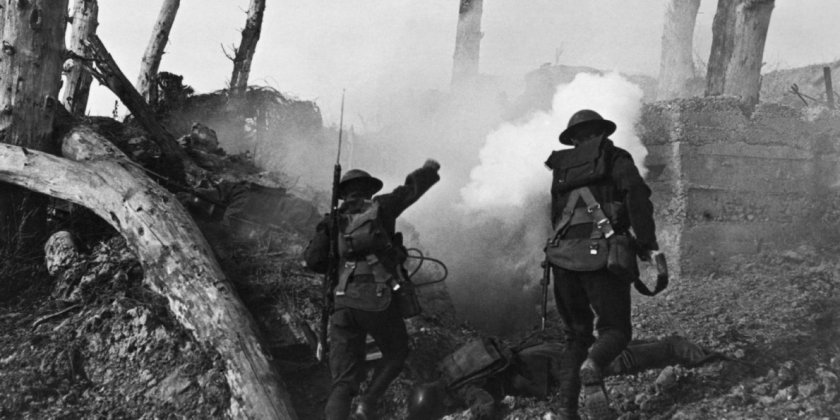
Some field commanders ordered their men to stand down. Why fight and die over ground they could walk over, in a few hours?The last six hours

Many continued the attack, believing that Germany had to be well and truly beaten. Others saw their last chance at glory or promotion. An artillery captain named Harry S Truman, kept his battery firing until only minutes before 11:00.

English teacher turned Major General Charles Summerall had a fondness for the turn of phrase. Ordering his subordinates across the Meuse River in those final hours, Summerall said “We are swinging the door by its hinges. It has got to move…Get into action and get across. I don’t expect to see any of you again…

No fewer than 320 Americans were killed in those final six hours, another 3,240 seriously wounded.

7fe16b6c9f770b107480c9ca6c28e87c

Still smarting from the disastrous defeat at Mons back in 1914, British High Command was determined to take the place back, on the final day of the war. The British Empire lost more than 2,400 in those last 6 hours.

The French 80th Régiment d’Infanterie received two orders that morning – to launch an attack at 9:00, and cease-fire at 11:00. French losses for the final day amounted to 1,170. The already retreating Germans suffered 4,120.

One-hundred years ago today, all sides suffered over 11,000 dead, wounded, and missing in those final six hours. Some have estimated that more men died per hour after the signing of the armistice, than during the D-Day invasion, 26 years later.

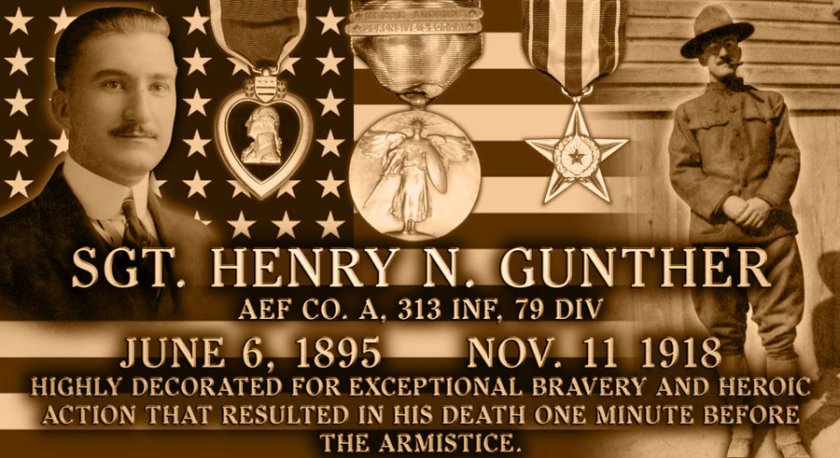
Over in the Meuse-Argonne sector, Henry Gunther was “visibly angry”.   Perhaps this American grandson of German immigrants felt he had something to prove.  Anti-German bias had not reached levels of the next war, when President Roosevelt interned Americans of Japanese descent.  Yet, such bias was very real.  Gunther’s fiancé had already broken up with him, and he’d recently been busted in rank, after writing home complaining about conditions at the front.

Bayonet fixed, Gunther charged the enemy machine gun position, as German soldiers frantically waved and yelled for him, to go back. He got off a “shot or two”, before the five round burst tore into his head. Henry Nicholas John Gunther of Baltimore Maryland, was the last man to die in combat, in the Great War.  It was 10:59am.  The war would be over, in sixty seconds.

Sargeant-Henry-Gunther

After eight months on the front lines of France, Corporal Joe Rodier of Worcester Massachusetts, was jubilant.   “Another day of days“.   Rodier wrote in his diary.  “Armistice signed with Germany to take effect at 11 a.m. this date. Great manifestations. Town lighted up at night. Everybody drunk, even to the dog. Moonlight, cool night & not a shot heard“.

Matthias Erzberger was assassinated in 1921, for his role in the surrender. The “Stab in the Back” mythology destined to become Nazi propaganda, had already begun.

AEF Commander General John “Black Jack” Pershing believed the armistice to be a grave error. He believed that Germany had been defeated but not beaten, and that failure to smash the German homeland meant that the war would have to be fought, all over again. Ferdinand Foch agreed. On reading the Versailles treaty in 1919, Foch said “This isn’t peace! This is a truce that will last for 20 years”.

The man got it wrong, by 36 days.

A personal note:

PFC Norman Franklin Long was wounded during the Great War, a member of the United States Army, 33rd Pennsylvania Infantry.  He left us on December 18, 1963, only hours before his namesake and my brother Norm, was born.

My father’s father went to his final rest on Christmas eve of 1963, in Arlington National Cemetery. 

Lt. Col. Richard B “Rick” Long Sr. served during the Vietnam era and earned his eternal rest at the Sandhills Veteran’s Cemetery, in North Carolina.

Rest in peace Grampa, Dad, you left us too soon.

Norm and my other brother Dave went on to serve over 50 years between them and both retired with the rank of Lieutenant Colonel.

Respect and gratitude for your service, gentlemen.

October 31, 1883 The Dress. A Presidential Ghost Story.

For most, October 31, 1883 passed pleasantly enough:  Fall festivals, children bobbing for apples, young women consulting mirrors or tossing nuts into fires, to see whom they would marry.  Not so, Henry Rathbone.  He had Monsters in his head.

Permit me a moment, for a Presidential ghost story. A true tale shared for your Halloween enjoyment, a narrative to reach out to that icy spot at the back of your neck. The one that makes you ask yourself…was that a ghost? But we are civilized women and men, are we not? We know there are no such things as ghosts…Right?

Albany, New York businessman Jared Rathbone passed away in 1845, leaving a considerable fortune to his widow Pauline, and their four children.

New York Supreme Court Justice Ira Harris, himself a widower, joined his household with hers when the couple married, in 1848.  His four were added to hers making eight, a regular 19th-century “Brady Bunch.”

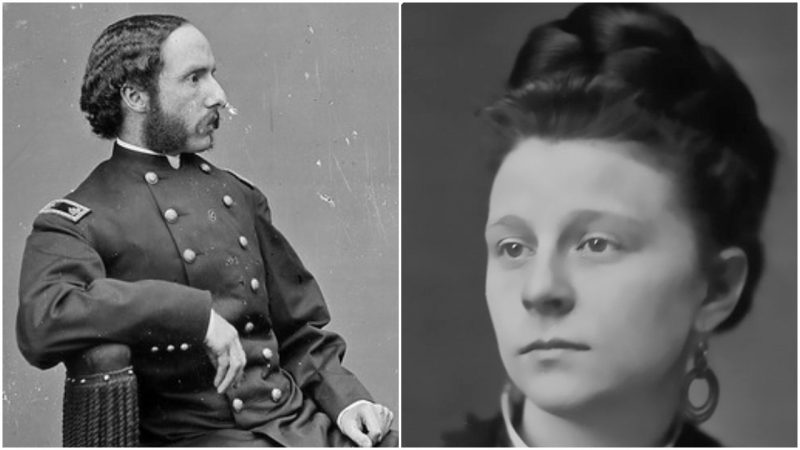
Pauline’s son Henry and Ira’s daughter Clara became close friends and later, more.  Much more.  They were step-siblings, yes, but there was no “blood” between them.  Such a relationship seems not to have been so ‘odd’ back then as it may seem, today.

With the incoming Lincoln presidency, Ira Harris was elected to the United States Senate, replacing Senator William H. Seward who’d been picked to serve in the new administration.

By the time of the War between the States Clara Harris and Henry Rathbone were engaged, to be married.

udvwxyoa

Rathbone served for the duration of the war in the Union army, becoming Captain in the 12th Infantry Regiment and participating in the battles at Antietam, and Fredericksburg.  By the end of the war he’d attained the rank, of Major.

Meanwhile, Senator Harris’ daughter Clara formed a friendship with the First Lady of the United States, Mary Todd Lincoln.

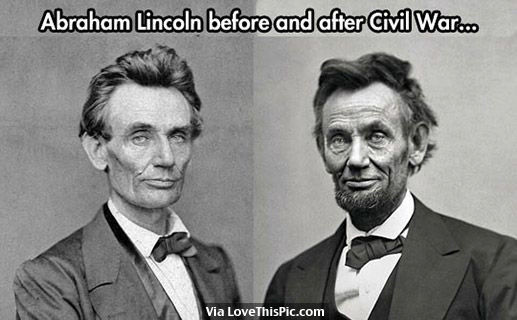
If a picture is worth a thousand words, before and after photographs tell of the burdens, borne by the chief executive of a nation at war with itself. Making matters worse, by war’s end the Lincolns had lost two of their four boys, in childhood.

197030-Abraham-Lincoln-Before-And-After-Civil-War

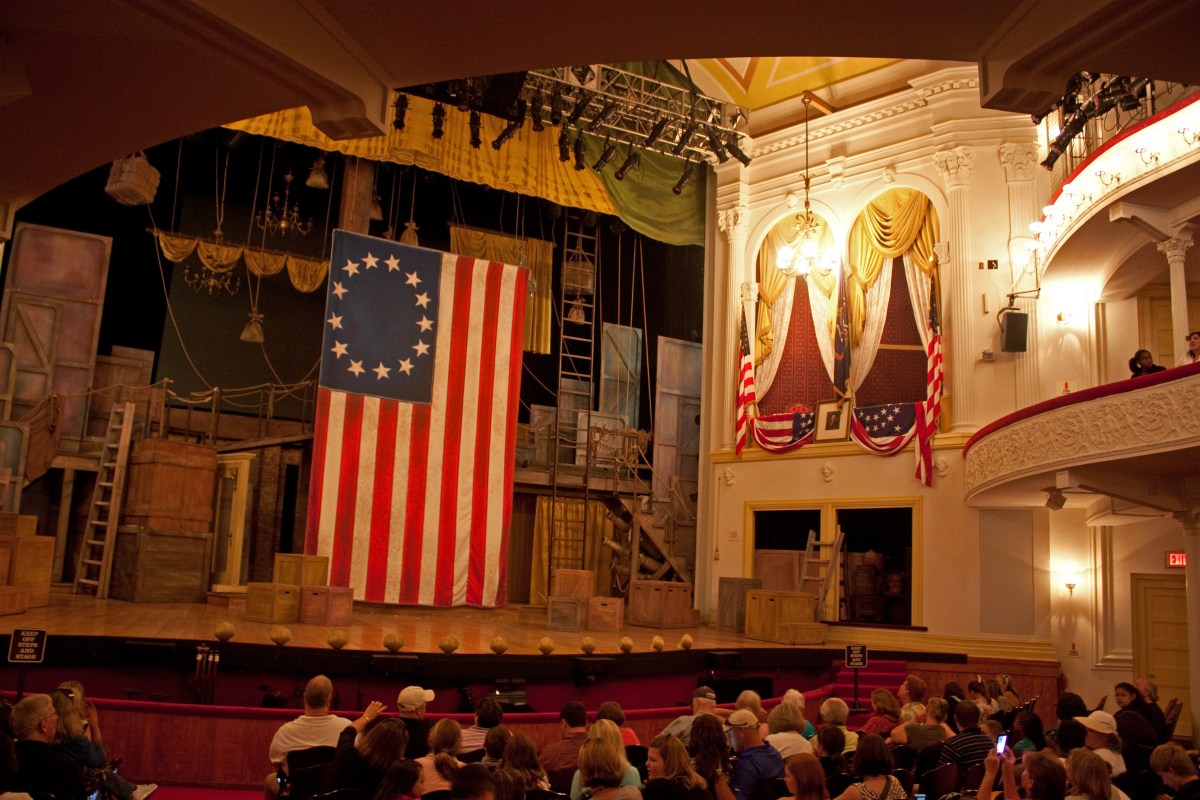
The war was all but over in April 1865. A night out must have seemed like a welcome break. An evening at the theater. A play, the three-act farce by English playwright Tom Taylor. “Our American Cousin”.

The Lincoln’s companions for the evening were to be General Grant and his wife, Julia, but the General had other plans.  It was probably convenient, because the ladies didn’t get along.  Mary suggested her neighbor Clara Harris, of whom she was quite fond.  And besides, didn’t Clara’s fiancée cut a dashing figure, in his blue uniform.

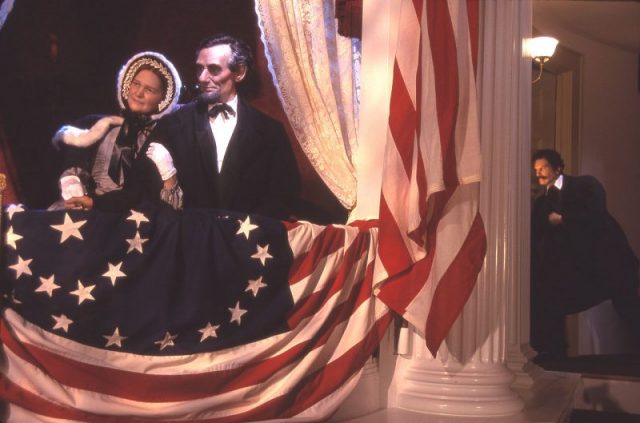
The story of that night is familiar. The assassin creeping up from behind. The bullet to the head. The Major lunging for the killer but…too late.

John Wilkes Booth was himself one of the great performers of his day, with the actor’s impeccable sense of timing. The assassin had chosen his moment, carefully. Raucous laughter and applause could be expected to follow the line “Don’t know the manners of good society, eh? Well, I guess I know enough to turn you inside out, old gal — you sockdolagizing old man-trap!

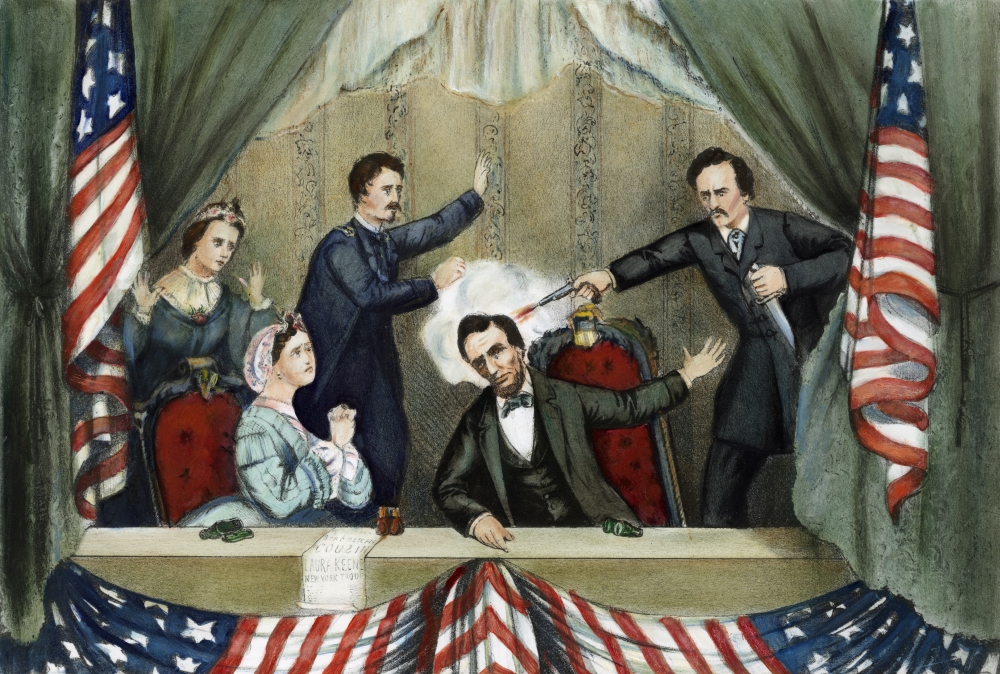
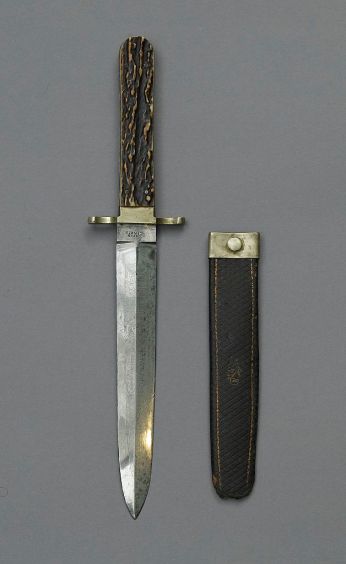
LINCOLN: ASSASSINATION, 1865. The assassination of Abraham Lincoln by John Wilkes Booth at Ford’s Theatre, Washington D.C., 14 April 1865. Lithograph, 1865.

The bullet was fired at point-blank range, entering the President’s skull behind the left ear and coming to rest, behind the right eye.  Rathbone sprang to the attack but the assassin was ready, the dagger slashing the major nearly bone-deep, from shoulder to elbow.  Rathbone made one last lunge, knocking Booth off balance as he leapt from the bunting to the stage, below.  Witnesses remembered the cry “Sic Semper Tyrannis”.  Thus always, to tyrants.  And then, he was gone.

In the President’s box, all was chaos. The first lady was inconsolable, sobbing, apoplectic, shrieking like a wildcat. Rathbone was losing blood at a prodigious rate, a major artery severed in the fight.

John_Wilkes_Booth_dagger
John Wilkes Booth dagger, used to attack Henry Rathbone

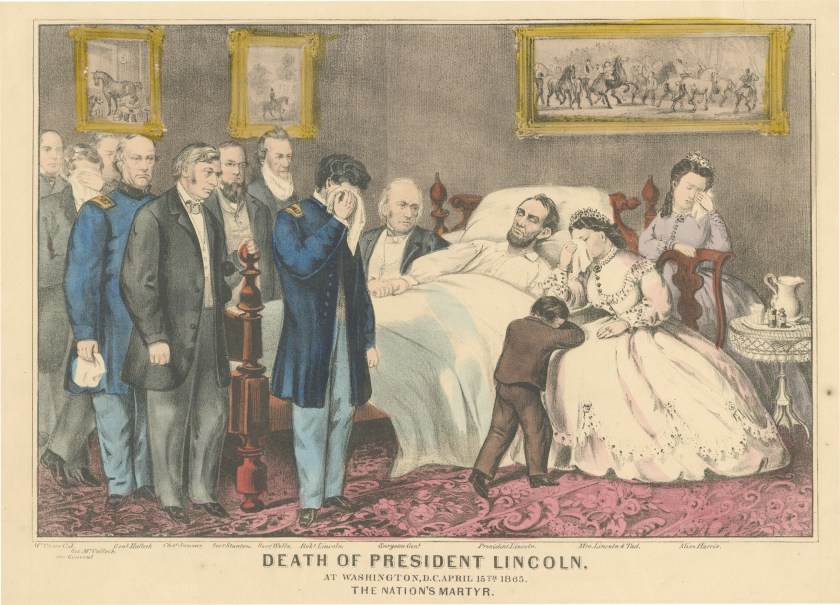
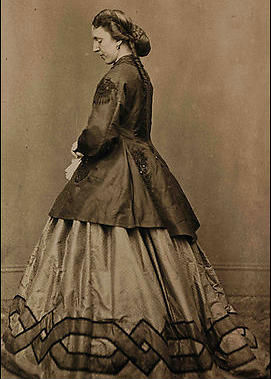
Clara’s new dress was drenched in the blood of her fiancée, her face splashed and clothing soaked through layers of petticoats to the skin, beneath.  The small group was taken across the street to the Peterson house where the President was laid out on a bed.  Henry Rathbone faded in and out of consciousness due to loss of blood, raving in his delirium how he should have caught the assassin, his head on Clara’s lap, her handkerchief stuffed into the void where the bicep, used to be.

She didn’t even have time to wash her blood-spattered face. Mary Lincoln would just begin to calm down when she’d turn and see Clara and fall apart, wailing “My husband’s blood!”.

It was the Major’s blood, but, no matter. Perception is reality, isn’t it? The death vigil lasted this way, for nine hours. The 16th President of the United States passed away at 7:22 the following morning, April 15, 1865.

Lincolns-Death

Major Rathbone would heal in time, but he never came to terms with his failure to protect the President.  He was tormented, distraught with guilt, unable to understand what he could have done differently, but, What!? Surely there must have been…Something.

Clara Harris couldn’t bring herself to wash that dress, nor even to burn it.  She hung it in a guest room closet, blood and all, in the family’s vacation home in New York.

What demons afflicted the mind of Henry Rathbone can only be guessed at, as a mental illness which had no name, crept into his soul.  He was possessed with that night.  Was I not quick enough?  Or brave enough?  Or Strong enough?  It was MY fault.  A Better Man would have taken that bullet.  Or Stopped that man.  No he wouldn’t…yes he would…but…I…what, the, hell, is WRONG WITH ME???!!!

clara-harris
The dress

Washington DC was saturated with All Things Lincoln in April 1866, and Clara fled to the family home in Albany, to get away.  There in that closet hung the bloody dress. 

On the anniversary of the assassination she heard laughter, she knew she did, coming down the hall.  Abraham Lincoln’s laughter.

Others reported the same thing in the following years.  The sound of laughter.  A single gun shot.  

But there are no such things as ghosts…Right?

Major Rathbone and Clara Harris were married in July 1867. The couple had three children, Henry rising to the rank of brevet Colonel, in 1870.  That was the year he resigned from the army but work was hard to come by, due to increasing mental instability.

Rathbone convinced himself that Clara was unfaithful, that she planned to take the children away.   He would fly into rages with little or no provocation. She considered divorce but couldn’t bear the thought, nor the stigma.

Clara went so far as to have the closet bricked up with that dress inside, just as Edgar Allen Poe’s Montresor bricked up Fortunato.  That changed, precisely, nothing.  The family traveled to Europe and back in search of a cure, but Rathbone’s condition only worsened.

Vault_ag1982_0119x_085_1_opt
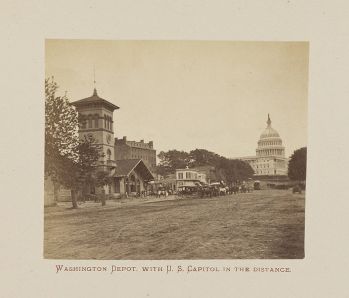
US Capitol as it looked, in 1872

Despite all this or possibly because of it, President Chester A. Arthur appointed Rathbone US Consul to the Province of Hannover in Germany, in 1882.

“Trick or Treating” had yet to take hold by this time, back in the United States.  For most, October 31, 1883 passed pleasantly enough:  Fall festivals, children bobbing for apples, young women consulting mirrors or tossing nuts into fires, to see whom they would marry.  Not so, Henry Rathbone.  He had Monsters in his head.

On December 23, Henry Rathbone shot his wife and stabbed himself, in the chest.  Six times.  He lived.  She died.

He said he was defending his wife. Against an attacker.

The three children, Henry Riggs, Gerald Lawrence and Clara Pauline went to live with relatives. Henry Reed Rathbone was convicted of their mother’s murder and committed to an asylum for the criminally insane in Hildesheim, Germany, there to spend the next twenty-eight years.

Henry Reed Rathbone died on August 14, 1911 and was buried, next to Clara.

In 1922, Henry Riggs Rathbone was elected to the United States House of Representatives.  Twelve years before the younger Rathbone had unbricked his mother’s closet and burned the hated dress. The dress that had stolen his childhood, murdered his mother, and cursed his father.  

But there are no such things as ghosts…Right?

loudoncottagetoday
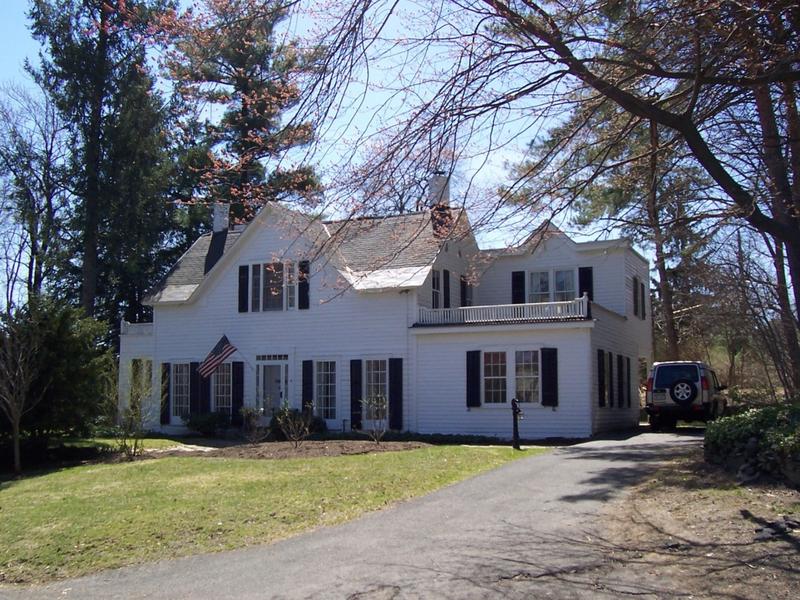
“The modern day home where Union Army Officer Henry Rathbone and Clara Harris resided”. Hat tip, HISTORIAN’S OFFICE, TOWN OF COLONIE.

Afterward

Burial customs are different in Germany, than in the United States.  Grave plots are generally leased for a period of 20 to 30 years, with an option to renew.  In 1952, officials with the city cemetery at Hanover/Engesohde looked over visitation records and determined there was no further interest, in Clara Harris or Henry Rathbone.  The couple was exhumed. Their remains were burned, and disposed of.  Like neither one had ever lived.

But there are no such things as ghosts.

Right?

October 30, 1773 A Tragic Love Story

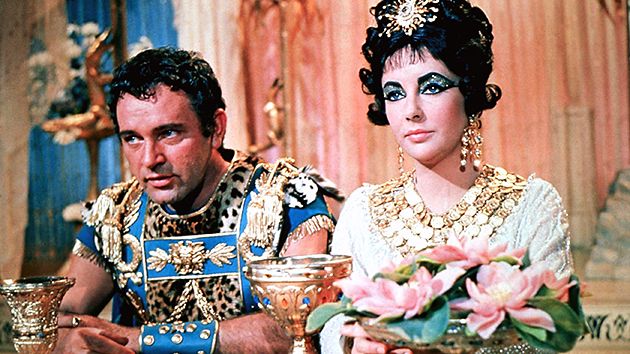
From the fictional lovers Romeo and Juliet to the very real Roman General Marc Antony and his Greek Princess turned Egyptian Pharoah Cleopatra VII, the appeal of the Tragic Romance is as old as history and as new, as popular culture. Few such tales have anything over the tragic love affair of the unfortunate, Hannah Robinson.

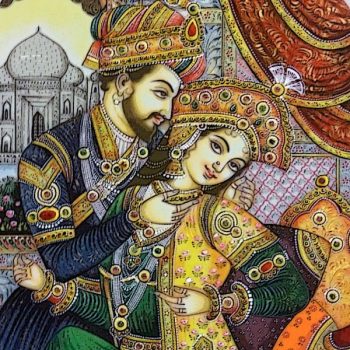
Arjumand Banu was the daughter of a wealthy Persian noble, third wife of Emperor Shah Jahan of the Mughal Empire, who ruled the lands of South Asia from modern-day Afghanistan to Kashmir and south to the Deccan plateau of South India.

Sha-Jahan-and-Mumtaz-Mahal-600x600

As Empress consort and beloved by the Emperor above all his wives, Arjumand was better known by the title “Mumtaz Mahal”, translating from the Persian as “the exalted one of the palace”.   Jahan called her his ‘Malika-i-Jahan’, or “Queen of the World”.

The labor and delivery of a daughter, the couple’s 14th child was a terrible ordeal, a 30-hour trial resulting in postpartum hemorrhage and the death of the Empress Consort on June 17, 1631.

Shah Jahan went into secluded mourning, emerging a year later with his back bent, his beard turned white.  There then followed a 22-year period of design and construction for a mausoleum and funerary garden, suitable to the Queen of the World.

This was to be no ordinary building, this grand edifice to the undying love of an Emperor.  The English poet Sir Edwin Arnold described the place as “Not a piece of architecture, as other buildings are, but the proud passion of an emperor’s love wrought in living stones.”  Today the palace is known among the 7 “Modern Wonders of the World” or simply, the Taj Mahal.

taj-mahal-visitor-limits.jpg

In another time and place, the “Pillarization” of northern European society constituted a separation along religious and political lines, so strict that many individuals had little to no contact, with those outside their own pillar.  19th century Belgian society divided along three such cohorts,  segregating largely along Catholic, Protestant and Social-Democratic strata.

The worst days of the South African Apartheid system had nothing over the European society of the age, when it came to social segregation.  Pillars possessed their own institutions: universities, hospitals and social organizations. Each even had its own news apparatus.

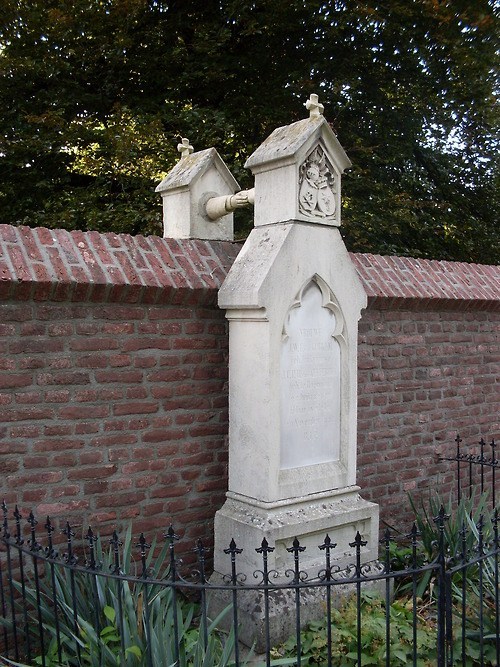
The romance between Colonel J.W.C van Gorkum of the Dutch Cavalry and Lady J.C.P.H van Aefferden was a social outrage. The 22-year old noblewoman was a Catholic.  33-year old Colonel van Gorkum was a Protestant and not a member of the nobility.  The couple’s marriage in 1842 was the scandal of Roermond but, despite all that taboo, theirs was a happy marriage lasting 38-years.

The Colonel died in 1880 and was buried next to the wall, separating the Catholic and Protestant parts of the cemetery.  Van Gorkum’s Lady died some eight years later, wishing to be buried next to her husband. Such a thing was not possible.  She would be buried opposite the wall in the Catholic part of the cemetery, as close as she could get to her beloved husband.

Such was The Law for this time and place, but neither custom nor law said anything about a little creative stonework.  So it is the couple joins hands in death as in life, together and inseparable, for all eternity.

Oud-Kerkhof-graves-with-hands2.jpg
 Oud Kerkhof cemetery in Hasselt, Belgium

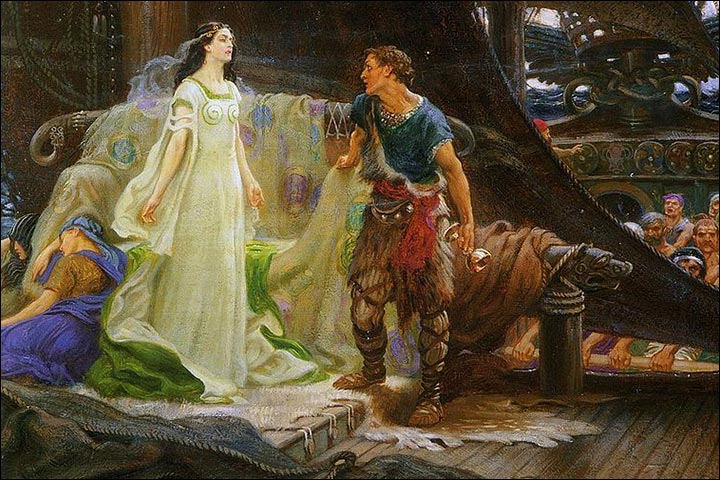
From the 1997 film Titanic to the fictional Shakespearean lovers Romeo and Juliet to the very real Roman General Marc Antony and his Greek Princess turned Egyptian Pharoah Cleopatra VII, the appeal of the Tragic Romance is as old as history and as new, as popular culture.

MCDCLEO-FE002-H-jpg_160608

From Wuthering Heights to West Side story few such tales have anything over the tragic love affair of the unfortunate, Hannah Robinson.

Hannah Robinson was one of the most beautiful women in all Colonial Rhode Island, the privileged daughter of the wealthy Narragansett planter Rowland and Anstis (Gardiner) Robinson. Years later during the time of the American Revolution, the opulent Robinson mansion entertained the likes of the Marquis de Lafayette and the Comte de Rochambeau, but now I’m getting ahead of this story.

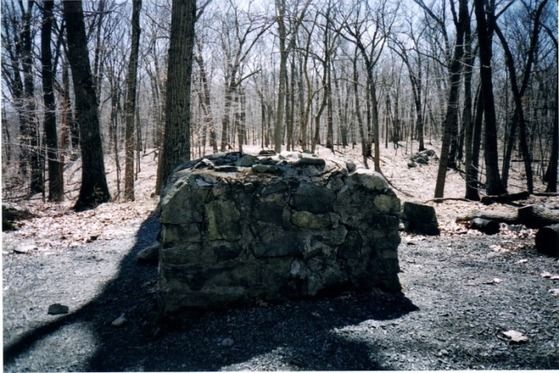
As a young girl, Hannah had nary a care in the world and spent countless hours on a large rock, enjoying the view overlooking Narragansett Bay.

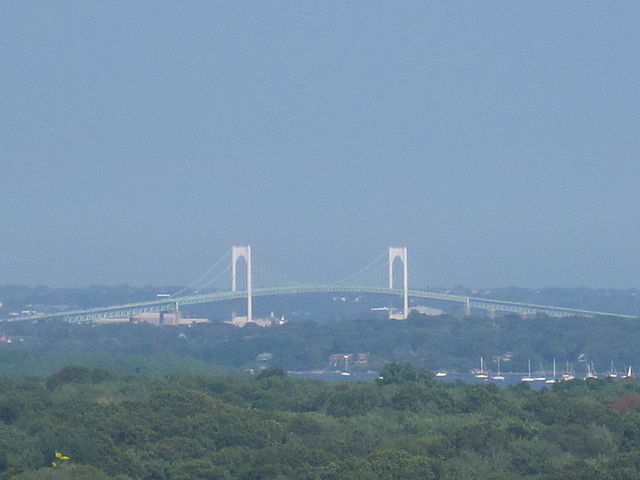
Hannah_Robinson_Tower
The view as it looks today, from Hannah Robinson tower

As she grew older, Hannah attended Madame Osborn’s finishing school in Newport. There she fell in love with the French and Dancing instructor Pierre Simond, the son of an old family of French Huguenot ancestry who liked to go by the name, Peter Simon.

The degree to which Simon reciprocated the young lady’s feelings is difficult to know, but Hannah fell hard.

Peter took a position as private tutor to one of the Robinison cousins, a short two miles away.  It wasn’t long before Simon was secretly visiting Hannah, at home. He’d hide out in a large cabinet in Hannah’s room.  The pair called it the “Friendly Cupboard”.  At night, Simon would hide out in a large lilac bush where the couple would talk for hours, and exchange letters.  Anstil was quick to get wise but she never let on, to her husband.

Then came the night Rowland spied the white paper, fluttering to the ground. He rushed to the lilac and beat at the bush with a stick until there emerged, a ragged French teacher.  After that, Rowland kept his eldest on a very short leash.

The apple doesn’t fall far from the tree.  If Hannah Robinson was stubborn, she came by it honestly.  In a rare moment of weakness, Rowland allowed Hannah and young sister Mary to attend a ball at Smith’s Castle some ten miles up the road, accompanied by a black “servant” called “Prince” who really was, it turns out, an African prince.

So it was, the trap was sprung.

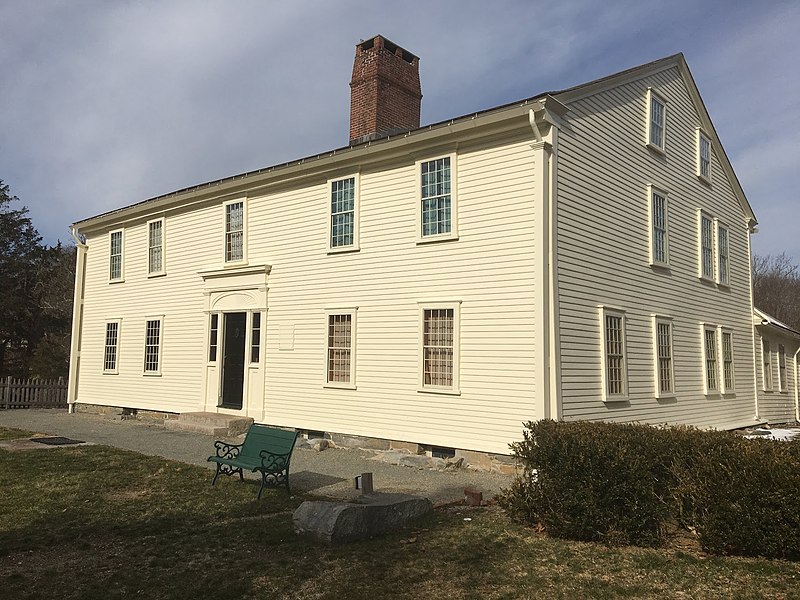
Smith's_castle_2018
Smith’s Castle house, one of the oldest homes, in Rhode Island, is now a National Historic Landmark

The trio came to a place on horseback, where there awaited a carriage.  Peter Simon’s carriage.  Mary cried and Prince begged her not to go but, to no avail.  This was the couple’s elopement.  Hannah would have it no other way.

Rowland was apoplectic and cut off his daughter, from her allowance.  The happy couple moved to Providence, but Dad proved to be right.  Now penniless, Simon soon lost interest in his young wife and left her.  Sometimes for days on end.  Other times for weeks.

Hannah’s health went into a steep decline.  Not even the little dog sent by her mother, nor her childhood maid – a woman also named Hannah, could bring back her spirits.  The young woman wasted away in Providence as, just 35-miles to the south, Mary contracted tuberculosis, and died.  Anstis’ health failed.

Rowland Robinson would come to relent, but too late.  By that time Hannah’s health was destroyed.  The fast sloop from Providence delivered a sickly shadow of her former self.

The four strong servants carrying the litter were asked to stop by the rock, where Hannah had passed all those happy hours as a girl.  Watching the bay.  She picked a flower.  “Everlasting Life”.

Life-Everlasting
Everlasting Life

A sad reunion followed between Anstis and Hannah, the ailing mother and her sickly waif of a daughter.  Anstis would recover and live long enough to see Revolution bring independence to the former American colonies.  Not so the unfortunate daughter.  Hannah Robinson died at home on October 30, 1773.  She was 27.

wooden-tower

Hannah Robinson Tower, North Kingstown Rhode Island

In 1938, the Civilian Conservation Corps (CCC) built an observation tower at the place where Hannah use to watch the Bay.  At four stories in height the thing became useful for coastal watch, during World War 2.  The tower was rebuilt in 1988, using timbers from the original construction.

You can climb the Hannah Robinson tower to this day if you want, there in North Kingstown Rhode Island. Not far from the rock where that little girl spent a happy childhood, taking in the beauty of the bay. All those many years ago.

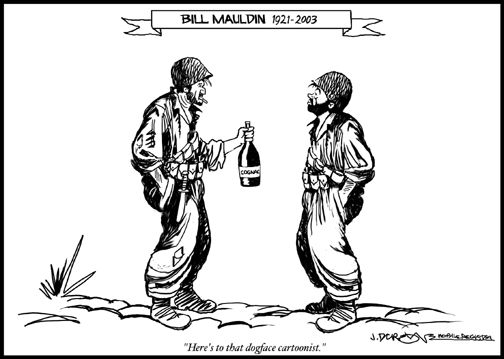
October 29, 1921 Here’s to that Dogface Cartoonist

Mauldin told the story of the common soldier, usually at the rate of six per week. His medium was the cartoon.

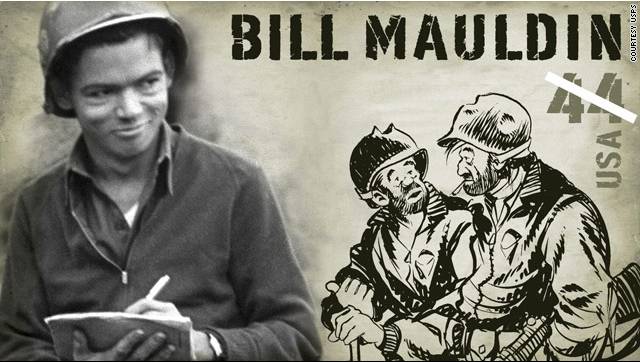
Born on October 29, 1921 in New Mexico and brought up in Arizona, William Henry “Bill” Mauldin was part of what Tom Brokaw once called, the “Greatest Generation”.

When the United States entetef World War 2, He enlisted in the 45th Infantry Division.  Mauldin was a talented artist, trained at the Chicago Academy of Fine Arts. So it was he volunteered to work for the unit’s newspaper, as a cartoonist.

As a sergeant of the 45th Division’s press corps and later for Stars & Stripes, Mauldin took part in the invasion of Sicily and later Italian campaign.  He was given his own jeep and allowed to go wherever he pleased, which was usually out in front.   

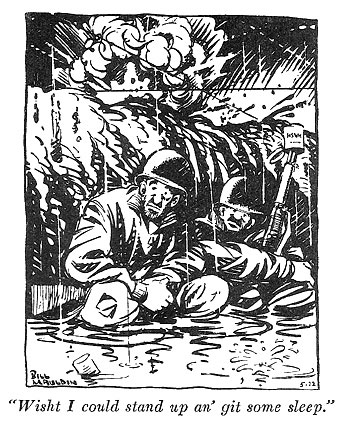
Mauldin told the story of the common soldier, usually at the rate of six per week. His medium was the cartoon.

Bill Mauldin's Army 2

Mauldin developed two infantry characters and called them “Willie and Joe” and told the story, through their eyes.  He became extremely popular within the enlisted ranks, as much of his humor poked fun at the “spit & polish” of the officer corps.  He even lampooned General George Patton one time, for insisting that his men be clean shaven all the time.  Even in combat.

Patton summoned the cartoonist to his to “throw his ass in jail” for “spreading dissent”. Commander in Chief Dwight Eisenhower himself set Old Blood and Guts straight telling Patton, to leave the man alone.  According to the Supreme Allied Commander, Mauldin’s cartoons gave the soldiers an outlet for their frustrations. He was good for morale.

Bill Mauldin's Army 3

Mauldin later told an interviewer, “I always admired Patton. Oh, sure, the stupid bastard was crazy. He was insane. He thought he was living in the Dark Ages. Soldiers were peasants to him. I didn’t like that attitude, but I certainly respected his theories and the techniques he used to get his men out of their foxholes”.

His was no rear echelon assignment.  Mauldin’s fellow soldier-cartoonist, Gregor Duncan, was killed in Anzio in May 1944.  Mauldin himself was wounded in a German mortar attack near Monte Cassino.  By the end of the war he had received the Army’s Legion of Merit for his drawings.

Mauldin tried to revive Willy & Joe after the war, but found they didn’t assimilate well into civilian life.

“Peanuts” cartoonist Charles M. Schulz was himself a veteran of World War II. Schulz paid tribute to Rosie the Riveter and Ernie Pyle in his strip but more than any other, he paid tribute to Willy & Joe. Snoopy visited with Willie & Joe no fewer than 17 times over the years.  Always on Veterans Day.

Bill Mauldin passed away on January 22, 2003, killed by a bathtub scalding exacerbated by complications of Alzheimer’s disease.

Peanuts

Bill Mauldin drew Willie & Joe for last time in 1998, for inclusion in Schulz’ Veteran’s Day Peanuts strip.  Schulz had long described Mauldin as his hero.

He signed that final strip Schulz, as always, to which he added “and my Hero“.  Bill Mauldin’s signature, appears underneath.

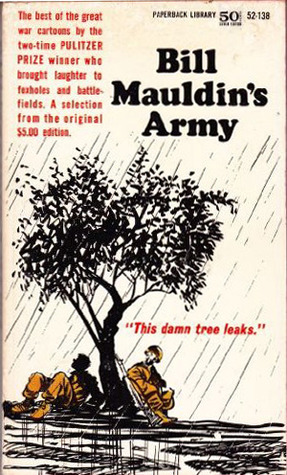
My favorite book, as a kid.

October 21, 1921 The Unknown Soldier

Passing between two lines of French and American officials, Sgt. Younger entered the room, alone.  Slowly, he circled the four caskets, three times, before at last stopping at the third from the left.  “What caused me to stop” he later said, “I don’t know.  It was as though something had pulled me”.  Younger placed the roses on the casket, drew himself to attention, and saluted.  This was the one.

Many years ago, Prussian Chancellor Otto von Bismarck remarked, “If a general war begins, it will be because of some damn fool thing in the Balkans“.

The Chancellor got his damn fool thing on a side street in Sarajevo, when a tubercular 19-year old leveled his revolver and murdered the heir-apparent to the Austro-Hungarian throne and his wife on June 28, 1914.

In another time and place, such an event may have led to limited conflict. A policing action, in the Balkans.  Instead, mutually entangling alliances brought mobilization timetables into effect, dictating the movement of men and equipment according to precise and predetermined schedules.

roads_mobil_2.jpg

German troops, leaving for the front

The hippie subculture of the 1960s produced an antiwar slogan based on the title of a McCall’s Magazine article by Charlotte E. Keyes. “Suppose They Gave a War and No One Came.”  In 1914, the coming war Had to happen.  If only because everyone was there.

ruins.jpg

The cataclysm could have been averted, as late as the last day of July. By the first of August, mutual distrust had brought events past the point of no return. By the time it was over a generation was shattered, a continent destroyed and a new century, set on a difficult and dangerous course. Some 40 million were killed in the Great War, either that or maimed or simply,…vanished. 

It was a mind bending number, equivalent to the entire population in 1900 of either France, or the United Kingdom. Equal to the combined populations of the bottom two-thirds of every nation on the planet.  Every woman, man, puppy, boy and girl.

world-war-i-100-year-anniversary-american-entry-legacy-1

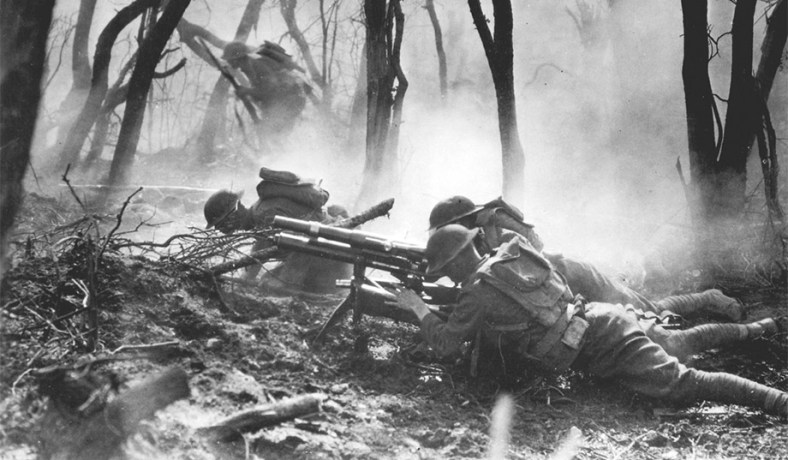
The United States entered the conflict in 1917, suffering casualties of 320,518 in only a few short months.

The idea of honoring the unknown dead from the “War to end all Wars” originated in Europe. Reverend David Railton remembered a rough cross from somewhere on the western front, with the words written in pencil:  “An Unknown British Soldier”.

In November 1916, an officer of the French war memorial association Le Souvenir Français proposed a national-level recognition for the unknown dead of the Great War.  Across the English Channel, Reverend Railton proposed the same.

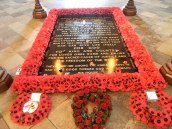
The two nations performed ceremonies on the first anniversary of Armistice Day, the Unknown Warrior laid to rest at Westminster Abbey on November 11, 1920. 

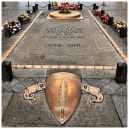
La Tombe du Soldat Inconnu was simultaneously consecrated under the Arc de Triomphe with the actual burial taking place, the following January.

Tomb_of_the_Unknown_Warrior_-_Westminster_Abbey_-_London,_England_-_9_Nov._2010
46184293502_32bb51f760_b
Left to Right:  Tomb of the Unknown Warrior, Westminster Abbey, London.  La Tombe du Soldat Inconnu. lArc de Triomphe, Paris.

That was the year, the United States followed Great Britain and France in honoring her own, unknown dead.

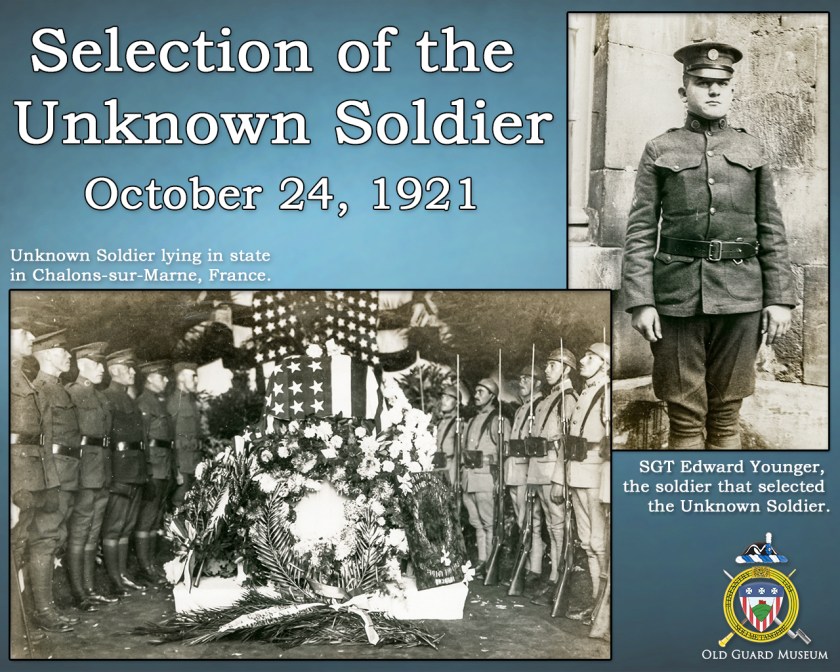
Four unidentified bodies were selected from the Aisne-Marne, Meuse-Argonne, Somme and St. Mihiel cemeteries and carefully examined, lest there be any clues to identity. The four were then transported to the Hôtel de Ville at Châlons-sur-Marne, and placed in a makeshift chapel.

9664b-10-24-selection2bof2bworld2bwar2bi2bunknown2bsoldier

Six soldiers were invited to act as pallbearers, each man a highly decorated and respected member of his own unit. 

Outside the chapel, Major Harbold of the Graves Registration Office handed a large spray of pink and white roses to twice-wounded Sergeant Edward F. Younger, of the American Expeditionary Force (AEF).  It was he who would perform the final selection.

Passing between two lines of French and American officials, Sgt. Younger entered the room, alone.  Slowly, he circled the four caskets, three times, before at last stopping at the third from the left.  “What caused me to stop” he later said, “I don’t know.  It was as though something had pulled me“.  Younger placed the roses on the casket, drew himself to attention, and saluted.  This was the one.

The body was transferred to a black casket bearing the inscription:  “An Unknown American who gave his life in the World War”.

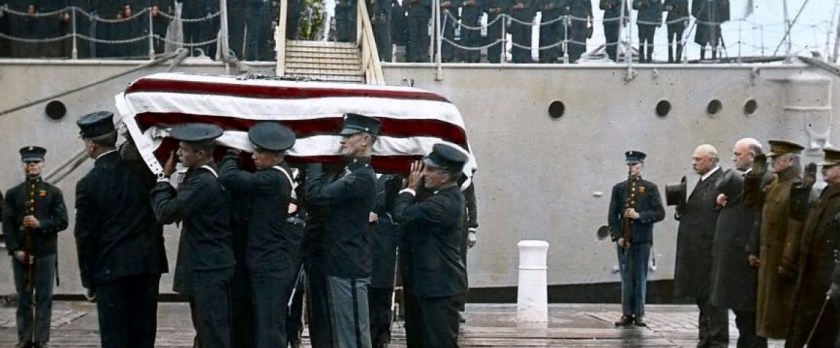
The casket passed from French soil on October 25, 1921. Up the gangplank to the the protected cruiser USS Olympia, even as the band segueued from La Marseilles, to the Star Spangled Banner.

Unknown_Soldier_at_the_Washington_Navy_Yard.jpg

Flags at half-mast with stern bedecked with flowers, Commodore George Dewey’s former flagship at the Battle of Manila Bay received the precious cargo and returned to the United States, arriving in the Navy Yard in Washington DC on November 9, 1921.

There the flag draped casket was solemnly transferred to the United States Army, and placed under guard of honor on the catafalque which had borne the bodies of three slain Presidents: Abraham Lincoln, James Garfield, and William McKinley.

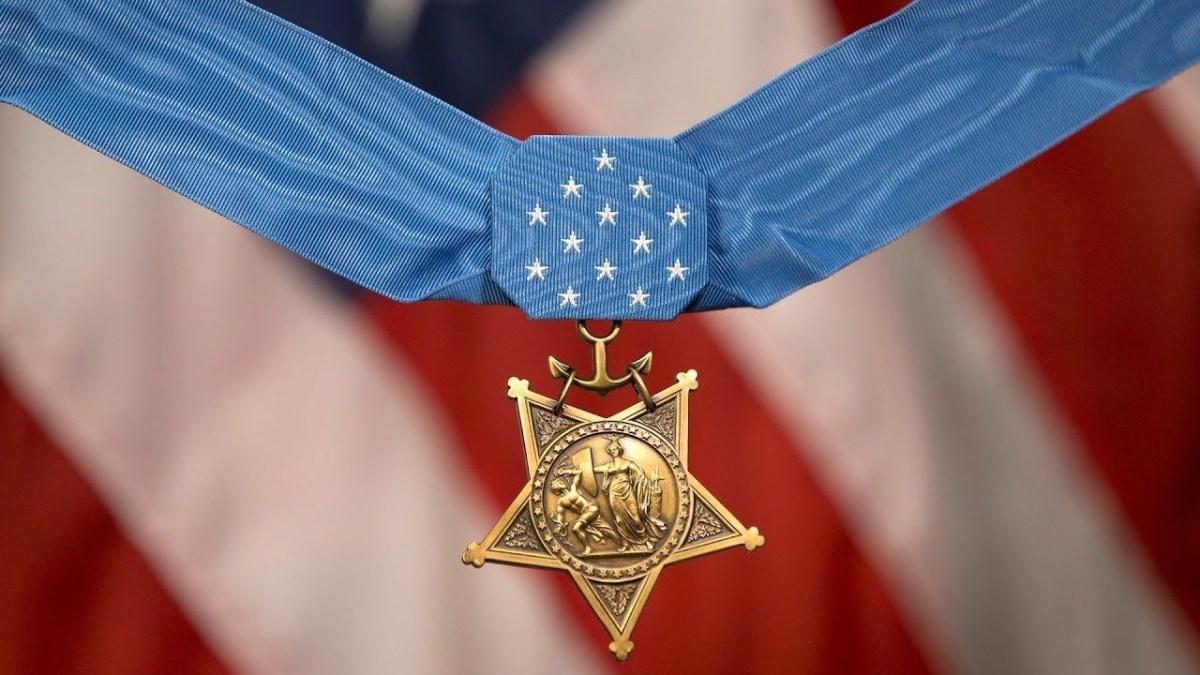
On November 11, the casket was removed from the Rotunda of the Capitol and escorted under military guard to the amphitheater at Arlington National Cemetery. In a simple ceremony, President Warren G. Harding bestowed upon this unknown soldier of the Great War, the nation’s highest military decorations.  The Medal of Honor.  The Distinguished Service Cross.
Special representatives of foreign nations then bestowed each in turn, his nation’s highest military decoration.  The Croix de Guerre of Belgium.  The English Victoria Cross. Le Medaille Militaire & Croix de Guerre of France.  The Italian Gold Medal for Bravery. The Romanian Virtutes Militara.  The Czechoslavak War Cross.  The Polish Virtuti Militari.

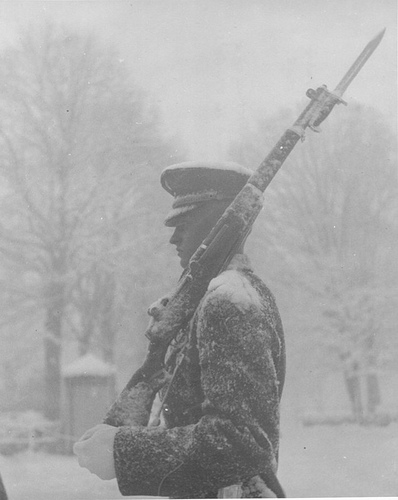
tomb-soldier-in-snow

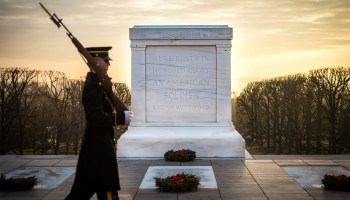
With three salvos of artillery, the rendering of Taps and the National Salute, the ceremony was brought to a close and the 12-ton marble cap placed over the Tomb of the Unknown Soldier.  The west facing side bears this inscription:

“Here Rests In
Honored Glory
An American Soldier
Known But To God”

Two years later, a civilian guard was placed at the tomb of the unknown.  A permanent Military guard took its place in 1926 and there remains, to this day.

In 1956, President Dwight David Eisenhower signed a bill to select and pay tribute to the unknown dead of WW2 and the American war in Korea. Selection and interment of these Unknowns took place in 1958.

The Unknown from the American war in Vietnam was selected on May 17, 1984, but wouldn’t remain unknown, for long.

Advances in mitochondrial DNA led to the exhumation and identification of Air Force 1st Lt. Michael Joseph Blassie of St. Louis, Missouri, shot down near An Lộc, in 1972.

The Tomb of the Unknown from the Vietnam conflict remains empty.  It is unlikely any future war is capable of producing a truly “Unknown”.

Sharing Today in History:

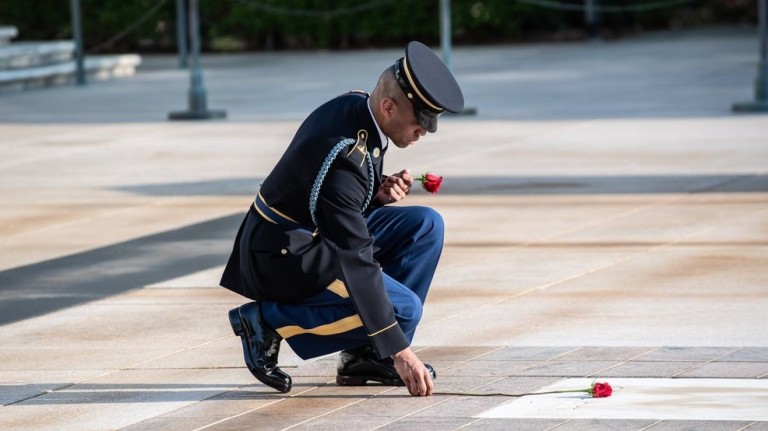
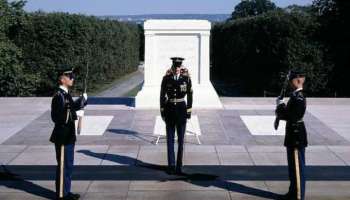
So it is through bitter cold and scorching heat, through hurricanes and blizzards and irrespective of day or night or whether Arlington is open or closed, the Tomb of the Unknown Soldier stands under guard.

This Guard of Honor is performed by a carefully selected elite body of the 3rd Infantry Division.  The “Old Guard”.  In service since 1784, the Tomb Guard is part of the longest-serving active infantry unit in the United States military.

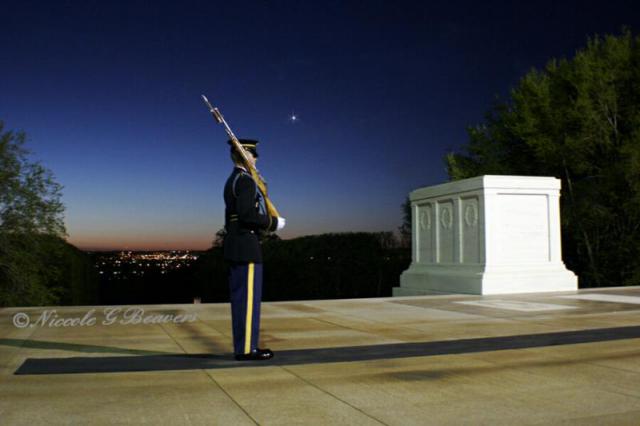
Since the 14th-century, the cannon salute signified the recognition of a sovereign state and a peaceful intent, among nations.  The 21-gun salute is the highest military honor, a nation can bestow.   The Tomb Sentinel who “walks the mat” walks precisely 21 steps down the 63-foot black mat laid across the Tomb of the Unknown, signifying that 21-gun salute.   The Guard then turns east to face the Tomb, pauses another 21-seconds, before beginning the return walk of 21-steps.

The Tomb Sentinel will continue in this manner for a half-hour, one hour or two depending on the time of day, and the season of the year.  If you have witnessed the Changing of the Guard, you are not likely to forget it.  My brother and I were once privileged to experience the moment, in the company of an Honor Flight of World War 2 veterans. If you’ve never seen the ceremony, I recommend the experience.

Back in 1919, AEF commander General John Pershing and Allied Supreme Commander Marshall Ferdinand Foch of France were adamantly opposed to the treaty, at Versailles. Germany had been defeated they argued, but not Beaten. Without destroying the German war machine on its own soil, Pershing believed the two nations would once again find themselves at war. Marshall Foch agreed, reading the treaty with the remark: “This isn’t a peace. It’s a cease-fire for 20 years!

_MG_0016_1466631465932.jpg

He got that wrong.  By 36 days.

October 23, 1983 Honor and Remembrance

“Let Peace Take Root”
The Cedar of Lebanon tree grows in living memory of the Americans killed in the Beirut terrorist attack and all victims of terrorism throughout the world.
Dedicated during the first memorial ceremony for these victims.

Given by: No Greater Love
October 23, 1984
A time of remembrance


The Oxford English Dictionary defines Monument as “A statue, building, or other structure erected to commemorate a notable person or event”.

Our nation’s most hallowed ground is itself, such a monument; Memorial Avenue extending across the Potomac connecting Arlington House, the former home of Confederate General Robert E. Lee with the Lincoln Memorial at the opposite end symbolizing the immutable bond, between North and South.

Memorial-Ave

Approach Arlington at night and the eternal flame marking the grave of President John Fitzgerald Kennedy may be seen on the hillside, as if some faraway beacon of light.

Eternal Flame

A list of memorials at Arlington National Cemetery reads like a history of the nation itself.

The Argonne Cross commemorates the honored dead of the “War to end all Wars” in 1917-1918, some 2,100 of whom were re-interred in Section 18, following the war.

The Battle of the Bulge memorial reads, “To World War II American Soldiers who fought in the Battle of the Bulge- The greatest Land Battle in the history of the United States Army”.

The Beirut Memorial honors 241 American service members killed in the October 23, 1983 bombing of the Marine barracks in Lebanon, twenty-one of whom went to their final rest, at Arlington National Cemetery.  The inscription reads:

“Let Peace Take Root”

This Cedar of Lebanon tree grows in living memory of the Americans killed in the Beirut terrorist attack and all victims of terrorism throughout the world.
Dedicated during the first memorial ceremony for these victims.

Given by: No Greater Love
October 23, 1984
A time of remembrance

Beirut memorial
“This Cedar of Lebanon tree grows in living memory of the Americans killed in the Beirut terrorist attack and all victims of terrorism throughout the world. Dedicated during the first memorial ceremony for these victims”.

On Chaplain Hill stands four memorials bearing the name of of a military Chaplain, who laid down his lives in each of wars. The Cenotaph, (an empty tomb or a monument erected in honor of a person or group whose remains lie elsewhere) bears this inscription: “Greater Love Hath No Man Than This, That A Man Lay Down His Life For His Friends.

Written there are the names of the only two chaplains to be awarded the Medal of Honor: Major Charles Joseph Watters, killed in Vietnam while rendering aid to fallen comrades, and Captain Emil Joseph Kapaun, the “Shepherd in Combat Boots” who remains to this day, in some unmarked North Korean grave.

Emil Kapaun

I have barely scratched the surface of the Cs. Altogether there are 28 major and 142 minor memorials and monuments at Arlington, to say nothing of 400,000+ military grave sites, stretching across the landscape. Each of them across the 624 acres of Arlington, equivalent to 472 football fields, is dedicated to a person, place or event which has earned the right to be remembered.

It has long seemed to this writer that, irrespective of political persuasion, a free citizen of a Constitutional Republic cannot cast an informed ballot, cannot know where he wants his country to go, without an understanding of where it’s been. If you haven’t had the opportunity to visit Arlington National Cemetery recently, I highly recommend the trip. Leave yourself plenty of time to take it all in. It would be hard to find more heritage, tradition and history, in any other single place.

October 19, 1864 When the Civil War came to Vermont

The St. Albans raid of October 19 1864 formed the northernmost land action of a Confederate force, as well as a final impetus toward the uniting of our northern neighbor.
The name of Vermont conjures many things, the forested landscapes, ski slopes, maple syrup and mountain trout brooks. The first state to be admitted into the union formed by the 13 former colonies, the 14th state existed for as many years as an independent Republic, a distinction shared with only three other states: Texas, Hawaii and California.

Fun Fact: For a time, western districts of Florida also formed their own sovereign state: the Republic of West Florida. If you ever want to get a Texan going, ask them about the Original Lone Star Republic“.

In the late 18th century, lands granted by the governor of New Hampshire led the colony into conflict with the neighboring province of New York.  Conflict escalated over jurisdiction and appeals were made to the King, as the New York Supreme Court invalidated the “New Hampshire grants”. 

Infuriated residents of the future Vermont Republic including Ethan Allen and his “Green Mountain Boys”, rose up in anger.  On March 13, 1775, two Westminster Vermont natives were killed by British Colonial officials.  Today we remember the event as the “Westminster Massacre”.
American_Determinist_Settlements_North_1770
The New Hampshire Grants region petitioned Congress for entry into the American union as a state independent of New York in 1776″ – H/T, https://en.wikipedia.org/wiki/New_Hampshire_Grants

The battles at Lexington and Concord broke out a month later, ushering in a Revolution and eclipsing events to the north.  New York consented to admitting the “Republic of Vermont” into the union in 1790, ceding all claims on the New Hampshire land grants in exchange for a payment of $30,000.  Vermont was admitted as the 14th state on March 4, 1791, the first state so admitted following adoption of the federal Constitution.

Organized in 1785, the city of St. Albans forms the county seat of Franklin County, Vermont.  15 miles from the northern border and located on the eastern shore of Lake Champlain, it’s not the kind of place you’d expect for a Civil War story.

screen shot 2014-05-22 at 5.14.39 pm
St. Albans Vermont, 1864

The Confederate States of America maintained government operations north of the border, from the earliest days of the Civil War.  Toronto was a logical relay point for communications with Great Britain, from which the Confederate government unsuccessfully sought to gain support.

Secondly, the future Canadian nation provided a safe haven for prisoners of war, escaped from Union camps.

Former member of Congress and prominent Ohio “Peace Democrat” Clement Vallandigham fled the United States to Canada in 1863, proposing to detach the states of Illinois, Indiana and Ohio from the Union in exchange for sufficient numbers of Confederate troops, to enforce the separation.  Vallandigham’s five-state “Northwestern Confederacy” would include Kentucky and Missouri, breaking the Union into three pieces.  Surely that would compel Washington to sue for peace.

ThomasHinesin1884fromHeadley

In April 1864, President Jefferson Davis dispatched former Secretary of the Interior Jacob Thompson, ex-Alabama Senator Clement Clay, and veteran Confederate spy Captain Thomas Henry Hines to Toronto, with the mission of raising hell in the North.

This was no small undertaking. A sizeable minority of Peace Democrats calling themselves “Copperheads” were already in vehement opposition to the war.  So much so that General Ambrose Burnside declared in his General Order No. 38, that “The habit of declaring sympathy for the enemy will not be allowed in this” (Ohio) “department. Persons committing such offenses will be at once arrested with a view of being tried. . .or sent beyond our lines into the lines of their friends. It must be understood that treason, expressed or implied, will not be tolerated in this department“.

Hines and fellow Confederates worked closely with Copperhead organizations such as the Knights of the Golden Circle, the Order of the American Knights, and the Sons of Liberty, to foment uprisings in the upper Midwest.

In the late Spring and early Summer of 1864, residents of Maine may have noted an influx of “artists”, sketching the coastline.  No fewer than fifty in number, these nature lovers were in fact Confederate topographers, sent to map the Maine coastline.

Rebels on the great Lakes

The Confederate invasion of Maine never materialized, thanks in large measure to counter-espionage efforts by Union agents.

J.Q. Howard, the U.S. Consul in St. John, New Brunswick, informed Governor Samuel Cony in July, of a Confederate party preparing to land on the Maine coast.

The invasion failed to materialize, but three men declaring themselves to be Confederates were captured on Main Street in Calais, preparing to rob a bank.

Disenchanted Rebel Francis Jones confessed to taking part in the Maine plot, revealing information leading to the capture of several Confederate weapons caches in the North, along with operatives in Maine, Massachusetts, New York, Pennsylvania, Maryland, Illinois, Kentucky, Tennessee and Ohio.

Captain Hines planned an early June uprising in the Northwest, timed to coincide with a raid planned by General John Hunt Morgan.  Another uprising was planned for August 29, timed with the 1864 Democratic Convention in Chicago.   The conspirators’ actions never lived up to the heat of their rhetoric, and both operations fizzled.   A lot of these guys were more talk than action, yet Captain Hines continued to send enthusiastic predictions of success, back to his handlers in Richmond.

“Canada” itself was a loose confederation of independent provinces in 1864. At the September 1, Charlottetown Conference, politicians from the United Province of Canada and Britain’s Maritime colonies discussed a possible union.

The Toronto operation tried political methods as well, supporting Democrat James Robinson’s campaign for governor of Illinois.  If elected they believed, Robinson would turn over the state’s militia and arsenal to the Sons of Liberty.  They would never know.  Robinson lost the election.

Bennett_H._Young_cropped
Bennett Henderson Young

All this fomenting cost money, and lots of it.  In October 1864, the Toronto operation came south to St. Albans, to make a withdrawal.

Today, St. Albans is a quiet town of 6,869.  In 1864 the town was quite wealthy, home to manufacturing and repair facilities for railroad locomotives.  Located on a busy rail line, St. Albans was also home to four banks.

Nicholasville, Kentucky native Bennett Henderson Young was a member of the Confederate 8th Kentucky Cavalry, captured during Morgan’s 1863 raid into Ohio.  By January, Young escaped captivity and fled to Canada. On October 10, Bennett crossed the Canadian border with two others, taking a room at the Tremont House, in St. Albans.  The trio claimed they had come for a “sporting vacation”.

Small groups filtered into St. Albans in the following days, quietly taking rooms across the town.  There were 21 altogether, former POWs and cavalrymen, hand selected by Young for their daring and resourcefulness.

featured-image-4

On October 19, 1864, the group sprang into action.  Splitting into four groups and declaring themselves Confederate soldiers, the groups simultaneously robbed three of St. Albans’ four banks while eight or nine held the townspeople at gunpoint, on the village green.  One resident was killed before it was over and another wounded. Young ordered his troops to burn the town, but bottles of “Greek Fire” carried for the purpose, failed to ignite.  Only one barn was burned down and the group got away with a total of $208,000, and all the horses they could muster. It was the northernmost Confederate action by land, of the Civil War.

st_albans_raiders_1

The group was arrested on crossing the border and held in Montreal.  The Lincoln administration sought extradition but Canadian courts decided otherwise, ruling that the raiders were under military orders at the time and neutral Canada could not extradite them to America.  The $88,000 found with the raiders, was returned.

American sensibilities were outraged. At least, those in the north. The Chicago Tribune urged the Northern states to invade, to “…take Canada by the throat and throttle her as a St. Bernard would a poodle pup.” President Abraham Lincoln announced that our neighbors to the north would now be required to produce passports, to travel south. The Reciprocity Treaty of 1854 abolishing duties on cross-border imports, was abolished.

StAlbansRaid, memoriaized

33 delegates were in Quebec City at this time, deadlocked over the Maritime Provinces’ objections to the proceedings.

Upper Canadian politician John A Macdonald declared, “For the sake of securing peace to ourselves and our posterity we must make ourselves powerful…The great security for peace is to convince the world of our strength by being united.” MacDonald, the only member of the Quebec Conference with a background in constitutional law drafted 50 of the 72 resolutions, emerging from the meeting.

So it is a Confederate robbery of a Vermont bank provided the final impetus, toward a united Canada. The dominion of Canada was established on July 1, 1867.

The million dollars the Confederate government sank into its Canadian office, probably did more harm than good.  Those resources could have been put to better use, but we have the advantage of hindsight.  Neither Captain Hines nor Jefferson Davis could know how their story would turn out.  In the end, both men fell victim to that greatest of human weaknesses: of believing to be true, that which they wanted to believe.