To the human participants in this story, this is a tale of four weeks’ combat over a marginally important, tropical island. For the apex predator of the mangrove swamp, it was little more than a dinner bell.
Five hundred feet off the coast of Myanmar, formerly Burma, across the Bay of Bengal from the Indian sub-continent, there lies the island of Ramree, about a third the size of New York’s Long Island.
In 1942, the Imperial Japanese Army aided by Thai forces and Burmese insurgents drove the British Empire and Chinese forces out of Burma, occupying much of the Burmese peninsula and with it, Ramree island. In January 1945, the allies came to take it back.
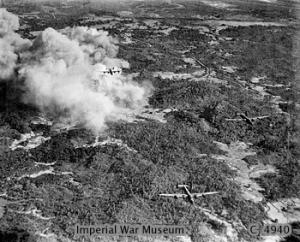
RAF 356 Squadron after bombing Japanese positions on Ramree Island
The battle started out with Operation Matador on January 14, an amphibious assault designed to capture the strategic port of Kyaupyu, and it’s nearby airfield.
By early February, a mixed force of British Royal Marines and Indian allies dislodged a force of some 980 Japanese defenders, who abandoned their base and marched inland to join a larger regiment of Japanese soldiers across the island.
On February 7, the 71st Infantry and supporting tanks reached Ramree town where they found determined Japanese resistance. The town fell in two days. Naval forces blockaded small tributaries called “chaungs”, which retreating Japanese used in their flight to the mainland. A Japanese air raid damaged an allied destroyer on the 11th as a flotilla of small craft crossed the strait, to rescue survivors of the garrison. By February 17, Japanese resistance had come to an end.
The route took the retreating Japanese across 10 miles of marsh and mangrove swamp. Bogged down and trapped in the mire, the soldiers found themselves cut off and surrounded, alone with the snakes, the mosquitoes and the scorpions, of Ramree island.
Throughout the four-week battle for Ramree Island, the allied blockade inflicted heavy casualties on Japanese forces. The thousand men cut off in the swamp, had more immediate concerns.
:Lured by a tour guide dangling kangaroo meat from a pole, the 18ft, two-ton monster was, er, snapped by photographer Katrina Bridgeford, who was on the Adelaide River cruise with her family”. Tip of the Hat for this image, to the UK Daily Mail Note the missing right arm on this monster was probably eaten by one of his own kind.
NationalGeographic.com describes the Japanese’ problem, the nightmare predator, Crocodylus porosus. The saltwater crocodile: “Earth’s largest living crocodilian—and, some say, the animal most likely to eat a human—is the saltwater or estuarine crocodile. Average-size males reach 17 feet and 1,000 pounds, but specimens 23 feet long and weighing 2,200 pounds are not uncommon.
Opportunistic predators, they lurk patiently beneath the surface near the water’s edge, waiting for potential prey to stop for a sip of water. They’ll feed on anything they can get their teeth into including water buffalo, monkeys, wild boar and even sharks. Without warning, they explode from the water with a thrash of their powerful tails, grasp their victim, and drag it back in, holding it under until the animal drowns.
British naturalist Bruce Stanley Wright participated in the battle for Ramree, and gave the following account in his book, Wildlife Sketches Near and Far, published in 1962:
“That night [February 19, 1945] was the most horrible that any member of the M.L. [marine launch] crews ever experienced. The crocodiles, alerted by the din of warfare and the smell of blood, gathered among the mangroves, lying with their eyes above water, watchfully alert for their next meal. With the ebb of the tide, the crocodiles moved in on the dead, wounded, and uninjured men who had become mired in the mud.
The scattered rifle shots in the pitch black swamp punctured by the screams of wounded men crushed in the jaws of huge reptiles, and the blurred worrying sound of spinning crocodiles made a cacophony of hell that has rarely been duplicated on earth. At dawn the vultures arrived to clean up what the crocodiles had left…Of about 1,000 Japanese soldiers that entered the swamps of Ramree, only about 20 were found alive”.
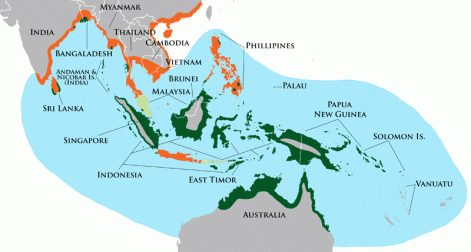
Current Distribution – Saltwater or Estuarine Crocodile (Crocodylus porosus)
The actual numbers will never be known. Skeptics question how so many of these beasts could support themselves in such a small space but, consider this: Saltwater crocodiles are excellent swimmers and are regularly spotted miles out to sea. Individuals have even been discovered in the relatively frigid Sea of Japan – thousands of miles from their native habitat. In 2016, Australian Rangers counted 120 “salties” in a 6-kilometer (3.7 mile) stretch of the East Alligator River, in the Northern Territory.
To the human participants in this story, this is a tale of four weeks’ combat over a marginally important, tropical island. For the apex predator of the mangrove swamp, it was little more than a dinner bell.
“When men who have no obligation to fight, who could not possibly be criticized if they did not fight, yet nevertheless decide, upon their own individual initiative, to risk their lives in defense of a cause that they hold to be dear, then we are in the presence of true heroism” – General Henri Gouraud
German Chancellor Otto von Bismarck once said the next European war would begin with “some damn fool thing in the Balkans”. Bismarck got his damn fool thing in Sarajevo on June 28, 1914. We all know the story. The diplomatic visit of an heir presumptive. The open car. The wrong turn. The assassin.
There followed a series of diplomatic stumbles, military mobilizations and counter-mobilizations called the “July Crisis of 1914″. By August, there was no turning back. There would be no “Phony War” this time, no “Sitzkreig”, as wags were wont to call the early days of World War 2. The coming storm crashed across the continent like a clap of thunder.
Britain went to war with a professional army of 750,000 men, small by European standards. 8 million men were conscripted or recruited over the next four years, nearly half coming from outside the UK. They came from all over the British empire and beyond. Over 300 Americans volunteered with the Royal Flying Corps in WW1 as did Jamaican William Robinson Clarke, the first black pilot to fly for Britain, but no power so enjoyed the support of foreign volunteers, as France.
Foreign mercenary soldiers have a long history with the French military. Philip VI led 15,000 Italian soldiers against Edward III, in 1346. Napoleon had 60,000 Swiss Guard under contract of the Schweizergarten, in Vienna. King Louis Philippe formed the French Foreign Legion on March 9, 1831.
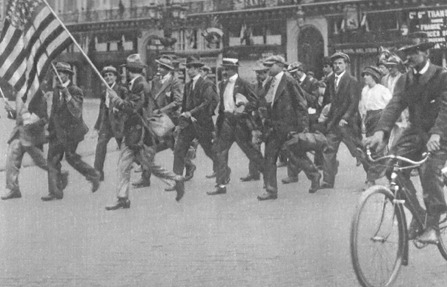
“American volunteers in the French Foreign Legion cross the Place de L’Opera Paris on August 25, 1914, headed for Rouen” H/T americansatwarinforeignforces.com
The United States was still neutral in the beginning, over two years away from joining the fray. The influx of American volunteers, began almost immediately. They came to join the French Foreign Legion, to drive for the ambulance corps and, later, to fly.
Interestingly, the central powers made limited use of foreign conscripts or recruits. There was the occasional foreign colonial in German units, soldiers of Chinese or African descent. Several Americans volunteered to fly for the Imperial German Flying Corps. Though nominally allied with czarist Russia, longstanding animosities led some Fins to volunteer with the Imperial German army. Irish Republicans took opportunity to attempt an independent Irish Republic and Germany was happy to assist but it was der Löwe von Afrika (Lion of Africa) General Paul Emil von Lettow-Vorbeck who famously led 11,000 to 12,000 African Askari troops in the only successful invasion into a part of the British empire of all of WW1.
With only a handful of generations come and gone between our time and that of the Great War, WW1 holds a prominent place in modern conceptions of “recent” history. Similarly, the WW1 generation held the Revolution in close regard, the events of the last century and one-half foundational to their own time. Americans were keenly aware in 1914 of the pivotal role played by France, in American independence. Kiffin and Paul Rockwell are but two examples of Americans who left comfortable lives to serve “over there” as a debt of gratitude, to the likes of the Count of Rochambeau and the Marquis de Lafayette.
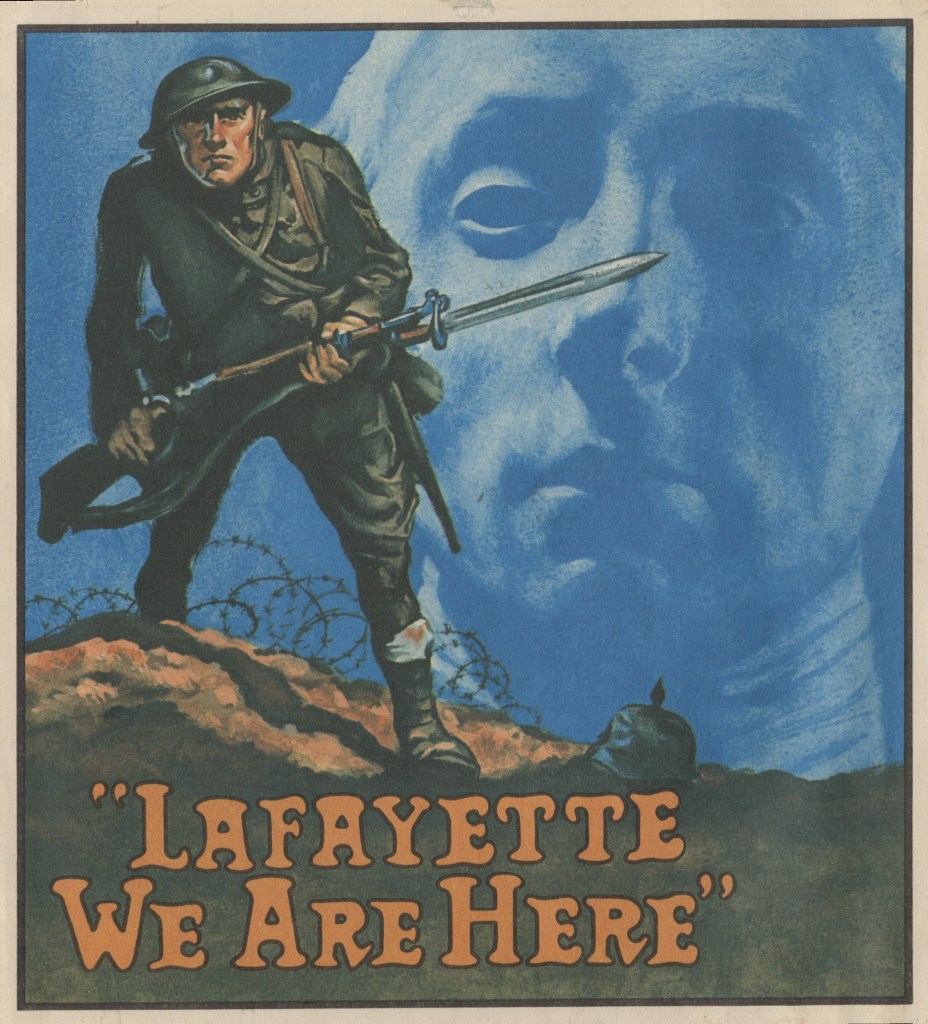
General John “Black Jack” Pershing famously quipped on arriving on French soil, “Lafayette, we are here”.
The French Foreign Legion operated two regiments at this time comprised of six battalions of 1,000 men each and headquartered in north Africa. The need for manpower was acute. Two-thirds were of German or Austrian background and therefore of suspect loyalty.
Thousands of Americans volunteered for WW1 service in the Legion, notables among their number including composer and songwriter Cole porter, Eugene Jacques Bullard, who would go on to become the first black American fighter pilot in history, William Wellman, director of the 1927 film Wings and winner of the Best Picture award at the first Academy Awards ceremony and poet Alan Seeger (left), author of “I have a rendezvous with death” and uncle of the folk artist and social activist, Pete Seeger.
William Moll served his five years with the Foreign Legion and returned home to Chicago. He became filthy rich and died, in 1937. Imagine the reading of that will. All those eager relatives and the man left every dime of it, to the French Foreign Legion.
Some Foreign Legion units experienced close to 100% casualties.
Alan Seeger met his rendezvous with death at the Somme, in 1916. Fellow Legion soldier Rif Baer described his last moments: “His tall silhouette stood out on the green of the cornfield. He was the tallest man in his section. His head erect, and pride in his eye, I saw him running forward, with bayonet fixed. Soon he disappeared and that was the last time I saw my friend.” Even then, lying mortally wounded in no man’s land Seeger cheered on his passing comrades as the life ebbed out of him.
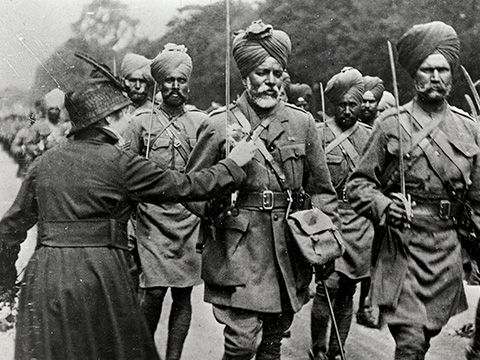
Not legally “Americans” at this time but members of their own sovereign nations, no fewer than 4,000 Indians enlisted with the Canadian Expeditionary Force, in 1914. Some 15,000 native Americans from many tribal affiliations enlisted with the American Expeditionary Force where members of the Choctaw, Cherokee and Cree nations learned to talk in code, early forerunners of the famous Navajo code talkers, of WW2.
The Battle of the Frontiers, a series of clashes between August 7 and September 6, 1914 brought no fewer than 2.7 million combatants together producing casualties on both sides, of some 664,000. The motor inventory of entire nations public and private, seemed inadequate to transport the cataract of wounded to places of medical care.
Members of expatriate American business community and embassy employees rushed in to assist in early association with the American Hospital at Neuilly-sur-Seine, in Paris.
US Ambassador Myron Herrick and his wife Carolyn (“Kitty”) were instrumental in the early stages of the war as were wealthy donors such as the Vanderbilts, in early association with the American Hospital, founded four years earlier. As German armies crashed through Belgium and raced to capture Paris, the government fled for Bordeaux. Herrick stayed defiantly in Paris. “Paris belongs not only to France,” he said, “it belongs to the world!”
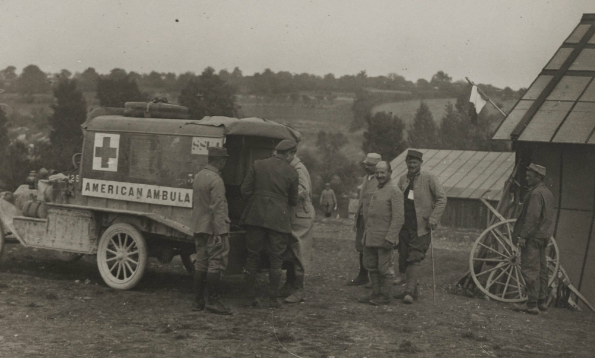
Three distinct ambulance corps would evolve over time involving no fewer than 3,500 American volunteers. Notable among ther number include the authors Ernest Hemingway, John Dos Passos and Dashiell Hammett who all but invented the hard-boiled crime novel.
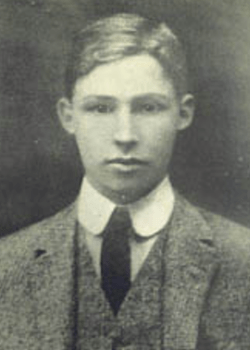
Edward “Eddie” Mandell Stone lived in France when the war broke out and enlisted, with Foreign Legion, 2nd Regiment, Battalion C.
A member of a machine-gun section, Eddie (right) was mortally wounded on February 17, 1915 and taken to the Military Hospital at Romilly. He died of his wounds on February 27 becoming the first American combatant to die, in the ‘War to end all wars”.
After 1915, American pilots volunteered for multiple “Escadrille” – flight squadrons of the French Air Service, the Aéronautique Militaire.
The March 7, 1918 Harvard Alumni Bulletin would give Norman Prince full credit for persuading the French government to form all-American flying squadrons. He wouldn’t live to see the article in print.
Sergeant Norman Prince caught a landing wheel on a telegraph wire after a bombing run on October 12, 1916, sustaining massive injuries when his plane flipped over and crashed. He was promoted to sous (2nd) lieutenant on his death bed and awarded the Legion of Honor. He died three days later, at the age of 29.
Gervais Raoul Victor Lufbery (left) flew for both the Aéronautique Militaire and for the US Army Air Service and is sometimes listed as an Ace, in both. All but 1 of Lufbery’s 17 victories came as a French pilot. Raoul Lufbery was thrown from his aircraft and killed on May 19, 1918.
William Thaw II of Pittsburgh was the first pilot to fly up New York’s East River under all four bridges, the first American engaged in aerial combat in the war.
Authorized on March 21, 1916 as the Escadrille Américaine (Escadrille N.124), American pilots wore French uniforms and flew French aircraft. Germany expressed dismay over the very existence of such a unit, complaining that the neutral United States appeared to be aligning with France.
Escadrille N.124 changed its name in December 1916, adopting that of a French hero of the American Revolution. Marie-Joseph Paul Yves Roch Gilbert du Motier, Marquis de Lafayette.
Five French officers commanded a core of 38 American volunteers in the beginning, supported by all-French mechanics and ground crew. Rounding out the Escadrille were two unit mascots, the African lions Whiskey and Soda.
William Thaw with unit mascot mascots, Whiskey and Soda. ca 1916
The Lafayette Escadrille is often confused with the much larger Lafayette Flying Corps, and the movie “Flyboys” adds to the confusion. The Flying Corps was different from the Escadrille, the former coming about as the result of widespread interest in the exploits of the latter. American volunteers were assigned individually or in groups of two or three to fly in various French Aviation units, but, prior to US entry into the war. The Lafayette Escadrille was the only one to serve as a single organization.
All told, 267 American volunteers applied to serve in the Lafayette Flying Corps, credited with downing 199 German planes at the cost of 19 wounded, 15 captured, 11 dead of illness or accident, and 51 killed in action.
William Graves Sharp took office in December 1914 and served as Ambassador the remainder of the war, but never seemed to get out from under the shadow of his predecessor, Myron Herrick. Ambassador Herrick returned to Paris in 1921 and remained, until 1929. Herrick greeted Richard Lindberg in 1927 and stood throughout the long funeral ceremonies, for Ferdinand Foch.
It is there the ambassador was believed to have contracted the illness, that would take his life. Now forgotten in his home country, Myron Herrick is well remembered in his adopted nation of France.
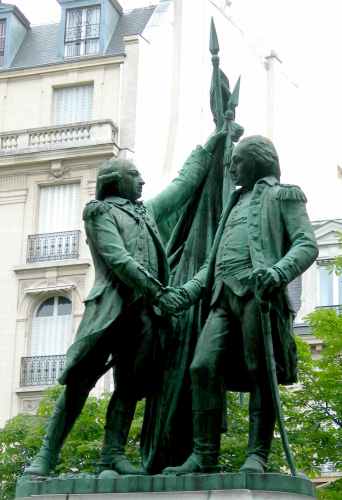
Today you can walk through the gardens of Paris’ Place des États-Unis, down the slope from Bartholdi’s sculpture where Lafayette forever shakes hands, with Washington. Up from the monument for American Volunteers in the Great War is the bust of Myron Herrick.
The once governor of Ohio and forgotten diplomat who refused to be moved when everyone around him, ran.
As the most destructive war in human history unfolded between Nazi and Germany and Soviet Russia, an apocalypse known simply as the Ostfront, two more children were born in the wild. Dmitry in 1940 and Agafia, in 1943. The Lykovs missed World War 2 entirely without the slightest idea, of the outside world.
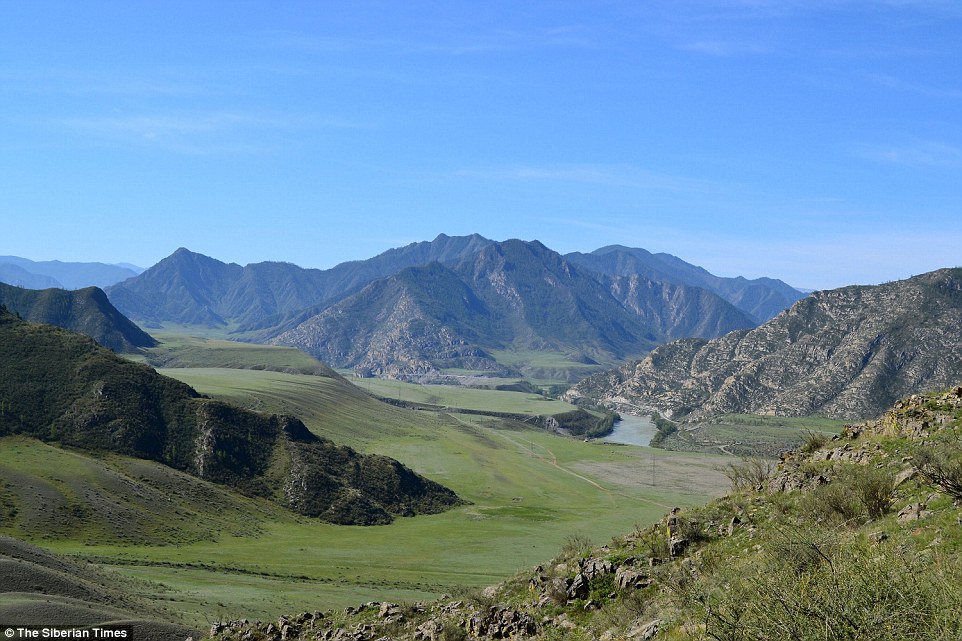
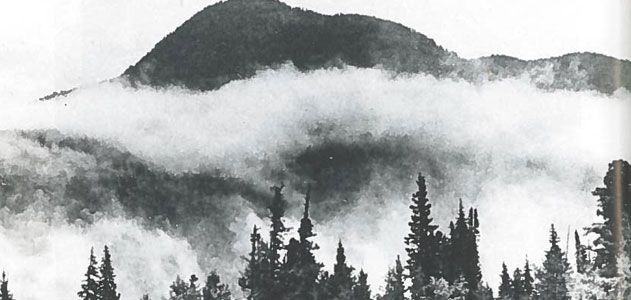
The Taiga occupies the high latitudes of the world’s northern regions, a vast international belt line of coniferous forests consisting mostly of pines, spruces and larches between the high tundra, and the temperate forest. An enormous community of plants and animals, this trans-continental ecosystem comprises a vast biome, second only to the world’s oceans.
The Eastern Taiga is a region in the east of Siberia, a vast, unexplored wilderness more than half again, the size of the continental United States. With snows lasting until May and resuming in September, there are no nearby oceans or seas to moderate temperature. Extremes are capable of summertime highs over 100° Fahrenheit (40c) to a wintertime low of -80° (-62c).
For all its size the region is all but unpopulated. Outside of a few towns the Siberian Taiga is home to no more than a few thousand. Siberia is also the source of vast Russian wealth in the form of oil, gas and minerals. In a wilderness capable of swallowing whole phalanxes of explorers there is hardly a district which hasn’t been overflown, at least once.
Helicopters and fixed wing aircraft cross huge tracts of arboreal forest carrying prospectors, workers and surveyors to and from remote backwoods camps.
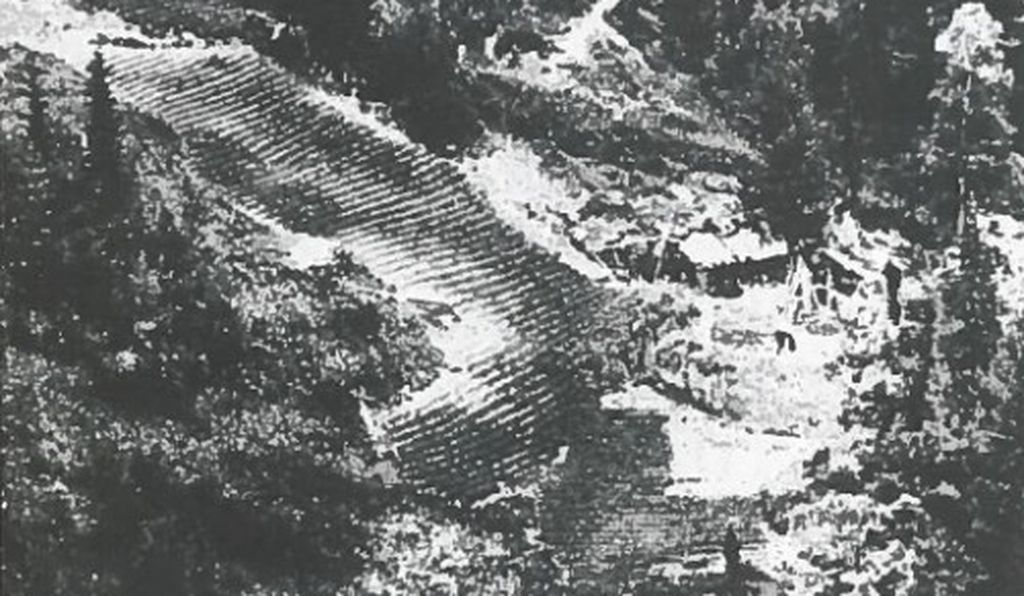
So it was in 1978, the chopper descending with its team of geologists. Looking for a place to land near some unnamed tributary of the Abakan river, that trackless waterway with a name derived from the Khakas word, for “bear’s blood”. Treetops swayed in the propwash as the pilot peered downward, looking for a place to put down. And then he saw it. 100 miles from the Mongolian border and a good 150 miles from the nearest settlement. If those weren’t signs of human habitation, they sure looked like it.
Circling back, the pilot took another pass. And another. The Soviet government had no record of anyone living out here but, there it was. The clearing, 6,000 feet up the mountainside. The long furrows of a large garden. Someone had been growing here, for a very long time.
The Lykovs’ homestead seen from a Soviet reconnaissance plane, 1980. H/T Smithsonian
Ten miles away a four-person team of geologists, was there to explore for iron ore. The scientists thought they’d check it out. Packing what small gifts they could think of the team set out to investigate. The Russian writer, traveler and ecologist Vasily Peskov had once written, “It’s less dangerous to run across a wild animal (in these parts) than a stranger.” Geologist Galina Pismenskaya knew as much, and packed a gun.
As the four approached the spot described by the helicopter crew, there began to be signs. A worn path. A log laid across a stream. A rough shed filled with birchbark containers, with potatoes.
Pismenskaya describes what came next:
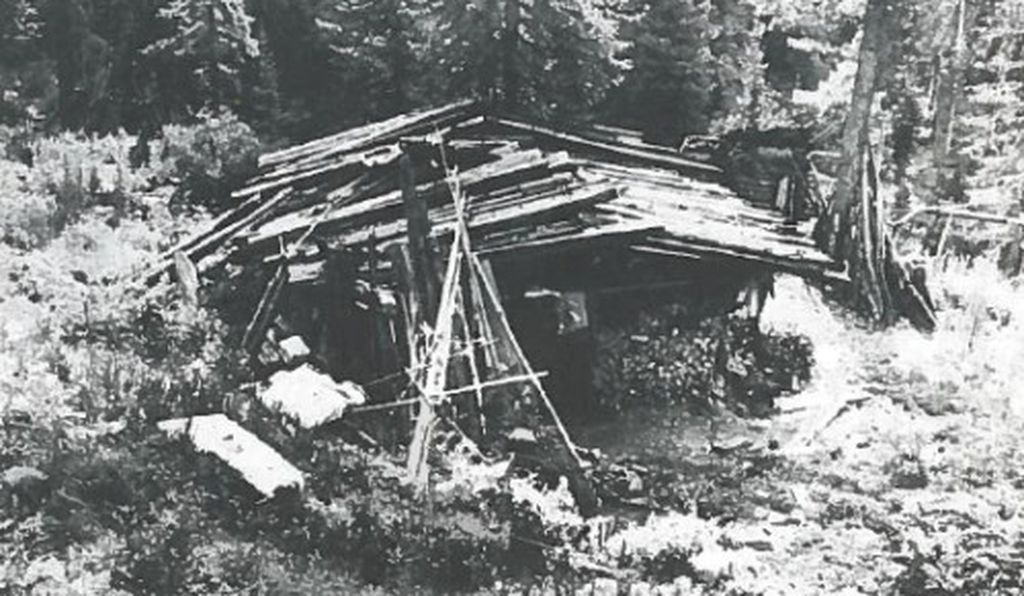
The Lykovs lived in this hand-built log cabin, lit by a single window “the size of a backpack pocket” and warmed by a smoky wood-fired stove. H/T Smithsonian
“…beside a stream there was a dwelling. Blackened by time and rain, the hut was piled up on all sides with taiga rubbish—bark, poles, planks. If it hadn’t been for a window the size of my backpack pocket, it would have been hard to believe that people lived there. But they did, no doubt about it…. Our arrival had been noticed, as we could see.
The low door creaked, and the figure of a very old man emerged into the light of day, straight out of a fairy tale. Barefoot. Wearing a patched and repatched shirt made of sacking. He wore trousers of the same material, also in patches, and had an uncombed beard. His hair was disheveled. He looked frightened and was very attentive…. We had to say something, so I began: ‘Greetings, grandfather! We’ve come to visit!’
The old man did not reply immediately…. Finally, we heard a soft, uncertain voice: ‘Well, since you have traveled this far, you might as well come in.’“
From the inside, the old man’s shanty was like something medieval. Dark, cramped and filthy, this was a single room under a roof propped up by sagging joists and a bare dirt floor covered with potato peelings, and pine nuts. Most astonishing of all this forest hovel out of a Grimm’s fairy tale turned out to be home, for a family of 5.
As eyes adjusted to the darkness the intruders spotted two women. Hysterical, quietly sobbing with terrified eyes and sinking to the floor, one of them praying, over and over. ‘This is for our sins, our sins. This is for our sins, our sins.This is for our…’
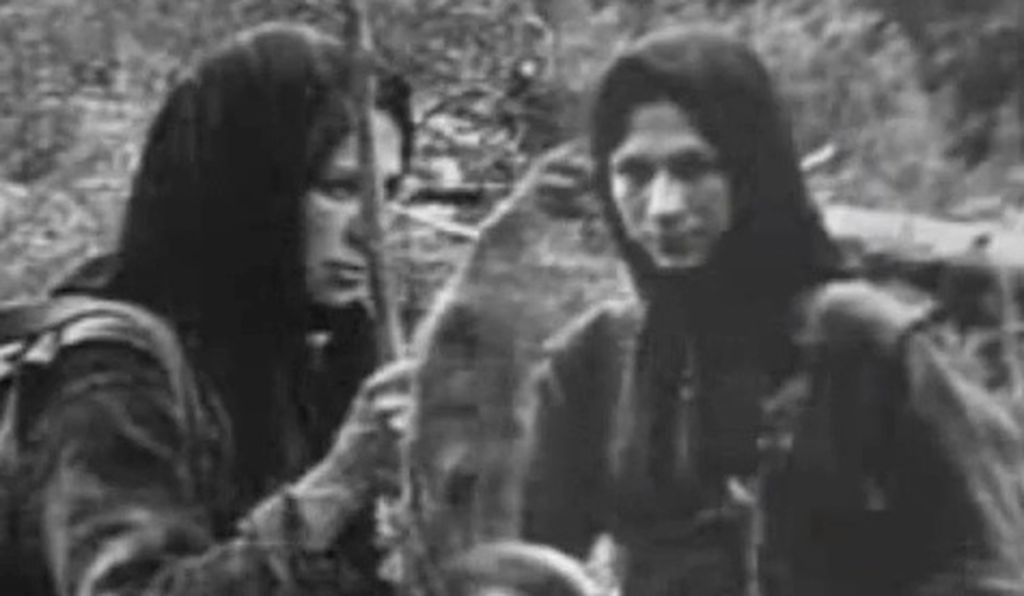
Agafia Lykova (left) with her sister, Natalia. H/T Smithsonian
This wasn’t working. The four scientists quickly backed out and regrouped at a spot, a few yards away. Sitting down to eat they waited. A half-hour later the door once again, creaked open. Wary but curious like some wild thing the three emerged, and sat down with their visitors. There were small offerings, jam, tea, and bread, but always the same response. A shaking of the head and waving of the hand. “We are not allowed that“.
The old man spoke haltingly. The two sisters spoke to one another, in a manner which sounded like some kind of “blurred cooing”.
The story that emerged that day and over several more visits became more astonishing, by the minute. The old man, his name was Karp Lykov, was part of an old, fundamentalist Russian Orthodox sect, worshiping in a style unchanged since the time, of Czar Peter the great. Things went from bad to worse following the Russian Revolution, for the “Old Believers”. As the atheist Bolsheviks took power, countless numbers of Old Believers had fled into the wilderness, to escape persecution. Sometime in the 1930s a communist patrol had shot Lykov’s brother while Karp knelt beside him, working.
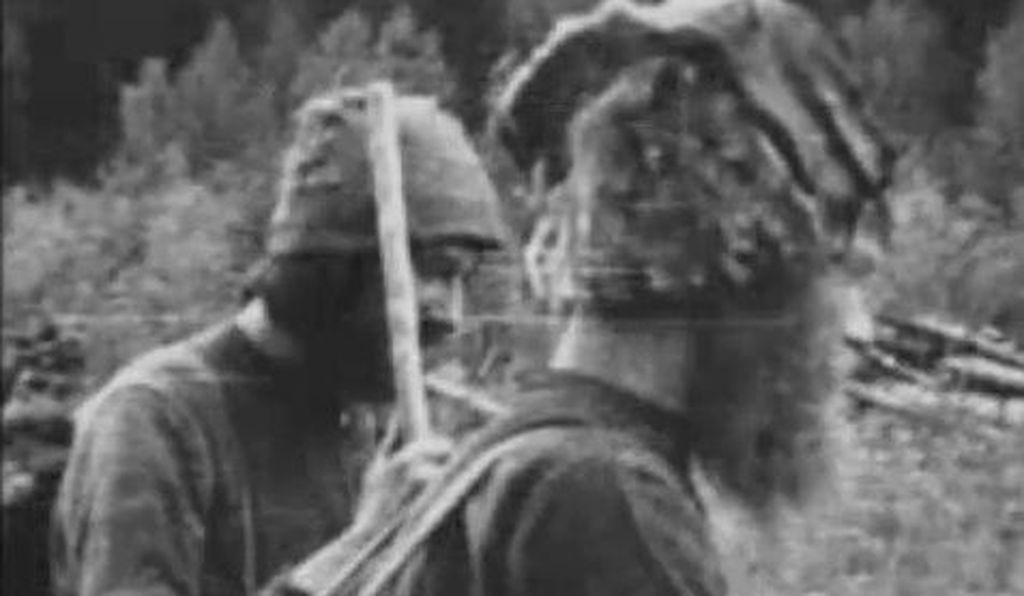
Dmitry (left) and Savin in the Siberian summer H/T Smithsonian
The Lykov family numbered 4 in 1936: Karp, his wife Akulina, a boy nine-year-old Savin, and Natalia, who was only two. Karp Lykov had to do something. The family scooped up some seeds and a few possessions and fled, into the forest. Over the years the family moved ever deeper, into the Taiga.
As the most destructive war in human history unfolded between Nazi Germany and Soviet Russia, an apocalypse known simply as the Ostfront, two more children were born in the wild. Dmitry in 1940 and Agafia, in 1943. The Lykovs missed World War 2 entirely without the slightest idea, of the outside world.
Life in the Taiga stood forever, at the brink of starvation. Roots, grass, potato tops. Every year the family meeting, whether to eat or save some of what they had, for seed. Dmitri grew hard, hunting barefoot in winter and possessed of preternatural stamina, capable of running wild animals to exhaustion and killing them, with his bare hands. With neither bow nor firearm, this was their only meat.
It snowed in June in 1961, killing their vegetables and setting the course, for famine. That was the year Akulina starved to death, preferring that her children eat. A single grain of rye managed to survive which the family guarded day and night, lest some wild animal eat their only hope.
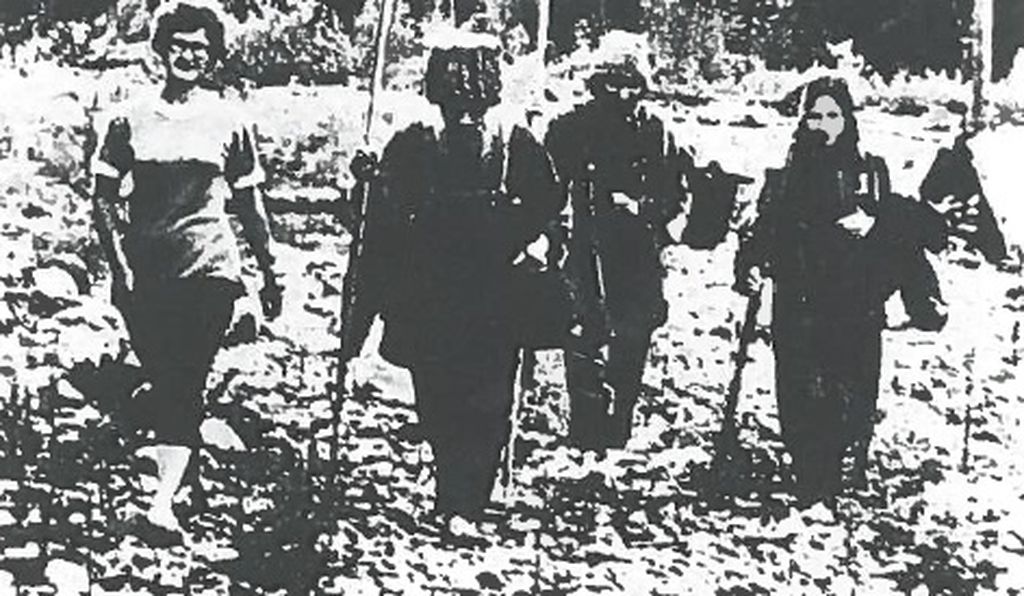
A Russian press photo of Karp Lykov (second left) with Dmitry and Agafia, accompanied by a Soviet geologist. H/T Smithsonian
Imagine. 42 years in that place without so much as a glimpse, into civilization. Nobody meant for it to happen but it was the outside world, which finally destroyed them.
Karp tried to keep it all, on the outside. The only gift he would accept was salt but, over time, the younger Lykovs gave in. Here a knife and fork and there an electric flashlight. None of them could take their eyes off the television, at the geologist’s camp.
The family went into decline. In the fall of 1981, three of the Lykov children died within days of each other. Savin and Natalia suffered from kidney failure, probably as the result of their harsh change in diet. Dmitri, the consummate outdoorsman who knew the Taiga in all her moods, succumbed to pneumonia, probably begun as an infection contracted from one of his new friends.
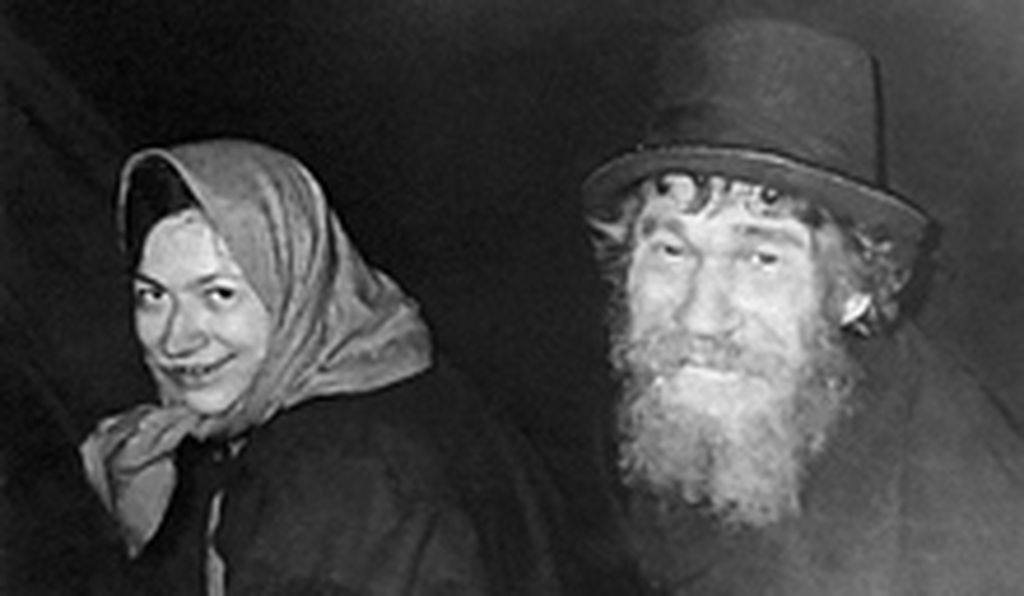
Karp Lykov and his daughter Agafia, wearing clothes donated by Soviet geologists not long after their family was rediscovered. H/T Smithsonian
They tried to call him a helicopter but Dmitry would not leave his family. “We are not allowed that,” he murmured, just before he died. “A man lives for howsoever God grants.”
The geologists tried to persuade Karp and Agafia to come out of the wilderness, to rejoin those of their relatives who had survived the purges, of the Stalin regime. The answer was always, “no”.
Karp Lykov died in his sleep on February 16, 1988. 27 years to the day from his wife, Akulina. Agafia buried him with the help of the geologists, on the mountainside, and then returned home.
Nothing lasts forever . There came that day when the visitors had to take their leave. One of the geologists, a driller named Yerofei Sedov, remembered: I looked back to wave at Agafia. She was standing by the river break like a statue. She wasn’t crying. She nodded: ‘Go on, go on.’ We went another kilometer and I looked back. She was still standing there.
Much of this tale comes from a 2013 article, in Smithsonian magazine. That’s where I got most of these images. At that time Agafia Lykova lived and perhaps yet lives, now approaching eighty, this child of the Taiga living alone, high above the Abakan.
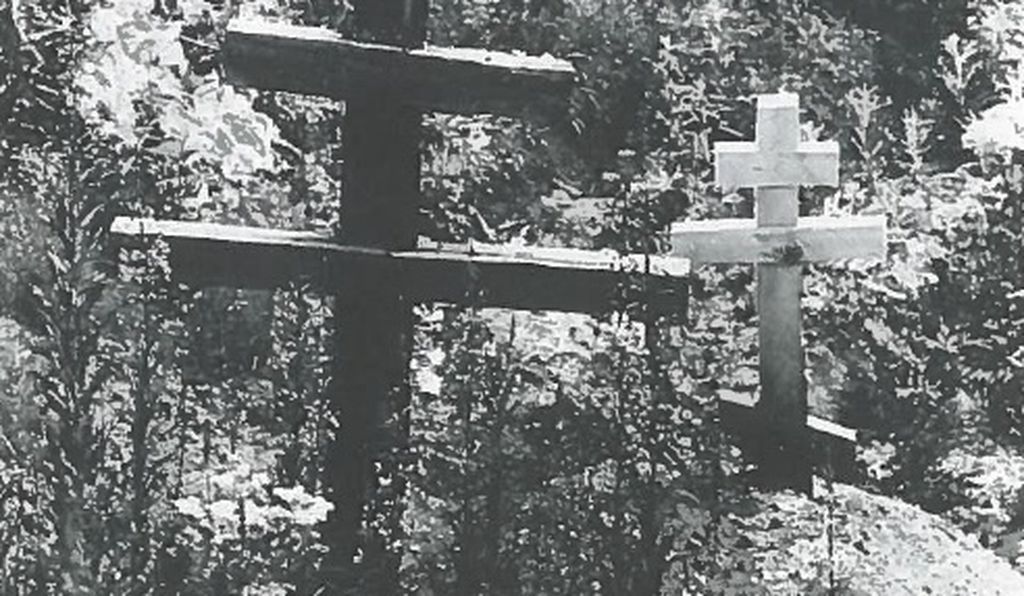
The Lykovs’ graves. Today only Agafia survives of the family of six, living alone in the taiga. H/T Smithsonian
We are surrounded today by computing horsepower, undreamed of by any but the science fiction buffs of earlier generations. The 8088-processor powered IBM personal computer released 40 short years ago had eight times more memory than “Apollo’s brain”, the guidance computer navigating Apollo 11 to the moon and back, ten years earlier.
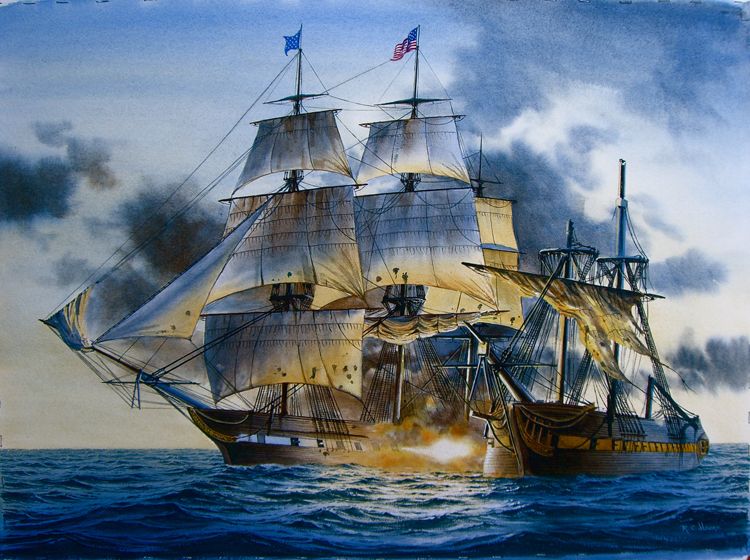
In the age of sail, naval combat was “muzzle to muzzle”. Before 1800 most such actions took place at ranges between 60 and 150 feet (18 – 46 m).
USS Constitution in combat during the War of 1812
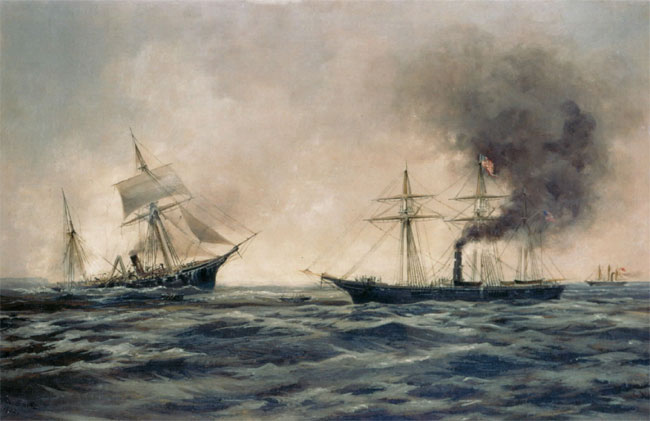
The Civil War Battle of Cherbourg in 1864 pitting the Mohican-class sloop-of-war USS Kearsarge against the Confederate commerce raider CSS Alabama, opened at 3,000 feet (910m).
Battle of Cherbourg, 1864
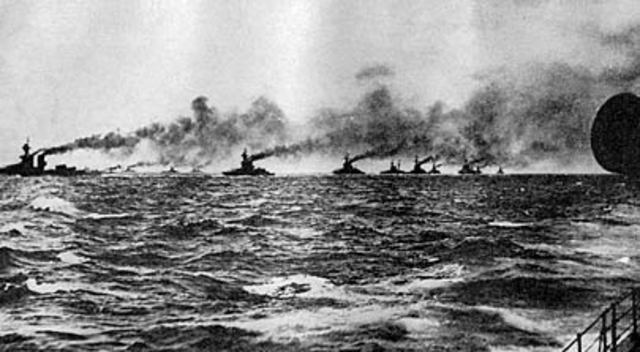
In 1884 the invention of the steam turbine produced speeds in naval vessels, never before dreamed of. By the turn of the 20th century, rifled guns of vastly larger size hurled explosive ammunition over the horizon. Enormously complex fire control solutions had to be calculated for range, movement of both vessels, elevation, the yaw of the firing ship, meteorological conditions, even the ambient temperature in powder magazines.
The projectile in flight is subject to forces such as gravity, drag, wind and air pressure and, at longer ranges, even latitude and rotation of the planet. Any given salvo may be accurately fired at a moving target only to fall harmlessly, several ship lengths behind. With the other guy shooting back, there isn’t always another chance to get it right.
Battle of Jutland, WW1
On land, artillery fire control solutions are nearly as complex and all of it, pertains only to a single gun. What is to be done then, about training all the guns on a warship, against a single target. What about a whole fleet?
Over time, increasingly accurate solutions were devised but, by World War 2, the race for fire control supremacy had outstripped the old ways. The penalty for failure was the difference, between life and death.
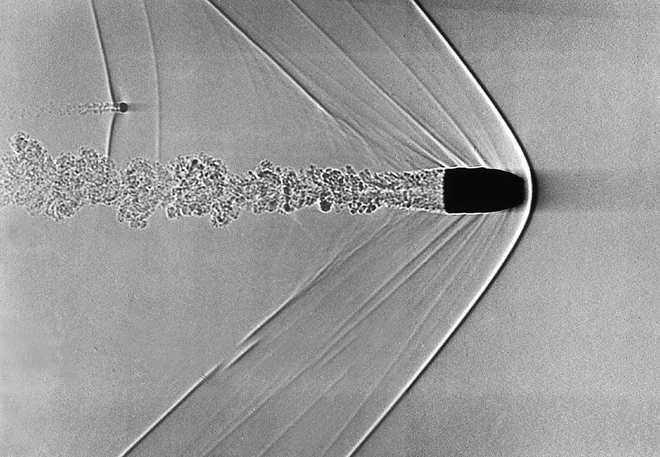
Extreme slow motion image, of air patterns around a bullet, in supersonic flight
We are surrounded today by computing horsepower, undreamed of by any but the science fiction buffs of earlier generations. The 8088-processor powered IBM personal computer released 40 short years ago had eight times more memory than “Apollo’s brain”, the guidance computer navigating Apollo 11 to the moon and back, ten years earlier.
The iPhone 5s has 1,300 times the computing power, of the Apollo moon lander.
A wonder for its time, IBM PC processors could address up to 64k at a time, within the computer’s (max) 1 mb memory. The 80286 based PC/AT released three years later sported a 20mb internal hard drive. Today, 128 bucks at Walmart will get you 4 Gigabytes of memory and a 160 gig, hard drive.
Back to artillery. The idea of a calculating machine was anything, but new. The abacus has been around for 3,000 years. The hand operated Antikythera analog computer dredged up from the ocean bottom in 1901, may go back as far as 205 BC. The 12th century “castle clock” invented by the Muslim polymath Ismail al-Jazari may be the world’s first programmable computer, capable of showing local time, lunar and solar orbits and even adjusting for length of day at certain times of the year.
Modern recreation of the ancient Antikythera mechanism
The US Army commissioned a study for a giant electronic “brain” to calculate firing tables back on May 31, 1943. Work began with Johns Hopkins physicist John Mauchly with chief engineer John Presper Eckert of the University of Pennsylvania’s Moore School of Electrical Engineering.
It took a year for the team to design the machine and another 18 months to build it. The Electronic Numerical Integrator and Computer (ENIAC) was officially powered up in November, 1945.
The one thing those ancient machines have in common, is they were all hardware. “Software”, as it was known to programmers of the 1940s, had instructions written directly into the machine, in binary code.
The war was over in December 1945 but the military still had work for ENIAC to do. The first real-world calculations were performed On December 10.
ENIAC was formally dedicated at the University of Pennsylvania on February 15, 1946. Risible though the machine may be by modern standards, ENIAC was a wonder of science and technology, for its time. The press dubbed the thing, a “Giant Brain”. A trajectory taking 20 hours to calculate by humans took 30 seconds. One ENIAC was the computational equal, of 2,400 humans.
What the press didn’t know, was behind the scenes. In the early days of the war, the Moore School of Engineering worked with the Ballistic Research Laboratory (BRL) where a team of 100 “human computers” were trained to hand-calculate firing tables for artillery shells. With so many men off to war and programming seen at that time as “clerical work” the BRL hired, mostly women.
These were the “Top Secret Rosies”, the female “computers”, of WW2. When the ENIAC project began six of them came over, as programmers.
Marlyn Wescoff [left] and Ruth Lichterman were two of the female programmers of ENIAC. H/T Institute of Electrical and Electronics Engineers
Projects involved design for the hydrogen bomb, weather predictions, cosmic-ray studies, thermal ignition, random-number studies and wind-tunnel design.
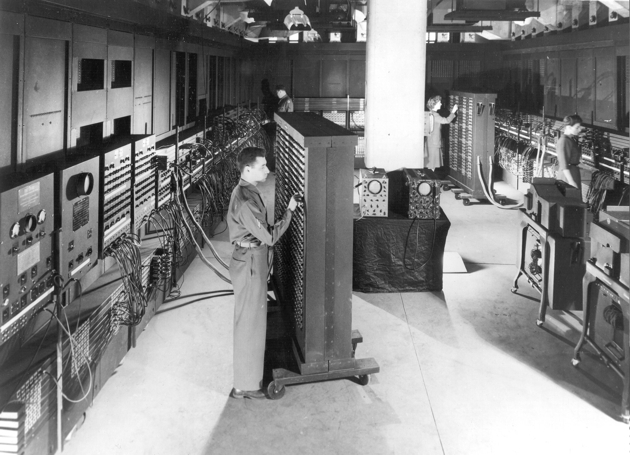
ENIAC began as a room-sized modular computer comprised of individual panels, to perform different functions. Numbers were sent back & forth on buses, called trays. At its height ENIAC had 18,000 vacuum tubes, 7,200 crystal diodes, 1,500 relays, 70,000 resistors, 10,000 capacitors and something like 5 million hand soldered joints occupying 1,800 square feet. The machine consumed 150 kilowatts of electricity. Rumor had it when ENIAC was switched on the lights in all Philadelphia, dimmed.
All things must come to an end. ENIAC, once a wonder of science and technology was already obsolete, by 1956. At its height, the machine weighed in at 25 tons and performed 5,000 calculations, per second. Weighing in at 4.55 ounces the iPhone 6, performs 25 Billion calculations per second.
Today the electronic descendants of ENIAC perform tasks of increasing, even mind boggling complexity. Mapping the human genome. Climate research. Exploration, for oil and gas.
Before long top-of-the line mainframe computers were performing at a rate not in the thousands of instructions per second but MIPS. Millions of instructions per second. The first supercomputer arrived in 1965 with so much horsepower as to require a whole new unit of measure: FLOPS “floating-point operations per second”.
The term wasn’t in use during ENIAC’s day but, if it was, that bad boy was chunkin’ along, at 500 FLOPS. Supercomputer performance metrics have since climbed the metric decadic system, bending vocabularies to new and hitherto unimagined heights. KiloFLOPS was eclipsed by megaFLOPS and gigaFLOPS and continued ever onward. The “tera” prefix (Trillion) gave way to the dizzying petaFLOP, or one one quadrillion: a thousand trillion floating point line operations, per second.
“The IBM Blue Gene/P supercomputer “Intrepid” at Argonne National Laboratory runs 164,000 processor cores using normal data center air conditioning, grouped in 40 racks/cabinets connected by a high-speed 3-D torus network”. H/T Wikipedia
In April 2020 the distributed computing network folding@home acheived computing performance of one exaFLOPS. Unless you’re in interplanetary space I can’t think of another use, for such a number. Unless we’re talking about the federal debt.
As of January 2021 no single machine has scaled such heights, but they’re working on it. One exaFLOPS. A quintillion floating point line operations, per second. The estimated speed at the neural level, of the human brain.
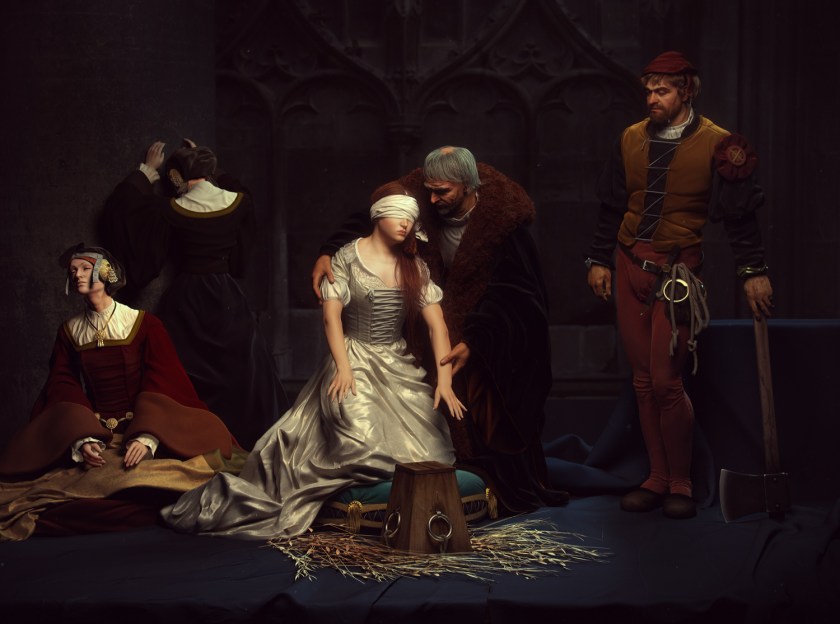
The “Nine Day Queen” experienced the swiftest rise and fall of any Monarch, in the history of the English crown. She never wanted any of it, but it didn’t matter. The ambitions of others would cost the teenage Lady Jane, her head.
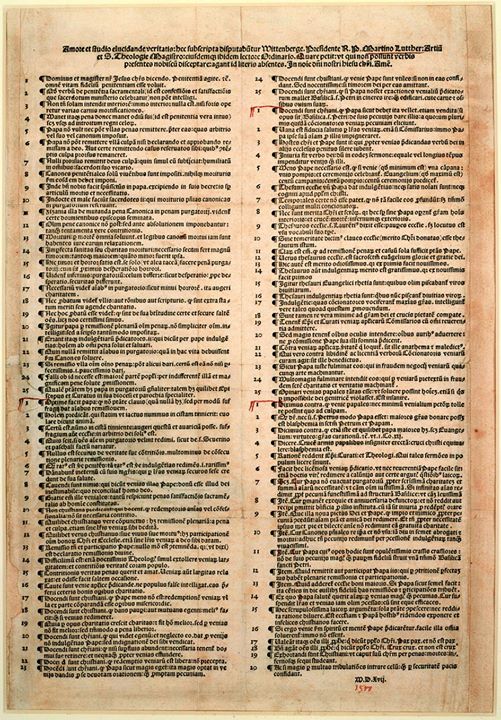
A popular story has Martin Luther nailing a challenge to Church authority to the Wittenberg Palace Church, in 1517. In all probability, it never happened that way. Luther had no intention of confronting the One Church at this time. This was an academic work, mailed to Archbishop Albrecht and offered for scholarly disputation.
Luther’s “95 theses” rocked the Christian world and may be counted among the most important documents in world history, alongside the Cylinder of the Persian King Cyrus, the Magna Carta and the Declaration of independence.
What seems to the modern mind as mere doctrinal differences, were life and death matters in the late middle and early modern ages.
The European “Wars of Religion” spawned by the Protestant Reformation raged across Europe for a hundred years. Other issues were involved as well – territorial ambitions, revolution, Great Power conflicts, but fault lines pulling at the Christian world, were never far from the surface. The Peasant’s War of 1524-’25 alone killed more Europeans than any conflict prior to the French Revolution, in 1789. The Thirty Years’ War of 1618-’48 laid waste to Germany and killed a third of its population, a death rate twice that of World War I.
The Protestant Reformation spread across Europe reaching its greatest geographic extent in the latter half of the 16th century. In England, the schism began with Pope Clement VII and King Henry VIII, of England. Desperate for a male heir, Henry sought divorce from Catherine of Aragon in order to marry Anne Boleyn. The Pope refused an annulment. Before it was over King Henry VIII had established the church of England with himself, at its head.
Henry died in 1547 leaving his son by Jane Seymour, the nine year old Edward Tudor, King. Next in order of succession came Edward’s half-sister by Catherine of Aragon Mary Tudor, followed by his half-sister Elizabeth, daughter of Anne Boleyn.
Despite breaking with the church in Rome, Henry never permitted the renunciation of Catholic doctrine, or ceremony. Henry, the first English monarch raised as a Protestant, dispensed with clerical celibacy and the Mass, and required services to be conducted, in English.
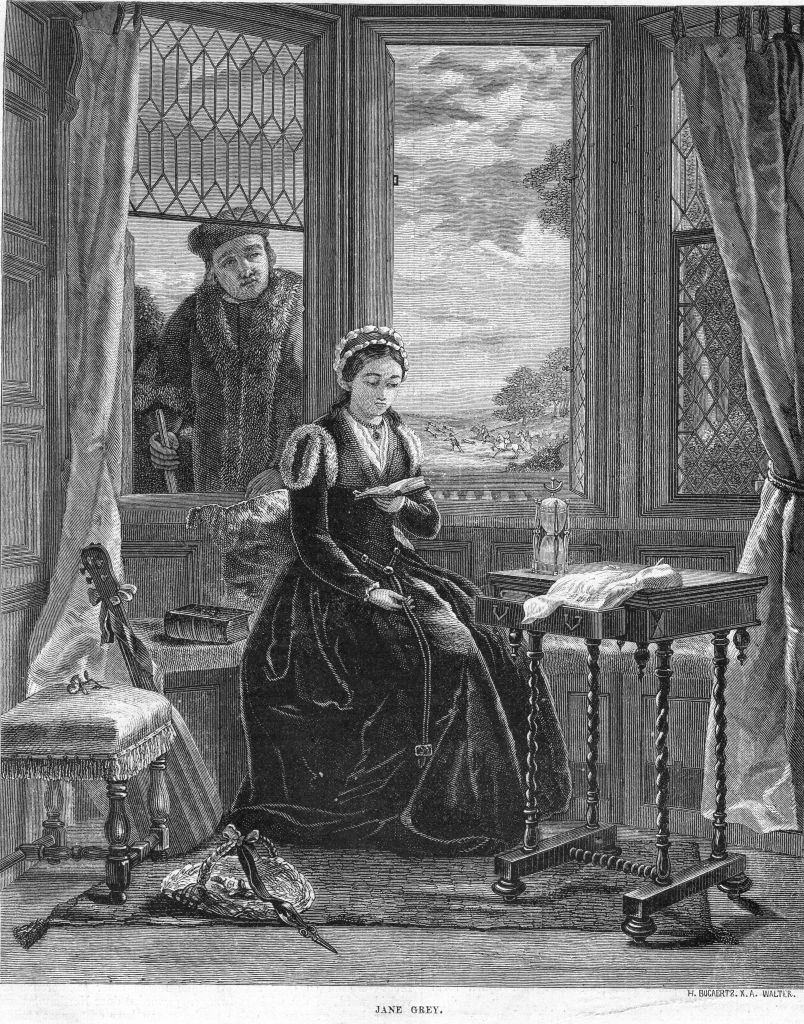
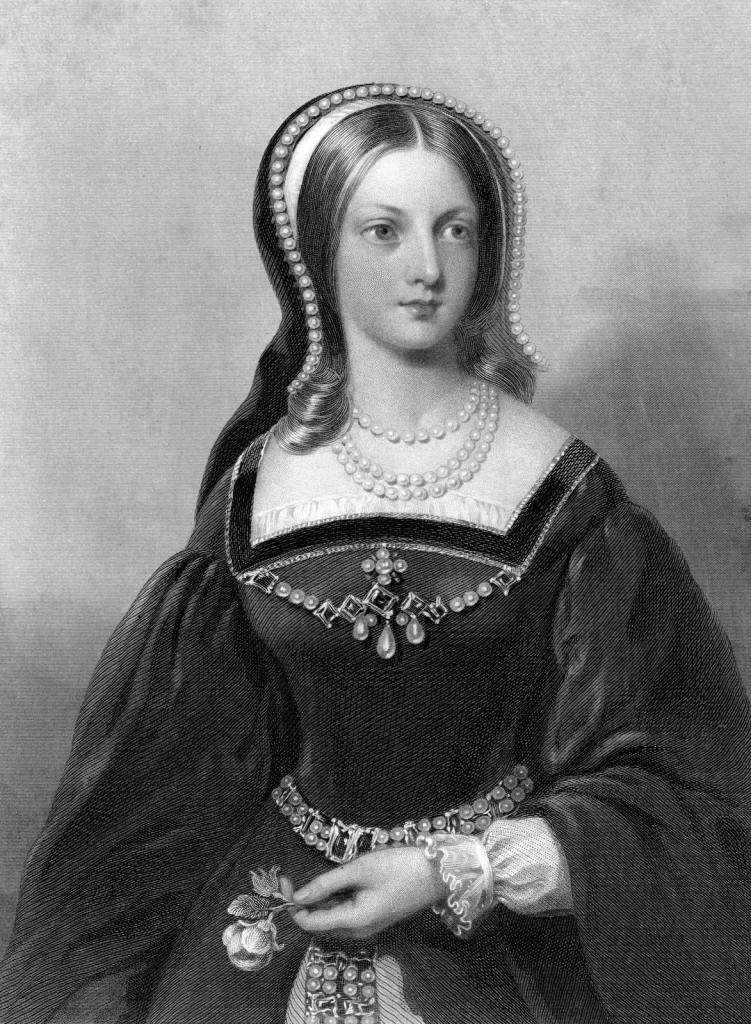
Despite her title, Henry’s cousin Jane had little use for the goings on at the royal court. “Lady” Jane Grey would rather read a book. Pretty, smart and well educated, she was the daughter of Henry’s younger sister and as such, in line for the crown.
At nine Jane was sent to live with Henry’s widow, Katherine Parr.
There exists among us a type of person, with an insatiable need to control the lives of others. People who desire power, above all things. Call it a personality defect or a psychological condition, that’s up to you, but one thing is certain. History is replete with such individuals at all times and in all political stations. All too often, these are the people who Become, history.
Books have been written about the scheming, the grasping for power behind the scenes, of the royal throne. Such machinations are beyond the scope of this essay but this story is chock full of such individuals, not the least of whom were John Dudley, duke of Northumberland and Jane’s own father, Henry.
In 1551, Henry Grey was created 1st duke of Suffolk. With pre-teen Henry on the throne Dudley, duke of Northumberland, exercised enormous power behind the scenes. In May 1553, Suffolk and Dudley arrange of their two children: Lady Jane to Northumberland’s son, Lord Guildford Dudley.
Edward ruled until the ripe old age of fifteen and fell ill from some lung condition, possibly tuberculosis. Knowing he was dying, Edward and his council drew up a “Devise for the Succession” to prevent the return of Catholic rule.
Lady Jane was devoutly Protestant. Edward bypassed his half sisters Mary and Elizabeth to name Jane Grey, his rightful heir. At fifteen, this quiet teenage girl who’d rather read a book became the Great Hope of Protestant England.
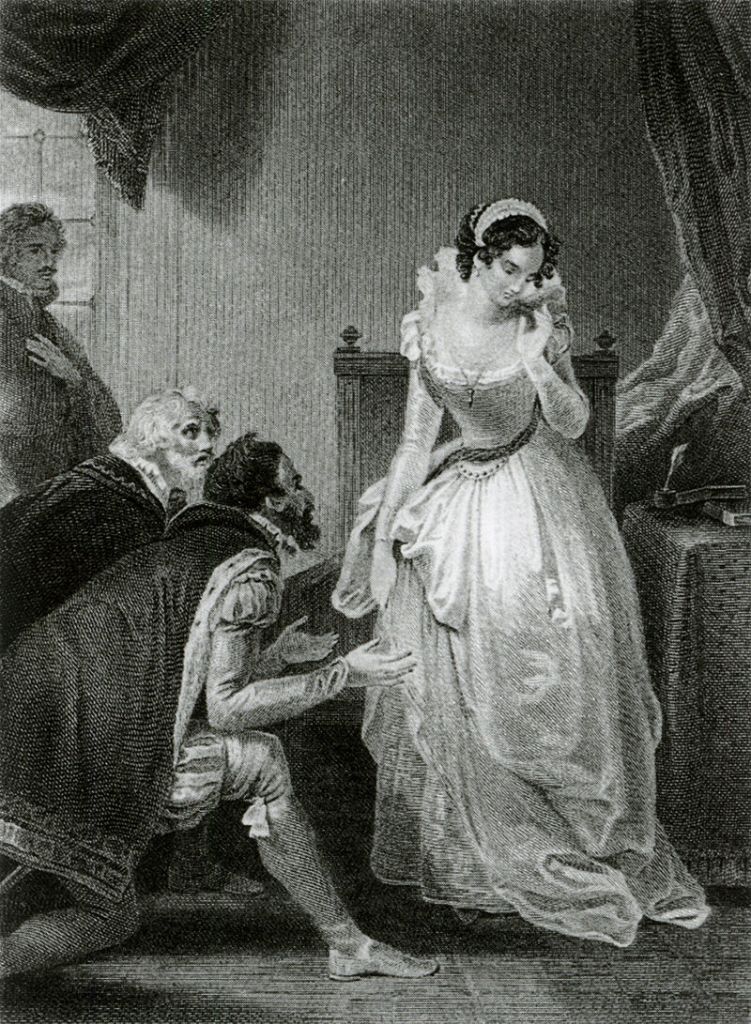
King Edward VI died on July 6, 1553 his death kept quiet, for four days. Lady Jane Grey was proclaimed Queen of England, France and Ireland on July 10, her husband Guildford, the Duke of Clarence. Jane fainted on learning she was Queen. She later said she accepted the crown, only with reluctance.
Lady Jane being asked to take the throne as imagined by artist, Robert Smirke
To the devoutly Catholic Mary Tudor, the future “Bloody Mary”, the line of succession was clear. She herself was named in the Parliamentary act of 1544. She was next according to Henry’s private papers. Mary Tudor was not about to be denied what was rightfully hers.
It is said that success has many fathers but failure, is an orphan. Dudley set out with a body of troops, to capture the would be Queen as the privy council, personal advisors to the crown, now declared support for Mary. With the rug pulled out from under him Dudley’s support, evaporated. Even Henry Grey, Jane’s father, switched his support to Mary.
Queen for only nine days, Jane was deposed on July, 19, 1553. The only English monarch in 500 years without so much, as a portrait. Now simply “Jane Dudley, wife of Guildford”, she was imprisoned in the Gaoler’s (Jailer’s) apartments at the Tower of London, Guildford in the Beauchamp Tower.
Mary rode triumphantly into London on August 3, accompanied by her half sister Elizabeth and a procession of over 800 dignitaries.
Jane was charged with high treason as was Guildford and several associates. The trial began on November 3 with no doubt, as to how it would end. Just turned 17 in October the “nine days’ Queen” was convicted of high treason and sentenced to “be burned alive on Tower Hill or beheaded as the Queen pleases”.
Even yet, there was reason to believe that Jane might be spared. What happened next sealed the teenager’s fate.
Once crowned, Mary I wasn’t about to be succeeded by her younger (Protestant) half sister, Elizabeth. She turned her attention to finding a mate. Mary needed to produce an heir. The House of commons petitioned that the new Queen select an English mate, but she chose Prince Philip of Spain.
The marriage was controversial. English patriots opposed the match, not wanting Britain relegated to a mere dependency, of the Habsburgs. English Protestants feared Catholic rule.
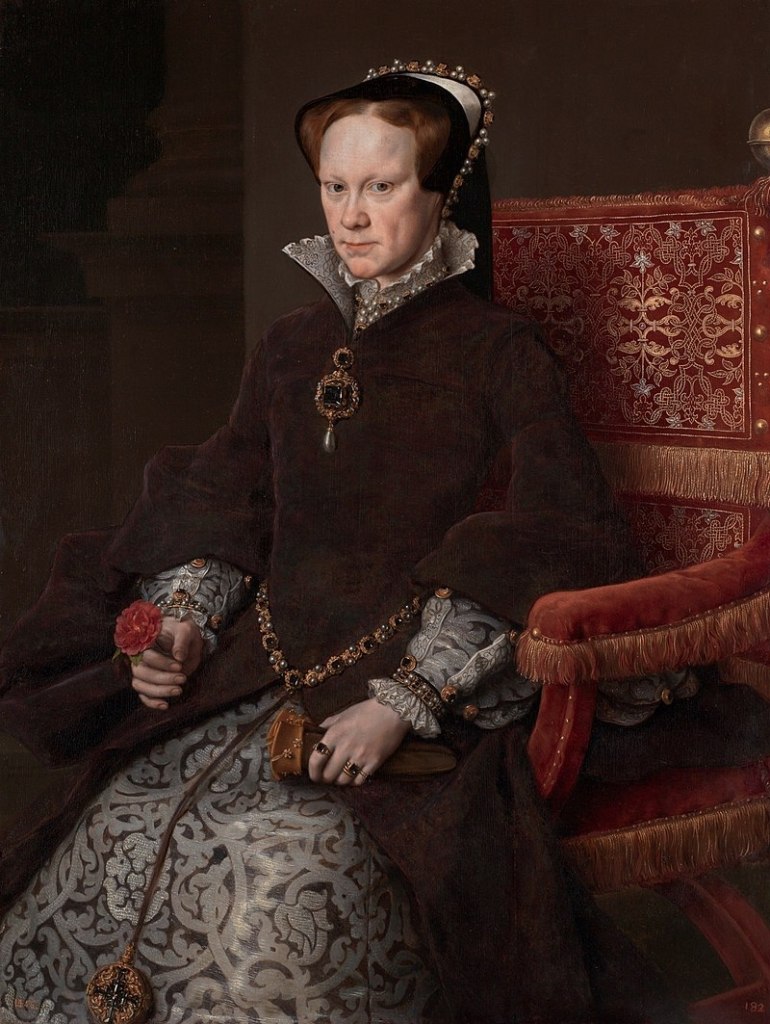
Mary I, Queen of England
There followed a series of uprisings in opposition to the marriage, called after the rebel politician Thomas Wyatt. The so-called Wyatt’s Rebellion explicitly opposed the marriage but carried with it the implication, of an intent to overthrow the Queen. There were even dark rumors, of assassination.
Jane’s father joined in the rebellion as did two of his brothers. For the government, this was the last straw. The Bishop of Winchester persuaded the Queen that Jane was a risk and would continue to be so, due to her influence over Protestant rebels. Her execution and that of her husband were scheduled for February 9.
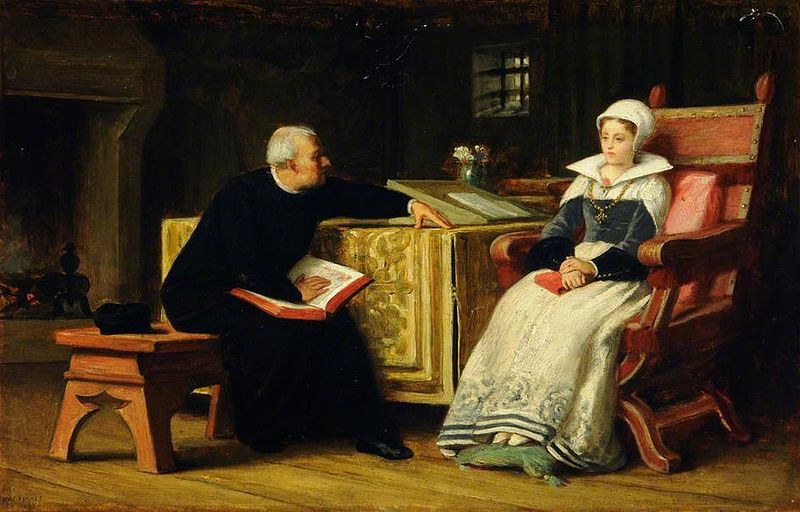
Three days were allowed for the former Queen to save her life, and convert to Catholicism. Mary even sent her chaplain John Feckenham to “save her soul”.
Jane politely declined to convert but she soon made friends, with Feckenham. She even invited him to her own execution.
On the morning of February 12, 1554, Jane watched out the window as her husband, was wheeled off in a cart. With the words “Oh Guildford” she watched the return of his body and his head, each wrapped in separate white sheets.
Then came the sound of footsteps. At her door.
Brought to the scaffold, Jane began to speak. “Good people, I am come hither to die” concluding, “I do wash my hands thereof in innocence“. The law made her a traitor but all she had done, was accept the positi0n.
She recited Psalm 51 (Have mercy upon me, O God) in English and handed her gloves and handkerchief to her maid. As was customary the executioner asked for forgiveness. That she gave, adding “I pray you dispatch me quickly.” She then asked “Will you take it off before I lay me down?” She was referring to her head. “No Madame”, came the reply. Lady Jane applied her own mask and reached out groping, for the block. In that she received help. Outstretching her arms, she spoke. Jesus’ last words, as recounted by Luke: “Lord, into thy hands I commend my spirit.”
The slender neck was parted, with a stroke.
There was no funeral. No stone to mark the grave. Lady Jane was simply buried, along with her husband in the parish church of the Tower of London. Saint Peter ad Vincula. (“St. Peter in chains”). She is the last of five beheaded females buried in the chancel area, along with Queen Anne Boleyn, Queen Katherine Howard, Lady Rochford and Margaret Pole, Countess of Salisbury.
Three hundred years later the essayist Thomas Babington wrote in memoriam, of those who rest, at St. Peter ad Vincula:
“In truth there is no sadder spot on the earth than that little cemetery. Death is there associated, not, as in Westminster Abbey and Saint Paul’s, with genius and virtue…but with whatever is darkest in human nature and in human destiny, with the savage triumph of implacable enemies, with the inconstancy, the ingratitude, the cowardice of friends, with all the miseries of fallen greatness and of blighted fame…”.
Good judgement it’s been said, comes from experience. And experience? That comes from bad judgement.
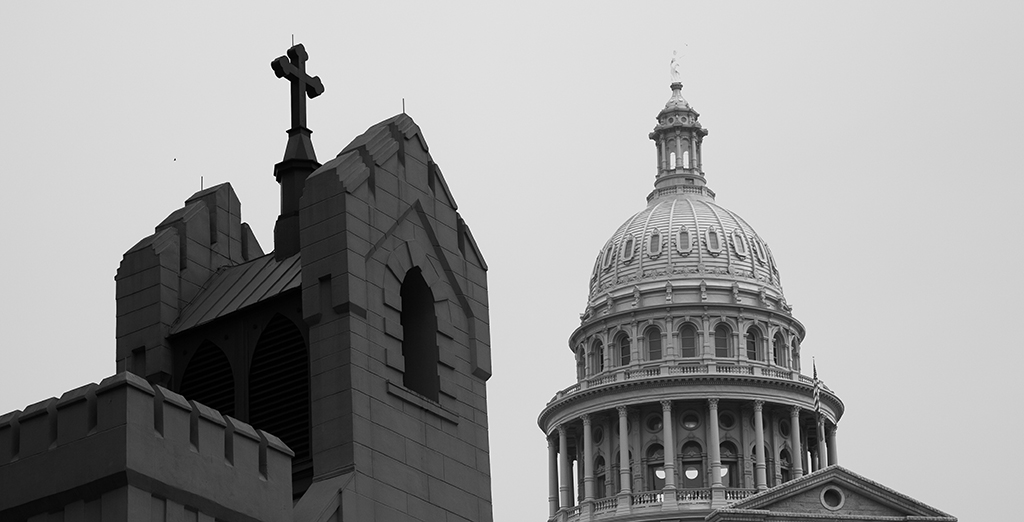
Article III of the United States Constitution establishes the Supreme Court of the United States (SCOTUS), and “such inferior Courts as the Congress may from time to time ordain and establish”. There is no mention of the number of justices.
The first Congress passed the Federal Judiciary Act on September 24, 1789, specifying a six-justice Supreme Court. That same day President George Washington appointed John Jay of New York as chief justice along with associate justices John Rutledge of South Carolina, William Cushing of Massachusetts, John Blair of Virginia, Robert Harrison of Maryland and James Wilson of Pennsylvania.
Two days later the Senate confirmed all six. The Supreme Court of the United States sat for the first time in the Royal Exchange Building on New York City’s Broad Street on February 1, 1790.
Twelve years later, the presidency of John Adams was coming to an end. As a Federalist, Adams was pleased to throw a speed bump in the path of incoming Democratic-Republican, Thomas Jefferson. To that end, Adams appointed the infamous “midnight judges” in the last hours of his administration: 16 Federalist Circuit Court judges and 42 Federalist Justices of the Peace.
The incoming Jefferson administration sought to block the appointments. Jefferson ordered then-Secretary of State James Madison to hold those commissions as yet undelivered, thus invalidating the appointments. One appointee, William Marbury, sued.
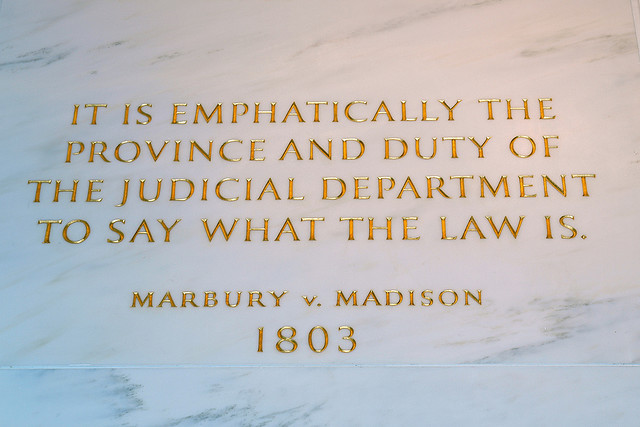
The case advanced all the way to the Supreme Court which ruled in Marbury v. Madison, the provision of the Judiciary Act enabling Marbury to bring his claim, was unconstitutional. Marbury lost his case but the principle of judicial review, the idea that the court would preside God-like over laws passed by their co-equal branch, remains the law of the land from that day to this.
Over time, SCOTUS has proven itself to be as imperfect as any other institution.
In the early days of the Great Depression, Federal agricultural officials conceived the hare brained idea that artificially introducing scarcity would increase prices and therefore wages, in the agricultural sector. Six million hogs were destroyed in 1933. Not harvested, just destroyed and burned or plowed into the ground. 470,000 cattle were shot in Nebraska alone. Vast quantities of milk were poured down sewers, all at a time of national depression and widespread malnutrition.
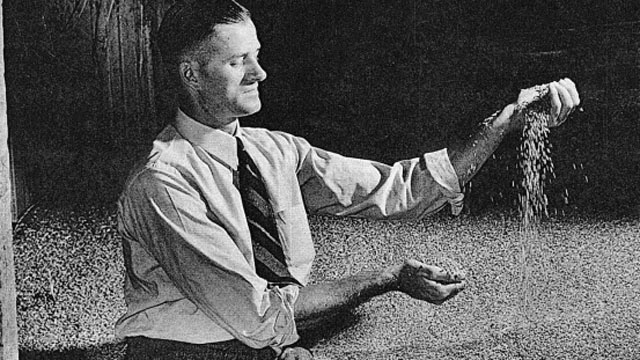
With the Agricultural Adjustment Act of 1938, Washington began to impose production quotas on the nation’s farmers. Ohio farmer Roscoe Filburne was ordered to grow 223 bushels of wheat during the 1941 season. He grew 462.
Article 1, Section 8 of the Constitution permits Congress “To regulate Commerce with foreign Nations, and among the several States, and with the Indian Tribes”. That’s it but, on this flimsy basis, the Federal Government took Roscoe Filburne to court.
The farmer argued the federal government had nothing to say as any “surplus” stayed on his farm, feeding the Filburne family and their chickens. Lower Courts sided with the farmer. The government appealed all the way to the Supreme Court arguing that, by withholding his surplus from the market, Filburne was effecting interstate market conditions, thereby putting him under federal government jurisdiction.
Intimidated by the Roosevelt administration’s aggressive and illegal “court packing scheme“, SCOTUS decided the Wickard v. Filburnecase, against the farmer. Ever since that time, what you don’t do can be held against you by the government, in a court of law. Get it? Neither do I.
Kelo v. City of New London ruled one private party’s judicial theft of another’s was a valid use of the takings clause. Two dozen Connecticut families were evicted and forced out of their homes. Their houses were bulldozed, neatly kept yards overgrown with weeds and left a dumping ground and home, for feral cats. Small matter to those homeowners the proposed “redevelopment” of their neighborhood, never happened.
In the entire history of the court there have only been 115 justices.
Some among those 115 have been magnificent human beings. Some of them were cranks. There have been instances of diminished capacity ranging from confusion to outright insanity. One justice spent part of his term in a debtor’s prison. Another killed a man. There have been open racists and anti-Semites.
There is no official portrait of the 1924 court because Justice James C. McReynolds wouldn’t stand next to Louis Brandeis, the court’s first Jewish Justice. One Justice was known to chase flight attendants around his quarters while another spent his time in chambers, watching soap operas.
There’s the former Klan lawyer turned Justice who took a single phrase from a private letter of Thomas Jefferson, “separation of church and state”, and transformed the constitutional freedom OF religion into an entirely made up freedom FROM religion.
The Supreme Court reinforced chattel slavery with the Dred Scott decision. The Korematsu ruling gave us the forced incarceration of Americans of Japanese descent. Buck v. Bell gave Americans the “gift” of forced sterilization and Stenberg v. Carhartt enshrined the constitutional “right” to the unthinkable “procedure” known as partial birth abortion. Hammer v. Dagenhart supported the practice of children, put to work in the nation’s mines and factories.
From “Separate but Equal” to the “rights” of terrorists, SCOTUS’ rulings are final, infallible and sometimes, imbecilic.
Chief Justice John Roberts once said “remember that it’s my job to call balls and strikes, and not to pitch or bat.”
He who invented a new definition of taxation enshrining the “Affordable Care Act” as the law of the land.
The constitution invests state legislatures with sole authority to determine state voting regulations. Yet recently, we had election officials and state courts changing key states’ voting rules while SCOTUS declined to intervene. Is there any wonder why half a nation questions the validity of that election?
Just don’t say it out loud or you’ll be de-platformed, or worse.
Today a man barely a week in office convenes a commission to recommend Supreme Court “reforms”, up to and including exhuming Roosevelt’s court packing scheme. It’s not hard to guess how that will turn out. Because it never really was about transparency, fairness or even democracy, was it. Just the raw exercise of power.
The skirmishes lasted, for weeks. No one was killed during the Milwaukee bridge War of 1845 though combatants on both sides, were injured. In the end even the hotheads had to admit it. The only path forward lay in unification.
Solomon Juneau was a fur trader. Like the cousin who went before him to found Juneau, Alaska, Solomon left his home in Quebec and wound up in Wisconsin, settling on the east side of the Milwaukee River. That was 1818. The east side of the river would come to be known as “Juneau’s side” and later,”Juneautown”.
Byron Kilbourn was born in Connecticut, the son of a Colonel in the War of 1812 and later member of Congress from the state of Ohio. Kilbourn left the family home in Ohio and traveled to Green Bay where he worked as a government surveyor.
By the 1830’s, Solomon Juneau knew that times were changing. As his fur trade diminished, Juneau turned to real estate. By the time Byron Kilbourn showed up on the other side with his surveying instruments, Juneau’s settlement was a small but thriving town.
Like Juneau, Kilbourne saw the commercial potential of the area. This spot on the Milwaukee River could be a port city he thought, serving Lake Michigan and beyond, all the way to the Atlantic Ocean.
The land Kilbourn staked out on the west side belonged at that time, to the Potawatomi. There followed accusations of sleazy deals and fudged land surveys. Kilbourn soon emerged from land court with title to the area, around the time that politician and trader George H Walker settled his own parcel to the south at what would be known as, Walker’s Point.
Kilbourn’s side of the river became “Kilbourntown” and grew as quickly as Juneautown on the opposite side.
Competition developed and deepened between the two sides as Kilbourn and his supporters did everything they could to isolate Juneautown. You can see the animosity to this day in the way the street grids on opposite sides, fail to meet.
In 1840, the Wisconsin territorial legislature directed that a drawbridge be built across the Milwaukee river.
That first bridge was built across Chestnut street now Juneau, with Solomon Juneau’s support. Kilbourn and his people built their own bridge, across the Menominee.
By 1845, there were five. That May, a schooner damaged the Spring Street bridge in Kilbourn’s west ward. West warders were furious and blamed Juneau for the damage. Kilbourn supporters retaliated, dropping the west end of the Chestnut Street bridge into the river. East warders loaded a cannon with clock weights and aimed it at Kilbourn’s home but held off on learning the man had just lost a daughter.
Bridges favored by both sides were destroyed. Those caught on the “wrong” side were chased down and beaten. By June, bridge work was being done under armed guard.
The skirmishes lasted, for weeks. No one was killed during the Milwaukee bridge War of 1845 though combatants on both sides, were injured. In the end even the hotheads had to admit it. The only path forward lay in unification. Juneautown and Kilbourntown joined with Walker’s Point to the south, the three towns unifying to form the city of Milwaukee Wisconsin on January 31, 1846.
Juneau was elected the city’s first mayor.
Solomon Juneau later founded the Milwaukee Sentinel, today the oldest continuously operating business in Wisconsin. Six Menominee chiefs served as pallbearers at his funeral, in 1855.
Byron Kilbourne went on to found Kilbourn City in 1857, now known, as Wisconsin Dells. Allegations of sleaze seemed to follow him, wherever he went. Kilbourne went on to serve as president of the Milwaukee & Mississippi Railroad from 1849-’52 until the railroad’s board of directors fired him for mismanagement and fraud.
The railroad he chartered in 1852 to compete with his former employer was ruined following a scandal alleging the use of railroad bonds to bribe state officials. He fled to Florida to relieve his “arthritis” and passed away in Jacksonville, in 1870.
For 128 years, Milwaukee historic preservation types labored to reunite the city’s three founders in Wisconsin soil. Historic Milwaukee, Inc. returned Kilbourne’s remains to Wisconsin in 1998 where he rejoined the city’s co-founders, in the Forest Home Cemetery.
“What if” counterfactuals can be slippery. We can’t know how a story will end only by starting it out… “if only”. But still…
“What if” counterfactuals can be slippery. We can’t know how a story will end only by starting it out… “if only”. But still. How might the 20th century have played out, for example, had it not been for that day in Sarajevo, in 1914.
Perhaps the tinderbox already building by 1914 would have been lit, on some other day. But what if? Maybe two World Wars never happened, after all. Adolf Hitler remained a mediocre artist living in a flop house, in Vienna. All China became a free market, and not just Taiwan. What if the cold war, communism and everything that stemmed from that malevolent ideology was nothing more than the unpublished, nightmare imaginings of some crazy novelist?
In the wake of World War 2, a bipolar structure emerged in the world political order and remained so, for 40 years.
America was a minor player in pre-WW1 affairs, a period about which Germany’s “Iron Chancellor” Otto von Bismarck once explained: “All politics reduces itself to this formula: try to be one of three, as long as the world is governed by the unstable equilibrium of five great powers.”
After the downfall of French Emperor Napoleon I, 1814-’15, the Great Powers of Austria, Britain, France, Russia and Prussia met in Vienna to settle old issues and rebalance national boundaries in order to bring long-term peace, to Europe.
Austria declined over the next half-century leading to the Austro-Hungarian Compromise of 1867, an accord between the Empire of Austria and the Kingdom of Hungary. Ostensibly a constitutional union, the Austro-Hungarian Empire was a kaleidoscope of fifteen distinct ethnic groups speaking at least as many languages and divided, along no fewer than six religious lines.
After the 1889 suicide of Crown Prince Rudolf, the only son of Franz Josef, the emperor’s younger brother Karl Ludwig became heir to the Austro-Hungarian throne. Ludwig’s death in 1896 left his eldest son, Franz Ferdinand, the new heir presumptive.
Otto von Bismarck once said the next European war would begin with “some damn fool thing in the Balkans”. Bismarck got his damn fool thing in Sarajevo on June 28, 1914. We all know the story. The diplomatic visit of an heir presumptive. The open car. The wrong turn. The assassin.
There followed a series of diplomatic missteps, military mobilizations and counter-mobilizations called the “July Crisis of 1914″. By August there was no turning back. The “War to End all Wars” would shatter a generation, lay waste to a continent and erect the foundation, for the rest of the 20th century.
So, what about Rudolf and that “suicide”, in 1889. He was supposed to succeed Ludwig, not Ferdinand. What if the Emperor’s only son, had lived?
Political alliances came and went among the dynastic families of Europe, with treaties often sealed by arranged marriages. On May 10, 1881, Crown Prince Rudolf married Princess Stéphanie, daughter of King Leopold, of Belgium.
Crown Prince Rudolf and his wife, Princess Stéphanie of Belgium, daughter of King Leopold II
A child was born in 1883, Archduchess Elisabeth, but the union soon soured. Rudolf began to drink and pursue women, not his wife. He wanted to write to Pope Leo XIII to annul the marriage. The formidable Franz Josef, would have none of that.
Three years later, Rudolf bought a hunting lodge in the Austrian village of Mayerling. In 1888, the 30-year old crown Prince met and began an affair with 17-year-old Marie Freiin (Baroness) von Vetsera.
Marie Freiin von Vetsera preferred to go by the more fashionable Anglophile version of her name, Mary
On January 30, 1889, the bodies of the Crown Prince and the Baroness were discovered in the Mayerling hunting lodge, victims of an apparent suicide pact.
Mayerling
Emperor Franz Josef went on to reign until 1916, one of the longest-serving monarchs of the 19th century.
Now without male heir, succession to the imperial throne passed first to the emperor’s younger brother Ludwig and later to Franz Ferdinand, best remembered for his assassination, in 1914.
Empress Elizabeth of Bavaria, Rudolf’s mother, went into deep mourning.
She wore the colors of her grief, pearl gray and black, every day until her assassination at the hands of 25-year-old Italian anarchist Luigi Lucheni, in 1898.
132 years later we can only ponder. It may be the ultimate counterfactual. What if Crown Prince Rudolf had lived to succeed Franz Josef. Politically, the son was far more liberal, than his father. Rudolf would surely have held more conciliatory views toward the forces, tearing at the empire. The same could be said of Franz Ferdinand, so who knows. Perhaps a rock in a stream once moved, alters not the flow of events yet to come.
But maybe that fork in the road met on June 28, 1914, would have led to a road less traveled and perhaps, the history of the last century, never happened.
Afterward,
By special dispensation, the Vatican declared Rudolf to be in a state of “mental imbalance” as suicide would have precluded church burial. The Emperor ordered Mayerling transformed into a penitential convent and endowed a chantry ensuring that prayers would rise up daily, for the eternal rest of his only son.
Vetsera’s body was smuggled out in the dark of night and quietly buried in the village cemetery at Heiligenkreuz, her funeral so secret even her mother was forbidden to attend.
Stories of poison gave way to reports of murder-suicide. Rumors have surrounded the Mayerling incident, for 100 years. Such stories went unchallenged until 1946 when occupying Red Army troops dislodged the stone covering the crypt and opened Vetsera’s coffin, looking for jewels. Repairing the damage some nine years later the fathers of the monastery observed the small skull and noticed, the absence of bullet holes. Physician Gerd Holler examined the remains in 1959 and concurred. No bullet hole.
But Maria von Vetsera was shot by the Crown Prince who later took his own life. That was the story, right?
Stories came to life of defensive wounds. Of evidence the pair had been murdered, after all.
Obsessed with the tale, Linz furniture store owner Helmut Flatzelsteiner disturbed the remains yet again, in 1991. Rumors went wild but in the end, results were inconclusive. Flatzelsteiner paid the abbey €2,000, in restitution.
In 2015 a letter was found in a safe deposit box, in an Austrian bank. A suicide note from a young girl, to her mother
“Dear Mother Please forgive me for what I’ve done I could not resist love In accordance with Him, I want to be buried next to Him in the Cemetery of Alland I am happier in death than life”.
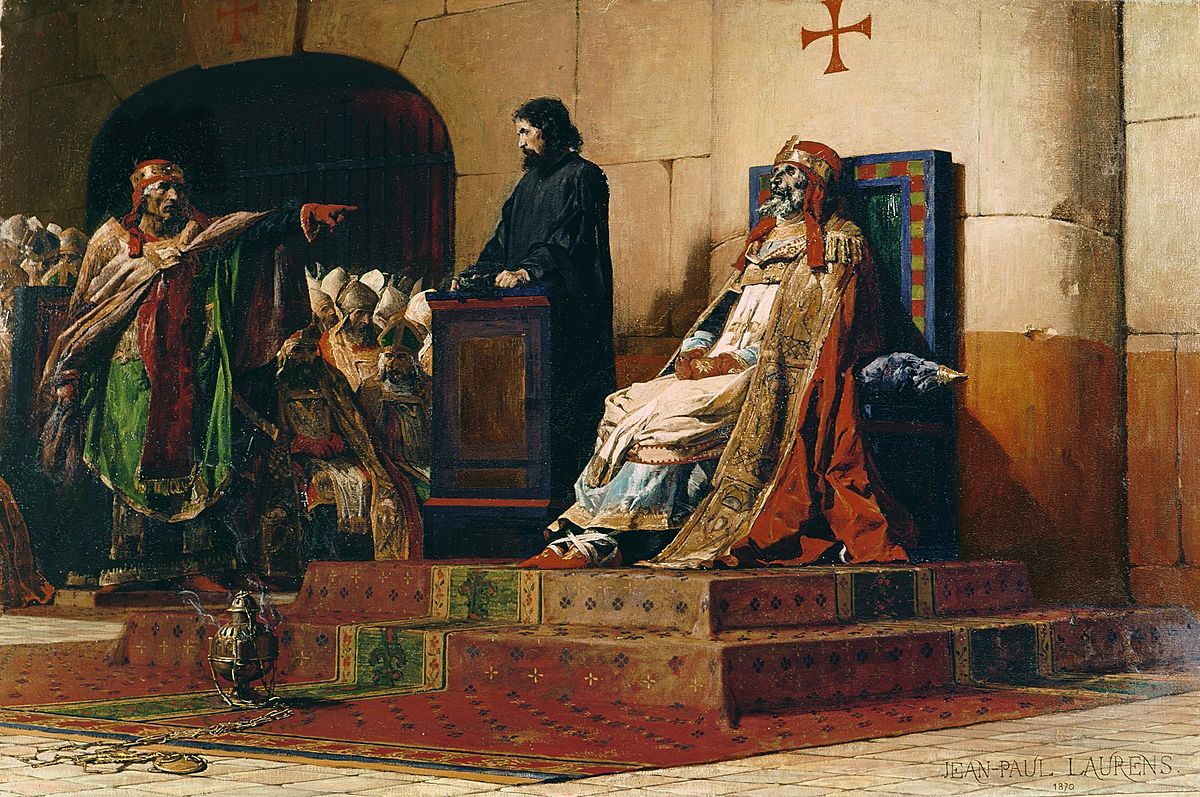
56-score and four years ago today it was January 26, 897. A live Pope put his dead predecessor…his predecessor’s deceased predecessor really…on trial. Seriously. They dug up the corpse and dressed it in papal vestments, put it on a throne and tried the guy in a kangaroo court spectacle, worthy of a San Francisco politician.
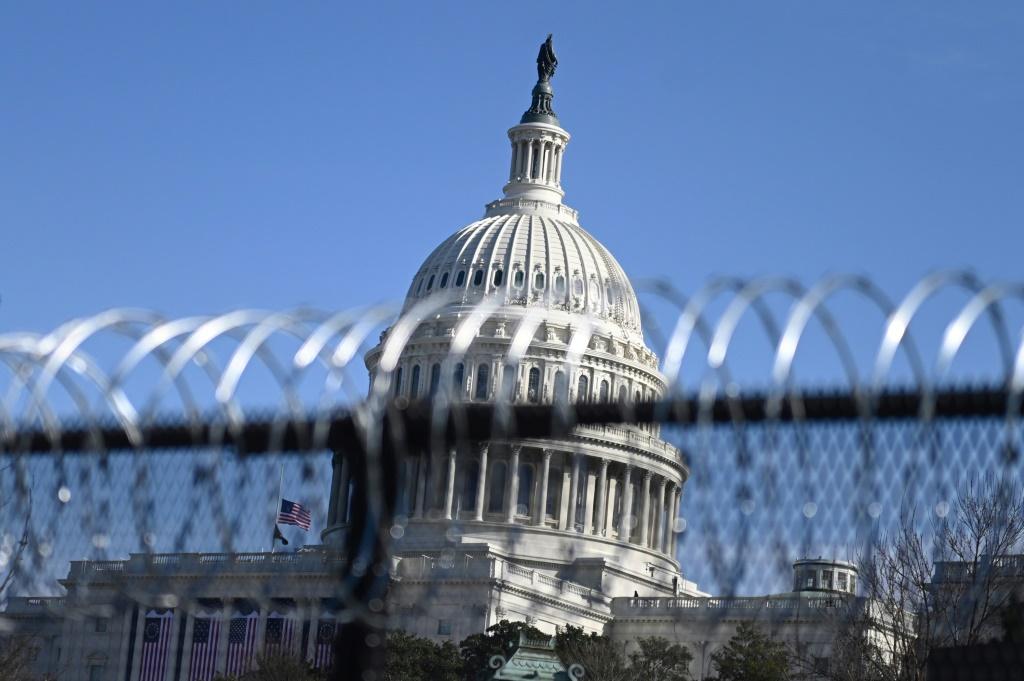
Sometime down the road, future historians will remember this month for things that none of us ever thought we’d see. Concertina wire surrounds our nation’s capitol. Soldiers fill the streets of Washington as we are left to wonder.
Did somebody put Idi Amin in charge?
With so many needs to be met by the people we put in office, we get the bizarre spectacle of an “impeachment” and removal of a private citizen, who already left. The whole procedure is so outlandish the constitutionally mandated presiding officer, declines to show up. You would think these people have nothing better to do.
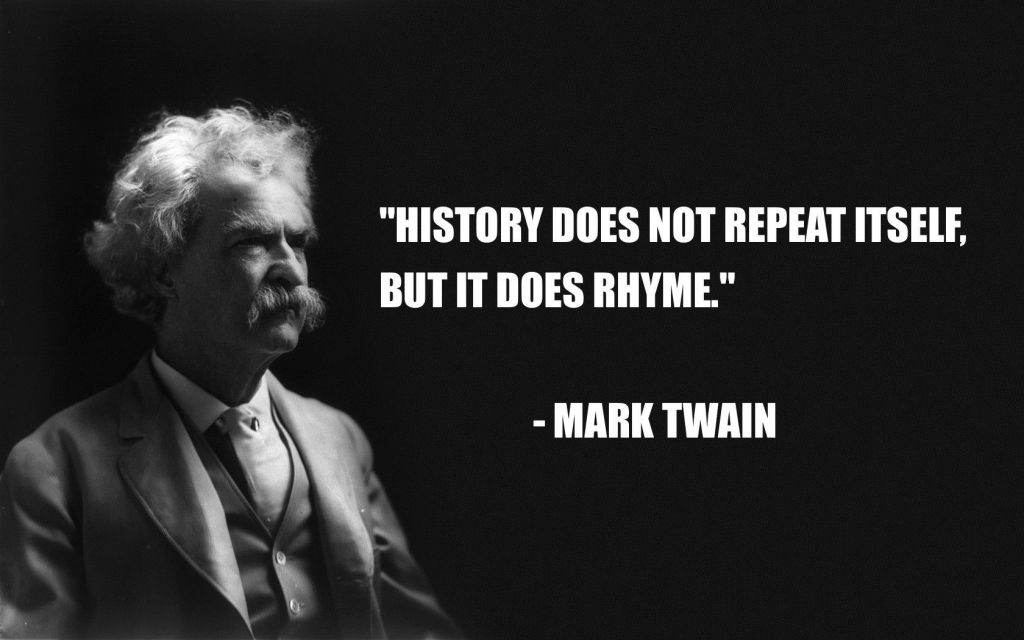
Someone once said “History does not repeat itself, but it does rhyme”. The quote is often attributed to Mark Twain. Whoever it was, knew what they were talking about.
56-score and four years ago today it was January 26, 897. A live Pope put his dead predecessor…the dead guy who came before his predecessor really…on trial. Seriously. They dug up the corpse and dressed it in papal vestments, put it on a throne and tried the guy in a kangaroo court spectacle, worthy of a San Francisco politician.
According to Catholic church doctrine, the Pontifex maximus sits at the head of the church from the time of Peter, to the present day. Today, the Cardinals meet in secret conclave to elect the bishop of Rome, but it wasn’t always that way. Before the Gregorian reforms of the 11th century the Papacy was often as political, as any public office.
The Popes of the early middle ages were heavily involved in secular affairs. They were chosen by predecessors, popular acclaim, family connection or simony (the purchase of ecclesiastical office). It was inevitable that some would be…umm…less than pious men.
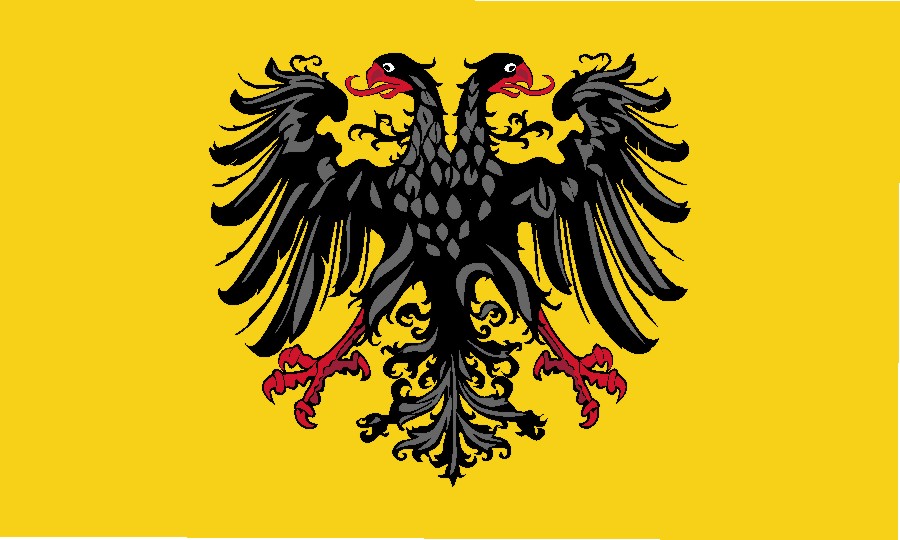
Relations between the Holy See and the Holy Roman Empire were particularly incestuous. First appearing on the scene in 754 after Pope Stephen II anointed Pepin III “The Short” “Patricius Romanorum” (Patrician of the Romans), emperors of the Holy Roman Empire were known to select Popes and Popes, emperors.
The French Enlightenment philosopher Voltaire once quipped: “This agglomeration which was called and still calls itself the Holy Roman Empire was neither Holy, nor Roman, nor an Empire”.
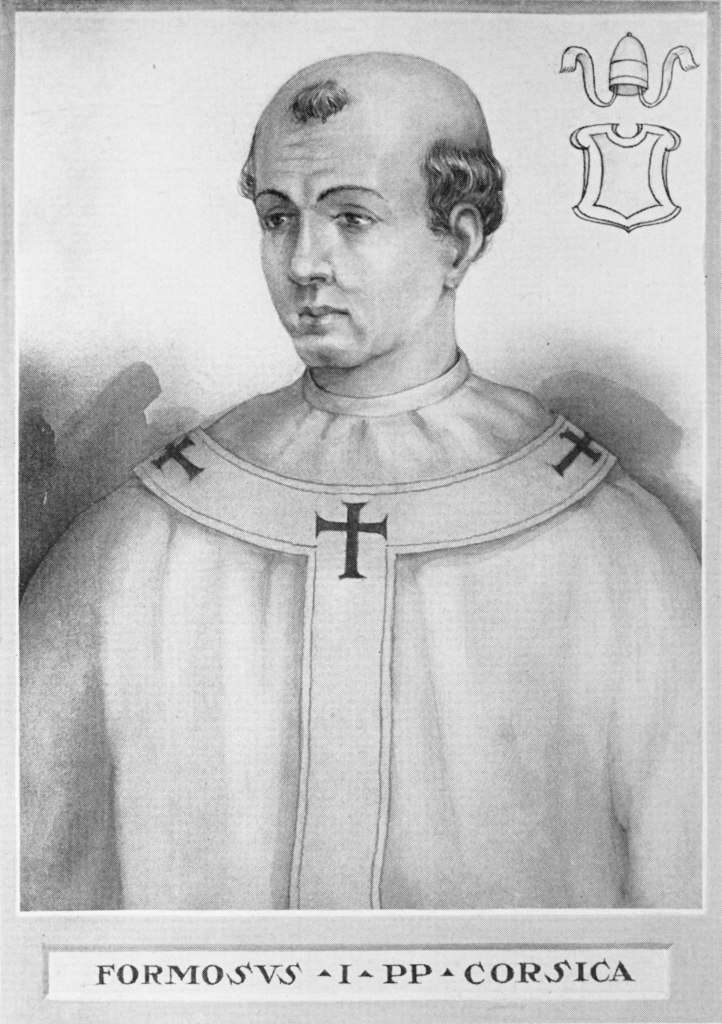
Formosus became Cardinal of Porto in 864 and representative of the Pope in Bulgaria, two years later. Many considered the man to be a candidate for the papacy, as early as 872.
That was the year, political issues caused Formosus to beat a hasty retreat from Rome.
Anyone ascending the heights of such a system was bound to have powerful allies. And powerful adversaries. The Cardinal’s enemies, pounced. Pope John VIII ordered Formosus defrocked and excommunicated.
Excommunication might seem a real career killer in his line of work but the sanction was lifted, in 878. Formosus could never return to Rome or resume his priestly functions, but that too was restored, five years later. In 891, Formosus was unanimously elected Pontiff to succeed Pope Stephen V.
Formosus served in a time of great political upheaval. There were problems with Saracens. Power struggles within the eastern church, in Constantinople. The Frankish kingdoms were in a state of upheaval and, worst of all, Formosus supported the German king Arnulf for succession to Holy Roman Emperor, over emperor Guido III of the powerful clan of Spoleto.
Pope Formosus died of natural causes on April 4, 896. He was succeeded by Boniface VI, who lived for 15 days. Some say Boniface died of gout, others that he was poisoned by supporters of his successor, Steven VI.
Even by Medieval standards, Pope Stephen VI must have been some piece of work. In January 897, Stephen had Formosus dug out of the ground, dressed in papal vestments and put on trial.
Ripley’s Believe it or Not
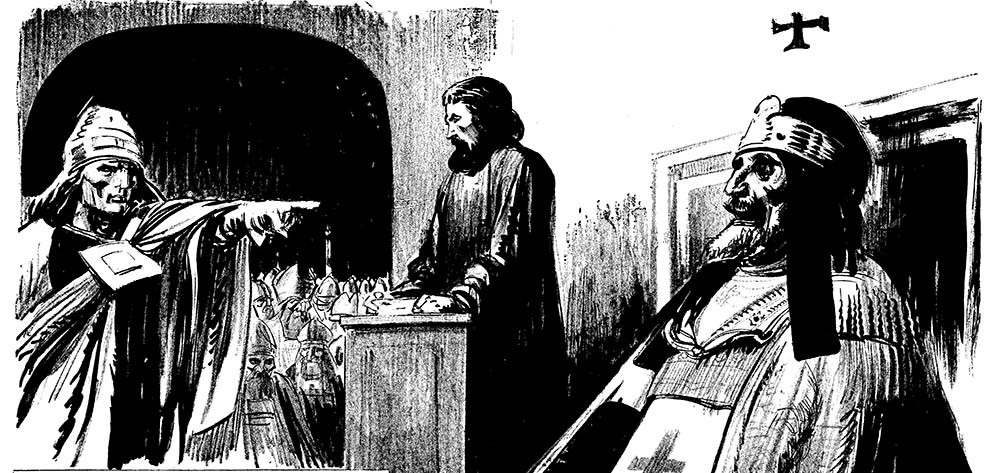
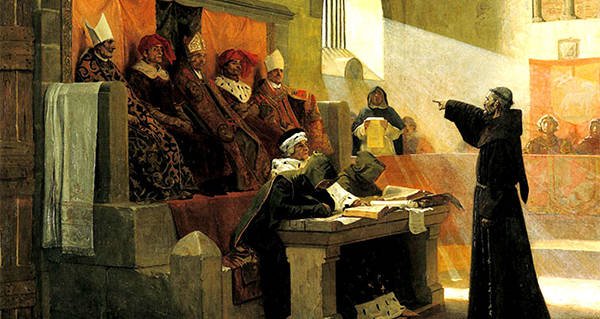
With the corpse propped up on a throne, the outcome was never in doubt. A church deacon attempted to speak for the defendant while Stephen himself shrieked at the corpse, rehashing the old charges of John VIII.
Unsurprisingly, the dead man was convicted. Stripped of his robes, Formosus was clad in the garb of a layman. His papacy was annulled, ordinations cancelled and the three “blessing fingers” of his right hand, hacked off.
The body was buried in a pauper’s grave but even now the revenge of Stephen VI, was unsated. The Pope ordered Formosus dug up yet again and thrown into the Tiber River.
The episode led to widespread outrage, possibly at the behest of Stephen’s enemies. The Pope was incarcerated in the Summer of 897 and strangled, while still in prison.
The cadaver synod ushered in 100 years of corruption of the Holy See known by some as the “Saeculum obscurum” – the Dark Age/Century, and by others, the “Pornocracy”.
Fast forward 39-score and one and it’s January 26, 1661. Four days from now, January 30, the corpse of Oliver Cromwell, one-time “Lord Protector of the Commonwealth of England, Scotland and Ireland” would be dug up and “executed”, by decapitation. The body was hung up in chains while his head was mounted on a pike, outside Westminster hall. That thing stayed there, for 24 years. Sold and sold again, Cromwell’s head would at last go to its final rest some 299 years later. In 1960.
“Could I pass a week in the insane ward at Blackwell’s Island? I said I could and I would. And I did”. – Nellie Bly
Born May 5, 1864, Elizabeth Jane Cochran was one of fifteen children born to Michael Cochran, and two wives. Michael died in 1870 leaving a modest legacy. It didn’t amount to much, split fifteen ways.
As a teenager in western Pennsylvania, Elizabeth adopted an “e” believing that “Cochrane” sounded more sophisticated. She enrolled at the Indiana Normal School in 1879 (now Indiana University of Pennsylvania) but dropped out after one semester, for lack of funds. In 1880 her mother moved the family, to Pittsburgh.
According to an article in the Pittsburg Dispatch entitled “What girls are for” the answer appears to be, not very much. Making babies and keeping house. Elizabeth didn’t appreciate that and wrote to the paper, to say so. She signed her letter, “Lonely Orphan Girl”.
If writing well is the sign of an organized thought process, the mind of Elizabeth Cochrane was in good working order. Impressed with the anonymous letter, Editor George Madden ran an advertisement asking that the writer, identify herself.
That she did. Madden offered the opportunity to write a piece for publication, under the same pseudonym. Cochrane called that first piece “The Girl Puzzle”, describing how divorce effected women and arguing for reform of marital laws.
Madden was even more impressed and hired Elizabeth, full-time. In those days, women who wrote for newspapers generally did so, under a pseudonym. The Editor suggested “Nelly Bly” after the subject of a popular minstrel song, from 1850. Cochrane liked “Nelly” but her editor spelled it with an ‘ie’.
Nellie Bly would go on to be one of the most famous journalists of the age.
She first came to widespread notice with a series of investigative articles, focused on poor working conditions and the plight of female factory workers. Factory owners complained. Bly was reassigned to a role more typical of female reporters: Gardening. Society. Fashion.
She didn’t want any of it. Still only 21, she wanted “to do something no girl has done before.” She traveled to Mexico and became a foreign correspondent, writing about the Mexican people and criticizing the dictatorship, of President Porfirio Diaz.
Nellie Bly, in Mexico
Stung by what she had written, Mexican authorities threatened to throw her in jail. Bly was forced to flee. Back in Pittsburg, it wasn’t long before she’d had enough of theater and arts reporting. She resigned her job in 1887 and moved to New York.
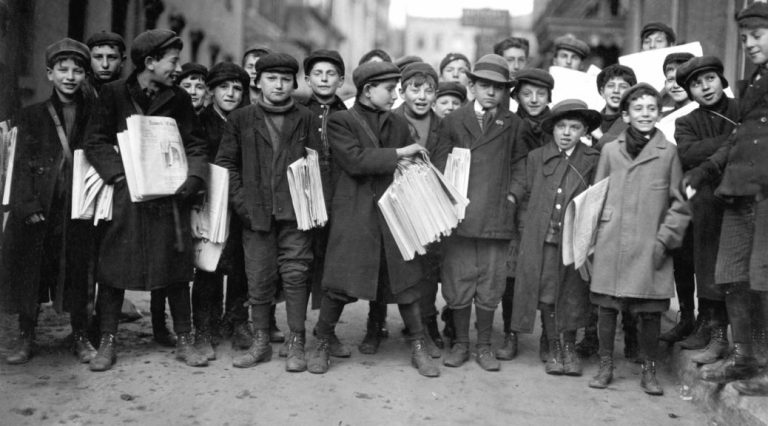
This was the age of lurid headlines, of sensational if not always accurate stories and homeless street waifs called “Newsies“, hawking newspapers: “Extra Extra, read all about it!” Within the next five years, San Francisco publisher William Randolph Hearst would buy crosstown rival New York Journal sparking a newspaper war and a new style of news we now call “Yellow Journalism“.
Penniless after four months without income, Cochrane walked into the office of New York World publisher, Joseph Pulitzer. Pulitzer had purchased the company four years earlier promising to root out corruption, expose fraud and ferret out public abuse, at all levels.
Bly was hired to cover theater and the arts but the pair soon concocted an undercover assignment. Nellie Bly would feign insanity, with the aim of being committed to the notorious women’s insane asylum on Blackwell’s Island.
It was a dangerous ruse but it worked. The “pretty crazy girl” fooled the New York press and mental health “experts” alike, culminating in Bly’s incarceration at Blackwell’s Island. She was released at the behest of the New York World, ten days later.
Bly’s exposé was a sensation. First in a series of stories and then in a book entitled Ten Days in a Madhouse, Nellie Bly told tales of torture, of ice cold baths in used and filthy water, rancid food and the rats, vermin and brutality suffered by women she was convinced were every bit as sane, as herself.
Public outrage prompted a grand jury investigation culminating in an $800,000 increase in public funding to the Department of Public Charities and Corrections.
Bly’s caper sparked a new form of “stunt journalism”, a new breed of female reporters with secret identities like “Florence Noble” and “Dorothy Dare” tackling subjects like disaster victims, the plight of factory workers and other subjects previously considered “unfit for ladies”.
Every major newspaper in the nation wanted a “stunt girl” on the staff.
In 1872, novelist Jules Verne published the fictional tale of the gambler Phileas Fogg and the trip he went on, to win a bet. The story was called Around the World in 80 Days. In 1888, Nellie Bly pitched the same trip to her editor. For real.
With two days’ notice, Nellie Bly boarded the Hamburg America Line steamer Augusta Victoria in November 1889 to begin her 25,000-mile adventure. She took an overcoat, the dress she was wearing, a few changes of underwear and a travel bag with a few essentials. A bag with £200 in English bank notes, some gold and American currency hung around her neck.
Unknown to Nellie at this time, Cosmopolitan magazine was sponsoring reporter Elizabeth Bisland to take the same trip, in the opposite direction.
She departed the same day.
New underwater cables enabled Bly to send short progress reports though longer dispatches had to travel by mail. From her first stop in England she traveled to France where she met Jules Verne himself and on to Brindisi, the Suez Canal, Ceylon and the Far East. She visited a leper colony in China. In Singapore, she bought a monkey.
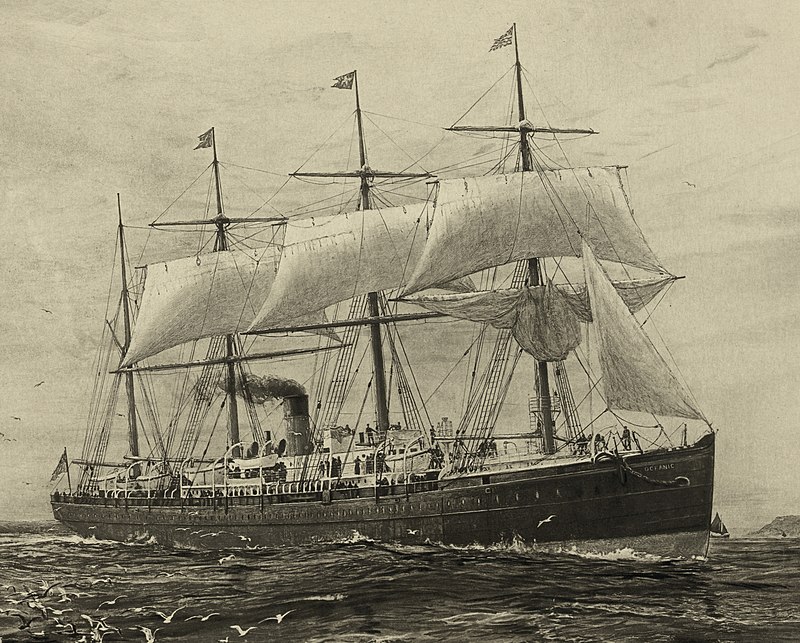
The New York World sponsored a “Nellie Bly Guessing Match”. Who could predict to the second, the journalist’s return. The grand prize was an all-expense paid trip to Europe. Spending money was tossed in, later on. A rough Pacific passage on board the Steamer RMS Oceanic put the trip two days behind schedule but Pulitzer’s newspaper made that up, hiring a private train from San Francisco.
RMS Oceanic
Nellie Bly arrived in New York on January 25, 1890 at 3:51pm, besting Phileas Fogg’s time, by eight days. Over at Cosmo, Bisland was still crossing the Atlantic, with 4½ days to go.
At 31, Nellie Bly married 73-year old metal container manufacturer Robert Seaman in 1895, and left journalism. Seaman died in 1904 and, for a time, Elizabeth was one of the leading female industrialists, in the country.
She ran the company as “a model of social welfare, replete with health benefits and recreational facilities“, according to biographer, Brooke Kroeger.
“But Bly was hopeless at understanding the financial aspects of her business and ultimately lost everything. Unscrupulous employees bilked the firm of hundreds of thousands of dollars, troubles compounded by a protracted and costly bankruptcy litigation“.
Back in journalism, Bly traveled to Europe to cover the Great War. She was the first woman and one of few foreigners to visit the war zone between Austria, and Serbia.
In 1913, Nelly Bly covered the first suffragist parade in Washington. She predicted women would have the vote, by 1920.
The 19th Amendment giving (white) women the vote was certified on August 26, 1920, by US Secretary of State Bainbridge Colby.
In practice, voting restrictions against non-white men now extended to non-white women. The crusade to protect the voting rights of ALL American citizens would last, another 40 years.


 On February 7, the 71st Infantry and supporting tanks reached Ramree town where they found determined Japanese resistance. The town fell in two days. Naval forces blockaded small tributaries called “chaungs”, which retreating Japanese used in their flight to the mainland. A Japanese air raid damaged an allied destroyer on the 11th as a flotilla of small craft crossed the strait, to rescue survivors of the garrison. By February 17, Japanese resistance had come to an end.


































You must be logged in to post a comment.