August 25, 1212 A People’s Crusade

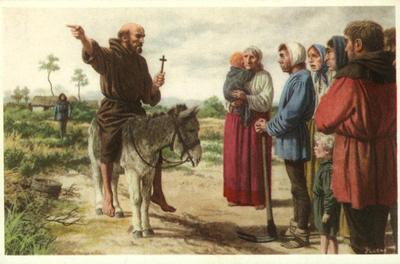
The first to respond was not the elite force of avenging knights envisioned by the pope but a “peasant’s crusade” led by the charismatic monk Peter the Hermit, and an impoverished knight known as Walter sans Avoir. Walter the penniless.

In the 100 years following the death of the Prophet Muhamad, Islamic conquests established the largest pre-modern empire up to that time stretching from China in the east to the Iberian Peninsula, in the west.

The Sasanid Empire in what is now Iran ceased to exist under the Muslim conquest as did much of Byzantium, seat of the Roman Empire in the east. Europe itself narrowly escaped subjugation when Charles “The Hammer” Martel defeated the army of Abdul Rahman al Qafiqi at Poitiers (Tours) in October, 732.

islam-territoryEstimates suggest the Umayyad Caliphate based in Damascus was over 5 million square miles, larger than any modern state with the solitary exception of the Russian Federation.

The Council of Clermont was a mixed synod comprised of laymen and clergy, of the Catholic Church. The meeting convened for ten days beginning November 18, 1095, to discuss the threat. No contemporary transcription survives from the speech delivered, by Pope Urban II. Those in attendance took the pontiff’s remarks, as a call to arms.

Urban was responding to an urgent request for assistance by Byzantine Emperor Alexios I Komnenus, against the Seljuk Turk. Now the pope urged all Christendom to lay down doctrinal difference between east and west and come to the aid of their fellow Christians, in Byzantium.

The first to respond was not the elite force of avenging knights envisioned by the pope but a “peasant’s crusade” led by the charismatic monk Peter the Hermit, and an impoverished knight known as Walter sans Avoir. Walter the penniless.
It was the first of five such ‘popular crusades’ over the following centuries and not to be confused with the major ‘Prince’s Crusades’ we’ve all heard about. The latter were well trained and well armed forces of knights and warrior monks who fought with the sanction of the Church and left us with names like the Knights Templar, Hospitaller and others.

Untrained, unsanctioned and poorly armed the ‘popular crusades’ were nothing of the sort. More like a pickup basketball game, compared with an NBA season.

Millenarianism was a powerful force at that time, a belief in the imminent End of Days spurred on by years of drought-caused crop failures and signs of divine blessing including meteor showers, aurorae and a lunar eclipse.

As 100,000 peasants including women and children took up farm implements and set out to reconquer the Holy Lands in this first and best documented, of the popular crusades.
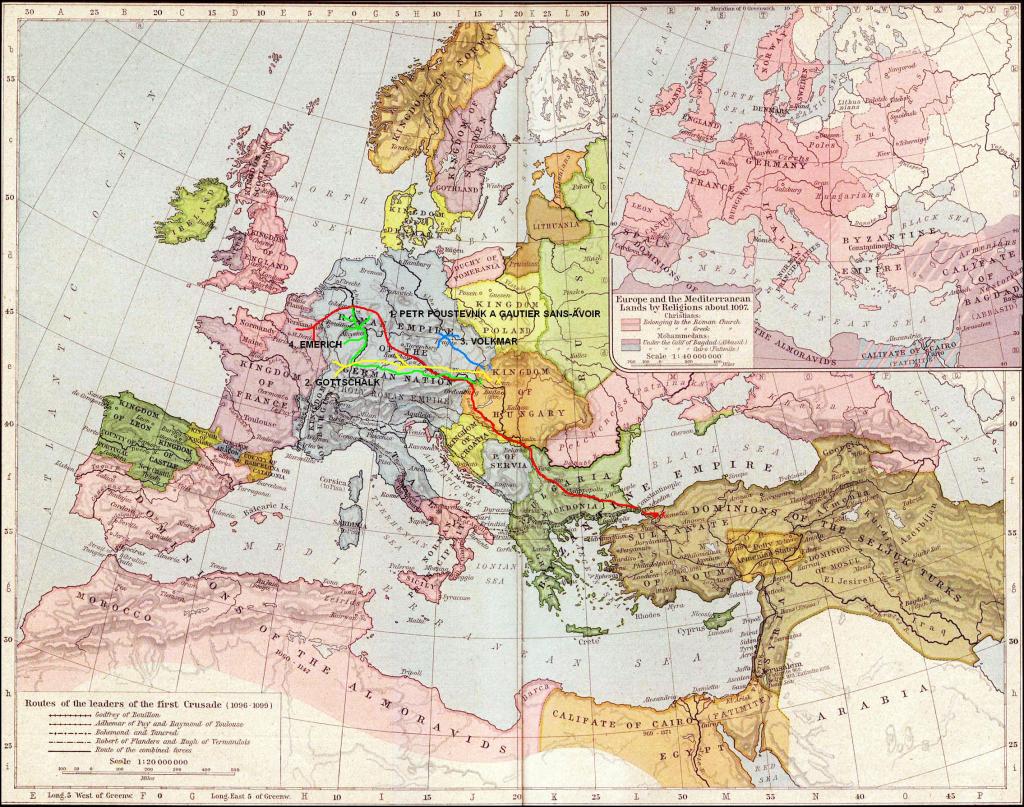
A map of the peasant’s crusade, of 1096

The abuse of European Jewry was nothing new in 1096, but now began a new phase to set the tone for the next thousand years and culminate, in the Nazi holocaust. One non-believer was as good as another it would seem, and the Saracen was so far away.
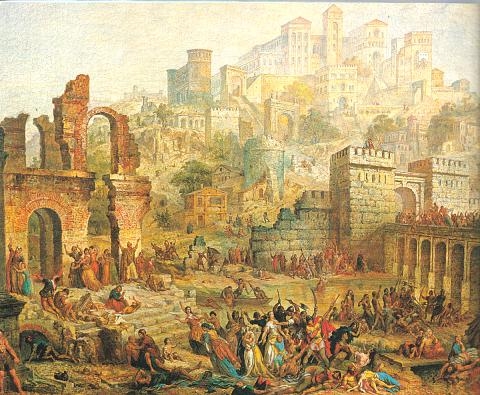
Massacre of the Jews of Metz during the First Crusade, by Auguste Migette

Anti-Jewish violence committed by this crowd throughout parts of modern France and Germany ranged from pillage, to the massacre of thousands. The population was so terrorized by the mere appearance of Peter the Hermit on his donkey they readily agreed to give him and his followers, most anything they asked for. In Regensburg, virtually the entire Jewish population was herded into the Danube and forced to undergo “baptism”.

Once in the Serbian city of Zemun, a dispute broke out over the price of a pair of shoes resulting in a riot and the murder, of 4,000 Hungarians. Seven days later at the city of Niš, the military commander promised food, and military escort. Peter agreed but a group of Germans got into an argument with some locals and set fire, to a mill. The entire garrison at Niš responded and routed the mob. 10,000 were killed by the time it was over, nearly a quarter of their entire number.

Once in Constantinople, Alexios had not the slightest idea what to do with this ragtag bunch and quickly ferried them across the Bosporus with instruction to wait for the main Crusader force, then on the way.

These people were having none of that.

An argument broke out between French and Italians on one side and the Germans, on the other. Each elected their own leader and the former set to pillaging the suburbs, all the way to the Turkish stronghold of Nicomedia.

Not to be outdone, 6,000 Germans marched on the fortress at Xerigordos where they quickly subdued the garrison and prepared to use the fort as a base, for further raids. Within days Xerigordos was itself surrounded by a Turkish force loyal to Kilij Arslan, the Seljuk Sultan of Rûm. With no provisions and no water the besieged crusaders took to drinking their own urine and the blood, of their animals. The siege was over in eight days. Some Crusaders converted to Islam, on the spot. The rest were put to the sword.

Back at the main camp, two Turkish spies spread rumors the Germans had taken Xerigordos and defeated, Nicaea. Eager to join in the plunder some 20,ooo set out leaving women and children, back at camp. The rowdy procession entered the narrow road three miles outside of camp, when the trap was sprung. The waiting Seljuk force unleashed a torrent of arrows at a disorganized and undisciplined rabble, quickly put to flight. Most were slaughtered. A few thousand took refuge in an abandoned castle itself, then taken under siege.

Sometime later, a Byzantine force under Constantine Katakalon sailed across the narrow channel and lifted the siege, returning the survivors to Constantinople. This small remnant was all that remained, of the Peasant’s Crusade.
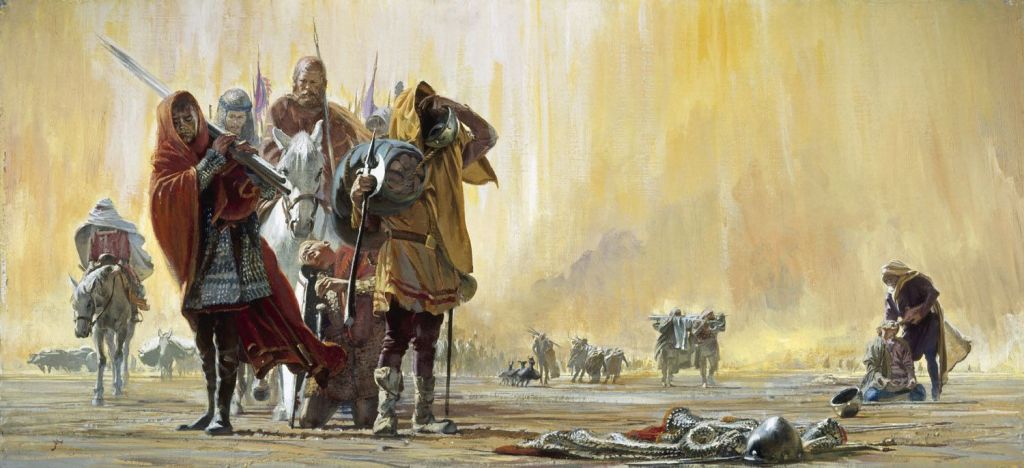
Church sanctioned Crusades took and then lost the ancient city of Jerusalem over the next 100 years. A “Lion-hearted” King would fight to a draw and return home to protect his kingdom from an ambitious little brother leaving Al-Nasir Salah al-Din Yusuf ibn Ayyub in possession of the city. A man we know today, as Saladin.

A fourth crusade set out in 1202 to retake the holy city and inexplicably ended up sacking…Constantinople. Ten years later it was time for civilians to try, once again.

In the Spring of 1212 a French youth called Stephen of Cloyes began to attract, a following. At the same time a German boy, Nicholas of Cologne, was preaching the same message. It’s hard to know if the two ever heard of each other but the message, was the same. Talk would succeed where weapons had failed. They would discuss it all with the Muslims who would then convert, peaceably.

Together, Stephen and Nicholas attracted some 20,000 children with a few adolescents and some adults and set out across Germany, and France.
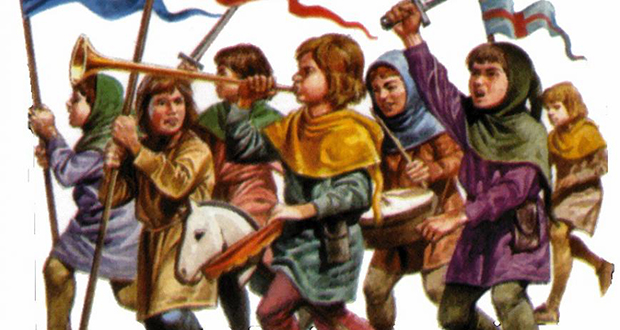
Many starved to death with no money and yet they came, a Children’s Crusade destined to succeed where professional Crusader armies, had failed.

That’s not the way things worked out.

On August 25, 1212, the rabble appeared outside of Genoa. Whether they expected some kindly Genoese ship’s captains to take them on board or the Red Seat to part as for Moses, remains unclear.
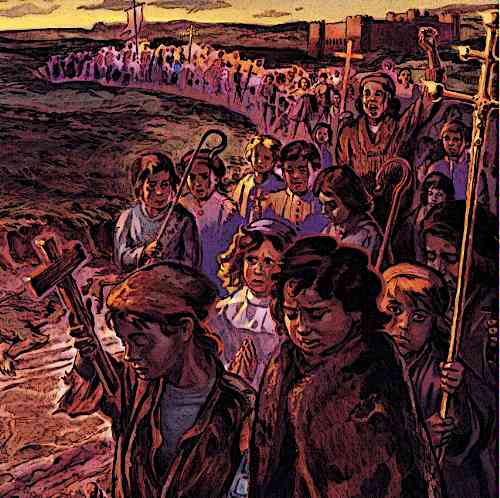
A hoard of young beggars with no training and no weapons were of no use, save to be sold, for slaves. So it went, according to most accounts. In some versions of this story the children made it to Rome where the Pope told them all, to go home. Some simply turned and trudged, back where they came from.

There would be three more popular crusades each following the same path, as the first. Violence against the Jews and squabble with the locals. None ever made it, outside European shores.

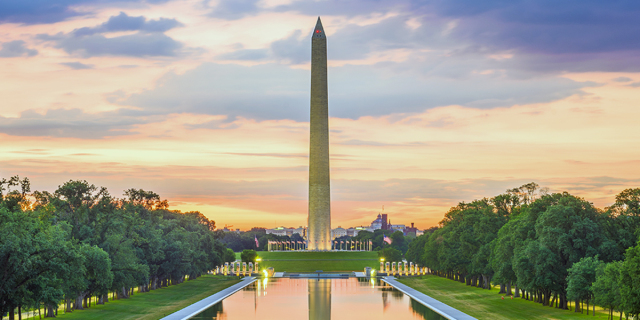
August 24, 1855 An Ungainly Old Chimney

193 engraved stones arrived from around the world but none met with half the fuss of that brought forth from the ancient Roman temple of Concordia and engraved with the words, ROME TO AMERICA. The gift of Pope Pius IX. The Catholic haters were aghast.

With a second Catholic president in the White House, it may surprise some to learn. This nation once harbored considerable anti-Catholic bias. Candidate John F. Kennedy tackled the issue head-on, addressing a Houston meeting of 300 Protestant ministers in an effort to separate the “honestly fearful”, from genuine bigots.

The strategy worked. Today, Catholic-issues voters have more in common with evangelical voters, than what separates them. Americans have come a long way but it wasn’t always, thus.

The Popes of the early middle ages were heavily involved in secular affairs. Chosen by predecessors, popular acclaim, family connection or simony (the purchase of ecclesiastical office), many were less than pious men. At one time the papacy itself was as political, as any public office..

The Protestant Reformation began with a series of events in the 16th century, aimed at correcting what were seen as errors and excesses of the Catholic Church.

Proponents of the Reformation strongly opposed the clerical hierarchy and particularly, the papacy. The Church of England broke with Catholicism under Henry VIII but, even then, groups such as Puritans and Congregationalists saw much to dislike in Church of England doctrine, based as it was on Catholic teachings.

So it was some of the earliest emigrants to the New World, harbored deep anti-Catholic bias.

George Washington was a passionate believer in religious tolerance and the importance of Christian virtue, in civil society. As General, Washington banned anti-Catholic celebrations such as Guy Fawkes day. Sensible of the indispensable contributions to independence made by Catholic France and Spain, many abandoned such prejudice for a deep and personal dislike, for British King George III.

Even so, some ideas die hard.

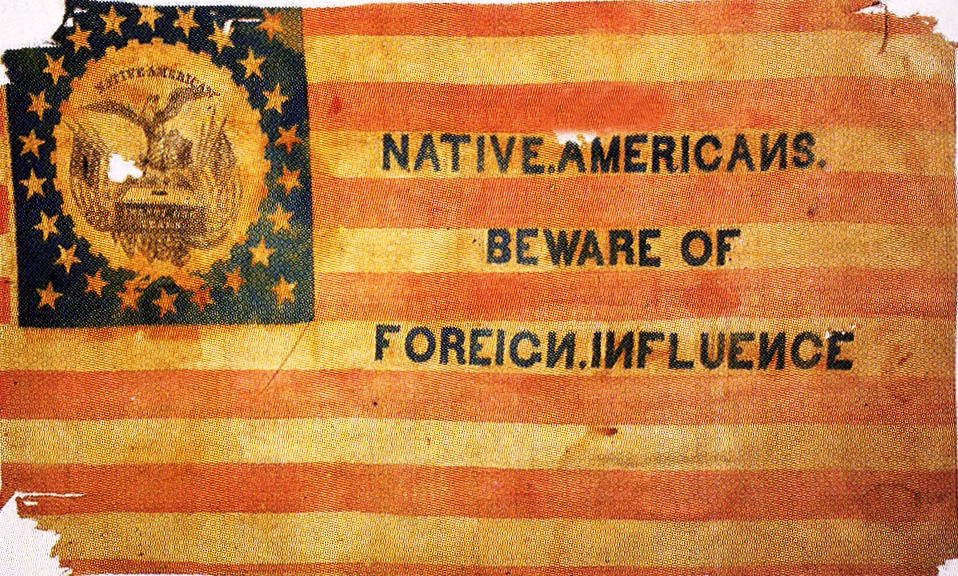
The Native American political party founded in 1844 had nothing to do with first nations. Originally begun as a secret society, the party was anti-Catholic, anti-Irish, anti-immigration, xenophobic and populist. The party held many views considered “progressive” in modern parlance, including opposition to slavery, support for an expansion of the rights of women, regulation of industry and a need for increased government spending. An early forerunner in the American temperance movement, the group’s strong anti-Catholic stance would later form the basis of the American Protective Association, and the Ku Klux Klan.

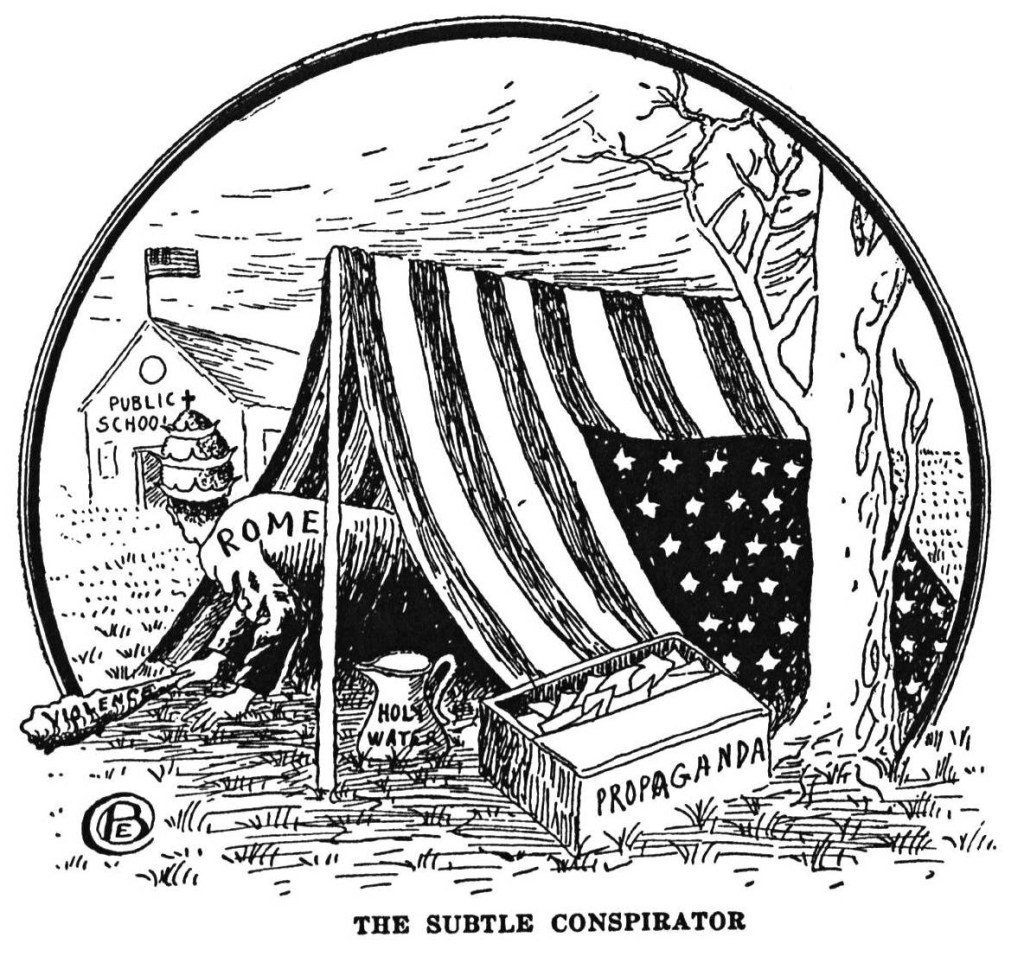
“The Subtle Conspirator,” a 1926 anti-Catholic political cartoon by former Ku Klux Klan preacher Branford Clarke in the newsletter “Klansmen: Guardians of Liberty.” (Public Domain)

Immigration soared during the first half of the 1850s, to levels five times more than the previous decade. Most were poor Catholic peasants and laborers from Ireland and Germany, spawning conspiracy theories that the Pope was personally selecting these people, in order to exert influence.

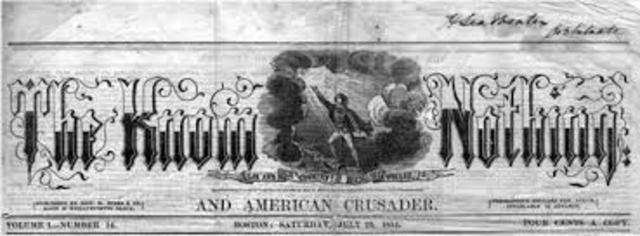
Adherents to the self-described “American” party would claim ignorance when asked for specifics, by outsiders. Opponents derided them as “Know Nothings”.

Pierre L’Enfant was a French engineer who served with the Continental army, during the Revolution. In 1791, President George Washington appointed L’Enfant to design a home for the federal government, on the banks of the Potomac. George Washington personally laid the cornerstone, of the new Capitol building.

L’Enfant envisioned a large equestrian statue of the President, but Congress did nothing about it. Private enterprise stepped up to do the job in 1833 with the formation of the Washington National Monument Society founded by Chief Justice John Marshall, Librarian of Congress George Watterston and former President, James Madison.

Fundraising began in 1835 with donations limited to $1 per person, per year.

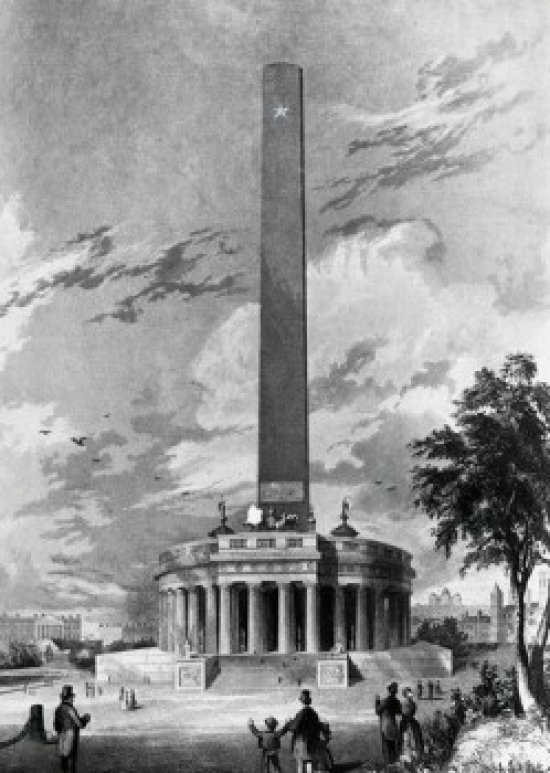
Architect Robert Mills’ plan was approved in 1845 for a 200-foot flat-topped obelisk, crowned with a statue of Washington in a chariot and surrounded by the 12-foot diameter columns of a “National Parthenon”, dedicated to heroes of the Revolution and signers of the Declaration of Independence.

The original vision of the Washington Monument looks quite different, from what we have today.

On July 4, 1848, the 24,500 pound cornerstone was laid for the now-familiar Washington Monument in the nation’s capital. Inside a carved niche was placed a zinc capsule containing mementoes of the day including copies of the founding documents, currency, newspaper clippings and a long list of donated items.

Know-Nothings briefly emerged around this time, as a major political party. Future President Abraham Lincoln denounced the lot of them on August 24, 1855 in a letter to his close friend, Joshua Speed:

“I am not a Know-Nothing. That is certain. How could I be? How can any one who abhors the oppression of negroes, be in favor of degrading classes of white people? Our progress in degeneracy appears to me to be pretty rapid. As a nation, we begin by declaring that “all men are created equal.” We now practically read it “all men are created equal, except negroes.” When the Know-Nothings get control, it will read “all men are created equal, except negroes, and foreigners, and catholics.” When it comes to this I should prefer emigrating to some country where they make no pretence of loving liberty-to Russia, for instance, where despotism can be taken pure, and without the base alloy of hypocracy”.

A. Lincoln

Peak year for the Know-Nothings came in 1856 with candidates elected to local office, and to the United States Congress. Meanwhile, fundraising continued for President Washington’s monument. It wasn’t just money, either. Engraved tablets came in from around the world, from individuals, Sunday school classes and Indian tribes. Organizations from the Masons to the Sons of Temperance, military units and the Odd Fellows all sent stones. At the 220-foot landing there’s a tablet from a group of Chinese Christians, all the way from Ningo, Chekiang Province, China.
193 engraved stones arrived from around the world but none met with half the fuss of that brought forth from the ancient Roman temple of Concordia and engraved with the words, ROME TO AMERICA. The gift of Pope Pius IX was announced on February 7, 1852 in the Daily National Intelligencer of Washington, D.C., page 4.

The Catholic haters were aghast.

Speeches were made and petitions went around. “This gift of a despot“, read one New Jersey petition, “if placed within those walls, can never be looked upon by true Americans but with feelings of mortification and disgust.

The Pope’s stone arrived in early 1854: 3-feet in length, 18-inches in height and 10-inches thick. It was placed in a shed on monument grounds called a lapidarium, there joining several other gift stones awaiting installation.

In a stunt familiar to anyone ever “fact checked’ on Facebook, Know-Nothings now changed tactics, demanding a “protest stone” be installed directly above the Pope’s tablet, and inscribed with some suitable refutation.

Then came the night of March 5-6. The heist. With night watchman George Hilton inside his guard shack, a group of men tied ropes around the hut, trapping Hilton inside. Newspapers were posted to cover the windows nearest the obelisk as the pope’s stone was wrestled, onto a hand cart.

The Potomac river was much closer in those days, before the land reclamation of the 1870s and ’80s. The stone was rowed out to the middle and splashed, to the muddy bottom.

The Monument Society put up a reward of $500, equivalent to ten times that amount today, but the bad guys were never caught. Hilton was suspected to be in cahoots with the thieves and fired, as he couldn’t explain why he couldn’t have opened the window or why that double barreled shotgun, remained by his side.

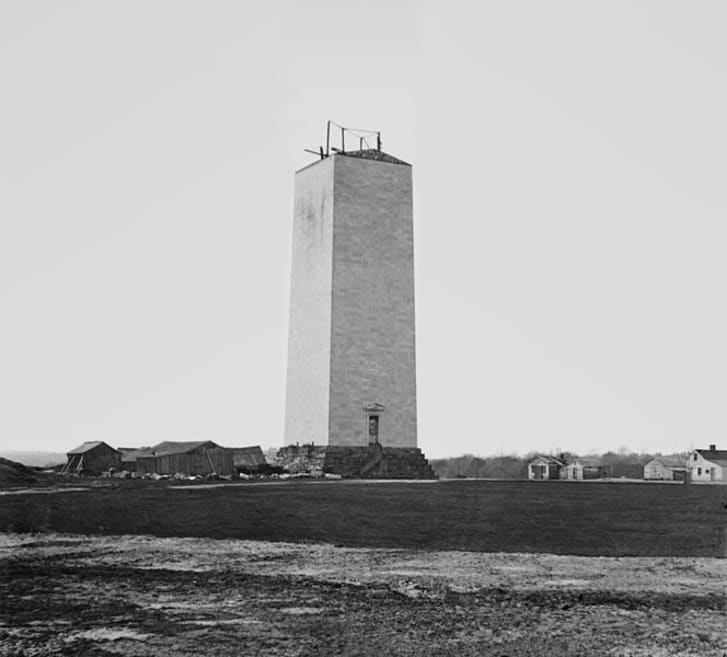
Know-Nothings not only destroyed the pope’s stone but now, members insinuated themselves into the Monument Society, itself. Contributions all but dried up particularly from Catholic donors and work ground to a halt, in 1858. For twenty years the thing sat. Incomplete. Mark Twain called the 153-foot stump of Washington’s monument, “An Ungainly Old chimney”.

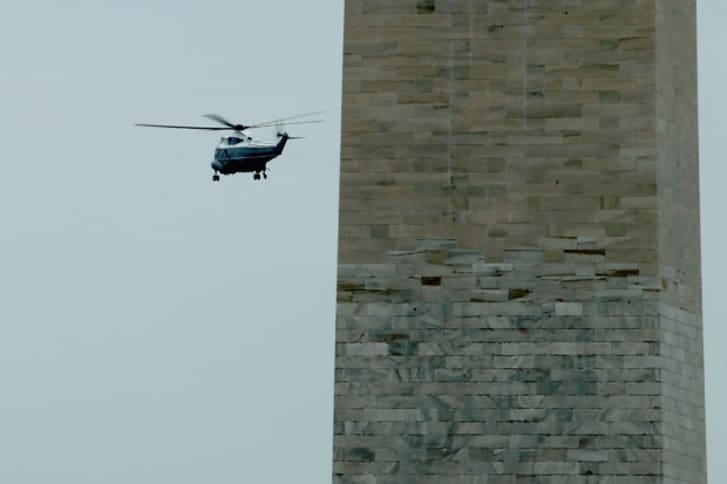
Work resumed in 1878 but now stone was cut, from a different quarry. If you look closely you can see to this day the slight variation, in color.

It’s tough to get anything out of a bunch of guys, called Know-Nothings. Not until 1883 when an anonymous saloon keeper, probably one of the thieves, talked to the Washington Post. “If the dredges at work in the Potomac strike the right spot, they will fish up something that will create a sensation.” That’s just what happened in 1892 when a diver found a beautifully polished slab of pink marble on the muddy bottom engraved with the words, “Rome to America”. A few souvenir chunks were crudely chopped, out of the side.

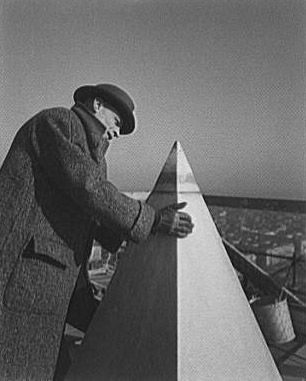
Inscribed on the aluminum cap placed at the apex of the largest obelisk in the world are inscribed the words “Laus Deo”. Latin for “Praise be to God.”

Only two days later the stone was stolen once again, from a construction shack.

Nearly 100 years later a priest from the Other Washington – Washington state, commissioned a second stone.

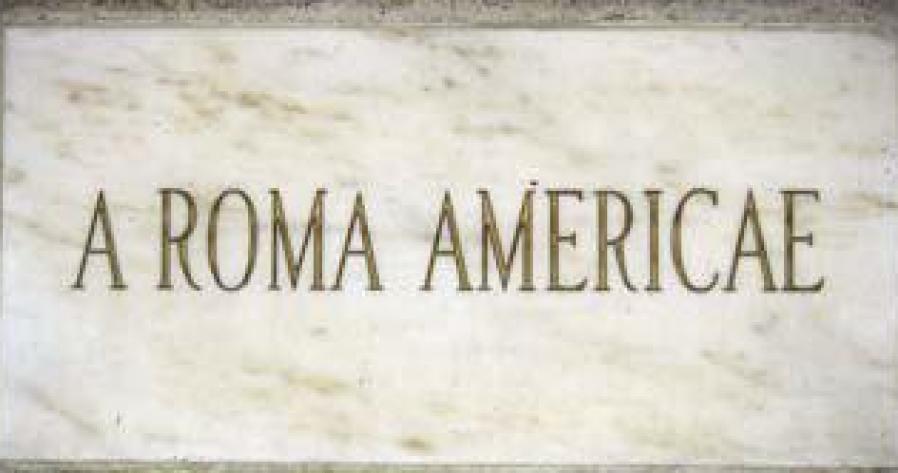
In 1982, Pope John Paul II sent a white marble tablet bearing the Latin inscription, “A ROMA AMERICAE” – “Rome to America.”

That first stone, was never found. The second was installed at the 340-foot level where it remains, to this day.

August 23, 1784 The Lost State of Franklin

The Free Republic of Franklin went on for four years despite them all with it’s own Indian treaties, its own constitution and its own system of barter, taking the place of currency.

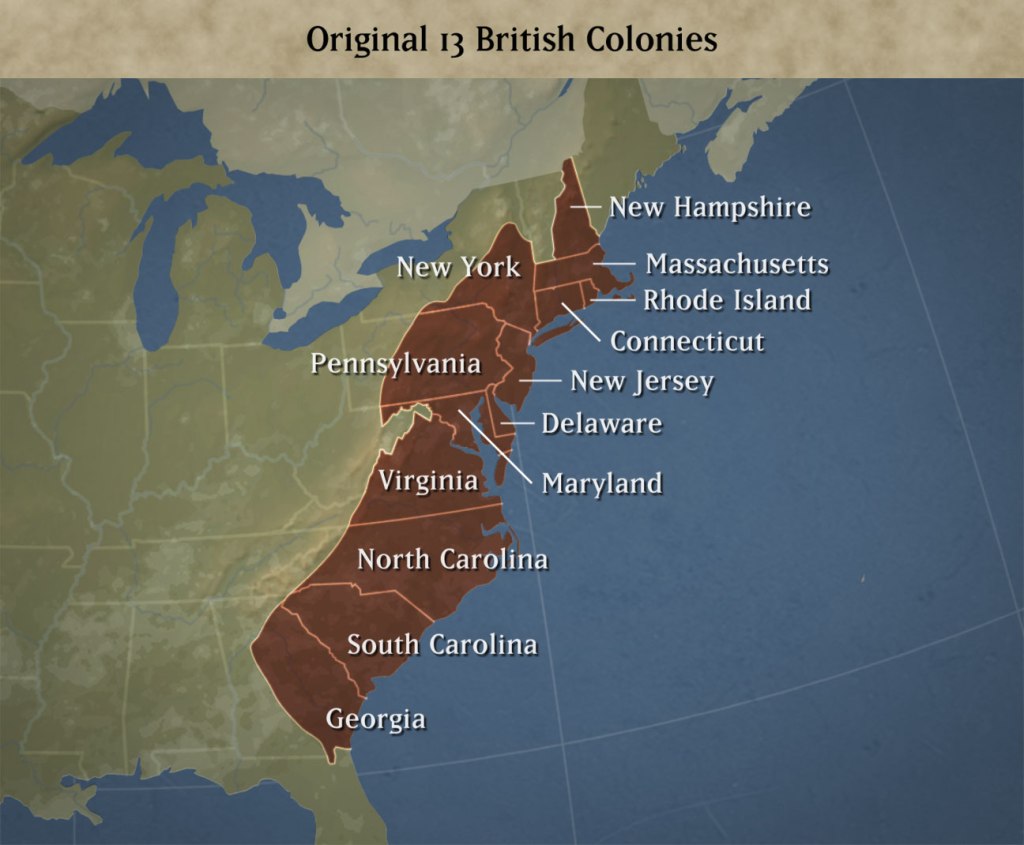
The American Revolution came to an end with the Treaty of Paris of September 3, 1783. Thirteen former colonies were now independent states, an experiment in self-government encompassing a relative sliver along the eastern shore of a nation one day destined to measure some 2,680 miles across and 1,582 miles from north, to south.

By no means was it foreordained that the United States, would have a Pacific coastline.

In the 18th century, factions developed between established coastal cities and farms and the western pioneers eking out a living, along the frontier. Many so-called eastern “elites” considered these to be outside of the fledgling nation and, for them, that was alright. Frontier communities had a choice between forming jurisdictions within existing states, creating new states or going off on their own to build entirely new countries.

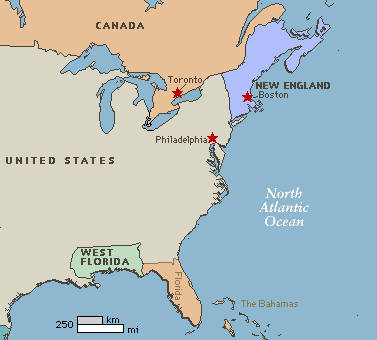
Most of us are well aware that Texas was once such an independent Republic. Many know the same of the Republic of West Florida, the Original Lone Star Republic. (Sorry, Texas). But who knew the modern US contains no fewer than Ten formerly independent states: The Republic of Vermont (1777-1791), Kingdom of Hawaii (1795-1898), Republic of West Florida (1810), Republic of Texas (1836-1846), Republic of Rio Grande (1840), Provisional Government of Oregon (1843-1849), Republic of California (1846), State of Deseret (1849-1850), Republic of Sonora (1853-1854) and the Republic of Baja California (1853-1854).

Republic of West Florida

The war had yet to be formally ended when the state of North Carolina ceded the four western counties between the Alleghenies, and the Mississippi River. Representatives from Washington, Sullivan, Spencer (modern-day Hawkins) and Greene counties declared independence from North Carolina on August 23, 1784.

Congress had yet to act on the matter and North Carolina rescinded its cession nearly a year later and began to organize an administration, within the counties. That the federal government was considering selling the region to France or Spain at this time to settle war debt had nothing to do with any of it, I’m sure.

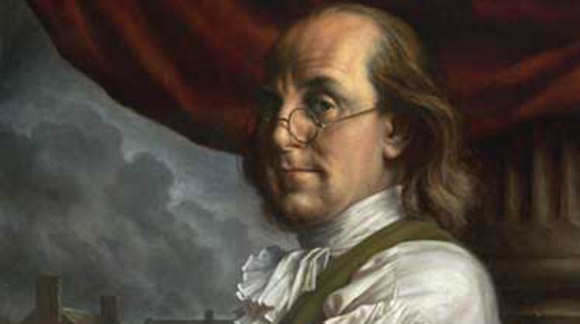
The following May, the counties petitioned for statehood. They called it “Frankland” at first but that was changed to Franklin, to gain the support of Benjamin Franklin and his allies.

The Republic won over a majority of the congress but never did achieve the 2/3rds required to make statehood, a reality.

The Free Republic of Franklin went on for four years despite them all with it’s own Indian treaties, its own constitution and its own system of barter, taking the place of currency.

North Carolina ran a parallel government the whole time, within the state of Franklin. This did little to strengthen an already weak economy when Governor John Sevier petitioned the Spanish, for foreign aid. Horrified at the idea of a Spanish client state at its border North Carolina, arrested the Governor.

Cherokee, Chickamauga and Chickasaw war bands piled on attacking settlements, within the borders of Franklin. It was all over by 1788 as Franklin rejoined North Carolina to gain the protection, of the state militia.

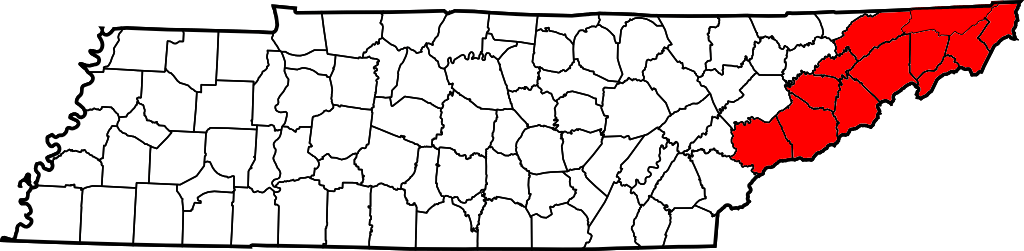
Today, the formerly Free Republic of Franklin makes up the easternmost 12 counties of Tennessee admitted as the 16th state on June 1, 1796.

Of the ten independent Republics listed above plus four others who tried and failed, Franklin remains unique in that the state resulted from both a cession, and secession.

Tennessee went on to earn the nickname “The Volunteer State” during the War of 1812 and cement the label during the Mexican-American war when the secretary of War requested 2,800 volunteers and got, 30,000. Tennessee was the last of the southern states to secede from the union and the first to rejoin, having provided more Confederate soldiers of any state save Virginia and more units of soldiers for the Union army, than any of the Confederate states.

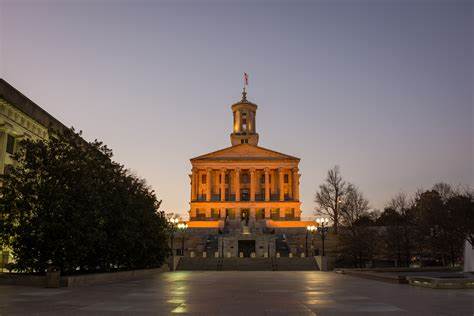
Fun Fact: William Strickland, the engineer and architect who built the Tennessee State Capitol in Nashville, died in 1854 before the building’s completion. At Strickland’s request he was entombed within the walls of the structure and remains there, still.

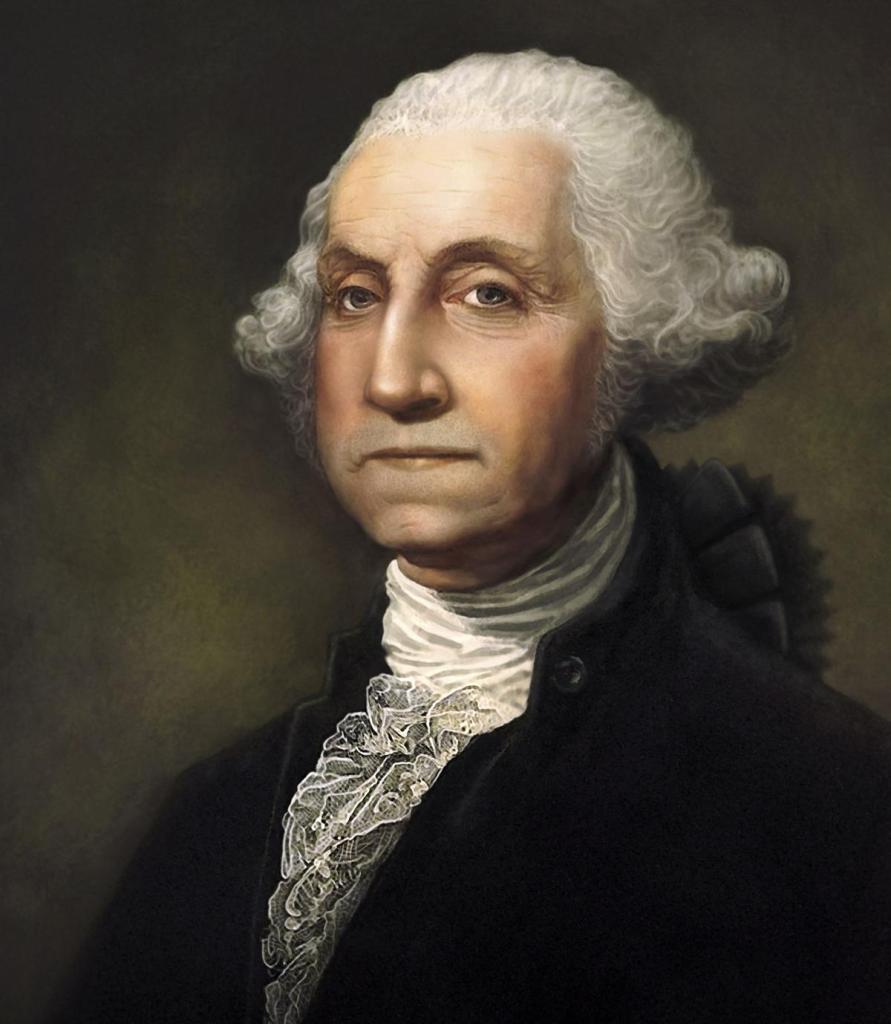
George Washington, the only politically Independent President in our nation’s history warned against factions dividing Americans into “distinct peoples”. He had seen how parties had driven England to civil war with the Jacobite uprising, of 1745-’46. He well understood the murderous tendencies unleashed by the politics, of the French Revolution. He detested the endless sniping of factions within his own government and the “infamous scribblers” of the newspapers, of his day.

Washington warned us all against political parties in his farewell address, parties already well formed and tearing, at the nation’s fabric:

“…They serve to organize faction, to give it an artificial and extraordinary force; to put, in the place of the delegated will of the nation the will of a party, often a small but artful and enterprising minority of the community; and, according to the alternate triumphs of different parties, to make the public administration the mirror of the ill-concerted and incongruous projects of faction…”

George Washington, farewell address

I wonder what the Father of the Country would say about our politics, today.

August 21, 1911 That Smile

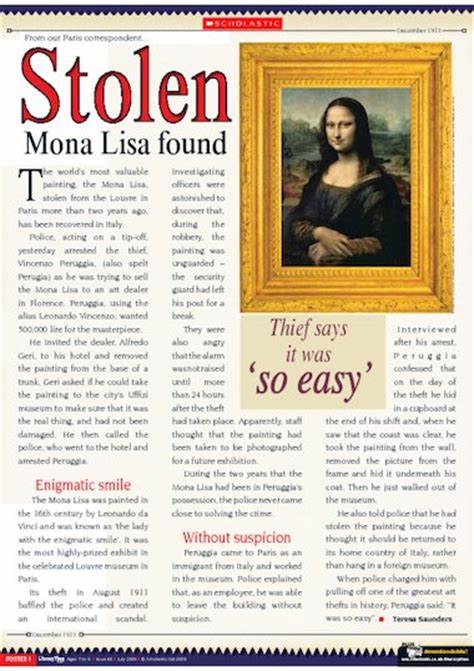
Artistic types are fond of talking about the enigmatic smile of the Mona Lisa, the “Gioconda smile”, and what it may mean. Perhaps it’s nothing more than the sad smile of a mother who lost a daughter in 1499 before giving birth to a son, in 1502.

Something like 7.8 billion people lived on this planet in 2020, roughly 7 percent of all those, who have ever lived. In all that humanity precious few have ever been known in all times and all places, by a single name. Napoleon. Michelangelo. Ghandi. Leonardo.

Funny how many of them, are Italian Renaissance guys.

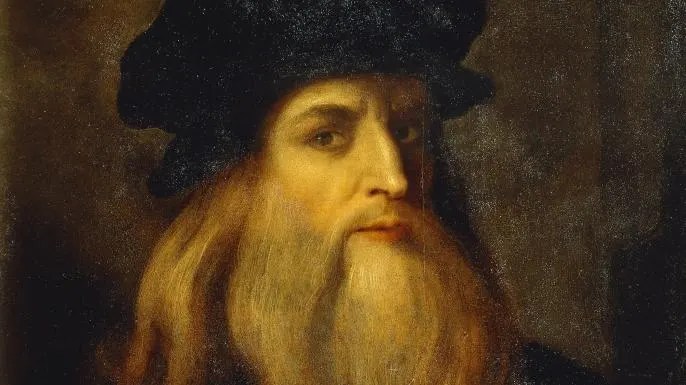
The Italian polymath Leonardo, the illegitimate son of a teenage orphan named Caterina, painted his most famous work (Italian Monna Lisa) in stages, between 1503, and 1506. Evidence suggests he was adding finishing touches, as late as 1517.

Self-portrait by Leonardo da Vinci. (Credit: DEA / A. DAGLI ORTI/Getty Images)

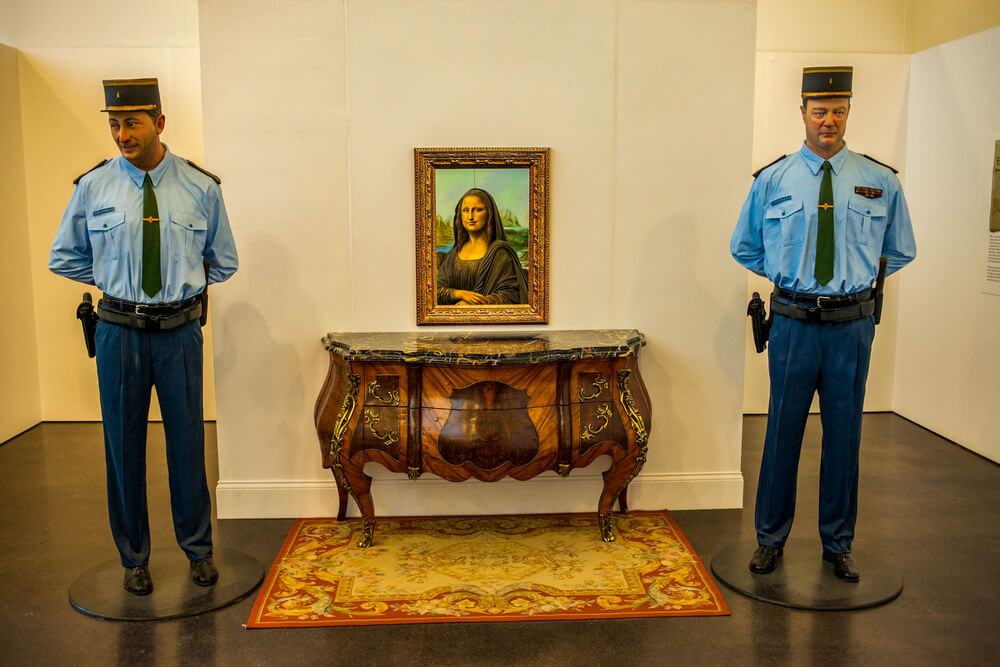
Mona Lisa was painted in oil on a panel of poplar wood, measuring thirty inches by twenty-one. It’s a very small object to hold the Guinness World Record for highest insurance valuation: US $100 million in 1962, equivalent to $870 million, in 2021.

The model is believed to be Lisa Gherardini, an Italian noblewoman otherwise little known, to history. She was married in her teens to Francesco del Giocondo, a much older merchant of cloth and silk who lived an ordinary middle-class life in which she bore him, five children.

Artistic types are fond of talking about that “enigmatic smile” of the Mona Lisa, the “Gioconda smile”, and what it may mean. Perhaps it’s nothing more than the sad smile of a mother who lost a daughter in 1499 before giving birth to a son, in 1502.

Leonardo could stare at a portrait for hours on end before adding a single brush stroke, and walking away. It may explain why Mona Lisa remains “Non-Finito”. Not finished. This in turn may explain why the artist never gave the portrait to the Giocondo family. He was never paid.

In the last years of his life Leonardo suffered some sort of paralysis, on his right side. While that didn’t impede the left-handed artist’s sketching, to stand for long periods and hold a painter’s palette, proved increasingly difficult.

It is believed Leonardo willed the portrait to his favorite apprentice Gian Giacomo Caprotti da Oreno, better known as Salaì, but the artist died, in France. So it is the most famous painting in the world, “La Jaconde”, remains in French hands from that day, to this.

Sort of.

When the French Revolution abolished the Royal Family, Mona Lisa made her way to the Louvre. She lived for a time in Napoleon’s bedroom in the Tuileries Palace. During the Franco Prussian war of 1879-’81 she was moved to the arsenal at Brest, for safekeeping.

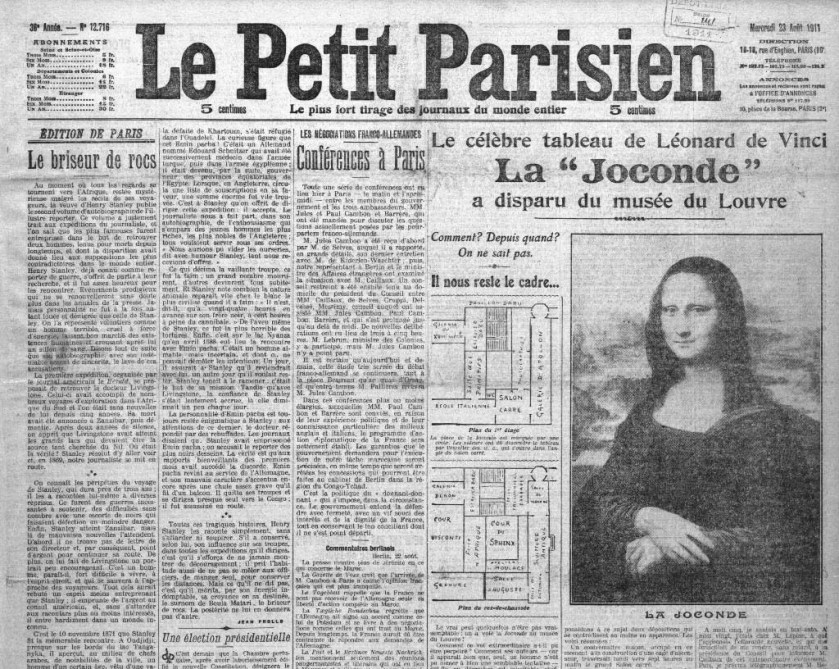
On August 21, 1911, Mona Lisa disappeared from the Louvre.

Sunday August 20 was a big social night, in Paris. Come Monday morning half the city, was hung over. Three Italian handymen were not hung over though they may have been, tired. The three hid out when the museum closed and spent the night, in an art supply closet.

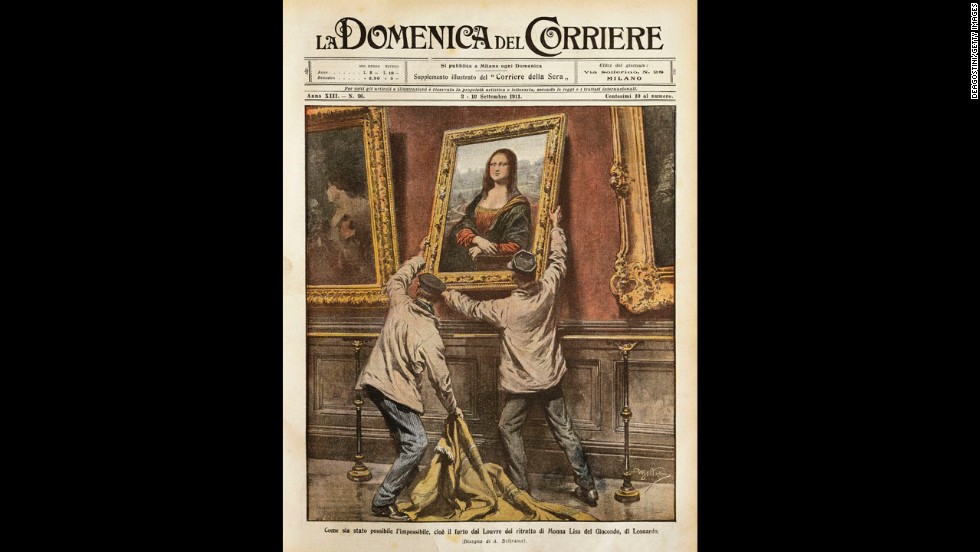
ITALY – CIRCA 2002: Theft of the Mona Lisa. Illustrator Achille Beltrame (1871-1945), from La Domenica del Corriere, 3rd-10th September 1911. (Photo by DeAgostini/Getty Images)

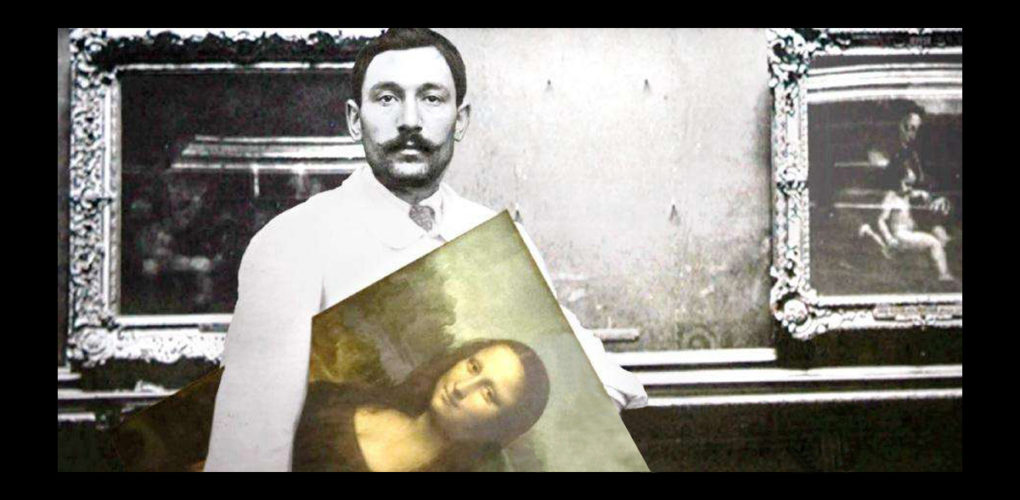
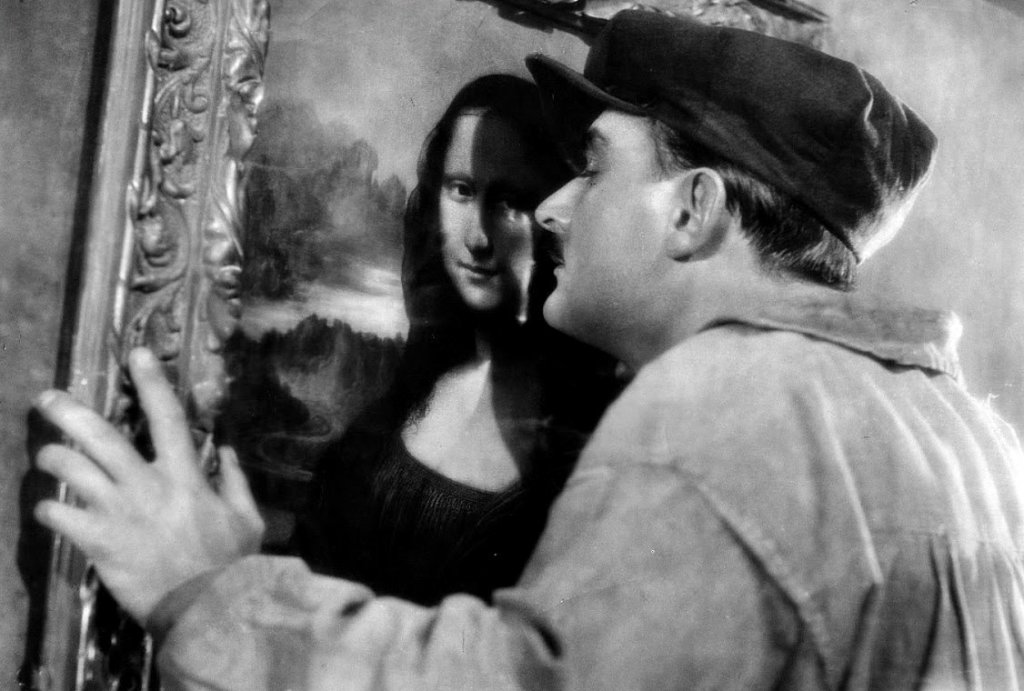
With the Louvre still closed the trio lifted 200 pounds of painting, frame and protective glass from the wall. Then it was off to the Quai d’Orsay station to catch the 7:47 train, out of town.

Dorothy and Tom Hoobler wrote about the heist in a book, called The Crimes of Paris. According to these two it was 28 hours before anyone noticed, those four bare hooks.

The man who noticed was himself an artist, painting a portrait of the gallery itself. Even then there was no cause for alarm. The museum had a project at that time, to photograph every painting in the gallery. The cameras of the day didn’t photograph well indoors, so it was that each work was brought to the roof, to be photographed.

A fussy little man, the artist “just couldn’t work”, without that portrait in place. He persuaded a guard to find out when Mona Lisa was coming back down, from the roof.

Oops.

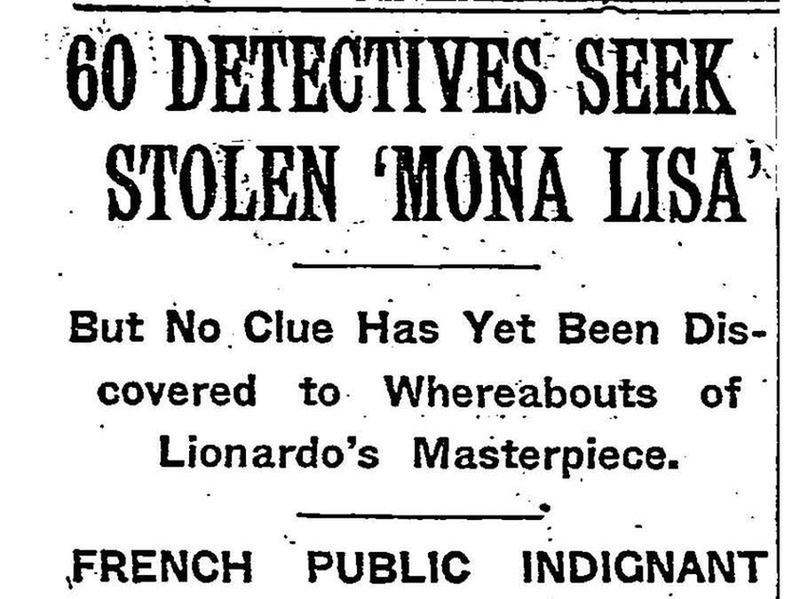
Masterpiece of Renaissance Italian art though she might be the Mona Lisa was barely known, outside of art circles. Now that all changed. The New York Times’ headline all but screamed from the front page, “60 Detectives Seek Stolen ‘Mona Lisa,’ French Public Indignant.”

Literally overnight, Mona Lisa became the most famous painting, on the planet.

The French art world was convinced at this time that evil American millionaires, were buying up French art. Never mind Mona Lisa was an Italian piece, but I digress…

American tycoon and art collector John Pierpont Morgan was suspected in the theft as was the Spanish artist, Pablo Picasso. The international tinderbox which brought a world to war in 1914 awaited only the right matchstick, in 1911. Maybe the Kaiser did it.

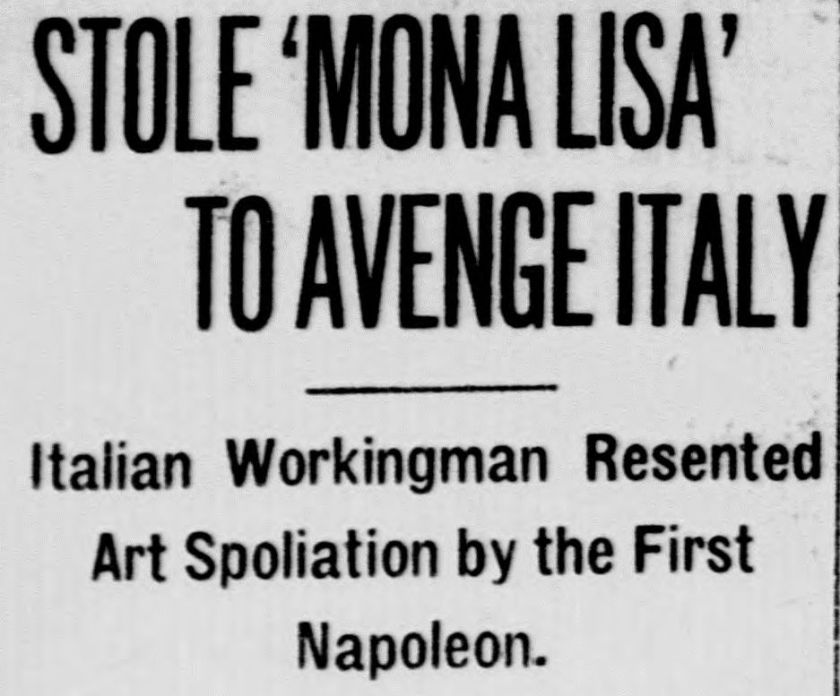
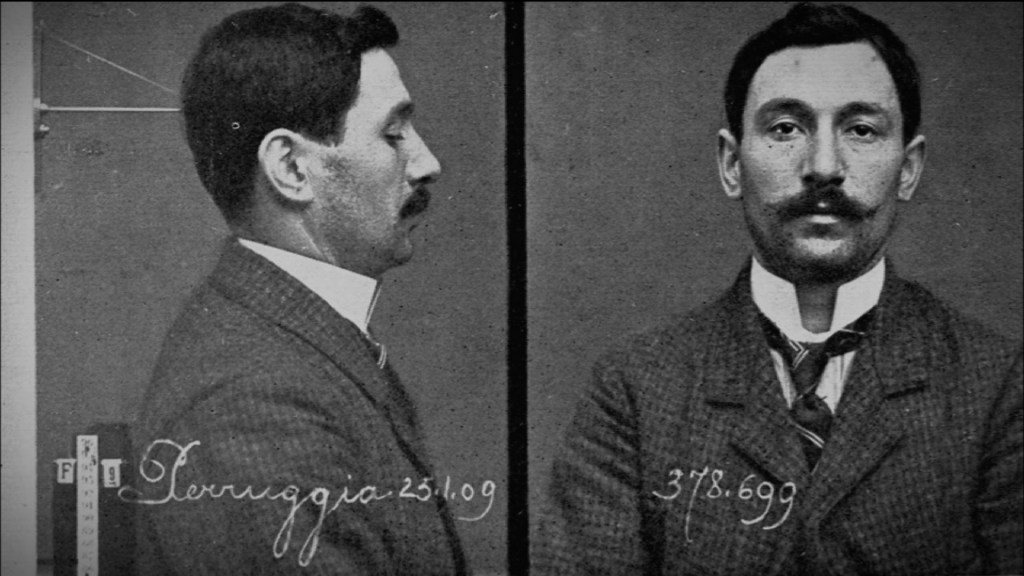
Meanwhile the three Italians who really DID steal Mona Lisa, two brothers, Vincenzo and Michele Lancelotti and the ringleader, Vincenzo Perugia (who just happened to be the guy who built that protective glass case in the first place), didn’t know what to do.

They thought they could sell the thing, maybe even repatriate the portrait, to Italy. Now Mona Lisa was too hot, to hawk.

Twenty-eight months came and went with Mona Lisa, in a trunk. Finally, Perugia approached an art dealer, in Florence.

They said they’d get back to him but it wasn’t a half hour, before the police were at his door. Perugia claimed to be an Italian Patriot, just trying to bring Mona Lisa home. Where she belonged.

He was sentenced to eight months, for the theft.

Somewhere around this time, an Archduke was assassinated, in Sarajevo. World War 1 began just a few days, after Perugia‘s trial.

History has a way of swallowing some events whole. As if they had never happened. Like the early Monday morning in 1911 when that most famous of smiles, just disappeared.

August 19, 1906 The Damn Thing Works!

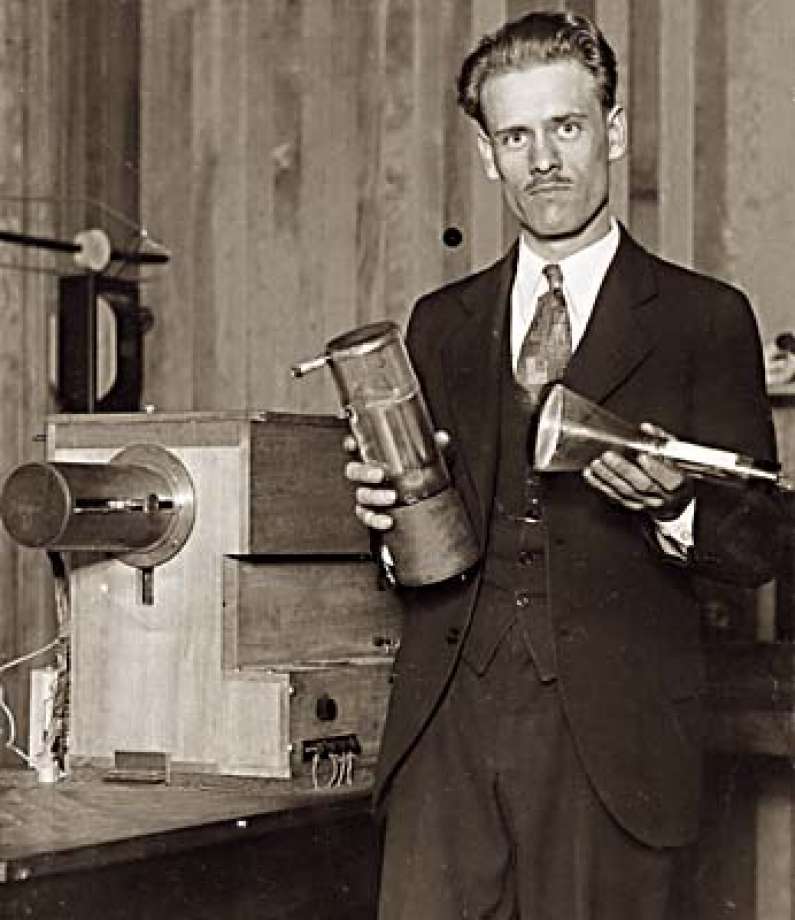
A baby was born this day in 1906 in a small log cabin near Beaver, Utah. His name was Philo, the first born child of Louis Farnsworth and Serena Bastian. He would grow to be the most famous man, you probably never heard of.

Inventor Thomas Edison was once asked about his seeming inability, to invent artificial light. “I have not failed”, he explained “I’ve just found 10,000 ways that won’t work.”

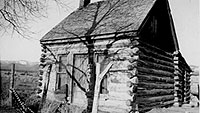
A baby was born this day in 1906 in a small log cabin near Beaver, Utah. His name was Philo, the first born child of Louis Farnsworth and Serena Bastian. He would grow to be the most famous man, you probably never heard of.

Birthplace of Philo Taylor Farnsorth

Philo was constantly tinkering. He was the kind who could look at an object and understand how it worked and why this particular one, didn’t. The family moved when he was 12 to a relative’s ranch near Rigby, Idaho. Philo was delighted to learn the place had electricity. 

He found a burnt out electric motor thrown out by a previous tenant and rewound the armature, converting his mothers hand-cranked  washing machine, to electric. 

It must’ve seemed like Christmas morning when he found all those old technology magazines, in the attic. He even won a $25 prize one time in a magazine contest, for inventing a magnetized car lock.

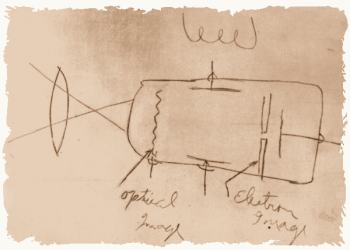
Farnsworth was fascinated with the behavior of molecules and excelled in chemistry and physics, at Rigby high school. Harrowing a field one day behind a team of two horses, his mind got to working. What if I could “train“ electrons to work in lines like I’m doing here, with these horses? Electrons are so fast the human eye would never pick up, the individual lines. Couldn’t I use them to “paint“ an electronic picture?

Image dissector

Philo sketched his idea of an “image dissector” for his science teacher Mr. Tolman, who encouraged him to keep working on his idea. Justin Tolman kept the sketch though neither could know at that time.  Farnsworth’s 1922 drawing would prove decisive one day in a court of law, over who invented all-electronic television.

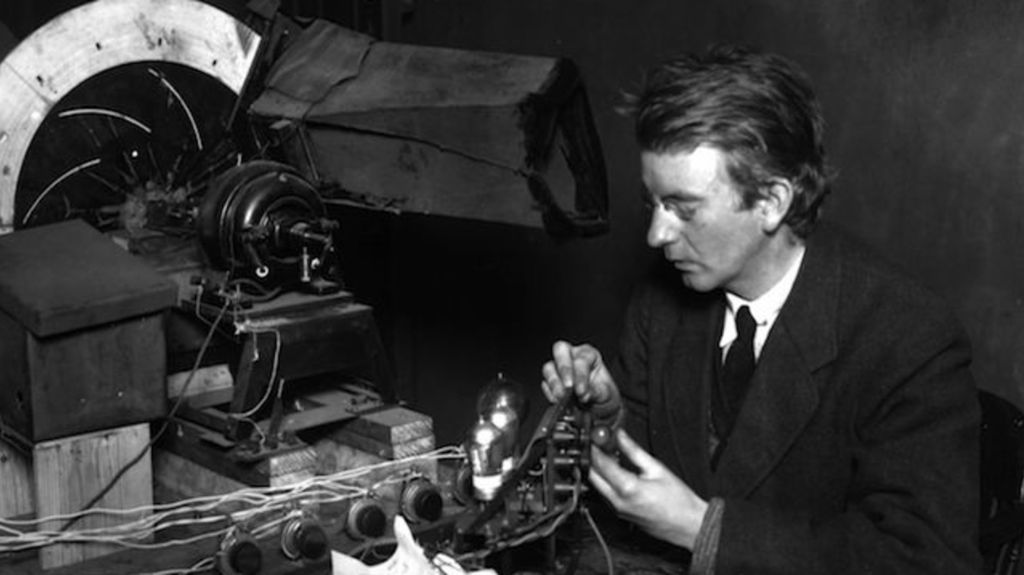
From Japan to Russia, Germany and America more than fifty inventors were working in the 1920s, to invent television. History remembers the Scottish engineer John Logie Baird as the man who built and demonstrated the world’s first electromechanical television. Amazingly, it was he who invented the first color TV tube, as well.

Scotsman John Logie Baird invented the first (electromechanical0 TV

It was all well and good but Baird’s spinning electromechanical disk was as a glacier, compared with the speed of the electron. Clearly, the future of television, lay in the field of electronics.

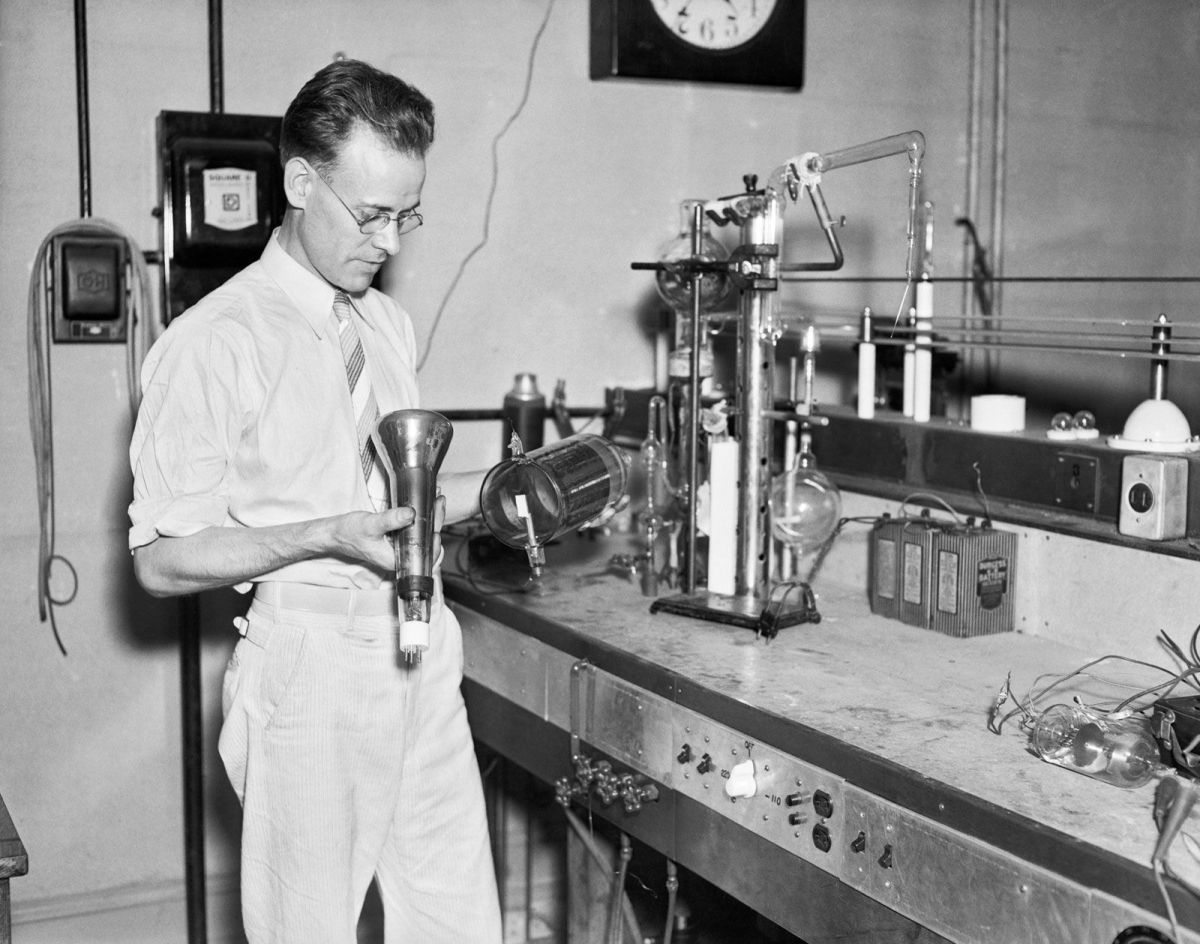
The Russian engineer Vladimir K. Zworykin applied for US patent on an electron scanning tube in 1923, while working for RCA. He wouldn’t get the thing to work though, until 1934. Meanwhile, Philo Taylor Farnsworth successfully demonstrated the first television signal transmission on September 7, 1927. The excited telegram Farnsworth sent to one of his backers exclaimed, “The damn thing works!”

Farnsworth’s successful patent application in 1930 resulted in additional funding to support his work and a visit, from Vladimir Zworykin. RCA offered Farnsworth $100,000 for his invention and, when he declined their offer, took him to court over his patent.

“If it weren’t for Philo T. Farnsworth, inventor of television, we’d still be eating frozen radio dinners”.

Johnny Carson

What followed was a bruising, ten year legal battle, a David vs. Goliath contest Farnsworth would win in the end, but at enormous cost both financial, and physical.

In another version of this story, the one that never happened, Philo Farnsworth went on to great fame and fortune to enjoy the fruits of his talents, and all his hard work. Instead World War 2 happened. Farnsworth’s hard fought patent rights quietly expired while the world, was busy with something else.

Ever the tinkerer, Farnsworth went on to invent a rudimentary form of radar, black light for night vision and an infrared telescope. Despite all that his company never did run in the “black”. He sold the company in 1949, to ITT.

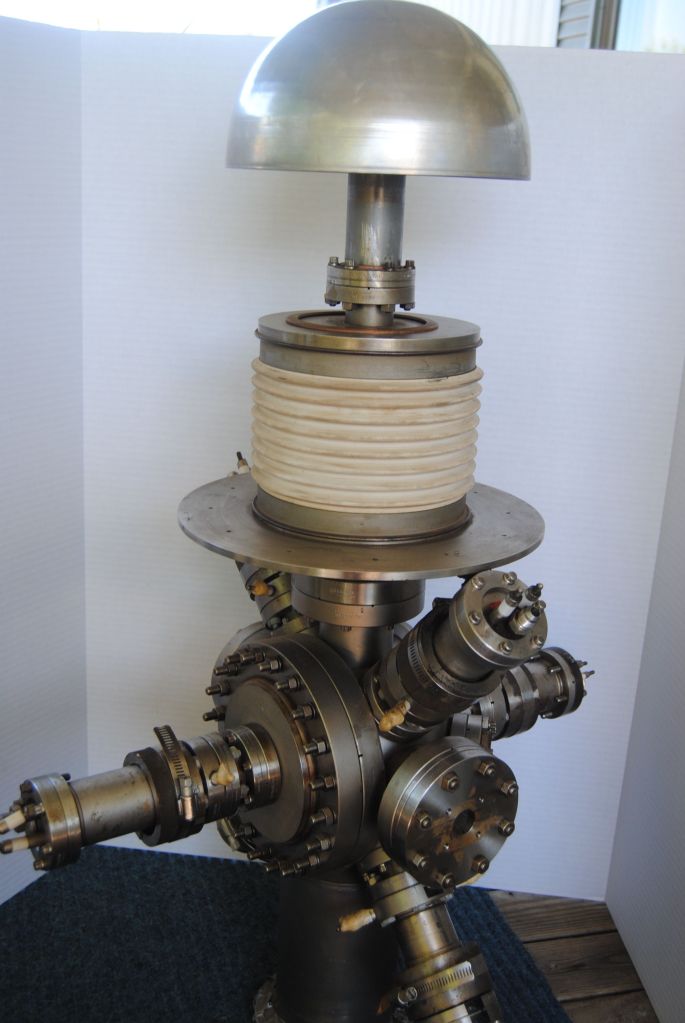
From the 1950s on, the man’s primary interest, was in nuclear fusion. In 1965 he patented an array of tubes he called “fusors” in which he actually started a 30-second fusion reaction.

Farnsworth never did enjoy good health. The inventor of all-electronic television died of pneumonia on March 11, 1971 with well over 300 patents, to his name. Had you bought a television that day you would have owned a device with no fewer than 100 inventions, by this one man.

Ever the idealist Farnsworth believed television would bring about ever greater heights in human learning and achievement, foster a shared experience bringing about international peace and understanding. Much the same as some once believed of the internet where the sum total of human knowledge was now available for a few keystrokes, and social media fosters new worlds of harmonious relations where cheerful users discussed the collected works of Shakespeare, the Codes of Hammurabi and the vicissitudes, of life.

Right.

Farnsworth was dismayed by the dreck brought about, by his creation. “There’s nothing on it worthwhile” he would say“, and we’re not going to watch it in this household. I don’t want it in your intellectual diet…Television is a gift of God, and God will hold those who utilize his divine instrument accountable to him“. – Philo Taylor Farnsworth

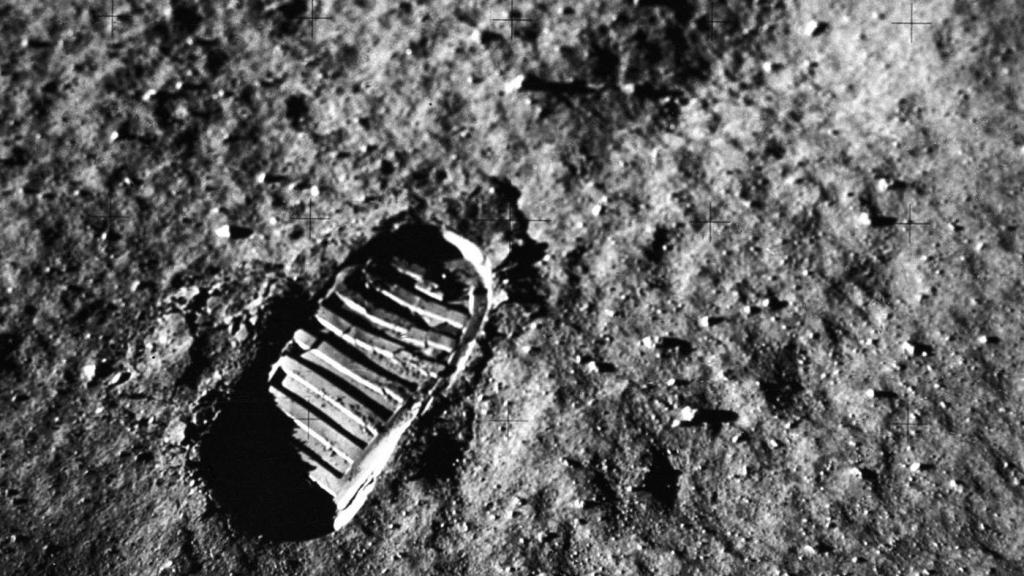
That all changed if only a bit, on July 20, 1969. American astronaut Neil Armstrong stepped onto the surface of the moon and declared, “That’s one small step for man, one giant leap for mankind.” It was probably a misspeak. Most likely he intended to say “one small step for A man” but, be that as it may. The world saw it happen thanks to a miniaturized version of a device, invented by Philo Farnsworth.

Farnsworth himself was watching just like everyone else alive, that day. Years later Farnsworth’s wife Emma, he called her “Pem”, would recall in an interview, with the Academy of Television Arts & Sciences: “We were watching it, and, when Neil Armstrong landed on the moon, Phil turned to me and said, “Pem, this has made it all worthwhile.” Before then, he wasn’t too sure”.

August 17, 1661 Party Like it’s 1661

Back when newspapers printed the news, Hearst columnist Ambrose Bierce (my favorite curmudgeon) was surely looking at New York corruption when he labeled politics “A strife of interests masquerading as a contest of principles. The conduct of public affairs for private advantage“.

Having once been rolled by two officers of the “law” in a certain neighbor to our south (it was a very polite mugging), government graft is near and dear to my heart. History is replete with official avarice on levels great and small, far more than a couple meagerly compensated cops, looking for a “gratuity”.

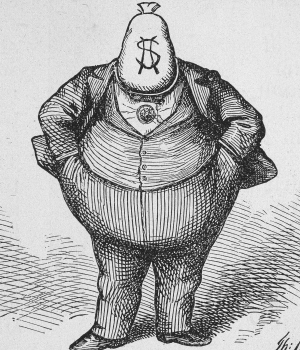
New York’s own Boss Tweed elevated graft to heights previously unknown in American politics, to where construction of a single courthouse cost taxpayers more than the entire Alaska purchase. Nearly twice as much.

Tammany Hall’s kickbacks were so lavish a single carpenter billed the city $360,751, for a month’s work. One plasterer billed $133,187 for two days’ work.

Back when newspapers printed the news, Hearst columnist Ambrose Bierce (my favorite curmudgeon) was surely looking at New York corruption when he labeled politics “A strife of interests masquerading as a contest of principles. The conduct of public affairs for private advantage“.

Rodrigo de Borja served as Pope Alexander VI, at a time when the job of Bishop of Rome was not always that of a pious man. Rodrigo bribed his way to the top and used the papacy to benefit family and friends making the name Borja synonymous, with licentiousness and greed. A man utterly devoid of morals the man sold his beautiful and fair-haired daughter Lucrezia no fewer than three times, to cement alliances. He openly fathered seven children by two married mistresses appointing one of their brothers Cardinal, who then went on to be known as “Cardinal of the Skirts”. Alexander’s October 30, 1501 “Banquet of Chestnuts” was an all-night feast and orgy featuring no fewer than fifty prostitutes Italian officialdom remains happy to sweep under the rug, to this day.

When the Florentine friar Girolamo Savonarola chided Alexander for his behavior the Pope is said to have laughed, out loud.

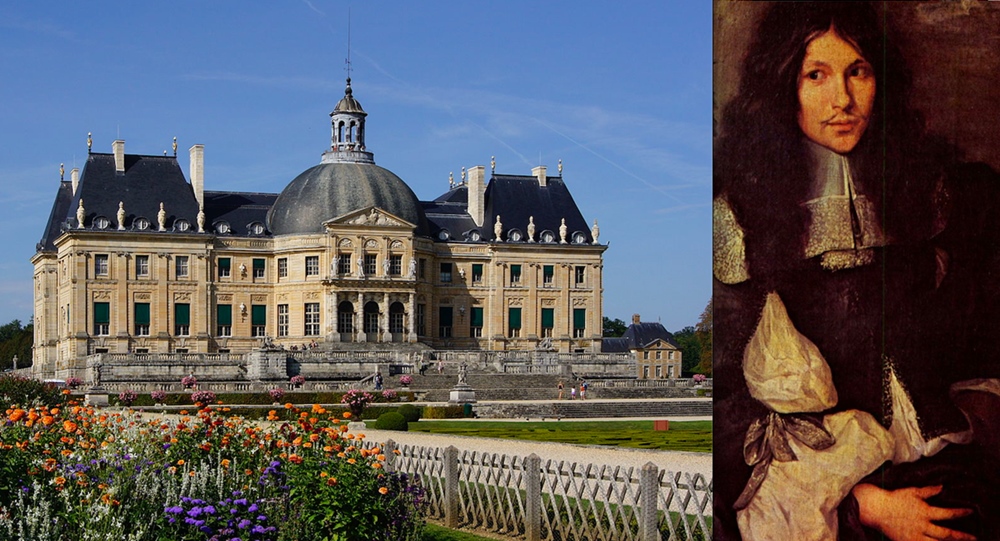
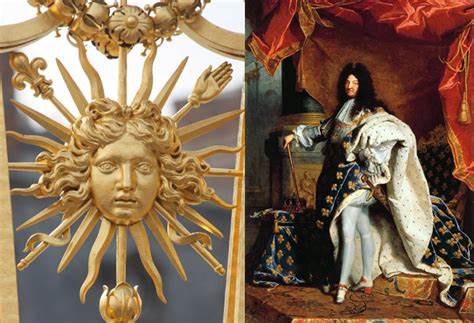
And yet, these are all as amateurs compared with French finance minister Nicolas Fouquet, a man who made King Louis XIV, the “Sun King” himself, blush.

Europe’s longest reigning monarch once commented “l’état, c’est moi”. I Am the state. Such arrogance is hard to understand for the political descendants of the generation, who threw King George’s tea over the side. It wasn’t at all difficult for the hoi polloi of Louis’ France who were expected to pay up, and shut up. Such was the world of Nicolas Fouquet, marquis de Belle-Île, vicomte de Melun et Vaux and Louis’ minister, of finance.

In 1651 Fouquet married his not inconsiderable wealth to that of Marie de Castille, herself the daughter of a wealthy Spanish family. The interminable wars of the age and the greed of courtiers frequently caused the new minister to borrow, against his own credit. Public and private accounts soon became so intertwined as to become indistinguishable from one another. Fouqet came to wield even greater wealth than his own chief benefactor Cardinal Mazarin, chief minister to Kings Louis XIII and XIV.

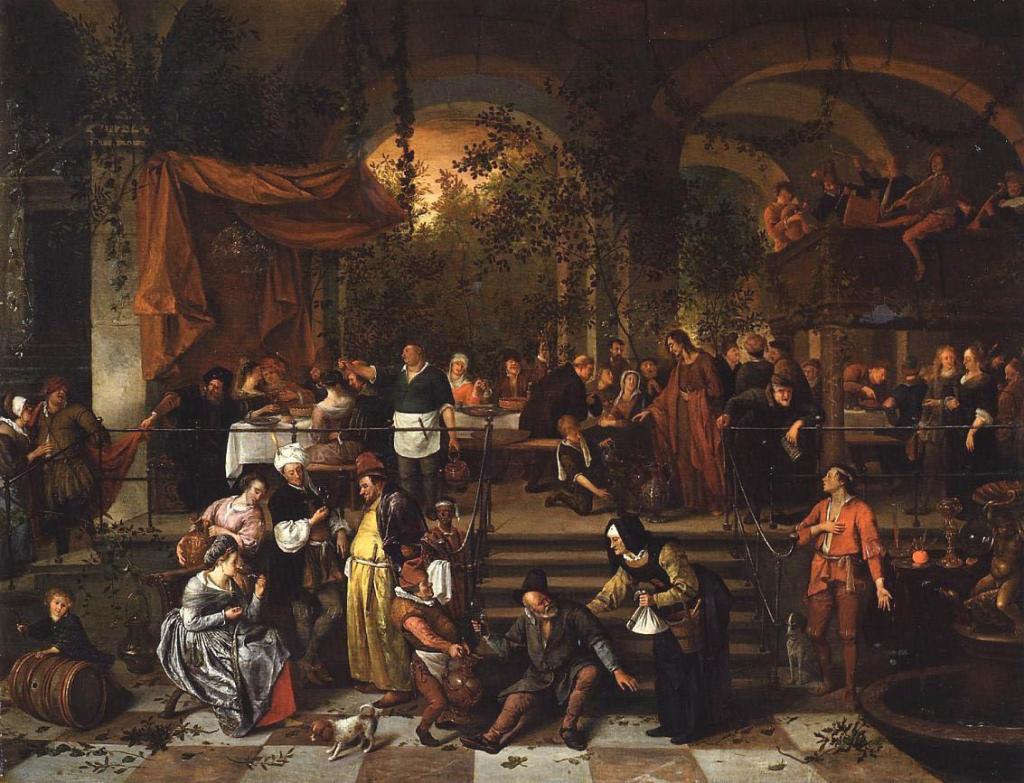
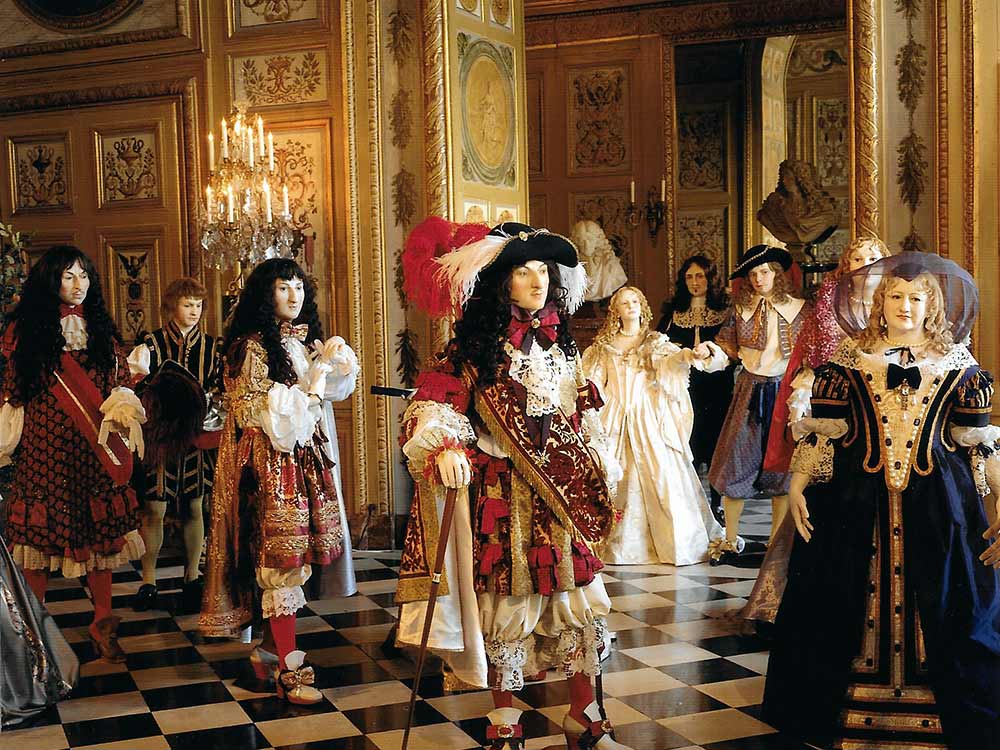
The minister completed construction in 1661 of the Château de Vaux-le-Vicomte, his own personal palace of Versailles before there was, a palace of Versailles. That’s him and his modest little three room bungalow, at the top of this page. The man even used three of the same artists for the Château’s lavish appointments, as Louis himself would later use for that most famous, of royal shanties.

Worried that he might have gone a little too far, Fouquet bought himself and fortified a place off the west coast of France, a modest little island some 5 by 15 miles across called Belle-Île-en-Mer. You know, just in case of…disgrace.

But none of it stopped the party of parties, a celebration for the ages held on August 17, 1661, at Fouquet’s petit Château .

There were 6,ooo guests including the Sun King himself. Gifts were given to party goers, a diamond brooch for the ladies and a thoroughbred horse, for the gents. A performance was presented specifically written for the occasion by none other than the playwright, Molière.

A spectacular fireworks display lit the skies above lavish gardens and splendid paths. Fouquet’s little soirée was supposed to impress the King but instead turned him into, a party pooper. Apparently, such “unashamed and audacious luxury,” is what it takes to embarrass, a Sun King. Louis ordered his finance minister, arrested.

The trial stretched on for three years. The judges found the defendant guilty and ordered banishment but, Louis would have none of that. For the first and last time in French history a King overruled the verdict and ordered, imprisonment for life. The Mrs. was exiled and Fouquet’s crib snatched up, by the state.

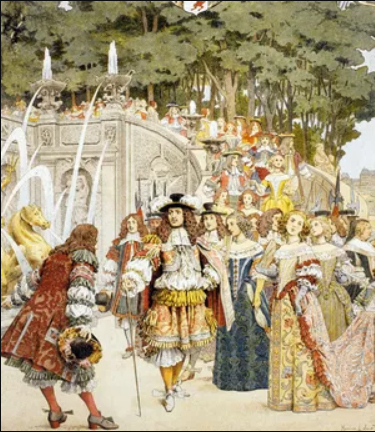
EVENING OF AUGUST 17, 1661, ARRIVAL OF LOUIS XIV ACCOMPANIED BY THE COURT, hat tip Daniel Druet, sculptor

Fouquet spent the rest of his life in prison and died in his cell at Pignerol on March 23, 1680. His remains weren’t removed for another year. Just in case…I guess.

In his 1964 State of the Union address, President Lyndon Johnson stated, “This administration today, here and now, declares unconditional war on poverty in America.” Since that time the American taxpayer has plunked down $22 Trillion on Johnson’s War on Poverty.

Even with Social Security and Medicare excluded that’s still three times the cost of every military war from the Revolution to the unfolding collapse of Afghanistan, combined.

Rates of poverty as measured by the United States Census Bureau remain basically, unchanged.

So hey, never you mind a conga line of public “servants” leaving offices of trust wealthier, than when they went in. You don’t need to worry about who’s paying the kid $500,000 for those finger paintings either, or government debt your grandbabies’ grandbabies will never pay back. Just pull out the credit card & have a party. Like it’s 1661.

August 16, 1936 Testing Betty

Imagine turning this story, into a movie. Cast it with any actress you like and then, throw it all out. No one would believe such an outlandish story.

Mr. Price took his seat on the L train and waited for the ride home after school. He was a biology teacher in the Riverdale Illinois school system but, for now, he was just glad to be inside. Where it was warm. The train rumbled to life as he wiped the fog away from the glass.

The train was beginning to move now when he spotted one of his students. Betty Robinson. “Smiling Betty”. Such a good natured kid.

Betty had a good 200 yards to go plus a set of stairs, but she was going for it. Running as fast as her legs could carry her, it was too far. She’ll never make this train but there will always be another.

Minutes later a biology textbook plopped into the seat beside him. He looked up in amazement to see Betty Robinson. Smiling. She wasn’t even winded.

Betty knew she was fast, but she never knew how fast. She’d never been been tested but this biology teacher, just happened to be the assistant track coach.

The last bell rang the following day and there stood Mr. Price with a stopwatch. A chalk line was drawn across the tiled floor. Fifty yards up the hallway, Betty Robinson assumed an awkward crouch at her own line, and then came the whistle. Betty was all pumping legs and flailing arms. Her form was ridiculous, but, yeah. She was fast. She crossed the finish line 6.2 seconds after the whistle. 1/10th of a second faster than the women’s indoor world record, for that time.

He asked her if she’d run in an amateur race, just a few weeks out. Betty never knew there were women’s races, but, yes. He didn’t bother to tell her. Helen Filkey would be running too. The woman who held the record.

Coach Price and a senior from the boy’s team taught the sophomore everything they could over the next few weeks. How to bring those arms in. How to anticipate the whistle and how races were won or lost in those first few seconds. Then came race day at Soldier Field. “Smiling Betty” crouched at the blocks, only feet away from the fastest woman in the world. Betty came in second. She was only sixteen.

She joined the Illinois women’s Track & Field club and there she encountered…something new. Today we take women’s athletics for granted, but the 1920s, were a different story. Women were expected to do certain things. Athletics, was not one of them. Even the Olympics, were a man’s world. For the first time Betty met other women, pushing the limits of athletic performance.

The 1928 Summer games in Amsterdam were the first Olympics, to host women’s track and field. Betty came in second in the qualifying round but her times more than qualified her, to go.

There she was, 16 years old and taking the train to New York, to catch the ship to Europe. Training on deck, Betty developed a schoolgirl crush on Johnny Weissmuller, the Olympic swimmer and future star of the Tarzan films. She thought he was the finest specimen of manhood, she had ever seen.

American athletes saw so many disappointments at the 1928 Olympics, but not Betty Robinson. She walked away with gold in the women’s 100 meter sprint, with a new world record, of 12 seconds flat. From a standing start. And silver in the 800 meter relay, didn’t hurt.

Every Olympics has the “it” girl. Simone Biles. Nancy Kerrigan. Nadia Comăneci. Elizabeth Robinson was all that and more in 1928. The first female 100-meter gold medalist in history and, in 1928, a “new kind of girl”.

Betty was a celebrity. There were gifts of diamonds and pearls, Douglas MacArthur gave her a gold bracelet. The International Olympic Committee allowed such things, back then.

Betty returned to Riverdale. She had her first boyfriend. She enrolled in Northwestern but never let up on her training. The 1932 Olympics in Los Angeles were getting closer, every day.

Betty’s cousin Will had a biplane in those days. The two loved to go up in that thing, especially on those hot summer days. She even had a leather helmet, with goggles. Just like Amelia Earhart.

Then came the crash. The man who removed her broken body brought her to Oak Lawn infirmary, because he knew the coroner.

Betty’s arm was broken, her legs destroyed. Her once smiling face badly cut up. The coma lasted, for weeks. She woke up with pins in her legs, now shorter than they used to be. They weren’t even the same length. “I’m sorry” the doctors said, “you may never walk again”.

Betty’s favorite brother-in-law Jim served in the Great War, in France. The gas had taken his health back in 1918. Twenty years later it would take his life, but Jim always had time, for Betty. He would carry the fastest woman in the world in his arms, sometimes waiting for traffic to cross the street and sit on the park bench.

On bad days Betty couldn’t straighten her legs. On good days he would help her stand up. First with an arm held tightly around her shoulder and then a hand, on the small of her back. One day she needed no help at all.

The 1932 Olympics came and went. Betty Robinson watched another woman win the 100 meter sprint.

Stop if you will and run this as a movie, in your mind. Cast the actress of your choice in the role and imagine her coming back from that plane crash, to win Gold in 1936. Now toss it all out because it’s such an outlandish idea, but that’s what happened.

From standing to taking a step and then two, and then walking, and then beginning to jog her broken body began to learn what her old one, already knew. She could never bend down again so she set her sights on the only event, where she didn’t have to. The relay.

The 1936 Olympic games opened in Munich, under the watchful gaze of Reichsführer Adolf Hitler. The growing threat of Nazi Germany hung like dark and threatening clouds, over Europe.

The 1936 Olympics. Where the American track & field athlete Jesse Owens won four gold medals, smashing the Nazi myth of the “Aryan Superman”. Where Wehrmacht Hauptmann (Captain) Wolfgang Fürstner designed and built the Olympic village only to be replaced, two weeks before the games. The Nuremberg laws against racial “impurity” had judged Fürstner to be, half Jewish.

Then came the day of the women’s 400 meter relay. Hitler had to be watching as was Owens, himself. Robinson took the baton at a dead run, neck and neck with a German woman chosen, to leave her in the dust. Betty ran her broken body for all it was worth. 100 meters later she was only behind, by a few steps.

This video is glorious even if it is, in German.

The last American runner took the hand-off. She was closing on the German when her opponent, dropped the baton. It was over. Betty Robinson had been tested and judged, satisfactory. The American team had won Olympic gold.

The XI Olympiad closed on August 16, 1936. Three days later Wolfgang Fürstner, the German patriot whose nation no longer had need of his services ended his life, with a pistol.

Today, Jamaican sprinter Usain Bolt holds the 100 meter record with a time, of 9.58 seconds. Florence Griffith-Joyner is the fastest woman with a time, of 10.49. With all the advantages of the day, the personalized training & nutrition and scientifically designed running gear that’s a scant 1.51 seconds faster than Betty Robinson and her old shoes, and the flapping, loose-fitting clothing required to preserve the feminine modesty, of 1928.

August 15, 1057 The Real Macbeth

History collides with legend when you peer a thousand years into the past, but one thing is certain. Shakespeare’s Macbeth bears little resemblance to the man, for whom the story is named.

Them that strut and fret their hours upon the stage are a superstitious lot full of sound and fury, signifying nothing. (Apologies to the Bard for that bit of word butchery).

In the world of theater it is high praise to present the performer with flowers, in token of appreciation for a fine performance. Be warned though, never give a performer flowers, before the play. That would bring bad luck. Never bringing a mirror on stage may be more practical than superstitious as you can never account for the reflection of set lighting, but then there’s the tradition, of the graveyard bouquet. Yeah. When a production closes, it is considered good luck to steal flowers from a graveyard and present them, to the director. Go figure. And whatever you do you are never to utter the name, Macbeth. Trust me. It’s “ the Scottish play”.

Act I. General Macbeth, Thane of Glamis, chances upon three witches who prophecy that he, Macbeth, is to be Thane of Cawdor and even more, King of Scotland.

Spurred on by his wife the ruthless and ambitious Lady Macbeth, he slips into the bedchamber of the good King Duncan and plunges the dagger, then frames the King’s bodyguards, for his murder. Now himself King in fulfillment of the witches’ prophecy, Macbeth and his Lady descend into a world of guilt and madness, duplicity and murder in the fruitless attempt to cover for his crime.

So sayeth William Shakespeare but what of the real Mac Bethad mac Findlaích?

11th century Alba

History collides with legend when you peer a thousand years into the past, but some things are certain. 11th century Scotland was not the nation we know today, but a collection of warring kingdoms. Máel Coluim mac Cináeda (Malcolm II) came to power after defeating and killing his cousin King Kenneth III in 1005 at the battle of Monzievaird, near Crieff.

Malcolm was a fearsome ruler who immediately set about eliminating (read…killing), potential claimants to the throne. Information is scant but Malcolm appears to have fathered, three daughters. All three married well giving rise to yet more rivals but it was Duncan, Malcolm‘s grandson who would rise to power after his grandfather was killed in battle, in 1034.

Macbeth’s cousin murdered his father Findlaích and took for himself the title of Mormaer (Earl), when the boy was barely in his teens. Macbeth had his revenge in 1045 when found his cousin in a hall, with fifty of his warriors. Macbeth burnt the place to the ground, took the title for himself and, astonishingly, married his cousin’s widow, Gruoch.

The first Scottish Queen whose name we actually know, the real Lady Macbeth turns out to be hardly the avaricious harpy of the Bard’s portrayal but a saintly woman, best known for funding the production of illustrated manuscripts by the monks of a tiny friary, in Loch Leven.

Now himself Mormaer of Moray Macbeth proved a powerful fighter against the Vikings coming down from the north and a key ally, of King Duncan.

Duncan I ruled for five years and was indeed killed by Macbeth, but there the similarity ends. Duncan’s peaceful accession to the crown was the exception to the rule in 11th century Scotland. His death in battle was not, the killing blow delivered on August 14, 1040 at the battle of Pitgaveny, at the hands of Macbeth’s forces if not Macbeth, himself.

Victorious, Macbeth had a strong claim to the crown. According to modern descendants of clan Duncan stronger than Duncan, himself. The real lady Macbeth was the granddaughter, of Kenneth III. Macbeth was a direct relation to Malcolm himself, through his mother’s line. So it is the powerful Mormaer of Moray himself became King, ruling over Scotland, for the next seventeen years.

Scottish coronations were different at this time, than you might think. There was no physical crown, that wouldn’t come about, for another 200 years. Macbeth would have sat upon the 236-pound “Stone of Destiny” as the list of Scottish Kings, was read aloud. He was then given a sword with which to defend his kingdom and proclaimed King, by the assembled nobles.

While Shakespeare’s Macbeth was steeped in blood and treachery, the real King Macbeth seems to have been, well liked. There was blood, yes, Macbeth lived in a time of savagery when scores were settled with edged weapons but, much of his reign, was enjoyed in peace. Like the Bard’s Macbeth whose past would come back to haunt him, Duncan I’s father, Crinán, abbot of Dunkeld challenged the peace, in 1045. This was a brief but bloody struggle much smaller than the epoch-changing battle of Hastings, ten years after the death of Macbeth. When it was over Crinán lay dead along with 180 of his followers.

Macbeth was the first of the Scottish Kings to take a pilgrimage to Rome, to meet with Pope Leo IX. This demonstrates not only a sense of security against usurpers at home but the wealth, to scatter “money like seed to the poor”. For the first time a United Scotland, stood before the world.

Macbeth was the first to bring Normans into his service in 1052 indicating a new openness, to international trade.

Trouble came from the south in the form of Siward, the powerful Earl of Northumbria, a Danish chieftain who rose to power under the Viking King of England , Cnut the Great. The year was 1054, the battle taking place north of the Firth of Forth near a place called Dunsinane. When it was over 3,000 of Macbeth’s forces were dead. Siward lost 1,500 and his own son, Osbjorn.

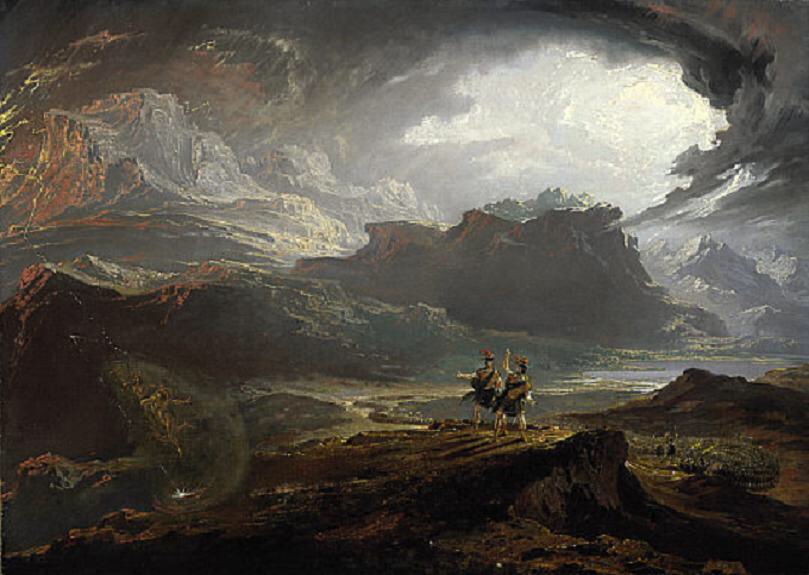
Early 19th-century depiction by John Martin of Mac Bethad (centre-right) watching Siward’s Northumbrian army approaching (right)

His Norman mercenaries now eliminated Macbeth was forced to give up, much of his southern Kingdom. Macbeth retained his kingship for now his reign came to an end a year later near Lumphanan, in Aberdeenshire. The son of the man Macbeth had killed some seventeen years earlier came for his father’s killer on August 15, 1057.

Macbeth, King of Alba, was dead. Malcolm III Canmore would rule through the Norman Conquests until he himself was ambushed and killed, in 1093.

August 13, 1941 Beans

The car itself was destroyed long ago, the ingredients for its manufacture unrecorded, but the thing lives on in the hearts of hemp enthusiasts, everywhere.

The largest museum in the United States is located in the Detroit suburb of Dearborn, the Henry Ford Museum of American Innovation. The sprawling, 12-acre indoor-outdoor complex in the old Greenfield Village is home to JFK’s Presidential limo, the Rosa Parks bus and the Wright Brothers’ bicycle shop. There you will find Abraham Lincoln’s chair from Ford’s Theater along with Thomas Edison’s laboratory and an Oscar Mayer Wienermobile. George Washington’s camp bed is there, with Igor Sikorski’s helicopter and an enormous collection of antique automobiles, locomotives and aircraft.

One object you will not find there is Henry Ford’s plastic car. Made from soybeans.

92MI_0003

As a young man, Henry Ford left the family farm outside of modern-day Detroit, and never returned. Ford’s father William thought the boy would one day own the place but young Henry couldn’t stand farm work. He later wrote, “I never had any particular love for the farm—it was the mother on the farm I loved”.

Henry Ford went on to other things, but part of him never left the soil. In 1941, the now-wealthy business magnate wanted to combine industry, with agriculture. At least, that’s what the museum says.

soybean-car-chassis-skeleton-right-rear

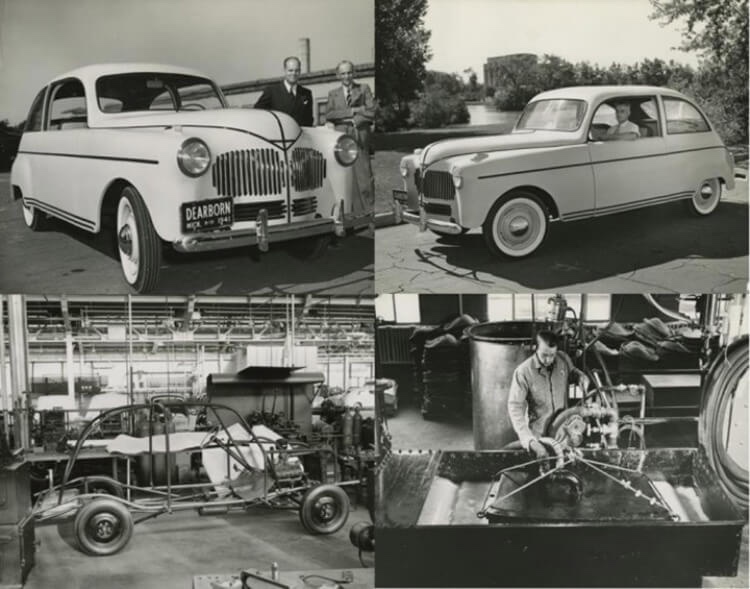
Ford gave the plastic car project to yacht designer Eugene Turenne Gregorie at first, but later turned to the Greenfield Village soybean laboratory. To the guy in charge over there, a guy with some experience in tool & die making. His name was Lowell Overly.

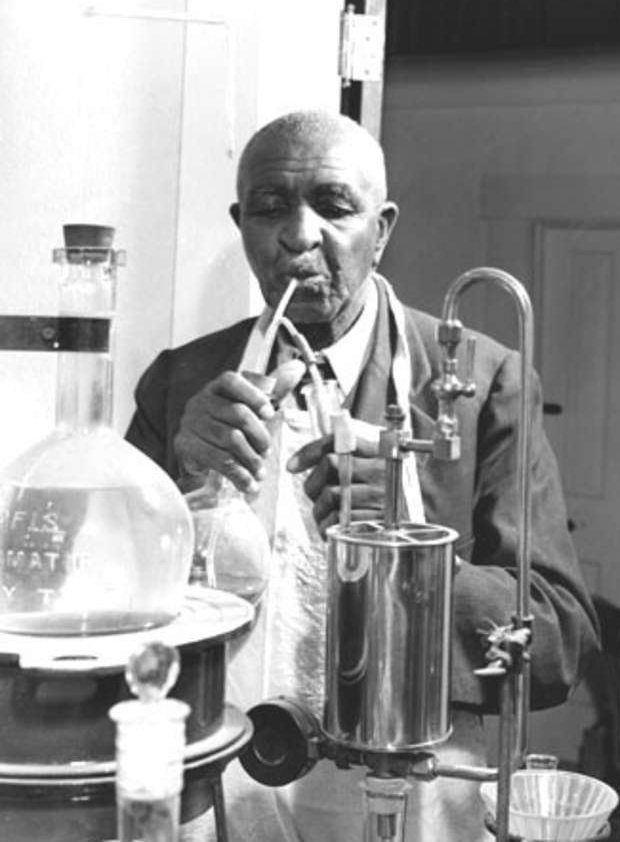
The car was made in Dearborn with help from scientist and botanist George Washington Carver, (yeah, That George Washington Carver), a man born to slavery who rose to such prodigious levels of accomplishment that Time magazine labeled the man, the “Black Leonardo”.

Carver1web
George Washington Carver, at work in his library

The soybean car, introduced to the public this day in 1941, was made from fourteen quarter-inch thick plastic panels and plexiglass windows, attached to a tubular steel frame and weighing in at 1,900 pounds, about a third lighter than comparable automobiles of the era. The finished prototype was exhibited later that year at the Dearborn Days festival, and the Michigan State Fair Grounds.

The thing was built to run on fuel derived from industrial hemp, a related strain of the green leafy herb beloved of stoners, the world over.

Ford claimed he’d be able to “grow automobiles from the soil”, a hedge against the metal rationing of world War Two. He dedicated 120,000 acres of soybeans to experimentation, but to no end. The total acreage devoted to “fuel” production went somehow, unrecorded.

Another reason for a car made from soybeans, was to help American farmers. In any case Henry Ford had a “thing”, for soybeans. He was one of the first in this country, to regularly drink soy milk. At the 1934 World’s Fair in Chicago, Ford invited reporters to a feast where he served soybean cheese, soybean crackers, soy bread and butter, soy milk, soy ice cream. If he wasn’t the Bubba Gump of soybeans, perhaps Bubba Gump was the Henry Ford, of Shrimp.

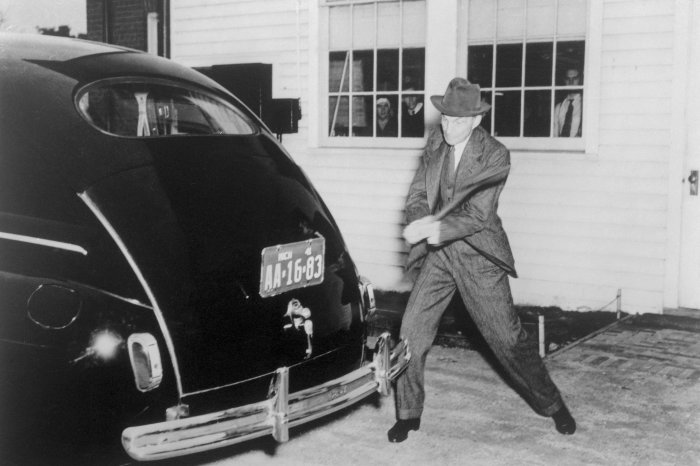
Ford’s own car was fitted with a soybean trunk and struck with an axe to demonstrate the material’s durability, though the axe was later revealed to have a rubber boot.

Henry-Ford-Soybean-Car

Henry Ford’s experiment in making cars from soybeans never got past that first prototype and came to a halt, during World War 2. The project was never revived, though several states adopted license plates stamped out of soybeans, a solution to the steel shortage farm animals found to be quite delicious.

The car itself was destroyed long ago, the ingredients for its manufacture unrecorded, but the thing lives on in the hearts of hemp enthusiasts, everywhere.

The New York Times claimed the car body and fenders were made from soy beans, wheat and corn. Other sources opine that the car was made from Bakelite or some variant of Duroplast, a plant-based auto body substance produced in the millions, for the East German Trabant.

One newspaper claimed that nothing ever came from Henry Ford’s soybean experiments, save and except for, whipped cream.

August 12, 1865 The Shoulders of Giants

Today, the idea that microorganisms such as fungi, viruses and other pathogens cause infectious disease is common knowledge, but such ideas were held in disdain among scientists and doctors, well into the 19th century.

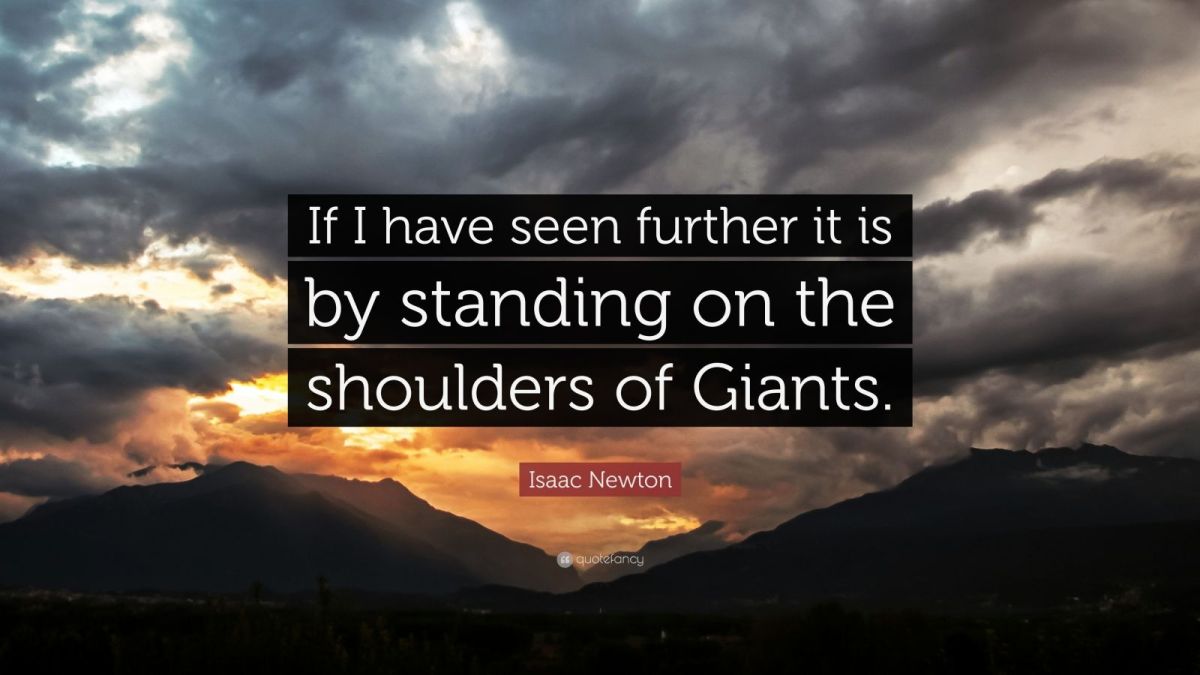
In the 12th century, French philosopher Bernard of Chartres talked about the concept of “discovering truth by building on previous discoveries”. The idea is familiar to the reader of English as expressed by the mathematician and astronomer Isaac Newton, who observed that “If I have seen further it is by standing on the shoulders of Giants.”

gooddoc
Dr. Ignaz Semmelweis

Nowhere is there more truth to the old adage, than in the world of medicine. In 1841, the child who survived to celebrate a fifth birthday could look forward to a life of some 55 years. Today, a five-year-old can expect to live to eighty-two, fully half again that of the earlier date.

Yet, there are times when the giants who brought us here are unknown to us, as if they had never been. One such is Dr. Ignaz Semmelweis, one of the earliest pioneers in anti-septic medicine.

Semmelweis  studied law at the University of Vienna in the fall of 1837, but switched to medicine the following year. He received his MD in 1844 and, failing to gain a clinical appointment in internal medicine, decided to specialize in obstetrics.

In the third century AD, the Greek physician Galen of Pergamon first described the “miasma” theory of illness, holding that infectious diseases such as cholera, chlamydia and the Black Death were caused by noxious clouds of “bad air”.  The theory is discredited today, but such ideas die hard.

miasma-theory

The germ theory of disease was first proposed by Girolamo Fracastoro in 1546 and expanded by Marcus von Plenciz in 1762. Single-cell organisms – bacteria – were known to exist in human dental plaque as early as 1683, yet their functions were imperfectly understood. Today, the idea that microorganisms such as fungi, viruses and other pathogens cause infectious disease is common knowledge, but such ideas were held in disdain among scientists and doctors, well into the 19th century.

InfectiousDisease16_9

In the mid-19th century, birthing centers were set up all over Europe, for the care of poor and underprivileged mothers and their illegitimate infants. Care was provided free of charge, in exchange for which young mothers agreed to become training subjects for doctors and midwives.

In 1846, Semmelweis was appointed assistant to Professor Johann Klein in the First Obstetrical Clinic of the Vienna General Hospital, a position similar to a “chief resident,” of today.

300px-AAKH-1784

At the time, Vienna General Hospital ran two such clinics, the 1st a “teaching hospital” for undergraduate medical students, the 2nd for student midwives.

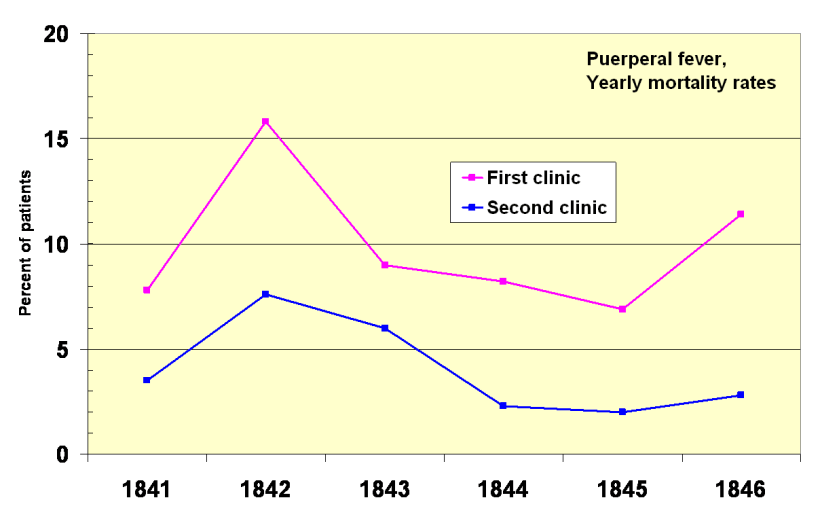
Semmelweis quickly noticed that one in ten women and sometimes one in five, were dying in the First Clinic of postpartum infection known as “childbed fever”, compared with less than 4% that of the Second Clinic.

The difference was well known, even outside of the hospital. Expectant mothers were admitted on alternate days into the First or Second Clinic. Desperate women begged on their knees not to be admitted into the First, some preferring even to give birth in the streets, over delivery in that place. The disparity between the two clinics “made me so miserable”, Semmelweis said, “that life seemed worthless”.

He had to know why this was happening.

Puerperal Peritonitis 1912 MA

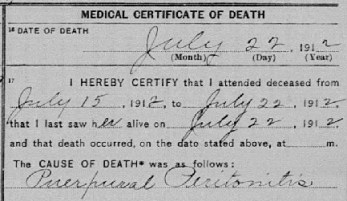
Childbed or “puerperal” fever was rare among these “street births”, and far more prevalent in the First Clinic, than the Second. Semmelweis carefully eliminated every difference between the two, even including religious practices. In the end, the only difference was the people who worked there.

The breakthrough came in 1847, following the death of Semmelweis’ friend and colleague, Dr. Jakob Kolletschka. Kolletschka was accidentally cut by a student’s scalpel, during a post-mortem examination. The doctor’s own autopsy showed a pathology very similar to those women, dying of childbed fever. Medical students were going from post-mortem examinations of the dead to obstetrical examinations of the living, without washing their hands.

Midwife students had no such contact with the dead. This had to be it. Some unknown “cadaverous material” had to be responsible for the difference.

Ignaz Philipp Semmelweis

Semmelweis instituted a mandatory handwashing policy, using a chlorinated lime solution between autopsies and live patient examinations.

Mortality rates in the First Clinic dropped by 90 percent, to rates comparable with the Second. In April 1847, First Clinic mortality rates were 18.3% – nearly one in five. Hand washing was instituted in mid-May, and June rates dropped to 2.2%.  July was 1.2%. For two months, the rate actually stood at zero.

The European medical establishment celebrated the doctor’s findings. Semmelweis was feted as the Savior of Mothers, a giant of modern medicine. 

No, just kidding.  He wasn’t.

The imbecility of the response to Semmelweis’ findings is hard to get your head around and the doctor’s own personality, didn’t help.  The medical establishment took offense at the idea that they themselves were the cause of the mortality problem, and that the answer lay in personal hygiene.

Yearly_mortality_rates_1841-1846_two_clinics

Semmelweis himself was anything but tactful, publicly berating those who disagreed with his hypothesis and gaining powerful enemies.   For many, the doctor’s ideas were extreme and offensive, ignored or rejected and even ridiculed.  Are we not Gentlemen!?  Semmelweis was fired from his hospital position and harassed by the Vienna medical establishment, finally forced to move to Budapest.

Dr. Semmelweis was outraged by the indifference of the medical community, and began to write open and increasingly angry letters to prominent European obstetricians.  He went so far as to denounce such people as “irresponsible murderers”, leading contemporaries and even his wife, to question his mental stability.

Dr. Ignaz Philipp Semmelweis was committed to an insane asylum on July 31, 1865, twenty-three years before Dr. Louis Pasteur opened his institute for the study of microbiology.

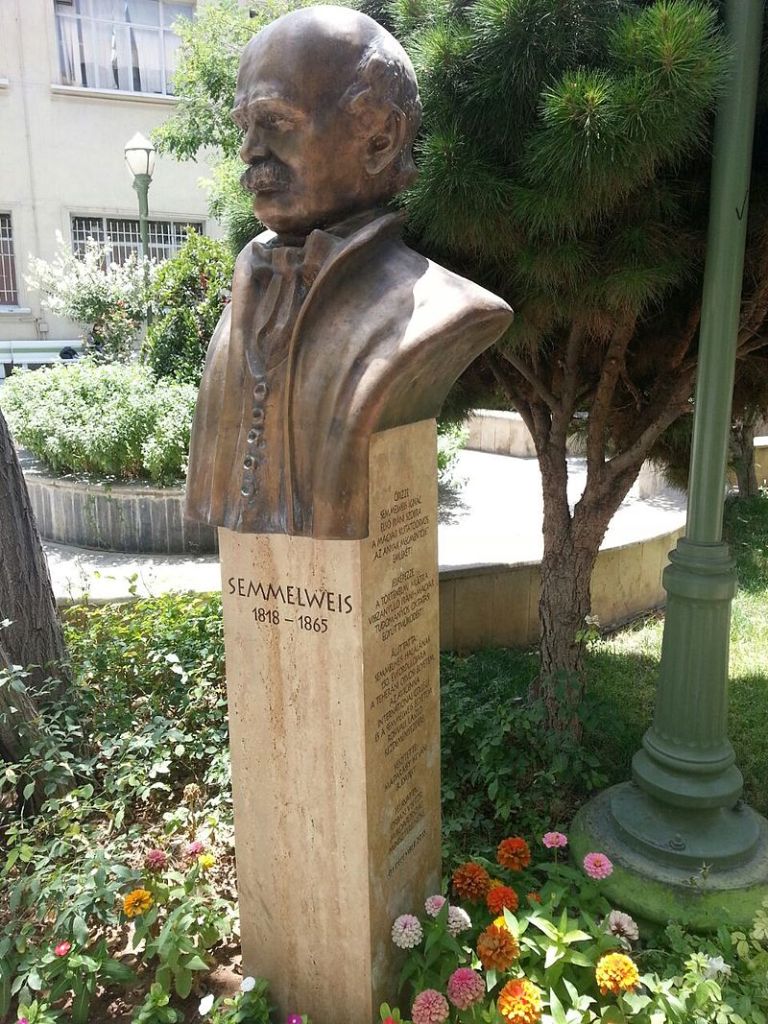
Semmelweis bust, University of Tehran

Barely two weeks later, August 12, 1865, British surgeon and scientist Dr. Joseph Lister performed the first anti-septic surgery, in medical history. Dr. Semmelweis died the following day at the age of 47, the victim of a blood infection resulting from a gangrenous wound sustained in a severe beating, by asylum guards.