January 11, 1693 The Wrath of God

“Then came an earthquake so horrible and ghastly that the soil undulated like the waves of a stormy sea, and the mountains danced as if drunk, and the city collapsed in one miserable moment killing more than a thousand people.” Eyewitness quoted by Stephen Tobriner: The Genesis of Noto: An Eighteenth-century Sicilian City

In his 1897 short story The Open Boat, Stephen Crane writes of the puniness of humanity, when bared and exposed to the wrath of God, or of Nature, as you please.
“If I am going to be drowned — if I am going to be drowned — if I am going to be drowned, why, in the name of the seven mad gods, who rule the sea, was I allowed to come thus far and contemplate sand and trees? 

On this day in 1693, those Seven Mad Gods got together, and unleashed the wrath of the ages.
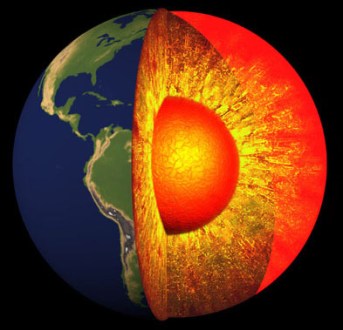
ABWCWW Earth s CoreDeep in the ground beneath our feet, a rocky shell comprising an outer Crust and an inner Mantle forms a hard and rigid outer shell, closing off and containing the solid inner core of our planet. Between these hard inner and outer layers exists a liquid core of molten material, comprising approximately two-thirds the cross-section of planet Earth.

The air around us is a liquid, exerting a ‘weight’ or barometric pressure at sea level, of 14.696 pounds per square inch. Scientists estimate the pressures within this outer core to be approximately 3.3 million times atmospheric pressure, generating temperatures of 10,800° Fahrenheit, a temperature comparable to the surface of the sun.

That rocky shell closing us off from all that is actually quite elastic, broken into seven or eight major pieces, (depending on how you define them), and several minor bits called Tectonic Plates.

Over millions of years, these plates move apart along constructive boundaries, where oceanic plates form mid-oceanic ridges. Roughly equal and opposite to these are the Subduction Zones, where one plate moves under another and down into the mantle.

The planet is literally “eating’ itself.

Sicily, the largest island in the Mediterranean and one of twenty regions of Italy, lies on the convergent boundary of two such pieces of the planet’s outer shell, where the African plate is subducting beneath the Eurasian plate.  Over time, the forces built up along these subduction zones, are nothing short of Titanic.

Sicily is also home to the terrifying Mount Etna, one of the most active volcanoes, in the world.

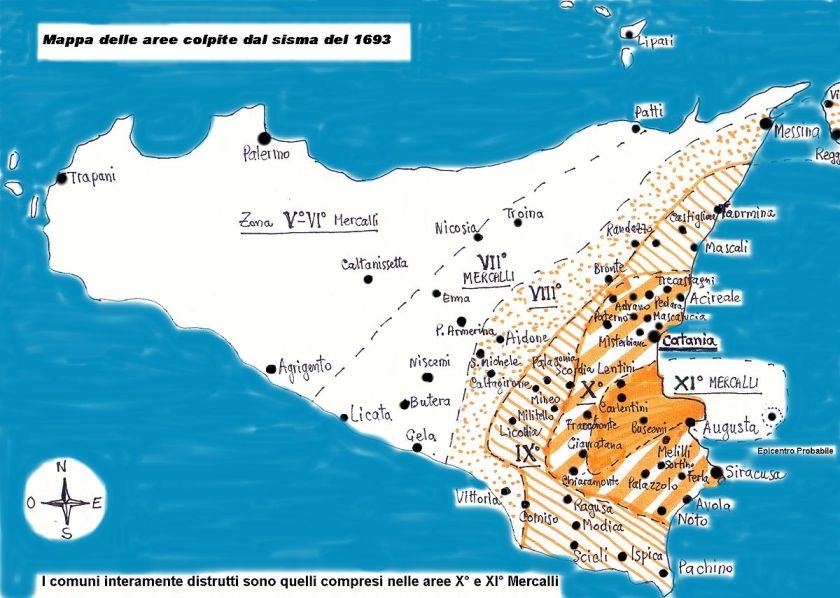
The first foretaste of what was about to happen began at 21:00 local time, January 9, 1693. The earthquake, centered on the east Sicilian coast and felt as far away as the south of Italy and the island nation of Malta, had an estimated magnitude of 6.2 on the Richter scale, and a perceived intensity on the Mercali Intensity Scale of VIII – XI: Severe to Extreme. Mercali describes a Category XI Extreme earthquake:

Few, if any, (masonry) structures remain standing. Bridges destroyed. Broad fissures in ground. Underground pipe lines completely out of service. Earth slumps and land slips in soft ground. Rails bent greatly”.

This thing was only stretching and yawning.  Just getting out of bed.
1200px-sicilia_sisma_1693

The main shock of January 11 lasted four minutes with an estimated magnitude of 7.4 and a very large area that reached X on the Mercali scale, and XI in the province of Syracuse.

The soil beneath our feet, ordinarily so substantial and unmoving, behaves like a liquid at times like this. Low density, sandy soils compress in response to applied loads while dense soils expand in volume or dilate. Saturated soils are like unto quicksand, as underground liquids are driven up to form miniature volcanoes called “sand boils, water spouting up from the ground in geysers, rising 30-feet and more.

christchurch_quake,_2011-02-22
Sand boils resulting from the 2011 earthquake, in Christchurch

The catastrophic eruption of 1669 was well within living memory and reports describe minor eruptions on this day as well.  As if even a small volcanic eruption could be called “minor”.

Several large fractures opened in the earth, one 1,600-feet long and nearly seven-feet wide.

Meanwhile the ocean withdrew from the coast, as the Ionian Sea gathered itself, to strike. The initial withdrawal left the harbor dry at Augusta, damaging several Galleys owned by the Knights of Malta.   The tsunami when it came was at least eight feet in height and possibly as high as 26-feet, inundating an area nearly a mile from the shore.

The final death toll of as many as 60,000 is uncertain, unsurprising in light of the fact that whole regions were blotted out. 63% of the entire population was wiped out in Catania, 51% in Ragusa. Syracuse, Noto, Augusta, Modica – all lost between one-out-of-five, and one-in-three.

Reconstruction in the wake of the catastrophe was so extensive, as to spawn a new and unique form of art and architecture, known as Sicilian Baroque.

la_cattedrale_di_noto_restaurata
The Cathedral of Noto is one of the many buildings constructed in Sicilian Baroque style after the earthquake of 1693

Today, the colossal Mount Etna remains one of the most active volcanoes, on earth.  Sensors placed along the land and seaward flanks of the volcano reveal the alarming discovery that the volcano itself, is moving.  Mount Etna is sliding at a rate of an inch per year and sometimes more.  One eight-day period in 2008 showed a movement of two inches, raising concerns that Mount Etna may one day collapse into itself.

On May 18, 1980 Mount St. Helens erupted after a 5.1 magnitude earthquake, resulting in 57 deaths and inflation-adjusted property damage, of $3.3 Billion.  The US Geological Survey called the resulting collapse of the north face of the volcano “the largest debris avalanche on earth, in recorded history”.  Should such an event strike the Stratovolcano that is Mount Etna, the result would be felt from the Spanish coast to the shores of Israel, from North Africa to the French Riviera.

Given geologic time scales, such an event could happen next year, or ten thousand years from now.  No one knows.  We are so puny when compared with the Wrath of God, or of Nature, as you please.
castello_di_noto
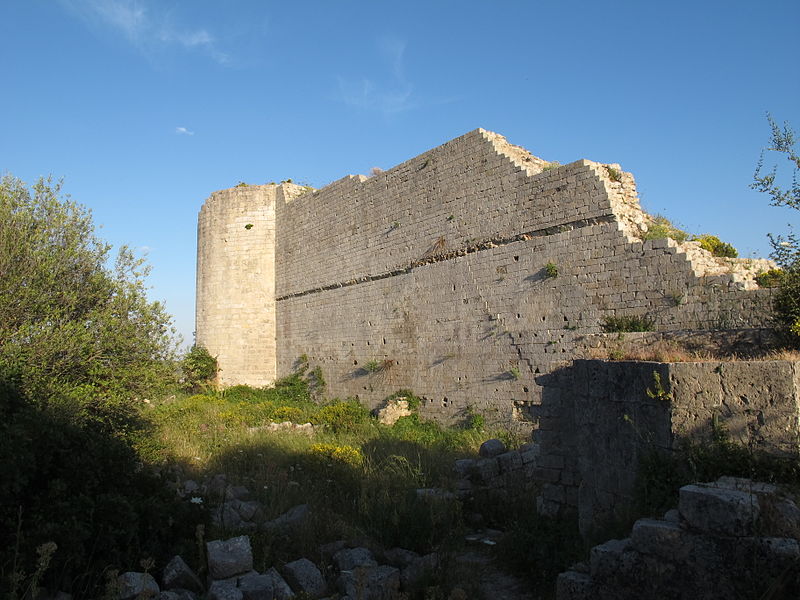
Ruins of the Norman castle in Noto Antica

Featured image, top of page:  New life before the shattered ruins of the old city of Not (Noto Antica), destroyed on January 11, 1693.  The new city of Noto was built, eleven kilometers away

December 11, 1970 The Man who saved a Billion People

It’s hard to get the modern head around the notion of “food insecurity”.  We’re not talking about what’s in the fridge. This is the problem of acute malnutrition, of epidemic starvation, of cyclical famine and massive increases in mortality, due to starvation and hunger-induced disease.

All too often, history is measured in terms of the monsters. The ten worst dictators of the last 1½ centuries account for the loss of nearly 150 million lives. Most of us remember their names. At least some of them. Who remembers the name of the man who Saved the lives of seven times the number, of this whole Parade of Horribles, put together?

3fd1fec87a98191d70a45bd887bacca8

We live in a time and place where the National Institutes of Health (NIH) can report “The U.S. is one of the wealthiest countries in the world and accordingly has high obesity rates; one-third of the population has obesity plus another third is overweight”.

It wasn’t always so. In 1820, 94% of the world’s population lived in “absolute poverty.” American economic historian and scientist Robert Fogel, winner of the 1993 Nobel Prize in Economics, wrote that: “Individuals in the bottom 20% of the caloric distributions of France and England near the end of the eighteenth century, lacked the energy for sustained work and were effectively excluded from the labor force.”

It’s hard to get the modern head around the notion of “food insecurity”.  We’re not talking about what’s in the fridge. This is the problem of acute malnutrition, of epidemic starvation, of cyclical famine and massive increases in mortality, due to starvation and hunger-induced disease.

Nels Olson Borlaug once told his grandson Norman, “You’re wiser to fill your head now if you want to fill your belly later on.” An Iowa farm kid educated during the Great Depression, Norman Ernest Borlaug periodically put his studies on hold, in order to earn money. A Civilian Conservation Corps leader working with unemployed people on CCC projects, many of his co-workers faced persistent and real, hunger. Borlaug later recalled, “I saw how food changed them … All of this left scars on me”.

norman-borlaug1Borlaug earned his Bachelor of Science in Forestry, in 1937. Nearing the end of his undergraduate education, he attended a lecture by Professor Elvin Charles Stakman discussing plant rust disease, a parasitic fungus which feeds on phytonutrients in wheat, oats, and barley crops.

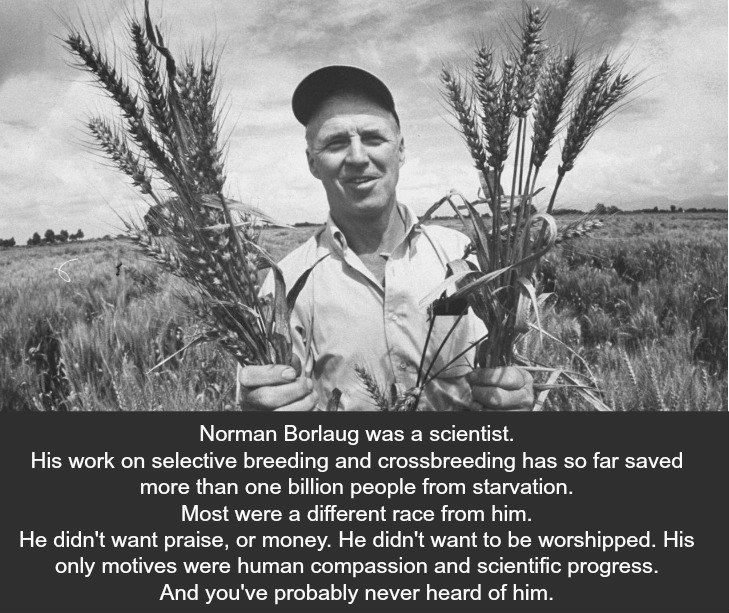

Stakman was exploring special breeding methods, resulting in rust-resistant plants. The research greatly interested Borlaug, who later enrolled at the University of Minnesota, to study plant pathology under Stakman. Borlaug earned a Master of Science degree in 1940, and a Ph.D. in plant pathology and genetics, in 1942.

Borlaug attempted to enlist in the military following the attack on Pearl Harbor, but his application was rejected under wartime labor regulations. He was put to work in a lab, doing research for the United States armed forces.

Between 1939 and ’41, Mexican farmers suffered major crop failures, due to stem rust. In July 1944, Borlaug declined an offer to double his salary, traveling instead to Mexico City where he headed a new program focusing on soil development, maize and wheat production, and plant pathology.

borlaug_2

“Pure line” (genotypically identical) plant varieties possess only one to a handful of disease-resistance genes. Random mutations of rusts and other plant diseases overcome pure line survival strategies, resulting in crop failures. “Multi-line” plant breeding involves back-crossing and hybridizing plant varieties, transferring multiple disease-resistance genes into recurrent parents. In the first ten years Borlaug worked for the Mexican agricultural program, he and his team made over 6,000 individual crossings of wheat. Mexico transformed from a net-importer of food, to a net exporter.

In the early sixties, Borlaug’s dwarf spring wheat strains went out for multi-location testing around the world, in a program administered by the US Department of Agriculture. In March 1963, Borlaug himself traveled to India with Dr. Robert Glenn Anderson, along with 220-pounds of seed from four of the most promising strains.

aaa

The Indian subcontinent experienced minor famine and starvation at this time, limited only by the US’ shipping 1/5th of its wheat production into the region in 1966 – ’67. Despite resistance from Indian and Pakistani bureaucracies, Borlaug imported 550 tons of seeds.

American biologist Paul Ehrlich wrote in his 1968 bestselling book The Population Bomb, “The battle to feed all of humanity is over … In the 1970s and 1980s hundreds of millions of people will starve to death in spite of any crash programs embarked upon now.” Ehrlich went on: “I have yet to meet anyone familiar with the situation who thinks India will be self-sufficient in food by 1971…India couldn’t possibly feed two hundred million more people by 1980.”

Ehrlich could not have been more comprehensively wrong.

topimg_25013_dr_norman_borlaug

Borlaug’s initial yields were higher than any other crop, ever harvested in South Asia. Countries from Pakistan to India to Turkey imported 80,000 tons and more of seeds. By the time of Ehrlich’s book release in 1968, massive crop yields had substituted famine and starvation, with a host of new problems. There were labor shortages at harvest, and insufficient numbers of bullock carts to haul it to the threshing floor. Jute bags were needed, along with trucks, rail cars, and grain storage facilities. Local governments even closed school buildings, to use them for grain storage.

norman-borlaug-001

In three years, the world increase in cereal-grain production was nothing short of spectacular, dubbed a “Green Revolution”.   Borlaug won the Nobel Peace Prize in 1970, protesting to be only “one member of a vast team made up of many organizations, officials, thousands of scientists, and millions of farmers – mostly small and humble…”

BORLAUG ATTEND QPM MAIZE FIELD IN GUIZHOU-bf3726c08c
Norman Borlaug works with Chinese agricultural leaders, 1974

With mass starvation or widespread deforestation being the only historic alternatives, the “Borlaug Hypothesis” introduced a third option, that of increasing yields on existing farmland.  The work however, was not without critics. Environmentalists criticized what they saw as large-scale monoculture, in nations previously reliant on subsistence farming. Critics railed against “agribusiness” and the building of roads through what had once been wilderness.

David Seckler, Director General of the International Water Management Institute said “The environmental community in the 1980s went crazy pressuring the donor countries and the big foundations not to support ideas like inorganic fertilizers for Africa.”

953650D6-9A57-430E-82AE-1803733FC42E_mw1024_s_n-copy
Norman Borlaug, Nobel Prize Acceptance Speech, December 11, 1970

The Rockefeller and Ford foundations withdrew funding, along with the World Bank. Well fed environmentalist-types congratulated themselves on “success”, as the Ethiopian famine of 1984-’85 destroyed over a million lives. Millions more were left destitute, on the brink of starvation.

Borlaug fired back, “[S]ome of the environmental lobbyists of the Western nations are the salt of the earth, but many of them are elitists. They’ve never experienced the physical sensation of hunger. They do their lobbying from comfortable office suites in Washington or Brussels. If they lived just one month amid the misery of the developing world, as I have for fifty years, they’d be crying out for tractors and fertilizer and irrigation canals and be outraged that fashionable elitists back home were trying to deny them these things.

Borlaug became involved at the invitation of Ryoichi Sasakawa, chairman of the Japan Shipbuilding Industry Foundation, who wondered why methods used so successfully in Asia, were not being employed in Africa. Since that time, the Sasakawa Africa Association (SAA) has trained over 8 million farmers in SAA farming techniques. Maize crops developed in African countries have tripled, along with increased yields of wheat, sorghum, cassava, and cowpeas.

4fig7

The world population when Ehrlich released his book in 1968, was about 3.53 billion. Today, that number stands at 7.7 billion and, when we hear about starvation, such events are almost exclusively, man-made. The American magician and entertainer Penn Jillette once described Norman Borlaug as “The greatest human being who ever lived…and you’ve probably never heard of him.” Let that be the answer to the self-satisfied and well-fed, environmentalist types.

norman-borlaug-6

“I now say that the world has the technology—either available or well advanced in the research pipeline—to feed on a sustainable basis a population of 10 billion people. The more pertinent question today is whether farmers and ranchers will be permitted to use this new technology? While the affluent nations can certainly afford to adopt ultra low-risk positions, and pay more for food produced by the so-called ‘organic’ methods, the one billion chronically undernourished people of the low income, food-deficit nations cannot.” – Norman Borlaug, 2000

December 9, 1952 Gasping for Air

When such a weather system occurs over areas with high levels of atmospheric contaminants, the resulting ground fog can be catastrophic. 63 people perished during a similar episode in 1930, in the Meuse River Valley area of Belgium. In 1950, 22 people were killed in Poza Rica, Mexico. In 1952, the infamous “Great Smog of London” claimed the lives of thousands, over a course of five days.

schwarzenegger-ap-18337474166966
“Actor Arnold Schwarzenegger delivers a speech during the opening of COP24 UN Climate Change Conference 2018 in Katowice, Poland, Monday, Dec. 3, 2018.
Czarek Sokolowski / AP” H/T CBS News, Inc.

Last week, climate activists and world leaders gathered in Poland to discuss carbon pollution resulting from the use of fossil fuels, and ways to combat what they see as a future of anthropogenic global warming.

Adherents to current climate change theories hold onto such ideas with a fervor bordering on the religious while skeptics raise any number of questions but, one thing is certain. There was a time when the air and water around us was tainted with impunity, with sometimes deadly results.

In 1969, the Cuyahoga River in Cleveland Ohio caught fire, resulting in property damage worth $100,000, equivalent to nearly $700,000, today. The fire resulted in important strategies to clean up the river, but this wasn’t the first such fire. The Cuyahoga wasn’t even the first river to catch fire. There were at least thirteen such incidents on the Cuyahoga, the first occurring in 1868. The Rouge River in Michigan caught fire in the area around Detroit in 1969, and a welder’s torch lit up the Buffalo River in New York, the year before. The Schuylkill River in Philadelphia caught fire from a match tossed into the water, in 1892.

Fire on the Cuyahoga River
Cuyahoga River burning, in 1952. H/T Getty Images

Today, the coal silts, oil and chemical contaminants at the heart of these episodes are largely under control in the developed world, but not the world over. One section of Meiyu River in Wenzhou, Zhejiang China burst into flame in the early morning of March 5, 2014. Toxic chemical pollution and other garbage dumped into Bellandur Lake in Bangalore India resulted in part of the lake catching fire the following year, the fire spreading to the nearby Sun City apartments.

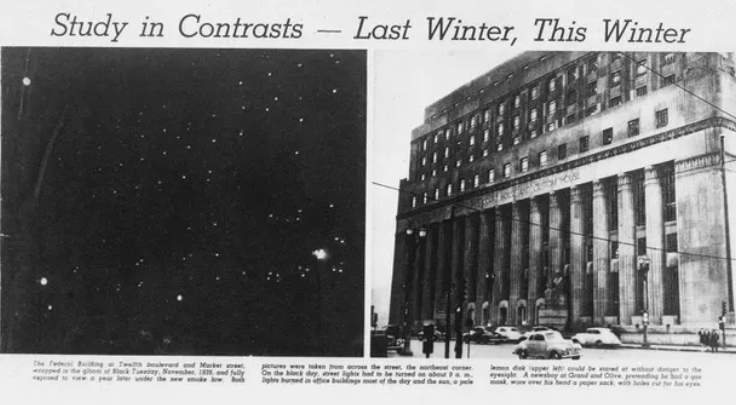
If you happen to visit the “Iron City”, Pittsburgh Pennsylvania, photographs may be found of streetlights turned on in the middle of the day. In November 1939, St. Louis brought a new meaning to the term “Black Tuesday”, when photographs of the Federal building at Twelfth Boulevard and Market Street show the sun little more than a “pale lemon disk” and streetlights on at 9:00 in the morning.

Federal Building, St. Louis

Air pollution turned deadly in the early morning hours of October 26, 1948 when an atmospheric inversion trapped flourine gases over Donora Pennsylvania, home of US Steel Corporation’s Donora Zinc Works and American Steel and Wire. By the 29th, the inversion had trapped so much grime that spectators gathered to watch a high school football game, couldn’t see the kids on the field. The “Death Fog” hung over Donora for four days, killing 22 and putting half the town, in the hospital.

mid-day
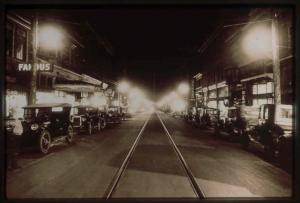
Donora Smog at Midday with streetlights on. H/T Donora Historical Society

The Donora episode was caused by an “anticyclone”, a weather event in which a large high pressure front draws air down through the system and out in a clockwise motion.

When such a weather system occurs over areas with high levels of atmospheric contaminants, the resulting ground fog can be catastrophic. 63 people perished during a similar episode in 1930, in the Meuse River Valley area of Belgium. In 1950, 22 people were killed in Poza Rica, Mexico. In 1952, the infamous “Great Smog of London” claimed the lives of thousands, over a course of five days.

Nelson's_Column_during_the_Great_Smog_of_1952
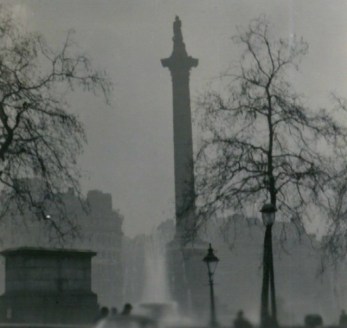
Nelson’s Column during the Great Smog of 1952

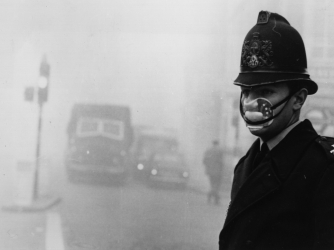
On December 5, a body of cold, stagnant air descended over a near-windless London, trapped under a “lid” of warm air. London had suffered poor air quality since the 13th century and airborne pollutants had combined to create “pea soupers” in the past, but this was unlike anything in living memory. The smoke from home and industrial chimneys and other pollutants such as sulphur dioxide combined with automobile exhaust, with nowhere to go.

Yellow-black particles of the stuff built and accumulated at an unprecedented rate. Visibility was down to a meter and driving all but impossible. Public transportation shut down, requiring those rendered sick by the fog, to transport themselves to the hospital.  Outdoor sporting events were canceled and even indoor air quality, was affected.  Weather conditions held until December 9, when the fog dispersed.

hith-london-fog-2660357-ABThere was no panic, Londoners are quite accustomed to the fog, but this one was different. Over the weeks that followed, public health authorities estimated that 4,000 people had died as a direct result of the smog by December 8, and another 100,000 made permanently ill. Research pointed to another 6,000 losing their lives in the following months, as a result of the event.
More recently, research puts the death toll of the Great Smog at 12,000.

A similar event took place about ten years later in December 1962, but without the same lethal impact. A spate of environmental legislation in the wake of the 1952 disaster began to remove black smoke from chimneys.  Financial incentives moved homeowners away from open coal fires toward less polluting alternatives such as gas or oil, or less polluting coke.

Today, the wealthier, developed nations have made great strides toward improvement in air and water quality, though problems persist in the developing world.  In the United States, the Environmental Protection Agency (EPA) reports that:

“[B]etween 1980 and 2017, gross domestic product increased 165 percent, vehicle miles traveled increased 110 percent, energy consumption increased 25 percent, and U.S. population grew by 44 percent. During the same time period, total emissions of the six principal air pollutants dropped by 67 percent”.

The same report shows that, during the same period, CO2 emissions have increased by 12 percent.  Policy makers continue to wrangle with the long-term effects of carbon.  Now, it’s hard to separate the politics from the science.

While politicians and climate activists jet around the planet to devise trillion dollar “solutions”, let us hope that cooler heads than that of Arnold Schwarzenegger, prevail.  There is scarcely a man, woman or child among us who do not want clean air and clean water, and a beautiful, natural environment around us, for ourselves and our posterity.  It’s only a matter of how we get there.

If you enjoyed this “Today in History”, please feel free to re-blog, “like” & share on social media, so that others may find and enjoy it as well. Please click the “follow” button on the right, to receive email updates on new articles.  Thank you for your interest, in the history we all share.

November 20, 1984 The Search for Extra-Terrestrial Intelligence

“The feeling is constantly growing on me, that I had been the first to hear the greeting of one planet to another.” Nikola Tesla, 1901

In the 5th century BC, the Greek philosopher Democritus taught that the world was made of atoms. Physically indestructible and always in motion, these atoms are infinite in number, differing only in shape and size. Democritus taught that everything around us is the result of physical laws without reason or purpose, the only question to be answered, “What circumstances caused this event?

Philosophers like Aristotle and Socrates took a less mechanistic approach, asking “What purpose did this event serve?” Plato disliked Democritus so much that he wanted to burn all his books.

The prevailing view throughout antiquity was that our planet is special.  That we are alone in the cosmos. Democritus believed there were infinite numbers of worlds such as our own, with inhabitants like ourselves.

screen-shot-2013-08-28-at-2-03-17-pm
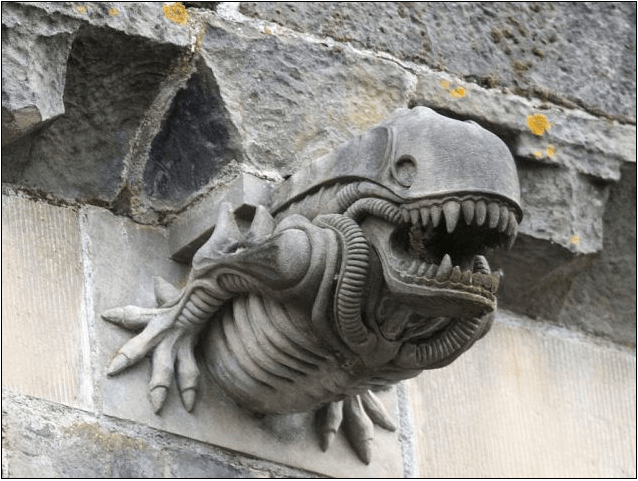
The 13th-century Paisley Abbey in Scotland, had its deteriorating gargoyles refurbished in the 1990s. One of their stonemasons was clearly, an Alien fan

In the time of Copernicus, it was widely believed that there was life on other planets. Astronomers saw several features of the moon as evidence, if not of life, then at least that intelligent life had once paid a visit.

Interest in Mars began to develop in the 1870s, when the Italian astronomer Giovanni Virginio Schiaparelli described physical features of the red planet as “canali”. The word means “channels” in Italian, but it was mis-translated as “canals”. The English speaking world was off to the races.

Speculation and folklore about intelligent life on Mars was soon replaced by the popular near-certainty, that canals were excavated by Martians.

The idea was near-universal by the turn of the century.  In 1900, the French Academy of Science offered a prize of 100,000 francs to the first person to make contact with an alien civilization. Provided that it was anything but Martian. That would have been too easy.

In 1901, Nikola Tesla believed he had picked up electrical disturbances “with such a clear suggestion of number and order”, they could only be signals from Mars. “The feeling is constantly growing on me,” Tesla said, “that I had been the first to hear the greeting of one planet to another. A purpose was behind these electrical signals.”

Guglielmo Marconi said essentially the same in 1919, commenting about “queer sounds and indications, which might come from somewhere outside the earth.”

mars_life

In 1924, the idea was put to the test. American astronomer David Peck Todd believed that martians might well attempt to communicate on the day the two bodies were in closest proximity on August 21, 1924.  The date became “National Radio Silence Day”. Americans were urged to observe “radio silence” for the first five minutes of every hour, while a radio receiver at the U.S. Naval Observatory, two miles aloft on board a dirigible, listened for the signal that never came.

The British author H. G. Wells wrote the War of the Worlds in 1897, telling the story of an alien earth invasion by Martians fleeing the desiccation of their own planet. The story was adapted to a radio drama broadcast on Halloween, 1938, a production so realistic that many listeners sued the network for “mental anguish” and “personal injury”.

The idea of life on Mars persisted until the 1960s, when close observations of the Martian surface were made possible by the Mariner series of spacecraft.

SETI_Logotype_RGB_reduced_resWhile much of “mainstream” science seems to steer clear of the subject, the University of California at Berkeley jumped in with both feet on this day in 1984, founding the SETI Institute for the “sharing [of] knowledge as scientific ambassadors to the public, the press, and the government”.

The Berkeley SETI Research Center conducts a number of search operations at various wavelengths from radio through infrared spectrum and visible light, including:

SERENDIP: Search for Extraterrestrial Radio Emissions from Nearby Developed Intelligent Populations
SEVENDIP: Search for Extraterrestrial Visible Emissions from Nearby Developed Intelligent Populations
NIROSETI: Near-InfraRed Optical Search for Extraterrestrial Intelligence
Breakthrough Listen:  Launched with $100 million in funding in 2016, it is “the most comprehensive search for alien communications to date.”
SETI@home:  A “scientific experiment that uses Internet-connected computers in the Search for Extraterrestrial Intelligence.”

800px-GBT
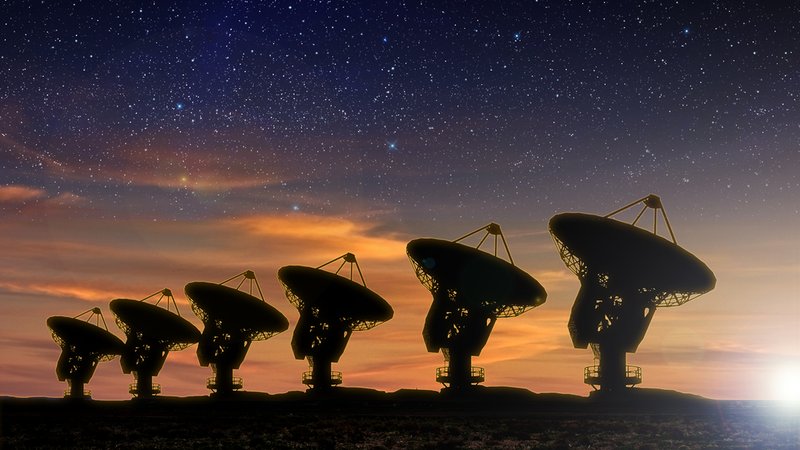
The Robert C. Byrd Green Bank Telescope (GBT) in Green Bank, West Virginia is only one such installation put to use for project Breakthrough Listen, begun in 2016 as “the most comprehensive search for alien communications to date.”

Launched on May 17, 1999 with a worldwide objective of 50,000-100,000 home computers, to date more than 5.2 million SETI@home users have logged over two million years of aggregate computing time. Since the introduction of the Berkeley Open Infrastructure for Network Computing, or “BOINC” (I didn’t make that up), SETI@home users can even compete with one another, to see who can process the most “work units”.

You, too can participate at http://setiathome.berkeley.edu/, on your Windows, Apple or Network PC, or your Sony PlayStation 3.  Don’t try it at work though, an act known as “Borging”.   You might not be “assimilated”, but you will get fired.

Let me know if you make contact.

SETI-at-HOME-SETI@HOME

November 7, 1957 Nuke the Moon

The second Vanguard launch was nearly as bad as the first, exploding in flames only seconds after launch.  Soviet leaders were beside themselves with joy, and stamped the twin disasters “Kaputnik”.  “Flopnik”.

As World War II drew to a close in 1945, there arose a different sort of conflict, a contest of wills, between the two remaining Great Powers of the world. The “Cold War” pitted the free market economy and constitutional republicanism of the United States against the top-down, authoritarian governing and economic models of the Soviet Union. The stakes could not have been higher, as each side sought to demonstrate the superiority of its own technology, military might and, by implication, the dominance of its political and economic system.

American nuclear preeminence lasted but four short years, coming to an end with the first successful Soviet atomic weapon test code named “First Lightning”, carried out on August 29, 1949. Mutual fear and distrust fueled the Soviet-American “arms race”, a buildup of nuclear stockpiles beyond any rational purpose. An entire generation grew up under the shadow of nuclear annihilation.  A single mistake, misunderstanding or one fool in the wrong place at the wrong time, initiating a sequence and bringing about the extinction of life on this planet.

nuclear

The arms race acquired the dimensions of a Space Race on July 29, 1956, when the United States announced its intention to launch an artificial satellite, into earth orbit. Two days later, the Soviet Union announced its intention to do the same.

The early phase of the Space Race was a time of serial humiliation for the American side, the Soviet Union launching the first Inter-Continental Ballistic Missile (ICBM) on August 21, 1957, and the first artificial satellite “Sputnik 1” on October 4.

Laika and capsuleThe first living creature to enter space was the dog Laika“, launched aboard the spacecraft Sputnik 2 on November 3 and labeled by the more smartass specimens among the American commentariat, as “Muttnik”. Soviet propaganda proclaimed “the first traveler in the cosmos”, with heroic images printed on posters, stamps and matchbook covers. The American news media could do little but focus on the politics of the launch, as animal lovers the world over questioned the ethics of sending a dog to certain death, in space.

On the American side, the giant Vanguard series rocket was scheduled to launch the grapefruit-sized test satellite into earth orbit in September, but the program was plagued by one delay after another.  The December 6 launch was a comprehensive disaster, the rocket lifting all of four feet off the pad before crashing to the ground in a sheet of flame, the satellite rolling free where it continued to beep, only feet from the burning wreck.

The second Vanguard launch was nearly as bad, exploding in flames only seconds after launch.  Soviet leaders were beside themselves with joy, and stamped the twin disasters “Kaputnik”.  “Flopnik”.

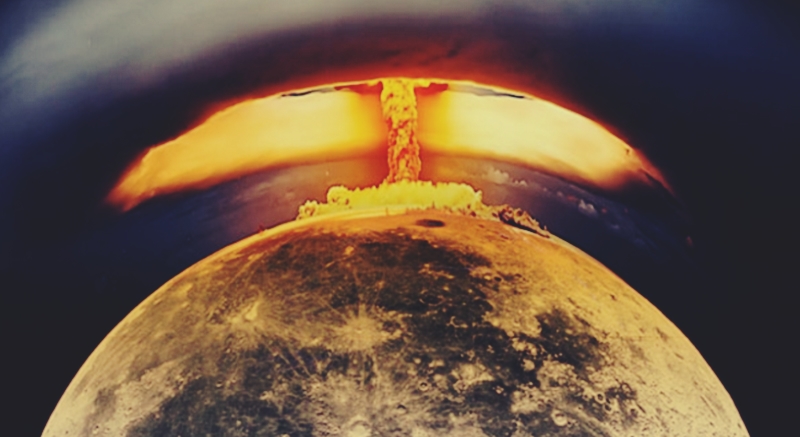
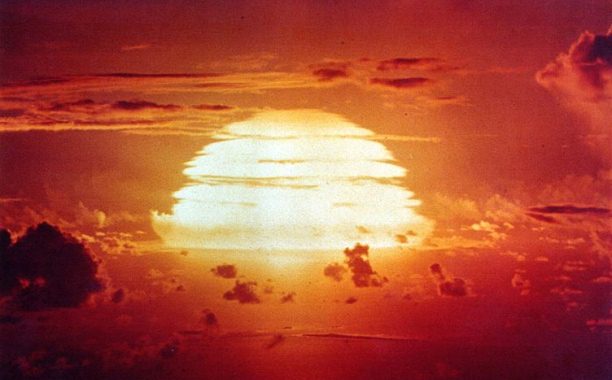
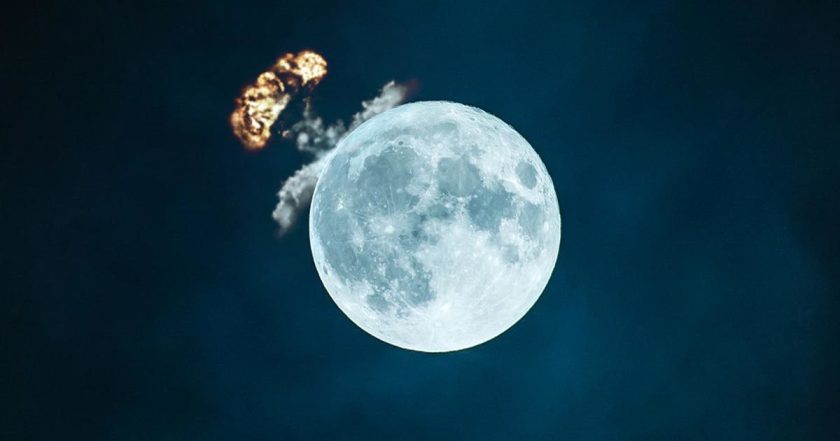
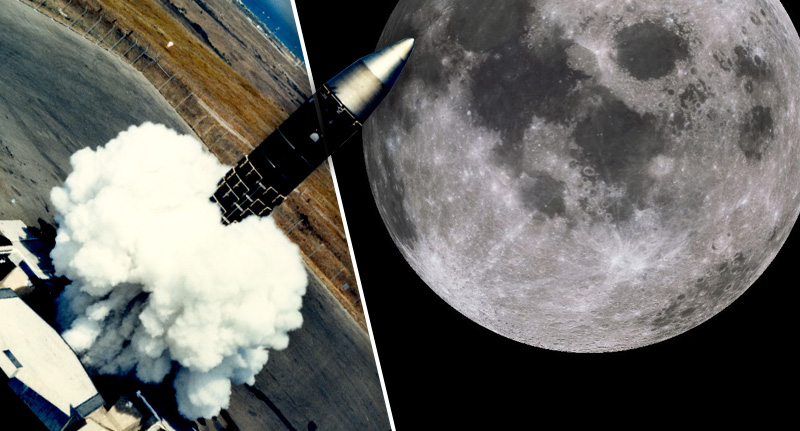
Out of this mess emerged an idea destined to go down in the Hare-Brain Hall of fame, if there ever is such a place. A show of force sufficient to boost domestic morale, while showing the Soviets, we mean business. It was the top-secret “Project A119”, also known as A Study of Lunar Research Flights. We would detonate a nuclear weapon, on the moon.

In 1957, newspapers reported a rumor that the Soviet Union planned a nuclear test explosion on the moon, timed to coincide with the lunar eclipse of November 7, and celebrating the anniversary of the Glorious October Revolution. Edward Teller himself, the ‘Father of the H-Bomb” is said to have proposed such an idea as early as February, to test the effects of the explosion in a vacuum, and conditions of zero gravity.

644962_v1

Today, we take for granted the massively complex mathematics, involved in hitting an object like the moon. In 1957 there was a very real possibility of missing the thing, and the bomb returning to earth.

Though the information is still classified, the project was revealed in 2000 by former NASA executive Leonard Reiffel, who said he was asked to “fast track” the program in 1958, by senior Air Force officials. A young Carl Sagan was all for the idea, believing at the time that living microbes may inhabit the moon, and a nuclear explosion may help in detecting such organisms.

In an interview with the Guardian newspaper, Reiffel said “It was clear the main aim of the proposed detonation was a PR exercise and a show of one-upmanship. The Air Force wanted a mushroom cloud so large it would be visible on earth. The US was lagging behind in the space race.” The now-retired NASA executive went on to explain that “The explosion would obviously be best on the dark side of the moon and the theory was that if the bomb exploded on the edge of the moon, the mushroom cloud would be illuminated by the sun.”

The Air Force canceled the A119 program in 1959, apparently out of concern that a ‘militarization of space’ would create public backlash, and that nuclear fallout may hamper future research and even colonization efforts, on the moon.

moon-nuke_wikimedia-commons_fb

Previously secret reports revealed in 2010 that Soviet leaders had indeed contemplated such a project, part of a multi-part program code named “E”.  Project E-1 involved reaching the moon, while E-2 and E-3 focused on sending a probe around the far side of the celestial body. The final stage, project E-4, involved a nuclear strike on the moon as a “display of force”.

Construction plans for the aforementioned Hare-Brain Hall of Fame have yet to be announced but, it appears the place may need another wing.

If you enjoyed this “Today in History”, please feel free to re-blog, “like” & share on social media, so that others may find and enjoy it as well. Please click the “follow” button on the right, to receive email updates on new articles.  Thank you for your interest, in the history we all share.

October 20, 1937 Albert’s Swarm

Imagine a world with no grocery stores, and watching your food, All of it, disintegrate, before your eyes.

Between 1932 and 1943, children’s author Laura Ingalls Wilder published a series of eight novels, a fictionalized autobiography based on the childhood experiences of a 19th century pioneer and settler family. Third in the series is the best known, Little House on the Prairie, the subject for a television series running from 1974 to ’83.

In her fourth book, Wilder tells of the time when grasshoppers wiped out a much-anticipated and badly needed wheat crop, laying so many eggs that all hope was gone for the following year, as well.  On the Banks of Plum Creek, published  this day in 1937, told the story of “Pa” having to walk three-hundred miles east to find work on farms, which had escaped the plague of grasshoppers.

There are something like 11,000 species of grasshoppers in the world, the familiar, plant munching insects of our summer fields.  They are vegetarian creatures with polyphagous food habits, meaning they’ll eat just about anything, if the need arises.

SA4.9 r132
Rocky Mountain locust, Melanoplus spretus, photographed in 1870s, Minnesota

Usually a solitary creature, only a few species will become locusts, the “gregarious” phase of the insect’s life cycle characterized by swarming, migration, and accompanied by explosive growth in population.

The two years in Wilder’s story, 1874 – ’75, are among the worst swarms on record for the Rocky Mountain Locust, Melanoplus spretus.  

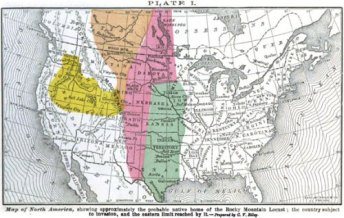
M. Spretus finds its home in the fertile valleys of the Rocky Mountains, but outbreaks of the insect have caused farm damage as far away as Maine in the period 1743–’56, and in Vermont during the administration of President George Washington.

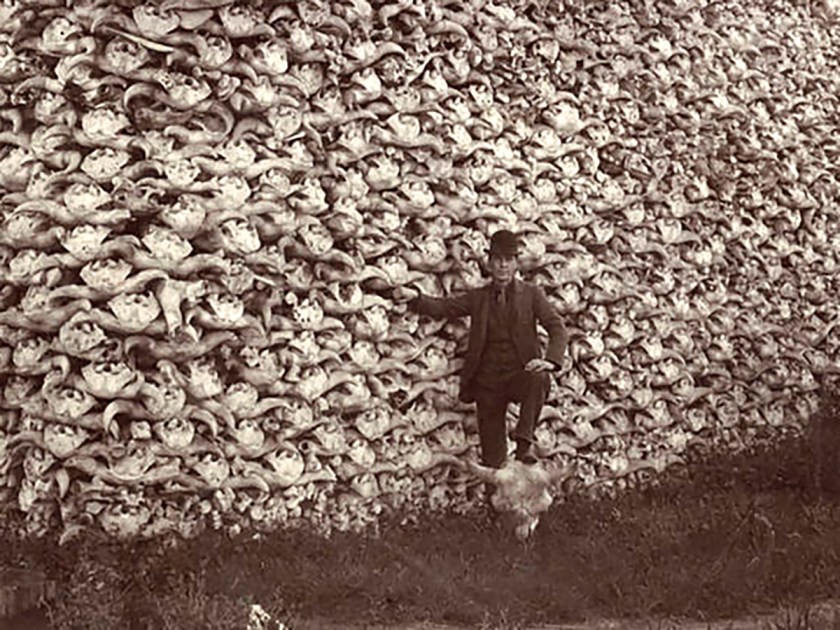
When President Thomas Jefferson sent Lewis & Clark off on the Corps of Discovery expedition, vast herds of American bison stretched from horizon to horizon, as far as the eye could see. Historians estimate 30 to 60 million of the creatures, each weighing up to 2,000 pounds and measuring twelve-feet long. A minimum of sixty billion pounds of biomass, needing something to eat.

The western artist George Catlin estimated that, by 1841, some two to three million of the creatures had been slaughtered for their hides. Bison populations came under increasing pressure as natives acquired horses and guns, but the real slaughter began with the Indian wars and “hunting by rail”, when every dead buffalo was seen as a dead Indian.  By the late 1880s, only a few hundred individuals remained alive, in Yellowstone National Park.

Mountain-of-American-Bison-Skulls-2
A mountain of bison skulls

With the bison gone and a new wave of vegetation, there arose a new and very different multitude, to feed on it.

During the 19th century, farming expanded westward into the grasshopper’s favored habitat, triggering massive outbreaks in their numbers.  Locust populations exploded to varying degrees in 1828, ’38, ’46, and ’55, affecting areas throughout the West and upper mid-west. Plagues visited Minnesota in 1856–’57 and again in the last year of the Civil War.  Nebraska suffered repeated infestations between 1856 and ’74.

Rocky_Mountain_Locust_oviposition
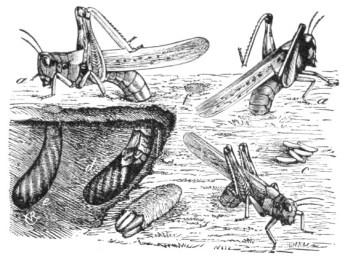
Illustration of egg-laying females, from 1877

Population blooms of two years are typical, as eggs laid in year one tend not to thrive as well as their parents.  At its height, farmers reported finding up to 150 egg cases per square inch, each containing 100 eggs or more.

In 1875, Doctor Albert L. Child of the U.S. Signal Corps watched a mile-high swarm of locusts pass overhead, for five days straight. Together with telegraph reports from neighboring towns, Child estimated the swarm to be 110 miles wide and 1,800 miles long. 198,000 square miles, one-third the size of Alaska, or the combined landmass of our thirteen smallest states.  It was a rolling flood, the size of California and Maine, put together.

The numbers are so far outside of human experience, they are hard to get your head around. For a little perspective, a million seconds is about twelve days. A Billion seconds ago, Jimmy Carter was President of the United States. A Trillion seconds ago, the oldest known clay object was fired to ceramic in the earliest oven.  It was 29,000, B.C. ”

Albert’s Swarm” was the largest such assembly of organisms in recorded history, estimated at 12½ Trillion individuals.

Exam29072013Locusts_large

It was a biological wildfire, a living blizzard that blotted out the sun, 12½ trillion insects each the size of a child’s finger, and each driven to eat its own weight.  Every day.  All in, Albert’s Swarm is estimated to have weighed 27½ million tons.

As the continuous track of a bulldozer moves ever forward, the leading edge of the swarm would alight to rest and eat, only to pick up the rear, a few days later.  In this manner, the swarm would cover ten miles or so, in a few weeks.

One farmer reported that the locusts seemed “like a great white cloud, like a snowstorm, blocking out the sun like vapor“.  Even the sound was horrific, rising to a scream and rolling over the land like some evil tide, the whirring and rasping cacophony of billions of mandibles borne aloft to eat, almost literally, everything in sight. Native populations could and did, move.  For prairie settler and pioneer families, home was on the farm.

Imagine a world with no grocery stores, and watching your food, All of it, disintegrate, before your eyes. Standing crops were the first to go, and then the root vegetables, potatoes, carrots and turnips, eaten out of the ground. Throw a blanket over your garden to protect even that little bit, and they would eat the blanket. Fence posts, saddles, nothing was off limits.  These creatures would eat the wool, right off of your sheep.  At its worst, the locust horde was known to eat the clothes off of people’s backs.

Trains were literally stopped in their tracks on uphill stretches of rail, unable to gain traction for the grease of millions of tiny bodies, ground beneath their wheels.

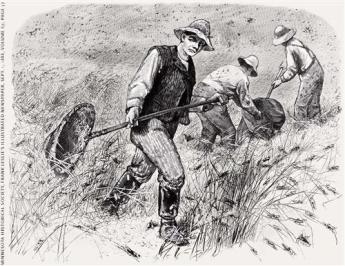
rocky-mountain-locust-1Farmers used gunpowder, fire and water, anything they could think of, to destroy what could only be seen as a plague of biblical proportion. They smeared them with “hopperdozers”, a plow-like device pulled behind horses, designed to knock jumping locusts into a pan of liquid poison or fuel, or even sucking them into vacuum cleaner-like contraptions.
Still, it was like trying to turn the tide, with a shot glass.  Missouri entomologist Charles Valentine Riley came up with a recipe to eat the damned things, seasoned with salt and pepper and pan-fried in butter. Some bought the recipe, but many felt they “would just as soon starve as eat those horrible creatures”.

In 1877, a Nebraska law required everyone between the ages of 16 and 60 to work at least two days eliminating locusts, or face a $10 fine. Missouri and other Great Plains states offered bounties: $1 a bushel for locusts gathered in March, 50¢ in April, 25¢ in May, and 10¢ in June.

map-from-the-locust-plagueAnd then the locust went away, and no one is entirely certain, why.  It is theorized that plowing, irrigation and harrowing destroyed up to 150 egg cases per square inch, in the years between swarms. Great Plains settlers, particularly those alongside the Mississippi river, appear to have disrupted the natural life cycle.  Winter crops, particularly wheat, enabled farmers to “beat them to the punch”, putting away stockpiles of food before the pestilence reached the swarming phase.

Today, the Rocky Mountain Locust is extinct.  Several grasshopper species swarm as locusts on every continent in the world, save for North America and Antarctica.   The last living specimen of the Rocky Mountain Locust was seen in Canada, in 1902.

Feature image, top of page:  A child swings a broomstick at a 4-mile wide swarms of locusts, plaguing Argentina.  H/T Business Insider

October 1, 1876 Piano Man

To his detractors, Lick was a disagreeable miser. Eccentric, selfish, reclusive.  Even “touched in the head,” but absolutely honest and an astute businessman.  At the end of his life, he confounded them all, using his considerable fortune to benefit his adopted state of California.

If you’ve never explored your own genealogy, I highly recommend it. One of the more enjoyable aspects of shaking the family tree, is getting to know the people who fall out of it. I have the family genealogist, the man for I am namesake, to thank for this one.  Lieutenant Colonel United States Army (retired), Richard B. “Rick” Long, Sr., 2/25/37 – 3/31/18.  Rest in Peace, Dad.  You left us too soon.

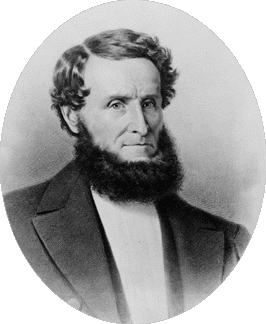
James Lick was born in Stumpstown, Pennsylvania, now Fredericksburg, in the late days of the Washington administration. Lick’s grandfather William served in the Revolution and his son John went on to serve in the Civil War.  James himself was a carpenter’s son, who learned the trade of fine cabinet making, from his earliest days.

As a young man, Lick fell in love with Barbara Snavely, the daughter of a local miller.  When she became pregnant with his child he asked for her hand in marriage, only to be rudely rebuffed by her father.  When Lick owned a plant as large and opulent as his own, then and only then could James have his daughter’s hand in marriage.

Humiliated, Lick moved to Baltimore at age 21, where he learned to make pianos. He became quite skilled at the craft and moved to New York to set up his own piano shop.

On learning that his pianos were being exported to South America, Lick moved to Argentina to pursue the business.  Despite his poor Spanish his piano business thrived, though unstable Argentinian politics sometimes made things difficult.

James_LickIn 1825, Lick left Buenos Aires, for a year-long tour of Europe. This was the time of the Brazilian War for Independence, and Portuguese authorities captured his ship on its return.
Passengers and crew were incarcerated in a POW camp in Montevideo, though Lick himself would later escape and returned on foot, to Buenos Aires.

Having made his first fortune, Lick briefly returned to Stumpstown, to claim his bride and now-fourteen year old son, only to learn that she had married another.   James Lick returned to Buenos Aires, later moving his business to Valparaíso, Chile and finally to Lima, Peru.  He would never marry.

Anticipating the Mexican American War and the annexation of California, Lick moved to San Francisco in 1846 with his tools, $30,000 in gold, and 600lbs of chocolate.

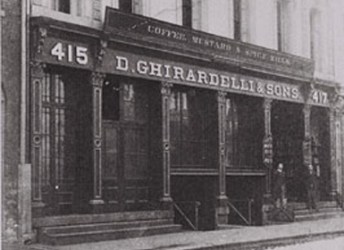
Lick had a backlog of piano orders at the time which he was forced to build himself, when his workers returned home to join the Mexican army. The chocolate sold so quickly, that Lick convinced his friend and confectioner, an Italian émigré to Peru, to come set up shop in California. The man’s name is recognizable to chocolate lovers, the world over. He was Domingo Ghirardelli

GS_oldstore_History_0Gold was discovered at Sutter’s Mill, shortly after Lick’s arrival. He caught a little of the gold fever himself, but soon learned that he could make more money buying and selling land, rather than digging holes in it.

San Francisco was a small village in 1848. By 1850 the population had reached 20,000. Lick bought up land around San Jose and planted orchards of apricots, plums and pears.  It was here in Santa Clara county that Lick took his revenge on the long-dead Pennsylvania miller, spending the unheard-of sum of $200,000 and building the largest flour mill, then in the state.

In 1855, the now-37 year old John Lick came to live with the father he never knew.  The elder man had requested he do so, but the son didn’t get along with his cantankerous father, and soon returned “back east”.

Lick began construction of a Grand Hotel in 1861, with a 400 seat dining room straight out of the Palace at Versailles.  Many considered the “Lick House” to be the finest hotel west of the Mississippi River.

Lick House

“The opulent dining room of The Lick House hotel on Montgomery at Sutter seated 400 and boasted walls and floors of exotic woods and three crystal chandeliers imported from Venice”, H/T sfcityguides.com

James Lick suffered a massive stroke in 1874. At the time, this carpenter’s son was the wealthiest man in California, his estates including much of San Francisco and Santa Clara County, all of Catalina Island and large holdings outside of Lake Tahoe.

To his detractors, Lick was a disagreeable miser. Eccentric, selfish, reclusive.  Even “touched in the head,” but absolutely honest and an astute businessman.  At the end of his life, he confounded them all, using his considerable fortune to benefit his adopted state of California.

For years, Lick had harbored an interest in astronomy.  President of the California Academy of Sciences George Davidson persuaded him to leave the majority of his fortune, to building the most powerful telescope then in existence.

Lick placed $2,930,654 into the hands of seven trustees, equivalent to $64 million today, with specific instructions for how the funds were to be used:

“$700,000 to the University of California for the construction of an observatory and the placing therein of a telescope to be more powerful than any other in existence. $150,000 for the building and maintenance of free public James Lick Baths in San Francisco. $540,000 to found and endow an institution of San Francisco to be known as the California School of Mechanic Arts. $535,000 for the son he never knew.  $100,000 for the erection of three appropriate groups of bronze statuary to represent three periods in Californian history and to be placed before the city hall of San Francisco. $60,000 to erect in Golden Gate Park, San Francisco, a memorial to Francis Scott Key, author of The Star-Spangled Banner”.

In 1875, Thomas Fraser recommended a site for the telescope on the 4,209′ summit of Mount Hamilton, near San Jose. Lick approved the location, provided that Santa Clara County build a “first class” road to the site. The county agreed and the road was completed in the fall of 1876.

On this day in 1876, James Lick died in his room at the Lick House.  His life’s great project was completed eleven years later. With a 36” lens, the “Great Lick Refractor” was, for its time, the largest refracting telescope in the world.

800px-Lick_Observatory
Lick Observatory as it looked, in 1900

Today, the University of California’s “Lick Observatory” operates a 120-inch (3.0-meter) reflecting telescope, polished and ground on-site from a 10,000-pound Corning Labs glass test blank.  At the time of its commissioning in 1959, it was the second-largest telescope anywhere and remains to this day, the 3rd largest refracting telescope in the world.

According to his last wishes, the body of James Lick lies entombed, beneath the floor of the observing room.

If you enjoyed this “Today in History”, please feel free to re-blog, “like” & share on social media, so that others may find and enjoy it as well. Please click the “follow” button on the right, to receive email updates on new articles.  Thank you for your interest, in the history we all share.

September 15, 1916 Tanks of the Great War

At first code-named “Water Carriers”, no self-respecting Brit wanted to be riding around in a “WC”, (“Water Closet”), so it was that these contraptions were destined to be known as “Water Tanks”, or just plain Tanks.

Leonardo da Vinci drew sketches of a man-powered, wheeled vehicle encased in armor and bristling with cannon, as early as the 15th century. The design was limited, since no human crew could generate enough power to move it for long, and the use of animals in such confined spaces was fraught with problems..

image11

H.G. Wells’ December 1903 short story “The Land Ironclads”, depicted huge military land vessels, capable of disrupting military defenses and clearing the way for infantry. Wells’ machine was equipped with 8 giant pedrail wheels, each 10′ in height, and armed with cannon and machine-guns.

thelandironcladsEarly armored cars were fine for moving personnel over smooth roads, but there was a need for a vehicle capable of navigating the broken terrain of no man’s land. In the run-up to WWI, several soon-to-be belligerents were conducting experiments with “land ships”, with varying degrees of success.


ILN0-1919-0517-0008-001-004

A French captain named Levavasseur proposed a crawler-tracked armored vehicle equipped with artillery as early as 1903, but the project was abandoned by the Artillery Technical Committee. Later French attempts included the Breton-Pretot machine, sporting huge 10’ x 13’ tracks and the Aubriot-Gabet “Fortress”. Electrically powered, each of these things required its own power supply cable. Needless to say, the idea was not widely imitated.

tumblr_njssestuEC1s7e5k5o1_1280

In 1911, Austrian engineering officer Günther Burstyn and Australian civil engineer Lancelot de Mole independently developed working models of such vehicles, but both designs were rejected by their governments. They too would never be built.

Tsar_tankThe most unusual tank of WWI was the tricycle designed “Lebedenko” or “Tsar Tank”. Developed by pre-Soviet Russia, the armament and crew quarters on this thing were 27′ from the ground, making them irresistible targets for enemy artillery.

Russian shipyard engineer Vasily Mendeleev designed a 170-ton monster while aero-engineer Aleksandr Porokhovschikov developed a small cross-country vehicle running on a single rubber track called the “Vezdekhod”, translating as “He who goes anywhere“.

Vezdekhod_Porokhovshikov

The Russian Revolution would overtake the project before the thing got out of prototype, but post-revolutionary Russian propagandists would seize on the vehicle as “proof” that Russia had designed the first Tank.

1481810086_tritton-trench-crosser-2

The British had the greatest degree of success, after a failed experiment with the “Tritton Trench-Crosser” in May, 1915. This beast had 8′ tractor wheels carrying 15’ girders on a chain, which were lowered into a trench so that the back wheels could roll over it. Girders would then drag behind, until the machine could back over them and rewind.

Caterpillar_3

Finally, British work with the Holt Manufacturing Company of Stockton, California paid off with the most consistently successful track design. These “Caterpillar” treads had long been used on tractors. By 1916, the British army was using about 1,000 of Holt’s Caterpillar tractors on the Western Front.

a-ww1-holt-gun-tractor-towing-a-howlitzer-artillery-gun-replica-passing-E8YFWE

These were the pet project of Winston Churchill, First Lord of the Admiralty, who described them as “Water Carriers” to mask their intended purpose.

battle-cambrai-ww1-007

No self-respecting Brit wanted to be riding around in a “WC”, (“Water Closet”), so it was that these contraptions were destined to be known as “Water Tanks”, or just plain Tanks. The name stuck. The “No1 Lincoln Machine” gave way to “Little Willie” and finally the Mark I “Big Willie”, the familiar Rhomboid shaped caterpillar track design which first appeared on the Somme Front on this day in 1916.

Mark_IV

49 Mark Is were committed in that first tank battle, of which 32 were mechanically sound enough to take part in the advance. German lines fell back in confusion before “der Wagen des Teufels“, “the Devil’s Wagon”, but they were too few to hold.

4266442481_cffb6111dd_b

With no suspension, the bone jarring ride on one of these monsters was just the beginning of what crews were forced to endure.

8e83ac663bebacd82d991cd5da5a3075--british-tanks-wwi-tanks

The interior was so loud that communication was only possible via hand signal. When bullets stuck the metal plates, splinters called “spall” would break away from the interior and fly about the cabin, requiring crew members to protect themselves with thick leather clothing and chain mail masks.

tumblr_m543poyPqo1rxhnogo1_400Interior temperatures rose to 122° Fahrenheit and more, making me wonder if these things weren’t as dangerous to their own crews as they were to the other side.

It was not until November 20 the following year at Cambrai, that the British Tank Corps had their first major success. Over 400 tanks penetrated 6 miles on a 7-mile front. The infantry failed to exploit the tanks’ gains, and almost all territory was recaptured by the Germans. The British scored a far more significant victory on August 8, 1918, with 600 tanks at the Battle of Amiens. General Erich Ludendorff called it a “Black Day” for the German Army.

4182483750_d5b8861719_z

In all, the French fielded about 3,600 light Renault FT tanks in WWI, the British over 2,500 of their heavy Mark I-Vs.

The German General Staff was slow to adopt the tank, concentrating instead on anti-tank weapons. The majority of the 50+/- tanks fielded by Germany in WWI, were captured British vehicles.

mk4germThe only German project to be produced and fielded in WWI was the A7V. They only made 20 of these things in the armored, “Sturmpanzerwagen Oberschlesien“, “Upper Silesia Assault Armored Vehicle” version, and a few more in the unarmored “Überlandwagen”, “Over-land vehicle”, used for cargo transport.

t27It would be very different, in the next war.

If you enjoyed this “Today in History”, please feel free to re-blog, “like” & share on social media, so that others may find and enjoy it as well. Please click the “follow” button on the right, to receive email updates on new articles.  Thank you for your interest, in the history we all share.

September 13, 1987 Things that Glow

The abandoned machine was little more than a radiological time bomb.

220px-Teletherapy_Capsule2.svgOn September 13, 1987, Roberto dos Santos Alves and Wagner Mota Pereira entered the Instituto Goiano de Radioterapia (IGR), bent on theft. The private hospital was permanently closed at the time, and partly demolished. Alves and Pereira were looking for anything they might sell, for scrap.


What they found, was more than either man had bargained for.

At one time, the radiotherapy unit in the central Brazilian city of Goiânia had served untold numbers of oncology patients, using ionizing radiation to control cell growth and even kill off any number of cancers, following surgical removal of the tumor.

Now, the abandoned machine was little more than a radiological time bomb.

Four months earlier, the IGR had attempted to remove their equipment, in the midst of a legal dispute with then-owner of the property, the Society of Saint Vincent de Paul. A court order prevented the removal, as owners of the company wrote letters to the National Nuclear Energy Commission, warning that someone needed to take responsibility “for what would happen with the caesium bomb”.

400px-GoiâniaRadiationsource
“A wheel type radiotherapy device which has a long collimator to focus the radiation into a narrow beam. The caesium chloride radioactive source is the blue rectangle, and gamma rays are represented by the beam emerging from the aperture.” H/T Wikipedia

The radioactive source within the “external beam radio therapy” unit is a “wheel type” canister, with shielding walls of lead and steel and designed to rotate the source material when in use, between storage and irradiation positions.

Alves and Pereira removed the capsule from the heart of the machine, the stainless steel canister containing just over 3-ounces of highly radioactive caesium chloride, an inorganic salt derived from the radioisotope, caesium-137.

The court had posted a security guard, but he or she must have been snoozing, at the time.  The two scavengers placed the canister in a wheel barrow, and brought it to Alves’ home to see what they had found.

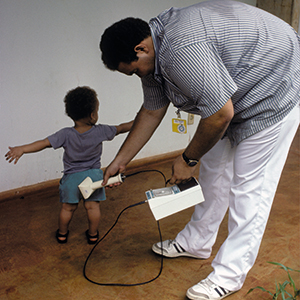
The pair experienced the dizziness and diarrhea of radiation poisoning,  but attributed symptoms to something they ate.  Pereira developed burns on his fingers, the size and shape of the canister’s aperture.  Meanwhile, Alves continued to tinker with the thing, finally freeing the capsule from its protective rotating head.  Poking the capsule with a screwdriver, a dark blue light could be seen from within, the florescence of electromagnetic radiation.

Burns-to-left-hand-after-exposure-to-radiation-source
Radiation burns following exposure to left hand, H/T ResearchGate.net

Radiation burns would cost Pereira his fingers and Alves his right arm, but the two would survive the exposure.  The owner of the scrapyard they sold the thing to, wasn’t so lucky.

goiania_webFive days after the theft, Alves sold the items he had pilfered, to a nearby scrapyard. Noticing the blue glow from the punctured capsule, the scrapyard owner thought the object might be valuable or even supernatural, and took the thing inside. Several rice-sized grains of the glowing material were pried from inside the capsule, as Devair Ferreira (the owner of the scrapyard) invited friends and family to come and see the strange, glowing substance. Ferreira’s brother Ivo brought some of the stuff home to his six-year-old daughter, about the time when Devair’s 37-year-old wife Gabriela, became ill.
It was she who first noticed how many and how quickly, the people around her were getting sick. Too late for Ivo’s daughter Leide, who couldn’t resist rubbing the glowing blue powder on her skin, and showing it to her mother.  Anyone who ever raised a six-year-old daughter, knows what that must have looked like.

750px-INES_en.svg
International Nuclear Event Scale (INES)

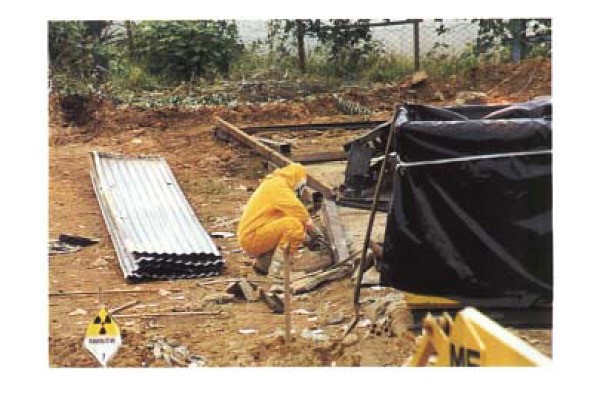
By the time the presence of nuclear radiation was discovered on the 29th, the Goiânia nuclear disaster qualified as a Five on the International Scale of Nuclear Events, the INES.  Tons of topsoil had to be removed from a number of sites, and several houses, demolished.

Goiania-Accident-September-13-1987The incident was broadcast all over Brazil, and 130,000 people people flooded into area hospitals, afraid they had been exposed. One thousand individuals showed greater than background levels of radiation, 249 showed significant signs of contamination.

Four died.  The wife of the scrapyard owner Gabriela, who was first to figure it all out.  Two employees who had worked to remove the lead for its scrap value, Israel dos Santos aged 22 and Admilson de Souza, aged 18.  And that little girl, Leide, who was so happy to see her skin, glowing blue.

In the public civil suit that followed, the three doctors who owned the IGR, were ordered to pay 100,000 Brazilian Real, (equivalent to $24,000 US), for the derelict condition of the building.  The two thieves who stole the stuff in the first place, were never charged.

If you enjoyed this “Today in History”, please feel free to re-blog, “like” & share on social media, so that others may find and enjoy it as well. Please click the “follow” button on the right, to receive email updates on new articles.  Thank you for your interest, in the history we all share.


August 25, 1835 Hoax

Today we hear a lot about ‘Fake News’ but that’s nothing new.  On this day in 1835, the New York Sun published the first of a six-part series, about civilization on the moon.

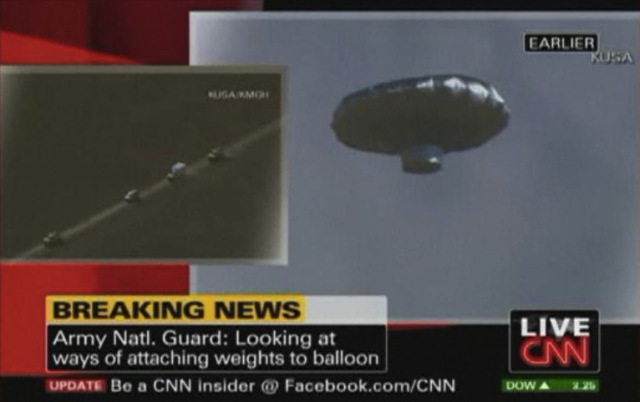
Nine years ago, Richard and Mayumi Heene released a helium-filled gas balloon into the atmosphere, and claimed that their six-year-old son Falcon, was stuck inside. The world looked on in horror, as a young boy soared to altitudes of 7,000-feet. National Guard helicopters and local police, gave chase. The thing flew for more than an hour, only to come down with nobody on board. Rumors quickly turned into “reports”, that an object was seen falling from the balloon. A search was carried out, but revealed nothing.

balloon-boy-sings-metal-song-called-balloon-boy-no-hoax-image-1

Later that day, the kid was found hiding in the attic. He’d apparently been there all day. In an interview with Wolf Blitzer for the Larry King Live television program, Falcon was asked why he’d been hiding. The boy turned to his father: “You guys said that, um, we did this for the show.” Busted. The Balloon Boy Hoax was born, for which Richard Heene was sentenced to 90 days in jail and ordered to pay $36,000, in restitution. Mayumi Heene was sentenced to 20 days in jail, to be served one weekend at a time.

Dino StampsThose of us of a certain age remember the “Thunder Lizard”, the Brontosaurus, that iconic dinosaur seemingly at the center of every museum display. The Sinclair Oil Company adopted the creature as its mascot. The United States Postal Service featured the animal, in a series of commemorative stamps.
Except that – oops – someone had put the wrong head on the thing and, the previously discovered ‘Apatasaurus’ was, in fact, a juvenile specimen of the same animal.

This wasn’t a ‘hoax’ so much as a mistake, forged by the great “Bone Wars”, of the 19th century. Dinosaur enthusiasts accused the Postal Service of fostering ‘scientific illiteracy’. An ironic charge, given the number of museums that had mislabeled the animal, for over a century.

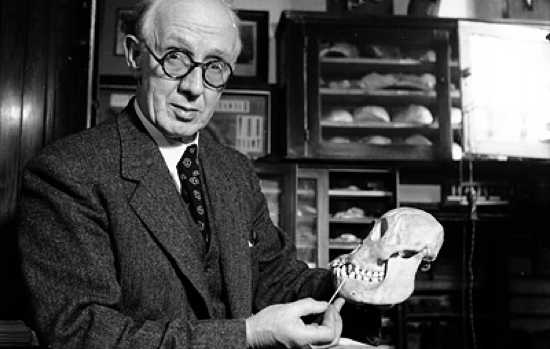
The dearly departed Brontosaurus was more a mistake, than a hoax. Not so “The Earliest Englishman”, a few fossils discovered near the village of Piltdown.  Between 1911-’12,  a portion of a skull was discovered along with a jawbone and a few teeth. It was the ‘missing link’ between apes and humans.  Years of scientific thought would be spent, reconstructing the life and times of ‘Piltdown Man’, and fitting the creature into the narrative of our shared, evolutionary history.

piltdown_man1

In 1953, the British Museum of Natural History revealed the whole thing to have been a fabrication, a clever hoax carried out with modern bones most likely those of an orangutan, and treated with chemicals to make them appear much older.

Today we hear a lot about ‘Fake News’ but that’s nothing new.  On this day in 1835, the New York Sun published the first of a six-part series, about civilization on the moon.

The “Great Moon Hoax”, ostensibly reprinted from The Edinburgh Courant, was falsely attributed to the work of Sir John Herschel, the most prominent astronomer, of his time.

The byline was that of the non-existent Dr. Andrew Grant, ostensibly a colleague of Dr. Herschel.  Herschel had in fact traveled to Capetown South Africa in January 1834, to set up an observatory with a powerful new telescope.

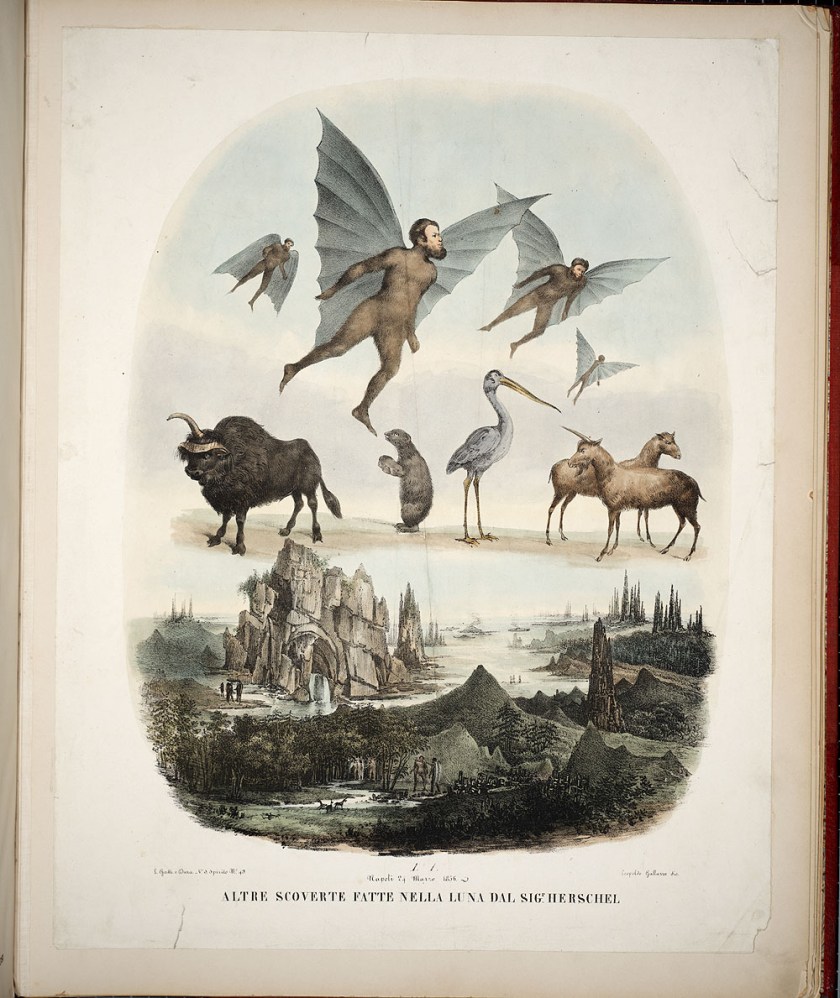
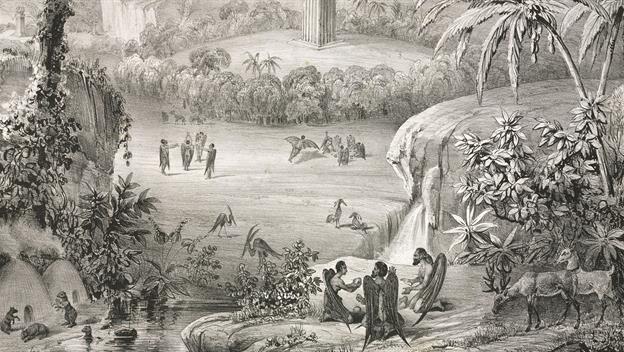
The articles took this one slender reed and ran with it, describing a 24-foot-wide behemoth instrument revealing fantastic creatures on the Moon, including bison, goats, unicorns and a two-legged creature resembling a beaver with no tail, that walked upright and carried its young in the manner of human mothers.   There were temple-building, vegetarian, furry bat-like humanoids, called “Vespertilio-homo”.

SIL7-281-01

The articles described palm trees and lush forests, with flowers and rushing rivers.  There were valleys with melon trees, and all of it witnessed through “an immense telescope of an entirely new principle.”

Readers couldn’t get enough, and circulation figures shot up from day one.  A committee of oh-so serious Yale University scientific types traveled to New York, in search of the Edinburgh Journal articles. Panicked newspaper employees sent these guys back & forth between the printing and editorial offices, hoping to wear them out.  It worked.  The committee returned to New Haven empty handed, never realizing they’d been punked.

tdih-aug25-HD_still_624x352

That September, the Sun admitted the whole thing to have been a gag. Herschel himself knew nothing about it.  The astronomer was amused, noting that nothing in his own work was quite that interesting, but would later become irritated at the incessant questions of those who took the thing seriously.

British journalist and Sun reporter Richard Adams Locke confessed to writing the series, not as a hoax, but as satire. Locke set out to ridicule some of the more outlandish astronomical theories then in publication, by the likes of Munich University professor of Astronomy Franz von Paula Gruithuisen, and his “Discovery of Many Distinct Traces of Lunar Inhabitants, Especially of One of Their Colossal Buildings.”  Of course, it didn’t hurt that such a sensational tale as civilization on the moon, would help sell newspapers.

Be that as it may, readers were amused, and newspaper circulation didn’t suffer. The Sun merged with the New York World-Telegram in 1950, and folded in 1967. The New York Sun newspaper founded in 2002, has no relation to the original.

GettyImages-551428235

If you enjoyed this “Today in History”, please feel free to re-blog, “like” & share on social media, so that others may find and enjoy it as well. Please click the “follow” button on the right, to receive email updates on new articles.  Thank you for your interest, in the history we all share.