

The first automatic bread slicer was invented by Otto Frederick Rohwedder of Davenport, Iowa, in 1912. The idea was not at all popular among bakers, who feared that pre-sliced bread would go stale faster, leading to spoiled inventory and dissatisfied customers.
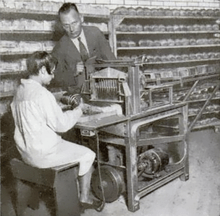 The project almost ended in a fire in 1917, when the prototype was destroyed along with the blueprints. Rohwedder soldiered on, by 1927 he had scraped up enough financing to rebuild his bread slicer.
Frank Bench, a personal friend of the inventor, was the first to install the machine. The first pre-sliced loaf was sold in July of the following year. Customers loved the convenience and Bench’s bread sales shot through the roof.
Sliced bread became a national hit when the Continental Baking Company, then owner of the “Wonder Bread” brand, began using a modified version of Rowhedder’s machine in 1930. Sliced bread was here to stay. Sort of.
The United States had been in WWII for two years in 1943, when Claude Wickard, head of the War Foods Administration as well as Secretary of Agriculture, had the hare brained idea of banning sliced bread.
Mr. Wickard was no stranger to hare brained ideas; it is he who lends his name to the landmark Supreme Court case Wickard v. Filburne. Speaking of hare brained ideas. The Agricultural Adjustment Act of 1938 limited the area that farmers could devote to wheat production, in an effort to stabilize the price of wheat on the national market. An Ohio farmer named Roscoe Filburne was producing more than his allotment. The federal government ordered him to destroy the surplus and pay a fine, even though his “surplus” was being consumed on the farm by the Filburne family and their chickens.
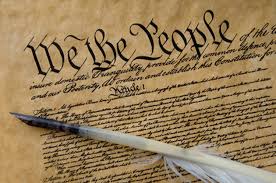 Article 1, Section 8 of the Constitution includes the “Commerce Clause”, permitting the Congress “To regulate Commerce with foreign Nations, and among the several States, and with the Indian Tribes”. That’s it. The Federal District Court sided with the farmer, but the Federal government appealed to the US Supreme Court, arguing that, by withholding his surplus from the interstate wheat market, Filburne was effecting that market, and therefore fell under federal government jurisdiction under the commerce clause.
The United States Supreme Court, apparently afraid of President Roosevelt and his aggressive and illegal “court packing” scheme, ruled against the farmer. Ever since, what you don’t do can be argued in a court of law to affect interstate commerce, putting what you didn’t do under the jurisdiction of the federal government. Get it? Neither do I, but I digress.
Back to Mr. Wickard, who enacted his ban against sliced bread and put it into effect on January 18, 1943. The push-back, as you might guess, was immediate and vehement. One woman wrote to the New York Times: “I should like to let you know how important sliced bread is to the morale and saneness of a household. My husband and four children are all in a rush during and after breakfast. Without ready-sliced bread I must do the slicing for toast—two pieces for each one—that’s ten. For their lunches I must cut by hand at least twenty slices, for two sandwiches apiece. Afterward I make my own toast. Twenty-two slices of bread to be cut in a hurry!”
The stated reasons for the ban never did make sense. At various times, Wickard claimed that it was to conserve wax paper, wheat and steel, but one reason was goofier than the one before. According to the War Production Board, most bakeries had plenty of wax paper supplies on hand, even if they didn’t buy any. Furthermore, the federal  government had a billion bushels of wheat stockpiled at the time, about two years’ supply, and the amount of steel saved by not making bread slicers has got to be marginal, at best.
The ban was rescinded on March 8, 1943, and pre-sliced bread was once again available to the federal government and its subjects. There’s no telling who first used the expression “the greatest thing since sliced bread”, but a reasonable guess may be made as to why.


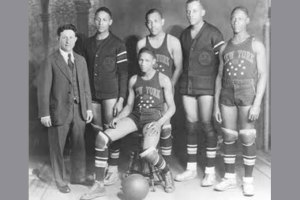
 multi-sport athlete and teammate of Satchel Paige, Tatum would entertain the crowd with comedic routines whenever he put a runner out. He was 6’4″ with an 84″ wingspan, able to touch his knees without bending. He’s credited with inventing the hook shot, an early version of the “skyhook” that would make Kareem Abdul-Jabbar famous, 30 years later.
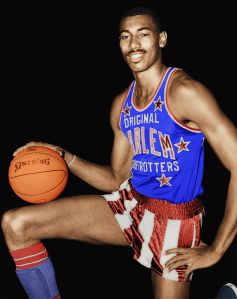
 third Caucasian, the first-ever white player to be offered a contract, Bob Karstens. Karstens was the newest showman on the team, creating the signature pregame “Magic Circle,” the behind-the-back backhand shot, the “yo-yo” basketball and the “goofball,” a basketball filled with weights to give it a crazy bounce. It was the early 1940s and the Harlem Globetrotters were the most famous, and the most profitable, professional basketball franchise in the world.
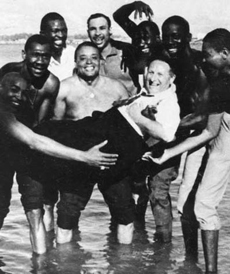 Abe Saperstein passed away in 1966, aged 63. The owner and founder of the Harlem Globetrotters, he was also founder and first Commissioner of the American Basketball League, and inventor of the three point shot. Elected to the Basketball of Fame in 1971. Here’s a great trivia question for you. At 5’3″, Saperstein is the shortest male member in the place. In 2005, he was inducted into the National Jewish Sports Hall of Fame.


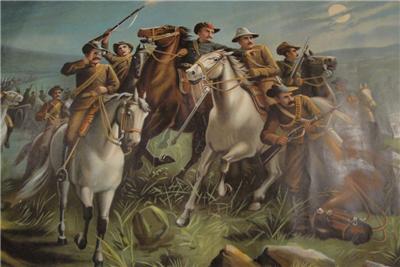
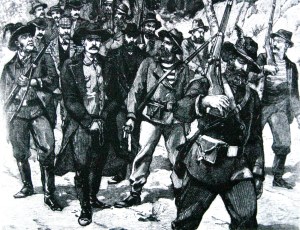 the raiders entered Pretoria on January 2, in chains. The Transvaal government received almost £1 million compensation from the British South Africa Company, turning their prisoners over to be tried by the British government. Jameson was convicted of leading the raid and sentenced to 15 months in prison. During the whole ordeal, he never revealed the degree to which British politicians supported the raid, or the way they betrayed him in the end.


 Ambrose Bierce was born in Horse Cave Creek, Ohio, to Marcus Aurelius and Laura Sherwood Bierce, the 10th of 13 children, all with names beginning with the letter “A”.
 number on speed dial. In Bierce’s day, he’d better carry a gun. Ambrose Bierce didn’t shy away from politics, he jumped right in, frequently using a mock dictionary definition to lampoon his targets. One example and my personal favorite, is “Politics: A strife of interests masquerading as a contest of principles. The conduct of public affairs for private advantage”.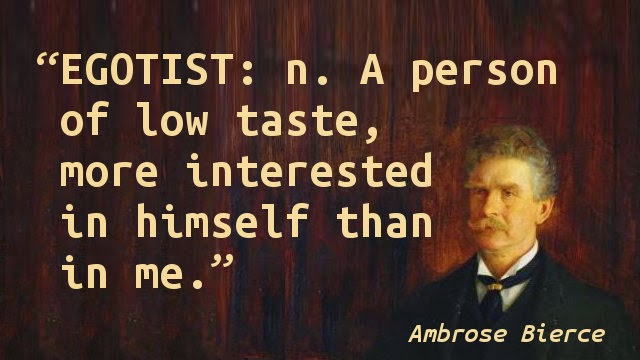
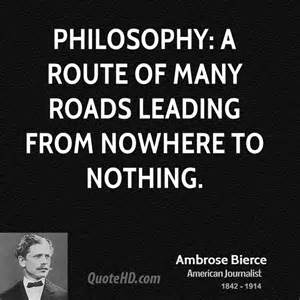 off limits. Politics was a favorite target of his columns, such as: “CONSERVATIVE, n: A statesman who is enamored of existing evils, as distinguished from the Liberal who wishes to replace them with others”, or “POLITICIAN, n. An eel in the fundamental mud upon which the superstructure of organized society is reared. When he wriggles he mistakes the agitation of his tail for the trembling of the edifice. As compared with the statesman, he suffers the disadvantage of being alive”.
 Gwinnett Bierce was executed by firing squad in the town cemetery. It’s as good an ending to this story as any, as one hundred and three years ago today is as good a day as any on which to end it. The fact is that in that 103 years, there’s never been a trace of what became of him, and probably never will be.


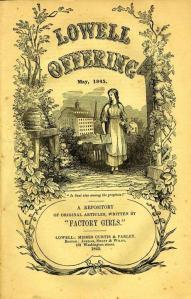 He left with a copy of “The Lowell Offering”, a literary magazine written by those same mill girls, which he later described as “four hundred good solid pages, which I have read from beginning to end.”


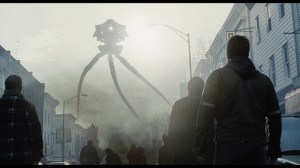 The British author H. G. Wells wrote The War of the Worlds in 1897, telling the story of an alien invasion of earth by Martians fleeing from the desiccation of their planet. The story was adapted to a radio drama broadcast on Halloween, 1938, so realistic that many listeners sued the network for “mental anguish” and “personal injury”.
 California at Berkeley is running a “distributed computing effort” to identify extraterrestrial life, called SETI@home. With an original objective of 50,000-100,000 home computers, SETI@home currently operates on over 5.2 million computers. With the introduction of the Berkeley Open Infrastructure for Network Computing, or “BOINC” (I didn’t make that up), SETI@home users can even compete with one another, to see who can process the maximum number of “work units”.
 The website explains their mission: “SETI@home is a scientific experiment that uses Internet-connected computers in the Search for Extraterrestrial Intelligence (SETI). You can participate by running a free program that downloads and analyzes radio telescope data”.
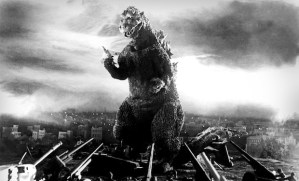 The original Godzilla (“ɡodʑiɽa”) was awakened by atomic testing and impervious to any but a nuclear weapon. Emerging from the depths with his atomic breath, havoc and destruction was always accompanied by the distinctive roar, a sound effect made by rubbing a resin glove down the strings of a bass violin, then changing the speed at playback.
 Historical Easter Eggs - Today in History
You must be logged in to post a comment.