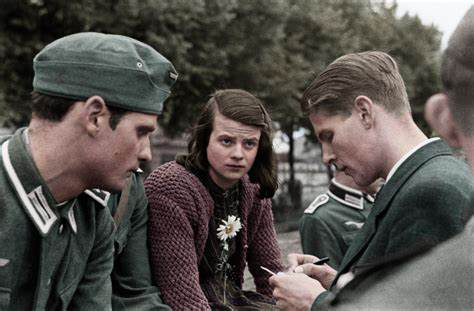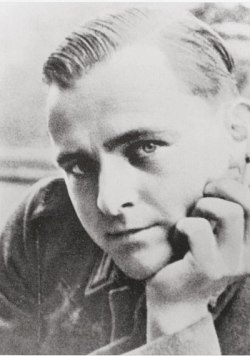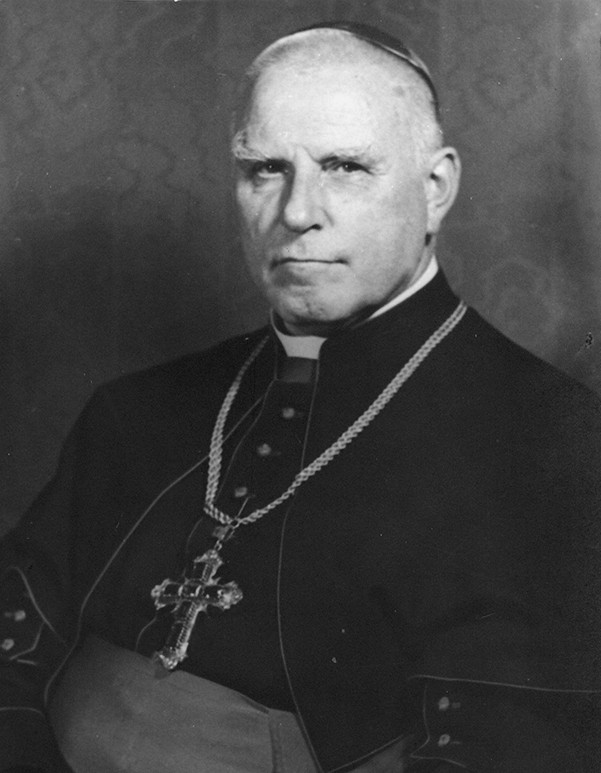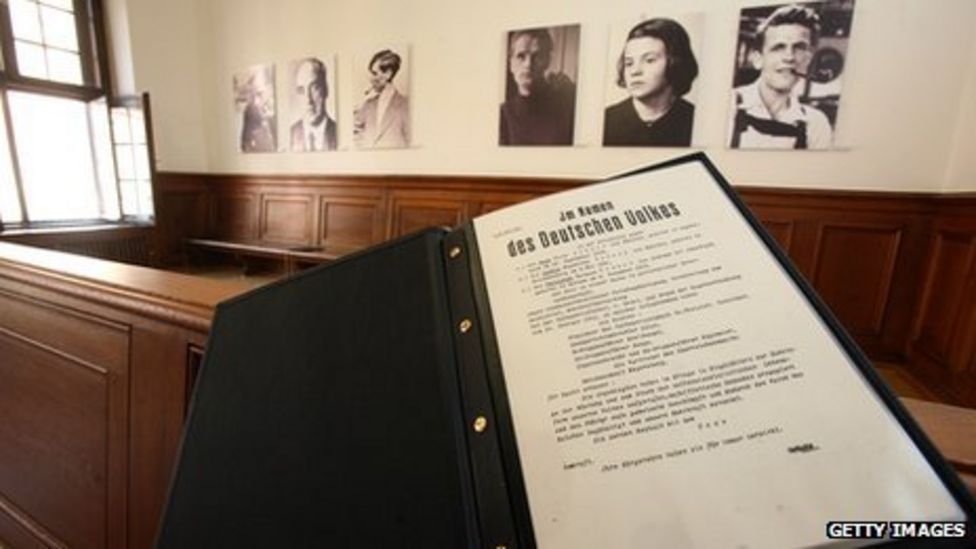
November 25, 1841 Amistad

In arguing the case before the Supreme Court former President John Quincy Adams took the position that no man, woman, or child in the United States could ever be sure of the “blessing of freedom”, if the President could hand over free men on the demand of a foreign government.

The international slave trade was illegal in most countries by 1839 while the “peculiar institution” of slavery remained legal. In April of that year, a Portuguese slave trader illegally purchased some 500 Africans and shipped them to Havana aboard the slave ship Teçora.

Conditions were so horrific aboard Teçora that fully one-third of its “cargo”, presumably healthy individuals, died on the journey. Once in Cuba, sugar cane producers Joseph Ruiz and Pedro Montez purchased 49 members of the Mende people, 49 adults and four children, for use on the plantation.

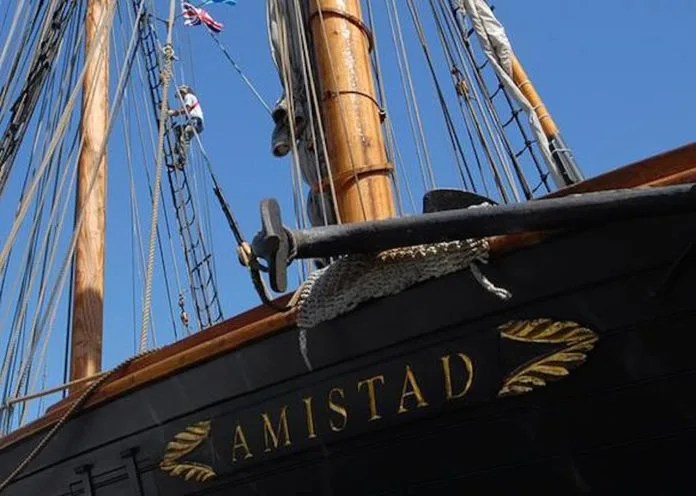
The Mendians were given Spanish names and designated “black ladinos,” fraudulently documenting the 53 to have always lived as slaves in Cuba. In June of 1841 Ruiz and Montez placed the Africans on board the schooner la Amistad, (“Friendship”), and set sail down the Cuban coast to Puerto del Principe.
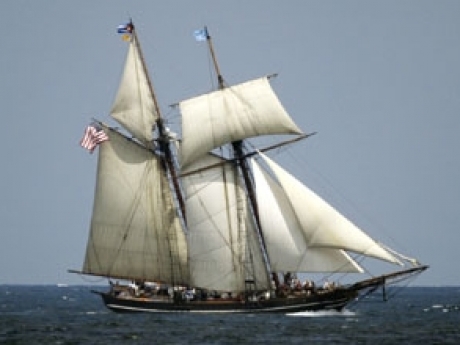
jul-02-amistad
Replica of the slave ship, Amistad

Africans had been chained onboard Teçora but chains were judged unnecessary for the short coastal trip aboard Amistad.  On the second day at sea, two Mendians were whipped for an unauthorized trip to the water cask.  One of them asked where they were being taken.  The ship’s cook responded, they were to be killed and eaten.

The cook’s mocking response would cost him his life.

That night, captives armed with cane knives seized control of the ship. Their leader was Sengbe Pieh, also known as Joseph Cinqué. Africans killed the ship’s Captain and the cook losing two of their own in the struggle.  Montez was seriously injured while Ruiz and a cabin boy named Antonio, were captured and bound.  The rest of the crew escaped in a boat.

The mulatto cabin boy who really was a black ladino, would be used as translator.
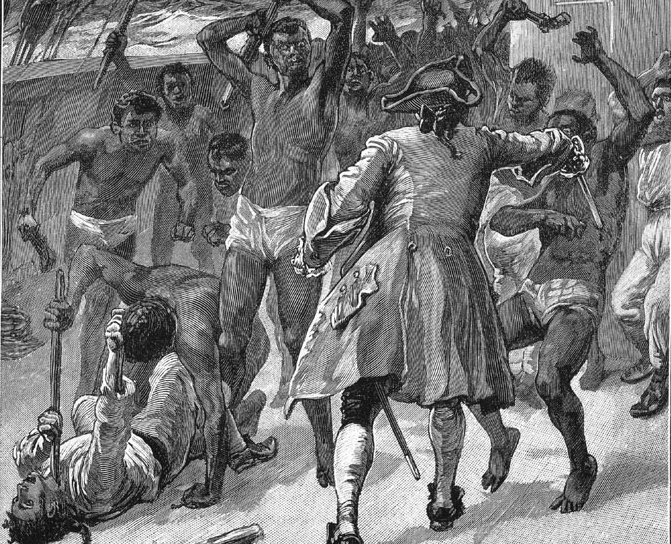
Revolt-Aboard-Ship

Mendians forced the two to return them to their homeland, but the Africans were betrayed.  By day the two would steer east, toward the African coast.  By night when the position of the sun could not be determined, the pair would turn north.  Toward the United States.

After 60 days at sea, Amistad came aground off Montauk on Long Island Sound. Several Africans came ashore for water when Amistad was apprehended by the US Coastal Survey brig Washington, under the command of Thomas Gedney and Richard Meade.  Meanwhile on shore, Henry Green and Pelatiah Fordham (the two having nothing to do with the Washington) captured the Africans who had come ashore.
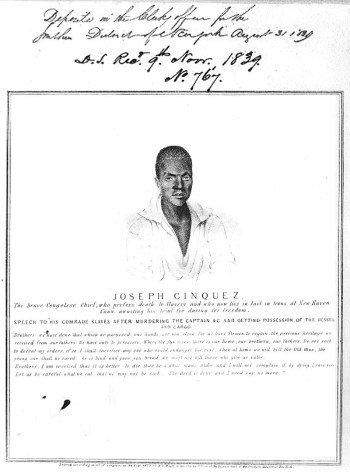
Joseph_Cinque
This print depicting Joseph Cinqué appeared in The New York Sun newspaper, August 31, 1839

Amistad was piloted to New London Connecticut, still a slave state at that time.  The Mendians were placed under the custody of United States marshals.

Both the slave trade and slavery itself were legal at this time according to Spanish law while the former was illegal in the United States.   The Spanish Ambassador demanded the return of Ruiz’ and Montez’ “property”, asserting the matter should be settled under Spanish law.  American President Martin van Buren agreed, but, by that time, the matter had fallen under court jurisdiction.

Gedney and Meade of the Washington sued under salvage laws for a portion of the Amistad’s cargo, as did Green and Fordham.  Ruiz and Montez sued separately.  The district court trial in Hartford determined the Mendians’ papers to be forged.  These were now former slaves  entitled to be returned to Africa.

Antonio was ruled to have been a slave all along and ordered returned to Cuba.  He fled to New York with the help of white abolitionists and lived out the rest of his days as a free man.

Fearing the loss of pro-slavery political support, President van Buren ordered government lawyers to appeal the case up to the United States Supreme Court.  The government’s case depended on the anti-piracy provision of a treaty then in effect between the United States, and Spain.

A former President, son of a Founding Father and eloquent opponent of ‘peculiar institution’ John Quincy Adams argued the case in a trial beginning on George Washington’s birthday, 1841.
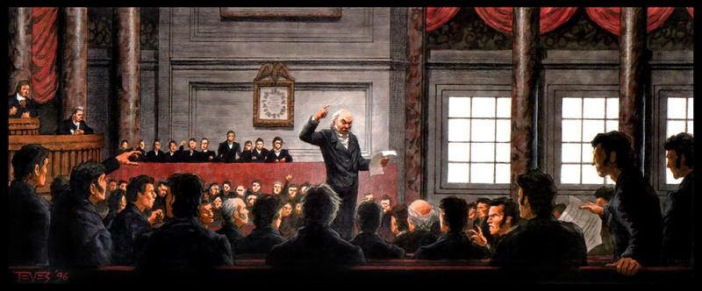
img_3917.jpg

In United States v. Schooner Amistad, the Supreme Court upheld the decision of the lower court 8-1, ruling that the Africans had been detained illegally  and ordering them returned to their homeland.

Pro slavery Whig John Tyler was President by this time, refusing to provide a ship or to fund the repatriation.  Abolitionists and Christian missionaries stepped in, 34 surviving Mendians departing for Sierra Leone on November 25, 1841 aboard the ship, Gentleman.

The Amistad story has been told in books and in movies and is familiar to many. One name perhaps not so familiar is that of James Benjamin Covey. James Covey was born Kaweli sometime around 1825, in what is now the the border region between of Sierra Leone, Guinea and Liberia. Kidnapped in 1833 and taken aboard the Segundo Socorro, Kaweli was an illegal slave when the vessel was seized by the Royal Navy.
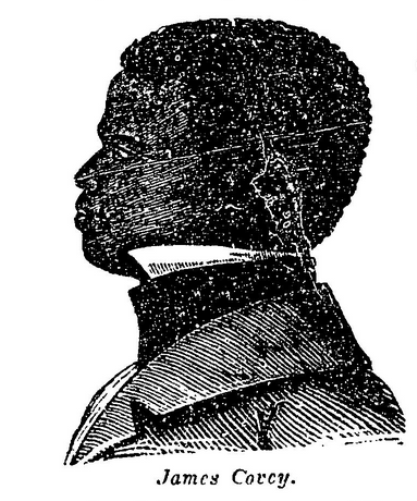
Kaweli went to school for five years in Bathurst, Sierra Leone, where he took the name of James Benjamin Covey. Joining the Royal Navy, Covey participated in the capture of several illegal slave ships.

Hired on as live interpreter, James Covey was to play a crucial role in the Medians’ trial before the Supreme Court. He would also accompany the 34 on their return to the African continent.

James Covey, aka Kaweli, was going home.

‘They all have Mendi names and their names all mean something… They speak of rivers which I know. They sailed from Lomboko… two or three speak different language from the others, the Timone language… They all agree on where they sailed from. I have no doubt they are Africans.’ – James Benjamin Covey

Gentleman landed in Sierra Leone in January 1842, where some of the Africans helped establish a Christian mission.  Most including Joseph Cinque himself returned to homelands in the African interior. One survivor, a little girl when it all started by the name of Margru, returned to the United States where she studied at Ohio’s integrated Oberlin College, returning to Sierra Leone as the Christian missionary Sara Margru Kinson.

In arguing the case, President Adams took the position that no man, woman or child in the United States could ever be sure of the “blessing of freedom” if the President could hand over free men on the demand of a foreign government.

A century and a half later later President Bill Clinton, Deputy Attorney General Eric Holder and AG Janet Reno orchestrated the kidnap of six-year-old Elián González at gunpoint, returning him to Cuba over the body of the mother who had drowned bringing her boy to freedom.

June 2, 1942  A Man of Character

“Our character is what we do when we think no one is looking”. – Author Horace Jackson Brown, Jr.

Japan was an isolated, feudal island state in 1850, suffused with the Confucian notion of rigid social classes and ruled over by a military head-of-state, or Shōgun. In 1868, internal issues combined with growing pressure from western encroachment, resulting in the end of the Tokugawa Shōgunate and the restoration of the Meiji Emperor.

By the time Meiji’s son, the Taisho emperor, took the throne in 1912, Japan had become a powerful colonial power with modern institutions. The evolution from feudal state to modern colonial power was so wrenching, so rapid that one Tokyo expatriate said, it’s as if he had lived for 400 years.

The intervening period plunged the Japanese economy into recession, resulting in a “Japanese diaspora”. 3.8 million “Nikkei” emigrated between 1868 and 1912, bound for destinations from Australia to Finland, from mainland China to the Americas.

As with the Chinese laborers of an earlier era, they came to America in search of opportunity, taking manual labor jobs at canneries and farms, railroads and logging camps. In 1870, a scant 55 Japanese were recorded as living in the United States. By 1909, California alone housed some 30,000 Japanese agricultural laborers.

The first generation Issei tended to keep to themselves. Ineligible for citizenship under US law they formed kenjin-kai, social and aid organizations built around the prefecture from which they had come. Not so the second and third generations. These were the Nisei and Sansei, American-born US citizens, thoroughly assimilated and often owning the farms and businesses to which their parents and grandparents had come to work.

Reception to these newcomers was mixed. Feelings of “otherness” were exacerbated by economic competition, often congealing into outright racism. Other times, relations were characterized by cordiality and friendship.

Post WW1, national security concerns led to the Immigration Act of 1924, providing that no alien ineligible for citizenship be allowed entry into the country. The act was primarily aimed at Japanese immigration, though they were not explicitly named in the law.

In 1940, Japanese-American farmers controlled only 4 percent of agricultural land in California, while producing 10% of agricultural output. Robert “Bob” Emmett Fletcher was the agricultural inspector for Sacramento County at this time, based in Florin, California. The job brought him into regular contact with Japanese-American farmers, whom he saw as industrious and hard working. Farmers saw Fletcher as honest and fair minded.

Robert “Bob” Emmett Fletcher, Jr.

Following the Japanese attack on Pearl Harbor, a rash of fear combined with economic interests, especially on the Pacific coast. President Roosevelt signed Executive Order 9066 on February 19, 1942, dividing the west coast into “military zones” from which civilians were excluded. As with the bill signed into law in 1924 the order did not specify any particular ethnic group, but fell disproportionately on Japanese Americans.

First came the curfews, followed by requests for voluntary relocation. On March 21, Congress passed Public Law No. 503, making any violation of Executive Order 9066 a misdemeanor punishable by up to one year in prison and a $5,000 fine. On March 29, Lieutenant General John L. DeWitt’s Order No. 4 began the forced relocation and detention under Army custody of West Coast Japanese residents, with 48-hours notice.

Over the following months, some 122,000 men, women and children were forcibly removed to “assembly centers”. By June 2, no Japanese or Japanese-American citizen remained within Military Area 1, an area comprising the western parts of California, Oregon, Washington and Arizona.

Al Tsukamoto was a first-generation American, his parents arriving in 1905. He approached Fletcher with a proposal. Would he look after the farms of two family friends of the Tsukamotos, one of whom was quite elderly. Fletcher would take care of the farms and pay the mortgages and taxes, in exchange for which he could keep the profits.

Fletcher accepted the offer and quit his job, working 18 hour days to pay the bills of the Okamoto and the Nitta families. Soon he was running the Tsukamoto farm as well, 90 acres in total. The offer specified that Fletcher could live in the Tsukamoto home, but no. Fletcher stayed in the bunkhouse Mr. Tsukamoto kept for migrant farm hands. When he married, Fletcher’s new wife Teresa also moved into the bunkhouse. “It’s the Tsukamoto’s house”, she said.

For that, Fletcher received considerable ostracism from the Florin community. “Jap lover”, some called him. Someone even took a shot at him one time, the rifle’s bullet narrowly missing him as he entered the Tsukamoto barn.

“I did know a few of them pretty well and never did agree with the evacuation, they were the same as anybody else. It was obvious they had nothing to do with Pearl Harbor.” – Bob Fletcher, Interview with the Sacramento Bee, 2010

Incarcerated in the camps, most of the families were unable to pay the bills and lost everything. Most of them moved away after the war. The Tsukamotos came back to find that Teresa had cleaned the house, making it ready for their return. Fletcher had kept only half the profits. He had banked the rest for the family.

“I don’t know about courage” Fletcher said in 2010, noting that other Florin residents had also helped their Japanese neighbors. Doris Takata was 12 when her family went into the camps. “My mother called him god she said at Fletcher’s 100th birthday celebration in 2011, because only god would do something like that. Fletcher said, “It took a devil of a lot of work.”

Robert Emmett Fletcher, Jr., July 26, 1911 – May 23, 2013

December 23, 1884 Lake Bacon

Lippincott’s monthly magazine, waxed rhapsodic: “This animal, homely as a steamroller, is the embodiment of salvation. Peace, plenty and contentment lie before us, and a new life with new experiences, new opportunities, new vigour, new romance, folded in that golden future, when the meadows and the bayous of our southern lands shall swarm with herds of hippopotami”.

Only hours from now, families will gather from far and near, around the Christmas table.  There will be moist and savory stuffing, and green bean casserole.  Creamy mashed potatoes and orange cranberry sauce.  And there, the centerpiece of the feast.  Slow-roasted and steaming in that silver tray the golden brown, delicious, roast hippopotamus.

Wait…Uhh…What?

water-hyacinth-eichornia-crassipes
Water Hyacinth

The World Cotton Centennial and World’s Fair of 1884 began its second week on December 23. Located in New Orleans, Louisiana that year, among its many wonders was the never-before seen Eichornia crassipes, a gift from the Japanese delegation.  The Water Hyacinth.

Visitors marveled at this beautiful aquatic herb, with yellow spots accentuating the petals of delicate purple and blue flowers floating across tranquil ponds on a mat of thick, green leaves.

The seeds of Eichornia crassipes are spread by wind, flood, birds and humans and remain viable, for 30 years.  Beautiful as it is to look at, the Water Hyacinth is an “alpha plant”, an aquatic equivalent to the Japanese invasive perennial Kudzu, the “vine that ate the south”.  Impenetrable floating mats choke out native habitats and species while thick roots impede the passage of vessels, large and small.  The stuff is toxic if ingested by humans and most animals and costs a fortune, to remove.

This plant native from the Amazon basin quickly broke the bounds of the 1884 World’s Fair, spreading across the bayous and waterways of Louisiana, and beyond.

Eichhornia_crassipes_field_at_Langkawi

During the first decade of the 20th century, an exploding American population could barely keep up with its own need for food. Especially, meat.  The problem reached crisis proportions in 1910, with over grazing and a severe cattle shortage.  Americans were seriously discussing the idea of eating dogs.

Enter Louisiana member of the House of Representatives, New Iberia’s own Robert Foligny Broussard, with a solution to both problems.  Lake Bacon.

The attorney from Louisiana’s 3rd Congressional district proposed H.R. 23621 in 1910, otherwise known as the “American Hippo” bill. Broussard’s proposed legislation enjoyed enthusiastic support from Theodore Roosevelt and the New York Times, alike.   One Agricultural official estimated that a free-range hippo herd could produce up to a million tons of meat, every year.

Lippincott’s monthly magazine waxed rhapsodic:  “This animal, homely as a steamroller, is the embodiment of salvation.  Peace, plenty and contentment lie before us, and a new life with new experiences, new opportunities, new vigour, new romance, folded in that golden future, when the meadows and the bayous of our southern lands shall swarm with herds of hippopotami”.

Hippo Steak

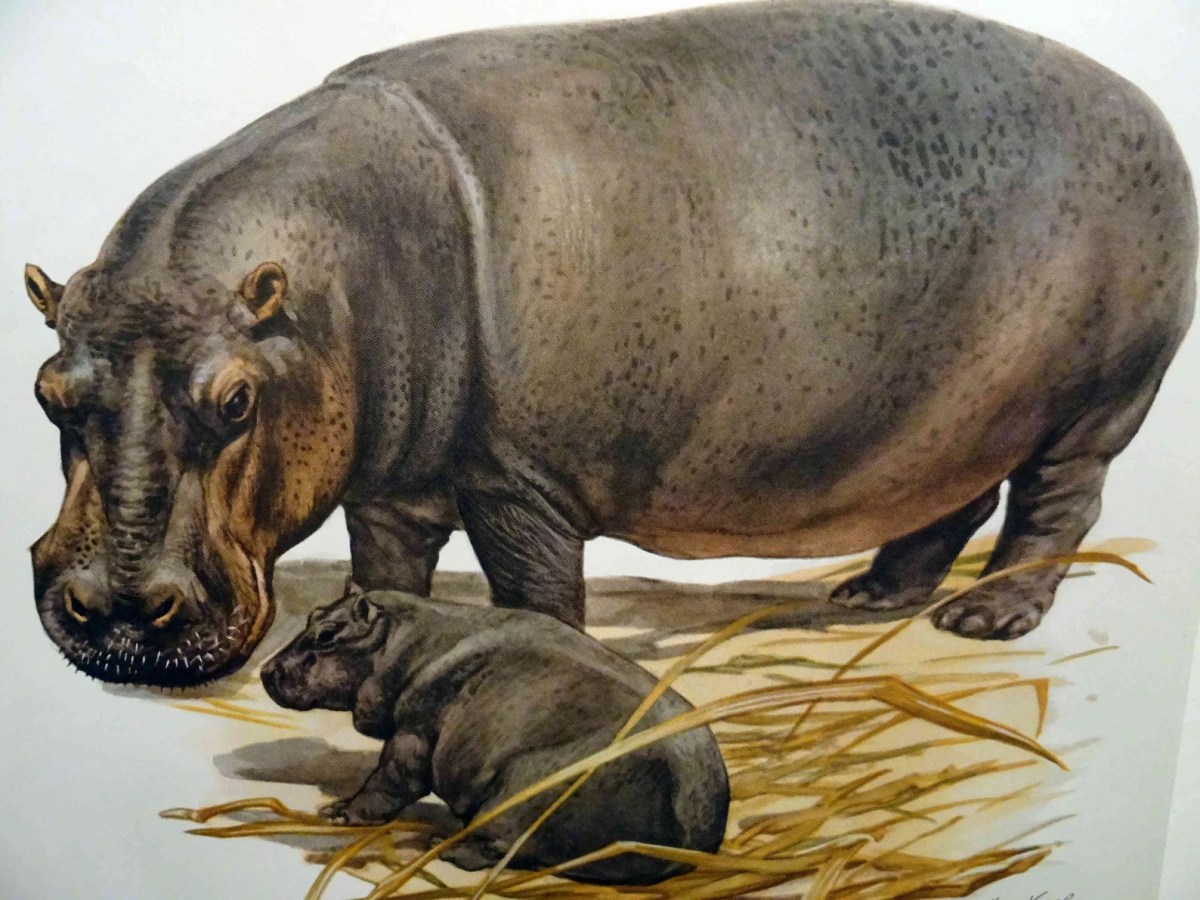
With a name deriving from the Greek term “River Horse”, the common hippopotamus is the third largest land animal living today.  Despite a physical resemblance to hogs and other even-toed ungulates, Hippopotamidae’s closest living relatives are cetaceans such as whales, dolphins and porpoises.

All well and good.  The problem is, those things are dangerous.

hippo-crocodile_1887702i

The adult bull hippopotamus is skittish, extremely aggressive, unpredictable and highly territorial.  Heaven help anyone caught between a cow and her young.  Hippos can gallop at short sprints of 19 mph, only a little less than the top speed of Jamaican Sprinter Usain Bolt, and he’s “the fastest man who ever lived”.

To keyword search the “10 most dangerous animals in Africa” is to be rewarded with the knowledge that hippos are #1, responsible for more human fatalities than any other large animal in Africa.

p-hippo-1_1467398c

Be that at it as it may, the animal is a voracious herbivore, spending daylight hours at the bottom of rivers & lakes, happily munching on vegetation.

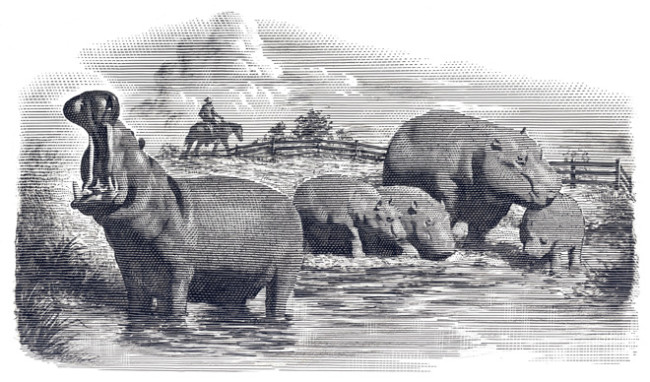
Back to Broussard’s bill, what could be better than taking care of two problems at once?  Otherwise unproductive swamps and bayous from Florida to East Texas would become home to great hordes of free-range hippos.  The meat crisis would be averted.  America would become a nation of hippo ranchers.

As Broussard’s bill wended its way through Congress, the measure picked up steam with the enthusiastic support of two men, mortal enemies who’d spent ten years in the African bush trying to kill each other. No, really.

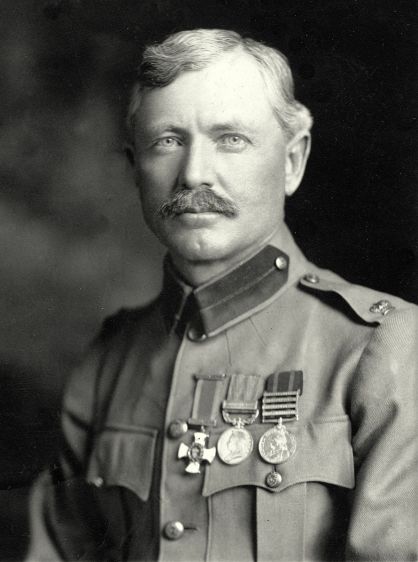
Frederick Russell Burnham

Frederick Russell Burnham argued for four years for the introduction of African wildlife into the American food stream.  A freelance scout and American adventurer, Burnham was known for his service to the British South Africa company, and to the British army in colonial Africa. The “King of Scouts’, commanding officers described Burnham as “half jackrabbit and half wolf”.  A “man totally without fear.”  One writer described Burnham’s life as “an endless chain of impossible achievements”, another “a man whose senses and abilities approached that of a wild predator”.  He was the inspiration for the Indiana Jones character and for the Boy Scouts.  Forget the Dos Equis guy. Frederick Burnham really was the real-life “most interesting man in the world“.

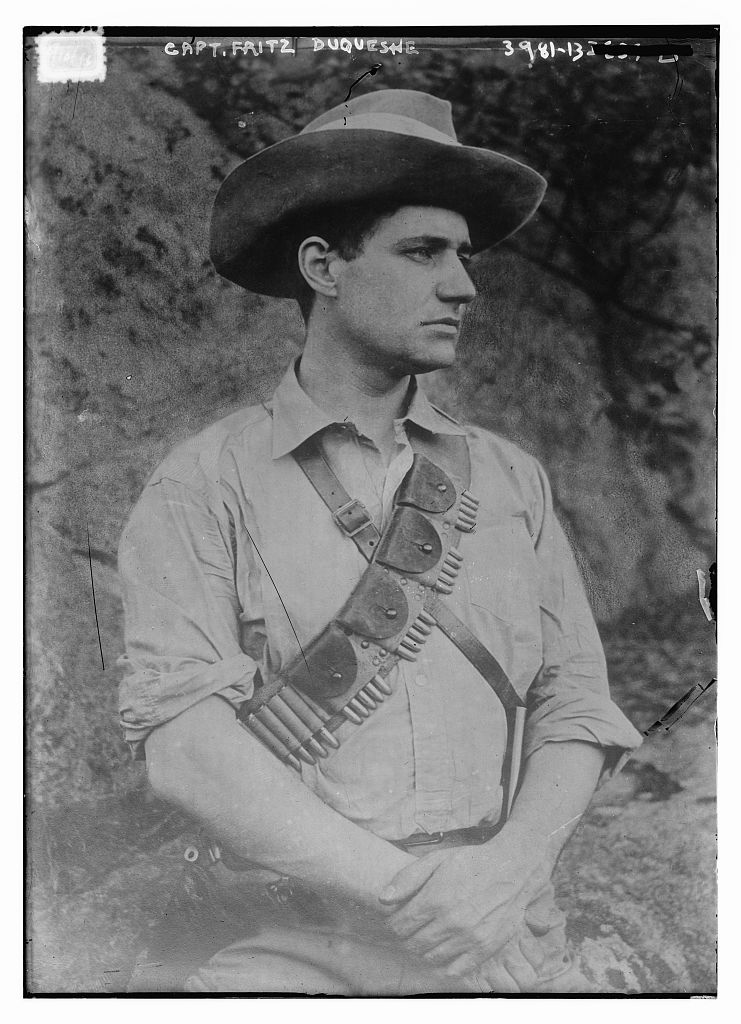
Fritz Duquesne? Well that’s another story. Frederick “Fritz” Joubert Duquesne was a Boer of French Huguenot ancestry, descended from Dutch settlers to South Africa.  A smooth talking guerrilla fighter, the self-styled “Black Panther” once described himself as every bit the wild African animal, as any creature of the veld.  An incandescent tower of hate for all things British, Duquesne was a liar, a chameleon, a man of 1,000 aliases who once spent seven months feigning paralysis, just so he could fool his jailers long enough to cut through his prison bars.

Destined to become a German spy it is he who lends his name to the infamous Duquesne Spy Ring, of World War 2. 

Frederick Burnham described Duquesne, his mortal adversary:  “He was one of the craftiest men I ever met. He had something of a genius of the Apache for avoiding a combat except in his own terms; yet he would be the last man I should choose to meet in a dark room for a finish fight armed only with knives“.

During the 2nd Boer war, these two men had sworn to kill each other.  Now in 1910 the pair became partners in a mission to bring hippopotamus, to the American dinner table.

Biologically, there is little reason to believe that Hippo ranching wouldn’t work along the Gulf coast.  Decades ago, Colombian drug kingpin Pablo Escobar introduced four hippos to the Columbian interior. Today, officials estimate that, within a few years, the hippo descendants of Escobar’s exotic animal menagerie will number 100 or more individuals.

Back to the American Hippo bill. Broussard’s measure went down to defeat by a single vote, but never entirely went away.  Always the political calculator, Representative and later-Senator Broussard died with the bill on his legislative agenda, waiting for the right moment to reintroduce the thing.

Over time, the solution to the meat question became a matter of doubling down on what was already taking shape. Factory farms and confinement operations came to replace free ranges while the massive use of antibiotics replaced even the notion of balanced biological systems.

in-1910-President-Roosevelt-supported-a-bill-that-would-have-released-hippopotamuses-into-Louisiana-to-eat-an-invasive-plant-species-and-to-provide-delicious-hippo-bacon-to-hungry-Americ

We may or may not have “traded up”.  Today we contend with all manner of antibiotic-resistant “Superbugs”. The Louisiana department of wildlife and fisheries maintains no fewer than 85 separate aquatic vegetation control plans, aimed at the water hyacinth.

The effluent from factory farms from Montana to Pennsylvania works its way into the nation’s rivers and streams, washing out to the Mississippi Delta to a biological dead zone, the size of New Jersey.

13453_gulf-of-mexico-dead-zone-image-credit-noaa
Gulf of Mexico dead zone, image credit NOAA

As for that once golden future, Lippincott’s hippo herds roam only in the meadows and bayous of the imagination.  Who knows, it may be for the best.  I don’t know if we could’ve seen each other across the table, anyway.  Not when that hippo came out of the oven.

October 28, 1945 Last Bastion of the Confederacy. (It’s Not what you Think).

In New York city and state alike, economic ties with the south ran deep. 40¢ of every dollar paid for southern cotton stayed in New York in the form of insurance, shipping, warehouse fees and profits.

By the early 1830s, cotton exceeded the value of all other American exports, combined. As secession loomed over the nation, one Chicago Daily Times editorial warned that if the South departed “in one single blow, our foreign commerce must be reduced to less than one half of what it is now”.

fernando_wood_(1812-1881)
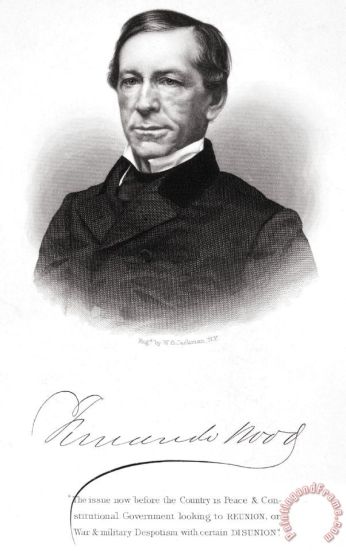
Fun Fact: South Carolina seceded in December 1860, and the world waited to see who’d follow.  New York City became the next to call for secession on January 6, when Mayor Fernando Wood addressed that city’s governing body.  “When Disunion has become a fixed and certain fact”, he cried, “why may not New York disrupt the bands which bind her to a venal and corrupt master…and destroyed the Confederacy of which she was the proud Empire City?”

In New York city and state alike, economic ties with the south ran deep.  40¢ of every dollar paid for southern cotton stayed in New York in the form of insurance, shipping, warehouse fees and profits.

30 minutes’ east of Buffalo, the village of Lancaster contemplated staying with the Union.  500 miles from the nearest Confederate state, George Huber remembered the time.  “When war was declared, Lancaster seethed with the news, and many were the nights we stayed up as late as 12 o’clock to talk things out.  I was twelve years old at the time, but I remember the stern faces of the elders and the storm of passionate and angry discussion. Soon the town split into two factions, it was a very tense situation…Often the excitement ran so high that if a man in either group had made the slightest sign, neighbors would have been at each other’s throats and fists would have taken the place of words.”

town line courthouse
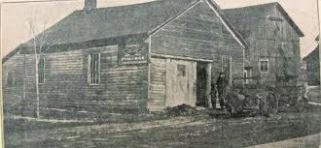
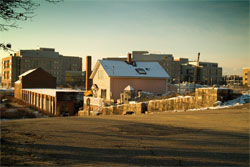
The old blacksmith shop

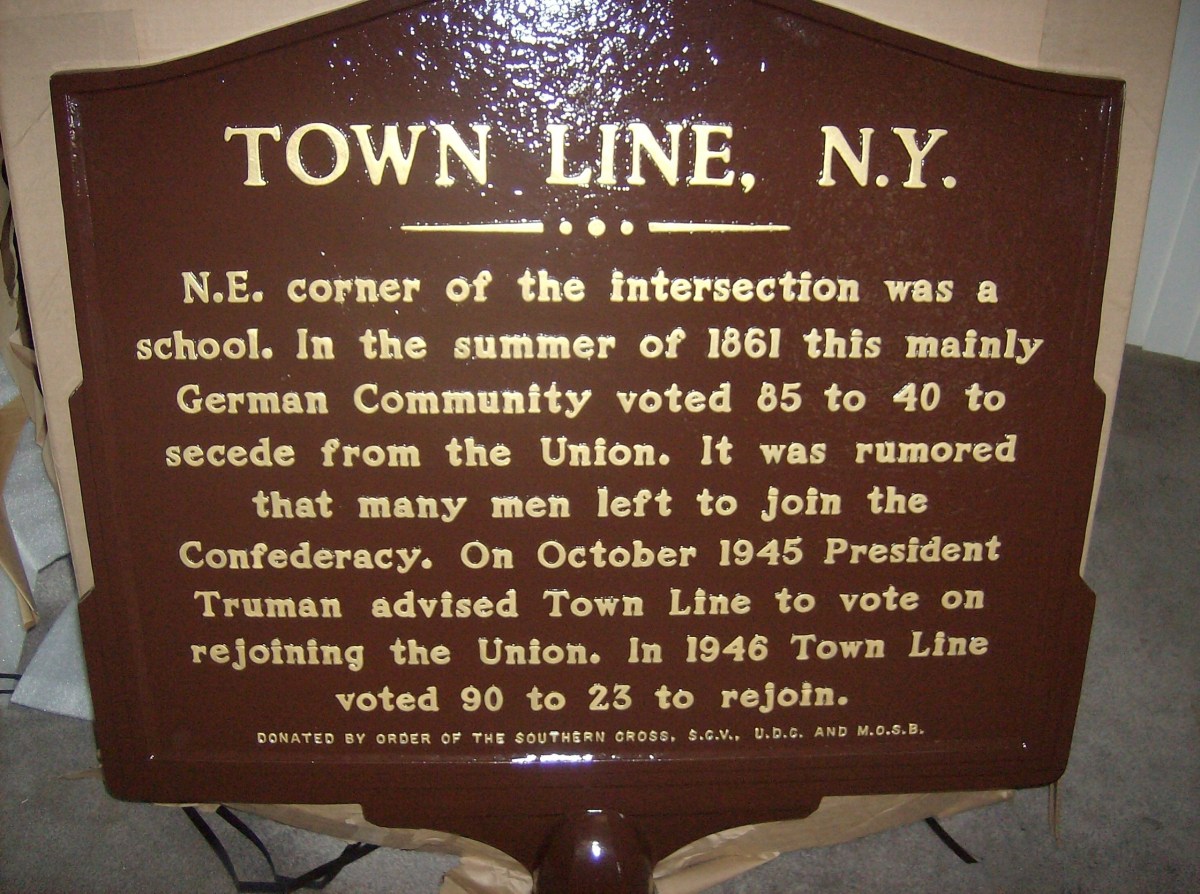
“Town Line”, a hamlet on the village’s eastern boundary, put the matter to a vote.  In the fall of 1861, residents gathered in the old schoolhouse-turned blacksmith’s shop.  By a vote of 85 to 40, Town Line voted to secede from the Union.

As casualty reports came back from the front there was angry talk of arresting “Copperheads” for sedition.  “Seceders” grew quiet, afraid to meet in public places amidst angry talk of lynching.  A half-dozen or so of the more ardent secessionists actually went south to fight for the Confederacy.  Others quietly moved north, to Canada.   Outside of Lancaster, no one seemed to notice.  Taxes continued to be paid. No federal force ever arrived to enforce the loyalty of the small village.

A rumor went around in 1864, that a large Confederate army was building in Canada, poised to invade from the north.  Town Line became a dangerous place for the few southern sympathizers left.  Most of those remaining moved to Canada and, once again, Lancaster became the quiet little village in upstate New York, that nobody ever heard of.

Impatient to get on with it, Dade County Georgia “symbolically” seceded both from the state as well as the Union, back in 1860.  Officially, Dade County seceded with Georgia in 1861, and rejoined with the rest of the state in 1870, but the deal was sealed on July 4, 1945 when a telegram from President Harry S. Truman was read at a celebration marking Dade County’s “rejoining” the Union.

The “Confederate Gibraltar”, Vicksburg Mississippi, fell on July 4, 1863.  The city wouldn’t celebrate another Independence Day for 80 years.

86C8E1D8-4085-47BE-B54D-C3FB11BF0363_w1023_r1_s
In 2011, the residents of Town Line, New York dressed up to mark the town’s sesquicentennial of secession from the Union

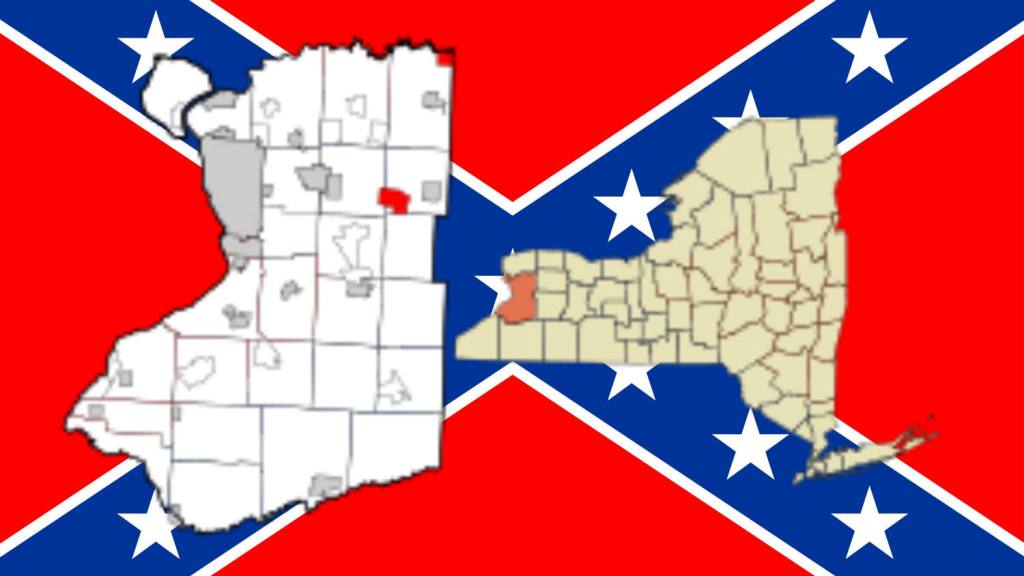
By October 1945 there legally remained only one part of the former Confederate States of America. The little hamlet of Town Line, New York.

Even Georgians couldn’t help themselves, from commenting. 97-year-old Confederate General T.W. Dowling opined: “We been rather pleased with the results since we rejoined the Union. Town Line ought to give the United States another try“. Judge A.L. Townsend of Trenton Georgia commented “Town Line ought to give the United States a good second chance“.

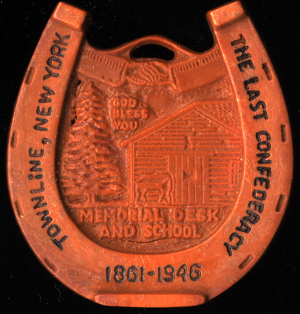
Townline-the_last_conferderacy

On October 7, 1945 there arrived a note by courier express.  “There are few controversies that are not susceptible to a peace time resolution” read the note, “if examined in an atmosphere of tranquility and calm rather than strife and turmoil. I would suggest the possibility of roast veal as a vehicle of peace.  Why don’t you run down the fattest calf in Erie County, barbecue it and serve it with fixin’s in the old blacksmith shop where the ruckus started? Who can tell? The dissidents might decide to resume citizenship.”  The note was signed “Very Sincerely Yours, Harry Truman”.

Fireman’s Hall became the site of the barbecue, as “the old blacksmith shop where the ruckus started” was too small for the assembled crowd.  On October 28, 1945 residents adopted a resolution suspending the 1861 ordinance of secession by a vote of 90-23. The Stars and Bars of the Confederate States of America was lowered for the last time, outside the old blacksmith shop.

Alabama member of the United States House of Representatives John Jackson Sparkman, may have had the last word:  “As one reconstructed rebel to another, let me say that I find much comfort in the fact that you good people so far up in Yankee land have held out during the years. However, I suppose we grow soft as we grow older.”

4b4cf0f864c3dabcdb_IMG_7326[1]

October 27, 1871 Boss Tweed

Boss Tweed’s system of corruption inflated the cost of the New York County Courthouse to nearly $13 million, more than the Alaska purchase. One carpenter billed $360,751 (equivalent to $4.9 million today), for one month’s work. A plasterer got $133,187 for two days.

Before the first Europeans arrived in the “new world”, descendants of the Nanticoke inhabited a region from present-day Delaware north through New Jersey and southern New York, and eastern Pennsylvania. The Europeans called them “Delaware”.  These indigenous Americans called themselves “Lenni-Lenape” which literally means “Men of Men”, but is translated to mean “Original People.” (Hat tip, http://www.nanticoke-lenape.info).

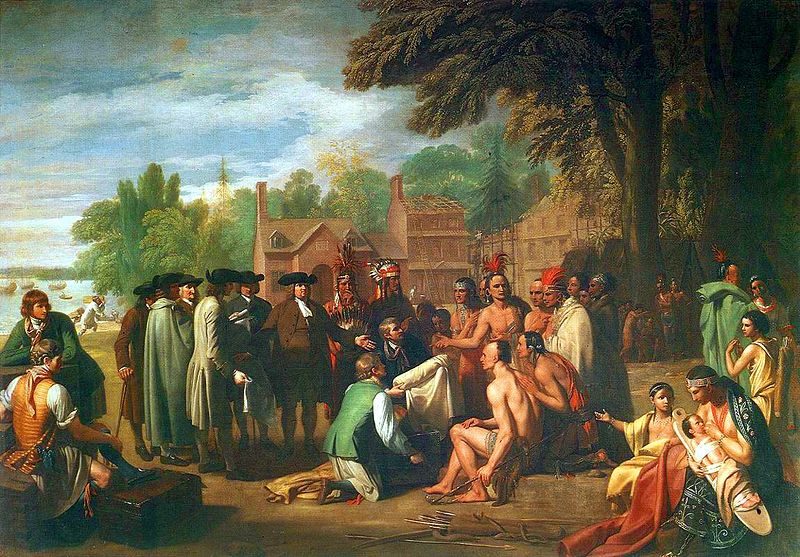
In the early 1680s, Chief Tammamend (“The Affable”) of the Lenni-Lenape nation took part in a meeting with the English colonists, where he is supposed to have said that his people and the newcomers would “live in peace as long as the waters run in the rivers and creeks and as long as the stars and moon endure.”

Treaty_of_Penn_with_Indians_by_Benjamin_West
Treaty of Penn with Indians, by Benjamin West

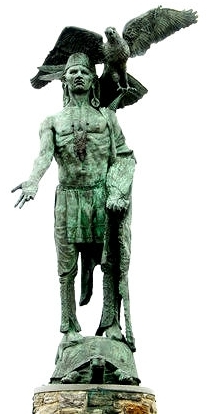
“Tammany” to the settlers, Chief Tammamend became a living symbol of peace and friendship, between the two peoples. He died in 1701, but his legend lived on. In the next one-hundred years Tammany societies were established from Georgia to Rhode Island.

8-22-Tamanend

Tammany Societies adopted a number of native terms, with leaders calling themselves Grand Sachem, and meeting in halls called “Wigwams”. The most famous of these was incorporated in New York on May 12, 1789.

Within ten years, what had begun as a social club had morphed into a political machine. Tammany helped Aaron Burr counter Alexander Hamilton’s Society of the Cincinnati, and Burr went on to win New York’s two electoral votes in 1800. Without help from “Tammany Hall”, many historians believe that John Adams would have been re-elected to a second term.

Tammany Hall expanded its connections within New York Democrat party politics. After Andrew Jackson’s victory in 1828, the Tammany machine all but owned the government in New York city and state, alike.

Fun fact: On December 20, 1860, the Secession convention of South Carolina unanimously asserted an end to Union proclaiming that “We…have solemnly declared that the union heretofore existing between this State and the other States of North America, is dissolved, and that the State of South Carolina has resumed her position among the nations of the world, as a separate and independent State…” In the following days, the world waited to see who would follow. The next governing entity to actually do so was the state of Mississippi, but the first to discuss the idea (after South Carolina) was New York, in the person of Tammany Hall’s own mayor, Fernando Wood.

The 19th century was a time of massive immigration, providing an ever-expanding base of political and financial support for urban politicians. Political machines helped new arrivals with jobs, housing and citizenship, providing a patina of “constituent service” and hiding a dark under-belly of graft and corruption.

Boss_Tweed
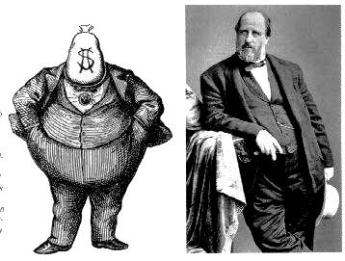
Boss Tweed

In the 1860s, Tammany Hall politician William Magear Tweed established a new standard in public self-dealing. Biographer Kenneth Ackerman wrote: “The Tweed ring at its height was an engineering marvel, strong and solid, strategically deployed to control key power points: the courts, the legislature, the treasury and the ballot box. Its frauds had a grandeur of scale and an elegance of structure: money-laundering, profit sharing and organization“.

New York contractors were instructed to multiply invoices. Checks were cashed through a go-between, settling with the contractor and dividing the rest between “Boss” Tweed and his cronies. This system of corruption inflated the cost of the New York County Courthouse to nearly $13 million, more than the Alaska purchase. One carpenter billed $360,751 (equivalent to $4.9 million today), for one month’s work. A plasterer got $133,187 for two days.

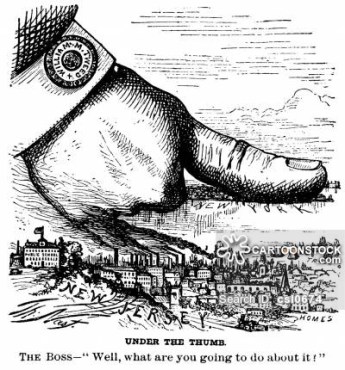
New York Corruption - New York Under Tweed's Thumb

Some among the self-styled “Uppertens”, the top 10,000 amid New York’s socioeconomic strata, fell in with the self-dealing and corruption of the Tammany Hall machine. Others counted on an endless supply of cheap immigrant labor.

The system worked while Tweed’s Machine kept “his people” in line, until the “Orange Riots” of 1870-71 broke out between Irish Catholics and Protestants, killing 70.

Harper’s Weekly editorial cartoonist Thomas Nast, creator of the modern American Santa Claus and the Republican Elephant, was the scourge of Tammany Hall. Following the Orange riots, the New York Times added its voice to that of the cartoonist.

Boss Tweed, the third-largest landowner in New York City, Director of the Erie Railroad, the Tenth National Bank, and the New York Printing Company, Proprietor of the Metropolitan Hotel, former State Senator and former Member of the United States Congress, was arrested on October 27, 1871, and tried on charges of public corruption. An 1877 aldermen’s committee estimated that Boss Tweed’s graft cost New York taxpayers between $25 and $45 million. Later estimates ranged as high as $200 million, equivalent to an astonishing $2.8 Billion, today.

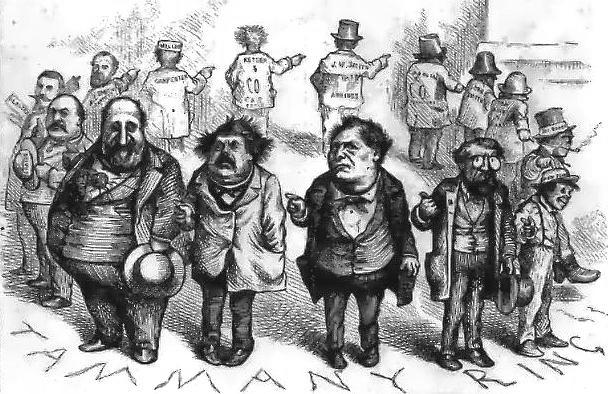
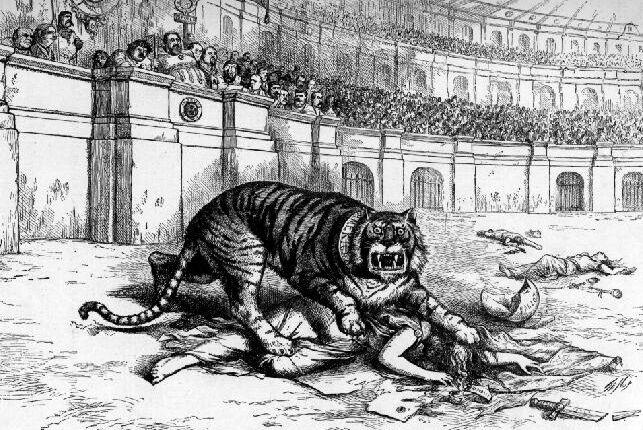
Nast-Tammany_crop
Cartoonist Thomas Nast denounced the Tammany machine as a ferocious tiger, devouring democracy.

The Tammany Hall political machine, moved on. By the end of the 19th century, ward Boss Richard Croker ran a system of graft and corruption the likes of which Boss Tweed could have only dreamed.

In the end, three things killed the Tammany Hall system. Early Irish arrivals had been primary beneficiaries and major supporters of Tammany’s patronage system, but there are only so many favors to go around. Continued immigration diluted Tammany’s base, and later arriving Irish, Italian and eastern European immigrants found themselves frozen out.

y9AfutFuWoQMH-GAzYj6wjl72eJkfbmt4t8yenImKBVvK0kTmF0xjctABnaLJIm9

Next is the spoils system, itself. To this day, too many think it’s government’s job to “Bring home the Bacon”, not seeming to realize that they are themselves, the hogs. The Roosevelt administrations’ efforts to fix the Great Depression resulted in a blizzard of bacon from an increasingly Nationalized federal government, separating the local machines from their proximate base of support.

Last came “reformers” such as New York governor and future President of the United States Franklin Delano Roosevelt, who occasionally built enough steam to hurt the Tammany machine. Manhattan District Attorney Thomas E. Dewey, he of the famous “Dewey Wins!” photograph, managed to put several Tammany Hall leaders in jail, along with such unsavory supporters as “Lucky Luciano”.

Republican Fiorello La Guardia served three terms as New York mayor between 1934-’45, the first anti-Tammany mayor ever, to be re-elected. A brief resurgence of Tammany power in the 1950s met with Democratic party resistance led by the likes of Eleanor Roosevelt, and party politician Herbert Lehrman. By the mid-1960s, the Tammany Hall system, was dead.

Tammany Hall was a local manifestation of a disease afflicting the entire country. Boston, Chicago, Cleveland, Kansas City, Philadelphia, St. Louis and others:  all suffered their own local outbreak.

Tammany_Hall_Union_Square
Tammany Hall, Union_Square

The Ward Boss still lives in places like Chicago but, like the Jeffersons, the corruption has “moved on up”. Today, rent seekers and foreign powers pay tens of millions in “speaking fees” and other “pay-for-play” schemes.

A hundred years ago, Ambrose Bierce (my favorite curmudgeon) described politics as “A strife of interests masquerading as a contest of principles. The conduct of public affairs for private advantage“.  Boss Tweed could tell you.   It’s as true now, as it was in his time.

Featured image, top of page:  Harper’s Weekly cartoonist Thomas Nast’s depiction of the Tammany ring:  Who stole the people’s money? T’was him!

September 5, 1698 Death and Taxes

In ancient Egypt, Pharaoh levied a tax on cooking oil. It was illegal to re-use the stuff, but no worries. There was a state-run monopoly on cooking oil, coincidentally run by Pharaoh.  Imagine that.

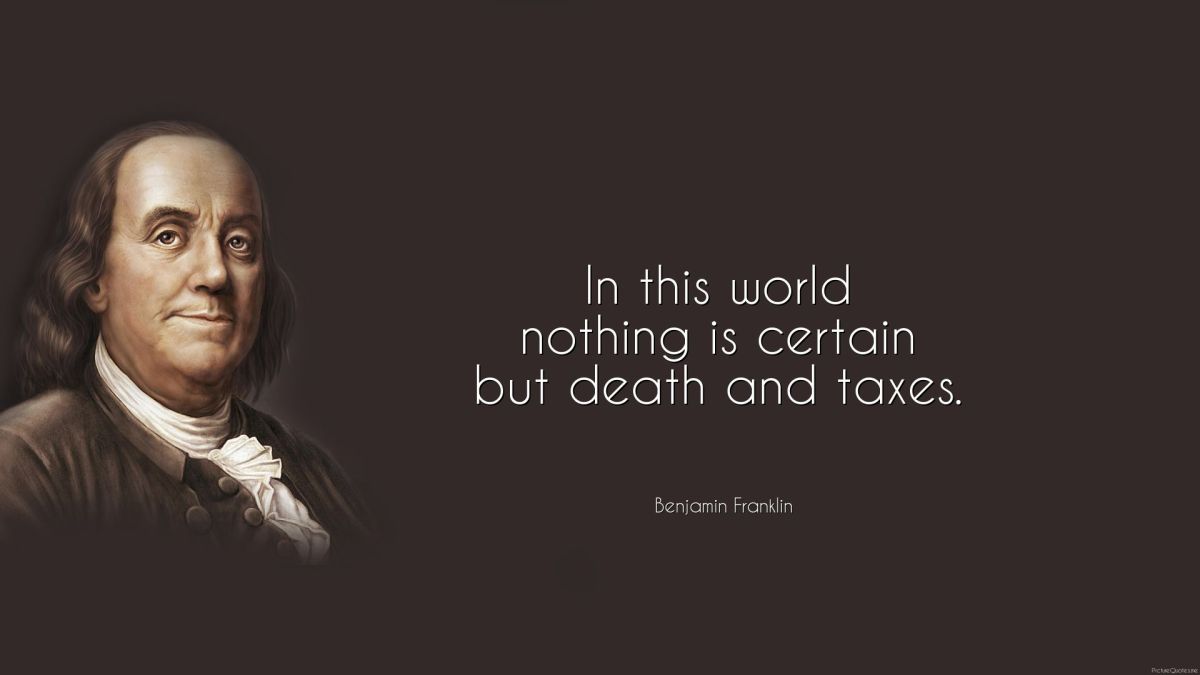
It’s been said there are only two sure things in life. None of us get out of here alive, and the government thinks it’s entitled to what you earn. Or something like that.

There have always been taxes, but over the years some governments have come up with truly imaginative ways to fleece their citizens.

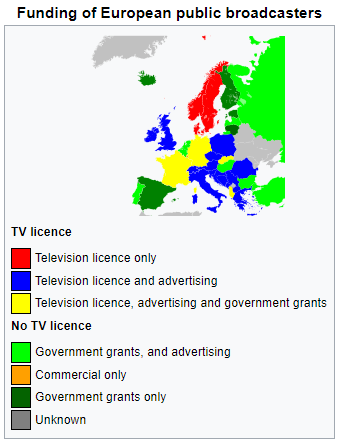
European Broadcasting
H/T Wikipedia

Twenty-eight countries around the world have a “Telly Tax” paid in the form of a broadcast receiving license.  There’s good news though, the British government will waive half of it, if you can prove you’re legally blind.

This is in addition to the council tax, income tax, fuel tax, road tax, value added tax, pasty tax, national insurance, business rates, stamp duty, and about a thousand other taxes. But hey, the health care is free.

Tennessee passed a “Crack Tax” on illegal drugs in 2005, which drug dealers were expected to pay anonymously in exchange for a tax stamp (don’t ask). The measure was found unconstitutional in 2009, on grounds that it violated the drug dealer’s fifth amendment right to protection from self-incrimination.

Milwaukee attorney Robert Henak became a collector of state drug tax stamps, not long after helping to overturn Wisconsin’s crack tax on similar grounds.

a97318_g201_3-crack-tax

Undeterred, then-Governor Elliott Spitzer proposed a tax on illegal drugs as part of the Empire State’s 2008-’09 budget, making New York the 30th state to pass such a measure. “Mr. Clean” stepped down in a hooker scandal, amid threats of impeachment by state lawmakers. The state Senate passed a budget resolution the following day, specifically rejecting the crack tax.

Massachusetts will charge you a “meals tax” on five donuts, but not 6. Good to know, next time you want to plow into a box of donuts in one sitting.

Illinois taxes candy at a higher rate than food. Any item containing flour or requiring refrigeration is taxed at the lower rate, because it’s not candy. So, yogurt covered raisins are candy, but yogurt covered pretzels are food. Baby Ruth bars are candy, but Twix bars are food. Get it? Neither do I.

tax-this-cow1

New Zealand proposed a tax on bovine flatulence in 2003, to curb “Global Warming”. The fuss raised by New Zealand farmers over a tax on cow farts, was near-measurable on the Richter scale.  Red-faced politicians quietly dropped the proposal.

President Obama levied a 10% tax on indoor tanning in 2010, leading to 10,000 of the nation’s 18,000 tanning salons closing, with a loss of 100,000 jobs. The measure may actually have had a net negative effect on treasury proceeds.

Bricked up window

In 1662, King Charles II levied a tax on fireplaces.  Britons hurried to brick up fireplaces to avoid the hearth tax, preferring to shiver rather than pay up.  The village baker in Churchill in Oxfordshire knocked out the wall from her oven to avoid the tax and, unsurprisingly, burned the whole village down.

The idea worked so swell that England introduced a property tax in 1696, based on the number of windows in your home. Homeowners bricked up windows to avoid the tax, leaving them ready to be re-bricked and glazed, should such an opportunity ever arise.

The English government repealed a window tax in 1851 and France in 1926, but you can still find homes with bricked up windows. Perhaps they’re getting ready for window tax version 2.0. Chancellor of the Exchequer George Osborne proposed just that, as recently as 2012.

a97318_g201_1-flush-tax

In 2004, the Maryland Legislature passed a monthly fee on sewer bills, ostensibly to protect the Chesapeake Bay and Atlantic tributaries. You pee, you poo, you pay. The fee doubled in 2012, the year in which Governor Martin O’Malley signed a tax – on rain.

At one point, Holland levied a tax on the width of homes. Not surprisingly, the skinniest house in the world can be found at Singel 7, in Amsterdam. It’s a meter across, barely wider than its own door.

By all means tat yourself up if you like. Just don’t do it in Arkansas where tattoos, body piercings and electrolysis is subjected to a 6% sales tax.

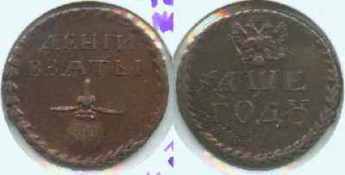
On September 5, 1698, Czar Peter I was just returned from a trip to Europe, hot to “modernize” the Russian empire. All those European guys were clean shaven, so Peter introduced a tax on beards.

Beard_token

When you paid your beard tax of 100 Rubles, (peasants and clergy were exempt), you had to carry a “beard token”. Two phrases were inscribed on the coin: “The beard tax has been taken” and “The beard is a superfluous burden”. Failure to shave or pay the tax might lead to your beard being forcibly cut off your face. Some unfortunates had theirs pulled out by the roots, by Peter himself.

An anti-religious man and a Big fan of Voltaire and the secular humanist philosophers, ol’ Pete passed a tax on souls in 1718, joining the Russian levy on beehives, horse collars, hats, boots, basements, chimneys, food, clothing, all males, birth, death and marriage.

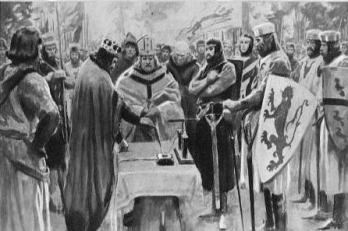
KingJohnMagnaCarta2

When Henry I reigned over England (1100 – 1135), people who avoided military service were charged a “Cowardice Tax”, called a ”Scutage”. The levy was modest at first, but Richard Lionheart’s little brother John raised it by 300% when he became King, charging even his own knights during years when there were no wars. It’s no small part of what led to the Magna Carta.

Often, taxes are used to shape social policy.

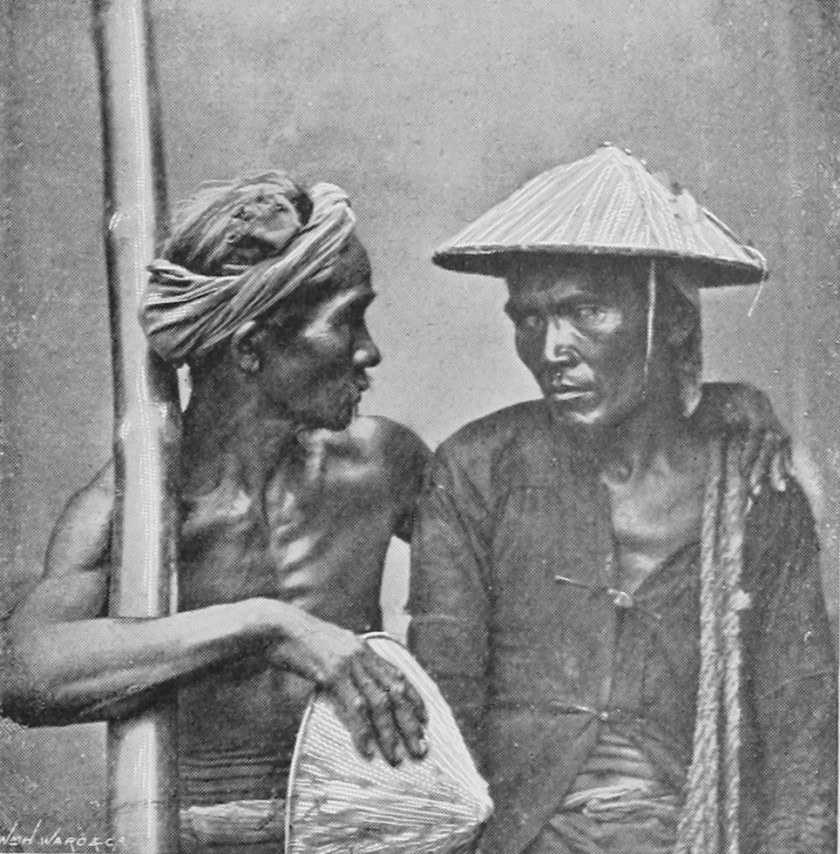
In 1862, the California legislature passed a tax on Chinese residents, entitled “An Act to Protect Free White Labor against Competition with Chinese Coolie Labor, and to Discourage the Immigration of Chinese into the State of California.

CHINESE_COOLIES

The new law levied a tax of $2.50 per month on every ethnically Chinese individual residing within the state, and followed a gold rush era measure levying a tax of $3.00 a month on all Chinese miners. This at a time when the average gold miner made $6 per month.

In 1795, British prime minister William Pitt (the Younger) levied a tax on wig powder.  By 1820, powdered wigs were out of style.

In New Jersey you can buy a pumpkin free of tax, until it been painted, varnished or cut up, for decoration. Then you’ll be charged a sales tax.

Pious politicians can’t resist “sin taxes”, “nudging” citizens away from the likes of evil weed and John Barleycorn, all the while making the self-righteous and the virtue-signaling feel good about themselves.

New Mexico likes competitive sports just fine but, games of chance like bingo or raffles? That’ll cost you another half-point.

I wonder. If cigarette taxes are supposed to encourage smoking cessation and taxes on Chinese were supposed to decrease competition from coolie labor, what are income taxes are supposed to do?

imageedit_1297_6600491944

Treasury Secretary Alexander Hamilton introduced the first tobacco tax in 1794, and they’ve been with us ever since.

Federal and state governments both get their vig on a pack of butts, ranging from 30 cents a pack in Virginia, to $4.35 in New York. Throw in the taxes levied by counties, municipalities, local subdivisions and Boy Scout Councils (kidding), and people really do change behavior. Just, not always in the intended direction. There is a tiny Indian reservation on Long Island, home to a few hundred and measuring about a square mile. Their cigarette taxes are near zero and, until recently, tribal authorities sold about a hundred million packs a year.

European governments levied a tax on soap in the middle ages, leading to memorable moments in personal hygiene, I’m sure.

lwlpr04927-soap-tax

In ancient Egypt, Pharaoh levied a tax on cooking oil. It was illegal to re-use the stuff, but no worries. There was a state-run monopoly on cooking oil, coincidentally run by Pharaoh.  Imagine that.

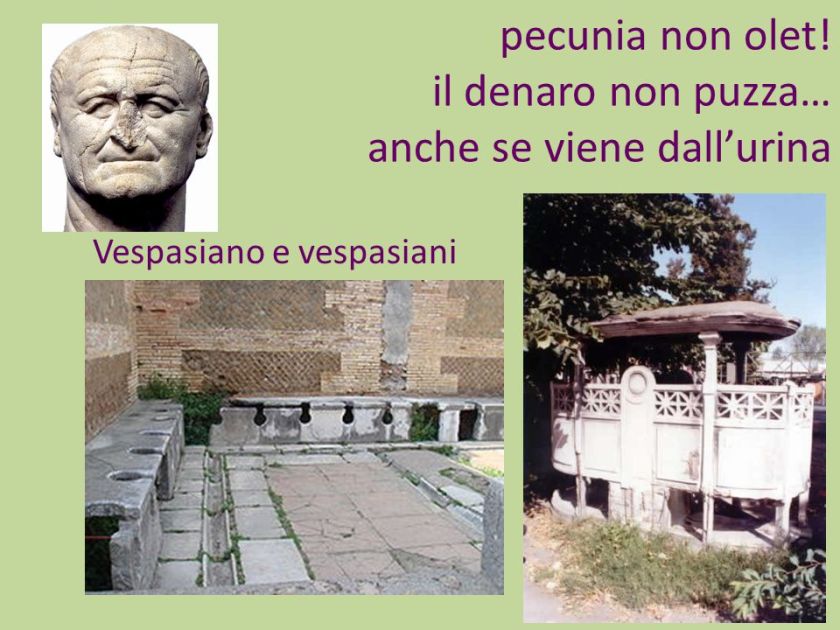
In the first century AD, Roman Emperors Nero and Vespasian levied a tax on pee. Honest. In those days, the lower classes pissed into pots which were emptied into cesspools.

Urine was collected for a number of chemical processes such as tanning, and it did a swell job whitening those woolen togas. When Vespasian’s son Titus complained about the disgusting nature of the tax his father showed him a gold coin, saying “Pecunia non olet”. “Money does not stink”.

Vespasiano e vespasiani.

To this day, Italian public urinals are called vespasiani.  In France they’re vespasiennes. And if you need to pee in Romania, you could visit the vespasiene.

My personal favorite might be the long distance tax that used to appear on American phone bills. This one began as a “Tax the Rich” scheme, first implemented to pay for the Spanish-American war, in 1898. Nobody ever made long distance phone calls but rich guys, right? It took a lawsuit to end the damned thing which was finally discontinued, in 2005.  We can’t be too hasty about these things.

March 25, 1965 Murder Bay

“Men were known to go into Murder Bay and were not heard of again until their bodies were discovered in the canal or found buried in ash dumps”. – Washington Post, 1888

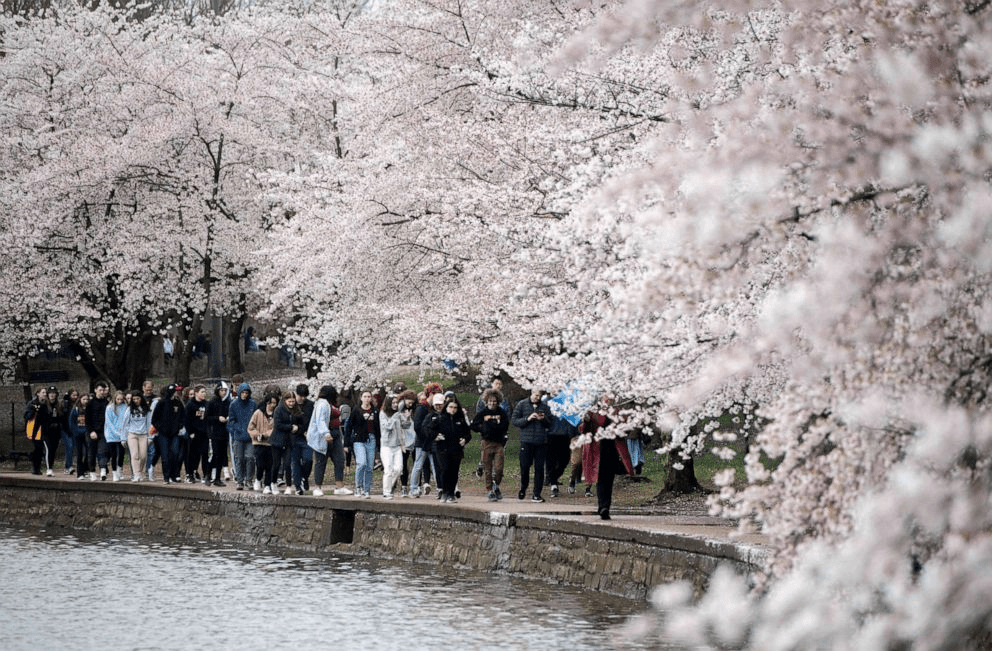
March is upon us once again, a time when tourists flock to our nation’s capital to take in the cherry blossoms, along the banks of the Potomac. A gift to the United States from the people of Japan the Yoshino cherry in bloom has been called, the “most beautiful thing in the world.

H/T ABC News for this image of the cherry blossoms, of 2022

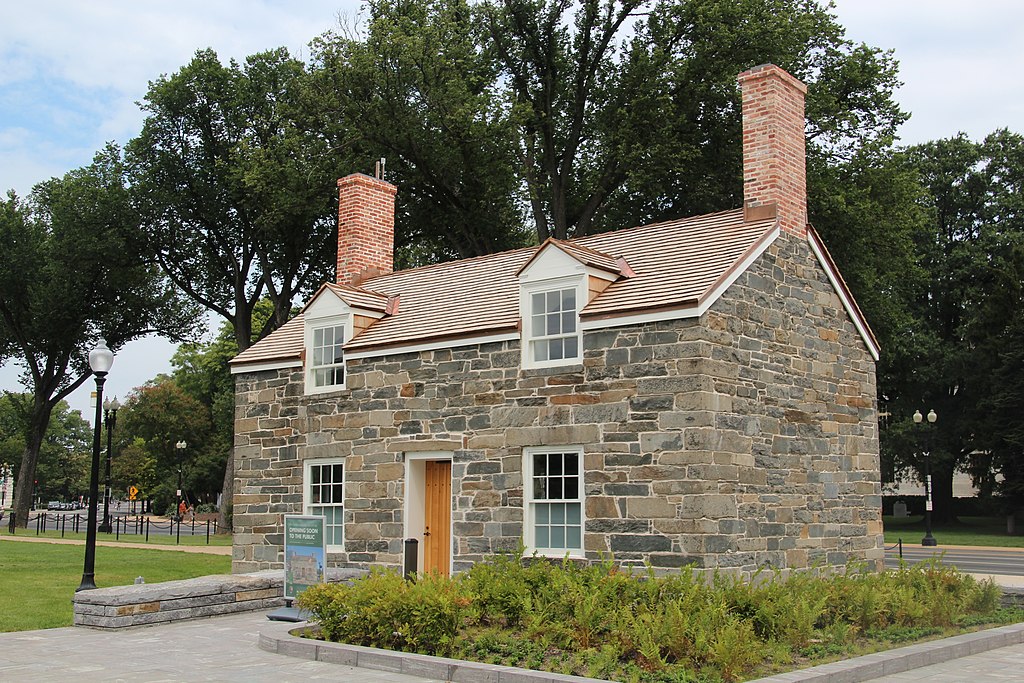
There, tourists may take in the Lock Keeper’s House, the oldest structure yet standing on the National Mall whose purpose it was to collect tolls and make records of travelers, on the Washington City Canal. Why you may ask, is a lock keeper’s house located at the corner of Constitution Avenue and 17th Street, some ten blocks from the Potomac?

The answer takes us back to a day when our nation’s capital was anything but, the most beautiful place on the earth.

Between 1775 and 1783, the United States Congress and its predecessor bodies did their business in the Pennsylvania State House in Philadelphia, later known as “Independence Hall”.

Lenfant City Plan

The “Residence Act” of July 1790 established a home for the Federal government along the banks of the Potomac River. 

The specific site was under negotiation when Alexander Hamilton brokered a deal.  Several delegates supported the current location in exchange for which, the Federal government agreed to assume their state’s debt, from the late revolution.

Pierre L’Enfant was selected to create the city plan as well as a design, for the buildings themselves. At the time, navigable waterways formed the economic backbone of the nation. L’Enfant’s plan allowed for a great canal connecting the Anacostia River called the “East branch” with the Tiber Creek, a tributary waterway to the Potomac.

Interest was high in such a canal but funding, was not. The project proceeded in fits and starts over the following decade and stopped altogether, during the War of 1812.

The Washington City Canal was dedicated in 1815. The Chesapeake and Ohio Canal was finished in 1833 and the lock keeper’s house, two years later. The system had problems from the beginning, overflowing its banks at extreme high tides and becoming too shallow for navigation, at extreme lows. Congress appropriated funds for improvements in 1849 but there were problems with contractors, and staff.

By now, business and government alike looked to the railroad as the future of commerce. The Washington City Canal fell into disrepair.

Washington City Canal H/T photographer, Tom Bosse

Dead animals joined with effluent of every manner and description to fill the W canal. In an age before streetlights, the Washington Evening Star of 1859 called the thing a “Man Trap”, “…because of the number of persons who have walked into it and drowned.” The Secretary of the Interior labeled the canal “a shallow, open sewer, of about one hundred and fifty feet in width, (sometimes called a canal,) which stretches its filthy surface through the heart of the city.”

The Civil War more than doubled Washington’s population with everything from soldiers and political types to escaped slaves living in “contraband camps”, along the canal.

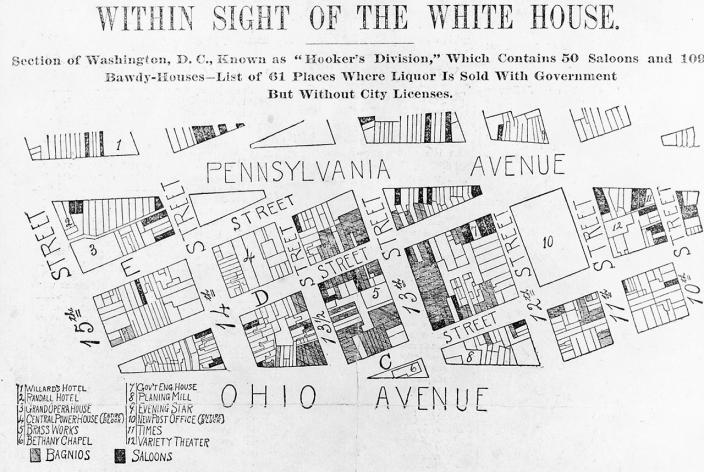
Prostitutes flocked to over 100 houses of ill repute to service the needs, of Union General Joseph Hooker’s army. It’s a myth to say that’s where we get the term “hooker” from, but these ‘ladies of the night’ arrived in such numbers they would come to be called, “Hooker’s Division”.

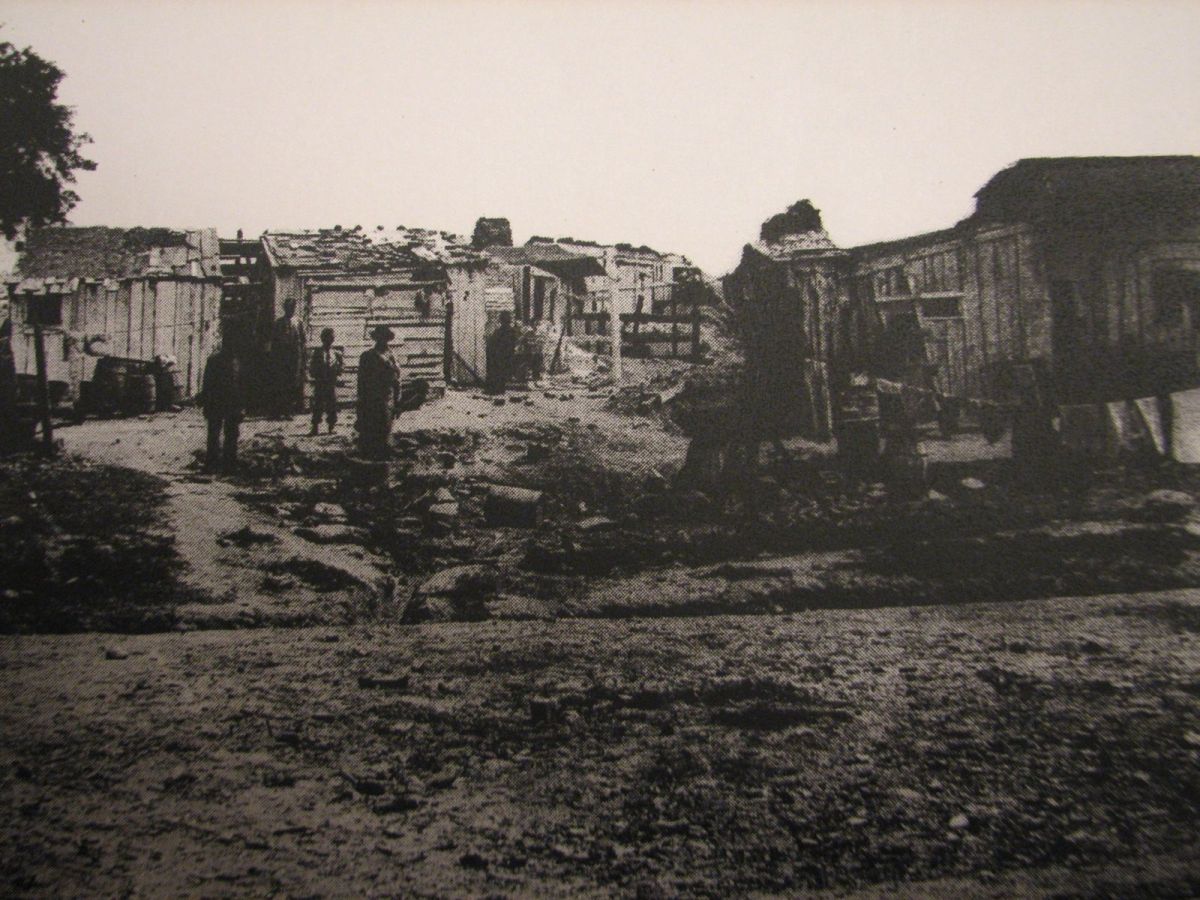
Desperate to contain the seedier aspects of the city General Hooker consolidated the dark underbelly of the nation’s capital into these few blocks. What was already a seedy redlight district of brothels, gambling dens and alcohol was transformed to a hideous slum, known as “Murder Bay”.

Murder bay in 1855, H/T Smithsonian

Crime and violence rose to almost cartoonish levels. The place was so dangerous the police themselves stayed out, if at all possible. The Washington Post wrote in 1888 “Men were known to go into Murder Bay and were not heard of again until their bodies were discovered in the canal or found buried in ash dumps”. ‘Reforms’ were attempted throughout the post-war era, without success.

Murder Bay as it looked, in 1910

What began with the best of intentions was destined to end, with the wrecking ball. As the ‘Great War’ started up ‘over there’ the federal government bought up land on Pennsylvania Avenue between 14th and 15th Streets. In the 1920s a handy new invention called the bulldozer, helped out.

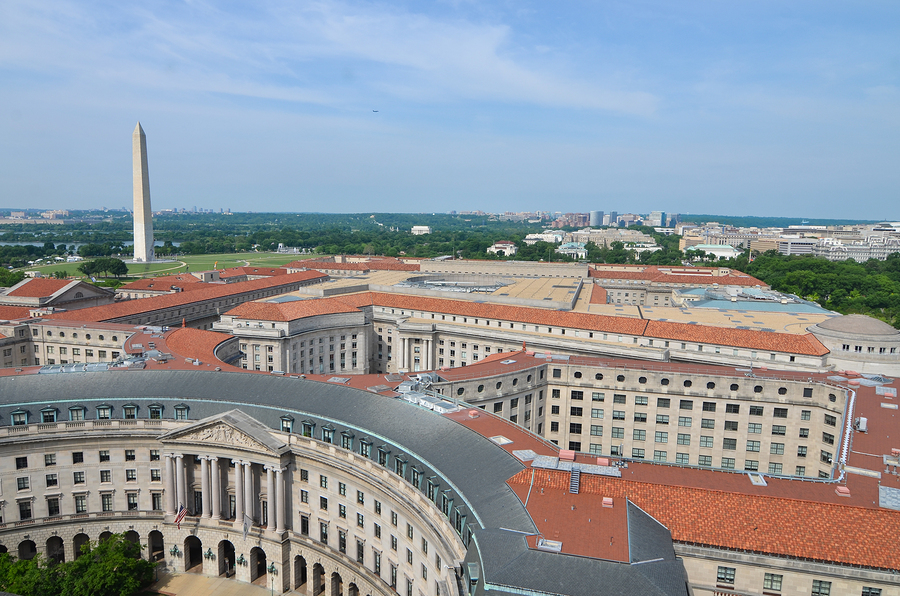
Ten large city and federal office buildings were built in parts of Murder Bay to form an area now known as, the Federal Triangle. Other parts were razed beginning in the mid-1920s to be replaced with the Internal Revenue Service and the Departments of Justice, Labor, Interstate Commerce and the National Archives.

Washington DC, skyline with federal government buildings and the Monument

On March 25, 1964, President Lyndon Johnson signed Executive Order No. 11210 providing for “the development of an orderly, phased program for carrying out the improvement of Pennsylvania Avenue”.

The notorious slum known as Murder bay is but a memory now but the canal where it all began, yet flows to the sea. Pierre L’Enfant’s channel is still there, bricked over beneath the wheels of the busses and the bicycle rickshaws and the feet of all those tourists, come to see the cherry blossoms, along the Potomac.

February 22, 2005 I’m from the Government and I’m Here to help

At a 1981 news conference President Ronald Reagan once quipped, “The nine most terrifying words in the English language are: I’m from the Government, and I’m here to help”.


In 1775, Connecticut Governor Jonathan Trumbull proposed a fortification at the port of New London, situated on the Thames River and overlooking Long Island Sound. The fort was completed two years later. In 1781 Fort Trumbull was attacked and occupied by British forces under the command of the turncoat American General, Benedict Arnold. Barely a month later the Marquis de Lafayette exhorted American troops at a place called Yorktown, to “Remember New London”.

By the early 20th century, the Fort Trumbull neighborhood consisted of 90 or so single and multi-family working class dwellings, situated on a peninsula along the fringes of a mostly industrialized city center.

GZUCKER_030
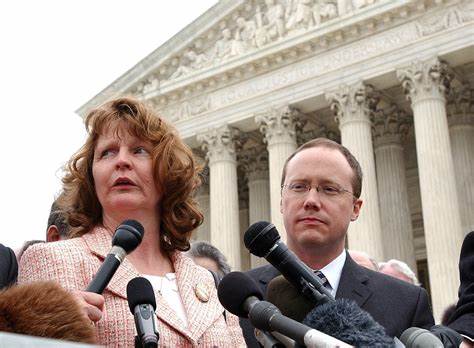
In 2000, Susette Kelo became the main plaintiff in the Supreme Court eminent domain case, “Kelo v. New London”

In 1996, chemists working at Pfizer Corporation’s research facility in England were studying compound UK-92, 480 or “Sildenafil Citrate”, synthesized for the treatment of thoracic circulatory conditions. 

Study subjects were expected to return unused medication at the end of the trial. Women showed no objection but a significant number of male subjects refused to give it back. It didn’t take long to figure out what was happening.  The chemical compound had revealed itself to be useful in other ways, a substance we now know by the trade name, “Viagra”

For the newly divorced paramedic Susette Kelo, the house overlooking the Fort Trumbull waterfront was the home of her dreams. Long abandoned and overgrown with vines, the little Victorian cottage needed a lot of work, but where else was she going to find a waterfront view at such a price?  

The year was 1997. Republican governor John Rowland was eager for a victory in deep blue Connecticut and looked to New London, to shore up his political base. Reluctant to share the limelight with New London democrats the administration helped to resurrect the long-dormant New London Development Corporation (NLDC) to revitalize the city’s waterfront.

Meanwhile on her days off, Susette Kelo sanded her floors on hands and knees as Pfizer Corporation, already occupying the largest office complex in the city, eagerly anticipated a cataract of new business based on this latest chemical compound.

The NLDC recruited the company to become the principal tenant in a new “World Class” multi-use waterfront campus overlooking the harbor including high-income housing, hotels, shopping and restaurants, all of it centered around a 750,000 sq. ft. corporate research facility.

062405ED1
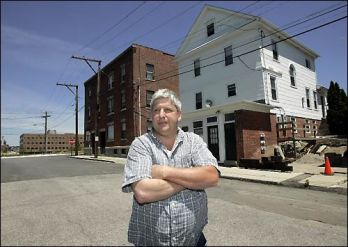
Bill von Winkle stands in front of two properties he owns in the Fort Trumbull neighborhood of New London, CT

Connecticut College professor and NLDC President Dr. Claire Gaudiani liked to talk about her “hip” new development project.  Fort Trumbull residents were convinced that stood for “High Income People”. With an average income of $22,500, that didn’t include themselves.

Most property owners agreed to sell, though not exactly “voluntarily”.  The reluctant ones were harassed including late-night phone calls, waste dumped on properties and tenants locked out of apartments during cold winter weather.

Seven homeowners holding fifteen properties refused to sell, at any price. Wilhelmina Dery was in her eighties. She was born in her house and she wanted to die there. The Cristofaro family had lost another New London home in the 1970s, taken by eminent domain during yet another “urban renewal” program. They didn’t want to lose this one, too.

th
Susette Kelo in front of her “little pink house”

In 2000 the New London city council voted to authorize the NLDC to use eminent domain to condemn the property, of those who refused to sell. The day before Thanksgiving, Susette Kelo came home from work to find an eviction notice taped to her door.

Letters were written to editors and protest rallies were held, as NLDC and state officials literally began to bulldoze homes. Holdout property owners were left trying to prevent personal injury and property damage, from flying demolition debris.

Facing a prolonged legal battle which none of the homeowners could afford, the group got a boost when the Libertarian law firm Institute for Justice took their case, pro bono. There was cause for hope. Retired homeowner Vera Coking had faced a similar fight against the future President Donald Trump’s development corporation back in 1993 when the developer and Atlantic City New Jersey authorities attempted to get her house condemned, to build a limo lot.

Eminent domain exists for a purpose, but the most extreme care should be taken in its use. Plaintiffs argued that this was not a “public use”, but rather a private corporation using the power of government to take their homes for economic development, a violation of both the takings clause of the 5th amendment and the due process clause of the 14th.

Vera Coking won her case against the developer, and the municipality.  The casino itself later failed and closed its doors. New London District Court, with Susette Kelo lead plaintiff “split the baby”, ruling that 11 out of 15 takings were illegal and unconstitutional. At that point, the ruling wasn’t good enough for the seven homeowners. They had been through too much.  They would all remain, or they would all go.

Connecticut’s highest court reversed the decision, throwing out the baby AND the bathwater in a 3-4 decision. By this time Governor Rowland had been removed from office, convicted of corruption and sentenced to a year and a day in prison plus four months of house arrest, three years probation and community service.

No matter, Rowland had served his purpose. The case was now beyond Connecticut politics. Seven justices of the United States Supreme Court then in attendance heard the case on February 22, 2005.

Chief Justice William Rehnquist was then recuperating at home from medical treatment and Associate Justice John Paul Stevens was delayed in Florida and unable to return to return to Washington, DC. All nine justices would weigh in on the final decision.

SCOTUS ruled in favor of the city in a 5-4 decision, Justices Stevens, Kennedy, Souter, Breyer and even that celebrated social justice warrior Ruth Bader Ginsburg concurring in a vote to throw a working class woman, out of her home.

Seeing the decision as a reverse Robin Hood scheme which would steal from the poor to give to the rich, Sandra Day O’Connor wrote “Any property may now be taken for the benefit of another private party, but the fallout from this decision will not be random. The beneficiaries are likely to be those citizens with disproportionate influence and power in the political process, including large corporations and development firms“.

20110325_26_300x400

Clarence Thomas took an originalist view stating that the majority opinion had confused “Public Use” with “Public Purpose”. “Something has gone seriously awry with this Court’s interpretation of the Constitution“, Thomas wrote. “Though citizens are safe from the government in their homes, the homes themselves are not“.  Antonin Scalia concurred, seeing any tax advantage to the municipality as secondary to the taking itself.

In the end, most of the homes were destroyed or relocated. State and city governments spent $78 million and bulldozed 70 acres.  The 3,169 new jobs and $1.2 million in new tax revenue anticipated from the waterfront development, never materialized.  Pfizer backed out of the project moving 1,400 existing jobs to a campus it owns in nearby Groton.  The move was completed around the time when tax breaks were set to expire, raising the company’s tax bill by 500%.

Susette Kelo sold her home for a dollar to Avner Gregory, a preservationist who dismantled the little pink house and moved it across town.  A monument to what Ambrose Bierce once called “A strife of interests masquerading as a contest of principles. The conduct of public affairs for private advantage”.

Movie Trailer and feature image from the film “Little Pink House” released in April, 2018.

By 2011, the now-closed redevelopment area had become a dumping ground for debris left by Hurricane Irene. The only residents were weeds, and feral cats.

popup
“Michael Cristofaro in the field in New London, Conn., where his parents lived. The city seized the land for a private “urban village” that was never built. Pfizer’s complex is in the background”. Credit Christopher Capozziello for The New York Times

Ten years after the debacle the company is in the news, yet again. The December 2021 CNBC headline informs us: “Pfizer CEO says fourth Covid vaccine doses may be needed sooner than expected due to omicron“. Two months later the same outlet reported “Pfizer expects $54 billion in 2022 sales on Covid vaccine and treatment pill“. That’s pretty good work. If you can get it.

In the decade since it all began revitalization amounted to the cube root, of zero. In 2019, local wags took to planting fruit trees and vegetables where working class homes, once stood. A sign posted on social media read, “A gift to the people, reclaiming land stolen by corporate greed.” These latter-day daughters and sons of liberty might have added the two words, “…and government“.

February 19, 1914 Baby Mail

With new postal regulations now in effect, people tested the limits. Bricks were mailed as were snakes and any number of small animals, as long as they didn’t require food or water on the trip. The first parcel mailed from St. Louis Missouri to Edwardsville Illinois contained six eggs. Seven hours later the eggs came back to St. Louis, baked in a cake.

At one time, nations paired up to negotiate postal treaties providing for the direct exchange of mail. The US signed such a treaty with Prussia, in 1853. Germany wasn’t a country in those days in the sense that it is today, more of a collection of independent city-states. Some states in southern Germany sent US-bound mail through France but, there being no Franco-American treaty, mail was forced to travel on British or Belgian cargo vessels. France and the United States wrangled over a postal treaty from 1852 until July 1874 leading the exasperated Minister to France Elihu Washburne to groan: “There is no nation in the world more difficult to make treaties with than France.”

The German Empire was formed in 1871 following victory, in the Franco-Prussian War. The German Reichspost was now free to enact uniform postal regulations within the new nation. Even so, US-bound letters required differing amounts of postage, depending on which ship the letter traveled on. Something had to change.

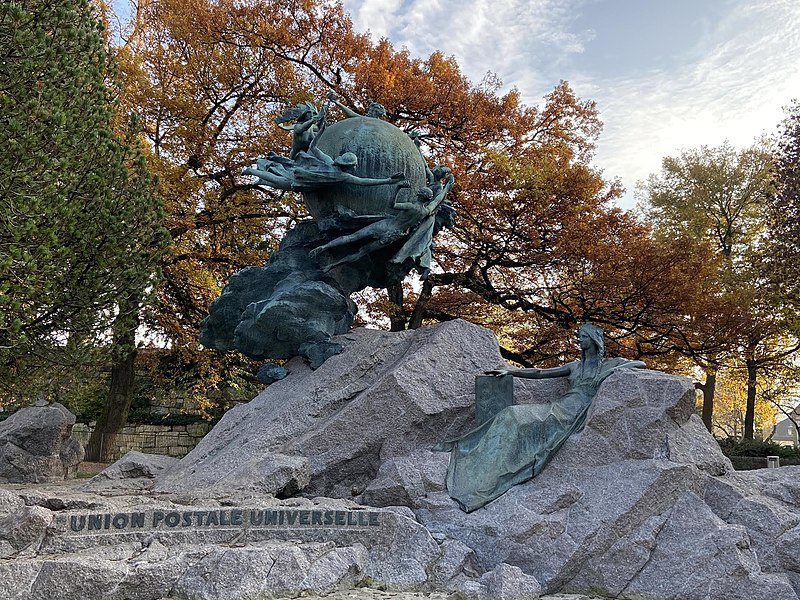
German Postmaster-General Heinrich von Stephan called for an International Postal Congress in 1874. The Treaty of Bern signed on October 9 resulted in a uniform system of postage between nations. That, and a very nice statue in granite and bronze in memory of the new, Universal Postal Union.

All was well between nations but here in the US, the postal service was barely out of diapers. The mail didn’t even go to the “country”. Rural residents were forced to travel days to distant post offices or hire private express companies, to deliver the mail. For years, the National Grange and other farmers’ welfare organizations lobbied Congress for inclusion in the national mail service. The Rural Free Delivery (RFD) act of 1896 opened new worlds to farmers who soon clamored for exotic foodstuffs and tobacco unavailable in rural districts.

Unsurprisingly, rural merchants and express delivery companies fought the measure tooth and nail but they were destined to fail. Parcel post service began on January 1, 1913.

Overnight, parcel limits increased from 4 pounds to fifty. During the first five days alone 1,594 post offices handled over 4 million packages.

People tested the limits. Bricks were mailed as were snakes and any number of small animals, as long as they didn’t require food or water on the trip. The first parcel mailed from St. Louis Missouri to Edwardsville Illinois contained six eggs. Seven hours later the eggs came back to St. Louis, baked in a cake.

You know where this is going, right?

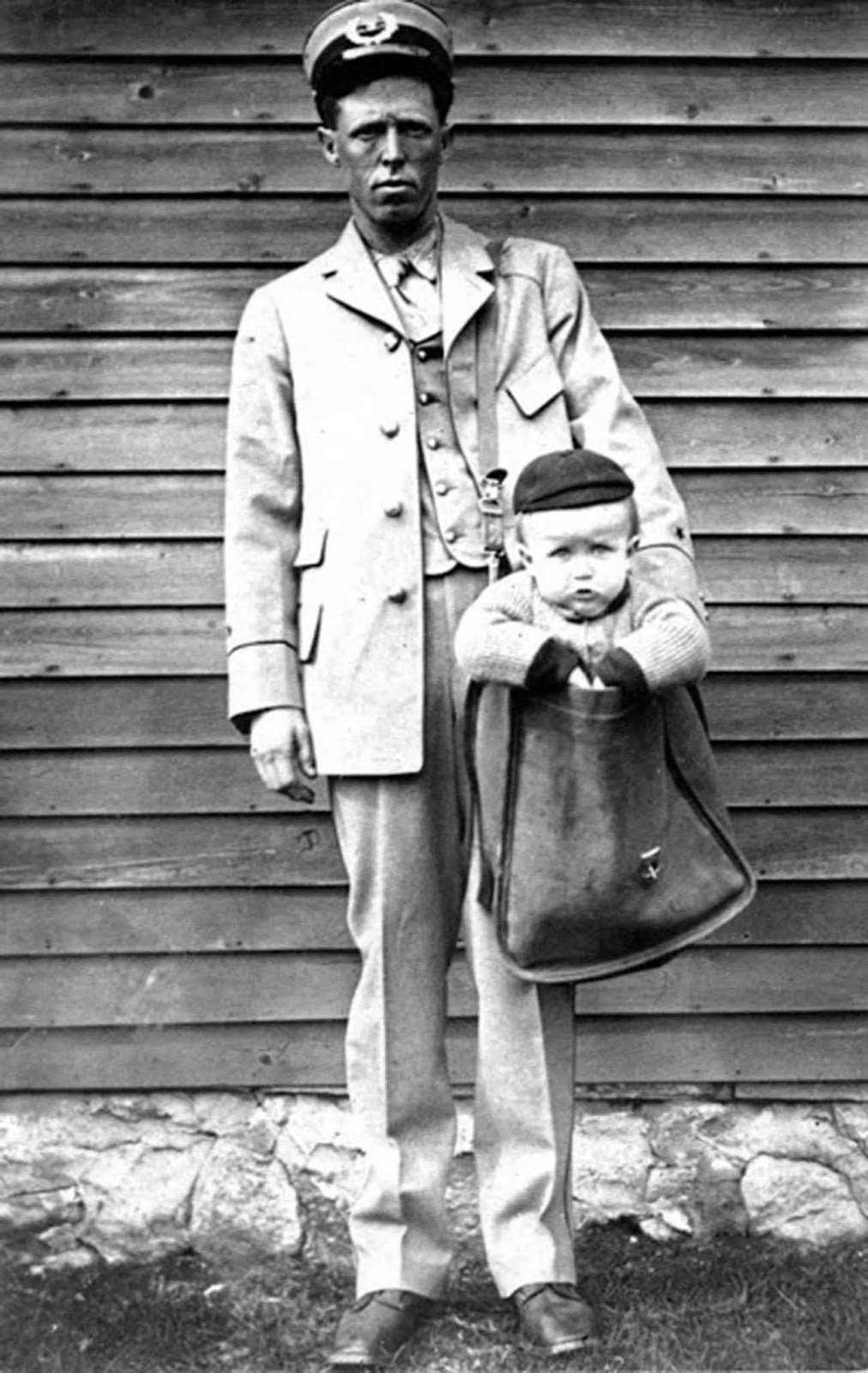
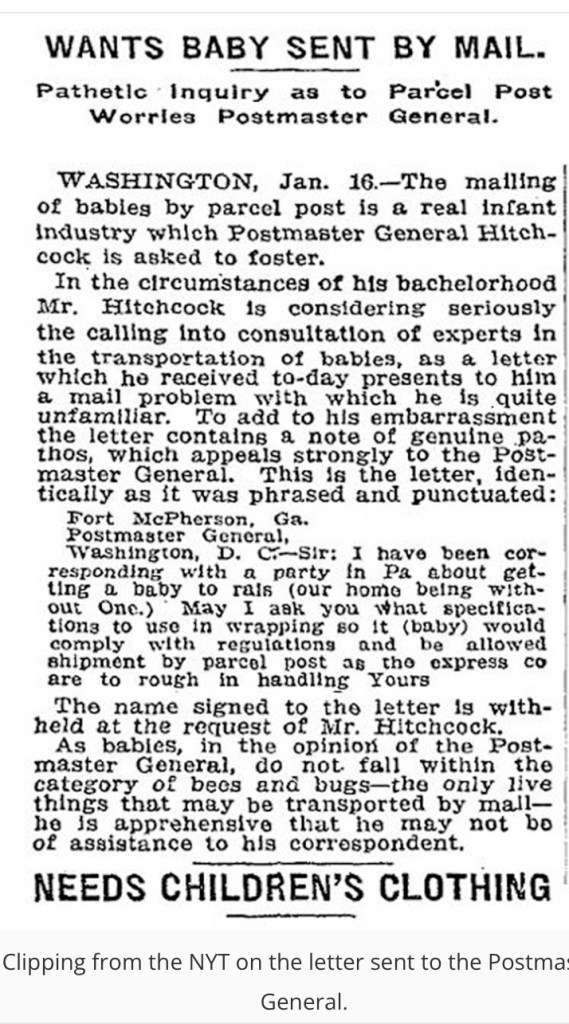
In 1913, Mr. and Mrs. Jesse Beauge of Glen Este, Ohio mailed their baby boy. Seriously. The couple mailed their ten-pound son off to his grandmother’s house a mile away at a cost, of 15¢ postage. History fails to record whether the kid was left in the mailbox or stuffed through a slot in the door, but these people were no cheapskates. The pair popped for 50 bucks’ insurance, “just in case“.

5-year-old May Pierstorff came in just under the weight limit at 48½ pounds. On February 19, 1914, little May was mailed to visit her grandmother in Lewiston Idaho with 53¢ postage, pinned to her coat. She rode the whole way in the postage compartment but hey, postage was cheaper than train fare. Leonard Mochel, the mail clerk on duty delivered the kid to her grandmother’s house, personally.

Six-year old Edna Neff was mailed 720 miles away from Pensacola, Florida to Christiansberg, Virginia, to visit her father.

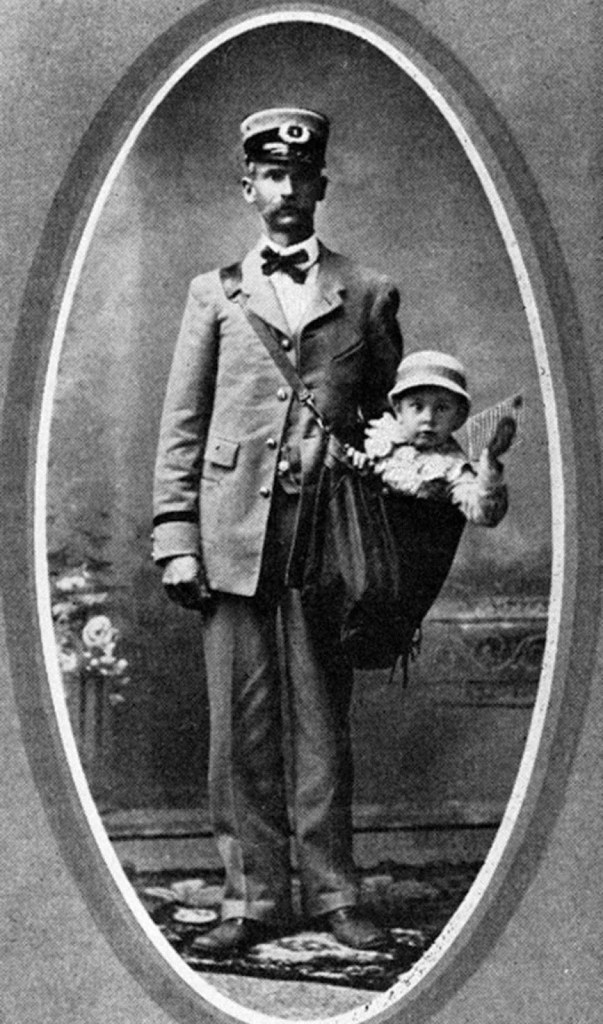
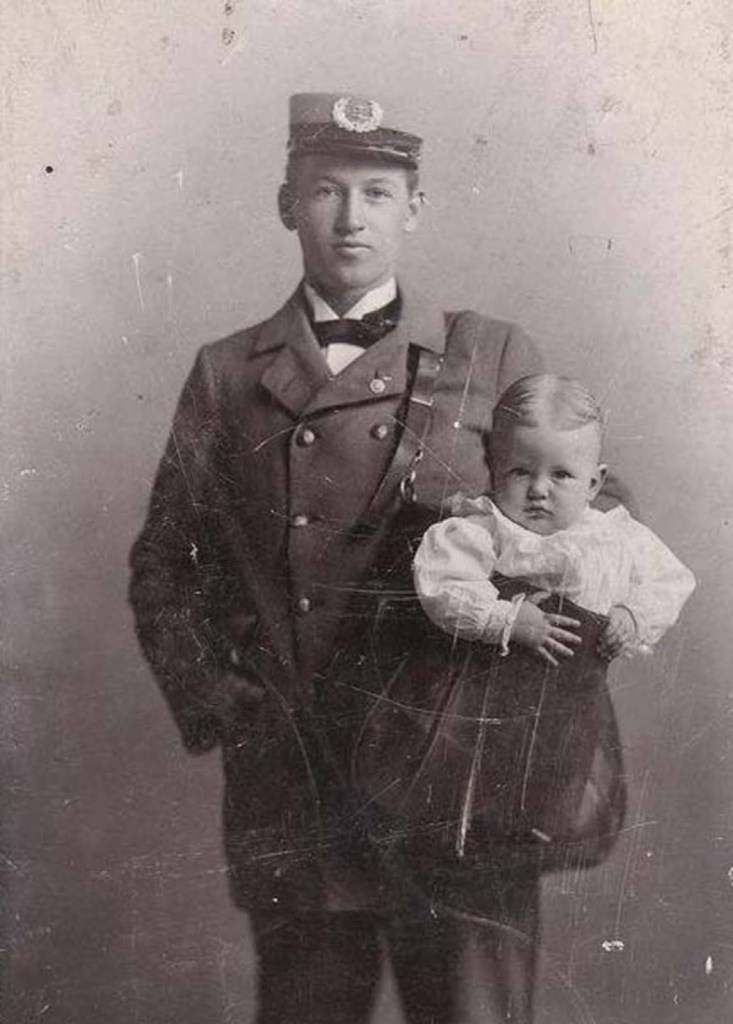
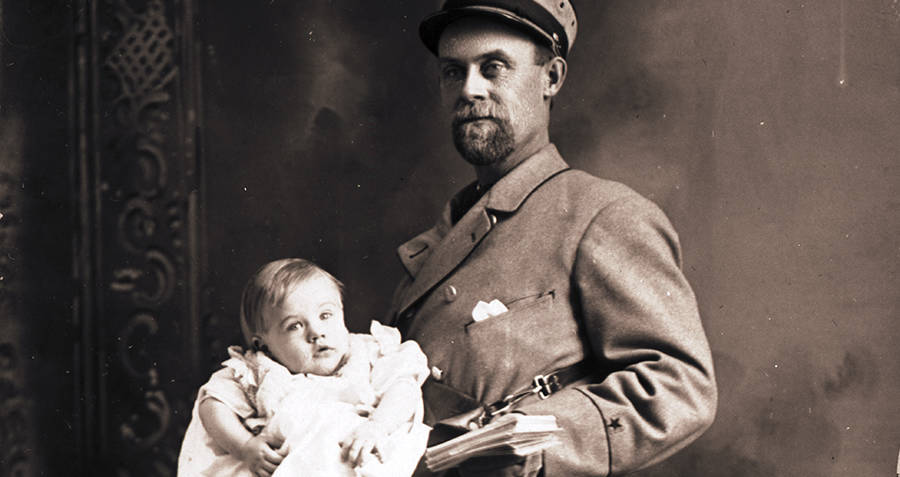
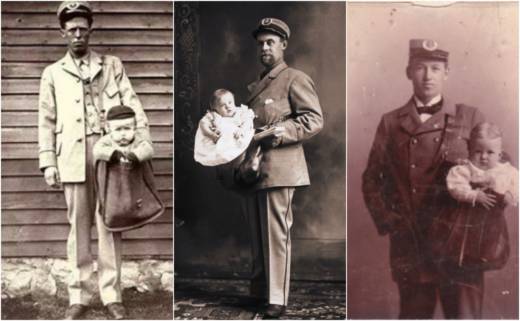
.If you have read thus far with horror permit me to assure you that mailing babies might not be as bad as it sounds. In the rural America of this period the mail carrier was no stranger but a well known and trusted member of a close-knit community. In the case of little May Pierstorff the postal worker who took her by rail, was a relative. No one ever put a child wearing diapers in a mailbox. The photographs above were staged, the sepia-toned faces grinning back over the years at those of us, they have punked.

Be that as it may, Postmaster General Albert S. Burleson heard of the Pierstorff incident and put his foot down. The practice of mailing humans was officially prohibited. The golden age of baby mail had come to an end. Sort of.

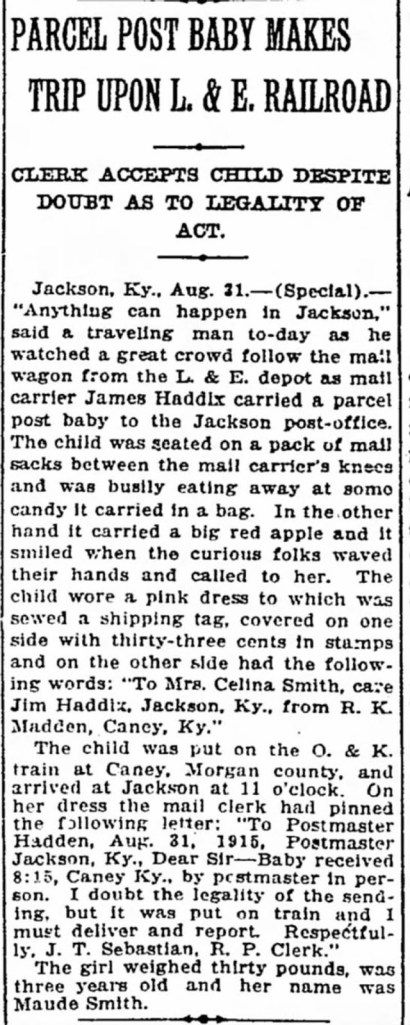
In August 1915 three-year old Maud Smith was mailed forty miles across Kentucky by her grandparents, to visit her sick mother. Hers may be the last human journey by US mail and the postmaster in Caney Kentucky, had some explaining to do.

In June 1920 1st Assistant Postmaster General John C. Coons rejected two applications to mail live children stating they could no longer be classified, as ‘harmless live animals”.

February 18, 1943 Just a Normal Person

“Success is not final, failure is not fatal: it is the courage to continue that counts.” ― Winston S. Churchill

With Hitler’s appointment as chancellor on January 30, 1933, the Nazi party lost little time in eliminating opposition. Two days later, the 876-member democratically elected deliberative body, the “Reichstag”, was dissolved.

As the 1930s wore on it was increasingly dangerous to oppose the Nazi party. History fails to record many of the names of those who simply…disappeared. Forget for a moment the idiocy of our age and the ease with which the word Nazi, is thrown around. Then imagine having the courage to oppose those monsters alone, in the 1930s and ’40s. Many who did so would pay with their lives: Bernhard Lichtenberg. Martin Niemöller. Claus von Stauffenberg. Franz Jägerstätter. Dietrich Bonhoeffer. There were others. Too many to count.

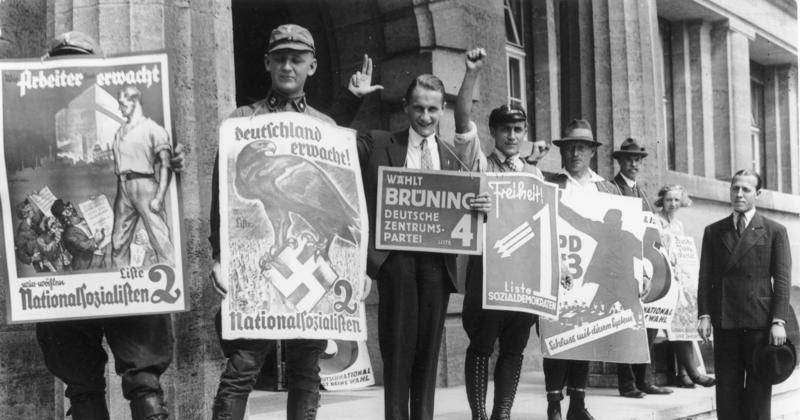
Campaigners outside a polling place during the federal elections, of 1932

Some survived to tell the tale. One such was the Württemberg politician Robert Scholl who criticized the ruling party before, during and after World War 2. Scholl was one of the lucky ones. He lived to tell the story, but not without spending some of the intervening years, behind bars.

Robert and Magdalena (Müller) Scholl had six children together, four girls and two boys. The older of the two brothers, Hans, joined the Hitler youth, against the express will of his father. 

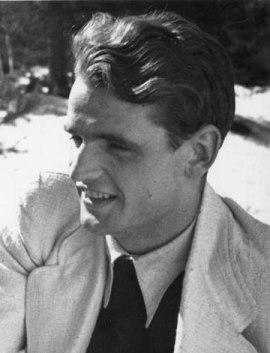
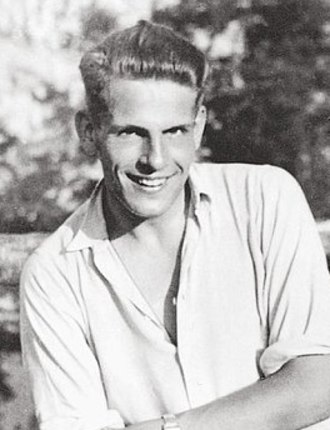
Hans Scholl

Hans even held a leadership position in the Deutsches Jungvolk in der Hitler Jugend (“German Youngsters in the Hitler Youth”), a section of the Hitler Youth aimed at indoctrinating boys, 10-14.

In 1935, Hans was selected to carry the flag at the 1935 Nazi party rally in Nuremberg, one of three standard-bearers, from Ulm.

He joined the Reich Labor Service for two years before beginning medical school, in Munich. During a semester break, Scholl was drafted as a medic in the French campaign. Back at school, Scholl began to meet teachers and students, critical of the regime. Theirs was a Christian-ethical world view. One of them was Alexander Schmorrell.

Hugo Schmorell was a German-born doctor, living and working in Russia. He married Natalia Vedenskaya, the daughter of a Russian Orthodox priest. Alexander Schmorell was born to the couple in Orenberg Russia and baptized, in the Russian Orthodox church. 

Hugo remarried after Natalia died of typhus, this time to a German woman who, like himself, grew up in Russia. Alexander grew up bilingual, able to speak German and Russian, like a native.

Following the Russian Revolution, the family moved to Weimar Germany . In later interrogations by the Gestapo, Alexander described himself as a German-Russian Tsarist who hated Bolsheviks. 

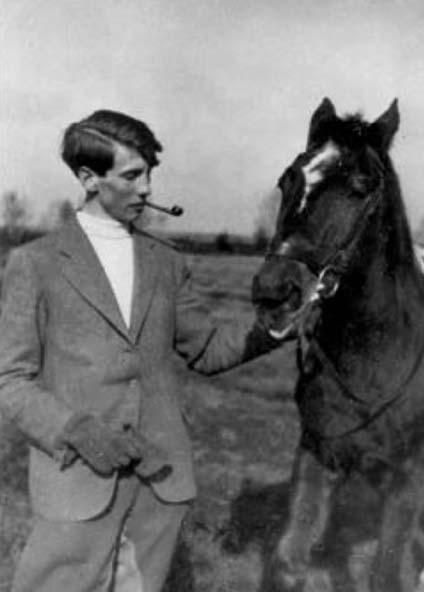
Alexander Schmorell

In the Nazi world view, slavs are part of a great horde of Untermenschen, people considered racially or socially, inferior. Alexander Schmorell believed no such thing about himself. He was proud of both his German and his Russian side.

In religion class, Schmorell displayed a stubborn refusal to bend to the will of others, crossing himself right-to-left in the manner of the Russian church and not left to right. Alexander joined the Scharnhorst youth as a boy, mostly for the love of horseback riding. Once the organization was absorbed into the Hitler Youth movement he gradually stopped attending. Like Scholl, Schmorell joined the Wehrmacht, participating in the Anschluss and eventual invasion, of Czechoslovakia.

In 1941, Scholl and Schmorrell were drafted as medical auxiliaries, for service in the east. There the two witnessed the dark underbelly of the regime in whose service, they risked their lives. The Warsaw ghetto. The savage treatment of Russian prisoners. The endless deportations and dark rumors of extermination centers.

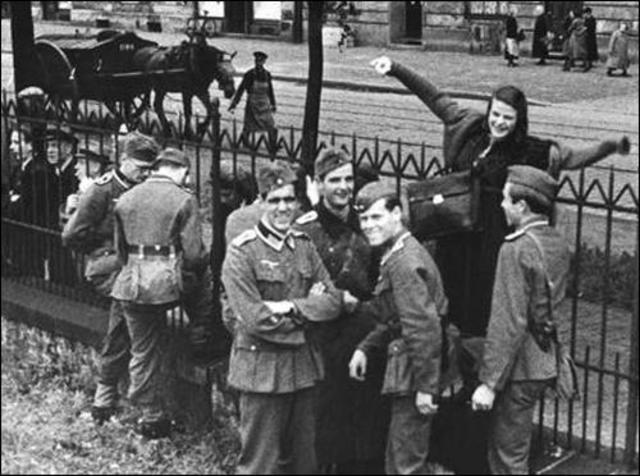
Members of the German resistance “White Rose, in 1942

Scholl and Schmorrell wanted better. Back in school the pair discussed this growing dissatisfaction with the regime with Kurt Huber, professor of music and a vocal anti-Nazi. By June 1942 the pair had begun to write pamphlets and calling themselves, the “White Rose”.

“Isn’t it true that every honest German is ashamed of his government these days? Who among us has any conception of the dimensions of shame that will befall us and our children when one day the veil has fallen from our eyes and the most horrible of crimes—crimes that infinitely outdistance every human measure—reach the light of day?”— 1st leaflet of the White Rose

Hans and Sophie Scholl with Christoph Probst

During later gestapo interrogations, Scholl gave differing stories as to the origin of the name. A poem of the same name by the German poet, Clemens Brentano. A work by the Cuban poet, José Martí. Perhaps it was nothing more than the purity of the white rose, in the face of evil. Or maybe Scholl meant to throw his Nazi tormenters off the scent of Josef Söhngen, the anti-Nazi bookseller who had helped them, in so many ways.

Willi Graf

Since the conquest of Poland, 300,000 Jews have been murdered in this country in the most bestial way … The German people slumber on in dull, stupid sleep and encourage the fascist criminals. Each wants to be exonerated of guilt, each one continues on his way with the most placid, calm conscience. But he cannot be exonerated; he is guilty, guilty, guilty!”— 2nd leaflet of the White Rose

The group added members and supporters. Willi Graf who, unlike the founding members hated the Hitler Youth movement, from the beginning. Christoph Probst whose step-mother was Jewish and considered the Nuremberg laws an affront to human dignity. Hans’ sister Sophie who joined, despite her older brother’s protestations. Like her brother, Sophie detested what the Nazis stood for.

“Why do you allow these men who are in power to rob you step by step, openly and in secret, of one domain of your rights after another, until one day nothing, nothing at all will be left but a mechanised state system presided over by criminals and drunks? Is your spirit already so crushed by abuse that you forget it is your right—or rather, your moral duty—to eliminate this system?”— 3rd leaflet of the White Rose

Sophie Scholl

“The government—or rather, the party—controlled everything: the news media, arms, police, the armed forces, the judiciary system, communications, travel, all levels of education from kindergarten to universities, all cultural and religious institutions. Political indoctrination started at a very early age, and continued by means of the Hitler Youth with the ultimate goal of complete mind control. Children were exhorted in school to denounce even their own parents for derogatory remarks about Hitler or Nazi ideology”.

Surviving White Rose member George J. Wittenstein, M.D., “Memories of the White Rose”, 1979

Bishop Clemens August Graf von Galen was critical of the Nazi movement from the beginning, denouncing Hitler’s “Worship of Race” as early as 1934.

Galen excoriated the Nazi euthanization program from the Catholic pulpits of Münster and across the German empire, condemning  “the innocent and defenseless mentally handicapped and mentally ill, the incurably infirm and fatally wounded, innocent hostages and disarmed prisoners of war and criminal offenders, people of a foreign race or descent”.

Bishop Galen’s sermons were seminal in the formation of the White Rose. One of his sermons formed the basis for the first pamphlet.

Hand copied leaflets were inserted into phone books or mailed directly, to teachers and students.

The grotesque sham trials conducted by Hitler’s “Blood Judge” Roland Feisler made short work of any who would oppose “Der Fuhrer”. Today, the “People’s Court” of Nazi Germany is best remembered in the wake of the July 20, 1944 plot to assassinate Adolf Hitler. In reality, this perversion of justice had been around for ten years, handing out death sentences, in the hundreds. This video gives a pretty good idea of “justice” meted out, in Roland Feisler’s court.

“The ultimate test of a moral society is the kind of world that it leaves to its children.”

Dietrich Bonhoeffer

There were Germans throughout the war who objected to the murder of millions, but theirs was a forlorn hope. Clergymen Dietrich Bonhoeffer would state “the ultimate question for a responsible man to ask is not how he is to extricate himself heroically from the affair, but how the coming generation shall continue to live.” For his opposition to the Reich, Bonhoeffer would pay with his life.

Helmuth James Graf von Moltke, great grand-nephew of the famous Helmut von Moltke would lead 28 dissidents of the “Kreisau Circle”, against this “outrage of the Christian conscience.” These too would pay with their lives.

The most successful German opposition party came from the universities of Munich, with connections in Berlin, Hamburg, Stuttgart and Vienna, including the White Rose. These were a surprise to Nazi leaders as Universities had long been stalwart supporters of Nazi ideology. 

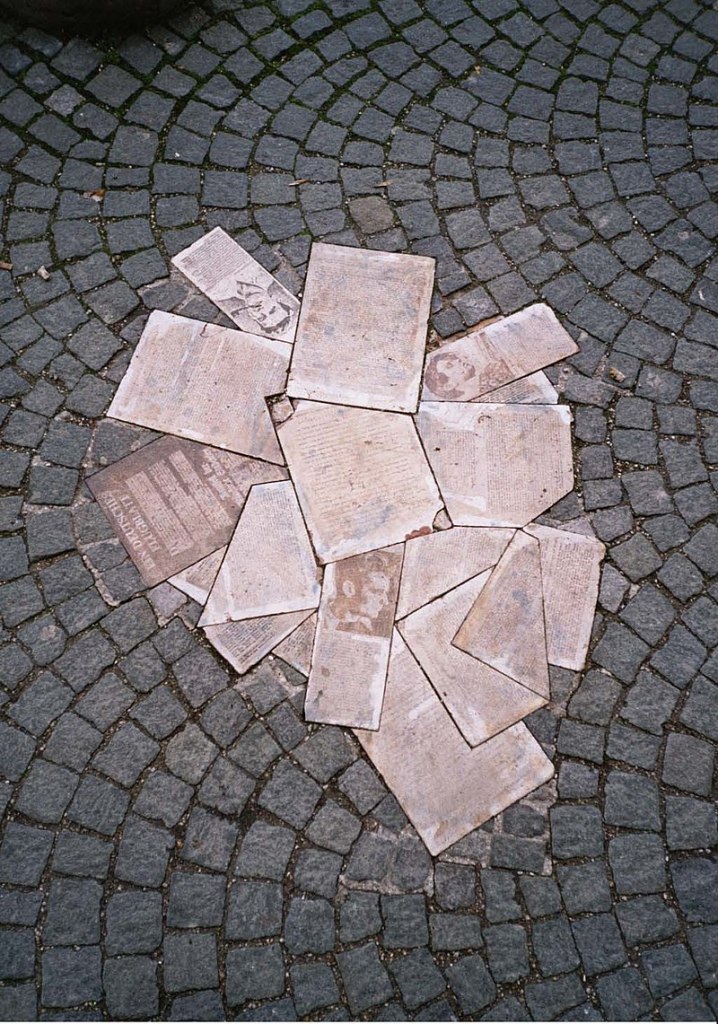
Hans and Sophie arrived on campus with a suitcase full of pamphlets, on February 18. This was their 6th. Hurriedly moving through the campus the Scholls left stacks of leaflets outside of full lecture halls: Memorial to the “Weiße Rose” in front of the Ludwig Maximilian University of Munich

Today, the “People’s Court” of the schweinhund Feisler is a district court, in Munich.

“…Fellow Fighters in the Resistance!  Shaken and broken, our people behold the loss of the men of Stalingrad. Three hundred and thirty thousand German men have been senselessly and irresponsibly driven to death and destruction by the inspired strategy of our World War I Private First Class. Fuhrer, we thank you!…” – Excerpt from pamphlet 6

Their task complete, the pair realized they still had a few. From the upper floor of the atrium, Sophie tossed them into the air and watched them flutter to the ground. It was a reckless and stupid act.

If this story is about heroism it also about the opposite, the sort of loathesome toady without who no Nazi regime, would have thrived. One such was the custodian Jakob Schmid, who scurried to the top of the stairs and grasped the two by the collar.

Christoph Probst

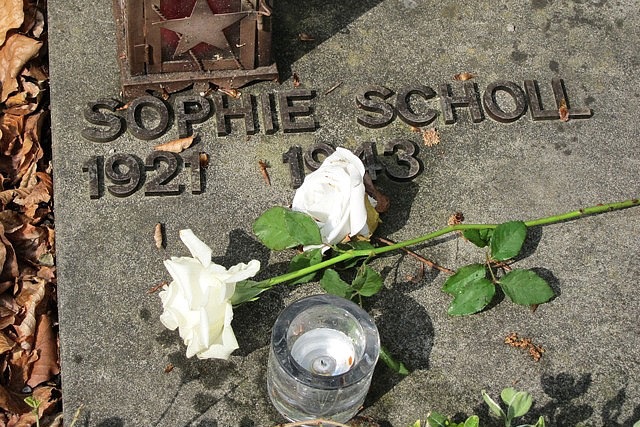
The Scholl siblings were quickly arrested. Hans had on his person the draft of another pamphlet: #7, written by Christoph Probst. He tried to eat it but the Gestapo was too fast. Probst was arrested within hours, eighty more over the following days. On February 22, 1943, all three were tried before judge Feisler’s People’s Court. All three were sentenced to death by guillotine, the execution carried out, the same day. 

Hans Scholl’s last words are recorded as Es lebe die Freiheit! (Let Freedom live!)

Graf, Schmorrell, Huber and 11 others were tried on April 13. All three received the same sentence, death by decapitation. All but one of the others received prison sentences, between 6 months and 10 years.

The last member to be executed was Hans Conrad Leipelt on January 29, 1945.

Despite the execution of the group’s leaders, the White Rose had the last word. That last pamphlet was smuggled out of Germany and copied, by the allies. Millions of copies rained down from the sky, dropped, by allied bombers.

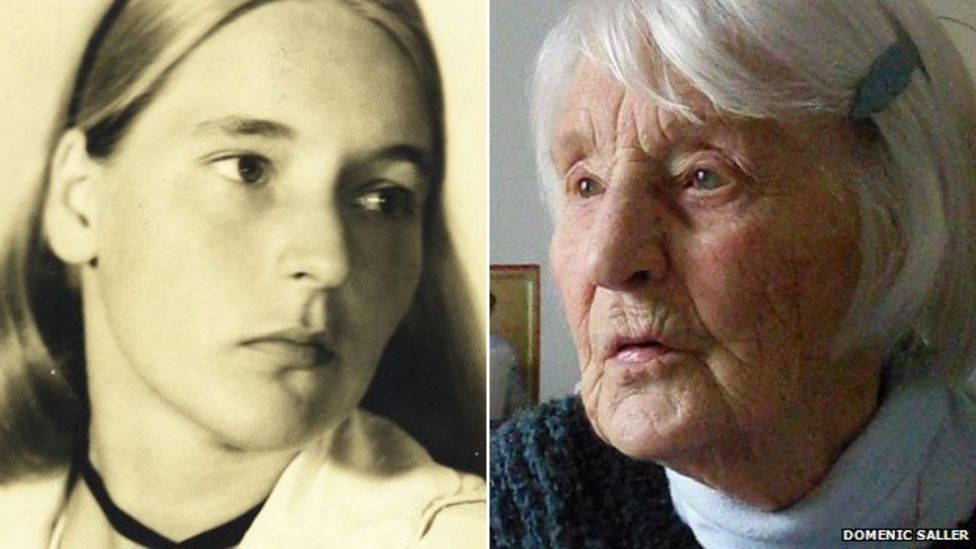
Lieselotte ″Lilo″ Fürst-Ramdohr was a war widow at 29 when she joined the White Rose, hiding pamphlets in an apartment closet and helping to make stencils, for graffiti. In 2013 she gave an interview for BBC Worldwide. It was three months before she died, at the age of 99.

Lieselotte ″Lilo″ Fürst-Ramdohr

Lieselotte was arrested and interrogated for a month by the Gestapo, and released. She thinks they’d hoped she would lead them, to fellow conspirators.

In 2012, Lilo’s friend Alexander Schmorell was awarded sainthood by the Russian Orthodox church. She thought it was all too amusing. “He would have laughed out loud” she said, “if he had known. He wasn’t a saint. He was just a normal person.”