

On April 1, 1785, the Times of London reported: “There is a cask now building at Messrs. Meux & Co.’s brewery…the size of which exceeds all credibility, being designed to hold 20,000 barrels of porter; the whole expense attending the same will be upwards of £10,000”.
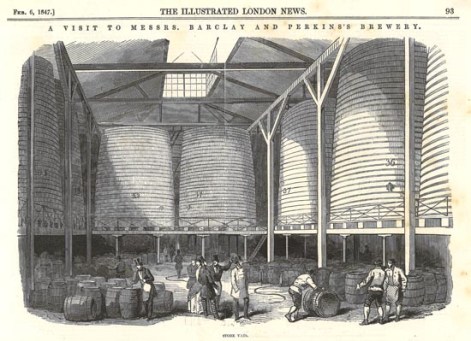 The Meux’s Brewery Co Ltd, established in 1764, was a London brewery owned by Sir Henry Meux. What the Times article was describing was a 22′ high monstrosity, held together by 29 iron hoops.
When completed, this would be one of several such vats, each designed to hold 3,500 barrels of brown porter ale.
The brewery was located in the crowded slum of St. Giles, where many homes contained several people to the room.

On October 17, 1814, storehouse clerk George Crick noticed one of those 700-pound iron hoops had slipped off a cask. This happened two or three times a year, and Crick thought little of it, writing a note to another employee, to fix the problem.
It was a bad decision.
The explosive release of all that hot, fermenting liquid could be heard five miles away, causing a chain reaction as the other vats went down like exploding dominoes.
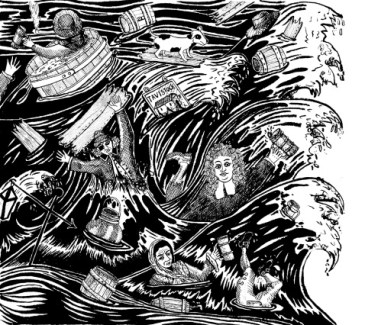 323,000 imperial gallons of beer smashed through the brewery’s 25′ high brick walls, gushing into the streets, homes and businesses of St. Giles. The torrent smashed two houses and the nearby Tavistock Arms pub on Great Russell Street, where a 14-year-old barmaid named Eleanor Cooper was buried under the rubble.
One brewery worker was able to save his brother from drowning in the flood, but others weren’t so lucky.
Mary Mulvey and her 3-year-old son Thomas were drowned, while Hannah Banfield and Sarah Bates, ages 4 and 3, were swept away in the flood. Both died of their injuries. Nine people lost their lives altogether, including one man who died of alcohol poisoning, apparently leading a heroic one-man effort to drink the entire flood.
As the torrent subsided, hundreds of people came outside carrying pots, pans, and kettles – whatever they had on hand to scoop up some of it. Some just bent low and lapped at the dirty, warm beer as it washed through the streets. Meanwhile, several injured were taken to the nearby Middlesex Hospital, where a near-riot broke out as other patients demanded to know why they weren’t getting some of it, too.
 In the days that followed, the crushing poverty of the slum led some to exhibit the corpses of their family members, charging a fee for anyone who wanted to come in and see. In one house, too many people crowded in and the floor collapsed, plunging them all into a cellar full of beer.
The stink lasted for months, as the Meux Brewery Company was taken to court over the accident. Judge and jury ruled that the flood was an ‘Act of God’ and the deaths were just a ‘casualty’, leaving no one responsible. Meux & Co. survived, though the financial loss was made worse by the fact that they had already paid tax on the beer. The company successfully applied to Parliament for a refund, and continued to brew beer on the same site.
The brewery was closed in 1921 and demolished the following year. Since 2012, a local tavern called the “Holborn Whippet” marks the event with its own vat of porter, brewed specially for this day. Cheers.


 Despite problems at home, the Dutch mail order bride found herself moving among the upper classes. She immersed herself in Indonesian culture and traditions, even joining a local dance company. It was around this time that she revealed her “artistic” name in letters home: “Mata Hari”, Indonesian for “sun” (literally, “eye of the day”), in Sanskrit.
 British reporter Henry Wales described the execution, based on an eyewitness account. Unbound and refusing a blindfold, Mata Hari stood alone to face her firing squad. After the shots rang out, Wales reported that “Slowly, inertly, she settled to her knees, her head up always, and without the slightest change of expression on her face. For the fraction of a second it seemed she tottered there, on her knees, gazing directly at those who had taken her life. Then she fell backward, bending at the waist, with her legs doubled up beneath her.”

 Great believers in the perfectibility of the public sphere, Progressives eschewed old methods as wasteful and inefficient, leaning instead toward the advice of academics and “experts”, looking for that “one best way” to get things done.
 Roosevelt retired from politics after two terms to go on African safari, backing William Howard Taft for the Republican nomination.


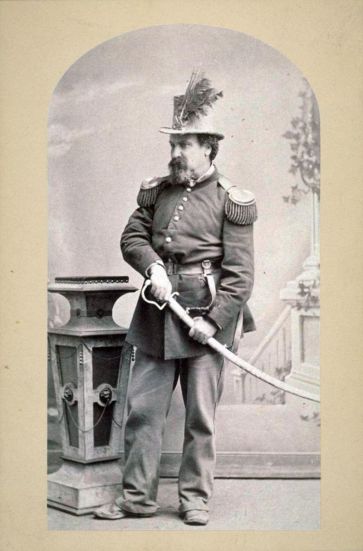 For a time, Norton disappeared from the public eye. In September 1859, he proclaimed himself Emperor of the United States, his Royal Ascension announced to the public in a letter to the editor of the San Francisco Bulletin. “At the peremptory request and desire of a large majority of the citizens”, it read, “I, Joshua Norton…declare and proclaim myself Emperor of these United States.” The letter went on to command representatives from all the states to convene in San Francisco, “to make such alterations in the existing laws of the Union as may ameliorate the evils under which the country is laboring.”
 That December, Norton fired Virginia Governor Henry Wise for hanging abolitionist John Brown, appointing then-vice President John C. Breckinridge in his stead.
 Norton wore an elaborate blue uniform with gold epaulettes, carrying a cane or saber and topped off with beaver hat with peacock feather. By day he “inspected” the streets and public works of San Francisco, by night he would dine in the city’s finest establishments. No play or musical performance would dare open in the city, without reserved balcony seats for Emperor Norton.
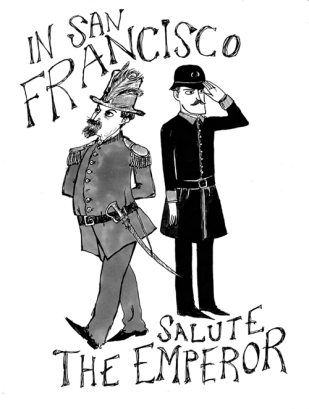 In 1867, police officer Armand Barbier arrested Norton, attempting to have him involuntarily committed to an insane asylum. The public backlash was so vehement that Police Chief Patrick Crowley ordered Norton’s release and issued a public apology. The episode ended well, when Emperor Norton magnanimously pardoned the police department. After that, San Francisco cops saluted Emperor Norton whenever meeting him in the street.
 The San Francisco Board of Supervisors once bought him a new uniform, when the old one got too shabby. Norton responded with a very nice thank you note, issuing each of them a “Patent of Nobility in Perpetuity”.


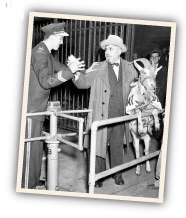 It was game four of the World Series between the Cubbies and the Detroit Tigers, October 6, 1945, with Chicago home at Wrigley Field. Billy Sianis, owner of the Billy Goat Tavern in Chicago, bought tickets for himself and his pet goat “Murphy”. Anyone who’s ever found himself in the company of a goat understands the problem. Right?
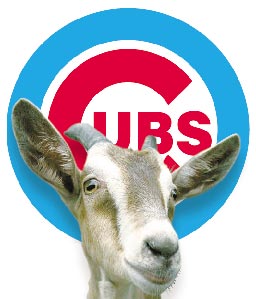 Billy Sianis was right. The Cubs were up two games to one at the time, but they went on to lose the series. They’ve been losing ever since.
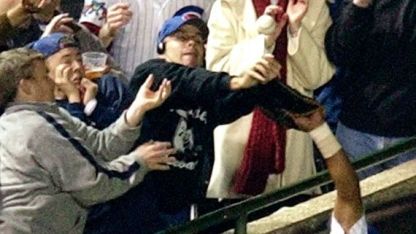 Alou slammed his glove down in anger and frustration. Pitcher Mark Prior glared at the stands, crying “fan interference”. The Marlins came back with 8 unanswered runs in the inning. Steve Bartman required a police escort to get out of the field alive.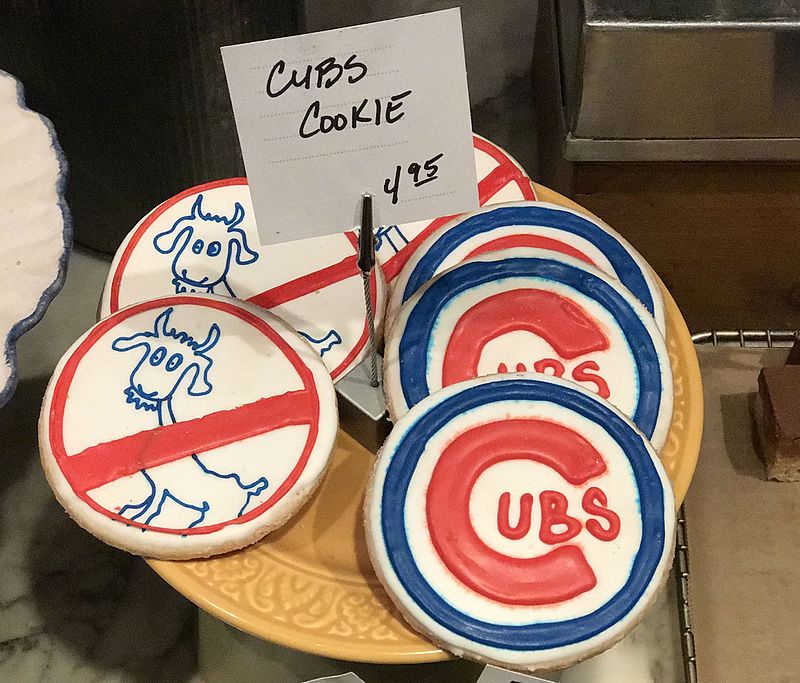
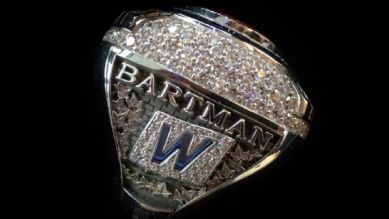 The mother of all droughts came to a halt on November 2 in a ten-inning cardiac arrest that had us all up Way past midnight, on a school night. I even watched that 17-minute rain delay, and I’m a Red Sox guy.


 Pitchers Eddie Cicotte and Claude “Lefty” Williams, along with outfielder Oscar “Hap” Felsch, and shortstop Charles “Swede” Risberg were all principally involved with fixing the series. Third baseman George “Buck” Weaver was at a meeting where the fix was discussed, but decided not to participate. Weaver handed in some of his best statistics of the year during the Series.
 Rumors were flying when the series started on October 2. So much money was on Cincinnati that the odds were flat. Gamblers complained that nothing was left on the table. Williams lost his three games in the best-out-of nine series, which I believe stands as a World Series record to this day. Cicotte became angry, thinking that gamblers were trying to renege, and he bore down, the White Sox winning game 7.
 Ironically, the 1919 scandal would lead to a White Sox crash in the 1921 season, beginning the “Curse of the Black Sox”. It was a World Series championship drought that lasted 88 years, ending only in 2005, with a sweep of the Houston Astros. Exactly one year after the Boston Red Sox ended their own 86-year drought, the “Curse of the Bambino”.




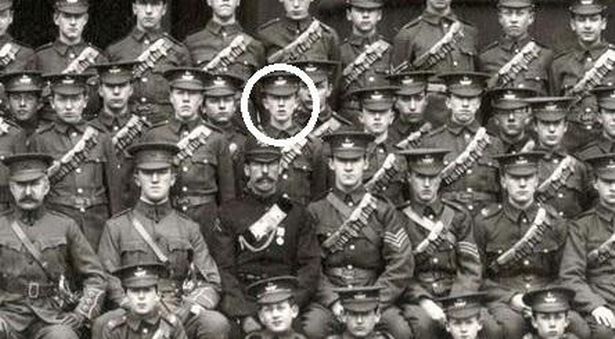


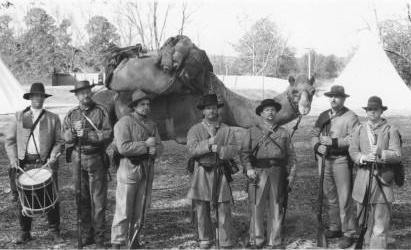
 The story begins with Jefferson Davis, in the 1840s. Now we remember him as the President of the Confederate States of America. Then, he was a United States Senator from Mississippi, with a pet project of introducing camels into the United States.
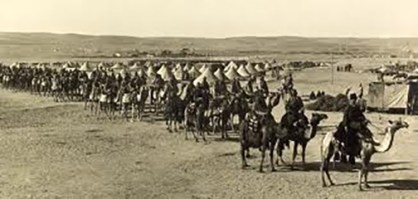 The measure failed, but in the 1850s, then-Secretary of War Davis persuaded President Franklin Pierce that camels were the military super weapons of the future. Able to carry greater loads over longer distances than any other pack animal, Davis saw camels as the high tech weapon of the age. Hundreds of horses and mules were dying in the hot, dry conditions of Southwestern Cavalry outposts, when the government purchased 75 camels from Algeria, Tunisia and Egypt. Several camel handlers came along in the bargain, one of them a Syrian named Haji Ali, who successfully implemented a camel breeding program. Haji Ali became quite the celebrity within the West Texas outpost. The soldiers called him “Hi Jolly”.


 On May 17, 1673, Father Jacques Marquette set out with the 27-year old fur trader Louis Joliet to explore the upper reaches of the Mississippi River. Their voyage established the possibility of water travel from Lake Huron to the Gulf of Mexico, helping to initiate the first white settlements in the North American interior and bestowing French names on cities from La Crosse to New Orleans.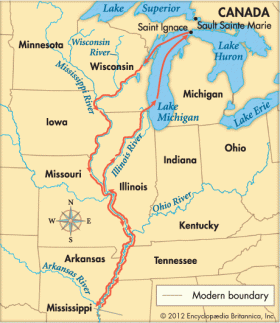


You must be logged in to post a comment.