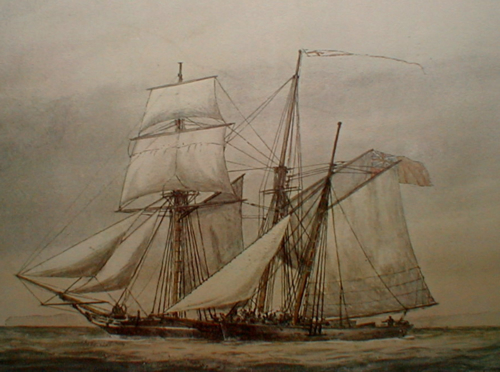
February 3, 1917 Sink the Housatonic

n the United States, the political tide was turning. Unrestricted submarine warfare…the Housatonic…the California and now the Zimmermann telegram…the events combined to become the last straw.  On April 2 the President who had won re-election on the slogan “He kept us out of war” addressed a joint session of the United States Congress, requesting a declaration of war.

The June 28, 1914 assassination of Archduke Franz Ferdinand  began a cascade of events which would change the course of the 20th century.  Entangling alliances and mutual suspicion combined with slavish dependence on timetables to effect the mobilization and counter-mobilization of armies.  

Remember the 1960s counterculture slogan “what if there was a war and nobody came”? In 1914, no one wanted to show up late in the event of war.  And so, there was war.  By October, the “War to End All Wars” had ground down to the trench-bound hell which would characterize the next four years.

Both the German and British economies were heavily dependent on imports to feed populations at home and to prosecute the war effort. By February 1915, the two powers were attempting to throttle the other through naval blockade.

Great Britain’s Royal Navy had superior numbers, while the Imperial German Naval surface fleet was restricted to an area of the North Sea called the German Bight. In other theaters, Germans augmented their small navy with commerce raiders and “unterseeboots”.  More than any other cause it was the German policy of unrestricted submarine warfare which would bring the United States into the war, two years later.
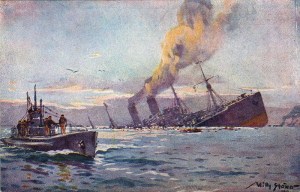
wwi-submarine

On February 4, 1915, Imperial Germany declared a naval blockade against shipping to Britain stating that “On and after February 18th every enemy merchant vessel found in this region will be destroyed, without its always being possible to warn the crews or passengers of the dangers threatening”. “Neutral ships” the statement continued, “will also incur danger in the war region”.

As the war unfolded, German U-boats sank nearly 5,000 ships, close to 13 million gross register ton including the Cunard Liner Lusitania, torpedoed and sunk off Kinsale, Ireland on May 7, 1915. 1,198 were drowned including 128 Americans. 100 of the dead, were children.

lusitania-sinking

Reaction in the United States and the United Kingdom alike were immediate, and vehement. The sinking was portrayed as the act of barbarians and Huns. For their part the Imperial German government maintained that Lusitania was illegally transporting munitions intended to kill German boys on European battlefields. Furthermore, as the embassy pointed out ads were taken out in the New York Times and other newspapers specifically warning that the liner was subject to attack.
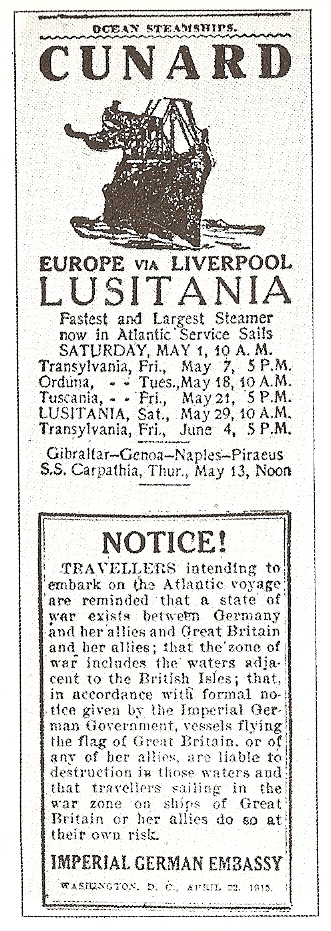
lusitania-warning

Warnings from the German embassy often ran directly opposite ads for the sailing itself. Many dismissed such warnings believing such an attack, was unlikely.

Unrestricted submarine warfare was suspended for a time, for fear of bringing the US into the war.  The policy was reinstated in January 1917 prompting then-Chancellor Theobald von Bethmann Hollweg to comment, “Germany is finished”.  He was right.

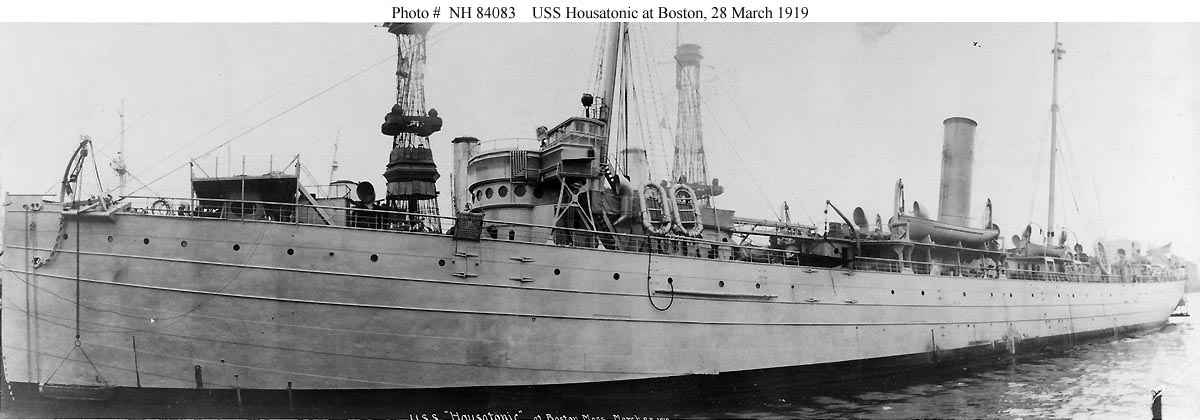
On February 3, 1917, SS Housatonic was enroute from Galveston Texas to Liverpool England bearing a cargo of flour, and grain. Passing the southwest coast of England the liner was stopped and boarded by the German submarine U-53.

American Captain Thomas Ensor was interviewed by Kapitänleutnant Hans Rose, who said he was sorry. Housatonic he said, was “carrying food supplies to the enemy of my country”, and would be destroyed. The American Captain and crew were allowed to launch lifeboats and abandon ship while German sailors raided the American vessel .

Based on what was taken, WWI vintage German subs were especially short on soap.

Abandoned and adrift Housatonic was sunk with a single torpedo, U-53 towing the now-stranded Americans toward the English coast. Sighting the trawler Salvator, Rose fired his deck guns to be sure they’d been seen, and then slipped away.

President Woodrow Wilson retaliated, breaking off diplomatic relations with Germany the same day. Four days later a German U-boat fired two torpedoes at the SS California, off the Irish coast. One missed but the second tore into the port side of the 470-foot, 9,000-ton steamer. California sank in nine minutes killing 43 of her 205 passengers and crew.
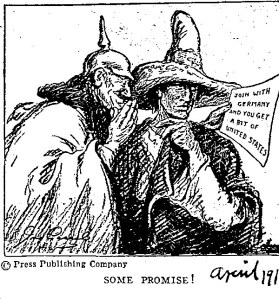
zimmerman-note

Two weeks later, British Intelligence divulged the Zimmermann note to Edward Bell, secretary to the United States Embassy in Britain.  It was a diplomatic overture from German Foreign Minister Arthur Zimmermann to the Mexican government, promising American territories in exchange for a Mexican declaration of war against the United States.

Zimmermann’s note read, in part:

“We intend to begin on the first of February unrestricted submarine warfare. We shall endeavor in spite of this to keep the United States of America neutral. In the event of this not succeeding, we make Mexico a proposal of alliance on the following basis: make war together, make peace together, generous financial support and an understanding on our part that Mexico is to reconquer the lost territory in Texas, New Mexico, and Arizona…”

In the United States, the political tide was turning. Unrestricted submarine warfare…the Housatonic…the California and now the Zimmermann telegram…the events combined to become the last straw.  On April 2 the President who had won re-election on the slogan “He kept us out of war” addressed a joint session of the United States Congress, requesting a declaration of war.

At the time, the German claim that Lusitania carried contraband munitions seemed to be supported by survivors’ reports of secondary explosions within the stricken liner’s hull. In 2008, the UK Daily Mail reported that dive teams had reached the wreck, lying at a depth of 300′. Divers reported finding tons of US manufactured Remington .303 ammunition, about 4 million rounds, stored in unrefrigerated cargo holds in cases marked “Cheese”, “Butter”, and “Oysters”.

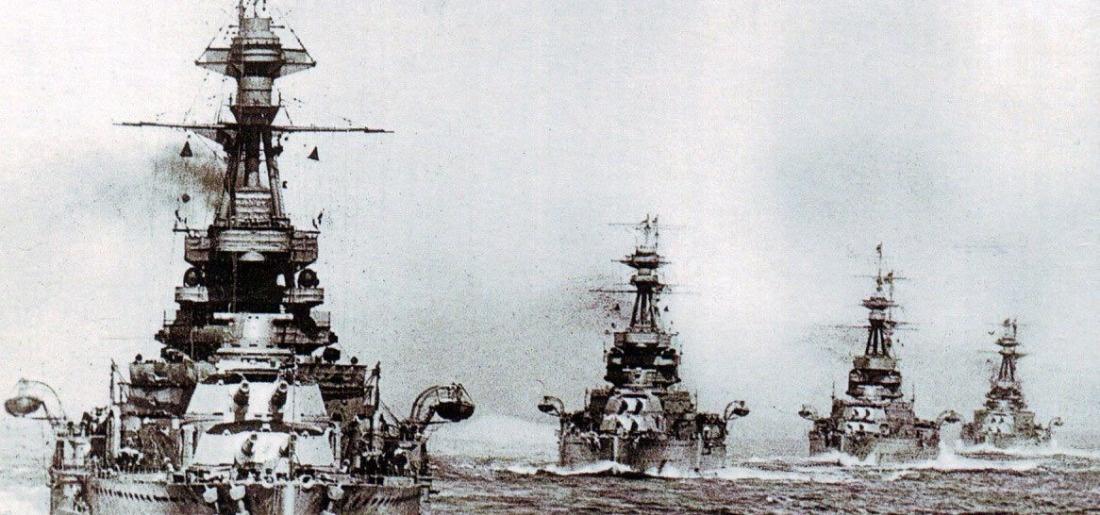
January 31, 1918 The Battle of May Island

By 6:30pm, the fleet had formed a line some thirty miles long proceeding north at 20 knots, equivalent to 23MPH over the ground. It was full dark at this latitude with the Haar or “sea fog”, closing in. The fleet was effectively deaf and blind, and traveling fast. The table was set, for disaster.

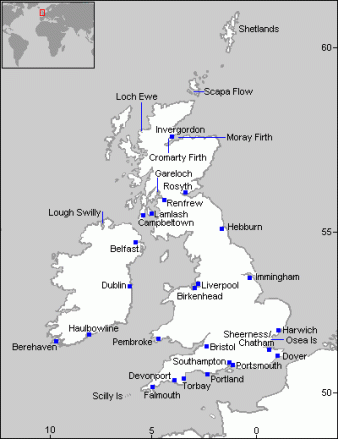
ww1navybritish-shipbuildingmapbritishisles2

Operation E.C.1 was a planned exercise for the British Grand Fleet, scheduled for February 1, 1918 out of the naval anchorage at Scapa Flow in the North Sea Orkney Islands.

Forty vessels of the British Royal Navy departed Rosyth in the Scottish fjord at the Firth of Forth on January 31, bound for Scapa flow. They were the 5th Battle squadron with destroyer escort, the 2nd Battlecruiser squadron and their destroyers, two cruisers and two flotillas of K-class submarines, each led by a light cruiser.

By 6:30pm, the fleet had formed a line some thirty miles long proceeding north at 20 knots, equivalent to 23MPH over the ground. It was full dark at this latitude with the Haar or “sea fog”, closing in.  The fleet was effectively deaf and blind, and traveling fast.

While only an exercise, strict radio silence was observed, lest there be any Germans in the vicinity. Each vessel displayed a faint blue stern light, travelling 400-yards ahead of the next-in-line. Black-out shields restricted the lights’ visibility to one compass point left or right of the boats’ center line.   The table was set for disaster.

Though large for WW1-vintage submarines at over 300-feet, K-class subs were low to the water and slow, compared with the much larger surface vessels.  Compounding the problem, the unfortunately nicknamed”Kalamity Klass” was powered by steam, meaning that stacks had to be folded and closed, before the thing was ready to dive.  Only eighteen K-class submarines were ever built, only one of which ever caused damage to a German U-boat, and that was a ramming attack.

Seems the K-class was more dangerous to its own people, than anyone else.

A half-hour into the cruise, the flagship HMS Courageous passed a tiny speck on the map called May Island and picked up speed. A pair of lights appeared in the darkness as the 13th Submarine Flotilla passed, possibly a pair of mine sweeping trawlers. The flotilla turned hard to port to avoid collision when the helm of the third-in-line K-14 jammed, and veered out of line. Both K-14 and the boat behind her, K-12 turned on their navigation lights as K-22, the next submarine in line, lost sight of the flotilla and collided with K-14, severing the bow and killing two men. Two stricken submarines now struggled to pull themselves apart while an entire fleet sped through the darkness, unaware of what was about to happen.

The destroyer HMS Ithuriel received a coded signal and turned to lend aid, doubling back and followed by the remainder of the 13th submarine flotilla and thus putting themselves on collision course with the outgoing 12th flotilla.

Unaware of the mess lying in her path, 12th flotilla escort HMS Fearless was traveling way too fast to change the outcome. Fearless went “hard astern” on sighting K-17 but too late, her bow knifing through the smaller vessel, sinking the sub within minutes with the loss of 47 men. Meanwhile, outgoing submarine K-4 heard the siren and came to a stop but not the trailing K-3 which hit her sister sub broadside, nearly cutting the vessel in half.

battlemayisland_fearless1
HMS Fearless

K-4 sank in minutes, with the loss of 55 men.

The number of near misses that night, can never be known. 104 men were dead before it was over, with the total loss of two K-class submarines. Four more sustained severe damage along with the Scout Cruiser, HMS Fearless.

A hastily arranged Board of inquiry began on February 5 and sat for five days, resulting in several courts martial for negligence.  Those would be adjudicated, “unproved”.
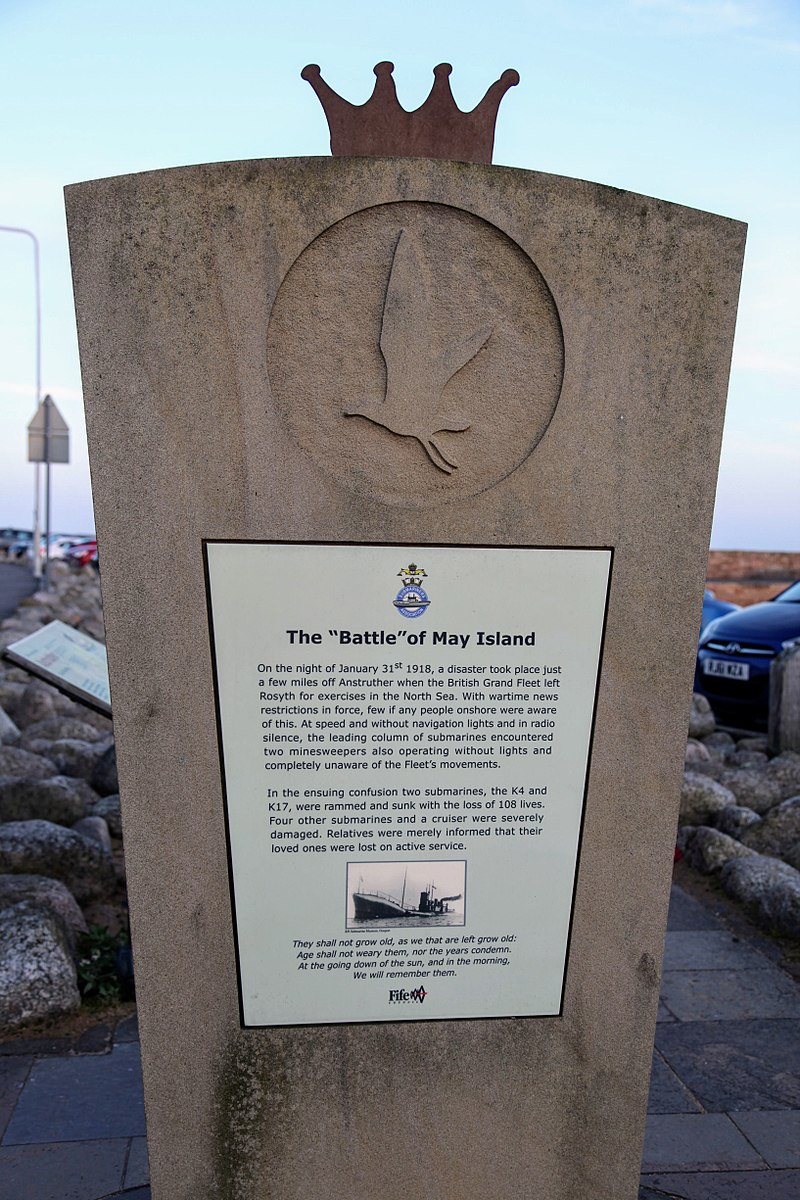
800px-may_island_memorial_anstruther

The whole disaster and subsequent inquiry was kept quiet to avoid embarrassment, and to deprive the propaganda bonanza, to the Germans. Full details were released only in 1994, long after the participants in this story had passed on.
On January 31, 2002, a memorial cairn was erected in memory of the slain.  As it had been eighty four years before there wasn’t a German, in sight.  The “Battle of May Island” was no battle at all.  Just the black and forlorn humor, of men at war.

January 31, 1918 Battle of May Island

December 24, 1814 I’ll have the Miss Piggott Special

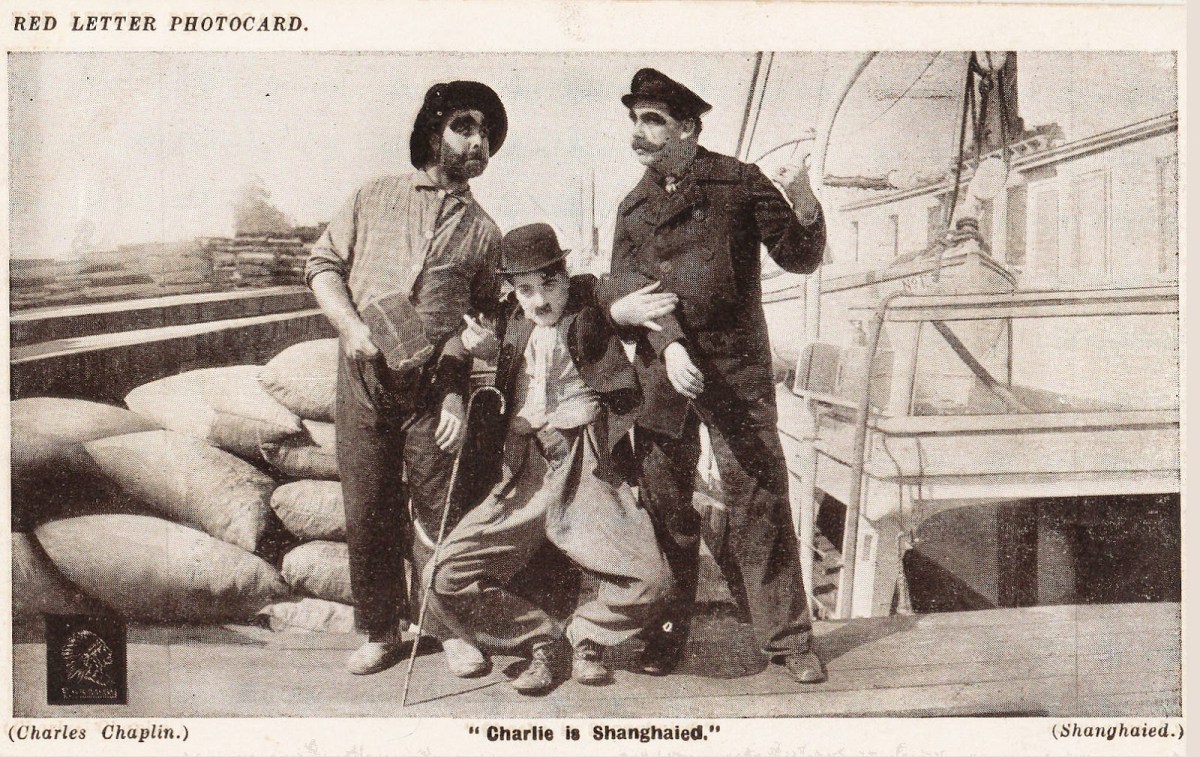
Golden nuggets were plentiful during the Gold Rush era and sailors, were not. Infamous “crimps” like James “Shanghai” Kelly were happy to help, with both problems.

In modern times, governments have employed various strategies to meet the personnel needs of national armed services. Recruiting methods range from voluntary to compulsory service, and even a lottery or other form of draft, in times of national emergency.

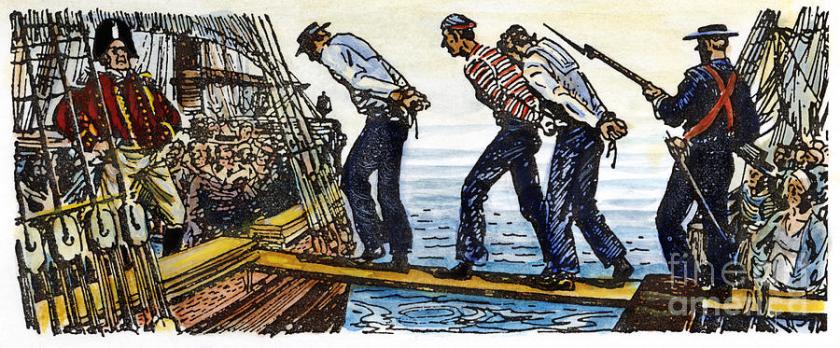
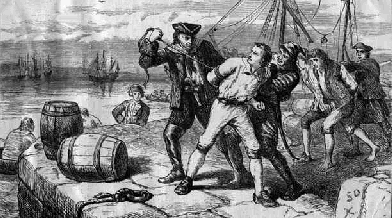
During the age of sail, vast numbers of skilled and unskilled seamen alike, were required to meet the needs of naval vessels at sea. Governments resorted to more straightforward methods of meeting manpower requirements, namely, kidnapping.

Such involuntary service or “impressment”, was first made legal during Elizabethan times, but the practice dates back to the 13th century.

impressment-of-american-sailors-granger

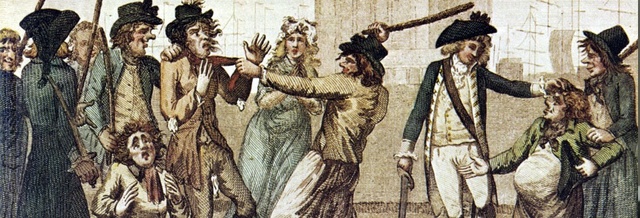
“Press gangs” would patrol waterfronts looking for vagrants, raiding taverns and even pouncing on unsuspecting victims in their beds. Prints from the time show armed gangs barging into weddings and hauling away the groom. I can’t imagine the bride was too pleased but, good news. In 1835 the practice was limited to a single impressment per man with a maximum term of impressment, of five years.

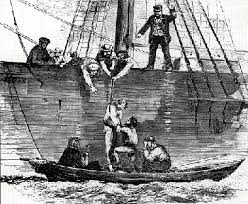
Such “pressing” often took place at sea, where armed gangs would board merchant ships and take what they needed, sometimes leaving victims without sufficient hands to take them safely back to port.

Such methods were essential to the strength of the British Navy, particularly during the Napoleonic wars. American merchant vessels were often targets. The British Navy impressed over 15,000 American sailors alone, between 1793 and 1812.

impress

The American public was outraged and there were calls for war in 1807, when HMS Leopard overtook the USS Chesapeake, kidnapping three American-born sailors and one British deserter, leaving another three dead and 18 wounded.

This time, American retaliation took the form of an embargo. Five years later, continued impressment of American seamen would be a casus belli for the war of 1812, a conflict ended with the Treaty of Ghent signed this day, in 1814.

Crimping 1

Outside of the British Royal Navy, the practice of kidnapping men to serve as shipboard labor was known as “crimping”. Low wages combined with the gold rushes of the 19th century left the waterfront painfully short of manpower, skilled and unskilled. “Boarding Masters” had the job of putting together ship’s crews, and were paid for each recruit. There was strong incentive to produce as many able bodies, as possible. Unwilling men were “shanghaied” by means of trickery, intimidation or violence, most often rendered unconscious and delivered to waiting ships, for a fee.

Crimps made $9,500 or more per year in the 1890s, equivalent to over a quarter-million, today. The practice flourished in British port cities like London and Liverpool, and in the west coast cities of San Francisco, Portland, Astoria and Seattle. You also didn’t want to be caught out alone and drunk, in east coast port cities like New York, Boston, Philadelphia or Baltimore.

Today the area from North Beach to Jackson Square in San Francisco, is ‘Frisco’s’ Chinatown. During the Gold Rush era this was the infamous Barbary Coast, a raucous red-light district of taverns and whorehouses where fewer left, than than ever came in.

Golden nuggets were plentiful during the Gold Rush era and sailors, were not. Happy to help with both problems James “Shanghai” Kelly kept several bars and a boarding house on the Barbary Coast. This character once shanghai’d 100 guys, in a single evening.

In the early 1870s, Kelly rented the paddleboat Goliath and widely publicized a free booze cruise, to celebrate his birthday. Bartenders drugged unwitting revelers with opium-laced whiskey, and then offloaded them to waiting ships. Shanghai Kelly’s biggest concern was returning after such a public event, with an empty boat. His luck held, when another paddle wheel steamer, the Yankee Blade, struck a rock and began to sink. Goliath rescued everyone on board, and continued the party. Nobody back at the waterfront, noticed a thing.

The Laurel & Hardy short film “Live Ghost” (1934) is about the practice, of crimping

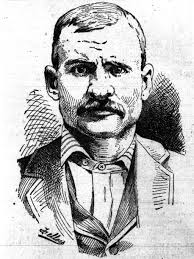
Joseph “Bunko” Kelley was another infamous crimp, also working out of the San Francisco waterfront. The “King of Crimps”, Kelley once set a record rounding up 50 guys in three hours. The Bunko name stuck, when Kelley delivered one crewman for $50, who turned out to be a cigar store Indian. In 1893, Kelley delivered 22 guys who had mistakenly consumed embalming fluid, from a local mortuary. He sold them all for $52 apiece though most of them were dead, a fact to which the ship’s captain only became wise, after returning to sea.

Crimping 3, Bunko Kelley
James “Bunko” Kelley

The “Shanghai tunnels” of Portland run through the Old Town/Chinatown section to the main business district, connecting the basements of hotels and taverns to the waterfront at the Willamette River. The tunnels themselves are real enough, though their history is shrouded in mystery. Originally constructed to move goods from the Willamette waterfront to basement storage areas, the number of unconscious bodies hustled down the dark chambers of the Portland Underground”, remains unknown. There are those who will tell you, the practice continued well into the WW2 period.

State and federal legislatures passed measures to curb the practice after the Civil War, but crimping didn’t go away easily. In their heyday, the owners of sailor’s boarding houses had endless supplies of manpower, fanning out across polling places to “vote early and often”.

crimping 2

San Francisco political bosses William T. Higgins, (R) and Chris “Blind Boss” Buckley (D) were both notable crimps, and well positioned to look after their political interests. Notorious crimps such as Joseph “Frenchy” Franklin and George Lewis were elected to the California state legislature. There was no better spot from which to ensure that no legislation would interfere with such a lucrative trade.

A brief list of infamous crimps includes Andy “Shanghai Canuck” Maloney of Vancouver, Anna Gomes of San Francisco, New Bedford’s own “Shanghai Joe” and Tom Codd the “Shanghai Prince”. William “Billy” Gohl, the “Ghoul of Grays Harbor” of Aberdeen Washington, also happened to be, a serial killer.

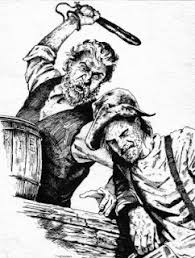
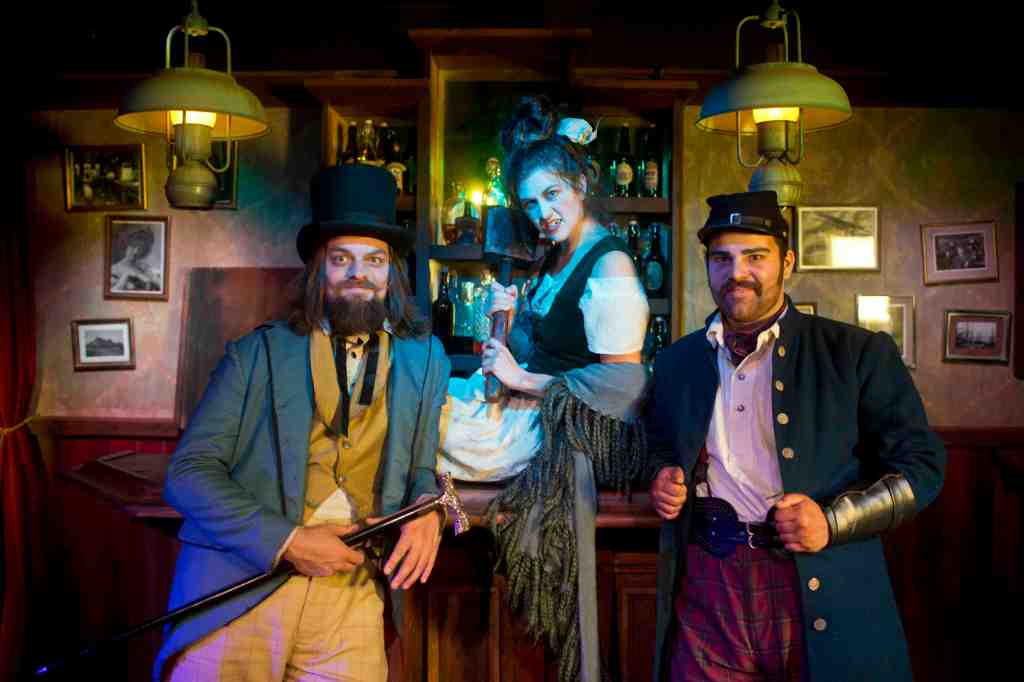
In the 1860s and 70s, one “Miss Piggott” operated a saloon and boarding house, in San Francisco. This “ferocious old harridan” would maneuver unsuspecting guests over a trap door and serve them her “Miss Piggott Special,” a potion consisting of equal parts brandy, whiskey and gin laced with either laudanum, or opium. One knock on the head with her “bung starter”, a wooden mallet used to open whiskey kegs, and she’d pull the lever and down they would fall to the waiting mattress, below.

(From left) Colonel Jack Gamble, Miss Piggott and Sam Roberts of the San Francisco Dungeon in San Francisco, Calif., on Wednesday June 18, 2014. (photo by Beck Diefenbach / Madam Tussauds)

Imagine the hangover the next morning, to wake up and find you’re now at sea, bound for somewhere in the far east. Regulars knew about the trap door and avoided that thing at all costs, knowing that anyone going over there, was “fair game”.

Widespread adoption of steam power in the late 19th and early 20th centuries did as much to curb shanghaiing as did any legislative effort. Without acres of canvas to furl and unfurl, the need for unskilled labor was greatly diminished. The “Seaman’s Act of 1915”, sometimes called the “magna carta of sailor’s rights,” ended the practice for good.

You might want to do yourself a favor, though, if you’re ever at Miss Piggott’s place. Look out for that trap door.

December 18, 1944 Typhoon

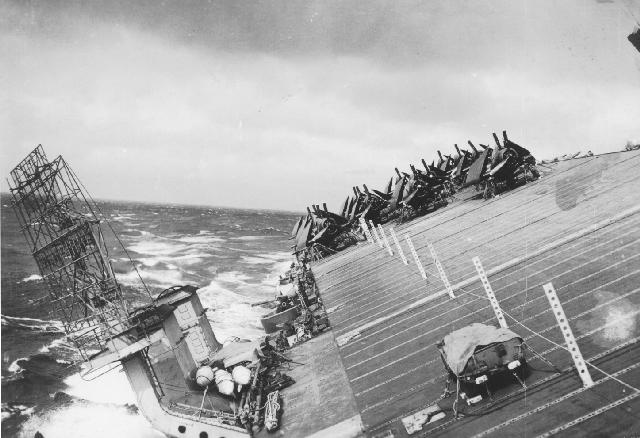
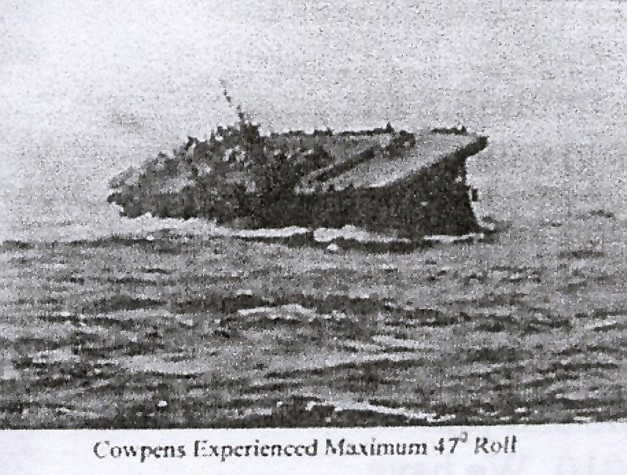
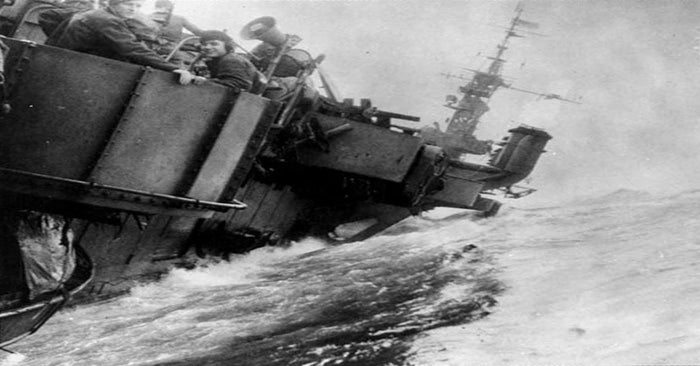
Hulls would creak and groan with the pounding and rivets popped. Captains in wheelhouses would order course headings, but helmsmen could do no better than 50° to either side of the intended course. Some ships rolled more than 70°. The 888-ft carrier USS Hancock, scooped tons of water onto its flight decks, 57-feet above the surface.


In September 1935, the Imperial Japanese Navy was caught in foul weather while conducting wargame maneuvers. By the 26th, the storm had reached Typhoon status.  The damage to the Japanese fleet was near catastrophic. Two large destroyers had their bows torn away by heavy seas. Several heavy cruisers suffered major structural damage.  Submarine tenders and light aircraft carriers developed serious cracks in their hulls. One minelayer required near total rebuild and virtually all fleet destroyers suffered damage to superstructures. 54 crewmen lost their lives.

Nine years later, it would be the turn of the American fleet.

The war in the Pacific was in its third year in December 1944. A comprehensive defeat only weeks earlier had dealt the Imperial Japanese war effort a mortal blow at Leyte Gulf, yet the war would slog on for the better part of another year.

Carrier Task Force 38 was a massive assembly of warships, a major element of the 3rd Fleet under the Command of Admiral William “Bull” Halsey.  In formation, TF-38 moved in three eight-mile diameter circles, each with an outer ring of destroyers, an inner ring of battleships and cruisers and a mixed core of 35,000-ton Essex class and smaller escort carriers. TF-38 was a massive force fielding eighty-six warships, all told.

By mid-December 1944, Task Force 38 was underway for three weeks, having just completed three days of heavy raids against Japanese airfields in the Philippines, suppressing enemy aircraft in support of American amphibious operations against Mindoro.  Ships were badly in need of re-supply.  A replenishment fleet, 35 ships in all, was sent to the nearest spot near Luzon still outside of Japanese fighter range. 

Rapid movement into previously enemy-held territory made it impossible to establish advance weather reporting.  By the time that Task Force meteorological service reports made it to ships in the operating area, weather reports were at least twelve hours old.

Cobra 9

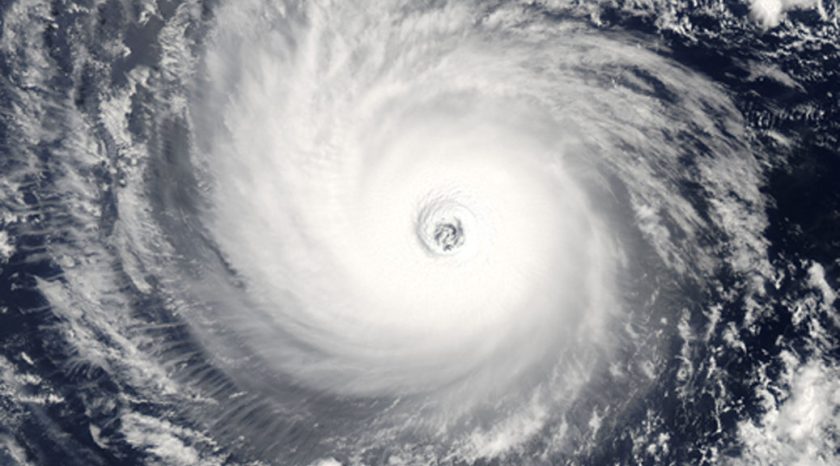
Three days earlier, a barometric low pressure system had begun to form off Luzon, fed by the warm waters of the Philippine sea.  High tropospheric humidity fed and strengthened the disturbance as counter-clockwise winds began to develop around the low pressure center.  By the 18th, this once-small “tropical disturbance” had developed into a compact but powerful cyclone.

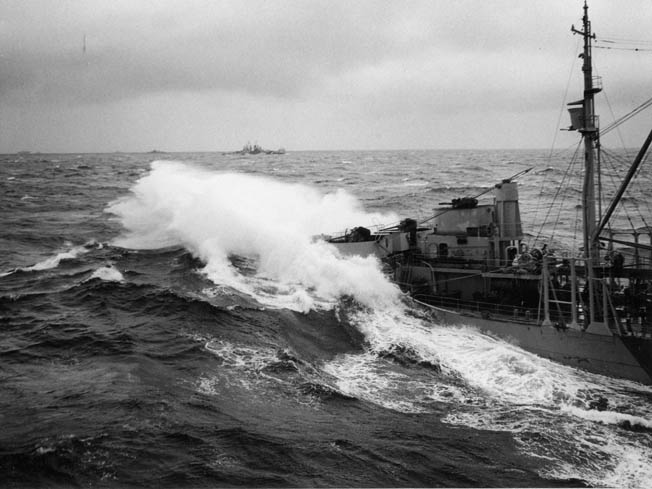
Replenishment operations began the morning of the 17th as increasing winds and building seas made refueling increasingly difficult.  Refueling hoses were parted in several locations. Thick hawsers had to be cut to avoid collision as sustained winds built to 40 knots.  Believing the storm center to be 450 miles to his southeast, Admiral Halsey declined a return to base.  It would take too long and beside, and combat operations were scheduled to resume, two days later.  Halsey needed the carrier group refueled and on station, so it was decided.  Task Force 38 and the replenishment fleet would proceed to a second replenishment point, hoping to resume refueling operations on the morning of the 18th.

Cobra

Four times over the night of December 17-18, course was corrected in the search for calmer water.  Four times the ships of Task Force 38 and it’s attendant resupply ships turned each time moving closer to the eye of the storm.  2,200-ton destroyers pitched and rolled like corks, towering over the crest of 70-foot waves only to crash into the trough of the next, shuddering like cold dogs as decks struggled to shed thousands of tons of water.

Hulls creaked and groaned with the pounding. Rivets popped.  Captains in wheelhouses order course headings but helmsmen could do no better than 50° to either side of the intended direction.  Some ships rolled more than 70°.  The 888-ft carrier USS Hancock scooped tons of water onto its own flight decks, 57-feet up.

USS Cowpens during Typhoon Cobra

Typhoon Cobra reached peak ferocity between 1100 and 1400 with sustained winds of 100mph and gusts of up to 140.

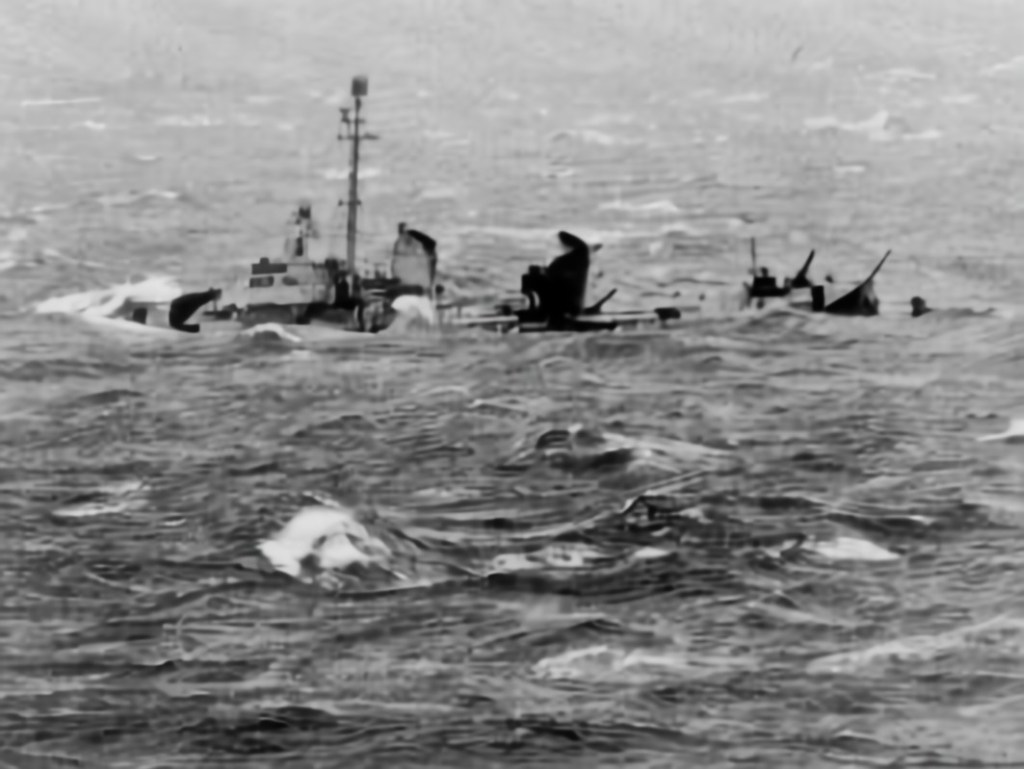
The lighter destroyers got the worst of it, finding themselves “in irons” – broad side to the wind and rolling as much as 75° with no way to regain steering control.  Some managed to pump seawater into fuel tanks to increase stability, while others rolled and couldn’t recover, water cascading down smokestacks and disabling engines.

Cobra 4

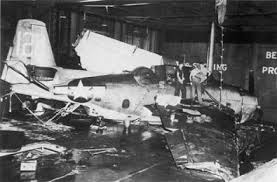
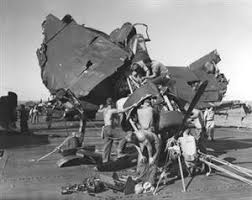
146 aircraft were either wrecked or blown overboard.  The carrier USS Monterrey nearly went down in flames as loose aircraft crashed about on hanger decks and burst into flames.  One of those fighting fires aboard Monterrey was then-Lieutenant Gerald Ford, the former Michigan Wolverine center and future President of the United States.

Cobra 10

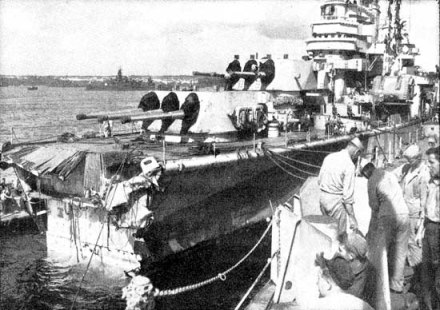
Many of the ships of TF-38 sustained damage to above-decks superstructure, knocking out radar equipment and crippling communications.

Cobra 8

790 Americans were killed by Typhoon Cobra:

USS Hull – with 70% fuel aboard, capsized and sunk with 202 men drowned. There were 62 survivors.
USS Monaghan – capsized and sunk with 256 men drowned. There were 6 survivors.
USS Spence – rudder jammed hard to starboard, capsized and sunk with 317 men drowned after hoses parted attempting to refuel from New Jersey because they had also disobeyed orders to ballast down directly from Admiral Halsey. There were 23 survivors.
USS Cowpens – hangar door torn open and RADAR, 20mm gun sponson, whaleboat, jeeps, tractors, kerry crane, and 8 aircraft lost overboard. One sailor lost.
USS Monterey – hangar deck fire killed three men and caused evacuation of boiler rooms requiring repairs at Bremerton Navy yard
USS Langley – damaged
USS Cabot – damaged
USS San Jacinto – hangar deck planes broke loose and destroyed air intakes, vent ducts and sprinkling system causing widespread flooding. Damage repaired by USS Hector
USS Altamaha – hangar deck crane and aircraft broke loose and broke fire mains
USS Anzio – required major repair
USS Nehenta – damaged
USS Cape Esperance – flight deck fire required major repair
USS Kwajalein – lost steering control
USS Iowa – propeller shaft bent and lost a seaplane
USS Baltimore – required major repair
USS Miami – required major repair
USS Dewey – lost steering control, RADAR, the forward stack, and all power when salt water shorted main electrical switchboard
USS Aylwin – required major repair
USS Buchanan – required major repair
USS Dyson – required major repair
USS Hickox – required major repair
USS Maddox – damaged
USS Benham – required major repair
USS Donaldson – required major repair
USS Melvin R. Nawman – required major repair
USS Tabberer – lost foremast
USS Waterman – damaged
USS Nantahala – damaged
USS Jicarilla – damaged
USS Shasta – damaged “one deck collapsed, aircraft engines damaged, depth charges broke loose, damaged“

It could have been worse.  The destroyer escort USS Tabberer defied orders to return to port, Lieutenant Commander Henry Lee Plage conducting a 51-hour boxed search for survivors despite the egregious pounding being taken by his own vessel.  USS Tabberer plucked 55 swimmers from the water, survivors of the capsized destroyers Hull and Spence.

Cobra 7, Pittsburgh

Typhoon Cobra moved on overnight, December 19 dawning clear with brisk winds. Admiral Halsey ordered “All ships of the Task Force line up side-by-side at about ½ mile spacing and comb the 2800-square mile area” in which they’d been operating.  Carl M. Berntsen, SoM1/C aboard the destroyer USS DeHaven, recalled that “I saw the line of ships disappear over the horizon to starboard and to port”. The Destroyer USS Brown rescued six survivors from the Monaghan and another 13 from USS Hull.  18 more would be plucked from the water, 93 in all, by ships spread across fifty to sixty miles of open ocean.

When it was over, Admiral Chester Nimitz said typhoon Cobra “represented a more crippling blow to the Third Fleet than it might be expected to suffer in anything less than a major action.”

Afterward

CARL MARTIN BERNTSEN PASSED AWAY ON OCTOBER 13TH, 2014 IN KITTY HAWK, NORTH CAROLINA. HE WOULD HAVE BEEN 94, THE FOLLOWING MONTH. I AM INDEBTED TO HIM AND HIS EXCELLENT ESSAY FOR THIS STORY.  VIRTUALLY ALL SHIPS OF TASK FORCE 38 WERE DAMAGED TO VARYINHG DEGREEs.

November 1, 1945 X-Day

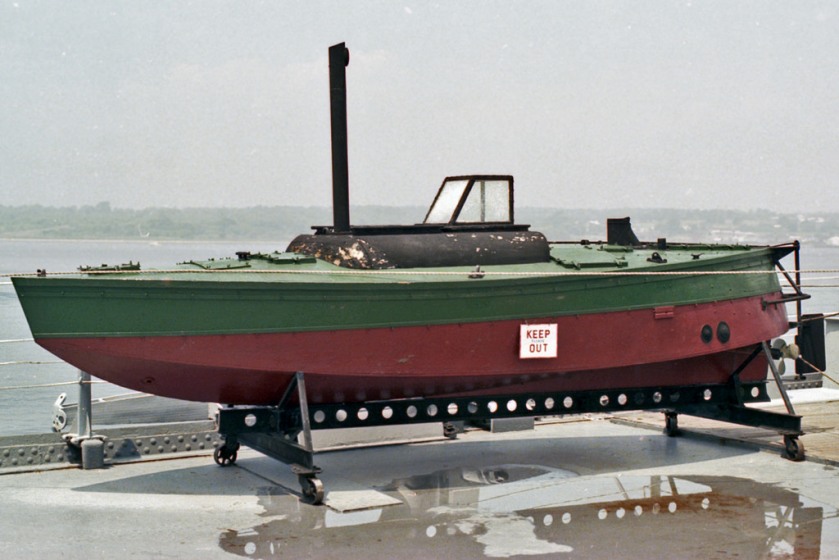
For years, everyone believed that semi-submersible craft in Fall River must have been a kamikaze vessel, from World War 2. The story that funny little boat had to tell was very different. The tale of a history, that never was.

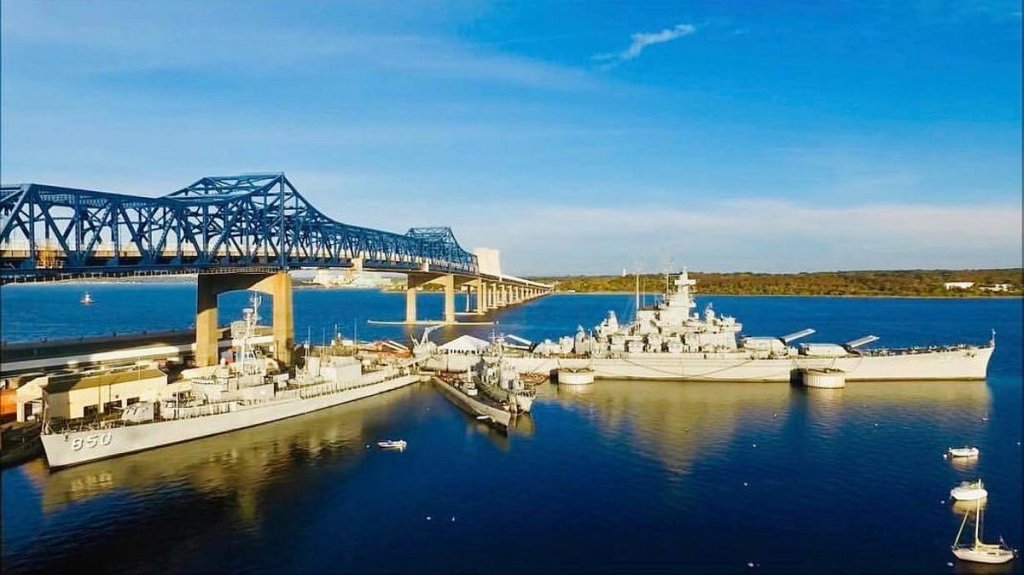
If you’re ever in southeastern Massachusetts, be sure to visit Battleship Cove in Fall River, the largest collection of World War 2 naval craft, in the world. The Battleship Cove museum sports some sixty exhibits, preserving the naval heritage of these iconic vessels and the veterans who served them.

To inspect battle damage visible to this day on the decks of USS Massachusetts is to realize United States armed forces once exchanged shots in anger with our French ally, at a place called Casablanca. The attack sub USS Lionfish once performed “lifeguard duty”, the rescue of downed fliers, off the coast of Japan. Her captain was Lieutenant Commander Edward D. Spruance, son of Admiral Raymond Spruance who commanded US naval forces during one of the most significant naval battles of the Pacific, the battle of the Philippine Sea.

To walk aboard USS Massachusetts or USS Lionfish, is to experience a side of WW2, fast disappearing from living memory.

Battleship Cove

Walk among the wooden-hulled PT boats of the Pacific war, and there you will find a strange little craft. One of three planned for and only two, ever built. Closed at the top and semi-submersible, a Japanese kamikaze boat perhaps, designed for suicide missions against allied warships. Museum management believed just that and mislabeled the display, for years.

The other it turns out is on display at Central Intelligence headquarters, at Langley, Virginia. Years later a retired CIA employee visiting Battleship cove spotted the error. CIA files declassified in 2011 added detail to a very different story, from that of Japanese suicide vessels.  To the tale of a history, that never was.

On August 2, 1939, Hungarian physicist Leó Szilárd delivered a letter which would change history, to President Franklin Delano Roosevelt. Written in consultation with fellow Hungarian physicists Edward Teller and Eugene Wigner and signed by Albert Einstein, the letter warned that Nazi Germany was working to develop atomic weapons, and urged the American government to develop a nuclear program of its own.  Immediately, if not sooner.

The Einstein–Szilárd letter spawned the super-secret Manhattan project, culminating in the atomic bombs “Little Boy” and “Fat Man”, and ending the war in the Pacific in August, 1945.

At the time, precious few were aware of even the possibility of such a weapon.  Fewer still, the existence of a program dedicated to building one.  Vice President Harry Truman, second only to the Commander in Chief himself, was entirely ignorant of the Manhattan project and only read in following the death of the President in April, 1945.

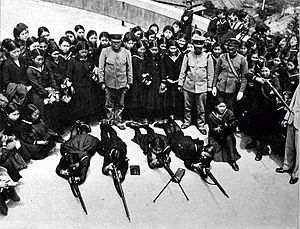
Female students with the Kokumin Giyū Sentōtai, the Volunteer Fighting Corps, prepare for the Allied projected invasion

The battle for the Japanese home islands was expected to be a fight like no other. Casualties of a million or more were expected, and for good reason. Japanese soldiers fought with such fanaticism, that hundreds continued to resist, years after the war was ended. The last holdout wouldn’t lay down his arms until 1974. 29 years, 3 months, and 16 days after the war had ended.

Such frenzied resistance would not be isolated to Japanese military forces, either. Japanese government propaganda warned of “American devils raping and devouring Japanese women and children.” American GIs looked on in horror in 1944, as hundreds if not thousands of Japanese soldiers and civilians hurled themselves to their death, at Laderan Banadero and “Banzai Cliff” on the northern Mariana island of Saipan. One correspondent wrote with admiration of such mass suicides, praising “the finest act of the Shōwa period”… “the pride of Japanese women.”

This is what their government, had taught these people to believe.

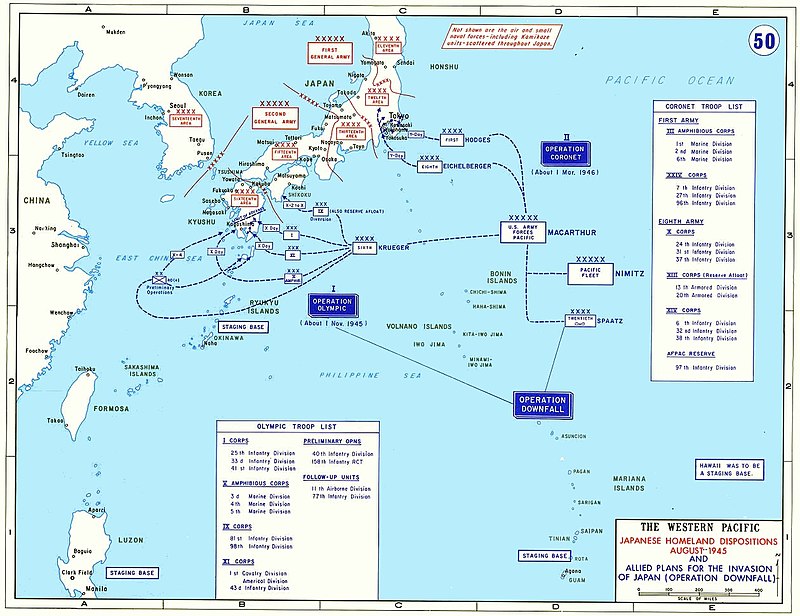
Plans for the final defeat of the Imperial Japanese Empire all but wrote themselves, phase one launched from the south against the main island of Kyūshū, and using the recently captured island of Okinawa, as staging area.  Phase two was the planned invasion of the Kantō Plain toward Tokyo, on the island of Honshu.

Adobe ImageReady
Operation Downfall

The story of the D-Day invasion begins with deception, a massive head fake intended to draw German defenders away from intended landing zones. “Operation Downfall” offered no such opportunities, for deceit. Geography dictated the method of attack, and everybody knew it. Virtually everything left of Japanese military might would be assembled for the all-out defense of Kyūshū, against what would be the largest amphibious invasion, in history.

This was to be a full frontal assault with no subterfuge and nowhere, to hide.

American military planners ordered half a million Purple Hearts, in preparation for the final invasion of the Japanese home islands. To this day, military forces have yet to use them all. As of 2003 some 120,000 Purple Heart medals still remained, in inventory.

The whole thing would begin on “X-Day”.  November 1, 1945.

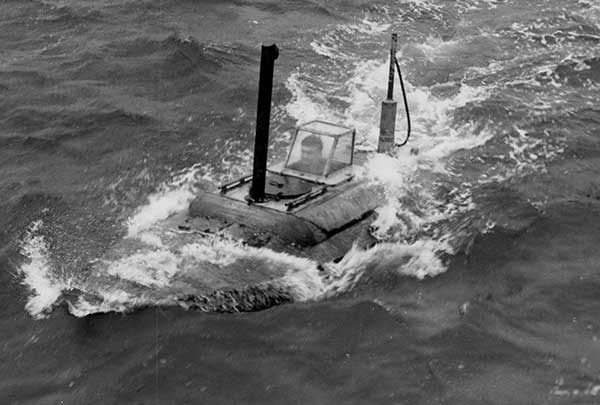
Which brings us back to that funny-looking boat, in Fall River. The Office of Strategic Services (OSS), predecessor to the modern CIA, built two of these semi-submersibles. The vessel was called “Gimik”, part of a top-secret operation code named “NAPKO”.

GIMIK, underway

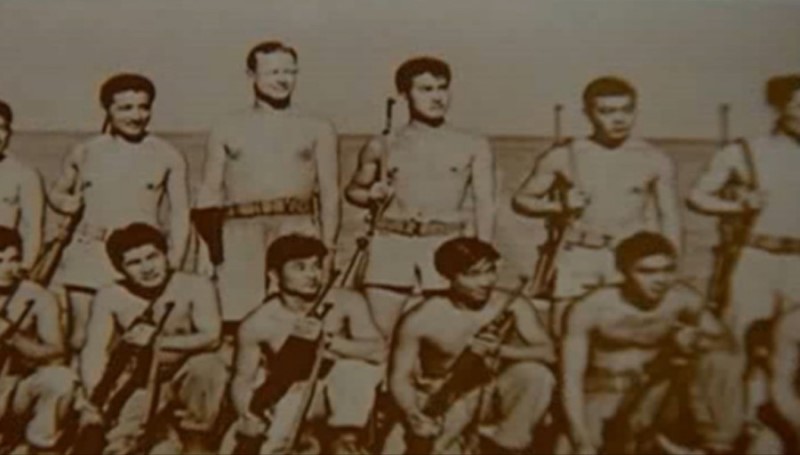
Ten teams were envisioned varying from five to a single individual. 55 Korean-Americans and Korean prisoners freed from Japanese prison labor camps were trained to infiltrate Japanese occupied Korea and possibly Japan itself, to collect intelligence and carry out sabotage against military targets in advance of Operation Downfall. None were aware even of the existence of the other teams lest any, were to fall into Japanese hands.

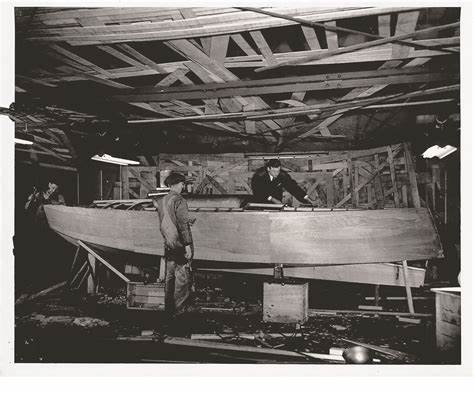
The GIMIK craft were built by John Trumpy and sons yacht yard of Annapolis Maryland, builders of the presidential yacht, Sequoia

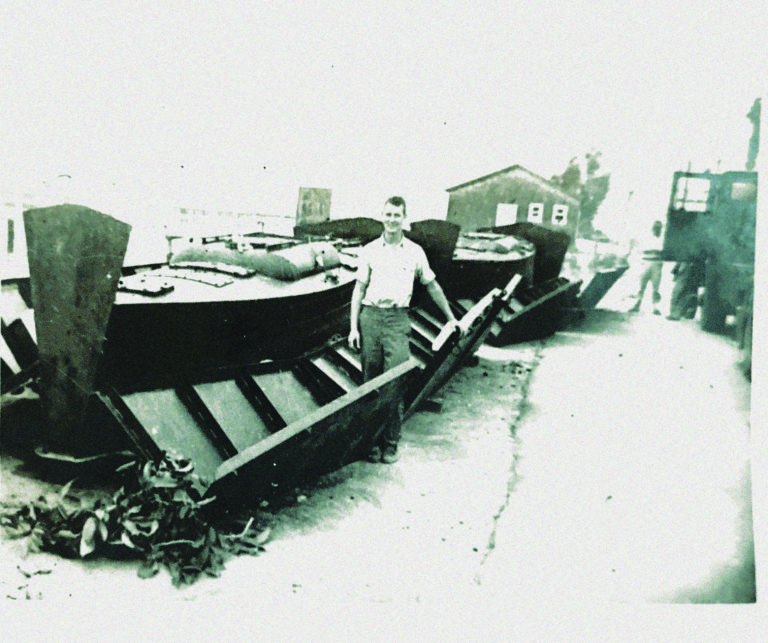
Operated by a single OSS officer with two Korean operatives and up to 1,000-pounds of equipment secured inside, the GIMIK craft would be their means of insertion. 19-feet long and built of plywood to avoid radar and sonar detection, the snorkel was wrapped in steel wool to confound discovery. The craft were to be delivered on theater via submarine in large metal boxes called “coffins’. After insertion, the vessels would go fully submerged and anchor to the bottom where they were equipped to operate, for up to four weeks.

Operated by a single OSS officer with two Korean operatives and up to 1,000-pounds of equipment secured inside, the GIMIK craft would be their means of insertion. 19-feet long and built of plywood to avoid radar and sonar detection, the snorkel was wrapped in steel wool to confound discovery. The craft were to be delivered on theater via submarine in large metal boxes called “coffins’. After insertion, the vessels would go fully submerged and anchor to the bottom where they were equipped to operate, for up to four weeks.

The NAPKO operation was conceived and run by OSS Colonel Carl Eifler, who hope to have as many as seven teams, operational. Tactical focus would then be placed on those best positioned, for ultimate success. As it turned out only two teams were ever ready, for the operational stage.

“Code-named ‘Kinec’ and ‘Charo.’ Both were very similar in concept, differing primarily in intended points of penetration and operating areas. Kinec envisioned landing five agents at Chemulpo Bay, about 20 miles outside Seoul on the country’s west coast; Charo was focused on Pyongyang following penetration via Wonsan and utilized three, rather than five, Korean agents. Typical of NAPKO missions, the teams were to carry minimal equipment and supplies: 100,000 yen, a radio, appropriate clothing for passing as locals, and a Japanese-manufactured shovel for burying the team’s equipment after landing.”

Hat tip former Special Forces NCO Steve Balestrieri, writing for SOFREP.com

The mission was extremely dangerous for obvious reasons.  Training was carried out during the summer of 1945 on Catalina Island, off the California coast.  The two boats, nicknamed “Gizmos”, were tested at night against the US Naval base in Los Angeles. Even this part was dangerous, since no one was told about the trials. Should such a vessel be detected entering the American installation, it would be treated as an enemy vessel, and destroyed.

In the end, the Gizmo teams never left American waters.  Several such tests were carried out without detection, leading to a scheduled departure date of August 26, 1945.  It was never meant to be.

A parallel and equally secret plan to end the war literally burst on the scene on August 6, 1945.  The war would be over, in another nine days.

August 29, 1854 The Resolute Desk

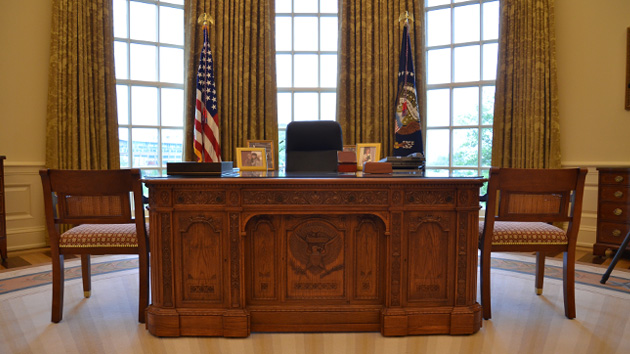
Once hopelessly caught in arctic ice the British vessel HMS Resolute was returned to her majesty Queen Victoria’s government and now serves as a desk for virtually every US President from Rutherford B. Hayes, to Joseph R. Biden.

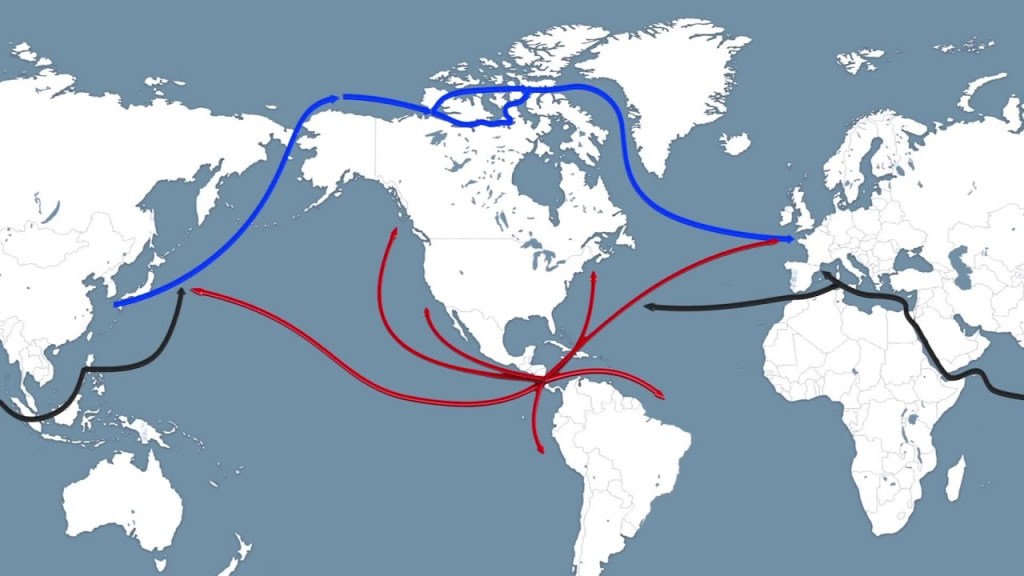
Since the time of Columbus, European explorers have searched for a navigable shortcut by open water, from Europe to Asia.   The “Corps of Discovery“ better known as the Lewis and Clark expedition, departed the Indiana Territory in 1804 with, among other purposes, the intention of finding a water route to the Pacific.

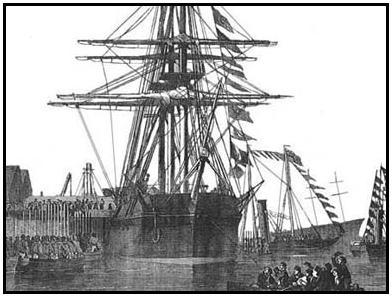
Forty years later, Captain sir John Franklin departed England aboard two ships, HMS Erebus and HMS Terror, to discover the mythical Northwest Passage.

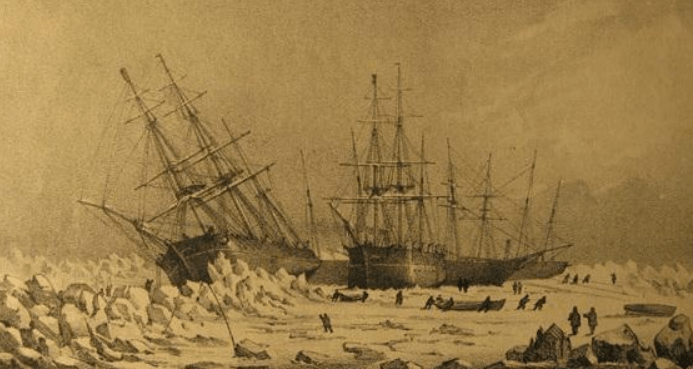
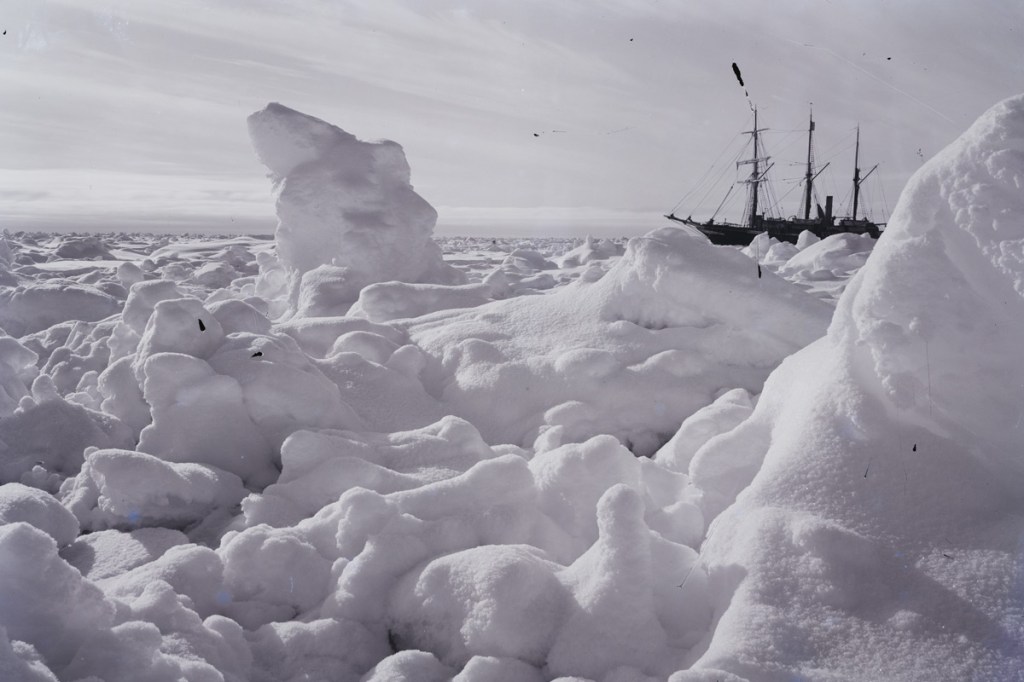
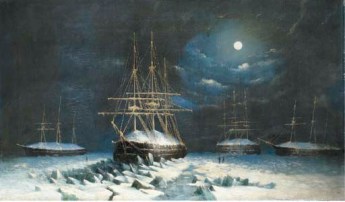
The two vessels became icebound in Victoria Strait near King William Island, in the Canadian Arctic.

Ship

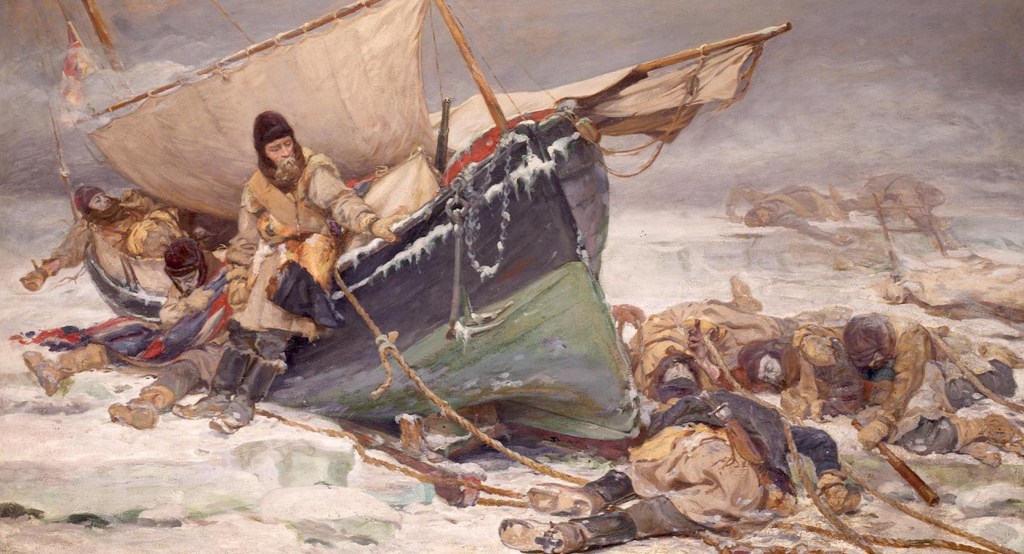
Prodded by Lady Jane Franklin, the hunt for her husband’s expedition would continue for years, at one time involving as any as eleven British and two American ships.  Clues were found including notes and isolated graves, telling the story of a long and fruitless effort to stay alive in a hostile climate.  The wreck of HMS Erebus would not be discovered until 2014, her sister ship, two years later.

In 1848, the British Admiralty possessed few hulls suitable for arctic service. Two civilian steamships were purchased and converted to exploration vessels: HMS Pioneer and HMS Intrepid, along with four seagoing sailing vessels, Resolute, Assistance, Enterprise and Investigator.

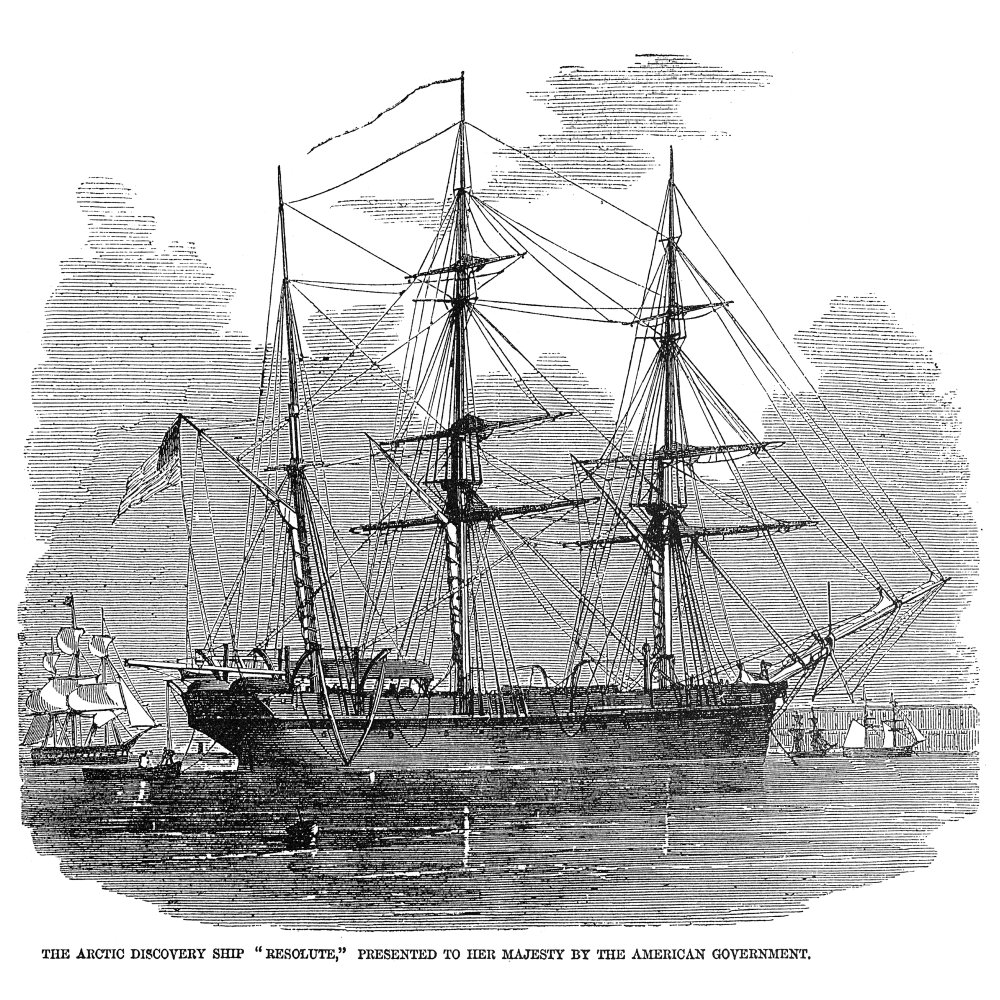
HMS Resolute was a Barque rigged merchant ship, purchased in 1850 as the Ptarmigan and refitted for Arctic exploration. Renamed Resolute, the vessel became part of a five ship squadron leaving England in April 1852, sailing into the Canadian arctic in search of the doomed Franklin expedition.

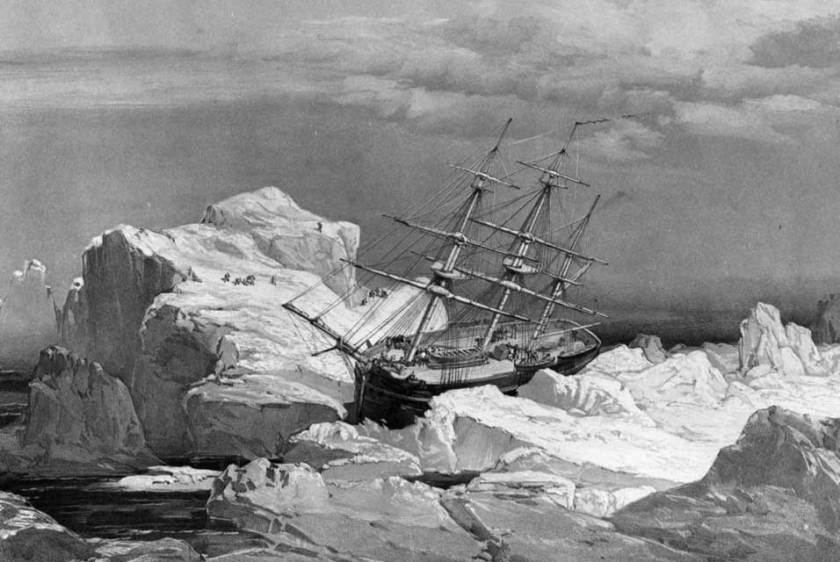
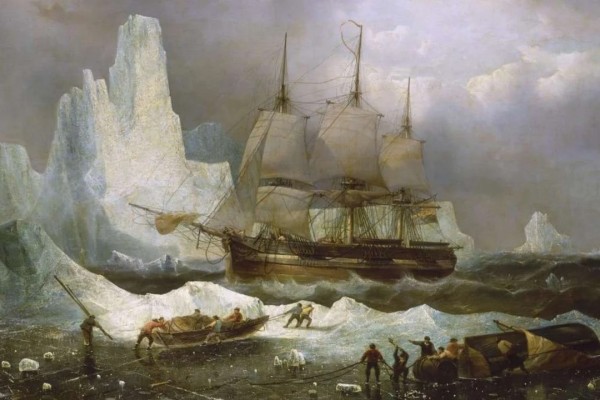
Neither Franklin nor any of his 128 officers and men would ever return alive.  What HMS Resolute Did find was the long suffering crew of the HMS Investigator, hopelessly encased in ice where, three years earlier, she too had been searching for the lost expedition.

resoluteice2

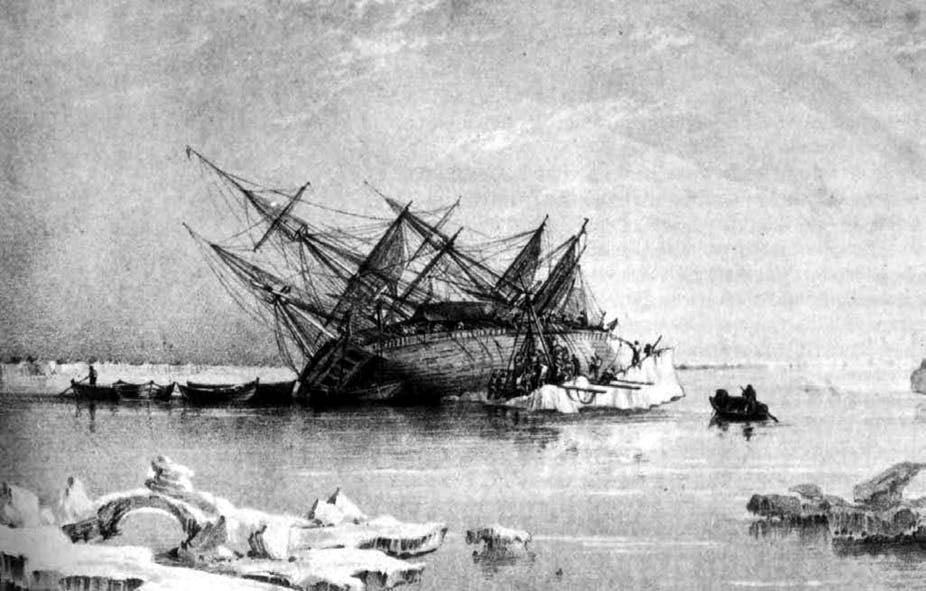
Three of the Resolute expedition’s ships themselves became trapped in floe ice in August 1853 including Resolute, herself. There was no choice but to abandon ship, striking out across the ice pack in search of their supply ships. Most of them made it despite egregious hardship, straggling into Beechey Island in the Canadian Arctic Archipelago, between May and August, of the following year.

The expedition’s survivors left Beechey Island on August 29, 1854, never to return. Meanwhile Resolute, alone and abandoned among the ice floes, continued to drift eastward at a rate of 1½ nautical miles per day.

download (2)

The American whale ship George Henry discovered the drifting Resolute on September 10, 1855, 1,200 miles from her last known position. Captain James Buddington split his crew, half of them now manning the abandoned ship. Fourteen of them sailed Resolute back to their base in Groton CT, arriving on Christmas eve.

The so-called ‘Pig and Potato War” of 1859 was resolved between the British and American governments with the loss of no more than a single hog, yet a number of border disputes made the late 1850s a difficult time, for American-British relations. Senator James Mason of Virginia presented a bill in Congress to fix up the Resolute and give her back to her Majesty Queen Victoria’s government, as a token of friendship between the two nations.

$40,000 were spent on the refit. Resolute sailed for England later that year. Commander Henry J. Hartstene presented the vessel to Queen Victoria on December 13. HMS Resolute served in the British navy until being retired and broken up in 1879. The British government ordered two desks to be fashioned from the English oak of the ship’s timbers, the work being done by the skilled cabinet makers of the Chatham dockyards.

In 1880, the British government presented President Rutherford B. Hayes the gift, of a large partner’s desk. A token of gratitude for the return of the HMS Resolute, 24 years earlier.

The desk, known as the Resolute Desk, has been used by nearly every American President from that day, to this. Every president from Hayes through Hoover used the desk either in the White House Green Room, the president’s study or working office. FDR moved the desk into the oval office where he had a panel installed in the opening, as he was self conscious about his leg braces.

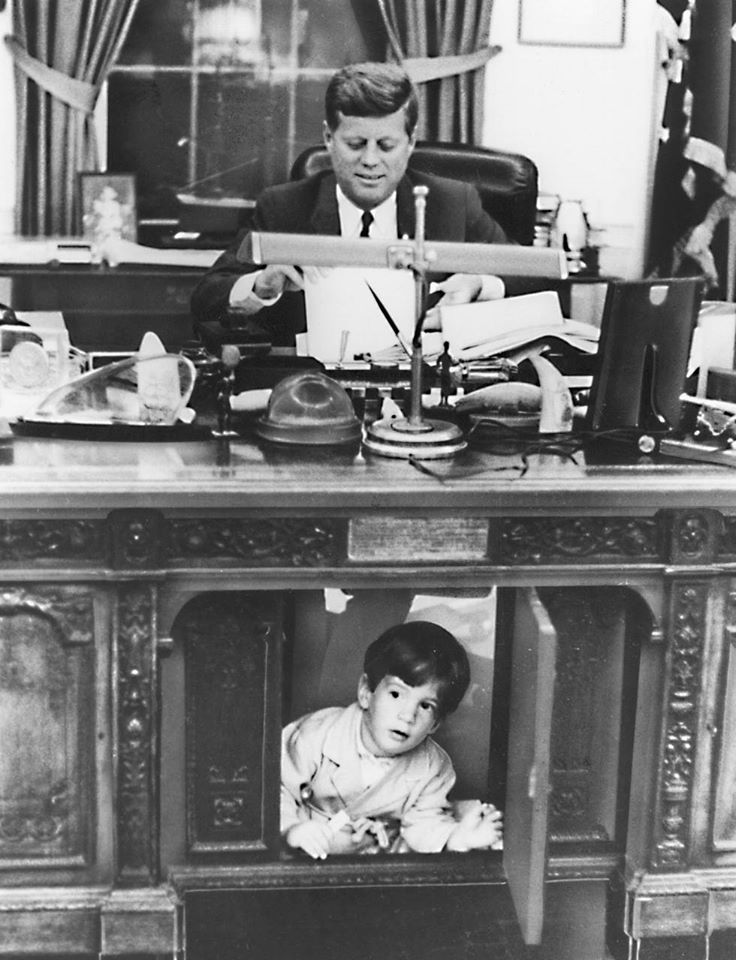
There was a brief period of climate controlled storage during the Truman era as the White House went through major renovation. It was Jackie Kennedy who brought the desk back, into the Oval Office. There are pictures of JFK working at the desk while a young JFK, Jr., played underneath.

Stanley Tretick’s October 2, 1963 photo of John F. Kennedy Jr. playing in the kneehole of the Resolute desk

Presidents Johnson, Nixon and Ford were the only ones not to use the Resolute desk, as LBJ allowed it to leave the White House following the Kennedy assassination.

The Resolute Desk spent several years in the Kennedy Library and later the Smithsonian Institute, the only other time the desk has been out of the White House.

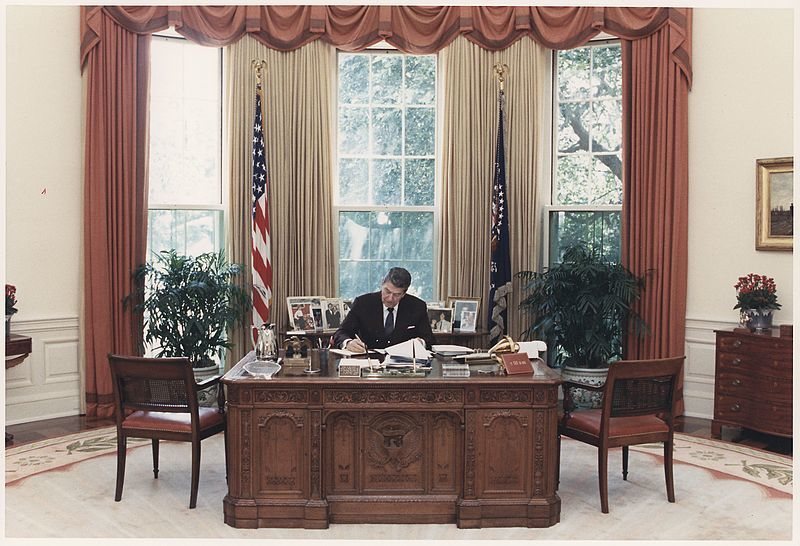
Resolute, Reagan

Jimmy Carter returned the desk to the Oval Office where it has remained through the Presidencies of Ronald Reagan, George H.W. Bush, Bill Clinton, George W. Bush, Barack Obama, Donald J. Trump and, as of this article, Joe Biden.

June 15, 1904 Earth’s Purest Children, Young and Fair

The all but forgotten disaster of June 15 1904 stole the lives of 1,021 innocents, mostly women and children. No one could know it at the time but the flaming wreck of the General Slocum would kill their community, as well.

Kleindeutschland, or “Little Germany”, occupied some 400 blocks on the Lower East Side of Manhattan, in what is now  the East Village.  “Dutchtown”, as contemporary non-Germans called it, was home to New York’s German immigrant community since the 1840s, when they first began to arrive in significant numbers. By 1855, New York had the largest ethnically German community in the world save for Berlin, and Vienna.

General Slocum token

It was 9:30 on a beautiful late spring morning when the sidewheel passenger steamboat General Slocum left the dock and steamed into New York’s East River.

She was on a charter this day, carrying German American families on an outing from St. Mark’s Lutheran Church. Over a thousand tickets were sold for that day’s harbor cruise and picnic, not counting the 300 or so children on board who were sailing for free. There were 1,342 people on board, mostly women and children, including band, crew and catering staff.

The fire probably started when someone tossed a cigarette or match in the forward section lamp room. Fueled by lamp oil and oily rags on the floor, the flames spread quickly, being noticed for the first time at around 10:00am.  A 12-year old boy had reported the fire earlier, but the Captain did not believe him.

Slocum 3

The ships’ operators had been woefully lax in maintaining safety equipment.  Now it began to show. Fire hoses stored in the sun for years were uncoiled, only to break into rotten bits in the hands of the crew. Life preservers manufactured in 1891 had hung unprotected in the sun for 13 years, their canvas covers splitting apart pouring useless cork powder onto the floor.  Survivors reported inaccessible life boats, wired and painted into place.Slocum 4

Crew members reported to Captain William van Schaick that the blaze “could not be conquered.”  It was “like trying to put out hell itself.” The captain ran full steam into the wind trying to make it to the 134th Street Pier, but a tug boat waved them off, fearing the flames would spread to nearby buildings. Captain van Schaick changed course for North Brother Island just off the Bronx’ shore, as the wind and speed of the ship itself whipped the flames into a holocaust.

Many jumped overboard to escape the inferno, but the heavy women’s clothing of the era quickly pulled them under.  Desperate mothers put useless life jackets on children and threw them overboard, only to watch in horror as they sank. One man, fully engulfed in flames, jumped screaming over the side, only to be swallowed whole by the massive paddle wheel. One woman gave birth in the confusion and then jumped overboard with her newborn, to escape the flames. They both drowned.

A few small boats were successful in pulling alongside in the Hell’s Gate part of the harbor, but navigation was difficult due to the number of corpses already bobbing in the waves.

Slocum-ablaze

Holding his station despite the inferno, Captain van Schaick permanently lost sight in one eye. His feet were badly burned by the time he ran the Slocum aground at Brother Island.  Patients and staff at the local hospital formed a human chain to pull survivors to shore as they jumped into shallow water.

General Slocum Casualties

1,021 passengers and crew either burned to death or drowned this day in 1904.  It was the deadliest peacetime maritime disaster, in American history. Only 321 lived to tell the tale.

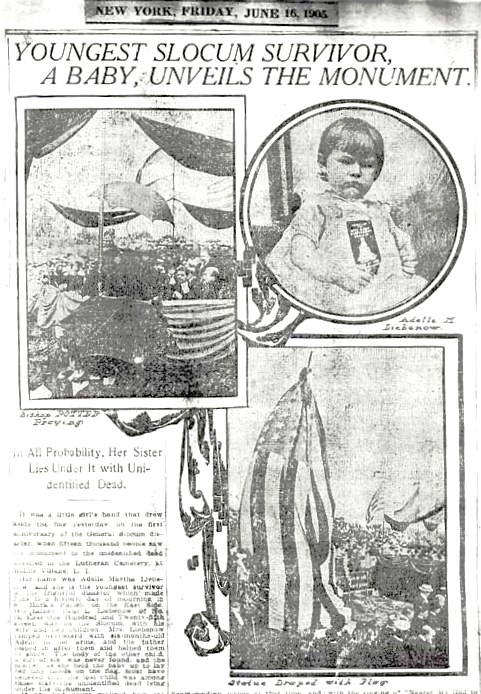
Six month old Adella Liebenow was the youngest survivor of the disaster. The following year at the age of one, Liebenow unveiled a memorial to the calamity which had killed her two sisters and permanently disfigured her mother. The New York Times reported “Ten thousand persons saw through their tears a baby with a doll tucked under her arm unveil the monument to the unidentified dead of the Slocum disaster yesterday afternoon in the Lutheran Cemetery, Middle Village, L.I.”

Both her sisters were among the unidentified dead.

Youngest_Slocum_Survivor

Less than one per cent of Little Germany’s population was killed in the disaster, yet these were the women and children of some of the community’s most established families.  There followed more than a few suicides.  Mutual recriminations devoured much of the once-close community as the men began to move away.  There was nothing for them anymore, in this place.   Anti-German sentiment engendered by WW1 finished what the Slocum disaster had begun. Soon, New York’s German-immigrant community, was no more.

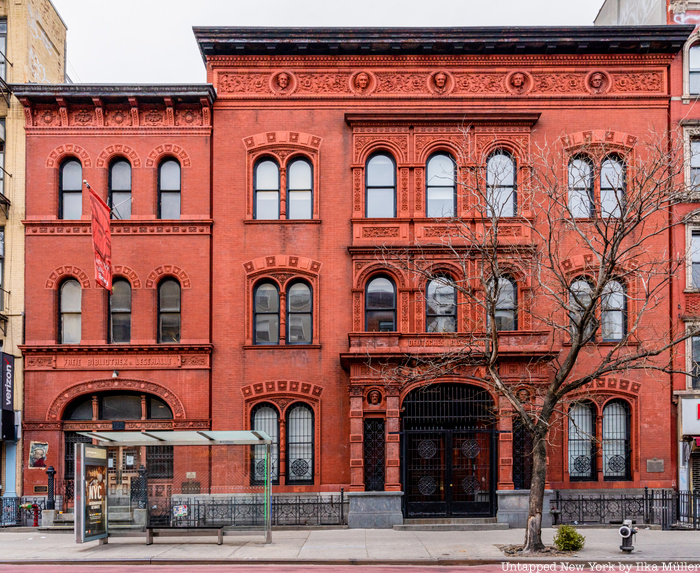
The East Village Ottendorfer branch of the New York Public Library was originally bilingual, with half its collection in German and the other half, in English.

In Tompkins Square Park in Manhattan, there is a 9-foot stele sculpted from pink Tennessee Marble.  The relief sculpture shows two children, beside these words:

“They were Earth’s purest children, young and fair.”

General_Slocum_Memorial

Once the youngest survivor of the disaster, Adella (Liebenow) Wotherspoon passed away in 2004, at the age of 100.  The oldest survivor of the deadliest disaster in New York history, until September 11, 2001.

June 11, 1775 Bad Little Falls

“Of balsam & blueberries, lobsters & lighthouses, puffins & whale watching, sunsets over the bay…”. Thus does its own website describe the tiny downeast town of Machias Maine. It’s not the kind of place where you’d expect the first naval combat, of the American Revolution.

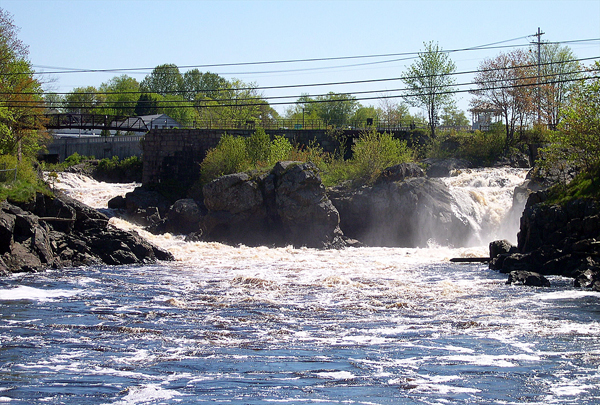
Five hours and 15 minutes drive from Boston, the small town of Machias sports a campus for the University of Maine, a municipal airport and, even today, a year-round population barely exceeding 2,000. In the Passamaquoddy tongue, the name translates into “bad little falls”, a reference the river running through the place.

BAD LITTLE FALLS KC.JPG
Machias-area residents who discussed downtown revitalization Tuesday evening said the Bad Little falls was the town’s most distinctive element. (KATHERINE CASSIDY PHOTO)

It’s not a spot where you’d expect the first naval combat of the American Revolution.

In 1775, the modern state of Maine was still part of Massachusetts. Machias itself, a small fishing village on the “Downeast” New England coast was a thorn in the British side, since the earliest days of the Revolution.   That February, a local pilot intentionally grounded the coastal patrol schooner HMS Halifax, in Machias Bay.  The place also served as a base from which privateers preyed on British merchant shipping.

Machias by JFW des Barres

In April, a British foray from the occupied city of Boston culminated in the Battle at Lexington Green.  While the King’s troops held the ground in the wake of the early morning skirmish, the decision of the afternoon’s battle at nearby Concord was quite different.  The colonial’s response to this incursion of “Regulars” was that of a swarming beehive, resulting in a Patriot victory and a British retreat under fire, all the way back to Boston.

Siege-of-Boston-1-AB

Boston was all but an island in those days, connected to the mainland only by a narrow “neck” of land.  A Patriot force some 20,000 strong took positions in the days and weeks that followed, blocking the city and trapping four regiments of British troops, about 4,000 men, inside of the city.

For General Thomas Gage in charge of all those troops, the best hope for resupply was by water.

Concerned lest they fall into rebel hands, Royal Navy Admiral Samuel Graves wanted the guns from the wreck of the Halifax.  Gage needed lumber as well, with which to build barracks.  So it was the wealthy merchant and Tory loyalist Ichabod Jones was enlisted to help, blissfully unaware of the dim view in which his activities were held by fellow colonials.

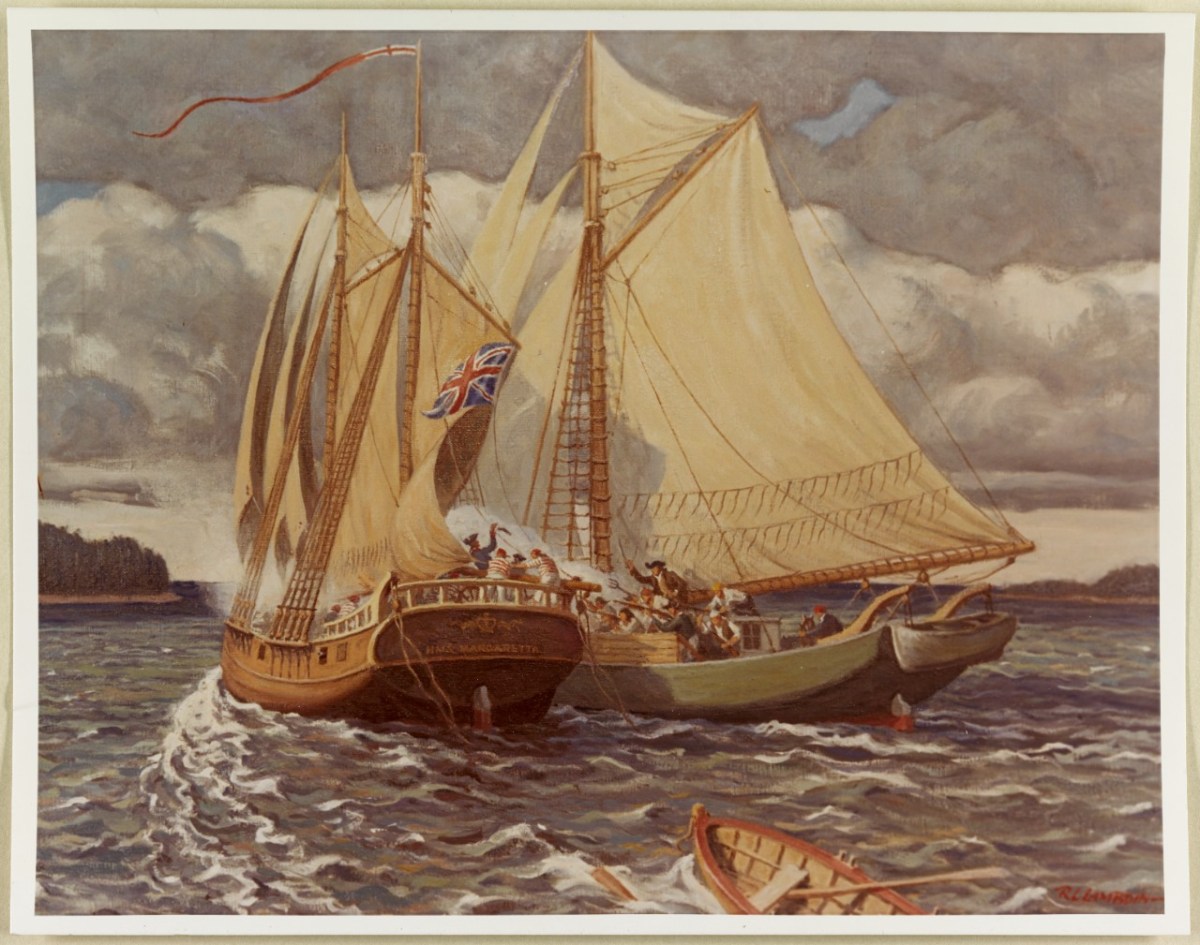
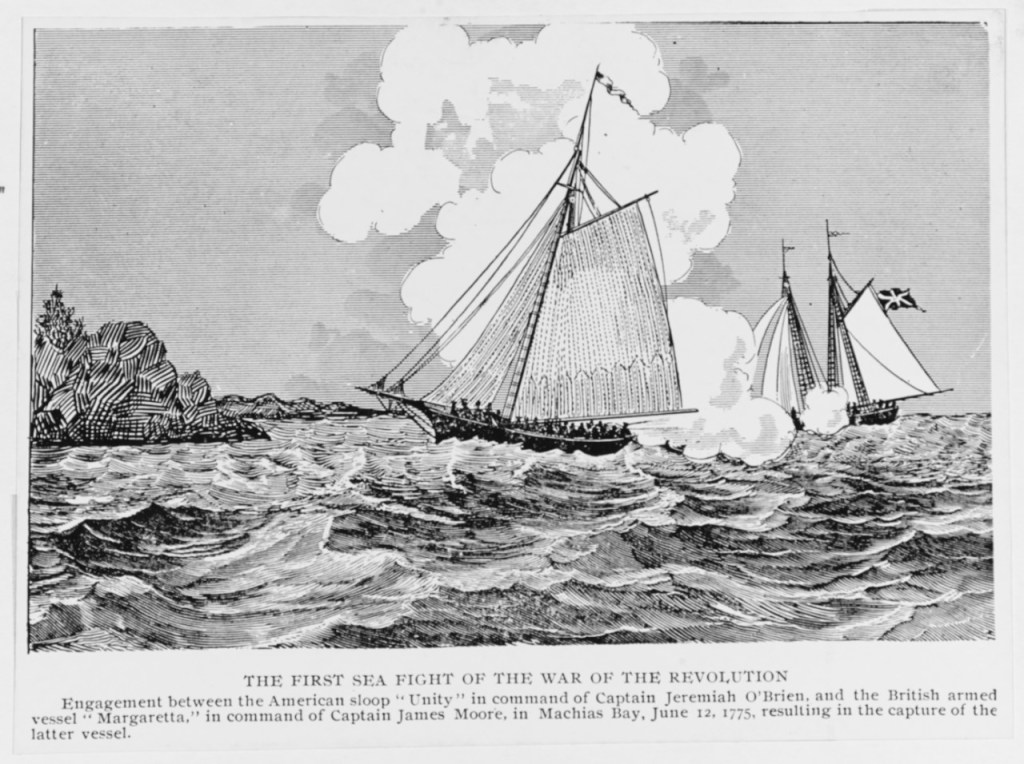
Jones arrived at Machias on June 2 aboard the merchant ships Unity and Polly, under guard of the armed schooner HMS Margaretta commanded by Midshipman James Moore.  They had come to trade food for lumber but the townspeople were split, and voted against doing business with Jones.  This provoked a threat from the Margaretta, which moved into range to bombard the town.  The action resulted in a second vote and the trade was approved, but Jones’ response was ham-fisted.   The merchant would only do business, with those who had voted with him in the first place.

margaretta
HMS Margaretta

Local militia leader Colonel Benjamin Foster conceived a plan to seize the merchant. He saw his opportunity on June 11, when Jones and Moore were in church.  They almost had the pair too, but Jones saw some twenty men approaching, and fled for the woods.  Moore was able to get back to the Margaretta, but events soon spun out of control.

The following day Colonel Foster and his brother, a man with the delightful name of Wooden Foster, seized the Unity.  A group of thirty began to construct breastworks to serve as protection, while others commandeered the coastal packet Falmouth.   There was about to be a fight.

machias_me

A group of Machias men approached Margaretta from the land and demanded her surrender, but Moore lifted anchor and sailed off in attempt to recover the Polly.  A turn of his stern through a brisk wind resulted in a boom and gaff breaking away from the mainsail, crippling the vessel’s navigability. Unity gave chase followed by Falmouth.

Musket fire was exchanged from both sides and hand grenades thrown onto the decks of the Unity.   Margaretta was soon boarded from both sides, the fighting hand to hand.

So began the “Lexington of the Sea”. The little-known episode was the first naval battle of the American Revolution, and ended in victory for the Patriot side.  Four Royal Navy seamen were killed outright and another ten wounded including Moore himself. He received a musket ball to the chest and died, the following day.

Patriot losses amounted to ten killed and another three wounded.

HMS Margaretta served the remainder of the Revolution as the renamed Machias Liberty.  British payback came on October 18 when Falmouth, the modern-site of Falmouth Maine and not to be confused with Falmouth Massachusetts, was burned to the ground.

British forces attempted a second assault on Machias, with an amphibious landing of 1,000 troops over the 13th – 14th of August, 1777.  The attempt was beaten back by local militia aided by Passamaquoddy and Penobscot allies, with both sides claiming victory.  The nearby village of Castine would be occupied in 1779 as would Machias itself during the War of 1812.  On both occasions, captured territories were re-dubbed the Crown Colony of “New Ireland”, a refuge for Loyalists and a base for future military operations.

The Crown Colonies of New Ireland survived for four years in the first instance and eight months in the second.  The failed Penobscot expedition of 1779 to retake the colony would result in the most catastrophic defeat suffered by American Naval forces until the Japanese attack on Pearl Harbor 162 years later, but that must be a story for another day.

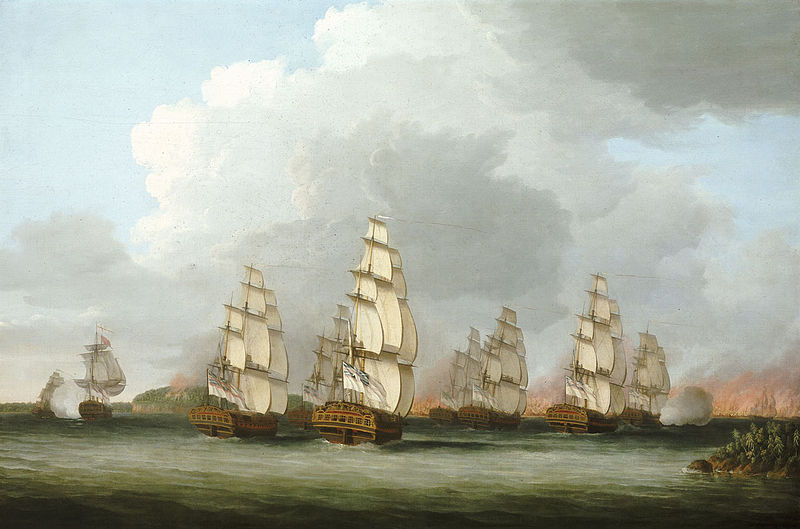
800px-PenobscotExpeditionBySerres
Britain defending New Ireland from the Penobscot Expedition by Dominic Serres

May 20, 1845 The Lost Franklin Expedition

HMS Erebus and Terror were perhaps the finest vessels ever to make the attempt, having proven themselves in an earlier expedition, to the Antarctic. With hulls strengthened by steel plates and beams to withstand the massive pressures of the ice, the two were equipped not only with sail but with massive locomotive engines and screws, able to retract within channels designed to avoid damage from the ice.

Since the fall of Constantinople when the Ottoman Empire blocked overland trade routes to the east, European explorers searched for a navigable shortcut by open water, from Europe to Asia.  

The idea of a northern sea route has been around at least since the second century world maps of the Greco-Roman geographer, Ptolemy. Five years after Christopher Columbus “sailed the ocean blue”, John Cabot became the first European to explore the fabled “Northwest Passage”. Cabot made landfall in the Canadian Maritime sometime in June 1497 and, like Columbus, mistakenly believed he had reached the Asian shore.

A year later, King James VII authorized a much larger expedition of five ships and 200 men. Cabot’s expedition is believed to have been caught in a severe storm in the North Atlantic. None were ever heard from, again.

Jacques Cartier departed France in 1534 in search of a faster route to Asia. Three such expeditions failed to discover the great river to the west.

In 1539, the Spanish explorer Francisco de Ulloa departed the Pacific coast of Mexico for what the Spanish called, the Strait of Anián. Ulloa is credited with proving that Baja California is a peninsula and not an island but he too came back, empty handed.

Henry Hudson’s explorations paved the way to Dutch settlement in New York but the river that bears his name, proved to be a dead end. Another attempt in 1610 saw Hudson’s expedition stuck in the ice, in Hudson Bay. The ice melted with the Spring of 1611 when the crew mutinied, setting Cabot and a few loyalists adrift in a small boat. The mutineers returned to England. Cabot and the others, vanished.

The “Corps of Discovery“, better known as the Lewis and Clark expedition, departed the Indiana Territory in 1804 with, among other purposes, and intention of finding a water route to the Pacific.

By the 19th century, European explorers looked to the north. To the Arctic. On this day in 1845, Captain Sir John Franklin departed England with a crew of 134 men aboard two ships, HMS Erebus and HMS Terror, in search of the Northwest Passage.

HMS Terror. Photo Credit: Wikipedia

HMS Erebus and Terror were perhaps the finest vessels ever to make the attempt, having proven themselves in an earlier expedition, to the Antarctic. With hulls strengthened by steel plates and beams to withstand the massive pressures of the ice, the two were equipped not only with sail but with massive locomotive engines and screws, able to retract within channels designed to avoid damage from the ice. Inside, a steam heating system kept sailors insulated from the arctic cold.

Two months later, the vessels were spotted at the entrance of Baffin Bay. They were never seen again.

Three years later, a rescue expedition set out at the urging of lady Franklin and others, in search of the lost expedition. Three expeditions really, one overland and one each approaching from the north Atlantic, and Pacific. Some tantalizing clues emerged over the following decade. Three graves discovered on Beechy Island, in the Canadian Arctic Archipelago . A note and then another, discovered under stone cairns. The weathered bones bearing knife marks raising questions, about cannibalism.

American vessels joined with those of British searchers. The search became all but a crusade for a time but nothing turned up, beyond the occasional clue. No member of the Franklin expedition was ever seen again. Not at least, by European eyes.

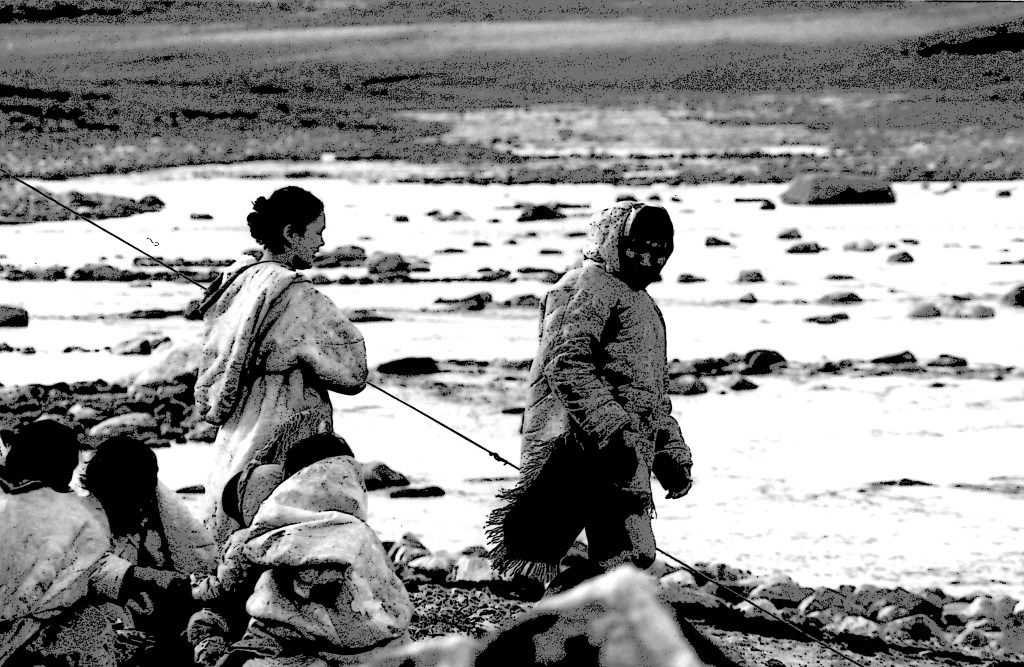
Anthropologists believe the Thule people split from related groups called Aleuts and from Siberian migrants some 4,000 years ago, displacing the paleo-eskimo culture called the Tuniit. The “Inuit” people further split around the year 1000 and moved east, across the Arctic.

The techniques by which a human being survives and even thrives in such an inhospitable place, the histories, these are the Qaujimajatuqangit, the knowledge of the Inuit, told and retold in stories going back thousands of years.

Inuit historian Louie Kamookak, explains:

“Inuit had no written system of language… History was passed down through oral history, which meant telling and retelling stories. During the long winter days and nights it was usually the elders who would tell stories.”

Hat Tip Louis Kamookak

169 years after HMS Erebus and Terror disappeared the Qaujimajatuqangit of the Netsilik Inuit of King William Island led to their discovery.

In September 2014, an expedition led by Parks Canada discovered the wreck of the HMS Erebus, in an area identified in Inuit oral history. She lay in a mere 36-feet of water, a good sixty miles from where she was believed to be. Two years later, Inuit knowledge led to the wreck of HMS Terror.

Afterward

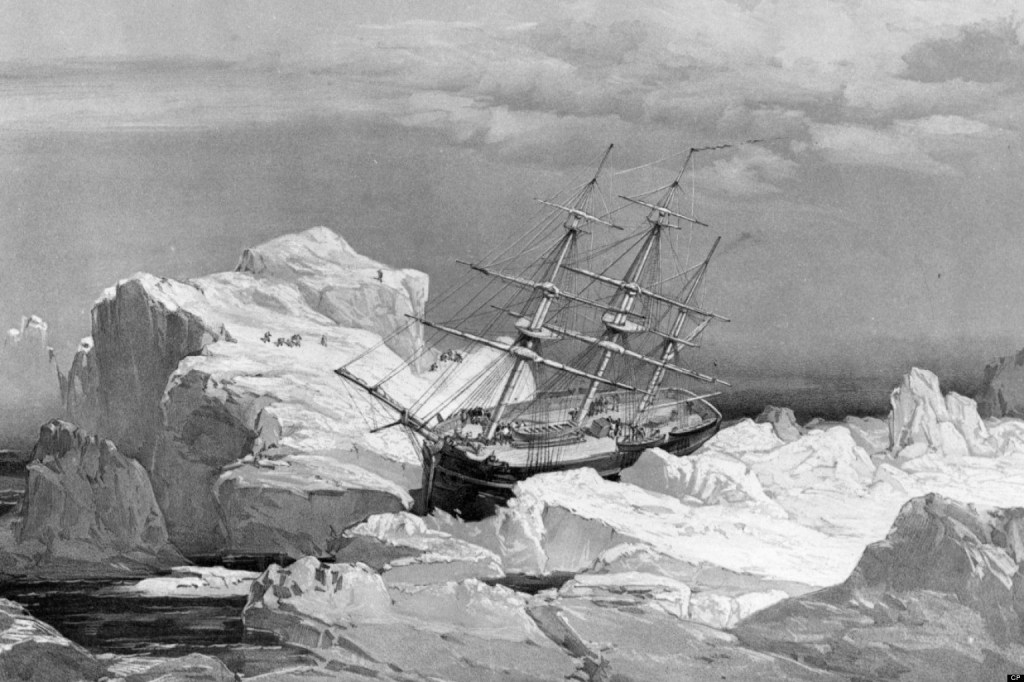
In 1852, searchers aboard HMS Resolute discovered the long suffering crew of HMS Investigator, hopelessly encased in ice while searching for the lost Franklin expedition, three years earlier.

HMS Investigator is shown on the north coast of Baring Island in the Arctic in this 1851 drawing. The ships commanded by Sir John Franklin in his doomed 19th-century search for the Northwest Passage will have to overwinter wherever they are at least one more time. THE CANADIAN PRESS/Public Archives of Canada

Resolute herself became trapped in the ice, the following year. There was no choice but to abandon ship, striking out across the ice pack in search of rescue. Most of them made it despite egregious hardship, straggling into Beechy Island over the Spring and summer of 1854.

In 1855, the American whale ship George Henry discovered the Resolute drifting in pack ice, some 1,200 miles from her last known position. Captain James Buddington split his crew, half of them now manning the abandoned ship. Fourteen sailed Resolute back to Groton Connecticut, arriving on Christmas eve.

The late 1850s was a difficult time for American-British relations. Senator James Mason of Virginia presented a bill in Congress to fix up the Resolute, and give her back to her Majesty Queen Victoria’s government as a token of friendship between the two nations.

$40,000 were spent on the refit. Commander Henry J. Hartstene presented the vessel to Queen Victoria on December 13, 1859. HMS Resolute served in the British navy until 1879 when she was retired, and broken up. The British government ordered two desks to be fashioned from English oak of the ship’s timbers, the work being done by the skilled cabinet makers of the Chatham dockyards. In 1880, the British government presented a large partner’s desk to President Rutherford B. Hayes. A token of appreciation for HMS Resolute’s return, a quarter-century earlier.

The Resolute Desk has remained in the White House from that day to this, excepting the Truman renovations and 11 years following the assassination of President John F. Kennedy, when it was moved to the Smithsonian. President George H.W. Bush moved it into the residence office, in the White House. Aside from that, the Resolute desk has remained in the oval office from the Presidency of Jimmy Carter, to that of Joe Biden.

April 27, 1865 SS Sultana

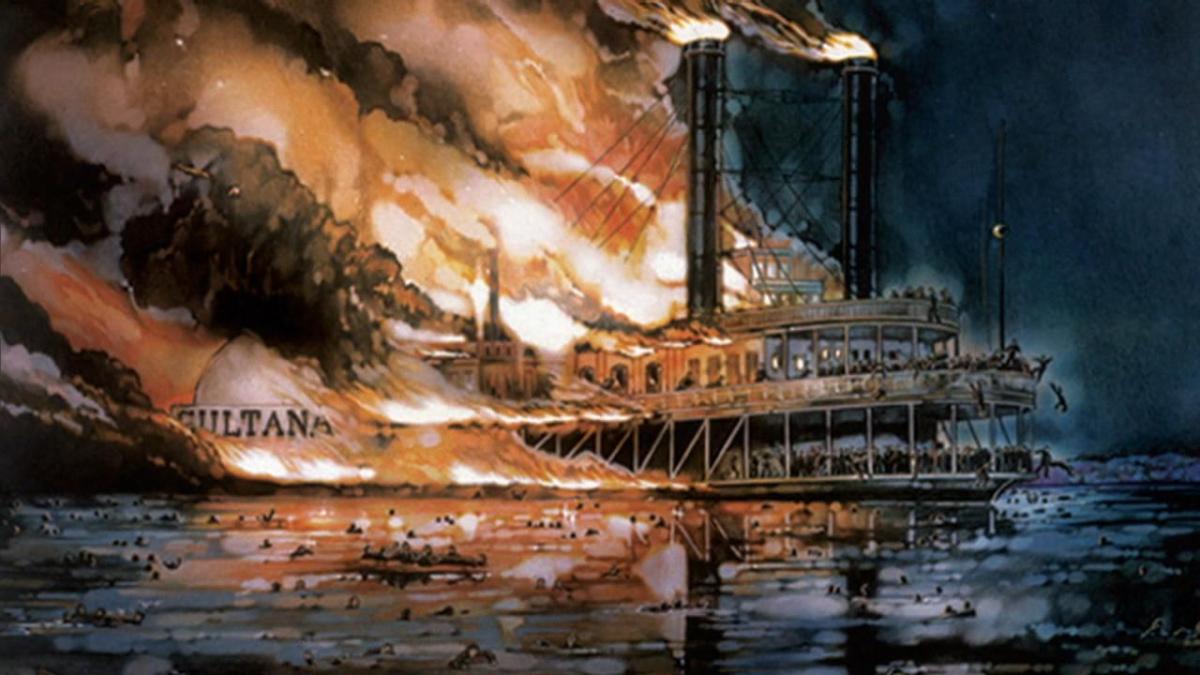
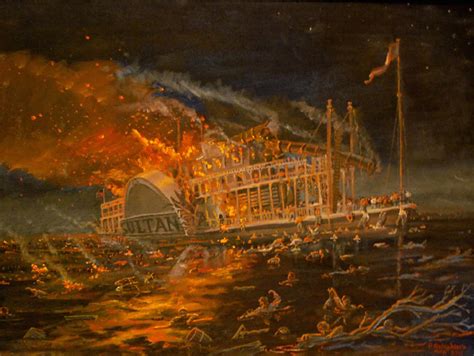
At 2:00am on April 27, Mason’s temporary boiler patch exploded. Two more boilers detonated a split second later.  The force of the explosion hurled hundreds into the icy black water.  The top decks soon gave way as hundreds tumbled into the gaping maw of the fire boxes below.

In April 1865, the Civil War was all but over.  General Robert E. Lee surrendered to General Ulysses S. Grant on the 9th.  President Abraham Lincoln was assassinated five days later and John Wilkes Booth run to ground and killed, on the 26th.  Thousands of former POWs were being released from Confederate camps in Alabama and Georgia, and held in regional parole depots.

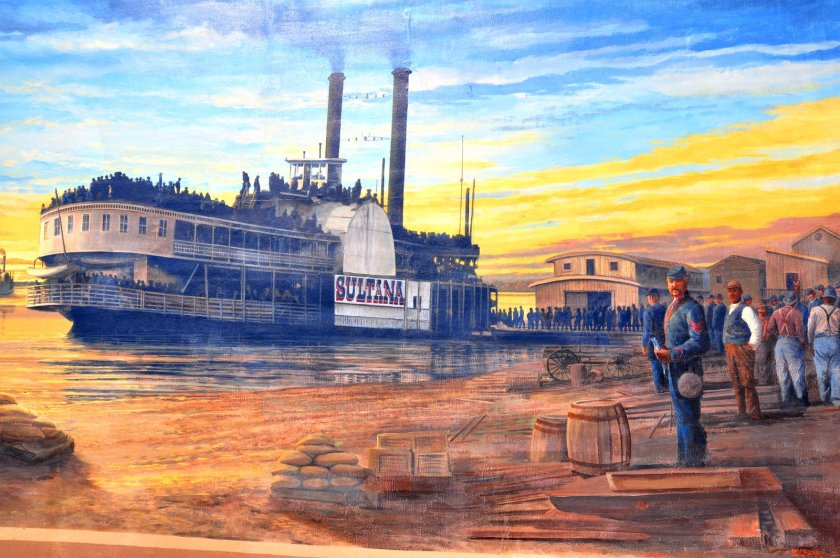
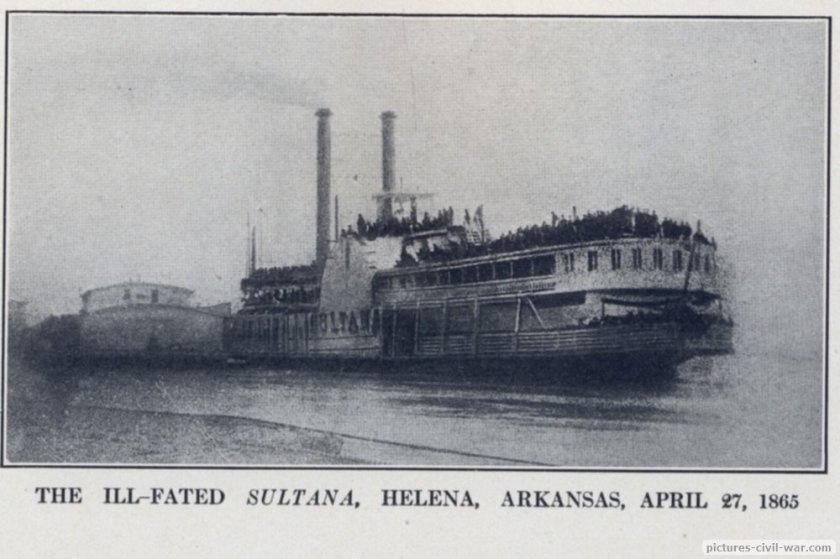
The sidewheel steamboat Sultana left New Orleans with about 100 passengers and a few head of livestock, pulling into Vicksburg Mississippi on the 21st to repair a damaged boiler and pick up a promised load of passengers.

With a bulging seam on her boiler, the ship’s mechanic wanted to cut it out and install a new plate, easily three day’s work.  Captain J. Cass Mason declined, for fear of losing his passengers.  He wanted the seam hammered back into place and covered with a patch and he wanted it done, in a day.

download (88)

The passengers Mason was so afraid of losing were former prisoners of the Confederacy, and Confederate parolees, returning to their homes in Kentucky and Tennessee.

The Federal government was paying $5 each to anyone bringing enlisted troops home, and $10 apiece for officers.  Lieutenant Colonel Reuben Hatch, chief quartermaster at Vicksburg and one of the sleazier characters in this story, had approached Captain Mason with a deal.  Hatch would guarantee a minimum of 1,400 passengers and they’d both walk away, with a pocketful of cash.

As it was, there were other riverboats in the vicinity.  Mason didn’t have time to worry about boiler repairs.

The decks creaked and sagged, as beams were installed to shore up the load.  Sultana backed away from the dock on April 24 with 2,427 passengers.  More than six times her legal limit of 376.

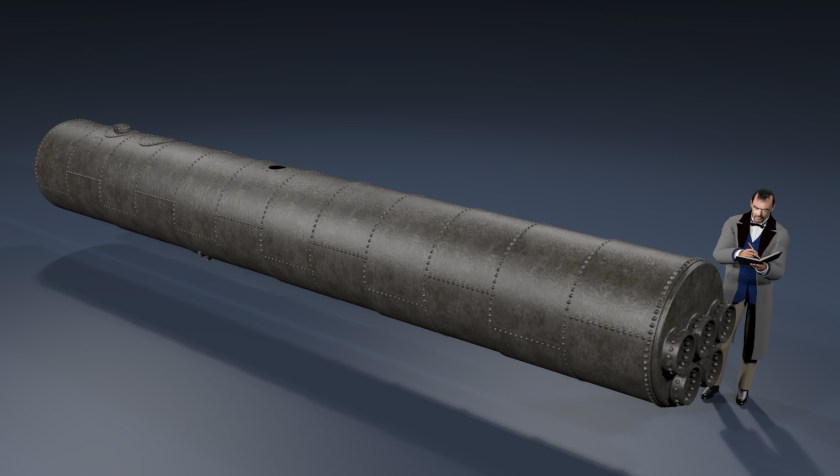
BoilerBlue
This animation gives a sense of the size, of Sultana’s boilers

Sultana spent two days traveling upstream, fighting one of the heaviest spring floods in the history of the Mississippi River.  She arrived at Memphis on the evening of the 26th, unloading 120 tons of sugar from her holds.  Already massively top heavy, the riverboat now lurched from side to side with every turn.

Sultana (1)
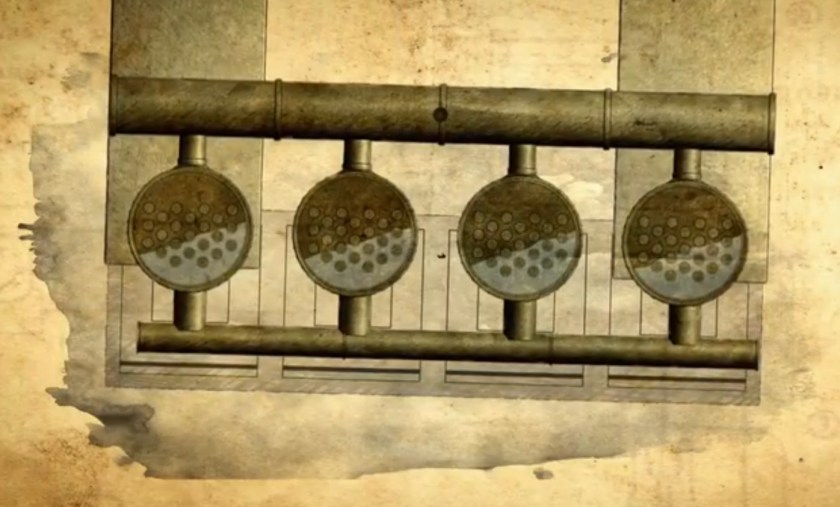
SS Sultana was equipped with four such boilers, mounted from side-to-side.  Massively top heavy, water would run from left to right as she lurched from side to side, water then flashing to steam and creating enormous surges in pressure

The crew must have exceeded allowable steam pressure, pushing all that load against the current.  Pressure varied wildly inside Sultana’s four giant boilers, as water sloshed from one to the next with every turn, boiling water flashing to superheated steam and back to water.

At 2:00am on April 27, Mason’s temporary boiler patch exploded. Two more boilers detonated a split second later.  The force of the explosion hurled hundreds into the icy black water.  The top decks soon gave way as hundreds tumbled into the gaping maw of the fire boxes below.

download (90)

Within moments, the entire riverboat was ablaze.  Those who weren’t incinerated outright now had to take their chances in the swift moving waters of the river.  Already weakened by terms in captivity, they died by the hundreds of drowning, or hypothermia.

Seven hours later the drifting and burnt out hulk of the Sultana, sank to the bottom.  The steamers Silver Spray, Jenny Lind, and Pocahontas joined the rescue effort, along with the navy tinclad Essex and the sidewheel gunboat USS Tyler.  700 were plucked from the water and taken to Memphis hospitals of whom 200 later died of burns or exposure.  Bodies continued to wash ashore, for months.

History has a way of swallowing some events whole. Like they never even happened. Sultana was the worst maritime disaster in American history, though her memory was swept away in the tide of events, that April.  The United States Customs Service records an official count of 1,800 killed, though the true number will never be known.  Titanic went down in the North Atlantic 47 years later, taking 1,512 with her.

download (91)

Despite the enormity of the disaster, no one was ever held accountable.  One Union officer, Captain Frederick Speed, was found guilty of grossly overcrowding the riverboat.  It was he who sent 2,100 prisoners from their parole camp into Vicksburg, but his conviction was later overturned.  It seems that higher ranking officials may have tried to make him into a scapegoat, since he never so much as laid eyes on Sultana herself.

Captain Williams, the officer who actually put all those people onboard, was a West Point graduate and regular army officer.  The army didn’t seem to want to go after one of its own.  Captain Mason and all of his officers were killed in the disaster.  Reuben Hatch, the guy who concocted the whole scheme in the first place, resigned shortly after the disaster, thereby putting himself outside the reach of a military tribunal.

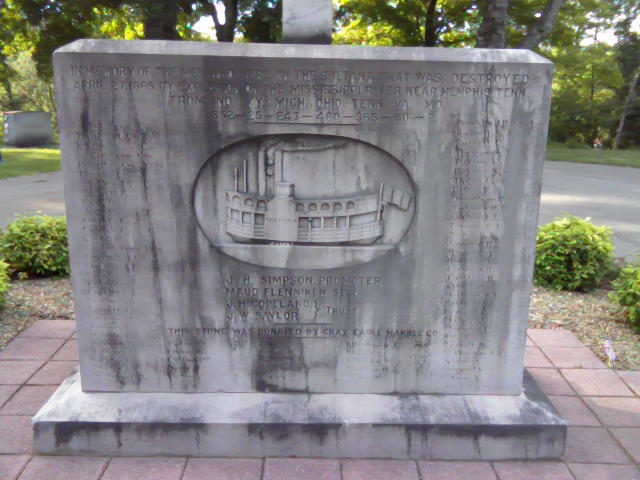
Sultana Memorial at the Mount Olive Baptist Church Cemetery in Knoxville, Tennessee in 2010
Sultana Memorial at the Mount Olive Baptist Church Cemetery in Knoxville, Tennessee, 2010

The last survivor of the Sultana disaster, Private Charles M. Eldridge of the 3rd (Confederate) Tennessee Cavalry, died at his home at the age of 96 on September 8, 1941. Three months later, the air forces of Imperial Japan attacked the US Naval anchorage, at Pearl Harbor.