In his 1968 book “Making of Star Trek”, Gene Roddenberry says that James Kirk was born in a small town in Iowa. Full time Trekkie and part time Riverside Councilman Steve Miller thought “Why not Riverside”.
A boy was born on March 22, 2233 in Riverside, Iowa, destined to become the youngest captain in Star Fleet history. Before he could boldly go where no man has gone before, he had to have a name.
The WWII fighter pilot and veteran of 89 combat missions Gene Roddenberry made 16 name suggestions on this date in 1965, among them Hannibal, Timber, Flagg, and Raintree.
Roddenberry decided on James T. Kirk, based on a journal entry of the 18th century British explorer, Captain James Cook: “ambition leads me … farther than any other man has been before me”.
Kirk was killed in 2329 on the Enterprise (B), after the ship was eaten by a Nexus energy ribbon on its maiden voyage. Only he didn’t die, because Jean-Luc Picard found him alive in the timeless Nexus, negotiating hotel deals for Priceline.com. Or something like that.
In his 1968 book “Making of Star Trek”, Gene Roddenberry says that James Kirk was born in a small town in Iowa. Full time Trekkie and part time Riverside Councilman Steve Miller thought “Why not Riverside”. In 1985 Miller moved that Riverside declare itself the Future Birthplace of James T. Kirk. The motion passed unanimously. The town’s slogan was changed from “Where the best begins” to “Where the Trek begins,” and the annual summer festival changed from “River Fest” to “Trek Fest”.
The Riverside connection became Holy Writ, when the 2009 film Star Trek identified the place as Kirk’s home town. There is a granite monument in Riverside, population 963, declaring itself to be the “Future Birthplace of Captain James T. Kirk.
In case you were ever curious about what the “T” stands for…its Tiberius.
I can’t imagine many Allied soldiers ever tried to serenade their Nazi adversaries during World War II. The ones who actually pulled it off must number, precisely, one.
James and Kate Kaminski’s little bundle of joy came into the world on June 26th 1926, in Brooklyn. They named this, their fourth son, Melvin James. James died of tuberculosis at 34, when the boy was only two. A small Jewish kid growing up in a tough Brooklyn neighborhood, Kaminsky learned the value of being able to crack a joke. “Growing up in Williamsburg”, he said, “I learned to clothe it in comedy to spare myself problems—like a punch in the face”.
The boy had a talent for music. He was taught by another kid from Williamsburg, Buddy Rich. By 14 he was good enough to be playing drums for money.
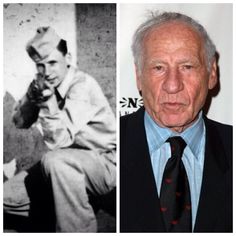
Melvin attended a year at Brooklyn College before being drafted into the Army, in WWII. After attending Army Specialized Training at VMI, Corporal Kaminsky joined the 1104th Combat Engineers Battalion, 78th Infantry Division in the European theater. There, he served through the end of the war. Most of his work was in finding and defusing explosives, though on five occasions his unit had to drop their tools and fight as Infantry.
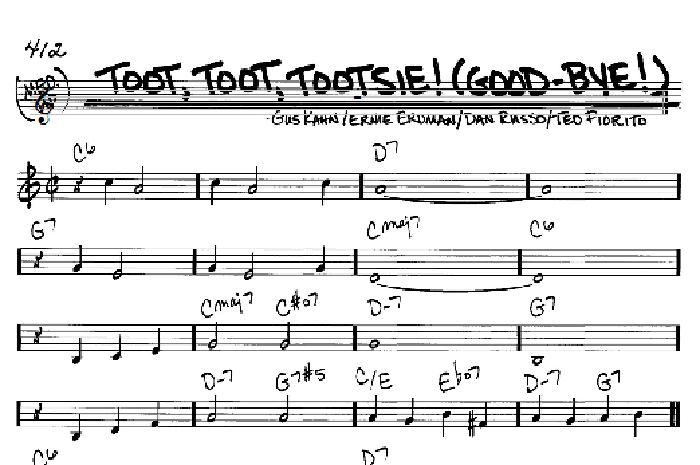
At one point Kaminsky’s unit gathered along a River. They were so close they could hear German soldiers singing a beer hall song, from the other side. Kaminsky grabbed a bullhorn and serenaded the Germans back, singing them an old tune that Al Jolson used to perform in black face, “Toot Toot Tootsie, Goodbye”. Polite applause could be heard from across the river, afterward. I can’t imagine many Allied soldiers ever tried to serenade their Nazi adversaries during World War II. The ones who actually pulled it off must number, precisely, one.
Kaminski went into show business after the war, playing drums and piano in the Borscht Belt resorts and nightclubs of the Catskills. It was around this time that he took his professional name, adopting his mother’s maiden name of Brookman and calling himself “Mel Brooks”.
Brooks started doing stand-up, when the regular comedian at one of the clubs was too sick to perform. By ’49 he was “Tummler”, the master entertainer at Grossinger’s, one of the most famous resorts in the Borscht Belt. He was making $50 a week writing for his buddy Sid Caesar and his NBC “The Admiral Broadway Review”.
In 1968, Mel Brooks wrote and produced the satirical comedy film “The Producers”, about a theatrical producer and an accountant who set out to fleece their investors. The scheme was to do a play so bad that it was sure to flop on Broadway, then to abscond to Brazil with their money when the play closed. Problem was, the show turned out to be a hit. The fictional play is a musical, called “Springtime for Hitler”. Even before the age of suffocating PC, I don’t know many guys beside Mel Brooks, who could have gotten away with that one.
There isn’t one of us who doesn’t know his work. From the 2,000 year old man with “over forty-two thousand children, and not one comes to visit me” to Blazing Saddles’ “Candygram for Mongo” (“Mongo likes candy”).
Brooks has risen to the top of his chosen profession, winning the coveted “EGOT”, an acronym for the entertainment industry’s four major awards, the Emmy, Grammy, Oscar and Tony. Only eleven others have ever risen to this level: Richard Rodgers, Helen Hayes, Rita Moreno, John Gielgud, Audrey Hepburn, Marvin Hamlisch, Jonathan Tunick, Mike Nichols, Whoopi Goldberg, Scott Rudin, and Robert Lopez. As of this date, Brooks only needs another Oscar to be the first “Double EGOT” in history.
Melvin Kaminsky will be 92 in a couple of months. Last year, March 31, 2016, the Averhill Park K-12 School District in upstate New York kicked off a three day production of “Young Frankenstein”. Let me know if you can think of another 92-year-old guy, who remains that current. I can’t think of one.
For the media, the business model depends on renting an audience to a sponsor. The “controversy” would be squeezed for all it was worth, but Bocephus would have the last word.
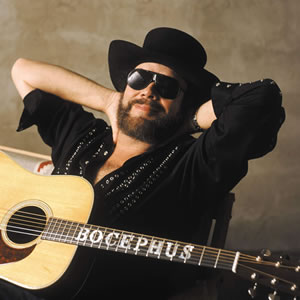
Randall Hank Williams was born May 26, 1949 in Shreveport, Louisiana, the son of country singer/songwriter, Hiram King “Hank” Williams. Surprisingly for a guy who could neither read nor notate music and died at the age of 29, the elder Williams has been described as “one of the most significant and influential American singers and songwriters of the 20th century”.
His father called the younger Williams “Bocephus” after the ventriloquist’s dummy used by Grand Ole Opry comedian Rod Brasfield.
A lifelong problem with drugs and alcohol ended the elder Williams’ life, way too early. All that police found in his Cadillac, were empty beer cans and handwritten, unfinished song lyrics.
The younger Williams was raised by his mother Audrey, after his father’s untimely death in 1953. The apple didn’t fall far from the musical tree. Audrey encouraged the boy to copy his father’s dress and musical style. “Hank Williams Jr.” made his stage debut in Swainsboro Georgia, on March 22, 1958, at the age of 8.
Some of the top musicians, singers and songwriters of the era came to visit the family: Johnny Cash, Fats Domino, Earl Scruggs, and Jerry Lee Lewis, to name a few. They all taught Bocephus a little of their musical instruments, and musical styles.
Bocephus was nearly killed in 1975, while climbing Ajax Peak in Montana. The snow collapsed beneath him, plunging him nearly 500 feet to the rocks below. There were multiple skull and facial fractures. Williams required several reconstructive surgeries, and had to learn to talk, and to sing, all over again. The signature look of beard, sunglasses and cowboy hat have all become part of his brand, but it all began to hide the scars from that mountain climbing accident.
Williams’ work in the 60s and 70s earned him a string of country music hits, but he wanted to be more than a “Hank Williams impersonator”. A prodigously talented musician in his own right, Williams’ repertoire includes guitar, bass guitar, upright bass, steel guitar, banjo, dobro, piano, keyboards, harmonica, fiddle, and drums.
The country music establishment was slow to accept the new sound, but Hank Williams Jr. would not be denied. Sometimes recording and releasing two albums a year, Williams released 21 albums between 1979 and 1990, all certified “gold” by the Recording Industry Association of America. There were 44 Top Ten singles on the Billboard Country charts, including 10 No. 1 singles over the course of his career. In 1982, Bocephus had nine albums on the Billboard Top Country Albums chart, simultaneously.
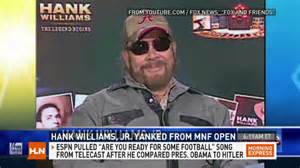
From 1989 to 2011, a version of Bocephus’ song “All My Rowdy Friends Are Coming Over Tonight” opened Monday Night Football broadcasts. In an October 3, 2011 interview with Fox News’ “Fox & Friends”, Williams described a June golf game between President Barack Obama and Speaker John Boehner as “one of the biggest political mistakes ever”. Asked to explain, Williams said, “Come on. That’d be like Hitler playing golf with Netanyahu … in the shape this country is in?”
Predictably, the media outrage machine came to life – this would not do. ESPN pulled the song from that night’s football game, the first of the season. Williams described his analogy as “extreme – but it was to make a point…I was simply trying to explain how stupid it seemed to me – how ludicrous that pairing was. They’re polar opposites, and it made no sense. They don’t see eye-to-eye and never will.” No matter. ESPN announced three days later that, after 22 years, Williams and his song were being pulled from all future broadcasts. ABC and the National Football League, were quick to follow suit.
For the media, the business model depends on renting an audience to a sponsor. The “controversy” would be squeezed for all it was worth, but Bocephus would have the last word. He responded with a song, criticizing President Obama, ESPN and Fox & Friends, calling it “Keep the Change”. As I write this, the song has had over 988,000 views on You Tube. Williams released the track on iTunes and via free download at his website, where it was downloaded over 180,000 times in just two days.
In the words of the song, Bocephus and all his rowdy friends were “outta there”. A demonstration that, in an age of suffocating and humorless political correctness, even then, “A Country Boy will Survive”.
Doohan practiced voices and accents ever since he was a kid, and he was good at it. The skills he acquired would serve him well in his later acting career.
Born March 3, 1920 in Vancouver, British Columbia, James Montgomery “Jimmy” Doohan enrolled in the 102nd Royal Canadian Army Cadet Corps in 1938. By the outbreak of WWII he was commissioned a Lieutenant in the 14th Field Artillery Regiment of the 3rd Canadian Infantry Division.
Doohan’s first taste of combat took place on D-Day, on the Normandy beach Canadian landing forces knew as “Juno”. Crossing through a field of anti-tank mines, the Canadian’s luck held. None of them were heavy enough to set one off. Leading his men to higher ground, Lieutenant Doohan personally shot two German snipers, before taking up positions for the night.
That night, Doohan had just finished a cigarette and was walking back to his command post. A nervous sentry opened up on him with a Bren light machine gun, striking him four times in the leg, once in the chest and again on the middle finger of his right hand. The chest shot hit the cigarette case his brother had given him for good luck, and doctors were able to save his life. Not so much for the finger. That had to be amputated. He would always hide the injury in his later life.
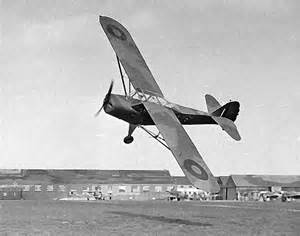
After healing up, Doohan served as courier and artillery spotter, aboard a Taylorcraft Auster Mark IV. In the spring of 1945, he slalomed his aircraft between telegraph poles, just to prove that it could it be done. Though the man was never an actual member of the CAF, the stunt forever marked him as “the craziest pilot in the Canadian Air Force”.
Doohan practiced voices and accents ever since he was a kid, and he was good at it. The skills he acquired would serve him well in his later acting career.
He heard a radio drama after the war. Knowing he could do it better, Doohan recorded his voice at a local radio station, winning a two year scholarship to study at the Neighborhood Playhouse in New York and studying with the likes of Leslie Nielsen, Tony Randall, and Richard Boone.
Doohan appeared in over 4,000 radio programs and 450 television shows throughout the forties and fifties. Coincidentally, Doohan played “Timber Tom”, the northern version of Buffalo Bob, in the Canadian production of Howdy Doody. About the same time that a young actor named William Shatner was playing Ranger Bill in the American version. The two would appear together on the 1950s Canadian science fiction series “Space Command”. It wasn’t the last time the two would appear together.
Auditioning before Gene Roddenberry in 1965, Doohan performed several accents. Asked which he preferred, he responded “If you want an engineer, in my experience the best engineers are Scotsmen.” He chose the name “Montgomery Scott”, after his grandfather.
Chief Engineer aboard the Starship Enterprise was supposed to be an occasional role, but Doohan’s character proved irresistible.
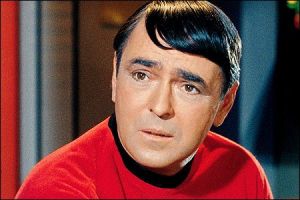
Soon he was #3 in command, a regular cast member playing alongside William Shatner (Captain James T. Kirk), Leonard Nimoy (Spock) and DeForest Kelley (Dr. McCoy). Doohan’s voice talents helped behind the scenes as well. It was he who helped develop the Klingon and Vulcan languages.
Star Trek was canceled in 1969 due to poor ratings, but returned to broadcast syndication in the 70s. The series has since become a cult classic. There is hardly a woman, man, puppy boy or girl who isn’t steeped and marinated in the program.
The “Scotty” character was so iconic, that many fans credit him with their interest in the technical fields. Among them was the engineer-turned-astronaut Neil Armstrong, who personally thanked him in 2004.
Doohan’s health declined in his later years. He developed Parkinson’s disease and diabetes, along with fibrosis of the lung, blamed on his exposure to noxious chemicals during WWII. He was experiencing symptoms of Alzheimer’s by 2004, though he was able to attend the ceremony held in his honor after receiving a star on the Hollywood Walk of Fame, that August.
James Montgomery Doohan passed away on July 20, 2005, survived by third wife Wende, their three children, his four adult children from a previous marriage, and several grandchildren and great-grandchildren. His youngest daughter, Sarah, was five at the time of his death.
On April 29, 2007, a SpaceLoft XL rocket lifted off from the Spaceport America launchpad in Las Cruces. Onboard were the ashes of astronaut Gordon Cooper, and James Montgomery Doohan. Cooper’s wife Suzan and Wende Doohan pushed the launch button.
In Linlithgow, Scotland, there is a museum, claiming the West Lothian town as the future birthplace of chief engineer Montgomery Scott. He will be born there, in 2222.
The world’s longest running talk show began in 1954, when Steve Allen sat down at his piano on September 27. This show is gonna go on… forever”, Allen quipped. So far, he seems to have gotten that right.
US Navy Portrait
With Jack Parr about to sign off the “Tonight Show” for the last time, NBC executives were anxious to find a replacement. Bob Newhart, Jackie Gleason, Groucho Marx, and Joey Bishop all declined the opportunity, when a United States Navy veteran, amateur magician and amateur boxer with a 10/0 record agreed to take the job.
Johnny Carson had himself turned down the job, believing himself unequal to the task of producing 90 minutes a day of fresh content. A series of guest hosts including Merv Griffin, Art Linkletter, Joey Bishop, Jerry Lewis and Groucho Marx followed, as Carson finished out the last six months of an ABC contract. Despite misgivings, Carson started the new gig on October 1, 1962.
No sooner had NBC announced that Johnny Carson was joining “The Tonight Show,” than the national press gaggle came after him, looking for interviews. Carson resisted at first, but finally relented, providing journalists with a list of answers to which they could apply any question they liked: “Yes, I did. Not a bit of truth in that rumor. Only twice in my life, both times on Saturday. I can do either, but prefer the first. NO. Kumquats. I can’t answer that question. Toads and tarantulas. Turkestan, Denmark, Chile, and the Komandorskie Islands. As often as possible, but I’m not very good at it yet. I need much more practice. It happened to some old friends of mine, and it’s a story I’ll never forget”.
Carson was joined shortly thereafter by a Marine Corps Colonel and flight instructor, from Lowell, Massachusetts. The Marine had earned his carrier landing qualifications around the time the atomic bomb ended the war in the Pacific, going on to fly 85 combat missions in Korea, and earning six air medals. His name was Ed McMahon.
When the Tonight Show first aired, everyone on the set including Carson himself, smoked. The “Public Health Cigarette Smoking Act” was introduced in Congress in 1969. Ironically, it was President Richard Nixon, an avid pipe smoker who lit up as many as eight bowls a day, who signed the measure into law on April 1, 1970. The measure included a permanent ban on television cigarette advertising, scheduled to take effect January 2 the following year. The last cigarette ad in the history of American television was a Virginia Slims ad, broadcast at 11:59p.m., January 1, 1971, on the Tonight Show, Starring Johnny Carson. Smoking on-air became a thing of the past sometime in the mid-80s, but that cigarette box remained on Carson’s desk until his final episode, in 1992. You’ve come a long way, baby.
For NBC, the Tonight Show was a cash cow. Many years the program grossed over $100 million, accounting for 15-20% of the profits earned by the entire network. Carson threatened to walk in 1980, ending up with a deal unprecedented in the history of American television: $5 million a year and series commitments estimated at $50 million. Just as important, show content would no longer belong to the network, but to Carson himself.
Carson began taking Mondays off in 1972, when the show moved from New York to California. There followed a period of rotating guest hosts, including George Carlin and Joan Rivers, who became permanent guest host from 1983 until 1986.
The Tonight Show Starring Johnny Carson was a late-night fixture through seven US Presidents: John F. Kennedy, Lyndon Johnson, Richard Nixon, Gerald Ford, Jimmy Carter, Ronald Reagan, and George H.W. Bush. Almost every American over the age of 30 will remember “Heeeeeeeeeeere’s Johnny!”. The opening monologue, and the imaginary golf swing. “Carnac the Magnificent”, holding the envelope to his head, reciting the punchline to the joke sealed inside. “Saucepan… Who was Peter Pan’s wino brother?” When the joke bombed, there was the comedic curse. “May a bloated yak change the temperature of your jacuzzi!”
Jay Leno appeared on the Tonight Show with Johnny Carson for the first time on March 2, 1977. He would frequently guest host, and served as permanent from May 1992 to May 2009.
Five years after Carson’s final show, 10,000 taped episodes were moved to a salt mine in Kansas, to protect them from deterioration. There they remain, 54 stories underground, where the average temperature is 68 degrees, with a uniform 40% humidity.
Final episode, 1992
Excepting Conan O’Brien’s eight months in 2010, Leno remained permanent host until February 2014, recording more episodes (4,610) than even Carson himself (4,531). Saturday Night live veteran Jimmy Fallon took over the reins in February 2014, where he remains to this day.
The world’s longest running talk show began in 1954, when Steve Allen sat down at his piano on September 27. This show is gonna go on… forever”, Allen quipped. So far, he seems to have gotten that right.
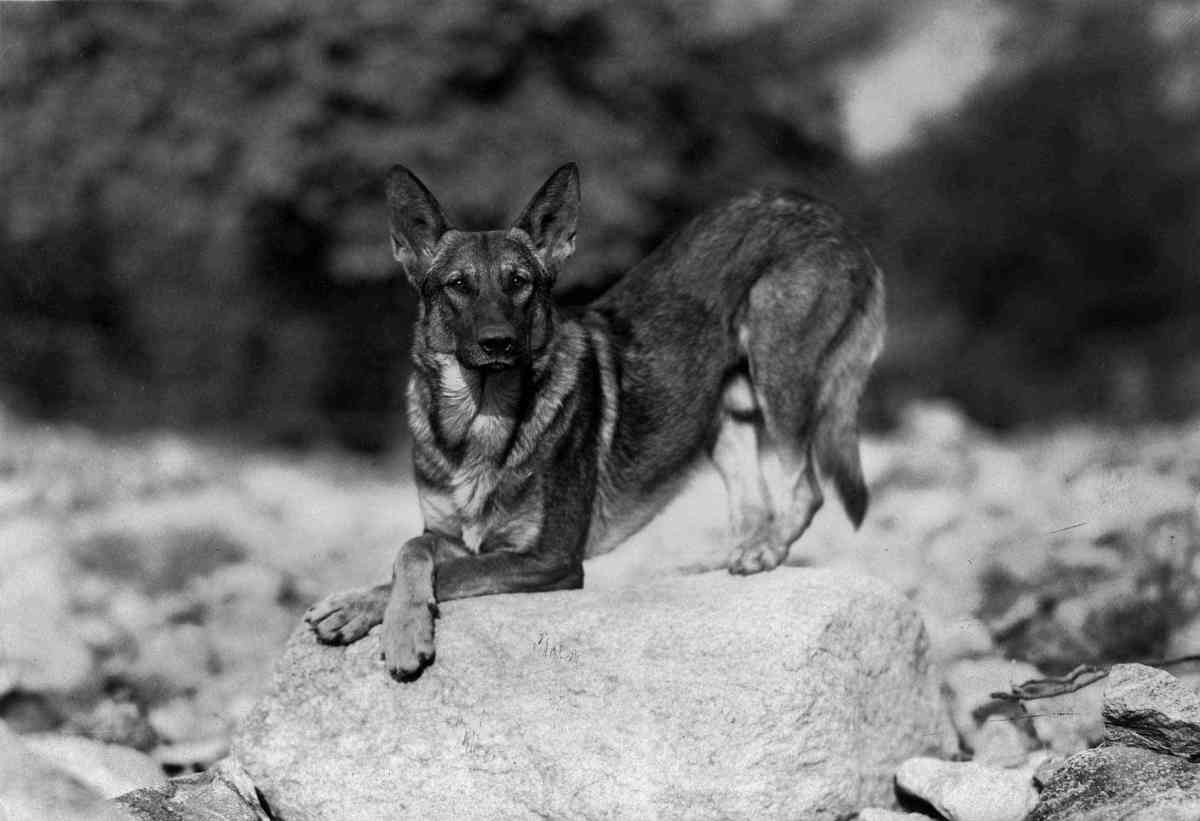
There’s a Hollywood legend that may or may not be true, that Rin Tin Tin received the most votes for Best Actor at the 1st Academy Awards in 1929
At 256 tons with a barrel of 111′ 7″, the “Paris Gun” hurled 38″ shells into the city from a range of 75 miles. If you were in Paris in 1918, you may never have heard of the German “super gun”. You’d have been well acquainted with the damage it caused. You never knew you were under attack until the explosion. The lucky ones were those who lived to see the 4’ deep, 10’-12’ wide crater.
Parisian children made little good luck charms, as “protection” from the Paris gun. They were tiny pairs of handmade dolls, joined together by scraps of yarn. They were said to provide protection for their owners, but only under certain circumstances. You couldn’t make or buy your own, they had to be presented to you. They also had to remain attached, or else the little dolls would lose their protective powers.
These little yarn dolls had names. They were Nénette and Rintintin.
Army Air Service Corporal Lee Duncan was in Paris at this time, with the 135th Aero Squadron. He was aware of the custom, possibly having been given such a talisman himself. In the wake of the Battle of Saint-Mihiel, Corporal Duncan was sent forward to the small village of Flirey, to check out it’s suitability for an airfield. The place was heavily damaged by shellfire, and Duncan came upon the shattered remains of a dog pound. Once, this kennel had provided Alsatians (German Shepherd Dogs) to the Imperial German Army. Now, the only dogs left alive were a starving mother and five nursing puppies, so young that their eyes were still closed.
Corporal Duncan cared for them, selling several once the puppies were weaned. He sold the mother to an officer and three puppies to fellow soldiers, keeping two for himself. Like those little yarn dolls that French children gave to American soldiers, Duncan felt these two puppies were his good luck charms. He called them Nanette and Rin Tin Tin.
Playwright Jane Murfin with Strongheart
Returning home after the war, Duncan placed the dogs with a police dog breeder and trainer in Long Island. Nanette contracted pneumonia and died, the breeder giving Duncan a female puppy, “Nanette II”, to replace her.
Etzel von Oeringen was born on October 1, 1917 in Germany, coming to America after the Great War and becoming a movie star in the ‘20s. Better known as “Strongheart”, Etzel was a German Shepherd Dog, whose appearance in silent films enormously increased the popularity of the breed.
A friend of silent film actor Eugene Pallete, Duncan became convinced that Rin Tin Tin could become the next canine film star. He later wrote, “I was so excited over the motion-picture idea that I found myself thinking of it night and day.”
Walking the dog on “Poverty Row”, 1920s slang for B movie studios, did the trick. Rin Tin Tin got his first film break in 1922, replacing a camera shy wolf in “The Man from Hell’s River”. His first starring role in the 1923 “Where the North begins”, is credited with saving Warner Brothers Studios from bankruptcy.
Between-the-scenes silent film “intertitles” were easily changed from one language to another, and Rin Tin Tin films enjoyed international distribution. In 1927, Berlin movie audiences voted him Most Popular Actor.
There’s a Hollywood legend that may or may not be true, that Rin Tin Tin received the most votes for Best Actor at the 1st Academy Awards in 1929. Wishing to appear oh-so serious and wanting a human actor, the Academy threw out the ballots. German actor Emil Jannings got Best Actor on the 2nd ballot.
Rin Tin Tin appeared in 27 feature length silent films, 4 “talkies”, and countless commercials and short films. Regular programming was interrupted to announce his passing on August 10, 1932, at the age of 13. An hour-long program about his life was broadcast the following day.
Suffering from the Great Depression like so many others, Duncan couldn’t afford a fancy funeral. By this time he couldn’t afford the house he lived in. Duncan sold the house and returned the body of his beloved German Shepherd to the country of his birth, where Rin Tin Tin was buried in the Cimetière des Chiens et Autres Animaux Domestiques, in the Parisian suburb of Asnières-sur-Seine.
Duncan continued breeding the line, careful to preserve the physical qualities and intelligence of the original, avoiding the less desirable traits that crept into other GSD bloodlines. Rin Tin Tin and Nanette II produced at least 48 puppies. Duncan may have been obsessive about it, at least according to Mrs. Duncan. When she filed for divorce, she named Rin Tin Tin as co-respondent.
Rin Tin Tin was awarded his own star on the Hollywood Walk of Fame on February 8, 1960. Lee Duncan passed away later that same year. At some point, Duncan had written a poem, a tribute to the companion animal who was no more. If you’ve ever loved a dog, I need not explain his final stanza.
“…A real unselfish love like yours, old pal, Is something I shall never know again; And I must always be a better man, Because you loved me greatly, Rin Tin Tin”.


 Roddenberry decided on James T. Kirk, based on a journal entry of the 18th century British explorer, Captain James Cook: “ambition leads me … farther than any other man has been before me”.

 Melvin attended a year at Brooklyn College before being drafted into the Army, in WWII. After attending Army Specialized Training at VMI, Corporal Kaminsky joined the 1104th Combat Engineers Battalion, 78th Infantry Division in the European theater. There, he served through the end of the war. Most of his work was in finding and defusing explosives, though on five occasions his unit had to drop their tools and fight as Infantry.
 German soldiers singing a beer hall song, from the other side. Kaminsky grabbed a bullhorn and serenaded the Germans back, singing them an old tune that Al Jolson used to perform in black face, “Toot Toot Tootsie, Goodbye”. Polite applause could be heard from across the river, afterward. I can’t imagine many Allied soldiers ever tried to serenade their Nazi adversaries during World War II. The ones who actually pulled it off must number, precisely, one.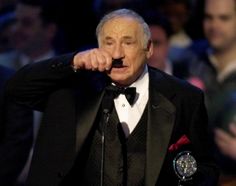
 Marvin Hamlisch, Jonathan Tunick, Mike Nichols, Whoopi Goldberg, Scott Rudin, and Robert Lopez. As of this date, Brooks only needs another Oscar to be the first “Double EGOT” in history.

 Randall Hank Williams was born May 26, 1949 in Shreveport, Louisiana, the son of country singer/songwriter, Hiram King “Hank” Williams. Surprisingly for a guy who could neither read nor notate music and died at the age of 29, the elder Williams has been described as “one of the most significant and influential American singers and songwriters of the 20th century”.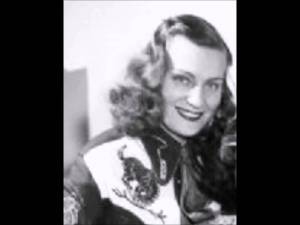



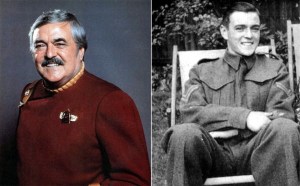 Doohan’s health declined in his later years. He developed Parkinson’s disease and diabetes, along with fibrosis of the lung, blamed on his exposure to noxious chemicals during WWII. He was experiencing symptoms of Alzheimer’s by 2004, though he was able to attend the ceremony held in his honor after receiving a star on the Hollywood Walk of Fame, that August.


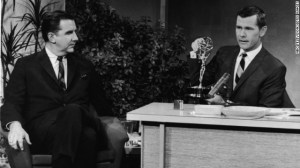
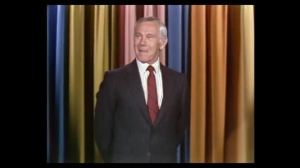
 The Tonight Show Starring Johnny Carson was a late-night fixture through seven US Presidents: John F. Kennedy, Lyndon Johnson, Richard Nixon, Gerald Ford, Jimmy Carter, Ronald Reagan, and George H.W. Bush. Almost every American over the age of 30 will remember “Heeeeeeeeeeere’s Johnny!”. The opening monologue, and the imaginary golf swing. “Carnac the Magnificent”, holding the envelope to his head, reciting the punchline to the joke sealed inside. “Saucepan… Who was Peter Pan’s wino brother?” When the joke bombed, there was the comedic curse. “May a bloated yak change the temperature of your jacuzzi!”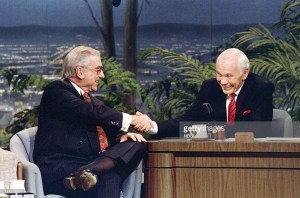

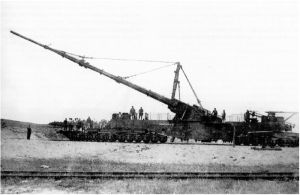 At 256 tons with a barrel of 111′ 7″, the “Paris Gun” hurled 38″ shells into the city from a range of 75 miles. If you were in Paris in 1918, you may never have heard of the German “super gun”. You’d have been well acquainted with the damage it caused. You never knew you were under attack until the explosion. The lucky ones were those who lived to see the 4’ deep, 10’-12’ wide crater.
 These little yarn dolls had names. They were Nénette and Rintintin.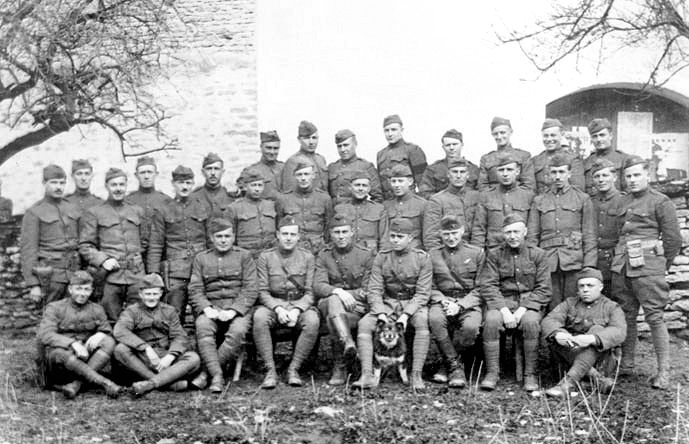
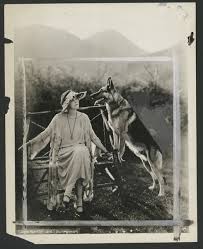
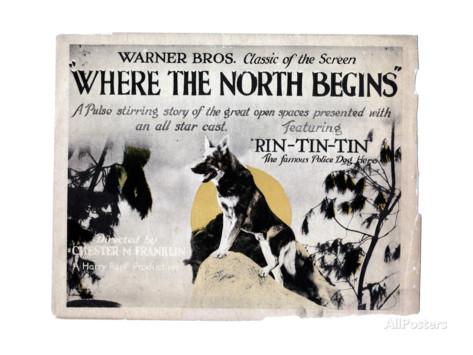 Walking the dog on “Poverty Row”, 1920s slang for B movie studios, did the trick. Rin Tin Tin got his first film break in 1922, replacing a camera shy wolf in “The Man from Hell’s River”. His first starring role in the 1923 “Where the North begins”, is credited with saving Warner Brothers Studios from bankruptcy.
 Rin Tin Tin appeared in 27 feature length silent films, 4 “talkies”, and countless commercials and short films. Regular programming was interrupted to announce his passing on August 10, 1932, at the age of 13. An hour-long program about his life was broadcast the following day.
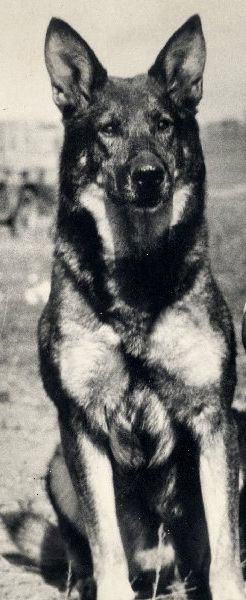 bloodlines. Rin Tin Tin and Nanette II produced at least 48 puppies. Duncan may have been obsessive about it, at least according to Mrs. Duncan. When she filed for divorce, she named Rin Tin Tin as co-respondent.
 Historical Easter Eggs - Today in History
You must be logged in to post a comment.