

 Childhood memories of standing in line. Smiling. Trusting. And then…the Gun. That sound. Whack! The scream. That feeling of betrayal…being shuffled along. Next!
Ask anyone of a certain age and they can show you the scar, round or oblong, jagged around the edges and just a little lower than the surrounding skin.
Between 1958 and 1977, the World Health Organization conducted a great campaign, a global effort to rid the world of the great scourge, of smallpox.

Today we face a worldwide pandemic of the COVID19 virus, calculated to produce a crude mortality rate of .28% and an Infection Fatality Rate (IFR), of 1.4%. Hat Tip worldometers.info
The four Variola virus types responsible for smallpox produce a death rate between one in ten at the low end and two – three out of four with an average of 30%.
The disease is as old as history, believed to have evolved from an African rodent virus, at least 16,000 years ago. The Egyptian Pharaoh Ramses V died of smallpox in 1145, BC.
Survivors are left with severe scarring and often blinded. Josef Stalin was famously pockmarked after acquiring the illness at age 7. Other famous survivors include Abraham Lincoln, Queen Elizabeth I and Pocahontas.
 And did you know? The American Revolution was fought out, entirely in the midst of a smallpox pandemic.
How it all began, is uncertain. By the fall and winter of 1775, the disease was raging through British-occupied Boston.
In the south, escaped slaves crossed over to British lines only to contract smallpox, and die. The disease hit Texas in 1778. New Orleans was particularly hard hit with its densely populated urban areas. By 1780 it was everywhere from Mexico to the Great Plains to Alaska.
Native populations were particularly hard hit. As many as 11,000 were killed in the west of modern-day Washington state, reducing populations from 37,000 to 26,000 in just seven years. The idea of inoculation was not new. Terrible outbreaks occurred in Colonial Boston in 1640, 1660, 1677-1680, 1690, 1702, and 1721, killing hundreds, each time. At the time, sickness was considered the act of an angry God. Religious faith frowned on experimentation on the human body.
On June 26, 1721, Dr. Zabdiel Boylston in consultation with Reverend Cotton Mather, performed the first smallpox inoculations in America. Two male slaves, an adult and and a two-year-old were inoculated, along with Dr. Boylston’s 6-year-old son. All three became mildly ill but recovered, never again to be bothered by smallpox. Colonists were chary of the procedure, deeply suspicious of how deliberately infecting a healthy person, could produce a desirable outcome. John Adams submitted to the procedure in 1764 and gave the following account:
“Dr. Perkins demanded my left arm and Dr. Warren my brother’s [probably Peter Boylston Adams]. They took their Launcetts and with their Points divided the skin about a Quarter of an inch and just suffering the blood to appear, buried a thread (infected) about a Quarter of an inch long in the Channell. A little lint was then laid over the scratch and a Piece of Ragg pressed on, and then a Bandage bound over all, and I was bid go where and do what I pleased…Do not conclude from any Thing I have written that I think Inoculation a light matter — A long and total abstinence from everything in Nature that has any Taste; two long heavy Vomits, one heavy Cathartick, four and twenty Mercurial and Antimonial Pills, and, Three weeks of Close Confinement to an House, are, according to my Estimation, no small matters.”
 As Supreme Commander, General Washington had a problem. An inoculated soldier would be unfit for weeks before returning to duty. Doing nothing and hoping for the best was to invite catastrophe but so was the inoculation route, as even mildly ill soldiers were contagious and could set off a major outbreak.
The northern army was especially hard hit in Quebec, with general Benedict Arnold reporting some 1,200 out of 3,200 Continentals sick in the Montreal area, most with smallpox. It was “almost sufficient to excite the pity of Brutes” he said, “Large barns [being] filled with men at the very heighth of smallpox and not the least things, to make them comfortable and medicines being needed at both Fort George and Ticonderoga.”
Major General John Thomas, Commander of the Army in Quebec was dead of the disease. John Adams complained “The smallpox is ten times more terrible than Britons, Canadians and Indians, together.”
By mid-1776, half the continentals in and around Montreal were infected. The order was given to withdraw. John Adams cited smallpox, as the cause.  In February 1777 while encamped in Morristown, Washington became convinced that the benefits outweighed the risks. Washington himself had survived the dreadful disease. Martha Washington had undergone the procedure, known as variolation. He ordered his medics to cut small incisions on the arms of his troops, and to rub the pus from infected soldiers, into the wounds. Thus inoculated, soldiers were kept under strict quarantine and issued either new or “well washed, air’d and smoaked” clothing.
The program had enthusiastic support from the likes of Jefferson, Franklin and Adams. Nearly every continental soldier was inoculated before the end of the war. Had the program begun a year earlier, the US/Canadian map might look quite different, than it does today.
In Washington’s day, the method used live virus, accounting for the long sick time and high mortality rate. In the 1790s, Doctor Edward Jenner of Berkeley, Gloucestershire, England observed milkmaids developing the signature pustules of smallpox on their hands, after touching infected udders. The Orthopoxvirus responsible for “Cowpox” is very similar to that which produces smallpox but results in far milder symptoms.  The implications were stunning. Orthopox could be administered in place of live Variola, virtually eliminating side effects and reducing the chance of smallpox outbreak, to zero.
On this day in 1796, Dr. Jenner administered the first modern smallpox vaccination. The new vaccine was soon being used around the world.
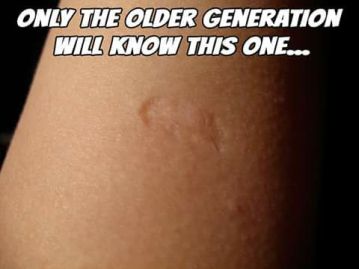 So it was on December 9, 1979, smallpox was officially described, as eradicated. The only infectious disease ever so declared.
Few among us born after 1980, bear the scar their parents know so well. Today, stockpiles of live Variola exist only in laboratories, and military bioweapon stockpiles. Just in case of terrorism, or some rogue nation ever resorting to biological warfare.
Today we grapple with a virus, with a 98.6% recovery rate among those infected. God help us all if that other stuff ever gets out of the lab.


 Burgoyne’s movements began well with the near-bloodless capture of Fort Ticonderoga in early July, 1777. By the end of July, logistical and supply problems caused Burgoyne’s forces to bog down. On July 27, a Huron-Wendat warrior allied with the British army murdered one Jane McCrae, the fiancé of a loyalist serving in Burgoyne’s army. Gone was the myth of “civilized” British conduct of the war, as dead as the dark days of late 1776 and General Washington’s “Do or Die” crossing of the Delaware and the Christmas attack on Trenton.
 Meanwhile, attempts to solve the supply problem culminated in the August 16 Battle of Bennington, a virtual buzz saw in which New Hampshire and Massachusetts militiamen under General John Stark along with the Vermont militia of Colonel Seth Warner and Ethan Allen’s “Green Mountain Boys”, killed or captured nearly 1,000 of Burgoyne’s men.
 Meanwhile Howe’s capture of Philadelphia met with only limited success, leading to his resignation as Commander in Chief of the American station and Sir Henry Clinton, withdrawing troops to New York.
 Fort Moultrie surrendered without a fight on May 7. Clinton demanded unconditional surrender the following day but Lincoln bargained for the “Honours of War”. Prominent citizens were by this time, asking Lincoln to surrender. On May 11, the British fired heated shot into the city, burning several homes. Benjamin Lincoln surrendered on May 12.
 In the summer of 1780, American General Horatio Gates suffered humiliating defeat at the Battle of Camden. Cornwallis idea of turning over one state after another to loyalists failed to materialize, as the ham-fisted brutality of officers like Banastre Tarleton, incited feelings of resentment among would-be supporters. Like the Roman general Fabius who could not defeat the Carthaginians in pitched battle, General Washington’s brilliant protege Nathaniel Greene pursued a “hit & run” strategy of “scorched earth”, attacking supply trains harassing Cornwallis’ movements at every turn.
 Through the Carolinas and on to Virginia, Greene’s forces pursued Cornwallis’ army. With Greene dividing his forces, General Daniel Morgan delivered a crushing defeat, defeating Tarleton’s unit at a place called Cowpens in January, 1781. The battle of Guilford Courthouse was an expensive victory, costing Cornwallis a quarter of his strength and forcing a move to the coast in hopes of resupply.

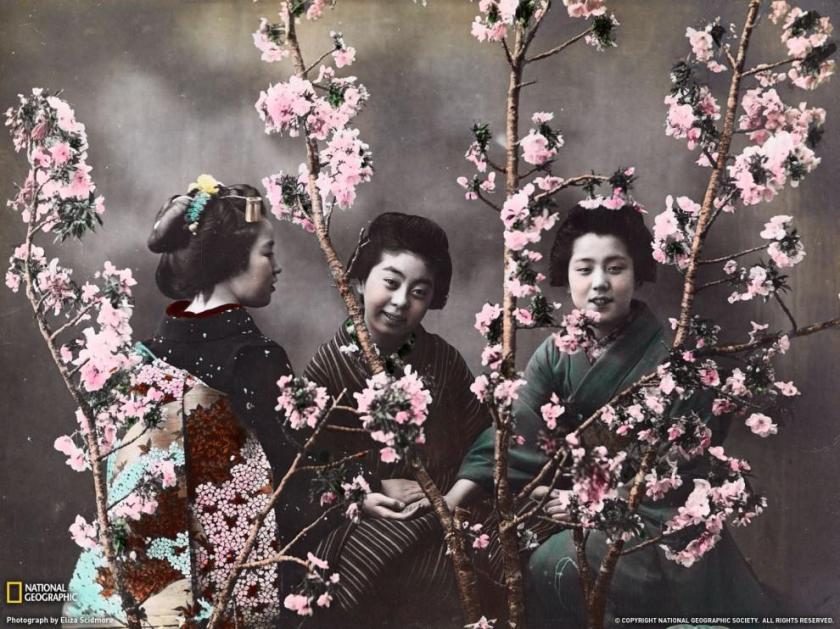 Frequent visits with her brother led to a passionate interest in all things Japanese, most especially the Japanese cherry, Prunus serrulata, commonly known as the Sakura. The Japanese blossoming cherry tree. She called them “the most beautiful thing in the world”.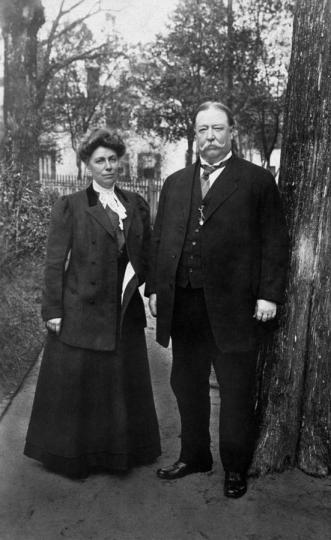
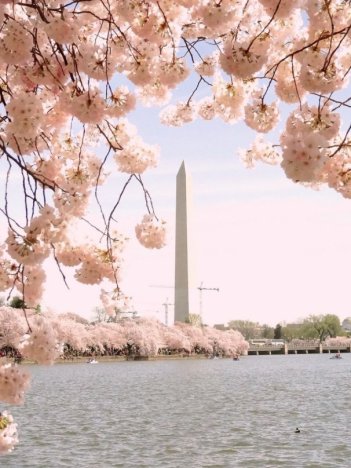 On March 27, 1912, the Viscountess Chinda, wife of the Japanese ambassador to the United States joined First Lady Helen Taft, in planting two Japanese Yoshino cherry trees on the bank of the Potomac River, near the Jefferson memorial.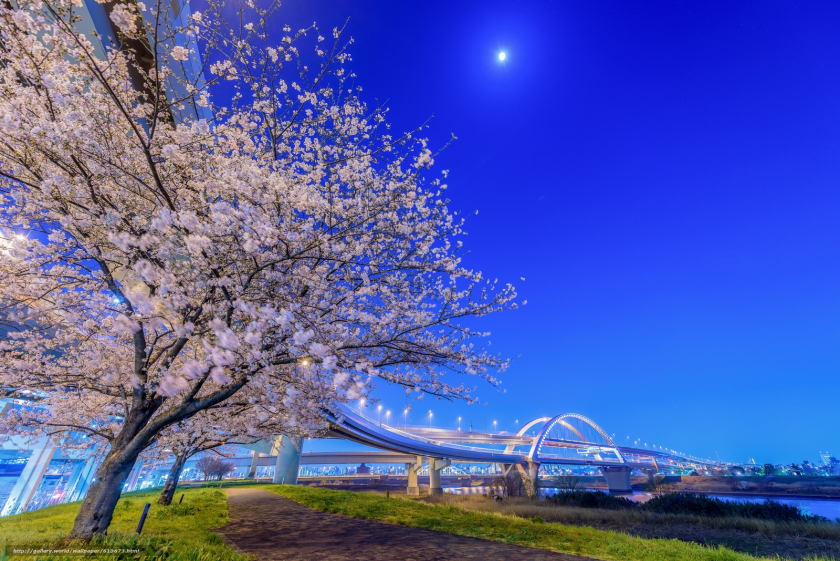



 Rubenstein hated the nickname and was quick to fight anyone who called him that. It may have been that hot temper, that made the name stick.
 Ruby was a low-rent gangster, involved in typical underworld activities like gambling, narcotics and prostitution. There were rumored associations with Mafia boss Santo Trafficante.
 Today, you may know Rick Danko, Levon Helm, Garth Hudson and Robbie Robertson as musicians who played with Bob Dylan in 1965, later going on the road as “The Band” and performing such rock & roll standards as “The Night they Drove Old Dixie Down”, “Up on Cripple Creek” and “The Weight”.
 Part of the roof had blown off this joint. Either that or it burned off, depending on which version you believed. Jack, the club owner, tore off the rest of it and kept the insurance money, calling this fine establishment, the “Skyline Lounge”.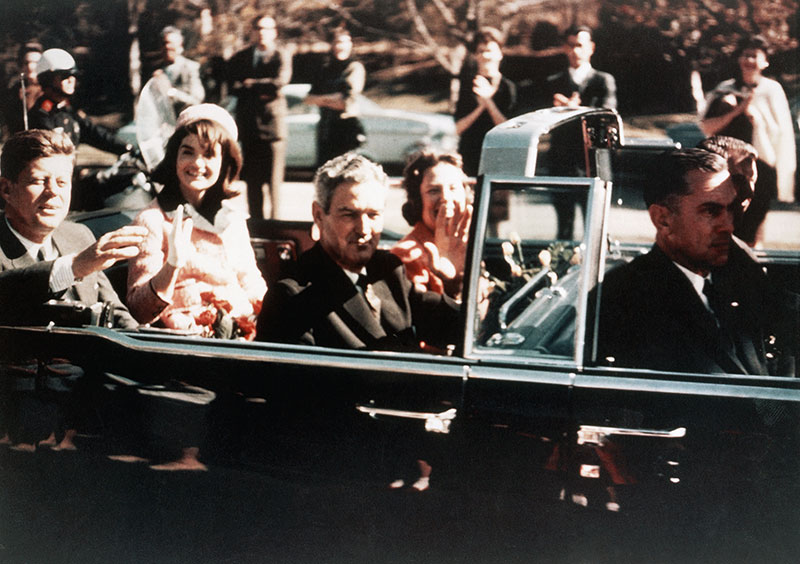
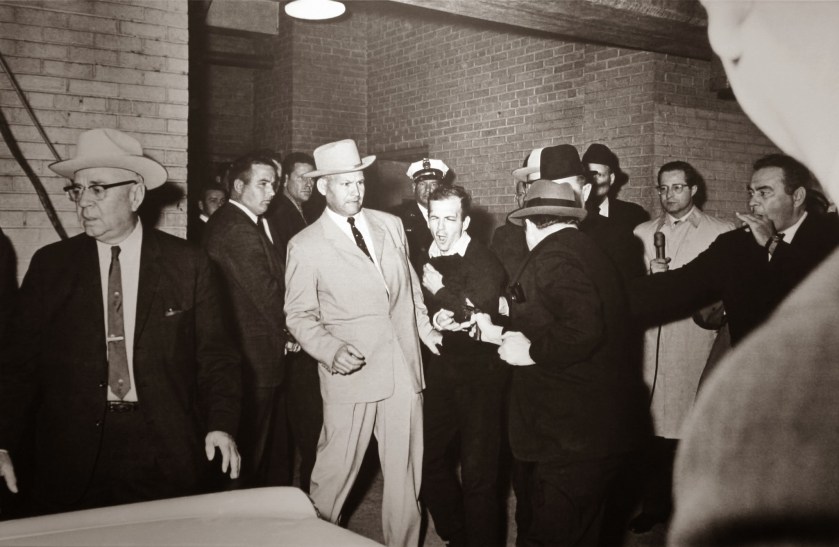
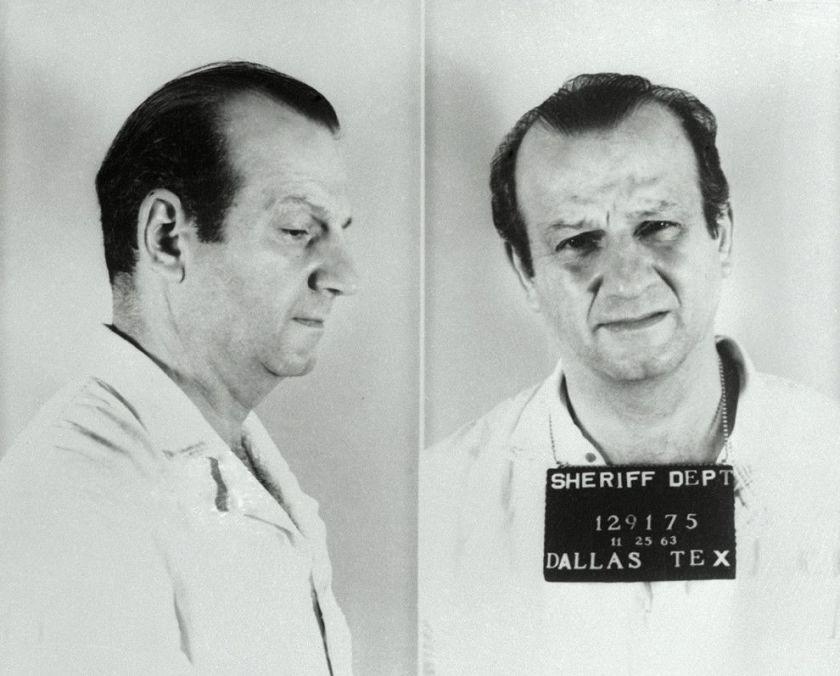 The Warren Commission found no evidence linking Jack Ruby’s murder of Lee Harvey Oswald, to any broader conspiracy to assassinate the President. What became of Jacob Leon “Sparky” Rubenstein’s Skyline Lounge, is unknown to this writer.

 To anyone under the age of 40, the Cold War must seem a strange and incomprehensible time. Those of us who lived through it, feel the same way.
 At 15,000-feet, a warning light came on in the cockpit, indicating the load wasn’t properly secured. Not wanting a thing like that rattling around in the back, Captain Earl E. Koehler sent navigator Bruce M. Kulka, to investigate. Kulka slipped and grabbed out for something, to steady himself. That “something” just happened to be, the emergency release.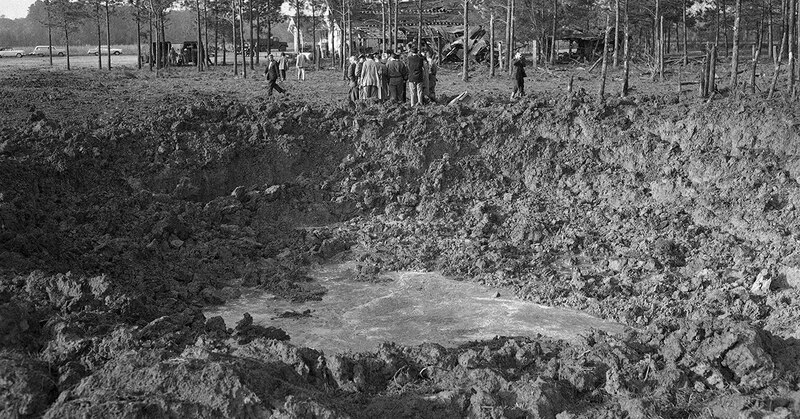
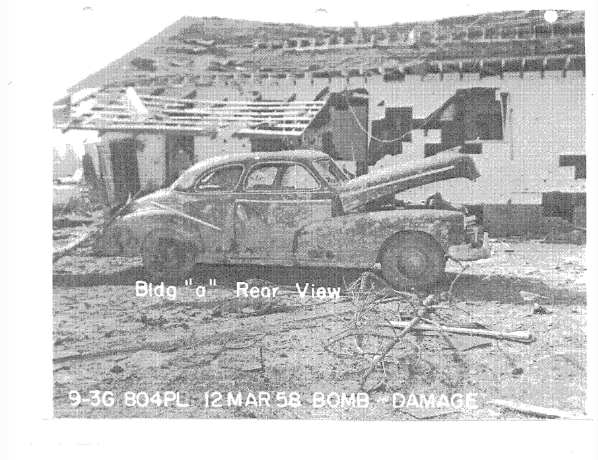 Three years later, a B-52 Stratofortress carrying two Mark 39 thermonuclear bombs broke up in the air over Goldsboro, North Carolina. Five crew members ejected from the aircraft at 9,000-feet and landed safely, another ejected but did not survive the landing. Two others died in the crash.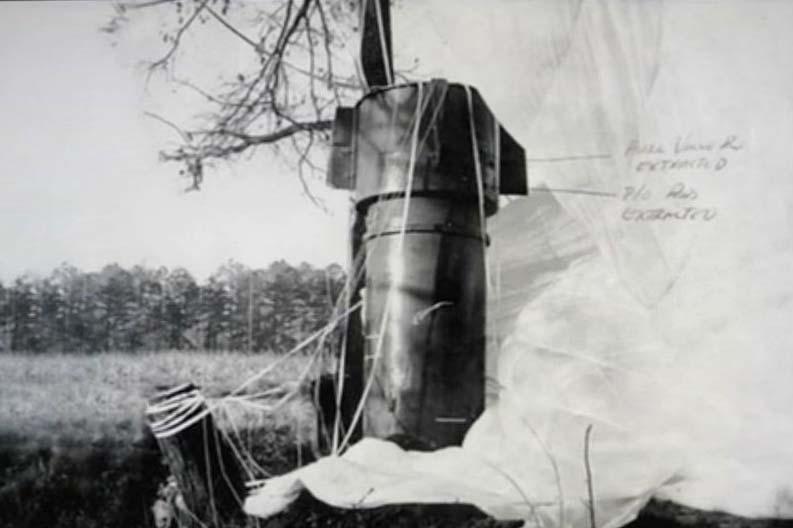
 Over the years, members of the flight crew stopped by to apologize for the episode.


 Radios of the age didn’t work across the Rockies, and the mail was erratic. The only passenger service available was run by the Yukon Southern airline, a run which locals called the “Yukon Seldom”. For construction battalions at Dawson Creek, Delta Junction and Whitehorse, it was faster to talk to each other through military officials in Washington, DC.
 Tent pegs were useless in the permafrost, while the body heat of sleeping soldiers meant waking up in mud. Partially thawed lakes meant that supply planes could use neither pontoon nor ski, as Black flies swarmed the troops by day. Hungry bears raided camps at night, looking for food.
 That October, Refines Sims Jr. of Philadelphia, with the all-black 97th Engineers, was driving a bulldozer 20 miles east of the Alaska-Yukon line when the trees in front of him toppled to the ground. Sims slammed his machine into reverse as a second bulldozer came into view, driven by Kennedy, Texas Private Alfred Jalufka. North had met south, and the two men jumped off their machines, grinning. Their triumphant handshake was photographed by a fellow soldier and published in newspapers across the country, becoming an unintended first step toward desegregating the US military.


 Dr. Emerson died in 1842, leaving his estate to his wife Eliza, who continued to lease the Scotts out as hired slaves.


 The fifty gun HMS Romney arrived in May, 1769. Customs officials seized John Hancock’s merchant sloop “Liberty” the following month, on allegations the vessel was involved in smuggling. Already agitated over Romney’s impressment of local sailors, Bostonians began to riot. By October, the first of four regular British army regiments arrived in Boston.
 Edward Garrick was a wigmaker’s apprentice, who worked each day to grease and powder and curl the long hair of the soldier’s wigs.
 The two sides stopped for a few seconds to two minutes, depending on the witness. Then they all fired. A ragged, ill-disciplined volley. There was no order, just the flash and roar of gunpowder on the cold late afternoon streets of a Winter’s day. It was March 5. When the smoke cleared, three were dead. Two more lay mortally wounded and another six, seriously injured.


 Captain Henry Wirz, commandant of the stockade at Camp Sumter, was tried and executed after the war, only one of two men to be hanged for war crimes. Captain Wirz appeared at trial reclined on a couch, advanced gangrene preventing him from sitting up. To some, the man was a scapegoat. A victim of circumstances beyond his control. To others he is a demon, personally responsible for the hell of Andersonville prison.


 One day, the United States Supreme Court would rule the act an unlawful taking and compensate Lee family descendants.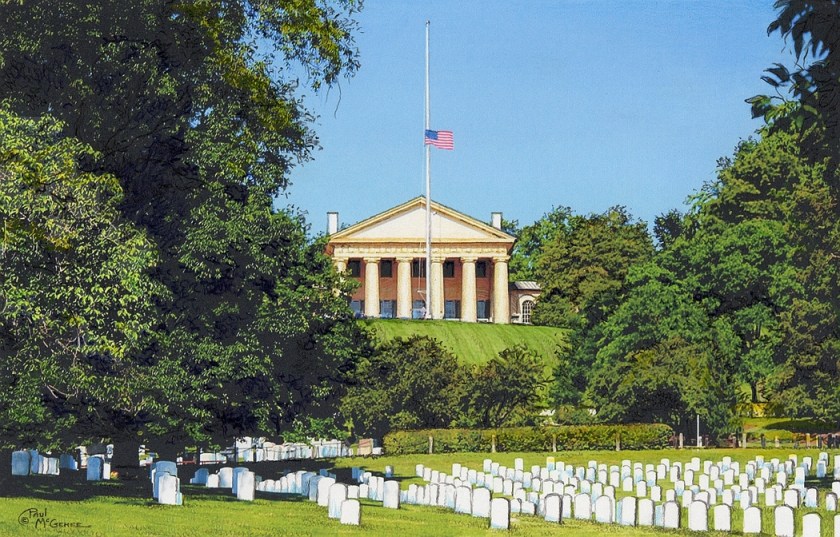
 Private Christman was the first military burial, but not the first. One had come before. When Private Christman went to his rest in our nation’s most hallowed ground, his grave joined that of Mary Randolph, laid to rest some thirty-six years earlier.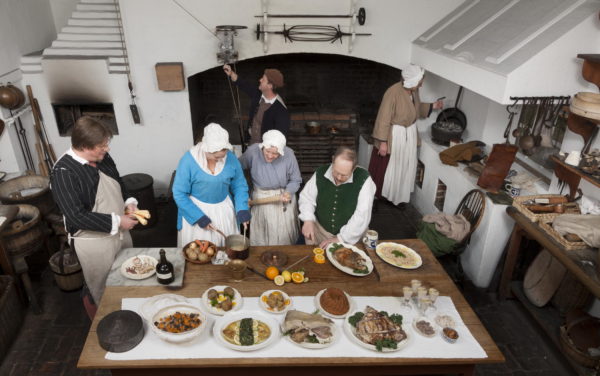
 Mary Randolph, a direct descendant of
  Mary Randolph is best known as the author of America’s first regional cookbook, “The Virginia House-wife” and known to some, as “The Methodical Cook”.
 Mary Randolph, wife of David Meade Randolph, was an early advocate of the now-common use of herbs, spices and wines in cooking.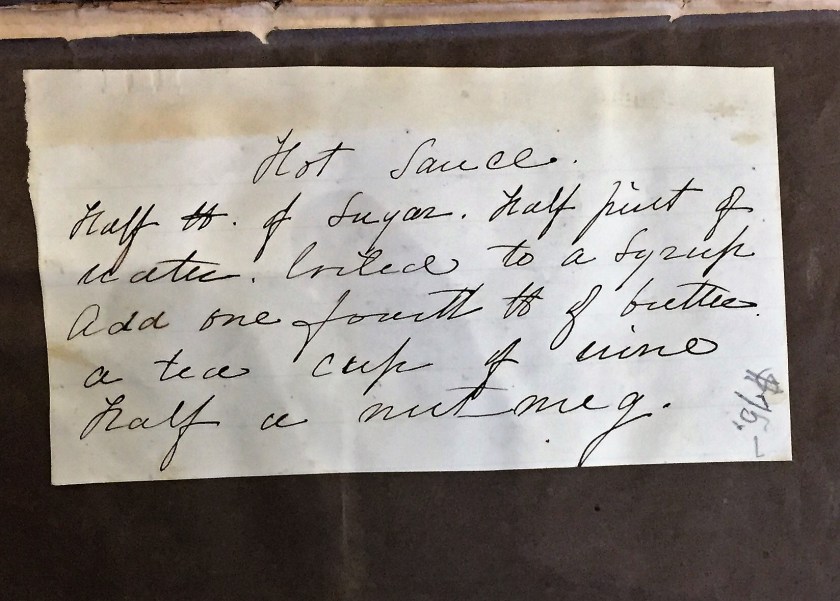

 Historical Easter Eggs - Today in History
You must be logged in to post a comment.