STS-1, the first mission of the “Space Shuttle” program launched aboard “Columbia” from the Kennedy Space Center on Merritt Island, Florida. It was April 12, 1981, the 20th anniversary of the first human spaceflight aboard the Russian capsule Vostok 1.
The idea of a reusable Space Transportation System (STS) came around as early as the 1960s, as a way to cut down on the cost of space travel. The final design was a reusable, winged “spaceplane” with a disposable external tank and reusable solid fuel rocket boosters. The ‘Space Truck’ program was approved in 1972, the prime contract awarded to North American Aviation (later Rockwell International), with the first orbiter completed in 1976.
Early Approach and Landing Tests were conducted with the first prototype dubbed “Enterprise”, in 1977. A total of 16 tests, all atmospheric, were conducted from February to October, the lessons learned applied to the first space-worthy vehicle in NASA’s orbital fleet.
STS-1, the first mission of the “Space Shuttle” program launched aboard “Columbia” from the Kennedy Space Center on Merritt Island, Florida. It was April 12, 1981, the 20th anniversary of the first human spaceflight aboard the Russian capsule Vostok 1.
It was the first, and (to-date) only manned maiden test flight of a new system in the American space program.
This first flight of Columbia would be commanded by Gemini and Apollo veteran John Young and piloted, by Robert Crippen. It was the first of 135 missions in the Space Shuttle program, the first of only two to take off with external hydrogen fuel tanks painted white. From STS-3 on, the external tank was left unpainted, to save weight.
All told, Columbia flew 28 missions with 160 crew members traveling 125,204,911 miles in 4,808 orbits around the planet.
Initially, there were four fully functional orbiters in the STS program: Columbia joined after the first five missions by “Challenger”, then “Discovery”, and finally “Atlantis”. A fifth orbiter, “Endeavor”, was built in 1991 to replace Challenger, which broke apart 73 seconds after lift-off on January 28, 1986, killing all seven of its crew.
Rescue and recovery operations were delayed for fifteen minutes, as debris rained from the sky.
STS-107 launched from the Kennedy Space Center aboard the Space Shuttle Columbia on January 16, 2003.
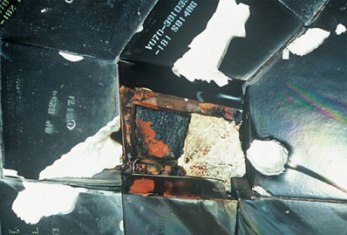
Eighty seconds after launch, a piece of insulating foam broke away from the external fuel tank striking Columbia’s left wing, leaving a small hole in the carbon composite tiles along the leading edge.
Three previous Space Shuttle missions had experienced similar damage and, while some engineers thought this could be more serious, none was able to pinpoint the precise location or extent of the damage. NASA managers believed that, even in the event of major damage, little could be done about it.
These carbon tiles are all that stands between the orbiter and the searing heat of re-entry.
December 2, 1988 ‘Atlantis’ mission narrowly missed repeting the Columbia disaster, four days later. “More than 700 heat shield tiles were damaged. One tile on the shuttle’s belly near the nose was completely missing and the underlying metal – a thick mounting plate that helped anchor an antenna – was partially melted. In a slightly different location, the missing tile could have resulted in a catastrophic burn through”. H/T Spaceflightnow.com
For Columbia, 300 days, 17 hours, forty minutes and 22 seconds of space travel came to an end on the morning of February 1, 2003. Over the California coast and traveling twenty-three times the speed of sound, external temperatures rose to 3,000° Fahrenheit and more, when super-heated gases entered the wing’s interior.
231,000 feet below, mission control detected four unconnected sensors shut down on the left wing, with no explanation. The first debris struck the ground near Lubbock, Texas, at 8:58am. The last communication from the crew came about a minute later.
Columbia disintegrated in the skies over East Texas at 9:00am Eastern Standard Time.
Debris and human remains were found in 2,000 locations from the state of Louisiana, to Arkansas. The only survivors were a can full of worms, brought into space for study.
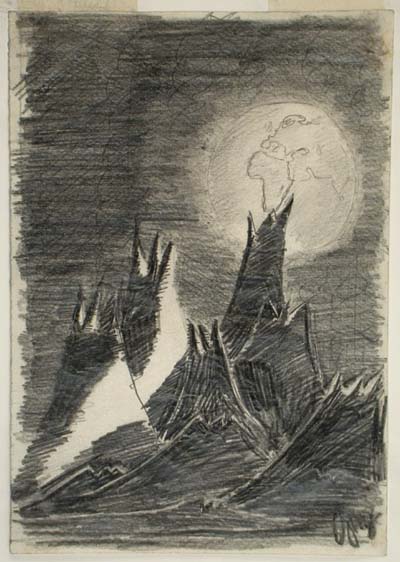
“Mon Landscape” by Petr Ginz
Payload Specialist Colonel Ilan Ramon, born Ilan Wolferman, was an Israeli fighter pilot and the first Israeli astronaut to join the NASA space program.
Ramon is the son and grandson of Auschwitz survivors and family member to several others, who didn’t live to tell the tale.
In their memory, Colonel Ramon reached out to the Yad Vashem Remembrance Center, for a holocaust relic to bring with him into space.
Petr Ginz lived for a time in the Theresienstadt ghetto, where he drew this picture. A piece of teenage imagination: the Earth as it may appear, from the moon.
Petr Ginz would be murdered in the Nazi death camp at Auschwitz though his drawing, survived. He was 14 years old. Colonel Ramon was given a copy. A young boy’s drawing of a safer place. This would accompany the astronaut, into space.
Today, the assorted debris from the Columbia disaster numbers some 84,000 pieces, stored in the Vehicle Assembly Building at the Kennedy Space Center. To the best of my knowledge, this drawing by a boy who never made it out of Auschwitz, is not among them.
Afterward:
Andrew “Drew” Feustel is a car guy, with fond memories of restoring a ’67 Ford Mustang in the family garage in North suburban Detroit.
When he’s not fixing cars he’s an astronaut, and veteran of two space missions. For a time he was a colleague of Colonel Ramon. The pair had several close friends, in common.
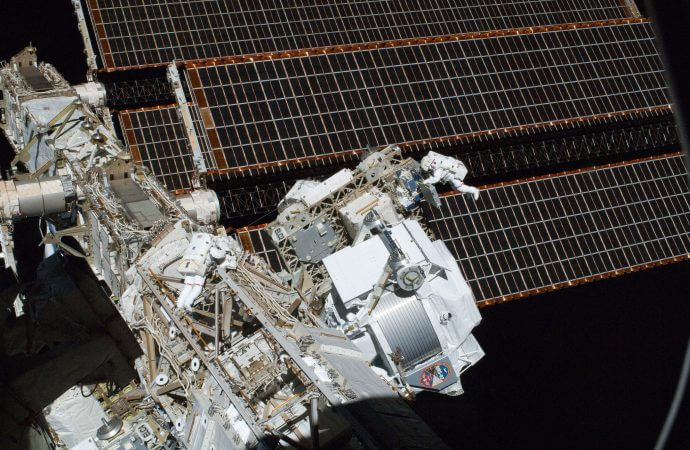
The ‘car guy’ in space thing seems to have worked. NASA reports “The spacewalkers overcame frozen bolts, stripped screws and stuck handrails, four new or rejuvenated scientific instruments, new batteries, a new gyroscope and a new computer were installed. | NASA photo
In March 2018, Feustel left for his third spaceflight, this one a six-month mission aboard the International Space Station. Before he left, Rona Ramon, widow of the Israeli Astronaut, gave him another copy of Petr Ginz’ drawing.
The circle was closed. This fruit of a doomed boy’s imagination once again broke the bonds of space. This time, it also home.
Some thirty to forty managed to escape the killing zone, only to be hunted down and murdered, one by one. Eleven managed to escape the slaughter, and lived to tell the tale. 139 were burned, clubbed or shot to death.
Today, the city of Cabanatuan calls itself the “Tricycle Capital of the Philippines”, with 30,000 motorized “auto rickshaws”. 79 years ago, Cabanatuan became home to one of the worst POW camps of World War 2.
1942 was a dreadful year for the allied war effort in the Pacific. The Battle of Bataan alone resulted in 72,000 prisoners being taken by the Japanese, marched off to POW camps designed for ten to twenty-five thousand.
20,000 died from sickness, hunger or murder at the hands of Japanese guards on the “death march” from Bataan into captivity at Cabanatuan prison and others.
Cabanatuan held 8,000 prisoners at its peak though that number dropped considerably as the able-bodied were shipped out to work in Japanese slave labor camps.
Two rice rations a day, fewer than 800 calories, were supplemented by the occasional animal or insect caught and killed inside camp walls or by the rare food items smuggled in by civilian visitors.
2,400 died in the first eight months at Cabanatuan, animated skeletons brought to “hospital wards”, nothing more than 2’x6′ patches of floor, where prisoners waited to die.
One Master Sergeant Gaston saw one of these wards in July 1942 and described the horror: “The men in the ward were practically nothing but skin and bones and they had open ulcers on their hips, on their knees and on their shoulders…maggots were eating on the open wounds. There were blow flies…by the millions…men were unable to get off the floor to go to the latrine and their bowels moved as they lay there”.
The war was going badly for the Japanese by October 1944, as Imperial Japanese High Command ordered able bodied POWs removed to Japan. 1,600 were taken from Cabanatuan leaving 500 sick, weak and disabled prisoners. The guards abandoned camp shortly afterward, though Japanese soldiers continued to pass through. POWs were able to steal food from abandoned Japanese quarters; some even captured two water buffalo called “Carabao”, which were killed and eaten. Many feared a trick and didn’t dare leave the camp. Most were too sick and weak to leave in any case, though the extra rations would help them through what was to come.
On December 14, some fifty to sixty soldiers of the Japanese 14th Area Army in Palawan doused 150 prisoners with gasoline and set them on fire, machine gunning or clubbing any who tried to escape the flames. Some thirty to forty managed to escape the killing zone, only to be hunted down and murdered, one by one. Eleven managed to escape the slaughter, and lived to tell the tale. 139 were burned, clubbed or shot to death.
The atrocity at Palawan sparked a series of raids at Santo Tomas Internment Camp, Bilibid Prison, Los Baños and others. The first such behind-enemy-lines rescue, took place at Cabanatuan.
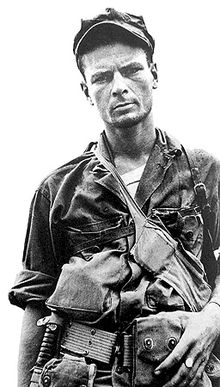
Lieutenant Colonel Henry Mucci of the US Army’s elite 6th Ranger Battalion selected Captain Robert Prince to plan the rescue. “We couldn’t rehearse this”, Prince said. “Anything of this nature, you’d ordinarily want to practice it over and over for weeks in advance. Get more information, build models, and discuss all of the contingencies. Work out all of the kinks. We didn’t have time for any of that. It was now, or not”.
On the evening of January 27, 1945, a 14-man advance team formed from the 6th Ranger Battalion and a special reconnaissance group called the “Alamo Scouts”, separated into two groups and began the 30-mile march behind enemy lines to liberate Cabanatuan.
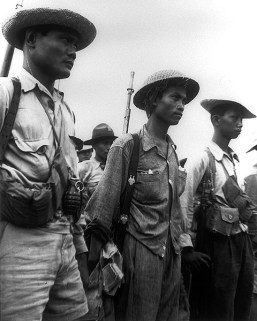
The main force of 121 Rangers moved out the following day, meeting up with 200 Filipino guerrillas serving as guides and helping with the rescue.
Other guerrillas assisted along the way, muzzling dogs and corralling chickens so that Japanese occupiers would hear nothing of their approach.
Japanese soldiers once again occupied the camp, with 1,000 more camped across the Cabo River outside the prison. As many as 7,000 more were deployed, just a few miles away.
On the night of January 30, a P-61 Black Widow piloted by Captain Kenneth Schrieber and 1st Lt. Bonnie Rucks staged a ruse. For 45 minutes, the pair conducted a series of aerial acrobatics, cutting and restarting engines with loud backfires while seeming to struggle to maintain altitude. Thousands of Japanese soldiers watched the show as Rangers crawled on their bellies, into position.
Filipino Guerilla fighters of Captain Juan Pajota
Guard towers and pillboxes were wiped out in the first fifteen seconds of the assault. Filipino guerrillas blew the bridge and ambushed the large force across the river while one, trained only hours before to use a bazooka, took out four Japanese tanks.
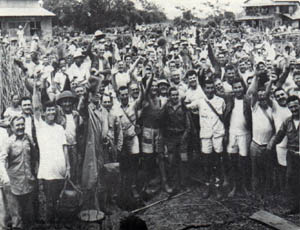
In the camp, all was pandemonium as some prisoners came out and others hid, suspecting some trick to bring them out in the open. They were so emaciated, Rangers carried them out two at a time.
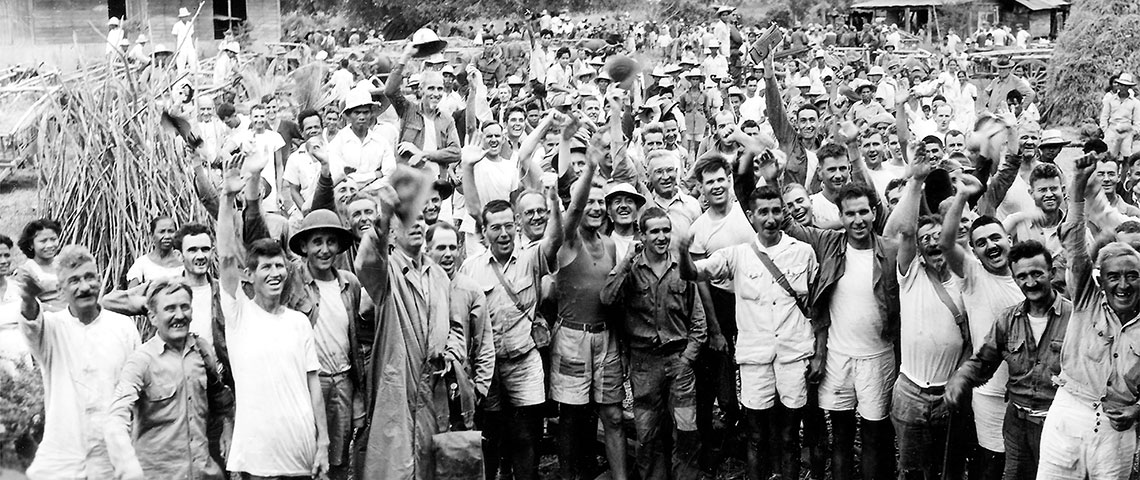
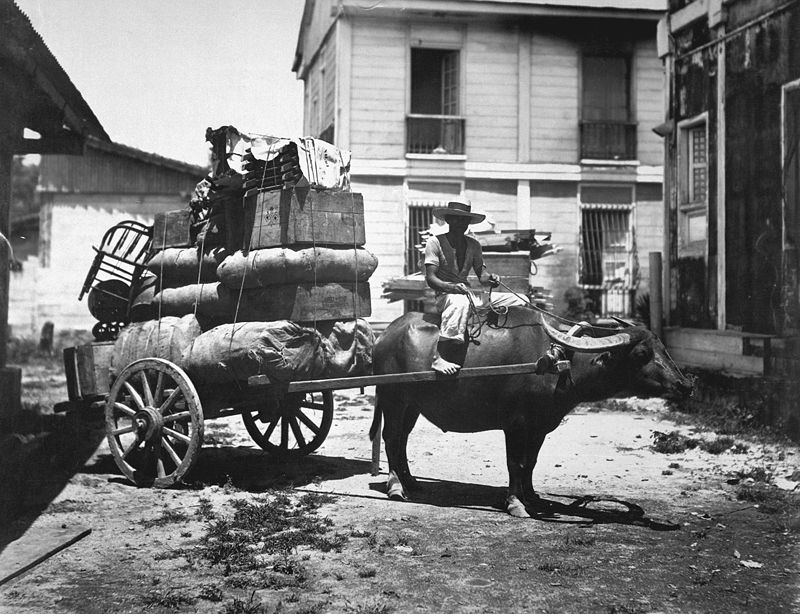
The raid was over in 35 minutes, POWs brought to pre-arranged meet-up places with dozens of carabao carts. The long trek to freedom had only begun. Defiant, one POW said “I made the Death March from Bataan, so I can certainly make this one!” Over three days, up to 106 carts joined the procession, their plodding 2 MPH progress covered by strafing American aircraft.
Two American Rangers were killed in the raid. Another 4 Americans and 21 Filipinos were wounded, compared with 500-1,000 Japanese killed and four tanks put out of action. One prisoner died in the arms of a Ranger, before leaving the gate. Another succumbed to illness on the long trip back.
Carabao cart, similar to the ones used after the raid on Cabanatuan
Edwin Rose was a civilian, a purser on a ship plying the Singapore – Hong Kong run, when the war broke out. He was caught in Manila and spent 929 days in captivity. One of the longest-held POWs of the war in the Pacific. Rose awoke the night of the raid, and “heard all the shooting”. He “knew the Americans had arrived” but rolled over and went back to sleep, thinking they were there to stay. On awakening the following morning, Rose found he was alone with “Cabanatuan all my own.”
He dressed and shaved, put on his best clothes and walked out of camp. Passing guerrillas found him and passed him on to a tank destroyer.
Give the man points for style. Edwin Rose strolled into 6th army headquarters a few days later, with a cane tucked under his arm.
The Cabanatuan raid of January 30, 1945 liberated 464 American soldiers along with 22 British and 3 Dutch soldiers, 28 American civilians, 2 Norwegians and one civilian each of British, Canadian and Filipino nationalities.
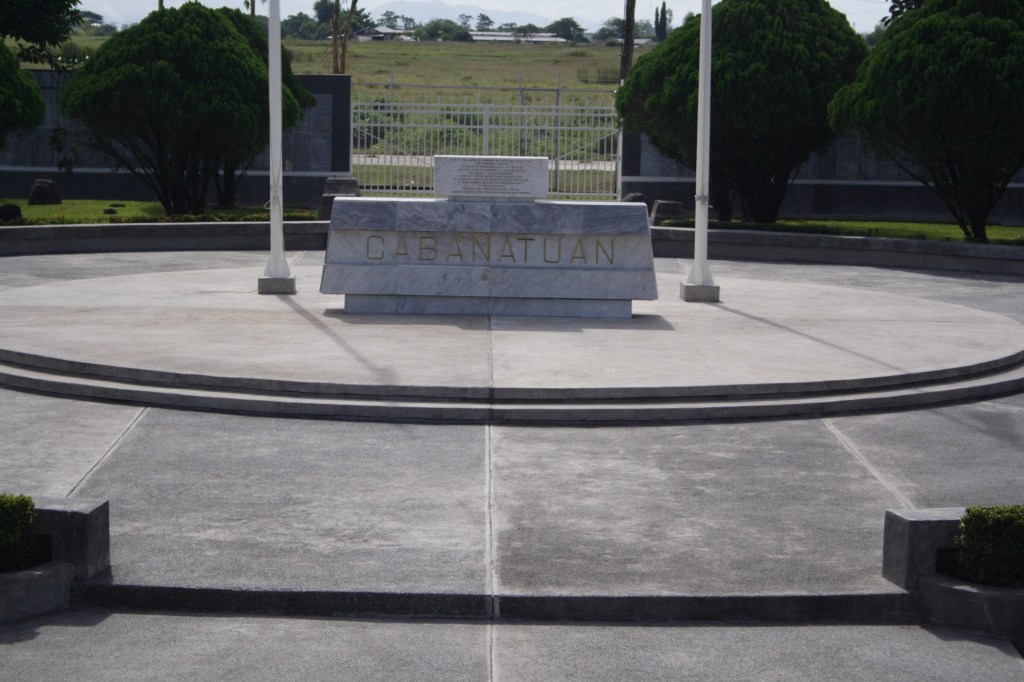
In 1982, the Cabanatuan American Memorial was erected on the grounds of the former POW camp and dedicated by survivors of the Bataan Death march and the prisoner-of-war camp, at Cabanatuan. A large mural depicts Filipino and American soldiers helping each other, in combat. A marble altar bears the names of 2,656 Americans with this dedication on the back of the Cabanatuan sign:
SITE OF THE JAPANESE PRISONER OF WAR CAMP 1942 TO 1945 THIS MEMORIAL HONORS THE AMERICAN SERVICEMEN AND THE CIVILIANS WHO DIED HERE AND GRATEFULLY ACKNOWLEDGES THE EQUALLY HEROIC SACRIFICES MADE BY FILIPINO SERVICEMEN AND CIVILIANS IN A MUTUAL QUEST FOR HONOR, FREEDOM AND PEACE IT ALSO REMINDS MANKIND OF MAN’S INHUMANITY TO HIS FELLOWMAN
ERECTED AND DEDICATED 12 APRIL 1982 BY AMERICAN AND FILIPINO COMRADES, FAMILIES AND FRIENDS.
It is the only place in the province of Nueva Ecija where the Filipino flag stands side-by-side, with the Stars and Stripes.
On this day in 1960, submarine commander Don Walsh and Jacques Piccard mounted that hallway, climbed into the sphere and closed the hatch. The dive to the bottom of the world began at 0823.
For most of us, the oceans are experienced as a day at the beach, a boat ride, or a moment spent on one end of a fishing line.
There is one global ocean divided into five major basins: the Pacific, Atlantic, Indian, Southern, and Arctic. Covering 70 percent and more of the planet, the oceans contain 97% of all the water, on earth.
Yet when it comes to exploration we are strangers, to 80 percent of it.
For most dive organizations, the recommended maximum for novice divers is 20 meters (65 feet). A weird form of intoxication called nitrogen narcosis sets in around 30 meters (98 feet). Divers have been known to remove their own mouthpieces and offer them to fish, with tragic if not predictable results. Dives beyond 130 feet enter the world of “technical” diving involving specialized training, sophisticated gas mixtures and extended decompression times.
Oxygen literally becomes toxic around 190 feet.
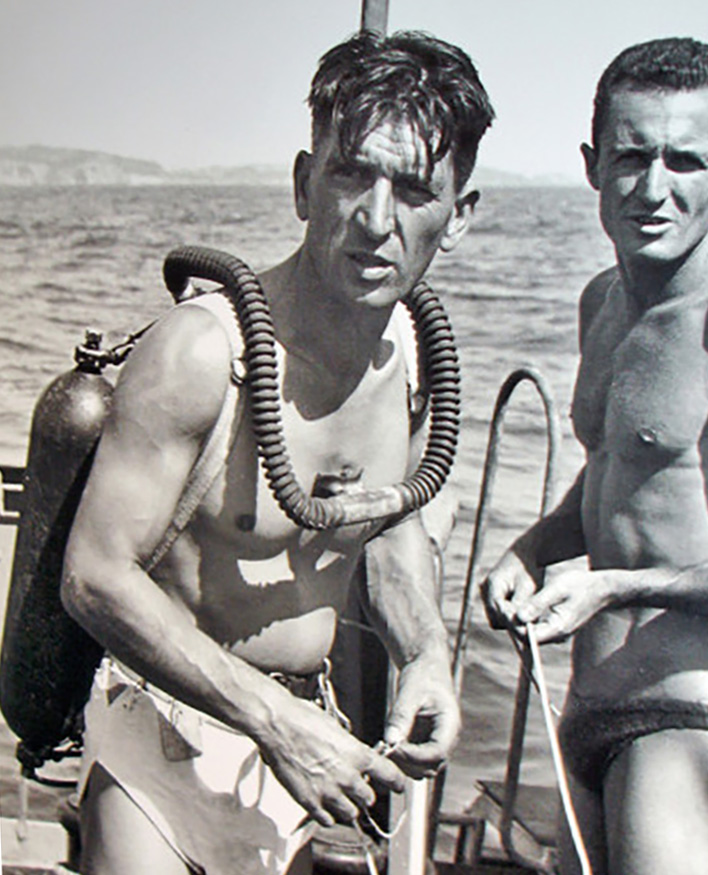
On September 17, 1947, French Navy diver Maurice Fargues attempted a new depth record, off the coast of Toulon. Descending down a weighted line, Fargues signed his name on slates placed at ten meter intervals. At the three minute mark, the line showed no sign of movement. The diver was pulled up. Petty Officer Fargues, a diver so accomplished he had literally saved the life of Jacques Cousteau only a year earlier, was the first diver to die using an aqualung. He had scrawled his last signature at 390 feet.
The man had barely scratched the surface.
Maurice Fargues prepares for his final dive
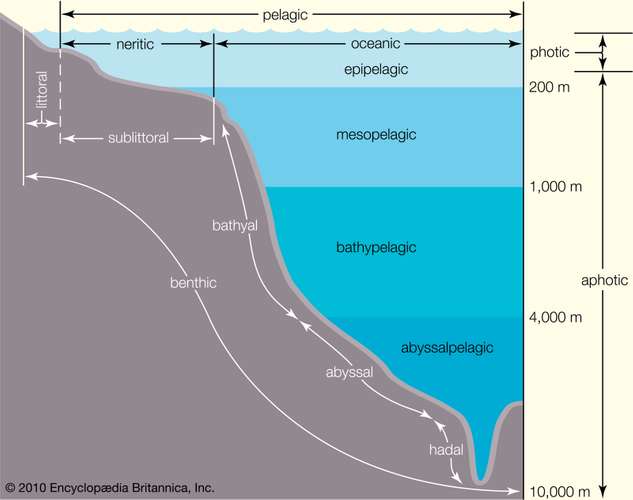
For oceanographers, all that water is divided into slices. The top or epiplagic Zone descends from 50 to 656 feet, depending on clarity of the water. Here, phytoplankton convert sunlight to energy forming the first step in a food chain, supporting 90 percent of all life in the oceans. 95 percent of all photosynthesis in the oceans occur in the epiplagic zone.
The mesopelagic or “twilight zone” receives a scant 1% of all sunlight. Temperatures descend as salinity increases while the weight of all that water above, presses down. Beyond that, lies the abyss.
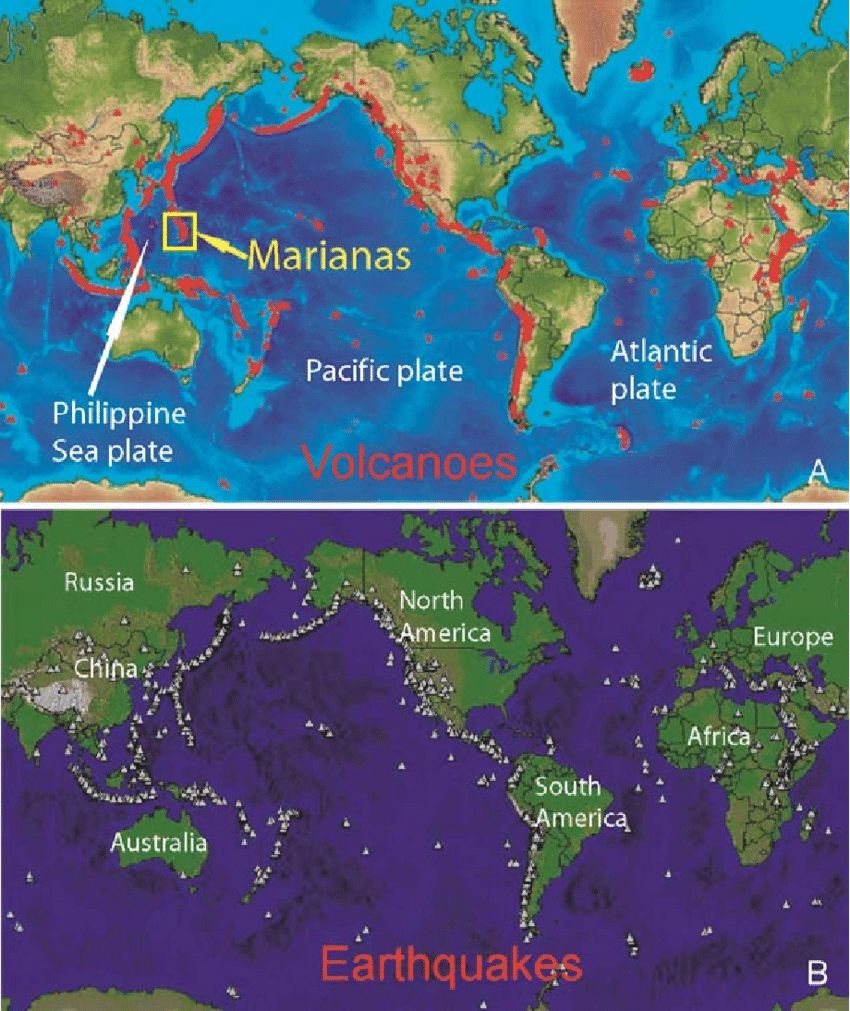
Far below that the earth’s mantle is quite elastic, broken into seven or eight major pieces and several minor bits called Tectonic Plates. Over millions of years, these plates move apart along constructive boundaries, where oceanic plates form mid-oceanic ridges. The longest mountain range in the world runs roughly down the center, of the Atlantic ocean.
The Atlantic basin features deep trenches as well, sites of tectonic fracture and divergence. Far deeper though are the Pacific subduction zones where forces equal and opposite to those of the mid-Atlantic, collide. One plate moves under another and down into the mantle forming deep ocean ridges, the deepest of which is the Mariana Trench, near Guam. The average depth is 36,037, ± 82 feet, dropping off to a maximum depth of 35,856 feet in a small valley at the south end of the trench, called Challenger Deep.
If you could somehow pull up Mt. Everest by the roots and sink it in Challenger Deep, (this is the largest mountain on the planet we’re talking about), you’d still have swim 1.2 miles down, to get to the summit.
The air around us is liquid with a ‘weight’ or barometric pressure at sea level, of 14.696 pounds per square inch. It’s pressing down on you right now but you don’t feel it, because your internal fluid pressures push back. A column of salt water exerts the same pressure at 10 meters, or 33 feet.
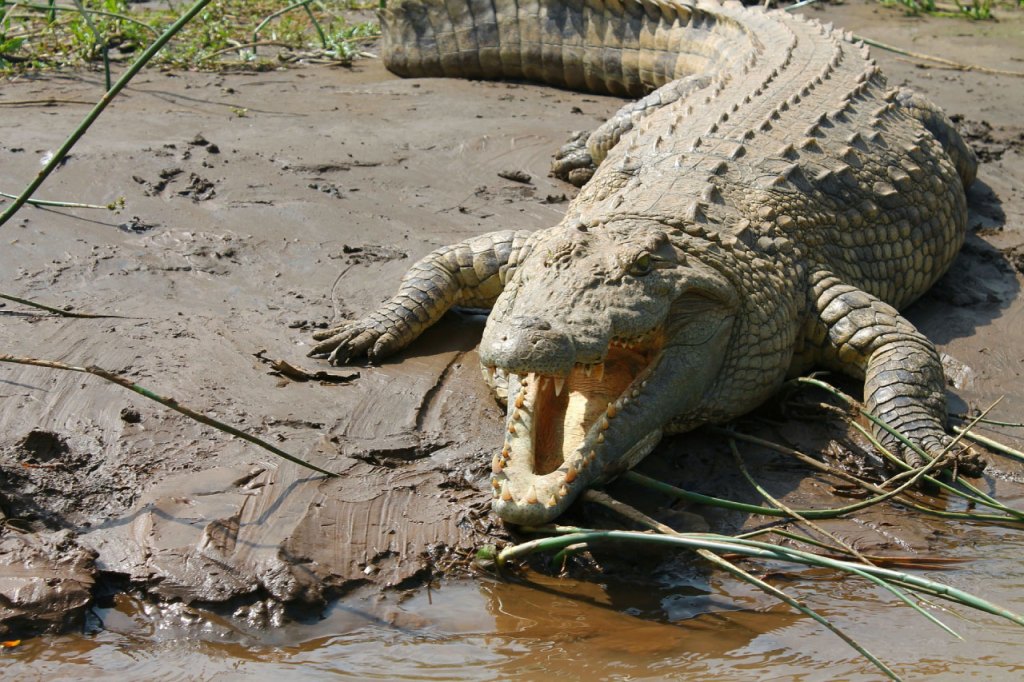
Fun fact: The bite force of the American Grizzly Bear is 1,200 psi. The Nile Crocodile, 5,000. The pressure in Challenger Deep is 1,150 atmospheres. Over 16,000 pounds per square inch.
The problems with reaching such a depth are enormous. The “crush depth” of a WW2 era German submarine is 660-900 feet. The modern American Sea Wolf class of nuclear submarine collapses, at 2,400.
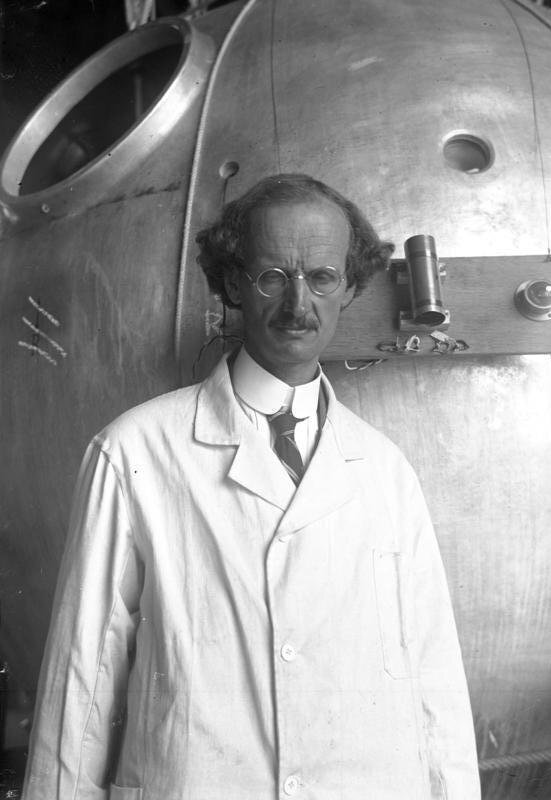
In the early 1930s, Swiss physicist, inventor and explorer Auguste Piccard experimented with high altitude balloons to explore the upper atmosphere.
The result was a spherical, pressurized aluminum gondola which could ascend to great altitude, without use of a pressure suit.
Within a few years the man’s interests had shifted, to deep water exploration.
Knowing that air and water are both fluids, Piccard modified his high altitude cockpit into a steel gondola, for deep sea exploration.
By 1937 he’d built his first bathyscaphe.
“A huge yellow balloon soared skyward, a few weeks ago, from Augsberg, Germany. Instead of a basket, it trailed an air-thin black-and-silver aluminum ball. Within [the contraption] Prof. Auguste Piccard, physicist, and Charles Kipfer aimed to explore the air 50,000 feet up. Seventeen hours later, after being given up for dead, they returned safely from an estimated height of more than 52,000 feet, almost ten miles, shattering every aircraft altitude record.” – Popular Science, August, 1931
Piccard’s work was interrupted by WW2 but resumed, in 1945. He built a large steel tank and filled it with low-density non-compressible fluid, to maintain buoyancy. Gasoline, it turned out, worked nicely. Underneath was a capsule designed to accommodate one person at sea-level pressure while outside, PSI mounted into the thousands of atmospheres.
The craft, with modifications from the French Navy, achieved depths of 13,701 feet. In 1952, Piccard was invited to Trieste Italy to begin work on an improved bathyscaphe. In 1953, Auguste and and his son Jacques brought the Trieste to 10,335 feet.
Auguste Piccard at one time or another held the records for altitude, and for depth
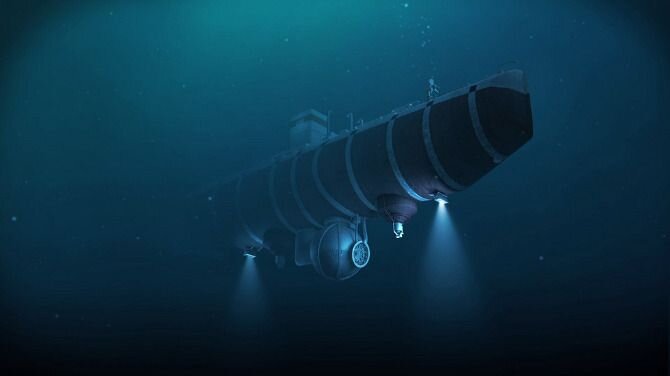
Designed to be free of tethers, Trieste was fitted with a pair of 2HP electric motors, capable of propelling the craft at a speeds of 1.2mph and changing direction. After several years in the Mediterranean, the US Navy acquired Trieste in 1958. Project Nekton was proposed the same year, code name for a gondola upgrade and three test dives culminating in a descent to the greatest depths of the world’s oceans. The Challenger Deep.
Trieste received a larger gasoline float and bigger tubs with more iron ballast. With help from the Krupp Iron Works of Germany, she was fitted with a stronger sphere with a thickness five inches and weighing in at 14 tons.
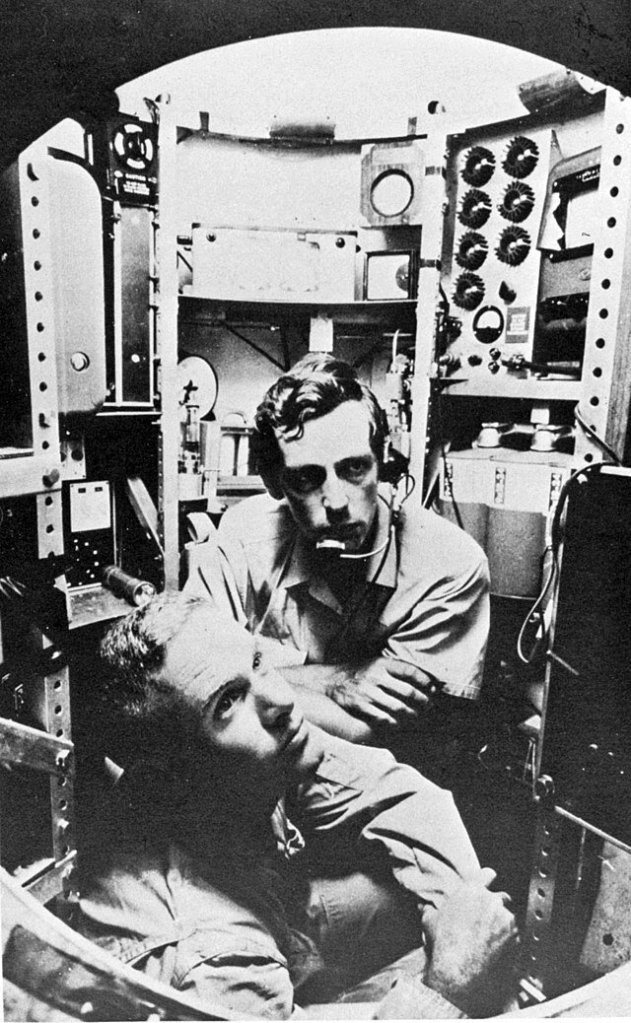
Piccard and Walsh aboard Trieste, January 23, 1960
The cockpit was accessible, only by an upper hallway which was then filled with gasoline. The only way to exit was to pump the gas out and blow out the rest, with compressed air. On this day in 1960, submarine commander Don Walsh and Jacques Piccard mounted that hallway, climbed into the sphere and closed the hatch. The dive began at 0823.
The bathyscaphe Trieste, on the surface
Trieste stopped her descent several times, each time a new thermocline brought with it a colder layer of water and neutral buoyancy, for the submersible. Walsh and Piccard discussed the problem and elected to gamble, ejecting some of that buoyant gasoline. By 650 feet, thermocline problems had ended.
By 1,500 feet, the darkness was complete. The pair changed their clothes, wet with spray from a stormy beginning. With a cockpit temperature of 40° Fahrenheit, they would need dry clothes.
Looking out the plexiglass window, depths between 2,200 and 20,000 feet seemed “extraordinarily empty”. By 14,000 feet the pair was now in uncharted territory. No one had ever been this deep. At 26,000 feet, descent was slowed to two feet per second. At 30,000 feet, one.
At 1256 Walsh and Piccard the bottom could be seen, on the viewfinder. 300 feet to go. Trieste touched down in a cloud of silt, ten minutes later. Not knowing if the phone would work at this depth, Walsh called the surface. “This is Trieste on the bottom, Challenger Deep. Six three zero zero fathoms. Over.” The response came back weak, but clear. “Everything O.K. Six three zero zero fathoms?” Walsh responded “This is Charley” (seaman-speak, for ‘OK”). We will surface at 1700 hours”. 37,800 feet.
The feat was not unlike the first flight into space. No human had ever reached such depths and never would, again. Unmanned deep sea submersibles have since visited the Challenger Deep, but this was the last manned voyage, to the bottom of the world.
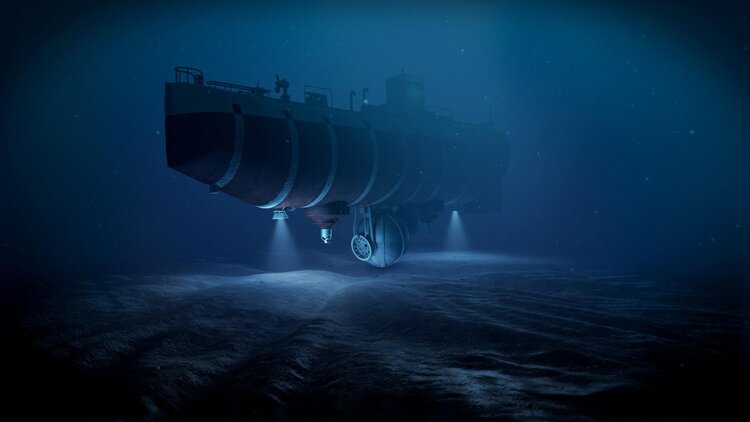
Computerized rendering shows Trieste at the bottom, January 23, 1960 H/T National Geographic
Afterward: “After the 1960 expedition the Trieste was taken by the US Navy and used off the coast of San Diego, California for research purposes. In April 1963 it was taken to New London Connecticut to assist in finding the lost submarine USS Thresher. In August 1963 it found the Threshers remains 1,400 fathoms (2,560 meters) below the surface. Soon after this mission was completed the Trieste was retired and some of its components were used in building the new Trieste II. Trieste is now on display at the National Museum of the United States Navy at the Washington Navy Yard”. – H/T Forgotten History
Those left behind perform a quiet kind service to the rest of us, a service shared by the whole family without so much as outside recognition.
When Civil War broke out in April 1861, President Abraham Lincoln put out a call for 75,000 90-day troops, to put down the rebellion. Kentucky refused. Governor Beriah Magoffin responded that Kentucky would send no soldiers “for the wicked purpose of subduing her sister southern states.” In a letter written that September, President Lincoln described the importance of his home state to the war effort. “I think to lose Kentucky is nearly the same as to lose the whole game…Kentucky gone, we cannot hold Missouri, nor, as I think, Maryland. These all against us and the job on our hands is too large for us…..” The place was equally important on the Confederate side. Had Kentucky seceded, rebel troops would be positioned to strike at will toward Ohio, Indiana or Illinois.
That October, commander of Union forces in Kentucky William Tecumseh Sherman told Secretary of War Simon Cameron he needed 60,000 men to defend the territory, and 200,000 to go on the offensive. Outraged, Cameron called Sherman’s request “insane” and removed the general, from command. One Ohio newspaper opined that Sherman had lost his mind.
Humiliated, Sherman wrote to his brother, “I do think I should have committed suicide were it not for my children...”
General Ulysses Grant saw not insanity in general Sherman, but cold competence. In 1862, Grant reassigned Sherman to Paducah, Kentucky.
Later in the war, Sherman defended Grant about a (possibly unfair) accusation of being drunk on duty. “General Grant is a great general”. Sherman began. “He stood by me when I was crazy, and I stood by him when he was drunk; and now, sir, we stand by each other always.”
The story may be found in any number of books. Books about war, about soldiers, but what of the man, inside the uniform. The man called to leave his family, to do a job. And what of the family left behind and the bonds of affection forced to stretch across a nation, or an ocean. That book with so much to say about combat, has less to say about the man behind the soldier, that man’s place in the family unit and even less about the loved ones, left behind.
I’ve seen the story played out by my mother, two sisters-in-law and a daughter. The soldier, usually a “he”, leaves home in service to his country. Those left behind do their best to carry on without the help of a partner, all the while keeping their worst fears locked away in a dark closet of imagination. Those left behind perform a quiet kind of service to the rest of us, a service shared by the whole family without so much as outside recognition.
The long siege of Vicksburg was over in 1863 following the Union victory of July 4. The city of Vicksburg wouldn’t celebrate another Independence Day, for 80 years.
Making camp on the Big Black River near Bovina Mississippi, Sherman made headquarters in the home of Reverend James Fox. Thinking it would be a good time to reunite with his family, Sherman sent for his wife, Ellen and the couple’s four children: Minnie [12], Lizzie [11], Willy [9] and Tom [7].
Sherman himself had become fatherless at 9 and adopted by one Thomas Ewing of Lancaster, Ohio.
“I have a healthy camp,” Sherman wrote to Ewing, father of Sherman’s former step-sister and now-wife Eleanor “Ellen” Ewing Sherman. “I have no fear of yellow or other fevers.”
What an adventure it was for the children, especially Willy. Living in tents and hanging around with Union soldiers.
The 13th Infantry made him an honorary sergeant, teaching the boy the manual of arms and including him in guard details, drills and parades. The boy would accompany his father on inspection tours of the Army. What a lark. The experience of a lifetime.
Sherman’s confidence about yellow fever was based on that which was known, in 1863. Thirty years later, science would understand the illness to be mosquito-borne and not spread by human contact.
The family boarded the steamboat Atlantic that September, to begin the trek back home to Ohio. Willy didn’t look well. The boy was uncharacteristically quiet, his cheeks flushed. Surgeon E. O. F. Roler was summoned to examine him and came back with a dreadful diagnosis. Yellow fever.
The prognosis was grim. Fewer than 1,000 soldiers died in battle during the 8-month war Spanish American war in Cuba, in 1898. More than 5,000 died of disease, most of those from yellow fever.
Willy’s condition worsened. Arriving in Memphis, the boy was taken to the Hotel Gayoso, that October. Fading in and out of consciousness, he was given last rites on October 3. Willy told the priest he was willing to die if it was God’s will, but he didn’t want to leave his parents. With tears streaming down the cheeks of his mother and father, Willy reached and out, and touched their faces. And then he was gone.
Shattered, Ellen and her remaining children boarded a steamer to Ohio, three days later. The General went back to Mississippi. He had a war to fight.
On October 6, Sherman wrote to Ellen, from Gayoso: “I have got up early this morning to steal a short period in which to write you, but I can hardly trust myself. Sleeping, waking, every-where I see poor little Willy. … I will always deplore my want of judgement in taking my family to so fatal a climate at so critical a period of the year….To it must be traced the loss of that child on whose future I had based all the ambition I ever had.“
This from a man who had written only two year earlier, “I do think I should have committed suicide were it not for my children”.
Ellen, a devout and practicing Catholic, fell back on her faith. General Sherman fell into depression, despair, and self-reproach.
So great was the General’s grief that he never forgave himself, for bringing his family to that place.
A year before his death in 1891, Sherman left detailed instructions about his last rest in that St. Louis cemetery, “alongside my faithful wife and idolized soldier boy.”
The grief, the self-reproach, it all but crushed him. Sherman wrote to Admiral David Porter: “I lost recently my little boy by sickness incurred during his visit to my camp on Big Black. He was my pride and hope of life, and his loss has taken from me the great incentive to excel, and now I must work on purely and exclusively for love of country and professional pride.”
Some historians blame the savagery of Sherman’s attack on Meridian Mississippi, the cruelty of his assault on Atlanta and the “March to the Sea” on a form of madness, brought on by the loss of his precious boy.
In the Summer of 1864, three Union armies of the newly appointed division of the Mississippi under William Tecumseh Sherman were advancing, on Atlanta. Meanwhile back home in Lancaster, Ellen was about to give birth to another child. A baby boy, named Charley.
Let the couple’s letters tell the story and imagine if you will your own troubles, set against the backdrop of civil war.
Big Shanty, GA June 12, 1864: Dearest Ellen, I have received Phil’s dispatch announcing the birth to us, of another son. I’m glad you’re over the terrible labor, and hope it’s the last you will have to endure. Of course, I’m pleased to know the sex of the child, as he must succeed to the place left vacant, by Willy. Though I fear we will never be able to lavish on anyone, the love we bore for him. I am ever yours, W.T. Sherman
Lancaster Ohio, July 7, 1864: Dearest Cump, For the first time since I went to bed the night of the 10th of June I am able to sit up, and hold my pen. I’d been sick all that day. About 1 o’clock I sent for the doctor. At 20 minutes past two the baby was born with a cry, loud enough to disturb the neighborhood. Like Tommy he was born with a caul over his face which the doctor had to remove, before his cry came forth. I must thank God I am spared to my children, and not murmur at the trials he sends me. As ever, Ellen
Headquarters, Military division of Mississippi, In the field near Chattahoochee, July 9, 1864: Dearest Ellen, it is now two months since I left Chattanooga, and I think during all this time I have but one letter from you. I fear you have been more ill than I supposed. The enemy and the Chattahoochee lie between us, and intense heat prevails, but I think I shall succeed. At all events you know, I never turn back. Give my love to your father and all the young folks. Yours ever, WT Sherman
Lancaster Ohio July 16, 1864: Dearest Cump, I have been ill indeed, in great danger of death, and left weak. Charley thrives, grows and fattens, and is very strong and healthy. The children dote on him, particularly Tommy and Lizzie. Tommy asked me how long babies wore long dresses and when I told him six or eight months he begged me to put pantaloons on Charlie then. He walks with him in his arms and watches him and plays with him and sings 20 times a day. He is so glad the baby is not a girl. I have not told you how very strongly he resembles you in form, face and shape of head. The likeness is striking and I am delighted to see it. All are well, and send love to dear Papa. Ever your affectionate, Ellen
Lancaster Ohio September 17, 1864: Saturday morning: Dearest Cump, the baby has a very bad cold, settled on his lungs. May Willy’s pure spirit be your guide to his happy home in heaven is the hourly prayer of your truly affectionate, Ellen
Cincinnati Ohio September 22, 1864: it seems as if I were never to have another letter from you, dearest Cump
Cincinnati Ohio September 25, 1864: Sunday evening: Dearest Cump, the baby has a very bad cough and I feel so uneasy.
Lancaster Ohio, November 8, 1864: Dearest Cump, Dear Willy’s picture has just been brought, and now stands framed in my room. We need this to keep him fresh in the minds and the hearts of all the children for all must love and know and talk of their holy brother, until by God‘s grace we join him in his heavenly home. The baby has such a severe cold, which has taken such a firm hold on his lungs that I greatly fear, he will never get over it, and that it will end in consumption. Ever your truly affectionate, Ellen.
Obituary, Charles Celestine Sherman, New York Times, December 25, Christmas Day, 1864: Died at South Bend Indiana on Sunday, December 4, 1864, of pneumonia. Charles Celestine, infant son of Major General WT and Ellen E. Sherman, aged 5 months and 23 days
South Bend Indiana, December 29, 1864: Dearest Cump, long before this, you have seen in the papers the notice, of the dear baby’s death. God grant that his prayers and Willy’s may ensure my perseverance and obtain for you the gift of faith. Ellen E. Sherman
Military Division Mississippi in the field, January 5, 1865: Dearest Ellen I have written several times to you and the children. yesterday I got your letter of December 23 and realized the deep pain and anguish through which you have passed, and the pain and sickness of the little baby I never saw. All spoke of him as so bright and fair that I had hoped he would be spared to us, to fill the great void in our hearts left by Willy. But it is otherwise decreed, and we must submit. I have seen death in such quantity and in such forms that it no longer startles me. But with you, it is different. Yours, WT Sherman
Two weeks after that last letter from Ellen, General Sherman was in Savannah, preparing to march north into South Carolina. It began to rain on January 17, the heaviest rainfall in 20 years. January 21 came and went with no respite. Not until the end of the month did the rain cease to fall. The misery of that camp in Savannah and of General Sherman’s mental state, can only be guessed at.
The coming assault on the seat of secession would be worse than Sherman’s march to the sea.
Margie Bearss, wife of Vicksburg Military Park historian Edwin Bearss is herself an accomplished historian, a fellow of the National Military Collectors and Historians association, author of Sherman’s Forgotten Campaign in Meridien Mississippi and known for her work in support of the Grand Gulf Military Park in Mississippi, and the USS Cairo, now in the Vicksburg military Park. Bearss once mused, “Did perhaps the death of Willy start a chain reaction of fires and desolation in Mississippi that the winds of more than a century have not entirely hidden? Did Sherman hold Mississippi ‘that sickly region’ responsible for his death? Who knows. Yet, we do know that between the end of the Vicksburg Campaign and the beginning of the Meridian Expedition, only a few months’ time, his concept of warfare changed and he began his own version of the ‘total war’ for which he became well-known.“
“Tales of the killer weather event made their way into town histories, journals and court records long after it happened on January 19.. They told of the many people who froze to death while traveling along the highways. The wind blew down houses, barns and vast numbers of timber trees. Ships wrecked, cattle froze in their barns and old people died of hypothermia inside their homes. It was so cold pens wouldn’t write though they were right next to the fireplace”. – H/T New England Historical Society
I suspect it’s happened to all of us, particularly in the colder latitudes. You dress for the weather, (or think you do), later to find you got it wrong. Off you go to the office, to the store, and before you know it, it’s soaking wet. Or freezing cold. We’ve all been there, but what of an age before you had that nice warm car, to jump into?
In January 1810, several New England journalists recorded a temperature that dropped 100 degrees in 24 hours, from 67° Fahrenheit on Thursday the 18th, to -33° on Friday.
According to NASA, the average winter temperature at the North Pole, is -40°.
That was only the half of it. The weather forecasters of the day didn’t record wind chill but the howling gale that brought that cold with it, was a killer.
Henry David Thoreau’s mother remembered dishes frozen, as soon as they were washed. Reverend William Bentley wrote that people died, without going outside.
On the mild afternoon of January 18, 50-year-old Revolutionary War veteran Joseph Brooks of Woburn Massachusetts and his 45-year old cousin Benjamin, went into the forest to cut wood. The two were found frozen to death on Saturday.
HistoricIpswich.org writes of “people who froze to death while traveling along the highways. Houses, barns and vast numbers of timber trees were blown down or broken to pieces. Ships were wrecked, cattle froze in their barns and old people died of hypothermia in their homes. It was so cold pens wouldn’t write though they were right next to the fireplace“.
In Sanbornton New Hampshire, the wind tore the home of Jeremiah Ellsworth, to pieces. Ellsworth struggled into the maelstrom to the home of David Brown, seeking help. The howling wind literally tore the clothes off the backs of Ellsworth’s older children as Mrs. Ellsworth struggled to carry the baby, into the basement. Ellsworth made it to the neighbor’s house but, with his feet frozen, the man was unable to go on. Brown hooked up a horse and sleigh and drove back to the Ellsworth home. That’s when things went Seriously wrong. The sleigh was blown over not once, but twice. The second time it was torn apart, its contents, scattered. David Brown labored to carry the Ellsworth children the rest of the way. Mrs. Ellsworth was reduced to crawling. By the time she arrived at the Brown home she was unrecognizable. None of the three children survived.
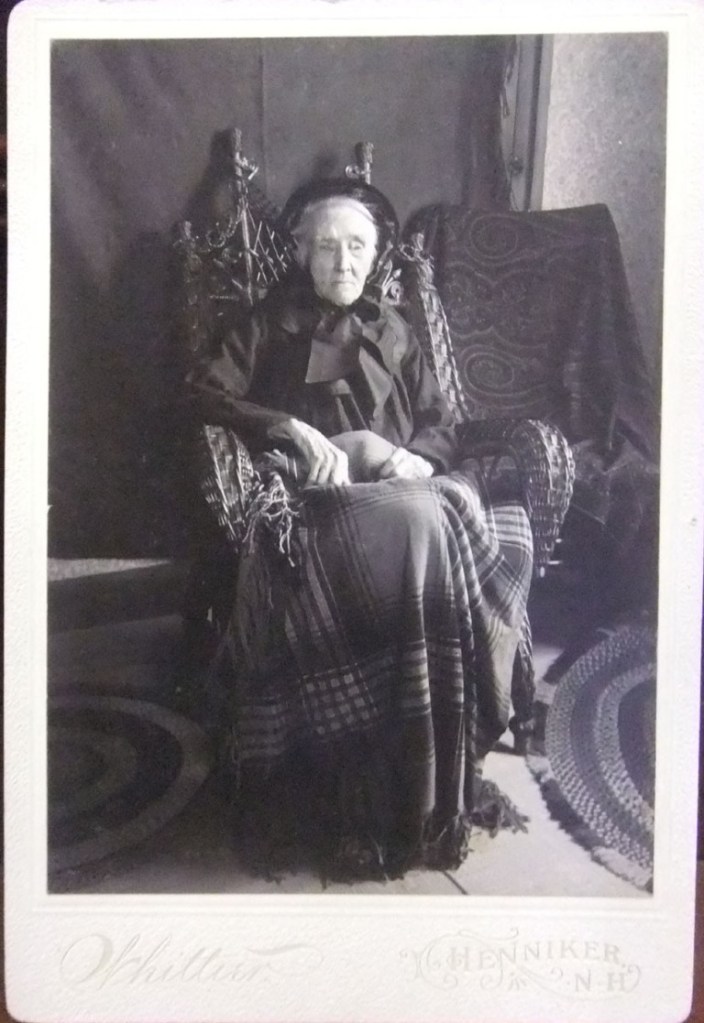
On a happier note, Rebecca Ramsdell was a schoolgirl, in Henniker New Hampshire. James Bartlett was the teacher in those days, and made it a habit to award little medals, to children with exceptional attendance. Rebecca braved the cold that morning and walked a mile, to school. Bartlett gave her a medal, and she never forgot it. You can find a picture of Ms. Ramsdell at the Henniker Historical Society. She’s 100+ in that photo and she still had Mr. Bartlett’s medal.
H/T Henniker Historical Society
Locals spoke of the Cold Friday of 1810, for generations. Twenty years later, a New Hampshire court proceeding required a date. The answer wasn’t hard to remember. It had happened on Cold Friday.
For every multi-ton flying fuel tank hurtling from bow-mounted catapults bristling with armaments, a controlled crash landing of that same aircraft, takes place in the stern. Combine all that chaos with a heaping helping of Murphy’s law and the table is set, for disaster.
From the WW1-era launch of the first modern aircraft carrier to the present day, the carrier sailor has literally lived and worked, surrounded by the means of his own destruction.
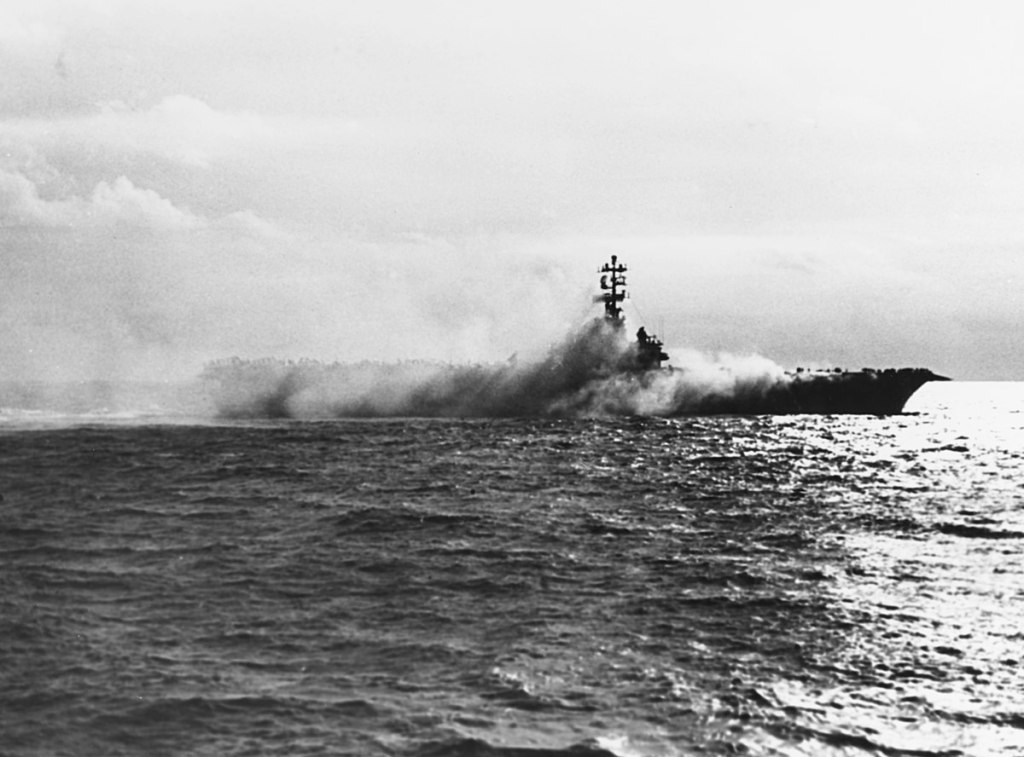
In March 1953, a Corsair fighter off the coast of Korea landed on the decks of USS Oriskany, with a bomb still attached. The thing fell off and exploded, piercing the wingtip tanks of several F9F-5 Panthers, spilling flaming fuel across the decks. That time, fire crews were able to put out the fire, before the flames reached ordnance lockers. Loss of life was limited to two sailors killed and another fifteen, wounded. A decade later, the “Mighty O” wouldn’t get off, so lightly.
USS Oriskany
Oriskany began her second tour off the Vietnam coast in July, 1966. The carrier’s five fighter squadrons launched nearly 8,000 sorties in the first four months, a pace taxing to man and machine, alike.
On October 26, apprentice seamen George James, 18, and James Sider, 17, were ordered to stow 117 parachute flares. Untrained and unsupervised, Sider snagged a lanyard , and accidentally set one off. Panicked, blinded by the brilliant light of white phosphorus, Sider tossed the flare into the storage locker.
The bin already contained some 650 flares and 2¾-inch air-launched rockets, each carrying a 6-pound warhead. Temperatures inside the locker soared to 4,500° Fahrenheit and the main hatch exploded as steel bulkheads began to sag and buckle.
Water is worse than useless against a magnesium fire. Anyone who’s seen the Hindenburg tape understands why. Water breaks down to oxygen and hydrogen at temperatures over 3,000°, literally transforming into fuel, for the inferno.
Magnesium fires burn as hot as 5,600°, Fahrenheit. As a point of reference, volcanic lava ranges from 1,470° to 2,190°.
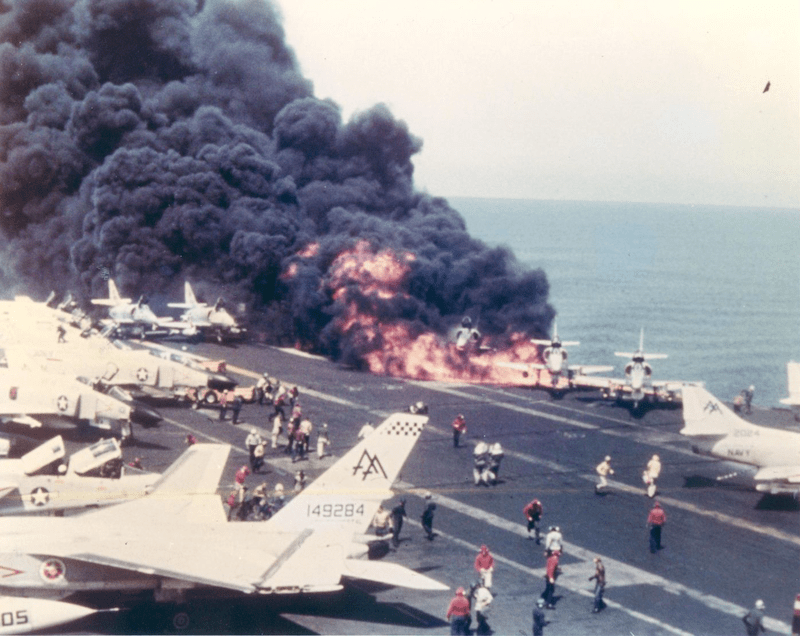
As helicopters burned and ammunition cooked off, the courage of individual firemen is scarcely to be believed. Literally surrounded by bombs staged for loading, firemen trained water hoses to cool these monsters even as their paint blistered, and fuze inlets began to smoke.
Oriskany fire, October 1966
Had the bombs gone off, the probable result would be the death of the carrier itself.
Down below, murderous heat and noxious fumes killed men where they stood. Lt. Cmdr. Marvin Reynolds wrapped a wet blanket around himself and fumbled in the darkness, for the wrench to open his porthole. “If you let this wrench slip and lose it in the smoke” he thought, “you’ve bought the farm.” Reynolds managed to open his porthole, holding his head out the small opening until a sailor passed him a breathing mask, and fire hose.
In the end, firemen could do little but hose the edge of the fire, while the inferno burned itself out. 44 men were killed and another 156, injured. So much water was pumped onboard that scuba teams were required, to rescue men trapped on lower decks.
8 months later, USS Forrestalmet a similar fate. This one is personal as a close family member, was involved.
In 1967, the carrier bombing campaign against North Vietnam reached an intensity unrivaled, in US Naval history.
USS Forrestal, departing San Francisco bay.
Combat operations were literally outpacing ordnance resupply, which soon included AN-M65A1 “Fat Boy” bombs, left over from the war in Korea. Handlers feared these old bombs might spontaneously explode from the shock of a catapult takeoff.
Before the cruise, damage control firefighting teams were shown training films of Navy ordnance tests, demonstrating how a 1000-lb bomb could be directly exposed to a jet fuel fire for a full 10 minutes. Tests were conducted using the new Mark 83 bomb featuring a thicker, heat resistant wall compared with older munitions and “H6” explosive, designed to burn off at high temperatures, like a huge sparkler.
The problem was, the old ordnance was thinner-skinned than the modern bombs, and armed with 10+ year-old “Composition B” explosive. Already more sensitive to heat and shock than the newer ordnance, composition B becomes more volatile as the explosive ages. The stuff becomes more powerful too, as much as 50%, by weight.
On the morning of July 29, preparations were underway for the second strike of the day. Twenty-seven aircraft were on deck, fully loaded with fuel, ammunition, bombs and “Zuni” unguided rockets.
An electrical malfunction fired a rocket across the flight deck, severing the arm of one crew member and piercing the 400-gallon fuel tank of an A-4E Skyhawk. The rocket’s safety mechanism prevented the weapon from exploding, but the A-4’s torn fuel tank was spewing flaming jet fuel onto the deck. Other tanks soon overheated and exploded, adding to the conflagration.
During WW2, virtually all carrier sailors were trained to fight fires. That all changed by the Vietnam era in favor of small, highly trained teams of fire fighters. Damage Control came into action immediately, as Team #8 Chief Gerald Farrier spotted a Fat Boy bomb turning cherry red, in the flames. Without protective clothing, Farrier held a fire extinguisher on the 1000-pound bomb, hoping to keep it cool enough to prevent cooking off as his team brought the conflagration under control.
Firefighters were confident that their ten-minute window would hold, but composition B proved as unstable as the ordnance people had feared. Farrier “simply disappeared” in the first of a dozen or more explosions, in the first few minutes. By the third such explosion, Damage Control Team #8 had all but ceased to exist.
There were nine major explosions on deck during the first five minutes.
The port quarter of the Forrestal ceased to exist in the violence of the blasts. Office furniture was thrown to the floor, five decks below. Huge holes were torn through the flight deck while 40,000 gallons of flaming jet fuel, poured through ventilation ducts and into living quarters below.
Future United States Senator John McCain managed to scramble out of his cockpit and down the fuel probe. Seconds later, Lieutenant Commander Fred White wasn’t so lucky.
With the life of the carrier itself at stake, tales of incredible courage, were commonplace. Medical officers worked for hours in the most dangerous conditions imaginable. Explosive ordnance demolition officer LT(JG) Robert Cates “noticed that there was a 500-pound bomb and a 750-pound bomb in the middle of the flight deck… that were still smoking. They hadn’t detonated or anything; they were just setting there smoking. So I went up and defused them and had them jettisoned.” Sailors volunteered to be lowered through the flight decks into flaming and smoked-filled compartments, to defuse live bombs.
The fire burned until 4:00 the next morning. 21 of the 73 aircraft on board were destroyed and another 40, damaged. 134 crewmen died in the conflagration. Another 161 received non-fatal injuries. It was the worst loss of life on a US Navy vessel, since World War 2.
They say bad luck comes in threes. On this day in 1969, the nuclear carrier USS Enterprise finished the list.
Since the age of the Wright brothers, aircraft designers have often left out the excess weight of starters and batteries. Early piston engines were startd by hand and, in the jet age, gas turbines often use auxiliary starters powered by gas or other combustible material.
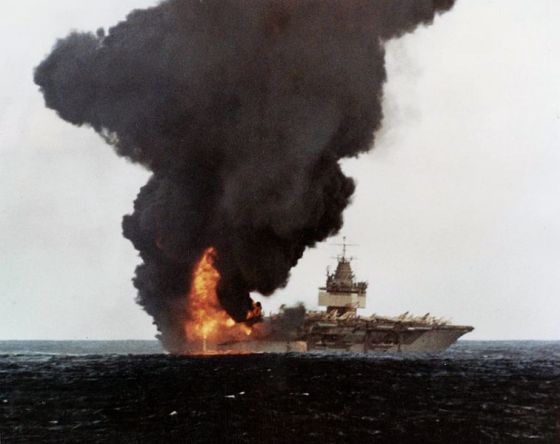
On the morning of January 14, 1969, USS Enterprise was training 70-miles off Hawaii, preparing for her 4th tour of Vietnam. Her flight deck was crowded with F-4 Phantoms and A-7 Corsair II bombers, each loaded with Zuni rocket pods and 500-pound Mk-82 bombs. At 8:18am, an MD-3A “Huffer” aircraft engine starter was parked near the wing of an F4 Phantom, its exhaust a mere 24-inches from a rocket pod.
The 15-pound warhead on a Zuni rocket, goes off at 358° Fahrenheit. A Huffer exhaust burns between 362° and 590°. For a minute and 18 seconds, no fewer than four crew members were aware of the problem. None took steps to fix it and each, paid the ultimate price.
In the flash of an eye the exploding rocket ruptured several nearby fuel tanks as fuel vaporized and immediately, burst into flames. That’s when all hell, broke loose. The nearest 15 aircraft carried a combined fuel load of 15,000 gallons with a combined armament of 30 500-pound bombs and 40 Zuni rockets. 18 massive explosions went off in close succession, tearing great holes in 2½-inch deck armor.
Men and machines were tossed by each explosion, “like dust”. Three bombs went off at once opening a 22-foot hole in the deck, damaging a nearby tanker and spilling burning fuel, six floors below.
Knocked unconscious in the initial blast, Petty Officer 3rd Class Frank Neumayer of Fighter Squadron VF-96 awoke to find his goggles melting and his clothing, on fire. “The roar of the fire was just horrendous,” he later said. “It just blotted out any other sound. The stench… was horrible.” He managed to crawl to the catwalk below just as 2 500-pound bombs went off, not 30-feet from his previous position. Neumayer lost his left leg in the blast and twice received last rites, but survived.
The Destroyers USS Bainbridge and Rodgers came alongside, to lend their hoses. Helicopters arrived within two hours from Pearl Harbor, to medevac the wounded. Within three hours the last flames, were out.
The USS Enterprise fire resulted in the death of 34 men and another 341 non-fatal injuries. The fire resulted in a redesign of the Huffer starter and repair costs equivalent to $912 million, today. No formal inquiry was ever held, to determine fault. Everyone plausibly to blame for the catastrophe, had been among the first to die.
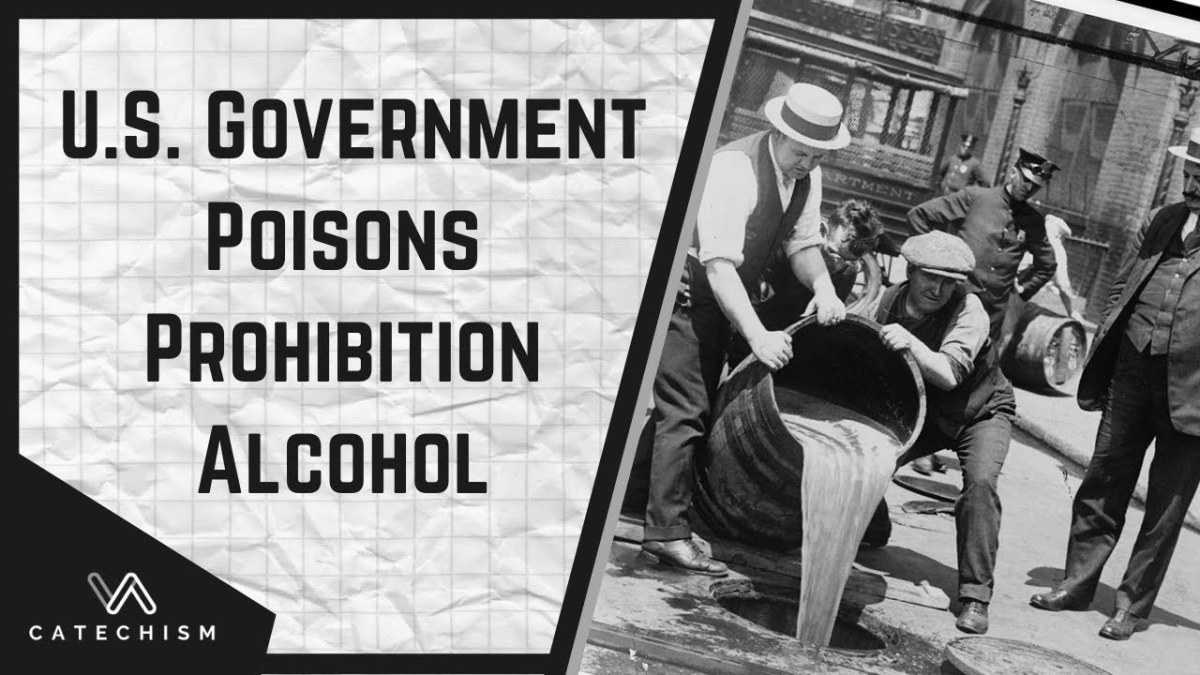
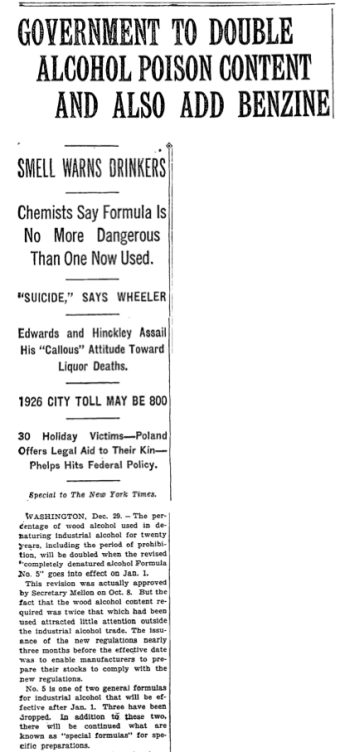
Not to be defied, federal officials poisoned industrial alcohol until the very last day, running up the tab to no fewer than 10,000 dead Americans. The government didn’t even pretend not to know, what was going on.
A French proverb comes down to us from 1742, attributed to one François de Charette: “On ne fait pas d’omelette sans casser des oeufs”. You can’t make an omelette without breaking eggs.
Irish playwright George Bernard Shaw was a big fan of socialism in his day and an enthusiastic supporter of the gulags, of Josef Stalin.“[The] unfortunate Commissar” he wrote, must shoot his own workers “so that he might the more impressively ask the rest of the staff whether they yet grasped the fact that orders are meant to be executed.”.
Yikes
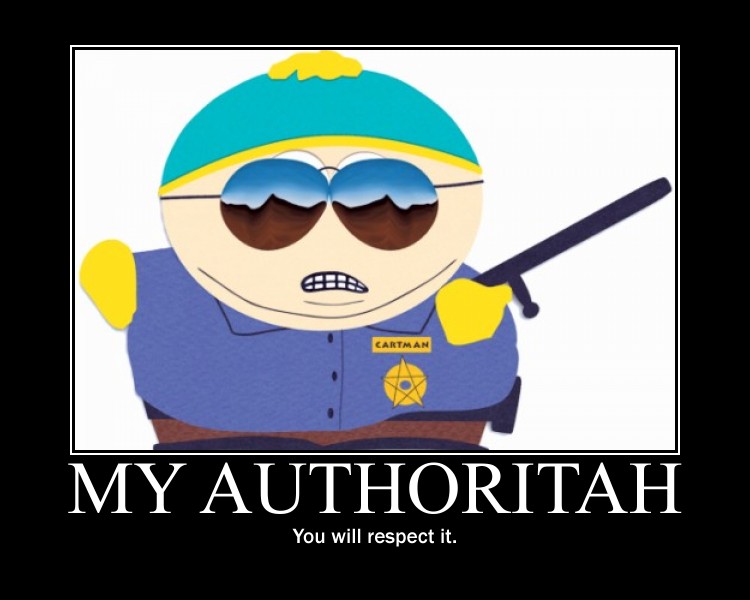
Connoisseurs of the animated series South Park will remember the Prime Directive of Mr. Garrison’s favorite third grader, Eric Cartman. “You will respect my authoritah“
All well and good for a cartoon. Few would have guessed the real-world Federal Government would poison its own citizens. To enforce its own authoritah.
The Eighteenth Amendment establishing national prohibition of intoxicating liquors was passed out of Congress on December 17, 1917 and sent to the states, for ratification. The “Volstead” act, so named for Chairman of the House Judiciary Committee Andrew Volstead, was enacted to carry out the will of congress.
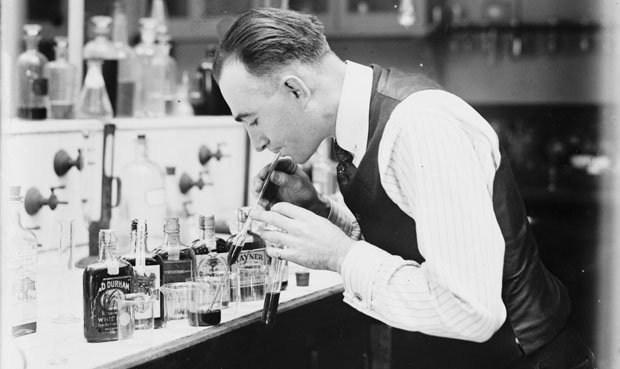
At last ratified in January 1919, “Prohibition” went into effect at midnight, January 16, 1920. For thirteen years it was illegal to import, export, transport or sell intoxicating liquor, wine or beer in the United States.“Industrial alcohol” such as solvents, polishes and fuels were “denatured” and rendered distasteful by the addition of dyes and chemicals. The problem was, it wasn’t long before bootleggers figured out how to “renature” the stuff.
The Treasury Department, in charge of enforcement at that time, estimated that over 60 million gallons of industrial alcohol were stolen during Prohibition.
Not to be defied, the federal government upped the ante. The Parasite Leviathan, was not to be defied.
By the end of 1926, denaturing processes were reformulated with the introduction of known poisons such as kerosene, gasoline, iodine, zinc, nicotine, formaldehyde, chloroform, camphor, quinine and acetone.
Treasury officials went so far as to impose a requirement of no less than 10% by volume of methanol, a virulent toxin used in anti-freeze.
You will respect my authoritah.
You can renature this stuff ’til the cows come home. It will kill you.
Sixty people wound up at New York’s Bellevue Hospital on Christmas eve 1926, desperately ill from contaminated alcohol. Eight of them died. Within two days, the death toll stood at thirty-one. The number soared to 400 by New Year’s Day , with no end in sight.
A copper still and bucket, like those used in the creation and renaturing of alcohol at home. H’T allthatsinteresting.com, and Chicago History Museum/Getty Images
Many who didn’t die, probably wished they had. Holiday revelers experienced hallucinations, uncontrollable vomiting, even blindness.
TIME Magazine reported a doubling in toxicity levels in the January 10, 1927 issue, compared with the old method: “The new formula included “4 parts methanol (wood alcohol), 2.25 parts pyridine bases, 0.5 parts benzene to 100 parts ethyl alcohol”. TIME noted, “Three ordinary drinks of this may cause blindness. (In case you didn’t guess, “blind drink” isn’t just a figure of speech).”
To paraphrase Wikipedia, Pyridine is a highly flammable chemical structurally related to benzene, with the unpleasant smell of dead fish.
New York medical examiner Charles Norris was quick to understand the problem and organized a press conference to warn of the danger. “The government knows it is not stopping drinking by putting poison in alcohol. Yet it continues its poisoning processes, heedless of the fact that people determined to drink are daily absorbing that poison. Knowing this to be true, the United States government must be charged with the moral responsibility for the deaths that poisoned liquor causes, although it cannot be held legally responsible.”
Norris pointed out that the poorest people of the city, were most likely to be victims: “Those who cannot afford expensive protection and deal in low-grade stuff”.
The towering sanctimony of the other side, is hard to believe. Teetotalers argued the dead had “brought it on themselves”. Long-time leader of the anti-saloon league Wayne Wheeler proclaimed “The Government is under no obligation to furnish the people with alcohol that is drinkable when the Constitution prohibits it. The person who drinks this industrial alcohol is a deliberate suicide.”
You will respect my Authoritah.
In its thirteen years of existence, Prohibition was an unmitigated disaster. Portable stills went on sale within a week of enactment and organized smuggling was quick to follow. California grape growers increased acreage by over 700% over the first five years, selling dry blocks of grapes as “bricks of Rhine” or “blocks of Port”. The mayor of New York City himself sent instructions to his constituents, on how to make wine.
Smuggling operations became widespread as cars were souped up to outrun “the law”. This lead in time to competitive car racing, beginning on the streets and back roads and later moving to dedicated race tracks. It’s why we have NASCAR, today.
Organized crime muscled up to become vastly more powerful, due to the influx of enormous sums of cash. The corruption of public officials was a national scandal.
Gaining convictions for breaking a law everyone hated became increasingly difficult. The first 4,000 prohibition-related arrests resulted in only six convictions and not a single jail sentence.
It’s hard to compare alcohol consumption rates before and during prohibition but, if death by cirrhosis of the liver is any indication, alcohol consumption never went down by more than 10 to 20 per cent.
In the end, even John D. Rockefeller, Jr., a lifelong teetotaler who contributed $350,000 to the Anti-Saloon League, had to announce support for repeal.
On December 5, 1933, the state of Utah triggered the magic 2/3rds requirement to ratify the Twenty-first Amendment, repealing the Eighteenth and voiding the Volstead Act, returning control over alcohol policy to the states.
Not to be defied, federal officials poisoned industrial alcohol until the very last day, running up the tab to no fewer than 10,000 dead Americans. The government didn’t even pretend not to know, what was going on.
You will respect my authoritah!
Assistant Secretary of the Treasury Seymour Lowman had the last word among those who would tell you, “I’m from the government. I’m here to help”. If deliberately poisoned alcohol resulted in a more sober nation Lowman opined, then “a good job will have been done”.
“As a consequence of the naval blockade, Bermuda — along with the Bahamas and Cuba — became a centre of Confederate commerce. A steady stream of fast-running ships from the South clandestinely skirted the Union blockade, passing through St. George’s carrying cotton from Charleston, South Carolina and Wilmington, North Carolina for English manufacturers; they made the return journeys freighted with European armaments. Bermuda was both a transhipment point where cotton was directly exchanged for British weapons warehoused here and a refuelling depot for Confederate blockade runners making transatlantic runs.” – Hat tip BerNews.com
South Carolina seceded from the Union in December 1860, the first of 11 states to do so. War broke out in April, and the Confederacy desperately needed ships for its fledgling Navy. The CSA needed manufactured goods as well, goods no longer available from the industrialized North. The answer, in both cases, was Great Britain. While remaining officially neutral, England soon became primary ship builders and trade partners for the Confederacy.
For the British military, Bermuda had already demonstrated its value. Bermuda based privateers captured 298 American ships during the war of 1812. The place served as a base for amphibious operations as well, such as the 1815 sack of Washington, DC. British Commander Sir Alexander Milne said “If Bermuda were in the hands of any other nation, the base of our operations would be removed to the two extremes, Halifax and Jamaica, and the loss of this island as a Naval Establishment would be a National misfortune”.
President Abraham Lincoln issued a proclamation soon after taking office, threatening to blockade southern coastlines. It wasn’t long before the “Anaconda Plan” went into effect, a naval blockade extending 3,500 miles along the Atlantic coastline and Gulf of Mexico, up into the lower Mississippi River.
Running the blockade was no small or occasional enterprise. The number of attempts to run the Federal stranglehold have been estimated at 2,500 to 2,800, of which about 2/3rds succeeded. Over the course of the war, the Union Navy captured over 1,100 blockade runners. Another 355 vessels were destroyed or run aground.
Cotton would ship out of Mobile, Charleston, Wilmington and other ports while weapons and other manufactured goods would come back in. Sometimes, these goods would make the whole trans-Atlantic voyage. Often, they would stop at neutral ports in Cuba or the Bahamas.
North Carolina and Virginia had long-established trade relations with Bermuda, 600 nautical miles to the east.
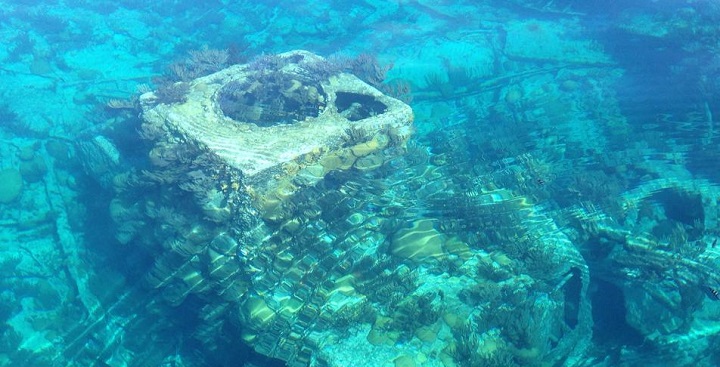
The most successful blockade runners were the fast, paddle wheeled steamers, though surprisingly little is known of the ships themselves. They were usually built in secrecy, and operated at night. One notable exception was the “Nola”, a 236-foot paddle steamer which ran aground on December 30, 1863, en route from London to North Carolina. Nola ran aground, attempting to escape threatening weather. She was wrecked near Western Blue Cut on Bermuda’s reefs, and remains a popular dive destination, to this day.
The blockade runner “Nola” was known at various times as Montana, Gloria, and Paramount.
President Lincoln appointed Massachusetts native Charles Maxwell Allen Consul to Bermuda in 1861, where he remained until his death, in 1888. There were times when it was a great job, I’m sure, but not in the early days. “There are a great many Southern people here”, Allen wrote in 1862, “14 came in the steamer ‘Bermuda’. They & their friends are down on me & have threatened to whip me”. People were getting rich running the blockade. Allen estimated that one blockade runner alone, which sank after three voyages, generated a profit of more than £173,000.
“The British colonial government monitored both sides to try to maintain strict neutrality, but only the latent threat of the powerful Royal Navy fleet based at Bermuda kept the belligerents from open warfare within British boundaries”. – Hat tip BerNews.com
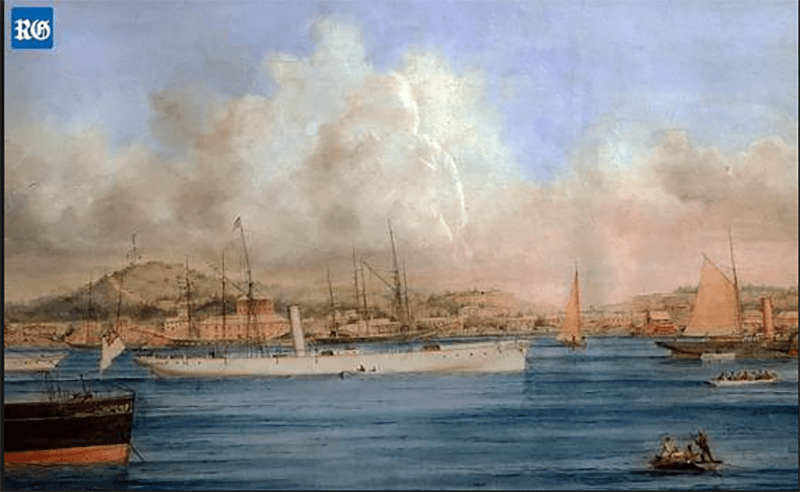
Today, the capital of Bermuda is Hamilton, moved across the island in 1815 from the old port of St. George, leaving the former capital in a kind of time warp, where you can walk down streets that look like they did 150 years ago. Portraits of Robert E. Lee and Confederate battle flags can still be found on the walls of the old port, beside paintings showing the harbor filled with blockade runners, lying quietly at anchor.
Once the office of Confederate Commercial Agent John Tory Bourne and Confederate Shipping Agent Major Norman Walker, today the Bermuda National Trust Museum tells the story of the island’s history, including Bermuda’s role in the American Civil War. The museum’s guide book explains: “The opportunities for Bermudians to profit from blockade running were boundless. Ships needed coal and provisions. Crews required lodging, food and entertainment between runs. Cargoes had to be unloaded, stored and reloaded, while crews and cargoes had to be ferried to ships lying at anchor. Bermudian pilots guided the ships through the reefs; those with skills as mates, carpenters, firemen and ordinary seamen signed on as crew. The Civil War proved to be the road to riches.”
[http://www.history.navy.mil/photos/sh-us-cs/csa-sh/csash-ag/advance.htm DEPARTMENT OF THE NAVY — NAVAL HISTORICAL CENTER WASHINGTON NAVY YARD WASHINGTON DC]
Sepia wash drawing by R.G. Skerrett, 1899.
Courtesy of the U.S. Navy Art Collection, Washington, D.C.
U.S. Naval Historical Center Photograph.
Sheryl and I traveled to Bermuda a while back, and visited the old port at St. George. At some point we learned about the maritime history of the island. Making a living at sea in the 19th century was a dangerous business, so much so that one in ten married women living in Bermuda, were widows.
It occurred to me. All those Confederate officers and enlisted men were spending a lot of time in Bermuda. The possibility that followed soon morphed into probability and then a certainty. At this point I can only wonder how many English citizens there are, residents of Bermuda and loyal subjects of the Queen, who can trace paternity back to the Confederate States of America.
‘The ‘Bonnie Blue’ flies over bonnie St George’s’ H/T Royal Gazette
7,000 gathered at Old South Meeting House on December 16th, 1773, the last day of Dartmouth’s deadline. Royal Governor Hutchinson held his ground, refusing Dartmouth permission to leave. Adams announced that “This meeting can do nothing further to save the country.”
In the time of Henry VIII, British military outlays as a percentage of central government expenses averaged 29.4%. That number skyrocketed to 74.6% in the 18th century, and never dropped below 55 percent.
The Seven Years’ War alone, fought on a global scale from 1756 – ‘63, saw England borrow the unprecedented sum of £58 million, doubling the national debt and straining the British economy.
For the American colonies, the conflict took the form of the French and Indian War. The British government saw its American colonies as the beneficiary of much of their expense, and wanted to be reimbursed. For the colonists, the never-ending succession of English wars meant that they were largely left alone to run their own affairs.
Several measures were taken to collect revenues, as colonists bristled at the heavy handed taxation policies of the 1760s.. The Sugar Act, the Currency Act: in one 12-month period, Parliament passed the Stamp Act, Quartering Act, and the Declaratory Act, and deputized Royal Navy Sea Officers to enforce customs laws in colonial ports.
The merchants and traders of Boston specifically cited “the late war” and the expenses related to it, concluding the Boston Non-Importation Agreement of August 1, 1768. The agreement prohibited the importation of a long list of goods, ending with the statement ”That we will not, from and after the 1st of January 1769, import into this province any tea, paper, glass, or painters colours, until the act imposing duties on those articles shall be repealed”.
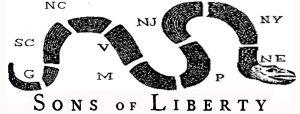
The ‘Boston Massacre’ of 1770 was a direct result of the tensions between colonists and the “Regulars” sent to enforce the will of the Crown. Two years later, Sons of Liberty looted and burned the HMS Gaspee in Narragansett Bay, RI.
The Tea Act, passed by Parliament on May 10, 1773, was less a revenue measure than it was an effort to prop up the British East India Company, by that time burdened with debt and holding eighteen million pounds of unsold tea. The measure actually reduced the price of tea, but Colonists saw it as an effort to buy popular support for taxes already in force, and refused the cargo. In Philadelphia and New York, tea ships were turned away and sent back to Britain while in Charleston, the cargo was left to rot on the docks.
British law required a tea ship to offload and pay customs duty within 20 days, or the cargo was forfeit. The Dartmouth arrived in Boston at the end of November with a cargo of tea, followed by the tea ships Eleanor and Beaver. Sam Adams called for a meeting at Faneuil Hall on the 29th, which then moved to Old South Meeting House to accommodate the crowd. 25 men were assigned to watch Dartmouth, making sure it didn’t unload.
7,000 gathered at Old South Meeting House on December 16th, 1773, the last day of Dartmouth’s deadline. Royal Governor Hutchinson held his ground, refusing Dartmouth permission to leave. Adams announced that “This meeting can do nothing further to save the country.”
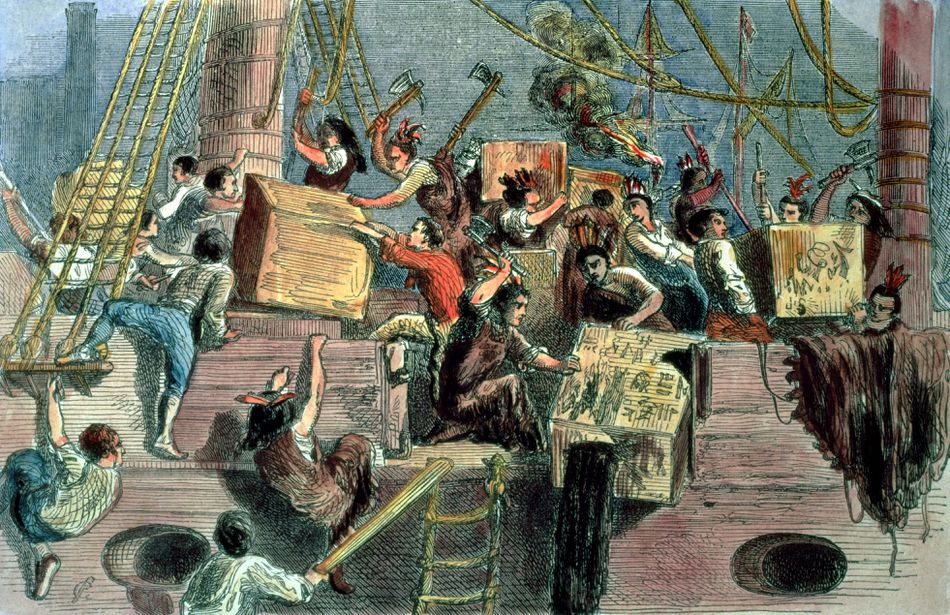
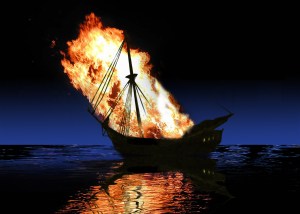
That night, somewhere between 30 and 130 Sons of Liberty, some dressed as Mohawk Indians, boarded the three ships in Boston Harbor. There they threw 342 chests of tea, 90,000 pounds in all, into Boston Harbor. £9,000 worth of tea was destroyed, worth about $1.5 million in today’s dollars.
In the following months, other protesters staged their own “Tea Parties”, destroying imported British tea in New York, Philadelphia, Charleston, and Greenwich, NJ. There was even a second Boston Tea Party on March 7, 1774, when 60 Sons of Liberty, again dressed as Mohawks, boarded the “Fortune”. This time they dumped 3,000lbs of the stuff into the harbor. That October in Annapolis Maryland, the Peggy Stewart was burned to the water line.
For decades to come, the December 16 incident in Boston Harbor was blithely referred to as “the destruction of the tea.” The earliest newspaper reference to “tea party” wouldn’t come to us until 1826.
John Crane of Braintree is one of the few original tea partiers ever identified, and the only man injured in the event. An original member of the Massachusetts Society of the Cincinnati and early member of the Sons of Liberty, Crane was struck on the head by a tea crate and thought to be dead. His body was carried away and hidden under a pile of shavings at a Boston cabinet maker’s shop. It must have been a sight when John Crane “rose from the dead”, the following morning.
Great Britain responded with the “Intolerable Acts” of 1774, including the occupation of Boston by British troops. Minutemen clashed with “Lobster backs” a few months later, on April 19, 1775.
No one alive today knows who fired the first shot at Lexington Green. History would record that sound, as “The shot heard ’round the world”.
Today we stand on the brink of a runoff election, threatening to tip the balance of the United States Senate away from the Republic of the founders, and toward the proverbial “democracy” of three wolves and a lamb, voting on what to have for dinner.
There is no reason to believe the Bill of Rights will survive such a transition.
The Founding Fathers ratified the United States Constitution on June 21, 1788. In so doing, our forebears bestowed on generations yet unborn, a governing system unique in all history. A system of diffuse authority, checks and balances, and authority delegated but Never relinquished, by a sovereign electorate.
Today the American system is often described as “democracy”. That description is in error.
Ambrose Bierce once described Democracy as four wolves and a lamb, voting on what to eat for lunch. The founders gave us a Constitutional Republic.
The genius of such a Republic is demonstrated in a system which protects the rights of All citizens, including that individual. The proverbial lamb. The specifics are enumerated in our bill of rights, twelve amendments adopted by the first Congress on September 25, 1789 and sent to the states, for ratification.
Even at the Constitutional Convention, delegates expressed concerns about the larger, more populous states holding sway at the expense of the smaller states. The “Connecticut Compromise” solved that problem, creating a bicameral legislature with proportional representation in the lower house (House of Representatives) and equal representation of the states themselves in the upper house (Senate).
The 62nd Congress proposed a Constitutional amendment in 1912, negating the intent of the founders and proposing that Senators be chosen by popular election. The measure was adopted the following year, the 17th amendment having been ratified by ¾ of the states. Since that time, it’s difficult to understand what the United States Senate even is, an institution neither democratic nor republican, but I digress.
Five states: Delaware, Pennsylvania, New Jersey, Georgia, and Connecticut, ratified the document in quick succession. Some states objected to the new Constitution, especially Massachusetts, which wanted more protection for basic political rights such as freedom of speech, religion, and of the press. These wanted the document to specify, that those powers left un-delegated to the Federal government, were reserved to the states.
A compromise was reached in February, 1788 whereby Massachusetts and other states would ratify the document with the assurance that such amendments would immediately be put up for consideration.
With these assurances, Massachusetts ratified the Constitution by a two-vote margin followed by Maryland, and South Carolina. New Hampshire became the ninth state on June 21. The new Constitutional Government would take effect on March 4 of the following year.
Amendments 2-12 were adopted on December 15, 1791 to become a document we now know, as the “Bill of Rights”.
A story is often told of Benjamin Franklin, exiting the Constitutional Convention. Approached by citizens asking what sort of government the delegates had created, Dr. Franklin replied: “A republic, if you can keep it.”
Today we stand on the brink of a runoff election, threatening to tip the balance of the United States Senate away from the Republic of the founders, and toward the proverbial “democracy” of four wolves and a lamb.
What reason we have to believe the Bill of Rights will survive such a transition remains a question, in search of an answer.
The Bill of Rights – Full Text. Hat tip, billofrightsinstitute.org
Amendment I Congress shall make no law respecting an establishment of religion, or prohibiting the free exercise thereof; or abridging the freedom of speech, or of the press; or the right of the people peaceably to assemble, and to petition the government for a redress of grievances. Amendment II A well regulated militia, being necessary to the security of a free state, the right of the people to keep and bear arms, shall not be infringed. Amendment III No soldier shall, in time of peace be quartered in any house, without the consent of the owner, nor in time of war, but in a manner to be prescribed by law. Amendment IV The right of the people to be secure in their persons, houses, papers, and effects, against unreasonable searches and seizures, shall not be violated, and no warrants shall issue, but upon probable cause, supported by oath or affirmation, and particularly describing the place to be searched, and the persons or things to be seized. Amendment V No person shall be held to answer for a capital, or otherwise infamous crime, unless on a presentment or indictment of a grand jury, except in cases arising in the land or naval forces, or in the militia, when in actual service in time of war or public danger; nor shall any person be subject for the same offense to be twice put in jeopardy of life or limb; nor shall be compelled in any criminal case to be a witness against himself, nor be deprived of life, liberty, or property, without due process of law; nor shall private property be taken for public use, without just compensation. Amendment VI In all criminal prosecutions, the accused shall enjoy the right to a speedy and public trial, by an impartial jury of the state and district wherein the crime shall have been committed, which district shall have been previously ascertained by law, and to be informed of the nature and cause of the accusation; to be confronted with the witnesses against him; to have compulsory process for obtaining witnesses in his favor, and to have the assistance of counsel for his defense. Amendment VII In suits at common law, where the value in controversy shall exceed twenty dollars, the right of trial by jury shall be preserved, and no fact tried by a jury, shall be otherwise reexamined in any court of the United States, than according to the rules of the common law. Amendment VIII Excessive bail shall not be required, nor excessive fines imposed, nor cruel and unusual punishments inflicted. Amendment IX The enumeration in the Constitution, of certain rights, shall not be construed to deny or disparage others retained by the people. Amendment X The powers not delegated to the United States by the Constitution, nor prohibited by it to the states, are reserved to the states respectively, or to the people.
Fun Fact: It’s interesting to note the priorities of that first Congress, as expressed in their original 1st and 2nd amendments. As proposed to the 1st Congress, the original 1st amendment dictated apportionment of representation. It was ratified by only 11 states, and technically remained pending. Had the states ratified that original first amendment, we would now have a Congress of at least 6,345 members, instead of the 535 we currently have.
The original 2nd amendment was an article related to Congressional compensation, that no future Congress could change their own salaries. The measure would in fact, pass, becoming the 27th amendment in 1992. Following a ratification period of 202 years, 7 months, and 10 days.


 STS-1, the first mission of the “Space Shuttle” program launched aboard “Columbia” from the Kennedy Space Center on Merritt Island, Florida. It was April 12, 1981, the 20th anniversary of the first human spaceflight aboard the Russian capsule Vostok 1.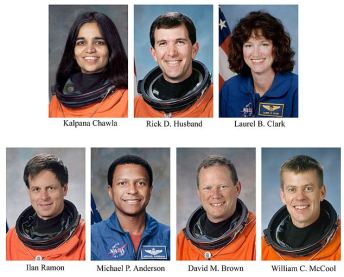
















 “Industrial alcohol” such as solvents, polishes and fuels were “denatured” and rendered distasteful by the addition of dyes and chemicals. The problem was, it wasn’t long before bootleggers figured out how to “renature” the stuff.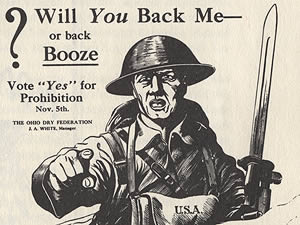



 President Abraham Lincoln issued a proclamation soon after taking office, threatening to blockade southern coastlines. It wasn’t long before the “Anaconda Plan” went into effect, a naval blockade extending 3,500 miles along the Atlantic coastline and Gulf of Mexico, up into the lower Mississippi River.





 Even at the Constitutional Convention, delegates expressed concerns about the larger, more populous states holding sway at the expense of the smaller states. The “Connecticut Compromise” solved that problem, creating a bicameral legislature with proportional representation in the lower house (House of Representatives) and equal representation of the states themselves in the upper house (Senate).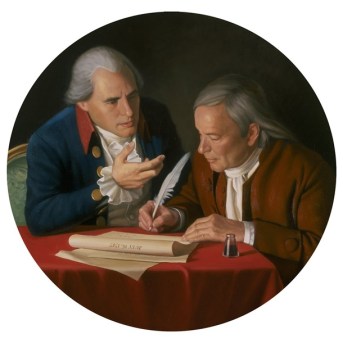


 Historical Easter Eggs - Today in History
You must be logged in to post a comment.