"Tell me a factand I'll learn. Tell me a truth, and I'll believe. But tell me a story, and it will live in my heart forever." – Steve Sabol, NFL Films
Author: Cape Cod Curmudgeon
I'm not an academic "Historian". I'm a father, a son and a grandfather. A history geek and sometimes curmudgeon who still likes to learn new things. I make every effort to get my facts straight but I'm as good at being wrong as the next guy. I offer these stories hoping you'll enjoy them as much as I do. This is the history we all share. I'm glad you're here.
Rick Long, the “Cape Cod Curmudgeon”
I’ve long believed that we can’t be participating citizens of a self-governing Republic, we can’t know where we want our nation to go, if we don’t understand where it’s been. It’s one of the principle reasons for examining history. It’s why I think something wonderful happened five years ago, and I don’t think many of us heard about it.
November 11, nineteen short days ago, marked the one-hundred year anniversary of the end of World War One. Before they had numbers, this was “The Great War”. The “War to end all Wars”.
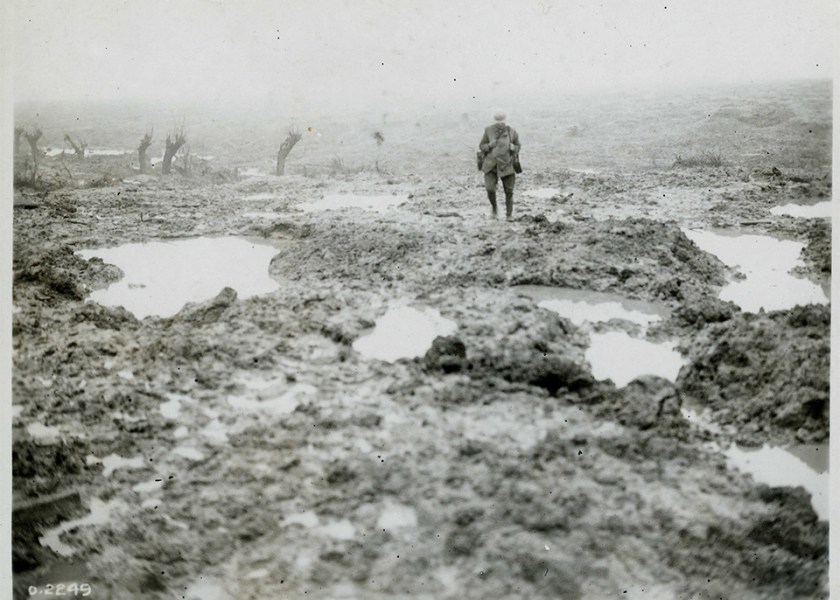
Passchendaele
There is barely a piece of 20th or 21st century history, which cannot be traced back to it.
International Communism was borne of the Great War, without which there would have been no cold war, no Korean War, no war in Vietnam. The killing fields of Cambodia would have remained mere rice fields. The spiritual descendants of Chiang Kai-shek’s brand of capitalism would be running all of China, instead of only Taiwan.
The current proportions of the Middle East arose from the Great War. While the region’s tribal alliances and religious strife is nothing new, those conditions would have taken a different form, had it not been for those boundaries.
World War II, an apocalypse which left more dead, wounded or missing than any conflict in world history, was little more than the Great War, part II. A Marshall of France, on reading the Versailles Treaty formally ending WWI, said “This isn’t peace. This is a cease-fire that will last for 20 years”. He was off, by about 36 days.
I’ve long believed that we can’t be participating citizens of a self-governing Republic, we can’t know where we want our nation to go, if we don’t understand where it’s been. It’s one of the principle reasons for examining history. It’s why I think something wonderful happened five years ago, and I don’t think many of us heard about it.
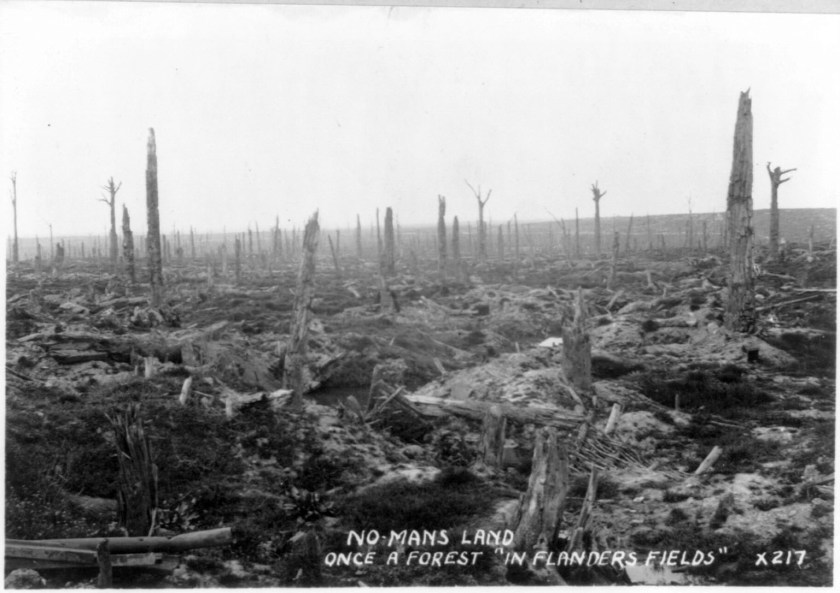
Over the summer of 2013, more than 1,000 British and Belgian schoolchildren visited seventy battlefields of the Great War. Ypres.Passchendaele. Verdun. The Somme. This was a singular event. Never before had the Commonwealth War Graves Commission permitted the excavation of these battlefields.
All over Northern France and Belgium, the region known as “Flanders”. There these children collected samples of the sacred soil of those fields of conflict.
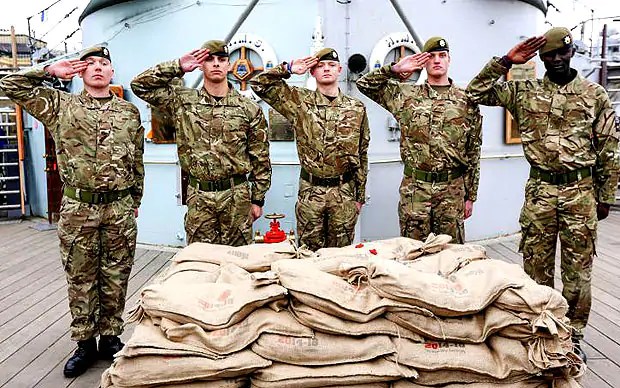
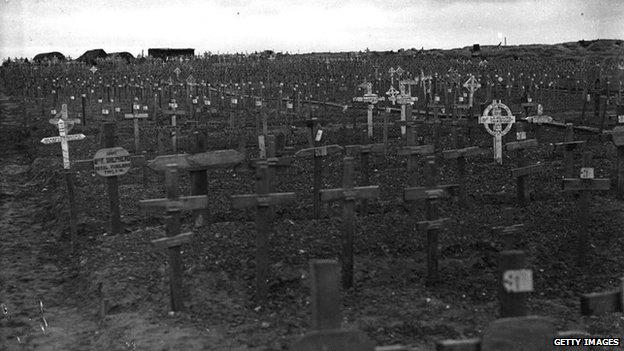
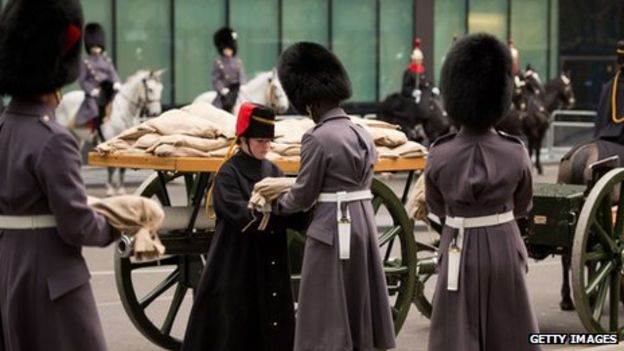
The soil from those battlefields was placed in 70 WWI-style burlap sandbags, each stenciled with a red poppy, where it came from, and the dates. Those sandbags began their journey with a solemn Armistice Day ceremony at the Menin Gate of Ypres, that memorial to the 56,395 British and Commonwealth soldiers who fought and died on the Ypres salient of the Great War, and whose bodies were never found or identified.
The sacred soil of Flanders Fields transported to London aboard the Belgian Navy frigate Louisa Marie, and installed with great care at Wellington Barracks, the central London home of the Grenadier Guards, Coldstream Guards and Scots Guards.
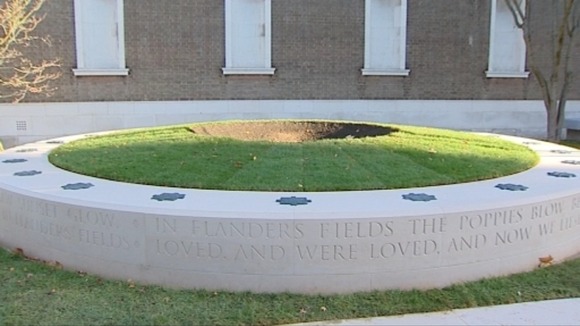
There the soil of the Great War would nourish and support a garden, inscribed with the words of Doctor John McCrae’s famous poem, “In Flanders Fields”. Ready for the following year, a solemn remembrance of the centenary of the War to end all Wars.
That day, December 1, 2013, was for the Flanders Fields Memorial Garden, the first full day of forever. I cannot think of anything more fitting than that it was children, our future and posterity, who retrieved the sacred soil of Flanders and installed it in that garden.
It is now for that posterity to keep our history alive, and never to let it fade, into some sepia-toned and forgotten past.
If you enjoyed this “Today in History”, please feel free to re-blog, “like” & share on social media, so that others may find and enjoy it as well. Please click the “follow” button on the right, to receive email updates on new articles. Thank you for your interest, in the history we all share.
The French staff formulated their battle plan, based on the assumption that it was impossible for the Viet Minh to place enough artillery on the surrounding high ground, due to the rugged terrain. Communist forces didn’t possess enough artillery to do serious damage anyway. Or so they thought.
When we think of the French Republic, most of us envision a five-sided nation between Spain and Germany, located between the English Channel and the Mediterranean Sea. That would be right, but “la Métropole” or “Metropolitan France” today accounts for only about 82% of the landmass of la République Française. The overseas departments and territories which make up “la France d’outre-mer”, “Overseas France”, account for the rest.
That overseas percentage would have been higher in the mid-20th century, with many former colonial territories added in, among them Laos, Cambodia and Vietnam.
Japanese occupation of southeast Asia caused the Europeans to leave French Indochina during WWII. Within a year of re-occupation, the French faced virulent opposition from the Nationalist-Communist Viet Minh, led by Ho Chi Minh and Vo Nguyen Giap. Theirs was a low level, rural insurgency at first, later becoming a full-scale modern war when Chinese Communists entered the fray, in 1949.
What historians call the First Indochina War, many contemporaries called “la sale guerre”, or “dirty war”. The government forbade the use of metropolitan recruits, fearing that that would make the war more unpopular than it already was. Instead, French professional soldiers and units of the French Foreign Legion were augmented with colonial troops, including Moroccan, Algerian, Tunisian, Laotian, Cambodian, and Vietnamese ethnic minorities.
The war went poorly for the French government. By 1952 it was looking for a way out. Premier René Mayer appointed Henri Navarre to take command of French Union Forces in May of that year, with a single order. Navarre was to create military conditions which would lead to an “honorable political solution”.
In November and December of the previous year, the French army had air lifted soldiers into a fortified position at Na San, adjacent to a key Viet Minh supply line to Laos. Superior French fire power, armor and air resources had driven Vo Nguyen Giap’s forces back with heavy losses, in what French planners called the “hérisson” or “hedgehog” strategy.
In June, Major General René Cogny proposed a “mooring point” at Dien Bien Phu, creating a lightly defended base from which to launch raids. Navarre wanted to replicate the Na San strategy, and ordered that Dien Bien Phu be taken and converted into a heavily fortified installation.
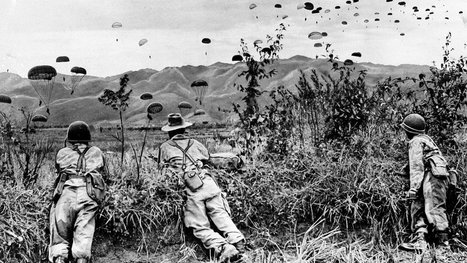
“Operation Castor” began on the 20th of November, when three parachute infantry battalions dropped into Dien Bien Phu. The operation was completed with minimal French casualties on November 30, as they continued to land supplies, troops, and engineering equipment into the isolated base.
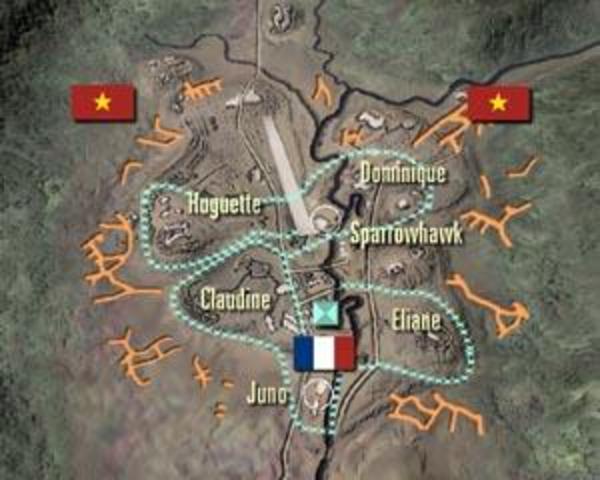
Under the command of Colonel Christian de Castries, French forces built seven fortified positions to defend the base, each allegedly named after one of his mistresses. 10,800 French troops were committed, with another 16,000 in reserve.
Vo believed he had made a serious mistake at Na San, rushing his troops in piecemeal against French defenses. This time, he carefully prepared his positions, moving 50,000 men into position around the valley, meticulously stockpiling ammunition and placing anti-aircraft and heavy artillery, with which he was well supplied.
The French staff formulated their battle plan, based on the assumption that it was impossible for the Viet Minh to place enough artillery on the surrounding high ground, due to the rugged terrain. Communist forces didn’t possess enough artillery to do serious damage anyway. Or so they thought.
French officers quickly learned how mistaken they had been. The first sporadic artillery fire began on January 31, around the time when patrols discovered the enemy’s presence in every direction. Heavy artillery virtually ringed the valley in which they found themselves, and air support was quickly nullified by the enemy’s well placed anti-aircraft fire.
The Viet Minh assault began in earnest on March 13, when several outposts came under furious artillery barrage. Air support became next to impossible, and counter-battery fire was next to useless against Giap’s fortifications. Lieutenant Colonel Charles Piroth commanded the French artillery at Dien Bien Phu. He was a professional soldier and no lightweight, having had his arm amputated in 1946 with no anesthesia. When it became clear how wrong his assumptions had been, he circled the camp making apologies to his officers, returned to his tent, and killed himself with a hand grenade.
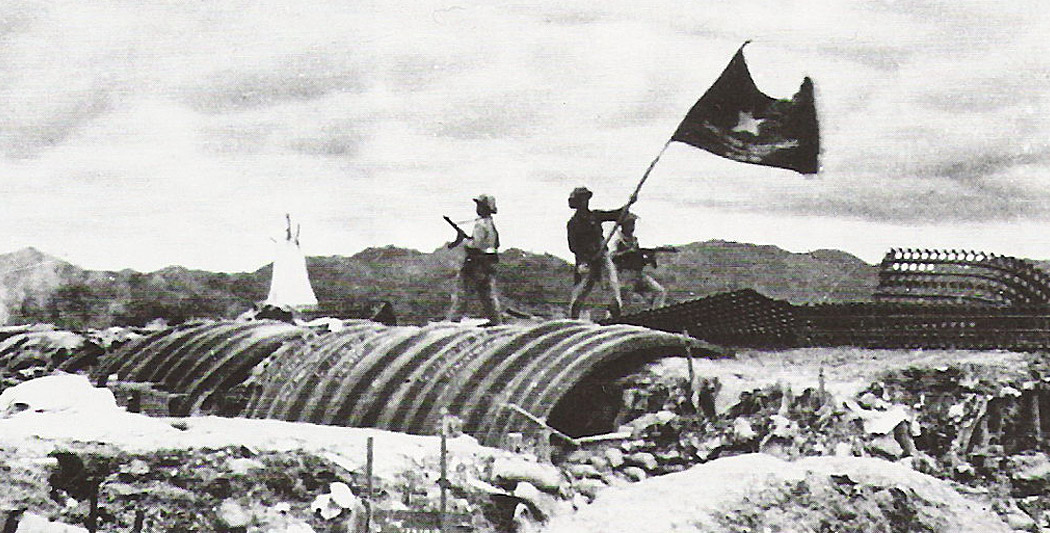
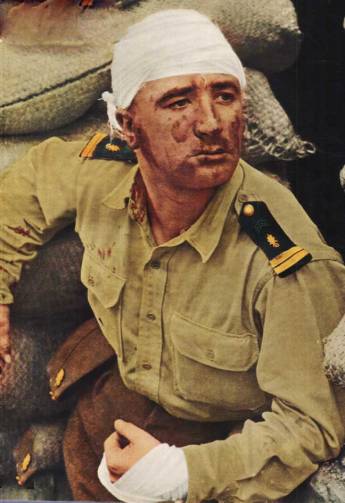
“Beatrice” was the first fire base to fall, then “Gabrielle” and “Anne-Marie”. Viet Minh controlled 90% of the airfield by the 22nd of April, making even parachute drops next to impossible. On May 7, Vo ordered an all-out assault of 25,000 troops against the 3,000 remaining in garrison. By nightfall it was over. The last words from the last radio man were “The enemy has overrun us. We are blowing up everything. Vive la France!”
Military historian Martin Windrow wrote that Dien Bien Phu was “the first time that a non-European colonial independence movement had evolved through all the stages from guerrilla bands to a conventionally organized and equipped army able to defeat a modern Western occupier in pitched battle”.
The Geneva conference opened the following day, resulting in a Vietnam partitioned into two parts. In the north was the “Democratic Republic of Vietnam” administered by the communists, and the State of Vietnam in the south, under Emperor Bao Dai and Prime Minister Ngo Dinh Diem. The North was supported by both the People’s Republic of China and the Soviet Union, and continued to terrorize patriots in the north and the south.
American support for the south increased as the French withdrew theirs. By the late 1950s, the United States were sending technical and financial aid in expectation of social and land reform. By 1960, the National Front for the Liberation of South Vietnam (NLF, or “Viet Cong”) had taken to murdering Diem supported village leaders. President John Fitzgerald Kennedy responded by sending 1,364 American advisers into South Vietnam, in 1961.
The next war in Indochina, had begun.
If you enjoyed this “Today in History”, please feel free to re-blog, “like” & share on social media, so that others may find and enjoy it as well. Please click the “follow” button on the right, to receive email updates on new articles. Thank you for your interest, in the history we all share.
The worldwide Encephalitis Lethargica epidemic afflicted some five million people between 1915 and 1924. One-third of sufferers died in the acute phases of the disease, a higher mortality rate, than the Spanish flu of 1918-’19. Many of those who survived never returned to their pre-existing state of “aliveness”, and lived the rest of their lives, institutionalized.
The Great War was in its third year in 1917, with another year to go. Before such conflicts acquired numbers, this was the most cataclysmic war in human history (or at least one of the top two), destroying the lives of some thirty-six million on all sides and leaving untold millions more, maimed for life.
In March of the following year, a new batch of trainees cycled through Fort Riley in Kansas, fresh recruits destined for the “War to End All Wars”. On reporting for breakfast one morning, none could know that an enemy lurked among them, more lethal than the war itself.
Private Albert Gitchell was coming down with cold-like symptoms: sore throat, fever and headache. Never mind breakfast. Pvt. Gitchell was headed for the base hospital. By noon, over one-hundred had reported sick, with similar symptoms.
Cytokine storm
Ordinary flu strains prey most heavily on children, elderly, and those with compromised immune systems. Not this one. This flu would kick off a positive feedback loop between small proteins called cytokines, and white blood cells. This “cytokine storm” resulted in a death rate for 15 to 34-year-olds twenty times higher in 1918, than in previous years.
It was the young and healthy immune system of these victims, which was most likely to kill them.
On November 29, 1918, the armistice was a bare two weeks in the past, the treaty formally ending the war, seven months into an uncharted future. Serbia, the place where it all started, annexed the former Ottoman territory of Montenegro. Former combatants were beginning to come home, while politicians worked out the details.
History has a way of swallowing some events, whole. Like they never even happened. The Spanish flu would afflict some five hundred million worldwide, killing an estimated fifty to one hundred million souls. Two to three times those killed by the war itself. Yet, this story was overshadowed, by the end of WW1.
Small wonder that such an event would itself eclipse a pandemic far smaller but in some ways more terrifying, than such a universal calamity as the Spanish flu. To this day, nobody knows where this enemy came from. Or where it left to, when it went away.
In 1915, Austrian psychiatrist and neurologist Constantin von Economo described the signs and symptoms of a strange new condition which came to be called Von Economo’s Disease. The illness was labeled Encephalitis Lethargica, literally “Inflammation of the brain which makes you tired”.
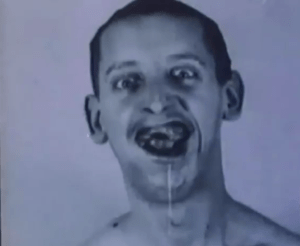
E.L. is also referred to by the deceptively benign name of “Sleepy Sickness”. Von Economo distinguished three phases of the illness. Symptoms of the somnolent-ophthalmoplegic include paralysis of the cranial nerves, leading to expressionless faces and involuntary eye movements, with overwhelming sleepiness leading to coma. Fully one-third of E.L. sufferers died during this phase, of respiratory failure. The hyperkinetic form manifested itself with restlessness and motor disturbances leading to facial contortion, anxious mental state and an inability to sleep, often leading to death by exhaustion.
The amyostatic-akinetic form frequently resulted in a chronic state resembling Parkinson’s disease, called Postencephalitic Parkinsonism.
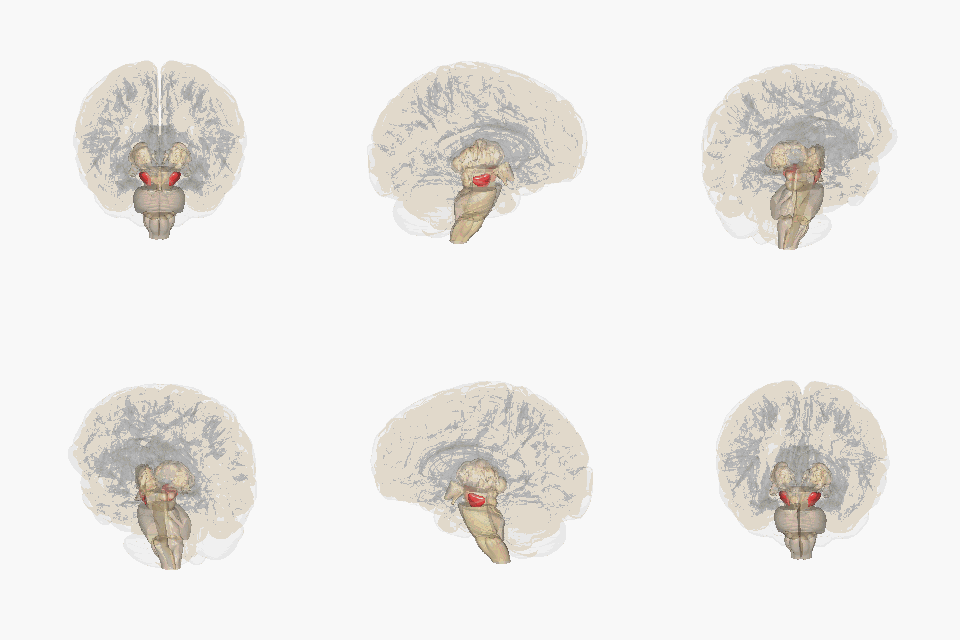
Substantia nigra, shown in red
Autopsies revealed this third phase to result from localized neurodegeneration of the Substantia Nigra, the basal ganglia structure of the mid-brain which plays a role in reward and associative learning, as well as bodily movement. Unknown to the sufferer, this neurodegeneration takes place over an interval of a few days to thirty years, consigning the sufferer to a trance-like state in which the patient is rendered speechless and motionless, fully aware but, for all intents and purposes, a statue.
The 1973 non-fiction book Awakenings by Oliver Sacks, describes what that looks like:
“They would be conscious and aware – yet not fully awake; they would sit motionless and speechless all day in their chairs, totally lacking energy, impetus, initiative, motive, appetite, affect or desire; they registered what went on about them without active attention, and with profound indifference. They neither conveyed nor felt the feeling of life; they were as insubstantial as ghosts, and as passive as zombies”.
The worldwide Encephalitis Lethargica epidemic afflicted some five million people between 1915 and 1924. One-third of sufferers died in the acute phase of the disease, a higher mortality rate than the Spanish flu of 1918-’19. Many of those who survived never returned to their pre-existing state of “aliveness”, and lived the rest of their lives institutionalized, as described above.
The causes of Encephalitis Lethargica are uncertain. Studies have explored the origin of the condition as an autoimmune response. Recent research reveals a possible association with Diplococcus, a gram-negative relative of the Strep bacterium.
Individual cases continue to pop up, but have never assumed the pandemic proportions of 1915-’24. Further study is needed but, perversely, such study is only possible given more cases of the disease. For now, Encephalitis Lethargica must remain one of the great medical mysteries of the twentieth century. An epidemiological conundrum, locked away in a nightmare closet of forgotten memory.
Let us hope that it stays there.
There’s not too much to “enjoy” about this particular bit if history. If you like my other work, please feel free to re-blog, “like” & share on social media, so that others may find it for themselves. Please click the “follow” button on the right, to receive email updates on new articles. Thank you for your interest, in the history we all share.
Everything had a code name to throw off Chinese anti-aircraft units. A frantic call went out for 60-mm mortar ammunition, code named “Tootsie Rolls”. Somebody didn’t read up on the code book, and that’s what they got. Chocolate candy, by the ton.
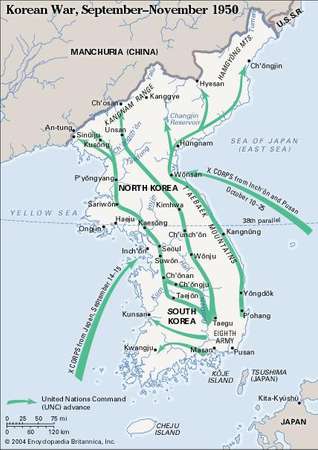
On June 25, 1950, ten divisions of the North Korean People’s Army (KPA) launched a surprise invasion of their neighbor to the south. The 38,000-man army of the Republic of Korea (ROK) didn’t have a chance against 89,000 men sweeping down in six columns from the north. Within hours, the shattered remnants of the Republic of Korea Army and its government were retreating south toward their capital of Seoul.
The UN security council voted to send troops to the Korean peninsula.
H/T, Encyclopedia Britannica
Poorly prepared and under-strength for what they were about to face, units of the 24th Division United States Army were hastily sent from bases in Japan. It was not until August when General Douglas MacArthur’s forces in theater, designated United Nations Command (UNC), was able to slow and finally stop North Korean forces around the vital southern port city of Pusan.
American forces and ROKA defenders were in danger of being hurled into the sea. Most of the KPA was committed to doing just that, as plans were hastily drawn up for an amphibious landing on Inch’ŏn, the port outlet for the South Korean capital of Seoul.
With a narrow, labyrinthine channel and a tidal variation of nearly 30-feet, Inch’ŏn was a terrible choice for a major amphibious landing, with no more than a six-hour window permitting use of the beaches.
The Inch’ŏn landing was one of the great operations in military history, recapturing the capital and all but destroying North Korean military operations in the South. Meanwhile, a storm was building north of the border, in the form of a quarter-million front-line Chinese troops, assembling in Manchuria.
The war seemed all but over in October as UNC forces streamed into the north, the US 8th Army to the west of the impassable Taebaek mountains, the ROK I Corps and US X Corps to the east, reinforced by the US 1st Marine landing at Wonsan. North and South would be reunited by the end of the year, and everyone would be home by Christmas. Except, that’s not how things worked out.
By the end of November, 30,000 UN troops were spread along a 400-mile line near the Chosin Reservoir, all but overrun and fighting for their lives against 150,000 Chinese forces of the “People’s Volunteer Army (PVA).
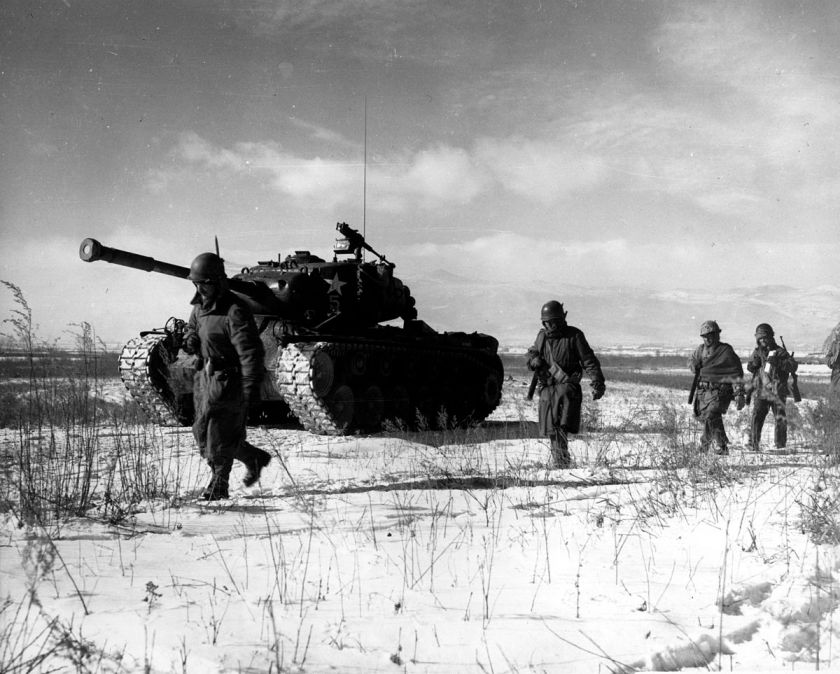
Hat Tip, National Museum of the Marine Corps, Korean War Gallery
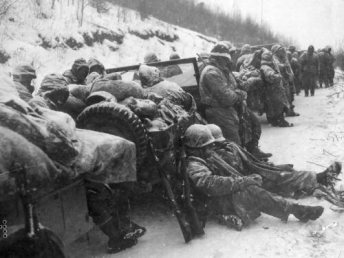
Weather conditions were savage at the “Frozen Chosin”, a Siberian cold front dropping day-time highs to -5° Fahrenheit, with lows exceeding -25°. Vehicles and radios failed to start in the cold, and medical supplies froze. Morphine syrettes had to be thawed in the medic’s mouth, prior to use. Frozen blood plasma was useless. Just to cut off clothing to deal with a wound, risked frostbite. Perhaps worst of all, gun lubricants turned to gel and springs froze. There must be no more demoralizing sound in combat, than the impotent click of a firing pin, too weak to work.
Clifford Meyer remembers: “During November 1950 the First Marine Division with elements of two Regimental combat teams of the U.S. Army, a Detachment of British Commandos and some South Korean Policemen — about 15,000 men — faced the Chinese Communist Army’s ten Divisions totaling 120,000 men. At a mountain reservoir called Chang Jin (we called it “Chosin”) temperatures ranged from minus five degrees below zero in the day to minus twenty-five degrees below zero at night. The ground froze so hard that bulldozers could not dig emplacements for our Artillery. The cold impeded our weapons from firing automatically, slowing down the recoil of our artillery and automatic weapons. The cold numbed our minds, froze our fingers and toes and froze our rations. [We were] seventy-eight miles from the sea, surrounded, supplies cut, facing an enemy whose sole objective was the annihilation of the First Marine Division as a warning to other United Nations troops, and written off as lost by the high command“.
The PVA launched multiple attacks and ambushes over the night of November 27. The “Chosin Few” were all but surrounded by the morning of the twenty-eighth, locked in a fight for their lives.
Over two weeks of bitter combat, fifteen thousand soldiers and Marines fought their way over seventy-eight miles of gravel road, back to the sea. One war correspondent asked 1st Marine General Oliver Prince Smith if they were retreating. “Retreat? Hell”, Smith said, “we are attacking in another direction”.
Survival depended on air drops from US Navy Task Force 77 running 230 forays per day providing close-air support, food, medicine & combat supplies, and US Air Force Far East Combat Cargo Command in Japan, airdropping 250-tons of supplies. Every day.
Everything had a code name to throw off Chinese anti-aircraft units. A frantic call went out for 60-mm mortar ammunition, code named “Tootsie Rolls”. Somebody didn’t read up on the code book, and that’s what they got. Chocolate candy, by the ton.
What at first seemed a screw-up of biblical proportions, soon proved a blessing in disguise. With no way to build a fire and frozen rations unusable, those Tootsie rolls were all that stood between survival and starvation. 15,000 soldiers and Marines suffered 12,000 casualties before it was over: 3,000 dead, 6,000 wounded and thousands of frostbite cases.
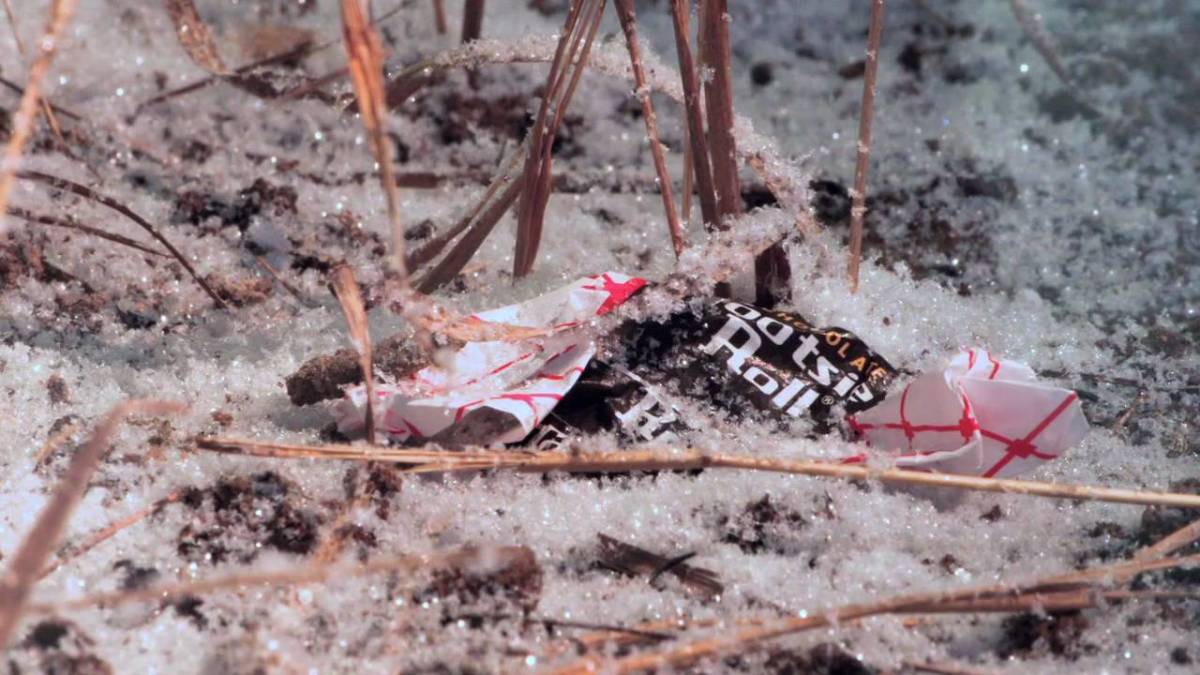
Untold thousands of Tootsie roll wrappers littered the seventy-eight miles back to the sea. Most credit their survival to the energy provided by the chocolate candy. It turns out that frozen tootsie rolls make a swell putty too, useful for patching up busted hoses and vehicles.
The Korean War Gallery at the National Marine Corps Museum in Quantico features a lone Marine, 30-mm machine gun at the ready, marching out of the frozen wastes of the Chosin reservoir. There’s a paper candy wrapper in the snow at his feet. Though age has diminished their numbers, the “Chosin Few” still get together, for the occasional reunion. Tootsie Roll Industries has always sent the candy and continues to do so, to this day.
If you enjoyed this “Today in History”, please feel free to re-blog, “like” & share on social media, so that others may find and enjoy it as well. Please click the “follow” button on the right, to receive email updates on new articles. Thank you for your interest, in the history we all share.
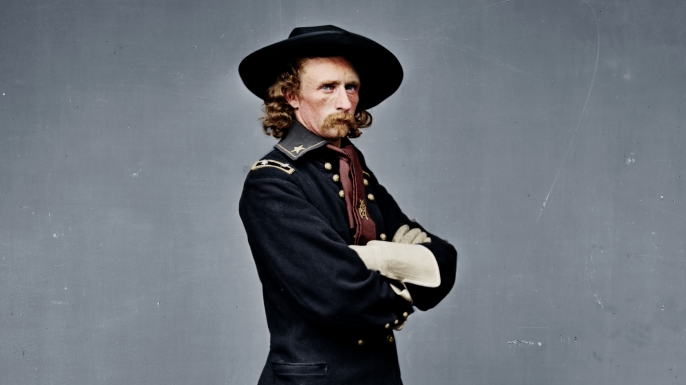
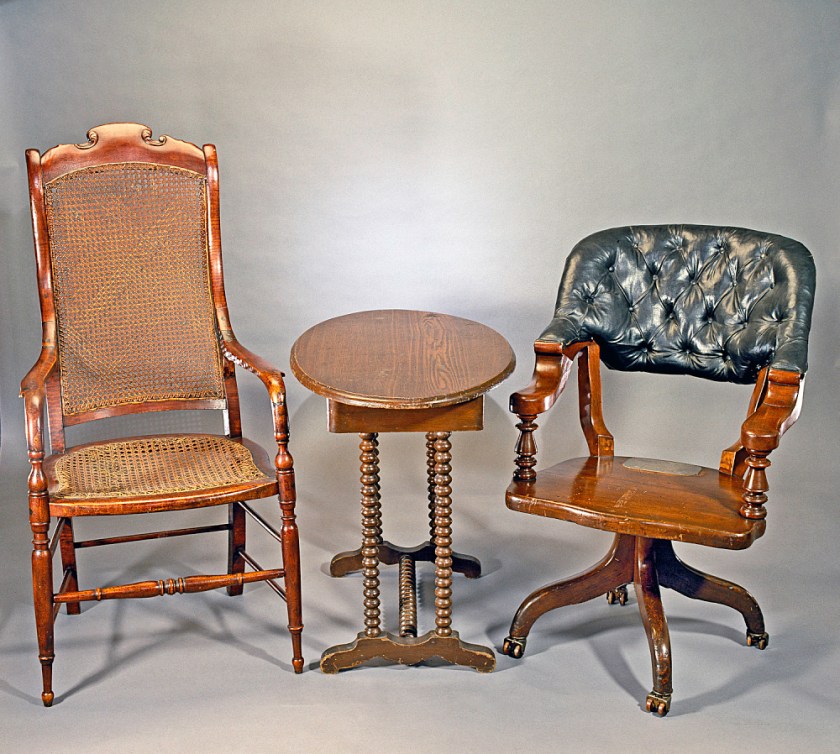
One of the more amusing images to emerge from this terrible chapter in American history is the notion of Custer, cinnamon-oiled hair, trademark red scarf and that broad brimmed sombrero, riding away with Wilmer McClean’s table, strapped to the backside of his horse.
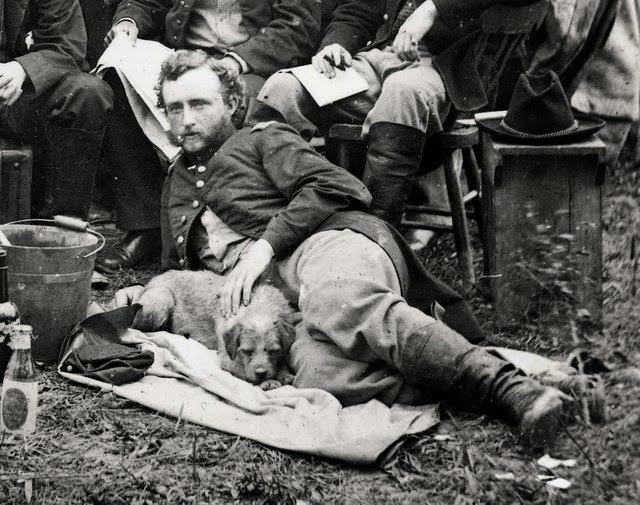
Like Edgar Allen Poe and James Whistler (“Whistler’s Mother”) before him, George Armstrong Custer was a ‘Goat’. No, that doesn’t mean ‘Greatest of all Time’. This ‘Goat” was dead last in his class, West Point, class of 1861. Like many of his fellow goats, Custer’s contributions to history were vastly out of proportion to a less than brilliant academic record.
At 23, Custer was one of the youngest General officers in the Union army. History.com calls him the youngest, but I believe that to be in error. That honor goes to Brigadier General Galusha Pennypacker who, at twenty years of age, was the only General Officer in American history too young to vote for the President who appointed him.
As with another goat, George Pickett, Custer’s contribution at Gettysburgcame on the third day. The Battle of Gettysburg is usually described as a contest of men on foot, that cavalry did not play much of a role. The third day, was different.
For 19th century armies, the cavalry acted as the eyes and ears of battlefield commanders. The superior mobility of men on horse allowed them to report information back on enemy troop strength and movements in a way that would have otherwise been impossible.
For the first two days at Gettysburg, “Marse’ Robert” was out of touch with cavalry commander James Ewell Brown (JEB) Stuart, leaving the General effectively blind. Stuart reappeared at the end of the second day.
On the third came Longstreet’s assault, better known as “Pickett’s charge”. 13,000 Confederate soldiers came out of the tree line at Seminary Ridge, 1¼-miles distant from the Federal line.
Prior to pushing off, Lee ordered upwards of 3,400 Confederate horsemen and 13 guns around the Union right, in support of the infantry assault against the Union center.
The “High tide of the Confederacy” is marked at a point on Cemetery Ridge, between the corner of a stone wall and a copse of trees. The farthest the remnants of Pickett’s charge made it, before being broken and driven back.
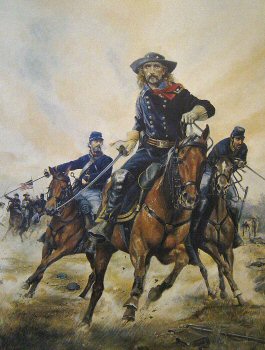
But, what if Stuart’s cavalry had come crashing into the rear of the Union line? The battle and possibly the Civil War may have ended differently, if not for Custer and his “Wolverines” of the 7th Michigan Cavalry.
Historians write of the 13,000 crossing that field, bayonets flashing and pennants snapping in the breeze. Of equal importance and yet off the main stage, is the drama which played out earlier, at the “east cavalry field”. 700 horsemen collided in furious, point-blank fighting with pistol and cutlass, just as the first Confederate artillery opened against the Union line.
Let the battle be described by one of its participants:
“As the two columns approached each other the pace of each increased, when suddenly a crash, like the falling of timber, betokened the crisis. So sudden and violent was the collision that many of the horses were turned end over end and crushed their riders beneath them”.
Stuart sent in reinforcements from all three of his brigades: the 9th and 13th Virginia, the 1st North Carolina, and squadrons of the 2nd Virginia. Custer himself had two horses shot out from under him, before his far smaller force was driven back. The wolverines of the 7th Michigan weren’t alone that day but, of the 254 Union casualties sustained on that part of the battlefield, 219 of them belonged to Custer’s brigade.
It was Custer’s cavalry who blocked Lee’s forces at Appomattox, and forced the white flag of surrender. After the final capitulation, Major General Philip Sheridan helped himself to the table, and presented it to Custer as a gift to his wife, Libbie, “Permit me to say, Madam,” Sheridan wrote, “that there is scarcely an individual in our service who has contributed more to bring about this desirable result than your gallant husband.”
One of the more amusing images to emerge from this terrible chapter in American history is the notion of Custer, cinnamon-oiled hair, trademark red scarf and that broad brimmed sombrero, riding away with Wilmer McClean’s table, strapped to the backside of his horse.
Fun fact: Custer served the duration of the Civil War, from 1st Bull Run (First Manassas), to Appomattox. Another man who could say the same was Wilmer McClean, whose Manassas, Virginia home was taken as headquarters, by Confederate General PGT Beauregard. McLean wanted to get away from it all and moved to the quiet town of Appomattox Courthouse. It was in his parlor that General Grant met with General Lee, to discuss terms of surrender. After the war, McClean would famously quip: “The war began in my front yard and ended in my front parlor.”
On April 9, 1865, General Ulysses S. Grant sat on the chair to the right and General Robert E. Lee to the left, in the Wilmer McLean home at Appomattox Courthouse, to discuss terms of surrender. This is the table that later rode away, with George Armstrong Custer. H/T Smithsonian Museum
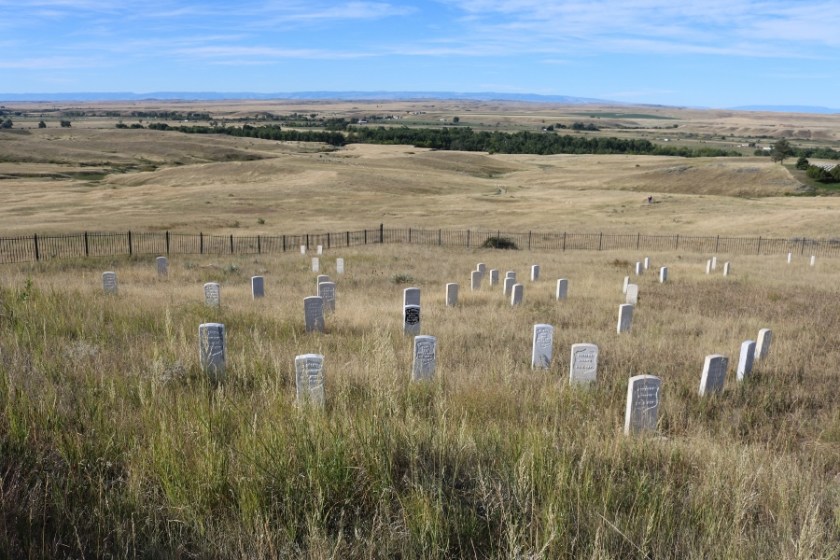
Custer’s later career as Indian fighter would be what he is best known for. On November 27, 1868, now-Lieutenant Colonel George Armstrong Custer led the 7th United States Cavalry on a surprise dawn attack against the Southern Cheyenne village of Peace Chief Black Kettle, in one of a series of battles which would end, for him, eight years later on a hillside, in the eastern Montana territory.
Las Stand Hill
“What if” counterfactual scenarios can be dangerous. We can never know how a story which never happened might have played itself out. Yet I have often wondered how Gettysburg would have turned out, had 3,000 Confederate horsemen crashed into Union lines from the rear as Pickett’s, Pettigrew’s and Trimble’s men hit it from the front.
The Pennsylvania campaign was Robert E. Lee’s gamble that he could make it hurt enough, that the Federals would allow the Confederate States to go their own way. On that third day at Gettysburg, our history could have taken a very different direction.
If you enjoyed this “Today in History”, please feel free to re-blog, “like” & share on social media, so that others may find and enjoy it as well. Please click the “follow” button on the right, to receive email updates on new articles. Thank you for your interest, in the history we all share.
In 1941, a Commerce Department survey demonstrated little difference in Christmas sales between those states observing Franksgiving, and those observing the more traditional date. To this day, the years 1939, ’40 and ’41 remain the only outliers, outside the fourth-Thursday tradition.
The first Autumn feast of Thanksgiving dates well before the European settlement of North America.
Historian Michael Gannon writes that the “real first Thanksgiving” in America took place in 1565, when Pedro Menéndez de Avilés landed in modern-day Florida, and “had the Indians fed and then dined himself.” Likely, it was salt-pork stew with garbanzo beans. Yum.
According to the Library of Congress, the English colony of Popham in present-day Maine held a “harvest feast and prayer meeting” with the Abenaki people in 1607, twenty-four years before that “first Thanksgiving” at Plymouth.
George Washington proclaimed the first Presidential National day of Thanksgiving on November 26, 1783, “to recommend to the People of the United States a day of public thanksgiving and prayer to be observed by acknowledging with grateful hearts the many signal favors of Almighty God especially by affording them an opportunity peaceably to establish a form of government for their safety and happiness“.
So much for separation of Church and state.
President Abraham Lincoln followed suit in 1863, declaring a general day of Thanksgiving to be observed on the last Thursday of November. The date seemed to work out OK and the tradition stuck, until 1939.
Roughly two in every seven Novembers, contain an extra Thursday. November 1939, was one of them.
In those days, it was considered poor form for retailers to put up Christmas displays or run Christmas sales, before Thanksgiving. Lew Hahn, General Manager of the Retail Dry Goods Association, was afraid that extra week was going to cut into Christmas sales.
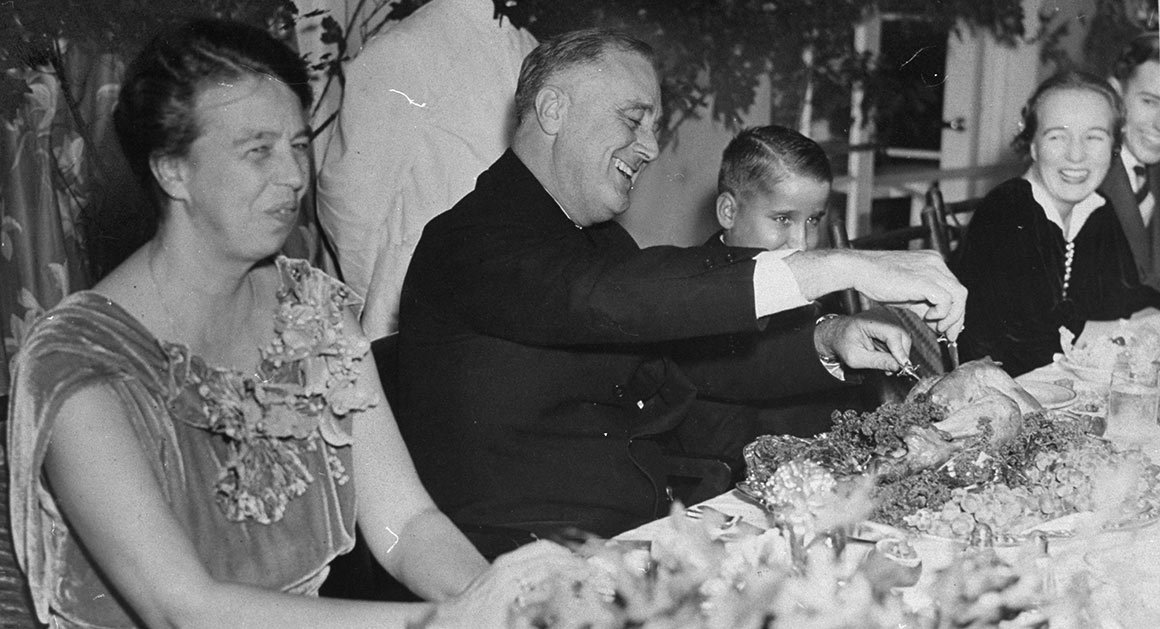
Ten years into the Great Depression with no end in sight, the Federal government was afraid of the same thing. By late August, President Franklin Delano Roosevelt decided to deviate from the customary last Thursday, and declared the fourth Thursday, November 23, to be a national day of prayer and thanksgiving.
Opposition to the plan was quick in forming. Alf Landon, Roosevelt’s Republican challenger in the earlier election, complained of Roosevelt’s impulsiveness, and resulting confusion. “More time should have been taken working it out” Landon said, “instead of springing it upon an unprepared country with the omnipotence of a Hitler.”
In Plymouth Massachusetts, self-described home of the “first Thanksgiving”, Chairman of the Board of Selectmen James Frasier, “heartily disapproved”.
The short-notice change in schedule disrupted vacation plans for millions of Americans, to say nothing of traditional Thanksgiving day football rivalries between high school and college teams, across the nation.
Unsurprisingly, support for Roosevelt’s plan split across ideological lines. A late 1939 Gallup poll reported Democrats favoring the move by a 52% to 48% majority, with Republicans opposing it by 79% to 21%.
Such proclamations represent little more than the “’moral authority” of the Presidency, and states are free to do as they please. Twenty-three states and the District of Columbia observed Thanksgiving day on the non-traditional date, and twenty-two kept Thanksgiving on the 30th. Colorado, Mississippi and Texas, did both.
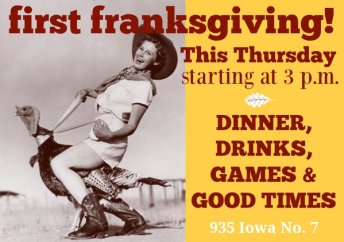
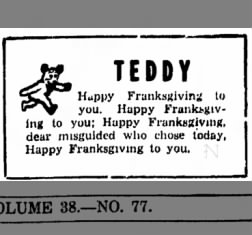
The next two years, thirty-two states and the District of Columbia celebrated what came to be called “Franksgiving” on the third Thursday of the month, while the remainder observed a more traditional “Republican Thanksgiving” on the last.
In 1941, a Commerce Department survey demonstrated little difference in Christmas sales between those states observing Franksgiving, and those observing the more traditional date. A joint resolution of Congress declared the fourth Thursday beginning the following year to be a national day of Thanksgiving. President Roosevelt signed the measure into law on November 26.
Interestingly, the phrase “Thanksgiving Day” had appeared only once in the 20th century prior to the 1941 resolution, that in President Calvin Coolidge’s first of six such proclamations.
Most state legislatures followed suit with the Federal fourth-Thursday approach, but not all. In 1945, the next year with five November Thursdays, Arkansas, Florida, Georgia, Idaho, Nebraska, Tennessee, Texas, and Virginia reverted to the last Thursday. Texas held out the longest, celebrating its fifth-Thursday Thanksgiving for the last time in 1956.
To this day, the years 1939, ’40 and ’41 remain the only outliers, outside the fourth-Thursday tradition.
Popular comedians of the day got a lot of laughs out of it, including Burns & Allen and Jack Benny. One 1940 Warner Brothers cartoon shows two Thanksgivings, one “for Democrats” and one a week later “for Republicans.”
The Three Stooges short film of the same year has Moe questioning Curly, why he put the fourth of July in October. “You never can tell”, he replies. “Look what they did to Thanksgiving!”
Joe Toye, the “Easy Company” character in the 2001 HBO miniseries “A Band of Brothers”, may have had the last word on Franksgiving. Explaining his plan to get the war over quickly, the paratrooper quips “Hitler gets one of these [knives] right across the windpipe, Roosevelt changes Thanksgiving to Joe Toye Day, [and] pays me ten grand a year for the rest of my f*****g life.”
Sounds like a plan.
If you enjoyed this “Today in History”, please feel free to re-blog, “like” & share on social media, so that others may find and enjoy it as well. Please click the “follow” button on the right, to receive email updates on new articles. Thank you for your interest, in the history we all share.
Four musicians were shocked to realize the shooter was the man they had worked for in those earlier months, at that burned out dive bar.
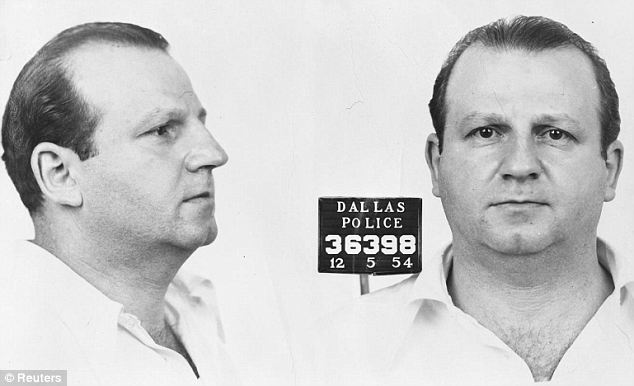
Jacob Leon Rubenstein was a troubled child, growing up on the west side of Chicago, in and out of the juvenile justice system and marked delinquent, since adolescence. Rubenstein was first arrested for truancy at age 11, and eventually skipped enough school to spend time at the Institute of Juvenile Research.
As with “Peanuts” cartoonist Charles M Shulz, those who knew Jacob Rubenstein called him “Sparky”. Some say the nickname was due to a resemblance to “Sparkplug”, the old nag with the patchwork blanket, from the Snuffy Smith cartoon strip. Unlike Shulz, Rubenstein hated the nickname and was quick to fight anyone who called him that. It may have been that quick temper, that made the name stick.
Rubinstein spent the early ’40s at racetracks in Chicago and California, until being drafted into the Army Air Forces, in 1943. Honorably discharged in 1946, Rubenstein returned to Chicago, before moving to Dallas the following year.
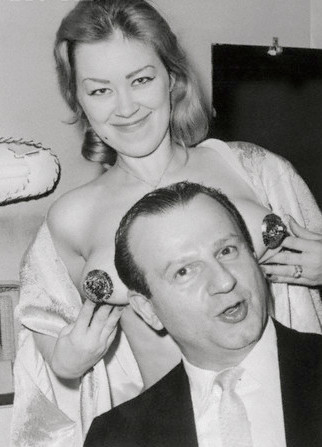
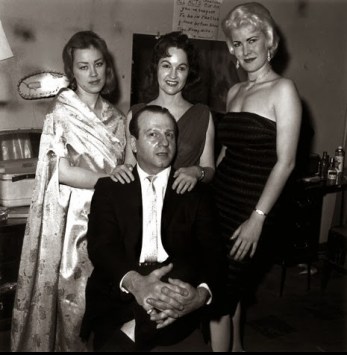
Rubenstein managed a series of Dallas nightclubs and strip joints, featuring such high class ladies as “Candy Barr” and “Chris Colt and her ’45’s”. Somewhere along the line, he shortened his name to “Ruby”.
Ruby was involved in typical underworld activities, such as gambling, narcotics and prostitution. There were rumored associations with Mafia boss Santo Trafficante. The shadier side of the Dallas police force knew that Ruby was always good for free booze, prostitutes, and other favors. This was one unsavory guy.
Today, you may know Rick Danko, Levon Helm, Garth Hudson and Robbie Robertson as musicians who went on the road with Bob Dylan in 1965 and later morphed into “The Band”, performing such rock & roll standards as “The Night they Drove Old Dixie Down”, “Up on Cripple Creek”, and “The Weight”.
Jack Ruby and his dogs, whom he always described as his “children”
In earlier days, the joints these guys played were so rough, that they performed with blackjacks, hidden in special pockets sewn into their coats. In 1963, they played a week in a Fort Worth nightclub. It was a huge venue, but no one was there that first night, save for two couples, a couple of drunk waiters and a one-armed go-go dancer. The band wasn’t through with their first set before a fight broke out, and someone was tear-gassed. The band played on, coughing and choking with teargas wafting across the stage, their faces wet with tears.
Part of the roof had either blown off this joint, or burned off, depending on which version you read. Jack, the owner, tore off the rest of it and kept the insurance money, calling it the “Skyline Lounge”. There was no need to pay for security, even without the roof. Jack said “Boys, this building ain’t exactly secure enough for you to leave your musical equipment unattended.” Band members were told they’d best stay overnight, with guns, lest anyone come over the wall to steal their equipment. Problem solved.
Months later, the nation was stunned at the first Presidential assassination in over a half-century. I was 5½ at the time, I remember it to this day. An hour after the shooting, former marine and American Marxist Lee Harvey Oswald killed Dallas police officer J.D. Tippit, who had stopped him for questioning. Thirty minutes later, Oswald was arrested in a movie theater.
By Sunday, November 24, Oswald was formally charged with the murders of President John Fitzgerald Kennedy and Dallas police officer, J. D. Tippit. He was taken to the basement of Dallas police headquarters, where an armored car waited to transport the prisoner to a more secure county jail. The scene was crowded with press and police.
Millions watched on live television as a man came out of the crowd and fired a single bullet from his .38 into the belly of Lee Harvey Oswald. Four musicians were shocked to realize the shooter was the man they had worked for in those earlier months, at that burned out dive bar. Jack Ruby.
Oswald was taken unconscious to Parkland Memorial Hospital, the same hospital where John F. Kennedy died, two days earlier. He was dead within two hours.
Jack Ruby was sentenced to death in the murder of Lee Harvey Oswald, on March 14, 1964. The Texas Court of Criminal Appeals overturned Ruby’s conviction in October 1966, on the grounds that the trial should have taken place in a different county than that in which his high profile crime had taken place. Ruby died of lung cancer the following January, while awaiting retrial.
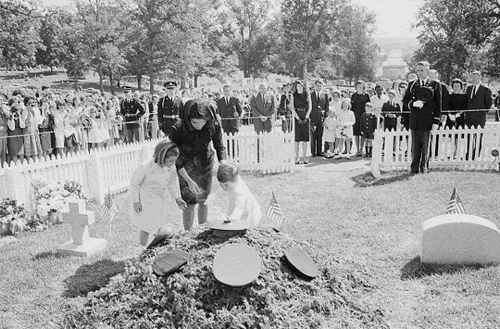
The body of the 35th President of the United States was laid to rest in Arlington National Cemetery on November 25, 1963 and moved to its present location on March 14, 1967. The Warren Commission found no evidence linking Jack Ruby’s murder of Lee Harvey Oswald, to any broader conspiracy to assassinate the President. What became of Jacob Leon “Sparky” Rubenstein’s fine establishment, is unknown to this writer.
If you enjoyed this “Today in History”, please feel free to re-blog, “like” & share on social media, so that others may find and enjoy it as well. Please click the “follow” button on the right, to receive email updates on new articles. Thank you for your interest, in the history we all share.
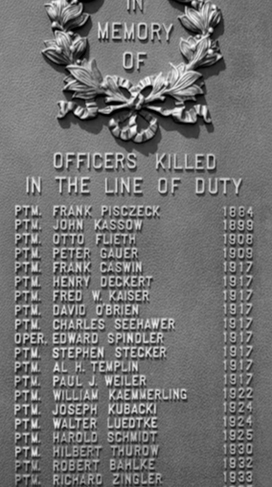
The Milwaukee police station bombing accounted for the largest single-incident loss of life in the history of United States law enforcement, a record which would stand until September 11, 2001.
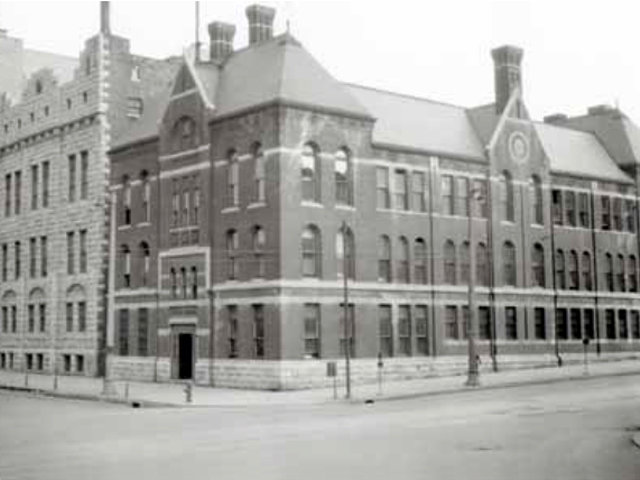
On the morning of November 24, 1917, 10-year-old Josie Spicciatti found a package in a narrow passage next to St. Anne’s Italian Evangelical Church in Milwaukee. She was the daughter of the cleaning lady, and apparently recognized it as a bomb. She brought it into the church anyway, and went to work.
Only that afternoon did she go looking for Maude Richter, a social worker at the church. At about 4:00, Maude dragged the 20-pound bomb into the church basement, banging it on the steps all the way down. She later told a reporter, “I saw the vial, which contained a brown fluid” (it was sulfuric acid), “and took it out. In the hole, where it had been placed, was a yellow substance like powder.”
She then decided that things should be left as they’d been found, so she carefully reassembled the device and called Sam Mazzone, the janitor, to take the bomb to the police station. Mazzone explained to Desk Sergeant Henry Deckert that the bomb may be linked to a near riot which had erupted several months earlier, killing two parishioners and wounding 5, including two police officers.
Policemen on duty were told there was a bomb in the station, but it seems that few took it seriously. Captain of Detectives John Sullivan remarked “It looked like a big dinner pail and innocent enough.”
Sergeant Deckert took the bomb into the office of Lieutenant Robert Flood, saying, “Look at the new kind of bomb I’ve got.” “Get that thing out of here”, said Flood. “Don’t fool around with anything like that!” Deckert then brought the bomb into the squad assembly room, where a group of detectives gathered to examine the device.
That’s when the thing went off.
Eight officers were killed in a fraction of a second, as was Catherine Walker, who had come to the station to file a complaint against her boyfriend. Operator Edward Spindler was working the switchboard on the second floor. Schrapnel blasted through the floor, entering his body at the waist and exiting through his head, killing him instantly.
One detective’s wedding band was blown from his finger, another’s shoe hung from the ceiling. A hat hung on a shard of glass. One detective’s watch was found, face up on a windowsill. The hands had stopped at 7:33PM. Sergeant Deckert’s body was never found. He was identified only by the stripe of his uniform trousers leg.
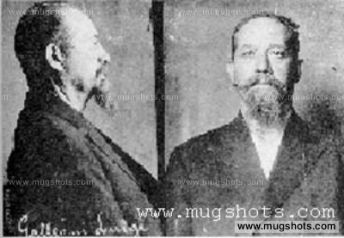
Luigi Galleani
A group led by Italian Anarcho-Communist Luigi Galleani was suspected of placing the bomb, though no one was ever charged with the crime.
Many years later, interviews with surviving members of the anarchist organization indicated that Mario Buda, chief bomb maker for the Galleanists, may have constructed the Milwaukee device. The bomb had been intended for a small Italian church and its outspoken and patriotic pastor, Reverend August Giuliani.
The Milwaukee police station bombing accounted for the largest single-incident loss of life in the history of United States law enforcement, a record which would stand until September 11, 2001.
If you enjoyed this “Today in History”, please feel free to re-blog, “like” & share on social media, so that others may find and enjoy it as well. Please click the “follow” button on the right, to receive email updates on new articles. Thank you for your interest, in the history we all share.
“I must have looked unbelieving at this, for a tall, gaunt woman started to take the children’s clothes off. She undressed them one by one, prodded their sagging bellies, pointed to their spindly legs, ran her hand up and down their tortured, mis-shapen, twisted little bodies to make me understand that this was real famine”.
In 1928, Josef Stalin introduced a program of agricultural collectivization in Ukraine, the “Bread Basket” of the Soviet Union, forcing family farmers off their land and into state-owned collective farms.
Ukrainian “kulaks”, peasant farmers successful enough to hire labor or own farm machinery, refused to join the collectives, regarding them as a return to the serfdom of earlier centuries. Stalin claimed that these factory collectives would not only feed industrial workers in the cities, but would also provide a surplus to be sold abroad, raising money to further his industrialization plans.
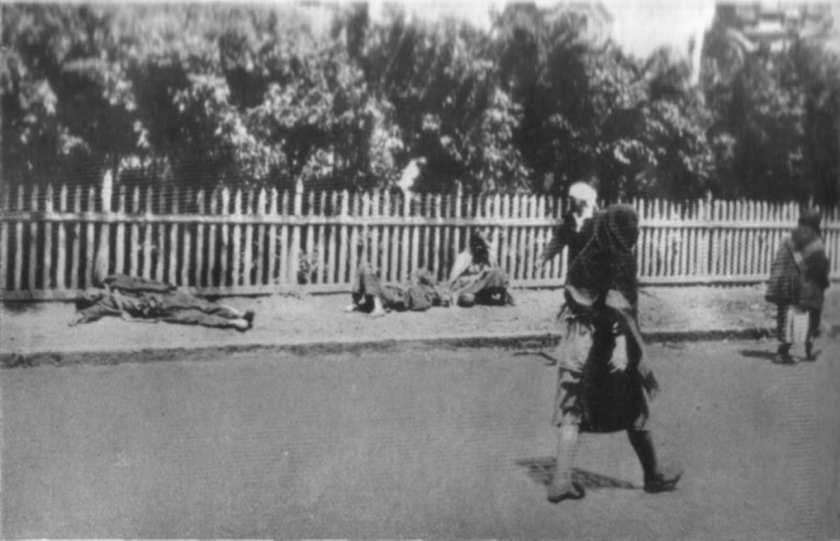
Armed dekulakization brigades confiscated land, livestock and other property by force, evicting entire families. Almost half a million individuals were dragged from their homes in 1930-’31, packed into freight trains and shipped off to remote areas like Siberia and often left without food or shelter. Many of them, especially children, died in transit or soon after arrival.
Resistance continued, which the Soviet government could not abide. Ukraine’s production quotas were sharply increased in 1932-’33, making it impossible for farmers to meet assignments and feed themselves, at the same time. Starvation became widespread, as the Soviet government decreed that any person, even a child, would be arrested for taking as little as a few stalks of wheat from the fields in which they worked.
Military blockades were erected around villages preventing the transportation of food, while brigades of young activists from other regions were brought in to sweep through villages and confiscate hidden grain.
Eventually all food was confiscated from farmers’ homes, as Stalin determined to “teach a lesson through famine” to the Ukrainian rural population.
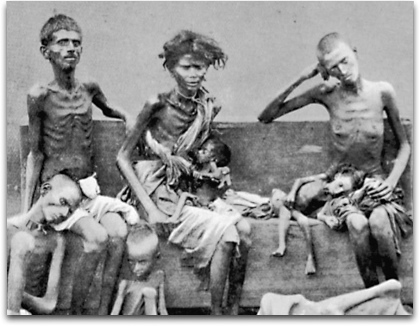
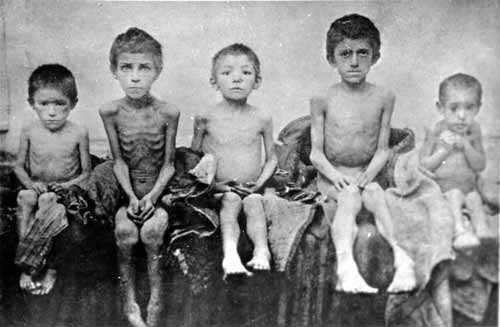
At the height of the famine, Ukrainians starved to death at a rate of 22,000 per day, almost a third of those, children 10 and under. How many died in total, is anyone’s guess. Estimates range from two million Ukrainian citizens murdered by their own government, to well over ten million.
Millions of tons of grain were exported during this time, more than enough to save every man, woman and child.
2,500 people were arrested and convicted during this time, for eating the flesh of their neighbors. The problem was so widespread that the Soviet government put up signs reminding survivors: “To eat your own children is a barbarian act.”
Stalin denied to the world that there was any famine in Ukraine, a position supported by the likes of Louis Fischer reporting for “The Nation”, and Walter Duranty of the New York Times. Duranty went on to win the Pulitzer Prize for his “coverage”, with comments like “any report of a famine in Russia is today an exaggeration or malignant propaganda”. Such stories were “mostly bunk,” according to the Times. Duranty even commented that “You can’t make an omelet without breaking eggs.”
To this day, the New York Times has failed to repudiate Walter Duranty’s Pulitzer.
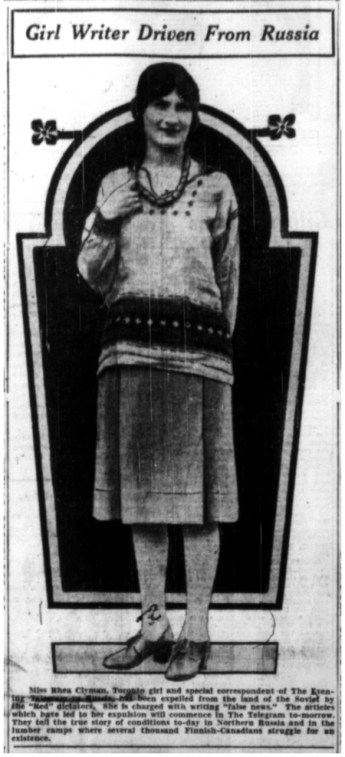
Like many on the international Left, Canadian journalist Rhea Clyman had great expectations of the “worker’s paradise” built by the Communist state, where no one was unemployed, everyone was “equal”, and Everyman had what he needed. Unlike most, Clyman went to the Soviet Union, to see for herself.
To do so at all was an act of courage: a single Jewish woman who’d lost part of a leg in a childhood streetcar accident, traveling to a place where the Russian empire and its successor state had a long and wretched history, when it came to the treatment of its own Jews.
Virtually all of the international press preferred the comfortable confines of Moscow, cosseted in the heart of the Soviet propaganda machine and ignorant of the world as it was.
In four years, Clyman not only learned the language, but set out on a 5,000-mile odyssey to discover the Soviet countryside. Duranty’s idea of “good-bye” was offering to write her obituary.
It is through this “Special Correspondent in Russia of The Toronto Evening Telegram, London Daily Express, and Other Newspapers“, that we know much about the government’s extermination of its own citizens, in Ukraine.
To read what she wrote about abandoned villages, is haunting. And then the moment of discovery:
“They wanted something of me, but I could not make out what it was. At last someone went off for a little crippled lad of fourteen, and when he came hobbling up, the mystery was explained. This was the Village of Isoomka, the lad told me. I was from Moscow, yes; we were a delegation studying conditions in the Ukraine, yes. Well, they wanted me to take a petition back to the Kremlin, from this village and the one I had just been in. “Tell the Kremlin we are starving; we have no bread!”
A tall, bearded peasant was spokesman. His two sons and the rest of the men and women nodded approval at every word. The little crippled boy stood with his right hand on his crutch, translating everything he said into Russian for me, word by word.
“We are good, hard-working peasants, loyal Soviet citizens, but the village Soviet has taken our land from us. We are in the collective farm, but we do not get any grain. Everything, land, cows and horses, have been taken from us, and we have nothing to eat. Our children were eating grass in the spring….”
I must have looked unbelieving at this, for a tall, gaunt woman started to take the children’s clothes off. She undressed them one by one, prodded their sagging bellies, pointed to their spindly legs, ran her hand up and down their tortured, mis-shapen, twisted little bodies to make me understand that this was real famine. I shut my eyes, I could not bear to look at all this horror. “Yes,” the woman insisted, and the boy repeated, “they were down on all fours like animals, eating grass. There was nothing else for them.”
“What have you to eat now?” I asked them, still keeping my eyes averted from those tortured bodies. “Are all the villages round here the same? Who gets the grain?”” – Rhea Clyman, Toronto Telegram, 16 May 1933
22,000 of these poor people were starving to death every day, and they still thought the Kremlin was going to help them.
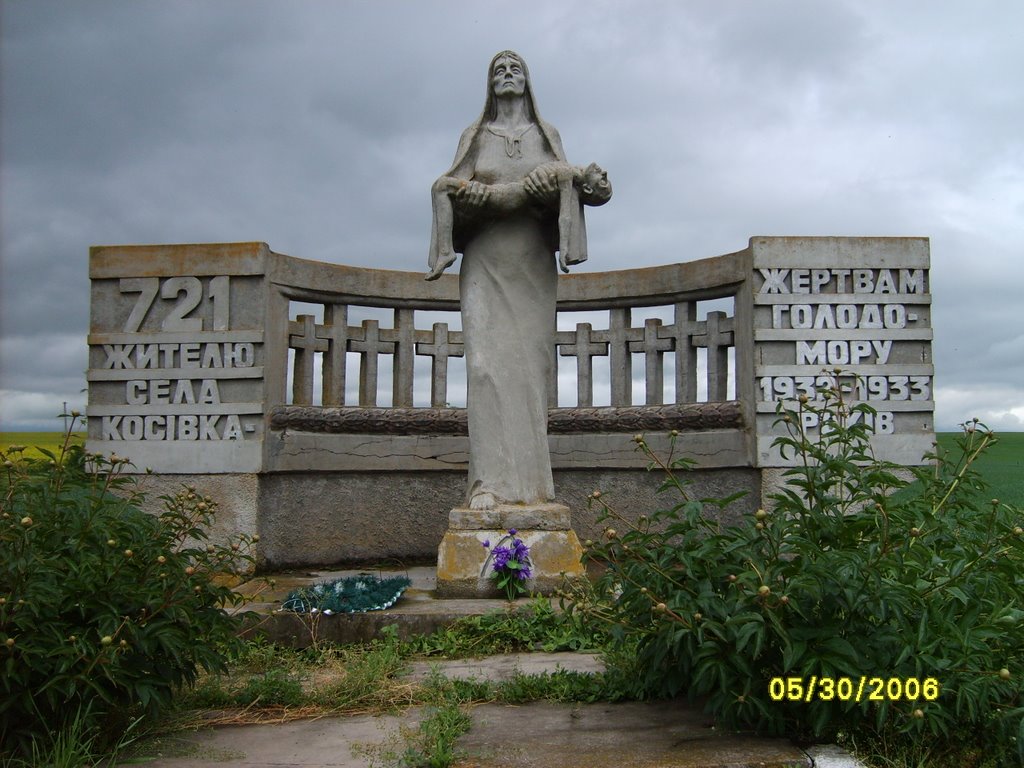
Today, the province of Alberta is home to about 300,000 Canadians of Ukrainian Heritage. About a week ago, Alberta Premier Rachel Notley explained “Holodomor is a combination of two Ukrainian words: Holod, meaning hunger, and moryty, meaning a slow, cruel death. That is exactly what Ukrainians suffered during this deliberate starvation of an entire people“.
The Holodomor Memorial to Victims of the Ukrainian Famine-Genocide of 1932–1933 was opened in Washington, D.C. on November 7, 2015
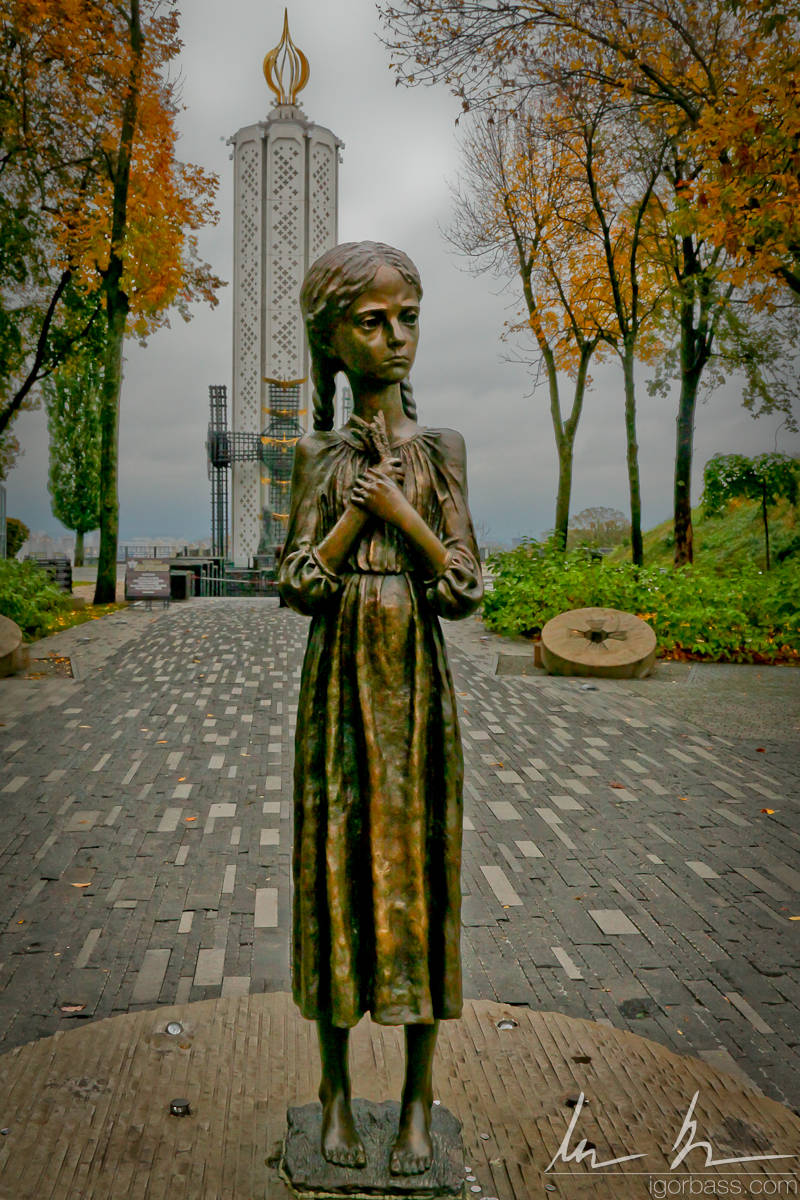
Ukrainians around the world recognize November 23 as Holodomor Memorial Day, commemorated by a simple statue in Kiev. A barefoot little girl, gaunt and hollow eyed, clutches a few stalks of wheat.
Here in the United States, you could line up 100 randomly selected individuals. I don’t believe that five could tell you what Holodomor means. We are a self-governing Republic. All 100 should be well acquainted with the term.
Please feel free to re-blog, “like” & share on social media, so that their story is not forgotten. Please click the “follow” button on the right, to receive email updates on new articles. Thank you for your interest, in the history we all share.
On Friday the 13th of October, 1307, King Philip IV of France sent out his arrest warrant, against the knights Templar. Under pressure from the French King, Pope Clement issued the bull “Pastoralis praeeminentiae” on November 22, instructing Christian monarchs throughout Europe to arrest Templar officials and seize their assets. Within a couple of years, the order had ceased to exist.
From the dawn of Christianity, faithful believers have traveled from the length and breadth of Europe to the Holy City of Jerusalem, to renew and affirm a lifelong faith in scripture.
The Rashidun Caliphate captured the Holy City in 637, following a long siege. Except for an 88-year period following the first crusade in 1099, the Temple Mount in the old city has been under Islamic administration, from that day to this.
Nevertheless, the number of these pilgrims increased over time. Many suffered robbery and even murder at the hands of Muslim fanatics, who considered it their Islamic duty to kill the “Infidel”.
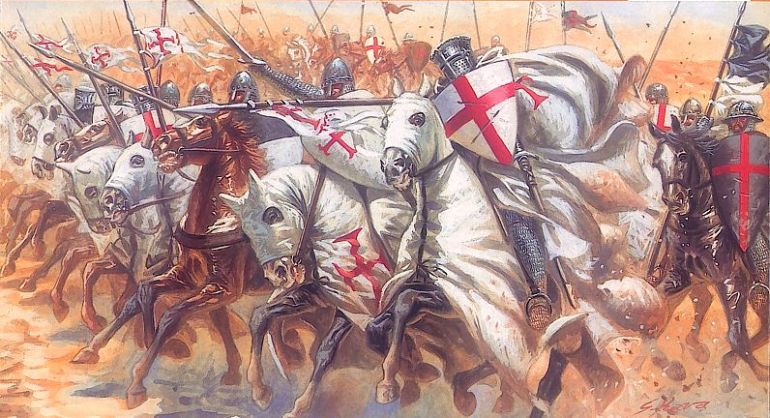
The French knight Hugues de Payens approached King Baldwin II of Jerusalem and Warmund, Patriarch of Jerusalem in 1119, with a proposal. He would create a monastic order of warrior knights to protect these pilgrims, to be headquartered in a wing of the recaptured Al Aqsa Mosque, built on the ruins of the Temple of Solomon.
They were monks and they were warriors, “Poor Fellow-Soldiers of Christ and of the Temple of Solomon”. For 200 years, these “Knights Templar” provided for the safe passage of Christian pilgrims.
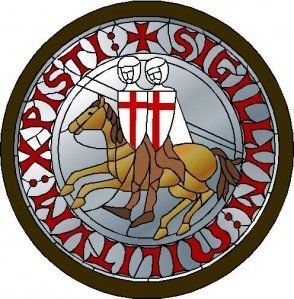
The original nine knights of the order lived up to the “poor knights” part of their name, relying on financial donations for their survival. So destitute were they that their emblem showed two knights riding a single horse.
That would change.
In time, the Templars gained favored charity status, their new-found wealth helping them to found an early banking system. Pilgrims to the holy land could deposit gold coins in Paris and take them out in Jerusalem, or vice-versa. The knights Templar achieved vast wealth in this manner, at their height running over 800 castles, every one of which ran as a full service banking institution, financing military campaigns and shoring up the treasuries of Kings.
Following what must have seemed a never ending series of wars with the English King, Philip IV of France found himself deeply in debt to the Templars. In 1307, he needed to wriggle out of it.
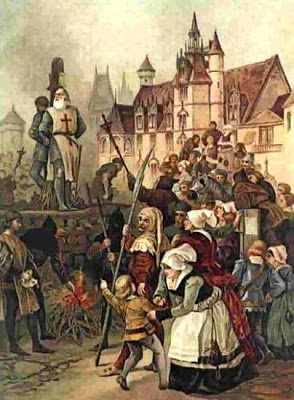
It was Friday the 13th of October that year, when Philip sent out his arrest warrant. Templar Grand Master Jacques de Molay and scores of other French Templars were simultaneously arrested. Charges included everything from obscene secret rituals to financial fraud. “Confessions” were extracted by torture.
Under pressure from the French King, Pope Clement issued the bull “Pastoralis praeeminentiae” on November 22, instructing Christian monarchs throughout Europe to arrest Templar officials and seize their assets.
Thousands of knights fled to areas outside Papal control. Some were burned at the stake, or absorbed into the rival Knights Hospitaller. Within a couple of years, the order had ceased to exist.
Some will tell you that’s where the Friday 13th superstition began. Others say it goes back to the Friday when Eve offered Adam that forbidden apple, or the Friday crucifixion of Jesus Christ.
Ancient Egyptians and Chinese believed the number 13 brought good luck, but some actually fear Friday the 13th. It’s called “Friggatriskaidekaphobia”.
People in Spanish-speaking countries will tell you it’s the 13-part that brings bad luck, but for most, it’s Friday. At least one psychotherapist asserts that 21 million Americans are afraid of Friday the 13th.
Smithsonian Magazine reports that fear of the number 13 costs the United States a Billion dollars a year in absenteeism, train and plane cancellations and related commerce on the 13th of the month.
FDR avoided dinner parties with 13 guests. In France, there are professional 14th party guests called “quatorzieme“. I wonder how you get that job.
Who knows, maybe thirteen really is bad luck. There are 13 steps leading to the gallows, where the condemned meets the 13 knots of the hangman’s noose. The guillotine’s blade falls 13 feet. Diana hit the 13th pillar at Place d’Alma. Tupac was shot on Friday the 13th, and Fidel Castro was born on one.
So knock on wood, and cross your fingers. Watch out for black cats. Don’t look at the full moon through a pane of glass, and be sure throw salt over your shoulder. You’ll be fine.
If you enjoyed this “Today in History”, please feel free to re-blog, “like” & share on social media, so that others may find and enjoy it as well. Please click the “follow” button on the right, to receive email updates on new articles. Thank you for your interest, in the history we all share.


 What historians call the First Indochina War, many contemporaries called “la sale guerre”, or “dirty war”. The government forbade the use of metropolitan recruits, fearing that that would make the war more unpopular than it already was. Instead, French professional soldiers and units of the French Foreign Legion were augmented with colonial troops, including Moroccan, Algerian, Tunisian, Laotian, Cambodian, and Vietnamese ethnic minorities.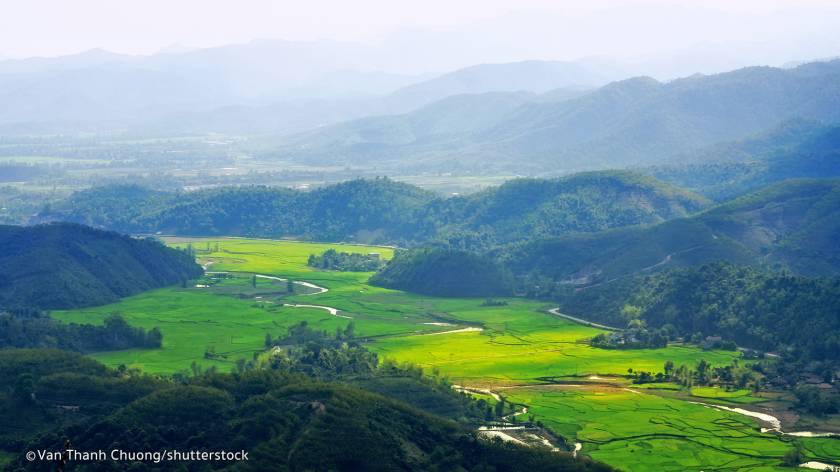
 The French staff formulated their battle plan, based on the assumption that it was impossible for the Viet Minh to place enough artillery on the surrounding high ground, due to the rugged terrain. Communist forces didn’t possess enough artillery to do serious damage anyway. Or so they thought.
 “Beatrice” was the first fire base to fall, then “Gabrielle” and “Anne-Marie”. Viet Minh controlled 90% of the airfield by the 22nd of April, making even parachute drops next to impossible. On May 7, Vo ordered an all-out assault of 25,000 troops against the 3,000 remaining in garrison. By nightfall it was over. The last words from the last radio man were “The enemy has overrun us. We are blowing up everything. Vive la France!”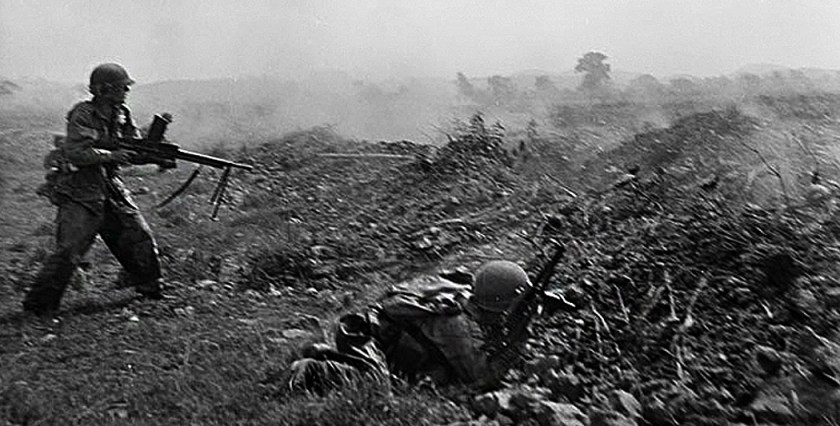
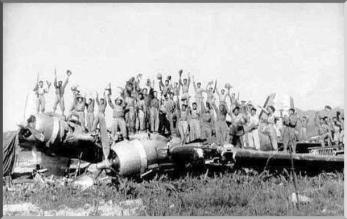 American support for the south increased as the French withdrew theirs. By the late 1950s, the United States were sending technical and financial aid in expectation of social and land reform. By 1960, the National Front for the Liberation of South Vietnam (NLF, or “Viet Cong”) had taken to murdering Diem supported village leaders. President John Fitzgerald Kennedy responded by sending 1,364 American advisers into South Vietnam, in 1961.


 The worldwide Encephalitis Lethargica epidemic afflicted some five million people between 1915 and 1924. One-third of sufferers died in the acute phase of the disease, a higher mortality rate than the Spanish flu of 1918-’19. Many of those who survived never returned to their pre-existing state of “aliveness”, and lived the rest of their lives institutionalized, as described above.
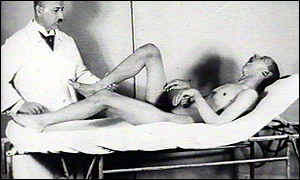 Individual cases continue to pop up, but have never assumed the pandemic proportions of 1915-’24. Further study is needed but, perversely, such study is only possible given more cases of the disease. For now, Encephalitis Lethargica must remain one of the great medical mysteries of the twentieth century. An epidemiological conundrum, locked away in a nightmare closet of forgotten memory.


 Untold thousands of Tootsie roll wrappers littered the seventy-eight miles back to the sea. Most credit their survival to the energy provided by the chocolate candy. It turns out that frozen tootsie rolls make a swell putty too, useful for patching up busted hoses and vehicles.
 On the third came Longstreet’s assault, better known as “Pickett’s charge”. 13,000 Confederate soldiers came out of the tree line at Seminary Ridge, 1¼-miles distant from the Federal line.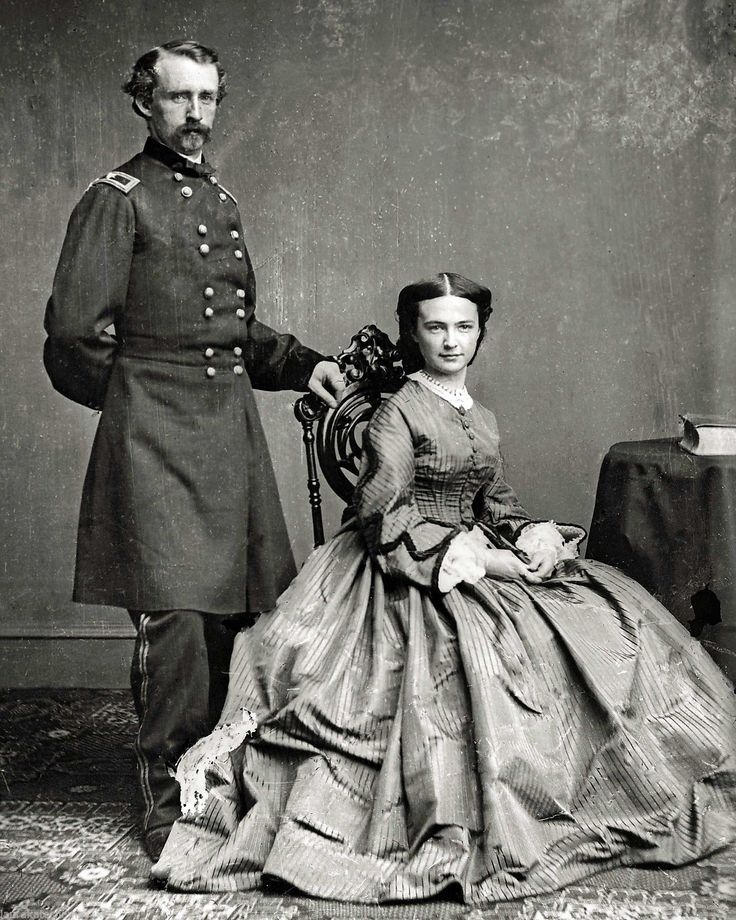

 Historian Michael Gannon writes that the “real first Thanksgiving” in America took place in 1565, when Pedro Menéndez de Avilés landed in modern-day Florida, and “had the Indians fed and then dined himself.” Likely, it was salt-pork stew with garbanzo beans. Yum.
 In those days, it was considered poor form for retailers to put up Christmas displays or run Christmas sales, before Thanksgiving. Lew Hahn, General Manager of the Retail Dry Goods Association, was afraid that extra week was going to cut into Christmas sales.
 In Plymouth Massachusetts, self-described home of the “first Thanksgiving”, Chairman of the Board of Selectmen James Frasier, “heartily disapproved”.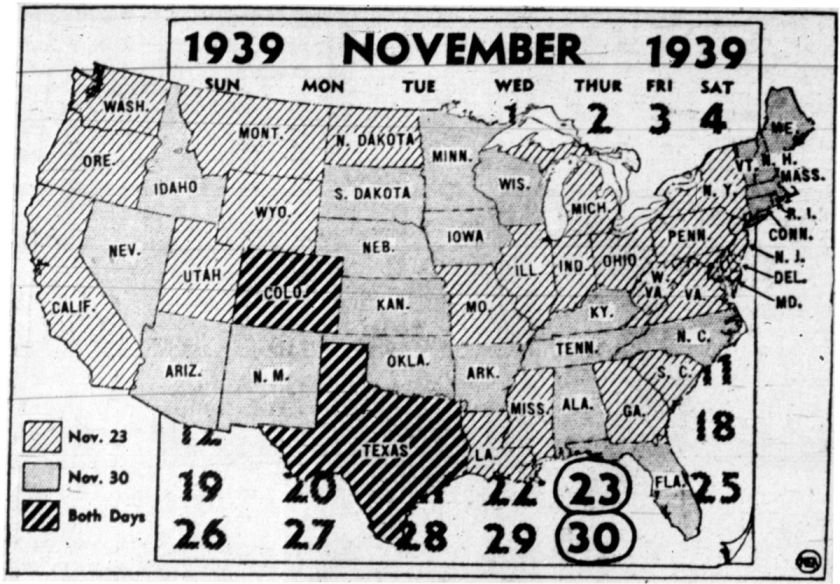

 Rubinstein spent the early ’40s at racetracks in Chicago and California, until being drafted into the Army Air Forces, in 1943. Honorably discharged in 1946, Rubenstein returned to Chicago, before moving to Dallas the following year.
 Months later, the nation was stunned at the first Presidential assassination in over a half-century. I was 5½ at the time, I remember it to this day. An hour after the shooting, former marine and American Marxist Lee Harvey Oswald killed Dallas police officer J.D. Tippit, who had stopped him for questioning. Thirty minutes later, Oswald was arrested in a movie theater.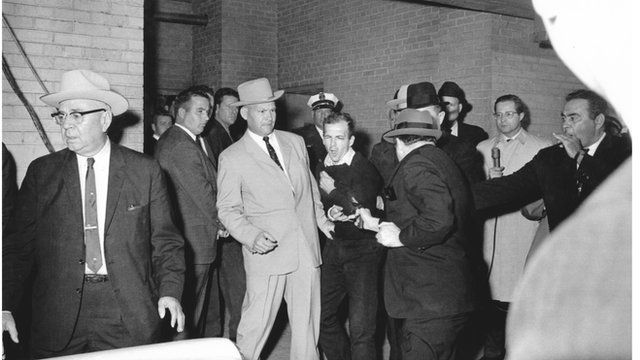



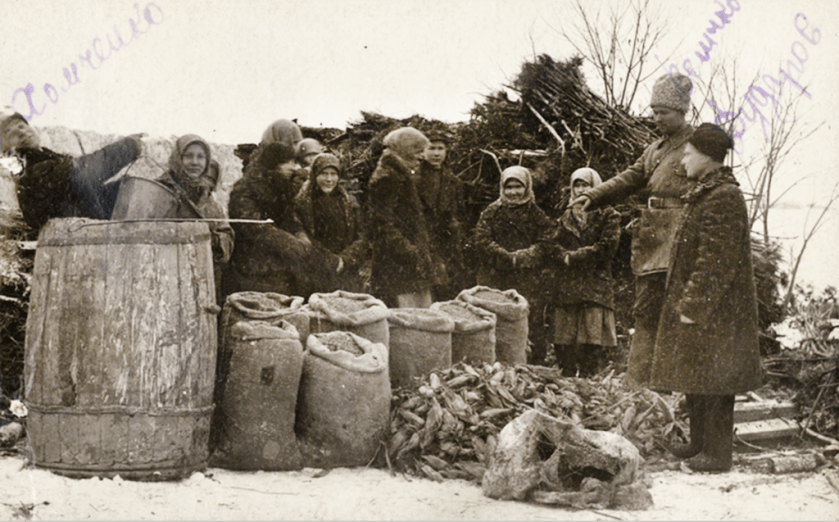
 A tall, bearded peasant was spokesman. His two sons and the rest of the men and women nodded approval at every word. The little crippled boy stood with his right hand on his crutch, translating everything he said into Russian for me, word by word.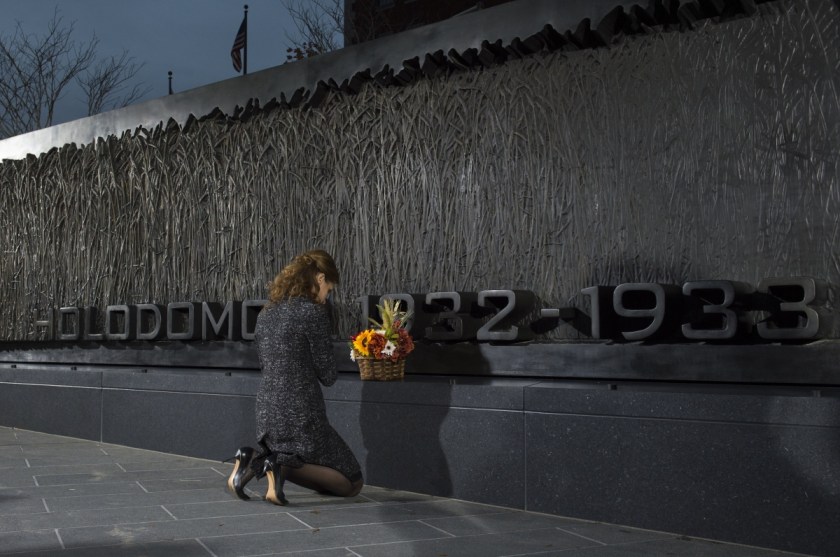

 The French knight Hugues de Payens approached King Baldwin II of Jerusalem and Warmund, Patriarch of Jerusalem in 1119, with a proposal. He would create a monastic order of warrior knights to protect these pilgrims, to be headquartered in a wing of the recaptured Al Aqsa Mosque, built on the ruins of the Temple of Solomon.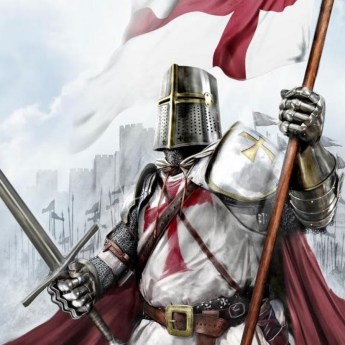
 Under pressure from the French King, Pope Clement issued the bull “Pastoralis praeeminentiae” on November 22, instructing Christian monarchs throughout Europe to arrest Templar officials and seize their assets.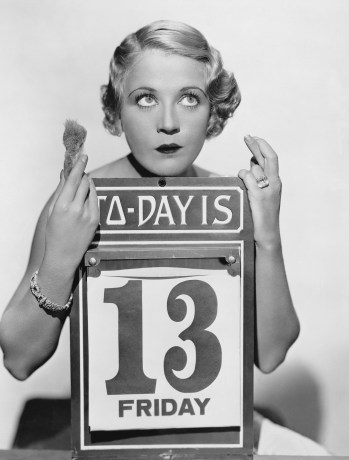


You must be logged in to post a comment.