February 17, 1915 American Volunteers in WW1

“When men who have no obligation to fight, who could not possibly be criticized if they did not fight, yet nevertheless decide, upon their own individual initiative, to risk their lives in defense of a cause that they hold to be dear, then we are in the presence of true heroism” – General Henri Gouraud

German Chancellor Otto von Bismarck once said the next European war would begin with “some damn fool thing in the Balkans”. Bismarck got his damn fool thing in Sarajevo on June 28, 1914. We all know the story. The diplomatic visit of an heir presumptive. The open car. The wrong turn. The assassin.

There followed a series of diplomatic stumbles, military mobilizations and counter-mobilizations called the “July Crisis of 1914″. By August, there was no turning back. There would be no “Phony War” this time, no “Sitzkreig”, as wags were wont to call the early days of World War 2. The coming storm crashed across the continent like a clap of thunder.

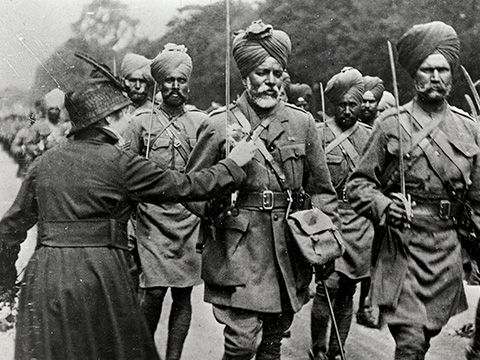
Britain went to war with a professional army of 750,000 men, small by European standards. 8 million men were conscripted or recruited over the next four years, nearly half coming from outside the UK. They came from all over the British empire and beyond. Over 300 Americans volunteered with the Royal Flying Corps in WW1 as did Jamaican William Robinson Clarke, the first black pilot to fly for Britain, but no power so enjoyed the support of foreign volunteers, as France.
Foreign mercenary soldiers have a long history with the French military. Philip VI led 15,000 Italian soldiers against Edward III, in 1346. Napoleon had 60,000 Swiss Guard under contract of the Schweizergarten, in Vienna. King Louis Philippe formed the French Foreign Legion on March 9, 1831.
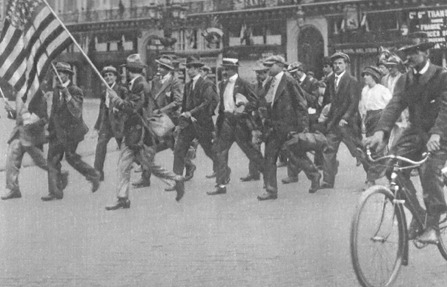
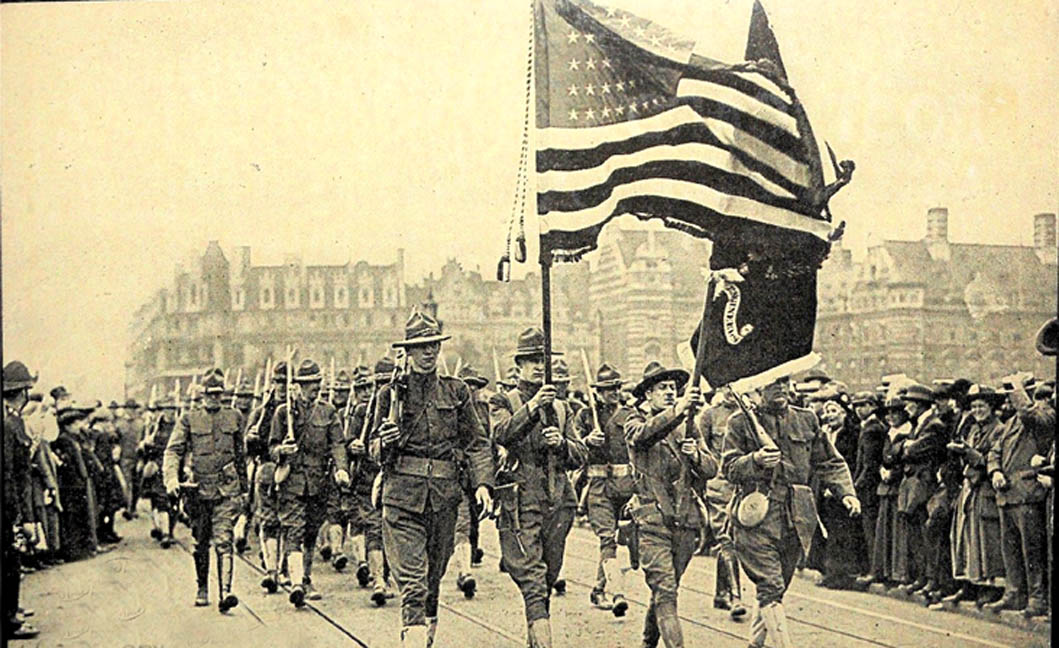
“American volunteers in the French Foreign Legion cross the Place de L’Opera Paris on August 25, 1914, headed for Rouen” H/T americansatwarinforeignforces.com

The United States was still neutral in the beginning, over two years away from joining the fray. The influx of American volunteers, began almost immediately. They came to join the French Foreign Legion, to drive for the ambulance corps and, later, to fly.

Interestingly, the central powers made limited use of foreign conscripts or recruits. There was the occasional foreign colonial in German units, soldiers of Chinese or African descent. Several Americans volunteered to fly for the Imperial German Flying Corps. Though nominally allied with czarist Russia, longstanding animosities led some Fins to volunteer with the Imperial German army. Irish Republicans took opportunity to attempt an independent Irish Republic and Germany was happy to assist but it was der Löwe von Afrika (Lion of Africa) General Paul Emil von Lettow-Vorbeck who famously led 11,000 to 12,000 African Askari troops in the only successful invasion into a part of the British empire of all of WW1.

With only a handful of generations come and gone between our time and that of the Great War, WW1 holds a prominent place in modern conceptions of “recent” history. Similarly, the WW1 generation held the Revolution in close regard, the events of the last century and one-half foundational to their own time. Americans were keenly aware in 1914 of the pivotal role played by France, in American independence. Kiffin and Paul Rockwell are but two examples of Americans who left comfortable lives to serve “over there” as a debt of gratitude, to the likes of the Count of Rochambeau and the Marquis de Lafayette.
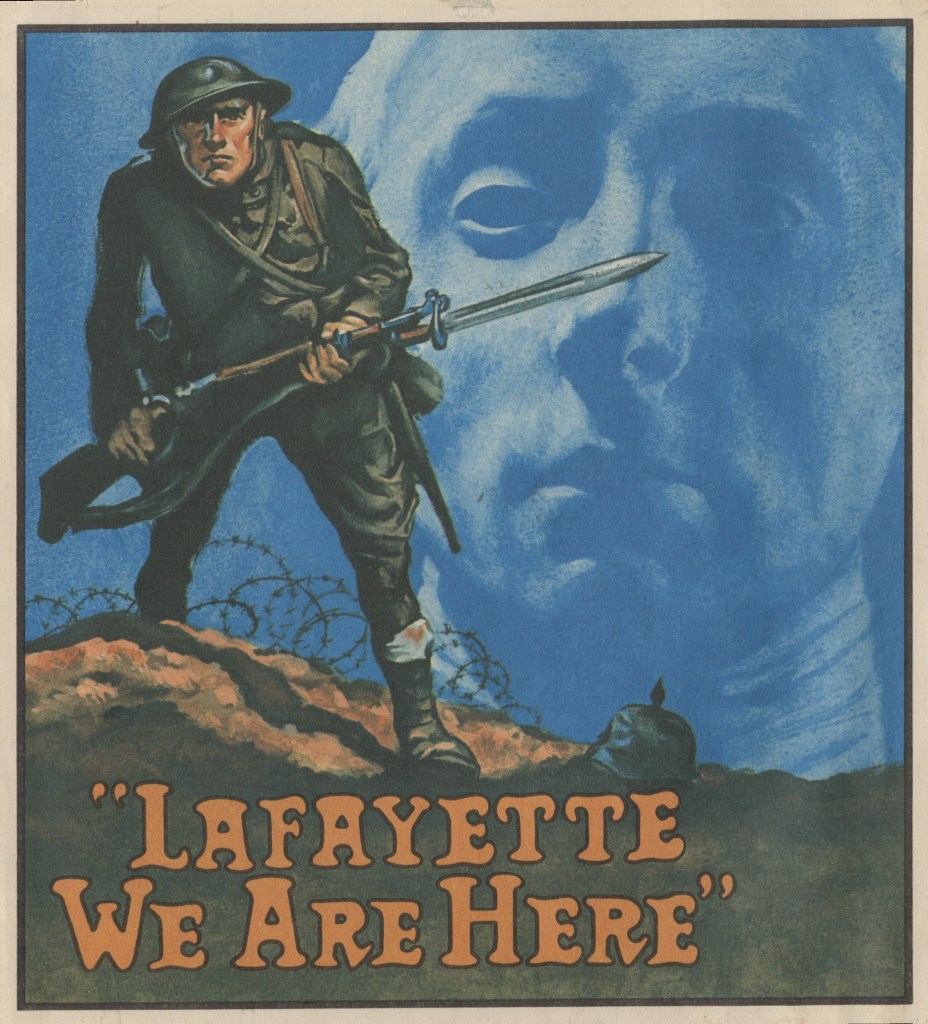
General John “Black Jack” Pershing famously quipped on arriving on French soil, “Lafayette, we are here”.

The French Foreign Legion operated two regiments at this time comprised of six battalions of 1,000 men each and headquartered in north Africa. The need for manpower was acute. Two-thirds were of German or Austrian background and therefore of suspect loyalty.

Thousands of Americans volunteered for WW1 service in the Legion, notables among their number including composer and songwriter Cole porter, Eugene Jacques Bullard, who would go on to become the first black American fighter pilot in history, William Wellman, director of the 1927 film Wings and winner of the Best Picture award at the first Academy Awards ceremony and poet Alan Seeger (left), author of “I have a rendezvous with death” and uncle of the folk artist and social activist, Pete Seeger.

William Moll served his five years with the Foreign Legion and returned home to Chicago. He became filthy rich and died, in 1937. Imagine the reading of that will. All those eager relatives and the man left every dime of it, to the French Foreign Legion.

Some Foreign Legion units experienced close to 100% casualties.

Alan Seeger met his rendezvous with death at the Somme, in 1916. Fellow Legion soldier Rif Baer described his last moments: “His tall silhouette stood out on the green of the cornfield. He was the tallest man in his section. His head erect, and pride in his eye, I saw him running forward, with bayonet fixed. Soon he disappeared and that was the last time I saw my friend.” Even then, lying mortally wounded in no man’s land Seeger cheered on his passing comrades as the life ebbed out of him.

Not legally “Americans” at this time but members of their own sovereign nations, no fewer than 4,000 Indians enlisted with the Canadian Expeditionary Force, in 1914. Some 15,000 native Americans from many tribal affiliations enlisted with the American Expeditionary Force where members of the Choctaw, Cherokee and Cree nations learned to talk in code, early forerunners of the famous Navajo code talkers, of WW2.

The Battle of the Frontiers, a series of clashes between August 7 and September 6, 1914 brought no fewer than 2.7 million combatants together producing casualties on both sides, of some 664,000. The motor inventory of entire nations public and private, seemed inadequate to transport the cataract of wounded to places of medical care.
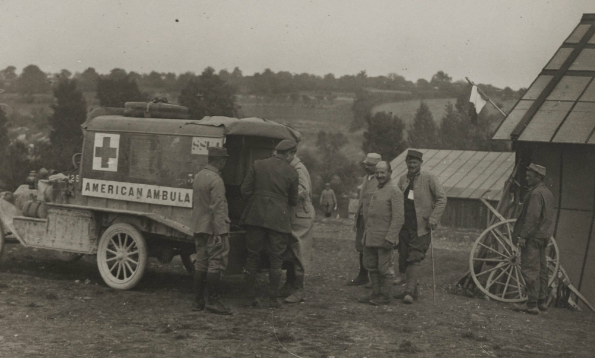
Members of expatriate American business community and embassy employees rushed in to assist in early association with the American Hospital at Neuilly-sur-Seine, in Paris.

US Ambassador Myron Herrick and his wife Carolyn (“Kitty”) were instrumental in the early stages of the war as were wealthy donors such as the Vanderbilts, in early association with the American Hospital, founded four years earlier. As German armies crashed through Belgium and raced to capture Paris, the government fled for Bordeaux. Herrick stayed defiantly in Paris. “Paris belongs not only to France,” he said, “it belongs to the world!”

Three distinct ambulance corps would evolve over time involving no fewer than 3,500 American volunteers. Notable among ther number include the authors Ernest Hemingway, John Dos Passos and Dashiell Hammett who all but invented the hard-boiled crime novel.
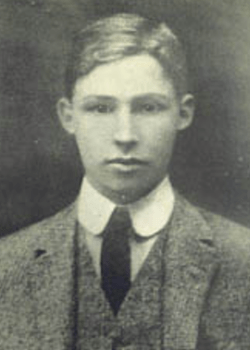
Edward “Eddie” Mandell Stone lived in France when the war broke out and enlisted, with Foreign Legion, 2nd Regiment, Battalion C.

A member of a machine-gun section, Eddie (right) was mortally wounded on February 17, 1915 and taken to the Military Hospital at Romilly. He died of his wounds on February 27 becoming the first American combatant to die, in the ‘War to end all wars”.

After 1915, American pilots volunteered for multiple “Escadrille” – flight squadrons of the French Air Service, the Aéronautique Militaire.

The March 7, 1918 Harvard Alumni Bulletin would give Norman Prince full credit for persuading the French government to form all-American flying squadrons. He wouldn’t live to see the article in print.

Sergeant Norman Prince caught a landing wheel on a telegraph wire after a bombing run on October 12, 1916, sustaining massive injuries when his plane flipped over and crashed. He was promoted to sous (2nd) lieutenant on his death bed and awarded the Legion of Honor. He died three days later, at the age of 29.

Gervais Raoul Victor Lufbery (left) flew for both the Aéronautique Militaire and for the US Army Air Service and is sometimes listed as an Ace, in both. All but 1 of Lufbery’s 17 victories came as a French pilot. Raoul Lufbery was thrown from his aircraft and killed on May 19, 1918.

William Thaw II of Pittsburgh was the first pilot to fly up New York’s East River under all four bridges, the first American engaged in aerial combat in the war.

Authorized on March 21, 1916 as the Escadrille Américaine (Escadrille N.124), American pilots wore French uniforms and flew French aircraft.   Germany expressed dismay over the very existence of such a unit, complaining that the neutral United States appeared to be aligning with France.

Escadrille N.124 changed its name in December 1916, adopting that of a French hero of the American Revolution.  Marie-Joseph Paul Yves Roch Gilbert du Motier, Marquis de Lafayette.

Five French officers commanded a core of 38 American volunteers in the beginning, supported by all-French mechanics and ground crew.  Rounding out the Escadrille were two unit mascots, the African lions Whiskey and Soda.

William Thaw with unit mascot mascots, Whiskey and Soda. ca 1916

The Lafayette Escadrille is often confused with the much larger Lafayette Flying Corps, and the movie “Flyboys” adds to the confusion.  The Flying Corps was different from the Escadrille, the former coming about as the result of widespread interest in the exploits of the latter.  American volunteers were assigned individually or in groups of two or three to fly in various French Aviation units, but, prior to US entry into the war.  The Lafayette Escadrille was the only one to serve as a single organization.

All told, 267 American volunteers applied to serve in the Lafayette Flying Corps, credited with downing 199 German planes at the cost of 19 wounded, 15 captured, 11 dead of illness or accident, and 51 killed in action.

William Graves Sharp took office in December 1914 and served as Ambassador the remainder of the war, but never seemed to get out from under the shadow of his predecessor, Myron Herrick. Ambassador Herrick returned to Paris in 1921 and remained, until 1929. Herrick greeted Richard Lindberg in 1927 and stood throughout the long funeral ceremonies, for Ferdinand Foch.
It is there the ambassador was believed to have contracted the illness, that would take his life. Now forgotten in his home country, Myron Herrick is well remembered in his adopted nation of France.

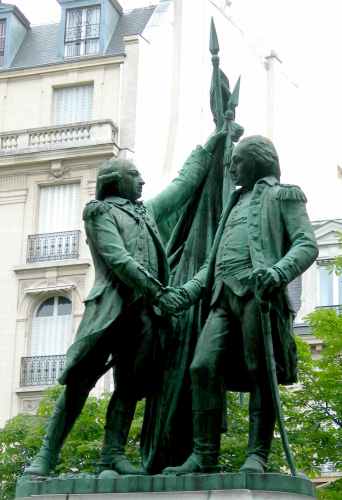
Today you can walk through the gardens of Paris’ Place des États-Unis, down the slope from Bartholdi’s sculpture where Lafayette forever shakes hands, with Washington. Up from the monument for American Volunteers in the Great War is the bust of Myron Herrick.

The once governor of Ohio and forgotten diplomat who refused to be moved when everyone around him, ran.

February 16, 1961 Mountain Home

As the most destructive war in human history unfolded between Nazi and Germany and Soviet Russia, an apocalypse known simply as the Ostfront, two more children were born in the wild. Dmitry in 1940 and Agafia, in 1943. The Lykovs missed World War 2 entirely without the slightest idea, of the outside world.

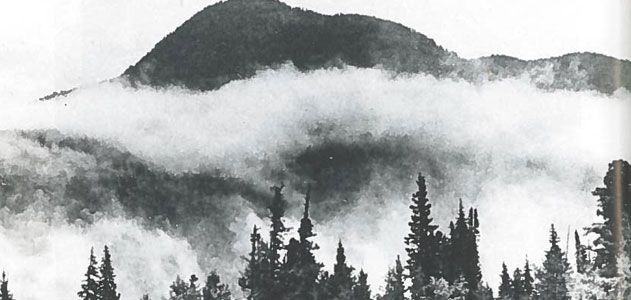
The Taiga occupies the high latitudes of the world’s northern regions, a vast international belt line of coniferous forests consisting mostly of pines, spruces and larches between the high tundra, and the temperate forest.  An enormous community of plants and animals, this trans-continental ecosystem comprises a vast biome, second only to the world’s oceans.

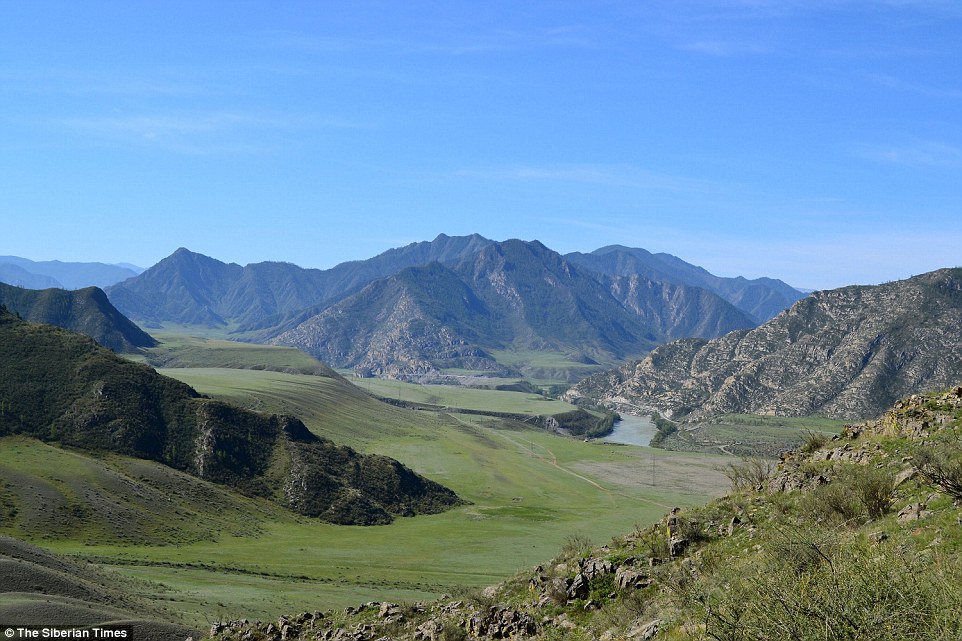
The Eastern Taiga is a region in the east of Siberia, a vast, unexplored wilderness more than half again, the size of the continental United States. With snows lasting until May and resuming in September, there are no nearby oceans or seas to moderate temperature. Extremes are capable of summertime highs over 100° Fahrenheit (40c) to a wintertime low of -80° (-62c).

For all its size the region is all but unpopulated. Outside of a few towns the Siberian Taiga is home to no more than a few thousand. Siberia is also the source of vast Russian wealth in the form of oil, gas and minerals. In a wilderness capable of swallowing whole phalanxes of explorers there is hardly a district which hasn’t been overflown, at least once.

Helicopters and fixed wing aircraft cross huge tracts of arboreal forest carrying prospectors, workers and surveyors to and from remote backwoods camps.

So it was in 1978, the chopper descending with its team of geologists. Looking for a place to land near some unnamed tributary of the Abakan river, that trackless waterway with a name derived from the Khakas word, for “bear’s blood”. Treetops swayed in the propwash as the pilot peered downward, looking for a place to put down. And then he saw it. 100 miles from the Mongolian border and a good 150 miles from the nearest settlement. If those weren’t signs of human habitation, they sure looked like it.

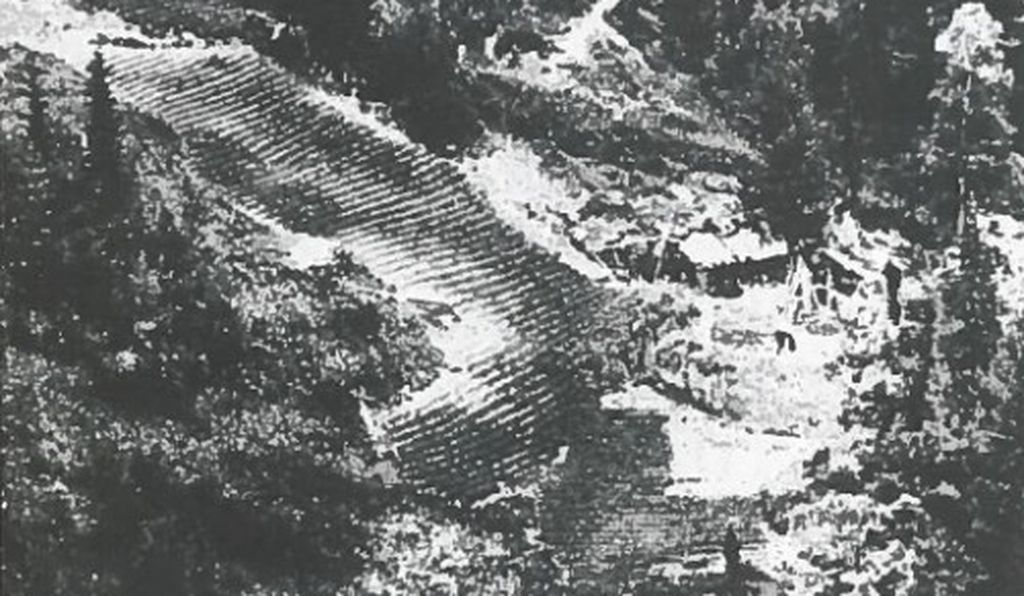
Circling back, the pilot took another pass. And another. The Soviet government had no record of anyone living out here but, there it was. The clearing, 6,000 feet up the mountainside. The long furrows of a large garden. Someone had been growing here, for a very long time.

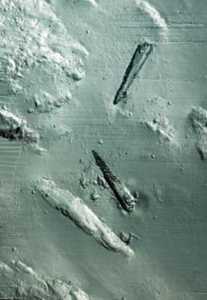
The Lykovs’ homestead seen from a Soviet reconnaissance plane, 1980. H/T Smithsonian

Ten miles away a four-person team of geologists, was there to explore for iron ore. The scientists thought they’d check it out. Packing what small gifts they could think of the team set out to investigate. The Russian writer, traveler and ecologist Vasily Peskov had once written, “It’s less dangerous to run across a wild animal (in these parts) than a stranger.” Geologist Galina Pismenskaya knew as much, and packed a gun.

As the four approached the spot described by the helicopter crew, there began to be signs. A worn path. A log laid across a stream. A rough shed filled with birchbark containers, with potatoes.

Pismenskaya describes what came next:

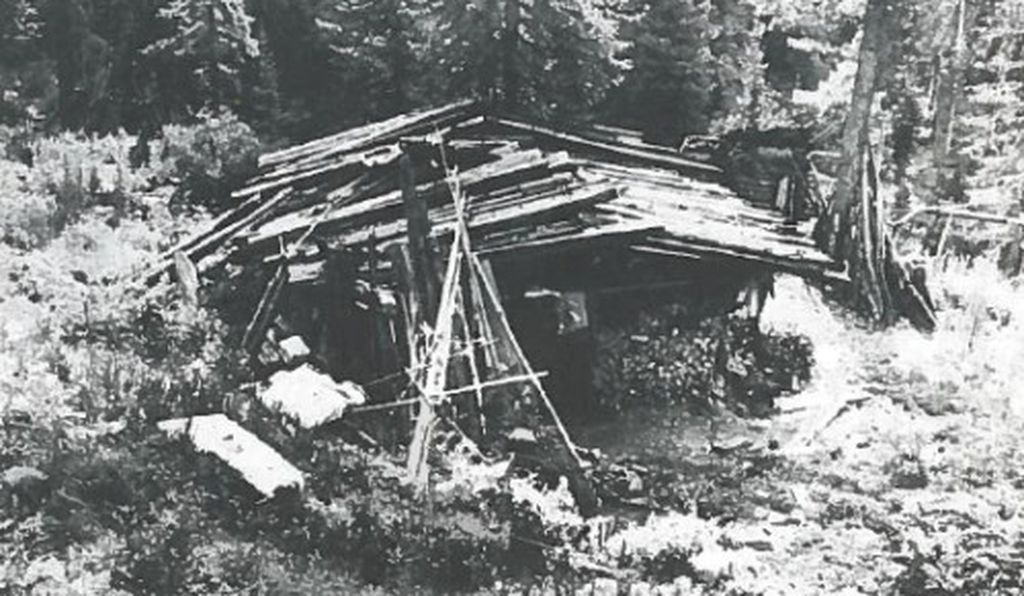
The Lykovs lived in this hand-built log cabin, lit by a single window “the size of a backpack pocket” and warmed by a smoky wood-fired stove. H/T Smithsonian

“…beside a stream there was a dwelling. Blackened by time and rain, the hut was piled up on all sides with taiga rubbish—bark, poles, planks. If it hadn’t been for a window the size of my backpack pocket, it would have been hard to believe that people lived there. But they did, no doubt about it…. Our arrival had been noticed, as we could see.

The low door creaked, and the figure of a very old man emerged into the light of day, straight out of a fairy tale. Barefoot. Wearing a patched and repatched shirt made of sacking. He wore trousers of the same material, also in patches, and had an uncombed beard. His hair was disheveled. He looked frightened and was very attentive…. We had to say something, so I began: ‘Greetings, grandfather! We’ve come to visit!’

The old man did not reply immediately…. Finally, we heard a soft, uncertain voice: ‘Well, since you have traveled this far, you might as well come in.’

From the inside, the old man’s shanty was like something medieval. Dark, cramped and filthy, this was a single room under a roof propped up by sagging joists and a bare dirt floor covered with potato peelings, and pine nuts. Most astonishing of all this forest hovel out of a Grimm’s fairy tale turned out to be home, for a family of 5.

 As eyes adjusted to the darkness the intruders spotted two women. Hysterical, quietly sobbing with terrified eyes and sinking to the floor, one of them praying, over and over. ‘This is for our sins, our sins. This is for our sins, our sins. This is for our’ 

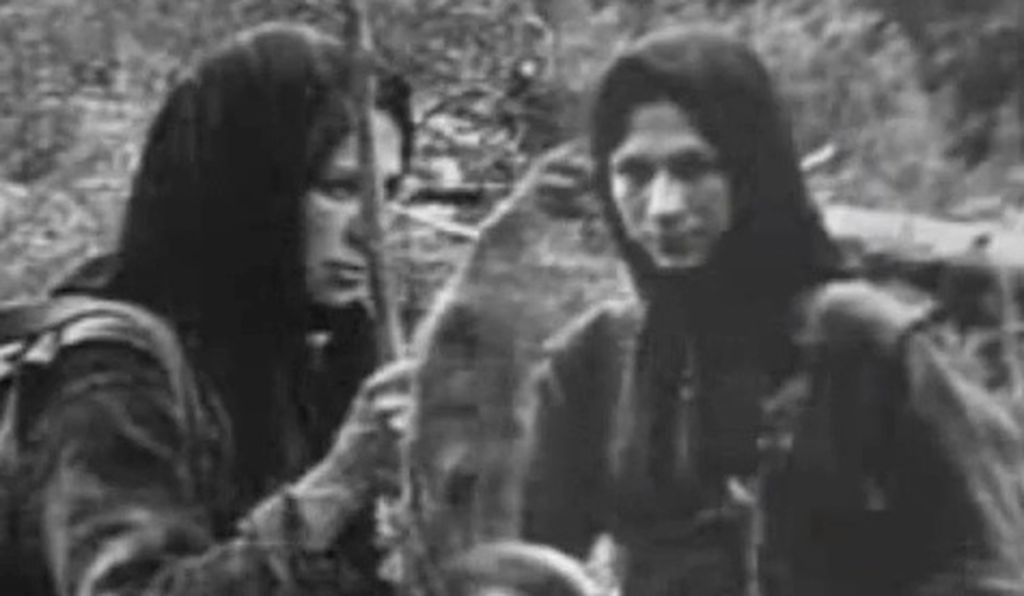
Agafia Lykova (left) with her sister, Natalia. H/T Smithsonian

This wasn’t working. The four scientists quickly backed out and regrouped at a spot, a few yards away. Sitting down to eat they waited. A half-hour later the door once again, creaked open. Wary but curious like some wild thing the three emerged, and sat down with their visitors. There were small offerings, jam, tea, and bread, but always the same response. A shaking of the head and waving of the hand. “We are not allowed that“.

The old man spoke haltingly. The two sisters spoke to one another, in a manner which sounded like some kind of “blurred cooing”.

The story that emerged that day and over several more visits became more astonishing, by the minute. The old man, his name was Karp Lykov, was part of an old, fundamentalist Russian Orthodox sect, worshiping in a style unchanged since the time, of Czar Peter the great. Things went from bad to worse following the Russian Revolution, for the “Old Believers”. As the atheist Bolsheviks took power, countless numbers of Old Believers had fled into the wilderness, to escape persecution. Sometime in the 1930s a communist patrol had shot Lykov’s brother while Karp knelt beside him, working.

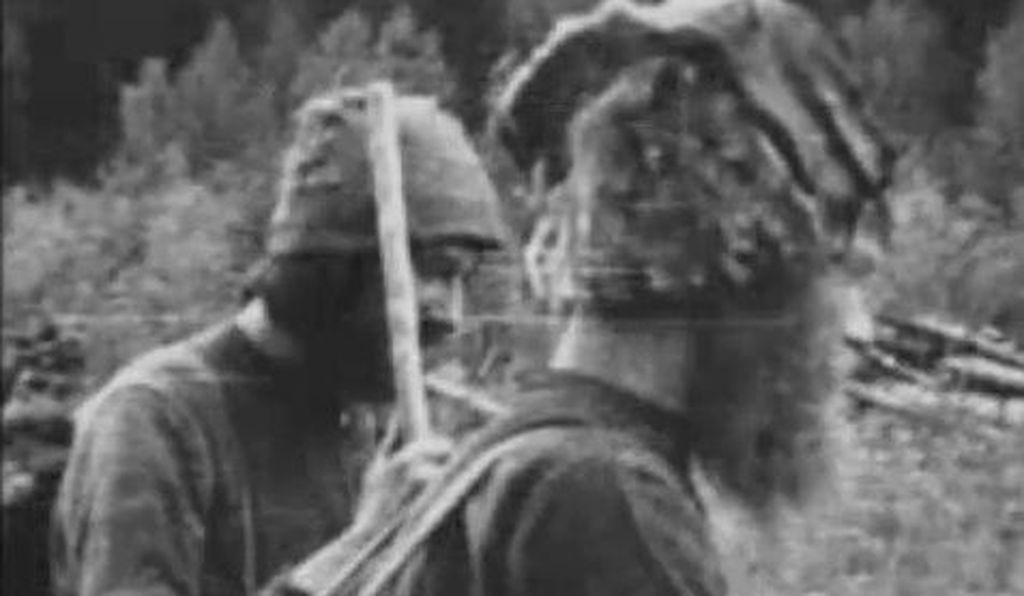
Dmitry (left) and Savin in the Siberian summer H/T Smithsonian

The Lykov family numbered 4 in 1936: Karp, his wife Akulina, a boy nine-year-old Savin, and Natalia, who was only two. Karp Lykov had to do something. The family scooped up some seeds and a few possessions and fled, into the forest. Over the years the family moved ever deeper, into the Taiga.

As the most destructive war in human history unfolded between Nazi Germany and Soviet Russia, an apocalypse known simply as the Ostfront, two more children were born in the wild. Dmitry in 1940 and Agafia, in 1943. The Lykovs missed World War 2 entirely without the slightest idea, of the outside world.

Life in the Taiga stood forever, at the brink of starvation. Roots, grass, potato tops. Every year the family meeting, whether to eat or save some of what they had, for seed. Dmitri grew hard, hunting barefoot in winter and possessed of preternatural stamina, capable of running wild animals to exhaustion and killing them, with his bare hands. With neither bow nor firearm, this was their only meat.

It snowed in June in 1961, killing their vegetables and setting the course, for famine. That was the year Akulina starved to death, preferring that her children eat. A single grain of rye managed to survive which the family guarded day and night, lest some wild animal eat their only hope.

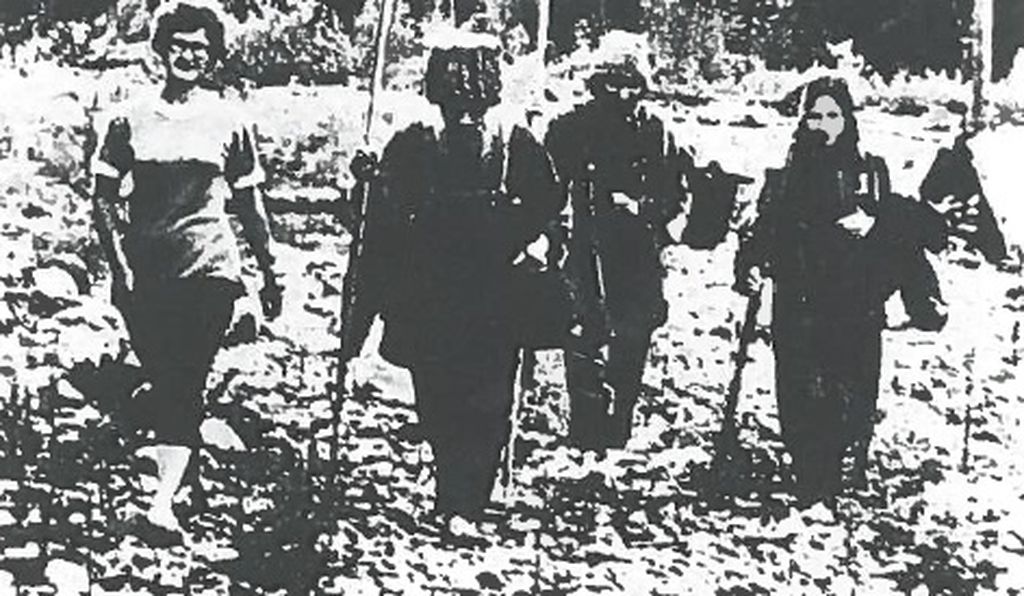
A Russian press photo of Karp Lykov (second left) with Dmitry and Agafia, accompanied by a Soviet geologist. H/T Smithsonian

Imagine. 42 years in that place without so much as a glimpse, into civilization. Nobody meant for it to happen but it was the outside world, which finally destroyed them.

Karp tried to keep it all, on the outside. The only gift he would accept was salt but, over time, the younger Lykovs gave in. Here a knife and fork and there an electric flashlight. None of them could take their eyes off the television, at the geologist’s camp.

The family went into decline. In the fall of 1981, three of the Lykov children died within days of each other. Savin and Natalia suffered from kidney failure, probably as the result of their harsh change in diet. Dmitri, the consummate outdoorsman who knew the Taiga in all her moods, succumbed to pneumonia, probably begun as an infection contracted from one of his new friends.

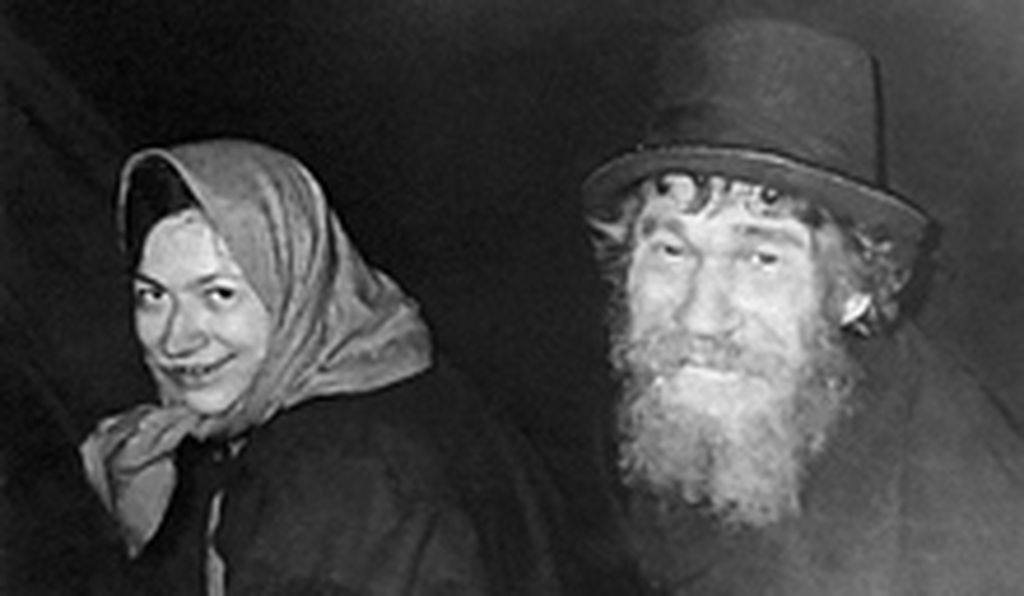
Karp Lykov and his daughter Agafia, wearing clothes donated by Soviet geologists not long after their family was rediscovered. H/T Smithsonian

They tried to call him a helicopter but Dmitry would not leave his family. “We are not allowed that,” he murmured, just before he died. “A man lives for howsoever God grants.”

The geologists tried to persuade Karp and Agafia to come out of the wilderness, to rejoin those of their relatives who had survived the purges, of the Stalin regime. The answer was always, “no”.

Karp Lykov died in his sleep on February 16, 1988. 27 years to the day from his wife, Akulina. Agafia buried him with the help of the geologists, on the mountainside, and then returned home.

Nothing lasts forever . There came that day when the visitors had to take their leave. One of the geologists, a driller named Yerofei Sedov, remembered: I looked back to wave at Agafia. She was standing by the river break like a statue. She wasn’t crying. She nodded: ‘Go on, go on.’ We went another kilometer and I looked back. She was still standing there.

Much of this tale comes from a 2013 article, in Smithsonian magazine. That’s where I got most of these images. At that time Agafia Lykova lived and perhaps yet lives, now approaching eighty, this child of the Taiga living alone, high above the Abakan.

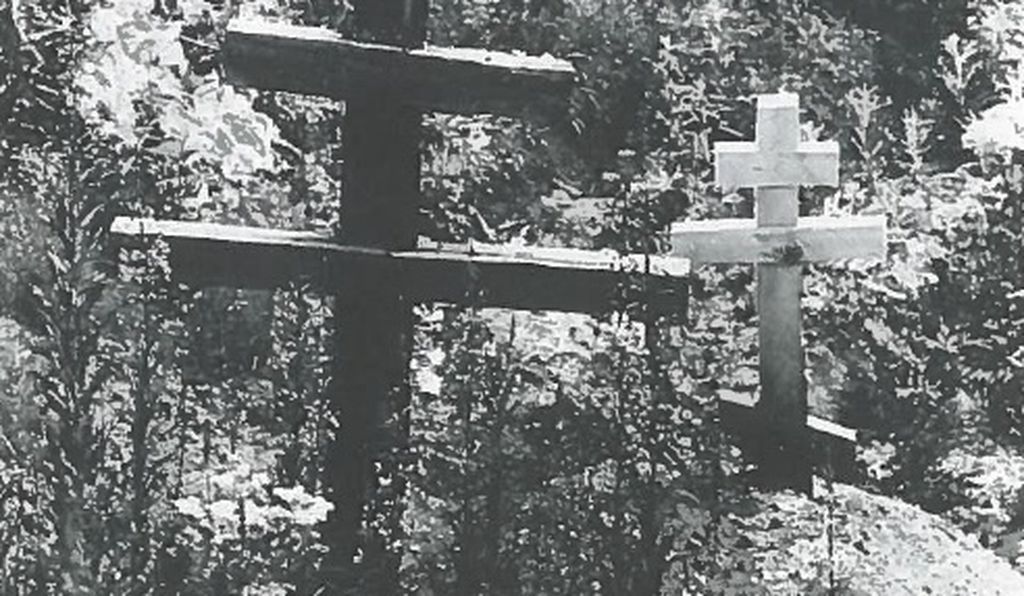
The Lykovs’ graves. Today only Agafia survives of the family of six, living alone in the taiga. H/T Smithsonian

February 15, 1946 ENIAC

We are surrounded today by computing horsepower, undreamed of by any but the science fiction buffs of earlier generations. The 8088-processor powered IBM personal computer released 40 short years ago had eight times more memory than “Apollo’s brain”, the guidance computer navigating Apollo 11 to the moon and back, ten years earlier.

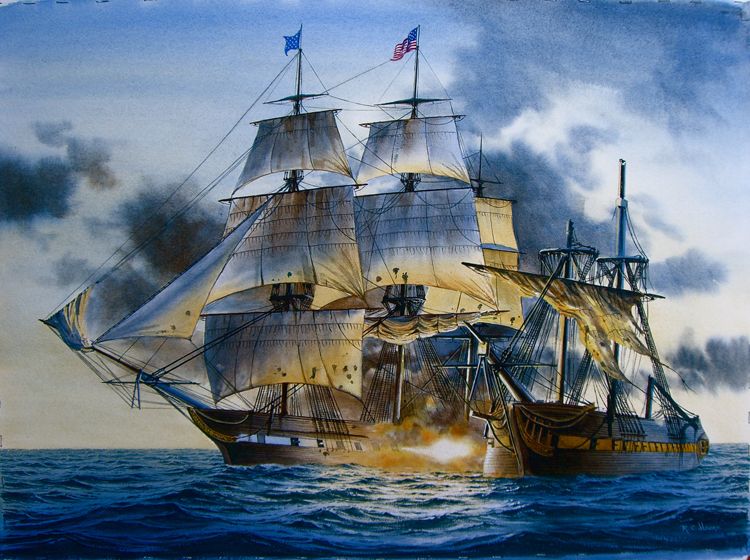
In the age of sail, naval combat was “muzzle to muzzle”. Before 1800 most such actions took place at ranges between 60 and 150 feet (18 – 46 m).

USS Constitution in combat during the War of 1812

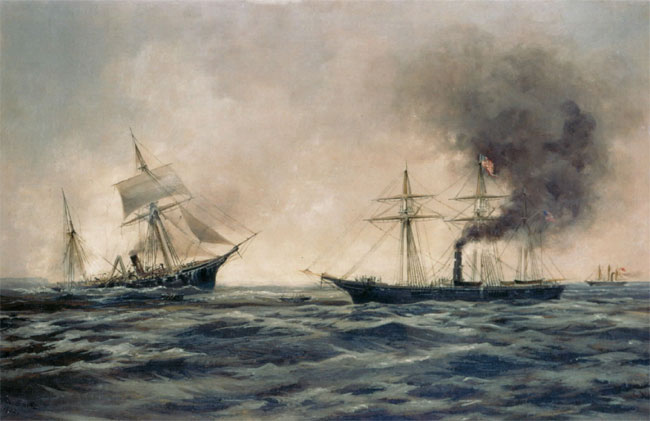
The Civil War Battle of Cherbourg in 1864 pitting the Mohican-class sloop-of-war USS Kearsarge against the Confederate commerce raider CSS Alabama, opened at 3,000 feet (910m).

Battle of Cherbourg, 1864

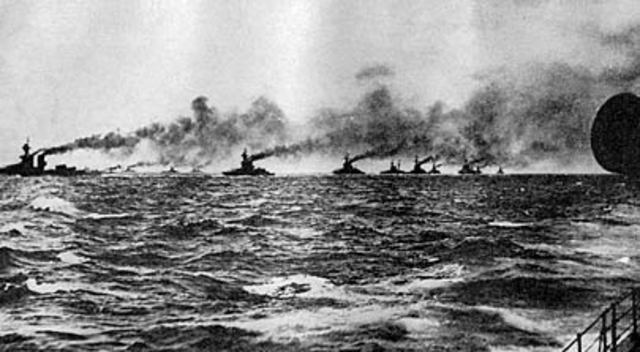
In 1884 the invention of the steam turbine produced speeds in naval vessels, never before dreamed of. By the turn of the 20th century, rifled guns of vastly larger size hurled explosive ammunition over the horizon. Enormously complex fire control solutions had to be calculated for range, movement of both vessels, elevation, the yaw of the firing ship, meteorological conditions, even the ambient temperature in powder magazines.
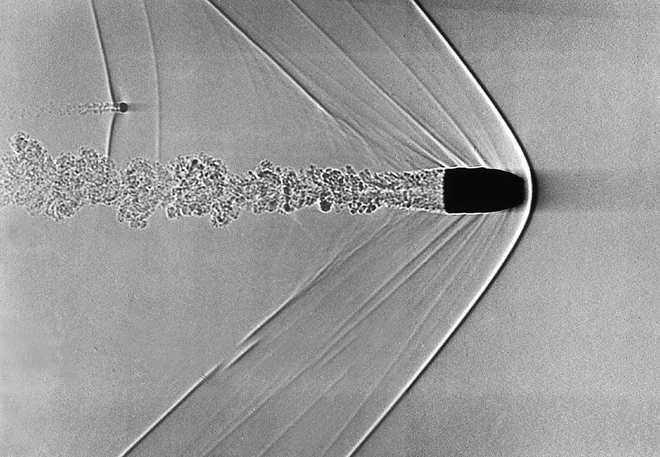
The projectile in flight is subject to forces such as gravity, drag, wind and air pressure and, at longer ranges, even latitude and rotation of the planet. Any given salvo may be accurately fired at a moving target only to fall harmlessly, several ship lengths behind. With the other guy shooting back, there isn’t always another chance to get it right.

Battle of Jutland, WW1

On land, artillery fire control solutions are nearly as complex and all of it, pertains only to a single gun. What is to be done then, about training all the guns on a warship, against a single target. What about a whole fleet?

Over time, increasingly accurate solutions were devised but, by World War 2, the race for fire control supremacy had outstripped the old ways. The penalty for failure was the difference, between life and death.

Extreme slow motion image, of air patterns around a bullet, in supersonic flight

We are surrounded today by computing horsepower, undreamed of by any but the science fiction buffs of earlier generations. The 8088-processor powered IBM personal computer released 40 short years ago had eight times more memory than “Apollo’s brain”, the guidance computer navigating Apollo 11 to the moon and back, ten years earlier.

The iPhone 5s has 1,300 times the computing power, of the Apollo moon lander.

A wonder for its time, IBM PC processors could address up to 64k at a time, within the computer’s (max) 1 mb memory. The 80286 based PC/AT released three years later sported a 20mb internal hard drive. Today, 128 bucks at Walmart will get you 4 Gigabytes of memory and a 160 gig, hard drive.

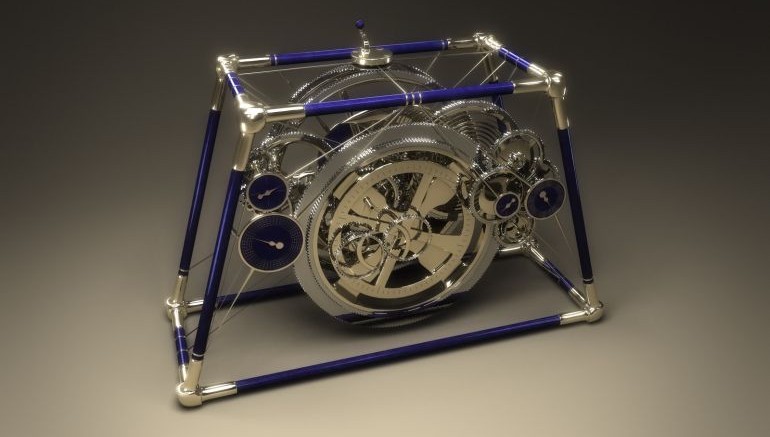
Back to artillery. The idea of a calculating machine was anything, but new. The abacus has been around for 3,000 years. The hand operated Antikythera analog computer dredged up from the ocean bottom in 1901, may go back as far as 205 BC. The 12th century “castle clock” invented by the Muslim polymath Ismail al-Jazari may be the world’s first programmable computer, capable of showing local time, lunar and solar orbits and even adjusting for length of day at certain times of the year.

Modern recreation of the ancient Antikythera mechanism

The US Army commissioned a study for a giant electronic “brain” to calculate firing tables back on May 31, 1943. Work began with Johns Hopkins physicist John Mauchly with chief engineer John Presper Eckert of the University of Pennsylvania’s Moore School of Electrical Engineering.

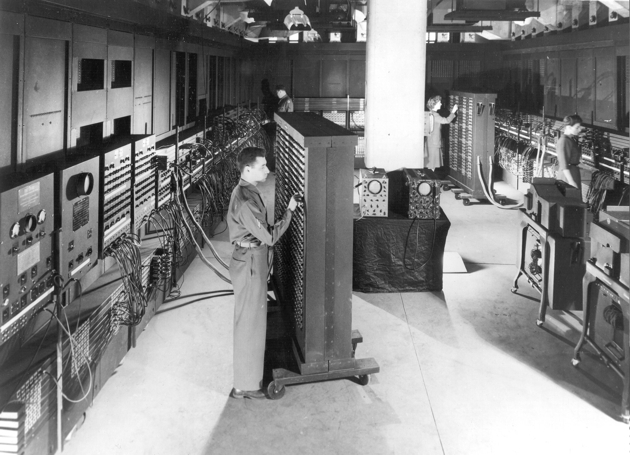
It took a year for the team to design the machine and another 18 months to build it. The Electronic Numerical Integrator and Computer (ENIAC) was officially powered up in November, 1945.

The one thing those ancient machines have in common, is they were all hardware. “Software”, as it was known to programmers of the 1940s, had instructions written directly into the machine, in binary code.

The war was over in December 1945 but the military still had work for ENIAC to do. The first real-world calculations were performed On December 10.

ENIAC was formally dedicated at the University of Pennsylvania on February 15, 1946. Risible though the machine may be by modern standards, ENIAC was a wonder of science and technology, for its time. The press dubbed the thing, a “Giant Brain”. A trajectory taking 20 hours to calculate by humans took 30 seconds. One ENIAC was the computational equal, of 2,400 humans.

What the press didn’t know, was behind the scenes. In the early days of the war, the Moore School of Engineering worked with the Ballistic Research Laboratory (BRL) where a team of 100 “human computers” were trained to hand-calculate firing tables for artillery shells. With so many men off to war and programming seen at that time as “clerical work” the BRL hired, mostly women.

These were the “Top Secret Rosies”, the female “computers”, of WW2. When the ENIAC project began six of them came over, as programmers.

Marlyn Wescoff [left] and Ruth Lichterman were two of the female programmers of ENIAC. H/T Institute of Electrical and Electronics Engineers

Projects involved design for the hydrogen bomb, weather predictions, cosmic-ray studies, thermal ignition, random-number studies and wind-tunnel design.

ENIAC began as a room-sized modular computer comprised of individual panels, to perform different functions. Numbers were sent back & forth on buses, called trays. At its height ENIAC had 18,000 vacuum tubes, 7,200 crystal diodes, 1,500 relays, 70,000 resistors, 10,000 capacitors and something like 5 million hand soldered joints occupying 1,800 square feet. The machine consumed 150 kilowatts of electricity. Rumor had it when ENIAC was switched on the lights in all Philadelphia, dimmed.

All things must come to an end. ENIAC, once a wonder of science and technology was already obsolete, by 1956. At its height, the machine weighed in at 25 tons and performed 5,000 calculations, per second. Weighing in at 4.55 ounces the iPhone 6, performs 25 Billion calculations per second.

Today the electronic descendants of ENIAC perform tasks of increasing, even mind boggling complexity. Mapping the human genome. Climate research. Exploration, for oil and gas.

Before long top-of-the line mainframe computers were performing at a rate not in the thousands of instructions per second but MIPS. Millions of instructions per second. The first supercomputer arrived in 1965 with so much horsepower as to require a whole new unit of measure: FLOPS “floating-point operations per second”.

The term wasn’t in use during ENIAC’s day but, if it was, that bad boy was chunkin’ along, at 500 FLOPS. Supercomputer performance metrics have since climbed the metric decadic system, bending vocabularies to new and hitherto unimagined heights. KiloFLOPS was eclipsed by megaFLOPS and gigaFLOPS and continued ever onward. The “tera” prefix (Trillion) gave way to the dizzying petaFLOP, or one one quadrillion: a thousand trillion floating point line operations, per second.

“The IBM Blue Gene/P supercomputer “Intrepid” at Argonne National Laboratory runs 164,000 processor cores using normal data center air conditioning, grouped in 40 racks/cabinets connected by a high-speed 3-D torus network”. H/T Wikipedia

In April 2020 the distributed computing network folding@home acheived computing performance of one exaFLOPS. Unless you’re in interplanetary space I can’t think of another use, for such a number. Unless we’re talking about the federal debt.

As of January 2021 no single machine has scaled such heights, but they’re working on it. One exaFLOPS. A quintillion floating point line operations, per second. The estimated speed at the neural level, of the human brain.

February 12, 1554 No Sadder Spot on Earth

The “Nine Day Queen” ​experienced the swiftest rise and fall of any Monarch, in the history of the English crown. She never wanted any of it, but it didn’t matter. The ambitions of others would cost the teenage Lady Jane, her head.

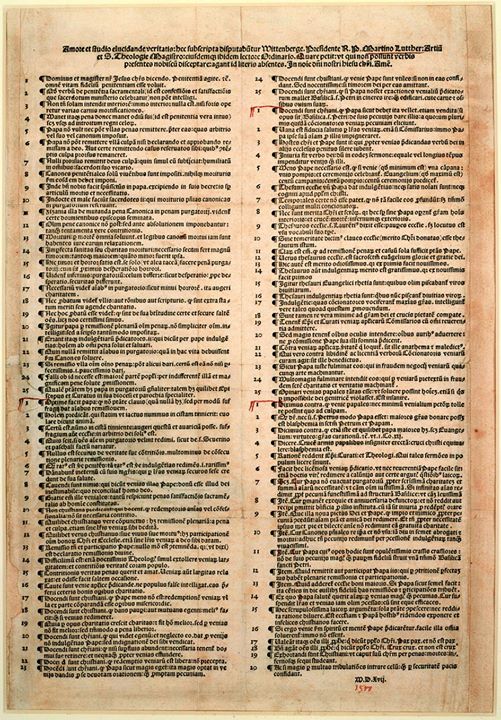
A popular story has Martin Luther nailing a challenge to Church authority to the Wittenberg Palace Church, in 1517. In all probability, it never happened that way. Luther had no intention of confronting the One Church at this time. This was an academic work, mailed to Archbishop Albrecht and offered for scholarly disputation.

Luther’s “95 theses” rocked the Christian world and may be counted among the most important documents in world history, alongside the Cylinder of the Persian King Cyrus, the Magna Carta and the Declaration of independence.

What seems to the modern mind as mere doctrinal differences, were life and death matters in the late middle and early modern ages.

The European “Wars of Religion” spawned by the Protestant Reformation raged across Europe for a hundred years. Other issues were involved as well – territorial ambitions, revolution, Great Power conflicts, but fault lines pulling at the Christian world, were never far from the surface. The Peasant’s War of 1524-’25 alone killed more Europeans than any conflict prior to the French Revolution, in 1789. The Thirty Years’ War of 1618-’48 laid waste to Germany and killed a third of its population, a death rate twice that of World War I.

The Protestant Reformation spread across Europe reaching its greatest geographic extent in the latter half of the 16th century. In England, the schism began with Pope Clement VII and King Henry VIII, of England. Desperate for a male heir, Henry sought divorce from Catherine of Aragon in order to marry Anne Boleyn. The Pope refused an annulment. Before it was over King Henry VIII had established the church of England with himself, at its head.

Henry died in 1547 leaving his son by Jane Seymour, the nine year old Edward Tudor, King. Next in order of succession came Edward’s half-sister by Catherine of Aragon Mary Tudor, followed by his half-sister Elizabeth, daughter of Anne Boleyn.

Despite breaking with the church in Rome, Henry never permitted the renunciation of Catholic doctrine, or ceremony. Henry, the first English monarch raised as a Protestant, dispensed with clerical celibacy and the Mass, and required services to be conducted, in English.

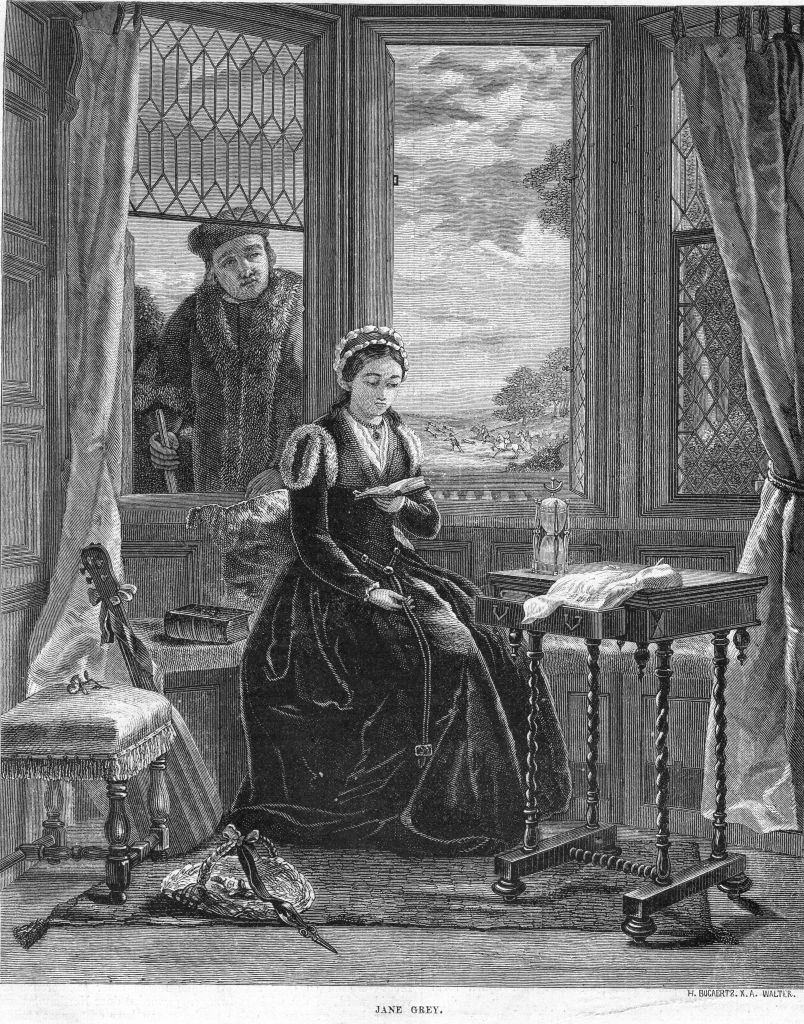
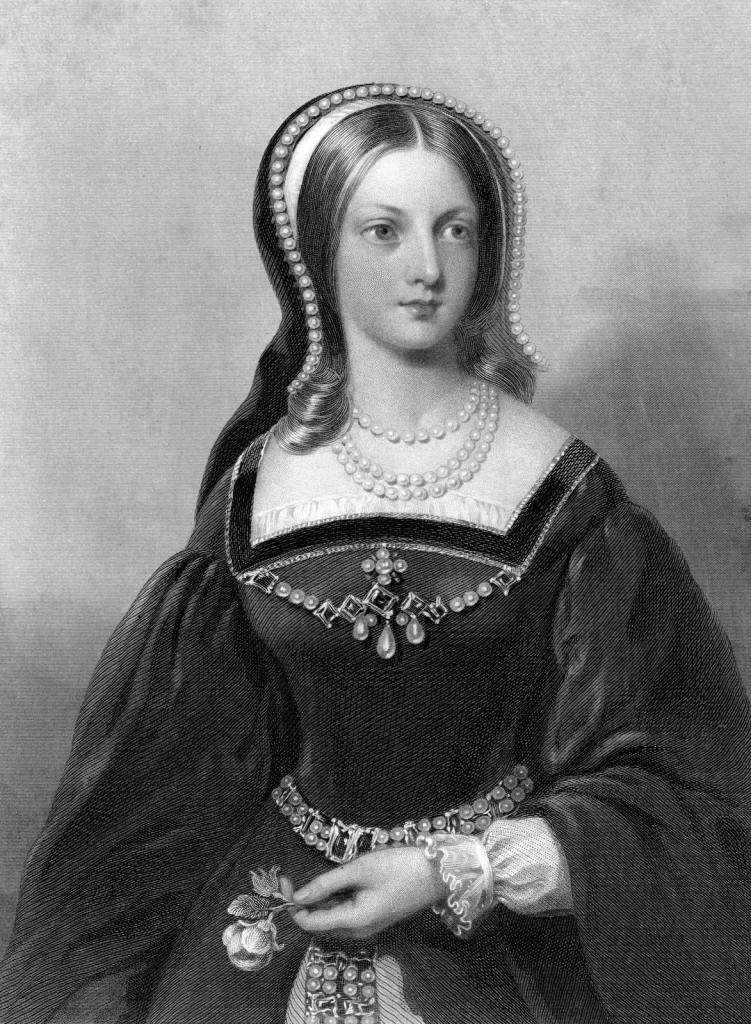
Despite her title, Henry’s cousin Jane had little use for the goings on at the royal court. “Lady” Jane Grey would rather read a book. Pretty, smart and well educated, she was the daughter of Henry’s younger sister and as such, in line for the crown.

At nine Jane was sent to live with Henry’s widow, Katherine Parr.

There exists among us a type of person, with an insatiable need to control the lives of others. People who desire power, above all things. Call it a personality defect or a psychological condition, that’s up to you, but one thing is certain. History is replete with such individuals at all times and in all political stations. All too often, these are the people who Become, history.

Books have been written about the scheming, the grasping for power behind the scenes, of the royal throne. Such machinations are beyond the scope of this essay but this story is chock full of such individuals, not the least of whom were John Dudley, duke of Northumberland and Jane’s own father, Henry.

In 1551, Henry Grey was created 1st duke of Suffolk. With pre-teen Henry on the throne Dudley, duke of Northumberland, exercised enormous power behind the scenes. In May 1553, Suffolk and Dudley arrange of their two children: Lady Jane to Northumberland’s son, Lord Guildford Dudley.

Edward ruled until the ripe old age of fifteen and fell ill from some lung condition, possibly tuberculosis. Knowing he was dying, Edward and his council drew up a “Devise for the Succession” to prevent the return of Catholic rule.

Lady Jane was devoutly Protestant. Edward bypassed his half sisters Mary and Elizabeth to name Jane Grey, his rightful heir. At fifteen, this quiet teenage girl who’d rather read a book became the Great Hope of Protestant England.

King Edward VI died on July 6, 1553 his death kept quiet, for four days. Lady Jane Grey was proclaimed Queen of England, France and Ireland on July 10, her husband Guildford, the Duke of Clarence. Jane fainted on learning she was Queen. She later said she accepted the crown, only with reluctance.

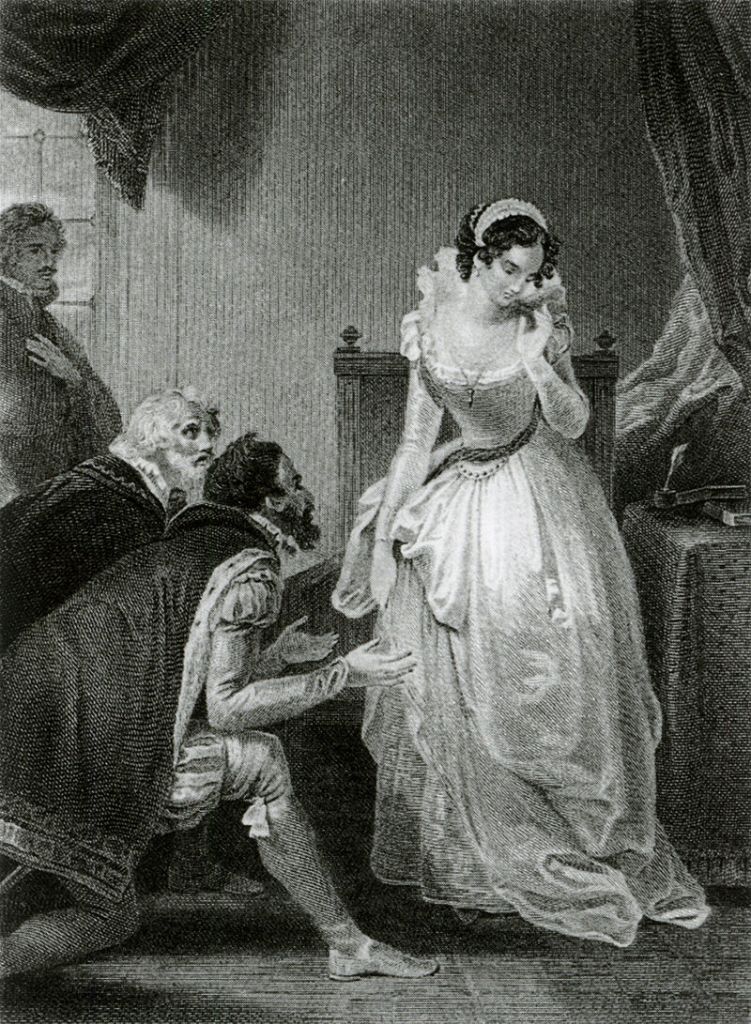
Lady Jane being asked to take the throne as imagined by artist, Robert Smirke

To the devoutly Catholic Mary Tudor, the future “Bloody Mary”, the line of succession was clear. She herself was named in the Parliamentary act of 1544. She was next according to Henry’s private papers. Mary Tudor was not about to be denied what was rightfully hers.

It is said that success has many fathers but failure, is an orphan. Dudley set out with a body of troops, to capture the would be Queen as the privy council, personal advisors to the crown, now declared support for Mary. With the rug pulled out from under him Dudley’s support, evaporated. Even Henry Grey, Jane’s father, switched his support to Mary.
Queen for only nine days, Jane was deposed on July, 19, 1553. The only English monarch in 500 years without so much, as a portrait. Now simply “Jane Dudley, wife of Guildford”, she was imprisoned in the Gaoler’s (Jailer’s) apartments at the Tower of London, Guildford in the Beauchamp Tower.

Mary rode triumphantly into London on August 3, accompanied by her half sister Elizabeth and a procession of over 800 dignitaries.

Jane was charged with high treason as was Guildford and several associates. The trial began on November 3 with no doubt, as to how it would end. Just turned 17 in October the “nine days’ Queen” was convicted of high treason and sentenced to “be burned alive on Tower Hill or beheaded as the Queen pleases”.

Even yet, there was reason to believe that Jane might be spared. What happened next sealed the teenager’s fate.

Once crowned, Mary I wasn’t about to be succeeded by her younger (Protestant) half sister, Elizabeth. She turned her attention to finding a mate. Mary needed to produce an heir. The House of commons petitioned that the new Queen select an English mate, but she chose Prince Philip of Spain.
The marriage was controversial. English patriots opposed the match, not wanting Britain relegated to a mere dependency, of the Habsburgs. English Protestants feared Catholic rule.
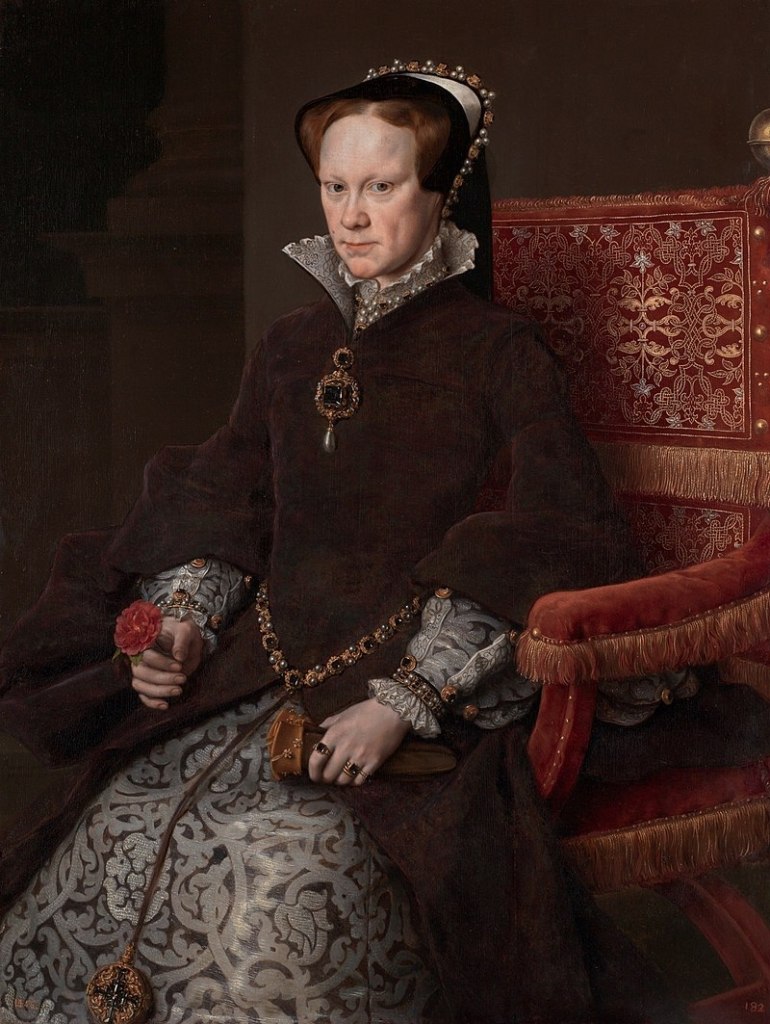
Mary I, Queen of England

There followed a series of uprisings in opposition to the marriage, called after the rebel politician Thomas Wyatt. The so-called Wyatt’s Rebellion explicitly opposed the marriage but carried with it the implication, of an intent to overthrow the Queen. There were even dark rumors, of assassination.

Jane’s father joined in the rebellion as did two of his brothers. For the government, this was the last straw. The Bishop of Winchester persuaded the Queen that Jane was a risk and would continue to be so, due to her influence over Protestant rebels. Her execution and that of her husband were scheduled for February 9.

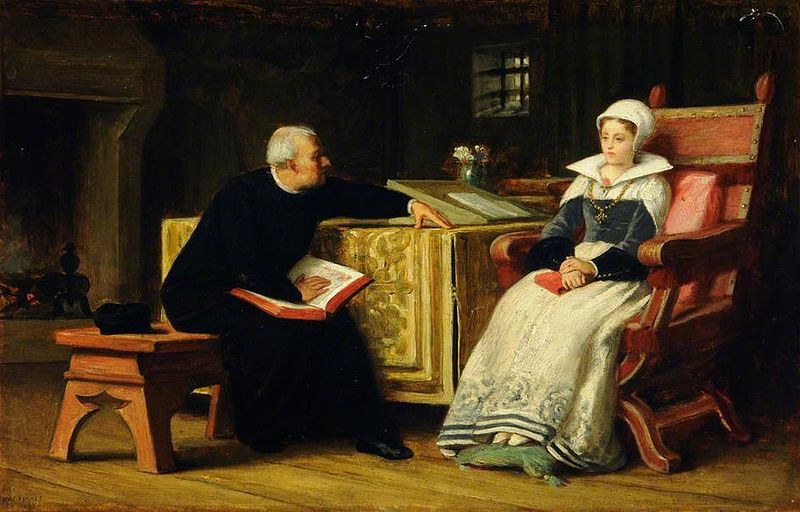
Three days were allowed for the former Queen to save her life, and convert to Catholicism. Mary even sent her chaplain John Feckenham to “save her soul”.

Jane politely declined to convert but she soon made friends, with Feckenham. She even invited him to her own execution.

On the morning of February 12, 1554, Jane watched out the window as her husband, was wheeled off in a cart. With the words “Oh Guildford” she watched the return of his body and his head, each wrapped in separate white sheets.

Then came the sound of footsteps. At her door.

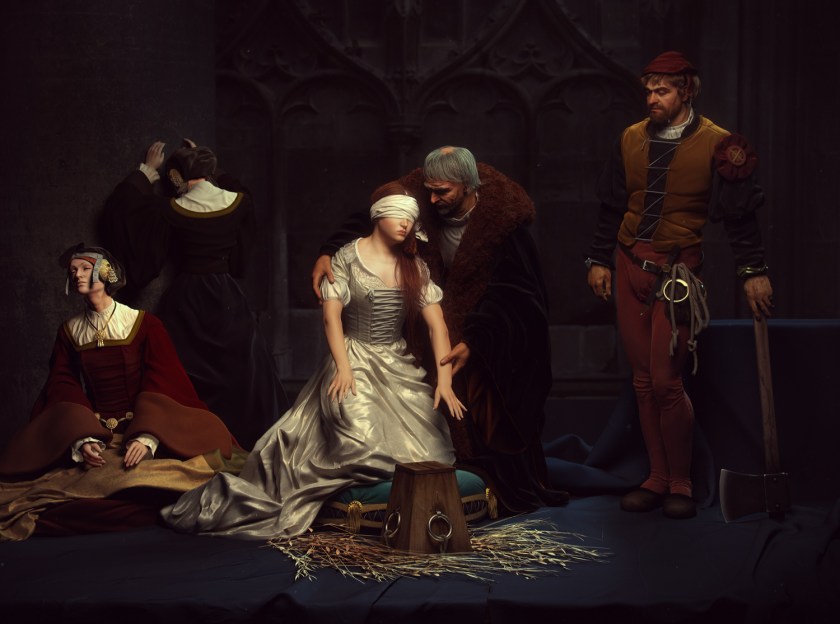
Brought to the scaffold, Jane began to speak. “Good people, I am come hither to die” concluding, “I do wash my hands thereof in innocence“. The law made her a traitor but all she had done, was accept the positi0n.

She recited Psalm 51 (Have mercy upon me, O God) in English and handed her gloves and handkerchief to her maid. As was customary the executioner asked for forgiveness. That she gave, adding “I pray you dispatch me quickly.” She then asked “Will you take it off before I lay me down?” She was referring to her head. “No Madame”, came the reply. Lady Jane applied her own mask and reached out groping, for the block. In that she received help. Outstretching her arms, she spoke. Jesus’ last words, as recounted by Luke: “Lord, into thy hands I commend my spirit.”

The slender neck was parted, with a stroke.

There was no funeral. No stone to mark the grave. Lady Jane was simply buried, along with her husband in the parish church of the Tower of London. Saint Peter ad Vincula. (“St. Peter in chains”). She is the last of five beheaded females buried in the chancel area, along with Queen Anne Boleyn, Queen Katherine Howard, Lady Rochford and Margaret Pole, Countess of Salisbury.

Three hundred years later the essayist Thomas Babington wrote in memoriam, of those who rest, at St. Peter ad Vincula:

“In truth there is no sadder spot on the earth than that little cemetery. Death is there associated, not, as in Westminster Abbey and Saint Paul’s, with genius and virtue…but with whatever is darkest in human nature and in human destiny, with the savage triumph of implacable enemies, with the inconstancy, the ingratitude, the cowardice of friends, with all the miseries of fallen greatness and of blighted fame…”.

Church graveyard at St. Peter ad Vincula

February 10, 1258 The Fall of Baghdad

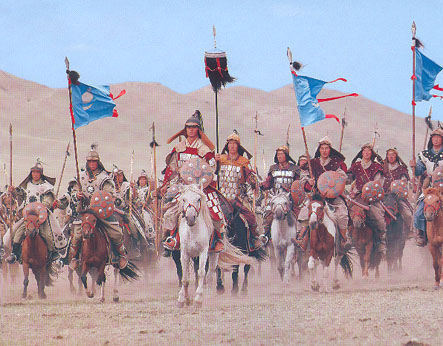
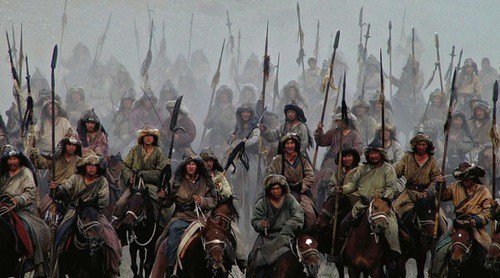
Imagine an army of circus riders, each capable of hitting a bird in flight. In an age when armies moved at a rate of low double-digits per day, these riders could cover 100 miles and more.

The Abbasid Caliphate of Islam, descended from the uncle of Muhammad Al-Abbas ibn Abd al-Muttalib and established in 750, was the third Islamic Caliphate since the time of Muhammad.

Following the fall of the Umayyad Caliphate of greater Syria, the Abbasid caliph al-Mansur established a new capital on the banks of the Tigris River, occupied by a Persian village called Baghdad. Mansur’s grandson Harun al-Rashid subsidized the work of scientists, religious scholars, poets and artists who converged into the city. Books and manuscripts were written on paper, a new technology imported from China, and bound, in finest leathers. No fewer than 36 public libraries were built in addition to the grand library, the ‘house of Wisdom”. Baghdad became a center for learning in the medieval world, unusual for the time, most of its citizens, were literate.

Over the next 200 years, local conflicts reduced Abbasid control over much of the vast Islamic empire, to a mostly religious and ceremonial role. But for Baghdad itself, which continued to grow into the center of science, culture and philosophy western writers would later call, the Golden Age of Islam.

Meanwhile far to the east, a boy was born to the Mongol chieftain Yesügei, born with a blood clot grasped in his fist. It was a sign, they said, that this child was destined to become a great leader.

The Eurasian Steppe is a vast region of grasslands and savannas, extending thousands of miles east from the mouth of the Danube, nearly to the Pacific Ocean. There’s no clearly defined southern boundary, as the land becomes increasingly dry as you move south. To the north are the impenetrable forests of Russia and Siberia.

The 12th century steppe was a land of inter-tribal rivalry, immersed in a poverty so profound that many inhabitants went about clad in the skins, of field mice. acts of violence would be met with retribution and response between a kaleidoscope of ever-changing tribal confederations, compounded and egged on by the interference of foreign powers such as the Chinese dynasties of the Song and the Jurchen, to the south.

By 1197, that boy would unite the nomadic tribes of northeast Asia to become the largest contiguous empire in history, extending from Korea in the east, through Baghdad and Syria all the way into eastern Europe. One-fifth of the inhabited land area, of the entire planet. His name was Temujin, known to history as the Great Leader of the Mongol Empire, Genghis Khan.

Fun fact: Genghis Khan is often depicted with Asian features, though history fails to record of what the man actually looked like. He never let anyone paint his likeness. The Eurasian Steppe was a major crossroad before written history with genetic makeup as diverse, as any on the planet. There is evidence suggesting he had red hair and green eyes, or maybe blue. Think of that beautiful young Afghan girl, the one with those killer eyes on that National Geographic cover, a few years back.

The Mongol conquests of Genghis Khan and his successors were one of the deadliest episodes, in world history. Between 1206 and 1405, victims are estimated to number between 20 and 57 million. This at a time when the world’s population, was around 450 million. In 1221, Mongol armies carried out one of the bloodiest massacres in history in the old city of Urgench, in modern Turkmenistan. An army of two tumens (20,000) was ordered to murder 24 people, per man. In 1241, five separate Mongol armies invaded Hungary, the main armies under Subutai and Batu Khan. When it was over a third to one-half of the Hungarian population, had ceased to exist.

Let it be said that Batu was also known as Sain Khan, Mongolian for “Good Khan”.

According to The Secret History of the Mongols, Genghis Khan and his son and successor, Ögedei, ordered Chormaqan to attack Baghdad, in 1236. The general made it as far as Irbil about 200 miles from Baghdad, but the mongols would return. Just about, every year. Muslim armies were at times successful against such invasions and at other times, not. By 1241, the Caliph had had enough and began the annual payment of tribute.

That lasted five years. Baghdad sent emissaries to the coronation of Güyük Khan as khagan (Great Khan) in 1246 and that of Möngke Khan, in 1251. Güyük expected full submission and demanded the presence of Caliph Al-Musta’sim in Karakorum, the capital of the Mongolian empire.

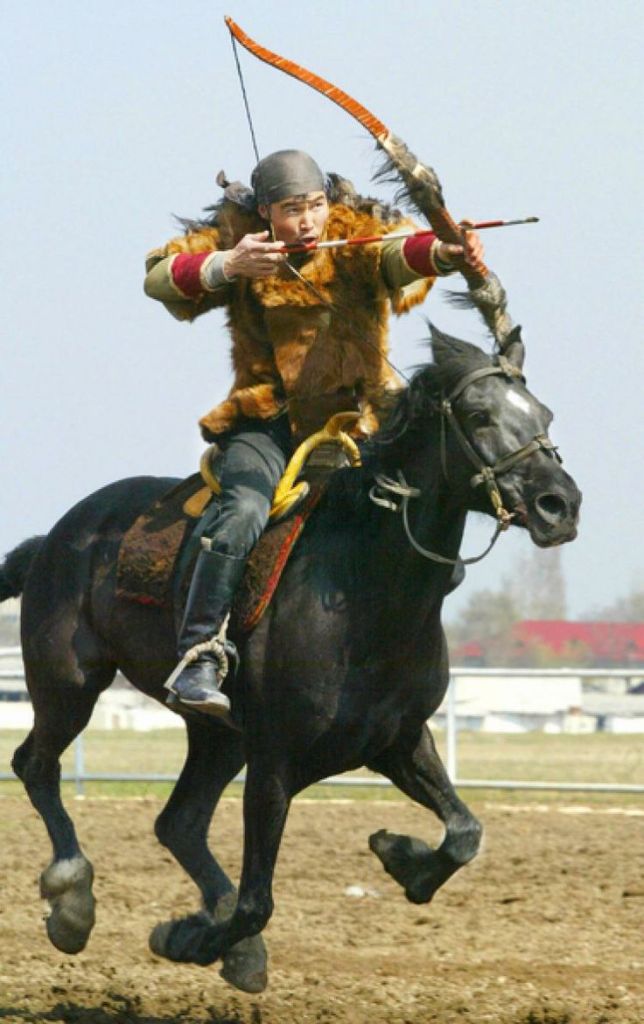
Imagine an army of circus riders, armed a minimum of 60 arrows apiece. Laminate composite bows combined the compression of horn with the elongation of sinew to develop draw weights up to 160-pounds. Each was capable of hitting a bird in flight. Stirrups allowed them to fire in any direction, even to the rear. Each rider has no fewer than 3-4 small, fast horses and is able to transfer mounts in mid-gallop to keep his horses fresh.  In an age when armies moved at a rate of low double-digits per day, these riders could cover 100 miles and more. 

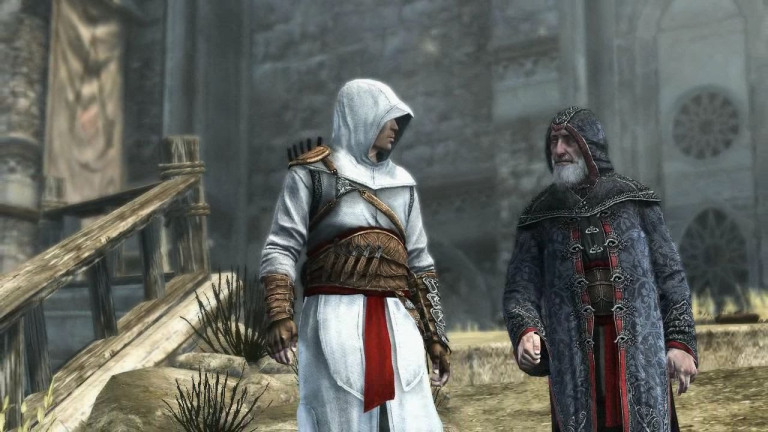
Since 1092 the charismatic and reclusive Hasan-i Sabbah and his successors kept far more powerful adversaries in their place using a secretive, elite band of fida’in adherents to the Isma’ili sect of Shia Islam. Great figures Muslim and Christian alike feared the secretive Hashashin (assassins) of the Alamut valley. The great Saladin himself was not safe from these people. The Muslim military leader awoke on this day in 1176 to find a note resting on his breast, along with a poisoned cake. The message was clear. Sultan of all Egypt and Syria though he was, Saladin made an alliance with the rebel sect. There would be no more such attempts on the General’s life.

The Grand Master of the Assassins even tried to assassinate Möngke Khan and the Nestorian Christian ally of the Mongol Empire, Kitbuqa Noyan. It was a bad idea.

In 1253, Noyan was ordered to destroy several Hashashin fortresses. Möngke’s brother Hulagu conscripted one in every ten military age males in the entire empire and rode out in 1255, at the head of the largest Mongol army ever seen. Their orders were to treat those who submitted with kindness, and to utterly destroy those who opposed them.

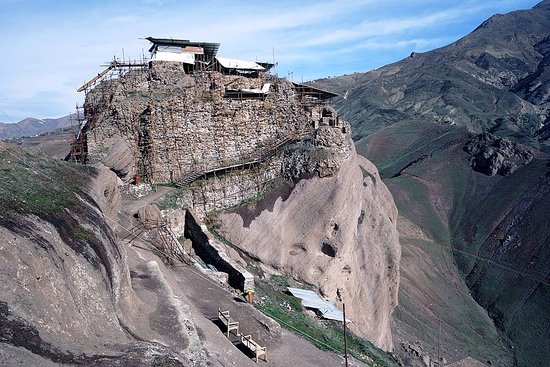
Rukn al-Dīn Khurshāh, fifth and final Imam who ruled at Alamut, submitted after four days of preliminary bombardment. Mongol forces under the command of Hulagu Khan entered and destroyed the Hashshashin stronghold at Alamut Castle on December 15, 1256.

As Khan, Möngke wanted full submission from several Muslim states, including the caliphate. Hulagu sent word to Baghdad, demanding submission. Musta’sim must have gotten some bad advice. Convinced the Muslim world would rise up against the invader, the caliph sent word. They could all go back where they came from.

A force of some 120,000 Mongol, Turkic and Manchurian cavalry arrived on the outskirts of Baghdad on January 29, 1258. 1,000 Chinese siege engineers joined in along with a force of Armenian and Georgian Christians, bent on revenge for raids carried out against the homeland.

20,000 Muslim horsemen sent out to do battle were crushed while Mongol sappers breached dikes along the Tigris, trapping Abbasid forces outside the city.

The mongol army constructed a palisade and a ditch around the city. Seige engines and catapults pounded the walls. By February 5, Hulagu’s forces had seized much of the defenses. Al-Musta’sim attempted to parlay but it was too late for that. 3,000 of Baghdad’s “notables” then attempted to negotiate. Every one of them were slaughtered.

The city surrendered on February 10, 1258. Mongols held back at last entering the city, on February 13.

To the modern reader, the ‘bloodiest day in human history” conjures images of modern warfare. The industrialized warfare of the Somme. Stalingrad. The homicidal regimes of Adolf Hitler, Mao, Pol Pot and Stalin. Maybe so but many events in this parade of horribles unfolded over weeks, or months, or years.

A million people live in Baghdad on February 28, 1258. The orgy of killing that began on February saw no fewer than 90,000 killed one at a time, with edged or pointed weapons. Some estimates run to several times that number.

Hulagu’s Nestorian Christian wife Dokuz Khatun persuaded him to spare Baghdad’s Christians. All others, men, women and children, were slaughtered. The largest collection of books on the planet were torn to shreds, their leather jackets used for sandals and pages thrown in the river. They say the Tigris ran red with the blood of the slain, and black with the ink from all those books.

This was all carried out in front of Caliph Al-Musta’sim. His family was murdered save for a son brought back to Mongolia and a daughter taken as concubine, to Hulagu.

Believing the earth to be offended by the spilling of royal blood, Mongols rolled Caliph Al-Musta’sim himself up in a carpet and trampled him to death, with their horses.

So many people died in the sack of Baghdad, there was no longer labor to maintain agricultural systems. Irrigation canals not destroyed in the assault, broke down and silted up. Generations would come and go before the city regained anything close, to its former population. That center of learning in the medieval world, Muslim and non-Muslim alike, was gone forever.

February 9, 1945 An Underwater Chernobyl

Only 4kg of mercury are estimated to have leaked so far, about nine pounds, and surrounding waters are already off limits, to fishing. The Nazi submarine sank this day in 1945 carrying 67 tons.

A light rain fell on Heston Aerodrome in London, as thousands thronged the tarmac awaiting the return of British Prime Minister Neville Chamberlain. Searing memories of the Great War only 20 years in the past, hung over London like some black and malevolent cloud.

Emerging from the door of the aircraft that evening in September, 1938, the Prime minister began to speak.  The piece of paper Chamberlain held in his hand annexed that bit of the Czechoslovak Republic known as the “Sudetenland”, to Nazi Germany. Germany’s territorial ambitions to her east, were sated. It was peace in our time.

With the March invasion of Czecho-Slovakia, Hitler demonstrated even to Neville Chamberlain that the so-called Munich agreement, meant nothing. That Poland was next was an open secret.  Polish-British mutual aid talks began that April. Two days after Nazi Germany and Stalin’s Soviet Union signed the Molotov-Ribbentrop non-aggression pact, the Polish-British Common Defense Pact was added to the Franco-Polish Military Alliance.  Should Poland be invaded by a foreign power, England and France were now committed to intervene. That same month the first fourteen “Unterseeboots” (U-boats) left their bases, fanning out across the North Atlantic. 

The German invasion of Poland began on September 1, the same day the British passenger liner SS Athenia departed Glasgow for Montreal with 1,418 passengers and crew.  Two days later Great Britain and France declared war, on Germany. With the declaration only hours old, Athenia was seating her second round of dinner guests, for the evening.

At 19:40, U-30 Oberleutnant Fritz Julius Lemp fired two torpedos, one striking the liner’s port side engine room.   14 hours later, Athenia sank stern first with the loss of 98 passengers and 19 crew. The Battle of the Atlantic, had begun.

In a repeat of WWI, both England and Germany implemented blockades on one another.   And for good reason.  At the height of the war England alone required over a million tons a week of imported goods, to survive and to stay in the fight.

The “Battle of the Atlantic” lasted 5 years, 8 months and 5 days ranging from the Irish Sea to the Gulf of Mexico, from the Caribbean to the Arctic Ocean. 

New weapons and tactics would shift the balance first in favor of one side, and then to the other.  Before it was over 3,500 merchant ships and 175 warships were sunk to the bottom. 500,000 tons of allied shipping was sunk in June 1941, alone.

Nazi Germany lost 783 U-boats.

Submarines operate in 3-dimensional space but their most effective weapon, does not.  The torpedo is a surface weapon operating in two-dimensional space:  left, right and forward.  Firing at a submerged target requires that the torpedo be converted to neutral buoyancy. The complexity of firing calculations are all but insurmountable.

The most unusual underwater action of the war occurred on February 9, 1945 in the form of a combat between two submerged submarines. 

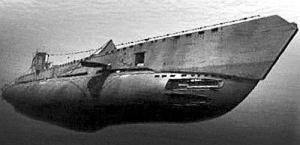
u-864
U-864

The war was going badly for the Axis Powers in 1945, the allies enjoying near-uncontested supremacy over the world’s shipping lanes.  Any surface delivery between Nazi Germany and Imperial Japan was sure to be detected and destroyed.  The maiden voyage of the 287-foot, 1,799 ton German submarine U-864 departed on “Operation Caesar” on December 5, delivering Messerschmitt jet engine parts, V-2 missile guidance systems and 67 tons of mercury to the Imperial Japanese war production industry.

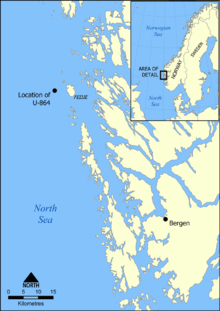
u-864-location

The mission was a failure, from the start. U-864 ran aground in the Kiel Canal and had to retreat to Bergen, Norway, for repairs. The submarine was able to clear the island of Fedje off the Norway coast undetected on February 6.  By this time British MI6 had broken the German Enigma code and were well aware, of Operation Caesar.

The British submarine Venturer, commanded by 25-year-old Lieutenant Jimmy Launders, was dispatched from the Shetland Islands to intercept and destroy U-864.

ASDIC, an early name for sonar, would have been helpful in locating U-864, but at a price.  That familiar “ping” would have been heard by both sides, alerting the German commander he was being hunted.  Launders opted for hydrophones, a passive listening device which could alert him to external noises.  Calculating his adversary’s direction, depth and speed was vastly more complicated without ASDIC but the need for stealth, won out.

U-864 developed an engine noise and commander Ralf-Reimar Wolfram feared it might give him away. The submarine returned to Bergen for repairs.  German submarines of the age were equipped with “snorkels”, heavy tubes which broke the surface, enabling diesel engines and crews to breathe while running submerged.  Venturer was on batteries when those first sounds were detected.

The British sub had the advantage in stealth but only a short time frame, in which act.

u-864-wreck

A four dimensional firing solution accounting for time, distance, bearing and target depth was theoretically possible but had rarely been attempted under combat conditions.  Unknown factors could only be guessed at.

A fast attack sub Venturer only carried four torpedo tubes, far fewer than her much larger adversary.  Launders calculated his firing solution, ordering all four tubes and firing with a 17½ second delay between each pair.  With four incoming at different depths, the German sub didn’t have time to react.  Wolfram was only just retrieving his snorkel and converting to electric, when the #4 torpedo struck.  U-864 imploded and sank, instantly killing all 73 aboard.

So, what about all that mercury?

In our time, authorities recommend consumption limits of certain fish species. Sharp limitations are recommended for pregnant women and nursing mothers.

Fish and shellfish have a natural tendency to concentrate or bioaccumulate mercury in body tissues in the form of methylmercury, a highly toxic organic compound of mercury. Concentrations increase as you move up the underwater food chain. In a process called biomagnification, apex predators such as tuna, swordfish and king mackerel may develop mercury concentrations up to ten times higher than prey species.

The toxic effects of mercury include damage to the brain, kidneys and lungs and long term neurological damage, particularly in children.

Exposures lead to disorders ranging from numbness in the hands and feet, muscle weakness, loss of peripheral vision and damage to hearing and speech.

In extreme cases, symptoms include insanity, paralysis, coma, and death. The range of symptoms was first identified in the city of Minamata, Japan in 1956 and results from high concentrations of methylmercury.

In the case of Minamata, methylmercury originated in industrial wastewater from a chemical factory, bioaccumulated and biomagnified in shellfish and fish in Minamata Bay and the Shiranui Sea. Deaths from Minamata disease continued some 36 years among humans, dogs and pigs. The problem was so severe among cats as to spawn a feline veterinary condition known as “dancing cat fever”.

Today, 67 tons of mercury lie under 490-feet of water at the bottom of the north sea, in the broken hull of Adolf Hitler’s last best chance. Rusting containers have already begun to leach toxic mercury into surrounding waters.

The wreck has been called an “underwater Chernobyl”.

Only 4kg are estimated to have leaked so far, about nine pounds, and surrounding waters are already off limits, to fishing. Pregnant and breastfeeding women and young children are advised not to eat fish caught near the wreck.

The wreck was located in 2003. Discussions began almost immediately to retrieve the deadly cargo from what Oslo’s newspaper Dagbladet called, “Hitler’s secret poison bomb.”

Now, 76 years to the day from the last dive of the U-864, the submarine’s hull and mercury containment vessels are believed too fragile to be brought to the surface.

In the fall of 2018, the Norwegian government decided to bury the thing under a great sarcophagus, of concrete and sand. Much the same technique as that used in Chernobyl to sea off contaminated reactors. The work was projected to cost $32 million (US) with completion date, of late 2020. The work was was delayed and once again, the government is now examining the possibility of retrieving the cargo.

February 8, 1587 Mary, Queen of Scots

To her detractors, Mary Queen of Scots was an adulteress if not a murderess. To her supporters she was a romantic figure not given to evil but the tragic victim, of evil times.

In 1509, the daughter of Isabella I of Castile and Ferdinand II of Aragon (yeah, That Ferdinand and Isabella), married the newly ascended King of England, Henry VIII. Six times over the next nine years, Catherine of Aragon became pregnant. Three boys, three girls.

Only one lived through the second month, Mary Tudor, destined to become Mary I, Queen of England and hated by her Protestant opponents as “Bloody Mary”.

With no surviving male heir, Henry began an affair with the daughter of the 1st Earl of Wiltshire, Mary Boleyn. Mary bore two children around this time but Henry acknowledged paternity, of neither. Instead, the King became obsessed with Mary’s sister, Anne.

Henry wanted this woman but he was caught in a pickle, between a Pope who refused to grant an annulment and a love interest who refused to become a mistress, as her sister had done. Anne Boleyn was going to be the King’s wife, or nothing.

Thus began a series of events which would culminate in schism with the Catholic church with Henry ascending to the head, of the Church of England. This was no small thing. What seems to the modern mind as mere doctrinal differences, were life and death matters in the late middle and early modern ages. The Peasant’s War of 1524-’25 alone killed more Europeans than any conflict in history, prior to the French Revolution.

While court and public alike adored Catherine, Anne was reviled. “The King’s concubine”. The woman who had bewitched a Monarch and usurped a beloved Queen consort was held personally responsible, for Henry’s break with the Church. The union produced one surviving child, Elizabeth Tudor, derided by many as the “bastard child of a whore.”

Whip smart even at the age of three, Elizabeth noticed her own change of station following the death of her mother. Anne was executed by decapitation in 1536 and replaced by Jane Seymour, 11 days later. “How haps it Governor,” she asked a year later, “yesterday my Lady Princess, and today but my Lady Elizabeth?”

Seymour gave birth to the long awaited male heir who took the throne at age 9, following the death of his father. He was Edward VI, the first English monarch brought up, as a Protestant. Jane herself died shortly after giving birth.

Wife #4, a German princess called Anne of Cleaves, was displeasing to the King. The pair was divorced, in 6 months.

Elizabeth, now nine, was given the best of education while her father remained cold. Distant. The girl would occasionally appear in court and impressed all with her intelligence but it was her teenage stepmother, Catherine Howard, with whom Elizabeth developed any kind of relationship. That all changed when the headsman’s axe came down yet again on February 13, 1542. Catherine Howard, the 5th wife of King Henry VIII, was dead. Then and there the future Queen is said to have vowed, not to marry.

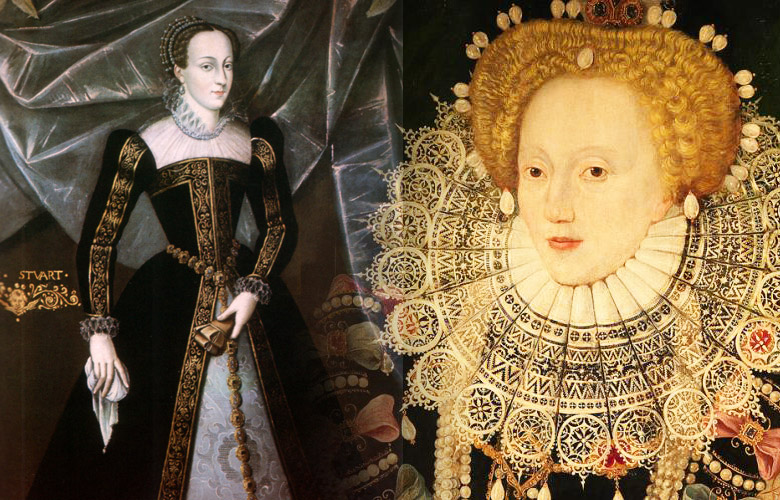
That same year a ginger-haired princess was born in Scotland, Mary Stuart, the only surviving child of King James V of Scotland and his imposing second wife the French noblewoman, Mary of Guise.

The childhood of those two girls, cousins who would never meet, could not have been more different. Mary became Queen of Scots as an infant, following the death of her father. Her mother ruled as Regent for the rest of her life, trying in vain to keep the Protestant reformation, out of Scotland.

The brilliant Elizabeth must have feared at times, for her own survival. With her future anything but certain, her very legitimacy an open question, Elizabeth learned to hold her cards close and to hold others, in suspicion.

Even with her title of “Princess” restored Elizabeth was still mostly alone, outside of court life with her books, her thoughts and the occasional visitor. Mary’s life “…from the age of six was lived at the very center of the most glamorous court in Christendom”, surrounded by pets, tutors, and adoring cousins and occupied by singing lessons, dancing and horseback riding.

Biographer Jane Dunn writes in Elizabeth and Mary: Cousins, Rival, Queens: “Mary’s sense of herself as queen had been with her from the dawning of her consciousness. It was never disputed or tested, as was Elizabeth’s. This awareness of her pre-eminence was her companion through life, something taken for granted, the responsibilities to which she did not apply much profound thought nor, in the end, much value.

Henry died in 1547 leaving Katherine Parr a widow, and the “Child King” Edward VI King of England, at the age of nine.

Henry’s long-awaited heir died at the age of fifteen to be replaced by his half sister, Mary Tudor.

Best remembered for her attempts to reassert Catholicism in England, “Bloody Mary” ruled for not-quite three years, her “Marian persecutions” responsible for hundreds of Protestant martyrs and “heretics” being burned, at the stake.

At first moved about to avoid the danger of warring clans, Mary was sent to her mother’s native France at age 5 where she was worshipped by the royal family. “The little Queen of Scots is the most perfect child that I have ever seen” gushed the French King Henry II.

As a child Queen, Mary literally walked before the King’s on children.

Royal marriages were often arranged at this time, to cement political alliances. Mary, age 5, was betrothed to Henry’s son and heir Francis, the Dauphin of France. The two could not have been more different: She, pretty and vivacious, dedicated to her studies and exceptionally tall as an adult reaching 5’11”. He was short and sickly, prone to stutter and more interested in falconry, than studying.

The couple was wed, in 1559. Francis II became the teenage King of France and after his father was killed in a joust, but the marriage didn’t last long. An ear infection turned into a brain abscess the following year.

Mary Tudor detested her half sister and, in 1554, threw her in the Tower of London where her mother Anne Boleyn, had died. “Oh Lorde!” she said. “I never thought to have come in here as prisoner!” There followed a year in exile and then a Royal Pardon. Mary I, suffering from abdominal pain which may have been uterine cancer, recognized Elizabeth on November 6, 1555. Mary Tudor, the first Queen to rule over Britain in her own right, died on November 17. Elizabeth I became Queen the same day.

Historian’s debate the new Elizabeth’s religious convictions but doubts about her own legitimacy left little doubt, she would rule as a Protestant. One day, Protestant England would go to war with itself over issues of Religious expression but, for now, Protestant England agreed. Current arrangements were better than “Popery”.

To English Catholics, the Scottish queen was the rightful heir to English throne. The 3rd succession act of 1543 said otherwise and Henry VIII’s own last will & testament precluded a Stuart from becoming sovereign, but still. Mary was the senior surviving legitimate descendant of Henry VII through her grandmother, Margaret Tudor and therefore, according to English Catholics, the rightful Queen of England.

Mary returned to Scotland in 1561. Having grown up in France she was ill prepared for the political situation in Scotland, or the Protestant reformation her mother had failed to hold off, as regent.

There followed a series of bad decisions, on Mary’s part. First her own political isolation resulting from the appointment of mostly Protestant ministers. Perhaps she had an eye toward the English throne. Next came a catastrophic error in judgement in the six-foot + form of her English-born half-cousin Henry Stuart, Lord Darnley. Mary fell hard for the man.

The marriage hardened differences in internal Scottish politics and infuriated Elizabeth. How could she marry an English subject without Her permission? Darnley became arrogant, demanding. King consort wasn’t good enough. He wanted the Crown Matrimonial, the full right of co-rule. Mary became pregnant at this time, a fact Darnley blamed on Mary’s Italian secretary, David Rizzio.

Months later, Mary would present her newborn baby boy, the future King of Scotland, to her husband. “My Lord, here I protest to God”, she said, “and as I shall answer to Him at the great day of judgment, this is your son, and no other man’s son…

It didn’t matter. Darnley and a group of Protestant Lords stabbed Rizzio to death in front of Mary, that March. Darnley himself was murdered in 1567 and Mary married James Hepburn, Earl of Bothwell, believed by many to be responsible for her husband’s murder.

Pushback was immediate, and vehement. 26 Scottish peers known as the confederate lords raised an army. Mary and Bothwell raised their own and met the lords at Carberry Hill, that June. No fighting took place but Mary’s forces dwindled through desertion, as negotiations dragged on. Bothwell himself was granted safe passage from the field while Mary was imprisoned in Loch Leven Castle, denounced as an adulteress, and murderer.

Mary escaped and this time there Was a battle. Her side lost and the Queen, now deposed, fled south to England. Mary seems to have thought Elizabeth would help regain her crown but instead, she ordered an inquiry.

Unsigned letters purported to be written by Mary were “found” in a small silver casket, seeming to establish Mary’s guilt. Three biographers later declared these “casket letters” to be outright forgeries but, no matter. The majority of commissioners accepted the letters, as valid.

Biographer Antonia Fraser describes the proceeding as one of the strangest “trials” in legal history. In the end there was no finding of guilt or innocence of either side. Perhaps that’s what Elizabeth wanted, all along. Moray was allowed to return home to Scotland. Mary remained in custody. For nineteen years.

Hers was a gilded cage to be sure with with servants, bedlinens changed daily and chefs to prepare her meals but a cage it was.

Lack of exercise and close confinement led to a host of medical problems including porphyria, and rheumatism so severe as to render her lame.

Elizabeth attempted at one point to mediate her cousin’s return to the throne but an uprising of Catholic earls convinced the Queen that Mary was where she belonged.

In 1586 there was a plot to assassinate Elizabeth and place Mary, on the English throne. Mary, betrayed by her own son in favor of Elizabeth, appears to have corresponded with the plotters. The names of so-called “Babington plot” co-conspirators were extracted by torture, participants convicted of treason, hanged, drawn and quartered. Mary herself was tried without benefit of legal counsel, evidence or witnesses, on her behalf. The Queen of Scotland was convicted of treason. Her cousin Elizabeth signed the death warrant.

100 years later, executioner James Ketch would so butcher the execution of Lord Russell (pun unintended), the axeman wrote a public letter of apology. James Scott, on ascending the scaffold for his own execution “bid the fellow to do his office better than to the late Lord Russell, and gave him gold; but the wretch made five chops before he had his head off; which so incensed the people, that had he not been guarded and got away, they would have torn him to pieces“.

You’d have to be some kind of screwup, to so incense a crowd come to gawk at a 17th century execution. On this day in 1587 Mary’s killer, wasn’t much better.

The slender neck was placed on the chopping block as Mary prayed. Seven words, over and over. “In manus tuas, Domine, commendo spiritum meum” (Into thy hands, O Lord, I commend my spirit)…A man who comes down to us only by the name of “Bull”, hacked down with the axe.

He missed, the blade glancing off the back of her skull as Mary, continued to pray. In manus tuas, Domine, commendo spiritum meum. A second swing came down and hit the mark, sort of, but the headsman’s axe yet had work to do. Now as a meat cleaver, to separate thee last bits of flesh and sinew. As Bull lifted the severed head with the words “God save the Queen”, the auburn locks by which he grasped it turned out to be a wig. The head tumbled to the floor revealing close cropped gray hair and rolled off the stage, “like a football”.

To make matters worse, Mary’s small dog, a terrier who had sneaked onto the scaffold and hidden in her petticoats now came forth, running about and wailing pitifully until lying down in the spreading pool of blood, where her head used to be.

In the end, there there is no proof of Mary’s complicity in Darnley’s murder nor of any conspiracy, involving Bothwell. Such accusations rest on nothing more than assumptions. To her detractors, Mary Queen of Scots was an adulteress if not a murderess. To her supporters she was a romantic figure not given to evil but the tragic victim, of evil times. To her rival, the cousin she would never meet, the Queen who signed her death warrant she was simply, “The daughter of debate”.

February 7, 1917 The Road to War

In the United States, the political tide was turning. Unrestricted submarine warfare…the Housatonic…the California…the Zimmermann telegram…the combination of events became the last straw. The United States entered the Great War about a month later.

On June 28, 1914, the assassination of Archduke Franz Ferdinand  began a cascade of events which would change the course of the 20th century.  Entangling alliances and mutual suspicion led to the mobilization and counter-mobilization of armies.  No one wanted to show up late in the event of war.  And so there was war.  By October, the “Great War” had devolved into the trench-bound hell which would characterize the next four years.

The German and British economies were heavily dependent on imports to feed their populations and prosecute the war effort. By February 1915, both powers were attempting to throttle the other through naval blockade.

Great Britain’s Royal Navy had superior numbers, while the Imperial German Navy’s surface fleet was restricted to an area of the North Sea called the German Bight. In other theaters, Germans augmented their small navy with commerce raiders and “unterseeboots”.  More than any other cause it was the German policy of unrestricted submarine warfare which would bring the United States into the war, two years later.

wwi-submarine

On February 4, 1915, Imperial Germany declared a naval blockade against shipping to Britain, stating that “On and after February 18th every enemy merchant vessel found in this region will be destroyed, without its always being possible to warn the crews or passengers of the dangers threatening”. “Neutral ships” it continued, “will also incur danger in the war region”.

lusitania-sinking

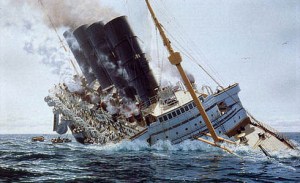
As the war unfolded, German U-boats sank nearly 5,000 ships, close to 13 million gross register ton including the Cunard Liner Lusitania, torpedoed and sunk off Kinsale, Ireland, on May 7, 1915. 1,198 were drowned, including 128 Americans.  100 of the dead, were children. .

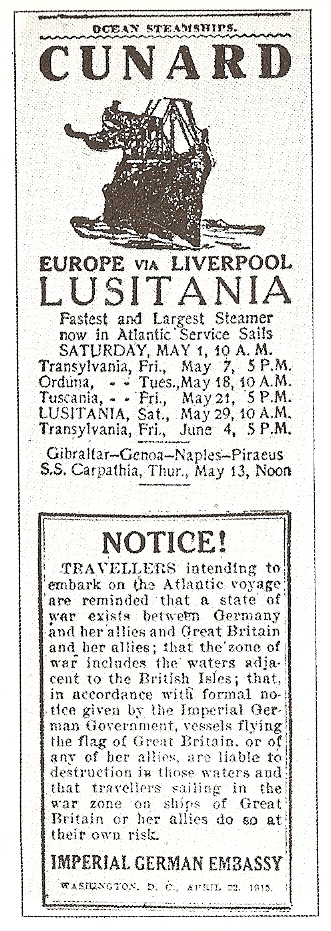
The reaction in the US and UK was immediate and vehement. The sinking was portrayed as the act of barbarians and Huns. Imperial Germany maintained that Lusitania was illegally transporting munitions intended to kill German boys on European battlefields. Furthermore, the embassy pointed out that ads had been taken out in the New York Times and other newspapers, specifically warning that the liner was subject to attack.

lusitania-warning
Warnings from the German embassy often ran directly opposite ads for the sailing. Many dismissed such warnings believing such an attack, unlikely.

Unrestricted submarine warfare was suspended for a time, for fear of bringing the US into the war.  The policy was reinstated in January 1917 prompting then-Chancellor Theobald von Bethmann Hollweg to say, “Germany is finished”.  He was right.

SS Housatonic was stopped off the southwest coast of England and boarded by German submarine U-53.  American Captain Thomas Ensor was interviewed by Kapitänleutnant Hans Rose, who said he was sorry.  Housatonic was “carrying food supplies to the enemy of my country”, and would be destroyed.  The American Captain and crew were allowed to launch lifeboats and abandon ship, while German sailors raided the American submarine, for soap supplies.  

Apparently, WWI vintage German subs were short on soap.

Housatonic was sunk with a single torpedo, U-53 towing the now-stranded Americans toward the English coast.  Sighting the trawler Salvator, Rose fired his deck guns to be sure they’d been seen, and then slipped away.  It was February 3, 1917.

President Woodrow Wilson retaliated, breaking off diplomatic relations with Germany the following day. Three days later, on February 7, a German U-boat fired two torpedoes at the SS California, off the Irish coast. One missed but the second tore into the port side of the 470-foot, 9,000-ton steamer. California sank in nine minutes, killing 43 of her 205 passengers and crew.

zimmerman-note

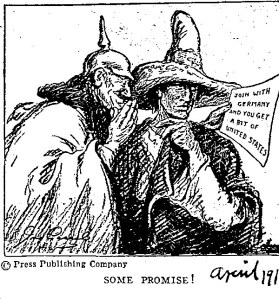
Two weeks later, British Intelligence divulged the Zimmermann note to Edward Bell, secretary to the United States Embassy in Britain.  This was an overture from German Foreign Minister Arthur Zimmermann to the Mexican government, promising American territories in exchange for a Mexican declaration of war against the US.

Zimmermann’s note read, in part, as follows:

“We intend to begin on the first of February unrestricted submarine warfare. We shall endeavor in spite of this to keep the United States of America neutral. In the event of this not succeeding, we make Mexico a proposal of alliance on the following basis: make war together, make peace together, generous financial support and an understanding on our part that Mexico is to reconquer the lost territory in Texas, New Mexico, and Arizona…”

In the United States, the political tide was turning. Unrestricted submarine warfare…the Housatonic…the California…the Zimmermann telegram…the combination of events became the last straw.  The United States entered the Great War about a month later.

At the time, the German claim that Lusitania carried contraband munitions seemed to be supported by survivors’ reports of secondary explosions within the stricken liner’s hull. In 2008, the UK Daily Mail reported that dive teams had reached the wreck, lying at a depth of 300′. Divers reported finding tons of US manufactured Remington .303 ammunition, about 4 million rounds, stored in unrefrigerated cargo holds in cases marked “Cheese”, “Butter”, and “Oysters”.

February 6, 2007 When Animals went to War

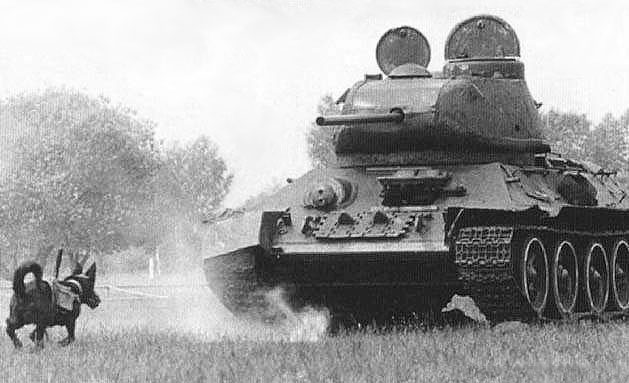
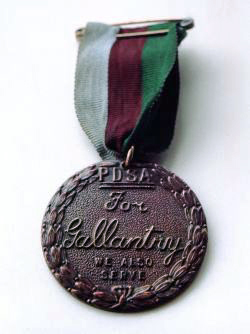
Handler Beval Austin Stapleton was on-hand to receive Lucky’s award. “Every minute of every day in the jungle” he said, “we trusted our lives to those four dogs, and they never let us down. Lucky was the only one of the team to survive our time in the Malayan jungle and I’m so proud of the old dog today. I owe my life to him.”

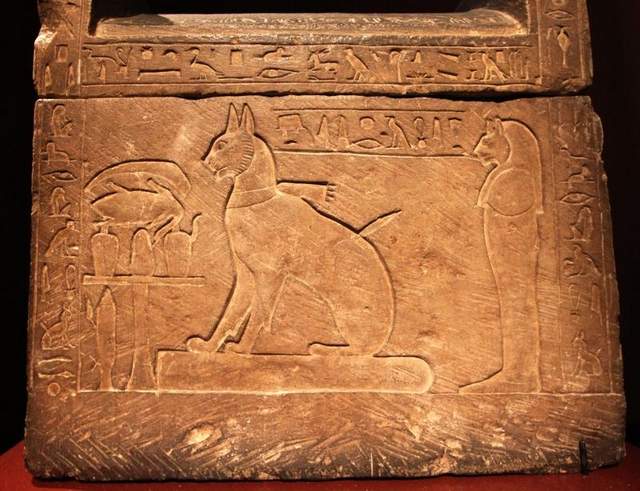
Mitochondrial DNA analysis of Felis silvestris catus, the common house cat, suggests two great waves of expansion. First came the dawn of agriculture, when grain stores attracted vermin. Genetic examination suggests all cats descend from one of five feline ancestors: the Sardinian, European, Central Asian, Subsaharan African or the Chinese desert cat.

ta-mit

The second “cat-spansion” occurred later, as man took to water. From trade routes to diplomatic missions and military raids, men on ships needed food, and that meant rodents. The “ship’s cat” was a feature of life at sea from that day to this, first helping to control damage to food stores, ropes and woodwork and, in modern times, electrical wiring.

Norskskogkatt_Evita_3

A Viking site in North Germany dating ca 700-1000AD, contains the remains of one cat with Egyptian mitochondrial DNA.  Once driven nearly to extinction, the Norwegian Forest cat (Norwegian: Norsk skogkatt) descends from Viking-era ship’s cats, brought to Norway from Great Britain sometime around 1000AD.

Who knew? Vikings had cats!

Not without reason, were cats seen as good luck.  The power of cats to land upright is due to extraordinarily sensitive inner ears, capable of detecting even minor changes in barometric pressure.  Sailors paid careful attention to the ship’s cat, often the harbinger of foul weather ahead.

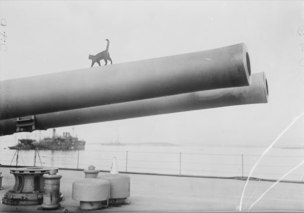
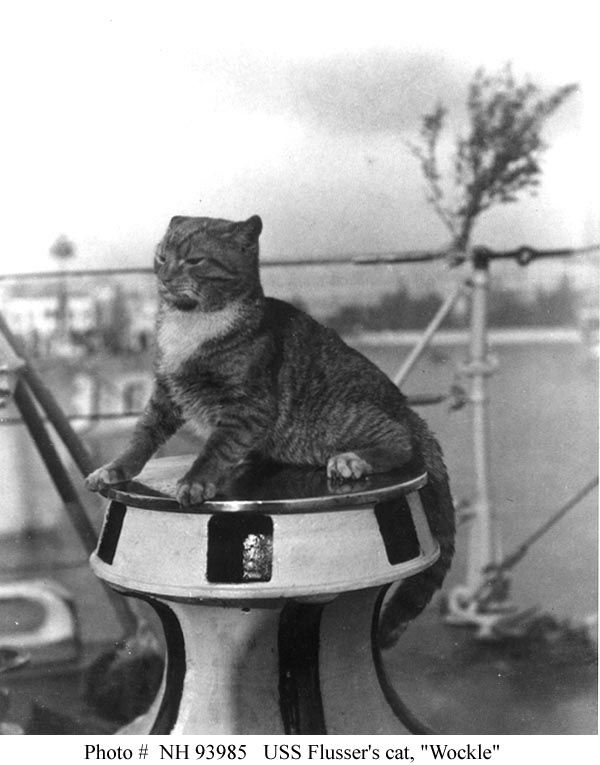
Clockwise:  1. Ship’s cat, HMS Queen Elizabeth, Gallipoli Peninsula, 1915, 2. USS Flusser’s cat, “Wockle” 3. Ship’s cats “inspect” the breech of a 4-inch gun aboard an unidentified US ship. 4. Togo, ships cat aboard the HMS Dreadnought,

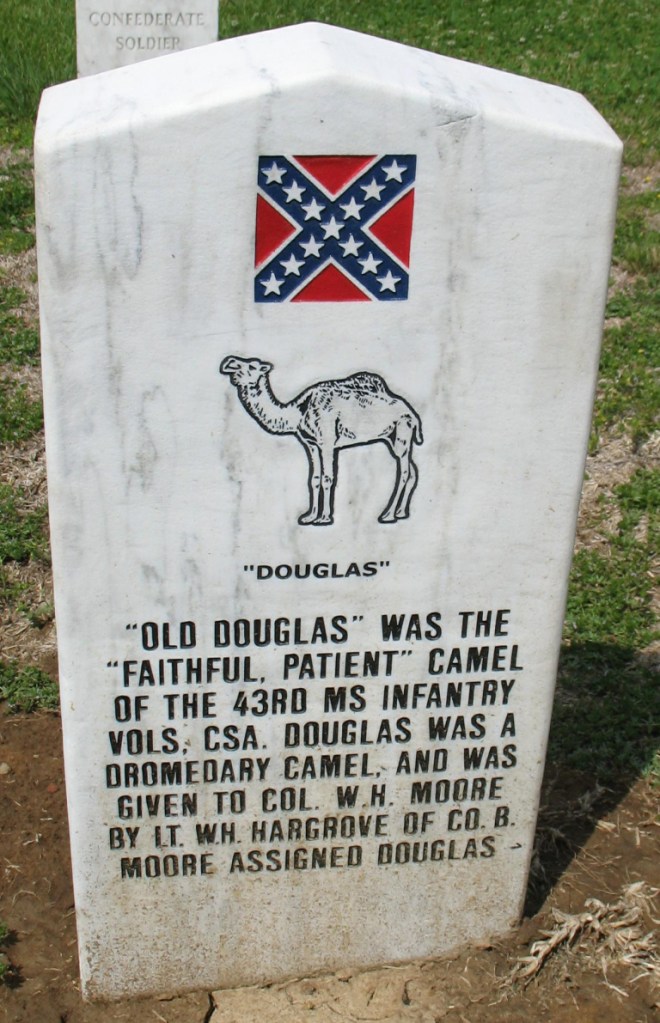
And if you’re ever in Vicksburg, you can stop and visit the grave site of Douglas, the Confederate camel.

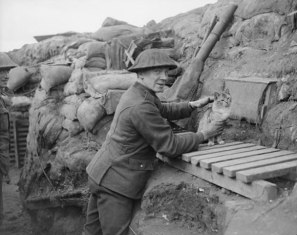
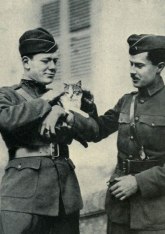
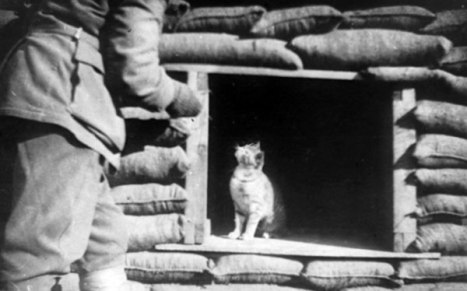
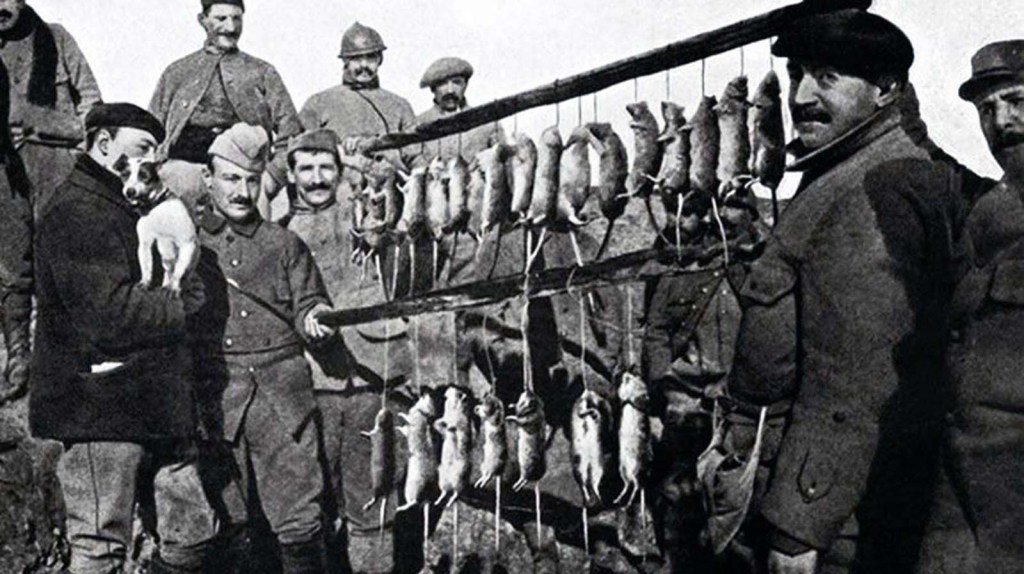
When the “Great War” arrived in 1914, animals of all kinds were dragged along.  Cats performed the same functions in vermin infested trenches, as those at sea.

1. Gunner with the regimental cat in a trench in Cambrin, France, February 6th, 1918.  2. Officers of the U.S. 2nd Army Corps with a cat discovered in the ruins of Le Cateau-Cambrésis 3. Trench cat, Gallipoli Peninsula, 1915

Tens of thousands of dogs performed a variety of roles, from ratters to sentries, scouts and runners.

“Mercy” dogs were trained to seek out the wounded on battlefields, carrying medical supplies with which the stricken could treat themselves.

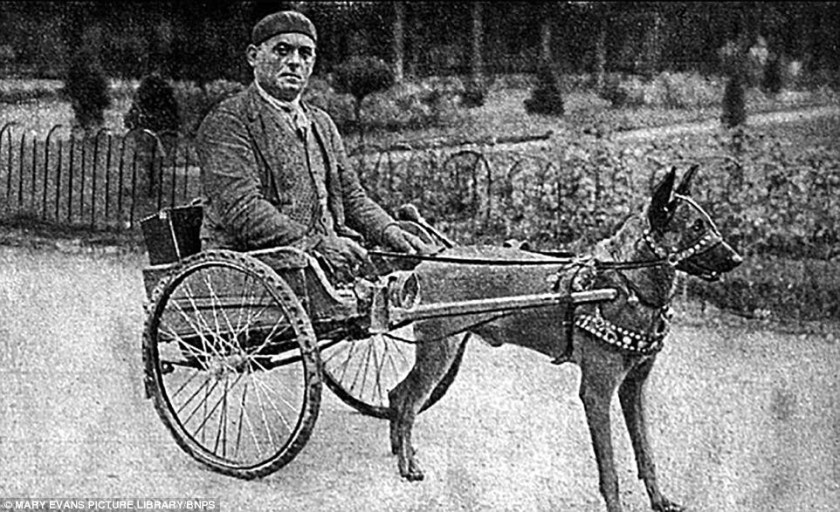
3F0CB7F500000578-4359902-image-a-15_1491812396284
“A dog pulling the wheelchair of a wounded French soldier in the remarkable series of images featured in new book Images of War, Animals in the Great War” H/T Daily Mail

The French trained specialized “chiens sanitaire” to seek out the dead and wounded, and bring back bits of uniform.  Often, dogs simply provided the comfort of another living soul so the gravely wounded, should not die alone.

3F0CB81C00000578-4359902-image-a-31_1491812576844
“Messenger dogs pictured running the gauntlet of rifle fire during their training during the First World War” H/T Daily Mail

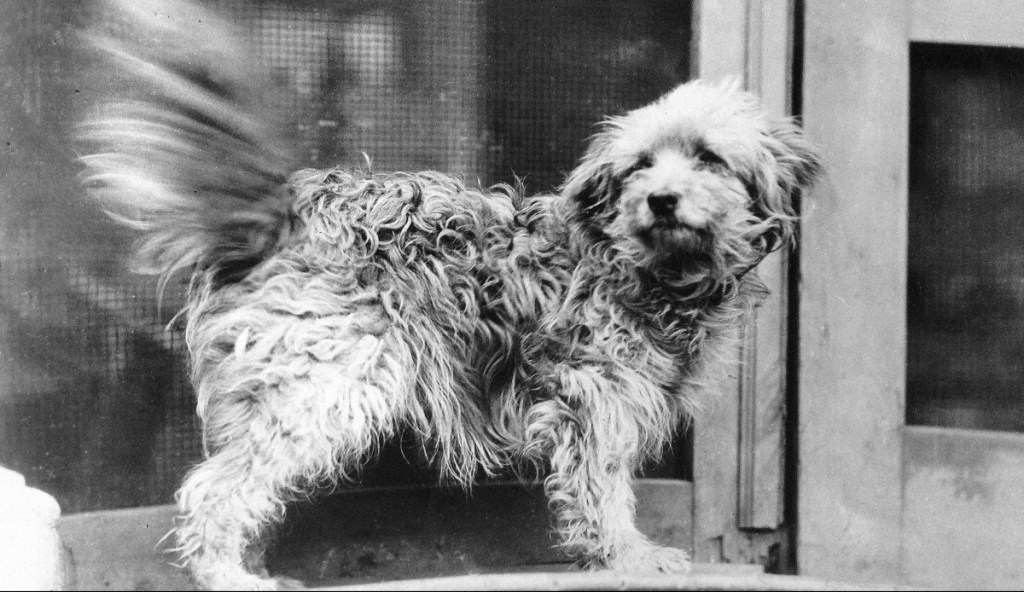
With the hell of no mans land all but impassable for human runners, dogs stepped in, as messengers. “First Division Rags” ran through a cataract of falling bombs and chemical weapons. Gassed and partially blinded with shrapnel injuries to a paw, eye and ear, the little guy still got his message where it needed to be.

1st Division Rags

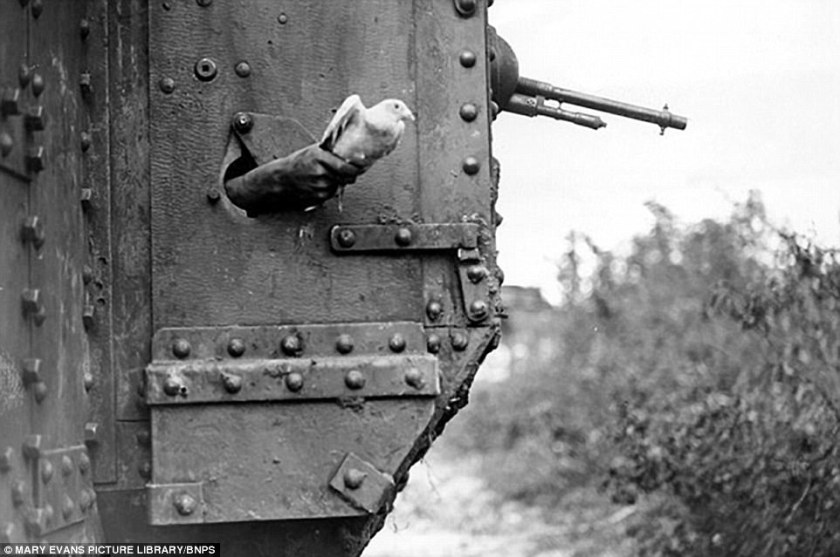
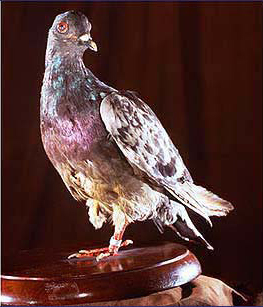
Other times, birds were the most effective means of communication. Carrier pigeons by the tens of thousands flew messages of life and death importance for Allied and Central Powers, alike.

3F0CB81400000578-4359902-image-a-25_1491812524663
“A carrier pigeon held tight before release from the belly of a tank in 1918. Birds were often used to pass messages between troops” H/T Daily Mail
Cher Ami
Cher Ami

During the Meuse-Argonne offensive of 1918, Cher Ami saved 200 men of the “Lost Battalion”, arriving in her coop with a bullet through the breast, one eye shot out and a leg all but torn off, hanging by a single tendon.

Even the lowly garden slug pitched in.  Extraordinarily sensitive to mustard gas, “slug brigades” provided the first gas warnings, allowing precious moments in which to “suit up”.

The keen senses of animals were often the only warning of impending attack.

Albert Marr, Jackie

Private Albert Marr’s Chacma baboon Jackie would give early warning of enemy movement or impending attack with a series of sharp barks, or by pulling on Marr’s tunic.

One of many gut wrenching episodes of the Great war took place in April, 1918.  The South African Brigade withdrew under heavy shelling through the West Flanders region of Belgium.

Jackie was seen, frantically building a stone wall around himself as jagged splinters wounded his arm and all but tore off the animal’s leg. 

Even with all that Jackie refused to be carried off by stretcher-bearers, instead hobbling about on his shattered limb, trying to finish his wall

Constituted on June 13, 1917, British Aero Squadron #32 kept a red fox, as unit mascot.

3F0CB7E800000578-4359902-image-a-11_1491812343121.jpg
H/T Daily Mail

The famous Lafayette Escadrille kept a pair of lion cubs, called Whiskey and Soda.

Escadrille 124_Whiskey Soda_zpsaljbdve0

German soldiers in Hamburg, enlisted the labor of circus elephants in 1915.

3F0CB7E400000578-4359902-image-a-8_1491812296139
H/T Daily Mail

The light cruiser Dresden was scuttled and sinking fast in 1914, leaving the only creature on board to swim for it.  An hour later an Ensign aboard HMS Glasgow spotted a head, struggling in the waves.  Two sailors dove in and saved the animal, a pig they called “Tirpitz”, after the German Admiral.  Tirpitz the pig served out the rest of the war not in a frying pan but as ship’s mascot, aboard the HMS Glasgow.

3F0CB7DC00000578-4359902-image-a-4_1491812234452
“Tirpitz” the pig

No beast who served in the Great war was as plentiful nor as ill used as the beast of burden and none so much, as the horse.   Horses were called up by the millions, along with 80,000 donkeys and mules, 50,000 camels and 11,000 oxen. The United States alone shipped a thousand horses a day “over there” between 1914, and 1917.

thIA31MUJ1

Horsepower was indispensable throughout the war from cavalry and mounted infantry to reconnaissance and messenger service, as well as pulling artillery, ambulances, and supply wagons.  With the great value horses contributed to the war effort and their difficulty in replacement,  the loss of a horse was a greater tactical problem in some areas, than the loss of a man.

horses-ww1-b

Few ever returned.  An estimated three  quarters died of wretched working conditions:  Exhaustion.  The frozen, sucking mud of the western front.  The mud-borne and respiratory diseases.  The gas, artillery and small arms fire.  An estimated eight million horses were killed on all sides, enough to start a line in Boston and make it all the way to London and back, twice, if such a thing was possible.

The United Kingdom entered the war with only eighty motorized vehicles, conscripting a million horses and mules, over the course of the war.  Only one in sixteen, lived to come home.

War5 (1)

Neither knowing nor caring why they were there, the animals of the Great War suffered at prodigious rates.  Humane organizations stepped up, the British Royal Society for the Prevention of Cruelty to Animals (RSPCA) processing some 2.5 million animals through veterinary hospitals.  1,850,000 were horses and mules.  85% were treated and returned to the front.

Downsize_Help Save the Horse to Save the Soldier

The American Red Star Animal Relief Program sent medical supplies, bandages, and ambulances to the front lines in 1916, to care for horses injured at a rate of 68,000 per month.

The century before the Great War was a Golden age, mushrooming populations enjoying the greatest rise in living standards, in human history. The economy at home would be dashed to rags and atoms by the Great War. Trade and capital as a proportion of the global economy would not recover to 1913 levels, until 1993.

World War 2 wasn’t quite as ‘motorized’ as you might imagine. Nazi Germany and the Soviet Union alone deployed no fewer than six million horses.

In the north, Reindeer proved far more successful than either horses or motorized transport.

Camels were extensively used in WW2 and not just in north Africa. Following the battle of Stalingrad, the Red army took to using camels in the southern theater. One thousand-animal “camel battalion” carried some twelve thousand tons of cargo across the primitive Kalmyk Steppes, a job which would have required 134 trucks.

The 308th Rifle Division used a Bactrian camel called “Kuznechik”, Russian for “grasshopper”, for transport of food and other equipment. Kuznechik followed this mostly Siberian unit all the way to Berlin, where his handler taught him to spit on the ruins of the Reichstag building.

Animals were even combatants during WW2 though hardly, by their own choice. The Soviet Red Army used dogs as suicide bombers, trained to seek out and destroy enemy tanks. The problem was that dogs were trained using Soviet diesel-powered tanks and not the gas-fueled tanks of the Wehrmacht. It didn’t take long to figure out. Dogs were going after the wrong tanks.

The US even experimented with “bat bombs” and pigeon-guided munitions. Both projects were scrapped without ever going into use as the weapon system’s lethality, was limited to taxpayer dollars.

Not so with the Soviet’s use of Tularemia-infected rats. Following General von Paulus’ surrender after the Battle of Stalingrad, some fifty percent of German soldiers were found to be sick with the disease.

Unseen amidst the economic devastation of the home front, was the desperate plight of animals.  Turn-of-the-century social reformer Maria Elizabeth “Mia” Dickin founded the People’s Dispensary for Sick Animals in 1917, working to lighten the dreadful state of animal health in Whitechapel, London.  To this day, the PDSA is one of the largest veterinary charities in the United Kingdom, carrying out over a million free veterinary visits, every year.

Dickin_Medal

The “Dickin Medal” was instituted on December 2, 1943, honoring the work performed by animals, in WW2. 

The “animal’s Victoria Cross”, the highest British military honor equivalent to the American Medal of honor, is awarded in recognition of “conspicuous gallantry or devotion to duty while serving or associated with any branch of the Armed Forces or Civil Defence Units.”

The Dickin Medal has been awarded 71 times, recipients including 34 dogs, 32 pigeons, 4 horses and a cat. An honorary Dickin was awarded in 2014, in honor of All animals serving in the Great War.

“Goodbye Old Man”, watercolour, painted by Fortunino Matania (Italian, 1881-1963), showing a British soldier saying farewell to his dying horse. The painting was commissioned by The Blue Cross Fund in 1916 to raise money to help relieve the suffering of horses on active service in Europe. Over one million horses saw service with the British Army during World War I and The Blue Cross treated thousands.

Two Dickins were awarded on this day in 2007, the first to Royal Army Veterinary Corps explosives detection dog “Sadie”, a Labrador Retriever whose bomb detection skills saved the lives of untold soldiers and civilians in Kabul, in 2005. The second went to “Lucky”, a German Shepherd and RAF anti-terrorist tracker serving during the Malaya Emergency of 1949 – ’52. Part of a four-dog team including “Bobbie”, “Jasper” and “Lassie”, Lucky alone survived the “unrelenting heat [of] an almost impregnable jungle“.

Handler Beval Austin Stapleton was on-hand to receive Lucky’s award. “Every minute of every day in the jungle” he said, “we trusted our lives to those four dogs, and they never let us down. Lucky was the only one of the team to survive our time in the Malayan jungle and I’m so proud of the old dog today. I owe my life to him.

1024px-A_cat_on_HMAS_Encounter

Ship’s cat, Her Majesty’s Australian Ship (HMAS) Encounter, World War I

February 5, 62AD End of the World

There were other signs of what was to come. Tremors. Springs dried up. Fish died and floated on the river Sarno, victims of increased acidification of the water.


On February 5 in the year AD 62, an earthquake estimated at 7.5 on the Richter scale shook the Bay of Naples, spawning a tsunami and leveling much of the coastal Italian towns of Pompeii, Herculaneum and surrounding communities.

pompeii-2

Massive though the damage had been, the region around Mt. Vesuvius and the Bay of Naples had long been a favorite vacation destination for the upper crust of Roman society. Crowds of tourists and slaves bustled in and out of the city’s bath houses, artisans’ shops, taverns and brothels, adding their number to some ten to twenty thousand townspeople.

There were other signs of what was to come. Tremors. Springs dried up. Fish died and floated on the river Sarno, victims of increased acidification of the water.

And yet, these are only “signs”, in hindsight. Pompeiians of 62AD didn’t even have a word for Volcano. That would come much later with the eruption of Mt. Etna. The word is derived from “Vulcan”. The Roman God of fire.

So it was reconstruction began and continued, for the next seventeen years.  Until that day the world, came to an end.

Long dormant and thought to be extinct, nearby Mount Vesuvius had been quiet for hundreds of years.  Historians have long believed Vesuvius erupted on August 24, 79AD but recently discovered graffiti referring to the calends of November more likely put the date, at October 17. 

The day dawned as any other, the first plumes of white smoke appearing, sometime around breakfast. By that afternoon the 4,203-foot stratovolcano was belching fire, propelling a scorching plume of ash, pumice and super-heated volcanic gases so high as to be seen for hundreds of miles.

The Melbourne Museum has created a stunning, eight-minute animation, of the event.

For the next eighteen hours the air was thick with hot, poisonous gases, as volcanic ash rained down with pumice stones the size of baseballs.  No one who stayed behind stood a chance, nor did countless animals, both wild and domestic.

Citizens tried to save themselves using tunics, as makeshift masks. Then came the pyroclastic surge, that ground-hugging pressure wave seen in test films of nuclear explosions.  Gasses and pulverized stone dust raced outward at 400 miles-per-hour in the “base surge” phase carrying gases super-heated to 1000° Fahrenheit. The bodily fluids of anyone left alive at this time burst instantly, into steam.

Pompeii 2
The victims of Mt. Vesuvius’ wrath left their imprints in the ash and rock which would be their tomb.  2,000 years later, remarkably life-like plaster casts, depict the final moments of these unfortunate men, women and children.

The suffocating, poisonous clouds of vapor and rock dust pouring into the city, soon  put and end to all that remained.  Imagine putting your head in a bag of cement, with someone pounding the sides.  Walls collapsed and roofs caved in, burying the dead under fourteen feet or more of ash, rock and dust. Neither Herculaneum, Pompeii nor their surrounding communities would see the light of day, for nearly two thousand years.

dsc_0128

Today we remember the Roman author, naturalist and military commander Gaius Plinius “Pliny’ Secundus for his work Naturalis Historia (Natural History). We see his work in the editorial model of the modern encyclopedia.

With the cities of Pompeii and Herculaneum already destroyed, Pliny raced to the port of Stabiae some 4½km to the southwest, to rescue a friend and his family. The sixth and largest pyroclastic surge trapped Pliny’s ship in port, killing the author and everyone in the vicinity. That we have an eyewitness to the event is thanks to two letters written by Gaius Plinius Caecilius Secundus (Pliny the Younger), Pliny’s nephew and a man he had helped to raise, from boyhood.

800px-Destruction_of_Pompeii_and_Herculaneum
Destruction of Pompeii and Herculaneum

Property owners and thieves returned over time to retrieve such valuables as statues. The words “house dug” can still be found, scrawled on the walls.  And then the place was forgotten, for fifteen hundred years.

15

An underground channel was dug in 1562 to redirect waters from the river Samo, when workers ran into city walls.  The architect Domenico Fontana was called in and further excavation revealed any number of paintings and frescoes, but there was a problem.

This stuff was downright pornographic.

According to the Annus Mirabilis written by English poet Philip Larkin, sex wasn’t even until 1963, in the British Isles.

“…So life was never better than
In nineteen sixty-three
(Though just too late for me) –
Between the end of the Chatterley ban
And the Beatles’ first LP…”

800px-Pompeii_-_Casa_dei_Casti_Amanti_-_Banquet
Pompeian artwork ranges from the merely hedonistic, to the pornographic

The ancients seem to have been rather more uninhibited.   In fact, life in some quarters was nothing if not hedonistic.  Pompeii itself has been described by some, as the “red-light district” of antiquity.  I’m not sure about that, but the erotic art of Pompeii and Herculaneum were WAY too much for counter reformation-era sensibilities. 

The place was quietly covered up and forgotten. For another two hundred years.

Pompeii was first excavated in earnest in 1748 but it took another hundred years for archaeologists’ findings to be organized, cataloged and brought to museums.  In 1863, archaeologist Giuseppe Fiorelli realized that occasional voids in the ash layer were in fact the long since decomposed bodies of the doomed victims, of Vesuvius.

A technique was developed of injecting plaster.  Today we can see them in excruciating detail, exactly where they fell.  Men, women and children, the dogs, even the fresh-baked bread, left out on the counter to cool.

Roman_fresco_Villa_dei_Misteri_Pompeii_006

Today you can tour the lost city of Pompeii, from the baths to the forum, to the Lupanar Grande, where the prostitutes of Pompeii once “entertained” clients.  Ongoing excavation is all but a race with time, between uncovering what remains, and preserving what is.  Walls surrounding the “House of the Moralist” collapsed in 2010, so-called because its wealthy wine merchant owners posted rules of behavior, for guests to follow: “Do not have lustful expressions and flirtatious eyes for another man’s wife“.

Fun fact: A majority of Ancient Pompeiians had near-perfect teeth due to naturally occurring fluorine and a diet rich in fruits and vegetables.

There were other signs of what was to come. Tremors. Springs dried up. Fish died and floated on the river Sarno, victims of increased acidification of the water. Heavy rains were blamed for the collapse of the Schola Armatorium in 2010, the House of the Gladiators.  Fierce recriminations have followed and doubt has been cast on local authorities’ abilities, to properly preserve what has become a UNESCO World Heritage site.

Be that as it may, 2,000-year-old buildings do not come along every day.  There is no replacement for antiquity.