

As the Civil War ground on to a fourth dreadful year, the church yards and burial plots of the formerly united states strained under the weight of carnage, produced by that war.
The former home of Mary Anna Randolph Custis Lee and Robert Edward Lee (yeah, that Robert E. Lee) was made forfeit for non-payment of tax by the 37th Congress, the Mansion on the hill and surrounding grounds auctioned to the Federal government.
 One day, the United States Supreme Court would rule the act an unlawful taking and compensate Lee family descendants.
For now, that’s a story for another day. As 1863 drew to a close, the property was destined to become the nation’s most hallowed ground and known to posterity, as Arlington National Cemetery.
The first interment on the Custis-Lee property was that of Private William Henry Christman of 67th Pennsylvania Infantry, laid to rest on May 13, 1864.
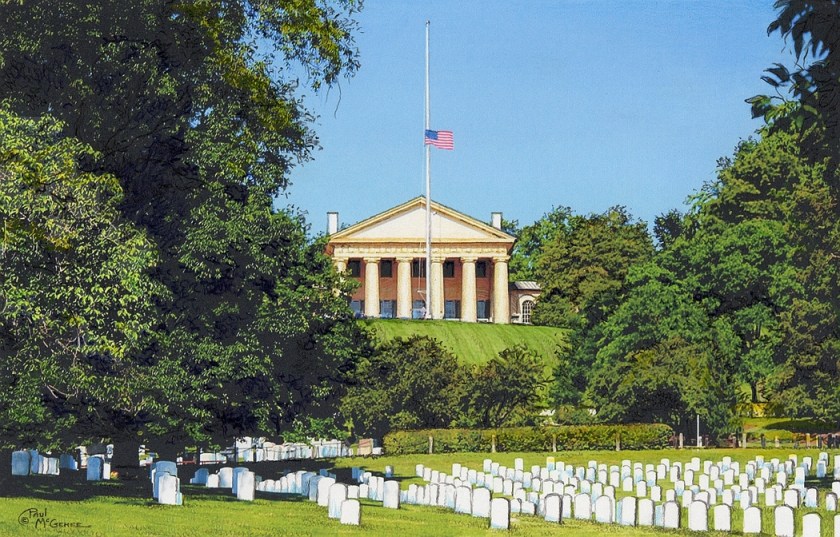
Two more joined Christman before the day was done, fine young men cut down in the prime of life and laid to rest, never to know the triumphs and the tragedies of growing old. Before long, the trickle turned to a flood. By the end of the war between the states, their number exceeded 17,000 and rising.
 Private Christman was the first military burial, but not the first. One had come before. When Private Christman went to his rest in our nation’s most hallowed ground, his grave joined that of Mary Randolph, laid to rest some thirty-six years earlier.
In 1929, cemetery workers were performing renovations on the Lee-Custis Mansion now known as the Arlington House, at the top of the hill. They couldn’t help but be aware of a solitary grave some 100-feet to the north, but little was known of its occupant.
Marked with the name of Mary Randolph, the stone was inscribed with these words:
“In the memory of Mrs. Mary Randolph,
Her intrinsic worth needs no eulogium.
The deceased was born
The 9th of August, 1762
at Amphill near Richmond, Virginia
And died the 23rd of January 1828
In Washington City a victim to maternal love and duty.”
“A victim to maternal love and duty”. It was a curious phrase but little else was known about Mary Randolph.
In 1929, journalist Margaret Husted wrote about Randolph in the Washington Star newspaper. Descendants came forward and, piece by piece, the story of the first person buried at Arlington, came to light.
 Mary Randolph, a direct descendant of Pocahontas and John Rolfe, cousin to Thomas Jefferson, was the cousin of George Washington Parke Custis, adopted step-grandson of George Washington and the godmother of Custis’ daughter, Mary Anna Randolph Custis, wife of Robert E. Lee.
The last line of the inscription, “a victim to maternal love and duty” refers to Mary’s youngest surviving son, Midshipman Burwell Starke Randolph, who’d suffered a high fall from the mast in 1817, while serving in the US Navy. Both of his legs were broken and never healed properly. When Mary passed away in 1828, Randolph remarked that his mother had sacrificed her own life in care of his.
Mary Randolph is best known as the author of America’s first regional cookbook, “The Virginia House-wife” and known to some, as “The Methodical Cook”.
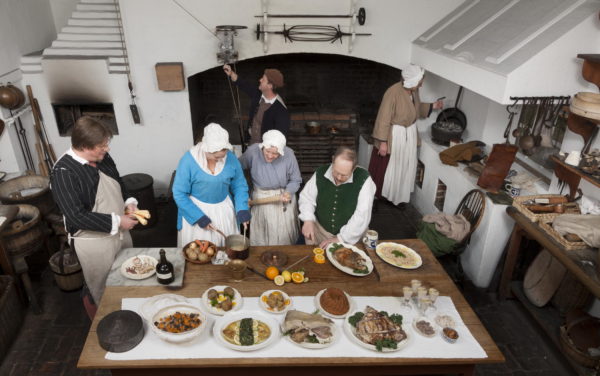
The Virginia Culinary Thymes writes “It is interesting to note that all the cookery at that time was done in kitchens that had changed little over the centuries. In Virginia, the kitchen was typically a separate building for reasons of safety, summer heat and the smells from the kitchen. The heart of the kitchen was a large fireplace where meat was roasted and cauldrons of water and broth simmered most of the day. Swinging cranes and various devices made to control temperature and the cooking processes were used. The Dutch oven and the chafing dish were found in most kitchens. The brick oven used for baking was located next to the fireplace. A salamander was used to move baked products around in the oven and it could also be heated and held over food for browning“.
 Mary Randolph, wife of David Meade Randolph, was an early advocate of the now-common use of herbs, spices and wines in cooking.
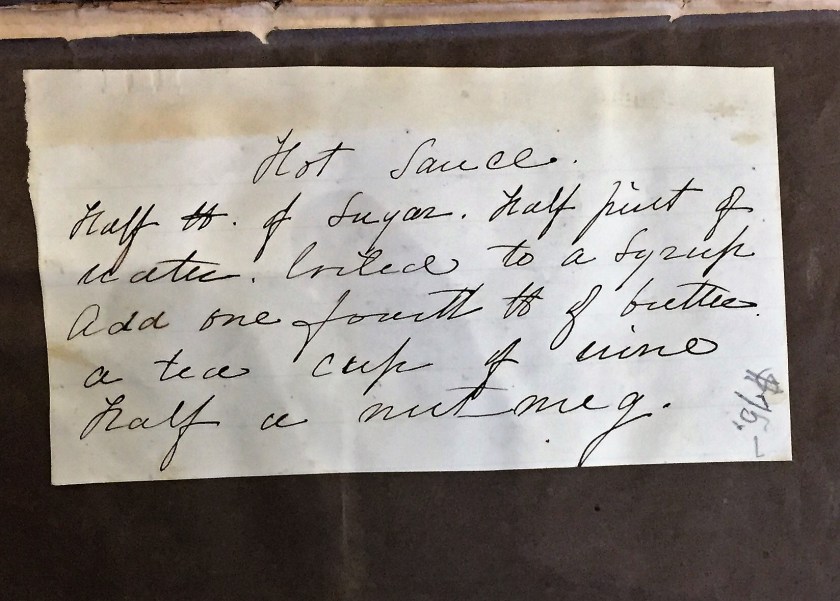
Mrs Randolph’s recipe for apple fritters calls for slices of apple marinated in a combination of brandy, white wine, sugar, cinnamon, and lemon rind.
Randolph was well known as a Virginia cook and hostess, so much so that, during an 1800 slave insurrection near Richmond, the leader “General Gabriel” said that he would spare her life, if she would become his cook.
I’m thinking of those apple fritters. I believe ol’ Gabriel might have been onto something.


 Ernesto Guevara trained and motivated firing squads credited with the summary execution of 16,000 Cubans or more, since the Castro brothers swept out of the Sierra Maestro Mountains in 1959. It was around this time he acquired the nickname “Che” from an odd fondness for the verbal filler che, not unlike the Canadian English “eh” or some Americans’ fondness for the punctuating syllable “Right?”
 Numbers are surprisingly inexact but Guevara is believed personally responsible for the murder of hundreds if not thousands, in the name of “Revolutionary Justice”. Guevara himself described in his diary, the murder of peasant guide Eutimio Guerra: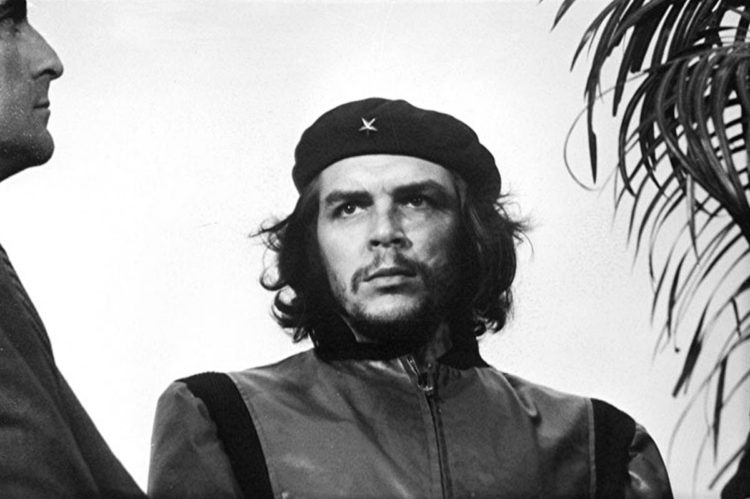
 While Che himself made no secret of his blood-lust, Western Liberals appear pathologically incapable of regarding the man’s history, as it really was.
 “Crazy with fury I will stain my rifle red while slaughtering any enemy that falls in my hands! My nostrils dilate while savoring the acrid odor of gunpowder and blood. With the deaths of my enemies I prepare my being for the sacred fight and join the triumphant proletariat with a bestial howl!…Hatred as an element of struggle; unbending hatred for the enemy, which pushes a human being beyond his natural limitations, making him into an effective, violent, selective, and cold-blooded killing machine. This is what our soldiers must become” – Ernesto Ché Guevara
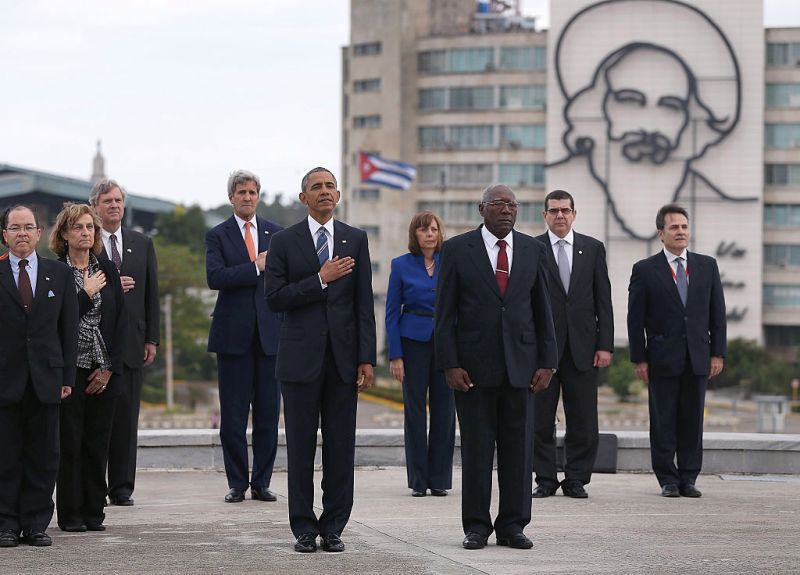
 For many of us, then-President Obama’s March 21, 2016 moment in Havana, Cuba defies understanding, unfolding as it did under a ten-story image of Che Guevara.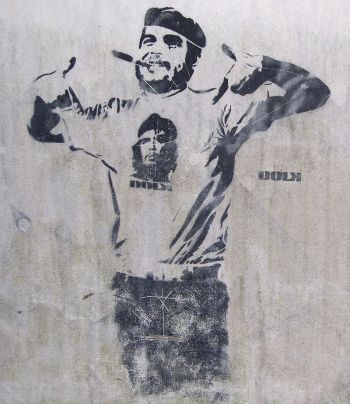


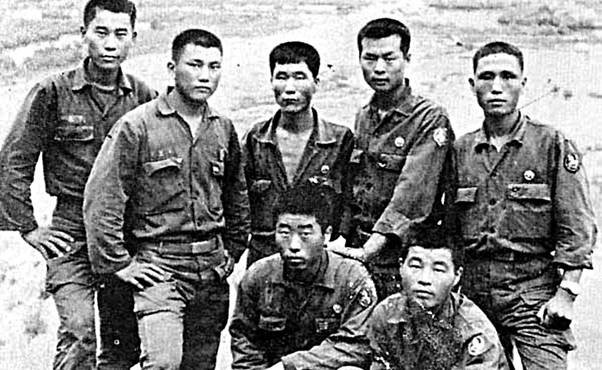
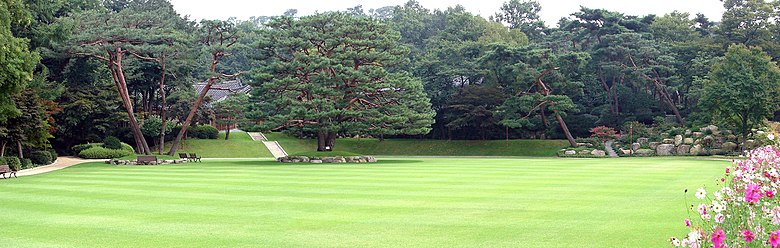
 On January 17, 1968, Unit 124 infiltrated the 2½ mile demilitarized zone (DMZ), cutting the wire and entering South Korea. Their mission was to assassinate ROK President Park Chung-hee in his home, the Executive Mansion equivalent to the United States’ own White House, the “Pavilion of Blue Tiles” known as “Blue House”.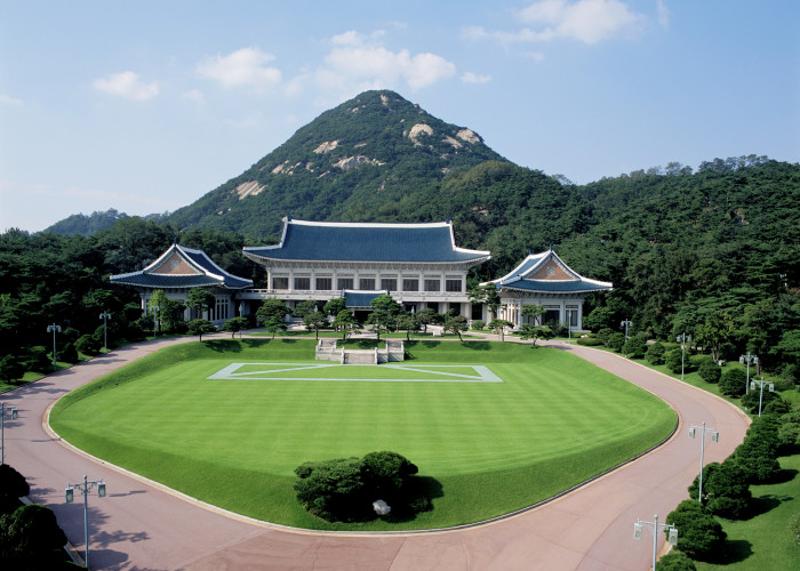

 29 commandos were killed or committed suicide. One escaped, back to North Korea. Only one, Kim Shin-jo, was captured alive.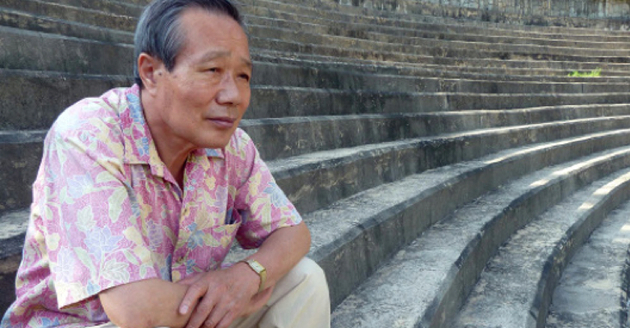

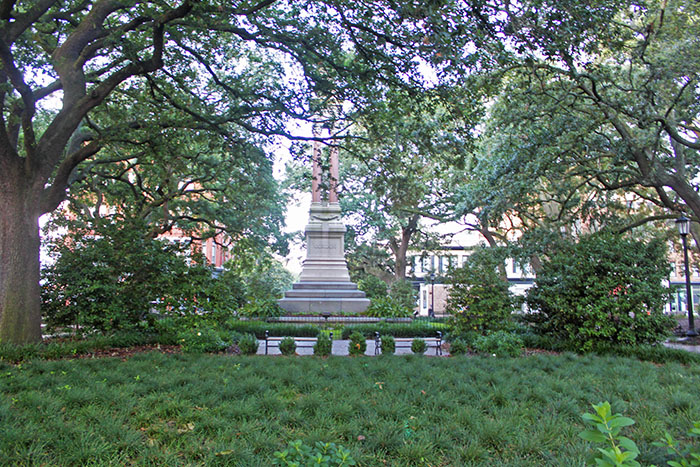
 south after a brief stay in Charleston, South Carolina. Landing at Yamacraw bluff, Oglethorpe’s party was greeted by Chief Tomochichi of the Yamacraws, along with two Indian traders, John and Mary Musgrove.
 originally come from its native Southeast Asia to West Africa, where the same strains were grown by European colonists. The rice industry failed in Africa, but the combination of English agricultural technology and African labor made the crop a mainstay of the early colonial economy.
 On January 20, 1788, Bryan brought official recognition to the First African Baptist Church and its 67 members, five years before the first “white” Baptist Church in Savannah. In 1802, Bryan founded the “Second Colored Baptist Church”, renamed the “Second African Baptist Church” in 1823.
 he called “I have a Dream”. Two years later, the same speaker delivered his speech from the steps of the Lincoln memorial in Washington.

 Iva Ikuko Toguri was born in Los Angeles on July 4, 1916, the daughter of Japanese immigrants. She attended schools in Calexico and San Diego, returning to Los Angeles where she enrolled at UCLA, graduating in January, 1940 with a degree in zoology.
 That November, Toguri was asked to become a broadcaster for Radio Tokyo on the “Zero Hour” program, part of a Japanese psychological warfare campaign designed to lower the morale of US Armed Forces. The name “Tokyo Rose” was in common use by this time, applied to as many as 12 different women broadcasting Japanese propaganda in English.
 She called herself “Orphan Annie,” earning 150 yen per month (about $7.00 US). She wasn’t a professional radio personality, but many of those who recalled hearing her enjoyed the program, especially the music.

 d’Aquino was sentenced to ten years and fined $10,000 for the crime of treason, only the seventh person in US history so convicted. She was released from the Federal Reformatory for Women at Alderson, West Virginia in 1956, having served six years and two months of her sentence.

 Look up the Highest Paid Athlete of All Time and you’ll be rewarded with the knowledge that Michael Jordan amassed career earnings of $1.85 Billion, according to Forbes Magazine. Steve Forbes and Michael Jordan alike may be surprised to know. Spanish driver Gaius Appuleius Diocles amassed an astonishing 35,863,120 sesterces, equivalent to $15 Billion, today. Not bad for a man whose name suggests he probably began as a slave, freed by a guy named Gaius Appuleius.
 The age of Constantine saw enormous expansion of the city which bore his name, including enlargement of the Hippodrome to an impressive 1,476-feet long by 427-feet wide with a seating capacity of 100,000. By way of comparison, the Empire State Building is 1,454-feet from sidewalk to the very tip of the spire. Mercedes Benz Stadium in Atlanta, home of Super Bowl LIII, has a rated capacity of 71,000 spectators.
 A raised median called a spina ran down the center, adorned with stone statuary and obelisks. Ganging up to drive opposing handlers into the stone median or the stands, whipping opponents and even hauling them out of their chariots was not only permitted, but encouraged.
 Modern sport has seen its share of fan passion rising to violence, but the worst “futbol hooligan” pales into docility, compared with the crowd come to watch the chariot races. Imagine the worst fan violence of the modern era combined with aspects of street gangs and political organizations, each faction holding positions on the issues of the day and attempting to sway public policy by shouting slogans, between races.
 With spine thus restored, Justinian formulated a plan. The popular eunuch Narses was sent with a bag of gold, into the lion’s den. Small and slight of build, unarmed but for those coins, Narses entered the Hippodrome and went directly to the Blue section. On this day in 562 Hypatius was in the very act of coronation when the eunuch spoke. Narses reminded the Blues that Hypatius was a Green while Justinian himself, supported their team.
 Thus ends one of the great “backfires” in political history. Senator Hypatius was put to the sword and those who had supported the pretender, sent into exile. Justinian I would rule another 33 years, rebuilding Constantinople, muzzling the Senatorial Class which had caused him such grief and reconquering lost territories, in Italy.
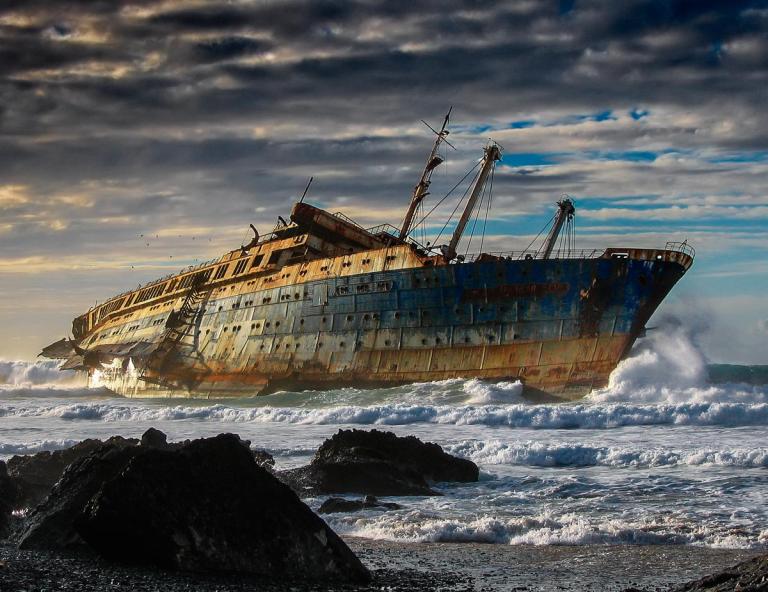


 During her service to the United States Navy, West Point was awarded the American Defense Service Medal, American Campaign Medal, European-African-Middle Eastern Campaign Medal, Asiatic-Pacific Campaign Medal, and World War II Victory Medal.
 She was in terrible condition and her refit nowhere near complete when America set sail on her first cruise on June 30, 1978. There was rusted metal, oil soaked rags and backed up sewage. There were filthy mattresses and soiled linens. One woman later said, she was a “floating garbage can.” The angriest of customers actually got into fist fights with members of the crew. There were so many complaints the ship finally turned back, still within sight of the Statue of Liberty.
 Sold yet again in 1993 and renamed the American Star, the new owners planned to convert her to a five-star hotel ship off Phuket, Thailand. A planned 100 day tow began on New Year’s Eve of 1993, but the lines broke. On January 17, 1994, the former SS America was adrift in foul seas, running aground in the Canary Islands the following day. Discussions of salvage operations were soon squashed, as the ship broke in two in the pounding surf.
 The National WWII Museum in New Orleans reports on its website that the men and women who fought and won the great conflict are now passing at a rate of 550 per day. How many, I wonder, might think back and remember passage on the most successful troop transport of their day.
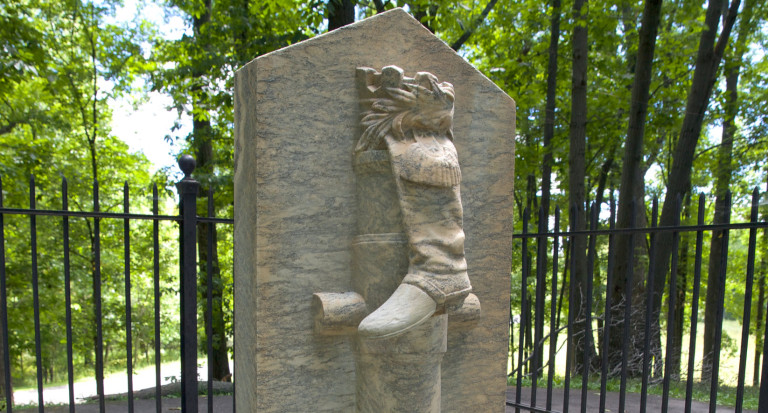

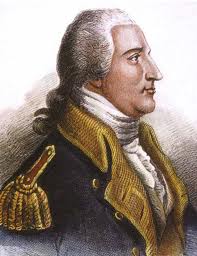
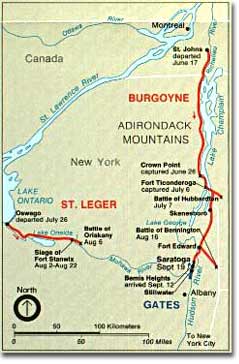 Patriot forces selected a site called Bemis Heights about 10 miles south of Saratoga, spending a week constructing defensive works with the help of Polish engineer Thaddeus Kosciusko. Theirs was a formidable position with mutually supporting cannon on overlapping ridges, with interlocking fields of fire.
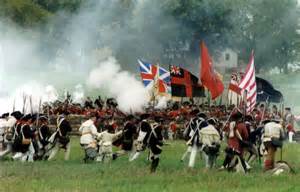 The second and decisive battle for Saratoga, the Battle of Bemis Heights, occurred on October 7, 1777.
 It would have been better in the chest, he said, than to have received such a wound in that leg.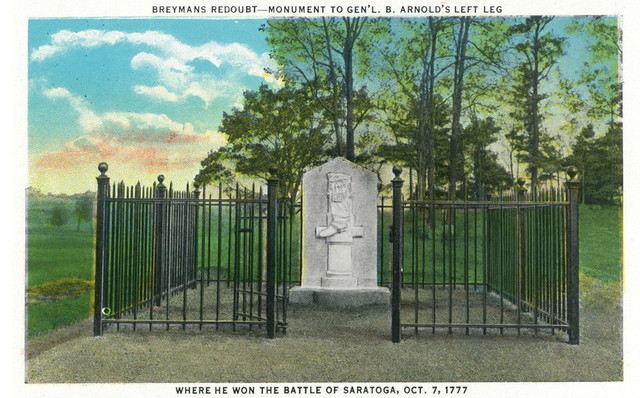
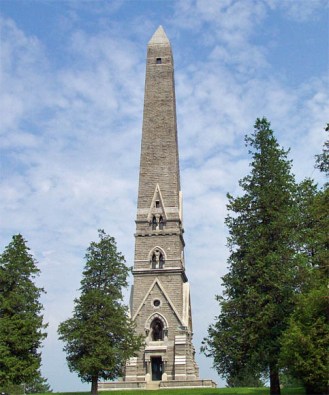 “In memory of

 Cornered in a washout under some railroad tracks Randall held off the attack single handed with his revolver, despite a gunshot wound to his shoulder and no fewer than 11 lance wounds.
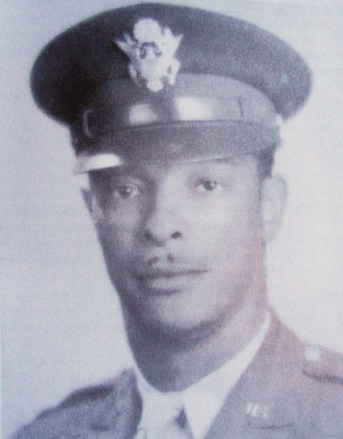
 The King James Bible teaches us, in John 15:13: “Greater love hath no man than this, that a man lay down his life for his friends“. After the war, Sommocolonia erected a Memorial. A tribute to nine brave soldiers who gave their lives that their brothers might live. Eight Italians and one American.
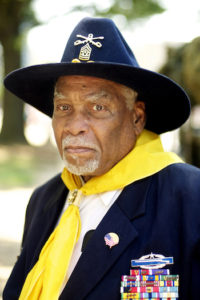 1st Sergeant Mark Matthews, the last of the Buffalo Soldiers, died of pneumonia on September 6, 2005 at the age of 111. A man who forged papers in order to join at age fifteen and once had to play taps from the woods, Matthews was buried with full military honors at Arlington National Cemetery, section 69, grave #4215.


 Stripped of armor to increase range and carrying a full load of depth charges, the American anti-submarine bomber with its 10-man crew dove out of the clouds at 1,000 feet, throttles open and machine guns ablaze. The first Condor never came out of that diving turn, while machine gun fire from the second tore into the American bomber, shredding hydraulic systems and setting the right wing ablaze.
 Maxwell had dubbed his B-24 “The Ark”, explaining that “it had a lot of strange animals aboard, and I hoped it would bring us through the deluge”. It must have worked. Seven out of ten crew members lived to be plucked from the water. The second Condor made it back to Bordeaux, where it crashed and burned on landing.


 Historical Easter Eggs - Today in History
You must be logged in to post a comment.