Late on the night of March 8, 1863, a light rain was falling when Mosby’s Rangers formed up for a raid on Fairfax Virginia, known at that time as Fairfax Courthouse.
Like fellow Virginian Robert E. Lee, the Howardsville lawyer John Singleton Mosby opposed the destruction of the Union but, when secession came, he stayed with his state. Small and frail as a boy, Mosby was often the target of much larger bullies. Years later in his memoirs, he’d write that he never won a fight. It seems that John Singleton Mosby never backed down from one, either.
Mosby participated in the 1st Battle of Manassas (1st Bull Run) as a member of the Virginia Volunteers Mounted Rifles, later joining James Ewell Brown “J.E.B.” Stuart as a Cavalry Scout. A gifted horseman and natural tactician, information gathered by Mosby aided Stuart in his humiliating ride around McLellan’s Army of the Potomac in June, 1862.
The following year, Stuart authorized Mosby to form and take command of the 43rd Battalion of Virginia Cavalry, a regiment-sized unit operating out of north central Virginia. These “Partisan Rangers”, 1,900 of whom served between January 1863 and April ’65, were under the command of Stuart and Lee and subject to their authority, but were not a traditional army unit. Mosby’s Rangers shared in the spoils of war but had no camp duties, and lived scattered among civilian populations.
Known for lightning raids of the Virginia countryside, Mosby’s 43rd Cavalry would be called together to strike specific targets, dispersing afterward and making themselves next to impossible to run aground. So successful were they that, to this day, parts of Virginia’s Piedmont region are known as “Mosby’s Confederacy”.
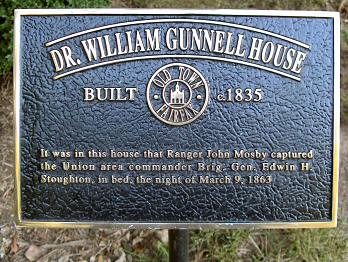
Late on the night of March 8, 1863, a light rain was falling when Mosby’s Rangers formed up for a raid on Fairfax Virginia, known at the time as Fairfax Courthouse. Deep in the midst of several thousand Federal soldiers and only fifteen miles from the White House, Union Brigadier General Edwin H. Stoughton was sleeping in his headquarters. Some sources indicate that he was “sleeping it off”. The “Gray Ghost” entered the Union General’s quarters in the small hours of March 9, his rangers quickly overpowering a handful of sleepy guards.
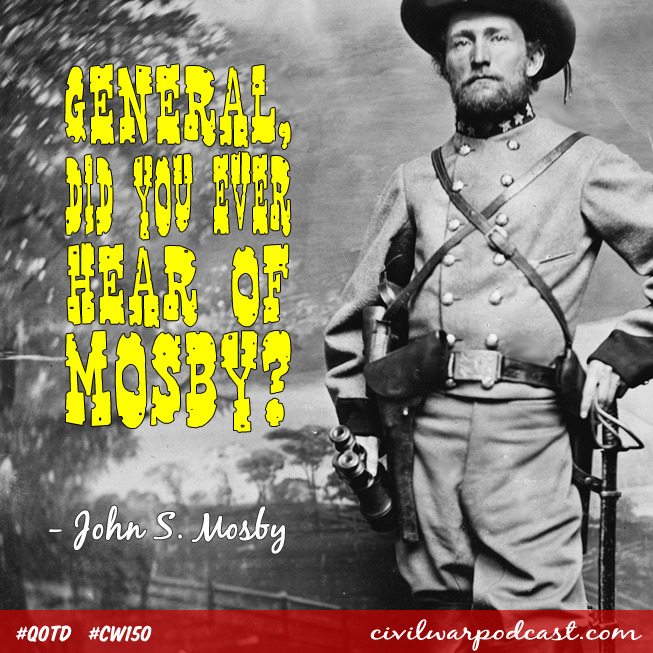
Entering the bed chamber as others went to the stables and gathered horses, Mosby lifted the General’s nightshirt and slapped his bare backside with a sword. General Stoughton sputtered awake, demanding “What is the meaning of this!?” “General, did you ever hear of Mosby“, came the question.
Mosby himself later recalled, “There was no time for ceremony, so I drew up the bedclothes, pulled up the general’s shirt, and gave him a spank on his bare back, and told him to get up”. Stoughton replied, “Yes, have you caught him?” “I AM Mosby,” said the Gray Ghost, “and I have caught You. Stuart’s cavalry has possession of the Courthouse; be quick and dress.”
As prisoners came to the realization that they’d been captured by such a puny force, many melted into the woods, and escaped. In the end, Mosby and his 29 rangers had captured a Union General, two Captains, 30 enlisted men and 58 horses, without firing a shot. On hearing the story the next day, President Lincoln lamented: “I can make another Brigadier in 5 minutes, but I can’t replace those horses”.
If you enjoyed this “Today in History”, please feel free to re-blog, “like” & share on social media, so that others may find and enjoy it as well. Please click the “follow” button on the right, to receive email updates on new articles. Thank you for your interest, in the history we all share.
On March 7, AD321, Constantine I “The Great” decreed Dies Solis – Day of the Sun or “Sun-day”: “On the venerable day of the Sun let the magistrates and people residing in cities rest, and let all workshops be closed”.
The cithara or kithara (Greek: κιθάρα, kithāra, Latin: cithara) was an ancient Greek musical instrument in the lyra family of instruments
For two thousand years, a popular story has told the tale of Emperor Nero, playing the fiddle while Rome burned. Far be it for me to leap to the defense of a man who ordered the murder of his own wife and mother, except in the name of historical accuracy. The viol class of musical instruments, to which the fiddle belongs, didn’t come along until the 11th century. If Nero played anything it was probably a Cithara, a heavy wooden instrument with four to seven strings.
At least five versions come down to us about the Great Fire of 64AD, and the Emperor’s role in it. The Roman historian Tacitus tells us that Nero sang about the fall of Troy while the city burned, but admits there were no witnesses.
Cassius Dio and Suetonius ask us to believe, in their turn, that Nero a) secretly sent guys out to burn the city, b) openly did so and watched from the tower of Maecenas while singing and playing the lyre, c) the fire was started by an obscure religious sect called “Christians”, d) Nero sent his guys out after all, but sang and played his lyre from a private stage and e) the fire started by accident while Nero was thirty-five miles away at Antium, and the emperor rushed back to help the now-homeless people of Rome.
Be that as it may, three things are certain. First, The fire burned for six days, utterly destroying three of the 14 districts of Rome, and severely damaging seven others. Next, Nero used the excuse of the fire to go after the Christians, having many of them arrested and executed. Last, the Domus Aurea (“Golden Palace”) and surrounding “Pleasure Gardens” which the emperor built on the ruins, would be the death of Emperor Nero.
Between AD65 and 68, Emperor Nero built a vast palace complex over an area of more than 200 acres, linking existing buildings on the Palatine Hill with the Gardens of Maecenas and other imperial properties on the Esquiline hills, and adding a grand colonnaded approach and vestibule surrounding an artificial lake.
Reconstruction of the Domus Aurea, of Nero
One of the Great Wonders of antiquity, Nero’s “Golden house” was ruinously expensive, 300 rooms of dazzling white marble with pools in the floors and fountains splashing in corridors. There were jewel-encrusted walls and ivory clad columns. An enormous vaulted ceiling lay underneath the dome of the main dining room, with an ingenious mechanism cranked by slaves, making the ceiling revolve like the heavens, as rose petals dropped and perfume was sprayed on assembled diners.
Suetonius described the complex as “ruinously prodigal”. Nero himself would say nothing further on the palace’ dedication, save to say that he “had at last begun to live like a human being”.
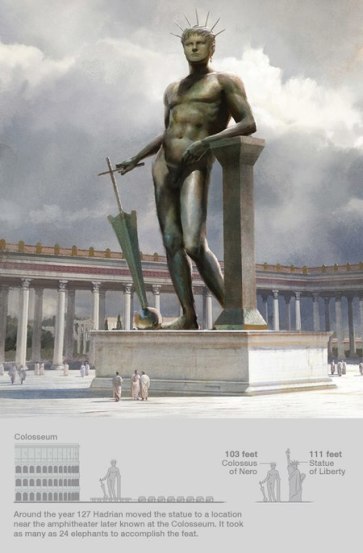
Artist’s rendering of the Colossus of Nero holds a rudder on the globe, symbolizing his dominion over land and sea.
At the center of it all, Nero built his Colossus Neronis, a giant gilded bronze statue – of himself. Sources place the thing at 98′ to 121′ tall, roughly equal to the statue of liberty, from her feet to her crown.
With all of Italy “thoroughly exhausted by contributions of money” and “the provinces ruined”, the Emperor himself was roundly hated. In June AD68, Nero learned that he’d been tried in absentia, and condemned to death as an enemy of the Roman people. Preparing himself for suicide, Nero muttered “Qualis artifex pereo” (“What an artist dies in me”).
Nero’s profligacy was a severe embarrassment to his successors. Within a decade, the palace and its complex was stripped of its marble, jewels, and ivory embellishments.
Within forty years, most of the grounds were filled with earth and built over, replaced by the Baths of Titus, and the Temple of Venus and Rome. Vespasian drained the lake and built the Flavian Amphitheatre, but Nero’s Colossus, lived on.
In 69, Emperor Vespasian added a sun-ray crown and renamed the thing Colossus Solis, a dedication to the Roman sun god Sol Invictus (“Unconquered Sun”), patron of the legions and official Sun God of the later Roman Empire.
Around 128, Emperor Hadrian moved the statue from the Domus Aurea to just outside of the Colosseum, with a little help from the architect Decrianus, and 24 elephants. Emperor Commodus removed the head and replaced it with a likeness of his own, but the head was restored after Commodus’ death, and so it remained.
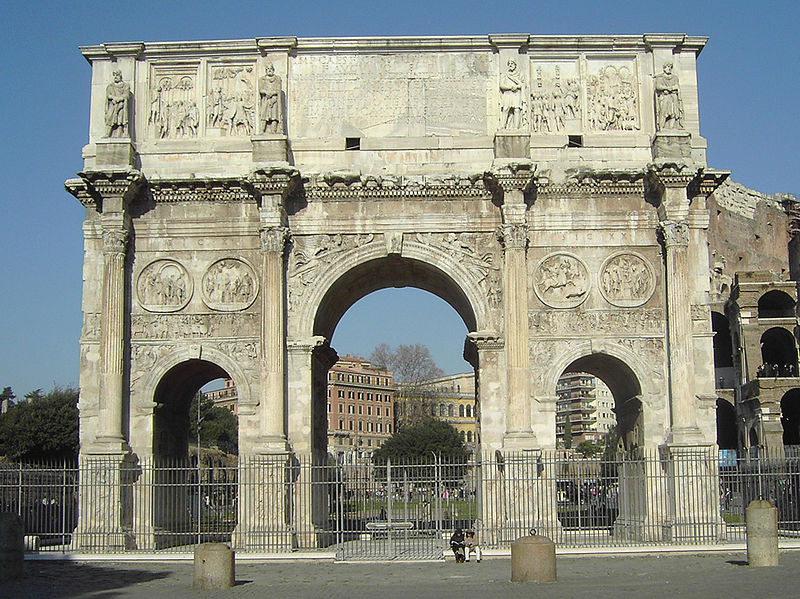
The Arch of Constantine, the last and largest of the Triumphal Arches of Rome and dedicated in AD315, was carefully positioned to align with Sol Invictus, so that the Colossus formed the dominant backdrop when approaching the Colosseum via the main arch.
Six years later, March 7, AD321, Constantine I “The Great” decreed Dies Solis – Day of the Sun or “Sun-day” – as the Roman day of rest (Codex Justinianus 3.12.2): “On the venerable day of the Sun let the magistrates and people residing in cities rest, and let all workshops be closed. In the country however persons engaged in agriculture may freely and lawfully continue their pursuits because it often happens that another day is not suitable for grain-sowing or vine planting; lest by neglecting the proper moment for such operations the bounty of heaven should be lost”.\
2000 years later Constantine’s day of rest remains, but the colossus of the Unconquered Sun is gone. The last known reference in antiquity dates back to the Calendar of 354, the earliest illuminated manuscript containing full page illustrations.
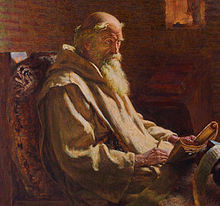
Saint Bede of northumbria
It may have been destroyed during the Sack of Rome in 410, or perhaps it toppled in one of a series of 5th century earthquakes, its metal scavenged. There is evidence that Sol Invictus outlived the western Roman Empire and survived into the early middle ages. Bede the Venerable, an English monk from the monastery of St. Peter in Northumbria, wrote sometime circa 672–735: “As long as the Colossus stands, Rome will stand, when the Colossus falls, Rome will also fall, when Rome falls, so falls the world“.
Today, nothing remains of the Colossus of Nero, save for the foundations of its pedestal at the second location, near the ruins of the Colosseum.
Dred Scott had lost at virtually every turn, only to win his freedom at the hands of the family which had once held him enslaved.
Dred Scott, his full name may have been “Etheldred”, was born into slavery in Southampton County, Virginia, sometime in the late 1790s. In 1818, Scott belonged to Peter Blow, who moved his family and six slaves to Alabama, to attempt a life of farming. The farm near Huntsville was unsuccessful and the Blow family gave up the effort, moving to St. Louis Missouri in 1830, to run a boarding house. Around this time, Dred Scott was sold to Dr. John Emerson, a surgeon serving in the United States Army.
Dred & Harriet Scott’s restored quarters, at Ft. Snelling
As an army officer, Dr. Emerson moved about frequently, bringing Scott with him. In 1837, Emerson moved to Fort Snelling in the free territory of Wisconsin, now Minnesota. There, Scott met and married Harriet Robinson, a slave belonging to fellow army doctor and Justice of the Peace, Lawrence Taliaferro. Taliaferro, who presided over the ceremony, transferred Harriet to Emerson, who continued to regard the couple as his slaves. Emerson moved away later that year, leaving the Scotts behind to be leased by other officers.
The following year, Dr. Emerson married Eliza Irene Sanford, and sent for the Scotts to rejoin him in Fort Jesup, in Louisiana. Harriett gave birth to a daughter while on a steamboat on the Mississippi, between the free state of Illinois and the Iowa district of the Wisconsin Territory.
Dr. Emerson died in 1842, leaving his estate to his wife Eliza, who continued to lease the Scotts out as hired slaves.
Four years later, Scott attempted to buy his freedom for the sum of $300, equivalent to about $8,000 today. Mrs. Emerson declined the offer and Scott took legal recourse. By this time, Dred and Harriett Scott had two daughters, who were approaching an age where their value would be greatly increased, should they be sold as slaves. Wanting to keep his family together, Scott sued.
Ironically, Dred Scott’s suit in state court, Scott v. Emerson, was financially backed by three now-adult Blow children, who had since become abolitionists. The legal position stood on solid ground, based on the doctrine “Once free, always free”. The Scott family had resided in free states and territories for two years, and their eldest daughter was born on the Mississippi River, between a free state and a free territory.
The verdict went against Scott but the judge ordered a retrial, which was held in January, 1850. This time, the jury ruled in favor of Dred Scott’s freedom. Emerson appealed and the Missouri supreme court struck down the lower court ruling, along with 28 years of Missouri precedent.
By 1853, Eliza Emerson had remarried and moved to Massachusetts, transferring ownership of the Scott family to her brother, John Sanford. Scott sued in federal district court, on the legal basis that the federal courts held “diversity jurisdiction”, since Sanford lived in one state (New York), and Scott in another (Missouri). Dred Scott lost once again and appealed to the United States Supreme Court, a clerical misspelling erroneously recording the case as Dred Scott v. Sandford.
On March 6, 1857, Chief Justice Roger B. Taney delivered the 7-2 majority opinion, enunciating one of the stupidest decisions, in the history of American jurisprudence: “[Americans of African ancestry] had for more than a century before been regarded as beings of an inferior order, and altogether unfit to associate with the white race, either in social or political relations; and so far inferior, that they had no rights which the white man was bound to respect; and that the negro might justly and lawfully be reduced to slavery for his benefit. He was bought and sold, and treated as an ordinary article of merchandise and traffic, whenever a profit could be made by it”.
Frederick Douglass
The highest court in the land had ruled that slaves were private property and not citizens, with no right to legal recourse. Furthermore, the United States Congress had erred in attempting to regulate slavery in the territories, and had no right to revoke the property rights of a slave owner, based on his place of residence.
The response to the SCOTUS opinion was immediate, and vehement. Rather than settle the issue of slavery, the decision inflamed public opinion, dividing an already fractured country, further. Frederick Douglass assailed Chief Justice Taney’s opinion, noting that:
“We are now told, in tones of lofty exultation, that the day is lost all lost and that we might as well give up the struggle. The highest authority has spoken. The voice of the Supreme Court has gone out over the troubled waves of the National Conscience, saying peace, be still . . . The Supreme Court of the United States is not the only power in this world. It is very great, but the Supreme Court of the Almighty is greater”.
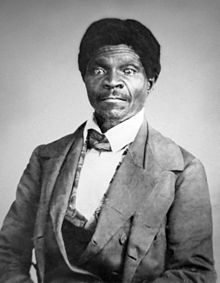
Dred Scott, photograph circa 1857
The Supreme Court had spoken, but the Dred Scott story was far from over. Eliza Irene Emerson’s new husband was Calvin C. Chaffee, a member of the United States Congress, and an abolitionist.
Following the Dred Scott decision, the Chaffees deeded the Scott family over to Henry Taylor Blow, now a member of the United States House of Representatives from Missouri’s 2nd Congressional district, who manumitted the family on May 26. Dred Scott had lost at virtually every turn, only to win his freedom at the hands of the family which had once held him enslaved.
For Harriett and the two Scott daughters, it was the best of all possible outcomes. For Scott himself, freedom was short-lived. Dred Scott died of tuberculosis, the following year.
Nationally, the Dred Scott decision had the effect of hardening enmities already nearing white-hot, increasing animosities within and between pro- and anti-slavery factions in North and South, alike. Politically, the Democratic party was broken into factions and severely weakened, while the fledgling Republican party was strengthened, as the nation was inexorably drawn to Civil War.
The issue of Black citizenship was settled in 1868, via Section 1 of the 14th Amendment, which states: “All persons born or naturalized in the United States, and subject to the jurisdiction thereof, are citizens of the United States and of the State wherein they reside …”
Dred Scott is buried in the Calvary Cemetery in St. Louis, Missouri. The marker next to his headstone reads: “In Memory Of A Simple Man Who Wanted To Be Free.”
If you enjoyed this “Today in History”, please feel free to re-blog, “like” & share on social media, so that others may find and enjoy it as well. Please click the “follow” button on the right, to receive email updates on new articles. Thank you for your interest, in the history we all share.
General Howe was stunned on awakening, to the morning of March 5. The British garrison in Boston and the fleet in harbor, were now under the muzzles of Patriot guns. “The rebels have done more in one night”, he said, “than my whole army would have done in a month.”
Over the night and the following day of April 18-19, 1775, individual British soldiers marched 36 miles or more, on a round-trip expedition from Boston. Following the early morning battles at Lexington and Concord, armed colonial militia from as far away as Worcester swarmed over the column, forcing the regulars into a fighting retreat.
In those days, Boston was a virtual island, connected to the mainland by a narrow “neck” of land. More than 20,000 armed men converged from all over New England in the weeks that followed, gathering in buildings and encampments from Cambridge to Roxbury.
A man who should have gone into history among the top tier of American Founding Fathers, the future turncoat Benedict Arnold, arrived with Connecticut militia to support the siege. Arnold informed the Massachusetts Committee of Safety that Fort Ticonderoga, located along the southern end of Lake Champlain in upstate New York, was bristling with cannon and other military stores. Better yet, the place was lightly defended.
The committee commissioned Arnold a colonel on May 3, authorizing him to raise troops and lead a mission to capture the fort. Seven days later, Colonel Arnold and militia forces from Connecticut and western Massachusetts in conjunction with Ethan Allen and his “Green Mountain Boys” captured the fort, and all its armaments.
Flag flown by George Washington, during the siege of Boston
The Continental Congress created the Army that June, appointing General George Washington to lead it. When General Washington took command of that army in July, it was a force with an average of nine rounds’ shot and powder, per man. The British garrison occupying Boston, was effectively penned up by forces too weak to do anything about it.
The stalemate dragged on for months, when a 25-year-old bookseller came to General Washington with a plan. His name was Henry Knox. Knox proposed a 300-mile, round trip slog into a New England winter, to retrieve the guns of Fort Ticonderoga: brass and iron cannon, howitzers, and mortars. 59 pieces in all. Washington’s advisors derided the idea as hopeless, but the General approved.
Knox set out with a column of men in late November, 1775. For nearly two months, he and his team wrestled 60 tons of cannons and other armaments by boat, animal & man-hauled sledges along roads little better than foot trails. Across two barely frozen rivers, and through the forests and swamps of western Massachusetts, over the Berkshire mountains and on to Cambridge, historian Victor Brooks called it “one of the most stupendous feats of logistics”, of the age.
It must have been a sight that January 24, when Knox returned at the head of that “Noble Train of Artillery”.
Bunker Hill
For British military leadership in Boston, headed by General William Howe, the only option for resupply was by water, via Boston Harbor. Both sides of the siege understood the strategic importance of the twin prominences overlooking the harbor, the hills of Charlestown to the north, and Dorchester heights to the south. It’s why British forces had nearly spent themselves on Farmer Breed’s hillside that June, in an engagement that went into history as the battle of Bunker Hill.
With Howe’s forces in possession of the Charlestown peninsula, Washington had long considered occupying Dorchester Heights, but considered his forces too weak. That changed with the guns of Ticonderoga.
In the first days of March, Washington placed several heavy cannons at Lechmere’s Point and Cobble Hill in Cambridge, and on Lamb’s Dam in Roxbury. The batteries opened fire on the night of March 2, and again on the following night and the night after that. British attention thus diverted, American General John Thomas and a force of some 2,000 made plans to take the heights.
As the ground was frozen and digging impossible, fortifications and cannon placements were fashioned out of heavy 10′ timbers. With the path to the top lined with hay bales to muffle their sounds, pre-built fortifications were manhandled to the top of Dorchester heights over the night of March 4-5, along with the bulk of Knox’ cannons.
Boston as seen from Dorchester heights
General Howe was stunned on awakening, to the morning of March 5. The British garrison in Boston and the fleet in harbor, were now under the muzzles of Patriot guns. “The rebels have done more in one night”, he said, “than my whole army would have done in a month.”
Plans were laid for an immediate assault on the hill, as American reinforcements poured into the position. By day’s end, Howe faced the dismal prospect of another Bunker Hill, this time against a force of 6,000 in possession of heavy artillery.
Engraving depicts the British evacuation of Boston
A heavy snowstorm descended late in the day, interrupting British plans for the assault. A few days later, Howe had thought better of it. Washington received an unsigned note on March 8, informing him that the city would not be put to the torch, if the King’s Regulars were permitted to leave unmolested.
British forces departed Boston by sea on March 17 with about 1,000 civilian loyalists, resulting in a peculiar Massachusetts institution which exists to this day: “Evacuation Day”.
It’s doubtful whether Washington possessed sufficient powder or shot for a sustained campaign, but British forces occupying Boston didn’t know that. The mere presence of those guns moved General Howe to weigh anchor and sail for Nova Scotia. The whole episode may have been one of the greatest head fakes, in all military history.
If you enjoyed this “Today in History”, please feel free to re-blog, “like” & share on social media, so that others may find and enjoy it as well. Please click the “follow” button on the right, to receive email updates on new articles. Thank you for your interest, in the history we all share.
If successful, this would be an endurance mission, one of the longest bombing raids ever attempted, and carried out entirely without fighter escort. The mission was designated “Operation K”, and scheduled for March 4, 1942.
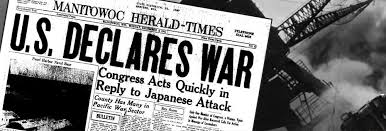
On December 7, 1941, forces of the Imperial Japanese Navy attacked the United States’ Pacific naval Anchorage, at Pearl Harbor. President Franklin Delano Roosevelt addressed a joint session of Congress the following day, requesting a declaration that, since the attack, a state of war had existied between the United States, and Japan. Three days later, Nazi Germany declared war on the United States, reciprocated by an American declaration against Nazi Germany, and their Italian allies. A two-years long conflict in Europe, had become a World War.
In the months that followed, the United States ramped up its war capacity, significantly. Realizing this but having little information, the Imperial Japanese Navy (IJN) determined to visit Pearl Harbor once again, to have a look around.
For the IJN, this was an opportunity to test the new Kawanishi H8K1 “Emily” flying boat, an amphibious bomber designed to carry out long distance bombing raids. So it was that a second, albeit smaller attack was launched against Pearl Harbor.
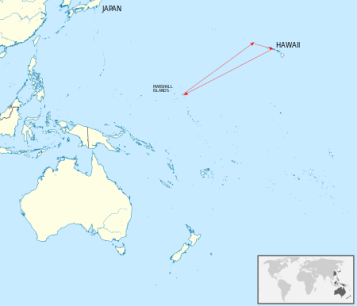
The IJN plan was complex. This, the first Kawanishi H8K1 operation in Japanese military service, involved a small formation of flying boats to be sent to Wotje Atoll in the Marshall Islands, from there to stage the long-range attack. The five flying boats would be loaded with four 550lb bombs apiece and flown to French Frigate Shoals northwest of Oahu, there to rendezvous with three Japanese submarines, waiting to refuel them. Ten miles south of Oahu, the 356’ diesel-powered submarine I-23 was to hold watch over the operation, reporting weather and acting as “lifeguard” in case any aircraft had to ditch in the ocean.
“A Kawanishi H8K1 of the 802nd Kokutai is lifted out of the water onto the decks of the HIJMS Akitsushima, 1942, off Shortland Island”. H/T fly.historicwings.com, for this image
After refueling, the bomber – reconnaissance mission would approach Pearl Harbor and attack the “10-10 dock”, so-called because it was 1,010 feet long and a key naval asset for the US Pacific Fleet.
If successful, this would be an endurance mission, one of the longest bombing raids ever attempted, and carried out entirely without fighter escort. The mission was designated “Operation K”, and scheduled for March 4, 1942.
As it turned out, the raid was a “comedy of errors”, on both sides.
Things began to go wrong, almost from the beginning. I-23 vanished. To this day nobody knows where the submarine went. American forces reported several engagements with possible subs during this time frame. Maybe one of those depth charges did its job. It is equally possible that, unknown to the Imperial Japanese Navy, I-23 was involved in an accident, lost at sea with all hands.
As it was, only two of the new flying boats were ready for the operation, the lead plane (Y-71) flown by Lieutenant Hisao Hashizume, and his “wingman” Ensign Shosuke Sasao flying the second aircraft, Y-72.
The staging and refueling parts of the operation were carried out but, absent weather intelligence from the missing I-23, the two-aircraft bombing formation was ignorant of weather conditions over the target. As it was, a thick cloud cover woud leave the Japanese pilots all but blind.
Captain Joseph J. Rochefort, USN
On the American side, Captain Joseph J. Rochefort, USN, worked in the Combat Intelligence Unit, tasked with intercepting enemy communications and breaking Japanese codes. US code breakers had intercepted and decoded Japanese radio communications prior to the attack of four months earlier, but urgent warnings were ignored by naval authorities at Pearl Harbor.
Once again, Rochefort’s team did its job and urgent warnings were sent to Commander in Chief Pacific (CINCPAC) and to Com-14. Incredibly, these warnings too, fell on deaf ears. Rochefort was incredulous. Years later, he would describe his reaction, at the time “I just threw up my hands and said it might be a good idea to remind everybody concerned that this nation was at war.”
American radar stations on Kauai picked up and tracked the incoming aircraft, but that same cloud cover prevented defenders from spotting them. Curtiss P-40 Warhawk fighters were scrambled to search for the attackers, while Consolidated PBY Catalina flying boats were sent to look for non-existent Japanese aircraft carriers, assumed to have launched the two bombers.
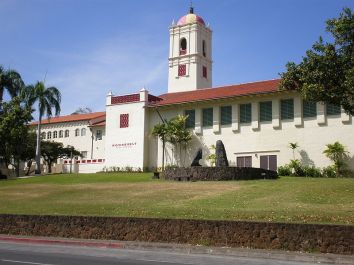
Meanwhile, the two Japanese pilots became confused, and separated. Hashizume dropped his bombs on the side of Mt. Tantalus, about 1,000 ft. from nearby Roosevelt High School. Hashizume’s bombs left craters 6-10 ft deep and 20-30 ft across on the side of the extinct volcano. Sasao is presumed to have dropped his bombs, over the ocean.
President Theodore Roosevelt High School, Honolulu
A Los Angeles radio station reported “considerable damage to Pearl Harbor”, with 30 dead sailors and civilians, and 70 wounded. Japanese military authorities took the broadcast to heart, and considered the operation to have been a great success. Talk about ‘fake news’. As it was, the damage was limited to those craters on Mt. Tantalus, and shattered windows at Roosevelt High.
The United States Army and the US Navy blamed each other for the explosions, each accusing the other of jettisoning munitions over the volcano.
The IJN planned another such armed reconnaissance mission for the 6th or 7th of March, but rescheduled for the 10th because of damage to Hashizume’s aircraft, and the exhaustion of air crew. The second raid was carried out on March 10, but Hashizume was shot down and killed near Midway atoll, by Brewster F2A “Buffalo” fighters.
The results of the second Japanese raid on Pearl Harbor, carried out on March 4, 1942, were limited to four craters on the side of an extinct volcano.
A follow-up to Operation K was scheduled for May 30, but by that time, US military intelligence had gotten wise to the IJN meet-up point. Japanese submarines arriving at French Frigate Shoals found the place mined, and swarming with American warships.
In the end, the Imperial Japanese Navy was unable to observe US Navy activity, or to keep track of American aircraft carriers. Days later, this blindness would have a catastrophic effect on the Japanese war effort, at a place called Midway.
If you enjoyed this “Today in History”, please feel free to re-blog, “like” & share on social media, so that others may find and enjoy it as well. Please click the “follow” button on the right, to receive email updates on new articles. Thank you for your interest, in the history we all share.
In early colonial America, tavern keepers would put out an “Ale Stick” or “Ale Stake”, a wooden pole with a bush of barley tied to the top, informing thirsty travelers that sustenance could be found, inside. Sometimes a hoop of woven barley hanging outside, would tell you that you had arrived.
Despite seemingly inexhaustible supplies of pristine drinking water, colonists to the New World were first and foremost Englishmen, every one of whom understood that drinking water could make you deathly ill. The connection between sanitation and the boiling to make beer was ill understood, but everyone knew. Those who drank beer and ale didn’t get sick. The brewhouse was an indispensable priority in every new settlement.
The earliest settlers to Jamestown, Virginia neglected the brewer’s art. Their first pleas for relief from England, included advertisements seeking “two brewers’ to join them.
When Pilgrimsfetched up on the shores of Cape Cod and the later Plimoth colony in 1620, it was not in search of a beach vacation, but because of dwindling beer supplies.
Today, much of the bay has been filled in and developed, forming the core of downtown Boston. This is the Shawmut Peninsula, as it looked during Cole’s time.
Little brother Benjamin Franklin describes his earliest experience working in his brother’s print shop, with frequent reference to fetching ale for the journeyman printers.
Beer and ale were dietary staples in the era, a source of nourishment as well as refreshment. Infants drank beer and it was especially recommended for nursing mothers. Many households added a small brewing room to the outside of the building, so that the heat and risk of fire associated with brewing and cooking could be kept outside of living quarters. To this day, the lower rooflines of these “brew rooms” can be found, jutting out from the sides of the oldest American homes.
In early colonial America, tavern keepers would put out an “Ale Stick” or “Ale Stake”, a wooden pole with a bush of barley tied to the top, informing thirsty travelers that sustenance could be found, inside. Sometimes a hoop of woven barley hanging outside, would tell you that you had arrived.
Samuel Cole was an early settler in the Massachusetts Bay colony, arriving with the Winthrop fleet in 1630 and establishing himself on the Shawmut peninsula. Four years later, he opened the first house of entertainment in Boston, calling his place “Cole’s Inn”, established March 3, 1634.
Taverns were common in England from as early as the 1200s, where women called “Ale Wives” would fetch beer, wine, mead and ale for the guests. Though lodgings were a common feature of the ale houses of the time, it would not be until the early 1700s that Colonial taverns commonly offered such amenities.
Later taverns posted elaborate signs, carved from wood, stone, or even terra cotta, and hanged from wooden posts mounted to the building or to a nearby tree. Barley, the universal symbol for beer, remained a common feature of such signs, and continues in use on the labels of many brands sold to this day.
The signs of the time frequently included horses, indicating that lodgings and stables were available. Many such establishments came to be called after such signs, and names such as “Chestnut Mare” and “White Stallion” were common.
Today, a Google search of the term “Black Horse Tavern” yields some 1,090,000 hits. Cheers.
“Filled with mingled cream and amber I will drain that glass again. Such hilarious visions clamber Through the chambers of my brain – Quaintest thoughts — queerest fancies Come to life and fade away; Who cares how time advances? I am drinking ale today.” – Edgar Allen Poe
If you enjoyed this “Today in History”, please feel free to re-blog, “like” & share on social media, so that others may find and enjoy it as well. Please click the “follow” button on the right, to receive email updates on new articles. Thank you for your interest, in the history we all share.
The world’s longest running talk show began in 1954, when Steve Allen sat down at his piano on September 27. This show is gonna go on… forever”, Allen quipped. So far, he seems to have gotten that right.
Johnny Carson, Navy portrait
With Jack Parr about to sign off the “Tonight Show” for the last time, NBC executives were anxious to find a replacement. Bob Newhart, Jackie Gleason, Groucho Marx, and Joey Bishop all declined the opportunity, when a United States Navy veteran, amateur magician and amateur boxer with a 10/0 record agreed to take the job.
Back when late-night comedians were expected to be funny, Johnny Carson had misgivings, believing himself unequal to the task of producing 90 minutes of fresh content, every day.
A series of guest hosts followed including Merv Griffin, Art Linkletter, Joey Bishop, Jerry Lewis and Groucho Marx, as Carson finished out the last six months of a contract with ABC. Despite his apprehensions, Carson started the new gig on October 1, 1962.
No sooner had NBC announced that Johnny Carson would be joining “The Tonight Show,” than the national press gaggle came after him, looking for interviews. Paradoxically, the future “King of late night comedy” was averse to publicity. Carson resisted at first, but finally relented, providing a list of answers to which journalists could apply any question they pleased:
“Yes, I did”.
“Not a bit of truth in that rumor”.
“Only twice in my life, both times on Saturday”.
“I can do either, but prefer the first”.
“NO”.
“Kumquats”.
“I can’t answer that question”.
“Toads and tarantulas”.
“Turkestan, Denmark, Chile, and the Komandorskie Islands”.
“As often as possible, but I’m not very good at it yet”.
“I need much more practice”.
“It happened to some old friends of mine, and it’s a story I’ll never forget”.
Ed McMahon
A Marine Corps aviator and flight instructor from Lowell, Massachusetts joined Carson from that first show, back in 1962. The Marine earned his carrier landing qualifications around the time the atomic bomb ended the war in the Pacific, and went on to fly 85 combat missions in Korea, earning six air medals and retiring with the rank of Colonel in 1966. His name was Ed McMahon.
In those days, the Tonight Show was a whopping 105 minutes long. Groucho Marx delivered a fifteen-minute monologue before introducing the host for that first program. After that and for years afterward, the monologue segment fell to McMahon himself.
Groucho Marx introducing the new host of the Tonight Show, October 1, 1962
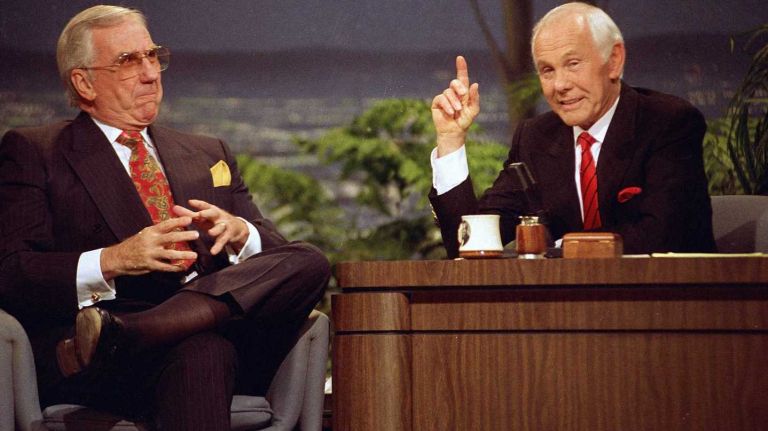
When the Tonight Show first aired, everyone on the set including Carson himself, smoked. The “Public Health Cigarette Smoking Act” was introduced in Congress in 1969. Ironically, it was President Richard Nixon, an avid pipe smoker who lit up as many as eight bowls a day, who signed the measure into law on April 1, 1970. The measure included a permanent ban on television cigarette advertising, scheduled to take effect January 2, the following year. The last cigarette ad in the history of American television was a Virginia Slims ad, broadcast at 11:59p.m., January 1, 1971, on the Tonight Show, Starring Johnny Carson. Smoking on-air became a thing of the past sometime in the mid-80s, but that cigarette box remained on Carson’s desk until his final episode, in 1992. You’ve come a long way, baby.
For NBC, the Tonight Show was a cash cow. Many years the program grossed over $100 million, accounting for 15-20% of the profits earned by the entire network. Carson threatened to walk in 1980, ending up with a deal unprecedented in the history of American broadcasting: $5 million a year and series commitments estimated at $50 million. Just as important, show content would no longer belong to the network, but to Carson himself.
Carson began taking Mondays off in 1972, when the show moved from New York to California. There followed a period of rotating guest hosts, including George Carlin and Joan Rivers, who became permanent guest host between 1983 and 1986.
The Tonight Show Starring Johnny Carson was a late-night fixture through seven US Presidents: John Kennedy, Lyndon Johnson, Richard Nixon, Gerald Ford, Jimmy Carter, Ronald Reagan, and George HW Bush. Nearly every American over the age of 30 and some younger will remember the opening, “Heeeeeeeeeeere’s Johnny!”. There was the opening monologue, and the imaginary golf swing. “Carnac the Magnificent”, holding the envelope to his head, reciting the punchline to the joke sealed inside. “Saucepan… Who was Peter Pan’s wino brother?” When a joke bombed, there was the comedic curse. “May a bloated yak change the temperature of your jacuzzi!”
Jay Leno appeared on the Tonight Show with Johnny Carson for the first time on March 2, 1977. He would frequently guest, and served as permanent host from May 1992 to May 2009.
Five years after Carson’s final show, 10,000 taped episodes were moved to a salt mine in Kansas, to protect them from deterioration. There they remain, 54 stories underground, where the average temperature is 68° Fahrenheit, with a uniform 40% humidity.
Excepting Conan O’Brien’s eight months in 2010, Leno remained permanent host of the Tonight Show until February 2014, recording more episodes (4,610) than even Carson himself, with 4,531. Saturday Night live veteran Jimmy Fallon took over the reins in February 2014, where he remains to this day.
The world’s longest running talk show began in 1954, when Steve Allen sat down at his piano on September 27. This show is gonna go on… forever”, Allen quipped. So far, he seems to have gotten that right.
If you enjoyed this “Today in History”, please feel free to re-blog, “like” & share on social media, so that others may find and enjoy it as well. Please click the “follow” button on the right, to receive email updates on new articles. Thank you for your interest, in the history we all share.
The writer and photographer Roger Caras once said “Dogs are not our whole life, but they make our lives whole.”
Years ago, a segment broadcast on National Public Radio’s All Things Considered, told the story of a working shepherd, who worked the hills of 1930s North Dakota. This man, I don’t recall his name, fell ill, and was taken to a local Jesuit hospital.
The man’s business partner and constant companion “Shep”, a sheepdog of unknown breed, befriended a nurse who would feed him a morsel out of the side door.
For 11 days, Shep waited at the hospital, for his master’s return. On the 11th day the man died, his casket taken to the local train station and placed in the cargo hold, to be returned home for burial.
“Greyfriar’s Bobby’
Shep was there throughout, and watched the train chug away with the body of his human. He returned to that hospital door for sustenance, but every time he heard the train whistle, there was a sheepdog waiting at the station.
In those days, there were two trains a day. For five years, Shep returned to the station, every time he heard that whistle. He never missed a train. In time, the dog wasn’t quite as fast as he used to be, his hearing not so good. He was killed while waiting on the tracks, for the man who could never return.
“Greyfriar’s Bobby” was a Skye Terrier in 19th-century Edinburgh, who waited 14 years by the grave of his owner, City Police nightwatchman, John Gray. There he died in 1872 and was buried in the Greyfriars Kirkyard, not far from where he had stood watch. all those years.
Hachikō Statue in Tokyo, Japan
Hachikō, an Akita known to Japanese children as chūken Hachikō (“faithful dog Hachikō”), used to tag along with his owner Hidesaburō Ueno, a professor of agriculture at Tokyo University. Ueno would commute to work and every evening, Hachikō would wait at the Shibuya Station, for the professor’s return. Hidesaburō stopped coming home in May 1925, when a cerebral hemorrhage took him away while delivering a lecture. Every day for nine years, nine months and fifteen days, the golden colored Akita appeared at Shibuya Station, precisely in time for that evening train.
Liam Tasker came from the Scottish town of Kirkcaldy, in the historic county of Fife. Tasker joined the Royal Army in 2001 as a mechanic, but he wanted more. He was transferred to the Royal Army Veterinary Corps six years later, and assigned as a trainer with the 1st Military Working Dog (MWD) Regiment. Tasker was a natural, and rose quickly among the ranks of the group. In 2010, Lance Corporal Tasker was paired with MWD Theo, a twenty-two-month-old English Springer Spaniel serving as a T.E.D.D. (Tactical Explosives Detection Dog) with the British Army.
Liam and Theo
A Military Working Dog is anything but a “disposable” asset. It is a highly trained, specialized soldier who complements and adds to the abilities of his human partner, as that two legged soldier complements those of the dog.
The writer and photographer Roger Caras once said “Dogs are not our whole life, but they make our lives whole.” So it was, with Liam and Theo. The team was posted to Afghanistan, where the two managed to find 14 improvised explosive devices and weapons caches, in five months. “I love my job and working with Theo,” Tasker would say. “He has a great character and never tires…He can’t wait to get out and do his job and will stop at nothing.” Fourteen was a record for that time according to BBC, there is no telling how many lives were saved. The pair proved so successful that their tour was extended, by a month. It was a month too long.
On March 1, 2011, L/Cpl Tasker was killed by a Taliban sniper while on patrol in Helmand Province, and brought back to base by his fellow soldiers. Theo suffered a seizure after returning to base and never recovered. He died that afternoon. It was believed that Theo’s seizure was brought on by the stresses of Tasker’s death, but the autopsy proved inconclusive. Liam’s mother Jane Duffy later said, “I think Theo died of a broken heart, nobody will convince me any different.”
Major Alexander Turner of the 1st Battalion Irish Guards described the pair, saying “He used to joke that Theo was impossible to restrain but I would say the same about Lance Corporal Tasker.” Liam and Theo were returned to Great Britain, arriving first in RAF Lyneham, Wiltshire. Rumors have gone around ever since, that the two were buried together. Tasker’s mother would neither confirm nor deny. She only said, with a sad smile, that “Liam and Theo are where they should be.”
Afterward
On a more upbeat note, and this story needs one, our daughter Carolyn and son-in-law Nate transferred to Savannah in 2013, where Nate deployed to the Wardak province of Afghanistan as a TEDD handler and paired with “MWD Zino”, a four-year-old German Shepherd trained to detect up to 64 explosive compounds.
The team was separated at the end of their tour but reunited months later, a story told on National Public Radio’s “Here & Now” program and produced out of their Boston affiliate, WBUR.
The radio program was broadcast the day of their reunion, in 2014. It’s a great story, if you’re interested in listening to it.
In her 1951 memoir “Fliegen – mein leben”, (Flying is my life), Hannah Reitsch offers no moral judgement one way or the other, on Hitler or the Third Reich.
Hannah Reitsch wanted to fly. Born March 29, 1912 into an upper-middle-class family in Hirschberg, Silesia, it’s all she ever thought about. At the age of four, she tried to jump off the family balcony, to experience flight. In her 1955 autobiography The Sky my Kingdom, Reitsch wrote: ‘The longing grew in me, grew with every bird I saw go flying across the azure summer sky, with every cloud that sailed past me on the wind, till it turned to a deep, insistent homesickness, a yearning that went with me everywhere and could never be stilled.’
Reitsch began flying gliders in 1932, as the treaty of Versailles prohibited anyone flying “war planes” in Germany. In 1934, she broke the world’s altitude record for women (9,184 feet). In 1936, Reitsch was working on developing dive brakes for gliders, when she was awarded the honorary rank of Flugkapitän, the first woman ever so honored. In 1937 she became a Luftwaffe civilian test pilot. She would hold the position until the end of WW2.
A German Nationalist who believed she owed her allegiance to the Fatherland more than to any party, Reitsch was patriotic and loyal, and more than a little politically naive. Her work brought her into contact with the highest levels of Nazi party officialdom. Like the victims of Soviet purges who went to their death believing that it would all stop “if only Stalin knew”, Reitsch refused to believe that Hitler had anything to do with events such as the Kristallnacht pogrom. She dismissed any talk of concentration camps, as “mere propaganda”.
In February 1938, Hannah Reitsch became the first person of either sex to fly a helicopter, the Focke-Achgelis Fa-61, inside a building, Berlin’s Deutschlandhalle. (ullstein bild via Getty Images)
As a test pilot, Reitsch won an Iron Cross, Second Class, for risking her life in an attempt to cut British barrage-balloon cables. On one test flight of the rocket powered Messerschmitt 163 Komet in 1942, she flew the thing at speeds of 500 mph, a speed nearly unheard of at the time. She spun out of control and crash-landed on her 5th flight, leaving her with severe injuries. Her nose was all but torn off, her skull fractured in four places. Two facial bones were broken, and her upper and lower jaws out of alignment. Even then, she managed to write down what had happened, before she collapsed.
Doctors did not expect her to live, let alone fly again. She spent five months in hospital, and suffered from debilitating dizzy spells. She put herself on a program of climbing trees and rooftops, to regain her sense of balance. Soon, she was test flying again.
On this day in 1944, Reichsmarshall Hermann Göring awarded her a special diamond-encrusted version of the Gold Medal for Military Flying. Adolf Hitler personally awarded her an Iron Cross, First Class, the first and only woman in German history, so honored.
It was while receiving this second Iron Cross in Berchtesgaden, that Reitsch suggested the creation of a Luftwaffe suicide squad, “Operation Self Sacrifice”.
Hitler was initially put off by the idea, though she finally persuaded him to look into modifying a Messerschmitt Me-328B fighter for the purpose. Reitsch put together a suicide group, becoming the first to take the pledge, though the idea would never take shape. The pledge read, in part: “I hereby voluntarily apply to be enrolled in the suicide group as a pilot of a human glider-bomb. I fully understand that employment in this capacity will entail my own death.”
The plan came to an abrupt halt when an Allied bombing raid wiped out the factory in which the prototype Me-328s were being built.
In the last days of the war, Hitler dismissed his designated successor Hermann Göring, over a telegram in which the Luftwaffe head requested permission to take control of the crumbling third Reich. Hitler appointed Generaloberst Robert Ritter von Greim, ordering Hannah to take him out of Berlin and giving each a vial of cyanide, to be used in the event of capture. The Arado Ar 96 left the improvised airstrip on the evening of April 28, under small arms fire from Soviet troops. It was the last plane to leave Berlin. Two days later, Adolf Hitler was dead.
Taken into American custody on May 9, Reitsch and von Greim repeated the same statement to American interrogators: “It was the blackest day when we could not die at our Führer’s side.” She spent 15 months in prison, giving detailed testimony as to the “complete disintegration’ of Hitler’s personality, during the last months of his life. She was found not guilty of war crimes, and released in 1946. Von Greim committed suicide, in prison.
In her 1951 memoir “Fliegen – mein leben”, (Flying is my life), Reitsch offers no moral judgement one way or the other, on Hitler or the Third Reich.
She resumed flying competitions in 1954, opening a gliding school in Ghana in 1962. She later traveled to the United States, where she met Igor Sikorsky and Neil Armstrong, and even John F. Kennedy.
Hannah Reitsch remained a controversial figure, due to her ties with the Third Reich. Shortly before her death in 1979, she responded to a description someone had written of her, as `Hitler’s girlfriend’. “I had been picked for this mission” she wrote, “because I was a pilot…I can only assume that the inventor of these accounts did not realize what the consequences would be for my life. Ever since then I have been accused of many things in connection with the Third Reich”.
Toward the end of her life, she was interviewed by the Jewish-American photo-journalist, Ron Laytner. Even then she was defiant: “And what have we now in Germany? A land of bankers and car-makers. Even our great army has gone soft. Soldiers wear beards and question orders. I am not ashamed to say I believed in National Socialism. I still wear the Iron Cross with diamonds Hitler gave me. But today in all Germany you can’t find a single person who voted Adolf Hitler into power … Many Germans feel guilty about the war. But they don’t explain the real guilt we share – that we lost“.
Hannah Reitsch died in Frankfurt on August 24, 1979, of an apparent heart attack. Former British test pilot and Royal Navy officer Eric Brown received a letter from her earlier that month, in which she wrote, “It began in the bunker, there it shall end.” There was no autopsy, or at least there’s no report of one. Brown, for one, believes that after all those years, she may have finally taken that cyanide capsule.
Young Tom Morris followed that first Open Championship in 1868 with three more, in 1869, 1870 and 1872. His record stands to this day, the only player ever to win four consecutive Open Golf Championships. (There was no championship in 1871).
On this day in 1992, 16-year-old Tiger Woods became the youngest PGA golfer in 35 years, going on to become the first $100 million man on the Professional Tour.
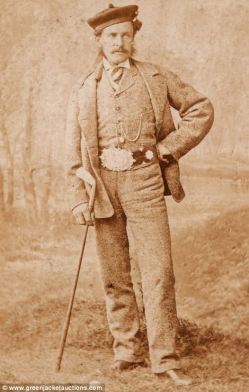
“Young” Tom Morris
The youngest in thirty-five years, but not the youngest. Andy Zhang made the US Open in 2012, at the ripe old age of fourteen years, six months, but even he wasn’t the youngest.
The youngest golfer ever to play in one of the majors (the Masters, US & British Opens and the PGA Championship), was the appropriately named “Young” Tom Morris Jr., a Scot who played in the 1865 British Open at 14 years and four months.
Morris withdrew from that year’s tournament, at about the time General Robert E. Lee was meeting General Ulysses S. Grant at Appomattox. Young Tom went on to win the British Open three years later, winning the equivalent of $12 for the feat. Ironically, the victory came at the expense of his father “Old” Tom Morris, Greenkeeper and club pro at the famous ‘Old Course’ at St. Andrews.
Young Tom followed that first Open Championship in 1868 with three more, in 1869, 1870 and 1872. His record stands to this day, the only player ever to win four consecutive Open Golf Championships. (There was no championship in 1871).
The 18th Green of the Old Course at St. Andrews looks much the same today, as it did in 1891.
Young Tom went on to win three more Open tournaments, the first of only two teenagers in history to win any of the majors. In 1864, Young Tom attended a tournament with his father at the King James VI Golf Club. With days to go before his 13th birthday, he was too young to compete in either the professional or amateur sections. Local organizers set up a two-man tournament between himself and a local youth champion. A large gallery followed the two young golf stars throughout their match. Those who did so were rewarded by seeing young Tom win the match, by a score sufficient to have won the professional tournament.
The Father/Son team tee’d off in match against the brothers Willie and Mungo Park on September 11, 1875. With two holes to go, Young Tom received a telegram with upsetting news. His wife Margaret had gone into a difficult labor. The Morrises finished those last two holes winning the match, and hurried home by ship across the Firth of Forth and up the coast. Too late. Tom Morris Jr. got home to find that his young wife and newborn baby, had died in childbirth.
Weeks later, Young Tom played a marathon tournament in wretched weather, leaving him in a weakened state and bleeding from his lungs. He died at St. Andrews, the “Home of Golf” and place of his birth, twenty-four years earlier. It was Christmas day.
In 2016, the historical drama “Tommy’s Honour” opened the 2016 Edinburgh International Film Festival, based on “Tommy’s Honor: The Story of Old Tom Morris and Young Tom Morris, Golf’s Founding Father and Son” by Kevin Cook, one of five books voted 2007 “Book of the Year”, by Sports Illustrated. Journalist and film critic Ross Miller wrote in The National newspaper of Scotland, calling the film “emotional, inspiring and deeply heartfelt. You don’t have to be a golf fan” Miller wrote, ” to be taken in by this engrossing, quietly passionate film that not only brings something new to the sports biopic table but also serves as a poignant, often heartbreaking portrait of paternal love and pursuing your passion with everything you have.”
The feature image at the top of the page depicting Old and Young Tom was shot at St. Mary’s Studio, and recently sold for $19,850.





 Be that as it may, three things are certain. First, The fire burned for six days, utterly destroying three of the 14 districts of Rome, and severely damaging seven others. Next, Nero used the excuse of the fire to go after the Christians, having many of them arrested and executed. Last, the Domus Aurea (“Golden Palace”) and surrounding “Pleasure Gardens” which the emperor built on the ruins, would be the death of Emperor Nero.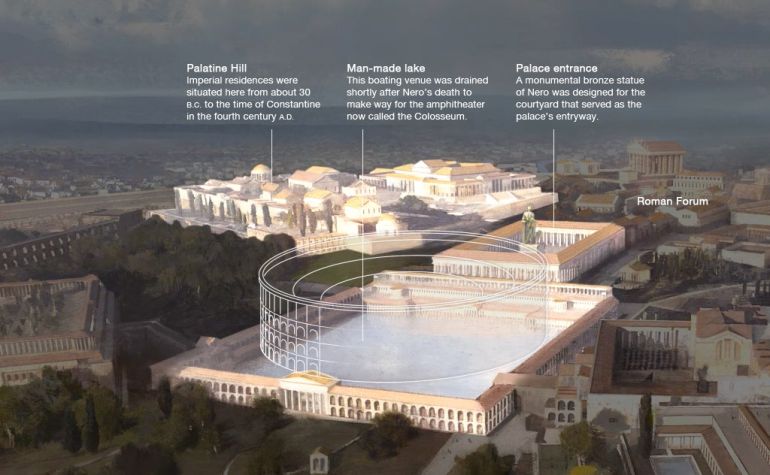


 Dr. Emerson died in 1842, leaving his estate to his wife Eliza, who continued to lease the Scotts out as hired slaves.


 In those days, Boston was a virtual island, connected to the mainland by a narrow “neck” of land. More than 20,000 armed men converged from all over New England in the weeks that followed, gathering in buildings and encampments from Cambridge to Roxbury.


 In the months that followed, the United States ramped up its war capacity, significantly. Realizing this but having little information, the Imperial Japanese Navy (IJN) determined to visit Pearl Harbor once again, to have a look around.




 The signs of the time frequently included horses, indicating that lodgings and stables were available. Many such establishments came to be called after such signs, and names such as “Chestnut Mare” and “White Stallion” were common.


 January 2, the following year. The last cigarette ad in the history of American television was a Virginia Slims ad, broadcast at 11:59p.m., January 1, 1971, on the Tonight Show, Starring Johnny Carson. Smoking on-air became a thing of the past sometime in the mid-80s, but that cigarette box remained on Carson’s desk until his final episode, in 1992. You’ve come a long way, baby.
 Carson began taking Mondays off in 1972, when the show moved from New York to California. There followed a period of rotating guest hosts, including George Carlin and Joan Rivers, who became permanent guest host between 1983 and 1986.
 Jay Leno appeared on the Tonight Show with Johnny Carson for the first time on March 2, 1977. He would frequently guest, and served as permanent host from May 1992 to May 2009.


 On March 1, 2011, L/Cpl Tasker was killed by a Taliban sniper while on patrol in Helmand Province, and brought back to base by his fellow soldiers. Theo suffered a seizure after returning to base and never recovered. He died that afternoon. It was believed that Theo’s seizure was brought on by the stresses of Tasker’s death, but the autopsy proved inconclusive. Liam’s mother Jane Duffy later said, “I think Theo died of a broken heart, nobody will convince me any different.”
 On a more upbeat note, and this story needs one, our daughter Carolyn and son-in-law Nate transferred to Savannah in 2013, where Nate deployed to the Wardak province of Afghanistan as a TEDD handler and paired with “MWD Zino”, a four-year-old German Shepherd trained to detect up to 64 explosive compounds.

 Reitsch began flying gliders in 1932, as the treaty of Versailles prohibited anyone flying “war planes” in Germany. In 1934, she broke the world’s altitude record for women (9,184 feet). In 1936, Reitsch was working on developing dive brakes for gliders, when she was awarded the honorary rank of Flugkapitän, the first woman ever so honored. In 1937 she became a Luftwaffe civilian test pilot. She would hold the position until the end of WW2.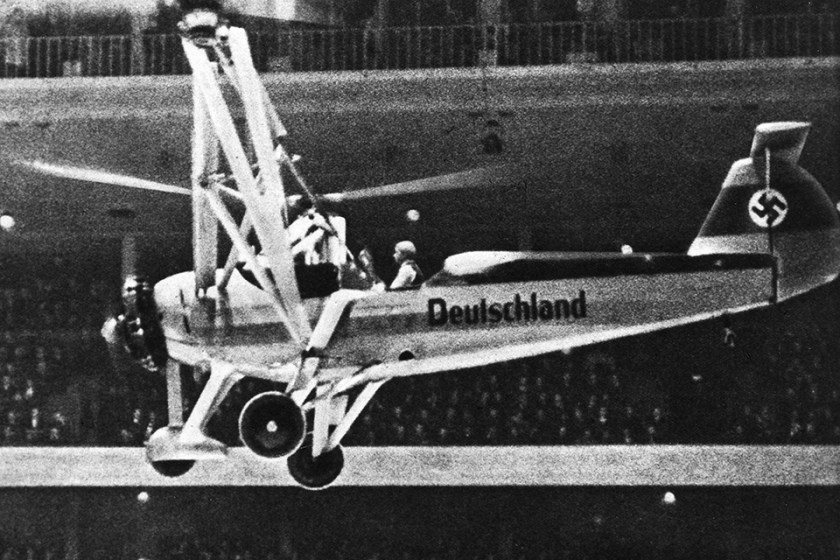
 Doctors did not expect her to live, let alone fly again. She spent five months in hospital, and suffered from debilitating dizzy spells. She put herself on a program of climbing trees and rooftops, to regain her sense of balance. Soon, she was test flying again.
 Hitler was initially put off by the idea, though she finally persuaded him to look into modifying a Messerschmitt Me-328B fighter for the purpose. Reitsch put together a suicide group, becoming the first to take the pledge, though the idea would never take shape. The pledge read, in part: “I hereby voluntarily apply to be enrolled in the suicide group as a pilot of a human glider-bomb. I fully understand that employment in this capacity will entail my own death.”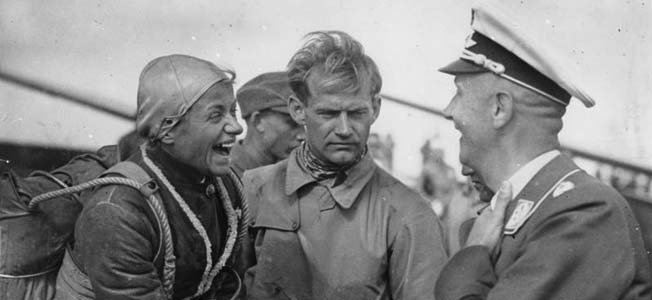
 Toward the end of her life, she was interviewed by the Jewish-American photo-journalist, Ron Laytner. Even then she was defiant: “And what have we now in Germany? A land of bankers and car-makers. Even our great army has gone soft. Soldiers wear beards and question orders. I am not ashamed to say I believed in National Socialism. I still wear the Iron Cross with diamonds Hitler gave me. But today in all Germany you can’t find a single person who voted Adolf Hitler into power … Many Germans feel guilty about the war. But they don’t explain the real guilt we share – that we lost“.



 The Father/Son team tee’d off in match against the brothers Willie and Mungo Park on September 11, 1875. With two holes to go, Young Tom received a telegram with upsetting news. His wife Margaret had gone into a difficult labor. The Morrises finished those last two holes winning the match, and hurried home by ship across the Firth of Forth and up the coast. Too late. Tom Morris Jr. got home to find that his young wife and newborn baby, had died in childbirth.
 Historical Easter Eggs - Today in History
You must be logged in to post a comment.