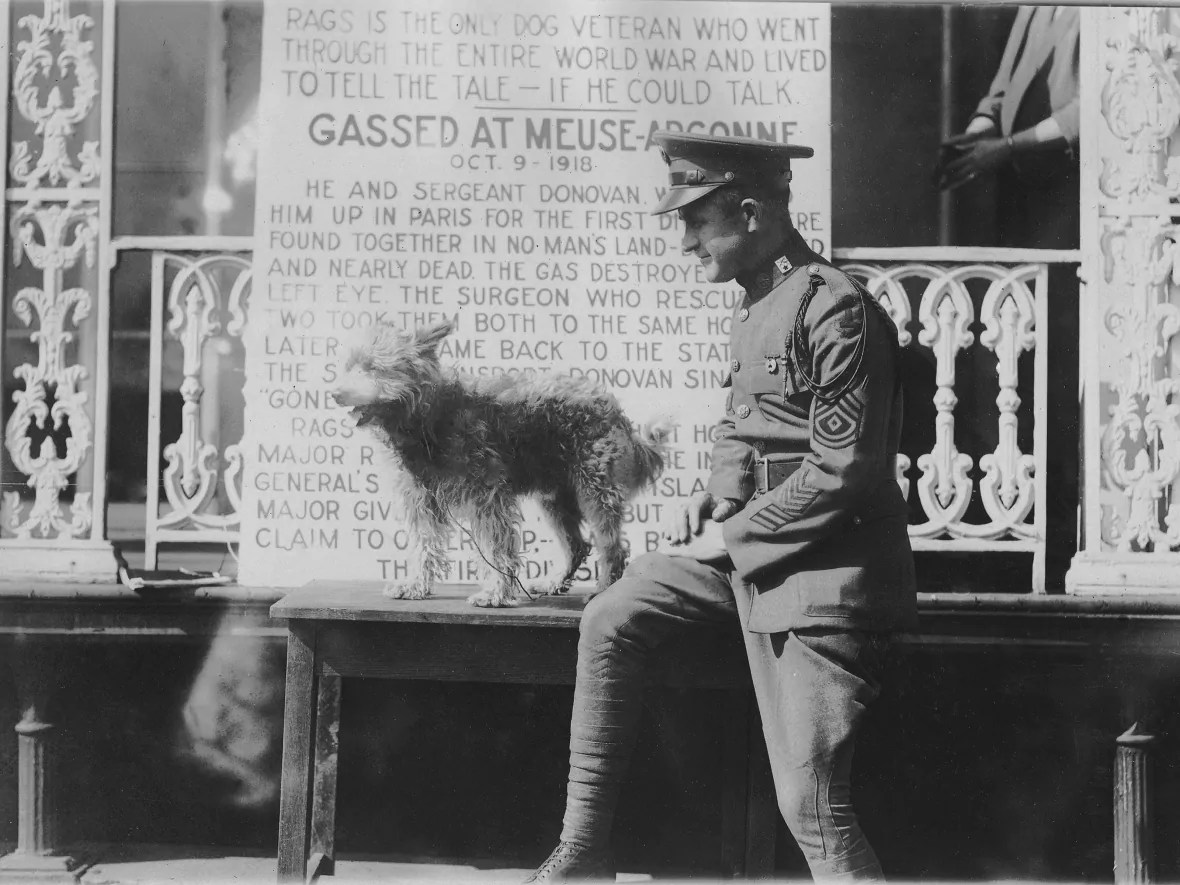
October 4, 1918 First Division Rags

The Big Red One marched down Broadway in 1928, part of the First Division’s 10th anniversary WW1 reunion.  The French street dog who had lost an eye in their service, in the lead.

Private James Donovan was AWOL. He had overstayed his leave in the French town of Montremere, and the ‘Great War’, awaited.

When the MPs found him, Donovan knew he had to think fast. He reached down and grabbed a stray dog, explaining to the two policemen that he was part of a search party, sent out to find the Division Mascot.

rags-figure13-jpg

It was a small dog, possibly a Cairn Terrier mix, about twenty-five pounds. He looked like a pile of rags, and that’s what they called him. The dog had gotten Donovan out of a jam, now he would become the division mascot, for real. Rags was now part of the US 1st Infantry Division, the Big Red One.

Instead of “shaking hands”, Donovan taught the dog a sort of doggie “salute”. Rags would appear at the flag pole for Retreat for years after the war, lifting his paw and holding it by his head. Every time the flag was lowered and the bugle played, there was that small terrier, saluting with the assembled troops.

The dog learned to imitate the men around him, who would drop to the ground and hug it tightly during artillery barrages. He would hug the ground with his paws spread out, soon the doughboys noticed him doing it before any of them knew they were under fire. Rags’ acute and sensitive hearing became an early warning system, telling them that shells were incoming, well before anyone heard them.

rags-the-dog

Rags was disdainful of doggie tricks, he was more interested in Doing something.  In the hell of life in the trenches, barbed wire was often all that stood between safety and enemy attack.  Wire emplacements were frequent targets for bombardment, and a break in the wire represented a potentially lethal weak point in the lines.  Somehow, Rags could find these breaks in the wire, and often led men into the darkness, to effect repairs.

Thousands of dogs, horses and pigeons were “enlisted” in the first world war, with a number of tasks.  The French trained specialized “chiens sanitaire” to seek out the dead and wounded, and bring back small bits of uniform so that aid could be delivered, or the body recovered.  Somehow, Rags figured this job out, for himself.  Once he found a dead runner, and recovered the note the man had died, trying to deliver.  Not only was his body found, but that note enabled the rescue of an officer, cut off and surrounded by Germans.

rags-figure18-jpg

Donovan’s job was hazardous. He was out on the front lines, stringing communications wire between advancing infantry and supporting field artillery. Runners were used to carry messages until the wire was laid, but these were frequently wounded, killed or they couldn’t get through the shell holes and barbed wire.

Donovan trained Rags to carry messages attached to his collar. On this day in 1918, British and French forces were engaged in heavy fighting from St. Quentin to Cambrai. French and Americans in the Champagne region advanced as far as the Arnes, as the American attack ground on, west of the River Meuse. Around this time, Rags was given a message from the 26th Infantry Regiment for the 7th Field Artillery. The small dog completing his mission, resulting in an artillery barrage and leading to the capture of the Very-Epinonville Road.

An important objective had been taken, with minimal loss of life to the American side.

rags-figure19-jpg

The terrier’s greatest trial came five days later, during the Meuse-Argonne Campaign. The small dog ran through falling bombs and poison gas to deliver his message. Gassed and partially blinded, shell splinters damaged his right paw, eye and ear. Rags survived and, so far as I know, got his message where it needed to be.

Rags survived the deadliest battle in American military history, with the loss of an eye.  Now-Sergeant James Donovan, wasn’t so lucky.  He was severely gassed and the two were brought to the rear. If anyone asked about expending medical care on a dog, they were told that it was “orders from headquarters”.

18-03-23-thumb

Rags recovered quickly, but Donovan did not.  He was transferred to the hospital ship in Brest, as Rags was forced to look on, from the docks.  Animals were thought to carry disease and were strictly forbidden from hospital ships.  Those animals who were smuggled on board, were typically chloroformed and thrown overboard.

Nevertheless, Rags was smuggled on board to be with his “Battle Buddy”.  How many entered into the conspiracy of silence in his defense, can never be known.

The pair made it back to United States, and to the Fort Sheridan base hospital near Chicago, where medical staff specialized in gas cases. It was here that Rags was given a collar and tag, identifying him as “1st Division Rags”.  Donovan died of his injuries, in early 1919.  Rags moved into the base fire house becoming “post dog”, until being adopted by Major Raymond W. Hardenbergh, his wife and two daughters, in 1920.
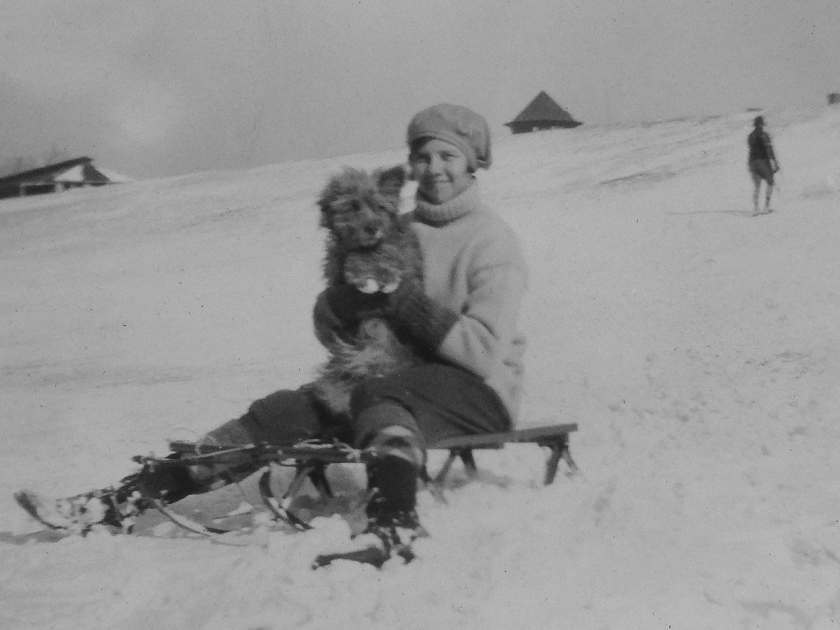
rags-the-dog, sledding

The Big Red One marched down Broadway in 1928, part of the First Division’s 10th anniversary WW1 reunion.  The French street dog who had lost an eye in their service, in the lead.

Rags lived out the last of his years in Maryland. A long life it was, too, the dog lived until 1934, remaining with the 1st Infantry Division, for all his 20 years.  On March 22, 1934, the 16-paragraph obituary in the New York Times began: “Rags, Dog Veteran of War, Is Dead at 20; Terrier That Lost Eye in Service is Honored.”

Canadian writer Grant Hayter-Menzies has written a book about 1st Division Rags, from which I have drawn some of these details. The book is entitled From Stray Dog to World War I Hero: The Paris Terrier Who Joined the First Division.  Eleven-minute audio from a fascinating CBC interview, may be found HERE.

Hat tip to the Canadian Broadcasting Corporation, from whose website I have drawn most of these images.

If you enjoyed this “Today in History”, please feel free to re-blog, “like” & share on social media, so that others may find and enjoy it as well. Please click the “follow” button on the right, to receive email updates on new articles.  Thank you for your interest, in the history we all share.

October 3, 1944 Angel from a Foxhole

Once, the small dog was able to perform a task in minutes, which would have otherwise taken an entire airstrip out of service for three days, and exposed a construction battalion to enemy fire.

The first dog may have approached some campfire, long before recorded history. It may have been hurt or it maybe it was looking for a morsel. Dogs have been by our side ever since.

Over history, the unique attributes of Canis Familiaris have often served in times of war. Ancient Egyptian artwork depicts dogs at work in multiple capacities. The ancient Greeks used dogs against Persian invaders at the Battle of Marathon.

_73412601_2001-877_smithsonian_stubby_with_robert_pro_photoThe European allies and Imperial Germany had about 20,000 dogs working a variety of jobs in WWI. Though the United States didn’t have an official “War Dog” program in those days, a Staffordshire Terrier mix called “Sgt. Stubby” was smuggled “over there” with an AEF unit training out of New Haven, Connecticut.

Stubby is credited with saving an unknown number of lives, his keen sense of hearing giving his companions early warning of incoming artillery rounds.

Once, Stubby even caught a German spy who had been creeping around, mapping allied trenches. It must have been a very bad day for that particular Bosch, to be discovered spinning in circles, a 50-pound, muscular terrier affixed to his arse.

The US War Dogs program was developed between the World Wars, and dogs have served in every conflict, since.  My own son in law Nate served in Afghanistan with “Zino”, a five-year old German Shepherd and Tactical Explosives Detection Dog (TEDD), trained to detect as many as 64 explosive compounds.

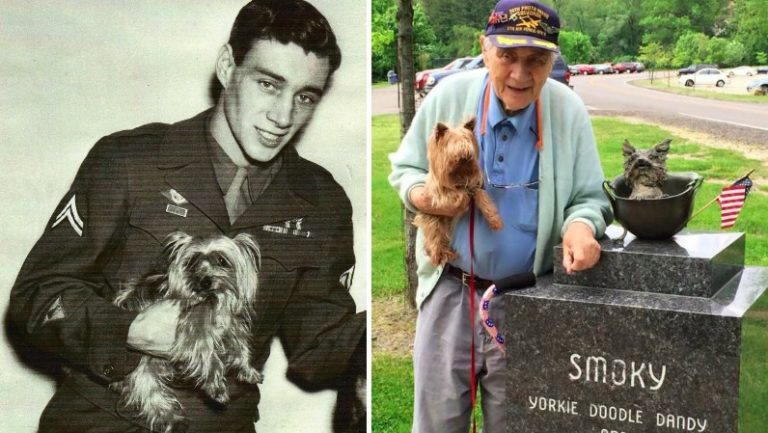
The littlest war dog first appeared in the jungles of New Guinea, when an American soldier spotted a “golden head” poking out of an abandoned foxhole. It was all of 4-pounds, a seven-inch tall, Yorkshire Terrier.  At the time, nobody had the foggiest notion of how the tiny dog had gotten there. The soldier brought her back to camp and sold her to a comrade for £2 Australian, about $6.44.  He was Corporal William Wynne, who named her “Smoky”.

2013-11-19-BillandSmokywithSmokysnewbornpupforwhichtheBillmaintainscostSmokyherGoodConductmedalforayear1944

Smoky lived a soldier’s life for the next eighteen months, traveling about in a rucksack and learning to parachute from trees.  At first, soldiers thought she might have belonged to the Japanese side, but they brought her to a POW camp and quickly learned that she understood neither Japanese nor English commands.

The little dog flew 12 air/sea rescue and photo reconnaissance missions, secured in Wynne’s backpack. She survived 150 air raids and a typhoon, often giving soldiers early warning of incoming fire.  Wynne credited Smoky with saving his life one time, on an LST transport ship.  It was around October 3, 1944 off Morotai, when the Japanese submarine RO-41 sank the American destroyer escort, USS Shelton.  The decks around them were shaking from anti-aircraft and machine gun fire, when Smoky guided Wynne to duck at the moment an incoming shell struck, killing 8 men standing next to them. She was his “angel from a foxhole.”

YorkieSmokyO

Once, the small dog was able to perform a task in minutes, a job which would have otherwise taken an airstrip out of service for three days, and expose a construction battalion to enemy fire. The air field at Lingayen Gulf, Luzon, was crucial to the Allied war effort.  The signal corps needed to run a teletype communication wire across the field.  To do so in the conventional manner would have taken days, and put the airfield out of operation.  Except, there was one possible workaround.

A 70-foot, 8” drain pipe half filled with dirt, already crossed under the air strip

Wynne credits the dog with enabling the airfield to remain open, saving 40 aircraft and 250 ground crew from exposure to Japanese fire.  Let him tell the story:

o-SMOKY5-570

“I tied a string to Smoky’s collar and ran to the other end of the culvert . . . (Smoky) made a few steps in and then ran back. `Come, Smoky,’ I said sharply, and she started through again. When she was about 10 feet in, the string caught up and she looked over her shoulder as much as to say `what’s holding us up there?’ The string loosened from the snag and she came on again. By now the dust was rising from the shuffle of her paws as she crawled through the dirt and mold and I could no longer see her. I called and pleaded, not knowing for certain whether she was coming or not. At last, about 20 feet away, I saw two little amber eyes and heard a faint whimpering sound . . . at 15 feet away, she broke into a run. We were so happy at Smoky’s success that we patted and praised her for a full five minutes”.

o-SMOKEY7-570Smoky toured all over the world after the war, appearing in over 42 television programs and licking faces & performing tricks for thousands at veteran’s hospitals.  In June 1945, Smoky toured the 120th General Hospital in Manila, visiting with wounded GIs from the Battle of Luzon. She’s been called “the first published post-traumatic stress canine”, and credited with expanding interest in what had hitherto been an obscure breed.

The Littlest Wardog died in her sleep in February 1957 at the age of fourteen, and buried in a .30 caliber ammunition box.  Years later,a  life-size a bronze sculpture of Smoky sitting in a GI helmet was installed over her final resting place in Rocky River Ohio, setting atop a two-ton blue granite base.

Bill Wynne was 90 years old in 2012, when he was “flabbergasted” to be approached by Australian authorities. They explained that an Australian army nurse had purchased the dog from a Queen Street pet store, and became separated in the jungles of New Guinea. sixty-eight years later, the Australian delegation had come to award his dog, a medal.

f88e3abeaa339b1ed4c15d9adbc1387b71c69549A memorial statue was unveiled on December 12 of that year, at the Australian War Memorial at the Queensland Wacol Animal Care Campus in Brisbane.
smoky-dog-1-768x433

On December 11, 2015, the Australian Royal Society for the Prevention of Cruelty to Animals (RSPCA) awarded Smoky the Purple Cross.  According to the press release, the award was “established in 1993 to recognize the deeds of animals that have shown outstanding service to humans, particularly where they have demonstrated exceptional courage, by risking their own safety or life, to save a person from injury or death. Since its inception, only nine animals have been awarded the prestigious award”.

“Yorkie Doodle Dandy” by Bill Wynne, tells the story of the dog Animal Planet has called, the first therapy dog. Originally published in 1996 by Wynnesome Press, the book is currently in its 5th edition, by Top Dog Enterprises, LLC.

As a personal aside, Nate and Zino were separated after their tour in Afghanistan. They were reunited in 2014, when the dog came to live with Nate and our daughter Carolyn in their home in Savannah. Last fall, Sheryl and I traveled to Houston with a friend, to celebrate our anniversary at the “Redneck Country Club”.  2,000 miles from home and completely by chance, who do we meet but the trainer who taught Zino to be a TEDD in the first place. Small world.

If you enjoyed this “Today in History”, please feel free to re-blog, “like” & share on social media, so that others may find and enjoy it as well. Please click the “follow” button on the right, to receive email updates on new articles.  Thank you for your interest, in the history we all share.

October 2, 1918 Lost Battalion

Lieutenant James Leak compared those six days lost in the Ardennes with the 1836 siege of the Alamo, and the legendary 300, at Thermopylae.

The Argonne Forest is a long strip of wild woodland and stony mountainside in northeastern France, a hunting preserve since the earliest days of the Bourbon Kings.  For most of WWI, the Argonne remained behind German lines.  On October 2, 1918, nine companies of the US 77th “Metropolitan Division” came to take part of it back.

whittlesey
Major Charles White Whittlesey

Their objective was the Charlevaux ravine and a road & railroad on the other side, cutting off German communications in the sector.  As heavy fighting drew to a close on the first day, the men found a way up hill 198 and began to dig in for the night.

Major Charles White Whittlesey, commanding, thought that things were too quiet that first night.  Orders called for them to be supported by two American units on their right and a French force on their left/  That night, the voices drifting in from the darkness, were speaking German.

They had come up against a heavily defended double trench line and, unknown at the time, allied forces to their left and right had been cut off and stalled. The Metropolitan Division was alone, and surrounded.

The fighting was near constant on day two, with no chance of getting a runner through.   Whittlesey dispatched a message by carrier pigeon, “Many wounded. We cannot evacuate.”  The last thing that German forces wanted was for an enemy messenger to get through, and the bird went down in a hail of German bullets.

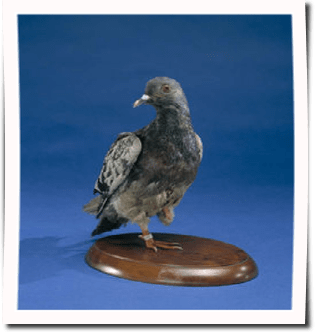
cher-ami
Cher Ami

Whittlesey grabbed another pigeon and wrote “Men are suffering.  Can support be sent?”/  That second bird would be shot down as well.

On day three, the “lost battalion” came under fire from its own artillery.  Whittlesey grabbed his third and last carrier pigeon, “Cher Ami”, and frantically wrote out his message.

German gunfire exploded from the high ridges above them as this bird, too, fluttered to the ground.  Soon she was up again, flying out of sight despite the hail of bullets.  She arrived in her coop 65 minutes later, shot through the breast and blind in one eye.  The message, hanging by a single tendon from a leg all but shot off, read:  “WE ARE ALONG THE ROAD PARALELL 276.4. OUR ARTILLERY IS DROPPING A BARRAGE DIRECTLY ON US. FOR HEAVENS SAKE STOP IT”.

Drops of food and supplies were attempted from the air, but they all ended up in German hands.

the_lost_battalion_1919_-_1

By October 7, food and ammunition were running out.  554 had entered the Ardennes five days earlier, now fifty per cent were either dead, or wounded.  Water was available from a nearby stream, but only at the cost of exposure to German fire.  Bandages had to be removed from the dead in order to treat the wounded. Medicine was completely out and men were falling ill.  Even so, survivors continued to fight off German attacks from all sides.

Out of the forest emerged a blindfolded American prisoner, carrying a white flag.  He’d been sent with a message, from the German commander:

The suffering of your wounded men can be heard over here in the German lines, and we are appealing to your humane sentiments to stop. A white flag shown by one of your men will tell us that you agree with these conditions. Please treat Private Lowell R. Hollingshead [the bearer] as an honorable man. He is quite a soldier. We envy you. The German commanding officer.

Though he later denied it, Whittlesey’s response was remembered as “You go to hell!”.  White sheets placed to help allied aircraft find their position were pulled in, lest they be mistaken for flags of surrender.  The meaning was unmistakable.  When they were finally relieved the following day, only 194 were fit to walk out on their own.

The Meuse-Argonne offensive of which it was part would last forty seven days, and account for the greatest single-battle loss of life, in American military history.

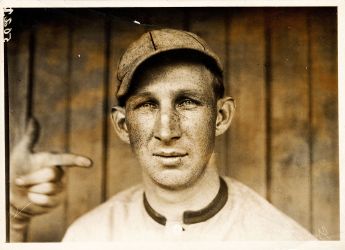
Edward Leslie Grant attended Dean Academy in his home town of Franklin, Massachusetts, and later graduated from Harvard University.  “Harvard” Eddie Grant became a Major League ballplayer, playing utility infielder for the Cleveland Indians as early as 1905.

1920px-_Harvard__Eddie_Grant,_Cincinnati_Reds_third_baseman,_by_Paul_Thompson,_1911
“Harvard Eddie” Grant

Grant delighted in aggravating his fellow infielders, calling the ball with the grammatically correct “I have it”, instead of the customary “I got it”.

Grant played for the Philadelphia Phillies and the Cincinnati Reds, before retiring from the New York Giants and opening a Law Office in Boston. He was one of the first men to enlist when the US entered WWI in 1917, becoming a Captain in the 77th Infantry Division, A.E.F.

Sixty former ballplayers were killed during the Great War, including nine former Major League players, twenty-six minor players, three negro leaguers and a number who played college, semi-pro and amateur. Another four played in the Australian League. Harvard Eddie Grant was killed leading a search for the Lost Battalion on October 5, the first Major League ball player to be killed in the Great War.

Eddie Grant was honored on Memorial Day, 1921, as representatives of the US Armed Forces and Major League Baseball joined with his sisters to unveil a plaque in center field at the Polo Grounds. From that day until the park closed in 1957, a wreath was solemnly placed at the foot of that plaque after the first game of every double header.  He is memorialized by the Edward L. Grant Highway in The Bronx, and by Grant Field at Dean College in Franklin, Massachusetts.

lost-battalion

Major Whittlesey, Captain George McMurtry, and Captain Nelson Holderman all received the Medal of Honor for their actions atop hill 198.  Whittlesey was further honored as a pallbearer at the interment ceremony for the Unknown Soldier, but his experience weighed heavily on him.

In what is believed to have been a suicide, Charles White Whittlesey disappeared from the SS Toloa bound for Havana in 1921, leaving instructions in his stateroom as to what to do with his bags.  Whittlesey’s cenotaph is located at Pittsfield Cemetery in his home town of Pittsfield, Massachusetts.  It is an ‘IMO’ marker (In Memory Only).  His body was never found.

In prepared remarks before a gathering at Abilene Christian College in 1938, Lieutenant James Leak compared those six days lost in the Ardennes with the 1836 siege of the Alamo, and the legendary 300, at Thermopylae.   “[T]he “Lost Battalion””, he said, “is entirely a misnomer…it was not “Lost”. We knew exactly where we were, and went to the exact position to which we had been ordered“.

1200px-LostBattalionMonument
Monument to the Lost Battalion
If you enjoyed this “Today in History”, please feel free to re-blog, “like” & share on social media, so that others may find and enjoy it as well. Please click the “follow” button on the right, to receive email updates on new articles.  Thank you for your interest, in the history we all share.

October 1, 1876 Piano Man

To his detractors, Lick was a disagreeable miser. Eccentric, selfish, reclusive.  Even “touched in the head,” but absolutely honest and an astute businessman.  At the end of his life, he confounded them all, using his considerable fortune to benefit his adopted state of California.

If you’ve never explored your own genealogy, I highly recommend it. One of the more enjoyable aspects of shaking the family tree, is getting to know the people who fall out of it. I have the family genealogist, the man for I am namesake, to thank for this one.  Lieutenant Colonel United States Army (retired), Richard B. “Rick” Long, Sr., 2/25/37 – 3/31/18.  Rest in Peace, Dad.  You left us too soon.

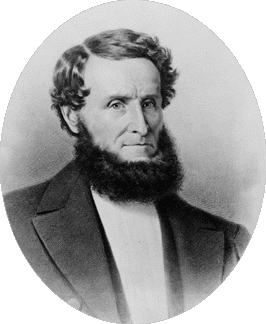
James Lick was born in Stumpstown, Pennsylvania, now Fredericksburg, in the late days of the Washington administration. Lick’s grandfather William served in the Revolution and his son John went on to serve in the Civil War.  James himself was a carpenter’s son, who learned the trade of fine cabinet making, from his earliest days.

As a young man, Lick fell in love with Barbara Snavely, the daughter of a local miller.  When she became pregnant with his child he asked for her hand in marriage, only to be rudely rebuffed by her father.  When Lick owned a plant as large and opulent as his own, then and only then could James have his daughter’s hand in marriage.

Humiliated, Lick moved to Baltimore at age 21, where he learned to make pianos. He became quite skilled at the craft and moved to New York to set up his own piano shop.

On learning that his pianos were being exported to South America, Lick moved to Argentina to pursue the business.  Despite his poor Spanish his piano business thrived, though unstable Argentinian politics sometimes made things difficult.

James_LickIn 1825, Lick left Buenos Aires, for a year-long tour of Europe. This was the time of the Brazilian War for Independence, and Portuguese authorities captured his ship on its return.
Passengers and crew were incarcerated in a POW camp in Montevideo, though Lick himself would later escape and returned on foot, to Buenos Aires.

Having made his first fortune, Lick briefly returned to Stumpstown, to claim his bride and now-fourteen year old son, only to learn that she had married another.   James Lick returned to Buenos Aires, later moving his business to Valparaíso, Chile and finally to Lima, Peru.  He would never marry.

Anticipating the Mexican American War and the annexation of California, Lick moved to San Francisco in 1846 with his tools, $30,000 in gold, and 600lbs of chocolate.

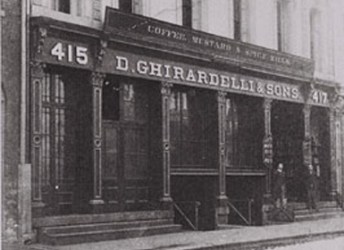
Lick had a backlog of piano orders at the time which he was forced to build himself, when his workers returned home to join the Mexican army. The chocolate sold so quickly, that Lick convinced his friend and confectioner, an Italian émigré to Peru, to come set up shop in California. The man’s name is recognizable to chocolate lovers, the world over. He was Domingo Ghirardelli

GS_oldstore_History_0Gold was discovered at Sutter’s Mill, shortly after Lick’s arrival. He caught a little of the gold fever himself, but soon learned that he could make more money buying and selling land, rather than digging holes in it.

San Francisco was a small village in 1848. By 1850 the population had reached 20,000. Lick bought up land around San Jose and planted orchards of apricots, plums and pears.  It was here in Santa Clara county that Lick took his revenge on the long-dead Pennsylvania miller, spending the unheard-of sum of $200,000 and building the largest flour mill, then in the state.

In 1855, the now-37 year old John Lick came to live with the father he never knew.  The elder man had requested he do so, but the son didn’t get along with his cantankerous father, and soon returned “back east”.

Lick began construction of a Grand Hotel in 1861, with a 400 seat dining room straight out of the Palace at Versailles.  Many considered the “Lick House” to be the finest hotel west of the Mississippi River.

Lick House

“The opulent dining room of The Lick House hotel on Montgomery at Sutter seated 400 and boasted walls and floors of exotic woods and three crystal chandeliers imported from Venice”, H/T sfcityguides.com

James Lick suffered a massive stroke in 1874. At the time, this carpenter’s son was the wealthiest man in California, his estates including much of San Francisco and Santa Clara County, all of Catalina Island and large holdings outside of Lake Tahoe.

To his detractors, Lick was a disagreeable miser. Eccentric, selfish, reclusive.  Even “touched in the head,” but absolutely honest and an astute businessman.  At the end of his life, he confounded them all, using his considerable fortune to benefit his adopted state of California.

For years, Lick had harbored an interest in astronomy.  President of the California Academy of Sciences George Davidson persuaded him to leave the majority of his fortune, to building the most powerful telescope then in existence.

Lick placed $2,930,654 into the hands of seven trustees, equivalent to $64 million today, with specific instructions for how the funds were to be used:

“$700,000 to the University of California for the construction of an observatory and the placing therein of a telescope to be more powerful than any other in existence. $150,000 for the building and maintenance of free public James Lick Baths in San Francisco. $540,000 to found and endow an institution of San Francisco to be known as the California School of Mechanic Arts. $535,000 for the son he never knew.  $100,000 for the erection of three appropriate groups of bronze statuary to represent three periods in Californian history and to be placed before the city hall of San Francisco. $60,000 to erect in Golden Gate Park, San Francisco, a memorial to Francis Scott Key, author of The Star-Spangled Banner”.

In 1875, Thomas Fraser recommended a site for the telescope on the 4,209′ summit of Mount Hamilton, near San Jose. Lick approved the location, provided that Santa Clara County build a “first class” road to the site. The county agreed and the road was completed in the fall of 1876.

On this day in 1876, James Lick died in his room at the Lick House.  His life’s great project was completed eleven years later. With a 36” lens, the “Great Lick Refractor” was, for its time, the largest refracting telescope in the world.

800px-Lick_Observatory
Lick Observatory as it looked, in 1900

Today, the University of California’s “Lick Observatory” operates a 120-inch (3.0-meter) reflecting telescope, polished and ground on-site from a 10,000-pound Corning Labs glass test blank.  At the time of its commissioning in 1959, it was the second-largest telescope anywhere and remains to this day, the 3rd largest refracting telescope in the world.

According to his last wishes, the body of James Lick lies entombed, beneath the floor of the observing room.

If you enjoyed this “Today in History”, please feel free to re-blog, “like” & share on social media, so that others may find and enjoy it as well. Please click the “follow” button on the right, to receive email updates on new articles.  Thank you for your interest, in the history we all share.

September 30, 1918 Gold Star Mother’s Day

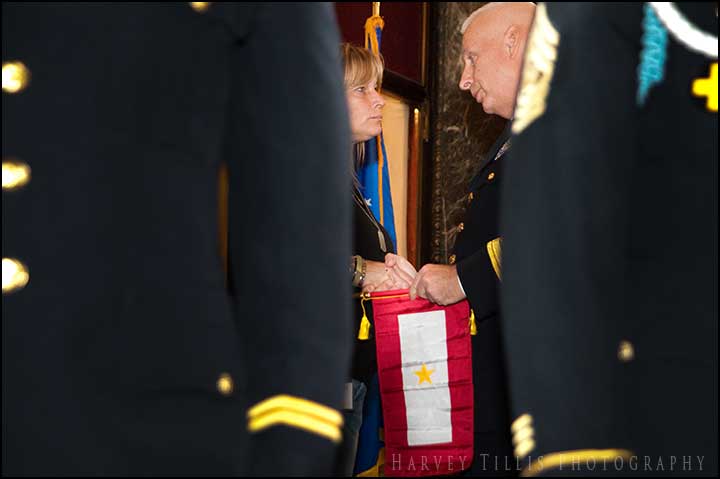
They are so few, who pick up this heaviest of tabs on behalf of the rest of us.

Today, Sunday, September 30, 2018, is Gold Star Mother’s Day.  I wish to dedicate this “Today in History”, to those women who have made the greatest sacrifice a mother can make, in service to the nation.  The rest of us owe them a debt which can never be repaid.

Suppose you were to stop 100 randomly selected individuals on the street, and ask them:  “Of all the conflicts in American military history, which single battle accounts for the greatest loss of life“.  I suppose you’d get a few Gettysburgs in there, and maybe an Antietam or two.  The Battle of the Bulge would come up, for sure, and there’s bound to be a Tarawa or an Iwo Jima.  Maybe a Normandy.  I wonder how many would answer, Meuse-Argonne.

80th-Div-No3

The United States was a relative late-comer to the Great War, entering the conflict in April 1917, when President Woodrow Wilson asked permission of the Congress, for a “War to end all wars”.  American troop levels “over there” remained small throughout the rest of 1917, as the formerly neutral nation of  fifty million ramped up to a war footing.

US_Marines_during_the_Meuse-Argonne_Campaign
US Marines during Meuse-Argonne offensive of 1918

The trickle turned to a flood in 1918, as French ports were expanded to handle their numbers.  The American Merchant Marine was insufficient to handle the influx, and received help from French and British vessels.  By August, every one of what was then forty-eight states had sent armed forces, amounting to nearly 1½ million American troops in France.

After four years of unrelenting war, French and British manpower was staggered and the two economies, nearing collapse.  Tens of thousands of German troops were freed up and moving to the western front, following the chaos of the Russian Revolution.  The American Expeditionary Force was arriving none too soon.

Gun crew , 1918
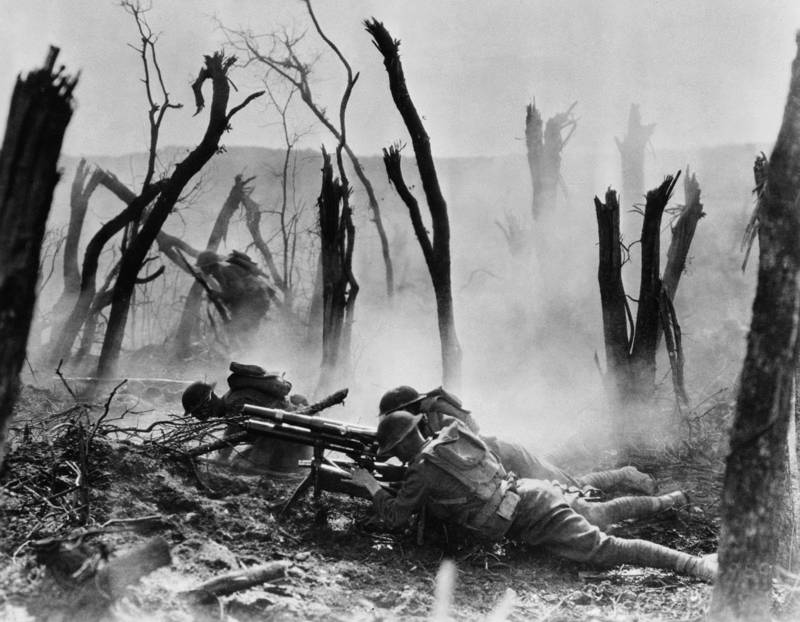
“Gun crew from Regimental Headquarters Company, 23rd Infantry, firing 37mm gun during an advance against German entrenched positions. , 1918”, H/T Wikipedia

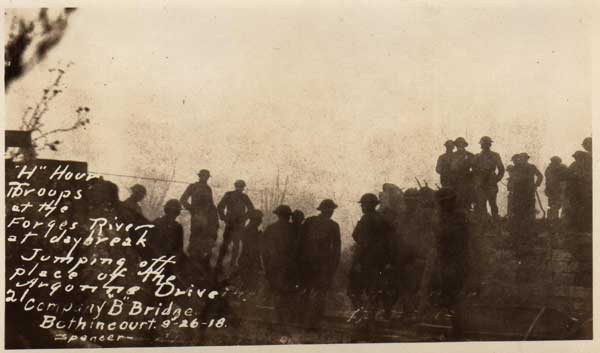
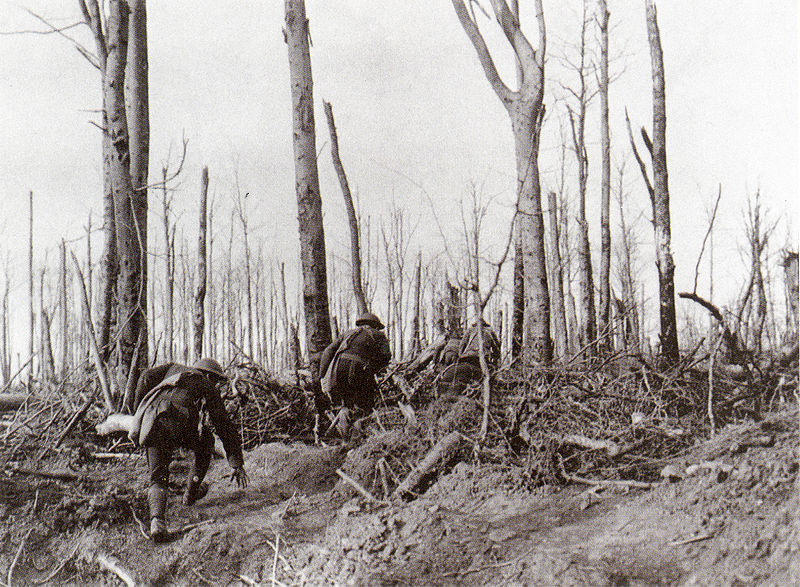
Following successful allied offensives at Amiens and Albert, Allied Supreme Commander Ferdinand Foch ordered General John J. “Black Jack” Pershing to take overall command of the offensive, with the objective of cutting off the German 2nd Army. Some 400,000 troops were moved into the Verdun sector of northeastern France.  This was to be the largest operation of the AEF, of World War I.With a half-hour to go before midnight September 25, 2,700 guns opened up in a six hour bombardment, against German positions in the Argonne Forest, along the Meuse River.

Montfaucon American Monument, World War I, France
Butte de Montfaucon, today

Some 10,000 German troops were killed or incapacitated by mustard and phosgene gas attacks, and another 30,000 plus, taken prisoner.  The Allied offensive advanced six miles into enemy territory, but bogged down in the wild woodlands and stony mountainsides of the Argonne Forest.

dc582ea834d6854175ae8bb8b2a316b1
Meuse-Argonne American cemetery near Romagne, in France

The Allied drive broke down on German strong points like the hilltop monastery at Montfaucon and others, and fortified positions of the German “defense in depth”.

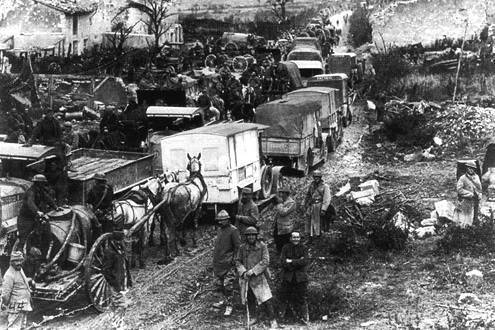
Pershing called off the Meuse-Argonne offensive on September 30, as supplies and reinforcements backed up in what can only be termed the Mother of All Traffic Jams.

MeuseArgonneTraffic

Fighting was renewed four days later resulting in some of the most famous episodes of WW1, including the “Lost Battalion” of Major Charles White Whittlesey, and the single-handed capture of 132 prisoners, by Corporal (and later Sergeant) Alvin York.

20150618_wp_meuseargonne_ABMC_0146
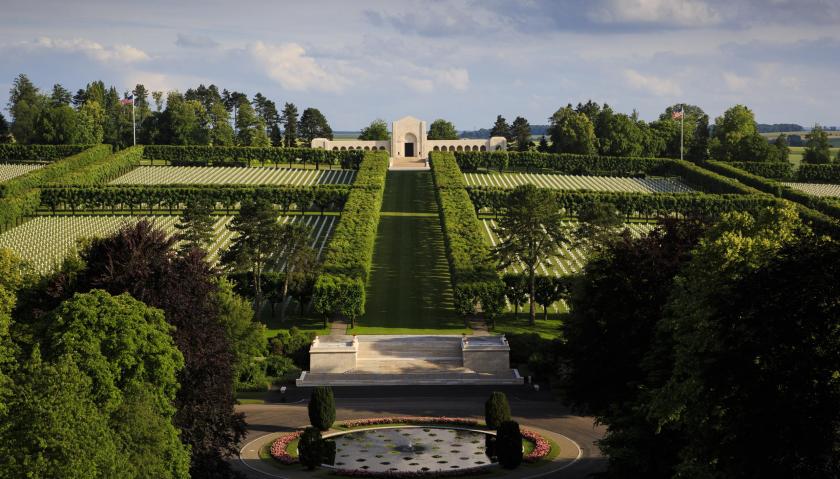
Meuse-Argonne American Cemetery, outside of Romagne, France

The Meuse-Argonne offensive would last forty-seven days, resulting in 26,277 American women gaining that most exclusive and unwanted of distinctions, that of being a Gold Star Mother.  More than any other battle, in American military history.  95,786 others would see their boys come home, mangled.

gold-star-mothers-monument-at-the-putnam-county-veteran-memorial-park-james-connor
Gold Star Mother’s Monument At The Putnam County (NY) Veteran Memorial Park, photograph by James Connor

In May of that year, President Woodrow Wilson approved a suggestion from the Women’s Committee of the Council of National Defenses, that American women were asked to wear black bands on the left arm, with a gilt star for every family member who had given his life for the nation.

GoldStar1

Today, Title 36 § 111 of the United States Code provides that the last Sunday in September be observed as Gold Star Mother’s Day, in honor of those women who have made the ultimate sacrifice. (April 5 is set aside, as Gold Star Spouse’s Day).  Recently, both President Barack Obama and Donald Trump have signed proclamations, setting this day aside as Gold Star Mother’s and Family’s Day.

Gold-Star-Mothers-Day-Last-Sunday-in-September

At first a distinction reserved only for those mothers who had lost sons and daughters in WW1, that now includes a long list of conflicts, fought over the last 100 years.  At this time the US Army website reports  “The Army is dedicated to providing ongoing support to over 78,000 surviving Family members of fallen Soldiers”.

Seventy-eight thousand, out of a nation of some 320 million.  They are so few, who pick up this heaviest of tabs on behalf of the rest of us.

If you enjoyed this “Today in History”, please feel free to re-blog, “like” & share on social media, so that others may find and enjoy it as well. Please click the “follow” button on the right, to receive email updates on new articles.  Thank you for your interest, in the history we all share.

September 29, 1780 André

In an age before radio or television, John André was a fun and interesting guy to be around. He was a gifted story teller with a great sense of humor. He could draw, paint and cut silhouettes. He was an excellent writer, he could sing, and he could write verse.

In an age before radio or television, John André was a fun and interesting guy to be around. A gifted story teller with a great sense of humor, Major André was a favorite of Colonial Loyalist society.  He could draw, paint and cut silhouettes. He was an excellent writer, he could sing, and he could write verse.

John André was a British Major at the time of the American Revolution, taking part in his army’s occupations of New York and Philadelphia.  He was also, a spy.

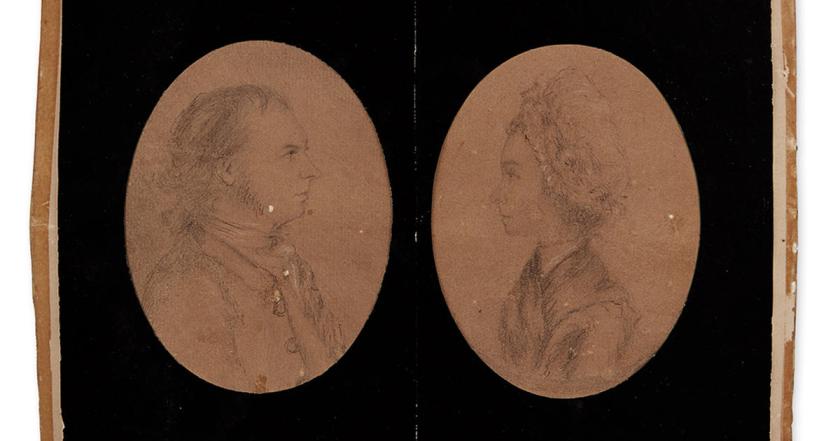
albany16172503056541
Portrait drawn by Major John André, 1776

Peggy Shippen was the daughter of a prominent Philadelphia Tory and, for a time, enjoyed a dating relationship with Major André.  Following the French entry into the war on the American side, British General William Howe removed his command from Philadelphia, including Major André.

Peggy-Shippen
Peggy Shippen

In 1778, Peggy Shippen met an important officer in the Patriot cause, a hero of Valcour Island, and the Battle of Saratoga.  On April 8, 1779, the couple was married in the Shippen townhouse on Fourth Street   The relationship provided the connection between the British spy and a man who could have gone into history among the top tier of American founding fathers, had he not switched sides.  Peggy Shippen’s new husband, was General Benedict Arnold.

Arnold was Commandant of West Point at the time, the future location of one of our great military academies. At the time, West Point was a strategic fortification on high ground overlooking the Hudson River. The British capture of West Point would have split the colonies in half.

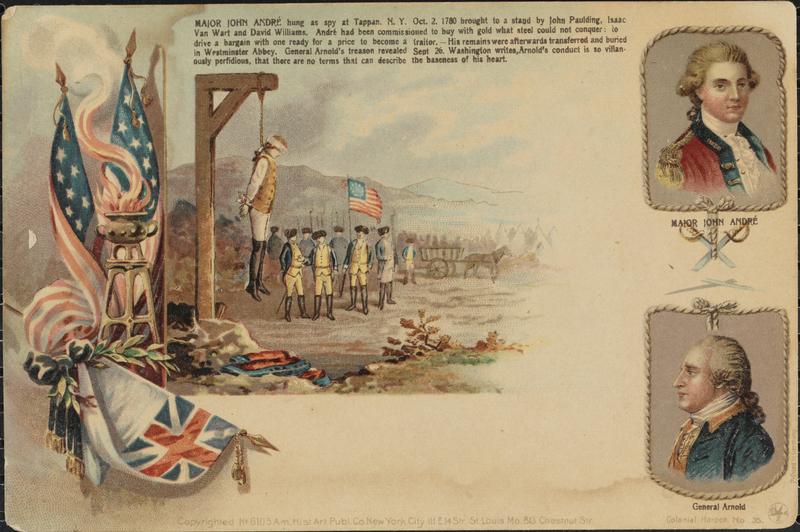
John André struck a bargain with Benedict Arnold which would turn a Hero of the Revolution into a name synonymous with “Traitor”. Arnold would receive £20,000, equivalent to over a million dollars today, in exchange for which he would give up West Point.

Arnoldpicture1
General Benedict Arnold

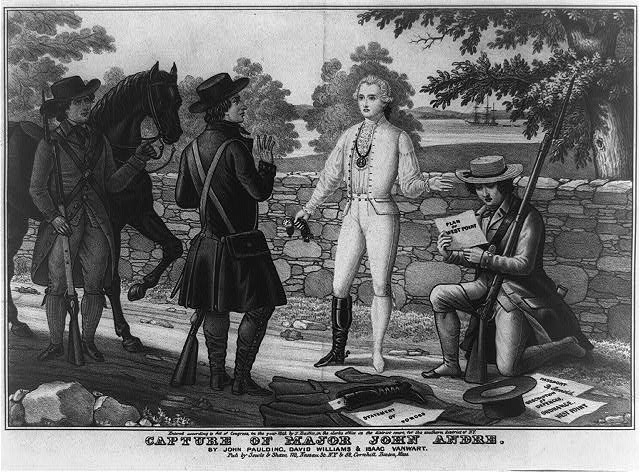
Major André sailed up the Hudson River in the Sloop of War HMS Vulture on September 20, 1780. Dressed in civilian clothes, he was returning to his lines on the 23rd. Six papers written in Arnold’s hand were hidden in his sock when three members of the New York militia:  John Paulding, David Williams and Isaac Van Wart stopped him.  Paulding was wearing a Hessian overcoat, and André thought they were Tories. “Gentlemen”, he said, “I hope you belong to our party”. “What party”, came the response and André replied “The lower (British) party”. “We do”, they said, to which André announced himself to be a British officer who must not be detained. That was as far as he went.

The discovery of these papers brought Benedict Arnold’s treachery to light.  Unaware that General Arnold himself was the culprit, Lt. Col. John Jameson dispatched letters to General George Washington and Benedict Arnold, warning the two of the plot.   Washington was literally on the way to a breakfast meeting with Arnold, when the General received the note.  Thus forewarned, Arnold slipped out a side door and escaped to a British ship, waiting nearby.

Capture_of_John_andre1

John André was tried and sentenced to death as a spy, and jailed on September 29. He asked if he could write a letter to General Washington. In it he asked not that his life be spared, but that he be executed by firing squad, considered to be a more “gentlemanly” death than hanging.

General Washington believed that Arnold’s crimes were far more egregious than those of John André, and he was impressed with the man’s bravery.  Washington wrote to General Sir Henry Clinton, asking for an exchange of prisoners.

Having received no reply by October 2, Washington wrote in his General Order of the day, “That Major André General to the British Army ought to be considered as a spy from the Enemy and that agreeable to the law and usage of nations it is their opinion he ought to suffer death. “The Commander in Chief directs the execution of the above sentence in the usual way this afternoon at five o’clock precisely.”

John André was hanged in Tappan New York on October 2, 1780.  He was 31.

M3Y60817

During his nine-month stay in Philadelphia, John André lived in Ben Franklin’s home, while the British army occupied the city. As they were packing to leave, Swiss born Pierre Du Simitiere came to say goodbye. He was shocked to find such a fine Gentleman as André, looting the Franklin residence. The man had always been known for extravagant courtesy, and this was completely out of character. He was packing books, musical instruments, scientific apparatus, and an oil portrait of Franklin, offering no defense or even explanation, in response to Simitiere’s protests.

Portrait of Ben TNLong afterward, in the early 20th century, the descendants of Major-General Lord Charles Grey returned the painting to the United States, indicating that André had probably looted Franklin’s home under orders from General Grey, himself. A Gentleman always, it would explain the man’s inability to defend his own actions. Today, that oil portrait of Benjamin Franklin hangs in the White House.


If you enjoyed this “Today in History”, please feel free to re-blog, “like” & share on social media, so that others may find and enjoy it as well. Please click the “follow” button on the right, to receive email updates on new articles.  Thank you for your interest, in the history we all share.

September 28, 48BC Mad Honey

Tales come down from the Civil War, of Union troops getting into hives of mountain honey and becoming sick and disoriented, much like Roman troops some two thousand years earlier.

From sniffing glue to licking toads and huffing gasoline, people have thought of crazy and often dangerously stupid ways, of catching a buzz. Three years ago, CNN reported on a child ingesting a few squirts of hand sanitizer, resulting in slurred speech and an inability to walk straight. What do a dozen broke college kids do on a Saturday night? Buy a bottle of gin, and snort it. In some parts of the world, bees pollinate great fields of rhododendron flowers, resulting in a neurotoxic delicacy known as “Mad Honey”.

The Rhododendron genus contains some 1,024 distinct species ranging from Europe to North America, Japan, Nepal and Turkey and grown at altitudes from sea level to nearly three miles. Many Rhododendron species contain grayanotoxins though, in most regions, concentrations are diluted to trace levels. Some species contain significant levels.

rhododendron ferrugineum

Occasionally, a cold snap in the Appalachian Mountains of the Eastern United States will kill off other flowers while leaving Rhododendrons unaffected, resulting in mad honey. Such circumstances are rare. Mad honey is the most expensive in the world, normally selling for around $166 per pound.

When ingested in small doses, grayanotoxins produce feelings of euphoria and mild hallucinations.   Larger doses have toxic effects,  ranging from nausea and vomiting to dizziness, severe muscular weakness and slow or irregular heartbeat and plummeting blood pressure. Symptoms generally last for three hours or so, but may persist for 24 hours or longer. Ingesting large amounts of the stuff, may result in death.

Today, the toxic effects of over ingesting mad honey are primarily found among middle-age males in Turkey and Nepal, where the stuff is thought to have restorative qualities for a number of sexual dysfunctions.

honey-hunters-andrew-newey-13-740x493

Tales come down from the Civil War, of Union troops getting into hives of mountain honey and becoming sick and disoriented, much like Roman troops some two thousand years earlier.

The Greek historian, soldier and mercenary Xenophon of Athens wrote in 401BC of a Greek army passing through Trebizond in northeastern Turkey, on the way back home. While returning along the shores of the Black Sea, this crew had themselves a feast of honey, stolen from local beehives. For hours afterward, troops suffered from diarrhea and disorientation, no longer able to march or even to stand.

Fortunately, the effects had passed by the following day, before their defeated Persian adversary could learn of their sorry state.  Nearly four hundred years later, Roman troops would not be so lucky.

Gnaeus Pompeius Magnus lived from September 29, 106BC through September 28, 48BC, and usually remembered in English as Pompey the Great.

Following the death of Alexander the Great in 323BC, Alexander’s generals and advisers fell to squabbling over an empire, too big to hold. The period marked the beginning of Hellenistic colonization throughout the Mediterranean and Near East to the Indus River Valley.

Within two hundred years, the Mithradatic Kingdom of Pontus encompassing modern-day Armenia and Turkey, was becoming a threat to Roman hegemony in the east. King Mithradates VI is remembered as one of the most formidable adversaries faced by the Roman Republic, engaging three of the most successful generals of the late Republic in the Mithradatic Wars of the first century.

1_Mad-honey-deadly-hallucinogen

In 67BC, a Roman army led by Pompey the Great was chasing King Mithridates and his Persian army through that same region along the Black Sea. The retreating Persians laid a trap, gathering honey and putting the stuff out in pots, by the side of the road.

Had any on the Roman side brushed up on their Xenophon, the outcome may have become different.  As it was, Roman troops pigged out and could scarcely defend themselves, against the returning Persians.  A thousand or more Romans were slaughtered, with few losses to the other side.  And all of it, for a little taste of honey.

If you enjoyed this “Today in History”, please feel free to re-blog, “like” & share on social media, so that others may find and enjoy it as well. Please click the “follow” button on the right, to receive email updates on new articles.  Thank you for your interest, in the history we all share.

September 27, 1943 The Waving Girl of Cockspur Island

Miss Martus would take out her handkerchief by day or light her lantern by night, and she would greet every vessel that came or went from the Port of Savannah.  Every one of them.  Some 50,000 vessels, over 44 years.

Following the War of 1812, President James Madison ordered a series of coastal fortifications built, to protect the young nation from foreign invasion. Fort Pulaski, located on Cockspur Island between Savannah and Tybee Island, Georgia, is one of them.

cockspur-island-lighthouseFlorence Margaret Martus was born there in 1868, where her father worked as an ordnance sergeant. Martus spent her childhood on the south channel of the Savannah River, moving in with her brother, keeper of the Cockspur Island Lighthouse, when she was 17.

Sometime around 1887 while still a young girl, Florence began waving at ships passing in the river.

It started with friends, working the river. Harbor masters, bar pilots and tugboat captains.  She’d use a lantern by night and a white handkerchief by day.

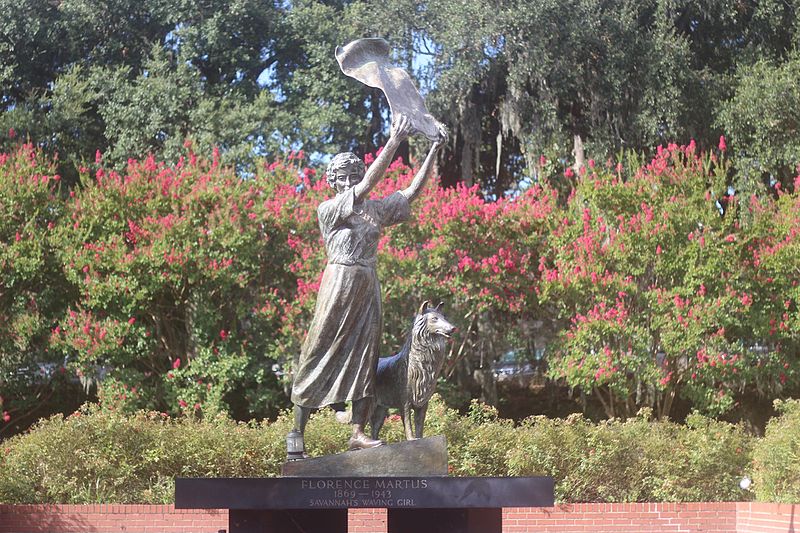
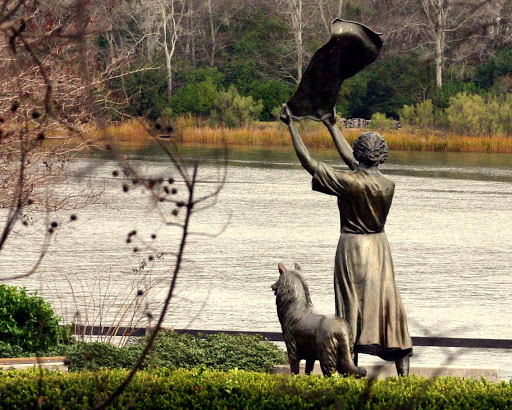
“The waving girl” and her collie soon became familiar figures, greeting every ship that entered or left the port of Savannah.  Sailors would look for her and salute in return. Vessels would blow their horns.  Few ever met her, in person.

Legends grew up around her, over the years. She had fallen in love with a sailor. She wanted him to find her when he returned. He’d been lost at sea.

The bittersweet truth was not quite so dramatic. She later said, “That’s a nice story. But what got me started – I was young and it was sort of lonely on the island for a girl. At first I would run out to wave at my friends passing, and I was so tickled when they blew the whistle back at me“.

ga sv 579So it was that Miss Martus would take out her handkerchief by day or light her lantern by night, and she would greet every vessel that came or went from the Port of Savannah.  Every one of them.  Some 50,000 vessels, over 44 years.
In 1893, Martus and her brother braved hurricane conditions, rowing out to save several men from a sinking boat.  She waved an American flag at the troop ship St. Mihiel after WWI, on its return to Savannah carrying the US Army of the Rhine.

“The Waving Girl” took it upon herself to greet every ship entering or leaving the Port of Savannah, from young womanhood until old age.

She stopped only when she was forced to do so when her brother, then 70, had to leave his lighthouse job and the home that went with it.

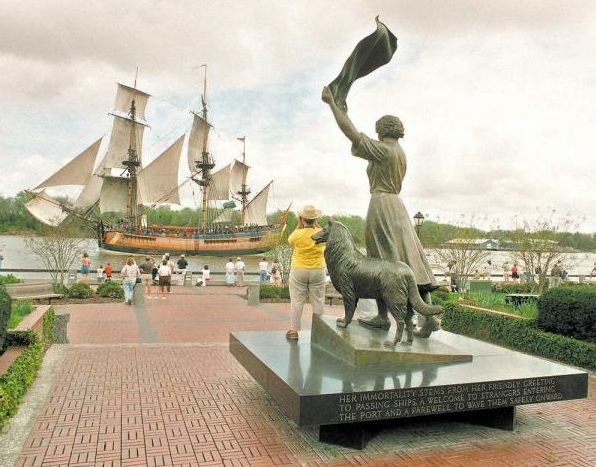
Florence_Martus_statue_in_Savannah,_August_2016

All that time she kept a careful record of every ship:  name, date, where it was from and type of vessel.  It must have broken her heart to move, because she burned the entire record.  44-years’ worth. WWII-era reporter Ernie Pyle lamented “The daily record for forty-four years, one of the most legendary figures of the Seven Seas, kept in her own hand, gone up in smoke in two minutes”.

The Waving Girl Statue

Martus never reconciled herself to the move, saying, “It’s just like trying to dig up that big oak tree and get it to take root someplace else.”

The artist Felix de Weldon, who sculpted the United States Marine Corps Memorial outside Arlington National Cemetery, erected a statue of the Waving Girl and her collie. You can see it in Morrell Park, on the west bank of the Savannah River.

b1068a_florence_martus_01_fag

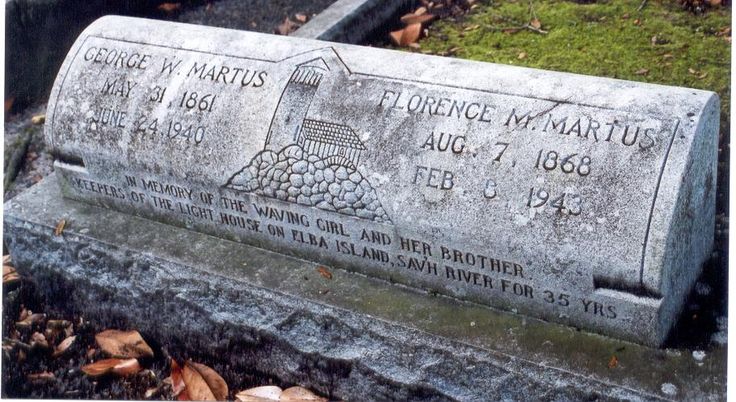
The Waving Girl passed away on February 8, 1943, following a brief bout with bronchial pneumonia.

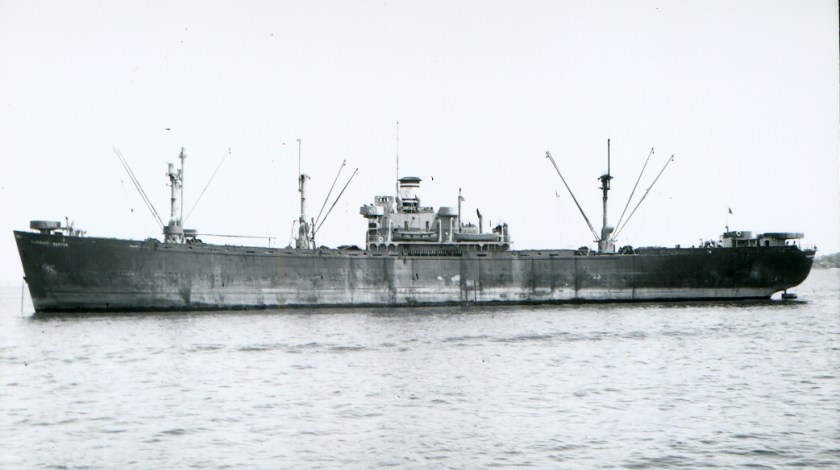
sav-belles-4-smallThe Southeastern Shipbuilding Corporation of Savannah built 88 Liberty ships during the course of World War II, the light, low-cost cargo ship which came to symbolize the industrial output of the American economy.
One of them was named in her honor. The SS Florence Martus was officially christened on September 27, 1943.

Today, the four vessels of the “Savannah Belles Ferry” fleet ply the waters of the Savannah River, each named for notable women from Savannah history. There is the Juliette Gordon Low, named for the founder of the Girl Scouts of America. Susie King Taylor was born a slave and earned her freedom at age 14, serving as a nurse during the Civil War and later opening one of the first schools in Savannah, for Americans of African ancestry. The Mary Musgrove is named for the native American translator, and indispensable connection between Chief Tomochichi, Mico (Leader) of the Yamacraw and James Oglethorpe, founding father of the city of Savannah.  And the Florence Martus, the Waving Girl of Cockspur Island.

5b51a432fcc34c12a18c0a196a35f3d0

If you enjoyed this “Today in History”, please feel free to re-blog, “like” & share on social media, so that others may find and enjoy it as well. Please click the “follow” button on the right, to receive email updates on new articles.  Thank you for your interest, in the history we all share.

September 26, 1995 Last Skate

There was nothing but potential in that rookie year, but that bright future was never meant to be.

Having come of age in this part of the world, it’s hard to imagine anyone over forty never having been to the old Boston Garden.

Originally built as a boxing venue, “The Garden” was then known as the Boston Madison Square Garden.

President Calvin Coolidge flipped a switch at the White House in November 1928, turning the lights on at the brand new arena.  Three days later, a crowd of 14,000 watched Dorchester native Dick “Honeyboy” Finnegan take the World featherweight championship away from French boxer Andre Routis, in a ten round decision.

From the earliest days, the Boston Garden was the site of political conventions, tennis matches, roller derbies and bike races.  There you could hear the sounds of a Christian revival one night, and a dance marathon the next.

FDR, Winston Churchill and Dwight Eisenhower all delivered speeches from the floor of the Garden.  Legend has it that JFK mapped out his political strategy for the 1960 Presidential election, while watching a Bruins game.

I saw my first big-time rock concert, when Aerosmith played the Garden in 1975.

The Boston Celtics played to 16 championships on the old parquet, along with 19 Conference and 15 Division titles.

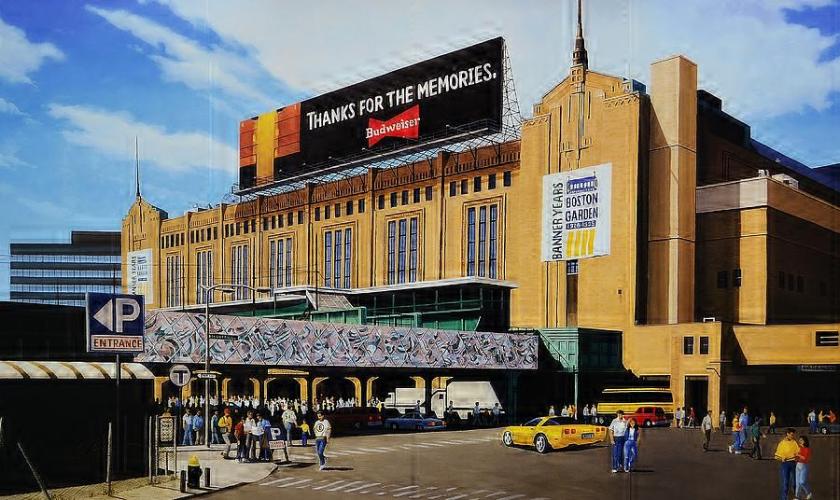
boston-garden-t-kolendera
Boston Garden is a painting by T Kolendera

Five times did the Bruins hold Lord Stanley’s Cup aloft on the home ice of the Garden, adding to 19 Eastern Division championships, two Conference championships, and a President’s trophy.

In the end, obstructed seats and a lack of air conditioning spelled the end for the Boston Garden.  On this day in 1995, Cam Neely scored the final goal in a 3-0 victory over the arch rival Montreal Canadiens.  There would be no more.

Many of the Greats of Boston hockey were there that night, to take a final skate around the Bruins’ home ice.   Johnny Bucyk was on-hand, along with Milt Schmidt.  There was Phil Esposito, Ray Bourque and Bobby Orr, and possibly the greatest, though few will remember the name of Normand Léveillé.

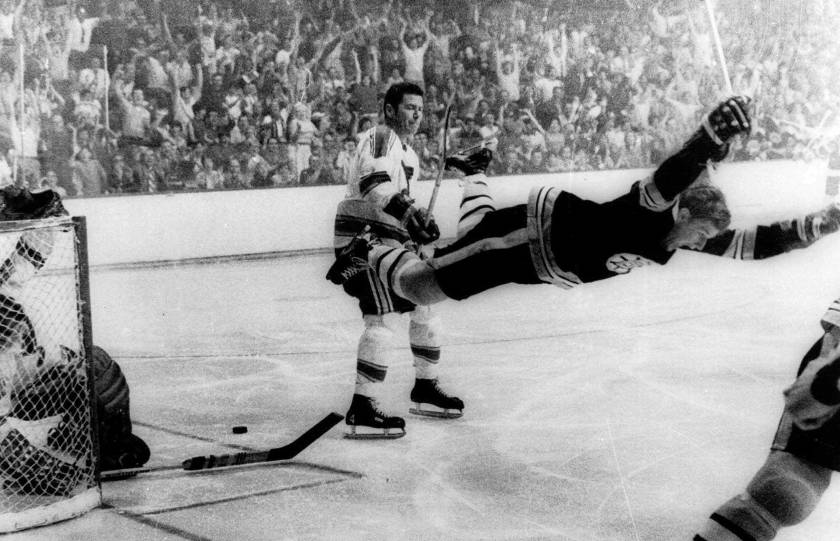
032013orr1

A first-round draft pick in 1981, Léveillé scored 33 goals in his first 60 games with the Bruins.  There was nothing but potential in that rookie year, but that bright future was never meant to be.

On October 23, 1982, Boston was playing the Canucks in the ninth game of his second season.  Léveillé complained of feeling dizzy, and lost consciousness during trainers’ examination .  An aneurysm had burst inside of his head.  The delicate filaments of his brain were being torn apart, as a spider’s web is destroyed by a garden hose.

Emergency brain surgery was followed by three weeks in a coma.  At 19, Normand Léveillé would never play hockey again.  He was lucky to be alive.

boston-garden-finalBound to a wheelchair after thirteen years and barely able to stand without aid of a walker, Normand Léveillé came back to the Garden twenty-three years ago tonight, to skate there one last time.

Let sports reporter Brent Conklin finish this story:

“For the final skate, an ecstatic Léveillé held his cane in front of him, while Bourque, facing Léveillé, pulled him around the ice; the crowd clamored in approval as eyes throughout the Garden filled up with tears.

Léveillé’s girlfriend, Lucie Legare, said at the end of the ceremony: “He said the biggest emotion wasn’t to put on the (Bruins) sweater again, but to have his fellow men there, caring. I cried. It’s just too much.”

“It was the highlight of the day,” Orr said.

Thus ends a long chapter in the history of sports. And although the luxurious Fleet Center becomes the center of attention on Oct. 7 — when the Bruins open their season versus the New York Islanders — to the very last second of the post-game ceremony, memories were still being made and dreams realized at rickety old Boston Garden”.

If you enjoyed this “Today in History”, please feel free to re-blog, “like” & share on social media, so that others may find and enjoy it as well. Please click the “follow” button on the right, to receive email updates on new articles.  Thank you for your interest, in the history we all share.

September 25, 1789  Bill of Rights

Today the American system is often described as “democracy”, but such a description is in error.  Four wolves and a lamb voting on what to have for dinner, is a democracy.  The genius of the founders can be demonstrated in a system which protects the rights of All its citizens, including that individual.  The proverbial lamb.

The Founding Fathers ratified the United States Constitution on June 21, 1788.  In so doing, our forebears bestowed on generations yet unborn, a governing system unique in all history.  A system of diffuse authority, of checks and balances, and authority delegated but Never relinquished, by a sovereign electorate.

Today the American system is often described as “democracy”, but such a description is in error.  Four wolves and a lamb voting on what to have for dinner, is a democracy.  The genius of the founders can be demonstrated in a system which protects the rights of All its citizens, including that individual.  The proverbial lamb. The specifics are enumerated in our bill of rights, twelve amendments adopted by the first Congress on this day in 1789, and sent to the states for ratification.

bill-of-rightsEven at the Constitutional Convention, delegates expressed concerns about the larger, more populous states holding sway, at the expense of the smaller states. The “Connecticut Compromise” solved the problem, creating a bicameral legislature with proportional representation in the lower house (House of Representatives) and equal representation of the states themselves in the upper house (Senate).
The 62nd Congress proposed a Constitutional amendment in 1912, negating the intent of the founders and proposing that Senators be chosen by popular election.  The measure was adopted the following year, the seventeenth amendment having been ratified by ¾ of the states.  Since that time, it’s difficult to understand what the United States Senate even is,  an institution neither democratic nor republican.  But I digress.

Five states: Delaware, Pennsylvania, New Jersey, Georgia, and Connecticut, ratified the document in quick succession. Some states objected to the new Constitution, especially Massachusetts, which wanted more protection for basic political rights such as freedom of speech, religion, and of the press. These wanted the document to specify, that those powers left un-delegated to the Federal government, were reserved to the states.

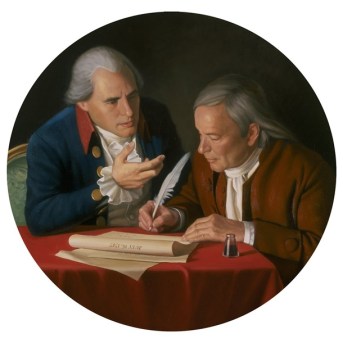
sherman-ellsworthA compromise was reached in February, 1788 whereby Massachusetts and other states would ratify the document, with the assurance that such amendments would immediately be put up for consideration.

With these assurances, Massachusetts ratified the Constitution by a two-vote margin, followed by Maryland and South Carolina. New Hampshire became the ninth state on June 21. The new Constitutional Government would take effect on March 4 of the following year.

Amendments 2-12 were adopted on December 15, 1791, becoming the “Bill of Rights”.

It’s interesting to note the priorities of that first Congress, as expressed in their original 1st and 2nd amendments.  As proposed to the 1st Congress, the original 1st amendment dictated apportionment of representation. It was ratified by only 11 states, and technically remained pending. Had the states ratified that original first amendment, we would now have a Congress of at least 6,345 members, instead of the 535 we currently have.

The original 2nd amendment was an article related to Congressional compensation, that no future Congress could change their own salaries.   The measure would in fact, pass, becoming the 27th amendment in 1992.  Following a ratification period of 202 years, 7 months, and 10 days.

If you enjoyed this “Today in History”, please feel free to re-blog, “like” & share on social media, so that others may find and enjoy it as well. Please click the “follow” button on the right, to receive email updates on new articles.  Thank you for your interest, in the history we all share.