

Opportunities for promotion led Arthur Reuel Tolkien to South Africa sometime around 1890, where the bank clerk became manager of the Bloemfontein branch of the Bank of Africa. Tolkein’s fiancée Mabel joined him in the Orange Free State in 1891, and the couple was married that April. The first of two boys arrived the following year. They called him John Ronald Reuel.
Mabel returned to England shortly after the birth of their second son, believing the climate to be healthier. She may have been right. Arthur died unexpectedly in South Africa, never rejoining his family. The older boy was four that year, the family’s departure leaving him with “slight but vivid” memories of Africa. One of them involved an encounter with an enormous, hairy, spider.
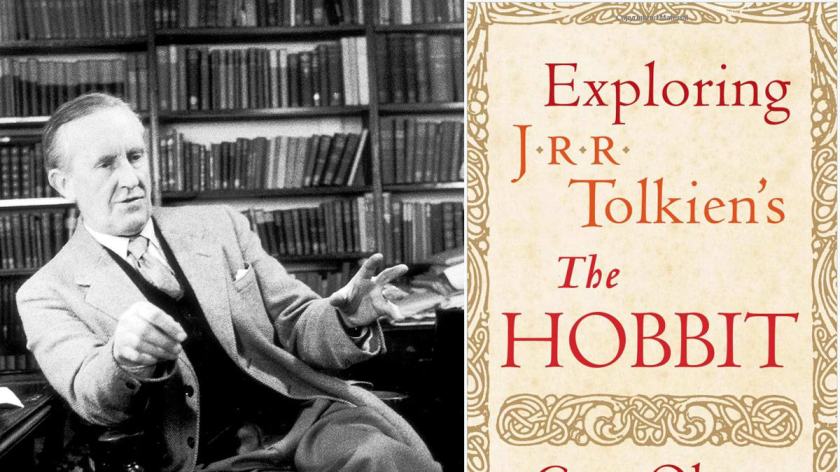
The family lived for a time next to a rail line, south of Birmingham. John always had an interest in languages, even before he began to invent words. It must have fired the young boy’s linguistic imagination to see the Welsh coal trucks go by, with names like “Nantyglo“, “Penrhiwceiber” and “Senghenydd” painted on their sides.
Finances were difficult for the family, becoming worse when Mabel succumbed to diabetes when John was only 12.
A Father Francis looked after the boys’ spiritual and educational development at King Edward’s school, where J.R.R. mastered Latin and Greek, becoming competent in a number of other languages, as well. He would make up entire languages for fun, while he and several buddies met regularly after school as the “TCBS” (Tea Club and Barrovian Society), exchanging and criticizing each other’s literary work.
Tolkein discovered Christ II by Cynewulf in the course of these studies, one of only four surviving works by the 9th century Old English poet. One couplet captured his imagination. “Eálá Earendel engla beorhtast, Ofer middangeard monnum sended” – Hail Earendel brightest of angels, over Middle Earth sent to men.
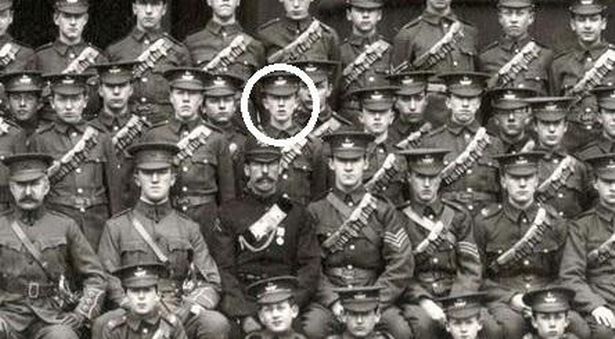
Tolkien served briefly on the Western Front in WWI, before contracting a typhus-like infection called “trench fever”. He convalesced back in England, serving out the rest of the war in Home Duty. Most of his TCBS friends had been killed in action by this time, and he wrote of his experiences in their memory. “…in huts full of blasphemy and smut, or by candle light in bell-tents, even some down in dugouts under shell fire“.
It’s easy to see these early experiences in his first works, the notes he called his “Legendarium”: the Deep Elves, the wars against Morgoth, the siege and fall of Gondolin and Nargothrond.
Tolkien took a professorship at Oxford after the war, where one day he found himself correcting papers. He found that one of his students had left a page blank. Who knows what possessed him, but he wrote on the page “In a hole in the ground there lived a hobbit“. In typical Tolkien fashion, he then had to find out what a “Hobbit” was, why it lived in a hole, and on, and on.
Tolkien’s musings grew into a tale he told his kids. It grew from there when the publishing firm George, Allen and Unwin got hands on an incomplete typescript, and encouraged the professor to finish his work. J.R.R. Tolkein’s tale was published on this day in 1937, under the title “The Hobbit“.
The Hobbit was so successful that the publisher asked if Tolkein had similar material available for publication. By this time, Tolkien’s Legendarium had taken a more complete form which he was calling his “Qenya Silmarillion”. Tolkien submitted the work to mixed reviews. the prevailing sense being that the work was not commercially viable.
The author was disappointed by the setback, but agreed to take up the challenge of writing “The New Hobbit”. It took 16 years of coaxing and prodding to accelerate the snail’s pace of this unhurried writer, by the now-grown son of one of the publishers, Rayner Unwin. Tolkien even offered the work to a rival publisher at one point, but they backed off the project on realizing the scope and size of the work.

J.R.R. Tolkein’s tale developed into far more than a children’s story, published in three parts in 1954-1955 under the title “Lord of the Rings“. Early misgivings that the project would be a financial loss, soon evaporated.
Author and publisher alike had greatly underestimated the public appeal of Tolkien’s work. To date, the Lord of the Rings trilogy and the Hobbit have sold well over 300 million copies. But for exchange issues related to a rising dollar and plunging foreign currencies, the Peter Jackson Hobbit film trilogy of 2012 would have grossed $1 billion at the world-wide box office.


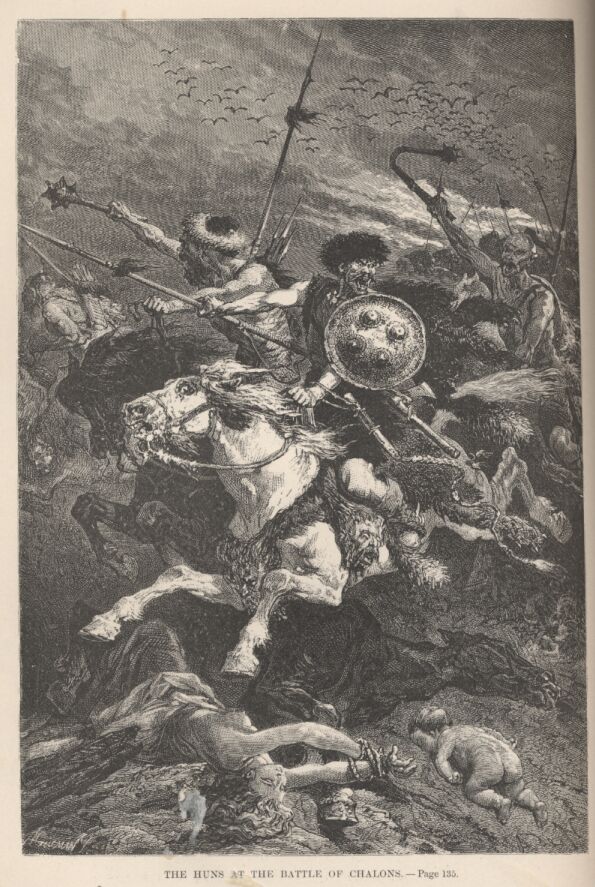
 Vast populations moved westward from Germania during the early fifth century, and into Roman territories in the west and south. They were Alans and Vandals, Suebi, Goths, and Burgundians. There were others as well, crossing the Rhine and the Danube and entering Roman Gaul. They came not in conquest: that would come later. These tribes were fleeing the Huns: a people so terrifying that whole tribes agreed to be disarmed, in exchange for the protection of Rome.

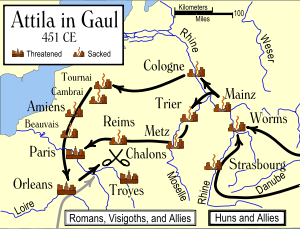 Valentinian was furious with his sister. Only the influence of their mother Galla Placidia convinced him to exile rather than have her put to death, while he frantically wrote to Attila saying it was all a misunderstanding.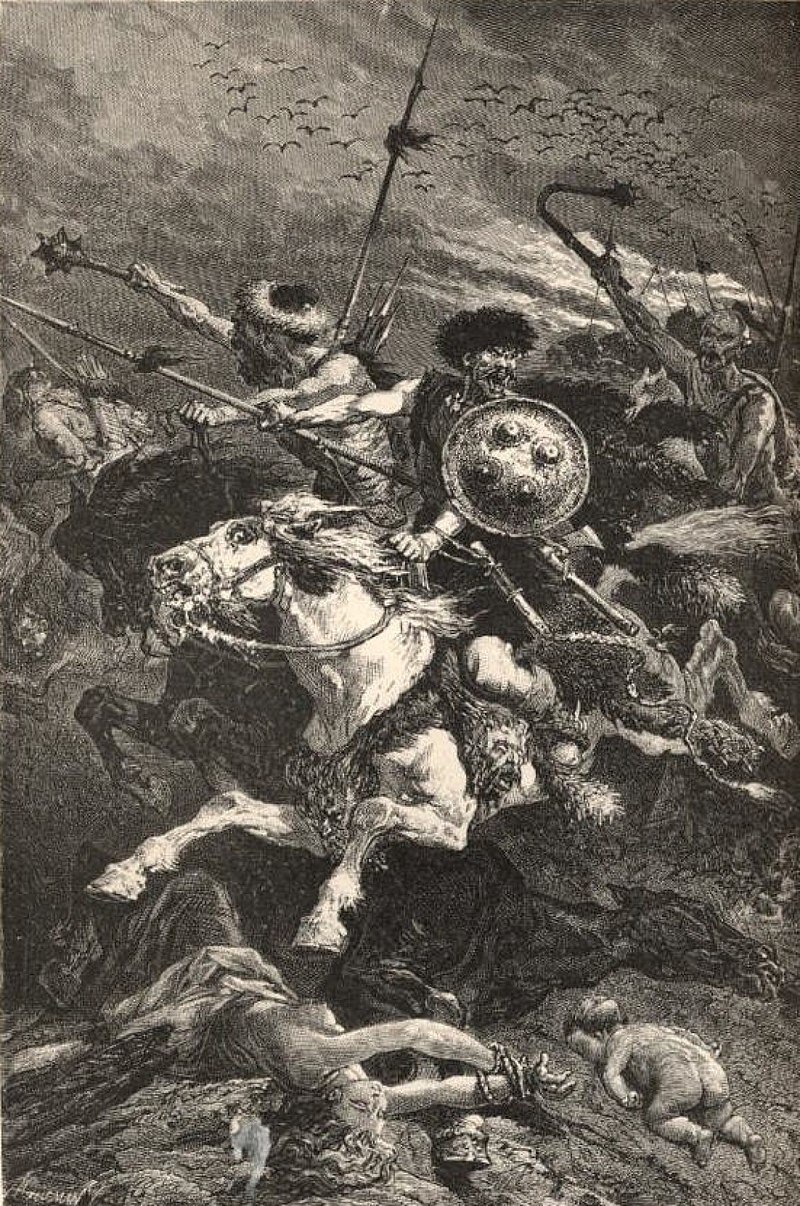


 The story begins with Jefferson Davis, in the 1840s. Now we remember him as the President of the Confederate States of America. Then, he was a United States Senator from Mississippi, with a pet project of introducing camels into the United States.
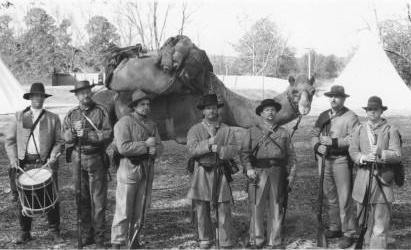
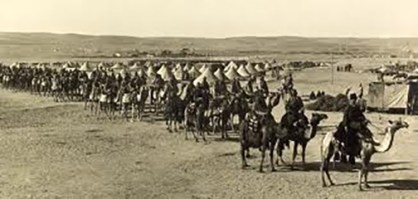 The measure failed, but in the 1850s, then-Secretary of War Davis persuaded President Franklin Pierce that camels were the military super weapons of the future. Able to carry greater loads over longer distances than any other pack animal, Davis saw camels as the high tech weapon of the age. Hundreds of horses and mules were dying in the hot, dry conditions of Southwestern Cavalry outposts, when the government purchased 75 camels from Algeria, Tunisia and Egypt. Several camel handlers came along in the bargain, one of them a Syrian named Haji Ali, who successfully implemented a camel breeding program. Haji Ali became quite the celebrity within the West Texas outpost. The soldiers called him “Hi Jolly”.


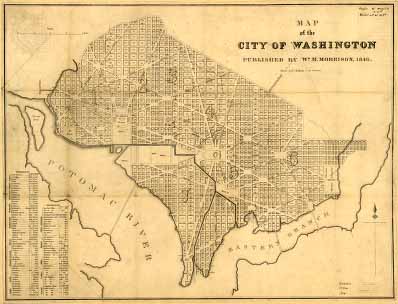 The “Residence Act” of July 1790 established the Federal government along the banks of the Potomac River. The specific site had been up for debate, before Alexander Hamilton brokered a compromise. Several delegates switched support in favor of the current location, in exchange for the Federal government assuming their states’ war debt.
 Funding problems and design squabbles plagued the project from the beginning. The building was incomplete when Congress held its first session there on November 17, 1800.
 By the 1850s, the number of new states’ representatives threatened to exceed the building’s designed capacity. President Millard Fillmore held a design competition, resulting in the House and Senate wings as you see them today.

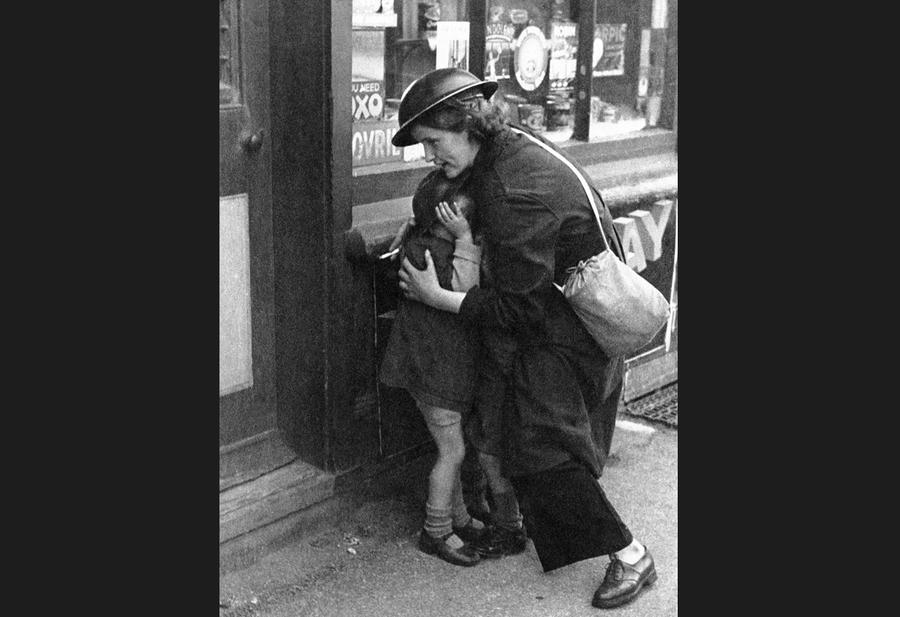


 Germany needed air supremacy before “Operation Sea Lion”, the amphibious invasion of England, could begin. Luftwaffe commander Hermann Göring said he would have it in four days.


 Czechoslovakia fell to the Nazis on the Ides of March, 1939, Czech armed forces having been ordered to offer no resistance. Some 4,000 Czech soldiers and airmen managed to get out, most escaping to neighboring Poland.
 British military authorities were slow to recognize the flying skills of the Polskie Siły Powietrzne (Polish Air Forces), the first fighter squadrons only seeing action in the third phase of the Battle of Britain. Despite the late start, Polish flying skills proved superior to those of less-experienced Commonwealth pilots. The 303rd Polish fighter squadron became the most successful RAF fighter unit of the period, its most prolific flying ace being Czech Sergeant Josef František. He was killed in action in the last phase of the Battle of Britain, the day after his 26th birthday.


 Mad Jack was sent off to Burma, following the defeat of Nazi Germany. He was disappointed by the swift end to the war brought about by the American bombings at Hiroshima and Nagasaki, saying “If it wasn’t for those damn Yanks, we could have kept the war going another 10 years!”


 Leonardo da Vinci drew sketches of a man-powered, wheeled vehicle encased in armor and bristling with cannon, as early as the 15th century. The design was limited, since no human crew could generate enough power to move it for long, and the use of animals in such confined spaces was fraught with problems..


 With no suspension, the bone jarring ride on one of these monsters was just the beginning of what crews were forced to endure.


 The documents came from Lt. Col. Bill Burkett, a former Texas Army National Guard officer who had received publicity back in 2000, when he claimed to have been transferred to Panama after refusing to falsify then-Governor Bush’s personnel records. He later retracted the claim, but popped up again during the 2004 election cycle. Many considered Burkett to be an “anti-Bush zealot”.
 The New York Times interviewed Marian Carr Knox who’d been secretary to the squadron in 1972, running a story dated September 14 under the bylines of Maureen Balleza and Kate Zernike. The headline read “Memos on Bush Are Fake but Accurate, Typist Says“.
 Public confidence in the “Mainstream Media” plummeted. Many saw the episode as a news network lying, and the “Newspaper of Record” swearing to it.


 a nostalgic period looking back to the Classical age. Whatever it was, the 15th and 16th centuries produced some of the most spectacularly gifted artists, in history.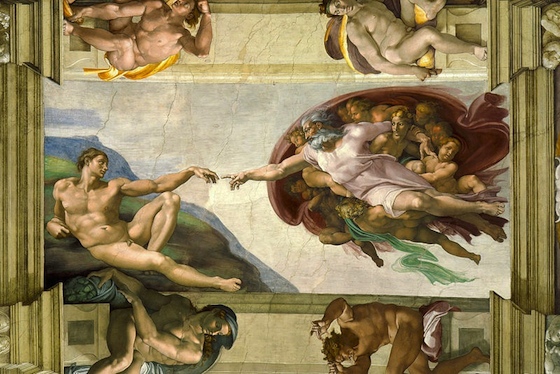
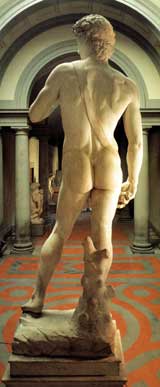 The massive block of Carrara marble was quarried in 1466, nine years before Michelangelo was born. The “David” commission was given to artist Agostino di Duccio that same year. So difficult was this particular marble block that he never got beyond roughing out the legs and draperies. Antonio Rossellino took a shot at it 10 years later, but he didn’t get much farther.
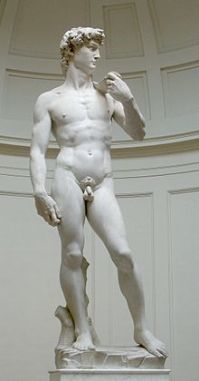 Cathedral, but it wasn’t feasible to raise such an object that high. A committee including Leonardo da Vinci and Sandro Botticelli was formed to decide on an appropriate site for the statue. The commitee chose the Piazza della Signoria outside the Palazzo Vecchio, the town hall of Florence.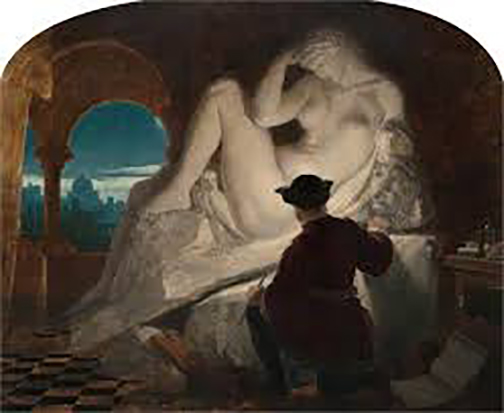


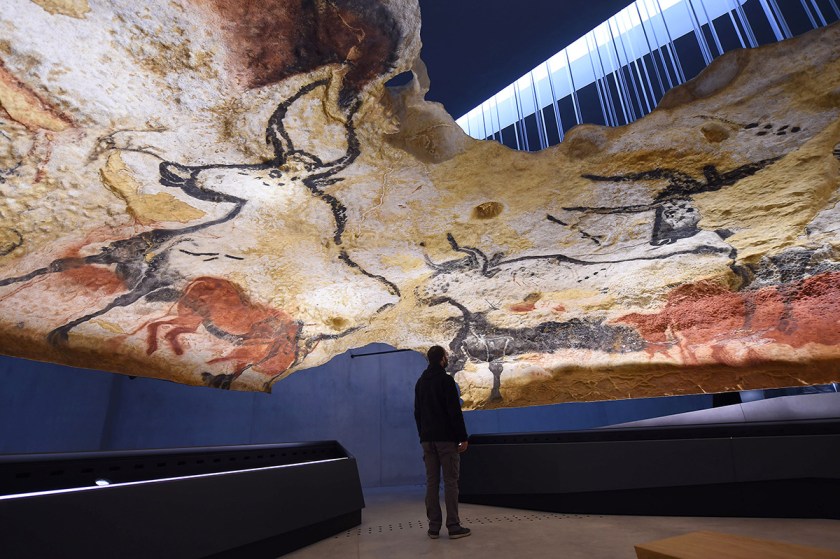
 The Lascaux Caves are located in the Dordogne region, in Southwestern France. Some 17,000 years ago, Upper Paleolithic artists mixed mineral pigments such as iron oxide (ochre), haematite, and goethite, suspending pigments in animal fat, clay or the calcium-rich groundwater of the caves themselves. Shading and depth were added with charcoal.
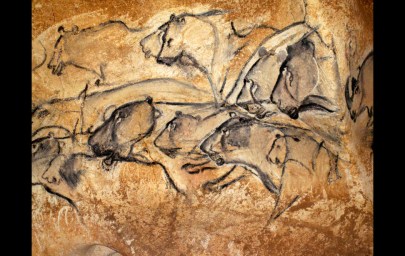 The artist or artists who created such images, nearly 2,000 of them occupying some 37 chambers, would have been recognizable as modern humans. Living as they did some 5,000 years before the Holocene Glacial Retreat, (yes, they had “climate change” back then), these cave-dwellers were pre-agricultural, subsisting on what they could find, or what they could kill.
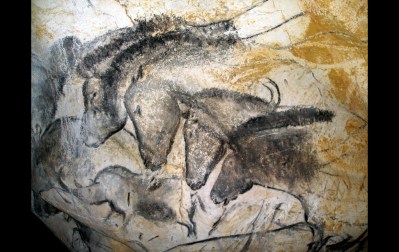 The purpose served by these images is unclear. Perhaps they tell stories of past hunts, or maybe they were used to call up the spirits for a successful hunt. At least one professor of art and archaeology postulates that the dot and lattice patterns overlying many of these paintings may reflect trance visions, similar to the hallucinations produced by sensory deprivation.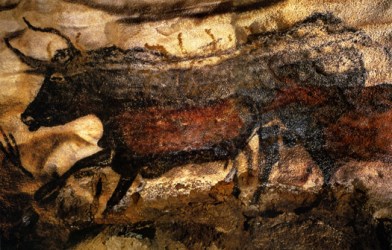

 Historical Easter Eggs - Today in History
You must be logged in to post a comment.