
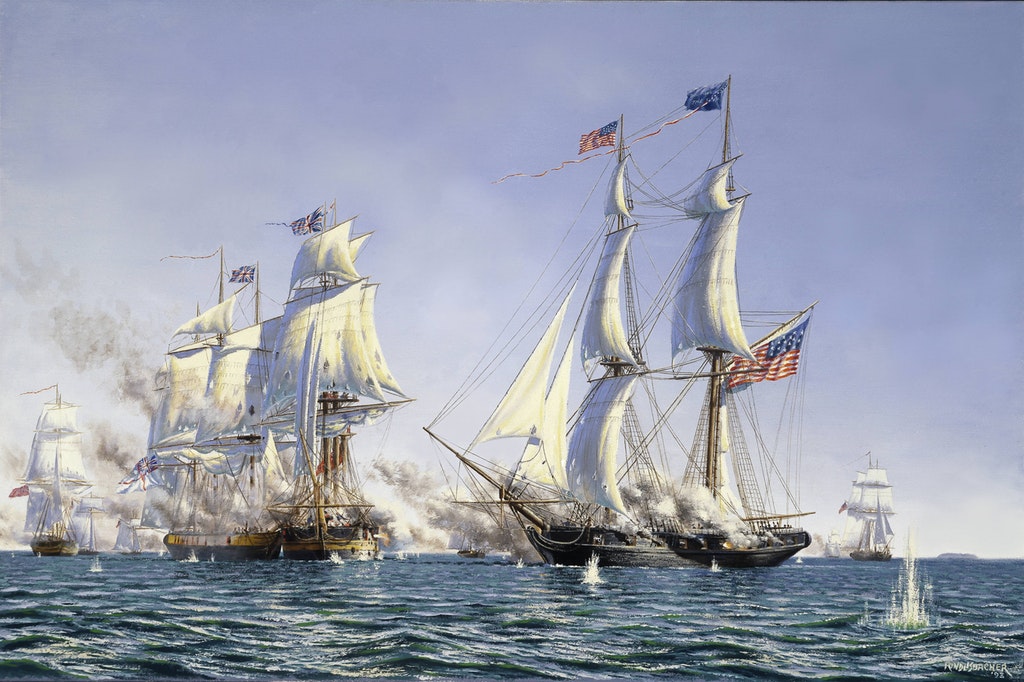
When war broke out between the United States and the British Empire in June, 1812, neither side was prepared. Most of the British war machine was busy with a “Little Corporal”, whose “Waterloo” was still two years away. America had disbanded the National Bank and had no means of paying for war, while private northeastern bankers were reluctant to provide financing.
Support for the War of 1812 was bitterly divided, between the Democratic-Republicans of President James Madison, and the Federalist strongholds of Connecticut, Massachusetts and Rhode Island. Of the six New England states, New Hampshire alone complied with President Madison’s requests for state militia.
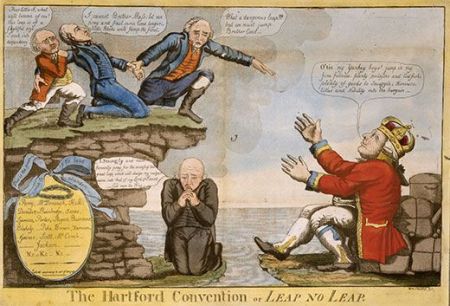
It may have been the most unpopular war in United States’ history. Much of New England threatened to secede, their position bolstered by the sack of Washington in August, 1814.
New England may have actually seceded following the Hartford Convention of 1814, had not the Federalist position been made risible, by future President Andrew Jackson’s overwhelming victory at the Battle of New Orleans.
Hartford Convention delegates ended with a formal report, resolutions from which would resurface decades later in a doctrine now known as nullification.
Opposition to America’s first declared war was vehement, and often bloody. Four days after it began, the office of the Baltimore Federal Republican newspaper was burned to the ground by an angry mob, infuriated by the anti-war editorials of Alexander Contee Hanson.
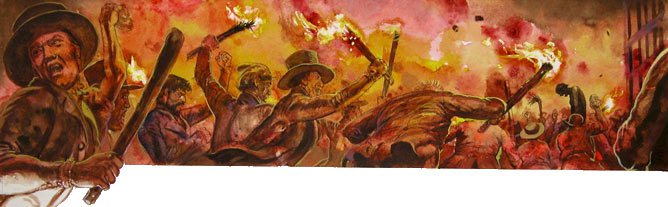
Hanson reopened his paper a month later, shielded by Revolutionary War veterans James Lingan and “Lighthorse Harry Lee”, father of Civil War General Robert E. Lee. The armed protection did him little good. Another mob formed within hours, this time torturing and severely beating Hanson, Lignan and Lee, and leaving them for dead.
James Lignan died of his injuries. Hanson recovered and went on to serve in the House of Representatives. Lee survived the beating, though he remained partially blind from hot wax poured into his eyes by the mob.
Baltimore Mayor Stephanie Rawlings-Blake claimed 200 years later, that, “Our city has a long history of peaceful demonstrations.” With all due respect to Stephanie Rawlings-Blake, Baltimore has been known as “Mobtown”, for at least that long.
The war of 1812 was fought in a series of land and sea battles along three fronts: The Atlantic Ocean & East Coast, the Southern States, and the Great Lakes & Canadian Frontier.
The British Navy had virtually unchallenged control of the Great Lakes in 1812, with several warships already on station. The only American warship on Lake Erie was the brig USS Adams, pinned down in Detroit and not yet fitted for service.

Detroit fell almost immediately, remaining in British hands for over a year. The Adams was captured along with the town, and renamed “HMS Detroit”.
Meanwhile, Americans captured an English brig, the Caledonia, and acquired three civilian vessels, the schooners Somers and Ohio and the sloop-rigged Trippe. They converted all four into warships, and Master Commandant Oliver Hazard Perry had them towed by oxen up the Niagara River, an operation which took six days. Once in Lake Erie, they sailed down the coast to Presque Isle, on the Pennsylvania coast.
Chesapeake Bay and Pittsburgh foundries produced guns and fittings, while two more warships were ordered built at Presque Isle. Meanwhile, Perry drafted 50 experienced sailors from USS Constitution, which was then undergoing refit in Boston Harbor.
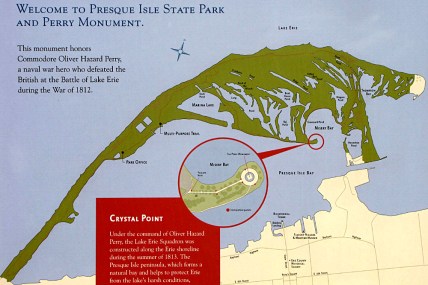
The American squadron was almost complete by mid-July, but there was a problem. The sand bar at the mouth of Presque Isle Bay is only 5′ deep. This sand bar kept the British blockade at bay, with a little help from 2,000 Pennsylvania militia and several shore batteries. Once ready though, American ships had to contend with the same obstacle.
British Commander Robert Heriot Barclay was forced to lift his blockade on July 29, due to a supply shortage and bad weather. Perry immediately began the exhausting process of moving his vessels across the sandbar. Guns had to be removed, the larger boats raised between “camels”: barges lashed together and emptied of ballast to lift the ships high in the water. When Barclay returned four days later, he found the Americans had nearly completed the task.
What followed, was one of history’s great head fakes. Naval warfare in the age of sail was typically conducted by two parallel lines of ships, pounding one another with cannon until one side could no longer take the punishment. Perry’s largest brigs were unready when the British fleet returned, yet the American gunboats formed into line of battle so quickly and with such confidence, that Barclay withdrew to await completion of HMS Detroit.
 Perry’s fleet established anchorage at Put-in-Bay on the Ohio coast. It was there that Barclay’s fleet came for them on September 10.
Battle lines converged outside the harbor shortly after 11:00am. Perry’s flagship USS Lawrence took a savage beating, the longer guns of HMS Detroit having 20 minutes to do their work before Lawrence could effectively reply.
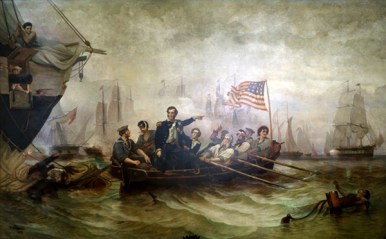
HMS Queen Charlotte added her gunfire to that of Detroit. Soon the American flagship was a wreck, with 80% casualties. Perry transferred his flag and rowed to the USS Niagara half a mile away, the brig being almost unscathed in the action, up this point.
Damaged masts and rigging on the British side resulted in collision between Detroit and Queen Charlotte. They were still snarled up as Niagara broke through the British line, pounding them with broadsides from 18 32-pounder carronades and two 12-pounder long guns. Smaller English ships attempted to flee, but were quickly overtaken.
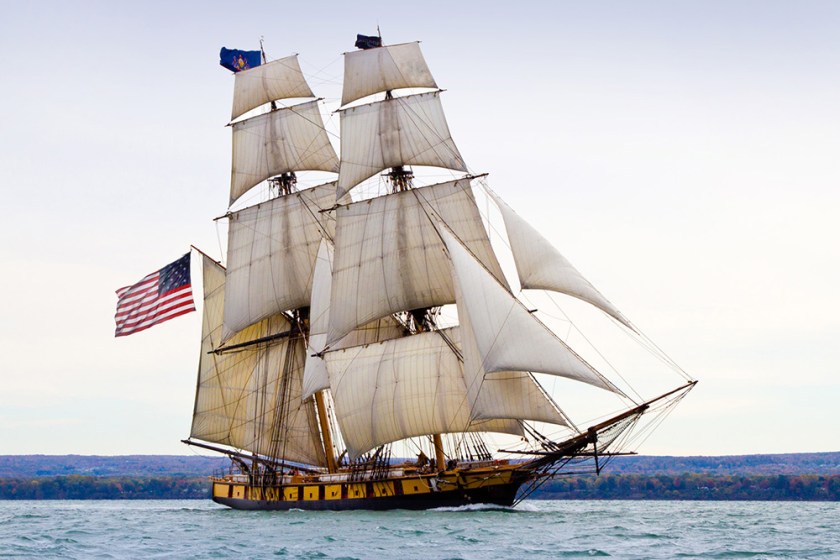
That afternoon American and English vessels, the latter now prizes of war, were anchored with hasty repairs already underway. Oliver Hazard Perry took an old envelope and scrawled his now famous message to future President William Henry Harrison. “Dear General, We have met the enemy and they are ours. Two ships, two brigs, one schooner and one sloop. Yours with great respect and esteem, O.H. Perry“.
Niagara remains in service to this day, a Coast Guard sail trainer and outdoor exhibit for the Erie Maritime Museum. One of the last surviving ships, from the War of 1812.

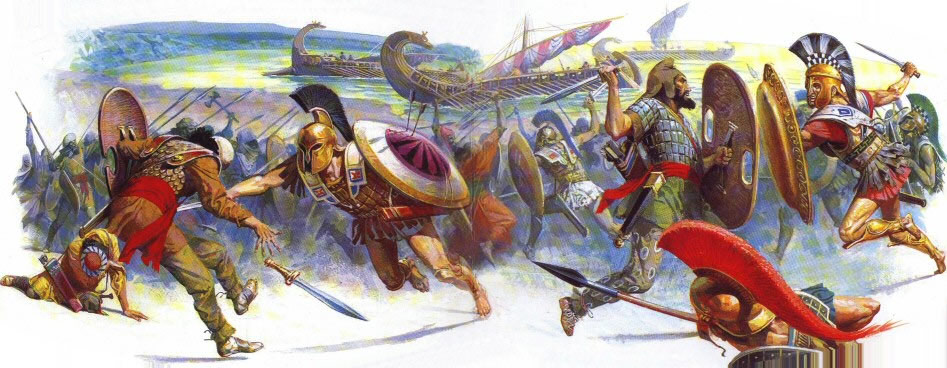

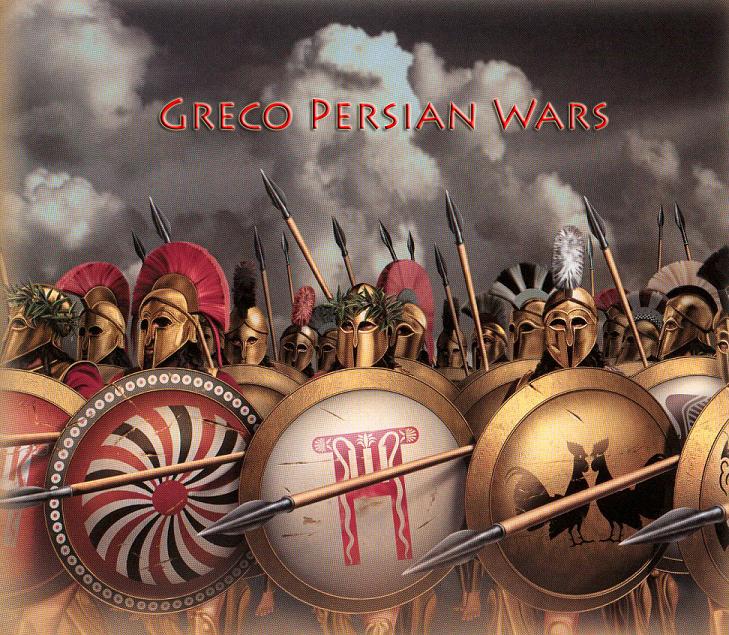
 Weighed down with 70lbs per man of bronze and leather armor, the Greek line likely marched out to 200 yards, the effective range of Persian archers. Greek heavy infantry closed the last 200 meters at a dead run, the first time a Greek army had fought that way.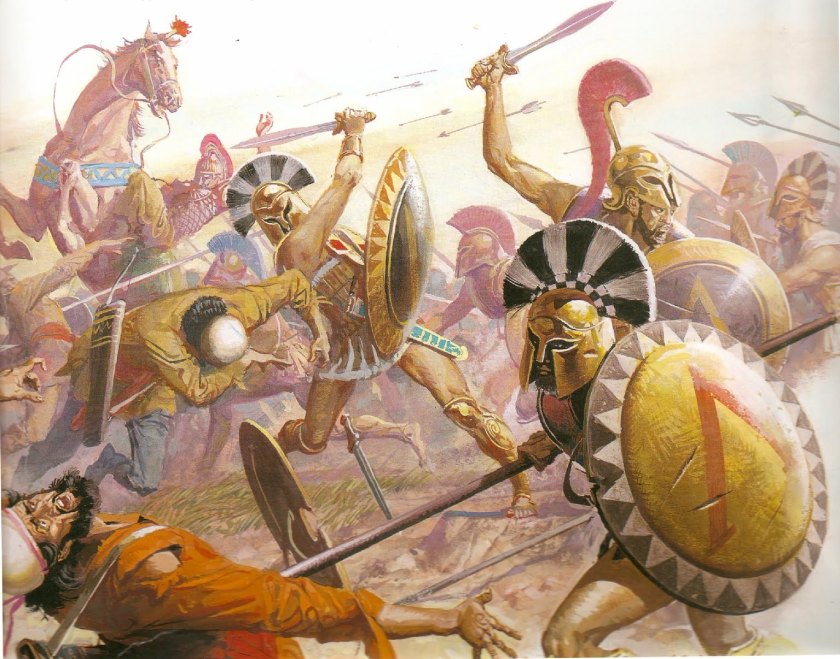

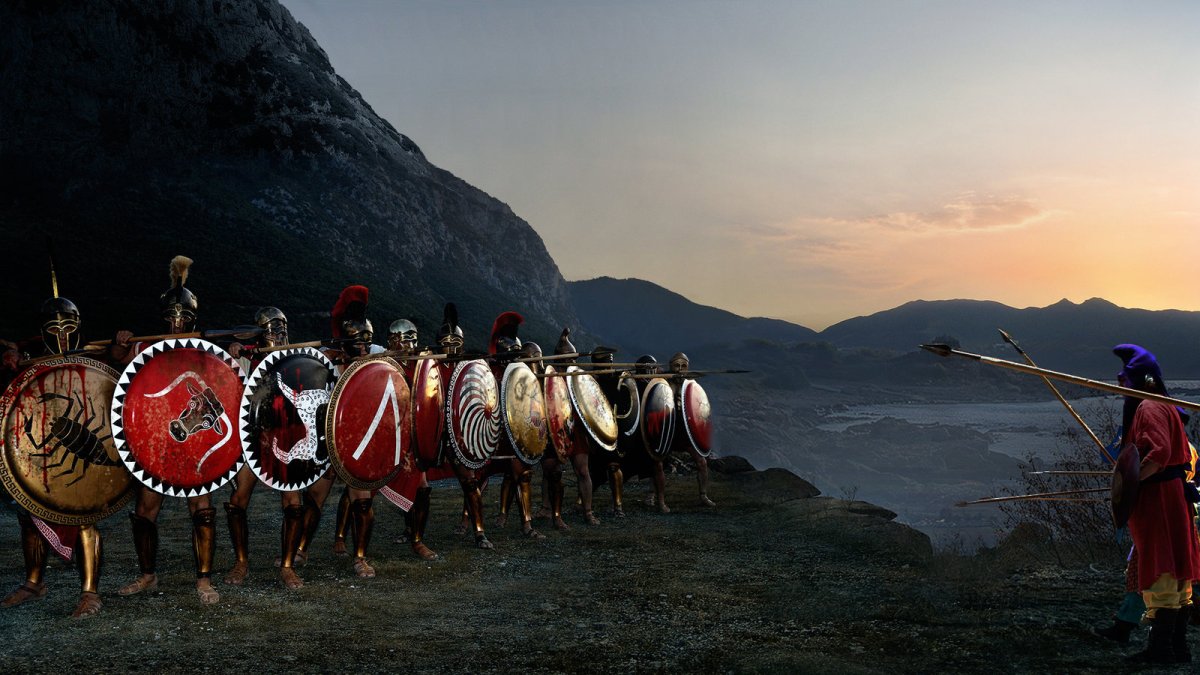
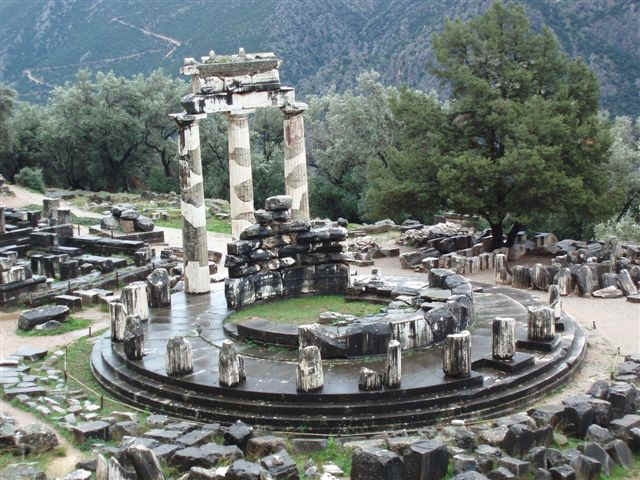
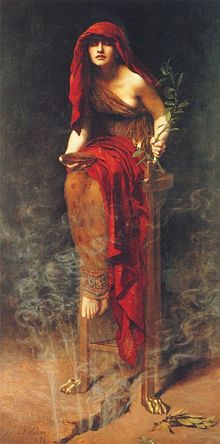
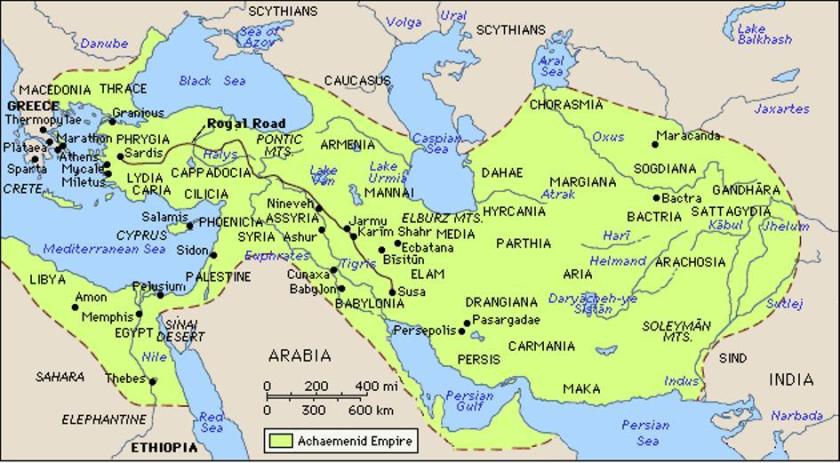
 The 300 marched out at the head of an allied army of 7,000, to meet a Persian army which modern estimates put at 100,000 to 150,000. A native of Trachis told the Spartan General Dienekes, that Persian archers were so numerous their arrows would block out the sun. “Good”, replied Dienekes. “Then we shall fight in the shade”.
 Knowing he was betrayed and would soon be surrounded, Leonidas sent most of the allied soldiers away. They would be needed for the battle yet to come.


 So important is this event to the Jewish people that it is commemorated still as the saddest day of the Jewish calendar. A day of fasting and mourning known as Tisha B’Av.


 “Haram esh-Sharif” ( “The Noble Sanctuary”), or “Temple Mount” to Christians and Jews. The Waqf has held administrative authority over the holy sites of Jerusalem since the Muslim reconquest of the city in 1187. The most recent Waqf was established by the Hashemite Kingdom of Jordan, following the 1948 war. Israel recaptured the old city after the 6-day war in 1967, when they informed Waqf authorities that it would be allowed ongoing control over the old parts of the city.

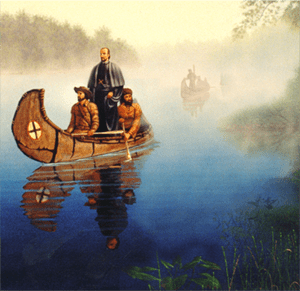 On May 17, 1673, Father Jacques Marquette set out with the 27-year old fur trader Louis Joliet to explore the upper reaches of the Mississippi River. Their voyage established the possibility of water travel from Lake Huron to the Gulf of Mexico, helping to initiate the first white settlements in the North American interior and bestowing French names on cities from La Crosse to New Orleans.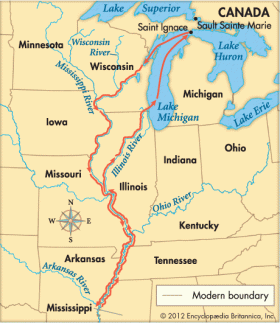



 glazed at some future date.

 In 1862, the California legislature passed a tax on Chinese residents, entitled “An Act to Protect Free White Labor against Competition with Chinese Coolie Labor, and to Discourage the Immigration of Chinese into the State of California.”
 In the first century AD, Roman Emperors Nero and Vespasian levied a tax on piss. Honest. In those days, the lower classes pee’d into pots which were emptied into cesspools.

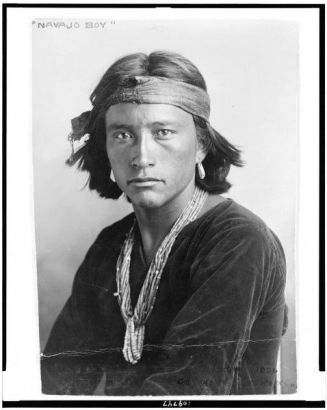 Much has been written of the conflict between Natives and American settlers, but that story has little to compare with the level of distrust and mutual butchery which took place between Mexico and the Apache.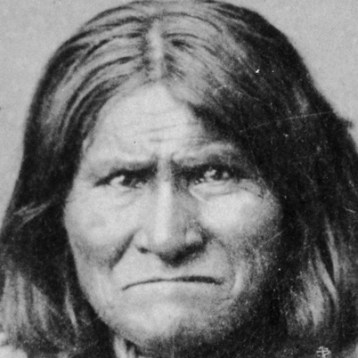
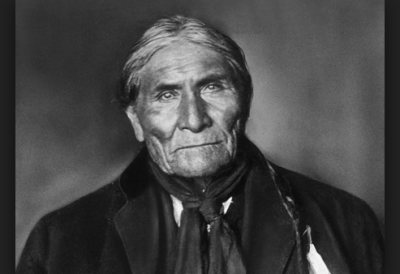
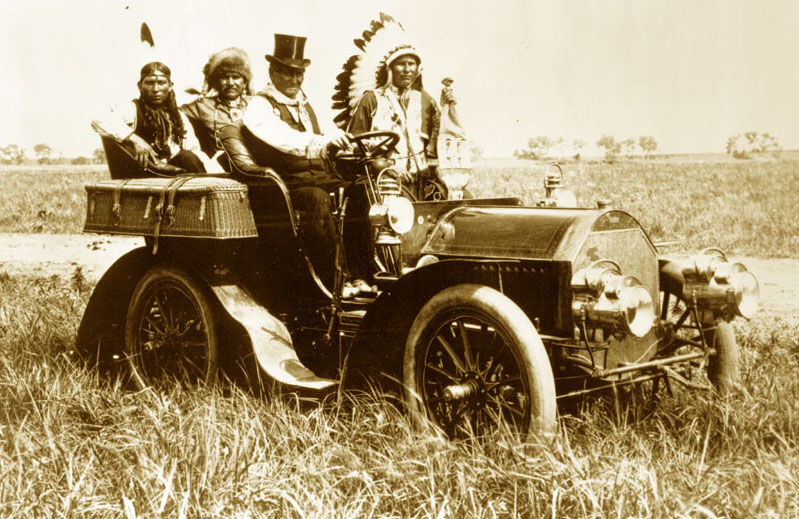
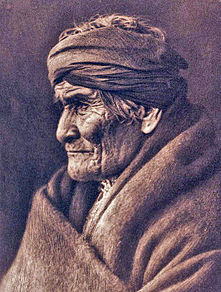 In his 1909 memoirs, Geronimo wrote of the 1904 St. Louis World’s Fair: “I am glad I went to the Fair. I saw many interesting things and learned much of the white people. They are a very kind and peaceful people. During all the time I was at the Fair no one tried to harm me in any way. Had this been among the Mexicans I am sure I should have been compelled to defend myself often”.
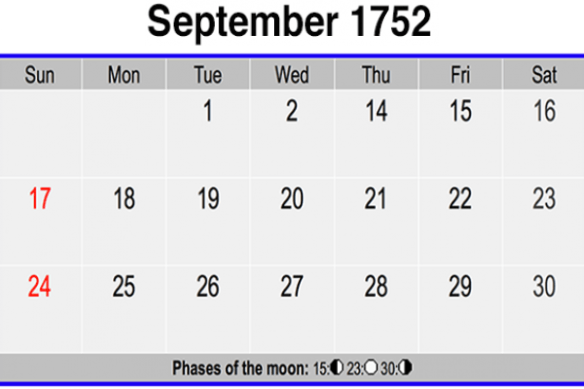
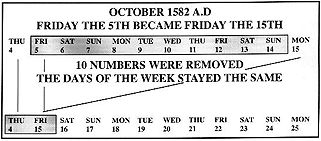

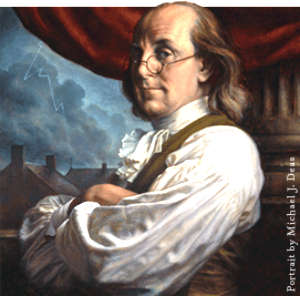 Benjamin Franklin seems to have liked the idea, writing that, “It is pleasant for an old man to be able to go to bed on September 2, and not have to get up until September 14.”


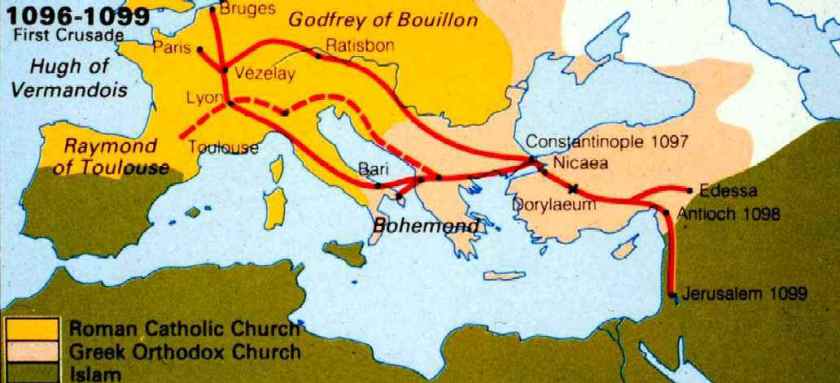
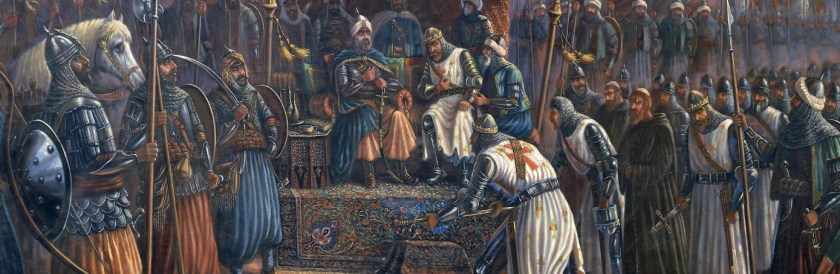
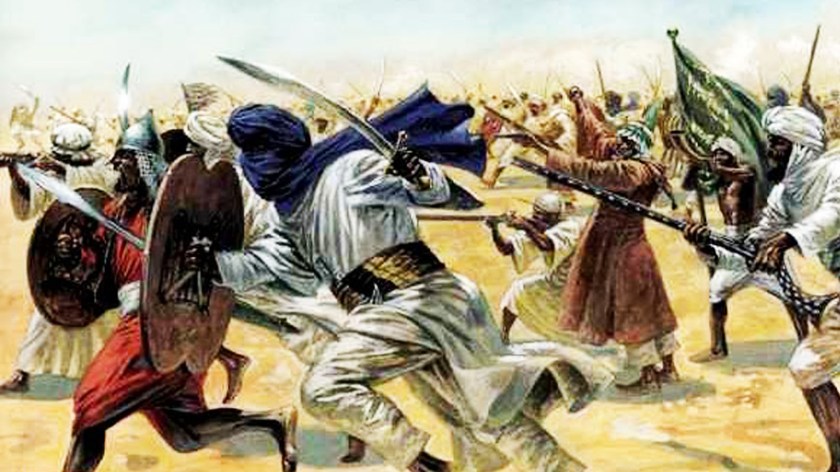


 the nearby town of Chartres under siege. Normans had burned the place to the ground back in 858 and would probably have done so again, but for their defeat at the battle of Chartres on July 20.
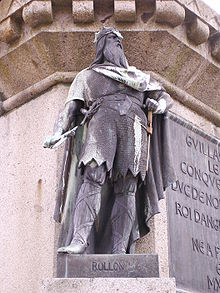 The deal made sense for the King, because he had already bankrupted his treasury paying these people tribute. And what better way to deal with future Viking raids down the channel, than to make them the Vikings’ own problem?
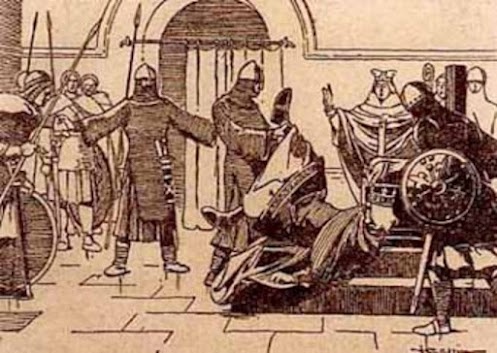 the symbolic importance of the gesture, but wasn’t about to submit to such degradation himself. The chieftain motioned to one of his lieutenants, a man almost as huge as himself, to kiss the king’s foot. The man shrugged, reached down and lifted King Charles off the ground by his ankle. He kissed the foot, and tossed the King of the Franks aside. Like a sack of potatoes
 Historical Easter Eggs - Today in History
You must be logged in to post a comment.