

Tactical Explosive Detection Dogs, or “TEDDs”, come in many shapes and sizes. They can be German Shepherds, Labrador Retrievers or Belgian Malinois. Even Pit Bulls. The first thing they have in common is a high “ball drive”. To these dogs, a tennis ball is the beginning and end of all joy. From that starting place, the dog is trained to associate finding a bomb with getting the tennis ball as a reward. The results can be astonishing.
The first official American bomb dogs were used in North Africa in the 1940s, where they were used to detect German mines. Today’s TEDD is a highly specialized and well trained soldier, working with his handler and able to detect 64 or more explosive compounds.
Military Working Dog (MWD) Lex was one such dog, deployed to Iraq with the United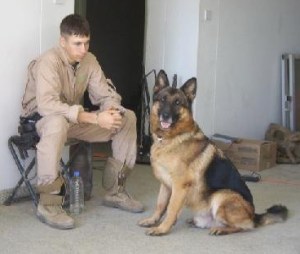 States Marine Corps in 2006. The dog’s second deployment began in November, when he was paired with Marine Corporal Dustin J. Lee, stationed in the military police department at Marine Corps Logistics Base (MCLB), “Albany”.
Detached as an explosive detection and patrol team for the 3rd Reconnaissance Battalion, then part of Regimental Combat Team 6, the pair was patrolling a Forward Operating Base on March 21, 2007, when they were hit by a 73 mm SPG-9 rocket attack. Lee was mortally wounded, Lex severely injured with multiple shrapnel wounds. Despite his own injuries, Lex refused to leave his Marine and had to be dragged away before corpsmen could attempt treatment. There is little in this world to compare with the magnificent loyalty of a dog.
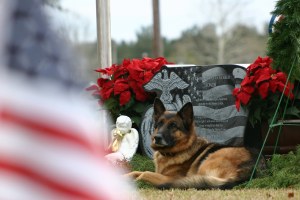 The most dreadful moment in the life of any parent, is when they receive word of the death of a child. It wasn’t long after Jerome and Rachel Lee were so notified, that they began efforts to adopt Lex. Dustin was gone, but they wanted to make his partner a permanent part of their family.
An online petition was created by the Lee family, soon gaining national media attention as well as that of Congressman Walter B. Jones of North Carolina’s 3rd congressional district, which includes Camp Lejeune. US armed forces don’t commonly release MWDs prior to retirement age, but there can be exceptions.
Meanwhile, Lex had gone through a 12-week recuperation at Camp Lejeune, later re-deployed to MCLB Albany on July 6. He was once again at full working capacity, despite the more than 50 pieces of shrapnel veterinary surgeons had left in his back, fearing that removal would cause permanent damage to his spine.
Lex was at this time under the jurisdiction of the Air Force working dog program managers at Lackland Air Force Base. Marine Corps Headquarters made a formal request for the dog’s release in November. Lex was released on December 6, and turned over to the Lee family in a ceremony on December 21, 2007.
Lex was 8 years old at the time. He soon began to visit VA hospitals, comforting wounded veterans and assisting in their recovery. He received an honorary purple heart in February, 2008, and the 7th Law Enforcement AKC Award for Canine Excellence in September. On March 19, 2010, the base dog kennel at MCLB Albany was named in honor of Corporal Dustin J. Lee, with Lex in attendance.
Lex’ injuries troubled him for the rest of his life, despite stem cell regenerative therapy at Georgetown Veterinary Hospital, assisted by the Humane Society of the United States and Kentucky Congressman Ed Whitfield. Lex succumbed to cancer on March 25, 2012.
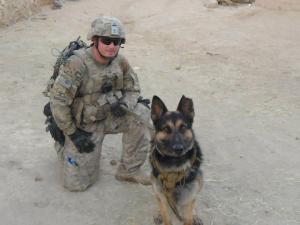 In telling this story, I wish in some small way to honor my son in law Nate and daughter Carolyn, who together experienced Nate’s deployment as a Tactical Explosives Detection Dog handler with the US Army 3rd Infantry Division in Soltan Kheyl, Wardak Province, Afghanistan. Months after departing “The Ghan” in 2013, the couple was reunited with Nate’s “Battle Buddy”, MWD Zino, who is now retired and lives with them in Savannah. “Here & Now”, broadcast out of ‘Boston’s NPR News Station’ WBUR, did a great story on the reunion. You can hear the radio broadcast HERE. Thanks for the great job, Alex.
To those TEDD teams deployed today and those of the 2013 4th Infantry Brigade Combat Team of the 3rd Infantry Division: Spec.Nate Korpusik & K9 Zino, Sgt. Austin Swaney & K9 Rudy, Sgt. Logan Synatzske & K9 Bako, Spec. Chase Couturiaux & K9 Nina, Spec. Jake Carlberg & K9 Abby, Spec. Ethan Mordue & K9 Moto, Spec. Matthew Shaw & K9 Senna, Spec. Luke Andrukitis & K9 Robby, Sgt. Jeremy Shelton & K9 Rexy, Spec. Sean Bunyard & K9 Kryno, and Spec. Luke Parker & K9 Max: I say with great respect and profound appreciation to these men, their dogs and their families, Thank you.

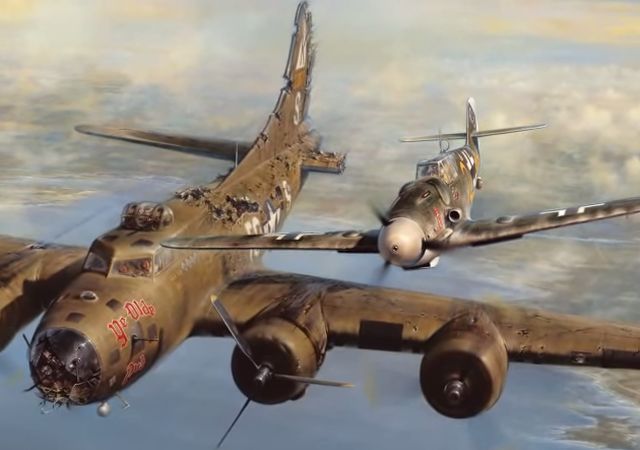
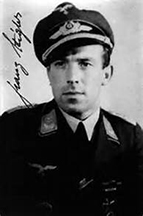 At the age of 26, Franz Stigler was an Ace. The Luftwaffe pilot of a Messerschmitt Bf-109 fighter, some of his kills had been revenge, payback for the death of his brother August earlier in the war. But this man was no Nazi. He was a German Patriot with 22 confirmed kills. On December 20, 1943, he needed one more for a Knight’s Cross. He tossed his cigarette aside and climbed into his fighter as the crippled American B17 bomber lumbered overhead. This was going to be an easy kill.
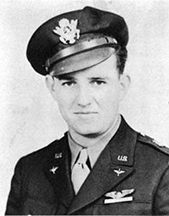 named “Ye Olde Pub”. The earlier attack on the munitions factory in Bremen had been a success, but the pilot and crew paid a heavy price for it. Their aircraft had been savaged by no fewer than 15 German fighters. Great parts of the air frame were torn away, one wing severely damaged and part of the tail torn away. The aircraft’s Plexiglas nose was shattered and the #2 engine seized. Six of the ten-man crew were wounded and the tail gunner dead, his blood frozen in icicles over silent machine guns. Brown himself had been knocked out at one point, coming around just in time to avert a fatal dive.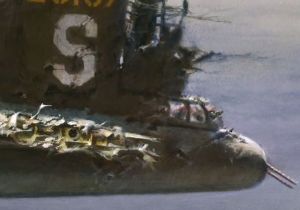
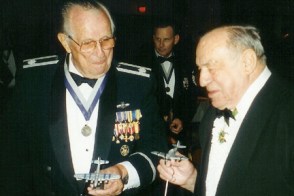 took out an ad in a fighter pilots’ newsletter. It said that he was searching for the man ‘who saved my life on Dec. 20, 1943.’ Stigler saw the ad, and the two met for the first time in 1987. “It was like meeting a family member”, Brown said at their first meeting, “like a brother you haven’t seen for 40 years”.
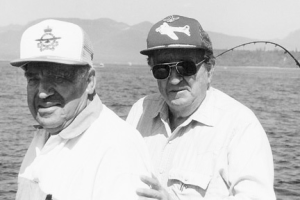 The two became close friends and occasional fishing buddies until their passing in 2008, six months apart. Stigler was age 92 and Brown 87. Their story is told in a book called “A Higher Call”, if you want to know more about it. In their obituaries, both were mentioned as the other man’s “special brother”.

 He left with a copy of “The Lowell Offering”, a literary magazine written by those same mill girls, which he later described as “four hundred good solid pages, which I have read from beginning to end.”

 No longer a maritime power, Hannibal set out in the spring of 218BC, crossing into hostile Gaul (France) and arriving at the Rhône River in September with 38,000 infantry, 8,000 cavalry, and 37 war elephants. His crossing of the Alps that winter is one of the great feats of military history, costing him almost half of his force before entering Italy in December.



 The British author H. G. Wells wrote The War of the Worlds in 1897, telling the story of an alien invasion of earth by Martians fleeing from the desiccation of their planet. The story was adapted to a radio drama broadcast on Halloween, 1938, so realistic that many listeners sued the network for “mental anguish” and “personal injury”.
 California at Berkeley is running a “distributed computing effort” to identify extraterrestrial life, called SETI@home. With an original objective of 50,000-100,000 home computers, SETI@home currently operates on over 5.2 million computers. With the introduction of the Berkeley Open Infrastructure for Network Computing, or “BOINC” (I didn’t make that up), SETI@home users can even compete with one another, to see who can process the maximum number of “work units”.
 The website explains their mission: “SETI@home is a scientific experiment that uses Internet-connected computers in the Search for Extraterrestrial Intelligence (SETI). You can participate by running a free program that downloads and analyzes radio telescope data”.

 the “Regulars” sent to enforce the will of the Crown. Two years later, Sons of Liberty looted and burned the HMS Gaspee in Narragansett Bay, RI.
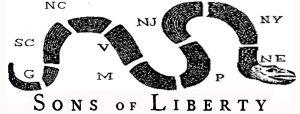 That night, somewhere between 30 and 130 Sons of Liberty, some dressed as Mohawk Indians, boarded the three ships in Boston Harbor. There they threw 342 chests of tea, 90,000 pounds in all, into Boston Harbor. £9,000 worth of tea was destroyed, worth about $1.5 million in today’s dollars.
 Boston by British troops. Minutemen clashed with “Lobster backs” a few months later, on April 19, 1775. No one alive today knows who fired the first shot at Lexington Green. History would record it as “The shot heard ’round the world”.








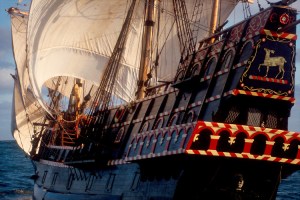
 offloaded his captives, each with a gift appropriate to his rank, and a letter of safe conduct.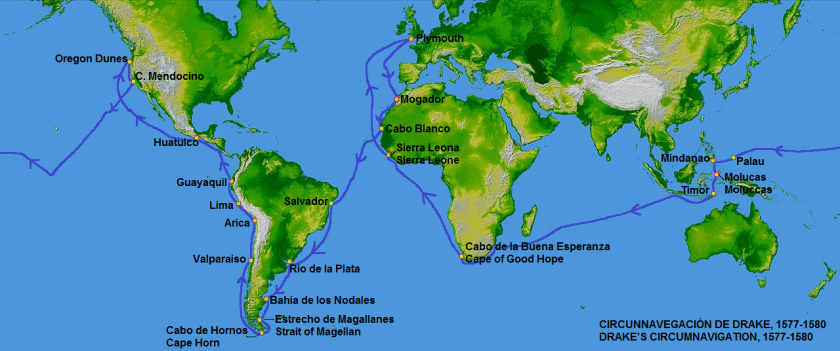

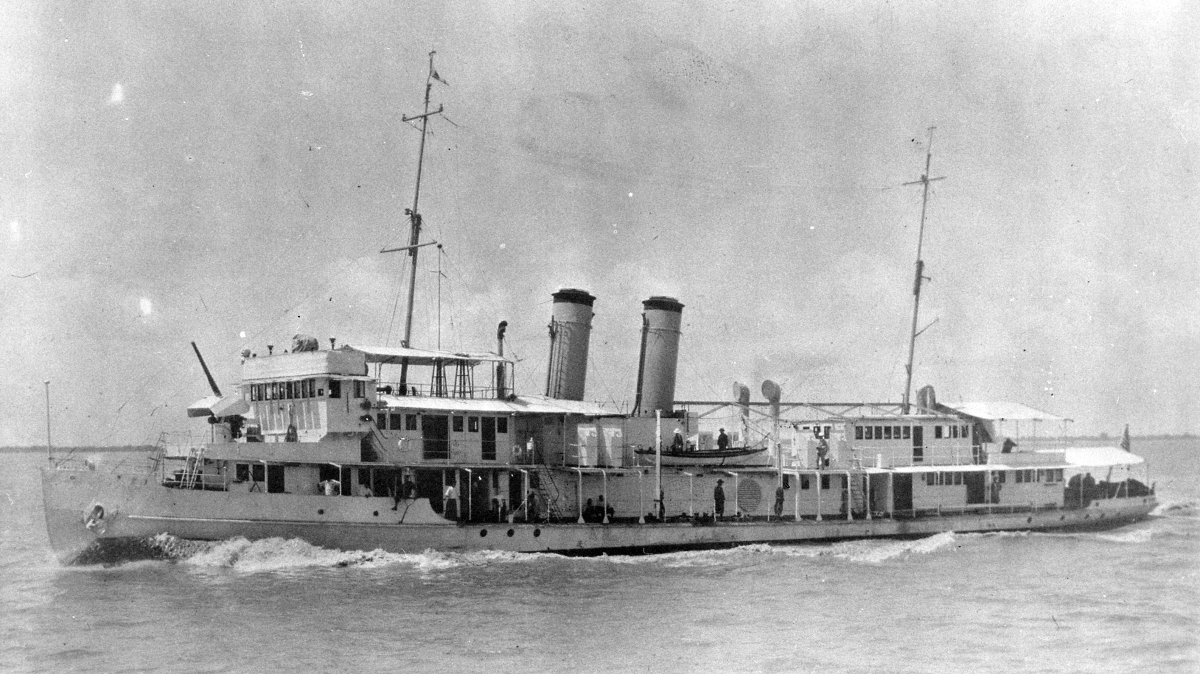
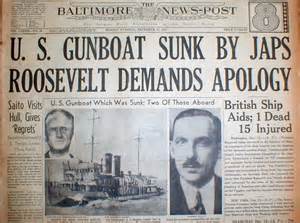 than old enough to remember how the sinking of the Maine in Havana Harbor brought the US into war with Spain in 1898. Grew hoped to avoid a similar outcome following the Panay sinking, though Japanese authorities were less than helpful. US cryptographers uncovered information shortly after the attack indicating that aircraft were operating under orders, while the Japanese government continued to insist that the attack had been accidental.
 Historical Easter Eggs - Today in History
You must be logged in to post a comment.