February 9, 1945 An Underwater Chernobyl

Only 4kg of mercury are estimated to have leaked so far, about nine pounds, and surrounding waters are already off limits, to fishing. The Nazi submarine sank this day in 1945 carrying 67 tons.

A light rain fell on Heston Aerodrome in London, as thousands thronged the tarmac awaiting the return of British Prime Minister Neville Chamberlain. Searing memories of the Great War only 20 years in the past, hung over London like some black and malevolent cloud.

Emerging from the door of the aircraft that evening in September, 1938, the Prime minister began to speak.  The piece of paper Chamberlain held in his hand annexed that bit of the Czechoslovak Republic known as the “Sudetenland”, to Nazi Germany. Germany’s territorial ambitions to her east, were sated. It was peace in our time.

With the March invasion of Czecho-Slovakia, Hitler demonstrated even to Neville Chamberlain that the so-called Munich agreement, meant nothing. That Poland was next was an open secret.  Polish-British mutual aid talks began that April. Two days after Nazi Germany and Stalin’s Soviet Union signed the Molotov-Ribbentrop non-aggression pact, the Polish-British Common Defense Pact was added to the Franco-Polish Military Alliance.  Should Poland be invaded by a foreign power, England and France were now committed to intervene. That same month the first fourteen “Unterseeboots” (U-boats) left their bases, fanning out across the North Atlantic. 

The German invasion of Poland began on September 1, the same day the British passenger liner SS Athenia departed Glasgow for Montreal with 1,418 passengers and crew.  Two days later Great Britain and France declared war, on Germany. With the declaration only hours old, Athenia was seating her second round of dinner guests, for the evening.

At 19:40, U-30 Oberleutnant Fritz Julius Lemp fired two torpedos, one striking the liner’s port side engine room.   14 hours later, Athenia sank stern first with the loss of 98 passengers and 19 crew. The Battle of the Atlantic, had begun.
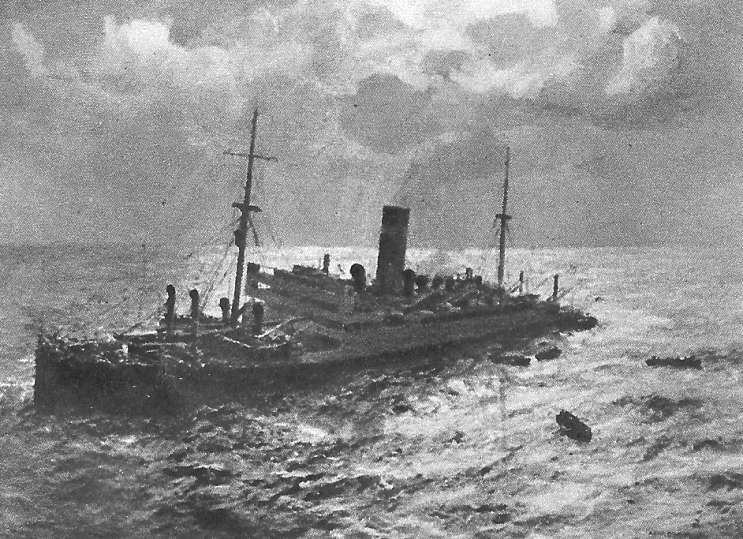
In a repeat of WWI, both England and Germany implemented blockades on one another.   And for good reason.  At the height of the war England alone required over a million tons a week of imported goods, to survive and to stay in the fight.

The “Battle of the Atlantic” lasted 5 years, 8 months and 5 days ranging from the Irish Sea to the Gulf of Mexico, from the Caribbean to the Arctic Ocean. 

New weapons and tactics would shift the balance first in favor of one side, and then to the other.  Before it was over 3,500 merchant ships and 175 warships were sunk to the bottom. 500,000 tons of allied shipping was sunk in June 1941, alone.

Nazi Germany lost 783 U-boats.

Submarines operate in 3-dimensional space but their most effective weapon, does not.  The torpedo is a surface weapon operating in two-dimensional space:  left, right and forward.  Firing at a submerged target requires that the torpedo be converted to neutral buoyancy. The complexity of firing calculations are all but insurmountable.

The most unusual underwater action of the war occurred on February 9, 1945 in the form of a combat between two submerged submarines. 
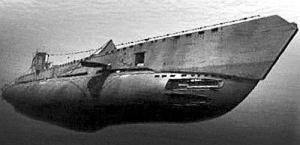
u-864
U-864

The war was going badly for the Axis Powers in 1945, the allies enjoying near-uncontested supremacy over the world’s shipping lanes.  Any surface delivery between Nazi Germany and Imperial Japan was sure to be detected and destroyed.  The maiden voyage of the 287-foot, 1,799 ton German submarine U-864 departed on “Operation Caesar” on December 5, delivering Messerschmitt jet engine parts, V-2 missile guidance systems and 67 tons of mercury to the Imperial Japanese war production industry.
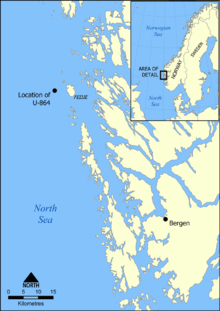
u-864-location

The mission was a failure, from the start. U-864 ran aground in the Kiel Canal and had to retreat to Bergen, Norway, for repairs. The submarine was able to clear the island of Fedje off the Norway coast undetected on February 6.  By this time British MI6 had broken the German Enigma code and were well aware, of Operation Caesar.

The British submarine Venturer, commanded by 25-year-old Lieutenant Jimmy Launders, was dispatched from the Shetland Islands to intercept and destroy U-864.

ASDIC, an early name for sonar, would have been helpful in locating U-864, but at a price.  That familiar “ping” would have been heard by both sides, alerting the German commander he was being hunted.  Launders opted for hydrophones, a passive listening device which could alert him to external noises.  Calculating his adversary’s direction, depth and speed was vastly more complicated without ASDIC but the need for stealth, won out.

U-864 developed an engine noise and commander Ralf-Reimar Wolfram feared it might give him away. The submarine returned to Bergen for repairs.  German submarines of the age were equipped with “snorkels”, heavy tubes which broke the surface, enabling diesel engines and crews to breathe while running submerged.  Venturer was on batteries when those first sounds were detected.

The British sub had the advantage in stealth but only a short time frame, in which act.
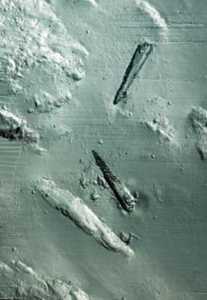
u-864-wreck

A four dimensional firing solution accounting for time, distance, bearing and target depth was theoretically possible but had rarely been attempted under combat conditions.  Unknown factors could only be guessed at.

A fast attack sub Venturer only carried four torpedo tubes, far fewer than her much larger adversary.  Launders calculated his firing solution, ordering all four tubes and firing with a 17½ second delay between each pair.  With four incoming at different depths, the German sub didn’t have time to react.  Wolfram was only just retrieving his snorkel and converting to electric, when the #4 torpedo struck.  U-864 imploded and sank, instantly killing all 73 aboard.

So, what about all that mercury?

In our time, authorities recommend consumption limits of certain fish species. Sharp limitations are recommended for pregnant women and nursing mothers.

Fish and shellfish have a natural tendency to concentrate or bioaccumulate mercury in body tissues in the form of methylmercury, a highly toxic organic compound of mercury. Concentrations increase as you move up the underwater food chain. In a process called biomagnification, apex predators such as tuna, swordfish and king mackerel may develop mercury concentrations up to ten times higher than prey species.

The toxic effects of mercury include damage to the brain, kidneys and lungs and long term neurological damage, particularly in children.
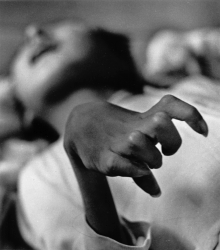
Exposures lead to disorders ranging from numbness in the hands and feet, muscle weakness, loss of peripheral vision and damage to hearing and speech.

In extreme cases, symptoms include insanity, paralysis, coma, and death. The range of symptoms was first identified in the city of Minamata, Japan in 1956 and results from high concentrations of methylmercury.

In the case of Minamata, methylmercury originated in industrial wastewater from a chemical factory, bioaccumulated and biomagnified in shellfish and fish in Minamata Bay and the Shiranui Sea. Deaths from Minamata disease continued some 36 years among humans, dogs and pigs. The problem was so severe among cats as to spawn a feline veterinary condition known as “dancing cat fever”.

Today, 67 tons of mercury lie under 490-feet of water at the bottom of the north sea, in the broken hull of Adolf Hitler’s last best chance. Rusting containers have already begun to leach toxic mercury into surrounding waters.

The wreck has been called an “underwater Chernobyl”.

Only 4kg are estimated to have leaked so far, about nine pounds, and surrounding waters are already off limits, to fishing. Pregnant and breastfeeding women and young children are advised not to eat fish caught near the wreck.

The wreck was located in 2003. Discussions began almost immediately to retrieve the deadly cargo from what Oslo’s newspaper Dagbladet called, “Hitler’s secret poison bomb.”

Now, 76 years to the day from the last dive of the U-864, the submarine’s hull and mercury containment vessels are believed too fragile to be brought to the surface.

In the fall of 2018, the Norwegian government decided to bury the thing under a great sarcophagus, of concrete and sand. Much the same technique as that used in Chernobyl to sea off contaminated reactors. The work was projected to cost $32 million (US) with completion date, of late 2020. The work was was delayed and once again, the government is now examining the possibility of retrieving the cargo.

January 29, 1944 Worse than Separation

We marched to Waterloo Station behind our head teacher carrying a banner with our school’s name on it. We all thought it was a holiday, but the only thing we couldn’t work out was why the women and girls were crying


Desperate to avoid war with Nazi Germany, Italy, France and Great Britain convened in Munich in September, 1938 to resolve German claims on western Czechoslovakia. The “Sudetenland”.

Representatives of the Czech and Slovak peoples, were not invited.

431768

For the people of the modern Czech Republic, the Munich agreement was a grotesque betrayal. “O nás bez nás!” “About us, without us!”

On September 30, British Prime Minister Neville Chamberlain returned to London declaring “Peace in Our Time”.  The piece of paper Chamberlain held in his hand annexed the Sudetenland to Nazi Germany and bore the signatures of Adolf Hitler, Benito Mussolini and Édouard Daladier, as well as his own.

Winston Churchill was in the minority in 1938, in a continent haunted by the horrors of the “war to end all wars”. To Churchill, the Munich agreement was an act of cowardly appeasement.  Feeding the crocodile in hopes he will eat you last. For much of Great Britain, the sense of relief was palpable.

In the summer of 1938, the horrors of the Great War were a mere twenty years in the past.  Hitler had swallowed up Austria, only six months earlier.   British authorities divided the home islands into “risk zones” identified as “Evacuation,” “Neutral,” and “Reception.” 

In some of the most gut wrenching decisions of the age, these people were planning “Operation Pied Piper”. The evacuation of millions of their own children, should war come to the home islands.

94330

When Nazi Germany invaded Poland the following September, London mayor Herbert Morrison was at 10 Downing Street, meeting with Chamberlain’s aide, Sir Horace Wilson.  Morrison believed the time had come for Operation Pied Piper. 

Only a year to the day from the Prime Minister’s “Peace in our Time” declaration, Wilson demurred.  “But we’re not at war yet, and we wouldn’t want to do anything to upset delicate negotiations, would we?”

Morrison was done with the Prime Minister’s dilatory response to Hitler’s aggression, practically snarling in his thick, East London accent “Look, ’Orace, go in there and tell Neville this from me: If I don’t get the order to evacuate the children from London this morning, I’m going to give it myself – and tell the papers why I’m doing it. ’Ow will ’is nibs like that?”

Thirty minutes later, Morrison had the document. The evacuation, had begun.

large_000000

Next weekend, the Superbowl champion Kansas City Chiefs will face off with the G.O.A.T (Greatest of all Time) 43-year-old Tom Brady, of the Tampa Bay Buccaneers. The venue, Raymond James Stadium, holds a crowd of 65,618, expandable to 75,000.

In 1938, 45 times that number were mobilized in the first four days of the evacuation, primarily children, relocated from cities and towns across Great Britain to the relative safety of the countryside.

Operation_Pied_Piper-Poster

BBC History reported that, “within a week, a quarter of the population of Britain would have a new address”.

Zeppelin raids had killed 1,500 civilians in London alone during the ‘Great War’.  Since then, governments had gotten so much better at killing each other’s citizens. 

As early as 1922, Prime Minister Arthur Balfour had spoken of ‘unremitting bombardment of a kind that no other city has ever had to endure.’  As many as 4,000,000 civilian casualties were expected in London alone.

BBC History describes the man in charge of the evacuation, Sir John Anderson, as a “cold, inhuman character with little understanding of the emotional upheaval that might be created by evacuation”.

Children were labeled ‘like luggage’, and sent off with gas masks, toothbrushes and fresh socks & underwear. None of them knew to where, or for how long. What must That have sounded like.

thumbnail_ww2evacuees

The evacuation of all that humanity ran relatively smoothly, considering.  James Roffey, founder of the Evacuees Reunion Association, recalls ‘We marched to Waterloo Station behind our head teacher carrying a banner with our school’s name on it. We all thought it was a holiday, but the only thing we couldn’t work out was why the women and girls were crying.’

Arrivals at the billeting areas, were another matter.  Many kids were shipped off to the wrong places, and rations were insufficient.  Geoffrey Barfoot, billeting officer in the seaside town of Weston-super-Mare, said ‘The trains were coming in thick and fast. It was soon obvious that we just didn’t have the bed space.’

Kids were lined up against walls and on stages, potential hosts invited to “take their pick”.

For many, the terrors and confusion of those first few days grew and flowered into love and friendships, to last a lifetime.  Some entered a hell on earth of physical or sexual abuse, or worse.

For the first time, “city kids” and country folks were finding out how the “other half” lived. Results were sometimes amusing.  One boy wrinkled his nose on seeing carrots pulled out of muddy fields, saying “Ours come in tins”.  Richard Singleton recalled the first time he asked his Welsh ‘foster mother’ for directions to the toilet.  “She took me into a shed and pointed to the ground. Surprised, I asked her for some paper to wipe our bums.  She walked away and came back with a bunch of leaves.”

John Abbot, evacuated from Bristol, had his rations stolen by his host family. He was horsewhipped for speaking out while they enjoyed his food and he was given nothing more than mashed potatoes. Terri McNeil was locked in a birdcage and left with a piece of bread and a bowl of water.

an-evac-killed-by-bus-near-blackpool

In the 2003 BBC Radio documentary “Evacuation: The True Story,” clinical psychologist Steve Davis described the worst cases as, “little more than a pedophile’s charter.”

Eighty-odd years later, the words “I’ll take that one” are seared into the memories of more than a few.

Hundreds of evacuees were killed because of relocation, while en route or during stays at “safe havens”.  Two boys were killed on a Cornish beach, mined to defend against German amphibious assault.

No one had thought to put up a sign.

Irene Wells, age 8, was standing in a church doorway when she was crushed by an army truck.  One MP from the house of Commons said “There have been cases of evacuees dying in the evacuation areas. Fancy that type of news coming to the father of children who have been evacuated”.

When German air raids failed to materialize, many parents decided to bring the kids home.  By January 1940, almost half of evacuees were returned.

980x

Authorities produced posters urging parents to leave the kids where they were, and a good thing, too. The Blitz against London itself began on September 7. The city experienced the most devastating attack to-date on December 29, in a blanket fire-bombing that killed almost 3,600 civilians.

Sometimes, refugees from relatively safe locations were shipped into high-risk target areas. Hundreds of refugees from Gibraltar were sent into London, in the early days of the Blitz. None of them could have been happy to leave London Station, to see hundreds of locals pushing past them, hurrying to get out.

This story doesn’t only involve the British home islands, either.  American Companies like Hoover and Eastman Kodak took thousands of children in, from employees of British subsidiaries.  Thousands of English women and children were evacuated to Australia, following the Japanese attack on Singapore.

62d70d4914a701b66b42480e66c82105

By October 1940, the “Battle of Britain” had devolved into a mutually devastating battle of attrition, in which neither side was capable of striking the death blow. Hitler cast his gaze eastward the following June with a surprise attack on his “ally”, Josef Stalin.

“Operation Steinbock”, the Luftwaffe’s last large-scale strategic bombing campaign of the war against southern England, was carried out three years later.  285 German bombers attacked London on this day in 1944, in what the Brits called the “Baby Blitz”.

You’ve got to be some tough cookie to call 245 bombers, a Baby Blitz.

WWII_London_Blitz_East_London-Children

Later in the war, the subsonic “Doodle Bug” or V1 “flying bomb” was replaced by the terrifying supersonic V2.  1,000 or more of these, the world’s first rocket, were unleashed against southern England, primarily London, killing or wounding 115,000. With a terminal velocity of 2,386mph, you never saw or heard this thing coming until the weapon had done its work.

15092_0

In the end, many family ‘reunions’ were as emotionally bruising as the original breakup.   Years had come and gone and new relationships had formed.  The war had turned biological family members into virtual strangers.

Richard Singleton remembers the day his mother came, to take him home to Liverpool.  “I had been happily living with ‘Aunty Liz and Uncle Moses’ for four years,” he recalled. “I told Mam that I didn’t want to go home. I was so upset because I was leaving and might never again see aunty and uncle and everything that I loved on the farm.”

Douglas Wood tells a similar story.  “During my evacuation I had only seen my mother twice and my father once,” he recalls. “On the day that they visited me together, they had walked past me in the street as they did not recognise me. I no longer had a Birmingham accent and this was the subject of much ridicule. I had lost all affinity with my family so there was no love or affection.”

The Austrian-British psychoanalyst Anna Freud, daughter of Sigmund, commissioned an examination of the psychological effects of the separation. After a 12-month study, Freud concluded that “separation from their parents is a worse shock for children than a bombing.”

January 27, 1945 POW

Some thirty to forty managed to escape the killing zone, only to be hunted down and murdered, one by one. Eleven managed to escape the slaughter, and lived to tell the tale. 139 were burned, clubbed or shot to death.

Today, the city of Cabanatuan calls itself the “Tricycle Capital of the Philippines”, with 30,000 motorized “auto rickshaws”.  79 years ago, Cabanatuan became home to one of the worst POW camps of World War 2.

15918-cabanatuan-city-locator-map

1942 was a dreadful year for the allied war effort in the Pacific.  The Battle of Bataan alone resulted in 72,000 prisoners being taken by the Japanese, marched off to POW camps designed for ten to twenty-five thousand.

pows-cabanatuan

20,000 died from sickness, hunger or murder at the hands of Japanese guards on the “death march” from Bataan into captivity at Cabanatuan prison and others.

Cabanatuan held 8,000 prisoners at its peak though that number dropped considerably as the able-bodied were shipped out to work in Japanese slave labor camps.

Cabanatuan-prisoncamp-report_555

Two rice rations a day, fewer than 800 calories, were supplemented by the occasional animal or insect caught and killed inside camp walls or by the rare food items smuggled in by civilian visitors.

2,400 died in the first eight months at Cabanatuan, animated skeletons brought to “hospital wards”, nothing more than 2’x6′ patches of floor, where prisoners waited to die.

One Master Sergeant Gaston saw one of these wards in July 1942 and described the horror: “The men in the ward were practically nothing but skin and bones and they had open ulcers on their hips, on their knees and on their shoulders…maggots were eating on the open wounds. There were blow flies…by the millions…men were unable to get off the floor to go to the latrine and their bowels moved as they lay there”.

The war was going badly for the Japanese by October 1944, as Imperial Japanese High Command ordered able bodied POWs removed to Japan.  1,600 were taken from Cabanatuan leaving 500 sick, weak and disabled prisoners.  The guards abandoned camp shortly afterward, though Japanese soldiers continued to pass through.  POWs were able to steal food from abandoned Japanese quarters; some even captured two water buffalo called “Carabao”, which were killed and eaten.  Many feared a trick and didn’t dare leave the camp.  Most were too sick and weak to leave in any case, though the extra rations would help them through what was to come.

Palawan_Massacre_POW_Burial_Site_1945

On December 14, some fifty to sixty soldiers of the Japanese 14th Area Army in Palawan doused 150 prisoners with gasoline and set them on fire, machine gunning or clubbing any who tried to escape the flames.   Some thirty to forty managed to escape the killing zone, only to be hunted down and murdered, one by one.  Eleven managed to escape the slaughter, and lived to tell the tale.  139 were burned, clubbed or shot to death.

The atrocity at Palawan sparked a series of raids at Santo Tomas Internment Camp, Bilibid Prison, Los Baños and others.  The first such behind-enemy-lines rescue, took place at Cabanatuan.

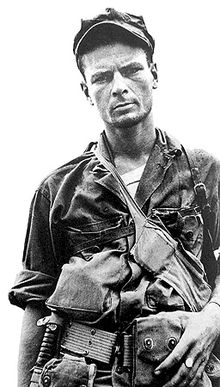
Lieutenant Colonel Henry Mucci of the US Army’s elite 6th Ranger Battalion selected Captain Robert Prince to plan the rescue. “We couldn’t rehearse this”, Prince said. “Anything of this nature, you’d ordinarily want to practice it over and over for weeks in advance. Get more information, build models, and discuss all of the contingencies. Work out all of the kinks. We didn’t have time for any of that. It was now, or not”.

220px-Robert_Prince

On the evening of January 27, 1945, a 14-man advance team formed from the 6th Ranger Battalion and a special reconnaissance group called the “Alamo Scouts”, separated into two groups and began the 30-mile march behind enemy lines to liberate Cabanatuan.

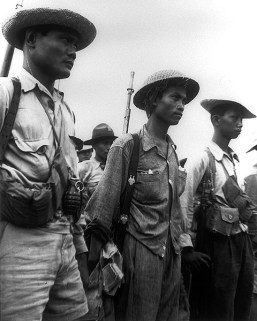
The main force of 121 Rangers moved out the following day, meeting up with 200 Filipino guerrillas serving as guides and helping with the rescue.

Other guerrillas assisted along the way, muzzling dogs and corralling chickens so that Japanese occupiers would hear nothing of their approach. 

Japanese soldiers once again occupied the camp, with 1,000 more camped across the Cabo River outside the prison.  As many as 7,000 more were deployed, just a few miles away.

On the night of January 30, a P-61 Black Widow piloted by Captain Kenneth Schrieber and 1st Lt. Bonnie Rucks staged a ruse.  For 45 minutes, the pair conducted a series of aerial acrobatics, cutting and restarting engines with loud backfires while seeming to struggle to maintain altitude. Thousands of Japanese soldiers watched the show as Rangers crawled on their bellies, into position.

Pajota's_Guerrillas
Filipino Guerilla fighters of Captain Juan Pajota

Guard towers and pillboxes were wiped out in the first fifteen seconds of the assault.  Filipino guerrillas blew the bridge and ambushed the large force across the river while one, trained only hours before to use a bazooka, took out four Japanese tanks.

In the camp, all was pandemonium as some prisoners came out and others hid, suspecting some trick to bring them out in the open.  They were so emaciated, Rangers carried them out two at a time.

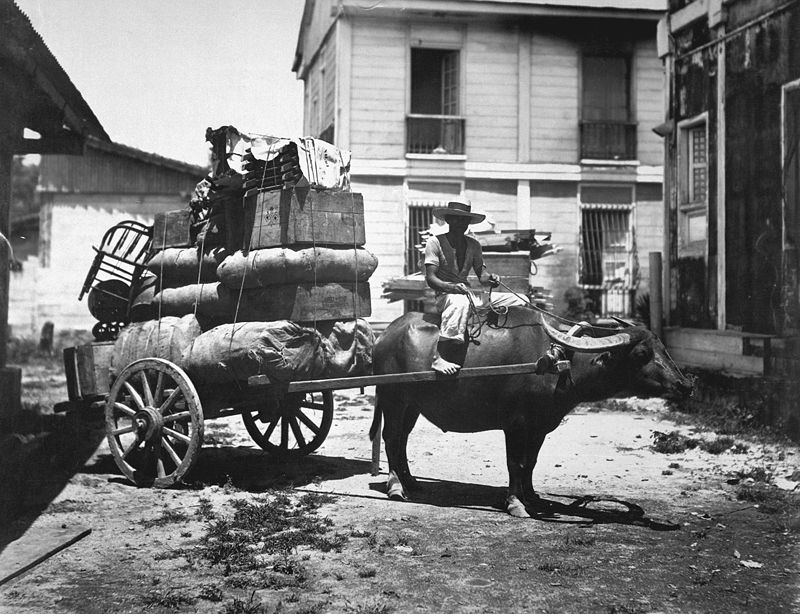
The raid was over in 35 minutes, POWs brought to pre-arranged meet-up places with dozens of carabao carts.   The long trek to freedom had only begun. Defiant, one POW said “I made the Death March from Bataan, so I can certainly make this one!”  Over three days, up to 106 carts joined the procession, their plodding 2 MPH progress covered by strafing American aircraft.

Two American Rangers were killed in the raid. Another 4 Americans and 21 Filipinos were wounded, compared with 500-1,000 Japanese killed and four tanks put out of action.  One prisoner died in the arms of a Ranger, before leaving the gate.  Another succumbed to illness on the long trip back. 

800px-Carabao_Cart
Carabao cart, similar to the ones used after the raid on Cabanatuan

Edwin Rose was a civilian, a purser on a ship plying the Singapore – Hong Kong run, when the war broke out.  He was caught in Manila and spent 929 days in captivity.  One of the longest-held POWs of the war in the Pacific. Rose awoke the night of the raid, and “heard all the shooting”.  He “knew the Americans had arrived” but rolled over and went back to sleep, thinking they were there to stay. On awakening the following morning, Rose found he was alone with “Cabanatuan all my own.”

POWs_celebrate

He dressed and shaved, put on his best clothes and walked out of camp.  Passing guerrillas found him and passed him on to a tank destroyer. 

Give the man points for style.  Edwin Rose strolled into 6th army headquarters a few days later, with a cane tucked under his arm.

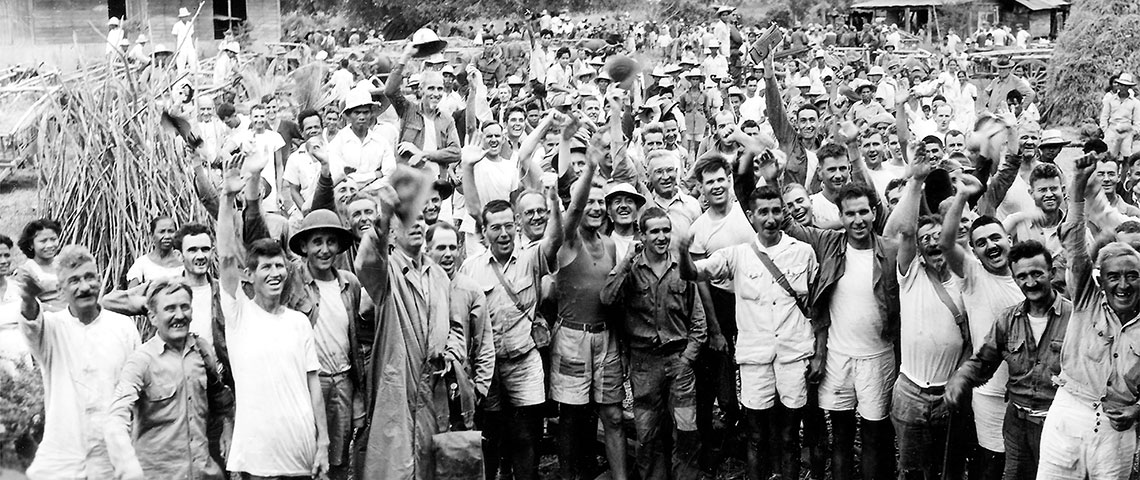
The Cabanatuan raid of January 30, 1945 liberated 464 American soldiers along with 22 British and 3 Dutch soldiers, 28 American civilians, 2 Norwegians and one civilian each of British, Canadian and Filipino nationalities.

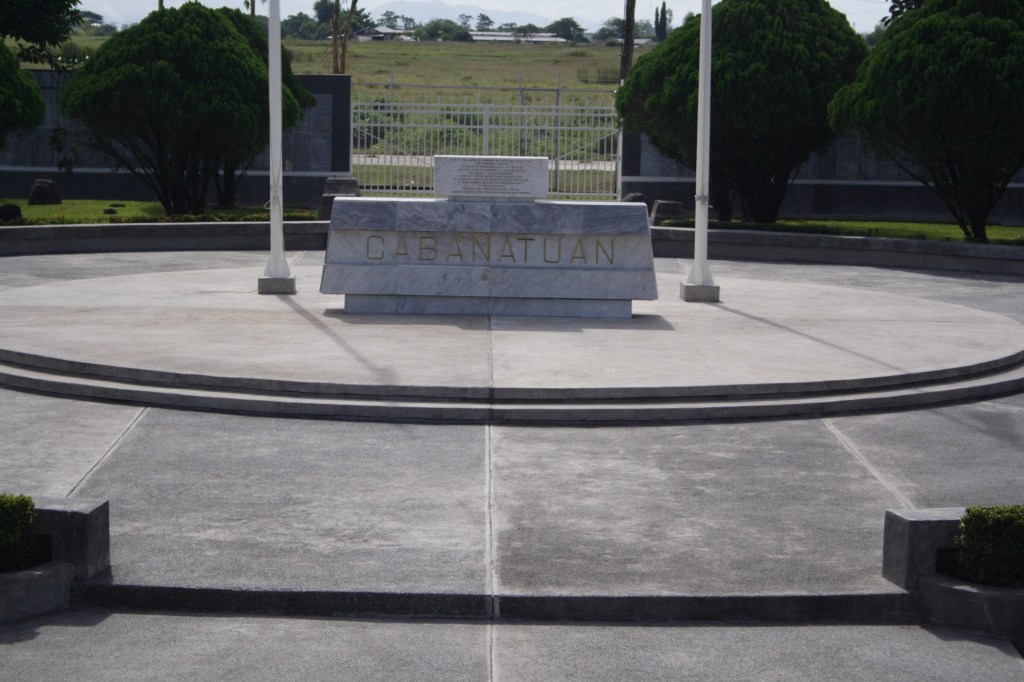
In 1982, the Cabanatuan American Memorial was erected on the grounds of the former POW camp and dedicated by survivors of the Bataan Death march and the prisoner-of-war camp, at Cabanatuan. A large mural depicts Filipino and American soldiers helping each other, in combat. A marble altar bears the names of 2,656 Americans with this dedication on the back of the Cabanatuan sign:

SITE OF THE JAPANESE PRISONER OF WAR CAMP 1942 TO 1945
THIS MEMORIAL HONORS
THE AMERICAN SERVICEMEN AND THE CIVILIANS
WHO DIED HERE AND GRATEFULLY ACKNOWLEDGES
THE EQUALLY HEROIC SACRIFICES
MADE BY FILIPINO SERVICEMEN AND CIVILIANS
IN A MUTUAL QUEST FOR HONOR, FREEDOM AND PEACE
IT ALSO REMINDS MANKIND OF MAN’S INHUMANITY
TO HIS FELLOWMAN

ERECTED AND DEDICATED 12 APRIL 1982 BY
AMERICAN AND FILIPINO COMRADES, FAMILIES AND FRIENDS.

It is the only place in the province of Nueva Ecija where the Filipino flag stands side-by-side, with the Stars and Stripes.

December 22, 1944 Forgotten Angel

The Battle of the Bulge is a familiar tale: The massive German offensive bursting out of the frozen Ardennes forest. December 16, 1944. The desperate drive to capture the Belgian port of Antwerp, vital to German re-supply efforts.

Battle of the Bulge

The terrain was considered unsuitable for such an attack. The tactical surprise was complete, British and American forces separated and driven back, their positions forming an inward “bulge” on wartime battle maps.

The story of the “Battered Bastards” is likewise, well known. 22,800 Americans, outnumbered five to one in some places and surrounded, in the do-or-die fight to hold the indispensable crossroads, of Bastogne. The German demand to surrender, of December 22. The response from American General Anthony McAuliffe. The one word response, “Nuts”, the American slang, confusing to the German delegation.

The siege of Bastogne would last another four days, the German encirclement at last broken by elements of George S. Patton’s 3rd Army. By the end of January, the last great effort of German arms was spent and driven back behind original lines.

Bastogne

Historian Stephen Ambrose wrote “Band of Brothers” nearly fifty years later, a non-fiction account later broadcast as an HBO mini-series, of the same name. The story refers to a black nurse named Anna. There is a brief appearance and then she is gone. No one knew who Anna was, or even if she was real.

Sixty-one years after Bastogne, military historian Martin King was conducting research for a book, Voices of the Bulge.  The knock on the door came in October 2007, in a geriatric home outside of Brussels.

In the months following the Great War, Henri Chiwy (pronounced “SHE-wee”) was a veterinarian, working in the Belgian colony of the Congo Free State. The name of the Congolese woman who bore his child is unrecorded, the name of their baby girl, Augusta Marie.

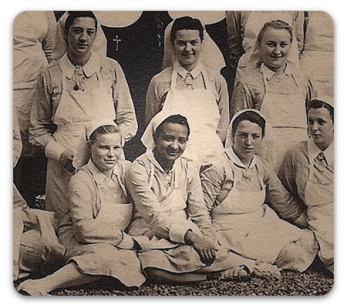
Nurses

Augusta Chiwy came back to Belgium when she was nine, one of the luckier of thousands born to European fathers, and African mothers. Back to the doctor’s home in Bastogne, a small town of 9,000 where Augusta was loved and cared for by her father and his sister, whom the girl knew as “aunt Caroline”.

Augusta was educated and raised a Catholic. She always wanted to teach but, due to the rancid racial attitudes of that time and place, it would not do to have a black woman teaching white children. She became a nurse instead, on the advice of her father and his brother, a well-known Bastogne physician.

Nursing school was about 100 miles north. Augusta became a qualified nurse in 1943 and returned home the following year for Christmas. She arrived on December 16, the day Adolf Hitler launched his surprise offensive.

Bastogne was soon surrounded, part of one of the fiercest and bloodiest battles, of WW2. Poorly equipped American GIs were outnumbered five to one. These guys didn’t even have winter uniforms.

Bastogne

US Army Doctor Jack Prior was desperate, the abandoned building serving as military aid station, home to some 100 wounded GIs. Thirty of those were seriously wounded. With virtually no medical equipment or medicine and the only other medical officer an Ohio dentist, Dr. Prior badly needed nursing help.

Augusta Chiwy did not hesitate to volunteer, knowing full well that she would be executed, if caught.

2BAF80BC00000578-3211358-image-a-42_1440616862244
Scene from the HBO mini series, “A Band of Brothers”

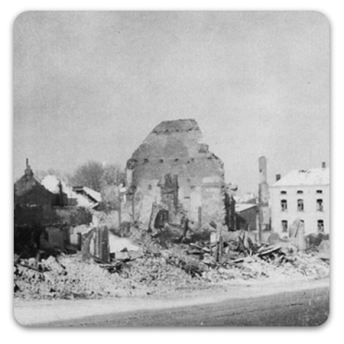
Working conditions were grisly in the weeks that followed. With no surgical instruments and no anesthesia, amputations and other procedures were performed with an army knife, with cognac to dull the patient’s pain. On Christmas eve, a direct hit from a 500-pound bomb hit one hospital building, instantly killing dozens of wounded GIs and the only other nurse, Renée Lemaire.  She would be remembered as “The Angel of Bastogne.”

Bastogne building

Augusta Chiwy was in a neighboring building at the time. The explosion blew the petite nurse through a wall but, unhurt, she picked herself up and went back to work.  There were grisly injuries and many died due to inadequate medical facilities, but many lived, their families reunited thanks to the tireless work of Dr. Jack Prior, and nurse Augusta Chiwy.

Given the month of hell the pair had been through, Augusta was heartbroken when Dr. Prior had to move out, in January.  The pair exchanged addresses and stayed in touch, writing letters and exchanging small gifts, of candy.  They last saw each other in 2004, when Dr. Prior returned from his home state of Vermont, for the 50th anniversary of the Battle of the Bulge.

Prior, Chiwy

Augusta Chiwy suffered symptoms of post-traumatic stress disorder, a condition poorly understood at that time.  She would go long periods without speaking, becoming quiet and withdrawn even years later.  She married a Belgian soldier in 1959 and the couple had two children.  It would be twenty years, before  she resumed her nursing career.  She almost never spoke of her experience in Bastogne.

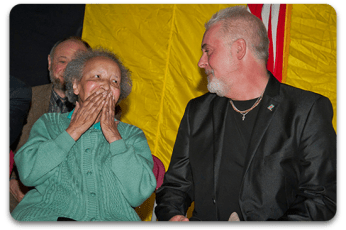
The forgotten angel of Bastogne was eighty-six when the knock came on the door of that Belgian nursing home.  It took months for the Scottish historian to coax the story out of her.

Thanks to King’s efforts, Augusta Chiwy would finally receive the recognition she had earned.

Chiwy and King

“On June 24, 2011, she was made a Knight in the Order of the Crown by King Albert II of Belgium. Six months later she received the U.S. Army’s Civilian Award for Humanitarian Service. And on March 21, 2014, Augusta was recognized by her hometown as a Bastogne Citizen of Honor”.  http://www.augustachiwy.org

When asked about her heroism, she’d always say the same thing: “I only did what I had to do.”

Augusta Marie Chiwy died peacefully in her sleep at the age of 94, on August 23, 2015. How many lives would have been cut short, will never be known.  But for the selfless and untiring efforts, of the Forgotten Angel of Bastogne.

Hat tip to http://www.augustachiwy.org, for most of the images used in this essay

If you enjoyed this “Today in History”, please feel free to re-blog, “like” & share on social media, so that others may find and enjoy it as well. Please click the “follow” button on the right, to receive email updates on new articles. Thank you for your interest, in the history we all share.

December 8, 1941 A Declaration of War

World War 2 was a time of few restrictions on submarine warfare. Belligerents attacked military and merchant vessels alike with prodigious loss of civilian life, but WW1 didn’t start out that way.

In the early months of the “Great War”, the British Royal Navy imposed a surface blockade on the German high seas fleet.  Even food was treated as a “contraband of war”,  a measure widely regarded as an attempt to starve the German population.   With good reason.  One academic study performed ten years after the war, put the death toll by starvation at 424,000 in Germany alone. The German undersea fleet responded with a  blockade of the British home islands, a devastating measure carried out against an island adversary dependent on massive levels of imports.

1200px-Willy_Stöwer_-_Sinking_of_the_Linda_Blanche_out_of_Liverpool
Sinking of the Linda Blanche out of Liverpoole, by Willy Stöwer

World War 2 was a time of few restrictions on submarine warfare.  Belligerents attacked military and merchant vessels alike with prodigious loss of civilian life, but WW1 didn’t start out that way.

Wary of antagonizing neutral opinion, German Chancellor Theobald von Bethmann Hollweg argued against a “shoot without warning”policy but, strict adherence to maritime prize rules risked U-Boats and crews alike.  By early 1915, Germany declared the waters surrounding the British home Isles a war zone where even the vessels of neutral nations were at risk of being sunk.

shq-ship-gun-dropped
“Q-Ship with gun. The hidden gun emerges as the cover and sides, masquerading as a deck structure, are dropped. From “Q” Boat Adventures: The Exploits of the Famous Mystery Ships by a “Q” Boat Commander, by Harold Auten, published by Herbert Jenkins Ltd” – Hat Tip HistoricEngland.org.uk

Desperate to find an effective countermeasure to the German “Unterseeboot”, Great Britain introduced heavily armed merchant ships with concealed weaponry in 1915, phony merchantmen designed to lure submarines into making surface attacks. Britain called these secret countermeasures “Q-ships”, after their home base in Queenstown, in Ireland.

German sailors called them U-Boot-Fälle. “U-boat traps”.

Lusitania warning
Notices taken out in the New York Times and others, specifically warned the Lusitania was vulnerable to attack

The “unprovoked” sinking of noncombatant vessels, including the famous Lusitania in which 1,198 passengers lost their lives, became a primary justification for war.  The German Empire, for her part, insisted that many of these vessels carried munitions intended to kill German boys on European battlefields.

Underwater, the submarines of WWI were slow and blind, on the surface, vulnerable to attack.  In 1916, German policy vacillated between strict adherence to prize rules and unrestricted submarine warfare.  It was a Hobbesian choice. The first put their own people and vessels at extreme risk, the second threatened to bring neutrals like the United States and Brazil,  into the war.

In 1916, President Woodrow Wilson won re-election with the slogan “He kept us out of war”: a conflict begun in Europe, two years earlier.

In a January 31, 1917 memorandum from German Ambassador Count Johann von Bernstorff to American Secretary of State Robert Lansing, the Ambassador stated that “sea traffic will be stopped with every available weapon and without further notice”, effective the following day. The German government was about to resume unrestricted submarine warfare.

Anticipating this resumption and expecting the decision to draw the United States into the war, German Foreign Secretary Arthur Zimmermann delivered a message to the German ambassador in Mexico, Heinrich von Eckardt. The telegram instructed Ambassador Eckardt that, if the United States seemed likely to enter the war, he was to approach the Mexican Government with a proposal for military alliance, promising “lost territory” in Texas, New Mexico, and Arizona in exchange for a Mexican declaration of war against the United States.

“We intend to begin on the first of February unrestricted submarine warfare. We shall endeavor in spite of this to keep the United States of America neutral. In the event of this not succeeding, we make Mexico a proposal of alliance on the following basis: make war together, make peace together, generous financial support and an understanding on our part that Mexico is to reconquer the lost territory in Texas, New Mexico, and Arizona…”. Signed, ZIMMERMANN

zimmerman-note

The “Zimmermann Telegram” was intercepted and decoded by British intelligence and revealed to the American government on February 24. The contents of the message outraged American public opinion and helped generate support for the United States’ declaration of war.

In the end, the German response to anticipated US action, brought about the very action it was trying to avoid.

President Woodrow Wilson delivered his war message to a joint session of Congress on April 2, stating that a declaration of war on Imperial Germany would make the world “Safe for Democracy”. Congress voted to support American entry into the war on April 6, 1917. The “Great War”, the “War to end all Wars”, had become a World War.

At the time, a secondary explosion within the hull of RMS Lusitania caused many to believe the liner had been struck by a second torpedo.  In 1968, American businessman Gregg Bemis purchased the wreck of the Lusitania for $2,400, from the Liverpool & London War Risks Insurance Association.   In 2007 the Irish government granted Bemis a five-year license to conduct limited excavations at the site.

causes-of-ww1

Twelve miles off the Irish coast and 300-feet down, a dive was conducted on the wreck in 2008.   Remote submersible operators discovered some 4 million rounds of Remington .303 ammunition in the hold, proof of the German claim that Lusitania was, in fact, a legitimate target under international rules of war.  The UK Daily Mail quoted Bemis:  “There were literally tons and tons of stuff stored in unrefrigerated cargo holds that were dubiously marked cheese, butter and oysters’”.

American historian, author and journalist Wade Hampton Sides accompanied the expedition.  “They are bullets that were expressly manufactured to kill Germans in World War I” he said, “bullets that British officials in Whitehall, and American officials in Washington, have long denied were aboard the Lusitania.‘”

Lusitania, ammunition

Montana Republican Jeannette Pickering Rankin, a life-long pacifist and the first woman elected to the United States Congress, would be one of only fifty votes against entering WWI.  Congresswoman Rankin was elected to a second and non-consecutive term in 1940. Just in time to be the only vote against entering World War 2, in response to President Franklin Delano’s address to a joint session of Congress, December 8, 1941.

Tally sheet for the congressional declaration of war on Japan, December 8, 1941

November 27, 1942. Vanquished, but Unbeaten

While many considered the Vichy government to be a puppet state, the officers and men of the French fleet had no love for their German occupiers.  This was a French fleet and would remain so if they could help it. Even if they had to destroy it, by their own hands.

The Battle of France began on May 10, 1940, with the German invasion of France and the Low Countries of Belgium, Luxembourg and the Netherlands. By the end of May, German Panzers had hurled the shattered remnants of the allied armies into the sea, at a place called Dunkirk.

The speed and ferocity of the German Blitzkrieg left the French people in shock in the wake of their June surrender.  All those years their government had told them, that the strength of the French army combined with the Maginot line, was more than enough to counter German aggression.

France had fallen in six weeks.

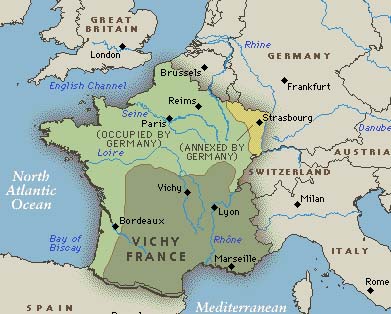
Vichy-France

Germany installed a Nazi-approved French government in the south of the country, headed by WW1 hero Henri Pétain. Though mostly toothless, the self-described “French state” in Vichy was left relatively free to run its own affairs, compared with the Nazi occupied regions to the west and north.

That changed in November 1942, with the joint British/American invasion of Morocco, Tunisia and Algeria. At the time, the north African provinces were nominally under the control of the Vichy regime. Hitler gave orders for the immediate occupation of all of France.

Scuttled, 2

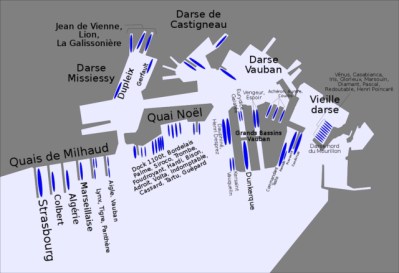
With the armistice of June 1940, much of the French naval fleet was confined to the Mediterranean port of Toulon. Confined but not disarmed, and the French fleet possessed some of the most advanced naval technologies of the age, enough to shift the balance of military power in the Mediterranean.

While many considered the Vichy government to be a puppet state, the officers and men of the French fleet had no love for their German occupiers. This was a French fleet and would remain so if they could help it. Even if they had to destroy it, by their own hands.

Scuttled, 1

In November 1942, the Nazi government came to take control of that fleet. The motorized 7th Panzer column of German tanks, armored cars and armored personnel carriers descended on Toulon with an SS motorcycle battalion, taking over port defenses to either side of the harbor. German officers entered fleet headquarters and arrested French officers, but not before word of what was happening reached French Admiral Jean de Laborde, aboard the flagship Strasbourg.

The order went out across the base at Toulon. Prepare to scuttle the fleet, and resist the advance of German troops. By any means necessary.

The German column approached the main gate to the harbor facility in the small hours of November 27, demanding access.  ‘Of course,’ smiled the French guard. ‘Do you have your access paperwork?’

Toulon, französisches Kriegsschiff

Under orders to take the harbor without bloodshed, the Nazi commander was dismayed. Was he being denied access by this, his defeated adversary?  Minutes seemed like hours in the tense wrangling which followed.  Germans gesticulated and argued with French guards, who stalled and prevaricated at the closed gate.

The Germans produced documentation, only to be thanked, asked to wait, and left standing at the gate.

Meanwhile, thousands of French seamen worked in grim silence throughout the early morning hours, preparing to scuttle their own fleet.  Valves and watertight doors were opened, incendiary and demolition charges were prepared and placed.

27_toulon

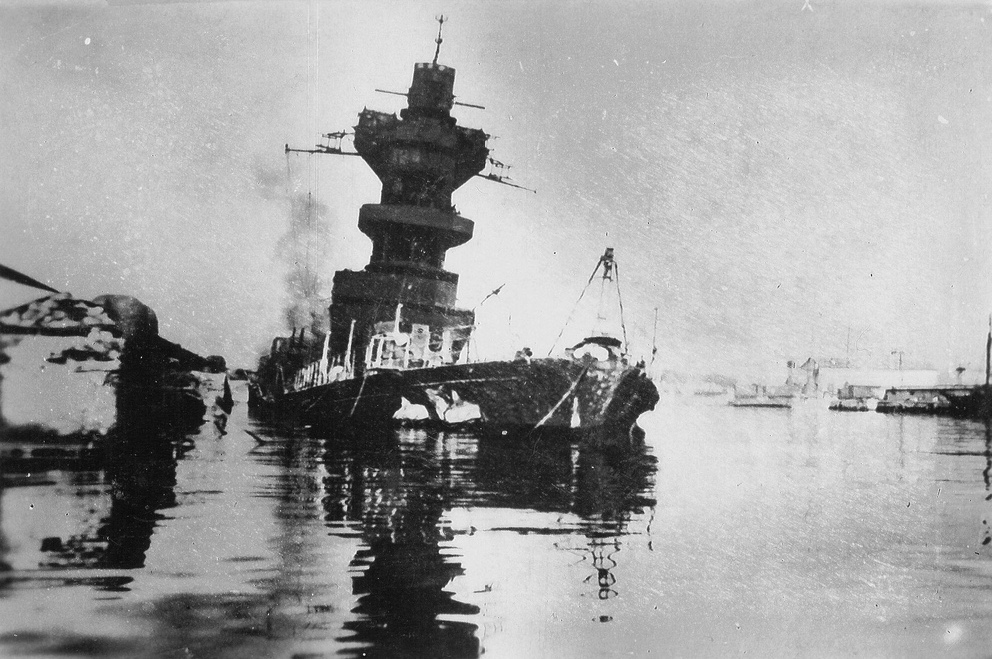
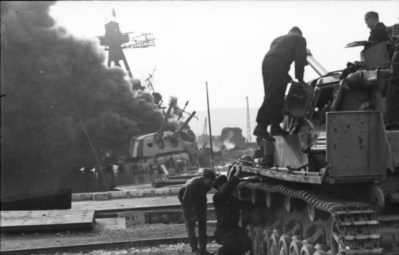
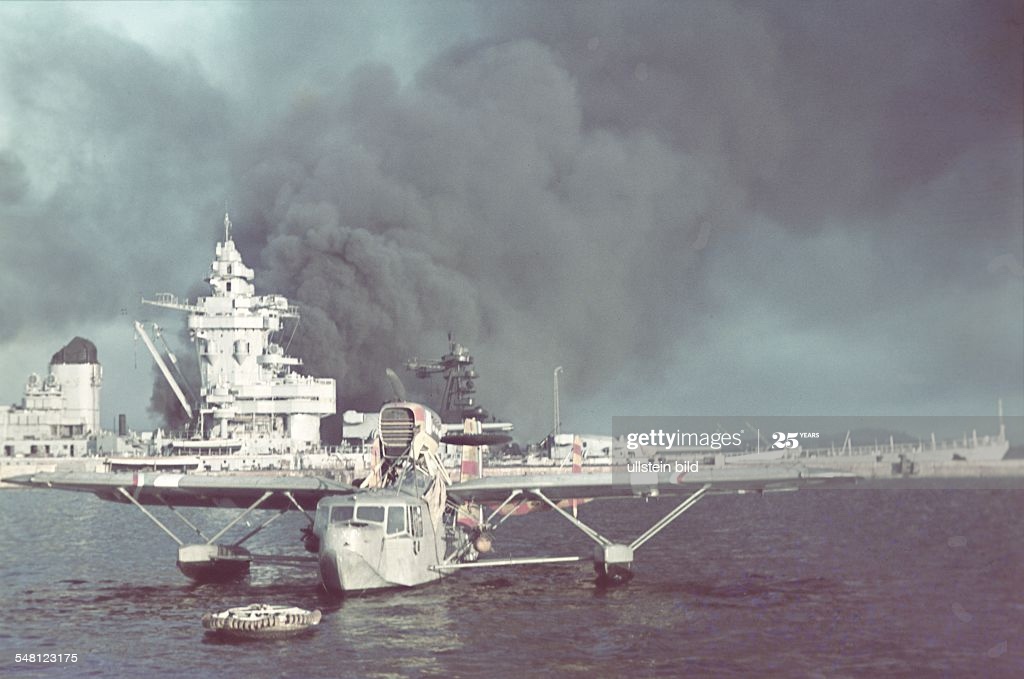
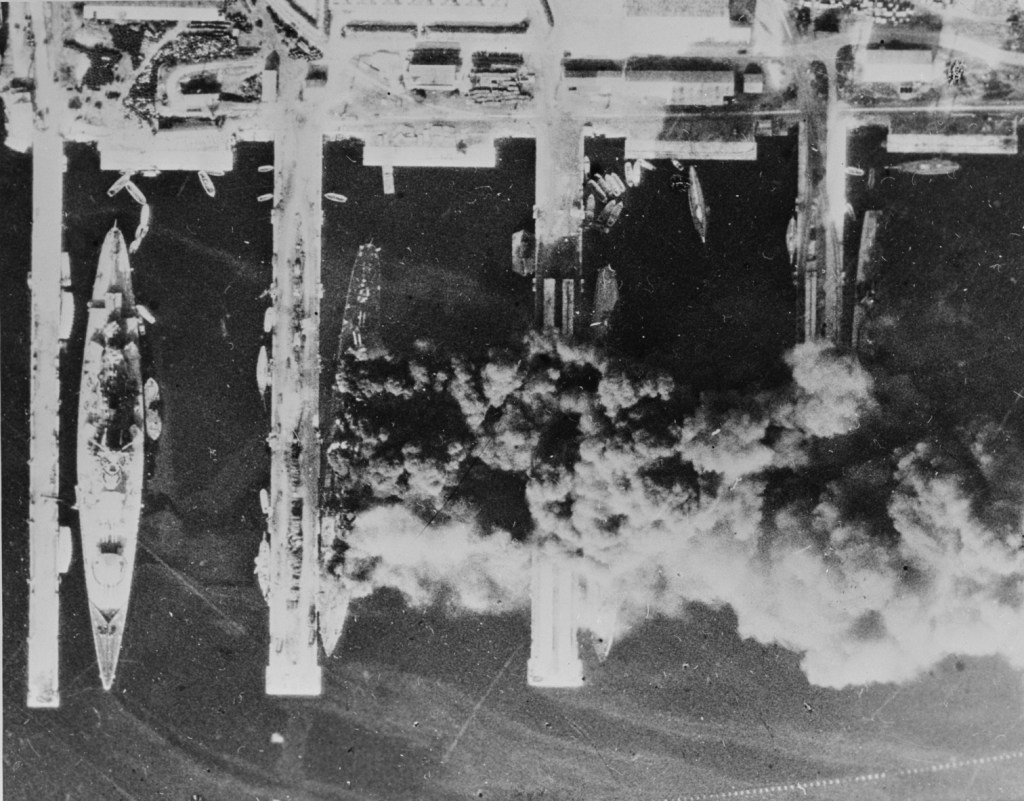
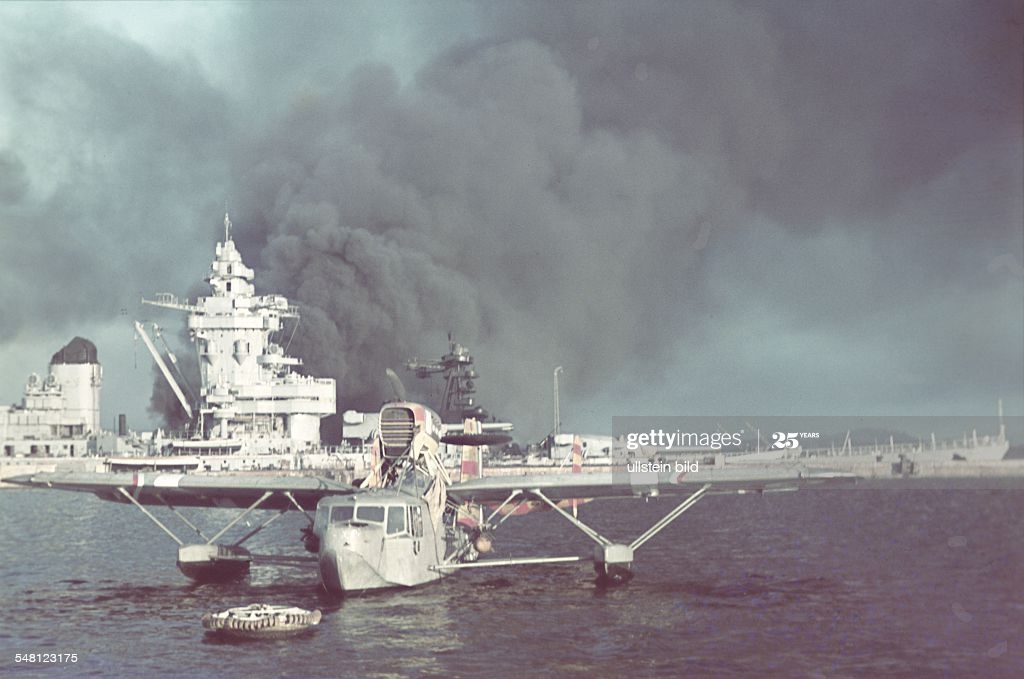
Finally, the Panzer column could be stalled no more. German tanks rumbled through the main gate at 5:25am, even as the order to scuttle passed throughout the fleet. Dull explosions sounded across the harbor, as fighting broke out between the German column, and French sailors pouring out of their ships in the early dawn light. Lead German tanks broke for the Strasbourg, even now pouring greasy, black smoke from her superstructure, as she settled to the bottom.

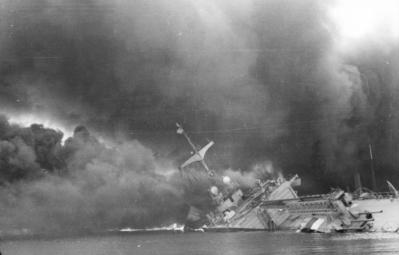
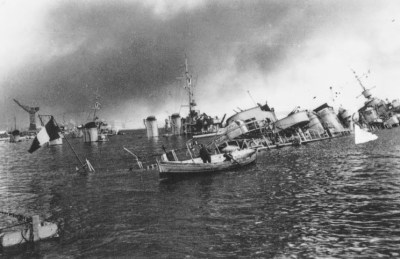
The Germans could only look on, helpless, as a dying fleet escaped their grasp. In the end, 3 battleships, 7 cruisers, 15 destroyers, 13 torpedo boats, 6 sloops, 12 submarines, 9 patrol boats, 19 auxiliary ships, 28 tugs, 4 cranes and a school ship, were destroyed. 39 smaller vessels of negligible military value fell into German hands along with twelve fleet vessels, all of them damaged.

The fires would burn, for weeks. The harbor at Toulon would remain fouled and polluted, for years.

The French Navy lost 12 men killed and 26 wounded that day. 78 years ago, today. The loss to the Nazi war effort, is incalculable. How many lives may have been lost, had Nazi Germany come into possession of all that naval power. But for the obstinate bravery of a vanquished, but still unbeaten foe.

November 19, 1904 The Hunted

We rarely hear about the work of the spy or the saboteur in times of war. These are the Heroes who work behind enemy lines, with little to protect them but their own guts and cleverness. We rarely know their names and yet, there are times when the lives of millions hang in the balance.

We rarely hear about the work of the spy or the saboteur in times of war. These are the Heroes who work behind enemy lines, with little to protect them but their own guts and cleverness. We rarely know their names and yet, there are times when the lives of millions hang in the balance.

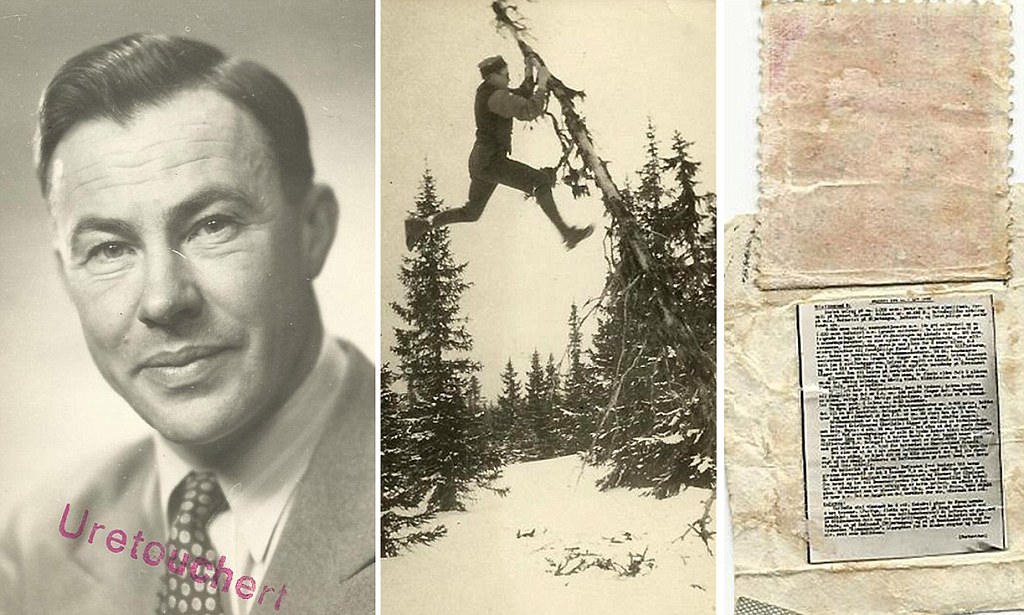
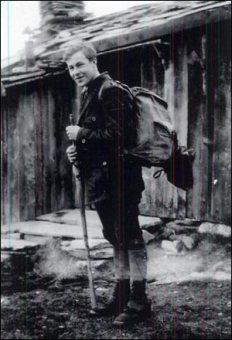
Sven Somme

One such was Iacob Sømme, a Norwegian who was caught, tortured and executed by the Gestapo, for his role in sabotaging the Nazi heavy water plant in Telemark, in 1943.

But for the work of men such as this, we are left only to imagine a world in which the Nazi Swastika was painted on the sides of “Little boy” and “Fat Man”. We may thank the likes of Iacob Sømme that such a world remains merely one of nightmare imagination.

Another such man was Iacob’s brother Sven, born this day, November 19, 1904.

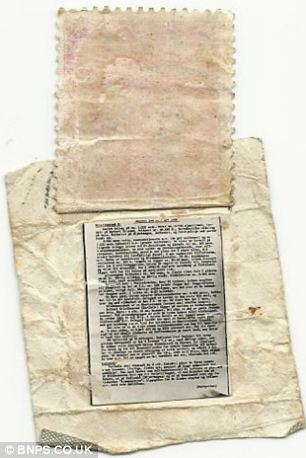
Like his brother, Sven Sømme joined the Norwegian Resistance to fight the Nazis who had occupied his country since 1940. A scientist and fisheries officer, Somme joined the Resistance. He would photograph strategic German military bases using a miniature camera, sending covert maps, photographs and intelligence reports to the Allies hidden under the postage stamps, on letters.

In 1944, guards saw the sun glint off a camera’s lens, and came running. Sømme had been caught, taking pictures of a German U-boat base on Otteroy island. Sven tried hiding the tiny camera under a rock, but the Germans quickly found it. He was put in cuffs.

The penalty for what he was doing, was the firing squad. He would be lucky not to be tortured to death.

That night, Sømme managed to slip his handcuffs and creep past his sleeping guard. What followed was a nightmare race to freedom. A relentless hunt two months in duration, across 200 miles of snow covered mountains.

The Norwegian had barely an hour’s head start. The Nazis couldn’t let this man escape. He knew too much. Pursued by 900 troops and a pack of bloodhounds, Sømme worked his way through icy streams and across ravines moving ever higher, into the mountains.

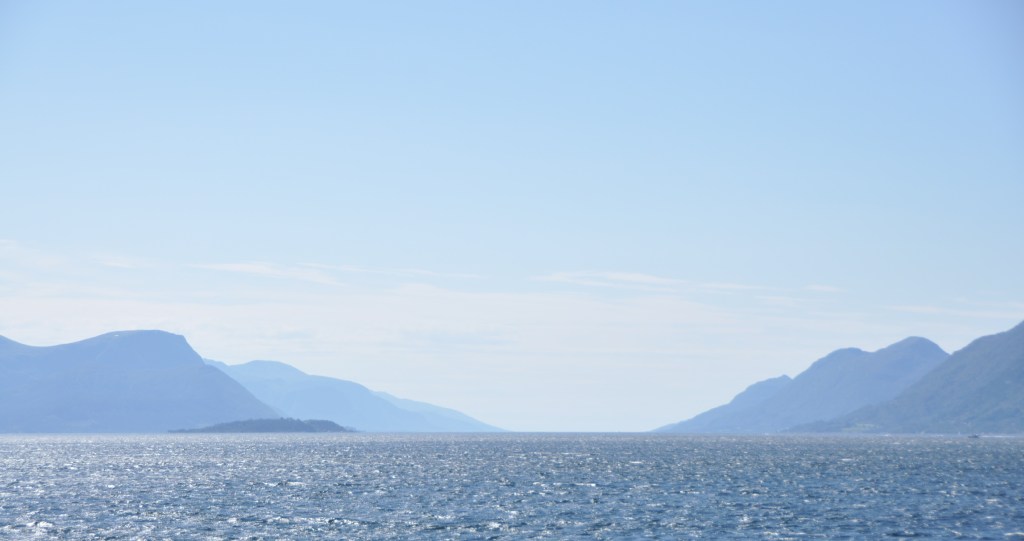
Otrøya island (right) where Sømme photographed the torpedo base, at Midfjorden. H/T Wikipedia

He wore a pair of beat up dress shoes and certainly would have succumbed to frostbite in the mountains, had he not been taken in for a time by a friendly family. He couldn’t stay for long, but the family’s 19-year-old son Andre gave him the pair of mountain boots.

Sven Somme, tree

Sømme would wade through icy streams to avoid leaving tracks in the snow, or leap from one tree to another, a game he‘d once learned, as a kid. He trekked 200 miles through the mountains in this manner dodging bears and wolves. That baying horde was never far from his heels.

At last he made it to neutral Sweden, where he was taken to England. There he met the exiled King of Norway, and the woman who would one day become his wife and mother of his three daughters, an English woman named Primrose.

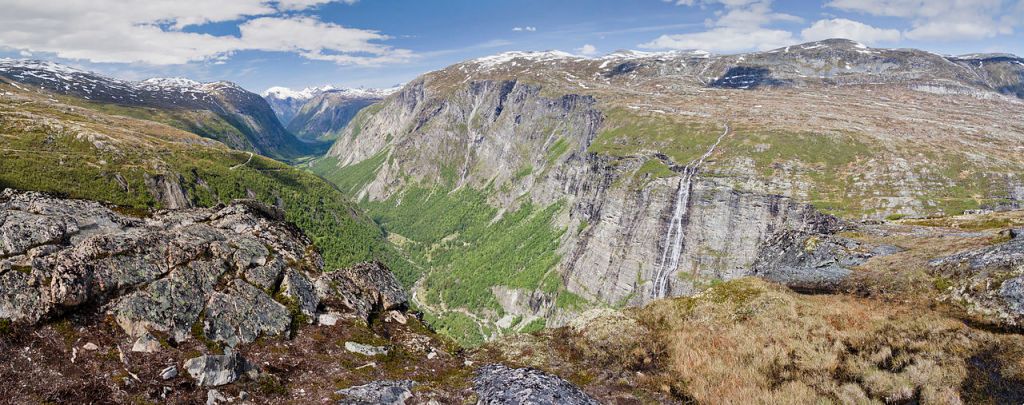
Mountaineer Arne Randers Heen guided Sømme through the steep mountains from Isfjord to Eikesdalen (photo) and locals in Eikesdal helped him through the difficult terrain in from Eikesdal to Aursjøen lake. From there he walked across Norway to Sweden. H/T Wikipedia

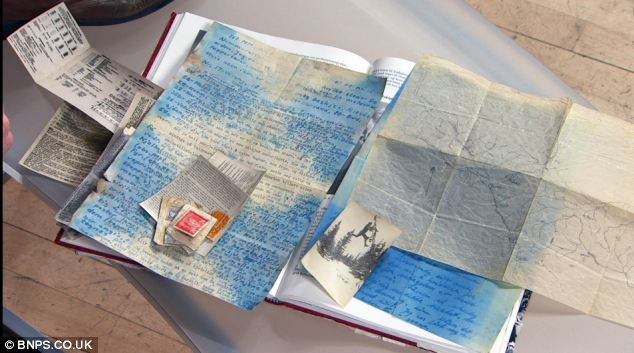
Sven Sømme passed away in 1961 following a battle with cancer. Primrose died not long after. It was only in going through her things after she passed, that the three girls discovered their father’s history. The photographs, the letters, even an arrest warrant, written out in German and Norwegian.

Documents: His daughter has now found an incredible archive of secret documents he collected while working as a spy” H/T UK Daily Mail

Sømme had written a memoir about his escape. He called it “Another Man’s Shoes”. In 2004, his daughters used the book to retrace their father’s epic flight across the mountains. They even met the family who had sheltered him and, to their amazement, they still had his old shoes. The book is still in print as far as I know. It has a forward by his daughter Ellie, describing their emotional meeting with the family who had sheltered her father.

It must be one hell of a story.

November 6, 1944 Burial at Sea

Two Avengers flew overhead in salute as the torpedo bomber-turned sarcophagus, bobbed in the waves. And then the Avenger went down by the nose, and disappeared out of sight.

When Depression struck the nation in the 1930s, few states were hit harder than Oklahoma. This was the dust bowl, a time of ruinous levels of unemployment when farm income alone dropped 64 percent. Great, all-consuming dust storms seemed to swallow the horizon as whole populations, were driven from the land. Fifteen percent of all Oklahoma packed up and moved west, in hopes of a better life.

This was the world of Loyce Edward Deen’s childhood, the seventh of eight children born to Grace and Allen Deen in the tiny south-central Oklahoma town of Sulphur.

The family moved west in pursuit of work, to Altus Oklahoma, nearly 200 miles by car. There, Allen took work as a schoolteacher.  Loyce would care for his younger brother Lewis, a child afflicted with Down’s syndrome.  The boys were extremely close. It must have broken Loyce’s heart when his little brother fell and ill and died, while he was still in Junior High.

While a Junior in High School, Loyce’s mother Grace fell victim to a debilitating stroke. For nearly two months in 1938, he and his brother Lance cared for their mother. She died on November 30.

Altus was the kind of town, where the newspaper printed the bio of every graduating High school senior. The Times-Democrat wrote: “Loyce Deen is a young man with high ambitions. He plans to enter the US Navy aeronautical mechanics division after graduation and finds subjects such as problems of American democracy, the most interesting. He has also been active in dramatics work at school.

He worked for a time with the Civilian Conservation Corps (CCC), later joining the Douglas Aircraft Company in Wichita where he helped to build wing sets for the A-26 Invader attack bomber.

Loyce_pic_

Long before the Japanese sneak attack on Pearl Harbor, Loyce wanted to join the Navy. In October 1942, he did just that. First came basic training in San Diego and then gunner’s school, where he learned about the weapons systems aboard the Grumman TBF Avenger torpedo bomber.

Then it was on to Naval Air School in Fort Lauderdale, before joining the “Fabled 15th” Air Group forming out of Westerly, Rhode Island.

In April 1944, the Air Group reported for duty aboard the “Fightingest Ship in the Navy” at Pearl Harbor.  The aircraft carrier, USS Essex.

WW2-era Air Groups consisted of eighty or so aircraft, of three distinct types. First came the fighters, in this case the fast, single seat Grumman Hellcats. Next were the two-seat dive bombers, the Curtiss Helldivers, the pilot joined by a rear-seat gunner whose job it was to lay the one-ton bomb on the target, while handling the machine gun. Third came the torpedo bomber, the Grumman Avenger, with two enlisted crewmen in addition to the pilot. The Avenger carries a ton of bombs, depth charges or aerial torpedoes and, like the Helldiver, is designed for low-level attack.

Loyce was the turret gunner on an Avenger, assigned to protect the aircraft from above, with fellow crewmen Pilot Lt. Robert Cosgrove of New Orleans, Louisiana and Radioman Donald “Digby” Legoia Denzek from Grand Rapids, Michigan.

Left to right: Cosgrove, Denzek, and Deen

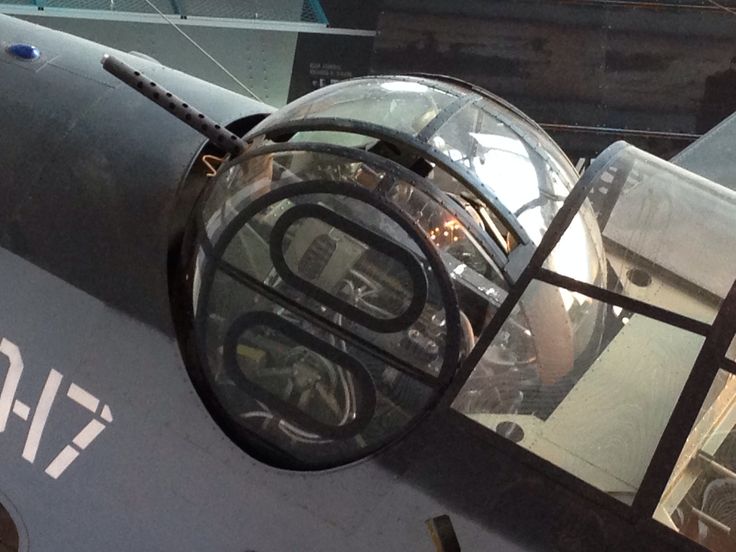
Cosgrove was a superb pilot, returning many times with an aircraft so shot up as to be all but unflyable. Digby had several jobs including arming weapons systems and operating the radio. When the team was under fire, he would crawl down to a ball turret on the belly of the aircraft where his machine gun would defend the aircraft an crew, from below.

The 15th Air group saw some of the most intense fighting it had ever encountered during the battle of Leyte Gulf of October 24-25, 1944. Captain David McCampbell, the 3rd-highest scoring Naval ace of WW2 and the highest to survive the war shot down 9 enemy aircraft on the 24th alone. Assisted by but a single aircraft, McCampbell waded into a land-based formation of 60 incoming aircraft and attacked with such aggression, as to force the Japanese formation to abandon the attack.

Grumman TBF Avenger

Loyce Deen received a shrapnel would to the foot in that same battle. He wrapped up the foot so he could stay on to fight, the following day. Deen would receive a Purple heart for that wound and McCampbell, the Medal of Honor.

Deen’s award was destined to be, posthumous.

Following rest and replenishment at Ulithi Atoll in the Caroline Islands, USS Essex was on station for the November 5 Battle of Manila.  Deen could have stayed back on the hospital ship until that foot healed, but chose to ignore the injury. He rejoined his unit.

VT-15 torpedo group (no pilots)

Bertha Deen was not surprised. On being informed of his injury, she said “I’m not surprised he stayed with his unit. Loyce would not have it any other way – he would always remain at his post to make sure his brothers came home safely with him.

Loyce Deen climbed into his gun turret for the last time on November 5. It was a two hour flight to the target zone in Manila Bay, with Japanese aircraft on the radar for most of that time and the carriers USS Lexington and Ticonderoga, under kamikaze attack.

Lieutenant Cosgrove’s Avenger came under savage anti-aircraft fire, from a Japanese cruiser. Aviation Machinist’s Mate Second Class Loyce Edward Deen was killed instantly, taking multiple direct hits from 40mm anti-aircraft shells. The Avenger aircraft, tail #93, was so smashed up as to be virtually unflyable.  It took all of Cosgrove’s considerable strength and skill as a pilot, to fly the thing back through two thunderstorm and hours of open ocean, to land at last on the decks of the carrier.

e281f946d5375133dd2c1afe6213dacd
Grumman Avenger top turret

What remained of Loyce Edward Deen was so utterly destroyed, the decision was made. The man would be buried at sea. Inside of the aircraft. This particular Avenger wouldn’t even be scavenged, for parts.

Shipmates took his fingerprints and carefully removed the dog tags.    With a ship’s complement assembled to pay last respects and a chaplain to read last rites, the shattered aircraft was tipped over the rear of the flight deck, and into the water.  Two Avengers flew overhead in salute as the torpedo bomber-turned sarcophagus, bobbed in the waves. And then the Avenger went down by the nose, and disappeared out of sight.

A hero, was going home. For the first and last time in US Naval history, a man was buried with the aircraft in which he had served.

A normal person could not be blamed, for believing that’s the end of the story. Essex went to General Quarters.  There were kamikazes to deal with. Air Group 15, ordinary men from Massachusetts to Oklahoma, climbed back into their aircraft on November 6 and again on the 12th, 13th and 14th, to attack those same Japanese cruisers outside Manila Bay.

For the Deen family, the dread knock on the door came sometime around Thanksgiving.

May 27, 1940 The Miracle of Dunkirk

The first full day of the evacuation was May 27,  7,669 were evacuated.  By day 9 a total of 338,226 soldiers had been rescued from the beach.  The “Miracle of Dunkirk” would remain the largest such waterborne evacuation in history, until the Great boat lift of September 11, 2001.

The Nazi conquest of Europe began with the Sudetenland in 1938, the border districts of Bohemia, Moravia, and German speaking parts of Czechoslovakia. Within two years, every major power on the European mainland was either neutral, or under Nazi occupation.

The island nation of Great Britain alone escaped occupation, but its armed forces were shattered and defenseless in the face of the German war machine.dunkirk evacuationIn May of 1940 the British Expeditionary Force and what remained of French forces occupied a sliver of land along the English Channel. Field Marshall Gerd von Rundstedt called a halt of the German armored advance on May 24, while Hermann Göring urged Hitler to stop the ground assault, let the Luftwaffe finish the destruction of Allied forces. On the other side of the channel, Admiralty officials combed every boatyard they could find for boats to ferry their people off of the beach.

Hitler ordered his Panzer groups to resume their advance on May 26, while a National Day of Prayer was declared at Westminster Abbey. That night Winston Churchill ordered “Operation Dynamo”. One of the most miraculous evacuations in military history had begun from the beaches of Dunkirk.dunkirk-evacuation.-1-june-1940-troop-positions.-operation-dynamo.-hmso-1953-map-[2]-272563-pThe battered remnants of the French 1st Army fought a desperate delaying action against the advancing Germans. They were 40,000 men against seven full divisions, 3 of them armored. They held out until May 31 when, having run out of food and ammunition, the last 35,000 finally surrendered. Meanwhile, a hastily assembled fleet of 933 vessels large and small began to withdraw the broken army from the beaches.
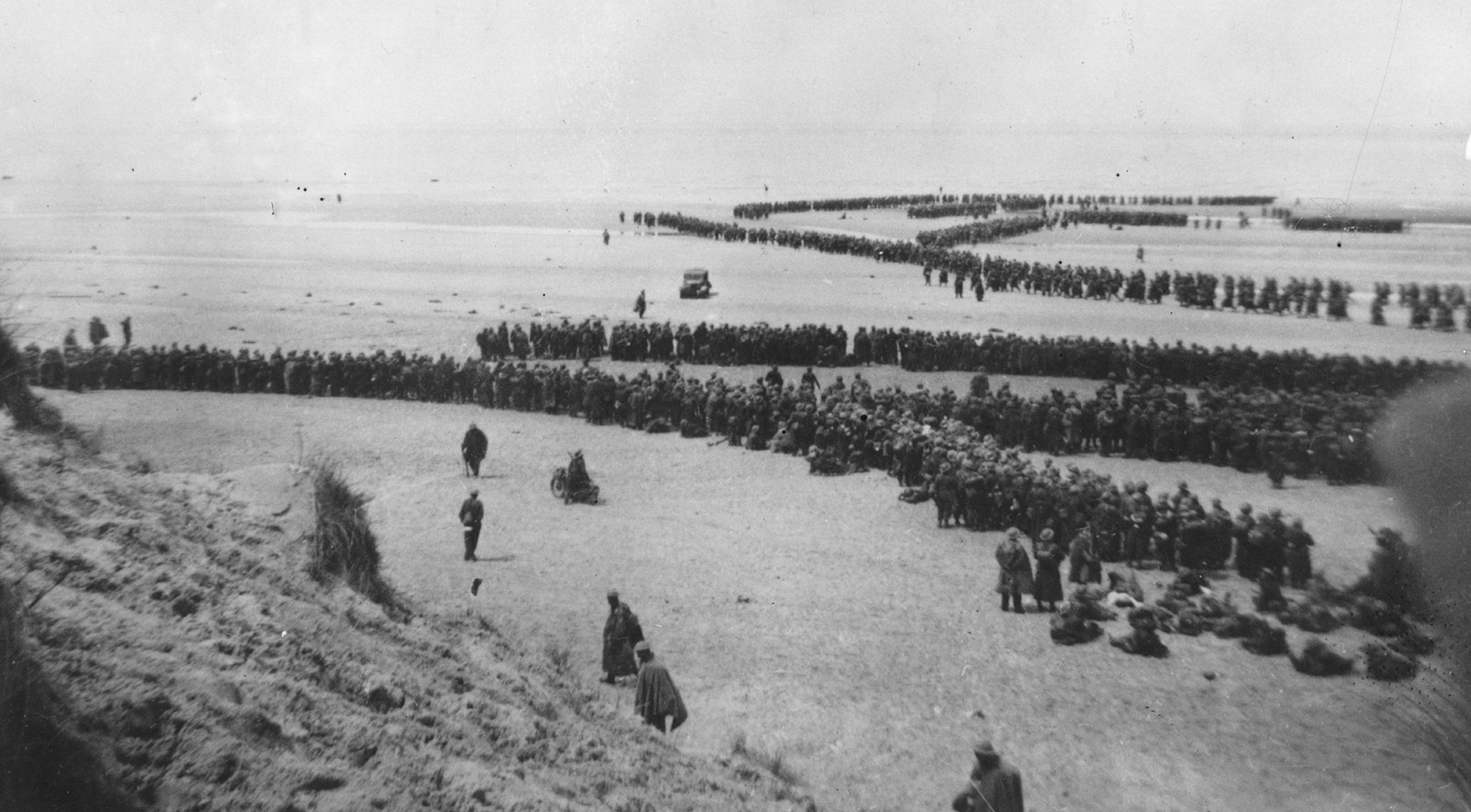
Larger ships were boarded from piers, while thousands waded into the surf and waited in shoulder deep water for smaller vessels. They came from everywhere: merchant marine boats, fishing boats, pleasure craft, lifeboats and tugs. The smallest among them was the 14’7″ fishing boat “Tamzine”, now in the Imperial War Museum.Dunkirk EvacuationA thousand copies of navigational charts helped organize shipping in and out of Dunkirk, as buoys were laid around Goodwin Sands to prevent stranding. Abandoned vehicles were driven into the water at low tide, weighted down with sand bags and connected by wooden planks, forming makeshift jetties.

The first full day of the evacuation was May 27,  7,669 were evacuated.  By day 9 a total of 338,226 soldiers had been rescued from the beach.  The “Miracle of Dunkirk” would remain the largest such waterborne evacuation in history, until the Great boat lift of September 11, 2001.dunkirk1It all came to an end on June 4. Most of the light equipment and virtually all the heavy stuff had to be left behind, just to get what remained of the allied armies out alive. But now, with the United States still the better part of a year away from entering the war, the allies had a fighting force that would live to fight on. Winston Churchill delivered a speech that night to the House of Commons, calling the events in France “a colossal military disaster”. “[T]he whole root and core and brain of the British Army”, he said, had been stranded at Dunkirk and seemed about to perish or be captured. In his “We shall fight on the beaches” speech of June 4, Churchill hailed the rescue as a “miracle of deliverance”.dunkirk_marqueeOn the home front, thousands of volunteers signed up for a “stay behind” mission in the weeks that followed. With “Operation Sea Lion” all but imminent, the German invasion of Great Britain, their mission was to go underground and to disrupt and destabilize the invaders in any way they could. They were to be part of the Home guard, a guerrilla force reportedly vetted by a senior Police Chief so secret, that he was to be assassinated in case of invasion to prevent membership in the units from being revealed.

Participants of these auxiliaries were not allowed to tell their families, what they were doing or where they were. Bob Millard, who passed in 2014 at the age of 91, said they were given 3 weeks’ rations, and that many were issued suicide pills in case of capture.  Some 400-500 elaborately concealed underground “operational bases” are believed to have been built, from which Home Guard units were to carry out the arts of guerrilla warfare including unarmed combat, demolition, sabotage and even assassination.

Left, Operational base, reconstruction at Parham Airfield Museum. Right, Auxiliary Units, Operational Base, emergency exit. H/T Wikipedia

Even Josephine, Millard’s wife of 67 years, didn’t know a thing about it until the auxiliaries’ reunion in 1994. “You just didn’t talk about it, really”, he said. “As far as my family were aware I was still in the Home Guard. It was all very hush hush. After the war, it was water under the bridge”.

The word “Cenotaph” literally translates as “Empty Tomb”, in Greek. Every year since 1919 and always taking place on the Sunday closest to the 11th day of the 11th month, the Cenotaph at Whitehall is the site of a remembrance service, commemorating British and Commonwealth servicemen and women who died in 20th century conflicts. Since WWII, the march on the Cenotaph includes members of the Home Guard and the “Bevin Boys”, the 18-25 year old males conscripted to serve in England’s coal mines. In 2013, the last surviving auxiliers joined their colleagues, proudly marching past the Cenotaph for the very first time.

2E3BB40600000578-3308996-image-a-222_1446983695741Historians from the Coleshill Auxiliary Research Team (CART) had been trying to do this for years.
CART founder Tom Sykes said: “After over 70 years of silence, the veterans of the Auxiliary Units and Special Duties Section, now more than ever, deserve to get the official recognition that has for so long been lacking. ‘They were, in this country’s hour of need, willing to give up everything, families, friends and ultimately their lives in order to give us a fighting chance of surviving”.

May 26, 1941 Avenging Brother

On this day in 1941, Sergeant Clive Hulme learned of the death of his brother Harold, also fighting in the battle for Crete.  The life expectancy for German snipers was about to become noticeably shorter. 

Throughout the history of armed conflict, men who have endured combat together have formed a special bond.  Prior to the David vs. Goliath battle at Agincourt, Henry V spoke of “We few, we happy few, we band of brothers“.   The men who fought the “War to end all wars” spoke not of God and Country, but of the man to his left and right.  What then does it look like, when the man you’re fighting for is literally your own brother?

Hellenic forces enjoyed early success when fascist Italy invaded Greece on October 28, 1940, the Greek army driving the intruder into neighboring Albania in the first Allied land victory of the second World War.

Until the intervention of Nazi Germany and her Bulgarian ally.

german-invasion-greece-april-1941-008
German occupation of Greece

British commonwealth troops moved from Libya on orders from Winston Churchill proved too little, too late. The Greek capital at Athens fell on April, 27. Greece suffered axis occupation for the rest of the war, with devastating results. Some 80% of Greek industry was destroyed along with 90 percent of ports, roads, bridges and other infrastructure. 40,000 civilians died of starvation, in Athens alone. Tens of thousands more died in Nazi reprisals, or at the hands of Nazi collaborators.

german-invasion-crete-1941-002
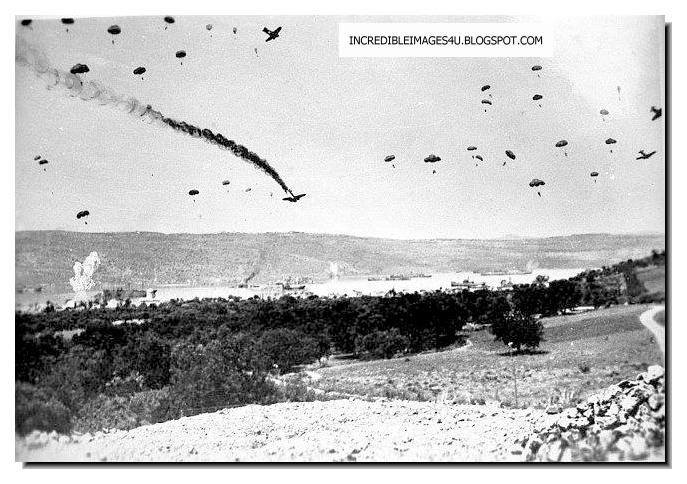
Airborne invasion of Crete

Fearful of losing the strategically important island of Crete, Prime minister Winston Churchill sent a telegram to the Chief of the Imperial General Staff General Sir John Dill: “To lose Crete because we had not sufficient bulk of forces there would be a crime.”

By the end of April, the Royal Navy evacuated 57,000 troops to Crete, largest of the islands comprising the modern Greek state.   They’d been sent to bolster the Cretan garrison until the arrival of fresh forces, but this was a spent force.  Most had lost heavy equipment in the hasty evacuation.  Many were unarmed, altogether.

German_troops_board_a_Junkers_52_for_Crete
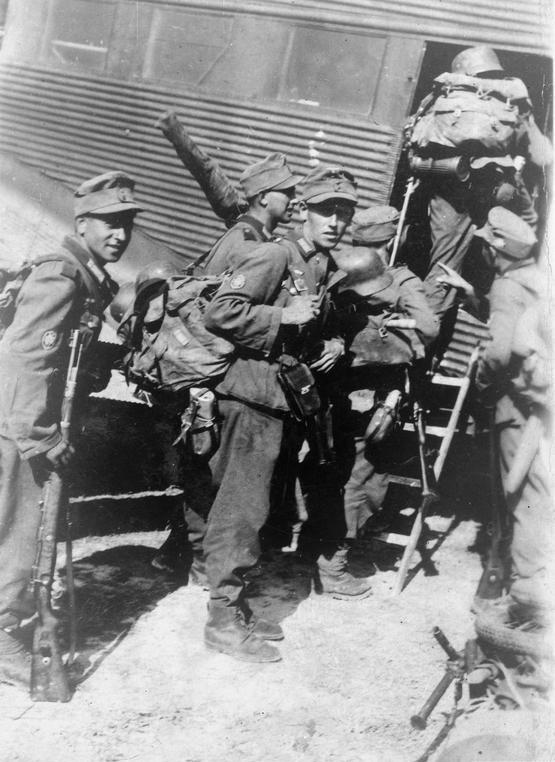
German mountain troops board a Junkers Ju 52 for Crete, 20 May 1941, H/T Wikipedia

Occupied at this time with operation Barbarossa, Hitler’s surprise invasion of his erstwhile Soviet ally, German Army command had little desire to go after Crete.   Eager to redeem themselves following the failure to destroy an all-but prostrate adversary during the Battle of Britain, Luftwaffe High Command was a different story.

Hitler recognized the strategic importance of Crete, both to the air war in the eastern Mediterranean and for the protection of the Axis southern flank.

By the time of the German invasion, Allied forces were reduced to 42,000 on Crete of which only 15,000, were combat ready.  New Zealand Army Major-General Bernard Freyberg in command of these troops, requested evacuation of 10,000 who had “little or no employment other than getting into trouble with the civil population“.

Once again it was too little, to late.  The first mainly airborne invasion in military history and the only such German operation of WW2 began on May 20, 1941.

The Luftwaffe sent 280 long-range bombers, 150 dive-bombers, 180 fighters and 40 reconnaissance aircraft into the attack, along with 530 transport aircraft and 100 gliders.

hulme
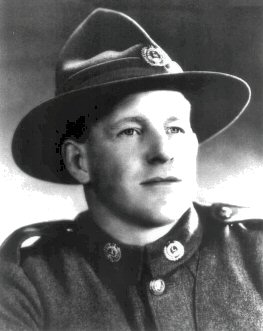
Sgt. Clive Hulme

The allied garrison was soon outnumbered and fighting for their lives.  Recognizing that the battle was lost, leadership in London instructed Freyberg to abandon the island, on May 27.

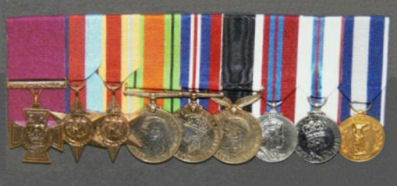
The “Victoria Cross” is the highest accolade in the British system of military honors, equivalent to the American Medal of Honor.  Sergeant Clive Hulme of the New Zealand 2nd Division was part of that fighting withdrawal.  He was 30 years old at the time of the battle for Crete where his actions, earned him the Victoria Cross.  Let Sergeant Hulme’s citation, tell his story:

“On ground overlooking Malene Aerodrome on 20th and 21st May [Sergeant Hulme] personally led parties of his men from the area held by the forward position and destroyed enemy organised parties who had established themselves out in front of our position, from which they brought heavy rifle, machine-gun and mortar fire to bear on our defensive posts. Numerous snipers in the area were dealt with by Serjeant Hulme personally; 130 dead were counted here. On 22nd, 23rd and 24th May, Serjeant Hulme was continuously going out alone or with one or two men and destroying enemy snipers. On 25th May, when Serjeant Hulme had rejoined his Battalion, this unit counter-attacked Galatas Village. The attack was partially held up by a large party of the enemy holding the school, from which they were inflicting heavy casualties on our troops. Serjeant Hulme went forward alone, threw grenades into the school and so disorganised the defence, that the counter-attack was able to proceed successfully.”

On this day in 1941, Sergeant Clive Hulme learned of the death of his brother Harold, also fighting in the battle for Crete.  The life expectancy for German snipers was about to become noticeably shorter.  Again, from Hulme’s VC citation:

On Tuesday, 27th May, when our troops were holding a defensive line in Suda Bay during the final retirement, five enemy snipers had worked into position on the hillside overlooking the flank of the Battalion line. Serjeant Hulme volunteered to deal with the situation, and stalked and killed the snipers in turn. He continued similar work successfully through the day.  On 28th May at Stylos, when an enemy heavy mortar was severely bombing a very important ridge held by the Battalion rearguard troops, inflicting severe casualties, Serjeant Hulme, on his own initiative, penetrated the enemy lines, killed the mortar crew of four…From the enemy mortar position he then worked to the left flank and killed three snipers who were causing concern to the rearguard. This made his score of enemy snipers 33 stalked and shot.  Shortly afterwards Serjeant Hulme was severely wounded in the shoulder while stalking another sniper. When ordered to the rear, in spite of his wound, he directed traffic under fire and organised stragglers of various units into section groups.”

hulme-medals
Clive Hulme’s medals

The man took out 33 German snipers by himself in 8 days and still assisted in the withdrawal, after being shot badly enough to put him out for the rest of the war.

Some guys are not to be trifled with.