

Short days from now, families across the nation will gather for the Christmas table. There will be moist and savory stuffing, and green bean casserole. Creamy mashed potatoes and orange cranberry sauce. And there, the centerpiece of the feast. Slow-roasted and steaming in its tray, golden brown and delicious, the roast hippopotamus.
Wait…
What?
The story begins on December 16, 1884, the opening day for the World’s Fair, in New Orleans. Among the many wonders on display was the never-before seen, Eichornia crassipes, a gift of the Japanese delegation. The Water Hyacinth. Visitors marveled at this beautiful aquatic herb, its yellow spots accentuating the petals of beautiful delicate purple and blue flowers, floating across tranquil ponds on thick, dark green leaves.

The seeds of Eichornia crassipes are spread by wind, flood, birds and humans, and remain viable for 30 years. Beautiful as it is to look at, the Water Hyacinth is an “alpha plant”, the aquatic equivalent to the Japanese invasive perennial Kudzu, the “vine that ate the south”. Impenetrable floating mats choke out native habitats and species, while thick roots impede the passage of vessels, large and small. The stuff is toxic if ingested by humans and most animals, and costs a fortune to remove.
This plant native from the Amazon basin quickly broke the bounds of the 1884 World’s Fair, spreading across the bayous and waterways of Louisiana, and beyond.

In the first decade of the 20th century, an exploding American population could barely keep up with its own need for food, especially, meat. The problem reached crisis proportions in 1910, with over grazing and a severe cattle shortage. Americans were seriously discussing the idea, of eating dogs.
Enter Louisiana member of the House of Representatives, New Iberia’s own Robert Foligny Broussard, with a solution to both problems. “Lake Bacon”.
The attorney from Louisiana’s 3rd Congressional district proposed the “American Hippo” bill, H.R. 23621, in 1910, with enthusiastic support from Theodore Roosevelt and the New York Times. One Agricultural official estimated that such a free-range hippo herd would produce up to a million tons of meat, per year.
Lippincott’s monthly magazine waxed rhapsodic about the idea: “This animal, homely as a steamroller, is the embodiment of salvation. Peace, plenty and contentment lie before us, and a new life with new experiences, new opportunities, new vigour, new romance, folded in that golden future, when the meadows and the bayous of our southern lands shall swarm with herds of hippopotami”.

With a name deriving from the Greek term “River Horse”, the common hippopotamus is the third largest land animal living today. Despite a physical resemblance to hogs and other even-toed ungulates, Hippopotamidae’s closest living relatives are cetaceans such as whales, dolphins and porpoises.
The problem is, these things are dangerous.

The adult bull hippopotamus is extremely aggressive, unpredictable and highly territorial. Heaven help anyone caught between a cow and her young. Hippos can gallop at short sprints of 19 mph, only a little slower than Sprinter Usain Bolt, “the fastest man who ever lived”.
Google the “10 most dangerous animals in Africa”. You’ll be rewarded with the knowledge that hippos are #1, responsible for more human fatalities, than any other large animal, in Africa.
Be that at it as it may, the animal is a voracious herbivore, spending daylight hours at the bottom of rivers & lakes, happily munching on vegetation.
What could be better than taking care of two problems at once. Otherwise unproductive swamps and bayous from Florida to Louisiana would become home to great hordes of free-range hippos. The meat crisis would be solved, and America would become a nation of hippo ranchers.
As Broussard’s bill wended its way through Congress, the measure picked up steam with the enthusiastic support of two enemies who’d spent ten years in the African bush, trying to kill each other. No, really.

Frederick Russell Burnham had argued for the introduction African wildlife into the American food stream, some four years earlier. A freelance scout and American adventurer, Burnham was known for his service to the British South Africa company and to the British army in colonial Africa. The “King of Scouts’, commanding officers described Burnham as “half jackrabbit and half wolf”. A “man totally without fear.” One writer described Burnham’s life as “an endless chain of impossible achievements”, another “a man whose senses and abilities approached that of a wild predator”. He was the inspiration for the Indiana Jones character and for the Boy Scouts. Frederick Burnham was the “most complete human being who ever lived “.
Frederick “Fritz” Joubert Duquesne was a Boer of French Huguenot ancestry, descended from Dutch settlers to South Africa. A smooth talking guerilla fighter, the self-styled “Black Panther” once described himself as every bit the wild African animal, as any creature of the veld. An incandescent tower of hate for all things British, Duqesne was a liar, a chameleon, a man of 1,000 aliases who once spent seven months feigning paralysis, so he could fool his jailers long enough to cut through his prison bars. Destined to be a German spy and saboteur through two world wars, Frederick Burnham described his mortal adversary, thus: “He was one of the craftiest men I ever met. He had something of a genius of the Apache for avoiding a combat except in his own terms; yet he would be the last man I should choose to meet in a dark room for a finish fight armed only with knives“.
During the 2nd Boer war, the pair had sworn to kill each other. In 1910, these two men became partners in a mission to bring hippos, to America’s dinner table.
Biologically, there seems little reason to believe that Hippo ranching couldn’t have worked along the Gulf coast. Colombian officials estimate that, within a few years, the hippo descendants of drug kingpin Pablo Escobar’s exotic animal menagerie will number 100 or more individuals.
Broussard’s measure went down to defeat by one vote, but didn’t entirely go away. Always the political calculator, Representative and later-Senator Broussard died with the bill on his legislative agenda, waiting for the right moment to reintroduce the thing.
 Over time, the solution to the meat question became a matter of doubling down on what we’re already doing, as factory farms and confinement operations took the place of free ranges, and massive use of antibiotics replaced the idea of balanced biological systems.
We may or may not have “traded up”. Today, we contend with ever more antibiotic-resistant strains of “Superbug”. Louisiana spends $2 million per year on herbicidal control of the water hyacinth. The effluent of factory farms from Montana to Pennsylvania works its way into the nation’s rivers and streams, washing out to the Mississippi Delta to a biological dead zone, the size of New Jersey.
That golden future of Lippincott’s hippo herds roam only in the meadows and bayous of the imagination. Who knows, it may be for the best. I don’t know if any of us could see each other across the table. Not with a roast hippopotamus.


 Military force had to be called out in 1975, to dispel crowds at a religious school in Qom. Khomeini declared it the beginning of “Freedom and liberation from the bonds of imperialism”. By this time Khomeini was too hot to handle even for the Iraqis, and he moved to Paris. It was only a few short months before his triumphant return.
 Khomeini re-entered Iran in February, as the Shah went from country to country, looking for a place to stay. With the now-former King of Kings suffering from a form of non-Hodgkins Lymphoma, President Jimmy Carter reluctantly allowed the Shah into the US for surgery. Pahlavi left on December 15, 1979 for Panama.
 Meanwhile, now “Grand Ayatollah” Khomeini was denouncing what he saw as an American plot. Revolutionaries stormed the American embassy and seized 66 hostages. 13 women and black Americans were released. Richard Queen, a white man sick with Multiple Sclerosis, was released nine months later. The remaining 52 hostages would be 444 days in captivity, paraded before television cameras in blindfolds as Khomeini denounced “The Great Satan”.
 Aside from some of the most dismal economic conditions in American history, the Iranian hostage crisis did more than anything else to doom Jimmy Carter, to a single term.
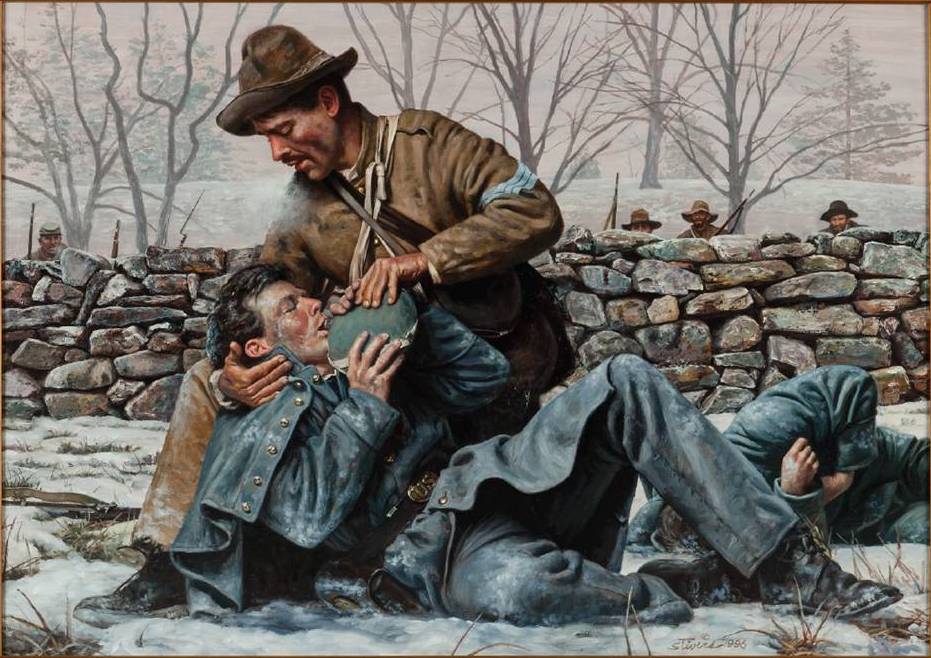
 The Union crossing of the Rappahannock was intended to be a surprise, depending on pontoons coming down from Washington to meet up with General Ambrose Burnside’s Union army in Falmouth, across the river from Fredericksburg.
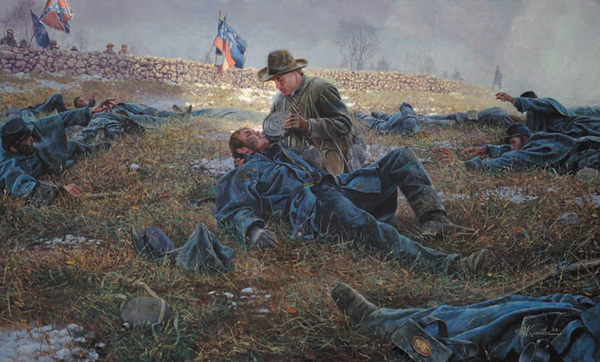
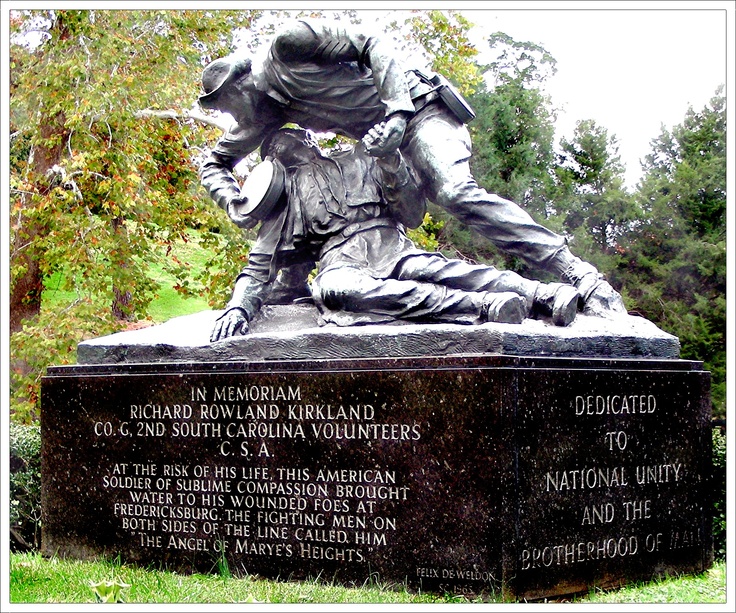
 In contrast to the swampy approaches on the Confederate right, 5,000 soldiers under James Longstreet looked out from behind the stone wall on Marye’s Heights to an open plain, crossed from left to right by a mill run, 5′ deep, 15′ wide and filled with 3′ of freezing water.


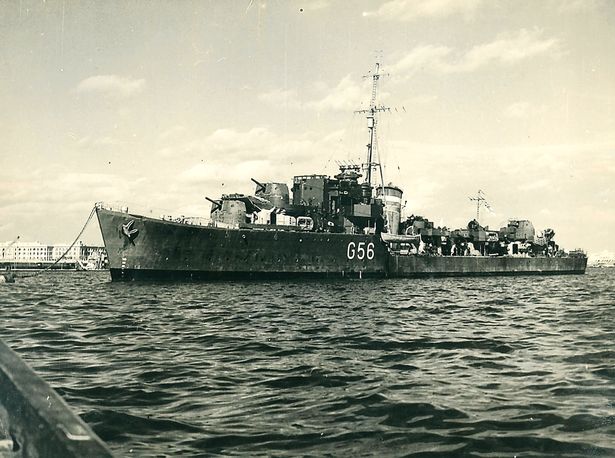
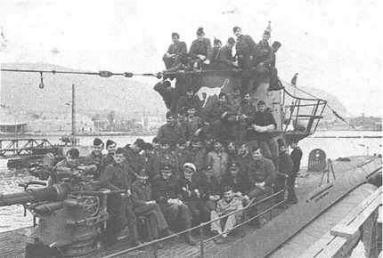

 For German U-boat commanders, the period between the fall of France and the American entry into WW2 was known as “Die Glückliche Zeit” – “The Happy Time” – in the North Sea and North Atlantic. From July through October 1940 alone, 282 Allied ships were sunk on the approaches to Ireland, for a combined loss of 1.5 million tons of merchant shipping.
 Early versions of the German “Enigma” code were broken as early as 1932, thanks to cryptanalysts of the Polish Cipher Bureau, and French spy Hans Thilo Schmidt. French and British military intelligence were read into Polish decryption techniques in 1939, these methods later improved upon by the British code breakers of Bletchley Park.
 All M4 machines were distributed by early 1942. On February 2, German submarine communications went dark. For code breakers at Bletchley Park, the blackout was sudden and complete. For a period of nine months, Allies had not the slightest idea of what the German submarine service was up to. The result was catastrophic.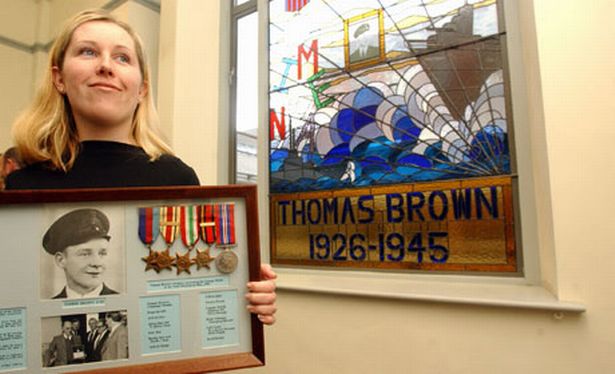


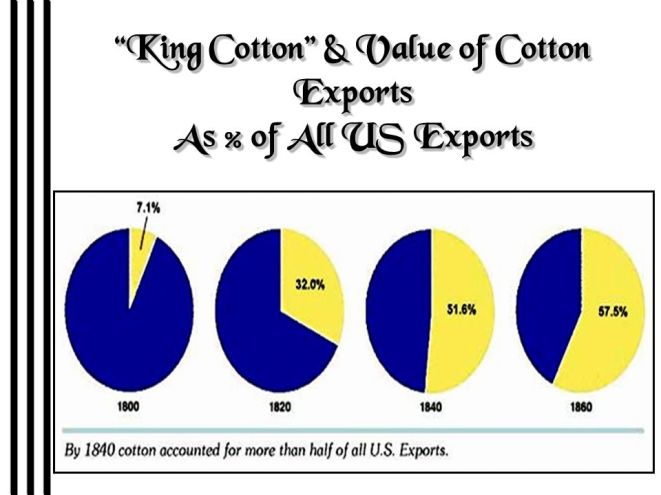
 Anthonomus grandis, the Boll Weevil, is a small beetle, about the size of the nail on your little finger. Indigenous to Mexico, the beetle crossed the Rio Grande near Brownsville, sometime around 1892. The insect spread rapidly, producing eight to ten generations in a single growing season and preying mainly on the young cotton boll.
 Designed in Italy at a cost of $1,800, the monument depicts a female figure in a flowing gown, arms stretched high over her head, and holding in her hands a trophy.

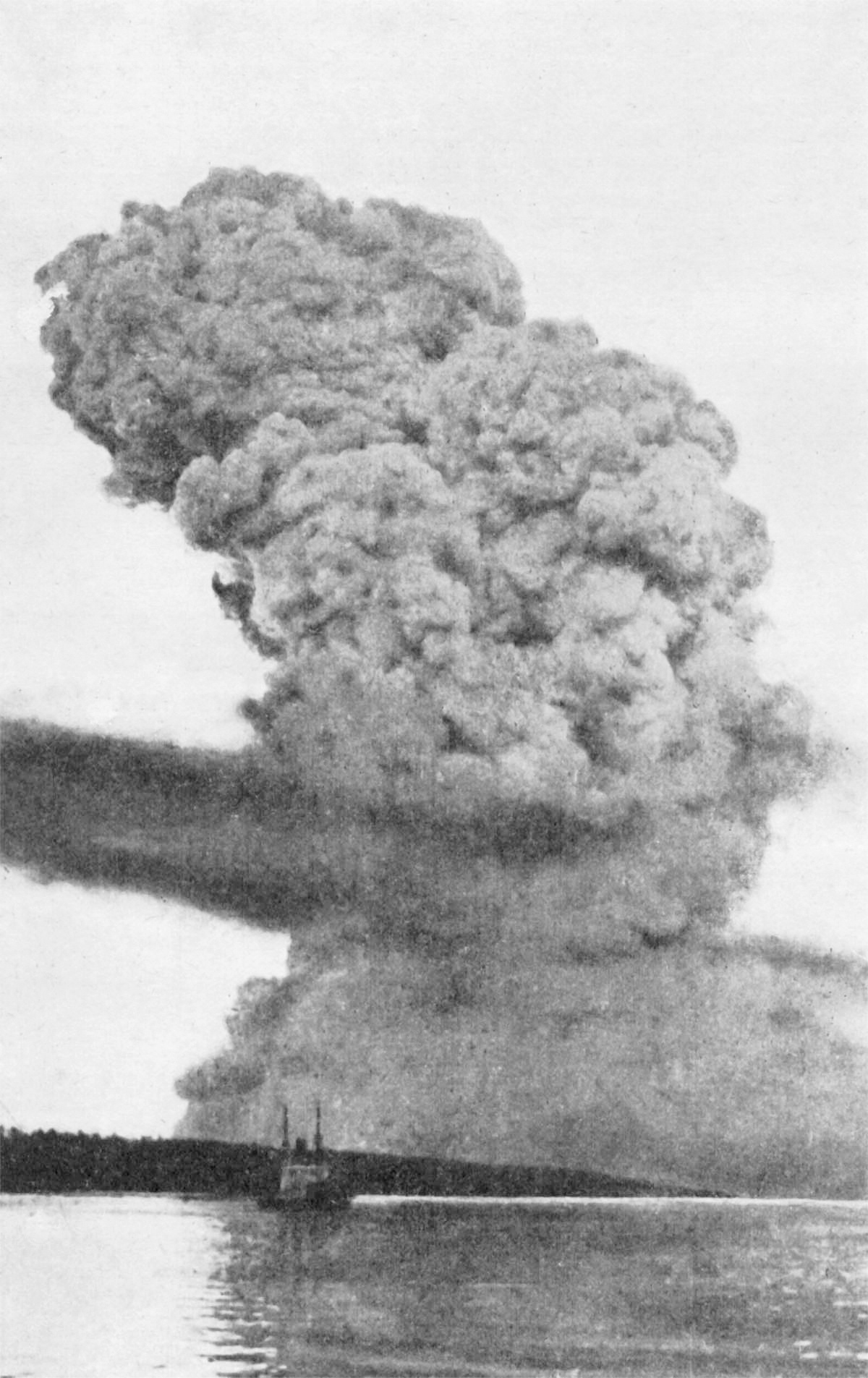

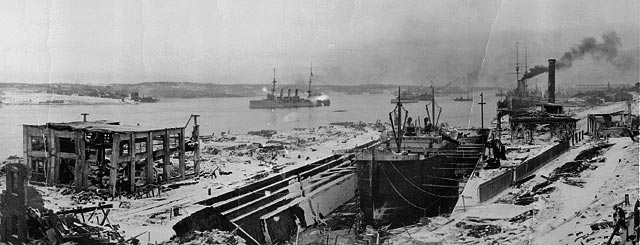
 There was strong sentiment at the time, that German sabotage lay behind the disaster. A front-page headline on the December 10 Halifax Herald Newspaper proclaimed “Practically All the Germans in Halifax Are to Be Arrested”.

 This is no Charlie Brown shrub we’re talking about. The 1998 tree required 3,200 man-hours to decorate: 17,000 lights connected by 4½ miles of wire, and decorated with 8,000 bulbs.



 For Imperial Japan, Yamamoto’s worst nightmare would prove correct. In terms of GDP, the Tokyo government had attacked an adversary, nearly six times its own size. The Japanese economy reached its high point in 1942 and declined steadily throughout the war years, while that of the United States exploded at a rate unseen in human history.


 Lieutenant Commander Joseph O’Callahan, a Jesuit priest from Boston and former Holy Cross track star was a Chaplain aboard the Franklin. O’Callahan was everywhere, hurling bombs overboard and administering last rites, shouting encouragement and fighting fires. Father O’Callahan would be the only Chaplain of WW2, to be awarded the Medal of Honor.

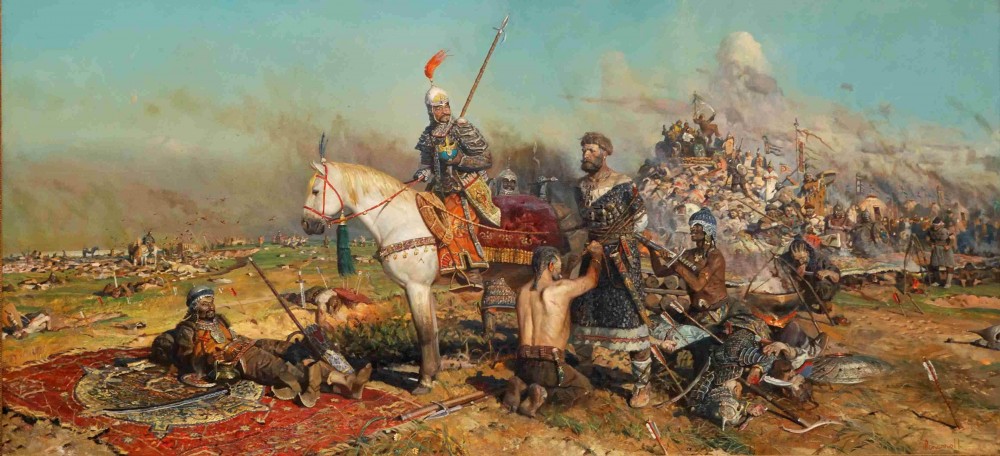
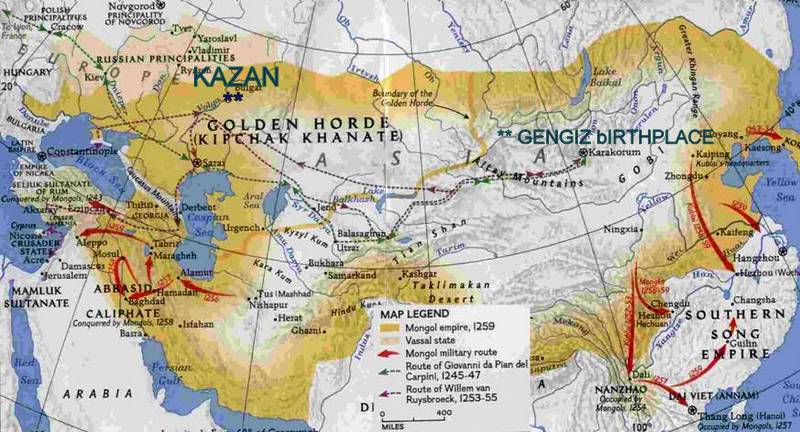
 The Steppes have long been a genetic crossroad, the physical features of its inhabitants as diverse as any in the world. The word “Rus”, from which we get Russia, was the name given to Viking invaders from earlier centuries. History does not record what Genghis himself looked like, though he’s often depicted with Asian features. There is evidence suggesting he had red hair and green eyes. Think of that beautiful young Afghan girl, the one with those killer eyes on that National Geographic cover, a few years back.
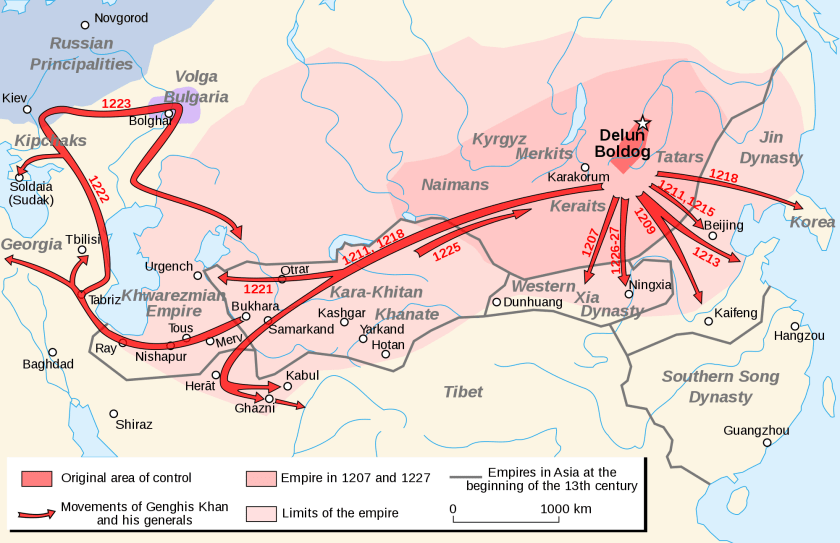
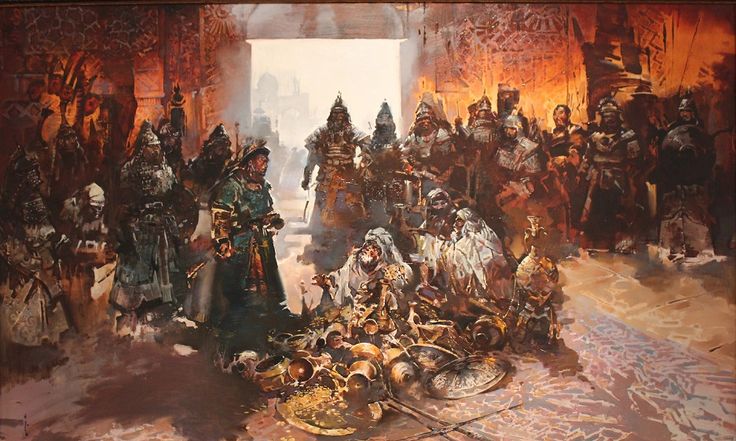
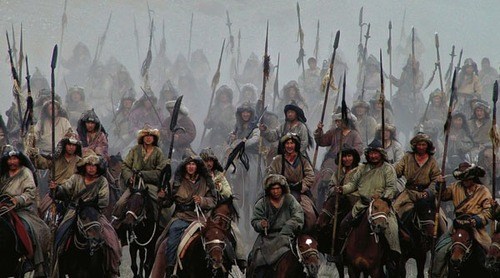
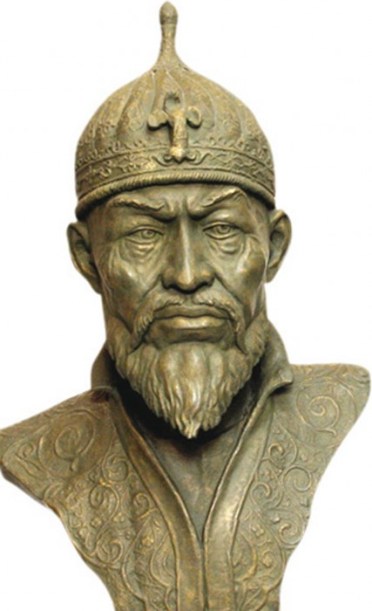
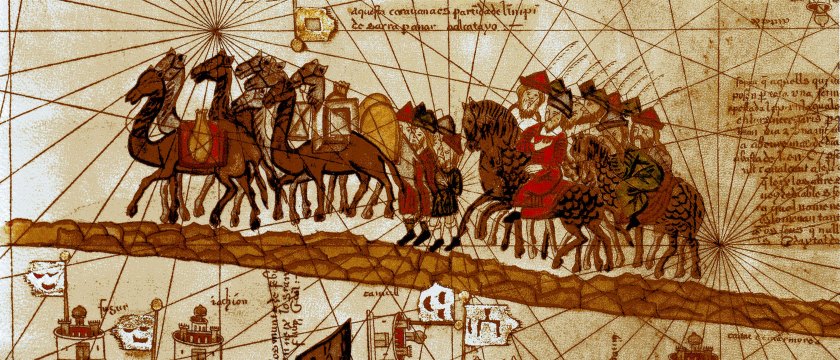
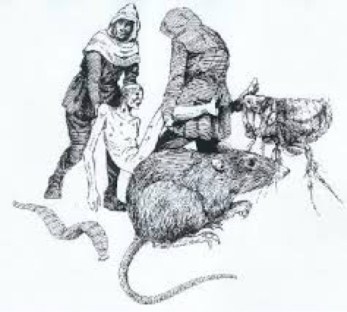 The Mongols would never regain the lost high ground of December 1241, as chieftains fell to squabbling over bloodlines.
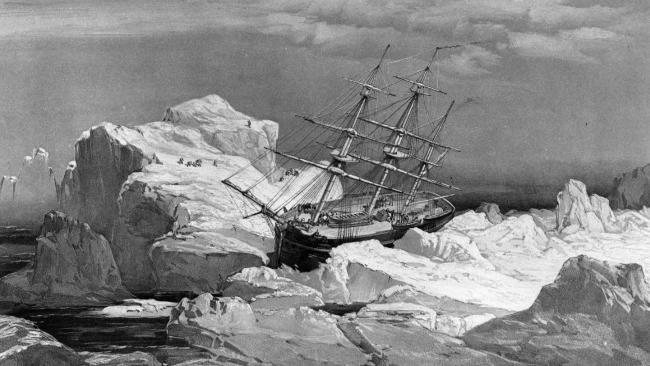
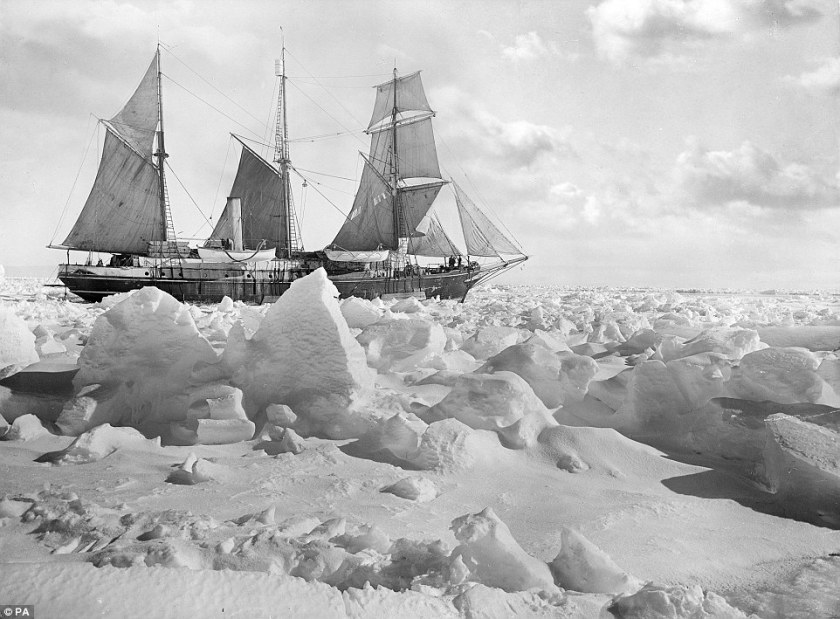
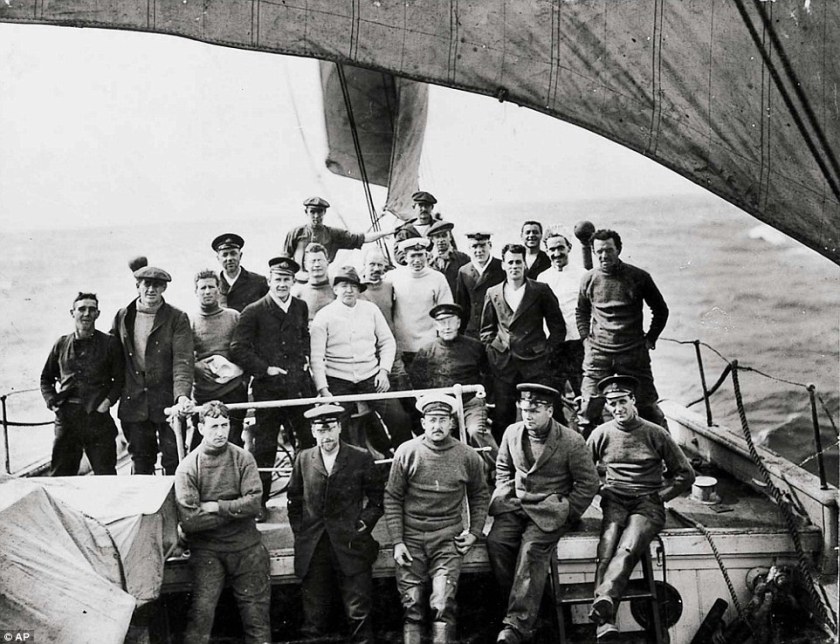
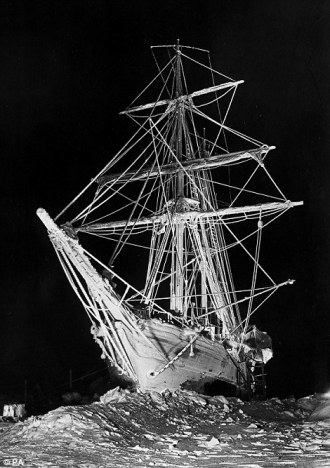


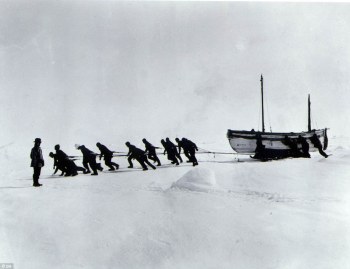
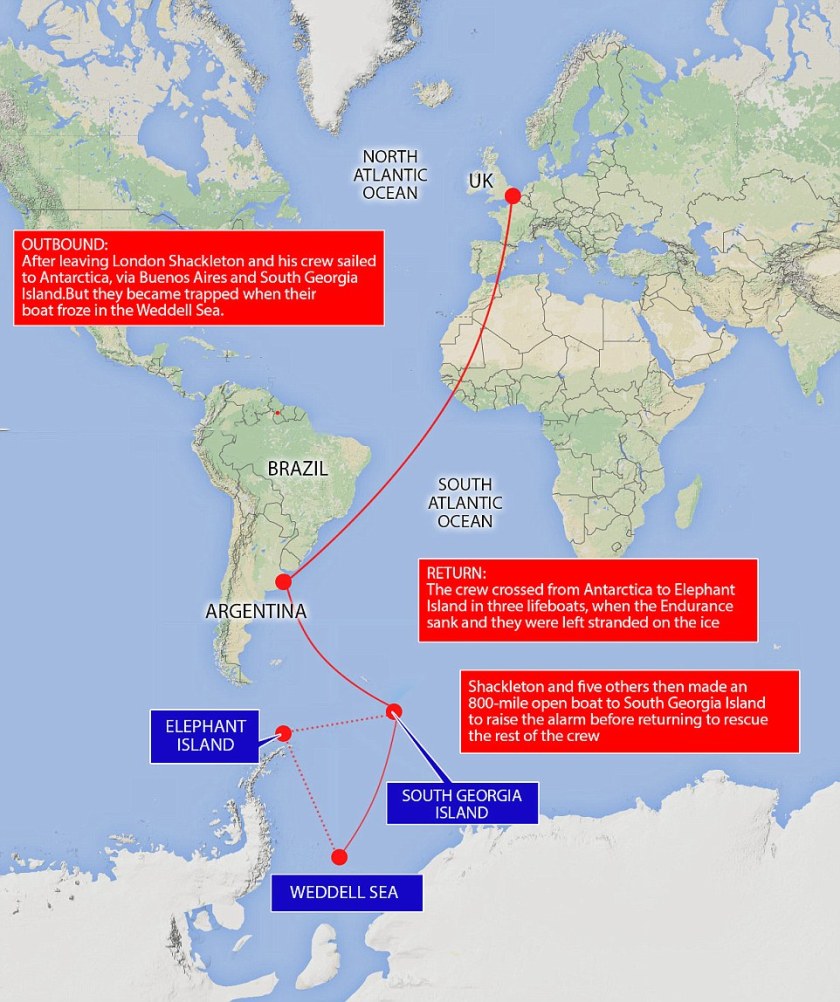 The trio arrived at the Stromness whaling station on May 20. They must have been a sight, with thick ice encrusting their long, filthy beards, and saltwater-soaked sealskin clothing rotting from their bodies. The first people they came across were children, who ran in fright at the sight of them.


 Four additional Vietcong were discovered hiding underground, as quick reaction teams scoured the area. They found Nemo and Thornburg, both seriously wounded, together on the ground. Both would survive, though Thorneburg was shot a second time, while returning to base.
 The vast majority of MWDs who served in Vietnam, were left behind as “surplus equipment”. Left to succumb to tropical disease, to be euthanized by the South Vietnamese Army, or worse. Nemo was one of the few lucky ones. He came home.
 Historical Easter Eggs - Today in History
You must be logged in to post a comment.