

Edward the Confessor, King of England, died in January of 1066, without an heir to the throne. Anglo-Saxon Kings didn’t generally pick their own successors, but several believed he had done just that . Edward’s death touched off an international succession crisis. The events of the following months, would change the course of history.
Edward’s brother-in-law Harold Godwinson was elected King by the Witenagemot, an early version of our own Town Meeting. There were others with claims of their own. One of these was Harold’s younger brother Tostig, Earl of Northumbria, whose animosity for his brother would prove fatal for them both.

After conducting a few inconclusive raids in the spring of that year, Tostig went to a Norman Duke called William “the Bastard”, looking for help. William had openly declared his intention to take the English throne, and had no use for the King’s little brother. Tostig then went to the King of Norway, King Harald III “Hardrada”, the name variously translated as “stern counsel”, or “hard ruler”.
Hardrada believed that he himself had claim to the English throne, and was dismayed at Godwinson’s succession. The two sailed for England at the head of a powerful fleet of 300 Viking ships and an army of 10,000 warriors, meeting the northern Earls Edwin and Morcar in battle at Fulford Gate on September 20.
The battle was a comprehensive defeat for the English. When Harald came to Stamford Bridge a week later, it was in expectation of formal capitulation and tribute.
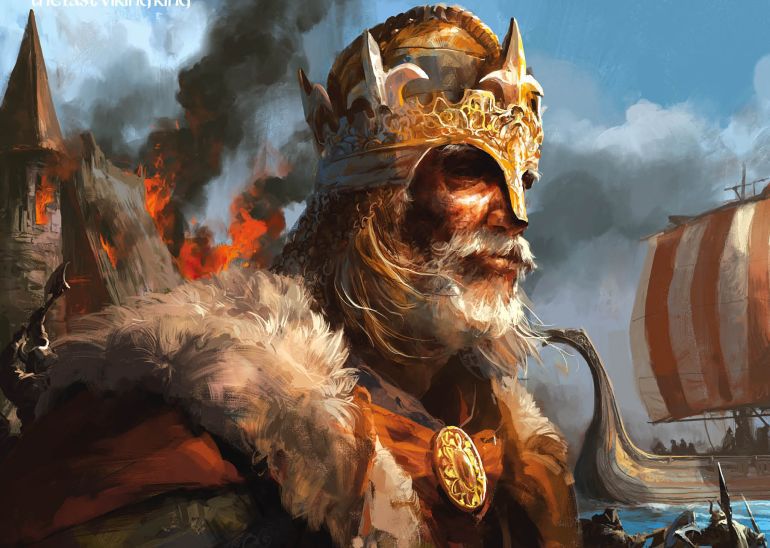
Meanwhile, King Harold was at the head of an army in the south, anticipating William’s invasion from Normandy. My military friends will appreciate what happened next. Harold marched his army north, traveling day and night and covering 190 miles in four days, on foot, completely surprising the Viking army waiting at Stamford Bridge. The Vikings must have looked at the horizon and wondered how a peace party could raise that much dust, only to face the “gleam of handsome shields and white coats-of-mail”.
Thinking they were there to accept submission, Harald’s army had left half their numbers behind to watch the ships. Worse still, many of Harald’s warriors had removed their heavy armor, and scattered over both sides of the River Derwent.
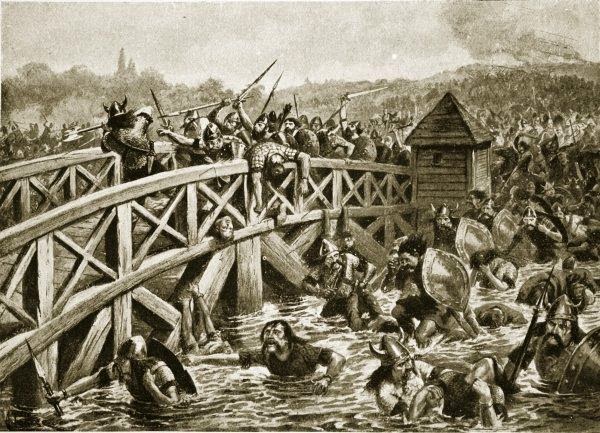
The English army charged through the loose ranks of Norwegians, as the rest struggled to form the skjaldborg (shield wall) on the opposite bank.
According to the Anglo-Saxon Chronicle, one giant Viking warrior stood alone at the top of Stamford Bridge. Swinging the great two handed Dane Axe, for a time this man held back the entire English army, crowding onto the narrow choke point. 40 English soldiers lay mangled and dead in heaps around this beast, when an English soldier moved beneath the bridge, spearing the Viking warrior from below.
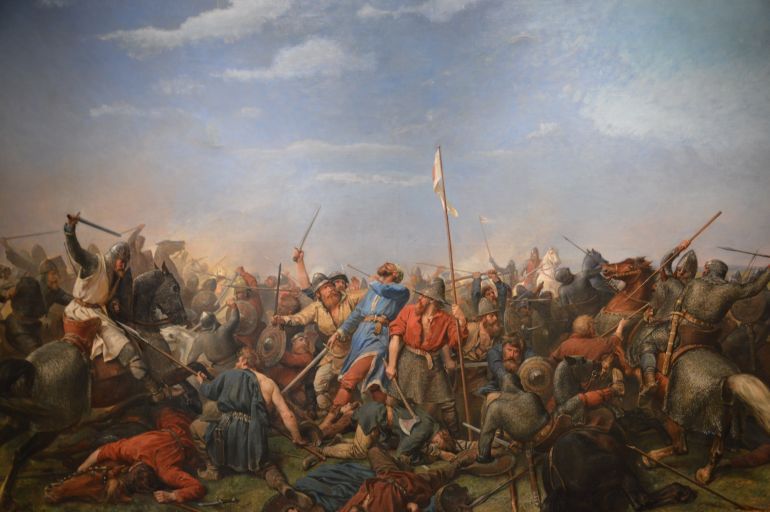
The savagery of the battle can only be imagined. This was before the age of industrialized warfare, when every injury was personally administered with a bladed weapon of some kind. 5,000 of King Harold’s soldiers would be dead before it was over, about a third of his force. Two thirds of King Harald’s Vikings died that day, about 6,000. In the end, Harald Hardrada invoked his berserkergang (the state of going berserk), and waded into his foe, madly hacking and slashing all about him until an arrow found his throat.
Thus ends the tale of the last ‘Great Viking’. Harald was dead, as was his ally Tostig, his reward, in the words of King Harold, “Seven feet of English soil, or as much more as he is taller than other men“.
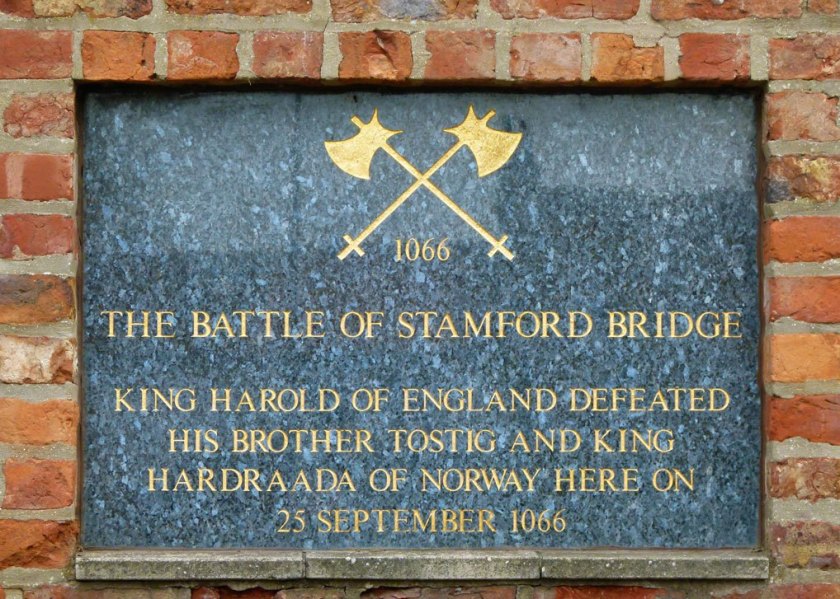
Of 300 ships that had arrived on the 20th, the battered remnants of the Viking army required only 24, to sail away.
Meanwhile, William was in final preparations for his own channel crossing, a voyage many considered unlikely at that late time of year. The Norman landing Harold had been waiting for took place three days later, just as his battered army was disbanding and heading home for the Fall harvest.
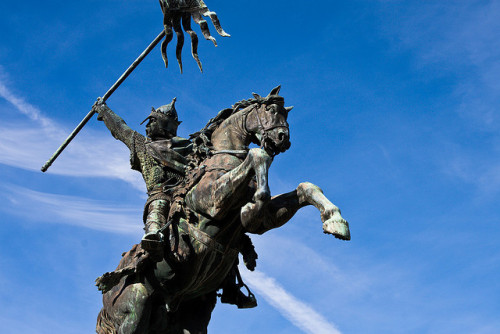 A greatly diminished Anglo Saxon army marched south, meeting the Norman invader in October, 1066. In an age of mechanized warfare, it is odd to think you could have been on a neighboring hill, and not heard a thing. History changed that day, when King Harold took an arrow to the eye, at a place called Hastings. The last of the Anglo Saxon Kings, was dead. William was crowned King of England that December. Henceforward and forever more, William the Bastard would be known as “William the Conqueror”.
Main rivals to the new King were now gone, but William wouldn’t be secure on his throne for another six years. Lands were confiscated from resisting members of the English elite and from lords who had fought and died in service to Harold.

Such lands were enfeoffed, a process of the European middle ages through which land was granted in exchange for feudal allegiance, while the King retained ultimate title. Such confiscations led to revolts and further confiscations, as widows and daughters were forced into marriages with Norman barons.
Castles were built at an unprecedented rate, controlling military strongpoints across the land and, in the words of historian Robert Liddiard, “legitmizing a new elite”. Liddiard remarks that “to glance at the urban landscape of Norwich, Durham or Lincoln is to be forcibly reminded of the impact of the Norman invasion.”

Beginning in 1085, seven or eight panels of commissioners fanned out across the land, taking sworn statements in every shire and village. Elaborate records were compiled of all lands and estates held by the King through his tenants, down to every agricultural plot and fishpond, and its value in pounds.
It was all done for purposes of taxation, particularly to see what was owed during the reign of Edward the Confessor. You can imagine how that went over but, as always, history is written by the victor.
So complete was the Norman conquest that William himself was able to spend three-quarters of his time, defending his interests in France. According to these records, no more than 5% of all lands remained in English hands by 1086.
While exact dates are subject to dispute, the major part of the “Great Survey” is traditionally held to have been bound and presented to King William on this day in 1086, in Salisbury.
 Late in the 12th century, King’s Treasurer Richard FitzNeal likened the Great Survey to the Book of Judgement, the book of “Domesday” (middle English for “Doomsday”), because its pronouncements were final and inviolate, as the Last day of Judgement.
Nothing even remotely similar to the “Domesday Book” would be attempted again, until 1873. For most English towns and villages (most but not all – no Domesday records are known to survive for London or Winchester), the Domesday book remains the starting point of history. The final and dispositive arbiter of lands and titles held, across the British Isles.
If you enjoyed this “Today in History”, please feel free to re-blog, “like” & share on social media, so that others may find and enjoy it as well. Please click the “follow” button on the right, to receive email updates on new articles. Thank you for your interest, in the history we all share.


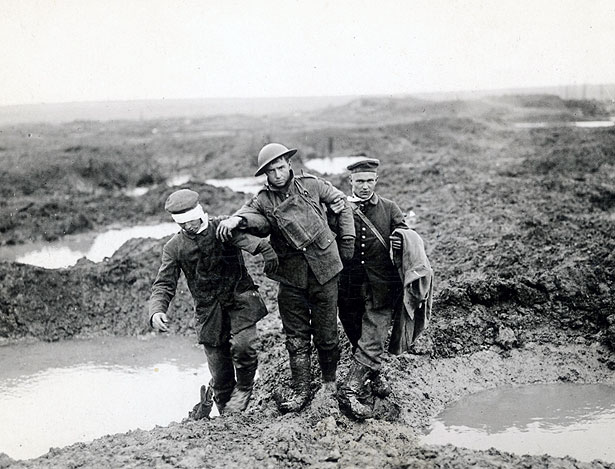
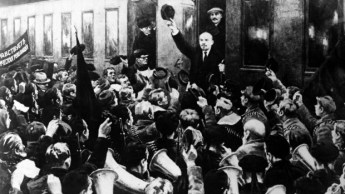 Massive French losses stemming from the failed Nivelle offensive of that same month (French casualties were fully ten times what was expected) combined with irrational expectations that American forces would materialize on the western front led to massive unrest in the French lines. Fully one-half of all French forces on the western front mutinied. It’s one of the great miracles of WW1 that the German side never knew, else the conflict may have ended, very differently.
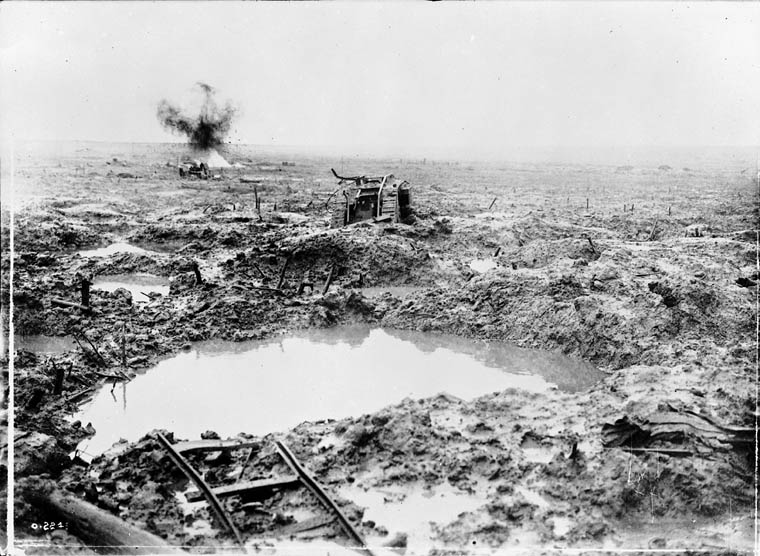
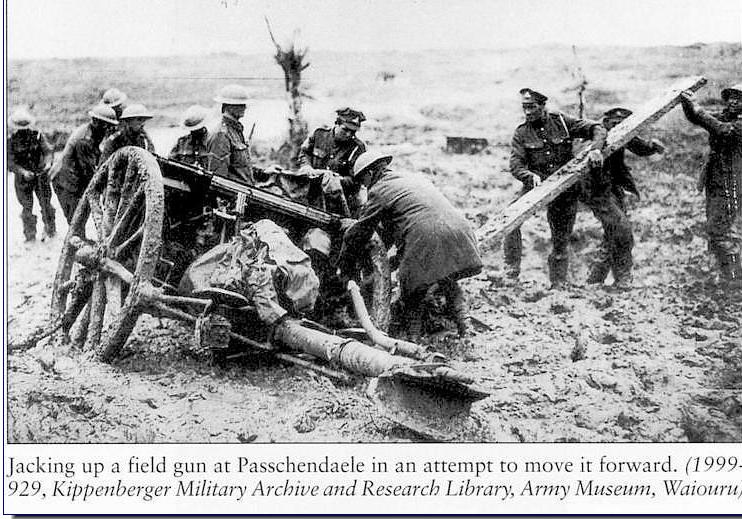 For eighteen months, British miners worked to dig tunnels under Messines Ridge, the German defensive works laid out around the Belgian town of Ypres. Nearly a million pounds of high explosive were placed in some 2,000′ of tunnels, dug 100′ deep. 10,000 German soldiers ceased to exist at 3:10am local time on June 7, in a blast that could be heard as far away, as London.
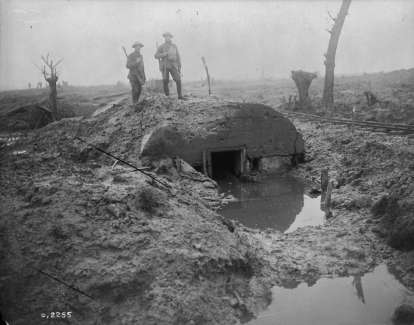
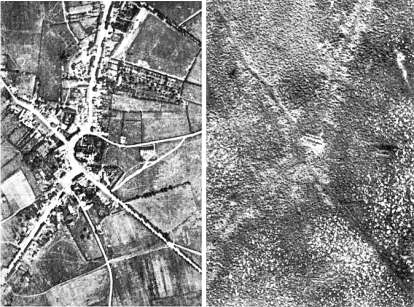
 “Squire nagged and bullied till I went to fight,
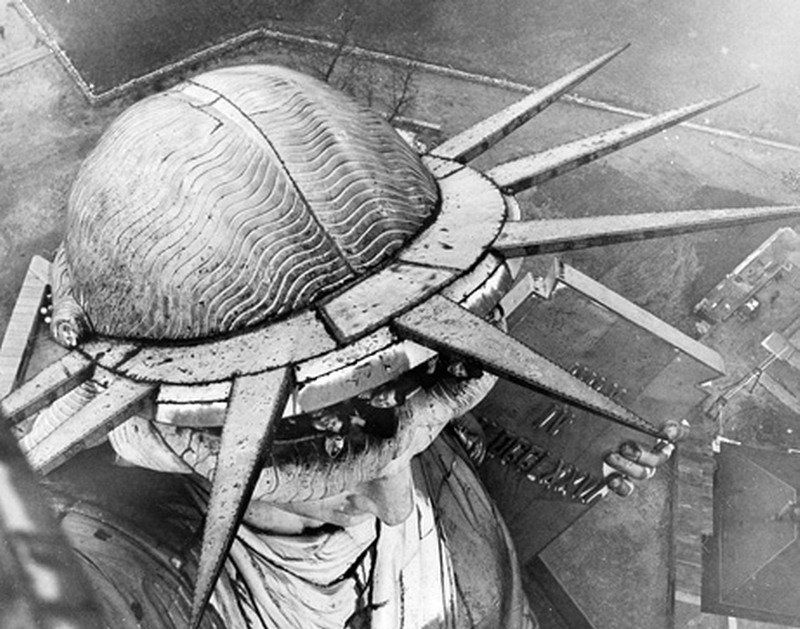
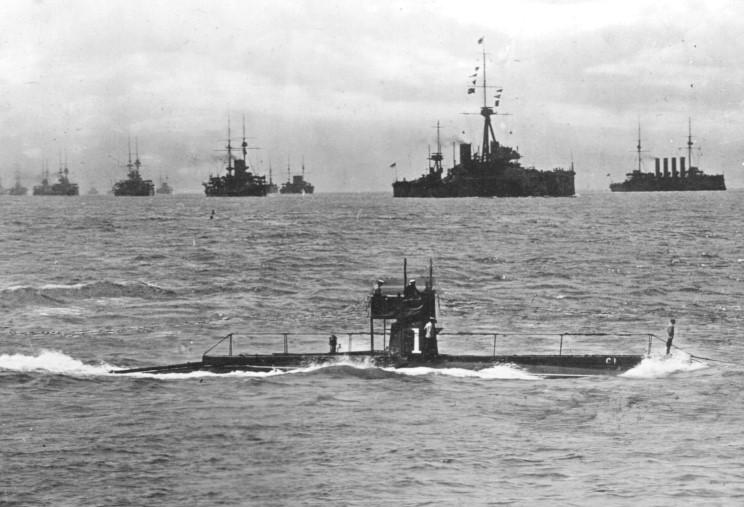 To the Central Powers, such trade had the sole purpose of killing their boys on the battlefields of Europe.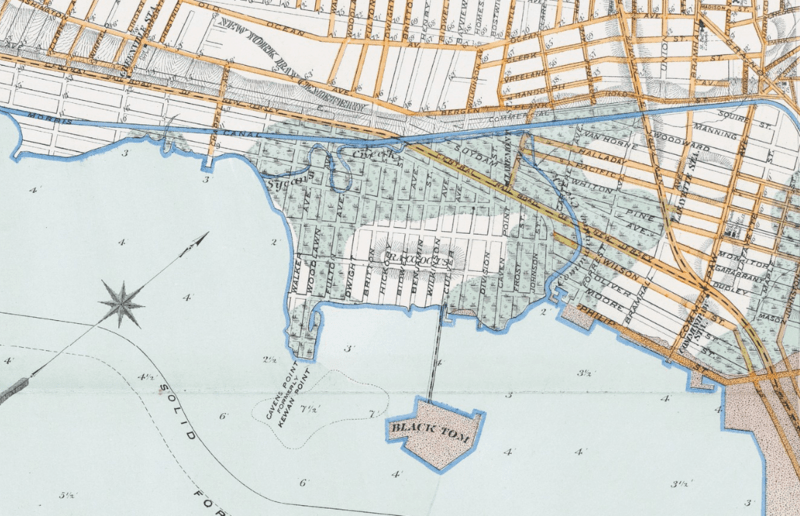
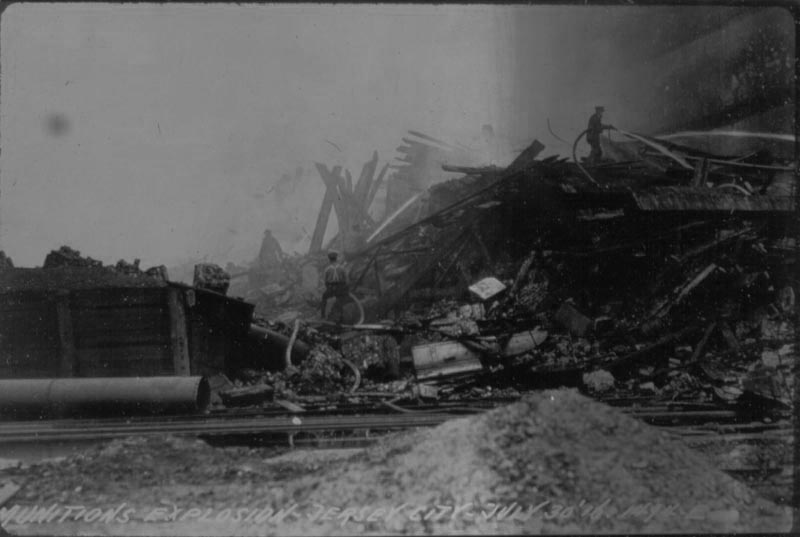
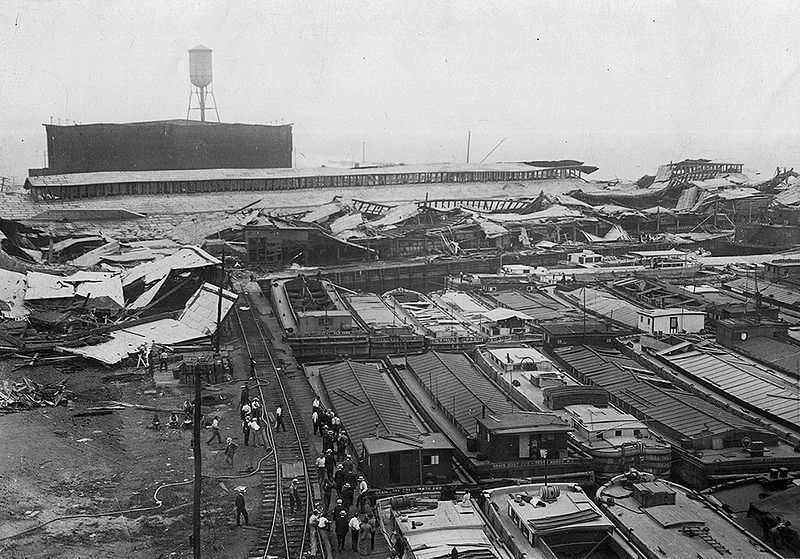 Known fatalities in the explosion included a Jersey City police officer, a Lehigh Valley Railroad Chief of Police, a ten week old infant, and the barge captain.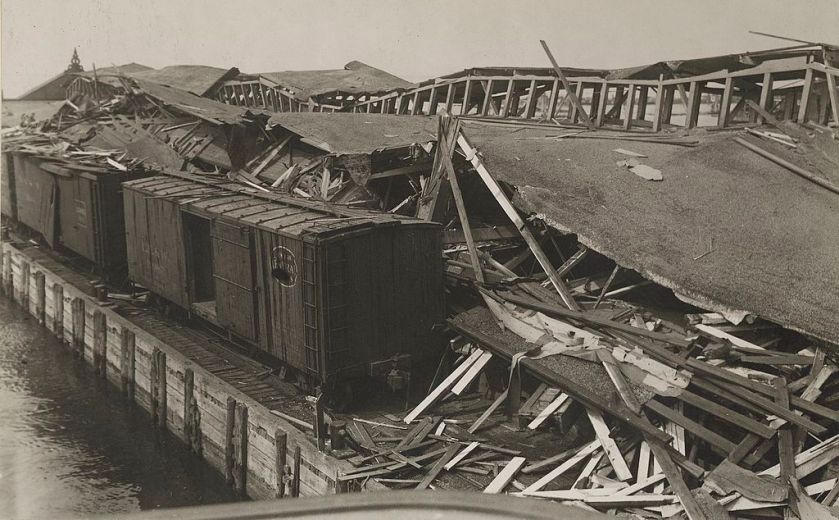

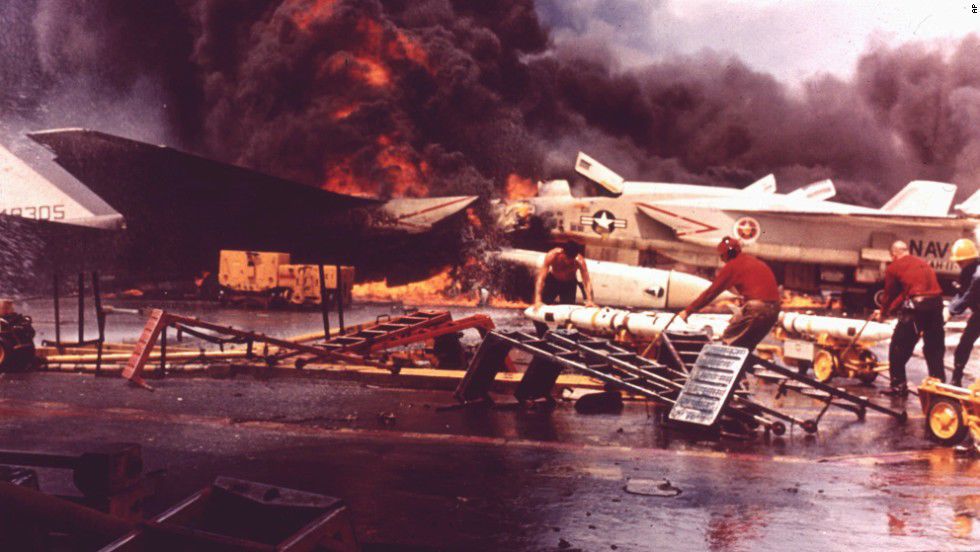
 These older bombs were way past their “sell-by” date, having spent the better part of the last ten years in the heat and humidity of Subic Bay depots. Ordnance officers wanted nothing to do with the Fat Boys, with their rusting shells leaking paraffin, and rotted packaging. Some had production date stamps as early as 1953.
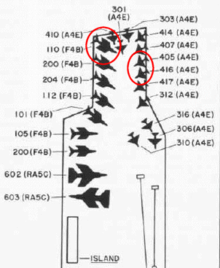 In addition to the bombs, ground attack aircraft were armed with 5″ “Zuni” unguided rockets, carried four at a time in under-wing rocket packs. Known for electrical malfunctions and accidental firing, standard Naval procedure required electrical pigtails to be connected, at the catapult.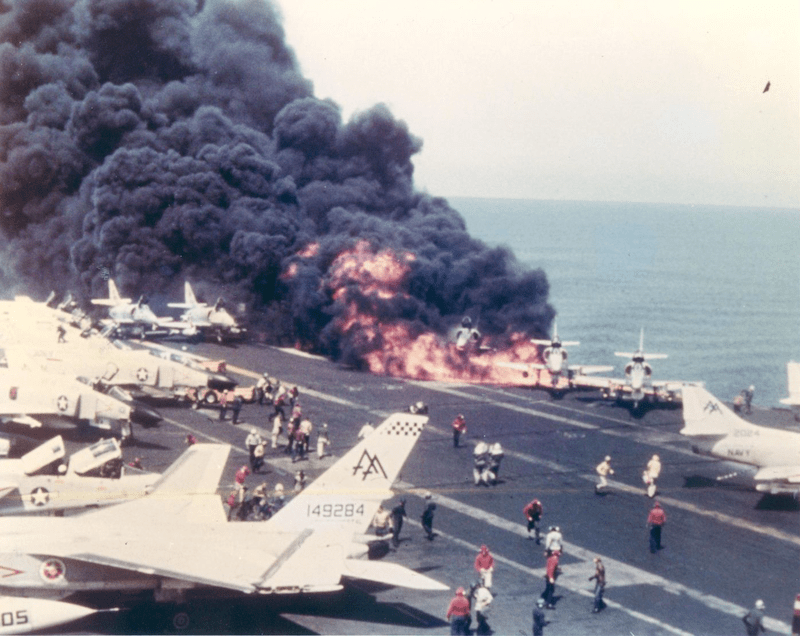


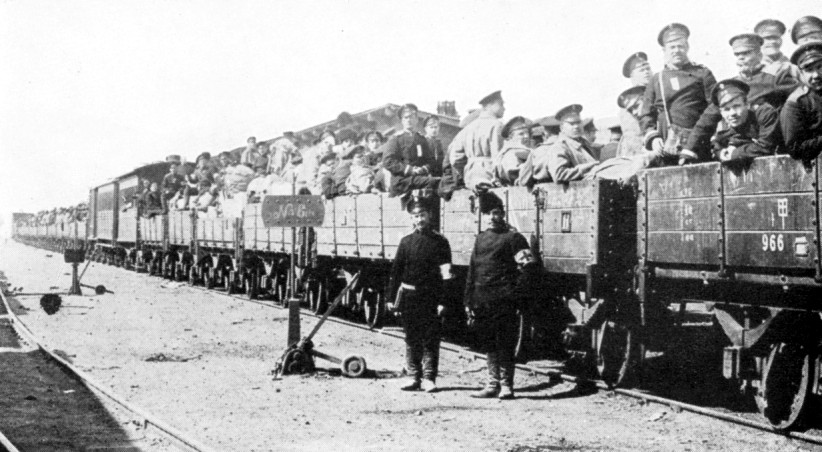
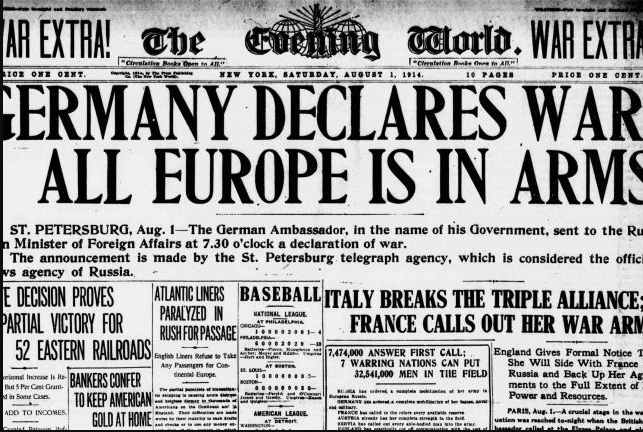
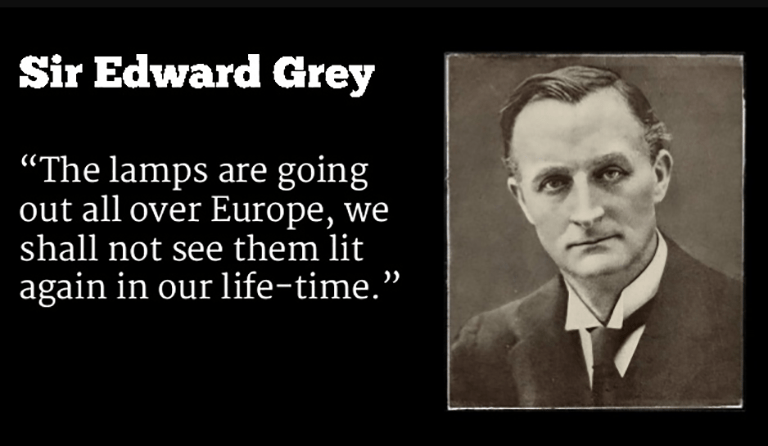


 The Japanese submarine I-58, Captain Mochitsura Hashimoto commanding, fired a spread of six torpedoes at the cruiser, two striking Indianapolis’ starboard bow at fourteen minutes past midnight on Monday, July 30. The damage was massive. Within 12 minutes, the 584-ft, 9,950-ton vessel had rolled over, gone straight up by the stern, and sunk beneath the waves.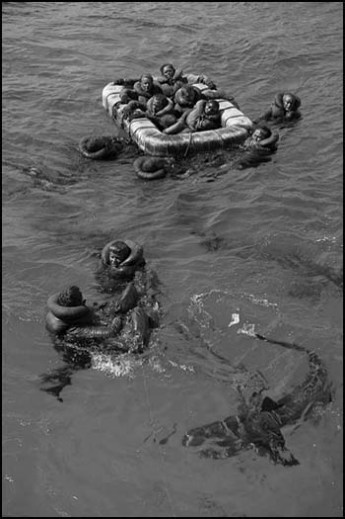
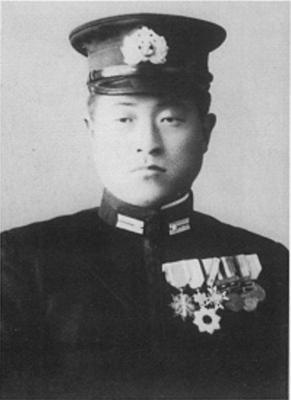
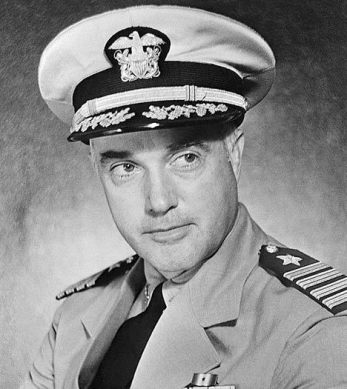
 He couldn’t let it end there. Scott began to attend Indianapolis survivors’ reunions, at their invitation, and helped to gain a commitment in 1997 from then-Representative Joe Scarborough that he would introduce a bill in Congress to exonerate McVay the following year.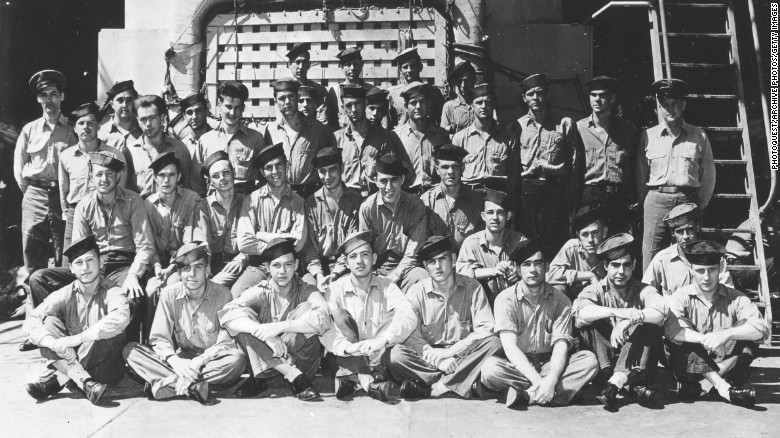

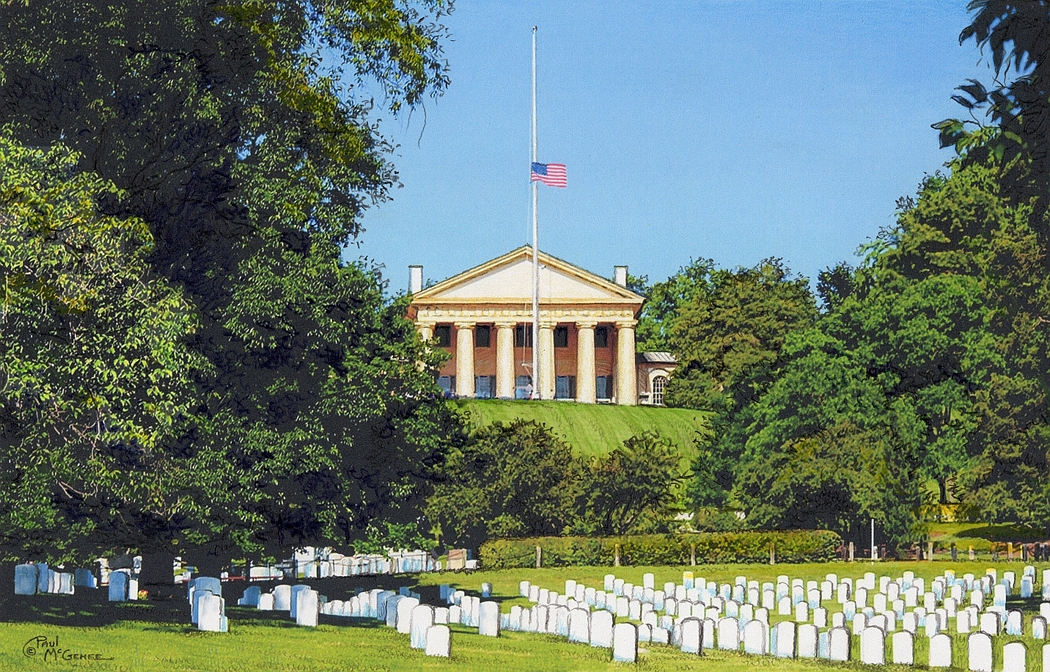
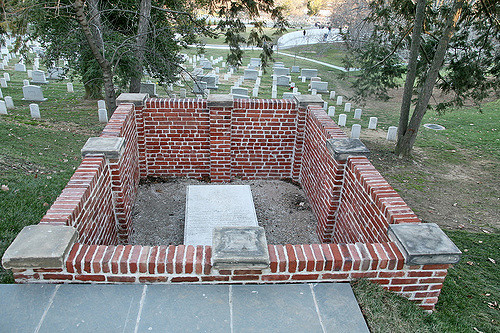
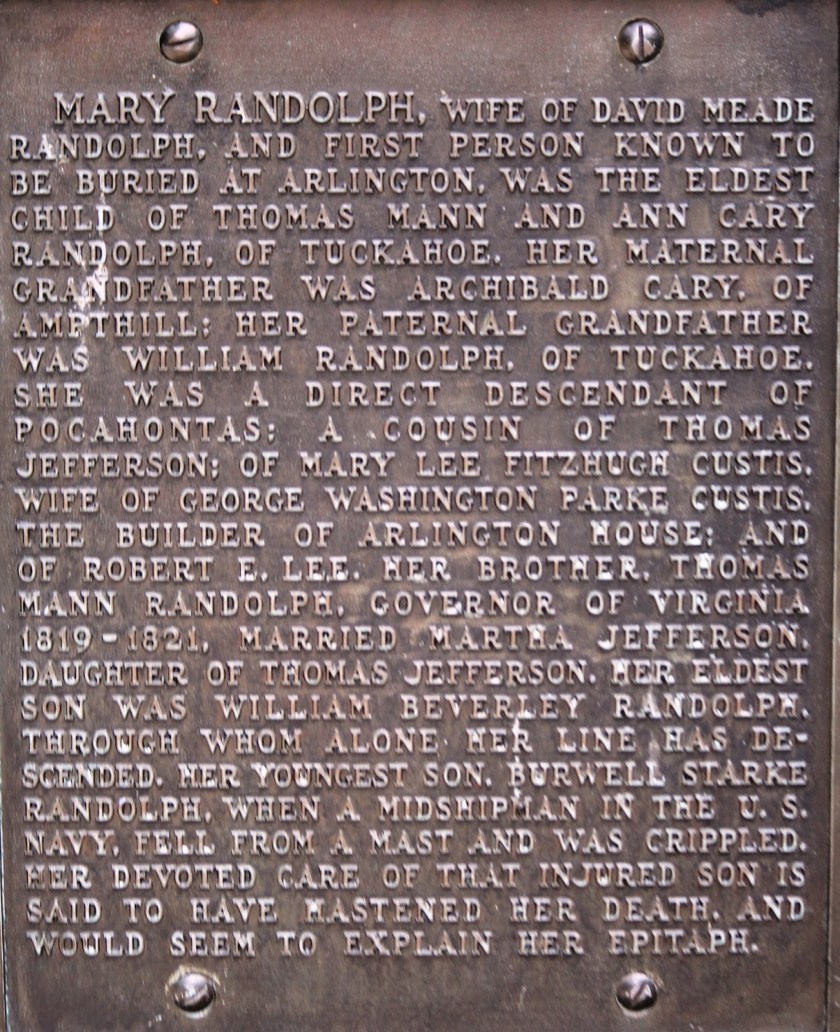
 The last line of the inscription, “a victim to maternal love and duty” refers to her youngest surviving son, Midshipman Burwell Starke Randolph, who suffered a fall from a high mast in 1817, while serving in the Navy. Both of his legs were broken and never healed properly. When Mary passed away in 1828, Randolph remarked that his mother had sacrificed her own life in care of his.
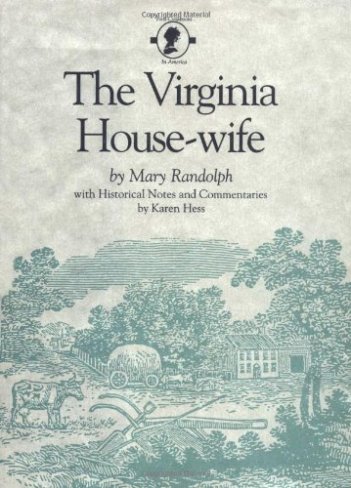 Mrs. Randolph was an early advocate of the now-common use of herbs, spices and wines in cooking. Her recipe for apple fritters calls for slices of apple marinated in a combination of brandy, white wine, sugar, cinnamon, and lemon rind.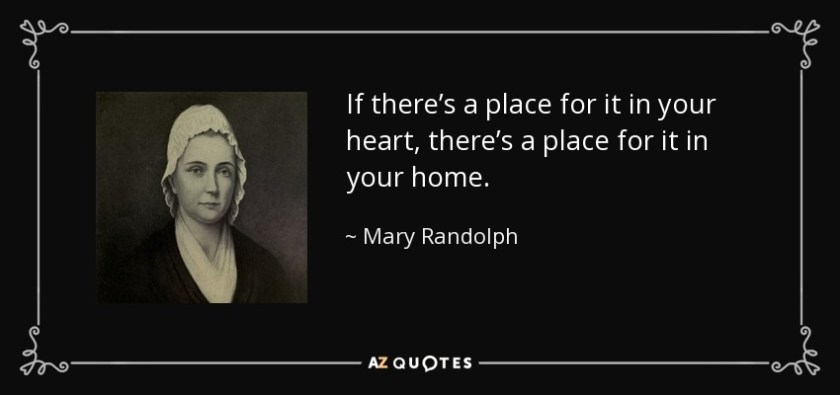


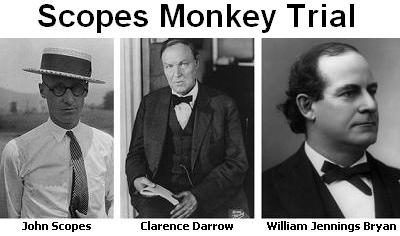 Bryan complained that evolution taught children, that humans were no more than one among 35,000 mammals. He rejected the idea that humans were descended from apes. “Not even from American monkeys, but from old world monkeys”. The ACLU wanted to oppose the Butler Act on grounds that it violated the teacher’s individual rights and academic freedom, but it was Darrow who shaped the case, taking the position that the theistic and the evolutionary views were not mutually exclusive.
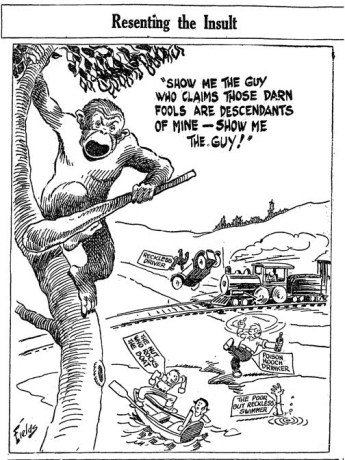 What had begun as a publicity stunt soon became an overwhelming media event. 200 newspaper reporters from all over the country arrived in Dayton, along with two come all the way from London. Twenty-two telegraphers sent out 165,000 words a day over thousands of miles of telegraph wires, hung specifically for the purpose.
 After eight days of trial, the jury took only nine minutes to deliberate, finding Scopes guilty on July 21. The gym teacher was ordered to pay a $100 fine, equivalent to something like $1,300, today. Scopes’ conviction was overturned by the Tennessee Supreme Court, on the basis that state law required fines over $50 to be decided by a jury, and not by the judge presiding.
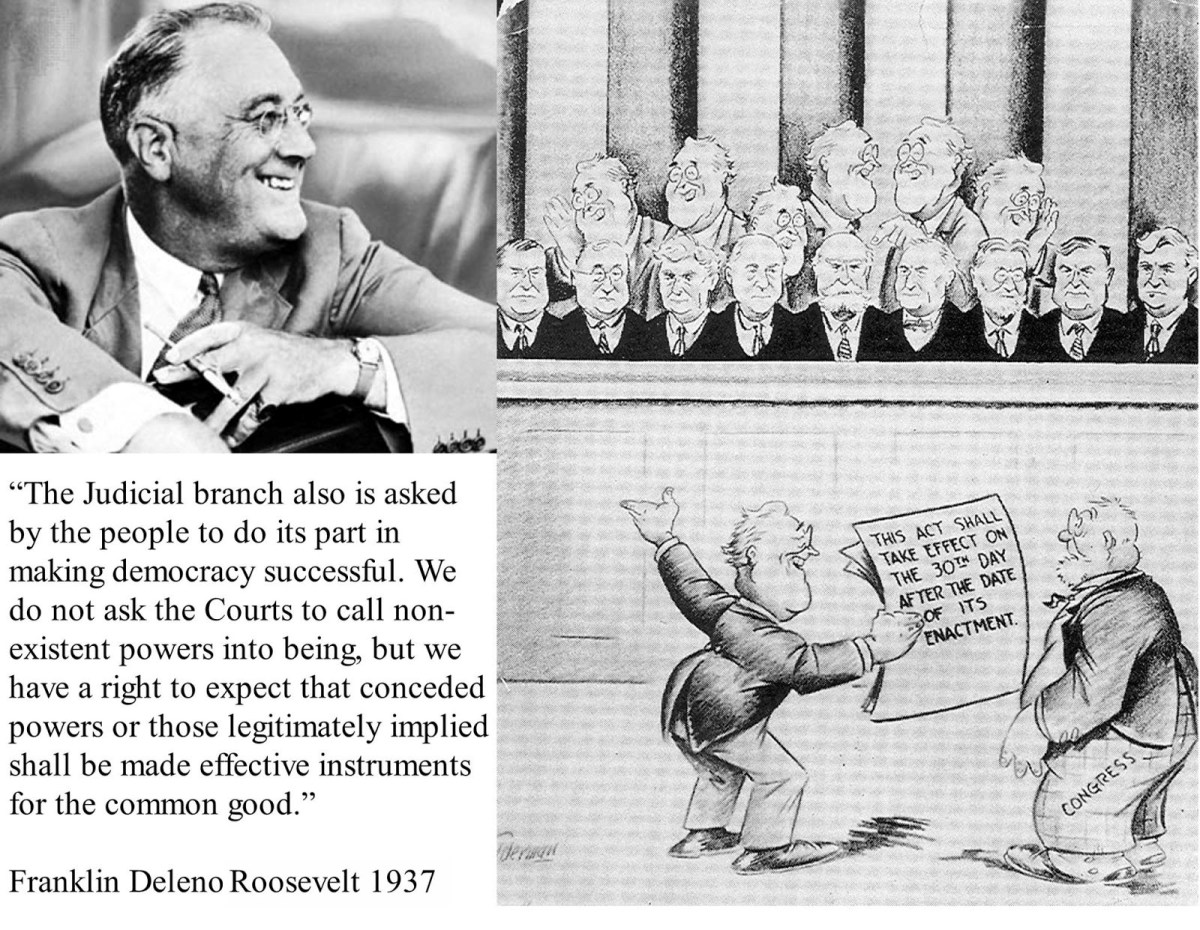
 Article III, Section 1 of the United States Constitution creates the highest court in the land. The relevant clause states that “The judicial power of the United States, shall be vested in one Supreme Court, and in such inferior courts as the Congress may from time to time ordain and establish“. Nowhere does the document specify the number of justices.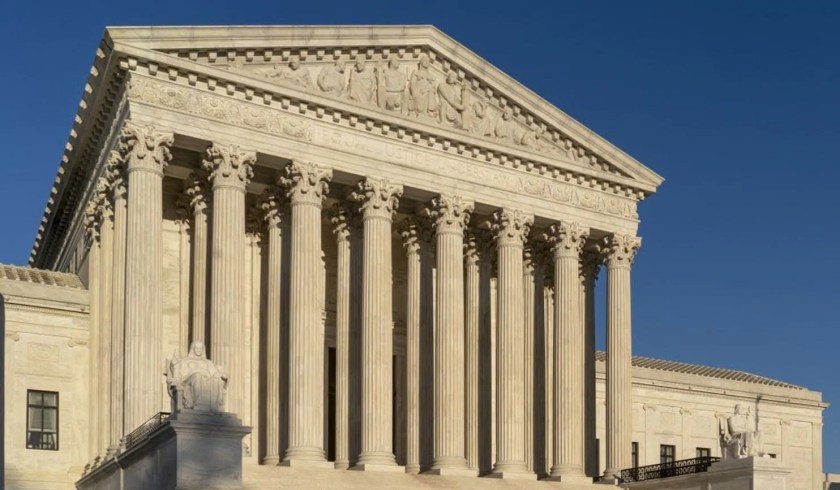


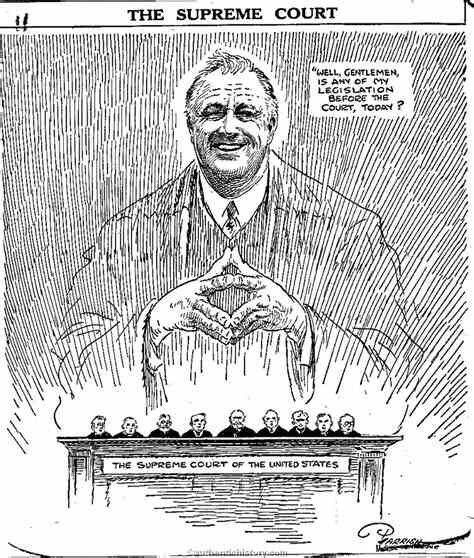
 The full Senate voted on July 22, 1937, to send the bill back to the Senate Judiciary Committee, where provisions for additional justices were stripped from the bill. A modified version passed in August, but Roosevelt’s “Court Packing” scheme was dead.

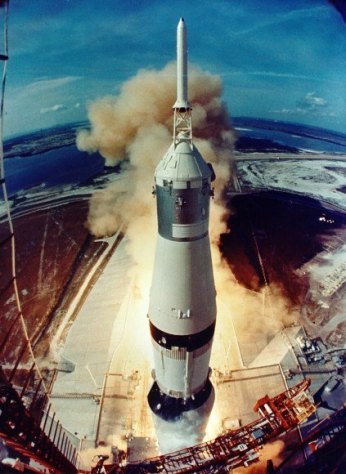 Today, the accomplishments of the Apollo series of spacecraft seem foreordained, the massive complexities of the undertaking, forgotten.
 The 363′, 6,698,700-pound Saturn V launch vehicle lifted off from the John F. Kennedy Space Center on Merritt Island, Florida on July 16, carrying mission commander Neil Armstrong, Lunar module pilot Edwin “Buzz” Aldrin, and Command Module Michael Collins.

 These first two humans to set foot on the moon spent about 2½ hours on the surface. The pair collected nearly 50-lbs of material for transport back to earth, planting the American flag where it most likely remains, to this day.

 Historical Easter Eggs - Today in History
You must be logged in to post a comment.