

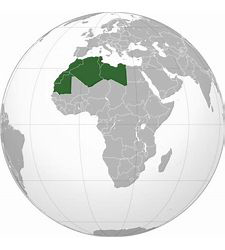
On the northern coast of Africa lies the westernmost part of the Arab world, a region extending from Egypt in the east to the Atlantic Ocean and encompassing the modern nations of Algeria, Libya, Mauritania, Morocco and Tunisia.
Historically, the English speaking world referred to this region, the Maghreb (Arabic: المغرب al-Maghrib – “The West”) as the Barbary Coast, a term deriving from the Berber peoples of the region.
Cape Spartel forms the high point of northwestern Africa and the southern boundary, of the Strait of Gibraltar. The Moroccan city of Tangier may be found there, an ancient metropolis once given as part of a dowry for a Portuguese Princess. Tangier was home to the first American property outside the continental United States, a two-story masonry building presented in 1821 by Sultan Moulay Suliman and used today, as the museum of the American Legacy, in Tangier.

Fun fact: Believing strongly in the benefits of international trade, Moroccan Sultan Muhammad III threw his ports open to a number of foreign nations in December 1777, including the United States. So it is that Morocco became the first nation whose head of state, publicly recognized the fledgling nation. The Moroccan–American Treaty of Friendship signed by the Sultan along with Thomas Jefferson and John Adams in 1786 remains the longest unbroken treaty, in US history.
Once deemed an international city by foreign colonial powers, Tangier has long been a favorite of spies, artists and an assortment of thieves, international bankers and business types. But perhaps I repeat myself.

The rock group Def Leppard once played the nearby Caves of Hercules, the first of three concerts played on as many continents in a single day and intended to get them, into the Guinness Book of World Records. The novel Naked Lunch penned by William Burroughs, that oddest of oddball stories with no beginning, no end and no story to tell, was written in Tangier.
The Greek-American tycoon Ion “Jon” Perdicaris once owned a summer home in the hills above Tangier, a vine covered villa he called “Place of Nightingales”, complete with a tame demoiselle crane and a pair of pet monkeys, who ate orange blossoms. On May 18, 1904, Mr. Perdicaris sat down to dine with Ellen, Mrs. Perdicaris, Ellen’s son by a previous marriage Cromwell Oliver Varley (don’t ask), and Mrs. Varley.

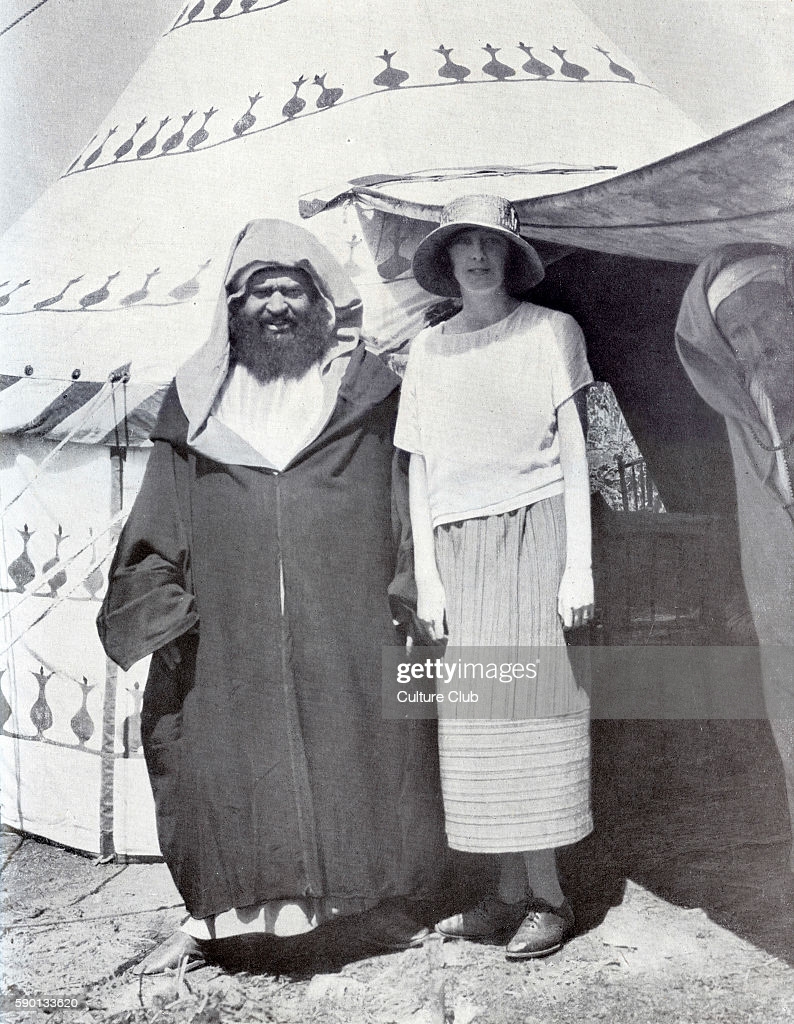
A pandemonium of screams and barking dogs broke out in the servant’s quarters and Perdicaris thought it was yet another fight between his German housekeeper and French-Zouave chef. Not a chance. Two terrified servants came pelting into the room pursued by armed Moors who beat the pair with rifle butts and knocked Mrs. Perdicaris, to the ground. One put a knife to the Varley’s throat when a great, bearded sheik strode into the room. With a great sweep of his arm and a theatricality worthy of Sir Patrick Stewart playing King Lear, the newcomer proclaimed “I am the Raisuli!”
Mr. Perdicaris and his step-son were about to be kidnapped by the notorious Mulai Ahmed er Raisuli, leader of several hill tribes and the last, of the Barbary pirates.
In 1901, two American missionaries were kidnapped in southwestern Bulgaria, then a part of the Ottoman Empire. After six months’ negotiations, the “Miss Stone Affair” culminated in the payment of 14,000 gold Turkish liras, a sum equivalent to over thee million, today. The episode is considered the first American hostage crisis of the modern era. At the time the kidnapping received widespread coverage, as did the ransom.
Small wonder it is then that “The Raisuli” would have a hand, at kidnapping a wealthy American.
Mulai Ahmed er Raisuli, the son of a prominent tribal leader, was devoted to a life of womanizing, and stealing cattle and sheep. As a younger man, Raisuli was once invited to dinner by his cousin and foster brother Abd-el-Rahman Abd el-Saduk, Pasha of Tangier, only to be set upon and beaten and chained to a wall, in a dungeon.
Raisulli lived four years chained to that wall, surviving only by the food brought, by friends. Thoroughly hardened and filled with hate by such an experience, Raisulli was released four years later in a general amnesty, by Mulai Abd al-Aziz IV, the incoming Sultan of Morocco.

Despite his release, Raisulli grew to distrust the Sultan, a feckless politician with a weakness for European luxuries and far to0 deferential to the foreign powers, jockeying for control in Morocco. He returned to a life of crime but now he was more ambitious. Raisulli ‘s first kidnapping victim was the English Times correspondent Walter Burton Harris, a man kidnapped not for money but to secure the release from prison, of some of the kidnapper’s allies.
To his captives, Raisulli was capable of extravagant courtesies, worthy of the age of chivalry. He was also a man of extraordinary cruelty, known for putting out the eyes of opponents, with red-hot copper coins. He once sent the head of an opponent back where it came from, in a basket of melons.
Back at the Place of Nightingales, Ellen Perdicaris notified Consul General Samuel Gummere, of the kidnapping.
Theodore Roosevelt lived in the White House at this time, President only by virtue of the assassination of President William McKinley. With 1904 being an election year, “Teddy” was eager to be elected, in his own right.
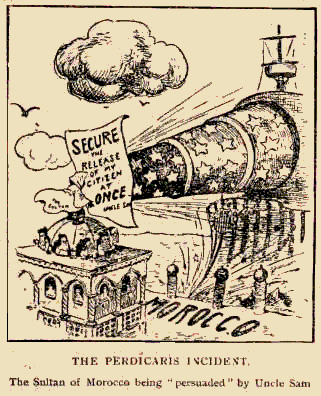
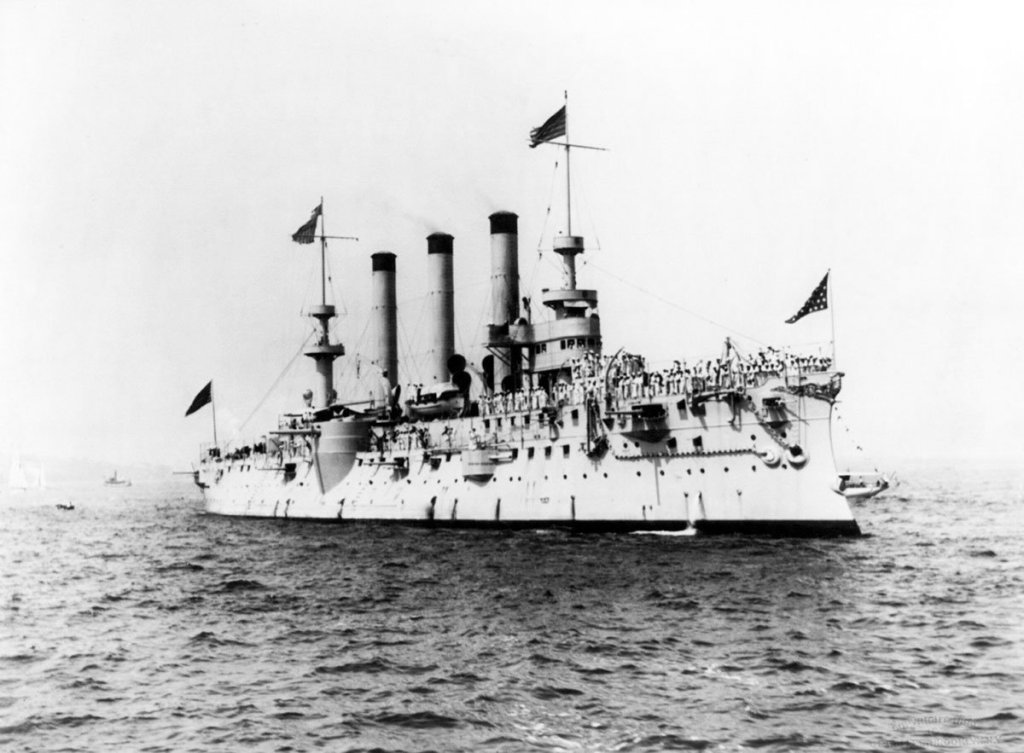
Roosevelt jumped into action on receiving Gummere’s telegram, sending four warships from the southern fleet, to Tangier.
Raisulli demanded a ransom of $55,000, the release of several “political prisoners”, the imprisonment of his cousin the hated Pasha & several other government officials and personal control over two of the wealthiest districts, in Morocco. As negotiations dragged on, he raised the stakes to $70,000 and six districts.
Forty years earlier, John Hay stepped onto the pages of history as personal secretary, to President Abraham Lincoln. It is John Hay who gives his name to one of five known copies, of the Gettysburg Address.
In June 1904, Secretary of State John Hay wrote to the Republican National Convention: “This government wants “Perdicaris Alive or Raisuli Dead!”. The phrase would help boost Roosevelt to re-election but turned out to be embarrassing. More on that, later.

Spain, Great Britain and France sent warships of their own and prevailed upon the Sultan, to accede to the kidnapper’s demands. Raisulli would receive his money and his six districts however, graft and cruelty toward his poor “subjects” would lead to his ouster, two years later.
Now for Roosevelt. Gregory Perdicaris, Ion’s father, came to the United States at the age of 26, as a student. The elder Perdicaris was naturalized an American citizen, later marrying the daughter of a wealthy family and settling in her home state, of South Carolina. Ion Perdicaris was born in Athens where his father was working, as the American Ambassador.
Born as he was to American parents, Ion Perdicaris was himself an American citizen. Until the Civil War arrived and he renounced it, to avoid being conscripted to fight for the Confederacy.
Forty years later, the President of the United States sent the US southern fleet to rescue…a Greek.





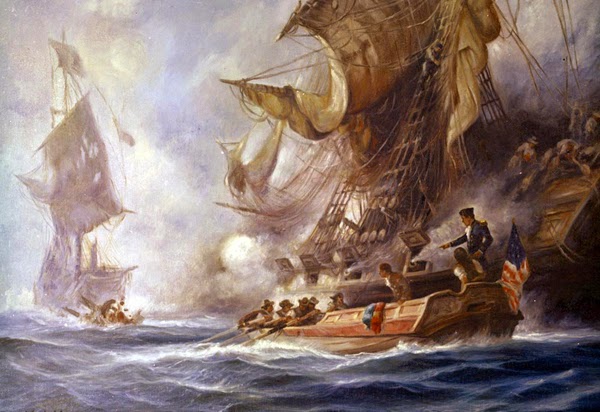
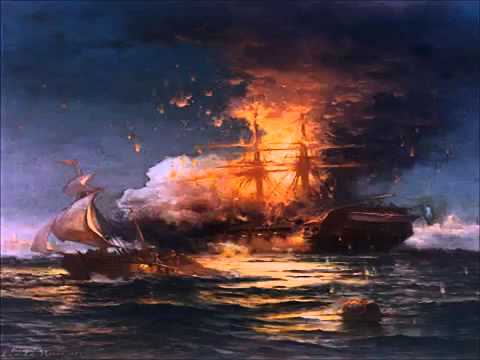 On the evening of February 16, 1804, Decatur entered Tripoli Harbor with a force of 74 Marines. With them were five Sicilian volunteers, including pilot Salvador Catalano, who spoke fluent Arabic. Disguised as Maltese sailors and careful not to draw fire from shore batteries, Decatur’s force boarded the frigate, killing or capturing all but two of its Tripolitan crew. Decatur and his marines had hoped to sail Philadelphia out of harbor, but soon found she was in no condition to leave. Setting combustibles about the deck, they set the frigate ablaze. Ropes burned off, setting the Philadelphia adrift in the harbor. Loaded cannon cooked off as the blaze spread, firing random balls into the town. It must have been a sight, when gunpowder stores ignited and the entire ship exploded.

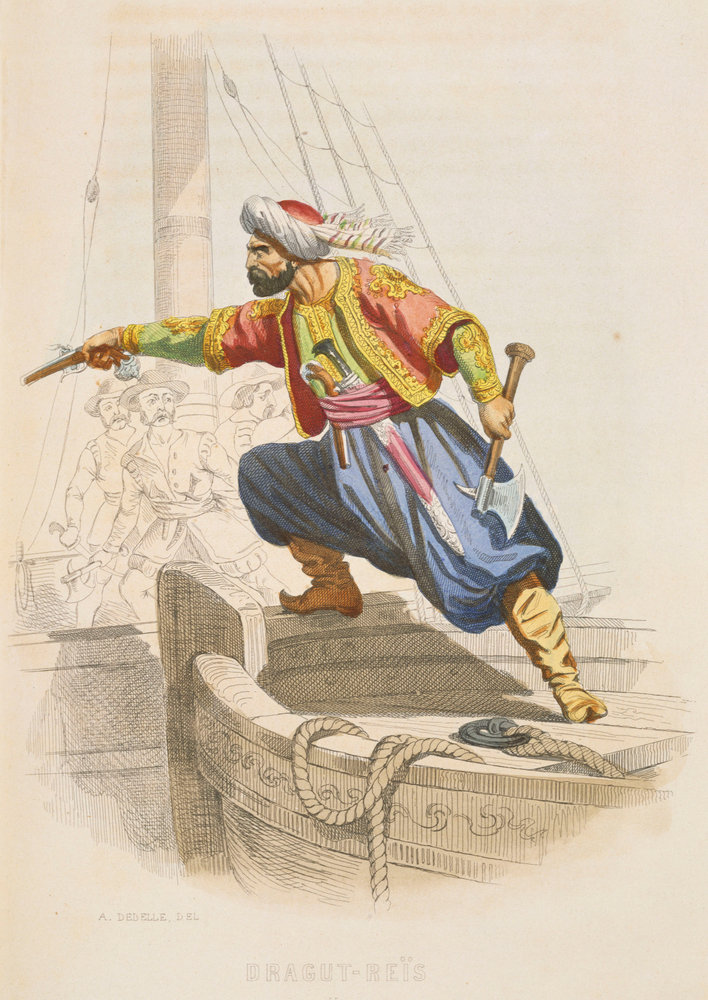
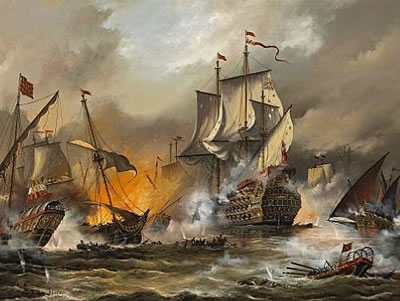 Barbary pirates were a problem for Mediterranean shipping, and throughout parts of the Atlantic. Predominantly North African Muslims with the occasional outcast European, the Barbary pirates operated with the blessing of the Ottoman Empire, the Barbary Coast states of Algiers, Tunis & Tripoli, and the independent Sultanate of Morocco. The Barbary Corsairs had long since stripped the shorelines of Spain and Italy in search of loot and Christian slaves.
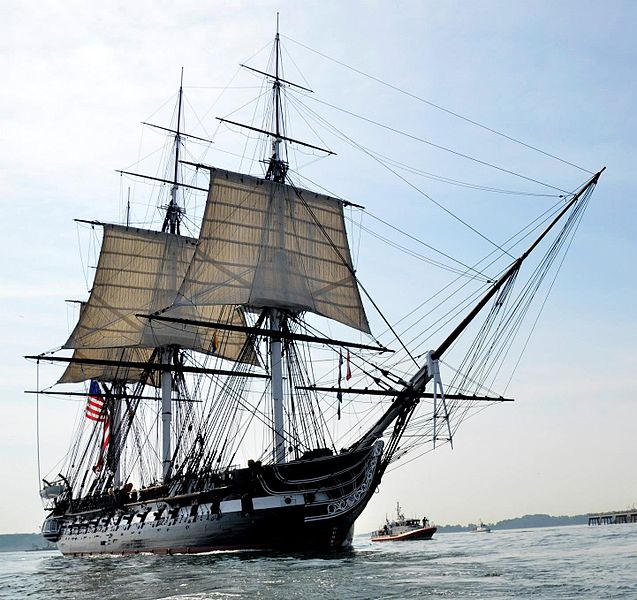 Constitution’s first duties involved the “quasi-war” with France, but this was not the France which helped us win our independence. France had been swallowed up in a revolution of its own by this time. Leftists calling themselves “Jacobins” had long since sent their Bourbon King and his Queen Consort to the guillotine. Marie-Joseph Paul Yves Roch Gilbert du Motier,
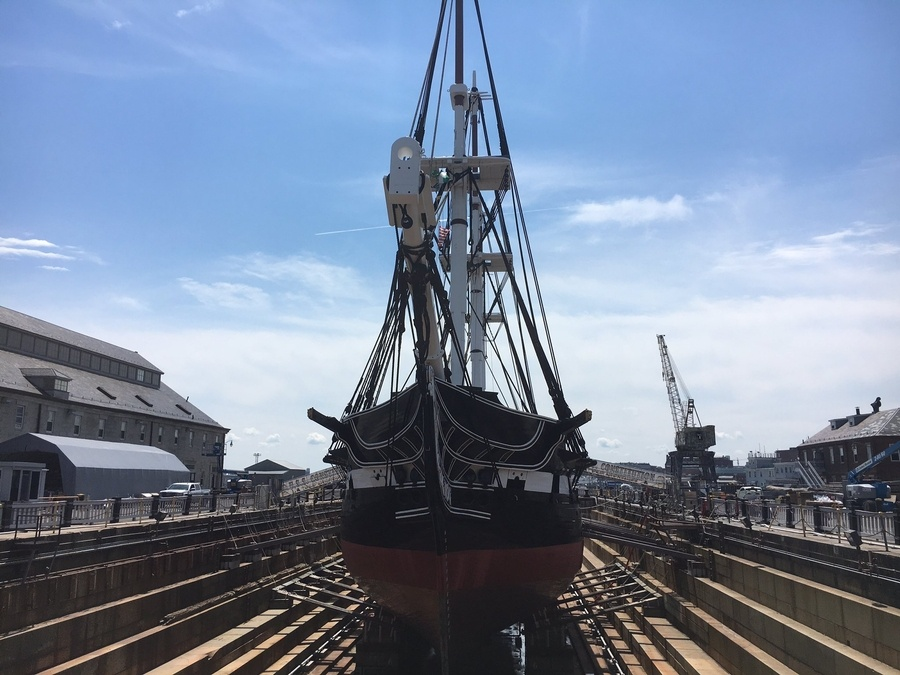
 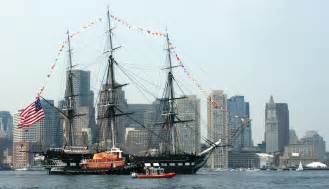 Two months after the War of 1812 broke out in June, Constitution faced off with the 38 gun HMS Guerriere, about 400 miles off the coast of Halifax. Watching Guerriere’s shots bounce off Constitution’s 21” thick oak hull, an American sailor exclaimed “Huzzah! her sides are made of iron!” Guerriere was reduced to an unsalvageable hulk in twenty minutes, and the nickname “Old Ironsides” was born.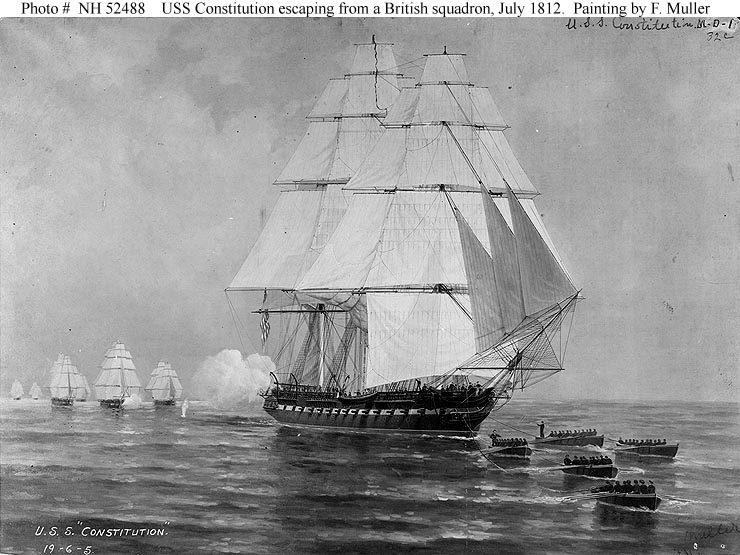

 Historical Easter Eggs - Today in History
You must be logged in to post a comment.