“You follow the rules of war for you – not for your enemy. You fight by rules to keep your humanity”.
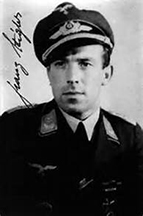
At the age of 26, Franz Stigler was an Ace. For the Luftwaffe pilot of a Messerschmitt Bf-109 fighter, some of his kills had been revenge. Payback for the death of his brother August, earlier in the war. But Stigler was no Nazi. This was a German Patriot with 22 confirmed kills.
On December 20, 1943, the fighter pilot needed one more for a Knight’s Cross. He tossed his cigarette aside and climbed into his fighter as the crippled American B17 bomber lumbered overhead. This was going to be an easy kill.
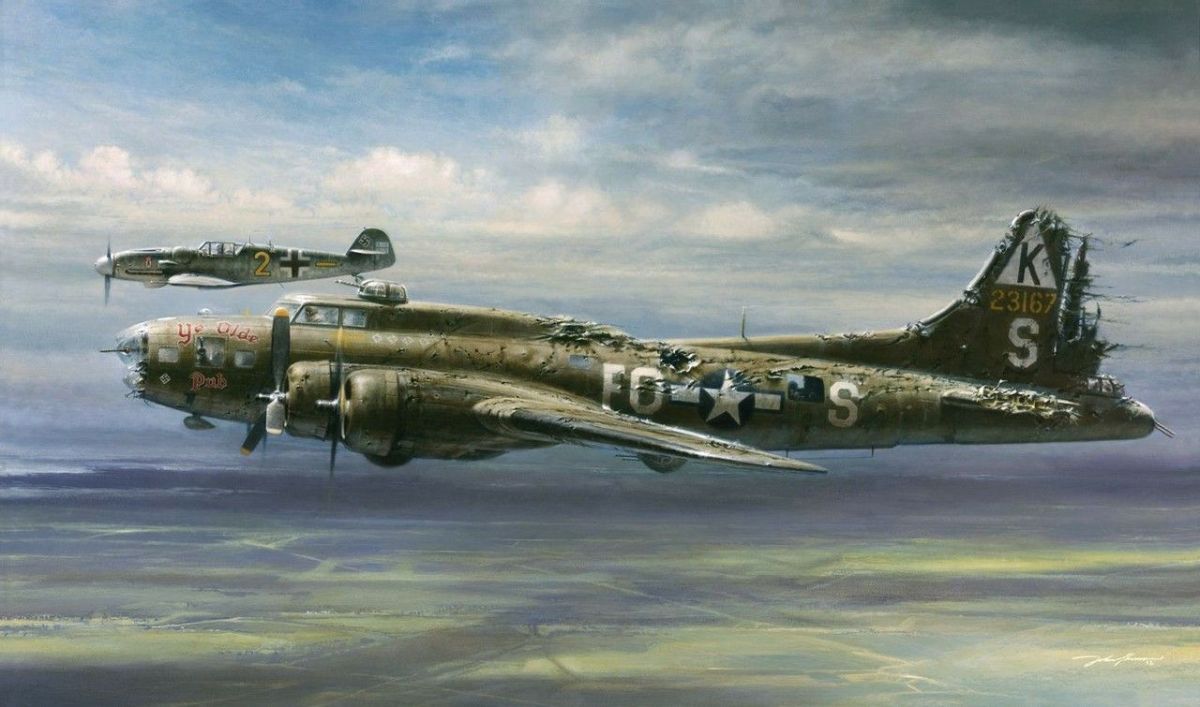
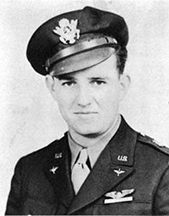
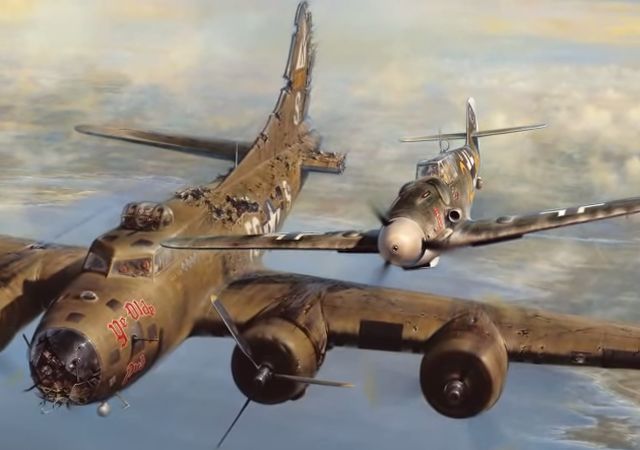
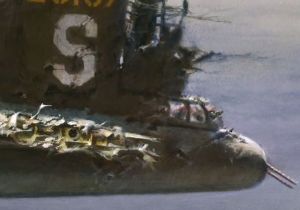
Up above, 21-year-old Charles Brown was at the throttle of that B17, an aircraft dubbed “Ye Olde Pub”. The earlier attack on the munitions factory in Bremen was a success, but the pilot and crew paid a heavy price for it. Their airplane had been savaged by no fewer than 15 German fighters. Great parts of the air frame were torn away, one wing severely damaged and part of the tail ripped off. The aircraft’s Plexiglas nose was shattered and the #2 engine seized. Six of the ten-man crew were wounded. The tail gunner was dead, his frozen blood forming icicles over silent machine guns. Brown himself had been knocked out at one point, coming around just in time to avert a fatal dive.
The aircraft was completely alone and struggling to maintain altitude, the American pilot well inside German air space when he looked to his left and saw his worst nightmare. Three feet from his wing tip was the sleek gray shape of a German fighter, the pilot so close that the two men could look into each other’s eyes.
Brown’s co-pilot, Spencer “Pinky” Luke said “My God, this is a nightmare.” “He’s going to destroy us,” came the reply. This had been Brown’s first mission. He was sure it was about to be his last.
Before his first mission, Stigler’s commanding officer, Lt. Gustav Roedel, had said “Honor is everything here. If I ever see or hear of you shooting at a man in a parachute, I will shoot you down myself”. Stigler must have remembered those words as he watched the wounded, terrified US airmen inside the B17, some still helping one another with their injuries. “You follow the rules of war for you – not for your enemy, Roedel had said. “You fight by rules to keep your humanity”.
Tail Gunner, Ye Olde Pub
The German had to do something. The Nazis would surely shoot him for treason if he was seen this close without completing the kill. One of the American crew was making his way to a gun turret as the German made his decision. Stigler saluted his adversary, motioned with his hand for the stricken B17 to continue, and then peeled away.
Ye Olde Pub made it, crossing 250 miles of the frozen North Sea before final landing in Norfolk.
More than 40 years later, the German pilot was living in Vancouver, Canada. Brown took out an ad in a fighter pilots’ newsletter.
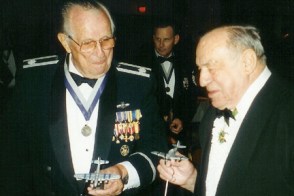
It said that he was searching for the man ‘who saved my life on Dec. 20, 1943.’ Stigler saw the ad and the two men met once again in 1987. “It was like meeting a family member”, Brown said at that first meeting, “like a brother you haven’t seen for 40 years”.
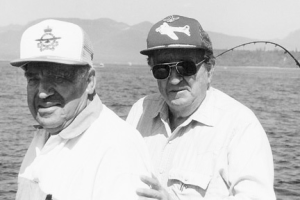
The two became close friends and occasional fishing buddies. Each man passed on in 2008, about six months apart. Stigler was 92, Brown, 87.
Their story is told in a book called “A Higher Call”, if you want to know more about it. In their obituaries, each was mentioned as the other man’s “special brother”.
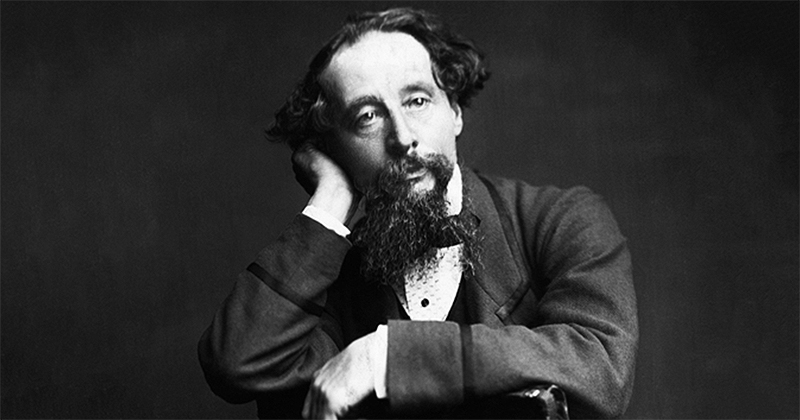
The 29-year-old Charles Dickens was already a well-known and popular author when he stepped onto the shores of Boston Harbor on January 22, 1842
It’s hard not to love the traditions of the Christmas season. Getting together with loved ones, good food, the exchange of gifts and our favorite Christmas specials, on TV. I always liked a Charlie Brown’s Christmas. And of course there’s the Charles Dickens classic, “A Christmas Carol”, set against the vast brick factory buildings of Lowell, Massachusetts, along the Merrimack River.
Wait … What?
“I sincerely believe that the public institutions and charities of this capital of Massachusetts are as nearly perfect as the most considerate wisdom, benevolence, and humanity, can make them.”
Charles Dickens
The 29-year-old Charles Dickens was a well-known and popular author when he stepped onto the shores of Boston Harbor on January 22, 1842.
“The Pickwick Papers,” “Oliver Twist,” “Nicholas Nickleby”; all were behind the young author when he came to America, perhaps to write a travelogue, or maybe looking for material for a new novel.
Dickens traveled to Watertown, to the Perkins School for the Blind, where Helen Keller and her teacher Anne Sullivan underwent a unique, mutual education, a half-century later. He also visited a school for neglected boys, in Boylston. He must have thought the charitable institutions in his native England suffered by comparison since he later wrote, “I sincerely believe that the public institutions and charities of this capital of Massachusetts are as nearly perfect as the most considerate wisdom, benevolence, and humanity, can make them.”
That February, the author took a train north to the factory town of Lowell, visiting the textile mills and speaking with the “mill girls”, the women who worked in those plants. Once again, Dickens seemed to believe that his native England suffered in the comparison. He spoke of the new buildings and the well dressed, healthy young women who worked there, no doubt comparing them with the degraded conditions then plaguing the teeming slums and of London.
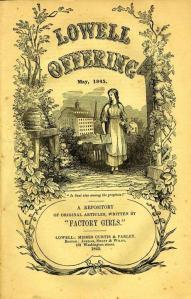
When he left he brought with him a copy of “The Lowell Offering”, a literary magazine written by those same mill girls. He later described the volume as “four hundred good solid pages, which I have read from beginning to end.”
Over a century and a half later, Natalie McKnight, professor of English and dean at Boston University, read those same 400 pages Dickens read. She couldn’t help but notice similarities between the work of the mill girls and “A Christmas Carol,” published about a year and a half following Dickens’ visit. Chelsea Bray was a senior English major at the time. Professor McKnight asked her to read the same pages.
The research following research was published in the form of a thesis, later fleshed out to a full-length book:
“DICKENS AND MASSACHUSETTS THE LASTING LEGACY OF THE COMMONWEALTH VISITS HOW MASSACHUSETTS SHAPED DICKENS’S VIEW OF AMERICA” EDITED BY DIANA C. ARCHIBALD AND JOEL J. BRATTIN PUBLISHED MAY 1, 2015.
The book describes a number of similarities between the two works, making the argument that Dickens familiar story draws much from his experience in Lowell.
Charles Dickens’ masterpiece, A Christmas Carol, was published for the first time 173 years ago on this day, December 19, 1843.
Henry was astounded to see the volume of personal mail, particularly around the Christmas season. But there was a problem. Failure to reply to a handwritten letter was considered impolite, but this was more than he could handle.
With Christmas fast approaching, families all over are decorating trees, hanging lights and wrapping gifts. Short days from now children will scan the skies for a glimpse of Santa and his sleigh full of toys.
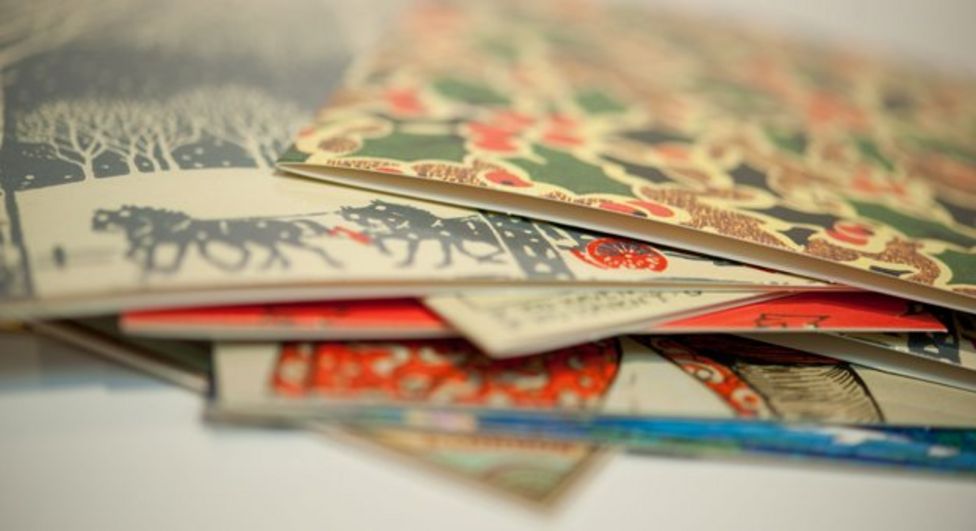
Americans alone are expected to mail some 1.6 Billion Christmas cards this year, but cards weren’t always so popular. There was a time in fact, when there were none at all. So let’s grab a hot chocolate & go back for a little fun history. To 1843 and the guy responsible, for the first Christmas card.
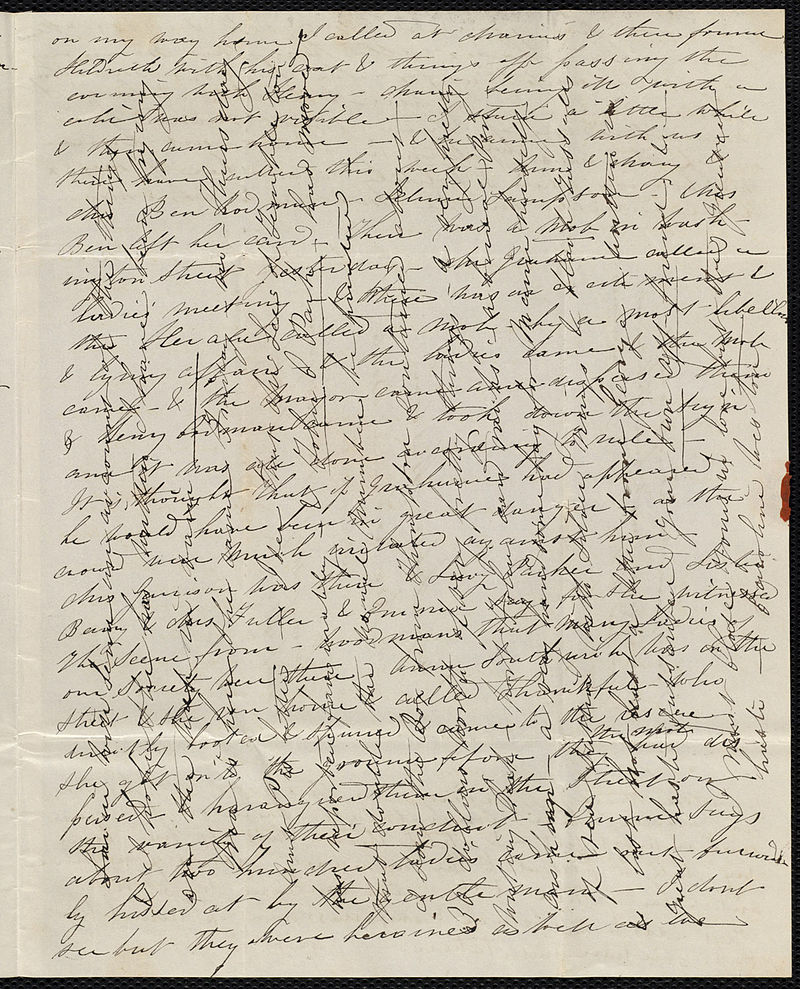
In 1812 England, mailing a letter was complicated. One sheet of paper mailed from London to Edinburgh cost 1 shilling, 1 penny. Two pages were twice that and so on. Simple you say and fair enough, but that was pricey. Adding to the complication, postage changed based on distance traveled. Not only that but the cost might be paid by the sender, or the recipient. People would write two sets of letters on one sheet to save money, two or more “crossed letters” written perpendicularly, to save money. Something had to change.
Crossed letter from Caroline Weston to Deborah Weston; Friday, March 3, 1837
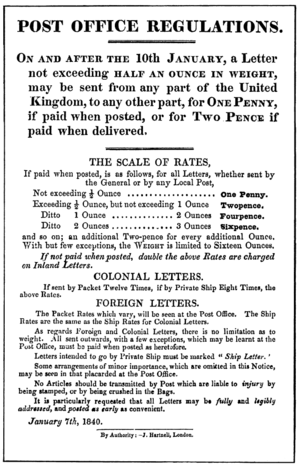
Discussions of a uniform postage based on weight began as early as 1837. Sir Rowland Hill argued in favor of a one penny rate, asserting that vastly higher mail volume resulting would more than offset offset any reduction in revenues.
With the ultimate goal of a single penny’s postage per half-ounce letter, the first change occurred on December 5, 1839. Postage could be paid by sender or recipient without penalty, at a standardized rate of four pennies. Letters were hand stamped (usually) in black if paid by the sender, or red if paid by the recipient. The age of the four penny post, had come.
The new system proved overwhelmingly popular. The penny post came to be on January 10, 1840.
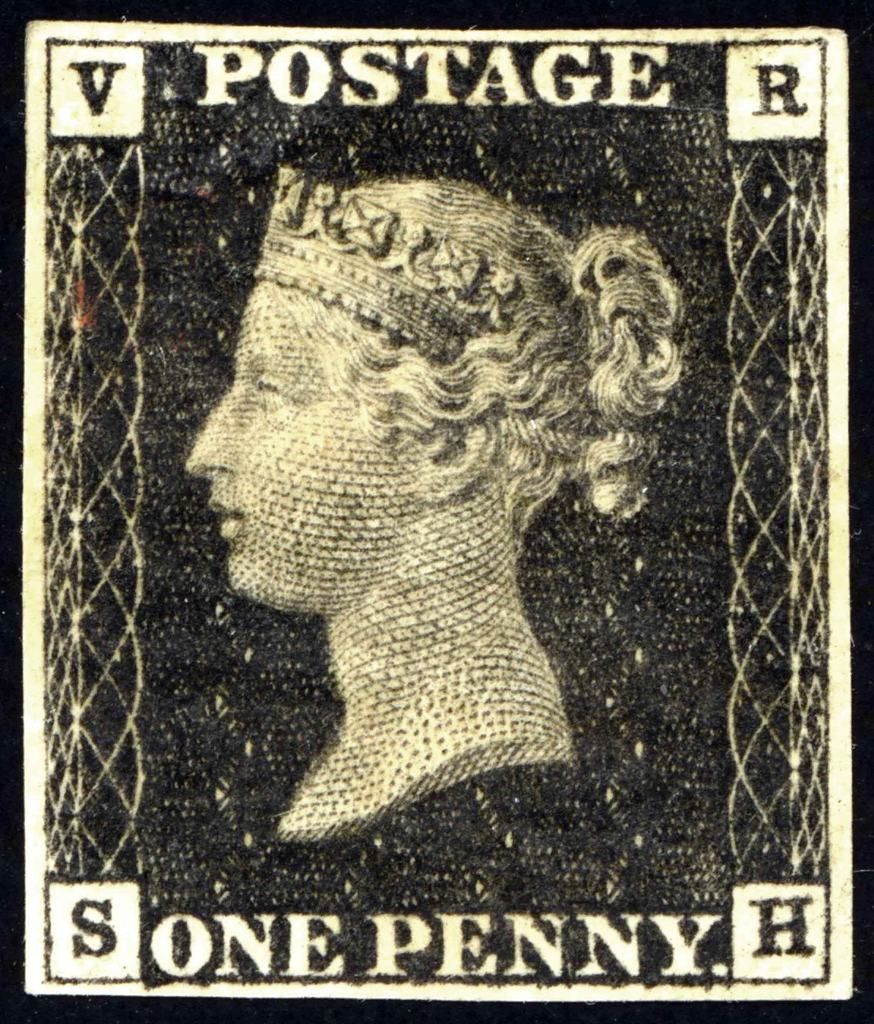
The first adhesive postage stamp in history came to be on May 1. The envy of philatelists from that day to this day, the “Penny Black” featured the profile of Queen Victoria and cost 240 pence per sheet of 240, a shilling per row and – you guessed it – a penny apiece.
Fun fact: the image used was one of Queen Victoria, at age 15. The stamp remained in use throughout the Victorian age, Britain’s longest reigning monarch save only, for Queen Elizabeth II.
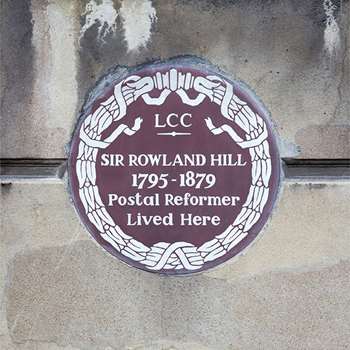
Rowland hill had argued that, if mailing a letter was cheaper, then more people would do it. He was right. So it is the one-time home of Sir Rowland Hill, K.C.B bears a Blue plaque, in recognition.
Sir Henry Cole now comes into this story, as the man who founded the Victoria and Albert Museum in London, and a man instrumental in assisting Rowland Hill’s efforts to reform the British postal system.
Sir Henry was astounded to see the volume of personal mail, particularly around the Christmas season. But there was a problem. Failure to reply to a handwritten letter was considered impolite, but this was more than he could handle.
Cole had an idea. An easily reproduced Christmas message, one that could be easily personalized. He asked artist friend John Callcott Horsley to come up with an idea.
Horsley came back with a triptych (a three panel illustration). The center panel depicted three generations of the Cole family in Christmas celebration. The side two showed charitable acts on behalf of the poor, one dispensing food and the other, clothing. The banner beneath it all read “Merry Christmas and a Happy New Year to you”.
Today, news aggregator Globalnewswire.com forecasts global greeting card sales to reach $13.4 Billion US with the Christmas segment accounting for a third. All of it started on this day in 1843 when Henry Cole, founder of London’s V&A Museum, commissioned printing of the 1st Christmas card.
They were college kids, out to enjoy a few days in paradise, and, the game they loved. What could be better than that?
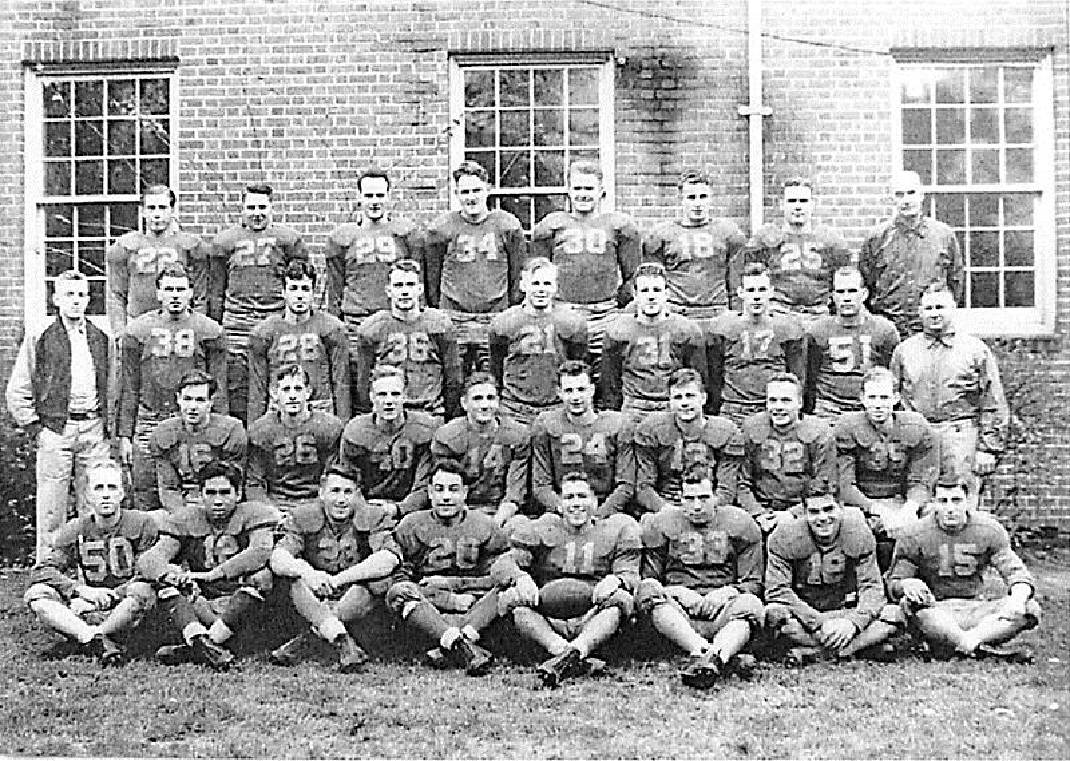
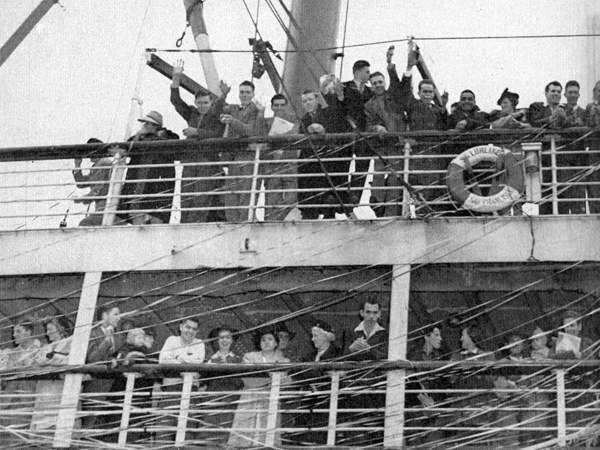
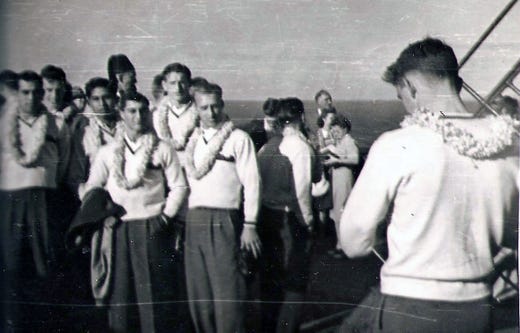
In the closing weeks of the 1941 college football season, the San Jose Spartans and the Willamette Bearcats of Oregon, went on the road. They were kids, out to enjoy a few days in paradise and a chance to play, the game they loved. What could be better than that?
The two teams departed November 27 aboard the SS Lurline along with an entourage of fans, dignitaries and coaching staff. Willamette first met the Rainbow Warriors of Hawaii on Saturday, December 6, falling by a score of 20-6. The Warriors were then scheduled to play San Jose State on December 13 followed by a Spartans- Bearcats matchup, on the 16th.
An outing like this was once in a lifetime. An unforgettable trip and so it was, just not for the reason anyone expected.
On December 7, 1941, a great sucker punch came out of the southeast. 353 Imperial Japanese warplanes attacked Hickam Air Field and the US Pacific Naval anchorage at Pearl Harbor, lying at peace in the early morning sunshine of a quiet Sunday morning. The sneak attack carried out 81 years ago destroyed more American lives than any foreign enemy attack on American soil until the Islamist terrorist attack of September 11, 2001.
The President of the United States addressed a joint session of Congress on December 8, requesting a declaration of war against the Empire of Japan.
Back on the mainland, the families of players now stranded in Hawaii, received no word. There were no communications. None could know with certainty, that brothers and sons were alive or dead. Hawaii was locked down under Martial Law.
Meanwhile, the visiting teams were mobilized to perform wartime duties. San Jose state players were sent to work with Federal authorities and Honolulu police to round up Japanese, Italian and German citizens, and to enforce wartime blackout orders. Willamette players were assigned World War 1-vintage Springfield rifles and tin hats, and ordered to string barbed wire on the beaches.
If you’ve heard of Punahou High School it probably involves the school’s most famous alumnus, the former US President Barack Obama. 81 years ago today all hell was about to break loose, at Punahou high.
United States Army Corps of Engineers troops began to appear at the Punahou gates at 1:00am on December 8. By 5:00am, Dole Hall Cafeteria Manager Nina “Peggy” Brown was ordered to prepare breakfast, for 750 men. For the next ten days Willamette players stood 24-hour guard, around the school.
Many players had never so much as handled a gun. Now in the darkness every shadow carried the menace, of an enemy soldier. Wild gunfire would break out at the sound of a stealthy invader which turned out to be nothing, but a falling coconut. Shirley McKay Hadley was a Willamette student in 1941 accompanied by her father, then serving as state Senator. Many years later she joked about it all: “They were lucky they didn’t shoot each other.”
Female members of the entourage were assigned nursing duties. Spartan Guard Ken Stranger delivered a baby, on December 7.
On December 19, players received notice. With only two hours to spare it was time to go. The civilian liner SS President Coolidge was commandeered to transport gravely wounded service members. This would be the kids’ ride home as well complete with Naval escort, a defense against Japanese submarine attack.
Seven San Jose players stayed behind and joined the Honolulu police force , for which each was paid $166 a month. Willamette coach Roy “Spec” Keene refused to let any of his players stay behind since none had been able to speak with their parents, first.
Nearly every member of both squads went on to fight for the nation. Willamette Guard Kenneth Bailey was killed over Bari Italy in 1943 and awarded the Purple Heart, posthumously.
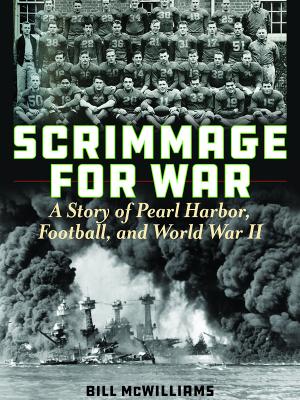
Bill McWilliams served 27 years in the United States Air Force, as a fighter bomber pilot. He’s written a book about 12 of these guys who went on to fight the conflict, of the “Greatest Generation”.
The book came out in 2019 and it’s still in print, if you’re interested. It looks like one hell of a story.
Andy Rogers played for the Willamette squad and went on to serve for the duration of the war, with the 3rd division of the United States Marine Corps. Mr. Rogers is 99 today and lives in Napa Valley, California. The only living member of either traveling squad who would have played that day, in the game that never was.
Once the symbol of US military might she only fired her guns in anger, one time. December 7, 1941
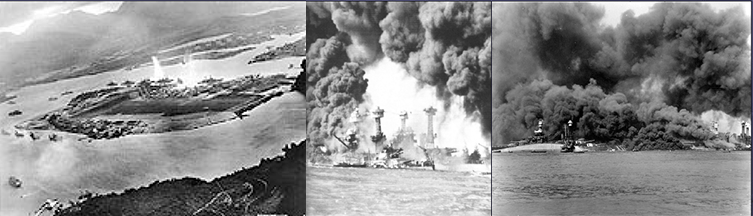
It was literally “out of the blue”, when the first wave of enemy aircraft arrived at 7:48 am local time, December 7, 1941.
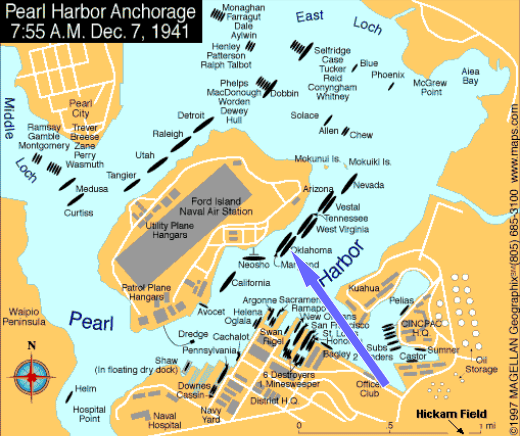
353 aircraft approached in two waves out of the southeast, fighters, bombers, and torpedo planes of the Imperial Japanese military. Across Hickam Field they came and over the still waters of Pearl Harbor. Tied in place and immobile, the eight vessels moored at “Battleship Row” were easy targets.
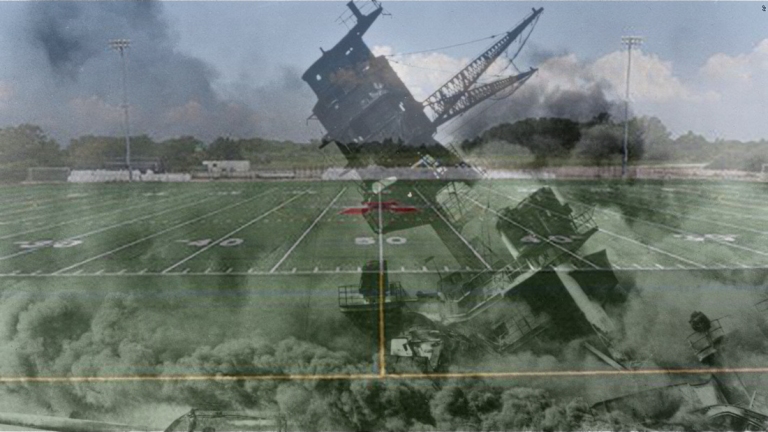
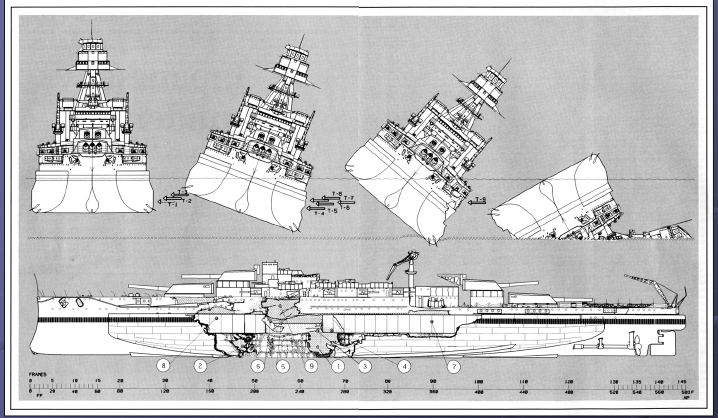
In the center of the Japanese flight path, sailors and Marines aboard USS Oklahoma fought back furiously. She didn’t have a chance. Holes as wide as 40-feet were torn into her side in the first ten minutes of the fight. Eight torpedoes smashed into her port side, each striking higher on the hull as the great Battleship began to roll.
Bilge inspection plates were removed for a scheduled inspection the following day, making counter-flooding to prevent capsize, impossible. Oklahoma rolled over and died, even as the ninth torpedo slammed home. Hundreds scrambled out across the rolling hull, jumped overboard into the oil covered, flaming waters of the harbor, or crawling out over mooring lines in the attempt to reach USS Maryland in the next berth.
Nine Japanese torpedoes struck USS Oklahoma’s port side in the first ten minutes.The last moments of USS Oklahoma. H/T John F DeVirgilio for this graphic
The damage was catastrophic. Once the pride of the Pacific fleet, all eight battleships were damaged, four of them sunk. Nine cruisers, destroyers and other ships were damaged, another two sunk. 347 aircraft were damaged, most caught while still on the ground. 159 of those, were destroyed altogether. 2,403 were dead or destined to die from the attack, another 1,178 wounded.
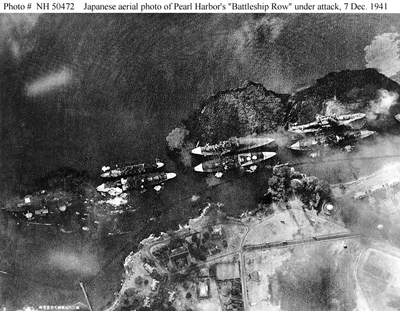
A Japanese pilot took this photo during the attack.
“This photo shows the severity of the attack. The darker waters around the Nevada (left), West Virginia (center), and Oklahoma (right) are actually oil slicks from the fuel reserves on board each ship. The Oklahoma is already listing badly, as the edge of the port deck has already slipped underwater. It would completely capsize only a few minutes later (image NH 50472, courtesy of Naval Heritage & History Command)” H/T Oklahoma Historical Society
Frantic around the clock rescue efforts began almost immediately, to get at 461 sailors and Marines trapped within the hull of the Oklahoma. Tapping could be heard as holes were drilled to get at those trapped inside. 32 were delivered from certain death.
14 Marines and 415 sailors aboard Oklahoma lost their lives immediately, or in the days and weeks to come. Bulkhead markings would later reveal that, at least some of the doomed would live for another seventeen days in the black, upside-down hell. The last such mark was drawn by the last survivor on Christmas Eve.
Of the sixteen ships lost or damaged, thirteen would be repaired and returned to service. USS Arizona remains on the bottom, a monument to the event and to the 1,102-honored dead who remain entombed within her hull.
Across the harbor, USS Utah defied salvage efforts. She too is now a registered War Grave, 64 honored dead remain within her hull, lying at the bottom not far from the Arizona.
With the US now in the war repairs were prioritized. USS Oklahoma was beyond repair. She, and her dead, would have to wait.
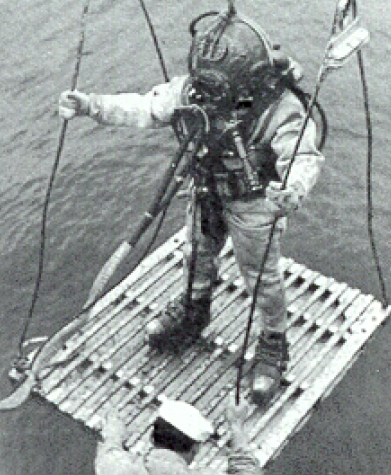
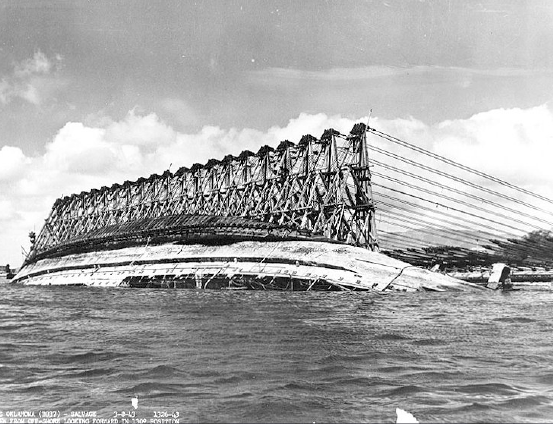
Recovery of the USS Oklahoma was the most complex salvage operation ever attempted, beginning in March, 1943. With the weight of her hull driving Oklahoma’s superstructure into bottom, salvage divers descended daily to separate the tower, while creating hardpoints from which to attach righting cables.
The work was hellishly dangerous down there in the mud and the oil at the bottom of Pearl Harbor. Several divers lost their lives and yet, another day would come and each would descend yet again, into that black water.
21 giant A-frames were fixed to the hull of the Oklahoma, 3-inch cables connecting compound pulleys to 21 electric motors, each capable of pulling 429 tons.
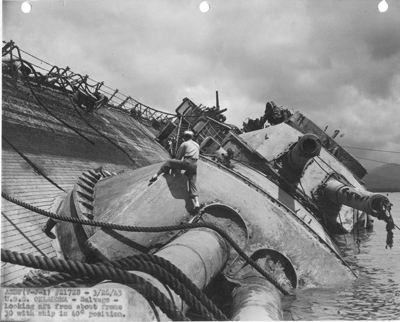
Two pull configurations were used over 74 days. Cables were first attached to these massive A-frames, then direct connections once the hull had achieved 70°. In May 1943, the decks once again saw the light of day. It was the first time in over two years.
At last fully righted, the ship was still ten-feet below water. Massive temporary wood and concrete structures called “cofferdams” closed cavernous holes left by torpedoes, so the hull could be pumped out and re-floated. A problem even larger than those torpedo holes were the gaps between hull plates, caused by the initial capsize and righting operations. Divers stuffed kapok into gaps as water was pumped out.
Individual divers spent 2-3 years on the Oklahoma salvage job. Underwater arc welding and hydraulic jet techniques were developed during this period, which remain in use to this day. 1,848 dives were performed for a total of 10,279 man hours under pressure.
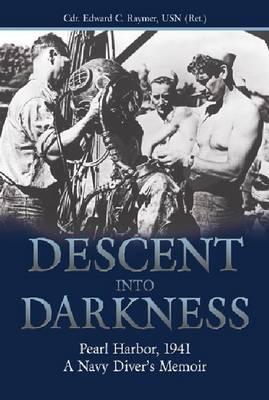
CDR Edward Charles Raymer, US Navy Retired, was one of those divers. Raymer tells the story of these men in Descent into Darkness: Pearl Harbor, 1941 – A Navy Diver’s Memoir, if you’re interested in further reading. Most of them are gone now, including Raymer himself. They have all earned the right to be remembered.
Salvage workers entered the pressurized hull through airlocks wearing masks and protective suits. Bodies were in advanced stages of decomposition by this time and the oil and chemical-soaked interior was toxic to life. Most victims would never be identified.
Twenty 10,000 gallon per minute pumps operated for 11 hours straight, re-floating the battleship on November 3, 1943.
The guns of the mighty USS Oklahoma once again see the light of day. March, 1943 H/T Oklahoma Historical Society
Oklahoma entered dry dock the following month, a total loss to the American war effort. She was stripped of guns and superstructure, sold for scrap on December 5, 1946 to the Moore Drydock Company of Oakland, California.
The battered hulk left Pearl Harbor for the last time in May 1947, destined for the indignity of a scrapyard in San Francisco bay.
She would never arrive.
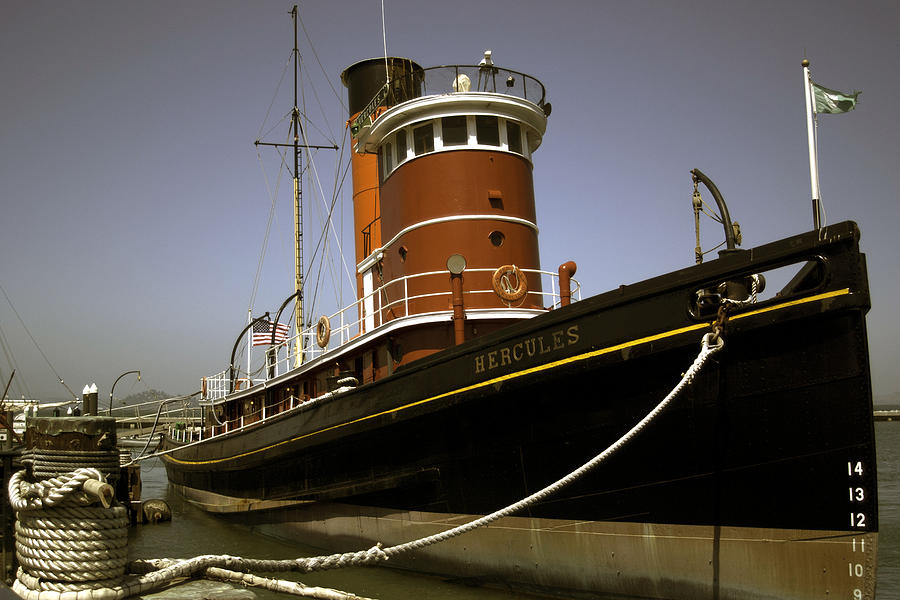
Taken under tow by the ocean-going tugs Hercules and Monarch, the three vessels entered a storm, 540 miles east of Hawaii. On May 17, disaster struck. Piercing the darkness, Hercules’ spotlight revealed that the former battleship was listing heavily. Naval base at Pearl Harbor instructed them to turn around when suddenly, these two giant tugs found themselves slowing to a stop. Despite her massive engines, Hercules was being dragged astern with no warning, hurtling past Monarch, herself swamped at the stern and being dragged backward at 17mph.
Fortunately for both tugs, skippers Kelly Sprague of Hercules and George Anderson of Monarch had both loosened the cable drums connecting 1,400-foot tow lines to Oklahoma. Monarch’s line played out and detached. Hercules’ line didn’t do so until the last possible moment. With tow line straight down and the battleship sinking fast, Hercules’ cable drum exploded in a shower of sparks as the 409-ton tug bobbed to the surface, like the float on a child’s fishing line.
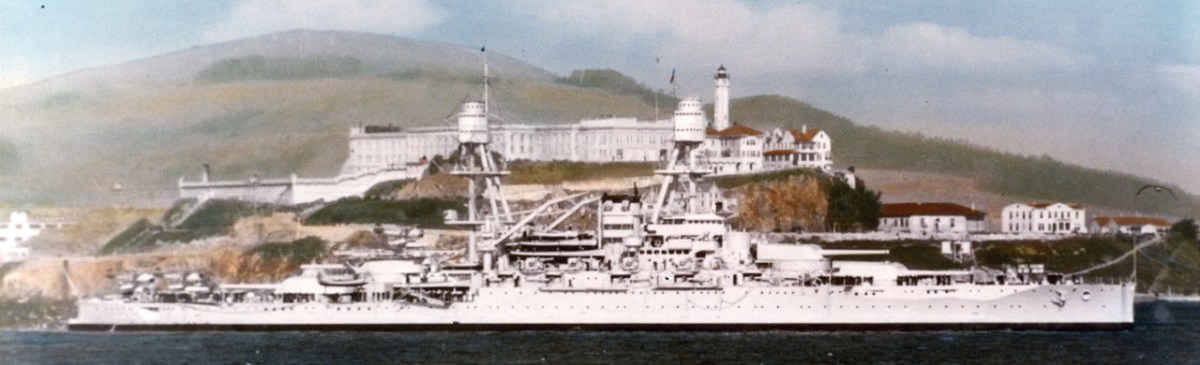
Christened on March 23, 1914, USS Oklahoma was one of the first two oil burners in US military service. Heavily armored, her armament was as powerful as any vessel in her class. A symbol of US military might who only fired her guns once, in anger. December 7, 1941. Now, “Okie” was stabbed in the back while she lay at rest, attacked and mortally wounded before she even knew her nation was at war.
The causes leading to that final descent into darkness remain uncertain, her final resting pace, a mystery. Some will will tell you her plates couldn’t hold. The beating she took those six years earlier, was too much. Those who served on her decks might tell you a different story. Perhaps this pride of the United States Navy knew her time had come. Maybe she just wanted to die at sea.
Over seventy years in compilation, only a single individual is credited with more entries in the greatest reference work in the history of the English language than this one murderer, working from a cell in a mental institution.
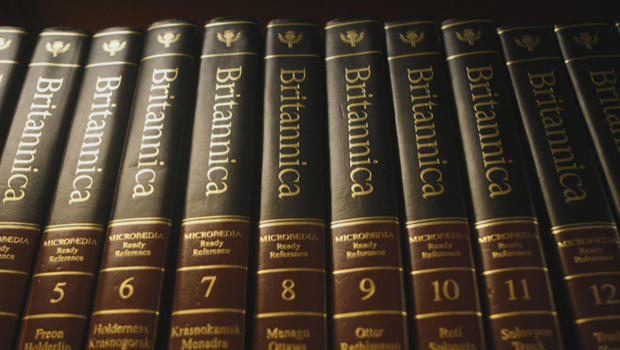
For the great reference works of the English language, the beginnings were often surprisingly modest. The outpouring of intellectual and scientific accomplishment known as the Scottish Enlightenment produced among other works the Encyclopedia Britannica, first published on December 6, 1768 in Edinburgh, Scotland.
Webster’s dictionary began with a single infantrymen of the American Revolution, who went on to codify what would become the standardized system of spelling for “American English“. In Noah Webster’s dictionary, ‘colour’ became ‘color’, and programme’ became ‘program’. It was a novel concept at a time when the very thought of a “correct“ way of spelling, was new and unfamiliar.
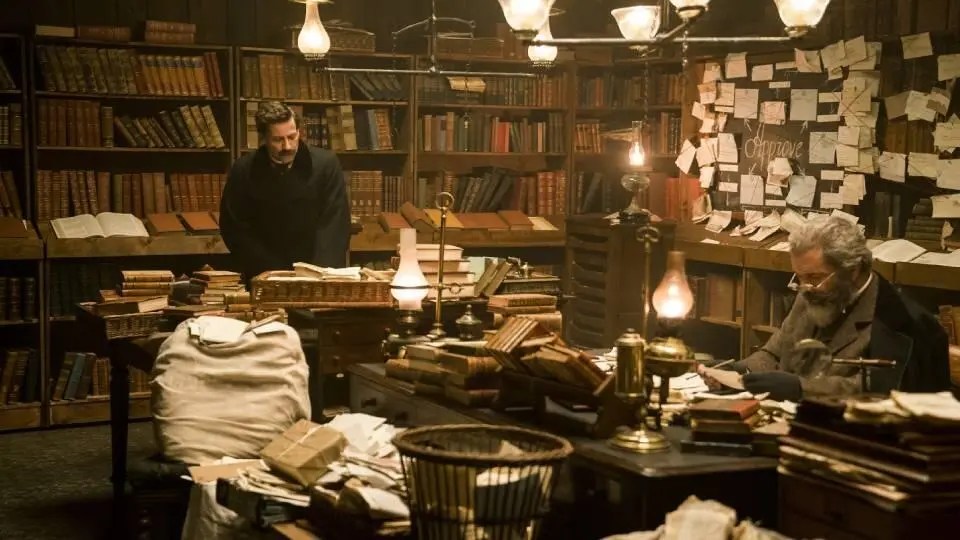
Among the entire catalog of works there is no tale so strange as the Oxford English dictionary, and the convicted murderer who helped bring it to life.
No, really. From an insane asylum, no less.
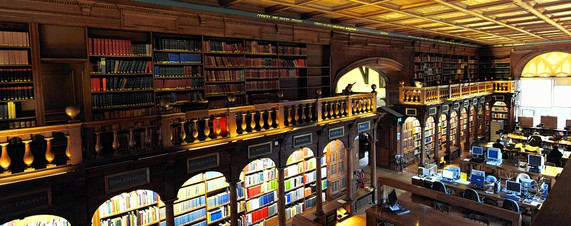
Oxford English Dictionary
Dissatisfied with what were at that time a spare four reference works including Webster’s dictionary, the Philological society of London first discussed what was to become the standard reference work of the English language, in 1857.
The work was expected to take 10 years in compilation and cover some 64,000 pages. The editors were off, by about sixty years. Five years into the project the team had made it all the way up, to “ant“.
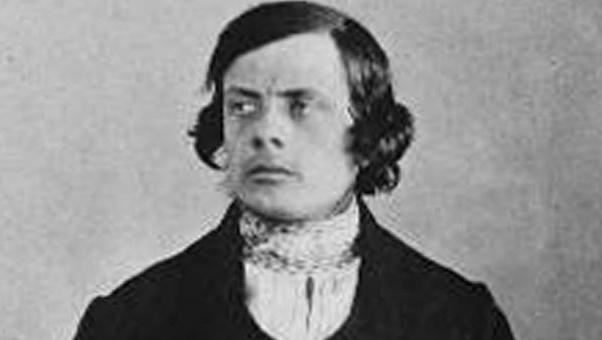
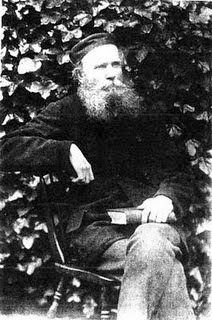
William Chester Minor was a physician around this time, serving with the Union army during the American Civil War.
The role of this experience in the man’s later psychosis, is impossible to know. Minor was in all likelihood a paranoid schizophrenic, a condition poorly understood in his day.
As a combat surgeon, Minor saw things no man was ever meant to see. Terrible mutilation was inflicted on both sides at the 1864 Battle of the Wilderness. Hundreds were wounded and unable to get out of the way of the brush fire, burning alive before the horrified eyes of comrade and foe alike, the poor unfortunate sufferers too broken to move. One soldier would later write: It was as though “hell itself had usurped the place of earth“.
William Chester Minor
At one point, Dr. Minor was ordered to brand the forehead of an Irish deserter with the letter “D”. The episode scarred the soldier, and left the doctor with paranoid delusions. The Irish were coming to ‘get him’. He Knew they were.
In his paranoid delusions, the faceless form of man would slither out of the attic at night and watch Minor as he slept, in his hands a tray of metal biscuits, slathered in poison. The Fenian Brotherhood was out to Get him. He could almost hear their dark whispered conversations, on gaslit streets.
As a child born to New England missionaries working in Ceylon, (now Sri Lanka), Minor was comfortable with the idea of foreign travel as a means of dealing with difficulty. He took a military pension and moved to London in 1871, to escape the demons who were by that time, closing in.
Minor’s tormentors followed. He would lie in his bed at night frozen with fear and each night, his tormenter would return. Regular visits to Scotland Yard would result in little more than polite thanks, and a few useless notes scribbled on paper. Dr. Minor would have to deal with this himself. He took to sleeping with a loaded Colt .38, beneath his pillow.
On February 17, 1862, Minor woke to find the shadow of a man, standing over him. The apparition dove for the window and Minor followed him, into the street.
It was 2:00 in the morning and hardly anyone was out, save for one man. George Merrett was a father of 6 with a pregnant wife, who worked at the Red Lion Brewery, as a coal stoker. He was walking to work.
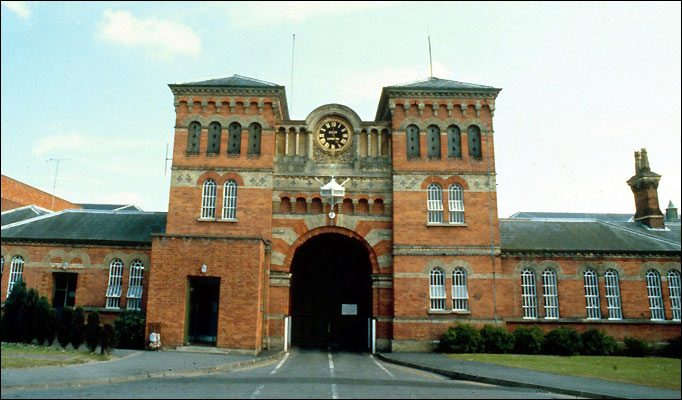
Broadmoor asylum for the criminally insane
Minor’s nighttime apparitions were nothing but the paranoid delusions, of a broken mind. The three or four bullets he fired at a man walking to work, were very real. George Merrett was dead before the police got there.
Minor was tried and found not guilty by reason of insanity, and remanded “until Her Majesty’s Pleasure be known” to the Broadmoor institution for the criminally insane. Victorian England was by no means ‘enlightened’ by modern standards, and inmates were always referred to as ‘criminals’ and ‘lunatics’. Never as ‘patients’. Yet Broadmoor, located on 290 acres in the village of Crowthorne in Berkshire was England’s newest such asylum, and a long way from previous such institutions.
Minor was housed in block 2, the “Swell Block”, where his military pension and family wealth afforded him two rooms instead of the usual one.
Minor would acquire books, so many over time that one room was converted to a library.
Surprisingly, it was Merritt’s widow Eliza, who delivered many of his books. The pair became friends and Minor used a portion of his wealth to “pay” for his crime, and to help the widow raise her six kids.
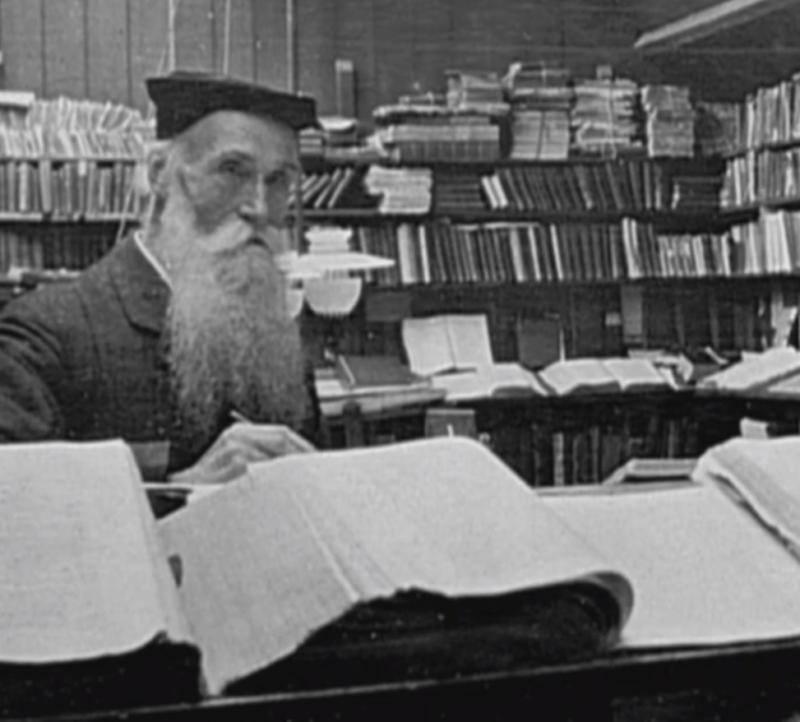
Dr. James Murray assumed editorship of the “Big Dictionary” of English in 1879, and issued an appeal in magazines and newspapers, for outside contributions. Whether this seemed a shot at redemption to William Minor or merely something to do with his time is anyone’s guess, but Minor had nothing but time. And books.
William Minor collected his first quotation in 1880 and continued to do so for twenty years, always signing his submissions: Broadmoor, Crowthorne, Berkshire.
The scope of the man’s work was prodigious, he himself an enigma, assumed to be some country gentlemen. Perhaps one of the overseers, at the asylum.
Dr. “Murray at work in his scriptorium, a dedicated room filled with books, at Oxford University (date unknown)”. H/T allthatsinteresting.com
In 1897, “The Surgeon of Crowthorne” failed to attend the Great Dictionary dinner. Dr. Murray decided to meet his mysterious contributor in person and finally did so, in 1901. In his cell.
Oh, to have been a fly on the wall when this Oxford don was ushered into the office of Broadmoor’s director, only to learn the man he was searching for, was an inmate.
Dr. Minor would carefully index and document each entry, which editors compared with the earliest such word use submitted by other lexicographers. In this manner over 10,000 of his submissions made it into the finished work including the words ‘colander’, ‘countenance’ and ‘ulcerated’.
By 1902, Minor’s paranoid delusions had crowded out what remained, of his mind. He believed he was being kidnapped and spirited away to Istanbul where he was sexually abused and forced to commit such abuse, himself. His submissions came to an end. Home Secretary Winston Churchill ordered Minor deported back to the United States, following a 1910 episode in which the man emasculated himself, with a knife.
The madman lived out the last ten years of his life in various institutions for the criminally insane. William Chester Minor died in 1920 and went to his rest in a small and inauspicious grave, in Connecticut.
Over seventy years in compilation, only a single individual is credited with more entries in the greatest reference work in the history of the English language than this one murderer, working from a cell in a mental institution.
Trapped and disoriented inside that black, upside down hell they waited and desperately hoped for the rescue, that would come too late. It is a searing act of will even to contemplate such a scene. What would it be then, to enter such a place as an act of free will?
December 5, 1941 was a Friday. The conflict destined to be known as World War 2 was still, “over there”. The United States was neutral, and at peace. The aircraft carrier USS Lexington and five heavy cruisers leave the US Pacific naval anchorage at Pearl Harbor, unaware that only yesterday, Emperor Hirohito approved the attack to be carried out in two days.
It was literally “out of the blue”, when that first wave of enemy aircraft arrived at 7:48 local time, December 7, 1941. 353 Imperial Japanese warplanes approached in two waves out of the southeast, fighters, bombers, and torpedo planes, across Hickam Air Field and over the waters of Pearl Harbor. Tied in place and immobile, the eight vessels moored at “Battleship Row” were easy targets.
In the center of the Japanese flight path, sailors and Marines aboard USS Oklahoma fought back furiously. She didn’t have a chance. Holes as wide as 40-feet were torn into the hull in the first ten minutes. Eight torpedoes crashed into her port side, each striking higher up as the Battleship slowly rolled over.
Bilge inspection plates were removed for a scheduled inspection that Monday making counter-flooding to prevent capsize, impossible. Oklahoma rolled over and died as the ninth torpedo slammed home. Hundreds scrambled out across the rolling hull, jumping overboard into the oil covered, flaming waters of the harbor, or crawling out onto mooring lines in the attempt to reach USS Maryland in the next berth.Nine Japanese torpedoes struck Oklahoma’s port side, in the first ten minutes.
The damage was catastrophic. Once the pride of the Pacific fleet, all eight battleships were damaged, four sunk. Nine cruisers, destroyers and other ships were damaged and another two sunk. 347 aircraft were damaged, most while still on the ground. 159 of those were destroyed altogether. 2,403 were dead or destined to die from the attack, another 1,178 wounded.
Frantic around the clock rescue efforts began almost immediately, to get at 461 sailors and Marines trapped within the hull of the Oklahoma. Tapping could be heard as holes were drilled to get to those trapped inside. 32 of them were delivered from certain death.
14 Marines and 415 sailors lost their lives on board Oklahoma, either immediately, or in the days and weeks to come. Bulkhead markings would later reveal that, at least some of the doomed would live for another seventeen days in the black, upside-down hull of that ship. The last such mark was drawn by the last survivor on Christmas Eve.
It is a searing act of imagination, merely to contemplate those 17 days. Trapped and disoriented inside that black, upside down hell, waiting and desperately hoping for a rescue that would come, too late.
A searing act, merely of the imagination. What would it be the to enter such a place, as an act of free will?
Let’s rewind. To 1914.
Early attempts had failed to build a sea-level canal across the 50-mile isthmus of Panama. It was decided instead, the canal would be comprised of a system of locks. The giant crane barges Ajax and Hercules were ordered in 1913, to handle the locks and other large parts,for building the canal. The two cranes arrived in Cristóbal, Colón, Panama on December 7, 1914.
Ajax crane barge at work in the canal zone, 1914
Much of the world was at war at this time while the United States, remained neutral.
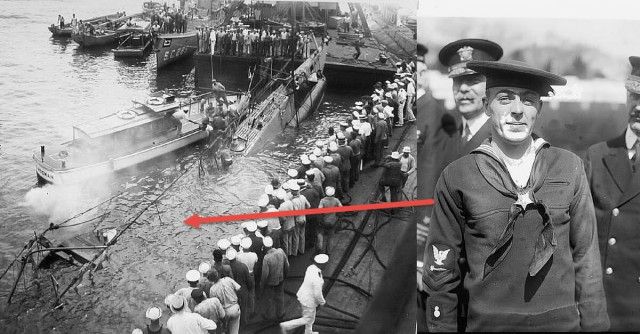
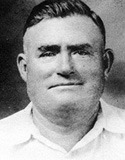
Henry Breault was born to be a sailor. At sixteen he enlisted in the British Royal Navy. For four years, the Connecticut-born Vermonter served under the White Ensign. When his four-year tour ended in 1921, he joined the US Navy.
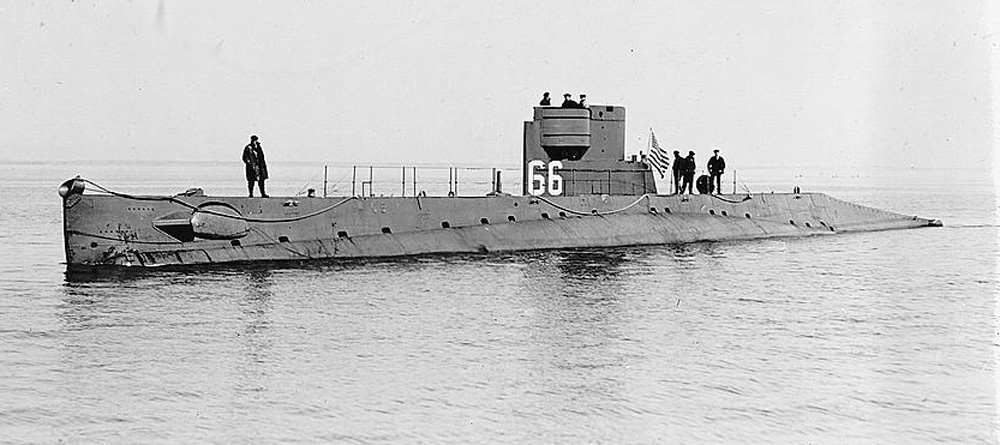
In 1923, now-torpedoman First Class Henry Breault was assigned to the O-Class submarine USS O-5 (SS-66). On October 28, O-5 under the command of Lieutenant Harrison Avery was leading a column of submarines across Limon Bay, toward the canal entrance.
Water level here is 85 feet above sea level…Contractor’s Hill is on the left and Gold Hill is on the right.” H/T Wikipedia
The steamship SS Abangarez, owned by the United Fruit Company, was underway and headed for dock 6, at Cristobal. There were navigational errors and miscommunications and, at about 0630, Abangarez collided with the submarine, tearing a ten-foot opening on her starboard side.USS O-5
The main ballast tank was breached. O-5 was doomed. As the submarine rolled sharply to port and then to starboard, Avery gave the order to abandon ship. Breault was a few short steps to safety when he realized. Chief Electrician’s Mate Lawrence T. Brown was still below, sleeping. As the bow was going under, Breault shut the deck hatch over his head, and went below.
Brown was awake by this time, but unaware of the order to abandon ship. The pair headed aft toward the control hatch, but it was too late. With the dying sub rapidly filling with water, Breault and Brown made their way to the torpedo room, and dogged the main hatch. Seconds later the battery shorted, and exploded. The two men were trapped under 42-feet of water with no food, no water and only a single flashlight, to pierce the stale air of that tiny, pitch black compartment. It was all over in about a minute.
Salvage efforts were underway almost immediately, from nearby submarine base Coco Solo. By 10:00, divers were on the bottom, examining the wreck. Divers hammered on the hull starting aft and working forward, in a search for survivors. On reaching the torpedo room they were answered, by the taps of a hammer.
Someone’s still alive in that thing.
There were no means of rescue in those days, save for physically lifting the submarine with pontoons, or crane. There were no pontoons within 2,000 miles but the giant crane barges Ajax and Hercules were in the canal zone, working to clear a landslide from Gaillard Cut. (Now known as the Culebra cut).“The Culebra Cut. An artificial valley along the Pacific Ocean to Gatun Lake (ahead) and eventually the Caribbean Sea.
A simple excavation now became a frantic effort to clear enough debris for Ajax, to squeeze herself through the cut.
Divers worked around the clock to dig a tunnel under the sub, through which to snake a cable. Sheppard J. Shreaves, supervisor of the Panama Canal’s salvage crew and himself a qualified diver, explained: “The O-5 lay upright in several feet of soft, oozing mud, and I began water jetting a trench under the bow. Sluicing through the ooze was easy; too easy, for it could cave in and bury me. … Swirling black mud engulfed me, I worked solely by feel and instinct. I had to be careful that I didn’t dredge too much from under the bow for fear the O-5 would crush down on me.”
Ajax arrived around midnight and by early morning the tunnel had been dug, the cables run and attached to Ajax’ hook. Cables strained as the lift began and then…disaster. The cable snapped.
Inside, the headaches were terrific from the pressure and the stale air but all around them, they could hear it. The scraping sounds could only mean one thing. Rescue was on the way.
Sheppard Shreaves and his team of exhausted divers were now in their suits for nearly 24 hours, working to snake a second set of cables under the bow. Again the strain, as Ajax brought up the slack. Again…disaster. The second set of cables snapped.
Midnight was approaching on the 29th when the third attempt began, this time with buoyancy added, by blowing air into the flooded engine room. O-5 broke the surface just after midnight. For the first time in 31 hours, two men were able to breathe fresh air. The pair were rushed to the base at Coco Solo for medical examination, and to decompress.
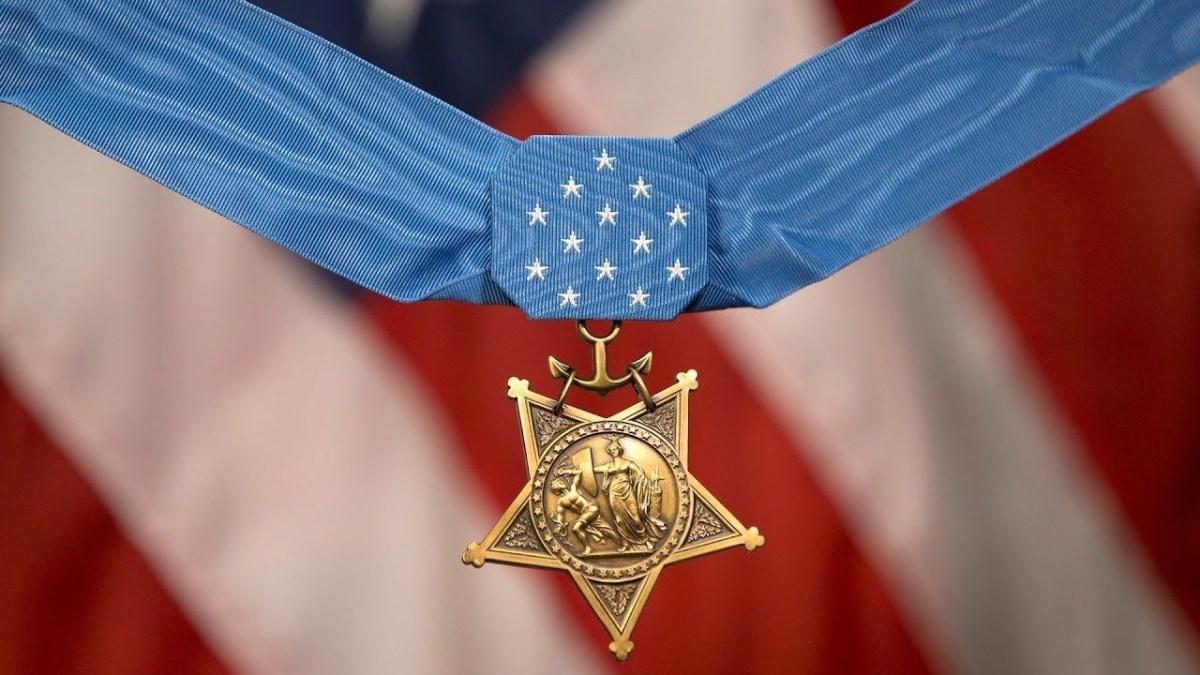
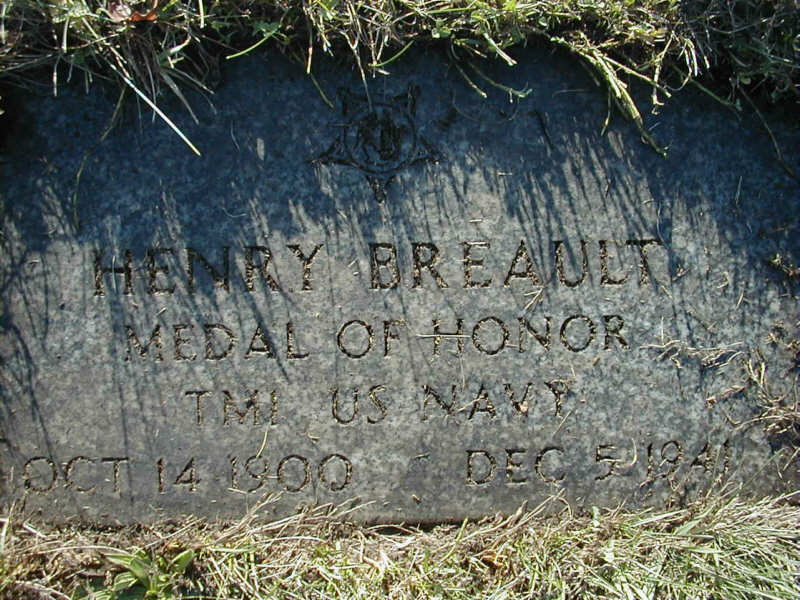
Henry Breault received the Medal of honor for what he did that day. Sheppard Shreaves received the Congressional Life Saving Medal, personally presented by Henry Breault and Lawrence Brown along with a gold engraved watch, a gift from the grateful submariners of Coco Solo.
Henry Breault presented the Medal of Honor by President Calvin Coolidge.
Henry Breault served 20 years with the US Navy and later became ill, with a heart condition. He passed away on December 5, 1941 at the age of 41, and went to his rest in St. Mary’s cemetery, in Putnam Connecticut. To this day the man remains the only enlisted submariner in history, to receive the Medal of Honor.
In the 12th century, Bernard of Chartres described a process of finding truth, in building on the earlier discoveries of others. The concept is encapsulated in the words of Isaac Newton, in 1675: “If I have seen further it is by standing on the shoulders of Giants”.
In ancient Greek mythology, Hercules poisoned arrows with the venom of the Hydra. Both sides in the battle for Troy used poisoned arrows, according to the Iliad and the Odyssey of Homer. Alexander the great encountered poison arrows and fire weapons in the Indus valley of India, in the fourth century, BC. Chinese chronicles describe an arsenic laden “soul-hunting fog” produced by the burning of toxic vegetation, used to disperse a peasant revolt in AD178.
“Soul-hunting fog”.
Yikes
The French were the first to use poison weapons in the modern era in August 1914, when tear gas grenades containing xylil bromide were used against German forces in the first month, of the Great War.
Imperial Germany was first to give serious study to chemical weapons of war, early experiments with irritants taking place at the battle of Neuve-Chapelle in October 1914, and with tear gas at Bolimów on January 31, 1915 and again at Nieuport, that March.
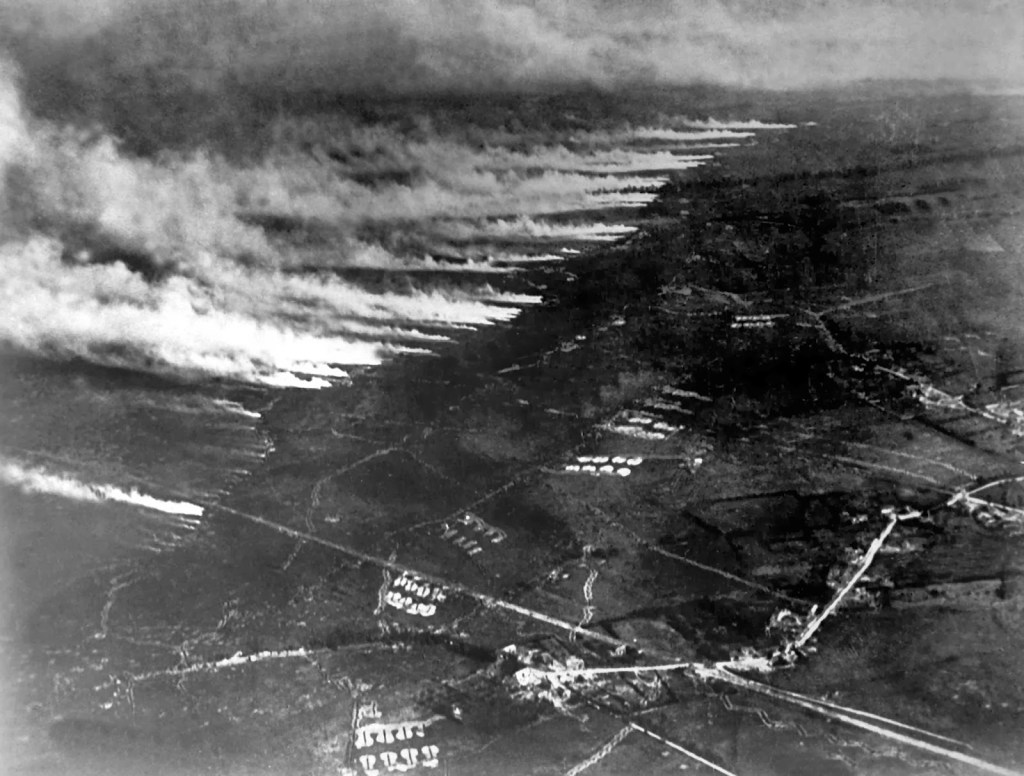
The first widespread use of poison gas, in this case chlorine, came on April 22, 1915, at the second battle of Ypres.
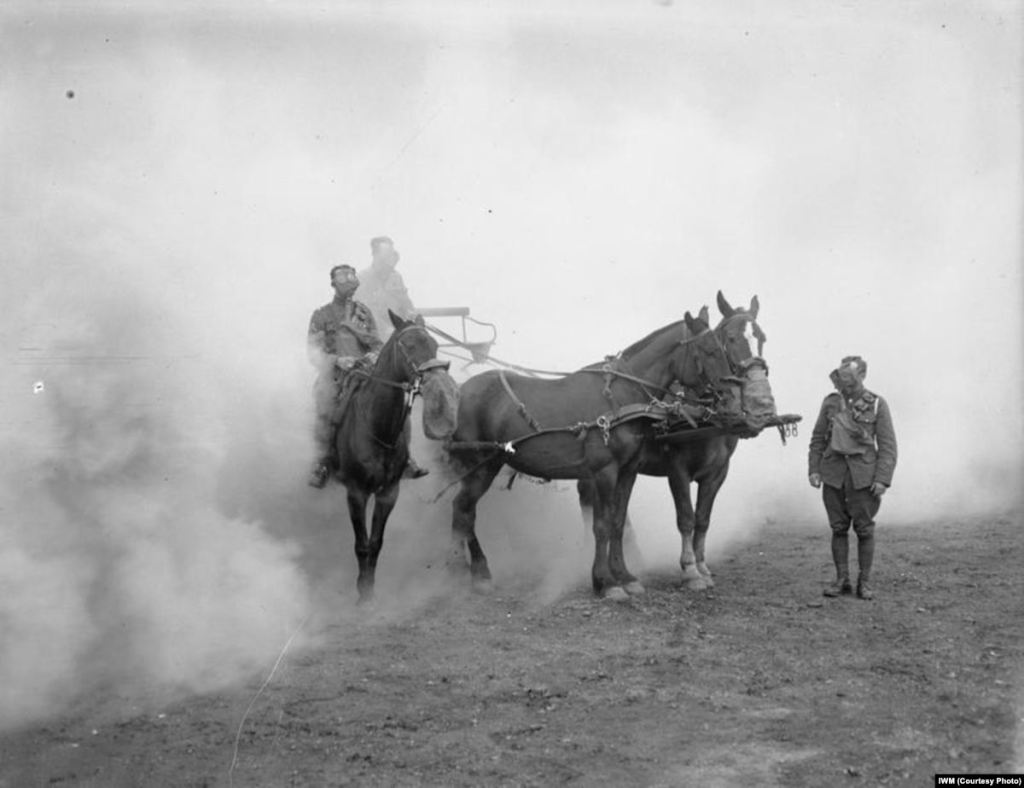
The story of gas warfare is inextricably linked with that of World War 1. 124,000 tons of the stuff was produced by all sides by the end of the war, accounting for 1,240,853 casualties, including the agonizing death of 91,198.
WW1 gas attack in Flanders
Had the war continued into 1919, technological advances promised new and fresh hell, unimaginable to the modern reader.
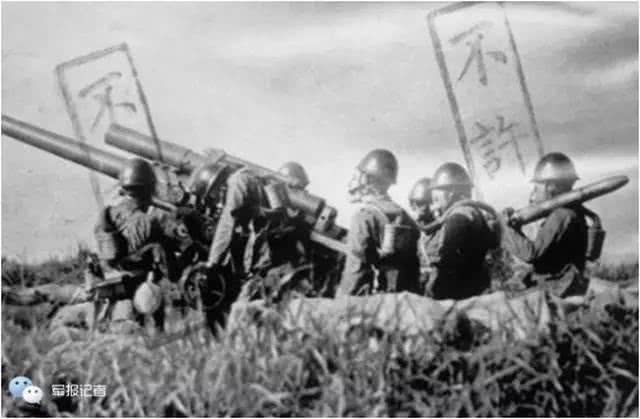
Today we think of chemical agents in WW2 as being limited to the death camps of the Nazis, but such weapons were far more widespread. The Imperial Japanese military frequently used vesicant (blister) agents such as lewisite and mustard gas against Chinese military and civilians, and in the hideous “medical experiments” conducted on live prisoners at Unit 731 and Unit 516. Emperor Hirohito personally authorized the use of toxic gas during the 1938 Battle of Wuhan, on no fewer than 375 occasions.
The Italian military destroyed every living creature in its path during the 1936 Colonial war with Ethiopia, in what Emperor Haile Selassie called “a fine, death-dealing rain”.
Nazi Germany possessed some 45,000 tons of blister and nerve agents, though such weapons were rarely used against western adversaries. The “Ostfront” – the battle on the eastern front – was a different story. Russian resistance fighters and Red Army soldiers were attacked, most notably during the assault on the catacombs of Odessa in 1941, the 1942 siege of Sebastopol, and the nearby caves and tunnels of the Adzhimuskai quarry, where “poison gas was released into the tunnels, killing all but a few score of the (3,000+) Soviet defenders”.
None of the western allies resorted to chemical warfare in WW2, despite having accumulated over twice the chemical stockpile as that of Nazi Germany. The policy seems to have been one of “mutually assured destruction” where no one wanted to be first to go there, but all sides reserved the option. Great Britain possessed massive quantities of mustard, chlorine, Lewisite, Phosgene and Paris Green, awaiting retaliatory strike should Nazi Germany resort to such weapons on the beaches of Normandy.
General Alan Brooke, Commander-in-Chief of the Home Forces, said he “[H]ad every intention of using sprayed mustard gas on the beaches” in the event of a German landing on the British home islands.
The official American policy toward chemical weapons was enunciated in 1937, by President Franklin Roosevelt: “I am doing everything in my power to discourage the use of gases and other chemicals in any war between nations. While, unfortunately, the defensive necessities of the United States call for study of the use of chemicals in warfare, I do not want the Government of the United States to do anything to aggrandize or make permanent any special bureau of the Army or the Navy engaged in these studies. I hope the time will come when the Chemical Warfare Service can be entirely abolished”.
The Geneva Protocols of 1925 banned the use of chemical weapons, but not their manufacture, or transport. By 1942, the U.S. Chemical Corps employed some 60,000 soldiers and civilians and controlled a $1 Billion budget.
In August 1943, Roosevelt authorized the delivery of chemical munitions containing mustard gas, to the Mediterranean theater. Italy surrendered in early September, changing sides with the signing of the armistice of Cassibile.
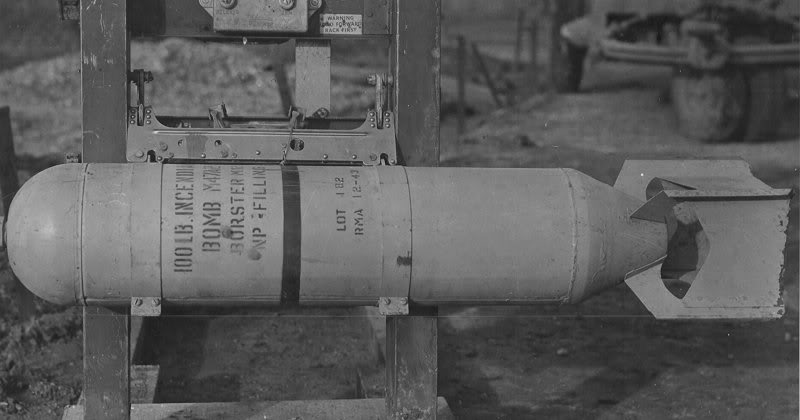
The liberty ship SS John Harvey arrived at the southern Italian port of Bari in November, carrying 2000 M47A1 mustard gas bombs, each containing 60 to 70-pounds of sulfur mustard.
Bari was packed at the time, with ships waiting to be unloaded. It would be days before stevedores could get to her. Captain John Knowles wanted to inform port authorities of his deadly cargo and request that she be unloaded immediately, but secrecy prevented him from doing so. As it was, John Harvey was still waiting to be unloaded, on December 2.
For Luftwaffe Generalfeldmarschall Albert Kesselring, the traffic jam at Bari was an opportunity to slow the advance of the British 8th army on the Italian peninsula.
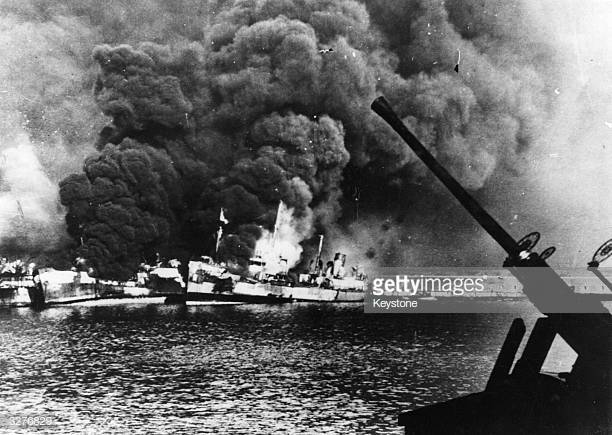
Air raid on Bari, December 2, 1943
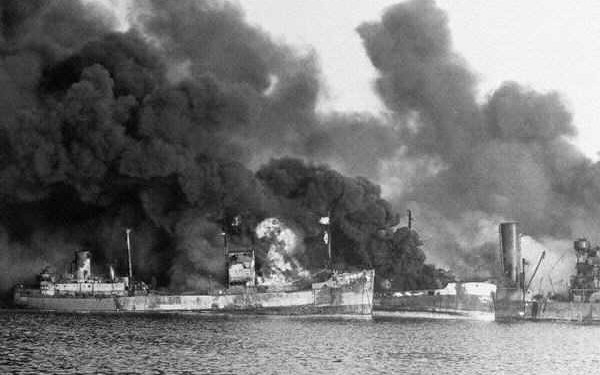
The “Little Pearl Harbor” began at 7:25PM when 105 Junkers JU-88 bombers came out of the East. The tactical surprise was complete, and German pilots were able to bomb the harbor with great accuracy. Two ammunition ships were first to explode, shattering windows some 7 miles away. A bulk gasoline pipeline was severed as a sheet of burning fuel spread across the harbor, igniting those ships left undamaged.
43 ships were sunk, damaged or destroyed including John Harvey, which erupted in a massive explosion. Liquid sulfur mustard spilled into the water, as a cloud of toxic vapor blew across the port and into the city.
Mustard gas is a cytotoxic agent, capable of entering the system via skin, eyes and respiratory tract and attacking every cell type with which it comes into contact. First comes a garlic odor as the yellow-brown, heavier-than-air cloud creeps along the ground. Contact results in redness and itching at first, resulting 12-24 hours later in excruciating, untreatable blisters on exposed areas of the skin. Sufferers are literally burned inside and out as mucous membranes are stripped away from the eyes, nose and respiratory tract.
Death comes in days or weeks. Survivors are likely to develop chronic respiratory disease and infections. DNA is permanently altered, often resulting in cancer and birth defects. To this day there is no antidote.
A thousand or more died outright in the bombing of December 2, 1943. 643 military service personnel were hospitalized for gas symptoms. 83 of them were dead, by the end of the month. The number of civilian casualties is unknown. The whole episode was shrouded in secrecy and remains to this day, one of the lesser-known chapters of World War 2.
At the time, the chemical disaster at Bari was of uncertain nature. Everyone with any knowledge of John Harvey’s secret cargo had been killed in the explosion. Lieutenant-Colonel Stewart Francis Alexander, an American physician from New Jersey, was sent by the Deputy Surgeon General of the US Army to find out what happened.
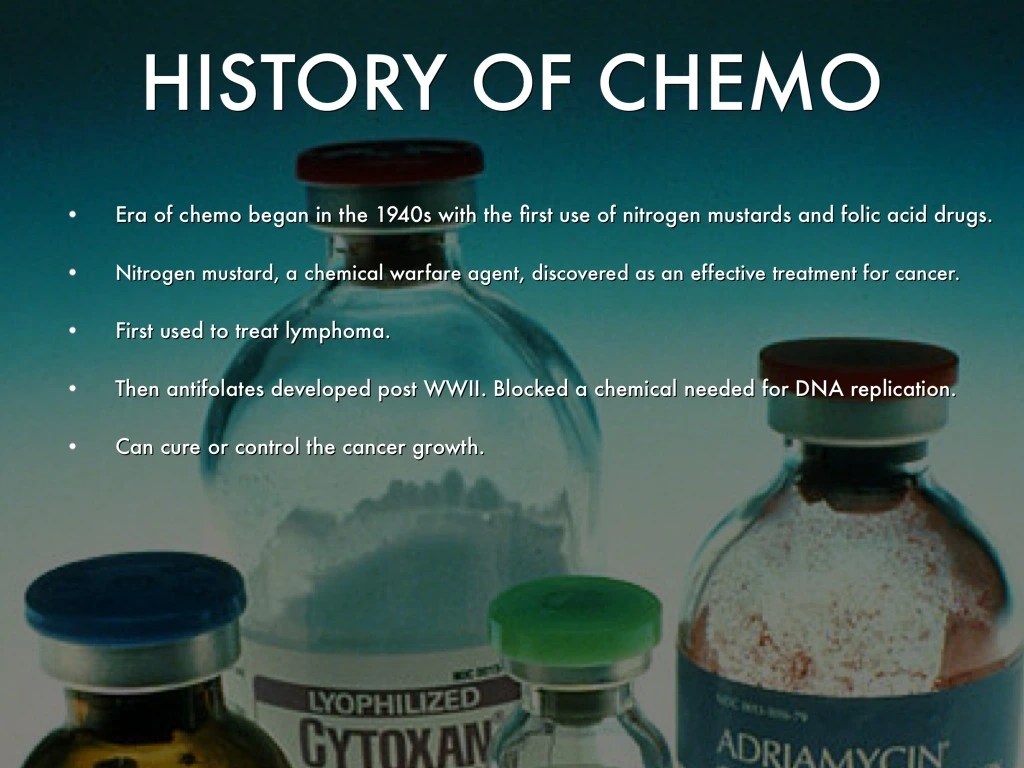
It was Dr. Alexander who figured out the responsible agent was mustard, and where the stuff had come from. In the process of testing, Dr. Alexander noticed the unknown agent went most heavily after rapidly dividing cells, such as white blood cells.
Alexander wondered if it might be useful in going after other types of rapidly dividing cells.
Like cancer.
Based on Dr. Alexander’s field work, Yale pharmacologists Louis Goodman and Alfred Gilman developed the first anti-cancer chemotherapy drug, in the treatment of lymphoma.
In the 12th century, Bernard of Chartres described a process of finding truth, based on previous discoveries. The concept is remembered in the words of Sir Isaac Newton, in 1675: “If I have seen further it is by standing on the shoulders of Giants”.
Dr. Sidney Farber of Boston built on this earlier work, producing remission in children with acute Leukemia using Aminopterin, an early precursor to Methotrexate, a chemotherapy drug still in use, today.
To some, the SS John Harvey a “savior of millions”, due to the vessel’s role in the pioneering era of modern chemotherapy drugs.
The claim may be a bit of an exaggeration, but not much. Once a virtual death sentence, the American Cancer Society today estimates that one in 30 alive today are currently undergoing treatment or have done so, in the past.
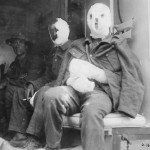
Fully one-third of sufferers died in the acute phase, a higher mortality rate than the Spanish flu of 1918-’19. Many of those who survived never returned to pre-disease states of “aliveness” and lived out the rest of their lives institutionalized, literal prisoners of their own bodies. They had become living paperweights.
The Great War entered its third year in 1917, with another year yet to go. Before wars acquired numbers, it was the most cataclysmic war in living memory, destroying the lives of some thirty-six million on all sides and leaving untold millions more, maimed.
In March of the following year, a new batch of trainees cycled through Fort Riley in Kansas, fresh recruits destined for the “War to End All Wars”. On reporting for breakfast one morning, none could know that an enemy lurked among them, more lethal than the war itself.
Private Albert Gitchell was coming down with cold-like symptoms: sore throat, fever and headache. Never mind breakfast. Pvt. Gitchell was headed for the base hospital. By noon over a hundred reported sick, with similar symptoms.
Ordinary flu strains prey most heavily on children, elderly, and those with compromised immune systems. Not this one. This flu would kick off a positive feedback loop between small proteins called cytokines, and white blood cells. This “cytokine storm” resulted in a death rate for 15 to 34-year-olds twenty times higher in 1918, than in previous years.
The young and healthy immune system of the victims are precisely what killed them.
The armistice was a bare two weeks in the past on November 29, 1918. Formal peace negotiations would occupy the whole of 1919.
History has a way of swallowing some events, whole. Like they never even happened. The Spanish flu afflicted some five hundred million worldwide, killing an estimated fifty to one hundred million. Two to three times the number killed by the war itself and yet, the story was overshadowed by the end of the war.
Small wonder it is then, that such an event would itself eclipse a pandemic far smaller but in some ways more terrifying, than the worldwide calamity of Spanish flu. To this day, nobody knows where this enemy came from. Nor where it left to, when it went away.
In 1915, Austrian psychiatrist and neurologist Constantin von Economo described the signs and symptoms of a strange new condition which came to be called Von Economo’s Disease. The illness was labeled Encephalitis Lethargica, literally “Inflammation of the brain which makes you tired”.
“We are dealing with a kind of sleeping sickness, having an unusually prolonged course. The first symptoms are usually acute, with headaches and malaise. Then a state of somnolence appears, often associated with active delirium from which the patient can be awakened easily. He is able to give appropriate answers and to comprehend the situation. This delirious somnolence can lead to death, rapidly, or over the course of a few weeks. On the other hand, it can persist unchanged for weeks or even months with periods lasting bouts of days or even longer, of fluctuation of the depth of unconsciousness extending from simple sleepiness to deepest stupor or coma,” Die Encephalitis lethargica, Constantin von Economo, 1917
Encephalitis Lethargica is also known by the deceptively benign name of “Sleepy Sickness”. Von Economo distinguished three phases of the illness. Symptoms of the somnolent-ophthalmoplegic include paralysis of the cranial nerves leading to expressionless faces and involuntary eye movements, with overwhelming sleepiness leading to coma. Fully one-third of E.L. sufferers died during this phase, of respiratory failure. The hyperkinetic form manifested itself with restlessness and motor disturbances leading to facial contortion, anxious mental state and an inability to sleep, often leading to death by exhaustion.
Dr. Constantin von Economou top left, described the plight of E.L. sufferers, in 1917
The amyostatic-akinetic form frequently resulted in a chronic state resembling Parkinson’s disease, called Postencephalitic Parkinsonism.
Autopsies revealed this third phase to result from localized neurodegeneration of the Substantia Nigra, the basal ganglia structure of the mid-brain which plays a role in reward and associative learning as well as bodily movement. Unknown to the sufferer, this neurodegeneration takes place over an interval of a few days to thirty years, consigning the sufferer to a trance-like state in which the patient is rendered speechless and motionless, fully aware but, for all intents and purposes, a statue.
Substantia Nigra
The 1973 non-fiction book Awakenings by Oliver Sacks, describes what that looks like:
“They would be conscious and aware – yet not fully awake; they would sit motionless and speechless all day in their chairs, totally lacking energy, impetus, initiative, motive, appetite, affect or desire; they registered what went on about them without active attention, and with profound indifference. They neither conveyed nor felt the feeling of life; they were as insubstantial as ghosts, and as passive as zombies”.
It is hard to imagine a more terrifying condition. Worldwide, Encephalitis Lethargica afflicted some five million between 1915 and 1924. The disease preyed mostly on young victims, between 15 and 35. Early symptoms include high fever, headache, fatigue and runny nose. Sufferers would take to bed believing it to be nothing more than a cold, or flu. Meanwhile, the unknown enemy within quietly spread to the brain.
Fully one-third of sufferers died in the acute phase, a higher mortality rate than the Spanish flu of 1918-’19.
For most who recovered, wellness would prove an illusion. Unknown to the sufferer, localized neurodegeneration was quietly taking place leading to a second phase of the disease. A state of Post-Encephalitic Parkinsonism (pep) would emerge sometimes, within a few days. Sometimes the process would take 30 years. Those who had entered this PEP state of the disease never returned to pre-disease states of “aliveness” and lived out the rest of their days institutionalized, literal prisoners of their own bodies. They had become living paperweights.
Barely 14 percent emerged from the condition with no lasting effect.
Professor John Sydney Oxford is an English virologist, a leading expert on influenza, the 1918 Spanish Influenza, and HIV/AIDS. Few have done more in the modern era to understand Encephalitis Lethargica: “I certainly do think that whatever caused it could strike again. And until we know what caused it we won’t be able to prevent it happening again.”
Doctors Russell Dale and Andrew Church discussed 20 new cases in 2004, published in the Oxford University medical journal Brain. The two hypothesize infection leading to a massive auto-immune response, possibly brought on by an unusual Streptococcus bacterium.
Further study is needed but, perversely, such study is only possible given more cases of the disease. For now, the lethal pandemic of 1915 – 1924 remains one of the great medical mysteries. An epidemiological conundrum, locked away in a nightmare closet of forgotten memory.
Holodomor: A mass murder by deliberate act of government, of its own citizens. “Death by hunger”, “killing by starvation”, it is a compound of the Ukrainian word holod, or ‘hunger’; and mor, meaning’plague’.
In 1928, Soviet Dictator Josef Stalin introduced a program of agricultural collectivization in Ukraine, the “Bread Basket” of the Soviet Union, forcing family farmers off their land and into state-owned collective farms.
Ukrainian “kulaks”, peasant farmers successful enough to hire labor or own farm machinery, refused to join the collectives, regarding such as a return to the serfdom of earlier centuries. Stalin claimed that these factory collectives would not only feed industrial workers in the cities, but would also provide a surplus to be sold abroad, raising money to further his industrialization plans.
Armed “dekulakization brigades” confiscated land, livestock and other property by force, evicting entire families. Nearly half a million individuals were dragged from their homes in 1930-’31 alone, packed into freight trains and shipped off to remote areas like Siberia and often left without food or shelter. Many of them, especially children, died in transit or soon after arrival.
Resistance continued, which the Soviet government could not abide. Ukraine’s production quotas were sharply increased in 1932-’33, making it impossible for farmers to meet assignments and feed themselves, at the same time. Starvation became widespread, as the Soviet government decreed that any person, even a child, would be arrested for taking as little as a few stalks of wheat from the fields in which they worked.
Military blockades were erected around villages preventing the transportation of food, while brigades of young activists from other regions were brought in to sweep through villages and confiscate hidden grain.
Warm and well fed with Russian mistress comfortably ensconced in Moscow, French wife hidden away on the Riviera, the British born New York Times Times reporter-turned international playboy opined, “You can’t make an omelet without breaking eggs.”
Walter Duranty, New York Times
Eventually all food was confiscated from farmers’ homes, as Stalin determined to “teach a lesson through famine” to the Ukrainian rural population.
At the height of the famine, Ukrainians starved to death at a rate of 22,000 per day, almost a third of those, children 10 and under. How many died in total, is anyone’s guess. Estimates range from two million Ukrainian citizens murdered by their own government, to well over ten million.
Millions of tons of grain were exported during this time, more than enough to save every man, woman and child.
2,500 people were arrested and convicted during this time, for eating the flesh of their neighbors. The problem was so widespread that the Soviet government put up signs reminding survivors: “To eat your own children is a barbarian act.”
Stalin denied to the world there was any famine in Ukraine, a position supported by the likes of Louis Fischer reporting for “The Nation”, and Walter Duranty of the New York Times. Duranty went on to win the Pulitzer Prize for his “coverage”, with comments like “any report of a famine in Russia is today an exaggeration or malignant propaganda”. Such stories were “mostly bunk,” according to the New York Times.
Warm and well fed with Russian mistress comfortably ensconced in Moscow, French wife hidden away on the Riviera, the British born New York Times Times reporter-turned international playboy opined, “You can’t make an omelet without breaking eggs.”
To this day, the New York Times has failed to repudiate Walter Duranty’s Pulitzer.
Like many on the international Left, Canadian journalist Rhea Clyman had great expectations of the “worker’s paradise” built by the Communist state, where no one was unemployed, everyone was “equal”, and Everyman had what he needed.
Unlike most, Clyman went to the Soviet Union to see for herself.
To do so at all was an act of courage. single Jewish woman who’d lost part of a leg in a childhood streetcar accident, traveling to a place where the Russian empire and its successor state had a long and wretched history. Particularly when it came to the treatment of its own Jews.
Virtually all of the international press preferred the comfortable confines of Moscow, cosseted in a world of Soviet propaganda and ignorant of the world as it was.
Duranty’s idea of “bon voyage” was the cynical offer, to write her obituary.Rhea Clyman
In four years, Clyman not only learned the language, but set out on a 5,000-mile odyssey to discover the Soviet countryside, as it really was.
It is through this “Special Correspondent in Russia of The Toronto Evening Telegram, London Daily Express, and Other Newspapers“, that we know much about the government’s extermination of its own citizens in Ukraine.
To read what Clyman wrote about abandoned villages, is haunting. The moment of discovery: “They wanted something of me, but I could not make out what it was. At last someone went off for a little crippled lad of fourteen, and when he came hobbling up, the mystery was explained. This was the Village of Isoomka, the lad told me. I was from Moscow, yes; we were a delegation studying conditions in the Ukraine, yes. Well, they wanted me to take a petition back to the Kremlin, from this village and the one I had just been in. “Tell the Kremlin we are starving; we have no bread!”
A tall, bearded peasant was spokesman. His two sons and the rest of the men and women nodded approval at every word. The little crippled boy stood with his right hand on his crutch, translating everything he said into Russian for me, word by word. “We are good, hard-working peasants, loyal Soviet citizens, but the village Soviet has taken our land from us. We are in the collective farm, but we do not get any grain. Everything, land, cows and horses, have been taken from us, and we have nothing to eat. Our children were eating grass in the spring….”
I must have looked unbelieving at this, for a tall, gaunt woman started to take the children’s clothes off. She undressed them one by one, prodded their sagging bellies, pointed to their spindly legs, ran her hand up and down their tortured, mis-shapen, twisted little bodies to make me understand that this was real famine. I shut my eyes, I could not bear to look at all this horror. “Yes,” the woman insisted, and the boy repeated, “they were down on all fours like animals, eating grass. There was nothing else for them.” What have you to eat now?” I asked them, still keeping my eyes averted from those tortured bodies. “Are all the villages round here the same? Who gets the grain?”” – Rhea Clyman, Toronto Telegram, 16 May 1933
22,000 of these poor people starved to death, every day. Pitifully, many yet believed the government in Moscow was going to help. If only comrade Stalin knew…
The Holodomor Memorial to Victims of the Ukrainian Famine-Genocide of 1932–1933 was opened in Washington, D.C. on November 7, 2015
Today, the province of Alberta is home to about 300,000 Canadians of Ukrainian Heritage. Alberta Premier Rachel Notley once explained “Holodomor is a combination of two Ukrainian words: Holod, meaning hunger, and moryty, meaning a slow, cruel death. That is exactly what Ukrainians suffered during this deliberate starvation of an entire people“.
Ukrainians around the world recognize November 23 as Holodomor Memorial Day, commemorated by a simple statue in Kiev. A barefoot little girl, gaunt and hollow eyed, clutches a few stalks of wheat.Holodomor memorial. The Holodomor was a man-made famine in the Ukrainian SSR between 1932 and 1933. During the famine, 2.4 – 7.5 millions of Ukrainians died of starvation.
Here in the United States, you could line up 100 randomly selected adults. I don’t believe that five could tell you what Holodomor even means. We are a self-governing Republic. All 100 should be well acquainted with the term
You must be logged in to post a comment.