May 19, 1828 Tariff of Abominations

Protective tariffs worked to the advantage of the north as they tended to strengthen, the industrial economies. To the south, agricultural economies were more dependent on imported goods whether those came from the north, or from overseas.

Following the industrial revolution, Britain emerged as the economic powerhouse of Europe. As Napoleon Bonaparte attempted to throttle the British economy by shutting down exports to Europe, manufacturers across the UK sought out new trade partners. Among those were their own former colonies, in America.
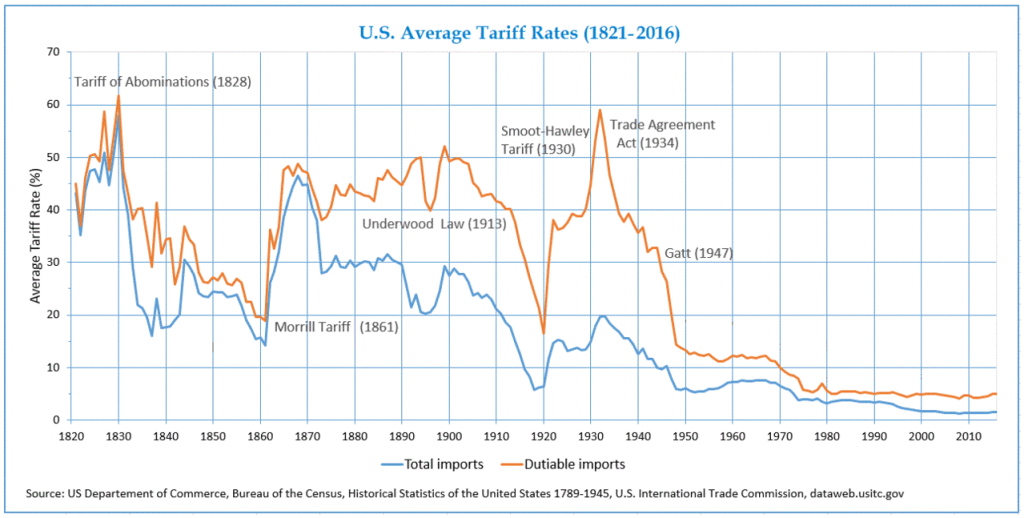
In the United States, the low prices of British goods had a damaging affect on American manufacturing. Goods were flooding into the market at prices American companies, were unable to match. The tide increased after the war of 1812. Congress passed a tariff on British made goods in 1816 and upped the tax, eight years later.

Protective tariffs worked to the advantage of the north as they tended to strengthen, the industrial economies. To the south, agricultural economies were more dependent on imported goods whether those came from the north, or from overseas. The cotton states doubly resented protective tariffs as they made it more difficult, for their British trade partners to pay for exported cotton.

Today, the divide between Democrats and Republicans is a fact of life. In the 1820s, the first recognizable pieces of that system, were just falling into place. John Quincy Adams was elected in 1824 in what many described, as a “corrupt bargain”. The mid-terms of 1826 marked the first time Congress was in firm control of the President’s political opponents.

In 1828, southern and mid-Atlantic lawmakers agreed to concoct a tariff so egregious, the bill would never pass. The “Tariff of Abominations” weighed heavily on manufactured goods and therefore southern states but also on raw materials like iron, hemp (for rope) and flax, a direct shot at New England manufacturing. In so doing, future President Martin van Buren, then-Vice President John C. Calhoun and others expected to pull southern support in the final moments and thus to embarrass the President and his more conservative allies like Adams’ Secretary of State, Henry Clay.

Fun fact: Martin van Buren was born in Kinderhook New York where most of the residents, spoke Dutch. Van Buren was no exception, making the 8th President of the United States the only President to speak English, as a second language.

The plan worked nicely in the southern states, where the bill went down to defeat, 64-4. To their horror and astonishment, the thing received overwhelming support in the middle and western states. Even in New England where textile mills teetered on the brink of bankruptcy, lawmakers were swayed by the argument that, what was good for one region, was good for the nation. The tariff of abominations received 41% support, even in New England.

Political cartoon depicts the north getting fat on tariffs, at the expense of the south

President Adams was well aware the measure would damage him politically but he signed it into law regardless, on this day in 1828.

The President was right. His own vice president jumped ship to join Andrew Jackson’s ticket to destroy Adams for re-election in an electoral vote, of 178 to 83.  The “Era of Good Feelings” was ended. The age of the two-party system, had begun.
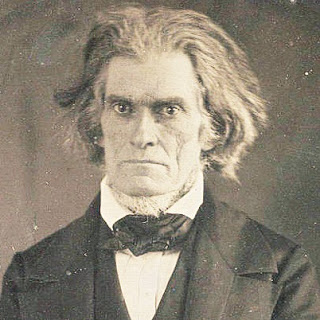
John C. Calhoun, (left) the only vice President to serve under two different Presidents, detested the law he had helped to create.

In December 1828, the outgoing/incoming vice President penned an anonymous pamphlet, urging nullification in his home state of South Carolina.

The South Carolina legislature printed 5,000 copies of Calhoun’s pamphlet but took none of the legislative measures, it argued for. Calhoun was out in the open in 1829, claiming the measure was unconstitutional and urging the law be declared null and void, in the sovereign state of South Carolina.

The issue created a split between Jackson and his vice President leading Calhoun to resign the vice Presidency.

Fun fact: While John C. Calhoun and Spiro T. Agnew are the only vice Presidents ever to resign, seven others have died in office, leaving the vice Presidency vacant for a total of 37 years and 290 days, about a fifth of the time, we’ve had a President.

President Jackson signed a reduced tariff into law in 1832 but, for South Carolina, it was too little, too late. The state called a convention that November and, by a vote of 136-26, voted that the tariffs of 1828 and 1832 were both unconstitutional and thereby null and void, in South Carolina.
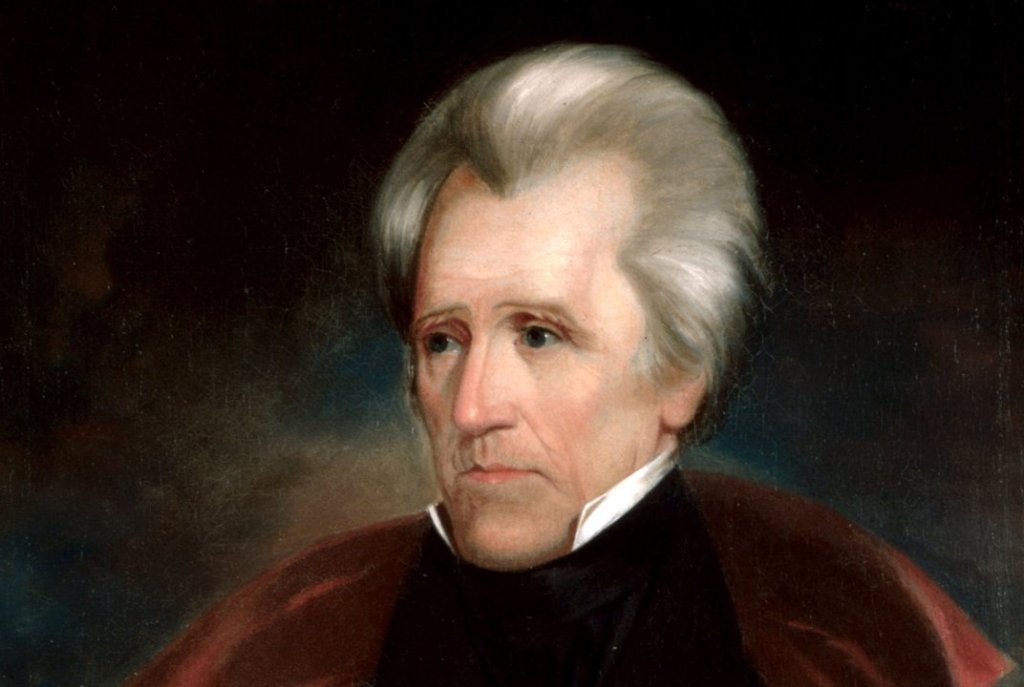
Andrew Jackson

Andrew Jackson was not a man to be trifled with. At 13, Jackson received serious saber wounds at the hands of a British soldier, infuriated that the boy refused to shine his boots. In 1806, the man killed a Nashville lawyer in a duel while himself being shot, in the chest. He would carry that bullet in his body until 1831 when a navy doctor cut it out right there in the White House…without anesthesia. Another dueling opponent shot Jackson in 1813, this time, shattering his shoulder. He would carry that bullet in his body, until the day he died. As a General in the War of 1812, Jackson famously crushed an advancing British army, in the Battle of New Orleans.
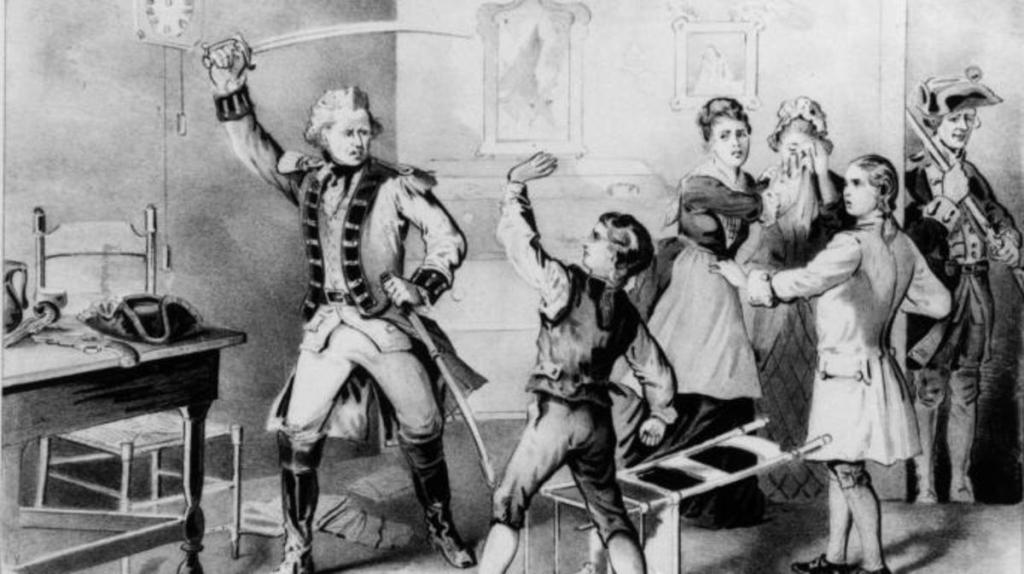
As President, Jackson wasn’t about to tolerate a nullification crisis under his watch and threatened to make war, on South Carolina. Congress passed the Force Act, granting Jackson the authority to take any measure, he deemed necessary. South Carolina began military preparations for war, with the federal government.

Bloodshed was averted when Calhoun and Clay stepped in, with a compromise. Under their plan, the tariff of 1833 would begin to reduce rates over 20% by one tenth every two years until they were all back to 20%, in 1842.

South Carolina reconvened and repealed the ordnance of nullification. Lest anyone doubt their true intentions or deny the state’s right to do so, the convention then went on to nullify Congress’ Force Act.

It didn’t much matter. The “Black Tariff” of 1842 reinstated the old duties and increased dutiable imports, to 85%.

By the 1850s, westward expansion brought back the issue of “State’s Rights”, this time over the expansion, of slavery.

The next crisis was not to be averted, but by rivers of blood.

May 18, 1904 The Perdicaris Incident

Once deemed an international city by foreign colonial powers, Tangier has long been a favorite of spies, artists and an assortment of thieves, international bankers and business types. But perhaps I repeat myself.

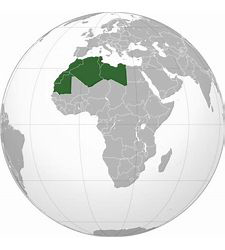
On the northern coast of Africa lies the westernmost part of the Arab world, a region extending from Egypt in the east to the Atlantic Ocean and encompassing the modern nations of Algeria, Libya, Mauritania, Morocco and Tunisia.

Historically, the English speaking world referred to this region, the Maghreb (Arabic: المغرب‎ al-Maghrib – “The West”) as the Barbary Coast, a term deriving from the Berber peoples of the region.

Cape Spartel forms the high point of northwestern Africa and the southern boundary, of the Strait of Gibraltar. The Moroccan city of Tangier may be found there, an ancient metropolis once given as part of a dowry for a Portuguese Princess. Tangier was home to the first American property outside the continental United States, a two-story masonry building presented in 1821 by Sultan Moulay Suliman and used today, as the museum of the American Legacy, in Tangier.

Fun fact: Believing strongly in the benefits of international trade, Moroccan Sultan Muhammad III threw his ports open to a number of foreign nations in December 1777, including the United States. So it is that Morocco became the first nation whose head of state, publicly recognized the fledgling nation. The Moroccan–American Treaty of Friendship signed by the Sultan along with Thomas Jefferson and John Adams in 1786 remains the longest unbroken treaty, in US history.

Once deemed an international city by foreign colonial powers, Tangier has long been a favorite of spies, artists and an assortment of thieves, international bankers and business types. But perhaps I repeat myself.

Tangier, today

The rock group Def Leppard once played the nearby Caves of Hercules, the first of three concerts played on as many continents in a single day and intended to get them, into the Guinness Book of World Records. The novel Naked Lunch penned by William Burroughs, that oddest of oddball stories with no beginning, no end and no story to tell, was written in Tangier.

The Greek-American tycoon Ion “Jon” Perdicaris once owned a summer home in the hills above Tangier, a vine covered villa he called “Place of Nightingales”, complete with a tame demoiselle crane and a pair of pet monkeys, who ate orange blossoms. On May 18, 1904, Mr. Perdicaris sat down to dine with Ellen, Mrs. Perdicaris, Ellen’s son by a previous marriage Cromwell Oliver Varley (don’t ask), and Mrs. Varley.

A pandemonium of screams and barking dogs broke out in the servant’s quarters and Perdicaris thought it was yet another fight between his German housekeeper and French-Zouave chef. Not a chance. Two terrified servants came pelting into the room pursued by armed Moors who beat the pair with rifle butts and knocked Mrs. Perdicaris, to the ground. One put a knife to the Varley’s throat when a great, bearded sheik strode into the room. With a great sweep of his arm and a theatricality worthy of Sir Patrick Stewart playing King Lear, the newcomer proclaimed “I am the Raisuli!”

Mr. Perdicaris and his step-son were about to be kidnapped by the notorious Mulai Ahmed er Raisuli, leader of several hill tribes and the last, of the Barbary pirates.

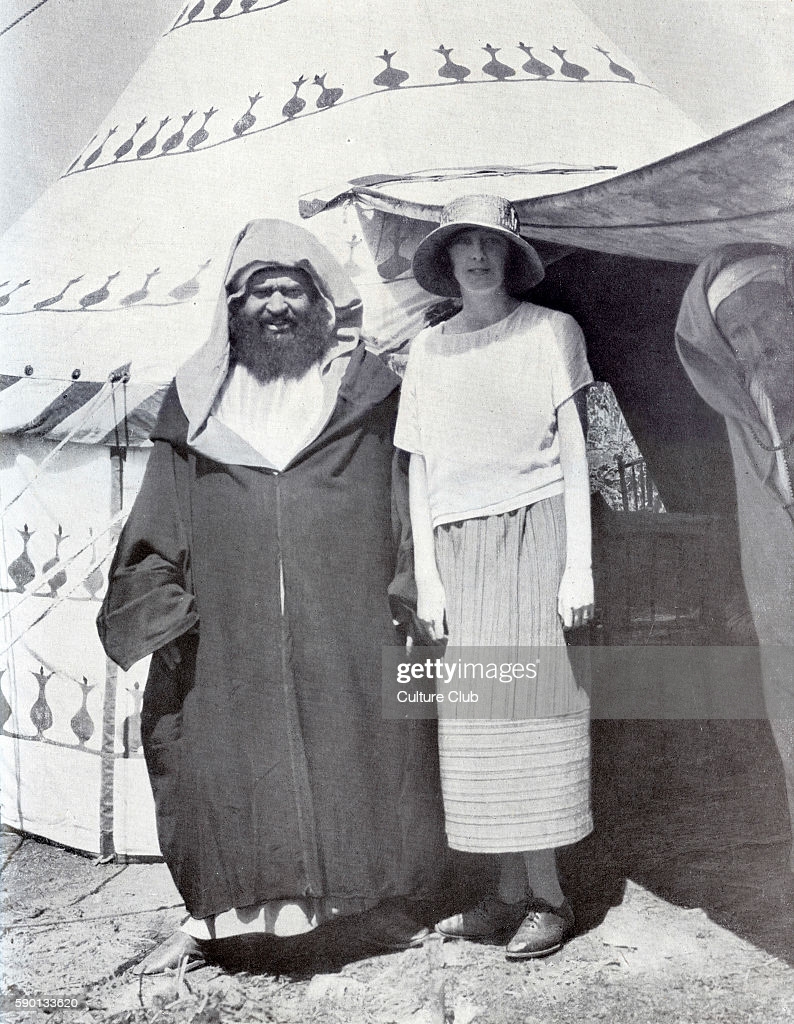
Raisuli (Mulai Ahmed er Raisuni, 1871 – 1925) and Rosita Forbes (1890 – 1967), English travel writer, in Morocco. Published in December 1923. (Photo by Culture Club/Getty Images)

In 1901, two American missionaries were kidnapped in southwestern Bulgaria, then a part of the Ottoman Empire. After six months’ negotiations, the “Miss Stone Affair” culminated in the payment of 14,000 gold Turkish liras, a sum equivalent to over thee million, today. The episode is considered the first American hostage crisis of the modern era. At the time the kidnapping received widespread coverage, as did the ransom.

Small wonder it is then that “The Raisuli” would have a hand, at kidnapping a wealthy American.

Mulai Ahmed er Raisuli, the son of a prominent tribal leader, was devoted to a life of womanizing, and stealing cattle and sheep. As a younger man, Raisuli was once invited to dinner by his cousin and foster brother Abd-el-Rahman Abd el-Saduk, Pasha of Tangier, only to be set upon and beaten and chained to a wall, in a dungeon.

Raisulli lived four years chained to that wall, surviving only by the food brought, by friends. Thoroughly hardened and filled with hate by such an experience, Raisulli was released four years later in a general amnesty, by Mulai Abd al-Aziz IV, the incoming Sultan of Morocco.

One day, Hollywood would produce a forgettable film based on the Perdicaris incident, save for the starring role of Sean Connery, as Mulai Ahmed er Raisuli

Despite his release, Raisulli grew to distrust the Sultan, a feckless politician with a weakness for European luxuries and far to0 deferential to the foreign powers, jockeying for control in Morocco. He returned to a life of crime but now he was more ambitious. Raisulli ‘s first kidnapping victim was the English Times correspondent Walter Burton Harris, a man kidnapped not for money but to secure the release from prison, of some of the kidnapper’s allies.

To his captives, Raisulli was capable of extravagant courtesies, worthy of the age of chivalry. He was also a man of extraordinary cruelty, known for putting out the eyes of opponents, with red-hot copper coins. He once sent the head of an opponent back where it came from, in a basket of melons.

Back at the Place of Nightingales, Ellen Perdicaris notified Consul General Samuel Gummere, of the kidnapping.

Theodore Roosevelt lived in the White House at this time, President only by virtue of the assassination of President William McKinley. With 1904 being an election year, “Teddy” was eager to be elected, in his own right.

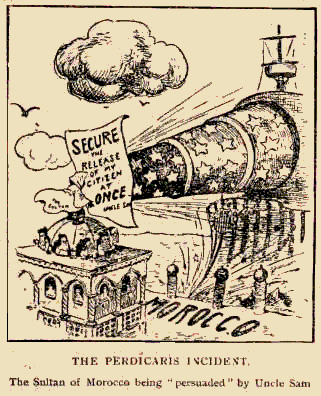
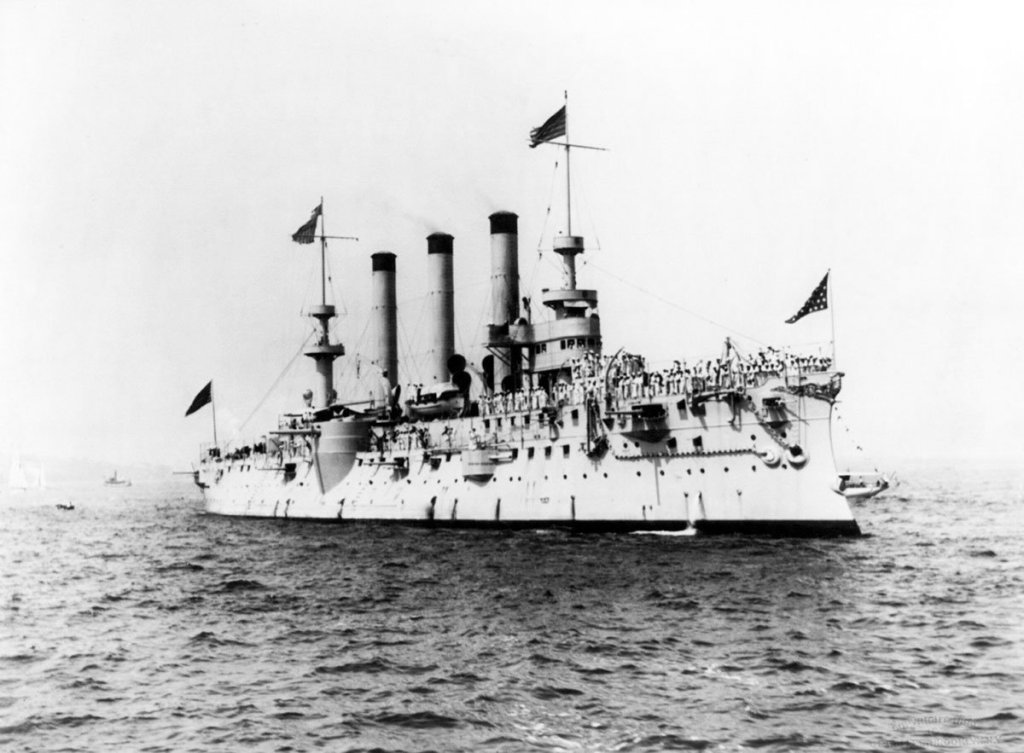
Roosevelt jumped into action on receiving Gummere’s telegram, sending four warships from the southern fleet, to Tangier.

Raisulli demanded a ransom of $55,000, the release of several “political prisoners”, the imprisonment of his cousin the hated Pasha & several other government officials and personal control over two of the wealthiest districts, in Morocco. As negotiations dragged on, he raised the stakes to $70,000 and six districts.

Forty years earlier, John Hay stepped onto the pages of history as personal secretary, to President Abraham Lincoln. It is John Hay who gives his name to one of five known copies, of the Gettysburg Address.

In June 1904, Secretary of State John Hay wrote to the Republican National Convention: “This government wants “Perdicaris Alive or Raisuli Dead!”. The phrase would help boost Roosevelt to re-election but turned out to be embarrassing. More on that, later.

Spain, Great Britain and France sent warships of their own and prevailed upon the Sultan, to accede to the kidnapper’s demands. Raisulli would receive his money and his six districts however, graft and cruelty toward his poor “subjects” would lead to his ouster, two years later.

Now for Roosevelt. Gregory Perdicaris, Ion’s father, came to the United States at the age of 26, as a student. The elder Perdicaris was naturalized an American citizen, later marrying the daughter of a wealthy family and settling in her home state, of South Carolina. Ion Perdicaris was born in Athens where his father was working, as the American Ambassador.

Born as he was to American parents, Ion Perdicaris was himself an American citizen. Until the Civil War arrived and he renounced it, to avoid being conscripted to fight for the Confederacy.

Forty years later, the President of the United States sent the US southern fleet to rescue…a Greek.

May 17, 1781 Windows on their Souls

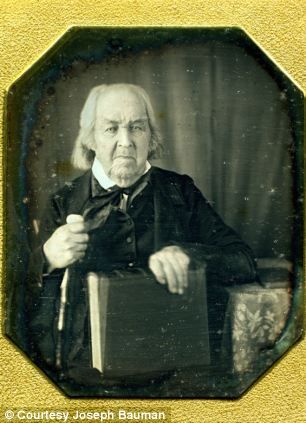
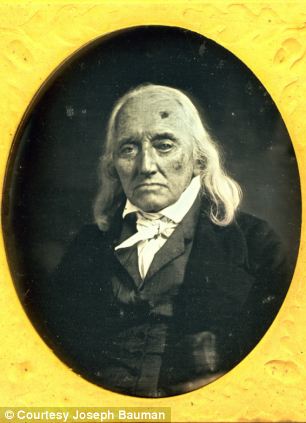
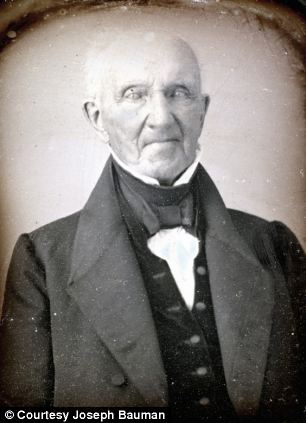
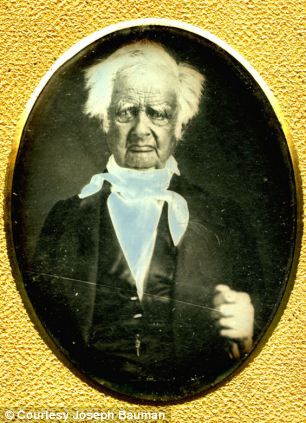
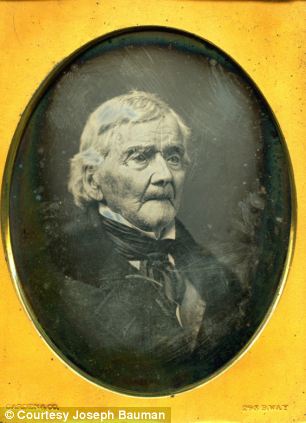
“A daguerreotype is a unique image — it isn’t a print, it isn’t a reproduction of any kind. When you have a camera set up to take a daguerreotype and the sitter is in front of you, for example, one of these old men who actually looked and knew and talked to leaders of the Revolution … the light is coming from the sun, hitting his face, and bouncing off of his face through the camera and onto that very same plate.”- Joseph Bauman

FOTR, Dr Eneas Munson

Imagine seeing the faces of the men who fought the American Revolution.  Not the paintings. There’s nothing extraordinary about that, except for the talent of the artist.  I mean their photographs – images that make it possible for you to look into their eyes. The windows, of their souls.

In a letter dated May 17, 1781 and addressed to Alexander Scammell, General George Washington outlined his intention to form a light infantry unit, under Scammell’s leadership.

Dr. Eneas Munson

Comprised of Continental Line units from Connecticut, Massachusetts and New Hampshire, the Milford, Massachusetts-born Colonel’s unit was among defensive forces keeping Sir Henry Clinton penned up in New York City, as the Continental army made its way south to a place called Yorktown.

FOTR, Rev Levi Hayes

Among the men under Scammell’s command was Henry Dearborn, future Secretary of War under President Thomas Jefferson. A teenage medic was also present.  His name was Eneas Munson.

One day, the medic would go on to become Doctor Eneas Munson, professor of the Yale Medical School in New Haven Connecticut,  President of the Medical Society of that same state.  And a man who would live well into the age of photography.

Reverend Levi Hayes

The American Revolution ended in 1783.  By the first full year of the Civil War, only 12 Revolutionary War veterans remained on the pension rolls of a grateful nation.

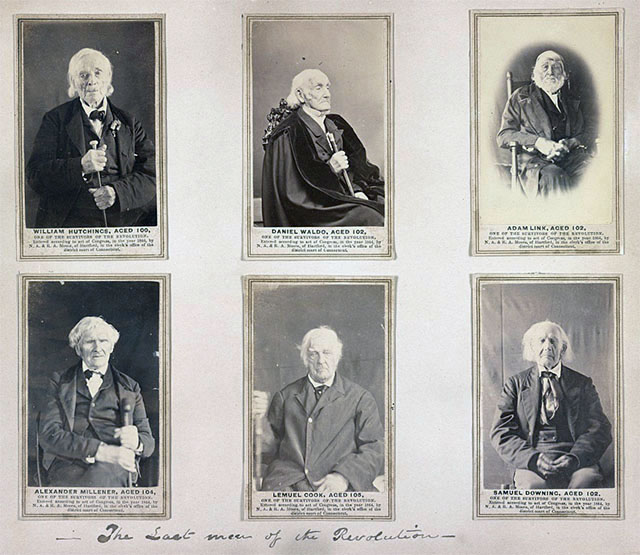
Two years later, Reverend EB Hillard brought two photographers through New York and New England to visit, and to photograph what were believed to be the last six.  Each man was 100 years or older, at the time of the interview.

FOTR, Peter Mackintosh

William Hutchings of York County Maine, still part of Massachusetts at the time, was captured at the siege of Castine at the age of fifteen.  British authorities said it was a shame to hold one so young a prisoner, and he was released.

Reverend Daniel Waldo of Syracuse, New York fought under General Israel Putnam, becoming a POW at Horse Neck.

Adam Link of Maryland enlisted at 16 in the frontier service.

Peter Mackintosh

Alexander Millener of Quebec was a drummer boy in George Washington’s Life Guard.

Clarendon, New York native Lemuel Cook would live to be one of the oldest surviving veterans of the Revolution, surviving to the age of 107.  He and Alexander Millener witnessed the British surrender, at Yorktown.

FOTR, Jonathan Smith

Samuel Downing from Newburyport, Massachusetts, enlisted at the age of 16 and served in the Mohawk Valley under General Benedict Arnold.  “Arnold was our fighting general”, he’d say, “and a bloody fellow he was. He didn’t care for nothing, he’d ride right in. It was ‘Come on, boys!’ ’twasn’t ‘Go, boys!’ He was as brave a man as ever lived…He was a stern looking man, but kind to his soldiers. They didn’t treat him right: he ought to have had Burgoyne’s sword. But he ought to have been true. We had true men then, twasn’t as it is now”.

Jonathan Smith

Hillard seems to have missed Daniel F. Bakeman, but with good reason.  Bakeman had been unable to prove his service with his New York regiment.  It wasn’t until 1867 that he finally received his veteran’s pension by special act of Congress.

FOTR, James Head

Daniel Frederick Bakeman would become the Frank Buckles of his generation, the last surviving veteran of the Revolution. The 1874 Commissioner of Pensions report said that “With the death of Daniel Bakeman…April 5, 1869, the last of the pensioned soldiers of the Revolution passed away.  He was 109.

Most historians agree on 1839 as the year in which the earliest daguerreotypes became practically accessible.

James W. Head

When Utah based investigative reporter Joe Bauman came across Hillard’s photos in 1976, he believed that there must be others.  Photography had been in existence for 35 years by Reverend Hillard’s time.  What followed was 30 years’ work, first finding and identifying photographs of the right vintage, and then digging through muster rolls, pension files, genealogical records and a score of other source documents, to see if each had played a role in the Revolution.

FOTR, George Fishley

There were some, but it turned out to be a small group. 

Peter Mackintosh for one, was a 16-year-old blacksmith’s apprentice, from Boston.  He was working the night of December 16, 1773, when a group of men ran into the shop scooping up ashes from the hearth and rubbing them on their faces.  Turns out hey were going to a Tea Party.

George Fishley

James Head was a thirteen year-old Continental Naval recruit from a remote part of what was then Massachusetts.  Head would be taken prisoner but later released, walking the 224 miles home from Providence to the future town of Warren, Maine.

Head was elected a Massachusetts delegate to the convention called in Boston, to ratify the Constitution.   He would die the wealthiest man in Warren, stone deaf from service in the Continental Navy.

FOTR, Simeon Hicks

George Fishley served in the Continental army and fought in the Battle of Monmouth, and in General John Sullivan’s campaign against British-allied Indians in New York and Pennsylvania.

Fishley would spend the rest of his days in Portsmouth New Hampshire, where he was known as ‘the last of our cocked hats.”

Simeon Hicks

Daniel Spencer fought with the 2nd Continental Light Dragoons, an elite 120-man unit also known as Sheldon’s Horse after Colonel Elisha Sheldon.  First mustered at Wethersfield, Connecticut, the regiment consisted of four troops from Connecticut, one troop each from Massachusetts and New Jersey, and two companies of light infantry. On August 13, 1777, Sheldon’s horse put a unit of Loyalists to flight in the little-known Battle of the Flocky, the first cavalry charge in history, performed on American soil

FOTR, Daniel Spencer

Bauman’s research uncovered another eight in addition to Hillard’s record including a shoemaker, two ministers, a tavern-keeper, a settler on the Ohio frontier, a blacksmith and the captain of a coastal vessel, in addition to Dr. Munson.

The experiences of these eight span the distance from the Boston Tea Party to the battles at Monmouth, Quaker Hill, Charleston and Bennington.  Their eyes looked upon the likes of George Washington, Alexander Hamilton and Henry Knox, the battles of the Revolution and the final surrender, at Yorktown.

Daniel Spencer

Bauman collected the glass plate photos of eight and paper prints of another five along with each man’s story and published them, in an ebook entitled “DON’T TREAD ON ME: Photographs and Life Stories of American Revolutionaries”.

To look into the eyes of such men is to compress time. To reach back over the generations before the age of photography, and look into eyes that saw the birth of a nation.

May 16, 1771 First Blood

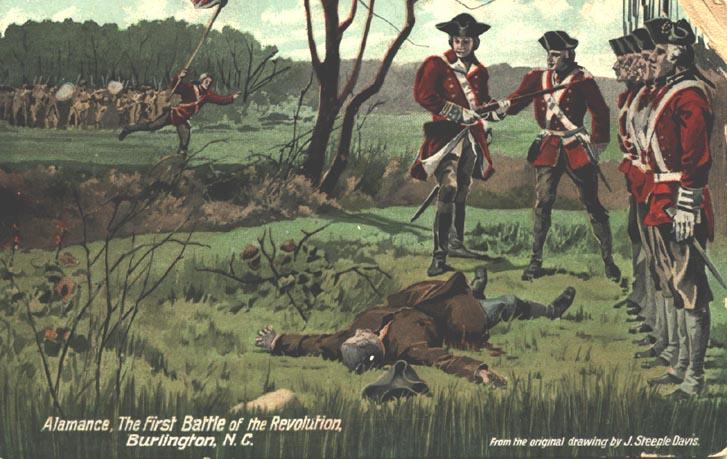
At a place called Alamance, North Carolina Regulators sought justice under prevailing law. Four years later the two sides met once again, at  Lexington & Concord. This time, the choices came down to Liberty, or death.

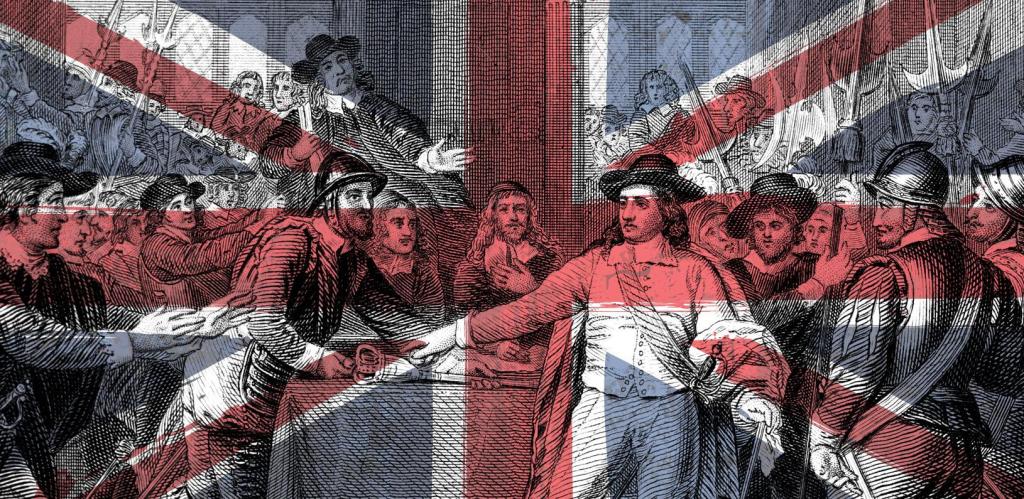
The English Civil War of 1642 – 1651 is often referred to as a single event, a war fought over religious freedom and issues of governance, over the three kingdoms of England, Scotland and Ireland. The conflict pitting Royalists (“Cavaliers”) against Parliamentarians (“Roundheads) may be looked at as two or even three separate events, culminating in 1649 with the death by decapitation, of English King Charles I. There appeared for a time an interregnum, governed first by “Lord Protector” Oliver Cromwell and later by his son, Richard.

Cromwell died unexpectedly in 1658 most likely, from complications of a urinary infection. Richard Cromwell succeeded his father but, with no base of political support, the younger Cromwell was out within a year. By 1660 the dead King’s son Charles II was invited to return from exile, to rule over a restored monarchy.

Oliver Cromwell’s body was exhumed from Westminster Abbey on January 30, 1661 and “executed”, his head fixed to a pike and body thrown in a pit. Some will tell you Ralph Waldo Emerson once said: “When you strike at a king, you must kill him.” Others attribute the idea to Niccolò Machiavelli. Whoever it was, the man got that right.

Three years later, Charles II rewarded a group of 8 political allies for their support, in restoring him to the crown. A colony of their own in the New World, the lands between Virginia and Spanish Florida. The Province of Carolina, the name a Latin tribute to Charles (Carolus).

The land proved unwieldy to govern. So it was that deputy governors were appointed in 1691, to govern the separate provinces of north and south Carolina.

The region was no stranger to English settlement. Ananias and Eleanor Dare welcomed a daughter into the fledgling colony on Roanoke island on August 18, 1587, Virginia, the first English child born in the New World.

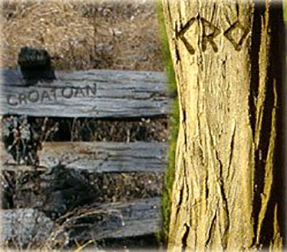
Virginia Dare would disappear along with the entire settlement, leaving only the cryptic words “Croatan” carved into a post and “Cro”, carved into a tree.

The child’s grandfather John White and others would search for the settlers, in vain. What became of the Lost Colony of Roanoke remains a mystery, to this day.

Other efforts failed to establish permanent settlements in North Carolina until 1648, when Virginians Henry Plumpton and Thomas Tuke purchased tracts of land from indigenous tribes. Other Virginians moved in over the next ten years either buying land from native Americans, or obtaining grants.

By 1729, the 8 “Lord Proprietors” had sold their interests. The colonies of North and South Carolina, reverted to the crown.

Following the union of England and Scotland to form the “United Kingdom” in 1707, waves of Scottish immigrants arrived in the colonies. Some 145,000 Lowland Scots, Highland Scots and Ulster “Scots-Irish” arrived over the next seven decades.

Early arrivals among the latter encountered intolerance and violence in the New England colonies. Philadelphia became for a time the preferred destination, but the Pennsylvania frontier was already suffering the early raids from what would become the French and Indian War. By the 1740s, the vast majority of Scots and Scots-Irish immigrants were headed for North Carolina.

Poorer than their English counterparts, these Scots and Scots-Irish newcomers turned west to farm the familiar, rolling hills of the Piedmont and Sand Hills. In the 1760s, great waves of internal migrants left the eastern cities in search of better opportunities in the rural west. The merchants, businessmen and lawyers of this second wave upset the social order and long-established political customs of the region,

Class differences were exacerbated by a long period of drought. Poor “Dirt Farmers” increasingly went into debt to these new arrivals. Between 1755 and 1765, court records reflect a sixteen-fold increase in collection actions. Such suits often lead to planters losing homes and property. Newly arriving lawyers used superior knowledge of the law, many times to unfair advantage. To their victims, this “Courthouse Ring” was seen as grabbing political power for themselves. Grasping clerks and sheriffs in pursuit of taxes from cash-strapped farmers did little to lessen the sense that newcomers, were using the system for their own enrichment.

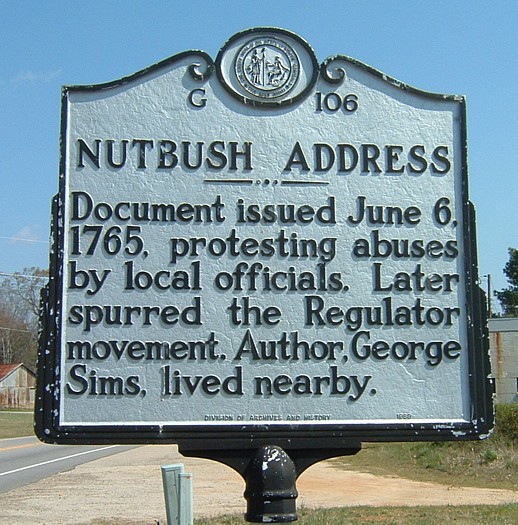
As Sons of Liberty groups from Wilmington to Boston protested the Stamp Act of 1765, a schoolteacher named Sims delivered the “Nutbush Address”, railing about abuses of county clerks, lawyers and sheriffs and demanding the preservation, of equality under the law. The poor farmer he argued, was often subjected to fees in excess of the debt in question.

Resentments grew and deepened with the arrival of royal Governor William Tryon, in 1765. A system depending on the integrity of extortionate and self-dealing officials could not stand. Governor Tryon’s support of these people formed the tipping point.

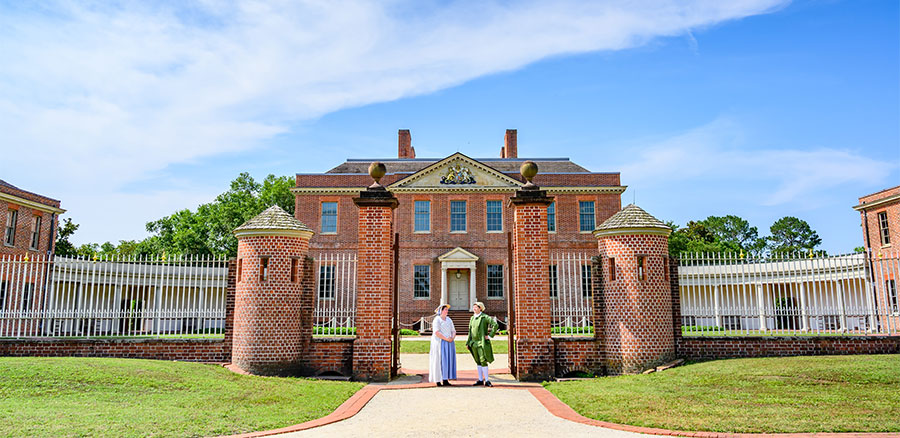
Tryon Palace, built 1770

Tryon went directly to work on a residence, befitting a man of his exalted stature. Additional taxes were levied on already strained farmers and, in 177o, Tryon moved in with his English heiress wife, Margaret.

Groups of self-styled “Regulators” had already risen up by this time, to demand honest government and fair taxation. The Tryon Palace was the final straw. In Orange County alone some 6,000 to 7,000 of the 8,000 residents at this time, supported the Regulators. No matter. To the wealthy businessmen, politicians and lawyers of the new social order, theirs was nothing but a peasant uprising, and would not be tolerated.

In 1768, a group of Regulators assaulted the courthouse, at Hillsborough. Lawyers were beaten and the shops of local businessmen, ransacked. With cases pending against several of their leaders, Regulators demanded that they themselves, be appointed jurors. Judge Richard Henderson adjourned the court with a promise to return in the morning but instead left town, in the dark of night.

Regulators deposited human waste on the judges seat. A long-dead slave was laid out on the lawyer’s bar. The mob looted and burned the judges home, stables and barn, but not before drinking all his alcohol.

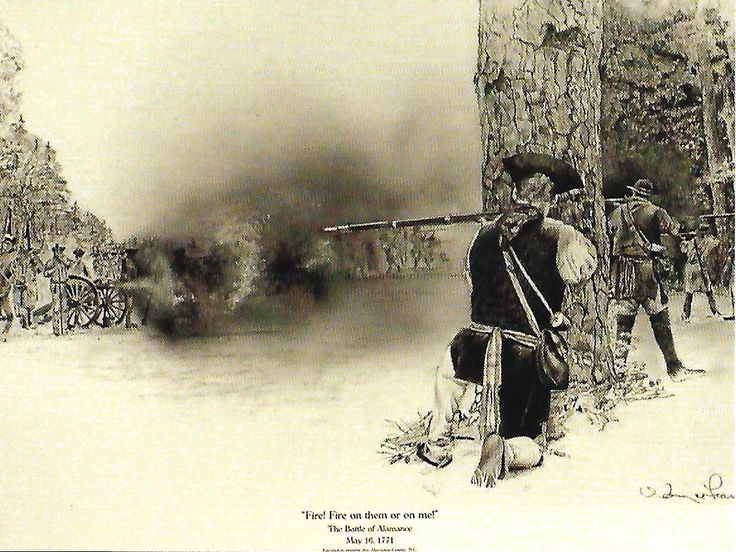
Acts of violence became a regular of the western counties. On May 9, 1771, Governor Tryon showed up in Hillsborough at the head of 1,000 troops and 150 officers, to put an end to it. Not far away some 2,000 Regulators, some say as many as 6,000, were spoiling for a fight. More a leaderless mob than a disciplined force, the two sides first clashed on May 15, when Regulators captured two of the Governor’s militia.

As far as Tryon was concerned, these people were in open rebellion. The Regulators appear not to have understood the seriousness, of the situation. At 8:00 the following morning, the column approached the Regulator camp.

Captain Philemon Hawkins II came forward with a message:

Alamance Camp, Thursday, May 16, 1771

“To Those Who Style Themselves “Regulators”: In reply to your petition of yesterday, I am to acquaint you that I have ever been attentive to the interests of your County and to every individual residing therein. I lament the fatal necessity to which you have now reduced me by withdrawing yourselves from the mercy of the crown and from the laws of your country”…

William Tryon

Reverend David Caldwell departed the Regulator camp with one Robert Thompson, to negotiate. Caldwell was warned away but Tryon took Thompson, as hostage. History fails to record what was said but, in a moment of anger, the governor grabbed a musket from his militia and shot Robert Thompson, dead. Tryon’s flag bearer was fired upon and responded, “Fire and be Damned!. When the shooting stopped, both sides counted nine dead. Dozens to as many as 200 regulators, were wounded.

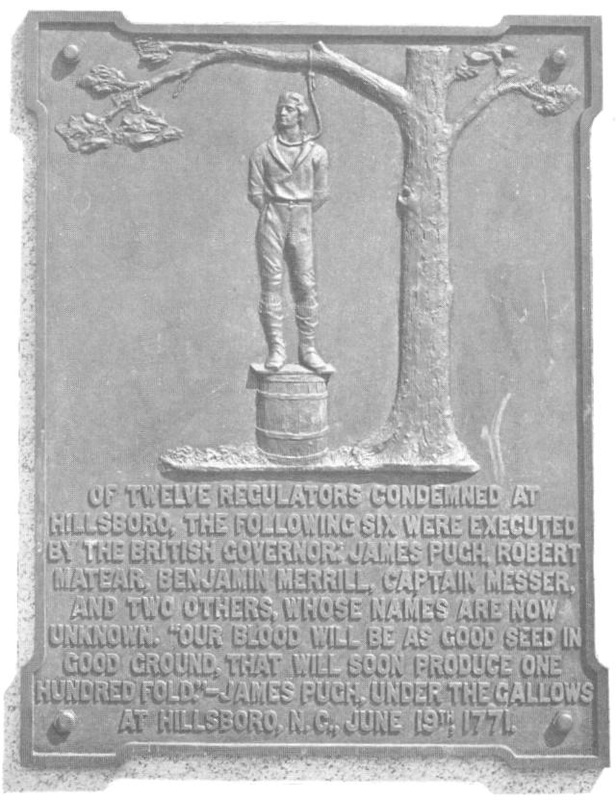
With 13 Prisoners, the royal Governor executed one of them, a man named James Pugh, right there in camp. Tryon hanged six of the remaining twelve in the following days. The other six were pardoned, in exchange for oath of fealty.

Was the Battle of Alamance the first action of the Revolution? Historians differ but, this is certain. A year later and a day’s drive on modern highways, Rhode Island Sons of Liberty burned the customs schooner HMS Gaspée to the water’s edge. The King’s “Tea Act” lead to the Boston Tea Party, a year later.  A blizzard of regulations came down in 1774, called the “Intolerable Acts”. The “Liberty and Union” flag, the first distinctly American flag in history flew that October, above the Massachusetts town of Taunton. Something had begun, not to be denied.

At Alamance, Regulators sought justice under prevailing law. Four years later later the sides met once again, at  Lexington & Concord. This time, the choices came down to Liberty, or death.

May 15, 1997 Bombies

If I asked you about the most heavily bombed nation in history, who would you guess. Japan or Germany during World War 2? Iran or Iraq? You might be surprised who it is. It is none of those.

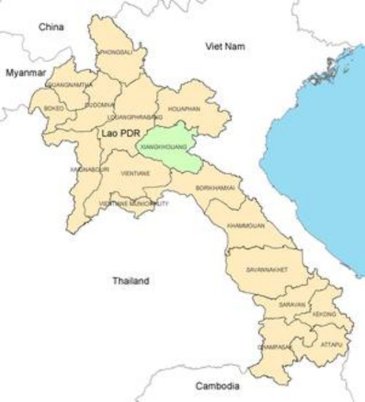
Deep in the heart of the Indochinese peninsula of mainland Southeast Asia lies the Lao People’s Democratic Republic, (LPDR), informally known as Muang Lao or just Laos. To the north of the country lies the Xiangkhouang Plateau, known in French as Plateau du Tran-Ninh, situated between the Luang Prabang mountain range separating Laos from Thailand, and the Annamite Range along the Vietnamese border.

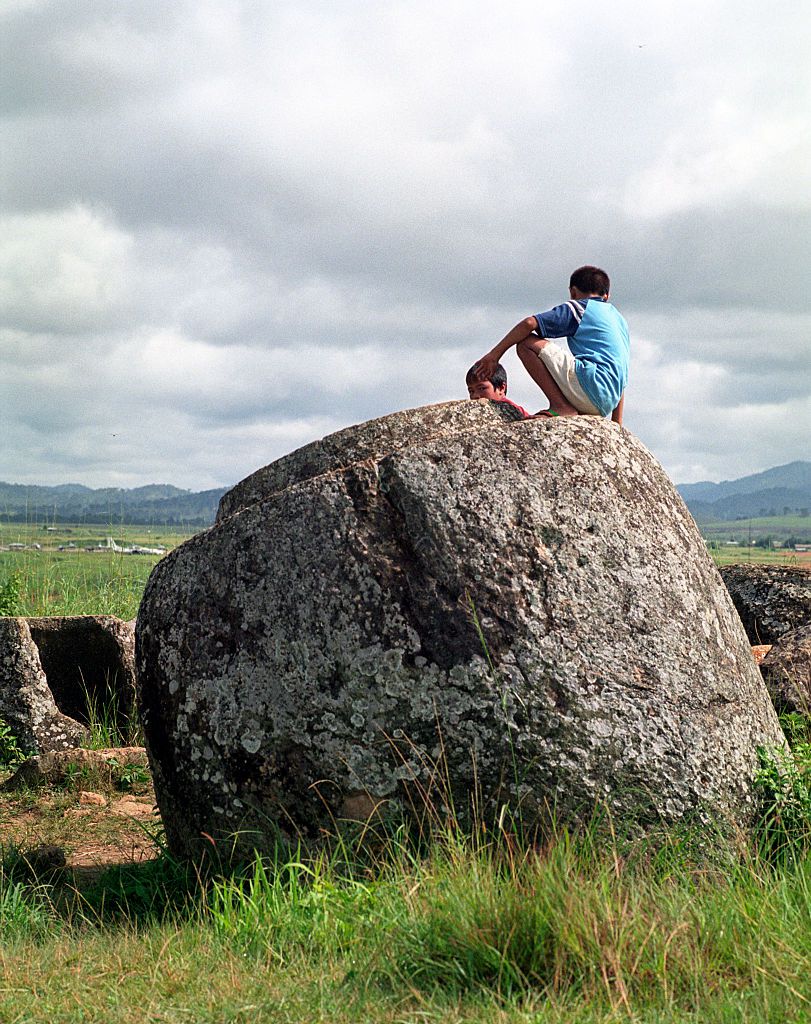
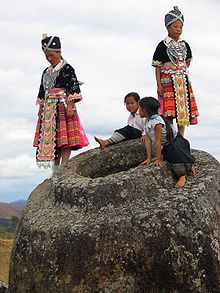
Twenty-five hundred to fifteen-hundred years ago, a now-vanished race of bronze and iron age craftsmen carved stone jars out of solid rock, ranging in size from 3 ft. to 9 ft. or more.  There are thousands of these jars, located at 90 separate sites and containing between one and four hundred specimens each.

GettyImages-543867296-57eb5c1c3df78c690f639463

Most of these jars have carved rims but few have lids, leading researchers to speculate that lids were formed from organic material such as wood or leather.

Lao legend has it that the jars belonged to a race of giants, who chiseled them out of sandstone, granite, conglomerate, limestone and breccia to hold “lau hai”, or rice beer.  More likely they were part of some ancient funerary rite, where the dead and about-to-die were inserted along with personal goods and ornaments such as beads made of glass and carnelian, cowrie shells and bronze bracelets and bells.  There the deceased were “distilled” in a sitting position, later to be removed and cremated, their remains then going through secondary burial.

laosmap

These “Plain of Jars” sites might be some of the oldest burial grounds in the world, but be careful if you go there.  The place is the most dangerous archaeological site, on earth.

With the final French stand at Dien Bien Phu a short five months in the future, France signed the Franco–Lao Treaty of Amity and Association in 1953, establishing Laos as an independent member of the French Union.

The Laotian Civil War broke out that same year between the Communist Pathet Lao and the Royal Lao Government, becoming a “proxy war” where both sides received heavy support from the global Cold War superpowers.

Concerned about a “domino effect” in Southeast Asia, US direct foreign aid to Laos began as early as 1950.  Five years later the country suffered a catastrophic rice crop failure.  The CIA-operated Civil Air Transport (CAT) flew over 200 missions to 25 drop zones, delivering 1,000 tons of emergency food.  By 1959, the CIA “air proprietary” was operating fixed and rotary wing aircraft in Laos, under the renamed “Air America”.
220px-Plainofjars_1

The Geneva Convention of 1954 partitioned Vietnam at the 17th parallel, and guaranteed Laotian neutrality.  North Vietnamese communists had no intention of withdrawing from the country or abandoning their Laotian communist allies, any more than they were going to abandon the drive for military “reunification”, with the south.

Chief of Naval Operations Admiral Arleigh Burke warned the Joint Chiefs of Staff, “If we lose Laos, we will probably lose Thailand and the rest of Southeast Asia. We will have demonstrated to the world that we cannot or will not stand when challenged”.

As the American war ramped up in Vietnam, the CIA fought a “Secret War” in Laos, in support of a growing force of Laotian highland tribesmen called the Hmong, fighting the leftist Pathet Lao and North Vietnamese communists.

Primitive footpaths had existed for centuries along the Laotian border with Vietnam, facilitating trade and travel.  In 1959, Hanoi established the 559th Transportation Group under Colonel Võ Bẩm, improving these trails into a logistical system connecting the Democratic Republic of Vietnam in the north, to the Republic of Vietnam in the south.  At first just a means of infiltrating manpower, this “Hồ Chí Minh trail” through Laos and Cambodia soon morphed into a major logistical supply line.

In the last months of his life, President John F. Kennedy authorized the CIA to increase the size of the Hmong army.  As many as 20,000 Highlanders took arms against far larger communist forces, acting as guerrillas, blowing up NVA supply depots, ambushing trucks and mining roads.  The response was genocidal.  As many as 18,000 – 20,000 Hmong tribesman were hunted down and murdered by Vietnamese and Laotian communists.

Air America helicopter pilot Dick Casterlin wrote to his parents that November, “The war is going great guns now. Don’t be misled [by reports] that I am only carrying rice on my missions as wars aren’t won by rice.”

laos

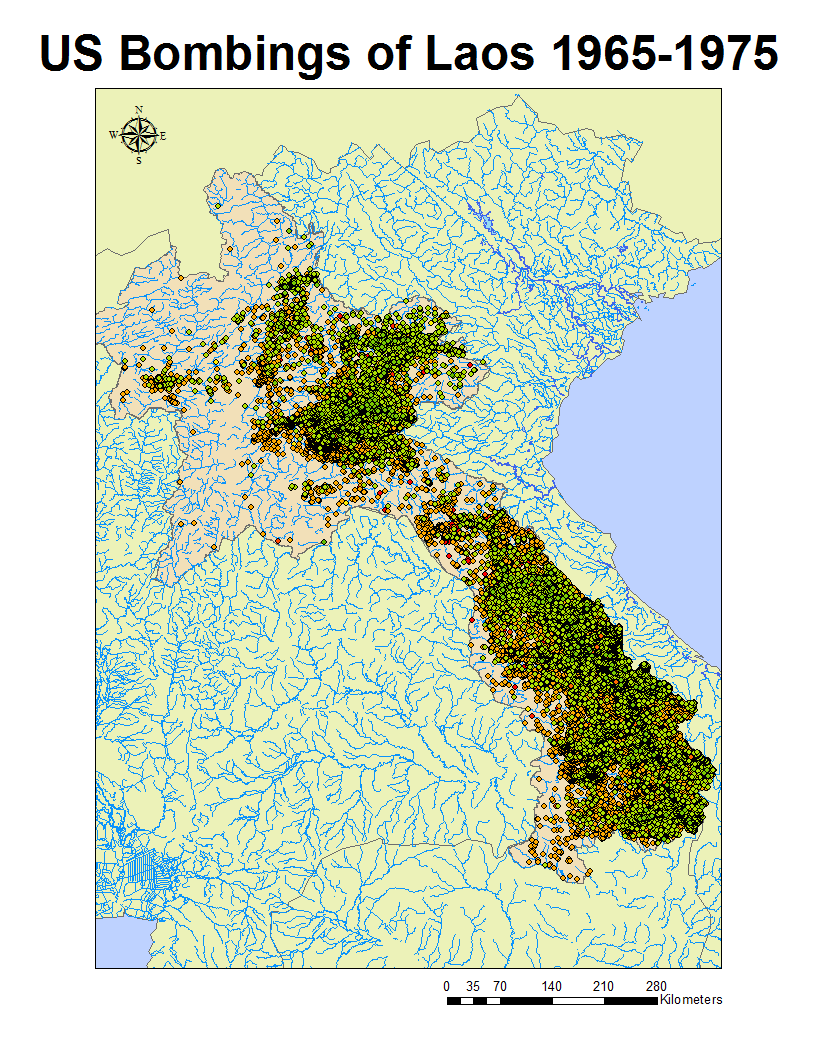
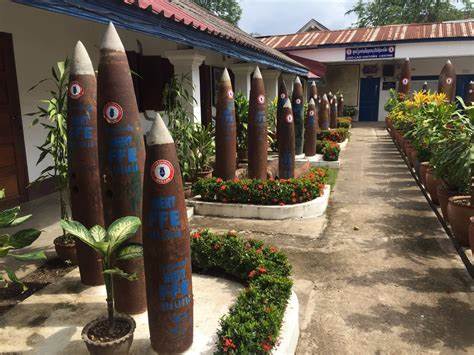
The proxy war in Laos reached a new high in 1964, in what the agency itself calls “the largest paramilitary operations ever undertaken by the CIA.”  In the period 1964-’73, the US flew some 580,344 bombing missions over the Hồ Chí Minh trail and Plain of Jars, dropping an estimated 262 million bombs.  Two million tons, equivalent to a B-52 bomber full every eight minutes, 24 hours a day, for nine years.  More bombs than US Army Air Forces dropped in all of World War 2 making Laos the most heavily bombed country, per capita, in history.

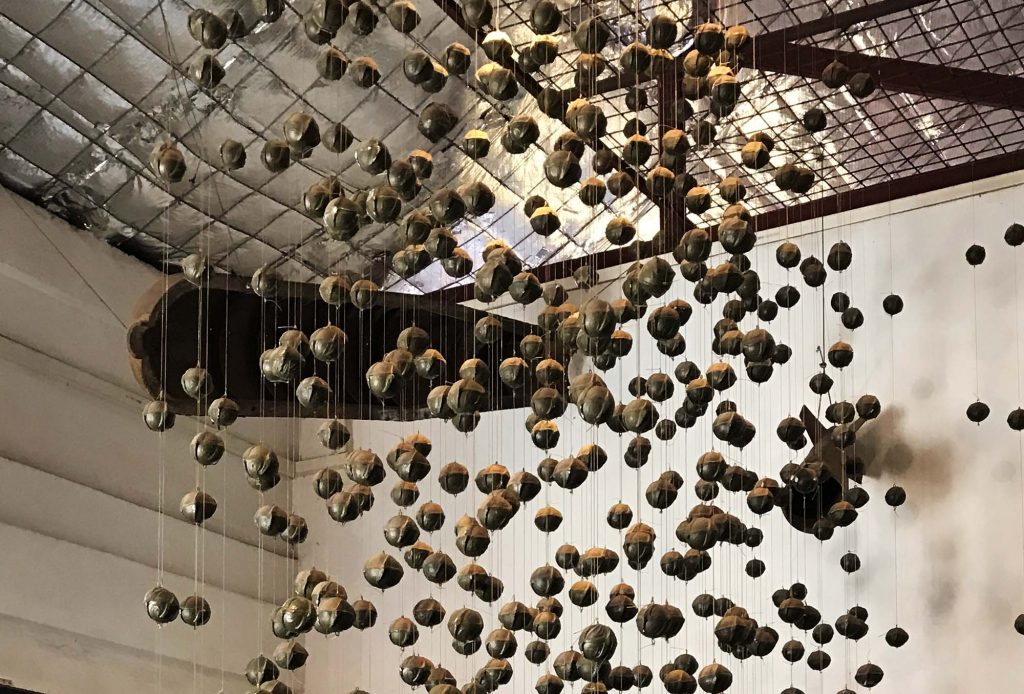
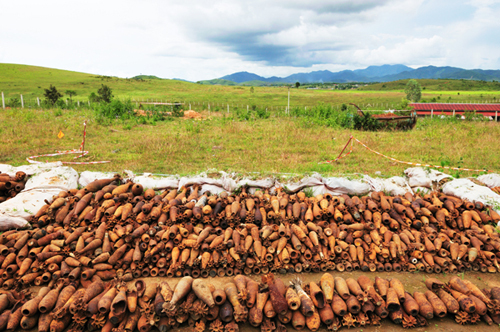
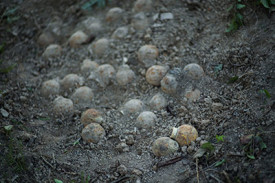
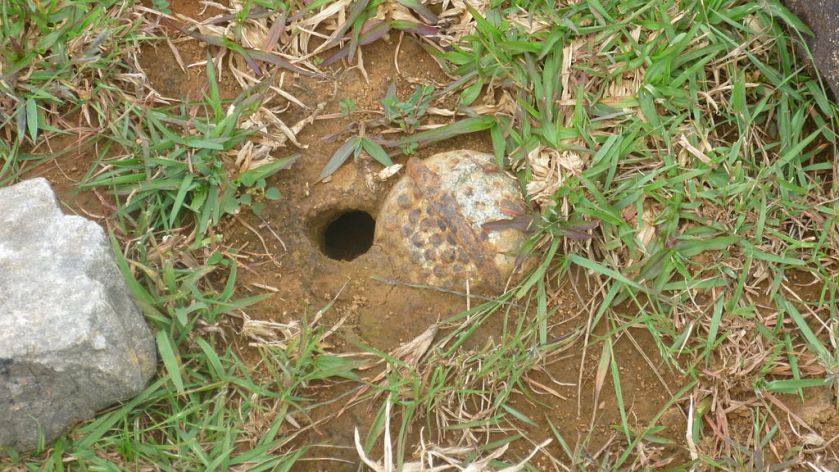
There were all types of bombs from 3,000-pound monsters to smaller “big bombs” weighing hundreds of pounds to “cluster munitions”, canisters designed to open in flight showering the earth with 670 “bomblets” the size of a tennis ball packed with explosives and pellets.  It’s estimated that 30% of these munitions failed to explode. 80 million of them, the locals call them “bombies”, set to go off with the weight of a foot, a wheel or the touch of a garden hoe and every one packing a killing radius, of 30 meters.

1024px-BLU-26_cluster_sub-munition
Unexploded cluster sub-munition, probably a BLU-26 type. Plain of Jars, Laos

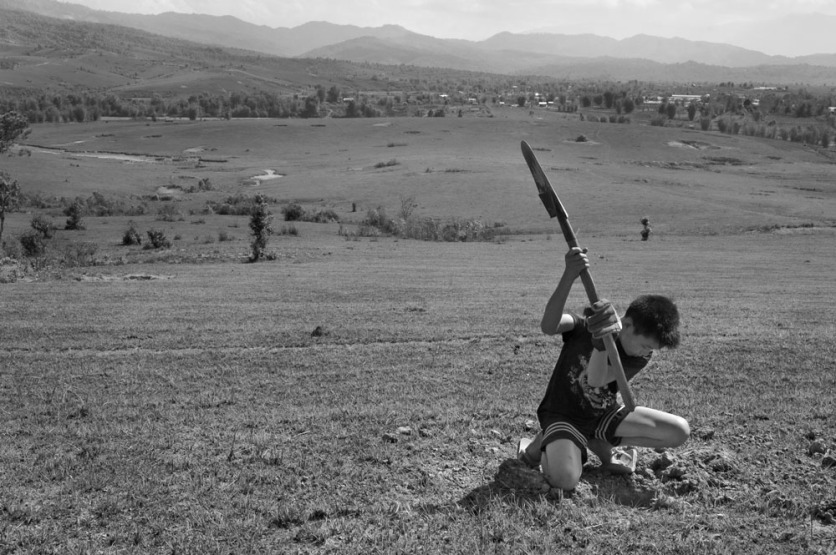
Since the end of the war some 20,000 civilians have been killed or maimed by unexploded ordnance, called “UXO”.  Four in ten of those, are children.

Removal of such vast quantities of UXO is an effort requiring considerable time and money and no small amount of personal risk.  The American Mennonite community became pioneers in the effort in the years following the war, one of the few international Non-Governmental Organizations (NGO’s) trusted by the habitually suspicious communist leadership of the LPDR.

On February 18, 1977, Murray Hiebert, now senior associate of the Southeast Asia Program at the Center for Strategic and International Studies (CSIS) in Washington, D.C.  summed up the situation in a letter to the Mennonite Central Committee, US:  “…a formerly prosperous people still stunned and demoralized by the destruction of their villages, the annihilation of their livestock, the cratering of their fields, and the realization that every stroke of their hoes is potentially fatal.”

Years later, Unesco archaeologists worked to unlock the secrets of the Plain of Jars, working side by side with ordnance removal teams.

In 1996, United States Special Forces began a “train the trainer” program in UXO removal, at the invitation of the LPDR government. Even so, Western Embassy officials in the Laotian capitol of Vientiane believed that, at the current pace, total removal will take “several hundred years”.

On May 14–15, 1997, the Lao Veterans of America and others held a two day series of events honoring the contributions of ethnic Hmong and others to the American war effort, formally dedicating the Laos Memorial, at Arlington National Cemetery. It was a stunning reversal of policy, an acknowledgement of a “secret war”, the existence of which which had been denied, for years.

In 2004, bomb metal fetched 7.5 Pence Sterling, per kilogram.  That’s eleven cents, for just over two pounds.  Unexploded ordnance brought in 50 Pence per kilogram in the communist state, inviting young and old alike to attempt the dismantling of an endless supply of BLU-26 cluster bomblets.  For seventy cents apiece.

Today, Laos is a mostly agricultural economy with rice accounting for 80% of arable land. Other crops include corn, cotton, fruit, mung beans, peanuts, soybeans, sugarcane, sweet potatoes, tobacco, and opium. Increasingly, highland farmers are turning to coffee, a more profitable crop bringing with it the expectation, that the farmer will be able to educate his children.

Profitable yes, but not without risk. The CIA’s “secret war” in Laos has been over for near a half-century. To this day cluster submunitions and other UXO kill and maim dozens, every year.

May 14, 1915 Canary Girls

Munitions workers began to complain of headaches and nausea and skin conditions, like hives. Constant exposure to toxic chemicals turned the hair and skin of these women a brilliant shade of yellow, or orange. Expectant “Canary Girls’ gave birth to bright yellow “Canary Babies”.

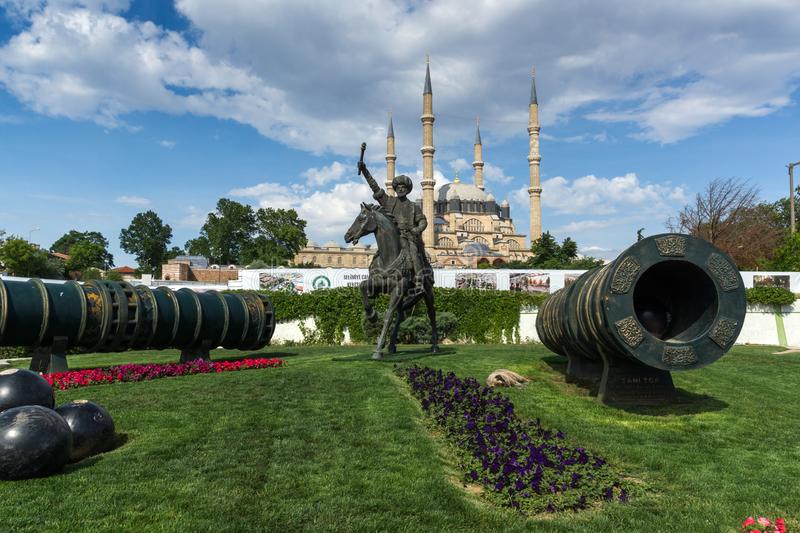
Since the age of antiquity, heavy weapons have tilted the scales of battlefield strategy. The first catapult was developed in Syracuse, in 339 BC. The Roman catapult of the 1st century BC hurled 14-pound stone balls against fixed fortifications. The age of gunpowder brought new and ghastly capabilities to artillery. In 1453, the terrifying siege guns Mehmed II faced the walls of Constantinople, hurling 150-pound missiles from barrels, wide enough to swallow a grown man.

Monument to Ottoman Sultan Mehmed II, Edirne, East Thrace, Turkey

Such weapons were slow to reload and sometimes, unreliable. Mehmed’s monsters took a full three hours to fire. Seven years later, King James II of Scotland was killed when his own gun, exploded.

This experimental three-shot cannon belonging to Henry VIII burst, with predictable results for anyone standing nearby.

By the Napoleonic wars, artillery caused more battlefield casualties than any other weapon system.

At that time such weapons were virtually always, loaded at the muzzle. The first breech loaders came about in the 14th century but it would take another 500 years, before precision manufacturing made such weapons reliable, and plentiful.

Breech loading vastly increased rate-of-fire capabilities. By the end of the 19th century, technological advances brought new and hideous capabilities to what Josef Stalin would come to call, the “God of War’.

Heretofore, the massive recoil of such weapons required a period of time to re-set, re-aim and reload. In the 1890s, French soldier Joseph Albert DePort solved that problem with a damping system enabling the barrel to recoil, leaving the gun in place. Recoilless weapons could now be equipped with shields keeping gun crews as close as possible while smokeless powder meant that gunners could clearly see what they were shooting at.

By World War 1, trained crews serving a French 75 could fire once every two seconds. Massed artillery fired with such horrifying rapidity as to resemble the sound, of drums.

This clip is five minutes long. Imagine finding yourself under “drumfire”, for days on end.

While guns of this type were aimed by lines of sight, howitzers fired missiles in high parabolic trajectories to fall on the heads, of the unlucky.

The great Field Marshall Helmuth von Moltke (the elder) once said, “No battle plan ever survives contact with the enemy”. So it was in the tiny Belgian city of Ypres where the German war of movement met with weapons of the industrial revolution.

A million men were brought to this place, to kill each other. The first Battle for Ypres, there would be others, brought together more firepower than entire wars of an earlier age. The losses are hard to get your head around. The British Expeditionary Force (BEF) alone suffered 56,000 casualties including 8,000 killed, 30,000 maimed and another 18,000 missing, of whom roughly one-third, were dead.

British 18-pounder

The breakdown is harder to get at for the other combatants but, all in, Germany suffered 135,000 casualties, France 85,000 and Belgium, 22,000. The three week struggle for Ypres cost the lives of 75,000 men, enough to fill the Athens Olympic Stadium, in Greece. Soldiers on all sides dug frantically into the ground, to shelter from what Private Ernst Jünger called, the “Storm of Steel”.

First drum fire in the war, in the Champagne, Lasted 75 hours, from Sept. 22 to 25. Was directed against 20 Miles of the German Front. (Photo by Hulton Archive/Getty Images)

The French alone expended 2,155,862 shells during the Anglo-French offensive called the second battle of Artois, fought May 9 through June 18, 1915, a fruitless effort to capitalize on German defenses, weakened by the diversion of troops to the eastern front. The objective, to flatten the German “Bulge” in the Artois-Arras sector.

Immediately to the French left, the British 6th army under Sir John French was to advance on May 9 in support of the French offensive, taking the villages of Aubers, Fromelles and Le Maisnil and the elevation known as Aubers Ridge.

The battle of Aubers was an unmitigated disaster. The man-killing shrapnel rounds so valued by pre-war strategists were as nothing, against fortified German earthworks. No ground was taken, no tactical advantage gained despite British losses, ten times that on the German side.

War correspondent Colonel Charles à Court Repington sent a telegram to The Times, complaining of the lack of high-explosive shells. On May 14 The Times headline read: “Need for shells: British attacks checked: Limited supply the cause: A Lesson From France”. The article placed blame squarely on the government of Herbert Asquith who had stated as recently as April 20, that the army had sufficient ammunition.

“We had not sufficient high explosives to lower the enemy’s parapets to the ground … The want of an unlimited supply of high explosives was a fatal bar to our success”.

The Times, May 14, 1915

For British politics at home, the information fell as a bombshell, precipitating a scandal known as the Shell Crisis of 1915.

Governments were slow at first to understand the prodigious appetites, of this war. Fixed trench lines led to new rail construction capable of providing cataracts of munitions, to front lines. The problem came from a munitions industry, unable to supply such demands.

Men shipped off to the war by the millions leaving jobs vacant and families at home, without income. Women represented a vast pool of untapped labor. Despite social taboos against women working outside the home, wives, sisters and mothers came flooding into the workplace.

By the end of the war some three million women joined the workforce a third of whom, worked in munitions factories.

Ever conscious of husbands, sons and sweethearts at the front, women worked grueling hours under dangerous conditions. “Munitionettes” manufactured cordite propellants and trinitrotoluene (TNT) explosives, hand filling projectiles from individual bullets to giant shells.

At the front, the war was an all-devouring monster consuming men and munitions at rates unimagined, in earlier conflicts. During the first two weeks of the 3rd Battle for Ypres, better known as Passchendaele, British, Australian and Canadian artillery fired 4,283,550 shells at their German adversary.

Munitions workers began to complain of headaches and nausea and skin conditions, like hives. Constant exposure to toxic chemicals turned the hair and skin of these women a brilliant shade of yellow, or orange. Expectant “Canary Girls” gave birth to bright yellow “Canary Babies”.

Nothing could be done and the yellow tended to fade over time but not a very different yellow, caused by toxic jaundice.

The work was well paid but exhausting, often seven days a week. Grueling 14-hour shifts led to girls as young as 14 coming into the workforce, but it wasn’t enough. “History of Yesterday” writes that two women on average died every week from toxic chemicals, and workplace accidents. One 1918 explosion at the National Shell Filling Factory №6 near Chilwell caused the death of 130 women.

The modern reader can scarcely imagine the crushing burdens of these women caring for families at home and ever conscious of sons, brothers and sweethearts, struggling to survive in this all consuming war.

The canary colored hair and skin would fade in time, but not the long term health effects of daily exposure to toxic substances. It didn’t matter. Twenty years later another generation would do it, all over again.

May 13, 1995 Savage Mountain

There are no permanent human habitations above 6,000 meters (20,000 feet) and never will be. Even for the most experienced of mountaineers, progressive deterioration of physiological functions will outrun acclimatization. It is only a matter of time.

There are places in this world, our kind was never meant to go.

Some 70 percent of our world is covered by ocean with an average depth, of 3,682 meters, or 12,080 feet. For recreational divers, professional organizations such as NAUI and PADI recommend a depth limit of 40 meters. 130 feet.

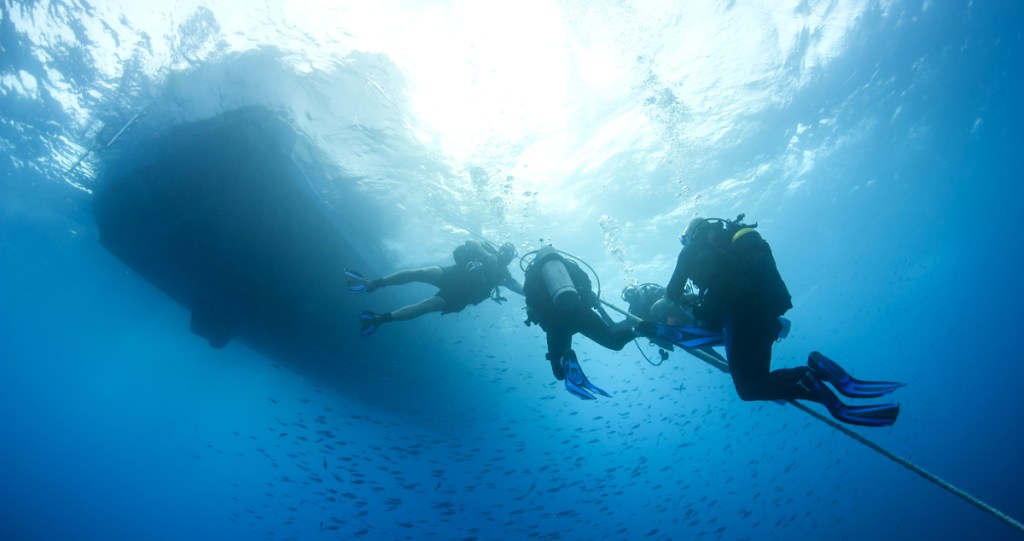
Deeper dives are common but not without “technical” certification and the use of exotic gas mixtures, and equipment. “Saturation dives” are possible to 1,000 feet and more but there better be time, to decompress. Decompression from such depths requires about a day for every 100 feet of seawater plus a day, lest dissolved gases come “out of solution” and the blood literally, turns to foam.

To illustrate the principle shake a beer or a soda, and pop the top.

Group of divers decompressing underwater on a rope in open water

The saturation diver working at 650 feet would normally take a day to descend and rest, 19 days to work and eight days, to decompress.

Great depth introduces a host of physiological problems to the human frame. Likewise, great altitude. The 6,600-foot peak of Mount Hermon, the only ski resort in Israel, is enough to introduce altitude sickness. (Who knew Israel has a ski resort!)

Acute Mountain Sickness (AMS) affects 20% of individuals at 8,000-feet and 40% at 10,000. Age or physical fitness makes little difference. Chinese texts dating from 30BC refer to “Big Headache Mountains”, the Karakoram range extending from the Hindu Kush to the Himalayas. Early symptoms include nausea and headache, difficulty in breathing and peripheral edema – the accumulation of fluids in the hands, feet and face.

Two photos, same woman. Left: At normal altitude. Right: The same woman’s swollen face shows the peripheral edema that comes with trekking, at high altitude.(Annapurna Base Camp, Nepal; 4130 m) H/T Wikipedia

Just as days-long decompression is required to reacclimate from extreme depth, a gradual entry of days or even weeks is required for the human body to acclimate to very high altitudes of 18,000 to 20,000 feet. Extreme hypoxia sets in at such heights exacerbated, by exercise. There are no permanent human habitations above 6,000 meters (20,000 feet) and never will be. Even for the most experienced of mountaineers, progressive deterioration of physiological functions will outrun acclimatization. It is only a matter of time.

Acute hypoxemia, abnormally low concentrations of blood oxygen leads to vascular changes resulting in the accumulation of fluids in the lungs, and brain.

High Altitude Pulmonary Edema (HAPE) results in shortness of breath, even at rest. High Altitude Cerebral Edema (HACE) affects the brain resulting in confusion, clumsiness and drowsiness leading to unconsciousness. Death will result in either case and the only antidote, is descent.

Jon Krakauer’s first-hand account of the 1996 blizzard that killed 8 climbers on Mt. Everest provides detailed, and terrifying, descriptions of HAPE and HACE. I highly recommend this book. Preferably to be read, at sea level.

In the world of mountaineering there are none to compare with the planet’s 14 “eight-thousanders”, those peaks exceeding 8,000 meters in height. At 8,848.86 meters above sea level, (29,031.7-feet) Mt. Everest is the tallest.

Mt. Everest

As of January 2021, there have been 10,184 successful summits of the highest mountain on the planet. Kami Rita Sherpa of Nepal has done so, 24 times. Others have summited multiple times, so we’re talking about 5,739 individuals. 305 have died in the attempt, about 1 in 20 if we go by individuals giving Everest the highest death toll of any mountain in the world.

Roughly 200 of them are still on Everest, and always will be. There is no way to bring them down from that place.

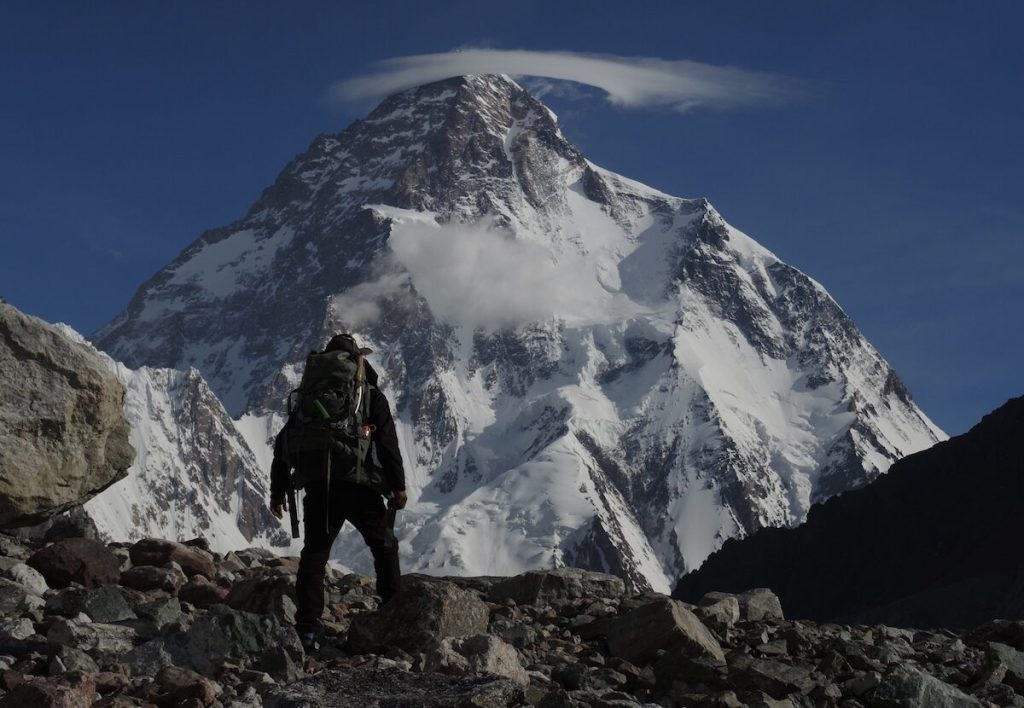
Yet even Everest pales almost to docility, compared with K2. At 8,610 meters (28,250 feet), K2 is the second highest summit, on the planet. The difference between the two is relatively small, roughly half the height, of the Empire State building. And yet the contours of this mountain and the wild, unpredictable changes in weather, make K2 by far and away the world’s deadliest mountain.

K2

While Everest kills 5 percent of those who would challenge the top of the world, K2 has been summited only 367 times. 91 individuals have died in the attempt, a terrifying ratio, of one-in-four. After a 1953 ascent of K2, American mountaineer George Bell told reporters, “It’s a savage mountain that tries to kill you.”

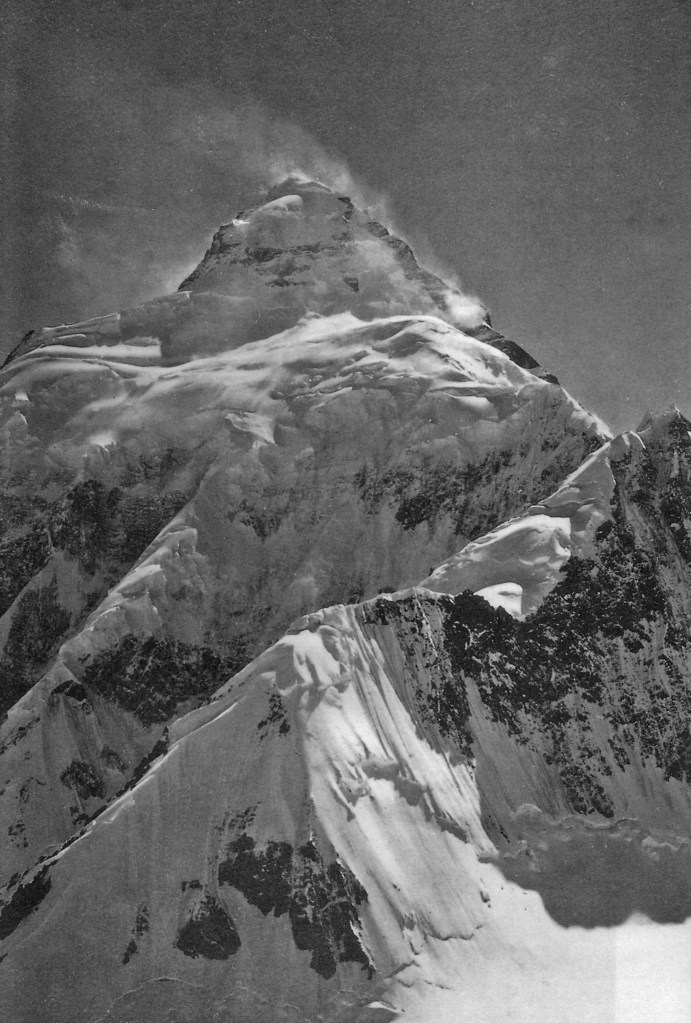
Alone among the 14 8,000-meter peaks K2 has never been climbed, from the east side.

K2 as seen from the east, photographed by a 1909 expedition

Alison Jane Hargreaves was a British mountain climber. The most accomplished female mountaineer in history, Hargreaves has summited the 6,812-metre (22,349 ft) Ama Dablam in Nepal and all the great north faces of the Alps, a first for a climber of either sex.

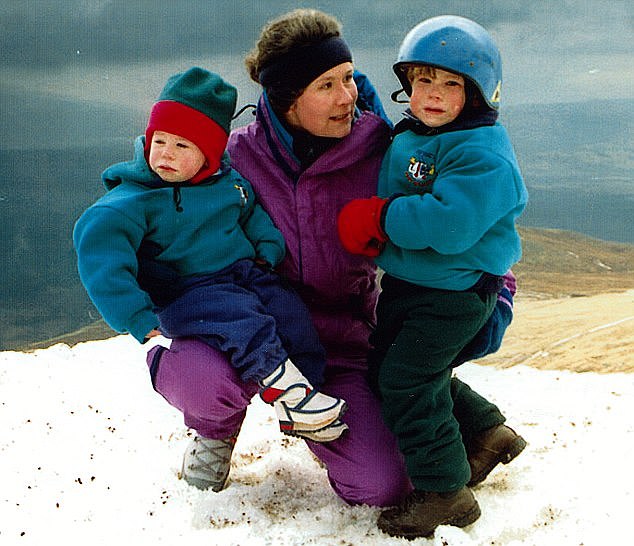
Alison Hargreaves holds Tom (6) and Kate(4), in 1995. She would die in August of that same year descending from the summit, of K2.

She planned to climb the three tallest mountains in the world in one season without aid of supplemental oxygen, or Sherpa support. Mount Everest, K2, and Kangchenjunga. Unaided.

Hargreaves accomplished the first part on May 13, 1995 when she reached the summit of Mt. Everest without the aid of Sherpas, or bottled oxygen.

That June, she joined an American team with a permit to climb the significantly more difficult and more dangerous peak of the Savage Mountain, itself. K2.

The 12th of August was a good day for the summit but, climbers were exhausted from the 11th when, finding camp 3 destroyed by an avalanche, the team was forced to either turn back, or push on for camp 4.

Several dropped out. By August 13 the remnants of the American team had joined with members of climbing teams from Spain and New Zealand including Peter Hillary, son of the Everest pioneer Sir Edmund Hillary.

“Summit fever” is a mountaineering term for that all-consuming drive, to reach the top of a mountain. No matter what the cost. It is a supreme act of will to turn back from such an all devouring goal particularly in the grips, of mountain sickness.

Peter Hillary was a man of such will. Not liking the looks of the weather on K2 he turned back, some 12 hours from the summit.

Conditions were fine the afternoon Alison Hargreaves and five others reached the summit. They were Spaniards Javier Olivar, Javier Escartín and Lorenzo Ortíz, American Rob Slater and New Zealander Bruce Grant. Canadian Jeff Lakes had turned back, before the summit.

None had the faintest clue of the anti-cyclone, screaming in from the north.

The team was caught out in the open by brutal cold and winds, exceeding 100 miles per hour. They didn’t have a chance, they were literally blown from the side of the mountain. Jeff Lakes made it back to camp 2 where he died, of exhaustion. Pepe Garces and Lorenzo Ortas remained at camp 4 and managed to survive despite extreme frostbite, and exposure. They saw a bloody boot on the way down and an Anorak, the distinctive green color worn by Alison Hargreaves.

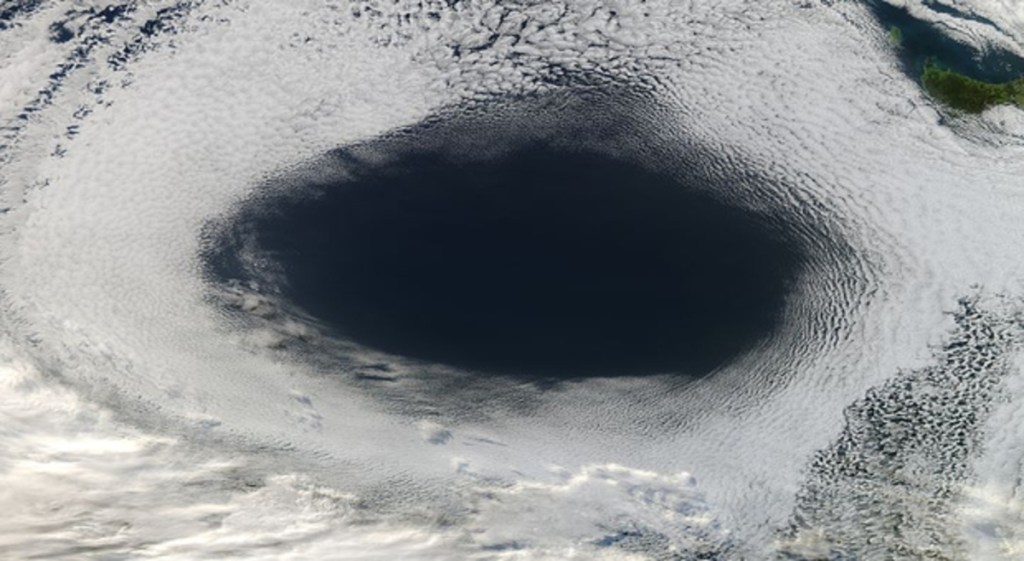
“Anticyclone, any large wind system that rotates about a centre of high atmospheric pressure clockwise in the Northern Hemisphere and counterclockwise in the Southern. Its flow is the reverse of that of a cyclone”. H/T Britannica

They could see a body in the distance and believed it was hers, but there was no way to approach. After six days without a tent the pair was barely alive, themselves. Graces and Ortas were airlifted out of camp 2. Whoever it was they saw remains on K2, to this day.

Tom Ballard was six when his mother died. He grew up to be a mountaineer as did his sister, Kate. The apple doesn’t fall far from the tree and for Ballard, mountaineering was an all-consuming passion. Following in his mother’s footsteps he too climbed the six north faces of the Alps in one season. This time, in Winter. His was the all-consuming desire to conquer including and perhaps especially, K2. The Savage Mountain that had killed his mother.

It wasn’t meant to be. On February 24, 2019, Tom Ballard and Italian mountaineer Daniele Nardi went missing on the slopes of Nanga Parbat, the westernmost anchor of the Himalayas and the 9th tallest mountain, in the world. Pakistani army helicopters and four rescuers scoured the mountain for days before spotting their bodies, at 5,900 meters.

On March 9, Italian Ambassador to Pakistan Stefano Pontecorvo tweeted: “‘With great sadness I inform that the search for @NardiDaniele and Tom Ballard is over…”

May 12, 1864 A Mighty Oak

Our ancestors were still English colonists when this particular acorn first reached toward the warmth, of the sun. On this day in 1864 that sapling stood in a quiet meadow in Spotsylvania Virginia, itself a mighty oak some 22-inches, in diameter.

Two roads diverged in a wood, and I — I took the one less traveled by, and that has made all the difference.

Robert Frost

According to legend, the infant Temujin was born sometime between 1155 and 1162 with a blood clot clutched in his fist, the size of a knucklebone. Mongol folklore holds such a sign to be prophetic. That one day the child would grow to be a great leader. Today we remember the young boy Temujin as the great and terrible chieftain, Genghis Khan.

Around that time some 6,500 miles to the west, an acorn sprouted from the soil in a place we now call Wyllys Hyll in Hartford, Connecticut. Through countless summers and frigid winters the sapling grew and transformed to become a mighty oak tree. Dutch explorer Adrian Block described the tree in a log, written in 1614. Twenty years later, local natives spoke with Samuel Wyllys, an early settler who had cleared the ground around it. Tribal elders spoke of this oak and its ceremonial planting, all those centuries before. They pleaded with Wyllys to preserve the great tree.

“It has been the guide of our ancestors for centuries as to the time of planting our corn; when the leaves are the size of a mouse’s ears, then is the time to put the seed into the ground”.

Unknown
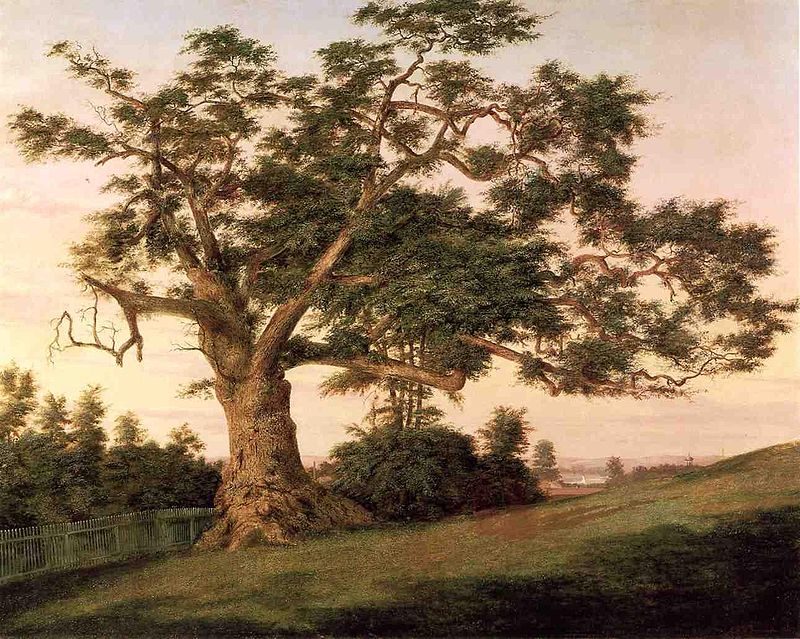
Hat Tip to photographer Robert Fawcett for this image, of a mighty oak

In 1662 Governor John Winthrop won from King Charles II a charter, legitimizing the settlements of Connecticut and establishing the colonists’ right, of self-rule. Twenty five years later, King James II wanted the New England and New York colonies integrated under central authority and sought to rescind, the charter. Sir Edmund Andros, hand selected to rule over this “Dominion of New England” marched on Hartford at the head of an armed force to seize the charter.

The next part fades into legend but the story is, that Governor Robert Treat and a group of colonists sat glaring across the table at Andros, and a group of his allies. The charter lay between them, on a table. The debate raged for hours when, somehow, the lights went out. On relighting the candles only moments later King Charles’ charter, was gone. Captain Joseph Wadsworth had snatched up the parchment and stashed it in a hollow, in that great old tree.

Fun Fact: The timber from 2,000 southern live oak trees was harvested in Georgia and used to construct the hulls of USS Constitution and five other US Navy frigates, constructed under the Naval Act of 1794. Today, “Old Ironsides” is the oldest commissioned warship on the planet, still afloat.

Despite all that the politicians folded and Andros made his appointments, but colonists never did vote to submit. With the Spring of 1689 came news of the Glorious Revolution, in England. King James had fled to France and Edmund Andros was arrested. So it is the New England colonies held and kept their independence. The “Charter Oak” depicted at the top of this page remains to this day, a part of our colonial history.

The majestic old tree blew over in a storm in 1856 when firearms manufacturer Samuel Colt sent a marching band to play funeral dirges, over its fallen timbers.

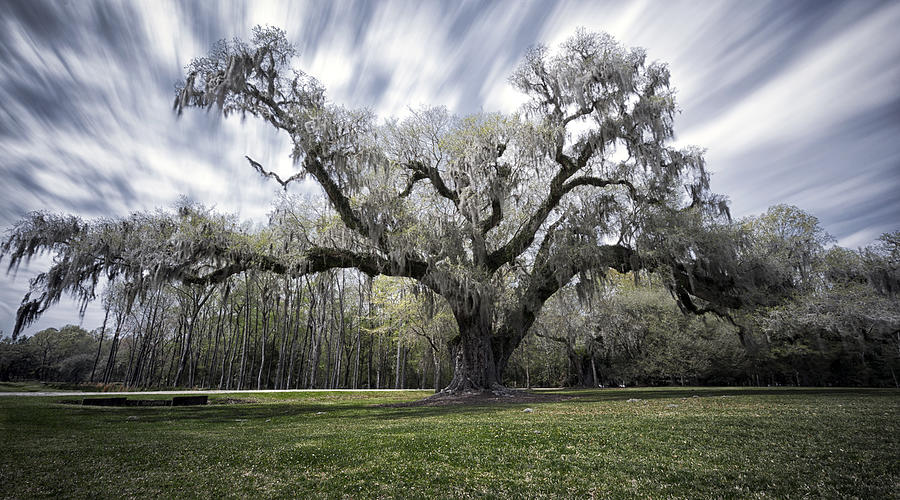
Live Oaks line the entrance to the Wormsloe Plantation, in Savannah, Georgia

From the frigid forests of the north to the beaches of our southern coasts some 90 species of oak tree stand as part of our personal memories, and our American history. The Water Oak shading the Brown Chapel African Methodist Church in Selma Alabama, where Reverend Martin Luther King Jr. delivered his “We Shall Overcome” speech before setting out on a 50-mile march, to Montgomery. The Overcup Oak beside the birthplace of the 16th President of the United States, Abraham Lincoln. As a child, Helen Keller once climbed the branches of a 100-year-old Water Oak.

Descendants of these trees and hundreds more stand today at our nation’s most hallowed ground at Arlington, Virginia.

Arlington National Cemetery and Arboreta

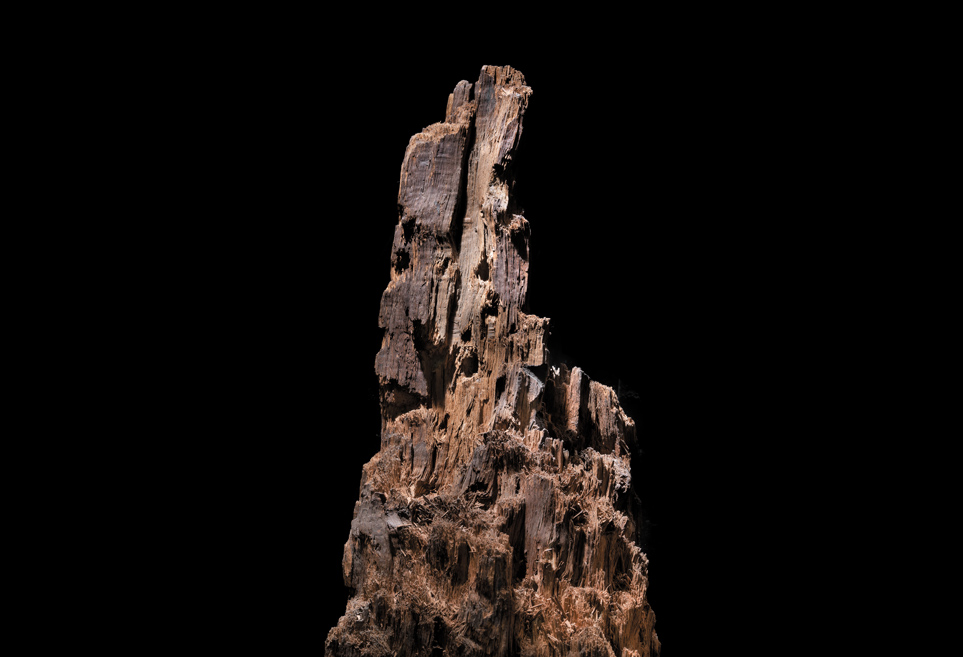
Not far away, the Smithsonian owns another oak or, more accurately, the stump of a tree hewn to the ground, by gunfire.

Our ancestors were still English colonists when this particular acorn first reached toward the warmth, of the sun. On this day in 1864 that sapling stood in a quiet meadow in Spotsylvania Virginia, itself a mighty oak some 22-inches, in diameter.

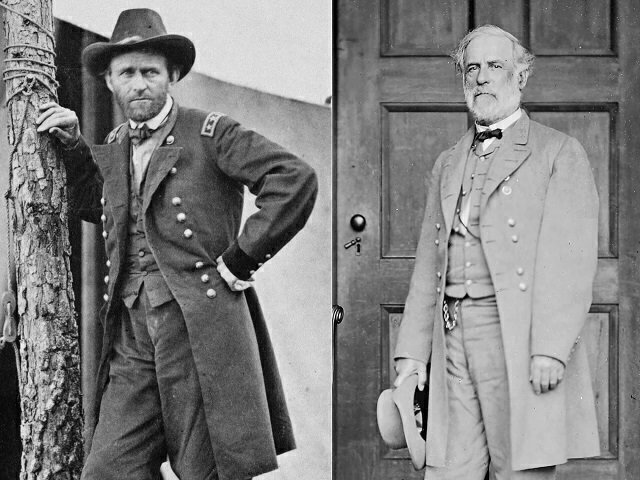
The 16th President of the United States once said of general Ulysses Grant “I need this man. He fights”. A succession of Generals had failed in the eyes of Abraham Lincoln, but not Grant. You knock him down and he’ll dust off, and keep coming at you.

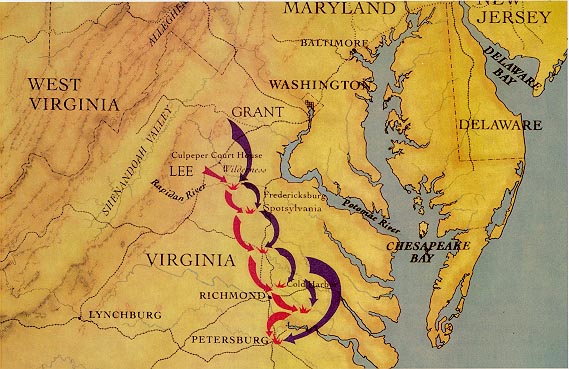
Following a terrible draw at the Battle of the Wilderness, Grant’s army disengaged from that of Robert E. Lee and moved southeast, hoping to draw the Confederates into battle under more favorable conditions. It was a race to the critical crossroads of Spotsylvania Courthouse. Elements of Lee’s forces won the race and began to entrench. Off and on fighting began on May 8 and lasted, through May 21.

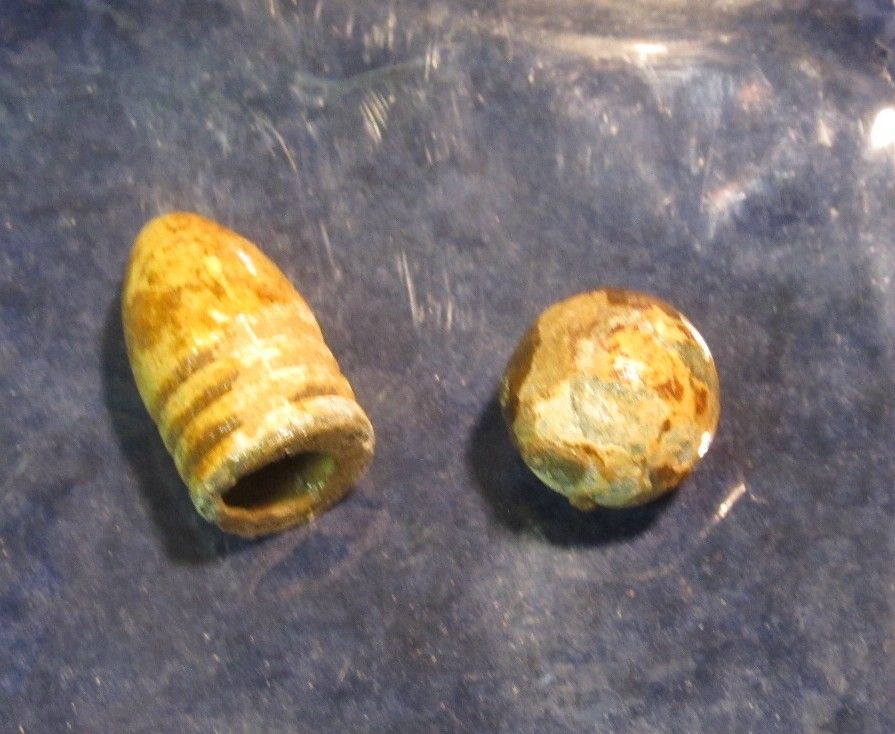
On May 12 some 1,200 Confederate troops waited in that once quiet meadow, sheltered behind an earthwork and timber revetment shaped, like a mule’s shoe. At the center stood that majestic oak. Some 5,000 Union troops assaulted the position from the Army of the Potomac. Some of the most savage and sustained fighting of the Civil War raged on all sides, of that tree. When it was over some twenty hours later that mighty oak, was no more. The tree was felled by small arms fire at a place we remember, as the “Bloody Angle’.

Both sides declared victory at Spotsylvania Courthouse and the war moved on. To places called Yellow Tavern (May 11), Meadow Bridge (May 12), North Anna (May 23–26), and others. By late June, Lee was forced into the nightmare position of defending the Confederate Capital, at Richmond.

Taken together Grant’s “Overland Campaign” carried out over those six bloody weeks in May and June resulted in some of the highest casualties, of the Civil War. Casualties crippling to Federal troops but in the end mortal, to the cause of southern independence.

Overland map, May and June, 1864

The modern mind is left only to contemplate, perhaps over the image of that tree stump. To imagine, what it all sounded like. What it all looked like. What it all smelled like.

That tree stump is all that remains of the apocalypse of May 12, of an oak tree surrounded by the cataclysm of Civil War and carried out inside a meadow, shaped like a mule’s shoe.

H/T Smithsonian, for this image of a once majestic oak tree. Felled, one bullet at a time, near a place called Spotsylvania.

Afterward

Many among us trace our personal ancestry, through the Civil War. For 52nd North Carolina infantry soldier James Tyner, the war came to an end in Spotsylvania Court House.

Tyner was captured and moved to the Federal prison camp in Elmira New York known as “Hellmira”.

There my own twice-great grandfather would spend the rest of the war, or most of it. James Tyner died in captivity on March 13, 1865. General Robert E. Lee surrendered to General Ulysses S. Grant only twenty-seven days later, at a place called Appomattox.

May 10, 1940 And What of the Mouse?

Throughout history and across cultures, having a child with a member of a hostile force is looked upon as a grave betrayal of social values.

Throughout history and across cultures, having a child with a member of a hostile force is looked upon as a grave betrayal of social values.  Often such parents, usually women, are shunned by neighbors and even family.  “War children” may experience even worse subjected to ostracism, bullying, and more.

Much is written of what takes place, when politicians send nations to war. Few take note of the innocents. The proverbial mice wishing only to go about their business while all about them, is chaos.

“When elephants fight, it is the grass that suffers”.

African Proverb

On the Eastern Front of World War 2, combat between Nazi Germany and the Soviet Union rose to proportions of apocalyptic race war, Slav against Teuton, in a paroxysm of mutual extermination that is horrifying, even by the hellish standards of that war.  Four out of every five German soldiers who died in all World War 2, died on the ‘Ostfront’.

While precise numbers are impossible to ascertain, an estimated several hundred thousand to as many as 2 million German females from 8 to 80 were raped by Red Army soldiers. Some, as many as 60 or 70 times according to historian, William Hitchcock.. Austrian women were no different nor even Soviet women, released from work camps. 

“The front-line Russian troops who did the fighting – as a woman, you didn’t have to be afraid of them. They shot every man they saw, even old men and young boys, but they left the women alone. It was the ones who came afterwards, the second echelon, who were the worst. They did all the raping and plundering. They stripped homes of every single possession, right down to the toilets”.

Anonymous German woman, living in Berlin

British military historian Antony Beevor concludes that 1.4 million women were raped in East Prussia, Pomerania and Silesia, alone. Female deaths in connection with such rapes in Germany and the butchered abortion attempts which followed, are estimated at 240,000. 4,148 Red Army soldiers were punished for such atrocities.

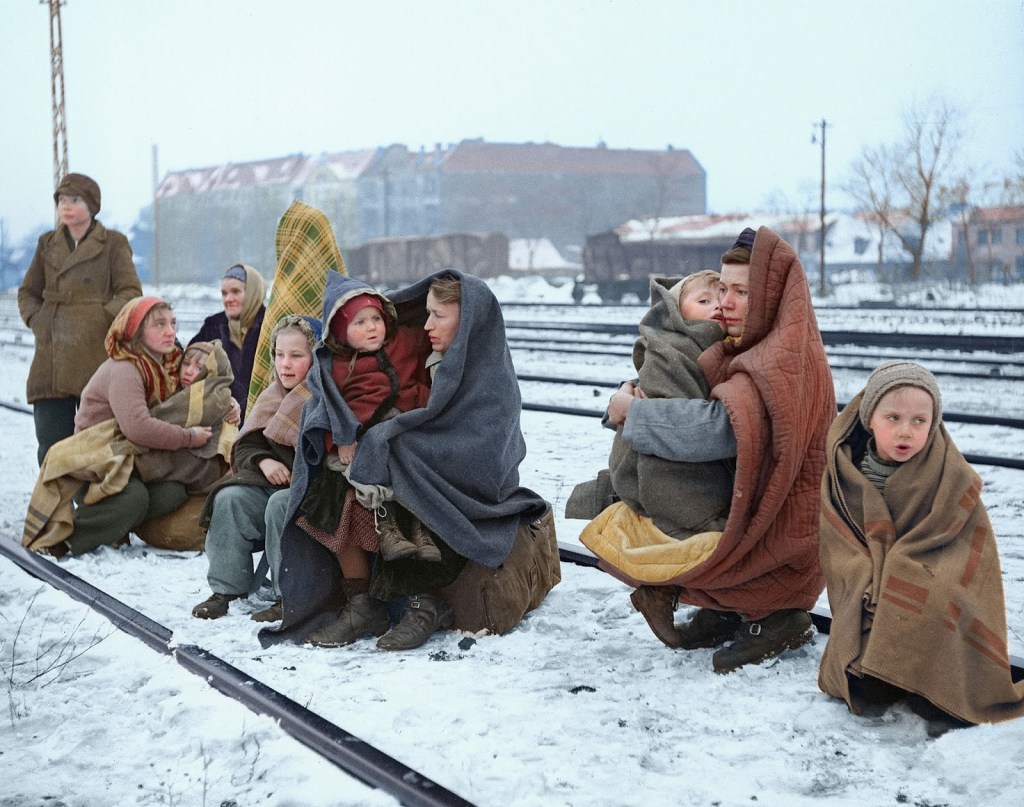
The only survivors of 150 Polish people who walked from Lodz, Poland to Berlin Huddle in blankets, on December 14, 1945. They are waiting by a railway track hoping to be picked up by a British army train and given help. (Fred Ramage—Keystone/Getty Images / Photo colorization by Sanna Dullaway for TIME)

When Yugoslav politician Milovan Djilas complained about rapes in Yugoslavia, Stalin replied that he should “understand it if a soldier who has crossed thousands of kilometres through blood and fire and death has fun with a woman or takes some trifle.”

Small surprise when Stalin’s own Chief of the Secret Police Lavrentiy Beria, was a serial rapist.

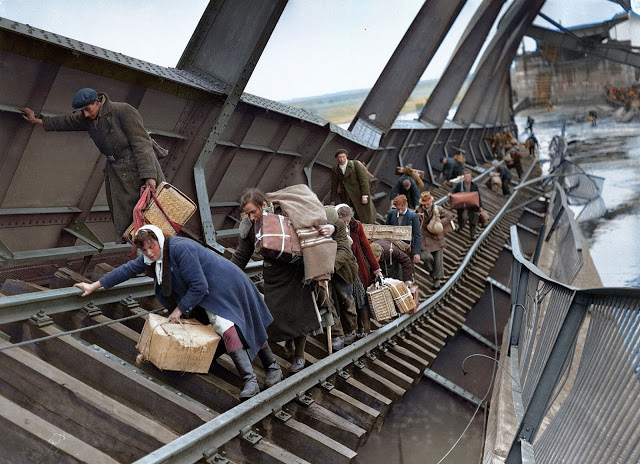
Displaced persons cross a bridge on the River Elbe at Tangermunde, which was blown up by the Germans, to escape the chaos behind German lines caused by the approach of the advancing Russians on May 1, 1945. (Fred Ramage—Keystone/Getty Images / Photo colorization by Sanna Dullaway for TIME)

In his 2007 book Taken by Force: Rape and American GIs in Europe in World War II, Northern Kentucky University sociology and criminology professor J. Robert Lilly reports that 11,040 rapes were carried out by US servicemen.

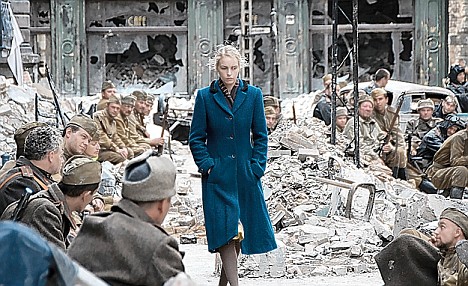
In 1959, journalist Marta Hillers wrote what was then an anonymous memoir of the weeks between April 22 and June, 1945. In it, Hillers describes being gang raped by Red Army soldiers before forming a relationship with a Soviet officer, for her own protection. Marta Hillers died in 2001. Seven years later, her account was retold in the German feature film, Eine Frau in Berlin. (A Woman in Berlin).

German woman walks by Soviet troops in a scene from the 2008 film, A Woman in Berlin

Propaganda banners and posters appeared all over the Soviet-occupation zone and later East Germany, proclaiming the heroism of those who had smashed the Nazi war machine and paved the way to Soviet-German friendship. The plight of tens of thousands of “Russian children”, mostly fatherless, was taboo.

All these decades later, former East German Jan Gregor can still remember the day his mother told him that she was “made pregnant by force”.

An estimated 100,000 “Amerasian” children were born to Asian mothers and U.S. servicemen during WWII, the Korean War, and war in Vietnam. 

Some 37,000 children were fathered by American soldiers with German and Austrian women in the 10 years following the German surrender. Locals disapproved of such relations, not only because these Americans had recently been their enemies, but also because such children often became “wards of the state” in local economies already impoverished, by war.  The “brown children” of black GIs and German mothers were particularly difficult to adopt out in what was heretofore a racially homogeneous culture.  Many were adopted by American couples and families of African ancestry, back in the States.

Military forces of Nazi Germany invaded the neutral Scandinavian Kingdoms of Denmark and Norway on April 9, 1940.  Denmark fell in a day. Norwegian armed resistance ceased within two months, when civil rule passed to the Reichskommissariat Norwegen (Reich Commissariat of Norway).  The neutral Scandinavian countries remained under Wehrmacht occupation, for the next five years.

Sometimes, relationships formed between German occupying troops and native women.  The racially obsessed Nazi regime was happy to encourage such relations, particularly in Norway, where local women were considered to be of pure, “Aryan” ancestry.  Some such relationships were consensual.  Many were anything but.  Some 10,000 to 12,000 children were born to Norwegian women and German fathers, the most famous being Anni-Frid Synni Lyngstad of the Swedish pop group ABBA, who fled Norway after the war for fear of reprisals.

For nearly a thousand years, the administration of Iceland was all but indistinguishable from that of Denmark and Norway.  The Act of Union established Iceland as a fully sovereign state in 1918, an independent country in a personal union through a common monarch, with the Kingdom of Denmark. 

Following the allied withdrawal from Dunkirk, every nation on the European mainland was either neutral, or under Nazi occupation. Alarmed at the possibility of German military presence to their north, British authorities invited the neutral nation Iceland to join the war as “as a belligerent and an ally,” following the collapse of Denmark. That invitation, was rejected.

On this day in 1940, the United Kingdom invaded Iceland, an initial force of 746 British Royal Marines disembarking at the Icelandic capital of Reykjavík. 

The British invasion of Iceland never resembled the “shooting war” in Europe.  The government complained that its neutrality had been “flagrantly violated” and demanded compensation, but principle opposition took the form of hordes of civilians, who crowded in to see what was happening.  Icelandic public opinion was sharply divided at the invasion and subsequent occupation.  Many described it all as the “blessað stríðið“, the “Lovely War”, the building of a roads, hospitals, harbors, airfields and bridges across the nation a boon to the Icelandic economy.  Others resented the occupation, which rose to half the native male population.

Sexual relationships between foreign troops and local women were severely frowned upon. Such women often accused of being traitors, even prostitutes. 

In 1941, the Icelandic Minister of the Judiciary investigated “The Situation”.  Upset that foreign troops were “taking away” women from friends and family, police investigated over 500 women for sexual with soldiers and determined, most had been consensual.  Two facilities opened to house such women in 1942 but both closed, within a year. Two-hundred fifty-five ástandsbörn (‘children of the situation’) were born of such relationships.  332 Icelandic women married foreign soldiers.

It has been said that, when governments make war, it’s the everyday Joe and the Nigel, the Fritz, Pierre and the Ivan down the street, who must do the fighting, the bleeding, and the dying.  It may well be added. It’s usually left to the mice, to pick up the pieces.

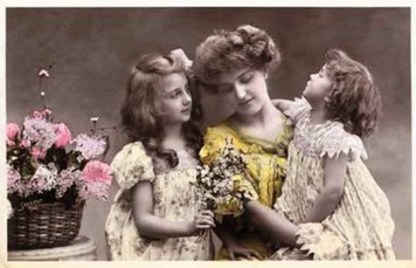
May 9, 1914 Mother’s Day

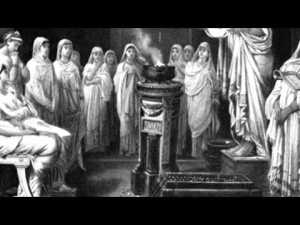
In ancient Rome, women partook of a festival, strictly forbidden to Roman men. So strict was this line of demarcation that only women were permitted even to know the name of the deity.  For everyone else she was simply the “Good Goddess”. The Bona Dea.

The earliest discernible Mother’s day comes down to us from 1200-700BC, descending from the Phrygian rituals of modern day Turkey and Armenia. “Cybele” was the great Phrygian goddess of nature, mother of the Gods, of humanity, and of all the beasts of the natural world, her cult spreading throughout Eastern Greece with colonists from Asia Minor.

Much of ancient Greece looked to the Minoan Goddess Rhea, daughter of the Earth Goddess Gaia and the Sky God Uranus, mother of the Gods of Olympus. Over time the two became closely associated with the Roman Magna Mater, each developing her own cult following and worshipped through the period of the Roman Empire.

Women in Rome

In ancient Rome, women partook of a festival, strictly forbidden to Roman men. So inflexible was this line of demarcation that only women were permitted even to know the name of the deity.  For everyone else she was simply the “Good Goddess”. The Bona Dea.

In the sixteenth century, it became popular for Protestants and Catholics alike to return to their “mother church” whether that be the church in which they were baptized, the local parish church, or the nearest cathedral. Anyone who did so was said to have gone “a-mothering”. Domestic servants were given the day off and this “Mothering Sunday”, the 4th Sunday in Lent, was often the only time when whole families could get together. Children would gather wild flowers along the way, to give to their own mothers or to leave in the church. Over time the day became more secular but the tradition of gift giving continued.

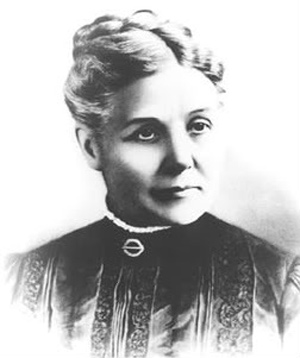
Ann Maria Reeves Jarvis

Ann Maria Reeves Jarvis was a social activist in mid-19th century western Virginia.  Pregnant with her sixth child in 1858, she and other women formed “Mothers’ Day Work Clubs”, to combat the health and sanitary conditions which were leading at that time to catastrophic levels of infant mortality.  Jarvis herself gave birth between eleven and thirteen times in a seventeen year period.  Only four would live to adulthood.
Jarvis had no patience for the sectional differences that led the nation to Civil War, or which led her own locality to secede and form the state of West Virginia in order to rejoin the Union.  Jarvis refused to support a measure to divide the Methodist church into northern and southern branches.  She would help Union and Confederate soldier alike if she could.  It was she alone who offered a prayer when others refused for Thornsbury Bailey Brown, the first Union soldier killed in the vicinity.
Anna Jarvis
Anna Jarvis

Following Jarvis’ death in 1905, her daughter Anna conceived of Mother’s Day as a way to honor her legacy, and to pay respect for the sacrifices all mothers make on behalf of their children.

Obtaining financial backing from Philadelphia department store owner John Wanamaker, Anna Jarvis organized the first official Mother’s Day celebration at a Methodist church in Grafton, West Virginia. That same day, thousands attended the first Mother’s Day event at Wanamaker’s store in Philadelphia.

Anna Jarvis resolved that Mother’s Day be added to the national calendar, and a massive letter writing campaign ensued. On May 9, 1914, President Woodrow Wilson signed a measure declaring the second Sunday of May, to be Mother’s Day.

Mothers-Day-1919

Anna Jarvis believed Mother’s Day to be a time of personal celebration, a time when families would gather to love and honor their mother.

In the early days she had worked with the floral industry to help raise the profile of Mother’s Day. By 1920 she had come to resent what she saw as the commercialization of the day.  Greeting cards seemed a pale substitute for the hand written personal notes she envisioned. Jarvis protested a Philadelphia candy maker’s convention in 1923, deriding confectioners, florists and even charities as “profiteers”. Carnations had by this time become symbolic of Mother’s Day. Jarvis resented that they were being sold at fundraisers.  She protested at a meeting of the American War Mothers in 1925 where women were selling carnations, and got herself arrested for disturbing the peace.

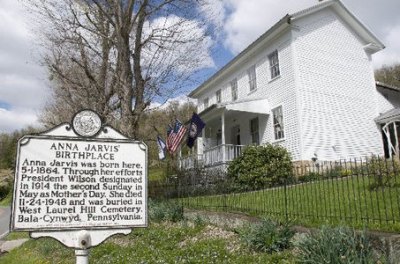
Anna-House1

Soon she was launching an endless series of lawsuits against those she felt had used the name of “Mother’s Day”, in vain.

During the last years of her life, Anna Jarvis lobbied the government to take her creation off the calendar, gathering signatures door-to-door to get the holiday rescinded. The effort was obviously unsuccessful.  The mother of mother’s day died childless in a sanitarium in 1948, her personal fortune squandered on legal fees.

Today, some variation of Mother’s Day is observed from the Arab world to the United Kingdom. In the United States, Mother’s Day is one of the most commercially successful days of the year for flower and greeting card sales, and the biggest day of the year for long-distance phone calls. Church attendance is the third highest of the year behind only Christmas and Easter. Many churchgoers celebrate the day with carnations:  colored if the mother is still living and white, if she has passed on.

Happy Mother’s Day, Mom.