“Each day in the sacred Maya calendar has a meaning. It tells us about the relationship among all things, including the animals, the land, humans, and everything in the cosmos.” —Hermelinda Sapon Pu, K’iche’ Maya, Day Keeper
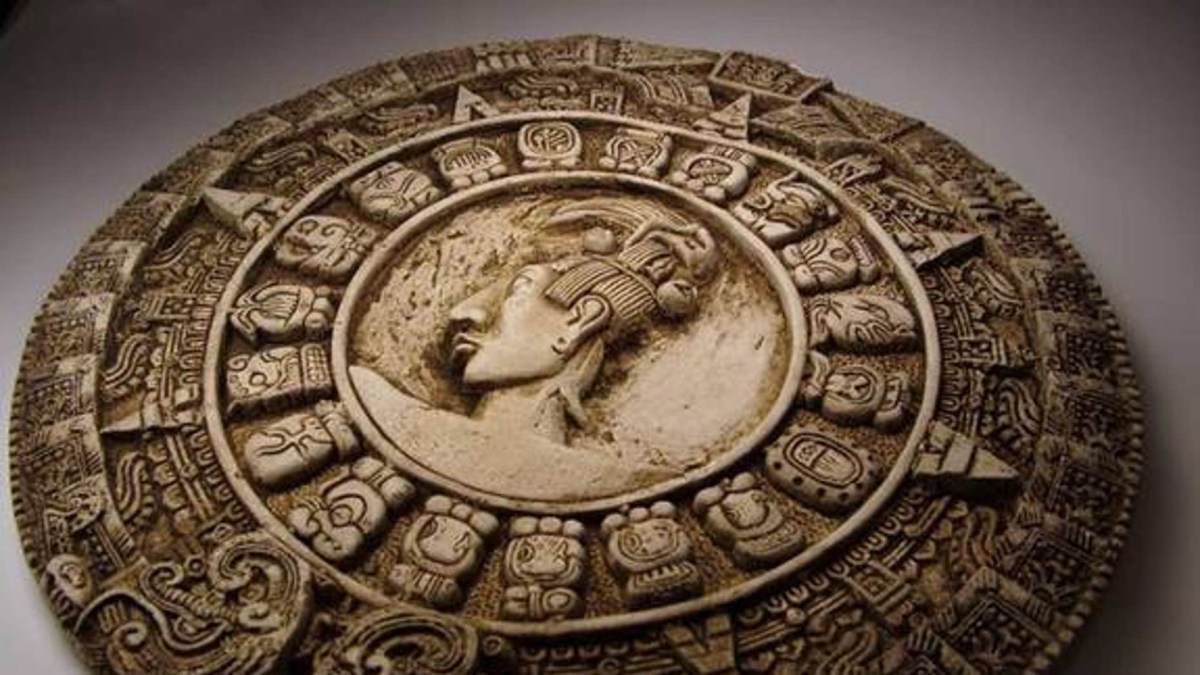
One of the sillier bits of pop culture nonsense served up to us in the recent past, may be the world coming to an end on 12/21/12, according to the Mayan calendar. The calendar itself isn’t silly, it’s actually a sophisticated mathematical construct but the end of the world part, certainly was.
The Mayans were skilled mathematicians and it shows in their calendar, the first to recognize the concept of zero, and working extensively in a base 20 number system.
The Mayans used three separate calendars, each period represented by its own glyph. The Long Count was mainly used for historical purposes. The Maya/Mesoamerican long count, begun this day in 3114BC (corresponding to the Julian Calendar).was able to specify any date within a 2,880,000 day cycle.
The Haab was a civil calendar consisting of 18 months of 20 days, and one 5-day Uayeb, a nameless period rounding out the 365-day year.
The Tzolk’in was the “divine” calendar, used mainly for ceremonial and religious purposes. Consisting of 20 periods of 13 days, the Tzolk’in goes through a complete cycle every 260 days. The significance of this cycle is unknown, though it may be connected with the 263 day orbit of Venus. There is no year in the Haab or Tzolk’in calendars, though a Haab and Tzolk’in date may be combined to specify a particular day within a 52-year cycle.
National Geographic explains that 12/21/12 brings to a close not the end of time, but the end of the 12th Bak’tun, an almost 400-year period in the Mayan Long Count calendar. The world doesn’t end, according to this explanation, it “rolls over” to the year zero and starts over, kind of like old cars used to do, when the odometer reached 100,000 miles.
It doesn’t really roll over to “zero”, either. The base 20 numerical system means that 12/22/12 begins the next 400 year (actually 394.3 years) period to begin the 13th Bak’tun. It will reset to zero at the end of the 20th Bak’tun, about 3,000 years from now. Please let me know how that turns out.
The Mayan calendar system became extinct in most areas after the Spanish conquests of the 16th century, though it continues in use in many modern communities in highland Guatemala and in Veracruz, Oaxaca and Chiapas, Mexico.
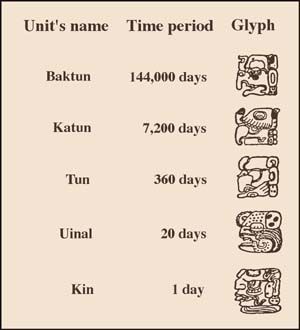
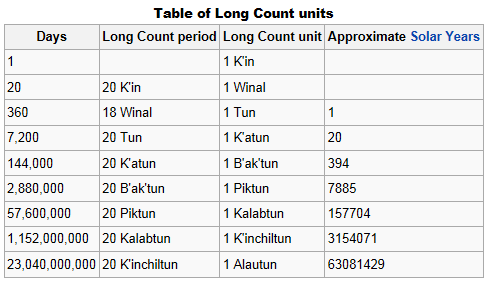
The table of Long Count units below illustrates the Mayan units of measure.
A day is a K’in, there are 20 K’ins in a Winal, and so on.
Today’s date then, according to the Mayan calendar, is Long Count Date 13.0.8.15.1, or: 13 baktun (13 X 144,000 days = 1,872,000 days) 0 katun (0 X 7,200 days = 0 days) 8 tun (8 X 360 days = 2,880 days) 15 uinal (15 X 20 days = 300 days) 1 k’in (1 X 1 day = 1 days) Tzolk’in Date: 13 Imix’ Haab Date: 19 Mol Lord of the Night
Represented graphically it all looks like this:
Hat tip to the Smithsonian National Museum of the American Indian, for that one.
Perhaps we’re all capable of more than we realize, or less, but we may never know which. Not until we have been tested. For Neerja Bhanot the test came on September 5, 1986.
Is a hero born that way, or do circumstances bring out something that was in there, all along? What are we ourselves capable of, should circumstances require? Perhaps we’re all capable of more than we realize, or less, but we may never know which. Not until we have been tested.
For Neerja Bhanot the test came on September 5, 1986.
Neerja was born in Chandigarh, India and raised in Bombay, now Mumbai. The only daughter of Punjabi Hindu parents Hareesh and Rama Bhanot, she was the ‘laado’ of this family of five: the youngest, and most pampered.
Gifted with exceptional good looks it was all but foreordained that she would enter a career in modeling. She was a natural in front of a camera. It was hard to turn on a TV in mid-1980s India without a glimpse of this smiling spokeswoman, equally at home pitching cold cream, savings banks or the latest in saree fashion.
An arranged marriage proved abusive in early 1985 and Neerja left two months later, to move back with Rama and Hareesh.
It was barely a blip on the screen of a stellar modeling career and soon, Neerja decided on another. Her friend Naomi was interviewing, to become a flight attendant. Neerja helped her with her make-up and spontaneously decided to interview, herself. So it is Neerja Bhanot became a flight attendant with Pan Am. And why not? She was young and the whole world, lay before her. There was no reason she couldn’t handle two careers.
Neerja traveled to Miami Florida for training with the airline and returned, a purser. At 22 she was not only air hostess but now responsible for cash receipts, taken in-flight.
On September 5, 1986, Neerja donned the crisp blue uniform for the last time and boarded Pan Am Flight 73. She was senior flight purser for this trip, a route flying from Mumbai to the United States via Karachi, Pakistan and Frankfurt, Germany.
A vile, alien ideology enters this story on the stopover, in Pakistan. Four armed men in a van disguised as airport security, members of the Palestinian terrorist Abu Nidal Organization. The four crossed the tarmac passing the pushback tug and catering trucks to enter the aircraft in pairs, two via the front stairs and two up the back.
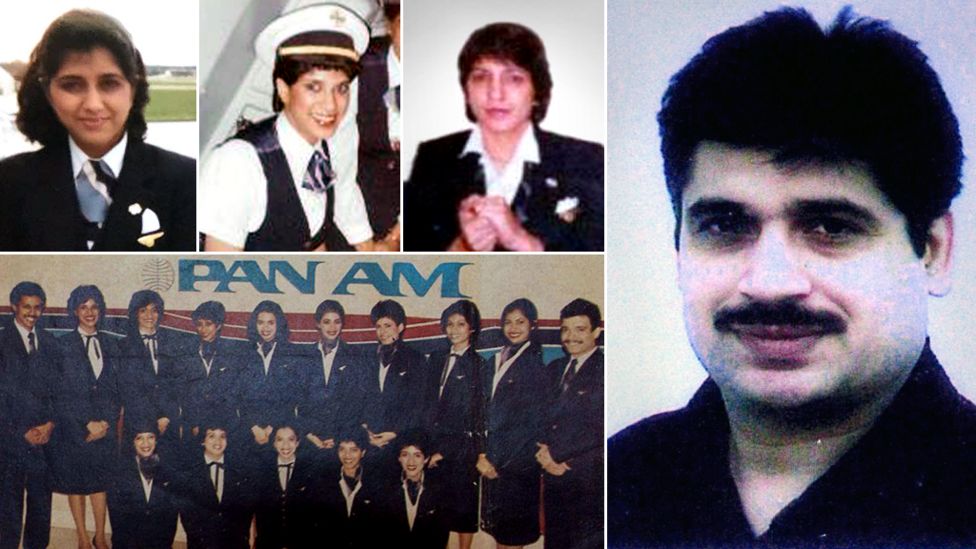
Firing their weapons in the air and into the floor at their feet the militants ordered all doors, closed and locked. Unseen in the moment Neerja signaled the code for ‘Hijack’ and flight attendant Sherene Pavan phoned the cockpit. Fellow air hostess Sunshine Vesuwala watched as one now grabbed hold of Neerja with a gun, to her head. 393 passengers and crew were now captives, of four armed terrorists.
Pilot, co-pilot and flight engineer were able to flee via an overhead hatch. Many would criticize these three for fleeing in the days to come but flight steward Dilip Bidichandani, takes the opposite view. At least three lives were now saved and the situation was safer on the ground, than in the air. The terrorists themselves later claimed an intent to fly the aircraft into a building, a tactic unheard of, in 1986.
(From top left): Nupoor, Sunshine, Sherene, Dilip. (In group shot – far left): Massey. (Credits: Solo shots – individuals’ own; group shot: Pan Am crew Facebook page) H/T BBC
Twelve flight attendants were now in charge of the hijacked aircraft, none older than their early to mid-twenties.
Karachi flight director Viraf Doroga took up a megaphone and attempted to negotiate as security personnel took positions, around the aircraft. The four wanted to fly to Cyprus and on to Israel where some of their cohorts, were held in prison. They demanded a pilot and, when none materialized, 29-year-old American passenger Rajesh Kumar was dragged from his seat, driven to his knees before an open door and shot in the head, his lifeless body kicked onto the tarmac, below.
In the face of such bestiality, ordinary people rose to new levels of common decency, and courage. Nupoor Abrol told BBC News, “My first instinct was to open the wing exit and slip out with as many passengers as I could, but I realized that this would leave the rest of the passengers vulnerable.”
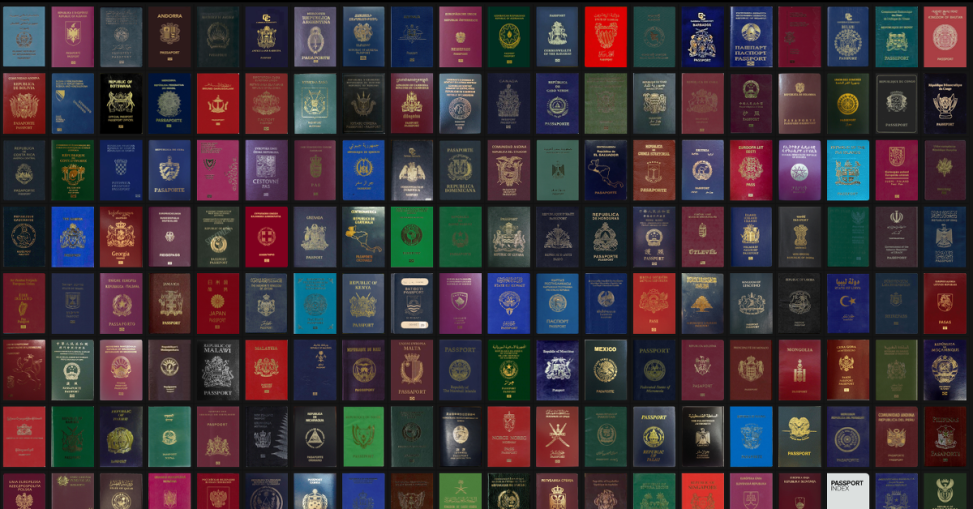
The terrorists made it known they were after Americans. They instructed flight attendants to collect passports so they could identify, which were Americans. Sunshine, Madhvi Bahuguna and Neerja began to collected passports. In they came in shades of green and burgundy, of black and blue. The unique navy blue of the American passport, chosen in 1976 to match that of the stars and strips was missing, quietly omitted or tucked under seats or secreted, in flight attendant’s uniforms.
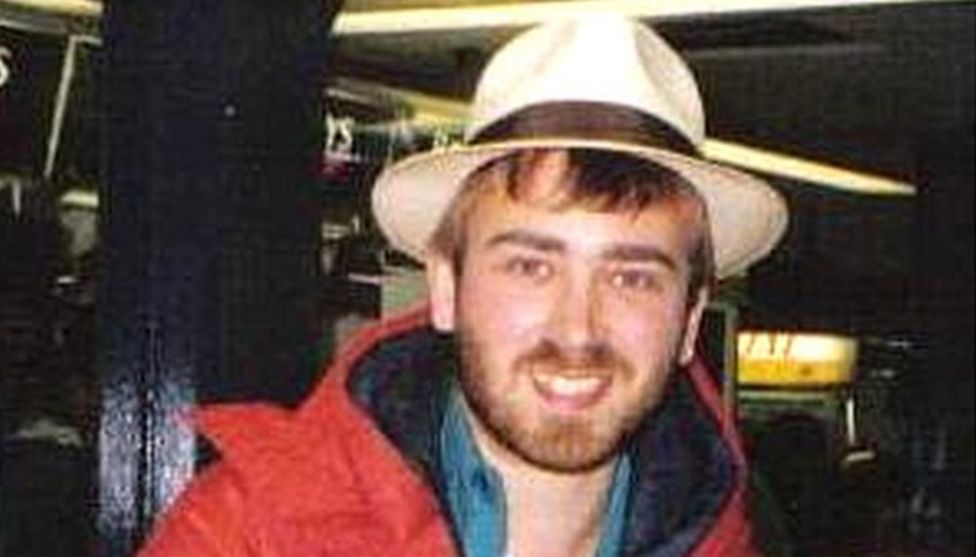
Infuriated at the inability to find an American the terrorists now chose a Brit, Mike Thexton, who was forced to sit on the floor with his hands crossed, over his head. Thexton received a vicious kick to the side for his efforts but he would survive the ordeal. Twenty-two of his fellow captives, would not.
Mike Thexton
The stalemate dragged on for seventeen grueling hours until the aircraft ran out of power and the savages, ran out of patience. As the hijackers became visibly more agitated Neerja and others communicated means of deploying emergency exit ramps, to passengers seated by the exits.
Pandemonium broke out on the aircraft as four terrorists, now opened fire. Neerja was directing passengers out one exit as one of them grabbed her by the ponytail. She wasn’t just shot in the crossfire she was murdered, point blank. According to one eyewitness her last act was an attempt to shelter, three children.
Her 23rd birthday came and went, two days later.
Twenty two passengers and crew were killed that day with another 120, wounded. The nation of India awarded Neerja Bhanot the Ashoka Chakra Award, India’s highest award for bravery in the face of an enemy, during peacetime. She is the youngest recipient of such an award and the first, female.
Five terrorists were subsequently caught and tried by Pakistani authorities. They were all released against the express wish of American authorities and deported, to Palestine. The terrorist leader, to hell with his name, was extradited to the United States where is serving a 160-year sentence.
One of the children Neerja Bhanot sheltered with her body was seven years old, that day. The boy was inspired by the selfless courage of the woman who had saved his life and grew to become a pilot, with a major airline.
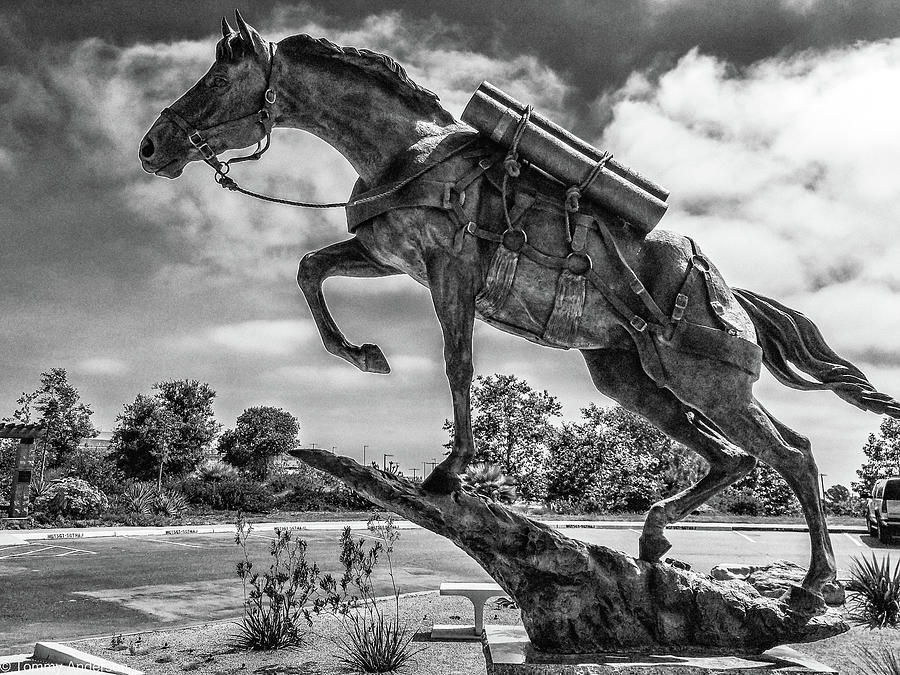
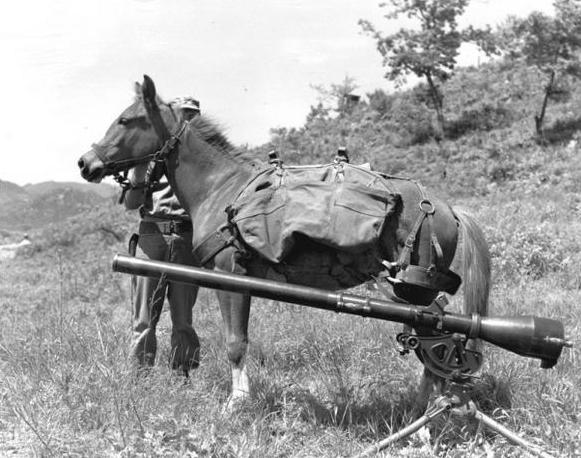
Reckless was the first horse in Marine Corps history to participate in an amphibious landing. She was wounded twice, and later awarded two Purple Hearts and a Marine Corps Good Conduct Medal. Her name appears on Presidential Unit citations both from the United States and the Republic of Korea.
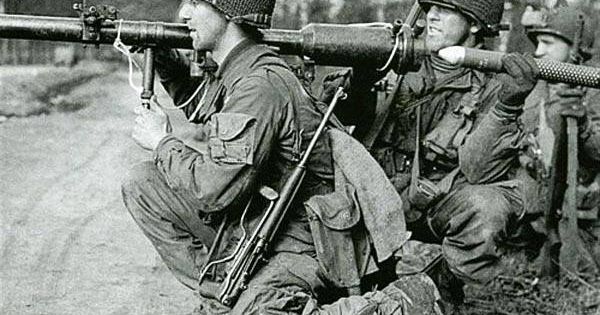
A Recoilless Rifle is a type of lightweight tube artillery. Think of a portable cannon. Kind of a bazooka, really, only the Recoilless fires modified shells rather than rockets. The back blast of the shell compensates for the mule’s kick which would otherwise be expected from such a weapon, making the rifle “recoilless”.
While it reduces projectile range, reduced gas pressures permit a thinner-walled barrel, resulting in a weapon light enough to be served by a 2 to 3-man crew and shoulder fired by a single infantryman.
The “RCLR” weapon system has provided the punch of artillery to mobile troop formations since the early days of WWII including Airborne, Special Forces and Mountain units.
The problem arises when combat operations consume ammunition faster than the supply chain can replace it. Mountainous terrain makes the situation worse. Over the last 20 years in the more mountainous regions of Afghanistan, there were times when the best solution for the problem, is horsepower.
Ah Chim-hai was a chestnut mare of mixed Mongolian and Thoroughbred lineage, a race horse at the track in Seoul, South Korea. Her name translated as “Flame of the Morning”.
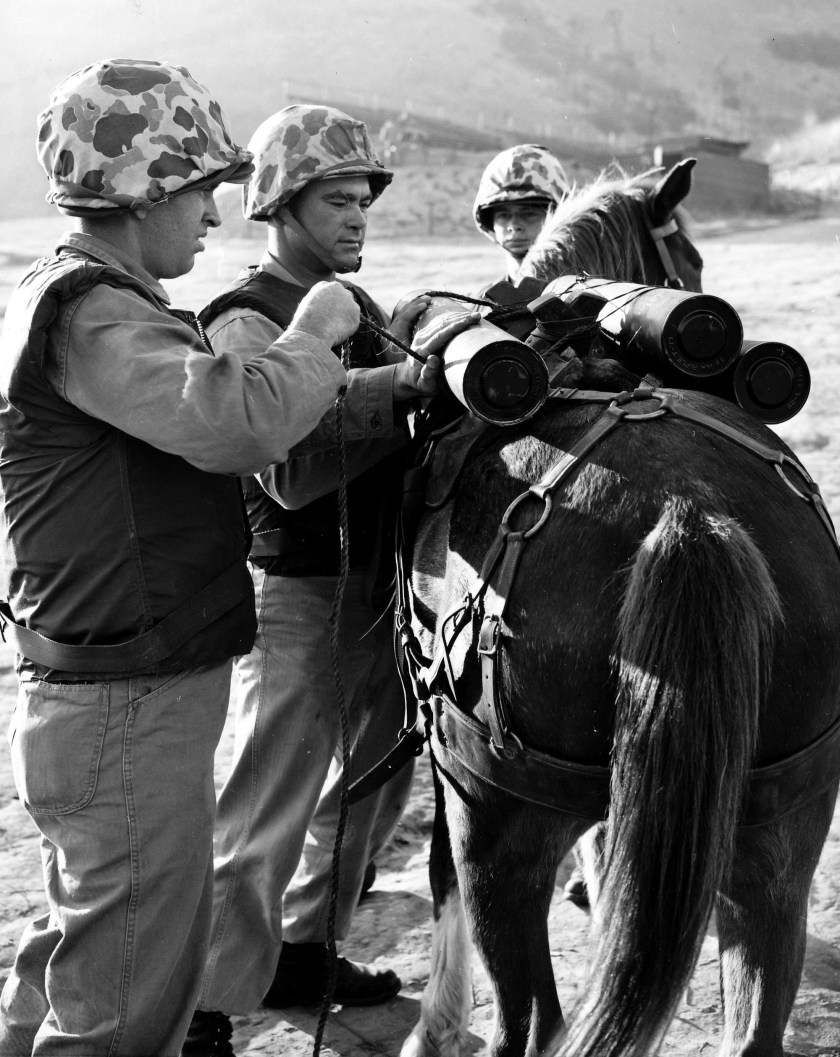
Lieutenant Eric Pedersen of the recoilless rifle platoon, anti-tank company of the 5th Marine Regiment, needed a pack animal to carry the weapon’s 24-pound shells up Korean mountain passes. In October 1952, Pederson received permission from regimental commander Colonel Eustace P. Smoak, to buy a horse for his platoon.
Lt. Pederson and stable boy Kim Huk-moon agreed on a price of $250, and Pederson paid with his own money. Kim cried on watching his “Flame” leave the stable, but the sale had a higher purpose. The boy’s sister had stepped on a land mine, and badly needed a prosthetic leg.
The Marines called the new recruit “Reckless” – a nod to the weapon system she was meant to serve, and to the fighting spirit of the 5th Marines.
Pederson wrote to his wife in California to send a pack saddle, while Gunnery Sergeant Joseph Latham and Private First Class Monroe Coleman provided for her care and training.
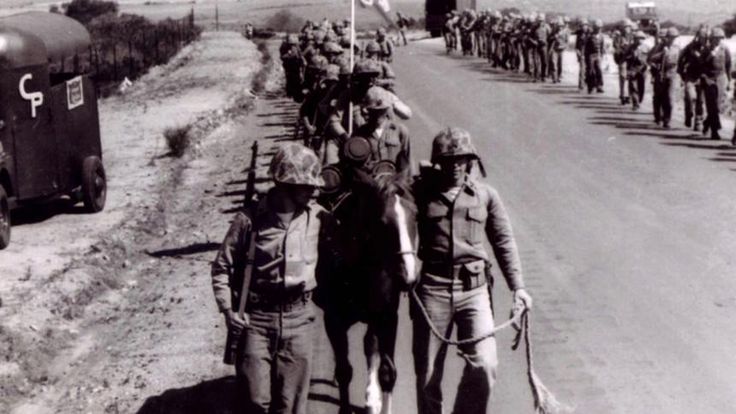
Navy Hospitalman First Class George “Doc” Mitchell provided most of Reckless’ medical care, Latham taught her battlefield skills: how to step over communication wires, when to lie down under fire, how to avoid becoming entangled in barbed wire. She learned to run for cover at the cry “Incoming!”
The platoon built her a bunker and fenced off a pasture, but soon Reckless was allowed to roam freely throughout the camp. She’d enter tents at will, sometimes spending the night if it was cold.
She’d eat anything: bacon, mashed potatoes, shredded wheat. She loved scrambled eggs and just about anything else a Marine wasn’t watching closely enough. Reckless even ate her own horse blanket once, and she loved a to have a beer. Mitchell had to warn his fellow Marines against giving her more than two Cokes a day, which she’d drink out of a helmet. One time, Reckless ate $30 worth of winning poker chips.
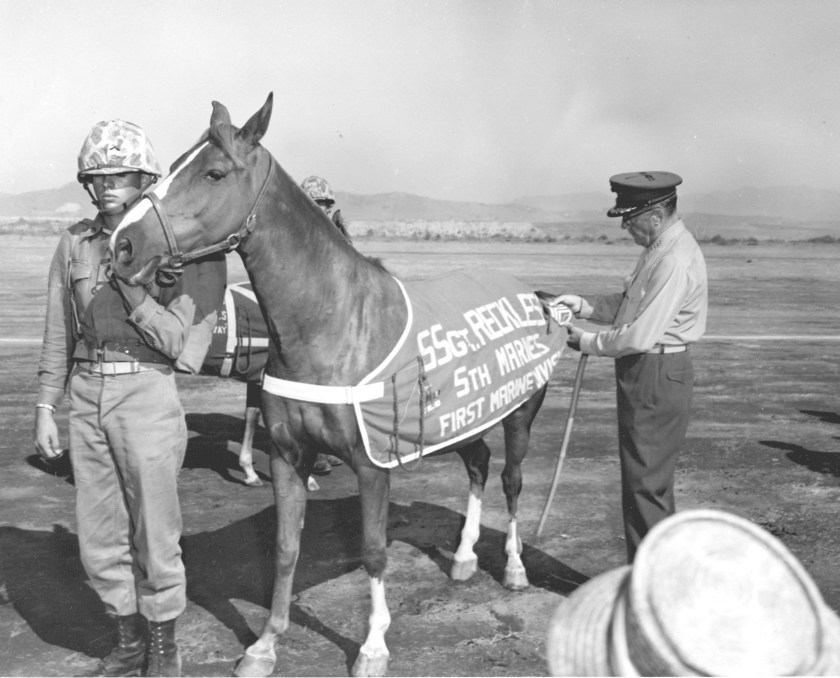
General Randolph McCall Pate, a veteran of Guadalcanal, Iwo Jima and Korea, served as the 21st Commandant of the Marine Corps from 1956 – ’59. Pate wrote: “I was surprised at her beauty and intelligence, and believe it or not, her esprit de corps. Like any other Marine, she was enjoying a bottle of beer with her comrades. She was constantly the center of attraction and was fully aware of her importance. If she failed to receive the attention she felt her due, she would deliberately walk into a group of Marines and, in effect, enter the conversation. It was obvious the Marines loved her.” Reckless was a Marine.
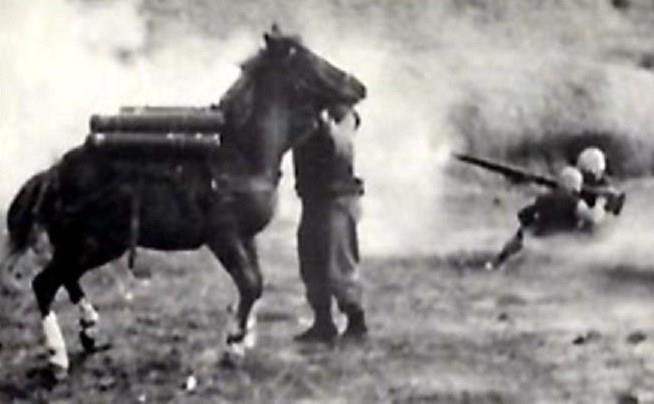
Reckless “went straight up” the first time she heard an RCLR go off, despite being loaded down with six shells. All four feet left the ground and she came down trembling with fear, but Coleman was able to soothe her. The second time she snorted. By the fourth she didn’t do much as bother to look up, happily munching on a discarded helmet liner.
Recoilless rifle tactics call for fire teams to expend four or five rounds, and then relocate before the enemy can shoot back. Reckless usually learned the route after one or two trips, often traveling alone to deliver supplies on the way up, and evacuate wounded on the way down.
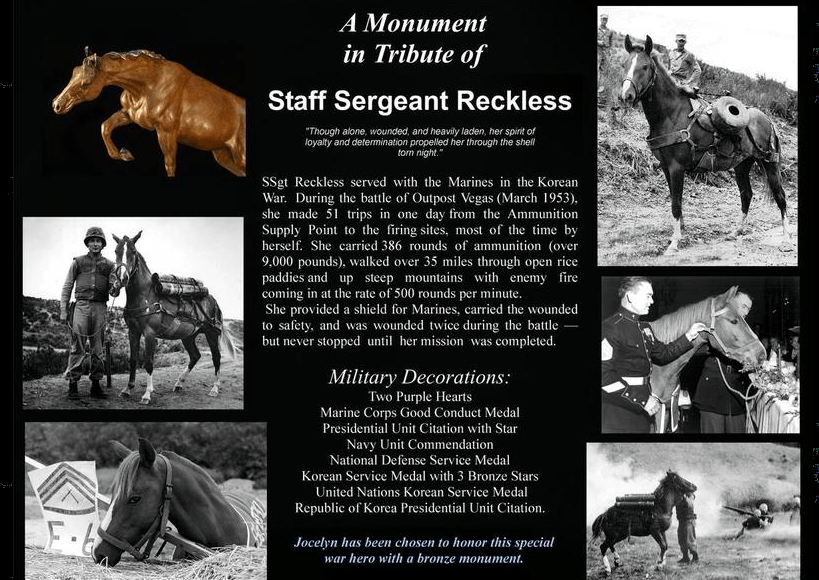
In February 1953, Captain Dick Kurth and his Fox Company were fighting for a hill called “Detroit”. Reckless made 24 trips by herself, carrying a total 3,500-pounds of ammunition over 20 miles. She made 51 solo trips that March, during the battle for Outpost Vegas. Reckless carried 9,000lbs of ammunition in a single day, over 35 miles of open rice paddies and steep hills. At times, artillery exploded around her at the rate of 500 rounds per minute. That night, she was too exhausted to do anything but hang her head while they rubbed her down.
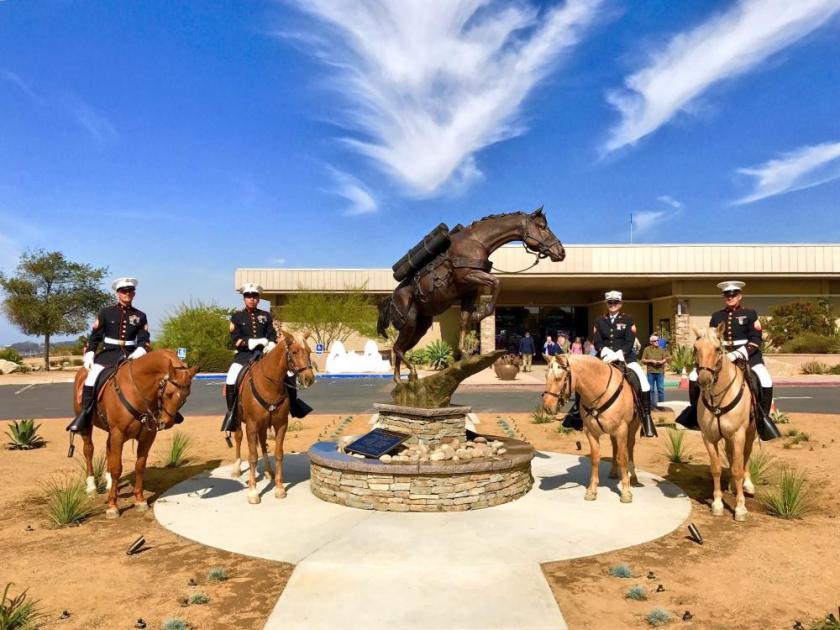
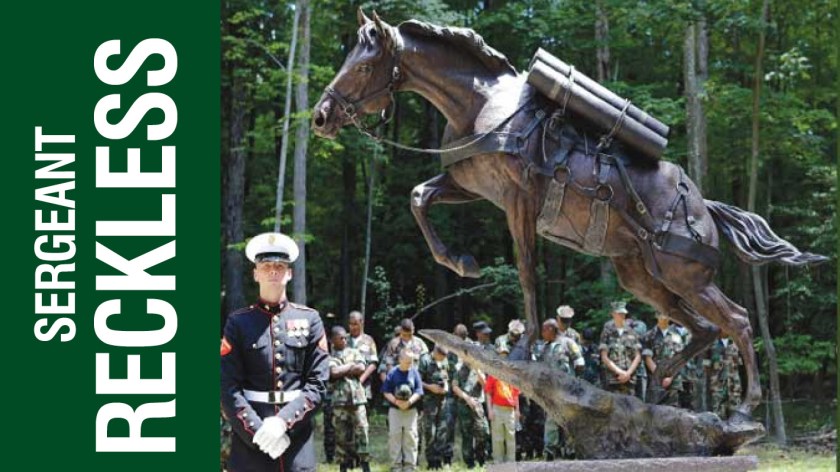
Reckless was the first horse in Marine Corps history to participate in an amphibious landing. She was wounded twice, and later awarded two Purple Hearts and a Marine Corps Good Conduct Medal. Her name appears on Presidential Unit citations both from the United States and the Republic of Korea.
On August 31, 1959, Reckless was promoted to Staff Sergeant in a ceremony at Camp Pendleton. 1,900 of her 5th Marine comrades attended, as did two of her sons, “Fearless” and “Dauntless”. A third, “Chesty”, was unavailable to attend.
General Pate wrote: “In my career I have seen many animals that have been adopted by Marines, but never in all my experience have I seen one which won the hearts of so many as did. . .Reckless.”
Life Magazine published a collector’s edition in 1997, listing 100 heroes from American history. Alongside the names of George Washington and Thomas Jefferson, Sally Ride and Abraham Lincoln, was that of a small Mongolian horse. Sergeant Reckless.
The astonishing part of this story is it all took place in the midst of a plague vastly more deadly than the COVID-19 pandemic, of our own age.
When George Washington raised his swordunder the branches of that ancient elm on Cambridge commons, by that act did the General take command of an “army” equipped with an average of nine rounds, per man.
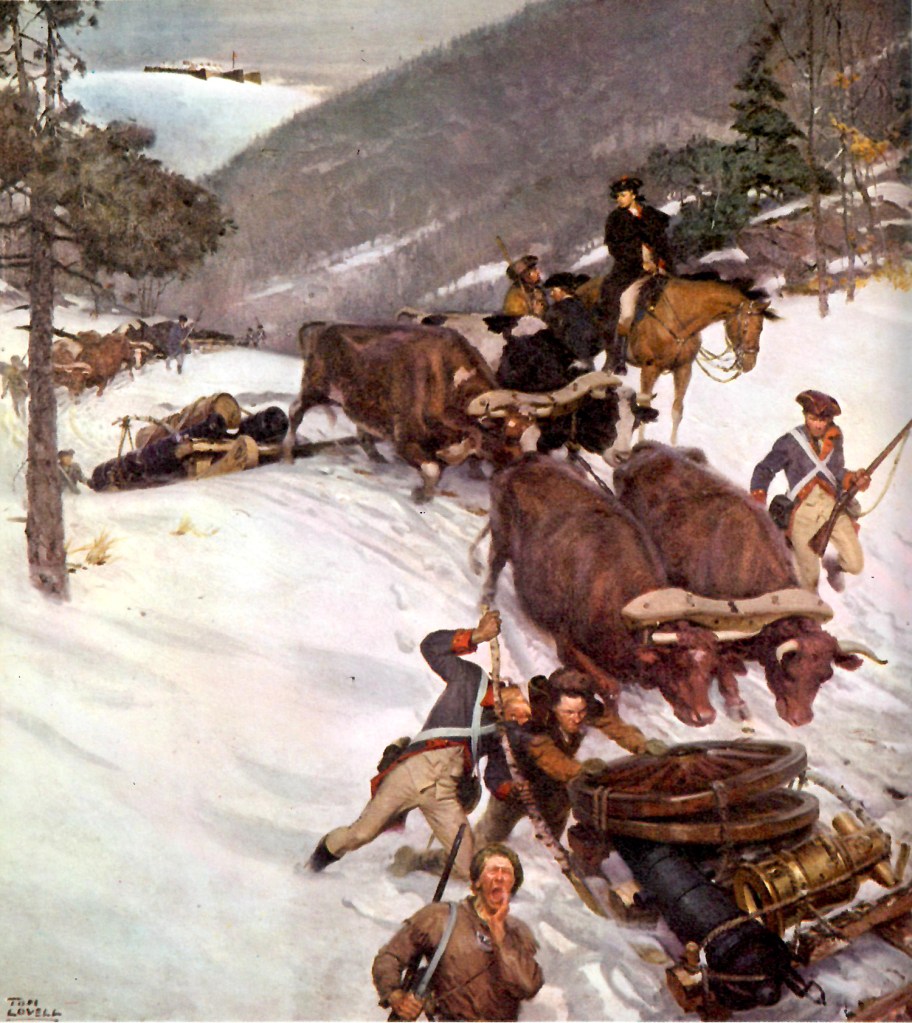
1776 started out well for the cause of American independence, when the twenty-six-year-old bookseller Henry Knox emerged from a six week slog through a New England winter, at the head of a “Noble train of artillery’. Manhandled all the way from the wilds of upstate New York, the guns of Fort Ticonderoga were wrestled to the top of Dorchester Heights, overlooking the British fleet anchored in Boston Harbor. General sir William Howe now faced the prospect of another Bunker Hill, a British victory which had come at a cost he could ill afford, to pay again.
The eleven-month siege of Boston came to an end on March 17 when Howe’s fleet evacuatedBoston Harbor and removed, to Nova Scotia. Three months later, a force of some 400 South Carolina patriots fought a day-long battle with the nine warships of Admiral Sir Peter Parker, before the heavily damaged fleet was forced to withdraw. The British eventually captured Fort Moultrie and Charleston Harbor with it but, for now, 1776 was shaping up to be a very good year.
Tory and Patriot alike understood the strategic importance of New York, as the center of communication between the upper and lower colonies. Beginning that April, Washington moved his forces from Boston to New York placing his troops along the west end of Long Island, in anticipation of the British return.
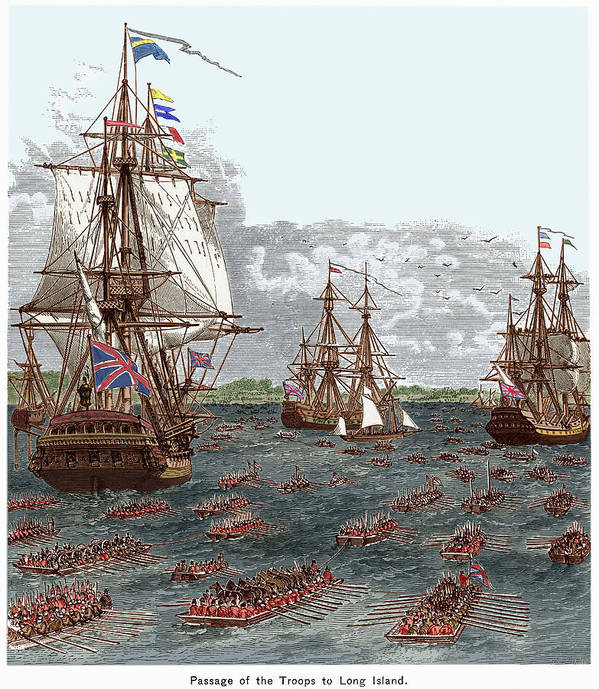
The fleet was not long in coming, the first arrivals dropping anchor by the end of June. Within the week, 130 ships were anchored off Staten Island under the command of Admiral sir Richard Howe, the General’s brother.
The Howe brothers attempted to negotiate on July 14 with a letter to General Washington, addressed: “Georg Washington, Esq.” The letter was returned unopened by Washington’s aide Joseph Reed who explained there’s nobody over here, by that address. Again the letter came back addressed to “George Washington, Esq., etc.,” the etc. meaning… “and any other relevant titles.” That letter too came back unopened but this time, with a message. The general would meet with one of Howe’s subordinates. The meeting took place on July 20 when Howe’s representative offered pardon, for the American side. General Washington responded as they had done nothing wrong his side had no need, of any pardons. But thanks anyway.
By August 12 the British force numbered some 400 vessels with 73 warships and a force of 32,000 camped on Staten island.
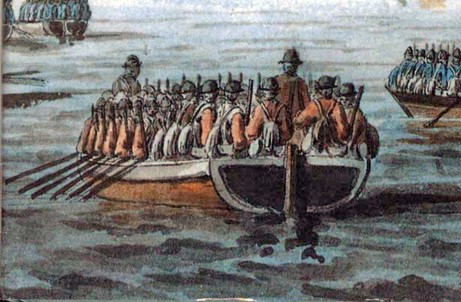
“British troops in the type of flat-bottomed boat used for the invasion of Long Island. Hessians in their blue uniforms are in the two boats that are only partly visible”. H/T Wikipedia
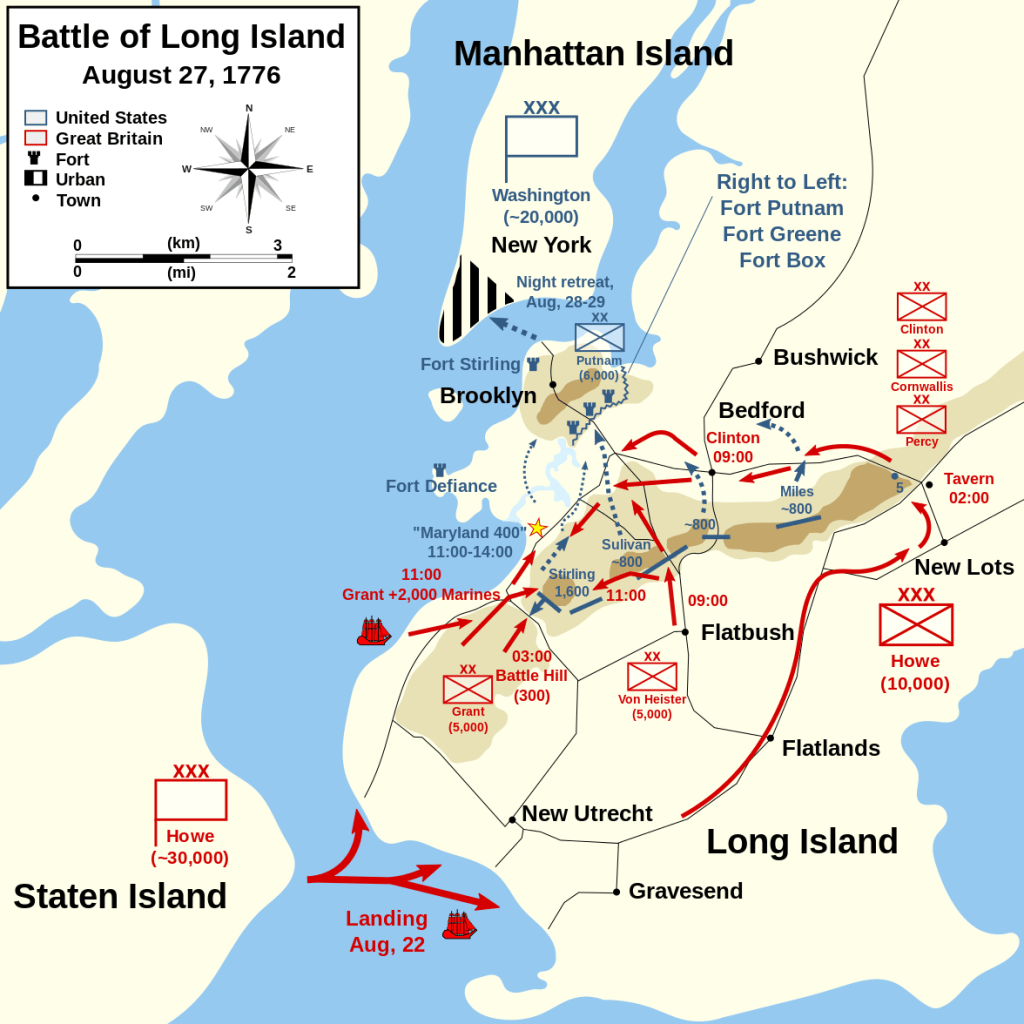
Patriot forces were badly defeated at the Battle of Brooklyn, fought on August 27, 1776. In terms of number of troops deployed and actual combat it was the largest battle, of the Revolution. The British dug in for a siege, confident their adversary was cornered and waiting only to be destroyed at their convenience while the main Patriot army retreated to Brooklyn Heights.
Cornered on land with the British-controlled East River to their backs, it may have been all over for the Patriot cause, but for one of the great tactical feats of all military history. The surprise was complete for the British side, on waking for the morning of August 30 to discover the 9,000-strong Patriot army, had vanished. The silent evacuation over the night of August 29-30 had averted disaster, a feat made possible only through the nautical skills of the merchants and rum traders, the sailors and the fishermen of Colonel John Glover’s Marblehead Massachusetts militia, the “Amphibious Regiment”.
Following evacuation, the Patriot army found itself isolated on Manhattan island, virtually surrounded. Only the thoroughly disagreeable current conditions of the Throg’s Neck-Hell’s Gate segment of the East River, prevented Admiral Sir Richard Howe from enveloping Washington’s position, altogether.
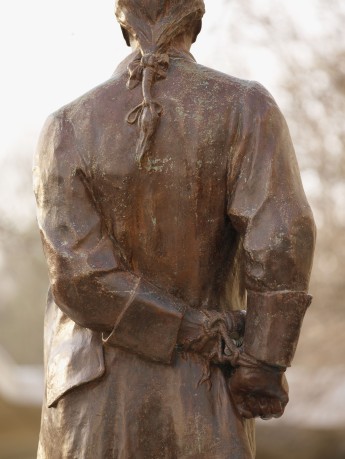
Desperate for information about the attack he was sure would come Washington dispatched a 22-year old Connecticut schoolteacher named Nathan Hale on September 10, to keep an eye on British movements. Disguised as a Dutch schoolteacher, Hale naïvely placed his trust, where it didn’t belong. He was betrayed in just over a week.
As expected, Howe landed a force at Kip’s Bay on September 15 and the Redcoats quickly occupied the city. Patriots delivered an unexpected check the following day at Harlem Heights against an overconfident force of British light troops. It was to be the only such bright spot for the Americans who were now driven out of New York and into New Jersey and finally, to Pennsylvania.
A great fire broke out on the 21st that destroyed as much as a quarter of all the buildings on Manhattan Island. Both sides pointed the finger of blame at the other but the cause, was never determined. Nathan Hale was hanged for a spy the following day with the words, ‘I only regret, that I have but one life to lose for my country‘.
That October, the defeat of General Benedict Arnold’s home-grown “Navy” on the waters near Valcour Island in Vermont, cost the British fleet dearly enough that it had to turn back, buying another year for the Patriot cause.
Reduced to a mere 4,707 fit for duty, Washington faced the decimation of his army by the New Year, with the end of enlistment for fully two-thirds of an already puny force. With nowhere to go but the offense, Washington crossed the Delaware river in the teeth of a straight-up gale over the night of December 25 and defeated a Hessian garrison at Trentonin a surprise attack on the morning of December 26.
While minor skirmishes by British standards, the January 2-3 American victories at Assunpink Creek and Princeton demonstrated an American willingness, to stand up to the most powerful military of the age. Cornwallis suffered three defeats in a ten day period and withdrew his forces from the south of New Jersey. American morale soared as enlistments, came flooding in.
The American war for independence had years to go. Before it was over, more Americans would die in the fetid holds of British prison ships than in every battle of the Revolution, combined. Yet, that first year had come and gone and the former colonies, were still in the fight.
The astonishing part of this story is it all took place in the midst of a plague vastly more deadly than the COVID-19 pandemic, of our own age. Of 2,780,369 counted by the 1770 census* in this country no fewer than 130,000 died in the smallpox pandemic of 1775-1782. That works out to 4,815 per 100,000. Contrast that with a Coronavirus death rate of 194.14 per 100,000 according to Johns Hopkins University a death rate, of less than .2% *This figure does not include Native Americans who were not counted in the US census, until 1860.
A generation later and an ocean away, Lord Arthur Wellesley described the final defeat of a certain Corsican corporal at a place called Waterloo. Wellesley might have been talking about the whole year of 1776 in describing that day in 1815, when he said “It was a damn close run thing”.
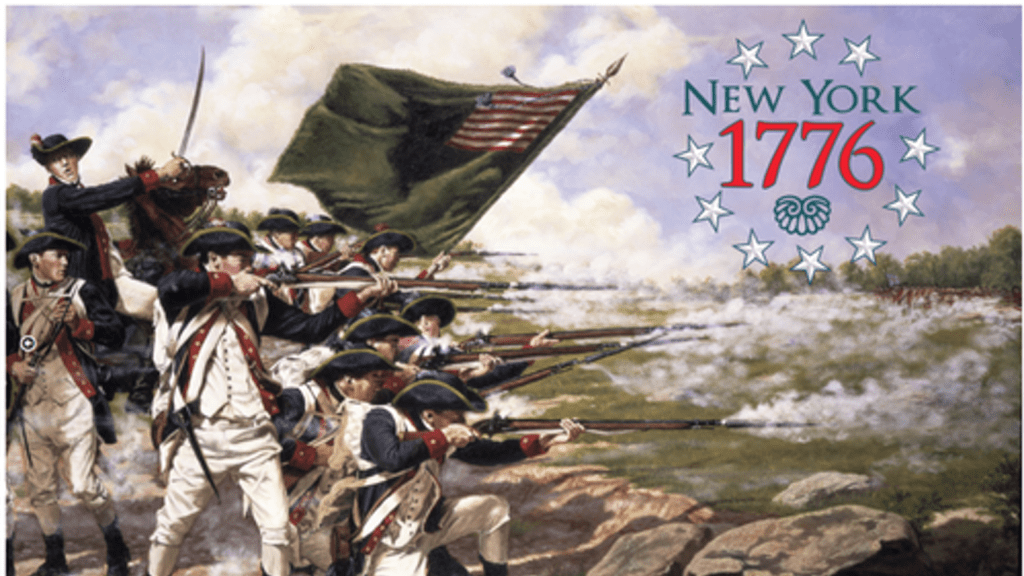
Feature image, top of page: Battle of Long Island, by Alonzo Chappel.
Once hopelessly caught in arctic ice the British vessel HMS Resolute was returned to her majesty Queen Victoria’s government and now serves as a desk for virtually every US President from Rutherford B. Hayes, to Joseph R. Biden.
Since the time of Columbus, European explorers have searched for a navigable shortcut by open water, from Europe to Asia. The “Corps of Discovery“ better known as the Lewis and Clark expedition, departed the Indiana Territory in 1804 with, among other purposes, the intention of finding a water route to the Pacific.
Forty years later, Captain sir John Franklin departed England aboard two ships, HMS Erebus and HMS Terror, to discover the mythical Northwest Passage.
The two vessels became icebound in Victoria Strait near King William Island, in the Canadian Arctic.
Prodded by Lady Jane Franklin, the hunt for her husband’s expedition would continue for years, at one time involving as any as eleven British and two American ships. Clues were found including notes and isolated graves, telling the story of a long and fruitless effort to stay alive in a hostile climate. The wreck of HMS Erebus would not be discovered until 2014, her sister ship, two years later.
In 1848, the British Admiralty possessed few hulls suitable for arctic service. Two civilian steamships were purchased and converted to exploration vessels: HMS Pioneer and HMS Intrepid, along with four seagoing sailing vessels, Resolute, Assistance, Enterprise and Investigator.
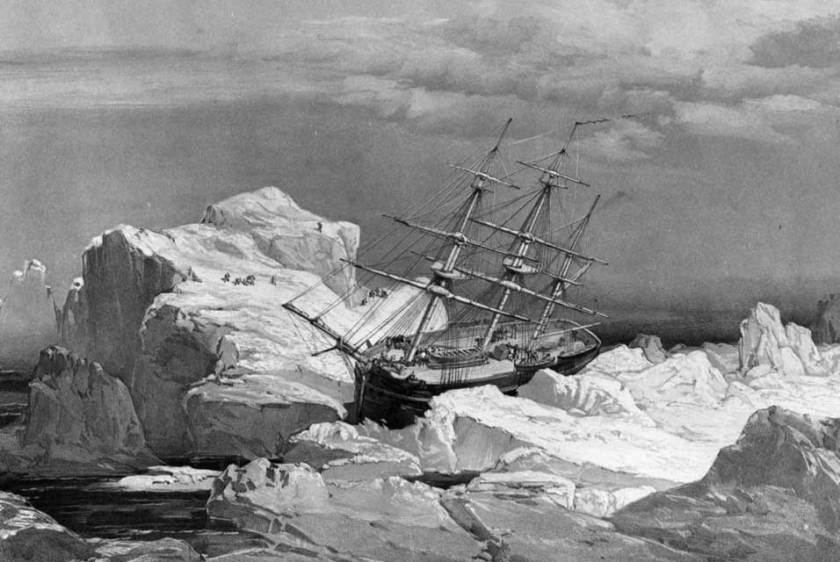
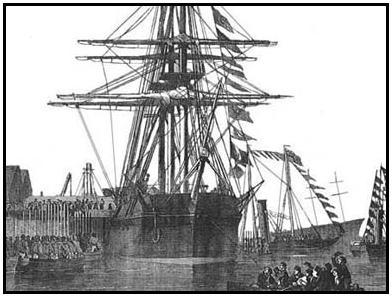
HMS Resolute was a Barque rigged merchant ship, purchased in 1850 as the Ptarmigan and refitted for Arctic exploration. Renamed Resolute, the vessel became part of a five ship squadron leaving England in April 1852, sailing into the Canadian arctic in search of the doomed Franklin expedition.
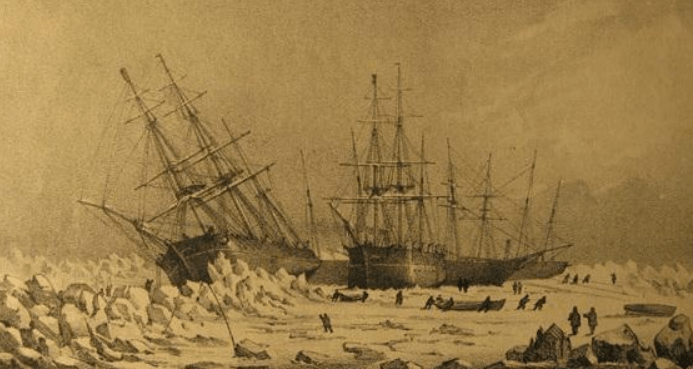
Neither Franklin nor any of his 128 officers and men would ever return alive. What HMS Resolute Did find was the long suffering crew of the HMS Investigator, hopelessly encased in ice where, three years earlier, she too had been searching for the lost expedition.
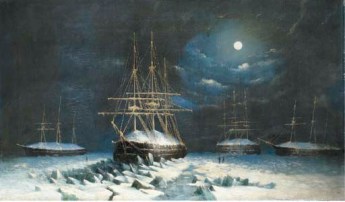
Three of the Resolute expedition’s ships themselves became trapped in floe ice in August 1853 including Resolute, herself. There was no choice but to abandon ship, striking out across the ice pack in search of their supply ships. Most of them made it despite egregious hardship, straggling into Beechey Island in the Canadian Arctic Archipelago, between May and August, of the following year.
The expedition’s survivors left Beechey Island on August 29, 1854, never to return. Meanwhile Resolute, alone and abandoned among the ice floes, continued to drift eastward at a rate of 1½ nautical miles per day.
The American whale ship George Henry discovered the drifting Resolute on September 10, 1855, 1,200 miles from her last known position. Captain James Buddington split his crew, half of them now manning the abandoned ship. Fourteen of them sailed Resolute back to their base in Groton CT, arriving on Christmas eve.
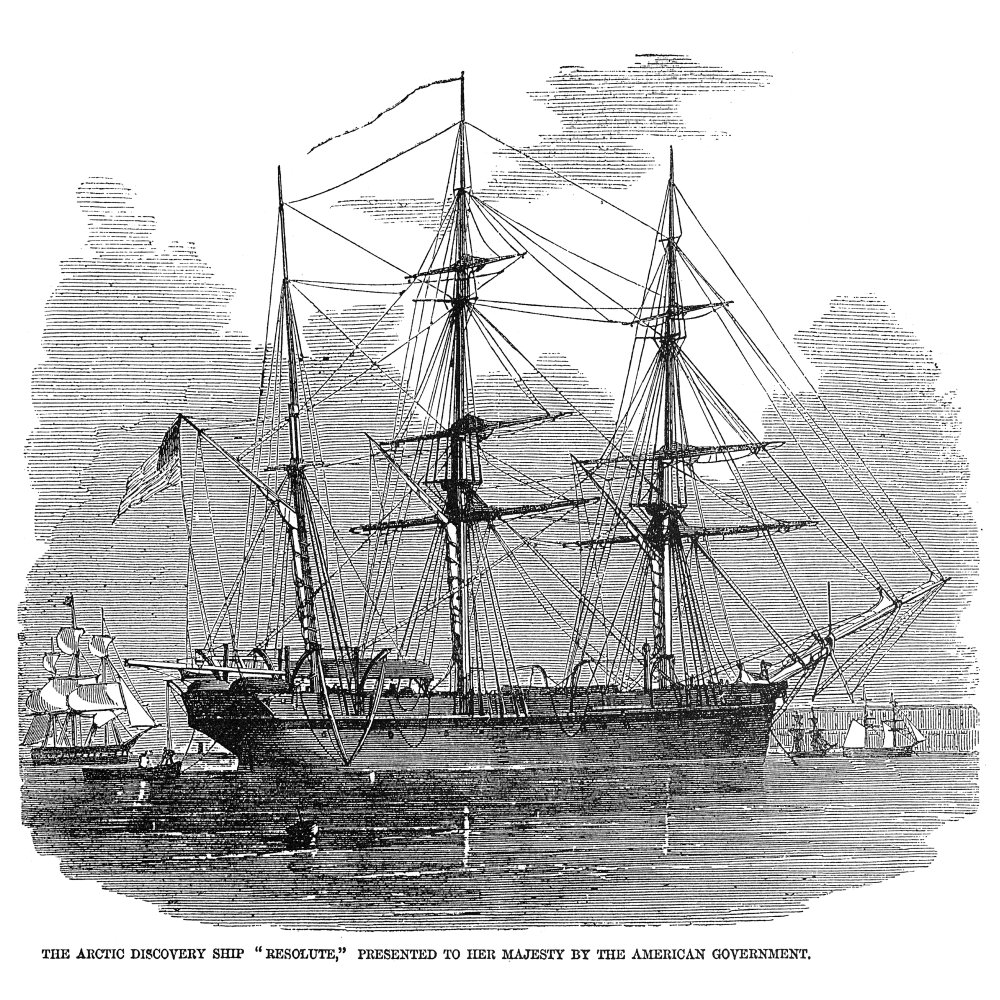
The so-called ‘Pig and Potato War” of 1859 was resolved between the British and American governments with the loss of no more than a single hog, yet a number of border disputes made the late 1850s a difficult time, for American-British relations. Senator James Mason of Virginia presented a bill in Congress to fix up the Resolute and give her back to her Majesty Queen Victoria’s government, as a token of friendship between the two nations.
$40,000 were spent on the refit. Resolute sailed for England later that year. Commander Henry J. Hartstene presented the vessel to Queen Victoria on December 13. HMS Resolute served in the British navy until being retired and broken up in 1879. The British government ordered two desks to be fashioned from the English oak of the ship’s timbers, the work being done by the skilled cabinet makers of the Chatham dockyards.
In 1880, the British government presented President Rutherford B. Hayes the gift, of a large partner’s desk. A token of gratitude for the return of the HMS Resolute, 24 years earlier.
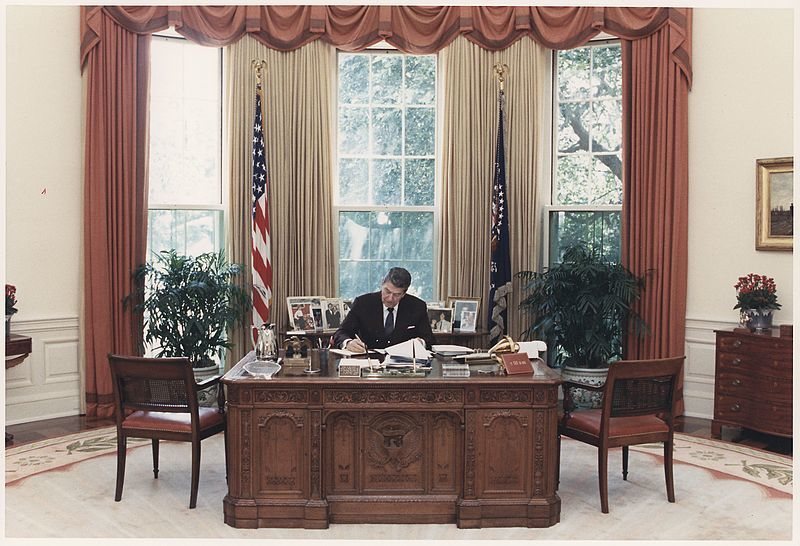
The desk, known as the Resolute Desk, has been used by nearly every American President from that day, to this. Every president from Hayes through Hoover used the desk either in the White House Green Room, the president’s study or working office. FDR moved the desk into the oval office where he had a panel installed in the opening, as he was self conscious about his leg braces.
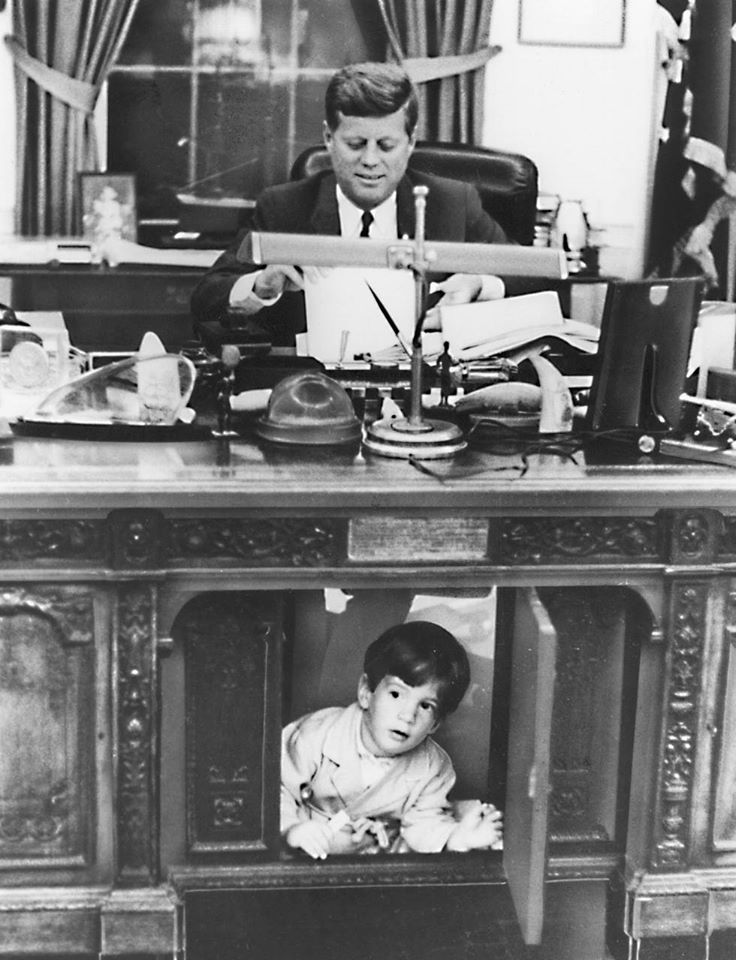
There was a brief period of climate controlled storage during the Truman era as the White House went through major renovation. It was Jackie Kennedy who brought the desk back, into the Oval Office. There are pictures of JFK working at the desk while a young JFK, Jr., played underneath.
Stanley Tretick’s October 2, 1963 photo of John F. Kennedy Jr. playing in the kneehole of the Resolute desk
Presidents Johnson, Nixon and Ford were the only ones not to use the Resolute desk, as LBJ allowed it to leave the White House following the Kennedy assassination.
The Resolute Desk spent several years in the Kennedy Library and later the Smithsonian Institute, the only other time the desk has been out of the White House.
Jimmy Carter returned the desk to the Oval Office where it has remained through the Presidencies of Ronald Reagan, George H.W. Bush, Bill Clinton, George W. Bush, Barack Obama, Donald J. Trump and, as of this article, Joe Biden.
We’re two and one-half millennia down the road and we can still see who these people were, in our every-day lives.
Whether we think about it or not, western culture has one foot in religion and the other in the world of secular democratic thought. Athens, and Jerusalem.
Born in 150AD, the lawyer and philosopher Tertullian of Carthage converted to Christianity at age forty and spent the remainder of his life, defending the Christian faith.
“What indeed has Athens to do with Jerusalem?”
Tertullian of Carthage
The answer would shape the next 2,000 years of Judeo-Christian culture.
Six hundred years before his time that secular part, hung in the balance. It is hardly an exaggeration to say. The course of western thought and culture was set on this day, in 479BC.
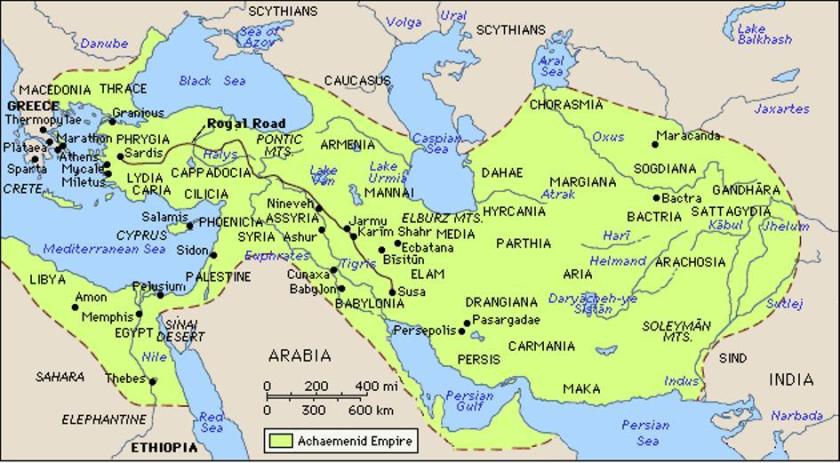
A century before the age of classical Greece King Darius I, third King of the Persian Achaemenid Empire, ruled over an area stretching from North Africa to the Indian sub-continent, from Kazakhstan to the Arabian Peninsula.
Achaemenid Empire
Several Anatolian coastal polities rebelled in 499BC, with support and encouragement from the mainland city states of Athens and Eritrea. This “Ionian Revolt” lasted six years. While unsuccessful, the Greeks had exposed themselves to the wrath of Darius. Herodotus records that, every night before dinner, Darius required one of his servants three times, to repeat: “Master, remember the Athenians“.
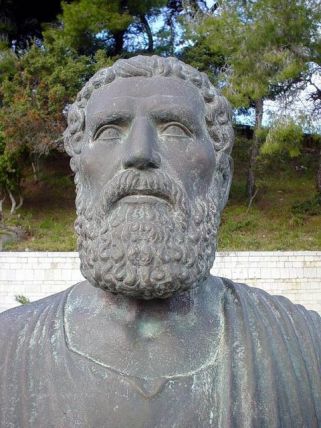
Persian King Darius I
The Persian Shahanshah (‘King of Kings’) sent emissaries to the Greek city states, demanding gifts of earth and water signifying Darius’ dominion over all the land and sea. Most capitulated, but Athens put Darius’ emissaries on trial and executed them. Sparta didn’t bother. They threw Darius’ ambassadors down a well. “There is your earth”, they called down. “There is your water”.
Athens and Sparta were now effectively at war with the Persian Empire. What happened over the next 20 years made us all who we are, today.
Darius sent an amphibious expedition to the Aegean, attacking Naxos and sacking Eritrea. A massive force of some 600 triremes commanded by the Persian General Datis and Darius’ own brother Artaphernes then sailed for Attica.
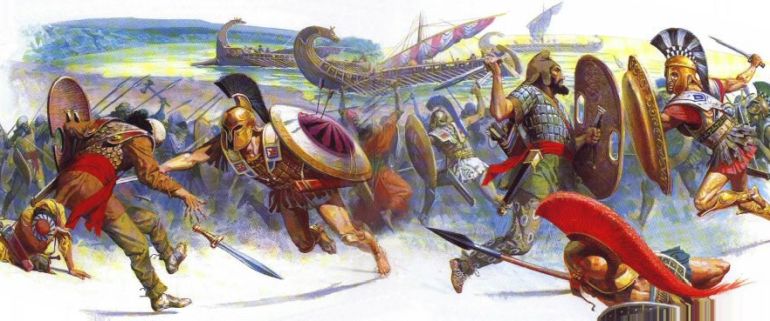
Nine thousand hoplites marched out of Athens to meet the threat joined by 1,000 heavily armored infantry, out of Plataea. The two sides met on the beach on a small bay near the town of Marathon, about 25 miles from Athens.
On September 12, 490BC, the order went down the Athenian line. “At them!”
Battle of Marathon
Easily outnumbering the Greeks two to one the Persian force depended on massive flights of arrows, to decimate the foe. Greek tactics centered around a tight formation some eight men deep called a “phalanx”.
With each man burdened by 70-pounds of bronze and leather armor the hoplites likely marched to within arrow range, about two hundred meters, and then closed the distance at a dead run.
The Persian shafts rained down and yet had little effect, against the heavy armor of the Greeks. The bone crushing collision of bronze against the light quilted jerkins of the Persians, their wicker shields and small swords & axes no match against the wooden hoplon and ash wood shafts of the hoplite spear. The Battle of Marathon was a humiliating defeat for Darius with 6,400 Persians lying dead in the sand. Athens lost 192 men that day, Plataea, 11.
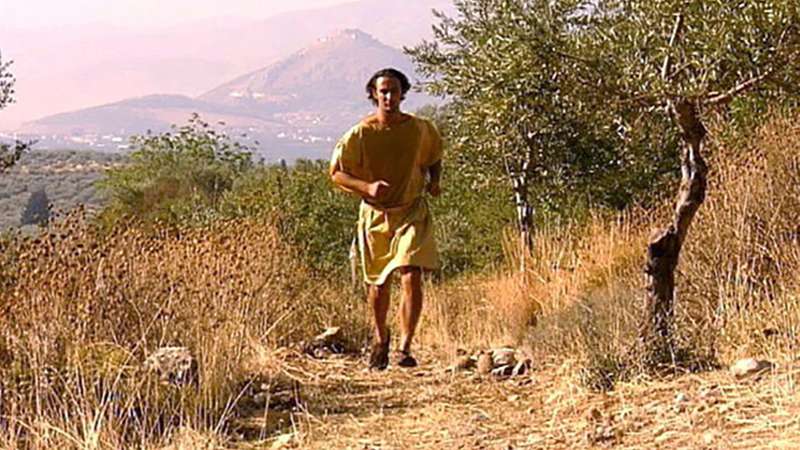
Fun fact: We all know the legend of Pheidippides, dropping his shield and running the 25 miles to Athens to announce the victory and dropping dead with the word, “Nenikēkamen!” (We have won!) So, why would a trained Hemerodrome (Day Runner) die from a mere 25 miles? Folks do that all the time, I’ve done it twice, myself. The man had just run 150 miles round-trip to Lacedaemon to request Spartan assistance for the battle, before that last run to Athens. So. You ran a Marathon? Ppppppth. Talk to me after you’ve run a 153-mile Spartathlon.
Undeterred, Datis sailed for Athens now undefended with her entire army away, at Marathon. The exhausted Greeks trudged 25 miles back to face down the Persian fleet now anchored at Phaleron. Humiliated but as yet undefeated the Persian triremes, turned for home.
Back in Asia Minor the King of Kings spent three years preparing another invasion. One he would lead himself, and not Datis. It wasn’t meant to be. Darius had an Egyptian revolt to deal with first and died, in 486BC. Ten years after Marathon it was Darius’ son Xerxes who returned, to finish what his father had started.
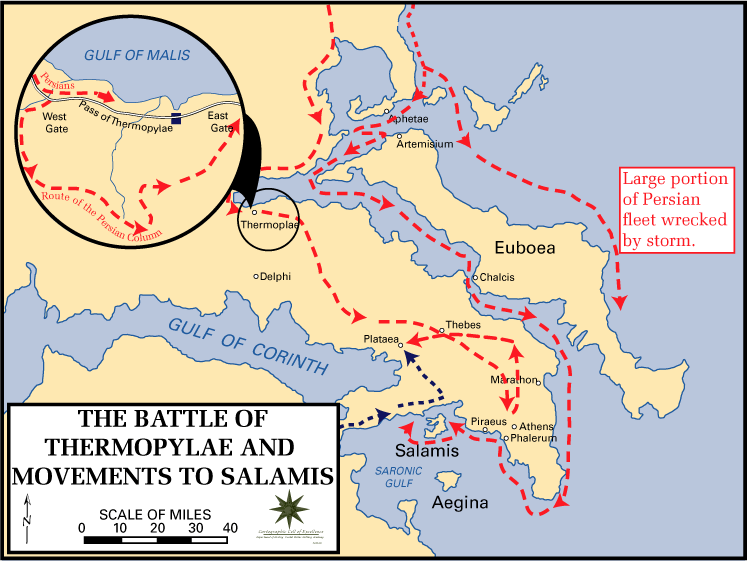
In 480BC, news of a massive Persian army on the move reached Lacedaemonia, principal region of the Spartan state. Several Greek city states were technically at war with one another in 480BC but that was dropped, as preparations were made for a two-pronged defense. An allied Greek navy would meet the Persian triremes at the straits of Artemisium while an army of Hoplites, Greek heavy infantry, would meet the Persian army at the narrow pass known as the “Hot Gates”.
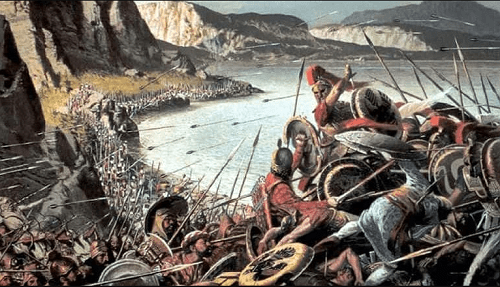
The story is familiar. The last stand at Thermopylae. The famed 300 led by Leonidas blocking the narrow pass at the head of an allied army of some 7,000 hoplites, It was a puny force compared with the 100,000 strong, commanded by Xerxes.
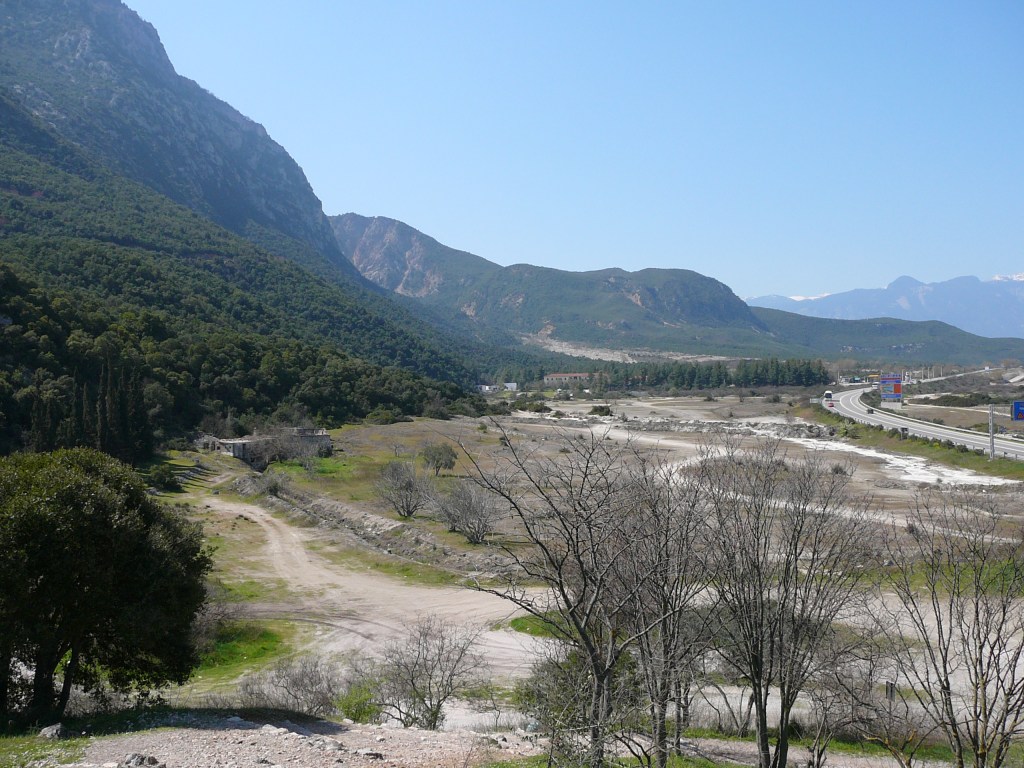
Thermopylae
The standoff lasted for three days until a traitor arose from among the Greeks, Ephialtes of Trachis, who led the Persians through a narrow path to come around behind the Greek line.
Knowing himself betrayed Leonidas dismissed most of his soldiers, knowing they would be needed, for the battle yet to come. 300 Spartans, 700 Thespian allies and an unreliable contingent of 400 Thebans now faced the Persian hordes, in front and to the rear. True to form, the Theban band defected to the Persian side, at the earliest opportunity.
The water has receded now from the ancient pass, at Thermopylae
Simonides’ famous encomium to the dead was inscribed on a commemorative stone at Thermopylae, atop a hill on which the Greeks made their final stand. The original stone is gone now, but the epitaph was engraved on a new stone in 1955 and remains, to this day: “Go tell the Spartans, stranger passing by, that here, obedient to Spartan law, we lie.”
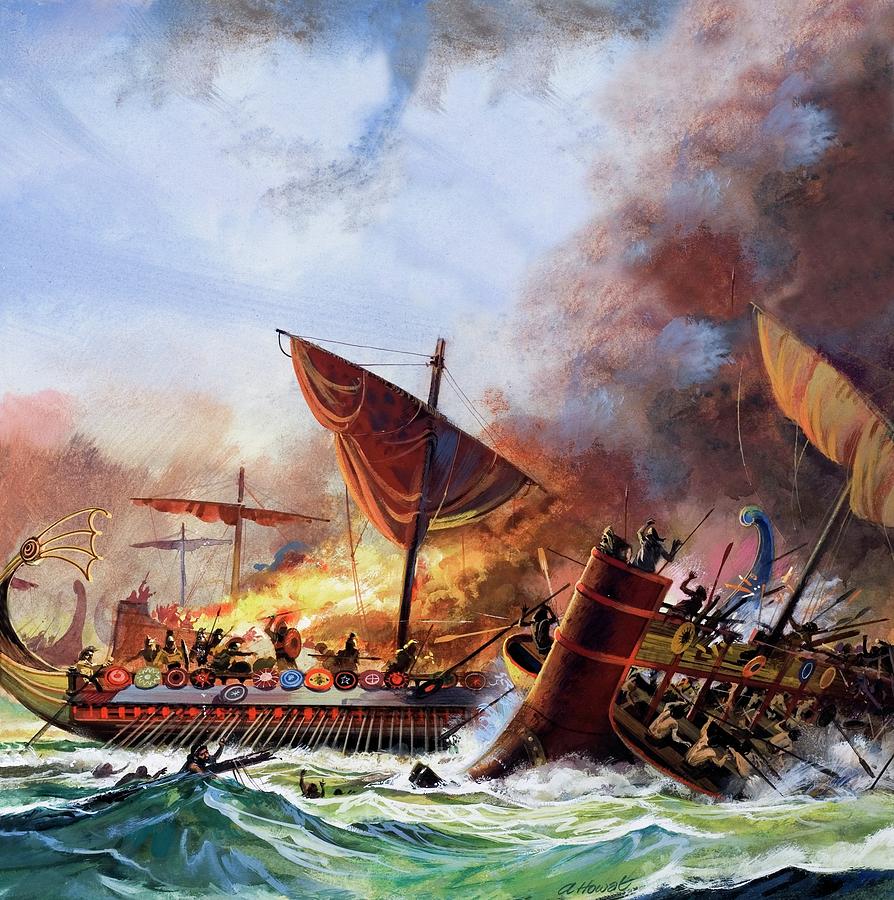
As the battle unfolded at Thermopylae the vastly superior Persian fleet met that of the Greek allies, at a place called Artemisium.
The Greek triremes here hopelessly outnumbered with 271 ships manned by 4,065 marines rowed by 46,070 oarsman. The Persian fleet numbered 1,207 much larger vessels with 36,210 marines rowed by 205,190 oarsman. Even so, Artemisium was fought to a meaningless stalemate at a cost of 100 Greek ships and four times that, lost to Xerxes. The Greeks could scarcely afford such losses and retreated to a narrow strait between the mainland and the island of Salamis.
The battered Greek navy was as a cat up a tree while Persians on land went on to conquer Phocis, Boeotia, Attica, and Euboea. Using the cramped straits to his best advantage the General/Statesmen Themistocles persuaded the battered Greeks, to give battle. The vast Persian navy was of no advantage in the crowded straits of Salamis. It was a brilliant Greek victory with the loss of forty ships with Persian losses numbering 200 to 300. Xerxes himself retreated to Asia leaving General Mardonius to finish the Greeks, the following year.
The culminating battle happened on or about August 27-28, 479BC. It was a massive battle for antiquity, more like a Waterloo or a Gettysburg fought out on the slopes of Mount Mycale and the plains near the small town of Plataea.
The Battle of Plataea was a massive victory for the Greeks in this, the last land battle of the second Persian invasion of the Peloponnese. Minor skirmishes would continue for another 30 years but now began a flourishing of art, architecture and philosophy known as the Golden Age, of classical Greece. The future of western secular culture, was now assured.
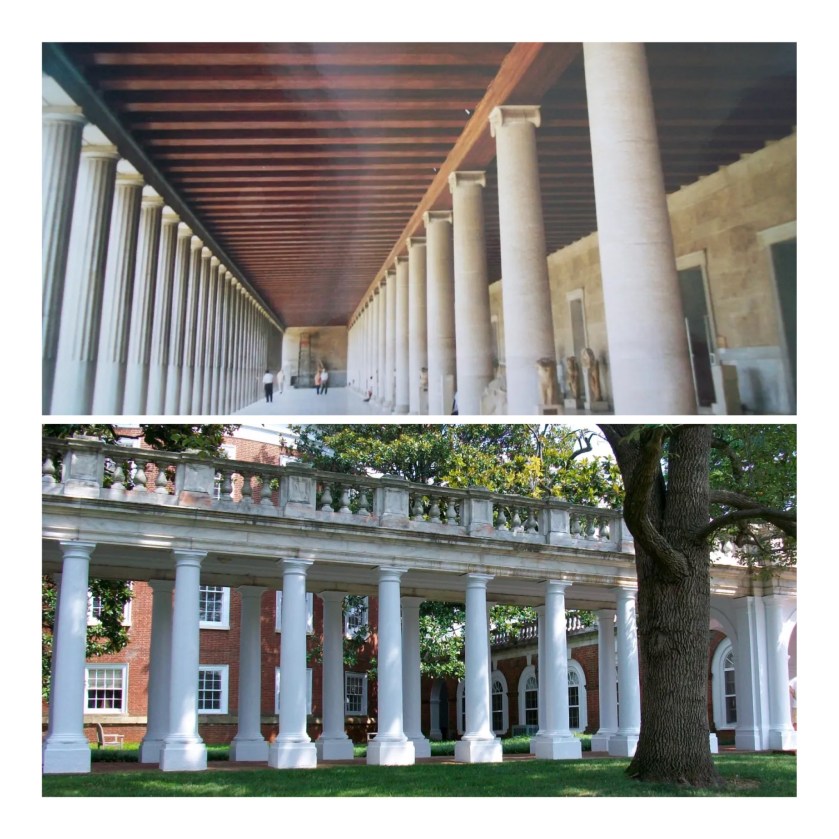
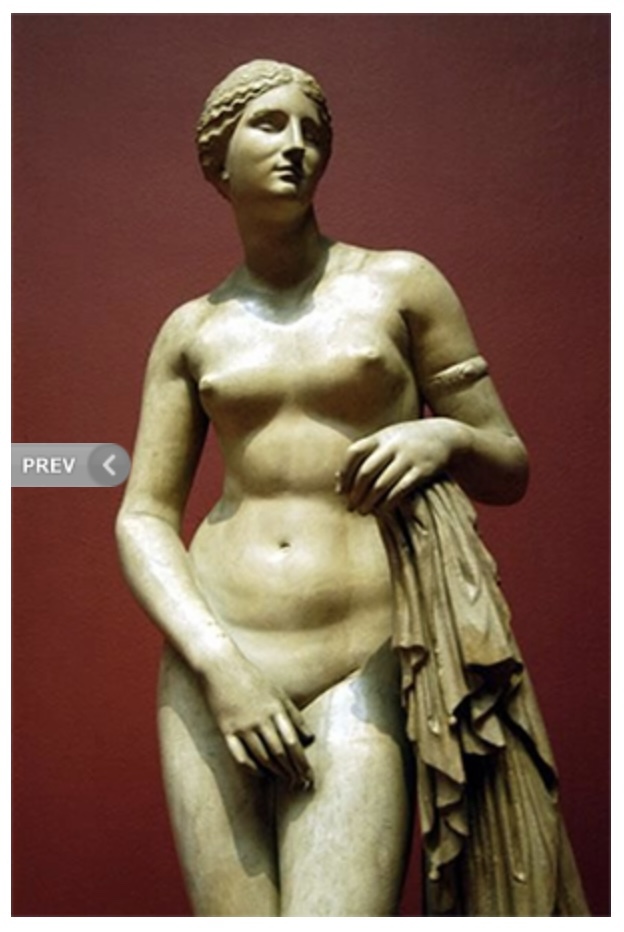
Doubt me? Consider the idea that the common man has a say in important matters affecting his surroundings. Even the word democracy itself, comes from the Greek words demos meaning people, and kratia meaning power or rule. The student of Art and architecture need look no further than the Parthenon’s resemblance to any number of public buildings in cities from North America to western Europe. To look upon the sculpture of the goddess Aphrodite of Knidos is to see the human form itself and not the stiff, stylized artwork of the ancients. Draconian laws? Granted ancient Greek justice was harsh but the very notion that we’re all equal before the law, of written codes not subject to the whim of an aristocracy…thank the Athenian legislator Draco, for that one.
Left to right: 1. Ruins of the ancient Greek Parthenon and the former home, of the Irish Parliament. 2. The reconstructed Stoaa of Atalos and the neoclassical colonnade of the University of Virginia, designed by Thomas Jefferson. 3. Aphrodite of Knidos from the 1st century, BC
So…yeah. We’re now two and one-half millennia down the road and we still see who these people were, in our every-day lives.
“So the astronaut who became a hero, looked to this black woman in the still-segregated South at the time as one of the key parts of making sure his mission would be a success.”
In plasma physics, the Heliosphere is a vast cavity formed by the Sun, a “bubble” continuously “inflated” by plasma originating from that body known as “solar wind’ and separating our own solar system, from the vastness of interstellar space. The outermost reach of the Heliosphere comprises three major sections called the Termination Shock, the Heliosheath, and the Heliopause, so called because solar winds and interstellar winds meet to form, a zone of equilibrium.
Image converted using ifftoany
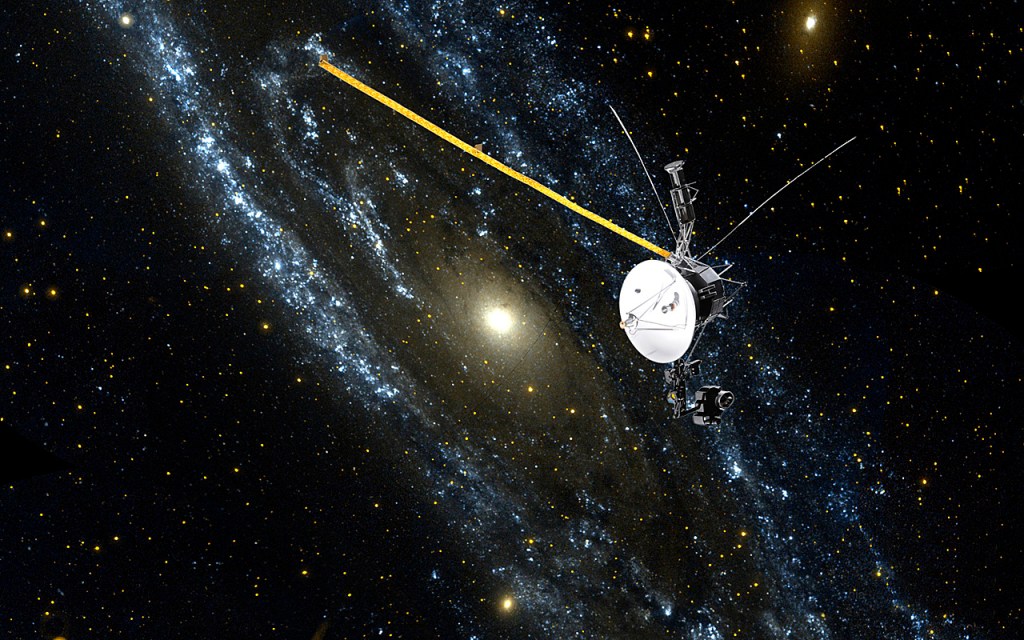
Only five man-made objects have traversed the heliosphere to penetrate interstellar space: Pioneer 10 and 11 launched in 1972-73, Voyager 1 and 2 launched in 1977 and New Horizons which left earth’s atmosphere, in 2006. Of those five only three remain active and continue to transmit data back to our little blue planet.
Voyager 2 Spacecraft
Spectacular images may be found on-line if you’re inclined to look them up. Images such as this jaw dropping shot of the ‘Blue Planet” Neptune taken two days before point of closest contact in August, 1989.
This picture of Neptune was taken by Voyager 2 less than five days before the probe’s closest approach of the planet on Aug. 25, 1989. The picture shows the “Great Dark Spot” – a storm in Neptune’s atmosphere – and the bright, light-blue smudge of clouds that accompanies the storm. Credit: NASA/JPL-Caltech
Or these images of the rings of Neptune taken on this day thirty two years ago before Voyager 2 left the last of the “gas giants”, behind.
Voyager 2 took these two images of the rings of Neptune on Aug. 26, 1989, just after the probe’s closest approach to the planet. Neptune’s two main rings are clearly visible; two fainter rings are visible with the help of long exposure times and backlighting from the Sun. Credit: NASA/JPL-Caltech
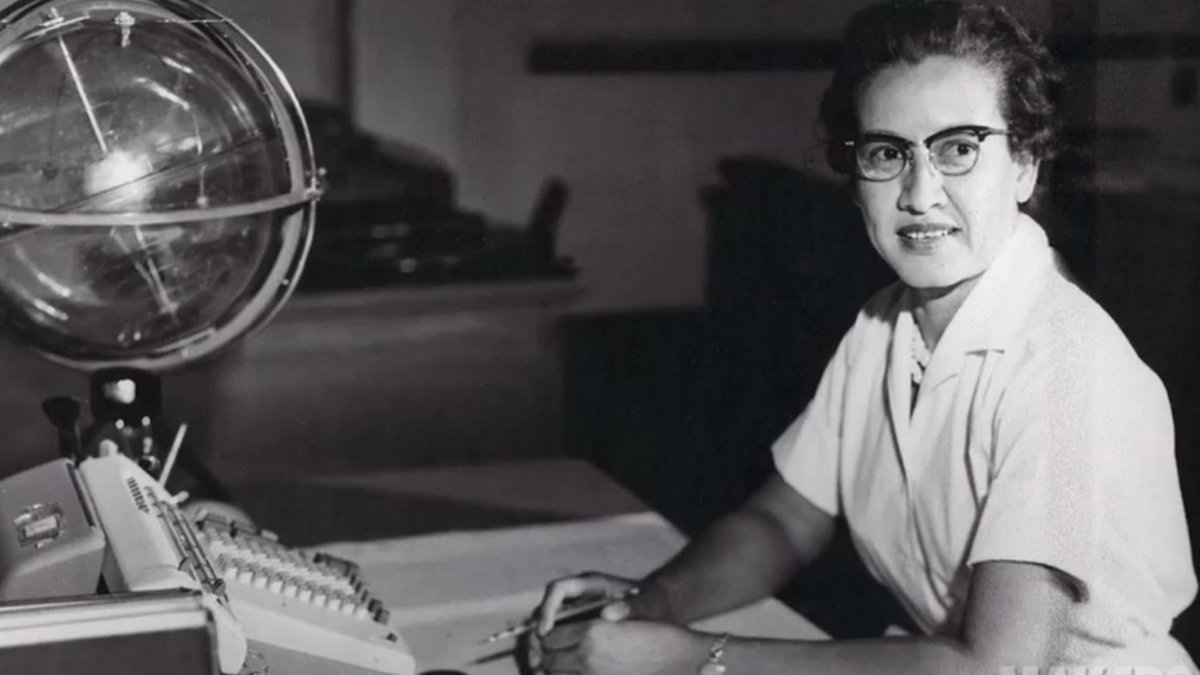
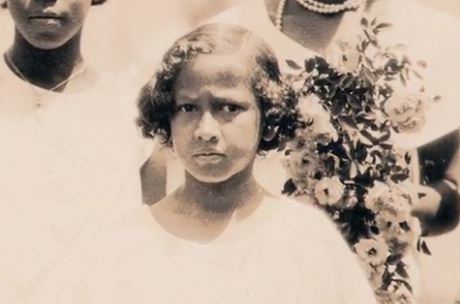
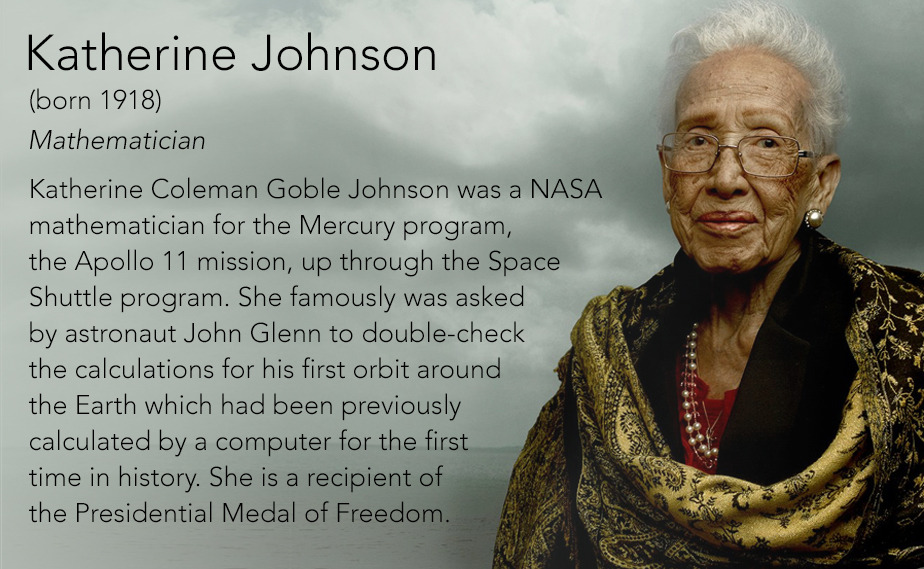
Few among us are equipped to understand the complexity of such flight. Precious few. One such was a little girl, an American of African ancestry born this day in 1918 in White Silver Springs, West Virginia. The youngest of four born to Joyletta and Joshua Coleman, Creola Katherine showed unusual mathematical skills from an early age.
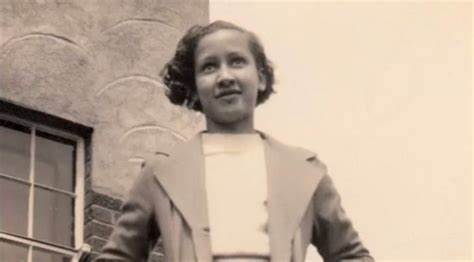
For black children, Greenbrier County West Virginia didn’t offer education past the eighth grade, in the 1920s. The Colemans arranged for their kids to attend high school two hours up the road in Institute, on the campus of West Virginia State College. Katherine took every math class offered by the school and graduated summa cum laude with degrees in mathematics and French, in 1937.
There were teaching jobs along the way at all-black schools and a marriage to Katherine’s first husband, James Goble. The couple would have three children together before James died of a brain tumor. Three years later she married James A. “Jim” Johnson.
With all that going on at home, Katherine found time to become one of only three black students to attend graduate school at West Virginia University and the only female, selected to integrate the school after the Supreme Court ruing Missouri ex rel. Gaines v. Canada.
Careers in research mathematics were few and far between for black women in 1952, but talent and hard work wins out where ignorance, fears to tread.
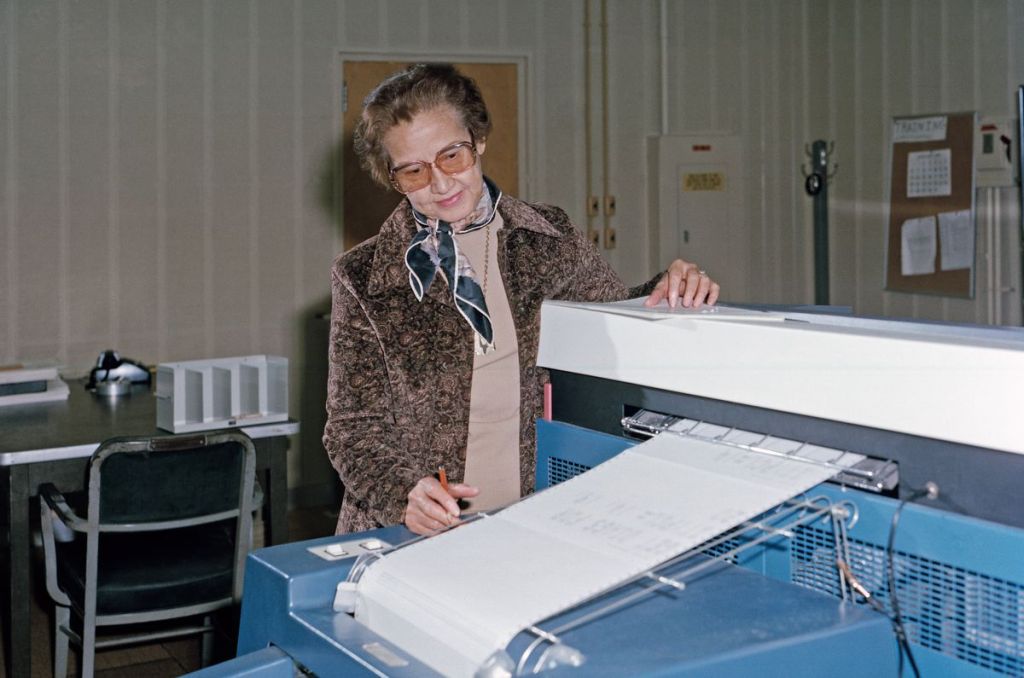
So it was Katherine Johnson joined the National Advisory Committee for Aeronautics (NACA), in 1952. Johnson worked in a pool of women who would read the data from aircraft black boxes and carry out a number of mathematical tasks. She referred to her co-workers as “computers who wore skirts”.
Flight research was a man’s world in those days but one day, Katherine and a colleague were asked to fill in, temporarily. Respect is not given it is earned, and Katherine’s knowledge of analytic geometry made quick work of that. Male bosses and colleagues alike were impressed with her skills. When her “temporary” assignment was over it no longer seemed all that important to send her, back to the pool.
Katherine would later explain that barriers of race and sex continued, but she could hold her own. Meetings were taken where decisions were made, where no women had been before. She’d simply tell them that she did the work and this was where she belonged, and that was the end of that.
Johnson worked as a human computer through most of the 1950s, calculating in-flight problems such as gust alleviation, in aircraft. Racial segregation was still in effect in those days according to state law and federal workplace segregation rules introduced under President Woodrow Wilson some forty years, earlier. The door where she worked was labeled “colored computers” but Johnson said she “didn’t feel the segregation at NASA, because everybody there was doing research. You had a mission and you worked on it, and it was important to you to do your job … and play bridge at lunch. I didn’t feel any segregation. I knew it was there, but I didn’t feel it.”
“We needed to be assertive as women in those days – assertive and aggressive – and the degree to which we had to be that way depended on where you were. I had to be. In the early days of NASA women were not allowed to put their names on the reports – no woman in my division had had her name on a report. I was working with Ted Skopinski and he wanted to leave and go to Houston … but Henry Pearson, our supervisor – he was not a fan of women – kept pushing him to finish the report we were working on. Finally, Ted told him, “Katherine should finish the report, she’s done most of the work anyway.” So Ted left Pearson with no choice; I finished the report and my name went on it, and that was the first time a woman in our division had her name on something”.
Katherine Johnson
Katherine worked as an aerospace technologist from 1958 until retirement. She calculated the trajectory for Alan Shepard’s May 1961 flight to become the first American, in space. She worked out the launch window for his 1961 Mercury mission and plotted navigational charts for backup in case of electronic failure. NASA was using electronic computers by the time of John Glenn’s first orbit around the earth but Glenn refused to fly until Katherine Johnson personally verified the computer’s calculations. Author Margot Lee Shetterly commented, “So the astronaut who became a hero, looked to this black woman in the still-segregated South at the time as one of the key parts of making sure his mission would be a success.”
Katherine Johnson retired in 1986 and lived to see six grandchildren and 11 “Greats”. Everyone should live to see their own great grandchild. Not surprisingly, Johnson encouraged hers to pursue careers in science and technology.
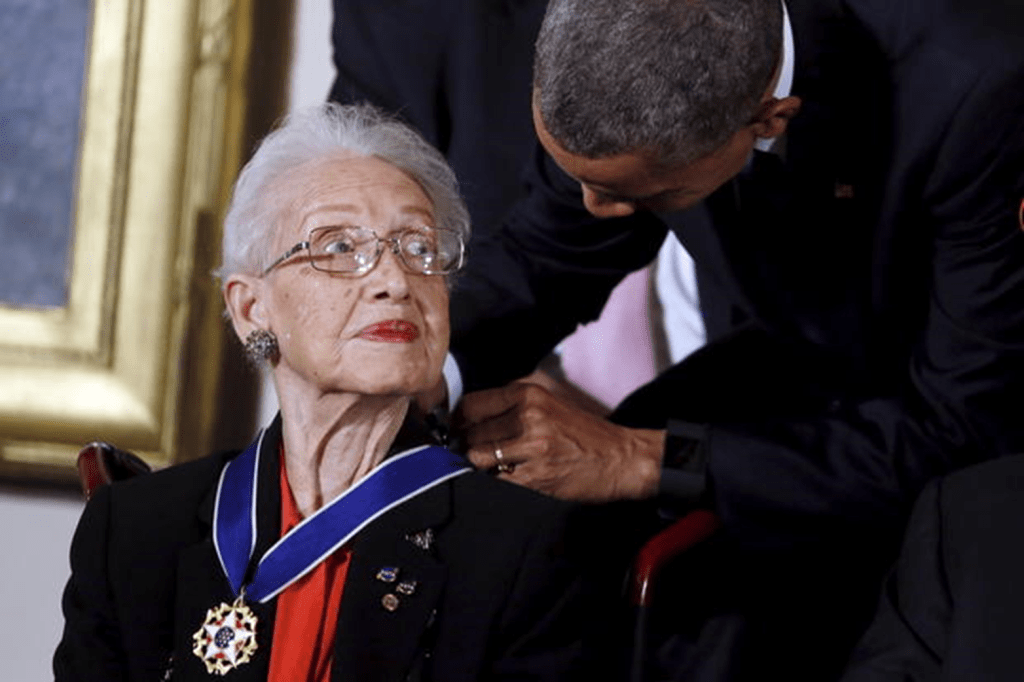
President Barack Obama personally awarded Johnson the medal of Freedom in 2015 for work from the Mercury program, to the Space Shuttle. NASA noted her “historical role as one of the first African-American women to work as a NASA scientist.”
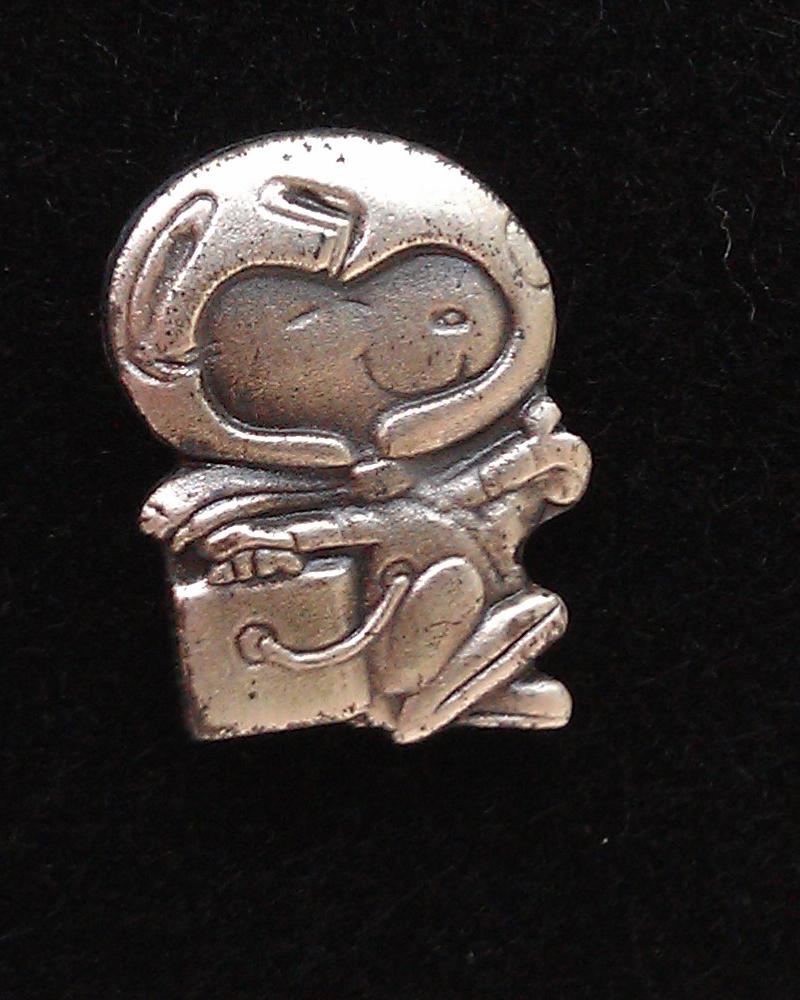
A delightful side dish for this story is the Silver Snoopy award NASA gives for outstanding achievement, “For professionalism, dedication and outstanding support that greatly enhanced space flight safety and mission success.”
Following the Mercury and Gemini projects, NASA was searching for a way to focus employees and contractors alike on their own personal contribution to mission success. They wanted it to be fun and interesting, like the Smokey the Bear character, of the United States Forest service. Al Chop of the Manned Spacecraft Center came up with the idea.
Peanuts creator Charles Shulz, a combat veteran of WW2 and avid supporter of the space program, loved the idea. Shulz drew the character to be cast in a silver pin and worn into space, by a member of the Astronaut corps. It is this astronaut who personally awards his or her Snoopy to the deserving recipient.
The award is literally once in a lifetime. Of all NASA personnel and that of many contractors fewer than one percent have ever receive the coveted Silver Snoopy.
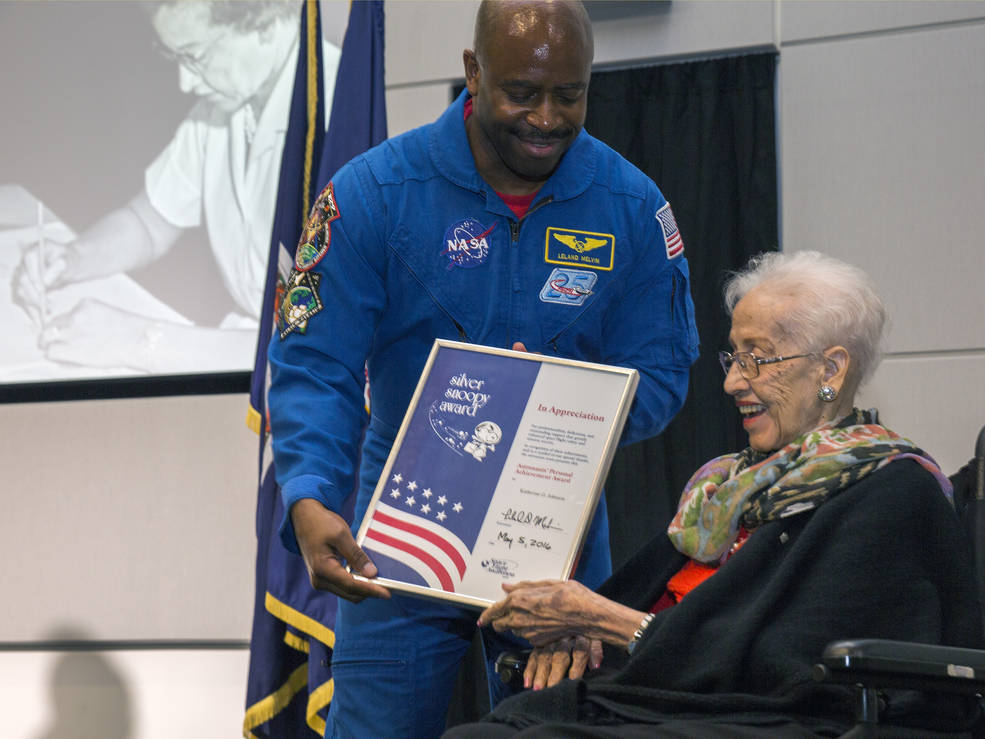
Astronaut and former NASA associate administrator for education Leland Melvin personally awarded Johnson her own Silver Snoopy at the naming ceremony in 2016, for the Katherine G. Johnson Computational Research Facility at NASA’s Langley Research Center in Hampton, Virginia.
Astronaut and former NASA associate administrator for education Leland Melvin presents Katherine Johnson with a Silver Snoopy award. / Credit: NASA, David C. Bowman
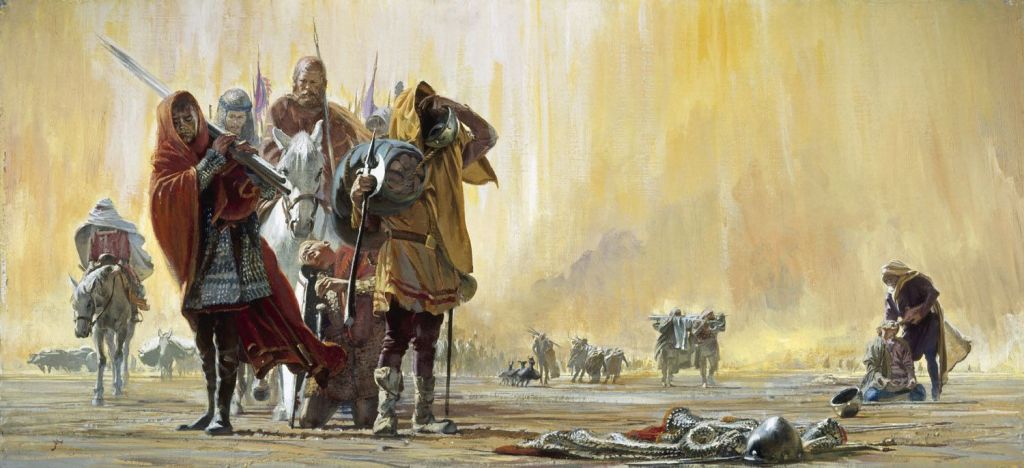
The first to respond was not the elite force of avenging knights envisioned by the pope but a “peasant’s crusade” led by the charismatic monk Peter the Hermit, and an impoverished knight known as Walter sans Avoir. Walter the penniless.
In the 100 years following the death of the Prophet Muhamad, Islamic conquests established the largest pre-modern empire up to that time stretching from China in the east to the Iberian Peninsula, in the west.
The Sasanid Empire in what is now Iran ceased to exist under the Muslim conquest as did much of Byzantium, seat of the Roman Empire in the east. Europe itself narrowly escaped subjugation when Charles “The Hammer” Martel defeated the army of Abdul Rahman al Qafiqi at Poitiers (Tours) in October, 732.
Estimates suggest the Umayyad Caliphate based in Damascus was over 5 million square miles, larger than any modern state with the solitary exception of the Russian Federation.
The Council of Clermont was a mixed synod comprised of laymen and clergy, of the Catholic Church. The meeting convened for ten days beginning November 18, 1095, to discuss the threat. No contemporary transcription survives from the speech delivered, by Pope Urban II. Those in attendance took the pontiff’s remarks, as a call to arms.
Urban was responding to an urgent request for assistance by Byzantine Emperor Alexios I Komnenus, against the Seljuk Turk. Now the pope urged all Christendom to lay down doctrinal difference between east and west and come to the aid of their fellow Christians, in Byzantium.
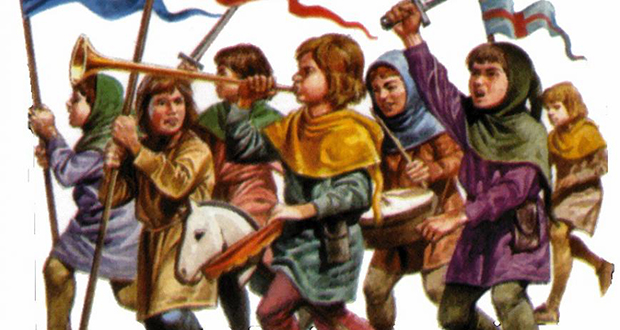
The first to respond was not the elite force of avenging knights envisioned by the pope but a “peasant’s crusade” led by the charismatic monk Peter the Hermit, and an impoverished knight known as Walter sans Avoir. Walter the penniless.
It was the first of five such ‘popular crusades’ over the following centuries and not to be confused with the major ‘Prince’s Crusades’ we’ve all heard about. The latter were well trained and well armed forces of knights and warrior monks who fought with the sanction of the Church and left us with names like the Knights Templar, Hospitaller and others.
Untrained, unsanctioned and poorly armed the ‘popular crusades’ were nothing of the sort. More like a pickup basketball game, compared with an NBA season.
Millenarianism was a powerful force at that time, a belief in the imminent End of Days spurred on by years of drought-caused crop failures and signs of divine blessing including meteor showers, aurorae and a lunar eclipse.
As 100,000 peasants including women and children took up farm implements and set out to reconquer the Holy Lands in this first and best documented, of the popular crusades.
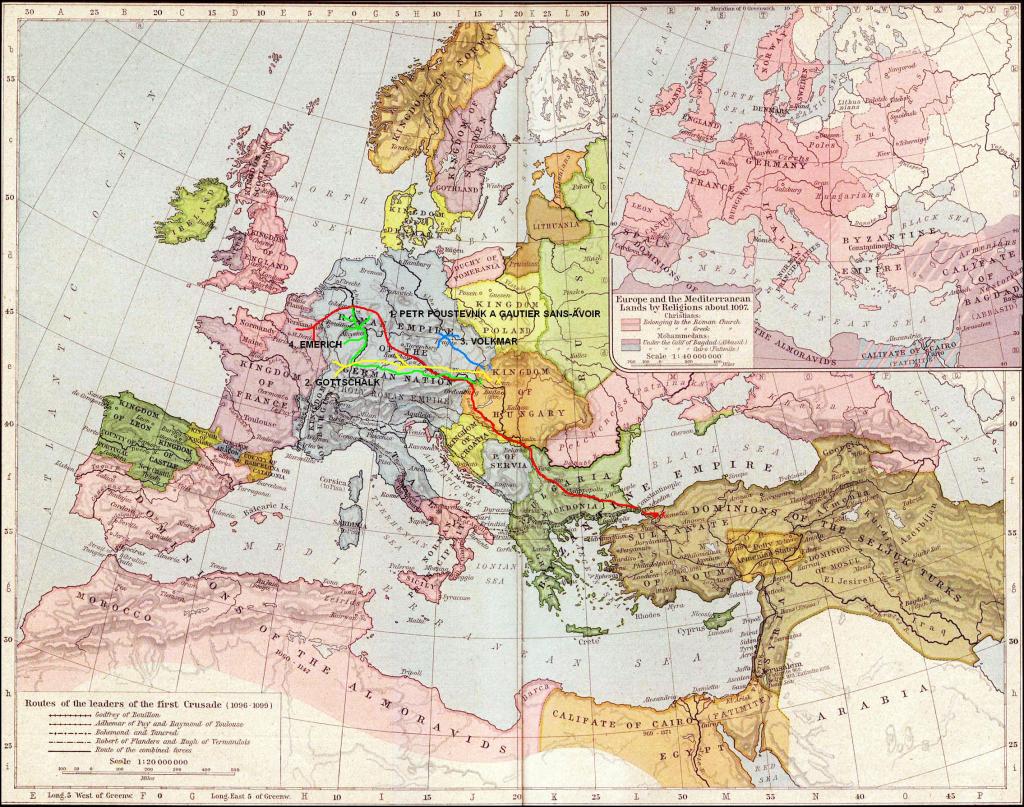
A map of the peasant’s crusade, of 1096
The abuse of European Jewry was nothing new in 1096, but now began a new phase to set the tone for the next thousand years and culminate, in the Nazi holocaust. One non-believer was as good as another it would seem, and the Saracen was so far away.
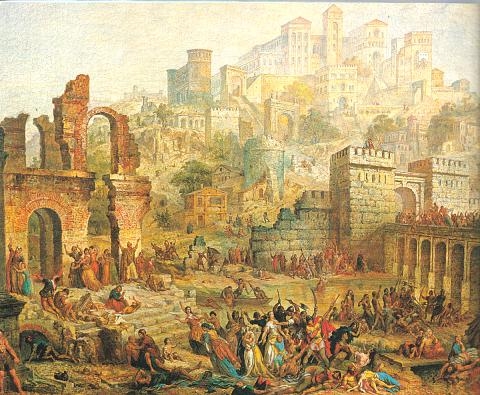
Massacre of the Jews of Metz during the First Crusade, by Auguste Migette
Anti-Jewish violence committed by this crowd throughout parts of modern France and Germany ranged from pillage, to the massacre of thousands. The population was so terrorized by the mere appearance of Peter the Hermit on his donkey they readily agreed to give him and his followers, most anything they asked for. In Regensburg, virtually the entire Jewish population was herded into the Danube and forced to undergo “baptism”.
Once in the Serbian city of Zemun, a dispute broke out over the price of a pair of shoes resulting in a riot and the murder, of 4,000 Hungarians. Seven days later at the city of Niš, the military commander promised food, and military escort. Peter agreed but a group of Germans got into an argument with some locals and set fire, to a mill. The entire garrison at Niš responded and routed the mob. 10,000 were killed by the time it was over, nearly a quarter of their entire number.
Once in Constantinople, Alexios had not the slightest idea what to do with this ragtag bunch and quickly ferried them across the Bosporus with instruction to wait for the main Crusader force, then on the way.
These people were having none of that.
An argument broke out between French and Italians on one side and the Germans, on the other. Each elected their own leader and the former set to pillaging the suburbs, all the way to the Turkish stronghold of Nicomedia.
Not to be outdone, 6,000 Germans marched on the fortress at Xerigordos where they quickly subdued the garrison and prepared to use the fort as a base, for further raids. Within days Xerigordos was itself surrounded by a Turkish force loyal to Kilij Arslan, the Seljuk Sultan of Rûm. With no provisions and no water the besieged crusaders took to drinking their own urine and the blood, of their animals. The siege was over in eight days. Some Crusaders converted to Islam, on the spot. The rest were put to the sword.
Back at the main camp, two Turkish spies spread rumors the Germans had taken Xerigordos and defeated, Nicaea. Eager to join in the plunder some 20,ooo set out leaving women and children, back at camp. The rowdy procession entered the narrow road three miles outside of camp, when the trap was sprung. The waiting Seljuk force unleashed a torrent of arrows at a disorganized and undisciplined rabble, quickly put to flight. Most were slaughtered. A few thousand took refuge in an abandoned castle itself, then taken under siege.
Sometime later, a Byzantine force under Constantine Katakalon sailed across the narrow channel and lifted the siege, returning the survivors to Constantinople. This small remnant was all that remained, of the Peasant’s Crusade.
Church sanctioned Crusades took and then lost the ancient city of Jerusalem over the next 100 years. A “Lion-hearted” King would fight to a draw and return home to protect his kingdom from an ambitious little brother leaving Al-Nasir Salah al-Din Yusuf ibn Ayyub in possession of the city. A man we know today, as Saladin.
A fourth crusade set out in 1202 to retake the holy city and inexplicably ended up sacking…Constantinople. Ten years later it was time for civilians to try, once again.
In the Spring of 1212 a French youth called Stephen of Cloyes began to attract, a following. At the same time a German boy, Nicholas of Cologne, was preaching the same message. It’s hard to know if the two ever heard of each other but the message, was the same. Talk would succeed where weapons had failed. They would discuss it all with the Muslims who would then convert, peaceably.
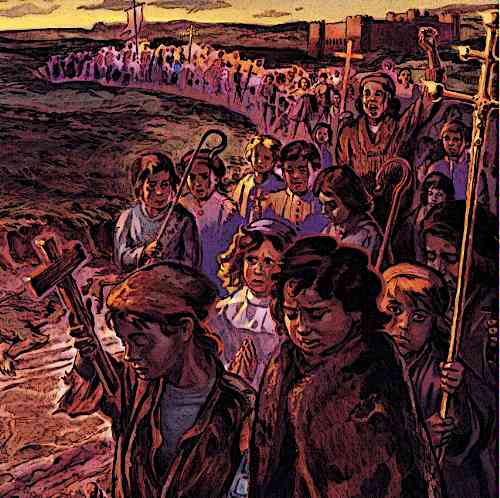
Together, Stephen and Nicholas attracted some 20,000 children with a few adolescents and some adults and set out across Germany, and France.
Many starved to death with no money and yet they came, a Children’s Crusade destined to succeed where professional Crusader armies, had failed.
That’s not the way things worked out.
On August 25, 1212, the rabble appeared outside of Genoa. Whether they expected some kindly Genoese ship’s captains to take them on board or the Red Seat to part as for Moses, remains unclear.
A hoard of young beggars with no training and no weapons were of no use, save to be sold, for slaves. So it went, according to most accounts. In some versions of this story the children made it to Rome where the Pope told them all, to go home. Some simply turned and trudged, back where they came from.
There would be three more popular crusades each following the same path, as the first. Violence against the Jews and squabble with the locals. None ever made it, outside European shores.
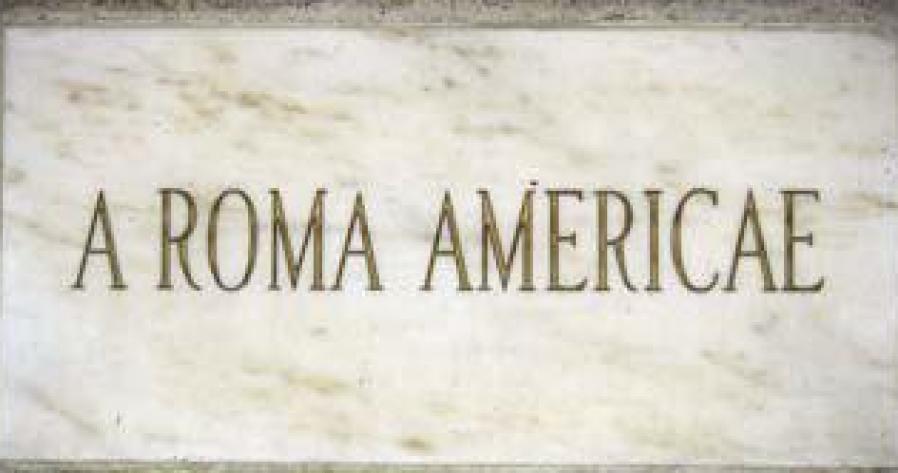
193 engraved stones arrived from around the world but none met with half the fuss of that brought forth from the ancient Roman temple of Concordia and engraved with the words, ROME TO AMERICA. The gift of Pope Pius IX. The Catholic haters were aghast.
With a second Catholic president in the White House, it may surprise some to learn. This nation once harbored considerable anti-Catholic bias. Candidate John F. Kennedy tackled the issue head-on, addressing a Houston meeting of 300 Protestant ministers in an effort to separate the “honestly fearful”, from genuine bigots.
The strategy worked. Today, Catholic-issues voters have more in common with evangelical voters, than what separates them. Americans have come a long way but it wasn’t always, thus.
The Popes of the early middle ages were heavily involved in secular affairs. Chosen by predecessors, popular acclaim, family connection or simony (the purchase of ecclesiastical office), many were less than pious men. At one time the papacy itself was as political, as any public office..
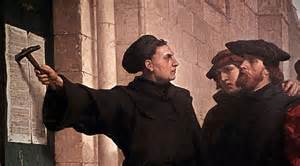
The Protestant Reformation began with a series of events in the 16th century, aimed at correcting what were seen as errors and excesses of the Catholic Church.
Proponents of the Reformation strongly opposed the clerical hierarchy and particularly, the papacy. The Church of England broke with Catholicism under Henry VIII but, even then, groups such as Puritans and Congregationalists saw much to dislike in Church of England doctrine, based as it was on Catholic teachings.
So it was some of the earliest emigrants to the New World, harbored deep anti-Catholic bias.
George Washington was a passionate believer in religious tolerance and the importance of Christian virtue, in civil society. As General, Washington banned anti-Catholic celebrations such as Guy Fawkes day. Sensible of the indispensable contributions to independence made by Catholic France and Spain, many abandoned such prejudice for a deep and personal dislike, for British King George III.
Even so, some ideas die hard.
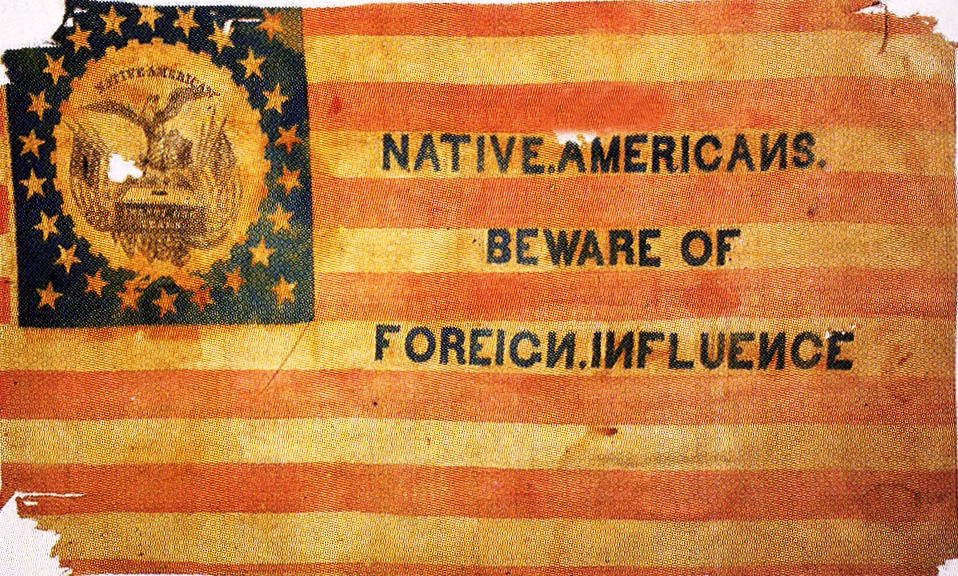
The Native American political party founded in 1844 had nothing to do with first nations. Originally begun as a secret society, the party was anti-Catholic, anti-Irish, anti-immigration, xenophobic and populist. The party held many views considered “progressive” in modern parlance, including opposition to slavery, support for an expansion of the rights of women, regulation of industry and a need for increased government spending. An early forerunner in the American temperance movement, the group’s strong anti-Catholic stance would later form the basis of the American Protective Association, and the Ku Klux Klan.
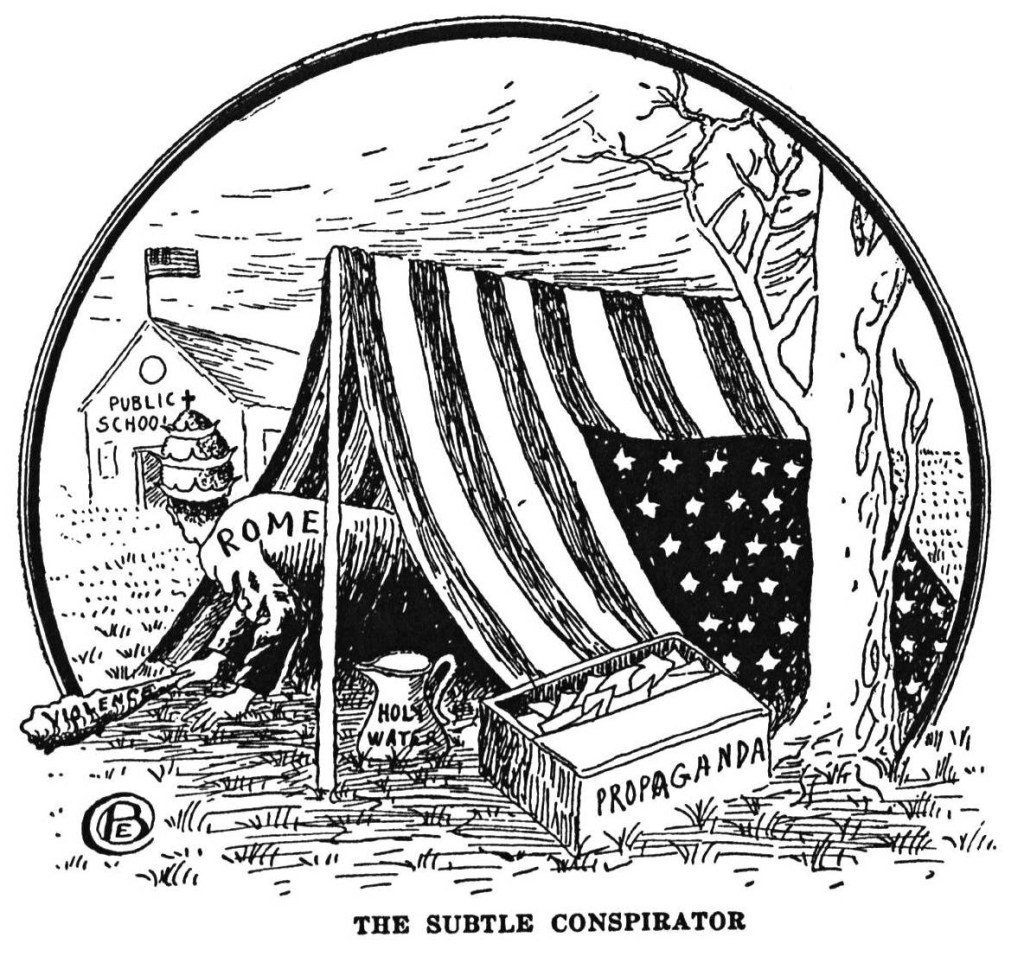
“The Subtle Conspirator,” a 1926 anti-Catholic political cartoon by former Ku Klux Klan preacher Branford Clarke in the newsletter “Klansmen: Guardians of Liberty.” (Public Domain)
Immigration soared during the first half of the 1850s, to levels five times more than the previous decade. Most were poor Catholic peasants and laborers from Ireland and Germany, spawning conspiracy theories that the Pope was personally selecting these people, in order to exert influence.
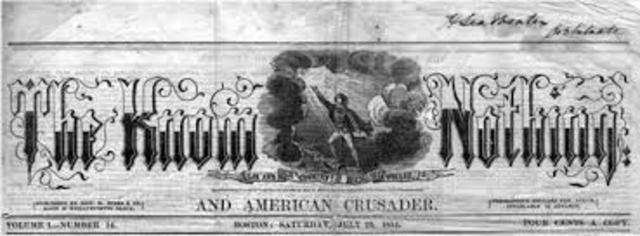
Adherents to the self-described “American” party would claim ignorance when asked for specifics, by outsiders. Opponents derided them as “Know Nothings”.
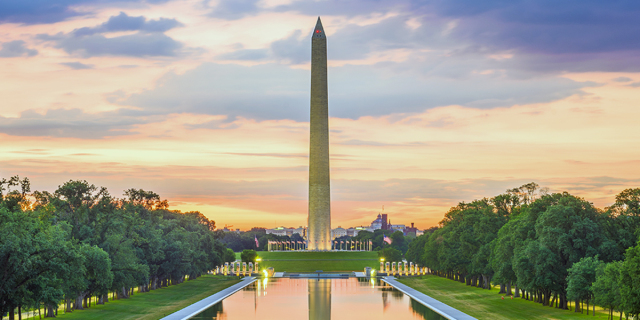
Pierre L’Enfant was a French engineer who served with the Continental army, during the Revolution. In 1791, President George Washington appointed L’Enfant to design a home for the federal government, on the banks of the Potomac. George Washington personally laid the cornerstone, of the new Capitol building.
L’Enfant envisioned a large equestrian statue of the President, but Congress did nothing about it. Private enterprise stepped up to do the job in 1833 with the formation of the Washington National Monument Society founded by Chief Justice John Marshall, Librarian of Congress George Watterston and former President, James Madison.
Fundraising began in 1835 with donations limited to $1 per person, per year.
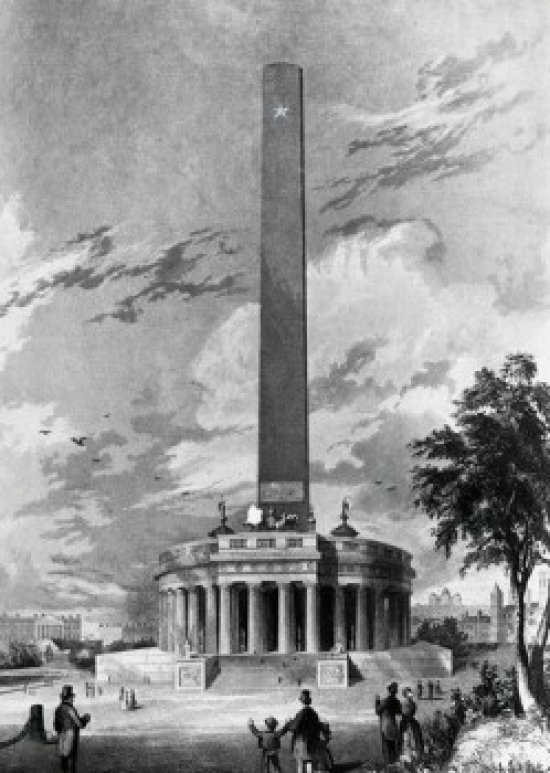
Architect Robert Mills’ plan was approved in 1845 for a 200-foot flat-topped obelisk, crowned with a statue of Washington in a chariot and surrounded by the 12-foot diameter columns of a “National Parthenon”, dedicated to heroes of the Revolution and signers of the Declaration of Independence.
The original vision of the Washington Monument looks quite different, from what we have today.
On July 4, 1848, the 24,500 pound cornerstone was laid for the now-familiar Washington Monument in the nation’s capital. Inside a carved niche was placed a zinc capsule containing mementoes of the day including copies of the founding documents, currency, newspaper clippings and a long list of donated items.
Know-Nothings briefly emerged around this time, as a major political party. Future President Abraham Lincoln denounced the lot of them on August 24, 1855 in a letter to his close friend, Joshua Speed:
“I am not a Know-Nothing. That is certain. How could I be? How can any one who abhors the oppression of negroes, be in favor of degrading classes of white people? Our progress in degeneracy appears to me to be pretty rapid. As a nation, we begin by declaring that “all men are created equal.” We now practically read it “all men are created equal, except negroes.” When the Know-Nothings get control, it will read “all men are created equal, except negroes, and foreigners, and catholics.” When it comes to this I should prefer emigrating to some country where they make no pretence of loving liberty-to Russia, for instance, where despotism can be taken pure, and without the base alloy of hypocracy”.
A. Lincoln
Peak year for the Know-Nothings came in 1856 with candidates elected to local office, and to the United States Congress. Meanwhile, fundraising continued for President Washington’s monument. It wasn’t just money, either. Engraved tablets came in from around the world, from individuals, Sunday school classes and Indian tribes. Organizations from the Masons to the Sons of Temperance, military units and the Odd Fellows all sent stones. At the 220-foot landing there’s a tablet from a group of Chinese Christians, all the way from Ningo, Chekiang Province, China.
193 engraved stones arrived from around the world but none met with half the fuss of that brought forth from the ancient Roman temple of Concordia and engraved with the words, ROME TO AMERICA. The gift of Pope Pius IX was announced on February 7, 1852 in the Daily National Intelligencer of Washington, D.C., page 4.
The Catholic haters were aghast.
Speeches were made and petitions went around. “This gift of a despot“, read one New Jersey petition, “if placed within those walls, can never be looked upon by true Americans but with feelings of mortification and disgust.”
The Pope’s stone arrived in early 1854: 3-feet in length, 18-inches in height and 10-inches thick. It was placed in a shed on monument grounds called a lapidarium, there joining several other gift stones awaiting installation.
In a stunt familiar to anyone ever “fact checked’ on Facebook, Know-Nothings now changed tactics, demanding a “protest stone” be installed directly above the Pope’s tablet, and inscribed with some suitable refutation.
Then came the night of March 5-6. The heist. With night watchman George Hilton inside his guard shack, a group of men tied ropes around the hut, trapping Hilton inside. Newspapers were posted to cover the windows nearest the obelisk as the pope’s stone was wrestled, onto a hand cart.
The Potomac river was much closer in those days, before the land reclamation of the 1870s and ’80s. The stone was rowed out to the middle and splashed, to the muddy bottom.
The Monument Society put up a reward of $500, equivalent to ten times that amount today, but the bad guys were never caught. Hilton was suspected to be in cahoots with the thieves and fired, as he couldn’t explain why he couldn’t have opened the window or why that double barreled shotgun, remained by his side.
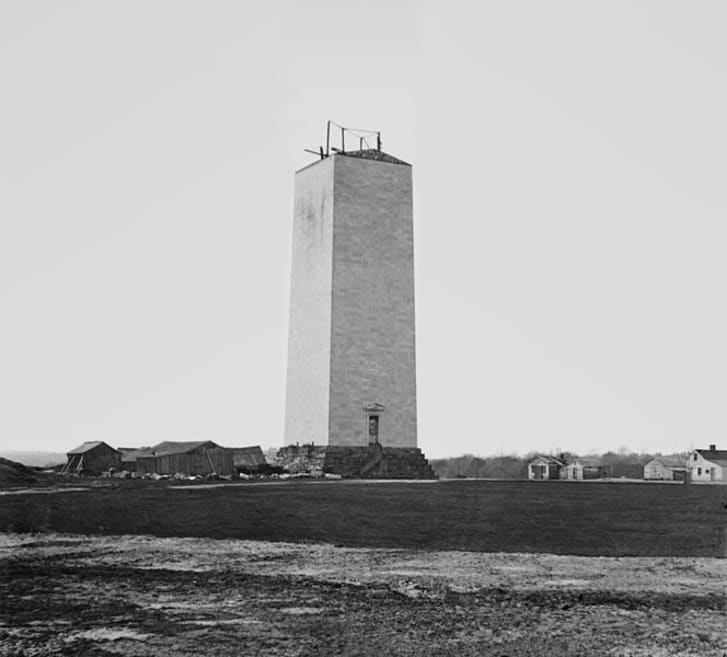
Know-Nothings not only destroyed the pope’s stone but now, members insinuated themselves into the Monument Society, itself. Contributions all but dried up particularly from Catholic donors and work ground to a halt, in 1858. For twenty years the thing sat. Incomplete. Mark Twain called the 153-foot stump of Washington’s monument, “An Ungainly Old chimney”.
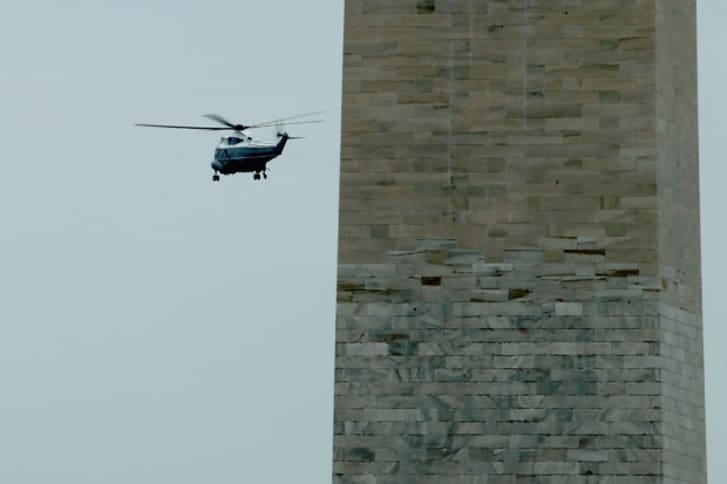
Work resumed in 1878 but now stone was cut, from a different quarry. If you look closely you can see to this day the slight variation, in color.
It’s tough to get anything out of a bunch of guys, called Know-Nothings. Not until 1883 when an anonymous saloon keeper, probably one of the thieves, talked to the Washington Post. “If the dredges at work in the Potomac strike the right spot, they will fish up something that will create a sensation.” That’s just what happened in 1892 when a diver found a beautifully polished slab of pink marble on the muddy bottom engraved with the words, “Rome to America”. A few souvenir chunks were crudely chopped, out of the side.
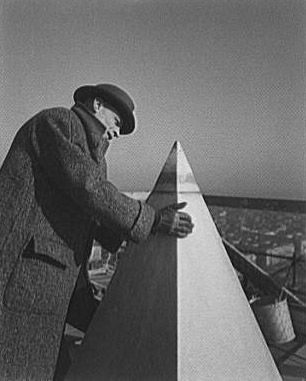
Inscribed on the aluminum cap placed at the apex of the largest obelisk in the world are inscribed the words “Laus Deo”. Latin for “Praise be to God.”
Only two days later the stone was stolen once again, from a construction shack.
Nearly 100 years later a priest from the Other Washington – Washington state, commissioned a second stone.
In 1982, Pope John Paul II sent a white marble tablet bearing the Latin inscription, “A ROMA AMERICAE” – “Rome to America.”
That first stone, was never found. The second was installed at the 340-foot level where it remains, to this day.
The Free Republic of Franklin went on for four years despite them all with it’s own Indian treaties, its own constitution and its own system of barter, taking the place of currency.
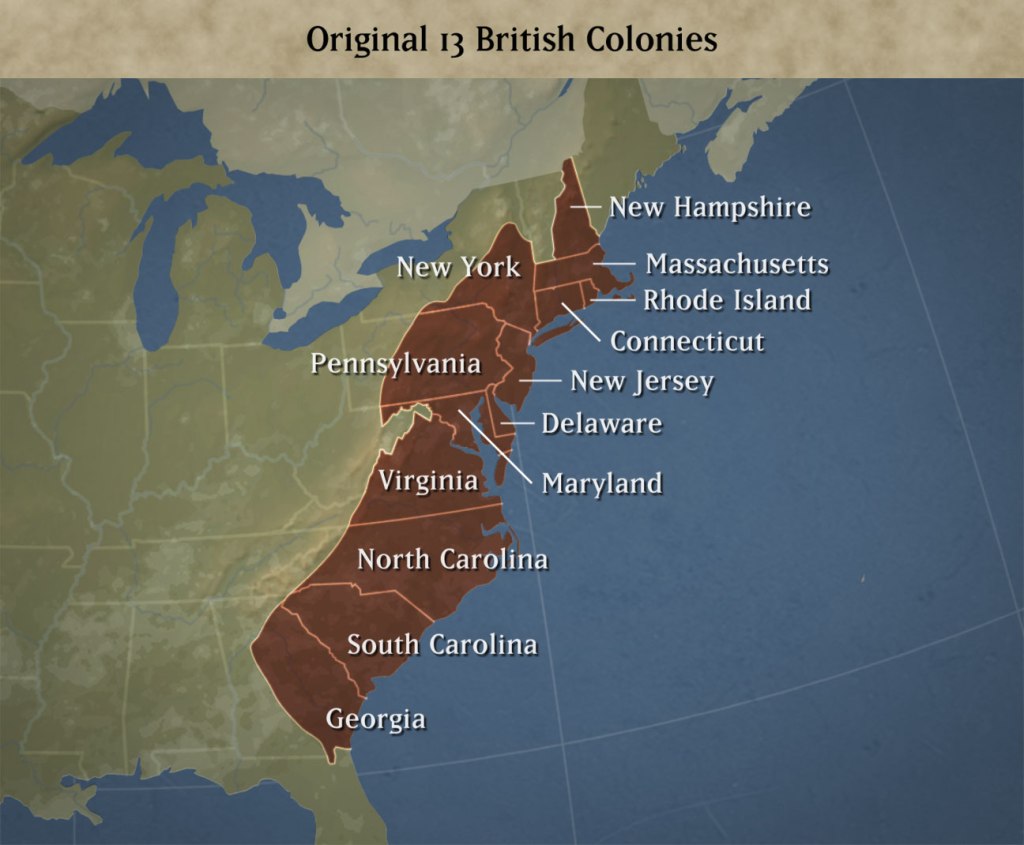
The American Revolution came to an end with the Treaty of Paris of September 3, 1783. Thirteen former colonies were now independent states, an experiment in self-government encompassing a relative sliver along the eastern shore of a nation one day destined to measure some 2,680 miles across and 1,582 miles from north, to south.
By no means was it foreordained that the United States, would have a Pacific coastline.
In the 18th century, factions developed between established coastal cities and farms and the western pioneers eking out a living, along the frontier. Many so-called eastern “elites” considered these to be outside of the fledgling nation and, for them, that was alright. Frontier communities had a choice between forming jurisdictions within existing states, creating new states or going off on their own to build entirely new countries.
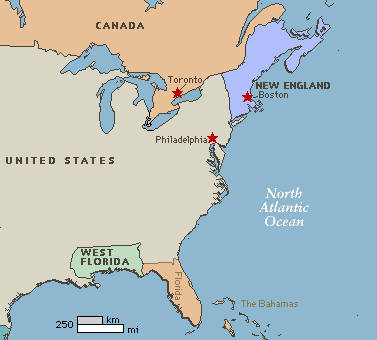
Most of us are well aware that Texas was once such an independent Republic. Many know the same of the Republic of West Florida, the Original Lone Star Republic. (Sorry, Texas). But who knew the modern US contains no fewer than Ten formerly independent states: The Republic of Vermont (1777-1791), Kingdom of Hawaii (1795-1898), Republic of West Florida (1810), Republic of Texas (1836-1846), Republic of Rio Grande (1840), Provisional Government of Oregon (1843-1849), Republic of California (1846), State of Deseret (1849-1850), Republic of Sonora (1853-1854) and the Republic of Baja California (1853-1854).
Republic of West Florida
The war had yet to be formally ended when the state of North Carolina ceded the four western counties between the Alleghenies, and the Mississippi River. Representatives from Washington, Sullivan, Spencer (modern-day Hawkins) and Greene counties declared independence from North Carolina on August 23, 1784.
Congress had yet to act on the matter and North Carolina rescinded its cession nearly a year later and began to organize an administration, within the counties. That the federal government was considering selling the region to France or Spain at this time to settle war debt had nothing to do with any of it, I’m sure.
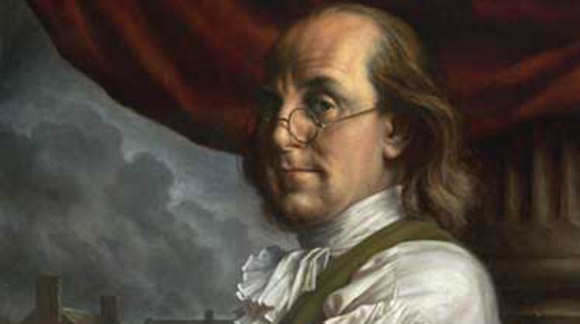
The following May, the counties petitioned for statehood. They called it “Frankland” at first but that was changed to Franklin, to gain the support of Benjamin Franklin and his allies.
The Republic won over a majority of the congress but never did achieve the 2/3rds required to make statehood, a reality.
The Free Republic of Franklin went on for four years despite them all with it’s own Indian treaties, its own constitution and its own system of barter, taking the place of currency.
North Carolina ran a parallel government the whole time, within the state of Franklin. This did little to strengthen an already weak economy when Governor John Sevier petitioned the Spanish, for foreign aid. Horrified at the idea of a Spanish client state at its border North Carolina, arrested the Governor.
Cherokee, Chickamauga and Chickasaw war bands piled on attacking settlements, within the borders of Franklin. It was all over by 1788 as Franklin rejoined North Carolina to gain the protection, of the state militia.
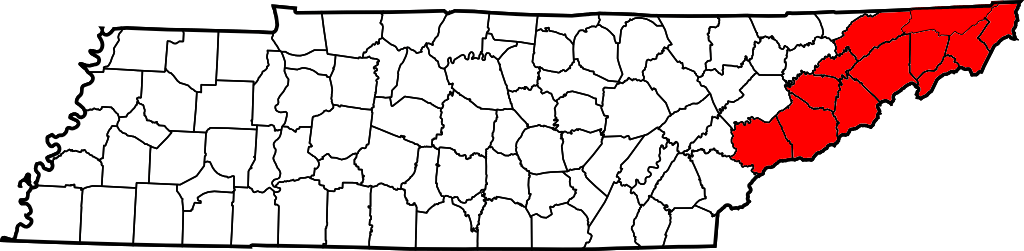
Today, the formerly Free Republic of Franklin makes up the easternmost 12 counties of Tennessee admitted as the 16th state on June 1, 1796.
Of the ten independent Republics listed above plus four others who tried and failed, Franklin remains unique in that the state resulted from both a cession, and secession.
Tennessee went on to earn the nickname “The Volunteer State” during the War of 1812 and cement the label during the Mexican-American war when the secretary of War requested 2,800 volunteers and got, 30,000. Tennessee was the last of the southern states to secede from the union and the first to rejoin, having provided more Confederate soldiers of any state save Virginia and more units of soldiers for the Union army, than any of the Confederate states.
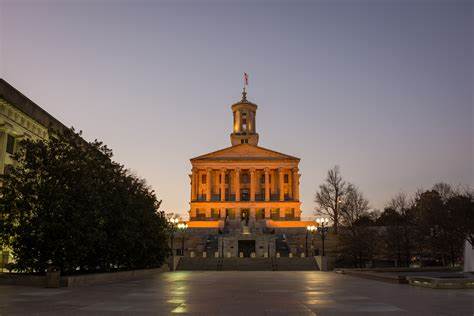
Fun Fact: William Strickland, the engineer and architect who built the Tennessee State Capitol in Nashville, died in 1854 before the building’s completion. At Strickland’s request he was entombed within the walls of the structure and remains there, still.
George Washington, the only politically Independent President in our nation’s history warned against factions dividing Americans into “distinct peoples”. He had seen how parties had driven England to civil war with the Jacobite uprising, of 1745-’46. He well understood the murderous tendencies unleashed by the politics, of the French Revolution. He detested the endless sniping of factions within his own government and the “infamous scribblers” of the newspapers, of his day.
Washington warned us all against political parties in his farewell address, parties already well formed and tearing, at the nation’s fabric:
“…They serve to organize faction, to give it an artificial and extraordinary force; to put, in the place of the delegated will of the nation the will of a party, often a small but artful and enterprising minority of the community; and, according to the alternate triumphs of different parties, to make the public administration the mirror of the ill-concerted and incongruous projects of faction…”
George Washington, farewell address
I wonder what the Father of the Country would say about our politics, today.






















 Estimates suggest the Umayyad Caliphate based in Damascus was over 5 million square miles, larger than any modern state with the solitary exception of the Russian Federation.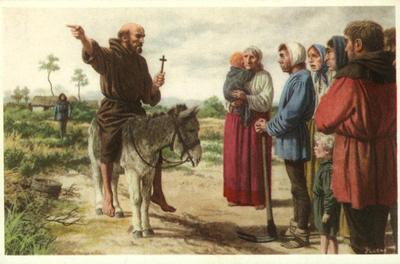




 Historical Easter Eggs - Today in History
You must be logged in to post a comment.