

By the 1940s, the Kikuyu people of Kenya had been under British Colonial rule for nearly fifty years. At this time, there were primarily three political blocs among Kenyan Africans. First, the conservatives, who tended to support the status quo. Next were moderate nationalists, those who sought an orderly return to indigenous rule over African soil. Last were the radical nationalists. These wanted African rule, Right Now, no matter the cost.
The first attempt to form a country-wide political party began in 1944, with the formation of the KASU, the Kenya Africa Study Union. KASU was anti-colonial from the beginning, becoming increasingly radicalized through the WW2 period and into the late 1940s.
 The violent uprising of the early 50s was called “Mau Mau”, an anagram of Uma Uma, roughly translating as “Get out, Get out”. The first “blow against the Colonial regime” was struck on October 3, 1952, when a white woman was stabbed to death near her home in Thika, in the Kiambu County of Kenya.
Senior Chief Waruhiu wa Kungu was shot to death in his car less than a week later. Governor Evelyn Baring declared a state of emergency on October 20, arresting hundreds of suspected leaders of the uprising.
There was little reason and less restraint in the events that followed. Thousands of black Africans were hacked, burned or shot to death by Mau Mau militants, many of them mutilated and horribly tortured before death. Militants attacked the settlement of Lari on the night of March 25-26, herding Kikiyu men, women and children into huts before setting them on fire. Anyone who tried to escape was hacked with machetes, and thrown back into the flames.

The scene played out on dozens of occasions. Massacres were met with retaliatory raids by African security forces, at least partially overseen by British commanders.
There was even biological warfare, when Mau Mau radicals used the poisonous milk of the African milk bush, to kill cattle.
Displeased with the government’s response to the uprising, settler groups formed their own “Kenya Police Reserve’s Special Branch”. God help the unlucky militant who fell into their hands.
Black Africans were victims of most of the violence, their deaths numbering in the thousands. Combined with those who “disappeared”, their number may have run into the tens of thousands, by the time the violence ended in 1956. 62 Asians, predominantly Indians, were also killed, along with 58 whites.
Barack Obama wrote in his memoir “Dreams from my Father”, that his grandfather Hussein Onyango Obama was captured and tortured by British authorities during the Mau Mau uprising. The now-former President wrote that his father was “selected by Kenyan leaders and American sponsors to attend a university in the United States, joining the first large wave of Africans to be sent forth to master Western technology and bring it back to forge a new, modern Africa“.
The elder Obama’s real history seems to differ from the public version, though the American media is remarkably quiet on the subject. The UK Daily Mail reports, under the headline “Obama’s grandfather tortured by the British? A fantasy (like most of the President’s own memoir)“, that Onyango was inclined to create “[H]istory to conform with the image he wished for himself…Following on from his forebears on both sides”.

If you’re interested in a little pop culture sauce for this turkey, the Mau Mau uprising inspired a number of similar rebellions throughout the region. One of them occurred in the East African coastal city of Zanzibar.
Thousands of Arabs and Indians were murdered in the 1964 Zanzibar rebellion, while thousands more fled for their lives.
Among those to escape were Bomi and Jer Bulsara, along with their 17-year-old son, Farrokh. The Bulsaras were Parsis from the Gujarat region of India, who had sent Farrokh to piano lessons from the age of 7. By the time he was 12, the boy had formed a school band, called “The Hectics”.
 Farrokh was attending St. Peter’s boarding school at the time of the rebellion, and calling himself “Freddie”.
After fleeing Zanzibar, the family settled in Feltham, Middlesex, in England. Freddie Bulsara resumed his studies while joining in a series of bands through the late sixties. First “Ibex”, then “Wreckage” and finally, “Sour Milk Sea”.
In April 1970, Bulsara changed his name to “Mercury”, forming a band with guitarist Brian May, bassist John Deacon, and drummer Roger Taylor. The group went on to record 18 #1 rock music albums, 18 #1 singles and 10 #1 DVDs. The group sold close to 300 million albums, being inducted into the Rock & Roll Music Hall of Fame in 2001, as “Queen”.

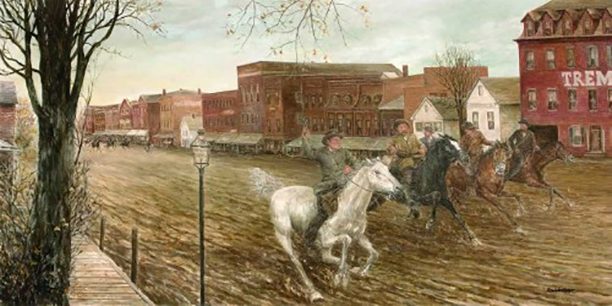
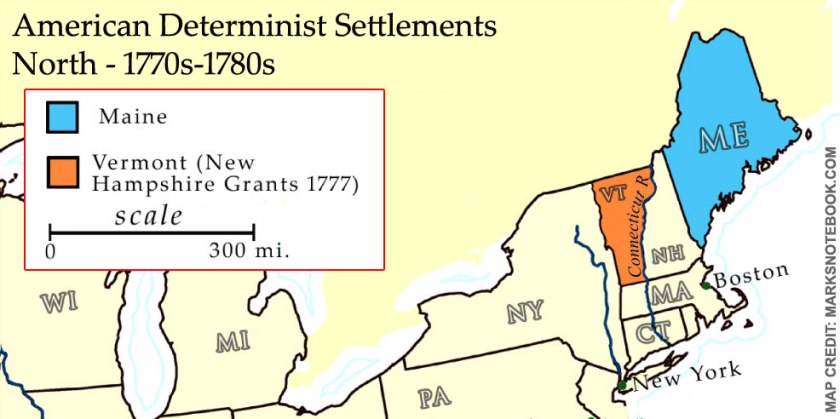

 In April 1864, President Jefferson Davis dispatched former Secretary of the Interior Jacob Thompson, ex-Alabama Senator Clement Clay, and veteran Confederate spy Captain Thomas Henry Hines to Toronto, with the mission of raising hell in the North.
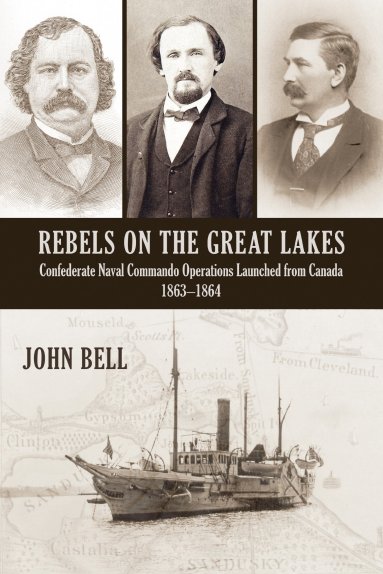 The Confederate invasion of Maine never materialized, thanks in large measure to counter-espionage efforts by Union agents.

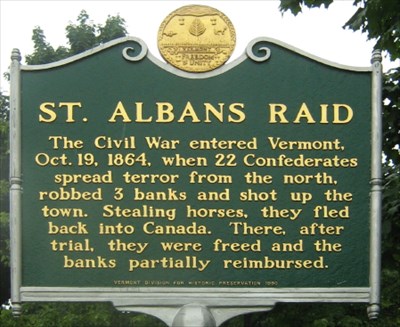 The group was arrested on returning to Canada and held in Montreal. The Lincoln administration sought extradition, but the Canadian court decided otherwise, ruling that the raiders were under military orders at the time, and neutral Canada could not extradite them to America. The $88,000 found with the raiders, was returned to Vermont.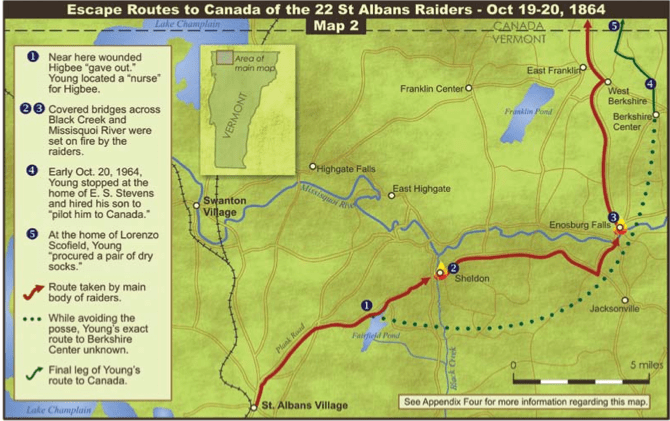


 In 132, the Roman Emperor Hadrian all but erased all sign of Jewish and Christian presence, in the old city of Jerusalem. Golgotha and the Tomb were obliterated, and a pagan temple to Venus Aphrodite was raised in their place.
 Al-Hakim bi-Amr Allah, (literally “Ruler by God’s Command”) was the 6th Caliph of the Fatimid Dynasty, coming to power in October of 996.


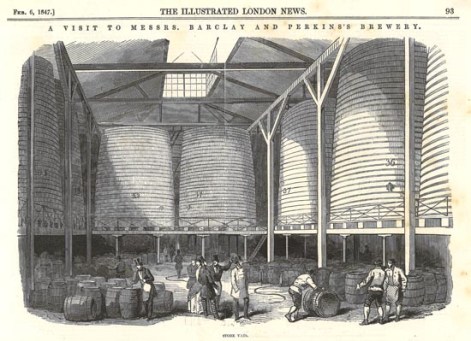 The Meux’s Brewery Co Ltd, established in 1764, was a London brewery owned by Sir Henry Meux. What the Times article was describing was a 22′ high monstrosity, held together by 29 iron hoops.
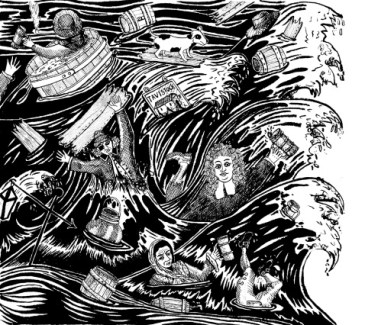 323,000 imperial gallons of beer smashed through the brewery’s 25′ high brick walls, gushing into the streets, homes and businesses of St. Giles. The torrent smashed two houses and the nearby Tavistock Arms pub on Great Russell Street, where a 14-year-old barmaid named Eleanor Cooper was buried under the rubble.
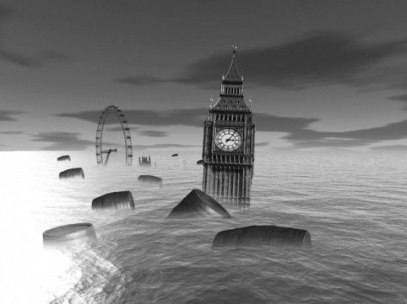 In the days that followed, the crushing poverty of the slum led some to exhibit the corpses of their family members, charging a fee for anyone who wanted to come in and see. In one house, too many people crowded in and the floor collapsed, plunging them all into a cellar full of beer.

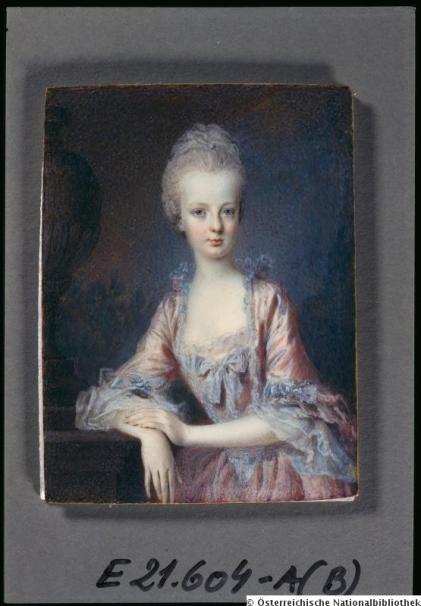 There was a second, ceremonial wedding held in May, after which came the ritual bedding. This wasn’t the couple quietly retiring to their own private space. This was the bizarre spectacle of a room full of courtiers, peering down at the proceedings, to make sure the marriage was consummated.
 Louis-Auguste was crowned Louis XVI, King of France, on June 11, 1775. Antoinette remained by his side, though she was never crowned Queen, instead remaining Louis’ “Queen Consort”.
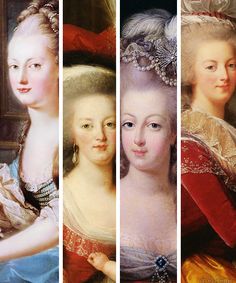 Unrest turned to barbarity as Antoinette’s friend and supporter, the Princesse de Lamballe, was taken by the Paris Commune for interrogation. She was murdered at La Force prison, her head fixed on a pike and marched through the city.
 Marie-Antoinette’s hair was cut off on October 16, 1793. She was driven through Paris in an ox cart, taken to the Place de la Révolution, and decapitated. She accidentally stepped on the executioner’s foot on mounting the scaffold. Her last words were “Pardon me sir, I meant not to do it”.

 Despite problems at home, the Dutch mail order bride found herself moving among the upper classes. She immersed herself in Indonesian culture and traditions, even joining a local dance company. It was around this time that she revealed her “artistic” name in letters home: “Mata Hari”, Indonesian for “sun” (literally, “eye of the day”), in Sanskrit.
 British reporter Henry Wales described the execution, based on an eyewitness account. Unbound and refusing a blindfold, Mata Hari stood alone to face her firing squad. After the shots rang out, Wales reported that “Slowly, inertly, she settled to her knees, her head up always, and without the slightest change of expression on her face. For the fraction of a second it seemed she tottered there, on her knees, gazing directly at those who had taken her life. Then she fell backward, bending at the waist, with her legs doubled up beneath her.”

 Great believers in the perfectibility of the public sphere, Progressives eschewed old methods as wasteful and inefficient, leaning instead toward the advice of academics and “experts”, looking for that “one best way” to get things done.
 Roosevelt retired from politics after two terms to go on African safari, backing William Howard Taft for the Republican nomination.


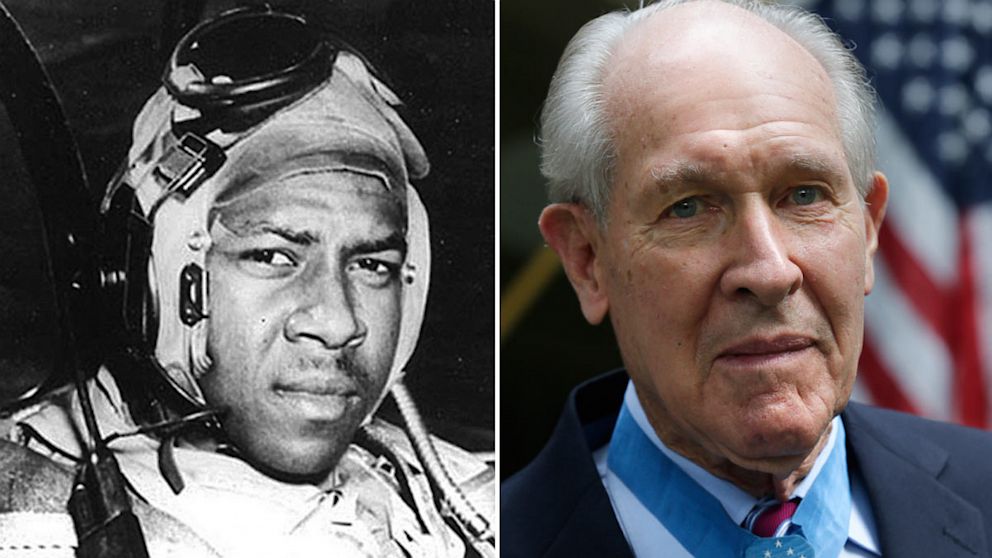

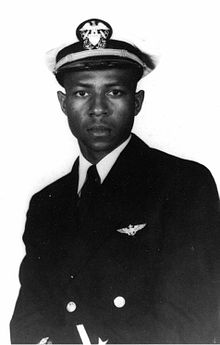
 Hudner pleaded with authorities the following day to go back to the crash site, but they were unwilling to risk further loss of life. They would napalm the crash site so that the Chinese couldn’t get to the aircraft or the body, though pilots reported that it looked like the Brown’s body had already been disturbed.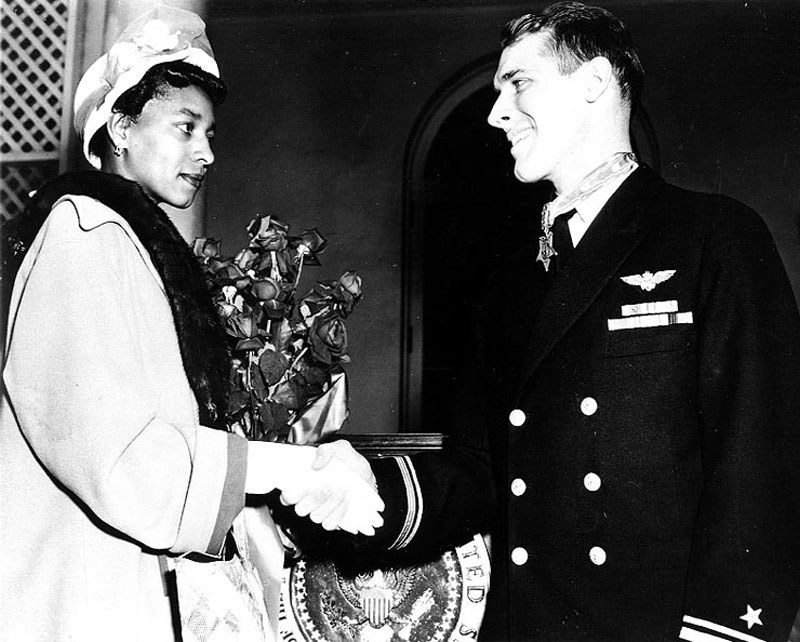


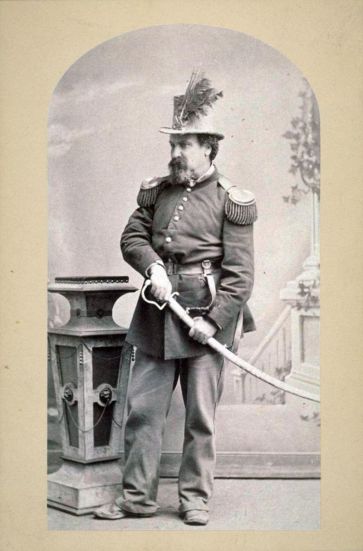 For a time, Norton disappeared from the public eye. In September 1859, he proclaimed himself Emperor of the United States, his Royal Ascension announced to the public in a letter to the editor of the San Francisco Bulletin. “At the peremptory request and desire of a large majority of the citizens”, it read, “I, Joshua Norton…declare and proclaim myself Emperor of these United States.” The letter went on to command representatives from all the states to convene in San Francisco, “to make such alterations in the existing laws of the Union as may ameliorate the evils under which the country is laboring.”
 That December, Norton fired Virginia Governor Henry Wise for hanging abolitionist John Brown, appointing then-vice President John C. Breckinridge in his stead.
 Norton wore an elaborate blue uniform with gold epaulettes, carrying a cane or saber and topped off with beaver hat with peacock feather. By day he “inspected” the streets and public works of San Francisco, by night he would dine in the city’s finest establishments. No play or musical performance would dare open in the city, without reserved balcony seats for Emperor Norton.
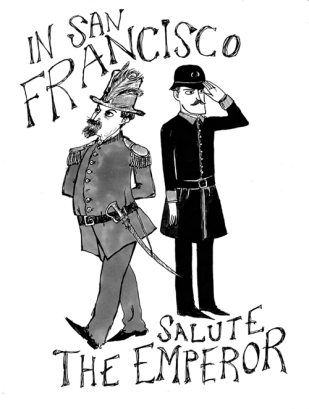 In 1867, police officer Armand Barbier arrested Norton, attempting to have him involuntarily committed to an insane asylum. The public backlash was so vehement that Police Chief Patrick Crowley ordered Norton’s release and issued a public apology. The episode ended well, when Emperor Norton magnanimously pardoned the police department. After that, San Francisco cops saluted Emperor Norton whenever meeting him in the street.
 The San Francisco Board of Supervisors once bought him a new uniform, when the old one got too shabby. Norton responded with a very nice thank you note, issuing each of them a “Patent of Nobility in Perpetuity”.

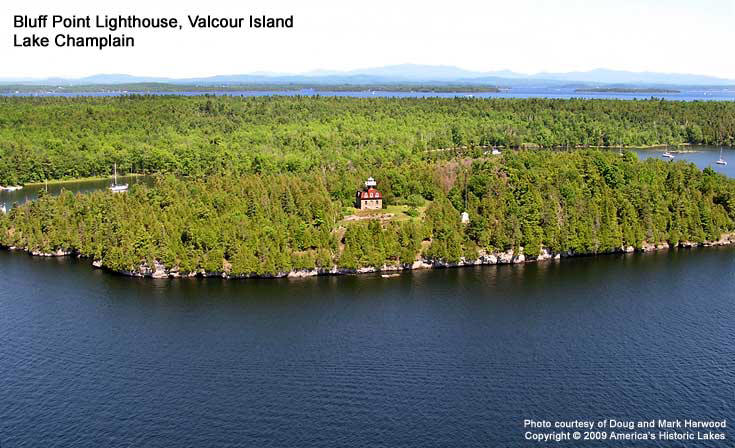
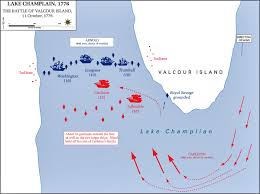 Sailing south on the 11th under favorable winds, some of the British ships had already passed the American position behind Valcour island, before realizing they were there. Some of the British warships were able to turn and give battle, but the largest ones were unable to turn into the wind.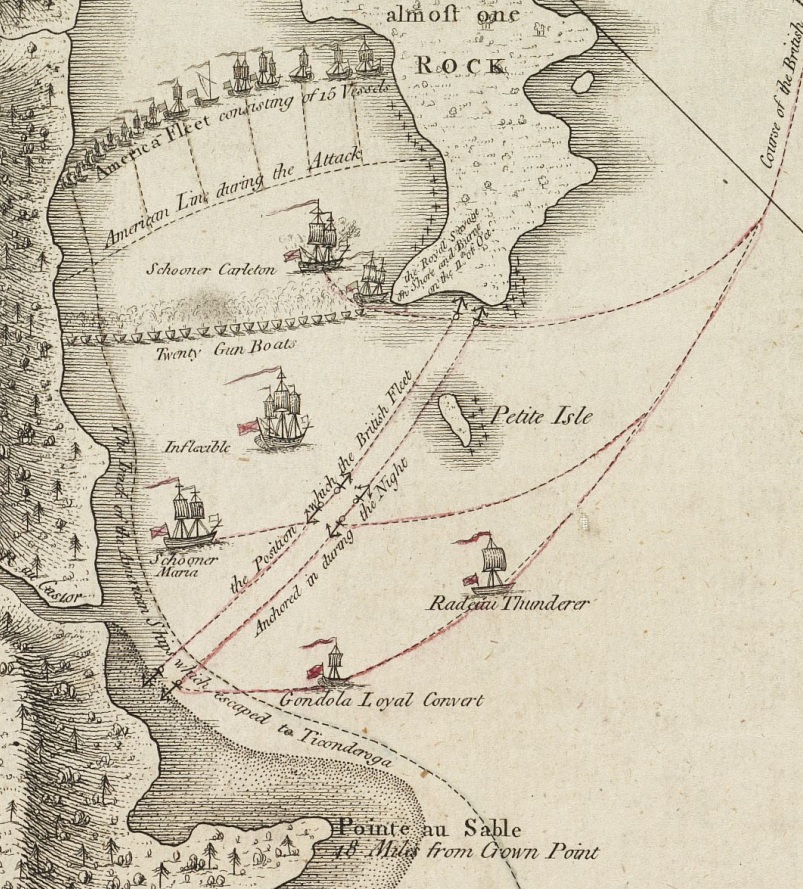
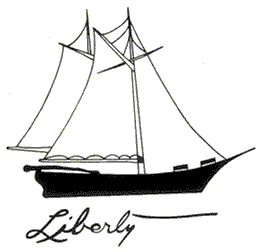
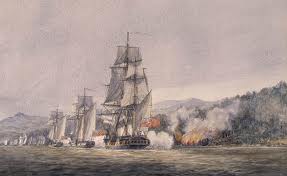 On the third day, the last four gunboats and Benedict Arnold’s flagship Congress were run aground in Ferris Bay on the Vermont side, following a 2½-hour running gun battle. Today, the small harbor is called Arnold’s Bay.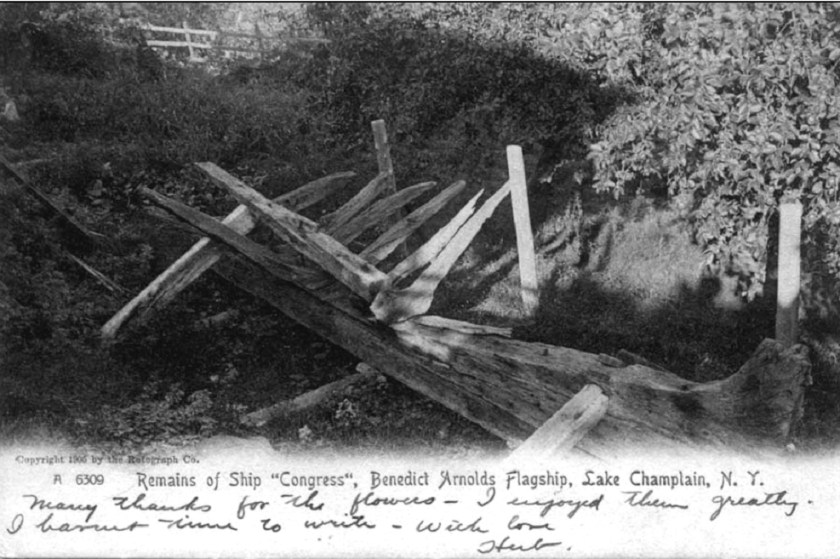

 Historical Easter Eggs - Today in History
You must be logged in to post a comment.