December 13, 1577 El Draque

Historians argue whether this was a voyage of exploration, of piracy, or merely an effort to poke the Spanish King Phillip II in the eye

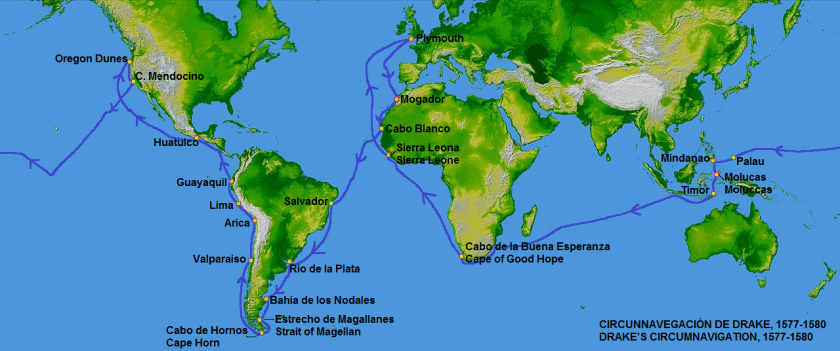
The “Pelican” left Plymouth, England on November 15, 1577, with four other ships and 164 men.  The weather was so rotten that they soon had to turn back, seeking shelter in Falmouth, before finally returning to Plymouth, where they started.  The flotilla set out again on December 13 after making repairs, soon to be joined by a sixth ship, the captured Portuguese merchant ship Santa Maria, renamed “Mary”.

Historians argue whether this was a voyage of exploration, of piracy, or merely an effort to poke the Spanish King Phillip II in the eye.  Before it was over, Sir Francis Drake would be the first to circumnavigate the globe in continuous command of the expedition.

He was the third, actually, depending on how you count them.  Portuguese explorer Ferdinand Magellan set out with 5 ships and 250 men back in 1519, becoming the first about 58 years earlier.  Magellan himself didn’t make it though, he died in the Battle of Mactan on a Philippine beach, in 1521.  19 men and a single ship under the command of Juan Sebastián Elcano, was all that remained on the expedition’s return in 1522.

The Spanish explorer García Jofre de Loaísa was the second, leaving in 1525 with 450 men on seven ships.  None of his ships ever made it back.  25 of his men would return in 1536, under Portuguese guard.

Drake had crossed the Atlantic and made it to Patagonia, when it seems one of his captains got on his last nerve.  Thomas Doughty had been in command of the Mary, when he caught Drake’s brother Thomas stealing from the vessel’s cargo.  One thing led to another and Doughty found himself accused as “a conjurer and a seditious person”.   He was brought before a shipboard trial for treason and witchcraft, establishing the idea that lasts to this day, that a ship’s captain is its absolute ruler, regardless of the rank or social class of that ship’s passengers.

Doughty lost his head, in the end, in the shadow of the weathered and sun bleached skeletons and the bleak, Spanish gibbets where Magellan had put his own mutineers to death, a half century earlier.
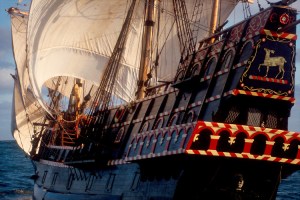
golden-hind-replica
Golden Hind Replica

It may have been to smooth over the Doughty episode, that Drake renamed his flagship the “Golden Hind”, (a female deer of 3 years or more), after the coat of arms of Sir Christopher Hatton, one of the expedition’s prime sponsors. Soon reduced to three ships, Drake made the straits of Magellan by August of 1578, emerging alone into the Pacific in September.

Drake captured a Spanish ship laden with 25,000 pesos of Peruvian gold near Lima, when he heard about the galleon Nuestra Señora de la Concepción, sailing west toward Manila.  Nicknamed “Cacafuego”, translating as “Fireshitter” (I wouldn’t make that up), the ship carried 80 pounds of gold, a golden crucifix, jewels, 13 chests full of “royals of plate” (silver coins) and 26 tons of silver.  It was the richest prize of the voyage.

After a fine dinner with Cacafuego’s captured officers and gentlemen passengers, Drakedrake offloaded his captives, each with a gift appropriate to his rank, and a letter of safe conduct.
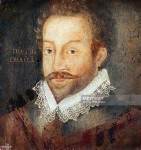
Drake landed near Alta, California in June 1579, where he repaired and restocked his vessel.  He claimed the land for the English Crown, calling it Nova Albion:  “New Britain”.   The precise location was carefully guarded to keep it secret from the Spanish, who by this time had a bounty of 20,000 ducats ($6.5 million in today’s money) on the head of “El Draque”.

The Golden Hind sailed into Plymouth, England with Drake and 59 remaining crew onboard, on September 26, 1580.  The half share owed to the queen surpassed the crown’s income for the entire year.  Drake himself was hailed as the first Englishman to circumnavigate the earth.drake_1577-1580
Drake’s seafaring career ended in January 1596, when he died of dysentery, anchored off the central American coast.  There he was dressed in his armor and buried at sea in a lead coffin, off the Portobelo District of Panama.  Divers search for his coffin, to this day.

December 12, 1937 Panay incident

Though the Japanese government held considerable animosity for that of the United States, the people of Japan seemed a different story

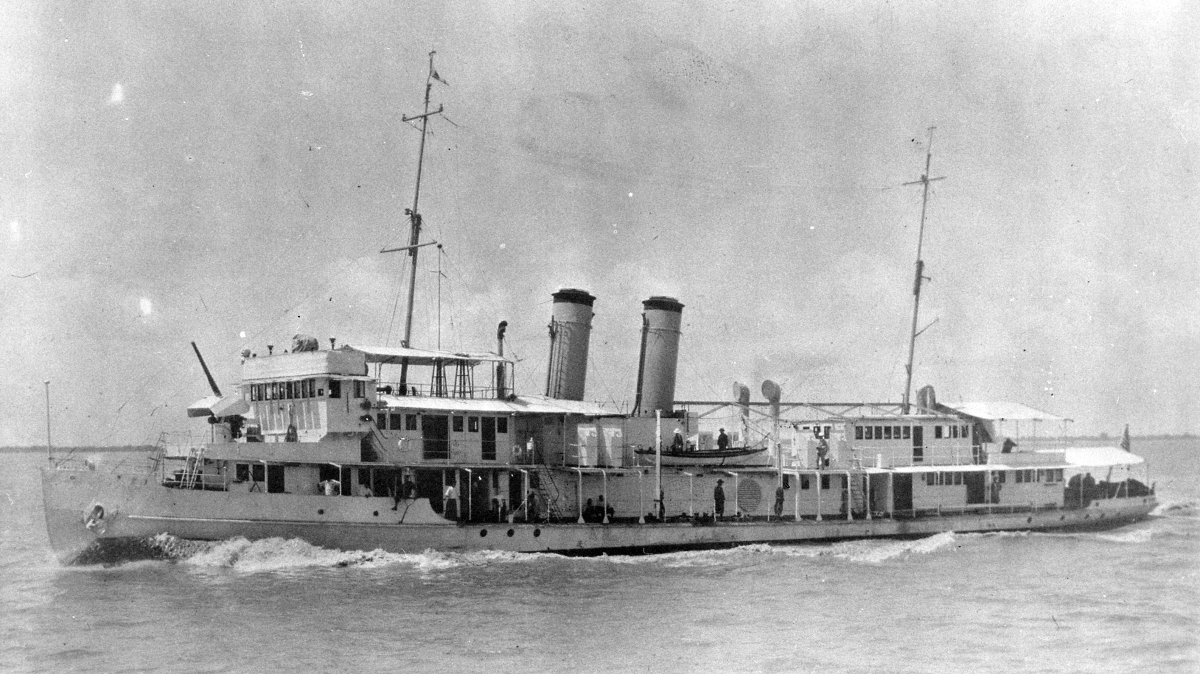
USS Panay was a flat bottomed river craft, built in Shanghai as part of the Asiatic fleet and charged with protecting American lives and property on the Yangtze River, near Nanking.

Japanese forces invaded China in the summer of 1937, advancing on Nanking while American citizens evacuated the city.  The last ones boarded Panay on December 11:  five officers, 54 enlisted men, four US embassy staff, and 10 civilians.

Japanese air forces received word the morning of December 12, 1937, that Chinese forces were being evacuated on several large steamers and a number of junks, about 12 miles north of the city.

Anchored a short way upstream along with several Chinese oil tankers, Panay came under bombing and strafing attack that morning, sinking mid-river with three men killed.  43 sailors and five civilians, were wounded.  Two newsreel cameramen were on board at the time of the attack, and were able to film part of it.

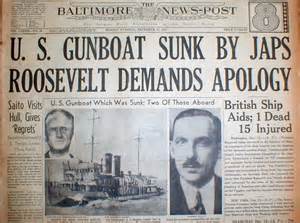
The American ambassador to Japan at the time was Joseph C. Grew, a man who was morebaltimore_news_post_panay than old enough to remember how the sinking of the Maine in Havana Harbor brought the US into war with Spain in 1898.  Grew hoped to avoid a similar outcome following the Panay sinking, though Japanese authorities were less than helpful.  US cryptographers uncovered information shortly after the attack indicating that aircraft were operating under orders, while the Japanese government continued to insist that the attack had been accidental.

The matter was officially settled four months later, with an official apology and an indemnity of $2,214,007.36 paid to the US government.  The “accidental attack” narrative appears to have been a safe story both sides pretended to accept, but it seems a little hard to believe.   HMS Ladybird had been fired on that same morning by Japanese shore batteries, and the attack was followed a month later by the “Allison incident”, in which the American consul in Nanking, John M. Allison, was struck in the face by a Japanese soldier.

Added to the fact that American property was being looted by Japanese forces, it seems clear that relations between the two governments were poisonous at the time.

Interestingly, though the Japanese government held considerable animosity for that of the United States, the people of Japan seemed a different story.  Ambassador Grew was flooded with expressions of sympathy from Japanese citizens, who apologized for their government and expressed affection for the United States.

They came from citizens of all ages and walks of life, from doctors and professors to school children.  The wives of high ranking Japanese officials apologized to Grew’s wife without their husbands’ knowledge, while ten Japanese men describing themselves as retired US Navy sailors living in Yokohama, sent a check for $87.19.

A typical letter read: “Dear Friend! This is a short letter, but we want to tell you how sorry we are for the mistake our airplane made. We want you to forgive us I am little and do not understand very well, but I know they did not mean it. I feel so sorry for those who were hurt and killed. I am studying here at St. Margarets school which was built by many American friends. I am studying English. But I am only thirteen and cannot write very well. All my school-mates are sorry like myself and wish you to forgive our country. To-morrow is X-Mas, May it be merry, I hope the time will come when everybody can be friends. I wish you a Happy New Year. Good-bye.”

The two governments never did patch things up.  The US placed an embargo in September 1940, prohibiting exports of steel, scrap iron, and aviation fuel to Japan, in retaliation for their occupation of northern French Indochina:  modern day Laos, Cambodia and Vietnam.

Japan occupied southern Indochina by the summer of 1941, as the US, Great Britain, and the Netherlands retaliated by freezing Japanese assets.

Throughout that summer and fall, Japan tried to negotiate a settlement to lift the embargo on terms allowing them to keep their newly captured territory, while at the same time preparing for war.  General Hideki Tojo, future Prime Minister, secretly set November 29 as the last day on which Japan would accept a settlement without war.

Air and naval forces of the Imperial Japanese government attacked the US naval anchorage at Pearl Harbor, about a week later.

December 9, 536 Byzantium

Most histories of the Roman Empire end with some event along the 476-586 timeline, but the Roman Empire in the east would live for another thousand years

Politicians love nothing more than to divide us against one another for their own benefit, but that’s nothing new. The tyrant Theagenes of Megara destroyed the livestock of the wealthy in the late 7th century BC, in an effort to increase his support among the poor. It may have been this tactic which drove Byzas, son of the Greek King Nisos, to set out in 657BC to found the new colony of Byzantion.

The Oracle at Delphi had advised him to build his city “opposite the land of the blind”. Arriving at the Bosphorus Strait (“boos poros”, Greek for cow-ford), the narrow channel which divides Europe from Asia, they judged the inhabitants of the eastern bank city of Chalcedon to be blind if not stupid, not to recognize the advantages two miles away on the European side. There they set down the roots of what is today the second largest city on the planet, based on population living within city limits.

Byzantium city leaders made the mistake of siding with Pescennius Niger, a pretender to the Roman throne during the “Year of the Five Emperors”, 193-194AD. Laid siege and virtually destroyed in 196 by the victorious Septimius Severus, the city was rebuilt and quickly regained the wealth and status it had formerly enjoyed as a center of trade.at the crossroads of east and west,

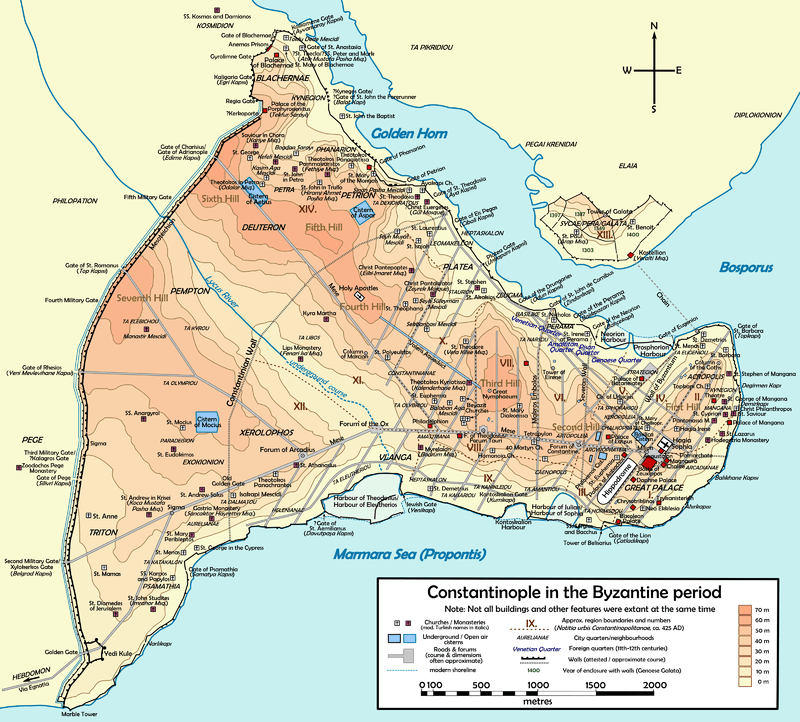
Constantine the Great, Roman Emperor from 306 to 337, established a second residence at Byzantium in 330, officially establishing the city as “Nove Roma” – New Rome. Later renamed in his honor, “Constantinople” became the capital of the Byzantine Empire and seat of the Eastern Roman Empire.byzantine_constantinople

The Roman empires of the east and west would separate and reunite in a succession of civil wars and usurpations throughout the 4th century, permanently dividing in two with the death of Emperor Theodosius I in 395. The Western and Eastern Empires would co-exist for about 80 years.  Increasing barbarian invasions and internal revolts finally brought the western empire to an end when Romulus Augustulus was deposed in 476.

The Ostrogothic Kingdom which came to rule all of Italy was briefly deposed, when the Byzantine General Belisarius entered Rome on December 9, 536. The Ostrogothic garrison left the city peacefully, briefly returning the old capital to its Empire. Fifty years later, there would be too little to defend against the invasion of the Lombards.  By 586, the Western Roman Empire had permanently ceased to exist.

Most histories of the Roman Empire end with some event along this 476-586 timeline, but the Roman Empire in the east would live for another thousand years. With traditions, customs and language drawn more heavily from the Greek than those of the Latin, the Byzantine Empire would last almost until the age of Columbus and the discovery of the New World.  Most of that time it remained one of the most powerful economic, cultural, and military forces in all of Europe.

In 413, construction began on a formidable system of defensive walls, protecting Constantinople against attack by land or sea. Called the “Theodosian Walls” after reigning Emperor Theodosius II, they were built on the orders of the Roman Prefect of the East, Anthemius, as a defensive measure against the Huns. One of the most elaborate defensive fortifications ever built, the Theodosian Walls warded off sieges by the Avars, Arabs, Rus’, Bulgars and others. This, the last great fortification of anitiquity, would fall only twice. First amidst the chaos of the 4th Crusade in 1203, and finally to the age of gunpowder.

Constantinople, one of the most heavily fortified cities on the planet, fell after a 50-day siege to an army of 150,000, and the siege cannon of Sultan Mehmed II, ruler of the Ottoman Turks.

It was May 29, 1453.  Constantinople, now Istanbul, remains under Muslim rule to this day.