

The largest German offensive of the western front burst out of the frozen Ardennes forest on December 16, 1944, aiming to drive a wedge between British and American forces, and to capture the Belgian port of Antwerp, vital to the German’s ability to re-supply. It was called “Unternehmen Wacht am Rhein”, “Operation Watch on the Rhine”.
The tactical surprise was complete, allied forces driven back through the densely forested regions of France, Belgium and Luxembourg. Wartime news maps showed a great inward “bulge” in the lines, and the name stuck. The Battle of the Bulge was the largest and bloodiest battle fought by the US in WWII, fought in the harshest winter conditions in recorded history and involving 610,000+ Americans.
The seven roads leading to Antwerp converged in Bastogne, in what the Germans called “Straße Oktopus”, “Road Octopus”. The town was strategically indispensable to the German drive on Antwerp, and all or parts of 7 German armored divisions converged on the place. Over 54,000 men. The Allies understood the importance of the place as well as the Germans, and General Eisenhower dispatched the 101st Airborne Division to hold the town at all costs.
 For two days, a desperate defense of the nearby villages of Noville and Foy held back the 2nd Panzerdivision, as 11,000 men and 800 officers of the 101st joined a combined force of 11,000 converging on Bastogne. By the 21st, Bastogne’s field hospital was overrun, they were surrounded by forces outnumbering them 2½ to one. Poorly supplied for the cold winter conditions with air supply made all but impossible by weather conditions, the citizens of Bastogne gave their blankets to the American soldiers, along with white linens which they used for camouflage.
On the morning of December 22, 1944, two German officers appeared at the American perimeter along with two enlisted men, carrying a white flag. They were a Major Wagner of the 47th Panzer Corps, and Lt. Hellmuth Henke of the Panzer Lehr Operations Section. They carried a note from German General Luttwitz, 165 words in all, and reading in part: “To the U.S.A. Commander of the encircled town of Bastogne. There is only one possibility to save the encircled U.S.A. troops from total annihilation: that is the honorable surrender of the encircled town. In order to think it over a term of two hours will be granted beginning with the presentation of this note”.
The note worked its way up the chain of command to the acting Division Commander, General Tony McAuliffe. Told that there was a surrender ultimatum, McAuliffe first thought that it was the Germans who wanted to surrender. Soon disabused of that notion, he laughed and said: “Us surrender? Aw, nuts!”
Knowing that he had to reply, McAuliffe said “Well I don’t know what to tell them.” Lt. General Harry Kinnard spoke up, saying, “That first remark of yours would be hard to beat”. McAuliffe said, “What do you mean?” and Kinnard replied “Sir, you said ‘Nuts’.” They all agreed, and McAuliffe wrote his reply. “To the German Commander, “Nuts!” The American Commander.”
Joseph H. “Bud” Harper was the American army officer who delivered the reply, with medic Ernie Premetz acting as translator.
Confused by the American slang, Henke asked “What does that mean?” Harper said to Premetz “You can tell them to take a flying shit.” The medic, knowing he had to convey the intent of the message, translated as “Du kannst zum Teufel gehen”. You can go to hell. Harper then said, “If you continue to attack, we will kill every goddamn German that tries to break into this city.” Henke replied, “We will kill many Americans. This is war.” Harper then said, “On your way Bud, and good luck to you.”
Years later, Harper would say that he always regretted wishing them luck.
Elements of George Patton’s 3rd Army would break through from the southwest four days  later, ending the German encirclement.
By the end of January, the last great effort of German armed forces had been spent and driven back beyond their original lines. An official report by the US Army on the Battle of the Bulge lists 108,347 casualties, including 19,246 killed, 62,489 wounded and 26,612 captured and missing. Those numbers could have been far worse, if not for what newspapers would soon call the “Battered Bastards of Bastogne”.
 entire siege tending to the wounded, along with Dr. Jack Prior. Once, she even ran through enemy fire to collect the wounded from the field. On Christmas eve, she was blown off her feet and through a wall. She got up and went back to it, despite the direct hit that killed 30 American wounded, along with the only other nurse at the Rue Neufchatel aid station, Renée Lemaire.
  Bastogne. Chiwy married after the war, and rarely talked about her experience in Bastogne. It took King a full 18 months to coax the story out of her. The result was the 2015 Emmy award winning historical documentary, “Searching for Augusta, The Forgotten Angel of Bastogne”.

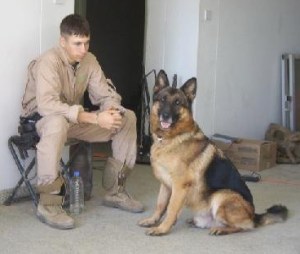 States Marine Corps in 2006. The dog’s second deployment began in November, when he was paired with Marine Corporal Dustin J. Lee, stationed in the military police department at Marine Corps Logistics Base (MCLB), “Albany”.
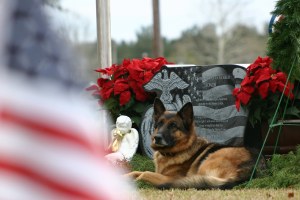 The most dreadful moment in the life of any parent, is when they receive word of the death of a child. It wasn’t long after Jerome and Rachel Lee were so notified, that they began efforts to adopt Lex. Dustin was gone, but they wanted to make his partner a permanent part of their family.
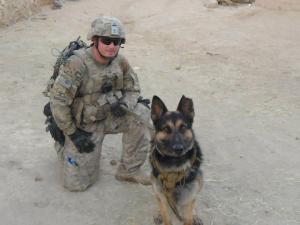 In telling this story, I wish in some small way to honor my son in law Nate and daughter Carolyn, who together experienced Nate’s deployment as a Tactical Explosives Detection Dog handler with the US Army 3rd Infantry Division in Soltan Kheyl, Wardak Province, Afghanistan. Months after departing “The Ghan” in 2013, the couple was reunited with Nate’s “Battle Buddy”, MWD Zino, who is now retired and lives with them in Savannah. “Here & Now”, broadcast out of ‘Boston’s NPR News Station’ WBUR, did a great story on the reunion. You can hear the radio broadcast
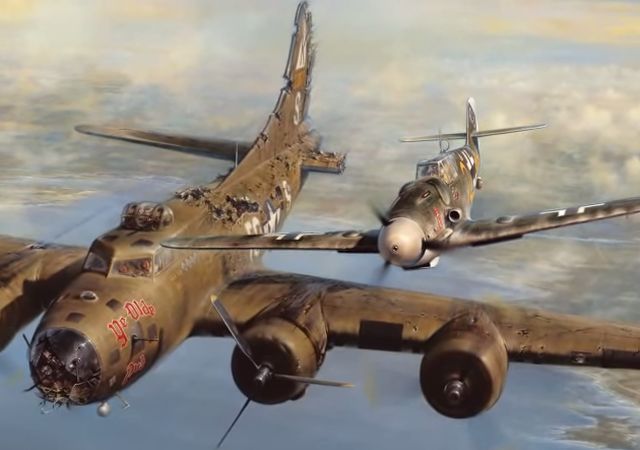
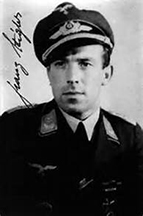 At the age of 26, Franz Stigler was an Ace. The Luftwaffe pilot of a Messerschmitt Bf-109 fighter, some of his kills had been revenge, payback for the death of his brother August earlier in the war. But this man was no Nazi. He was a German Patriot with 22 confirmed kills. On December 20, 1943, he needed one more for a Knight’s Cross. He tossed his cigarette aside and climbed into his fighter as the crippled American B17 bomber lumbered overhead. This was going to be an easy kill.
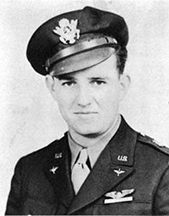 named “Ye Olde Pub”. The earlier attack on the munitions factory in Bremen had been a success, but the pilot and crew paid a heavy price for it. Their aircraft had been savaged by no fewer than 15 German fighters. Great parts of the air frame were torn away, one wing severely damaged and part of the tail torn away. The aircraft’s Plexiglas nose was shattered and the #2 engine seized. Six of the ten-man crew were wounded and the tail gunner dead, his blood frozen in icicles over silent machine guns. Brown himself had been knocked out at one point, coming around just in time to avert a fatal dive.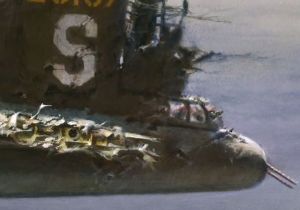
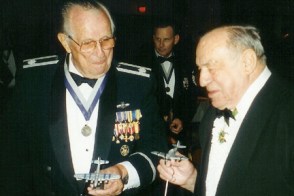 took out an ad in a fighter pilots’ newsletter. It said that he was searching for the man ‘who saved my life on Dec. 20, 1943.’ Stigler saw the ad, and the two met for the first time in 1987. “It was like meeting a family member”, Brown said at their first meeting, “like a brother you haven’t seen for 40 years”.
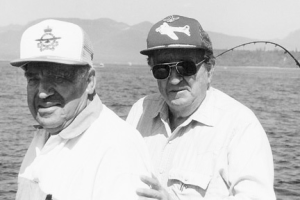 The two became close friends and occasional fishing buddies until their passing in 2008, six months apart. Stigler was age 92 and Brown 87. Their story is told in a book called “A Higher Call”, if you want to know more about it. In their obituaries, both were mentioned as the other man’s “special brother”.

 No longer a maritime power, Hannibal set out in the spring of 218BC, crossing into hostile Gaul (France) and arriving at the Rhône River in September with 38,000 infantry, 8,000 cavalry, and 37 war elephants. His crossing of the Alps that winter is one of the great feats of military history, costing him almost half of his force before entering Italy in December.


 the “Regulars” sent to enforce the will of the Crown. Two years later, Sons of Liberty looted and burned the HMS Gaspee in Narragansett Bay, RI.
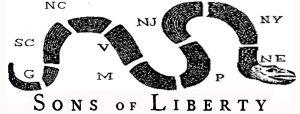 That night, somewhere between 30 and 130 Sons of Liberty, some dressed as Mohawk Indians, boarded the three ships in Boston Harbor. There they threw 342 chests of tea, 90,000 pounds in all, into Boston Harbor. £9,000 worth of tea was destroyed, worth about $1.5 million in today’s dollars.
 Boston by British troops. Minutemen clashed with “Lobster backs” a few months later, on April 19, 1775. No one alive today knows who fired the first shot at Lexington Green. History would record it as “The shot heard ’round the world”.

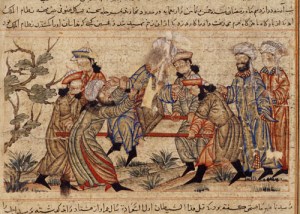




 offloaded his captives, each with a gift appropriate to his rank, and a letter of safe conduct.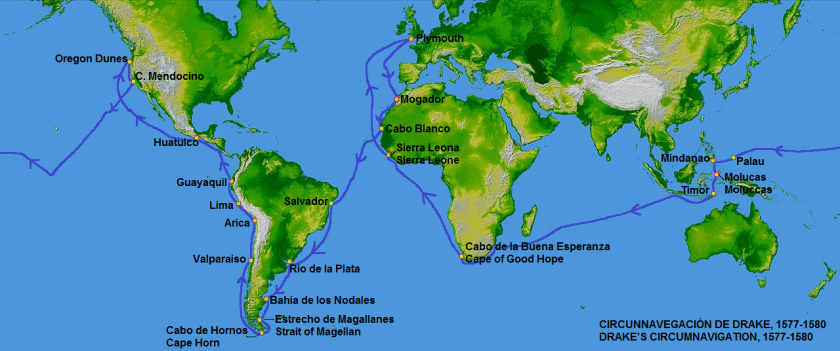

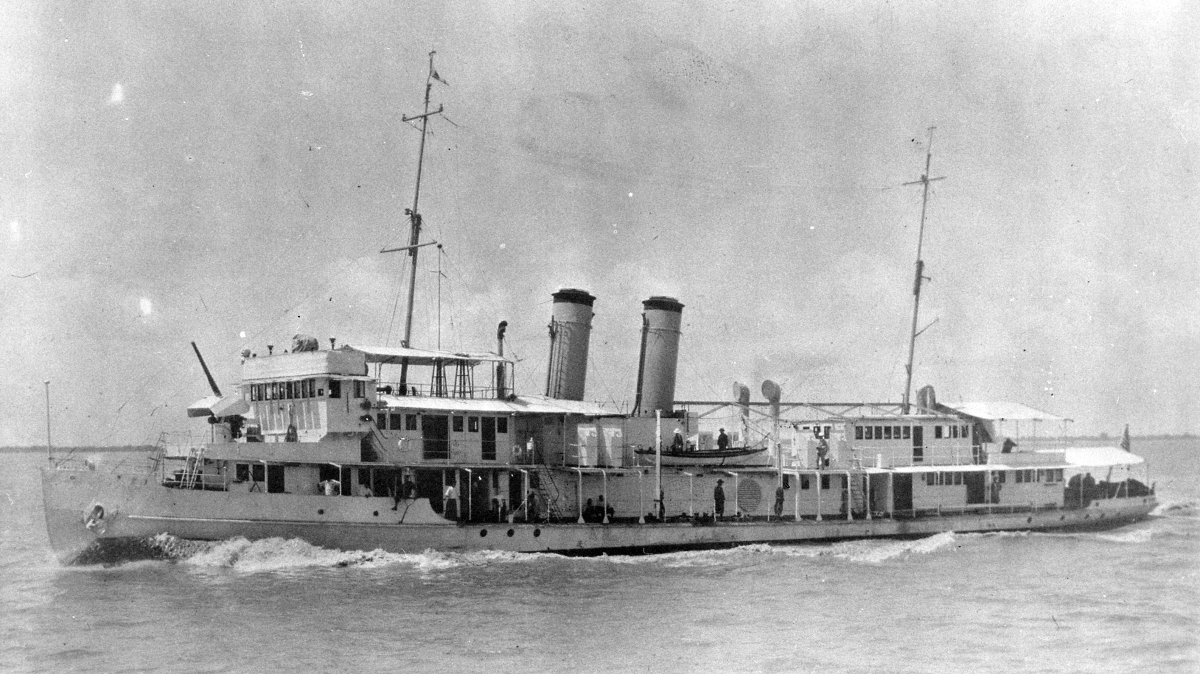
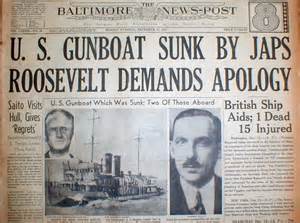 than old enough to remember how the sinking of the Maine in Havana Harbor brought the US into war with Spain in 1898. Grew hoped to avoid a similar outcome following the Panay sinking, though Japanese authorities were less than helpful. US cryptographers uncovered information shortly after the attack indicating that aircraft were operating under orders, while the Japanese government continued to insist that the attack had been accidental.


 Historical Easter Eggs - Today in History
You must be logged in to post a comment.