April 5, 1761 Midnight Ride

The Dutchess County Militia had to be called up. The Colonel had one night to prepare for battle, and this rider was done. The job would have to go to Colonel Ludington’s first-born. His daughter, Sybil.

“Listen my children and you shall hear,
Of the midnight ride of”…Sybil Ludington.

Wait…What?
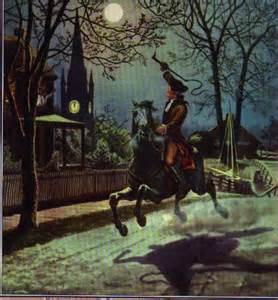
Midnight RidePaul Revere’s famous “midnight ride” began on the night of April 18, 1775.  Revere was one of two riders, soon joined by a third, fanning out from Boston to warn of an oncoming column of “regulars”, come to destroy the stockpile of gunpowder, ammunition, and cannon in Concord.

Revere himself covered barely 12 miles before being captured, his horse confiscated to replace the tired mount of a British sergeant.  Revere would finish his “ride” on foot, arriving at sunrise on the 19th to witness the last moments of the battle on Lexington Green.

Two years later, Patriot forces maintained a similar supply depot, in the southwest Connecticut town of Danbury.

William Tryon was the Royal Governor of New York, and long-standing advocate for attacks on civilian targets.  In 1777, he was also a major-general of the provincial army.  On April 25th, Tryon set sail for the Connecticut coast of Long Island Sound with a force of 1,800, intending to destroy Danbury.

Burning of DanburyPatriot Colonel Joseph Cooke’s small Danbury garrison was caught and quickly overpowered on the 26th, trying to remove food supplies, uniforms, and equipment.  Facing little if any opposition, Tryon’s forces went on a bender, burning homes, farms and storehouses.  Thousands of barrels of pork, beef, and flour were destroyed, along with 5,000 pairs of shoes, 2,000 bushels of grain, and 1,600 tents.

Colonel Henry Ludington was a farmer and father of 12, with a long military career.  A long-standing and loyal subject of the British crown, Ludington switched sides in 1773, joining the rebel cause and rising to command the 7th Regiment of the Dutchess County Militia, in New York’s Hudson Valley.

In April 1777, Ludington’s militia was disbanded for planting season, and spread across the countryside.  An exhausted rider arrived at the Ludington farm on a blown horse, on the evening of the 26th, asking for help.  15 miles away, British regulars and a force of loyalists were burning Danbury to the ground. Sybil Ludington

The Dutchess County Militia had to be called up.  The Colonel had one night to prepare for battle, and this rider was done.  The job would have to go to Colonel Ludington’s first-born, his daughter, Sybil.

Born April 5, 1761, Sybil Ludington was barely sixteen at the time of her ride.  From Poughkeepsie to what is now Putnam County and back, the “Female Paul Revere” rode across the lower Hudson River Valley, covering 40 miles in the pitch dark of night, alerting her father’s militia to the danger and urging them to come out and fight.  She’d use a stick to knock on doors, even using it once, to fight off a highway bandit.

By the time Sybil returned the next morning, cold, rain-soaked, and exhausted, most of 400 militia were ready to march.

BattleOfRidgefield
Battle of Ridgefield, from Wikipedia A: British movement to the coast B: American movements to pursue and harass the British C: Arnold’s position attempting to block the British return to the beach D: British return to New York

35 miles to the east of Danbury, General Benedict Arnold was gathering a force of 500 regular and irregular Connecticut militia, with Generals David Wooster and Gold Selleck Silliman.

Arnold’s forces arrived too late to save Danbury, but inflicted a nasty surprise on the British rearguard as the column approached nearby Ridgefield.  Never outnumbered by less than three-to-one, Connecticut militia was able to slow the British advance until Ludington’s New York Militia arrived on the following day.  The last phase of the action saw the same type of swarming harassment, as seen on the British retreat from Concord to Boston, early in the war.

Though the British operation was a tactical success, the mauling inflicted by these colonials ensured that this was the last hostile British landing on the Connecticut coast.

The British raid on Danbury destroyed at least 19 houses and 22 stores and barns.  Town officials submitted £16,000 in claims to Congress, for which town selectmen received £500 reimbursement.  Further claims were made to the General Assembly of Connecticut in 1787, for which Danbury was awarded land.  In Ohio.

Keeler_tavern_ridgefield_cannonball_2006
Keeler Tavern

The Keeler Tavern in Ridgefield is now a museum.  The British cannonball fired into the side of the building, remains there to this day.

At the time, Benedict Arnold planned to travel to Philadelphia, to protest the promotion of officers junior to himself, to Major General.  Arnold, who’d had two horses shot out from under him at Ridgefield, was promoted to Major General in recognition for his role in the battle.  Along with that promotion came a horse, “properly caparisoned as a token of … approbation of his gallant conduct … in the late enterprize to Danbury.”  For now, the pride which would one day be his undoing, was assuaged.

Henry Ludington would become Aide-de-Camp to General George Washington, and grandfather to Harrison Ludington, mayor of Milwaukee and 12th Governor of Wisconsin.

Gold Silliman was kidnapped with his son by a first marriage by Tory neighbors, and held for Nearly seven months at a New York farmhouse.  Having no hostage of equal rank with whom to exchange for the General, Patriot forces went out and kidnapped one of their own, in the person of Chief Justice Judge Thomas Jones, of Long Island.

Wooster Square
Archway at Wooster Square

Mary Silliman was left to run the farm, including caring for her own midwife, who was brutally raped by English forces for denying them the use of her home.  The 1993 made-for-TV movie “Mary Silliman’s War” tells the story of non-combatants, pregnant mothers and farm wives during the Revolution, as well as Mary’s own negotiations for her husband’s release from his Loyalist captors.

General David Wooster was mortally wounded at the Battle of Ridgefield, moments after shouting “Come on my boys! Never mind such random shots!”  Today, an archway marks the entrance to Wooster Square, in the East Rock Neighborhood of New Haven.  Sybil_Ludington_stamp
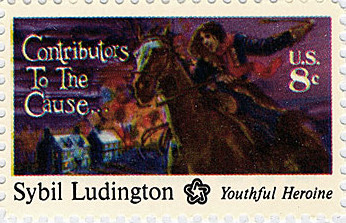
Sybil Ludington received the thanks of family and friends, even George Washington, and then stepped off the pages of history.

Paul Revere’s famous ride would likewise have faded into obscurity, but for the poetry of Henry Wadsworth Longfellow.  86 years later.

April 3, 1946 Bataan Death March

The United States was grotesquely unprepared to fight a World War in 1942, and dedicated itself to beating Adolf Hitler first. General Douglas MacArthur abandoned the “Alamo of the Pacific” on March 11 saying “I shall return”

The game was November 27, 1937.  Late in the 4th quarter, Notre Dame was tied 6-6 with Southern California. The “Fighting Irish” needed a miracle. Notre Dame fullback #58 Mario “Motts” Tonelli took the hand-off deep in Notre Dame territory and ran the ball 70 yards back before being tackled. Seconds later, the 5’11”, 195lb Tonelli, scored the game winning touchdown.Tonelli

In some ways, Mario Tonelli himself was the miracle. Years earlier at the age of 6, he’d been burned over 80% of his body, when a trash compactor toppled over on him. Mario’s immigrant father Celi, a laborer from a northern Italian marble quarry, refused to believe the doctor who said his son would never walk again. Fixing four wheels to a door, the elder Tonelli taught his first American-born son to move about with his arms. By 1935, Mario Tonelli was a football, basketball and track star at Chicago’s DePaul Academy.

After a year coaching at Providence College in 1939 and a year playing professional football for the Chicago Cardinals in 1940, Tonelli joined the Army early in 1941, assigned to the 200th Coast Artillery Regiment in Manila.

Tonelli hoped to fulfill his one years’ commitment and return to the Cardinals for the ’42 season, but it wasn’t meant to be. The radio crackled to life at 2:30am local time on December 7. “Air raid on Pearl Harbor. This is no drill!”

Military forces of Imperial Japan appeared unstoppable in the early months of WWII, attacking first Thailand, then the British possessions of Malaya, Singapore, and Hong Kong, as well as US military bases in Hawaii, Wake Island, Guam and the Philippines.Bataan1

The United States was grotesquely unprepared to fight a World War in 1942, and dedicated itself to beating Adolf Hitler first. General Douglas MacArthur abandoned the “Alamo of the Pacific” on March 11 saying “I shall return”, leaving 90,000 American and Filipino troops without food, supplies or support with which to fight off the Japanese offensive.

On April 9, 75,000 surrendered the Bataan peninsula, beginning a 65 mile, five-day slog into captivity through the heat of the Philippine jungle. Japanese guards were sadistic. They would beat the marchers and bayonet those too weak to walk. Japanese tanks would swerve out of their way to run over anyone who had fallen and was too slow in getting up. Some were burned alive. Already crippled from tropical disease and starving from the long siege of Luzon, thousands perished in what came to be known as the Bataan Death March.

bataanExhausted, sunburned and aching with thirst, Tonelli still refused when a Japanese soldier demanded his Notre Dame class ring. As the guard reached for his sword, a nearby prisoner shouted “Give it to him. It’s not worth dying for”.

Minutes later, a Japanese officer appeared, speaking perfect English. “Did one of my men take something from you?” “Yes”, Tonelli replied. “My school ring”. “Here,” said the officer, pressing the ring into his hand. “Hide it somewhere. You may not get it back next time”. Tonelli was speechless. “I was educated in America”, the officer said. “At the University of Southern California. I know a little about the famous Notre Dame football team. In fact, I watched you beat USC in 1937. I know how much this ring means to you, so I wanted to get it back to you”.

Close to 700 Americans and over 10,000 Filipinos died on the Bataan death march. For the survivors, the ordeal was only beginning. For 2½ years Tonelli suffered starvation, disease and endless beatings in the squalid prison camps known as O’Donnell, Cabanatuan, and Davao. Tonelli kept his ring throughout, buried in a soap dish. He’d take it out from time to time to remind himself:  life used to be better than this. It gave him something to hope for.

tonelli2The hellish 60-day journey aboard the filthy, cramped merchant vessel began in late 1944, destined for slave labor camps in mainland Japan. Tonelli was barely 100 pounds on arrival, his body ravaged by malaria and intestinal parasites. He was barely half the man who once played fullback at Notre Dame Stadium, Soldier Field and Comiskey Park.

Arriving at Nagoya #7 prison camp, Tonelli was handed a piece of paper. Scribbled on it was a 58. He was prisoner number 58, the same number he once wore on his football Jersey. “From that point on,” he said, “I knew I was going to make it”.

An American military tribunal conducted after the war held Lieutenant General Homma Masaharu, commander of the Japanese invasion forces in the Philippines, guilty of war crimes. He was executed by firing squad on April 3, 1946.Mario Tonelli Ring

Mario Tonelli always hoped to meet the officer who’d returned his ring, but it wasn’t meant to be. He probably didn’t survive the war. Tonelli still had that ring when he passed away in 2003.

Two weeks ago, nearly 10,000 gathered in New Mexico, to commemorate the 75th anniversary of the Bataan death march. 7,200 retired and active duty military personnel and civilians gathered in the 28th annual such event, to run the 26.2 mile “Death March” through the hilly desert terrain of the White Sands Missile Range, near Las Cruces.

Ed Broadnax of El Paso, Texas, runs the course in full uniform, boots and 45-pound backpack. “As a veteran who served 26 years in the US Army and deployed three times to combat and experienced the horrors of war, I feel pain for the men and women who suffered intensely under the deadly Japanese Imperial Forces, as they were marched through the Philippine jungle. This is what drives me to run in their honor.”Ben Skardon

Hundreds of others walked a 14.2 mile course, including Bataan Death March survivor Ben Skardon, who turns 100 in July.  Mr. Skardon walked 8½.  “The word hero doesn’t apply to me, at all”, Skardon said.  “As I said in my talk, ‘no greater love hath any man, than to lay down his life for his friends’.  That’s in the bible”.

Ben Skardon was one of 7 survivors turning out for the March 31 event.   Seven of the last survivors of the Bataan death march, fewer than fifty of whom are left alive. A year ago at last year’s event, there were 26 more.

Bataan, 75th
75th anniversary White Sands “Death March” https://www.facebook.com/Bataan-Memorial-Death-March-112650288784723/


March 30, 1282 War of Sicilian Vespers

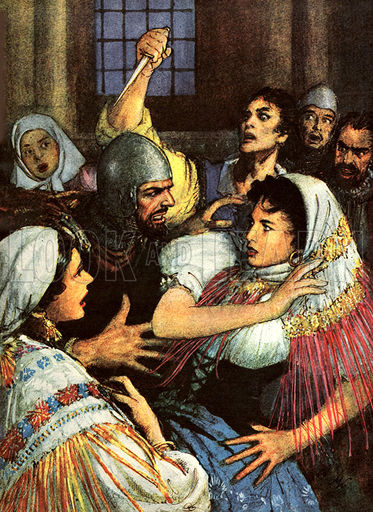
It was Easter Monday, March 30, 1282. The Church of the Holy Spirit outside Palermo was just letting out after evening vespers (prayers), when a French soldier thought he’d “inspect” a Sicilian woman for weapons.
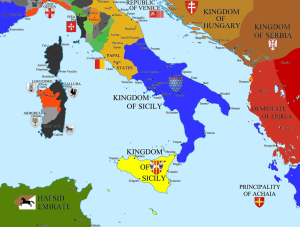
Since the early 12th century, the southern Italian peninsula and the island of Sicily had been united as the Kingdom of Sicily. Until the invasion of the French King Charles I of Anjou, who ousted Sicilian King Manfred in 1266.

The Anjou King’s rule in Sicily was vicious and repressive, with the French King himself absent for long periods. Charles’ Sicilian subjects could not have hated him more.

The Wonderful Story of France: Massacre of the Sicilian VespersIt was Easter Monday, March 30, 1282. The Church of the Holy Spirit outside Palermo was just letting out after evening vespers (prayers), when a French soldier thought he’d “inspect” a Sicilian woman for weapons.

Accounts vary as to what happened, but there’s a good chance he was just looking for a feel, and that’s what he got. The lady’s modesty thusly offended, someone in the crowd avenged her honor, knifing the French guard.

At first merely agitated, this first taste of blood drove the mob to a frenzy. Spreading across the Capital and into the countryside, Sicilians killed every Frenchman they could get their hands on.

Revolutionaries devised a linguistic test, to see who was authentically Sicilian. Native French speakers can’t pronounce the word “ciciri”, even to save themselves. And that’s the way it worked out.  God help you if you couldn’t say that word. Over four thousand Frenchmen would die over the next six weeks.

Meanwhile in Spain, Peter III King of Aragon, Peter I King of Valencia, and Peter II Count of Barcelona (these three are all the same guy), had a claim to the Sicilian throne through his wife, Constance.

The Italian physician John of Procida had been a loyal subject of Manfred’s, fleeing to Aragon after the Anjou invasion. John proceeded directly to Sicily where he spent several weeks stirring up Sicilian resentment against the French King. Sicily then appealed to the Spanish King to intervene, while John sailed for Constantinople to procure the help of Michael VIII Palaeologus.war_of_the_vespers

History records what followed as the War of Sicilian Vespers. The Angevins were supported by the Papacy and his Italian supporters (Guelphs), while the Aragonese received help from Sicily itself, the Byzantine Emperor, and the Ghibellines, Italian supporters of the Holy Roman Emperor.

Several players changed sides over the course of the next twenty years. In the end, the son of the Spanish King took the Sicilian crown in 1302, becoming King Frederick II, beginning near 400 years of Spanish rule over the island.

And so it was that a French soldier molested an Italian woman, and lost the kingdom of Sicily, to Spain.

March 29, 1973 Vietnam

This is no benign ideology we’re talking about, current estimates of citizens murdered by their own government in the Soviet Union alone, range from 8 to 61 million during the Stalinist period.

French Indo-China, the area now known as Laos, Cambodia and Vietnam, was governed as a French Colonial territory since the late 19th century. The region came to be occupied by the Imperial Japanese after the fall of France, at the onset of WWII.  There arose a nationalist-communist army during this period, dedicated to throwing out the Japanese occupier.  It called itself the “League for the Independence of Vietnam”, or “Viet Minh”.

France re-occupied the region following the Japanese defeat in WWII, but soon faced the same opposition from the  army of Ho Chi Minh and Vo Nguyen Giap. What began as a low level, rural insurgency, later became a full-scale modern war when Communist China entered the fray in 1949.

The disastrous defeat of French forces at Dien Bien Phu in 1953 led to French withdrawal dien_bien_phu-resupplyfrom Vietnam, the Geneva Convention partitioning the country into the communist “Democratic Republic of Vietnam” in the north, and the State of Vietnam in the south, led by Emperor Bao Dai and Prime Minister Ngo Dinh Diem.
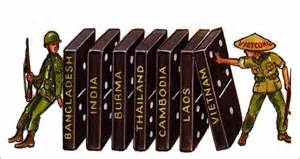
Communist forces of the north continued to terrorize Vietnamese patriots in the north and south, with aid and support from communist China and the Soviet Union.

The student of history understands that nothing happens in a vacuum.  US foreign policy is no exception. International Communism had attempted to assert itself since the Paris Commune rebellion of 1871, and found its first major success with the collapse of czarist Russia in 1917.

Domino effectUS policy makers feared a “domino” effect, and with good cause. The 15 core nations of the Soviet bloc were soon followed by Eastern Europe, as Poland, Bulgaria, Romania, Hungary and Czechoslovakia fell into the Soviet sphere of influence. Germany was partitioned into Communist and free enterprise spheres after WWII, followed by China, North Korea and so on across Southeast Asia.
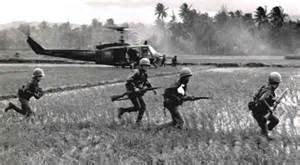
This is no benign ideology we’re talking about, current estimates of citizens murdered by their own government in the Soviet Union alone, range from 8 to 61 million during the Stalinist period.Paddy

Agree or disagree with policy makers of the time, that’s your business, but they followed a logical thought process. US aid and support for South Vietnam increased as a way to “stem the tide” of international communism, at the same time that French support was pulling back. By the late 50s, the US was sending technical and financial aid in expectation of social and land reform. By 1960, the “National Front for the Liberation of South Vietnam” (“NLF”, or “Viet Cong”) had taken to murdering Diem supported village leaders. JFK responded by sending 1,364 American advisers into South Vietnam in 1961.

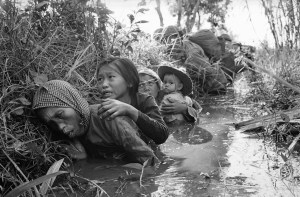
Vietnam War CiviliansThe war in Vietnam pitted as many as 1.8 million allied forces from South Vietnam, the United States, Thailand, Australia, the Philippines, Spain, South Korea and New Zealand, against about a half million from North Vietnam, China, the Soviet Union and North Korea. Begun on November 1, 1955, the conflict lasted 19 years, 5 months and a day. On March 29, 1973, two months after signing the Paris Peace accords, the last US combat troops left South Vietnam as Hanoi freed the remaining POWs held in North Vietnam.
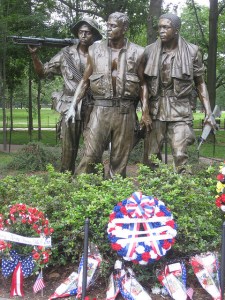
Even then it wasn’t over. Communist forces violated cease-fire agreements before they were signed. Some 7,000 US civilian Department of Defense employees stayed behind to aid South Vietnam in conducting an ongoing and ultimately futile war against communist North Vietnam.Three_soldiers

The last, humiliating scenes of the war played themselves out on the roof of the US Embassy in Saigon on April 29 and 30, 1975, as those who could boarded helicopters, while communist forces closed around the South Vietnamese capital.

In the end, US public opinion would not sustain what too many saw as an endless war.  We continue to feel the political repercussions, to this day. I was ten at the time of the Tet Offensive in 1968. I remember feeling horrified at the way some of my fellow Americans conducted themselves. I came to feel at that time as I do to this day, that anyone who has a problem with our country’s war policy, needs to take it up with a politician.  Not a member of the military,

.The “Killing Fields” of Cambodia followed between 1975-‘79, when the “Khmer Rouge”, self-described as “The one authentic people capable of building true communism”, murdered or caused the deaths of an estimated 1.4 to 2.2 million of their own people, out of a population of 7 million. All to build their perfect, agrarian, “Worker’s Paradise”.

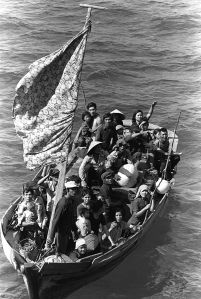
Imagine feeling so desperate, so fearful of the alien ideology invading your country, that you convert all your worldly possessions and those of your family to a single diamond, bite down on that stone until it embedded in your shattered teeth, and fled with your family to open ocean in a small boat.  All in the faint and desperate hope, of getting out of that place.  That is but one story among the more than three million “boat people”.  Three million from a combined population of 56 million, fleeing the Communist onslaught in hopes of temporary asylum in other countries in Southeast Asia or China.Vietnamese_boat_people

They were the Sino-Vietnamese Hoa, and Cambodians fleeing the Khmer Rouge.  Ethnic Laotians, Iu Mien, Hmong and other highland peoples of Laos.  The 30 or so Degar (Montagnard) tribes in the Central Highlands, so many of whom had been our steadfast allies in the late war.  Over 2.5 million of them were resettled, more than half to the United States.  The other half went mostly to Canada, Europe and South Pacific nations.   A half-million were repatriated, voluntarily or involuntarily.  Hundreds of thousands vanished in their attempt to flee.

The humanitarian disaster that was the Indochina refugee crisis was particularly acute between 1979-’80, but reverberations continued into the 21st century.  The last boat people were repatriated from Malaysia in 2005.  Thailand deported 4,000 Hmong refugees in 2009.

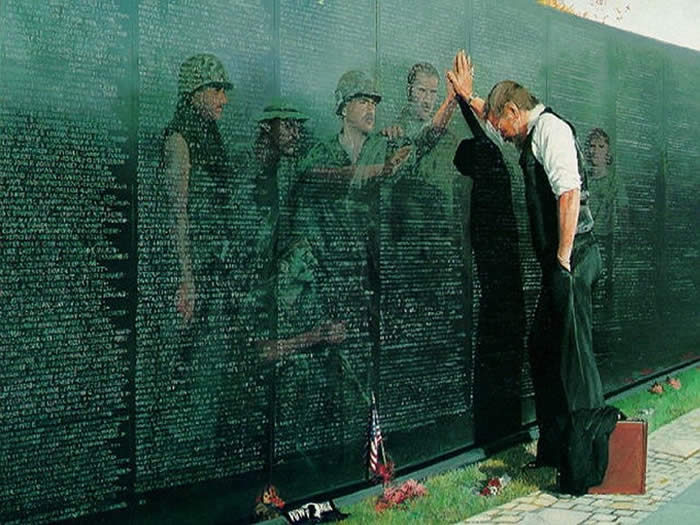
There were 57,939 names inscribed on the Vietnam Memorial Wall, the day it opened in 1982. Over the years, the names of military personnel who succumbed to wounds sustained in the war, were added to the wall. As of Memorial Day 2015, there are 58,307.

Things they carried

March 28, 1915 Thrasher Incident

That March, the 31-year-old Hardwick, Massachusetts native was leaving Liverpool, returning to a job on the Gold Coast of British West Africa aboard the cargo-passenger ship RMS Falaba

102 years ago, the Great War was in its 8th month.  The war of mobility of the early months was long gone, replaced by the lines of trench works which would characterize the rest of the war. Off the battlefield, the German and British governments each sought to choke the life out of the other’s economy. Great Britain held the upper hand, with the superior deep-water surface fleet.  To the Kaiser’s way of thinking, parity would come in the form of a submarine.

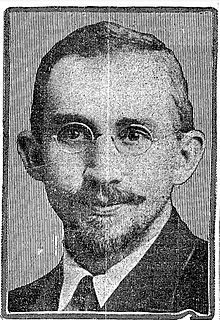
Picture_of_Leon_Chester_Thrasher_who_died_on_the_RMS_Falaba
Leon Chester Thrasher 1st American killed in WW!

Leon Chester Thrasher was an American mining engineer. That March, the 31-year-old Hardwick, Massachusetts native was leaving Liverpool, returning to a job on the Gold Coast of British West Africa aboard the cargo-passenger ship RMS Falaba.

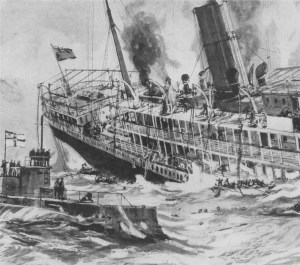
The German submarine U-28 stopped Falaba on this day in 1915, sinking the ship to the bottom with a single torpedo and killing 104, including Leon Thrasher.  The first American killed in the “War to End all Wars”.

German policy varied over the course of the war, from unrestrained submarine warfare, to strict adherence with international law. U-28 Commander Freiherr Georg-Günther von Forstner claimed to have given Falaba 23 minutes to evacuate, cutting that short and firing his torpedo only in response to Falaba’s distress rockets and wireless messages for help. British authorities claim to have been given only 7 minutes’ warning.

The death of the first American in the European war set off a diplomatic row which threatened for a time to bring the Americans into the war. American newspapers called it the “Thrasher Incident”, denouncing the sinking as a “massacre”.   An act of “piracy”.falaba

The Germans claimed that subsequent explosions proved Falaba to be carrying contraband ammunition, intended to kill German boys on European battlefields.  Eyewitness accounts failed to settle the matter, some even tended to support the German view.

President Woodrow Wilson stayed his hand, winning re-election the following year with the slogan, “He Kept Us Out of War”.

What remained of Leon Thrasher washed ashore on the coast of Ireland on July 11, 1915, after 106 days in the water.  Authorities mistakenly believed him to be a victim of the RMS Lusitania sinking, designating him Body No. 248.

The U-boat U-20 had torpedoed the Cunard liner RMS Lusitania off the coast of Ireland 40 days earlier, killing 1,198, 124 of whom were Americans. The US came close to the brink of war that time too, but the last and final straw wouldn’t come for another two years.  In the form of a German telegram, to the government of Mexico.

March 26, 1881 Old Abe

It wasn’t long before the entire Regiment adopted the bald eagle, calling themselves the “Eagle Regiment”, in honor of their new mascot. Much deliberation followed as to what to name him, before it was decided. He would be called “Old Abe”.

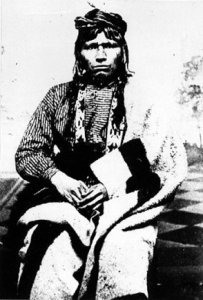
Ahgamahwegezhig
Ahgamahwegezhig

In 1861, leader of the Lac du Flambeau Ojibwe band Ahgamahwegezhig, or “Chief Big Sky”, captured an eaglet, and sold it for a bushel of corn to the McCann family of Chippewa County, Wisconsin. Captain John Perkins, Commanding Officer of the Eau Claire “Badgers”, bought the young bald eagle from Daniel McCann.

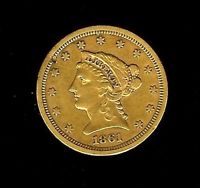
The asking price was $2.50.  Militia members were asked to pitch in twenty-five cents, as was one civilian:  tavern-keeper S.M. Jeffers.  Jeffers’ refusal earned him “three lusty groans”, causing him to laugh and tell them to keep their quarters.  Jeffers threw in a single quarter-eagle, a gold coin valued at 250¢, and that was that.   From that moment onward, the militia unit called itself the Eau Claire “Eagles”.1861 quarter eagle

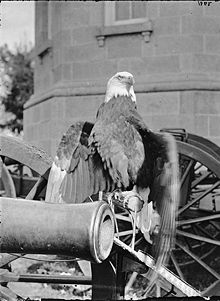
Perkins’ Eagles entered Federal Service as Company C of the 8th Wisconsin Volunteer Infantry Regiment.  It wasn’t long before the entire Regiment adopted the bald eagle, calling themselves the “Eagle Regiment”, in honor of their new mascot.  Much deliberation followed as to what to name him, before it was decided.  He would be called “Old Abe”.

Old Abe accompanied the regiment as it headed south, travelling all over the western theater and witness to 37 battles. David McLain wrote “I have frequently seen Generals Grant, Sherman, McPherson, Rosecrans, Blair, Logan, and others, when they were passing our regiment, raise their hats as they passed Old Abe, which always brought a cheer from the regiment and then the eagle would spread his wings”.

Old AbeAbe became an inspirational symbol to the troops, like the battle flag carried with each regiment. Colonel Rufus Dawes of the Iron Brigade recalled, “Our eagle usually accompanied us on the bloody field, and I heard [Confederate] prisoners say they would have given more to capture the eagle of the Eighth Wisconsin, than to take a whole brigade of men.”
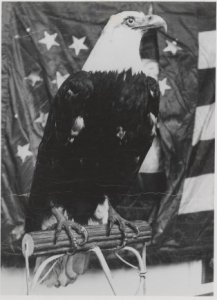
Confederate General Sterling Price spotted Old Abe on his perch during the battle of Corinth, Mississippi.  “That bird must be captured or killed at all hazards”, Price remarked. “I would rather get that eagle than capture a whole brigade or a dozen battle flags”.OldAbe

Old Abe was presented to the state of Wisconsin at the end of the war. He lived 15 years in the “Eagle Department”, a two-room apartment in the basement of the Capitol, complete with custom bathtub, and a caretaker.  Photographs of Old Abe were sold to help veteran’s organizations. He was a national celebrity, traveling across the country and appearing at the 1876 Centennial Exposition in Philadelphia, the 1880 Grand Army of the Republic National Convention, and dozens of fundraising events.

OLD_ABE_AND_GEORGE_GILLES
Old Abe & caretaker George Gilles

A small fire broke out in a Capitol basement workshop, fed by cleaning solvents and shop rags.  The fire was quickly extinguished thanks to the bald eagle’s cries of alarm, but not before Old Abe inhaled a whole lot of that thick, black smoke.  Abe’s health began to decline, almost immediately.  Veterinarians and doctors were called, but to no avail.  Bald eagles have been known to live as long as 50 years in captivity. Old Abe died in the arms of caretaker George Gilles on March 26, 1881.  He was 20.

His remains were stuffed and mounted.  For the next 20 years his body remained on display in the Capitol building rotunda. On the night of February 26, 1904, a gas jet ignited a newly varnished ceiling, burning the Capitol building to the ground.

Since 1915, Old Abe’s replica has watched over the Wisconsin State Assembly Chamber of the new capitol building.Old_abe_capitol

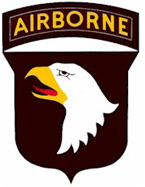
In 1921, the 101st infantry division was reconstituted in the Organized Reserves with headquarters in Milwaukee.  It was here that the 101st first became associated with the “Screaming Eagle”.  The Screaming Eagles of the 101st Airborne participated in the D-Day invasion, the Battle of the Bulge, Operation Market Garden, and Bastogne, becoming the basis of the HBO series “A Band of Brothers”.

101st_Airborne_Division_patchAfter WWII, elements of the 101st Airborne were mobilized to Little Rock by President Eisenhower to protect the civil rights of the “Little Rock Nine”, a group of black students enrolled in Little Rock Central High School in September 1957, as the result of the US Supreme Court’s landmark ruling in the historic Brown v. Board of Education case.
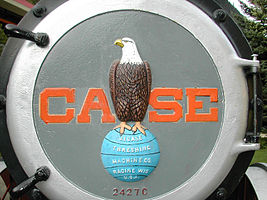
For 104 years, Old Abe appeared in the trademark of the J.I. Case farm equipment company of Racine, Wisconsin.Old_Abe_Case_mascot

Winston Churchill once said “A lie gets halfway around the world before the truth has a chance to get its pants on.”  We all know how stories change with the retelling.  Some stories take on a life of their own.  Ambrose Armitage, serving with Company D of the 8th Wisconsin Infantry, wrote in his diary on September 14, 1861, that Company C had a “four month old female eagle with them”.   Two years later, Armitage wrote, “The passing troops have been running in as they always do to see our eagle. She is a great wonder”.

Ten years after his death, a national controversy sprang up and lasted for decades, as to whether Old Abe was, in fact, a “she”.  Suffragettes claimed that “he” had laid eggs in the Wisconsin capitol.  Newspapers weighed in, including the Washington Post, Detroit Free Press, St. Louis Post Dispatch, Oakland Tribune, and others.Abe Feathers

Bald eagles are not easily sex-differentiated, there are few clues available to the non-expert, outside of the contrasts of a mated pair.  It’s unlikely that even those closest to Old Abe, had a clue as to the eagle’s sex.

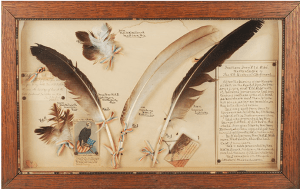
University of Wisconsin Biotechnology Center Sequencing Facility researchers had access to four feathers, collected during the early days at the Grand Army of the Republic Memorial Hall.  In March of 2016, samples were taken from the hollow quill portion (calamus) of each feather, and examined for the the presence of two male sex chromosomes (ZZ) or both a male and female chromosome (ZW). After three months, the results were conclusive.  All four samples showed the Z chromosome, none having a matching W.  After 155 years, Old Abe could keep his name.


March 8, 1863 The Gray Ghost

Entering the chamber where the General slept, Mosby lifted his nightshirt and slapped his bare backside with a sword

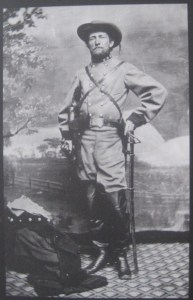
John Singleton Mosby was a Virginia lawyer, when Civil War broke out in 1861.  Like fellow Virginian Robert E. Lee, Mosby opposed secession. When it came, he left the Union along with his home state of Virginia. Small and frail as a boy, Mosby was often the target of much larger bullies. He’d write in his memoirs that he never won a fight. It seems that he never backed down from one, either.

MosbyMosby participated in the 1st Battle of Manassas (1st Bull Run) as a member of the Virginia Volunteers Mounted Rifles, later joining James Ewell Brown “Jeb” Stuart as a Cavalry Scout. A natural horseman and gifted tactician, information gathered by Mosby aided Stuart in his humiliating ride around McLellan’s Army of the Potomac in June, 1862.
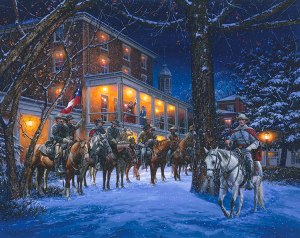
In 1863, Stuart authorized Mosby to form and take command of the 43rd Battalion of the Virginia Cavalry, a regiment sized unit operating out of north central Virginia. These “Partisan Rangers”, 1,900 of whom served between January 1863 and April 1865, were under the authority of Stuart and Lee and subject to their commands, but they were not a traditional army unit. Mosby’s Rangers shared in the spoils of war, they had no camp duties, and lived scattered among civilian populations.

Mosby himself would often reconnoiter a target himself, in disguise.  Known for lightning raids of the Virginia countryside, Mosby’s 43rd Cavalry would be called together to strike a specific target, dispersing afterward and making themselves next to impossible to run to ground.  He was the “Gray Ghost”, so successful were his Rangers, that parts of Virginia’s Piedmont region are known as “Mosby’s Confederacy”, to this day.

Late on the night of March 8, 1863, Mosby’s Rangers formed up for a raid on Fairfax Mosbys-Rangers750Courthouse, Virginia. Union Brigadier General Edwin H. Stoughton was sleeping in his headquarters there, some sources say he was “sleeping it off”. The Gray Ghost entered the Union General’s headquarters in the small hours of March 9, his rangers quickly overpowering a handful of sleepy guards.

Entering the chamber where the General slept, Mosby lifted his nightshirt and slapped his bare backside with a sword. The general sputtered awake, demanding “What is the meaning of this”. “General, did you ever hear of Mosby”, came the question. Stoughton replied, “Yes, have you caught him?” “I AM Mosby,” said the Gray Ghost, “and I have caught you. Stuart’s cavalry has possession of the Courthouse; be quick and dress.”

John Singleton Mosby and 29 Rangers had captured a Union General, two Captains, 30 enlisted men and 58 horses, without firing a shot. On hearing the story the next day, Lincoln lamented. “I can make another Brigadier in 5 minutes, but I can’t replace those horses”.

Mosby 3rd Reunion 7-1-1896
Mosby’s Rangers, Third Reunion, 1896


March 6, 1940 White Death

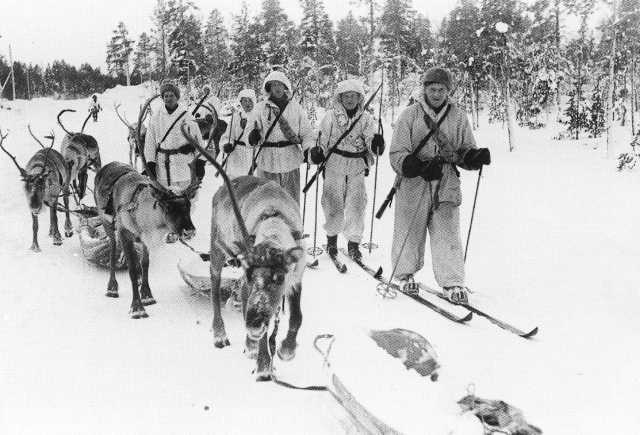
Dressed in white camouflage, the most deadly sniper in history would surround himself with hard-packed snow, his mouth filled with snow so no one would see his breath.

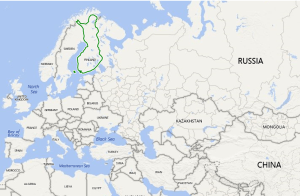
The Republic of Finland is a sovereign state in the north of Europe.  The 8th largest country on the European continent, with a population roughly equal to that of Minnesota. In 2015, the World Bank ranked the country 44th in GDP, behind Ireland, Chile and Pakistan.

finlandWith Sweden to the west and Russia to the east, the region has been a zone of conflict since the early 12th century, finally gaining independence as the result of the first World War and collapse of the Russian Empire.

In 1938, the Soviet Union demanded Finnish territory in exchange for land elsewhere, ostensibly as a security zone. Leningrad was at that time only 20 miles from the border. Finland refused, on November 30, 1939, 3 months after the outbreak of WWII, the Red Army invaded.

The “Winter War” is a David vs. Goliath story. The Soviets had three times as many troops, thirty times the number of aircraft, and a hundred times as many tanks. The Red Army officer corps, however, was dangerously inexperienced, with over 30,000 of its most experienced mid-level and senior officers imprisoned or executed following Josef Stalin’s “Great Purge” of 1937.

Expecting a short conflict, Soviet forces were poorly equipped for an extended winter war. Few if any possessed the white camouflage of the other side. For the Finnish side, morale was high, and Finnish forces inflicted far heavier casualties, than anyone had anticipated.

Simo “Simuna” Häyhä was a farmer and hunter, born in what was then the Grand Duchy of Finland, near the border with Russia. Häyhä enjoyed shooting competitions in Viipuri Province, and was quite good at it. It was said that his house was full of trophies. He joined the Finnish voluntary militia in 1925 at the age of 20. During the Winter War of 1939-40, Häyhä served as a sniper for the Finnish Army.

He was the “White Death”.  Over the 100 days of his wartime service, Simo Häyhä racked up 505 confirmed kills, more than any sniper in history. Many of his kills went unconfirmed. The true count is probably closer to 800. An average of eight per day, in a place where December daylight hours number no more than six.

simo_hayha_honorary_rifleThe Battle of Kollaa took place in temperatures ranging from −4° to −40°, Fahrenheit. In February, the temperature averages only 18.5°. Dressed in white camouflage, Häyhä would surround himself with hard-packed snow, his mouth filled with snow so no one would see his breath.

At 5’3″, he liked the shorter, White Guard version of the five shot, bolt action Mosin–Nagant, because it fit his small frame. He preferred the open “Pystykorva” or “Spitz” sight, so-called because of its resemblance to a Spitz dog. It made for a smaller target, as a shooter must raise his head ever so slightly higher, when using a telescopic sight.

The Red Army was desperate to kill this man. Russian counter-snipers and entire artillery barrages were sent to take him out. On March 6, 1940, Häyhä was hit on the left side of his jaw, by a high-explosive incendiary/armor-piercing (HEIAP) round, fired by a Russian soldier. The damage was catastrophic. Soldiers who went to pick him up, said “half his face was missing”. He regained consciousness eight days later, the day that peace was declared.

The bullet had crushed his jaw and taken away his left cheek, but he did not die. It wouldsimo_hayha_second_lieutenant_1940 take several years to recover from his wound, but Häyhä went on to become a successful dog breeder and moose hunter, once hunting with Finnish President Urho Kekkonen.

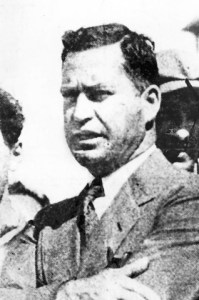
Häyhä passed away in a war veterans’ nursing home in Hamina in 2002, at the age of 96.  In 1998, someone asked how he became such a good shot. He answered “Practice.”  He must have been a man of few words.

To this day, Simo Häyhä remains the most successful sniper in history, with a confirmed kill rate three times that of Chris Kyle, and five times that of Carlos Hathcock. Asked if he regretted killing so many people, he replied “I only did my duty, and what I was told to do, as well as I could.”

February 20, 1942 Ace

O’Hare’s Medal of Honor citation calls it “…one of the most daring, if not the most daring, single action in the history of combat aviation…”

We’ve all read the story of “Easy Eddie” O’Hare, the mob lawyer who had everything but a good name, who gave it all up to show his son that personal integrity was more important than all the riches of the underworld. Easy Eddie went on to testify against Al Capone and lost his life for it, Eddie’s son “Butch” going on to become a WWII flying Ace.

The story is true, kind of, but it lays the morality play on a little thick.

Edward Joseph O’Hare, “EJ” to friends and family, passed the Missouri bar exam in 1923easy-eddie and joined a law firm.  Operating dog tracks in Chicago, Boston and Miami, O’Hare made a considerable fortune working for Owen Smith, the high commissioner for the International Greyhound Racing Association, who patented the mechanical rabbit used in dog racing.  EJ and Selma Anna (Lauth) O’Hare had three children between 1914 and 1924, – Edward (“Butch”), Patricia, and Marilyn.
EJ developed an interest in flying in the 1920s, once even hitching a ride on Charles Lindbergh’s mail plane.  For a time he worked as pilot for Robertson Aircraft, occasionally giving his teenage son a turn at the controls.

One day EJ came home to find 13 year old Butch sprawled on the couch, munching on donuts and banana layer cake.  He enrolled the boy in the Western Military Academy in Alton, Illinois.  The kid was getting way too lazy.

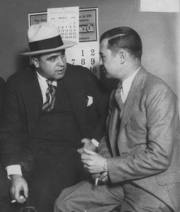
easy_eddie_with_caponeEJ and Selma divorced in 1927.  He left St. Louis for good, moving to Chicago while Butch attended WMA.  It was there that the elder O’Hare met Al Capone, later earning his second fortune working as the gangster’s business manager and lawyer.

In 1930, O’Hare approached John Rogers, a reporter for the St. Louis Post-Dispatch, asking that he arrange a meeting with the Internal Revenue Service, which was then after Capone on grounds of tax evasion.  It may have been to restore his good name, or maybe he saw the writing on the wall.  Possibly both.  The two are not mutually exclusive.  Whatever the motivation, an Agent Wilson of the IRS later said “On the inside of the gang I had one of the best undercover men I have ever known: Eddie O’Hare.”

Al Capone was convicted of tax evasion in 1931 and sentenced to Alcatraz, becoming easyeddieohare02eligible for early release in 1939 due to syphilitic dementia. On November 8 of that year, EJ left his office at Sportsman’s Park racetrack in Cicero in his black ’39 Lincoln Zephyr. Two shotgun wielding gunmen pulled alongside, firing a volley of big game slugs and killing O’Hare, instantly. No arrest was ever made.
Butch had graduated from WMA and the Naval Academy at Annapolis by this time, receiving his duty assignment aboard the USS New Mexico.  Shortly after his father’s assassination, the younger O’Hare began flight training at Naval Air Station in Pensacola.
Assigned to the USS Saratoga’s Fighting Squadron, Butch O’Hare made his first carrier landing in 1940, describing it as “just about the most exciting thing a pilot can do in peacetime.”

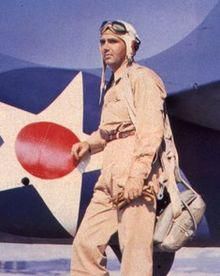
butch-ohareIt was February 20, 1942, when Butch O’Hare became the first American flying Ace of WWII. The carrier Lexington was discovered by Japanese reconnaissance aircraft, 450 miles outside of Rabaul.  Six Grumman F4F Wildcat fighters and Lexington’s anti-aircraft guns were engaged with an incoming formation of nine Japanese bombers, when nine more bombers were reported incoming.
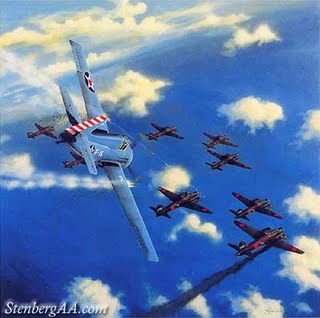
Six more Wildcats roared off the flight deck of the Lexington, one piloted by Butch O’Hare.  He and his wingman Marion William “Duff” Dufilho were the first to spot the V formation, diving to intercept them and leaving the other four fighters too far away to change the outcome.  Dufilho’s guns jammed and were unable to fire, leaving Butch O’Hare alone on the unprotected side of his flotilla.  One fighter against nine enemy bombers flying in tight V formation, mutually protecting one another with their rear-facing machine guns.

O’Hare’s Wildcat had four 50-caliber guns with 450 rounds apiece, enough to fire for abouthagel-butchohare 34 seconds.  What followed was so close to the Lexington, that pilots could hear the carrier’s AA guns.  Full throttle and diving from the high side, O’Hare fired short, accurate bursts, the outermost bomber’s right-hand engine literally jumping from its mount.  Ducking to the other side and smashing the port engine on another “Betty”, O’Hare’s Wildcat attacked one bomber after another, single handedly taking out five bombers with an average of only 60 rounds apiece.
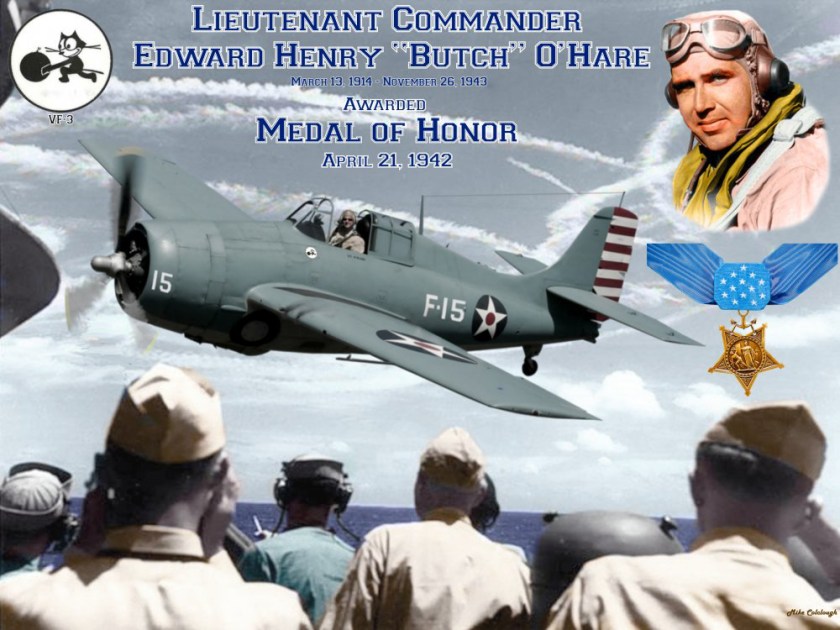
O’Hare’s Medal of Honor citation calls it “…one of the most daring, if not the most daring, single action in the history of combat aviation…”

Butch O’Hare disappeared in a confused night action on November 26, 1943.  Some say he was cut down by friendly fire, mistakenly shot down by TBF Avenger gunner Alvin B. Kernan.  Others say it was a lucky shot by a gunner aboard his old adversary, a Rikko (Betty) bomber.  A third theory is that his Hellcat caught a wingtip on a wave, and cartwheeled into the ocean.

The Orchard Depot Airport in Chicago was renamed O’Hare International Airport in tribute to the fallen Ace, on September 19, 1949.   Neither the body, nor the aircraft, were ever recovered.  butch-ohare

February 18, 1817  Friends and Enemies

The two looked across that field as gray and butternut soldiers formed up along seminary ridge.  It’s unlikely they ever saw one another

Armistead is a prominent name in Virginia, the family going back to colonial days.  Five Armistead brothers fought in the war of 1812. Major George Armistead commanded Fort McHenry during the battle that inspired Francis Scott Key to write the Star Spangled Banner.  Major Armistead became an uncle on this day in 1817, to Lewis Addison Armistead, the first of eight children born to General Walker Keith Armistead and Elizabeth Stanley.


lewis-addison-armistead
Lewis Addison Armistead

“Lothario” or “Lo” to his friends, Armistead followed in the family footsteps, attending the US Military Academy at West Point.  He never graduated, some say he had to resign after breaking a plate over the head of fellow cadet and future Confederate General Jubal Early.  Others say it was due to academic difficulties, particularly French class.


Armistead’s influential father gained him a 2nd Lieutenant’s commission nevertheless, awarded in 1839, about the same time his former classmates received theirs.  Armistead’s field combat experience reads like a time-line of his age:  cited three times for heroism in the Mexican-American War, wounded at the Battle of Chapultepec, going on to serve in the Mohave War and the Battle of the Colorado River.

Stellar though his military career was, the man’s personal life was a mess.  Armistead survived two wives and two daughters, only to lose the family farm in a fire, all while fighting a severe case of Erysipelas, a painful skin condition known in the Middle Ages as “St. Anthony’s Fire”.

It’s been said that conjugating the “Be” verb changed after the Civil War.  Before, it was the United States “are”.  Afterward, it became the United States “is”.  Not for no reason.  This was a time when Patriotic Americans felt every bit the attachment to their states, as to the nation.

Fellow Americans took sides on the eve of the Civil War.  Even brothers.   Like his fellow Virginian Robert E. Lee, Armistead wanted no part of secession, but followed his state when it became inevitable.

winfield-scott-hancock
Winfield Scott Hancock

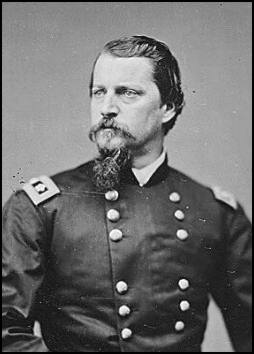
Pennsylvania native Winfield Scott Hancock went the other direction, staying with the Union.  Years later, Hancock would run for the Presidency, only narrowly losing to James A. Garfield.  Noted for personal integrity in a time of rampant political corruption, President Rutherford B. Hayes said of Hancock, “… [I]f, when we make up our estimate of a public man, conspicuous both as a soldier and in civil life, we are to think first and chiefly of his manhood, his integrity, his purity, his singleness of purpose, and his unselfish devotion to duty, we can truthfully say of Hancock that he was through and through pure gold.”

Armistead and Hancock served together on the frontiers, developing a close personal friendship as early as 1844.  On their final parting on the eve of war, Armistead made Hancock the gift of a new Major’s uniform.  To Hancock’s wife he gave his own prayer book, bearing the inscription ”Trust In God And Fear Nothing”.

Three years came and went before the old friends once again faced one another, this time across the field of battle.   Robert E. Lee tried to go after the Union right on that first day at Gettysburg, looking for a soft spot in the line. On day two, he went after the left.  On the afternoon of July 3, 1863, Lee went straight up the middle.

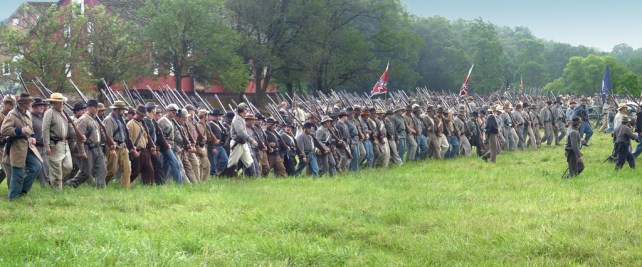
The two looked across that field as gray and butternut soldiers formed up along seminary ridge.  It’s unlikely they ever saw one another.  The action has gone into history as “Pickett’s Charge”, though the term is a misnomer.  Major General George Pickett commanded only one of  three units taking part in the assault, under Lieutenant General James Longstreet.

The pace was almost leisurely as Pickett’s, Trimble’s and Pettigrew’s Confederate soldiers stepped over the stone wall.  13,000 crossing abreast, bayonets glinting in the sun, pennants rippling in the breeze.

longstreets-assault

You cannot escape the sense of history if you’ve ever crossed that field. Stepping off Seminary Ridge with a mile to go, you are awe struck at the mental image of thousands of blue clad soldiers, awaiting your advance.  Halfway across and just coming into small arms range, you can’t picketts_chargehelp a sense of relief as you step across a low spot and your objective, the “copse of trees”, drops out of sight.  If you can’t see them they can’t shoot at you.  Then you look to your right and realize that cannon would be firing down the length of your lines from Little Round Top, as would those on Cemetery Hill to your left. Rising out of the draw you are now in full sight of Union infantry.  You quicken your pace as your lines are torn apart from the front and sides. Fences hold in some spots along the Emmitsburg Road.  Hundreds of your comrades are shot down in the attempt to climb over.

Finally you are over and it’s a dead run.  Seeing his colors cut down, Hancock puts his hat atop his sword, holding it high and bellowing above the roar of the guns “Come on, boys, give them the cold steel! Who will follow me!”

bloody-angleThe “High tide of the Confederacy” marks the point between the corner of a stone wall and that copse of trees, the farthest the shattered remnants of Longstreet’s assault would ever get.  Lewis Armistead made it over that wall before being shot down, falling beside the wheels of a Union cannon.

I always wondered what would have happened had J.E.B. Stuart’s cavalry come out of the woods to the Union rear, but that wasn’t meant to be.  The Confederate advance couldn’t hold, wilting in the face of overwhelming Federal firepower.

gettysburg-reunion
Gettysburg veterans on the 50th anniversary of the battle, July 1-3, 1913

Armistead lay bleeding as he asked a nearby soldier about Hancock.  General Hancock was himself wounded by this time, the bullet striking his saddle pommel and entering his thigh, along with shards of wood and a saddle nail.  When told his best friend was also wounded, Armistead said ”Not both of us on the same day!”.  Armistead spoke to Captain Henry Bingham, Hancock’s aide, saying “Tell General Hancock, from me, that I have done him and you all a grave injustice”.

One day, the country would reunite.  The two friends never did.  Lewis Armistead died of his wounds, two days later.