
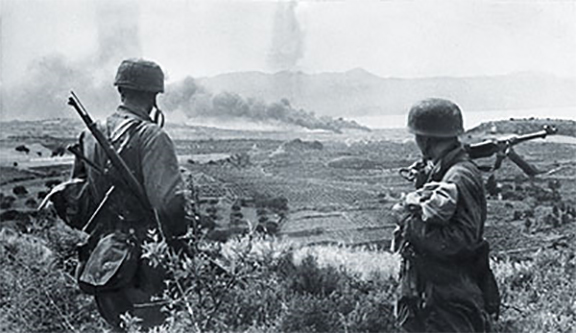
Throughout the history of armed conflict, men who have endured combat together have formed a special bond. Prior to the David vs. Goliath battle at Agincourt, Henry V spoke of “We few, we happy few, we band of brothers“. The men who fought the “War to end all wars” spoke not of God and Country, but of the man to his left and right. What then does it look like, when the man you’re fighting for is literally your own brother?
Hellenic forces enjoyed early success when fascist Italy invaded Greece on October 28, 1940, the Greek army driving the intruder into neighboring Albania in the first Allied land victory of the second World War.
Until the intervention of Nazi Germany and her Bulgarian ally.
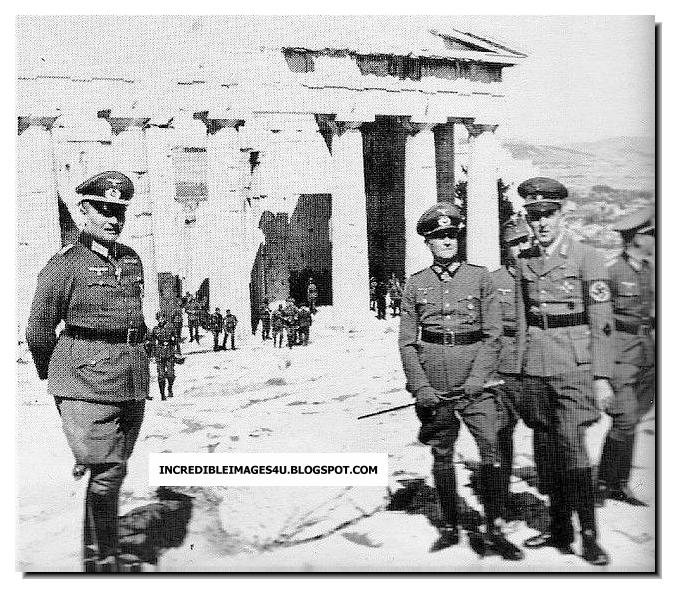
British commonwealth troops moved from Libya on orders from Winston Churchill proved too little, too late. The Greek capital at Athens fell on April, 27. Greece suffered axis occupation for the rest of the war, with devastating results. Some 80% of Greek industry was destroyed along with 90 percent of ports, roads, bridges and other infrastructure. 40,000 civilians died of starvation, in Athens alone. Tens of thousands more died in Nazi reprisals, or at the hands of Nazi collaborators.
Fearful of losing the strategically important island of Crete, Prime minister Winston Churchill sent a telegram to the Chief of the Imperial General Staff General Sir John Dill: “To lose Crete because we had not sufficient bulk of forces there would be a crime.”
By the end of April, the Royal Navy evacuated 57,000 troops to Crete, largest of the islands comprising the modern Greek state. They’d been sent to bolster the Cretan garrison until the arrival of fresh forces, but this was a spent force. Most had lost heavy equipment in the hasty evacuation. Many were unarmed, altogether.
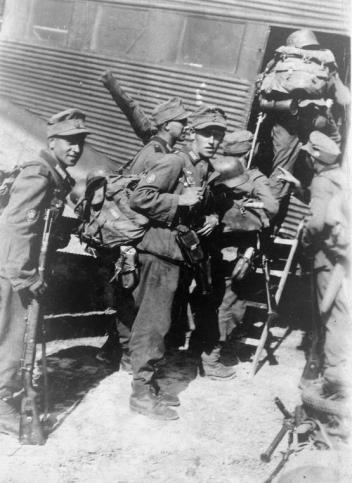
Occupied at this time with operation Barbarossa, Hitler’s surprise invasion of his erstwhile Soviet ally, German Army command had little desire to go after Crete. Eager to redeem themselves following the failure to destroy an all-but prostrate adversary during the Battle of Britain, Luftwaffe High Command was a different story.
Hitler recognized the strategic importance of Crete, both to the air war in the eastern Mediterranean and for the protection of the Axis southern flank.
By the time of the German invasion, Allied forces were reduced to 42,000 on Crete of which only 15,000, were combat ready. New Zealand Army Major-General Bernard Freyberg in command of these troops, requested evacuation of 10,000 who had “little or no employment other than getting into trouble with the civil population“.
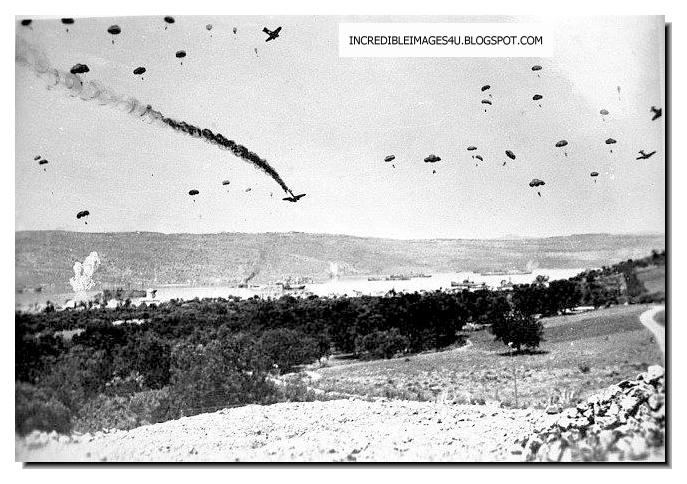
Once again it was too little, to late. The first mainly airborne invasion in military history and the only such German operation of WW2 began on May 20, 1941.
The Luftwaffe sent 280 long-range bombers, 150 dive-bombers, 180 fighters and 40 reconnaissance aircraft into the attack, along with 530 transport aircraft and 100 gliders.
The allied garrison was soon outnumbered and fighting for their lives. Recognizing that the battle was lost, leadership in London instructed Freyberg to abandon the island, on May 27.
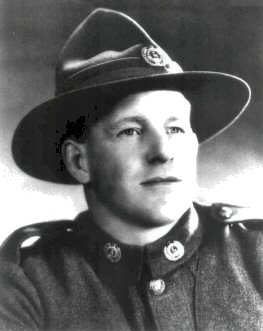
The “Victoria Cross” is the highest accolade in the British system of military honors, equivalent to the American Medal of Honor. Sergeant Clive Hulme of the New Zealand 2nd Division was part of that fighting withdrawal. He was 30 years old at the time of the battle for Crete where his actions, earned him the Victoria Cross. Let Sergeant Hulme’s citation, tell his story:
“On ground overlooking Malene Aerodrome on 20th and 21st May [Sergeant Hulme] personally led parties of his men from the area held by the forward position and destroyed enemy organised parties who had established themselves out in front of our position, from which they brought heavy rifle, machine-gun and mortar fire to bear on our defensive posts. Numerous snipers in the area were dealt with by Serjeant Hulme personally; 130 dead were counted here. On 22nd, 23rd and 24th May, Serjeant Hulme was continuously going out alone or with one or two men and destroying enemy snipers. On 25th May, when Serjeant Hulme had rejoined his Battalion, this unit counter-attacked Galatas Village. The attack was partially held up by a large party of the enemy holding the school, from which they were inflicting heavy casualties on our troops. Serjeant Hulme went forward alone, threw grenades into the school and so disorganised the defence, that the counter-attack was able to proceed successfully.”
On this day in 1941, Sergeant Clive Hulme learned of the death of his brother Harold, also fighting in the battle for Crete. The life expectancy for German snipers was about to become noticeably shorter. Again, from Hulme’s VC citation:
On Tuesday, 27th May, when our troops were holding a defensive line in Suda Bay during the final retirement, five enemy snipers had worked into position on the hillside overlooking the flank of the Battalion line. Serjeant Hulme volunteered to deal with the situation, and stalked and killed the snipers in turn. He continued similar work successfully through the day. On 28th May at Stylos, when an enemy heavy mortar was severely bombing a very important ridge held by the Battalion rearguard troops, inflicting severe casualties, Serjeant Hulme, on his own initiative, penetrated the enemy lines, killed the mortar crew of four…From the enemy mortar position he then worked to the left flank and killed three snipers who were causing concern to the rearguard. This made his score of enemy snipers 33 stalked and shot. Shortly afterwards Serjeant Hulme was severely wounded in the shoulder while stalking another sniper. When ordered to the rear, in spite of his wound, he directed traffic under fire and organised stragglers of various units into section groups.”
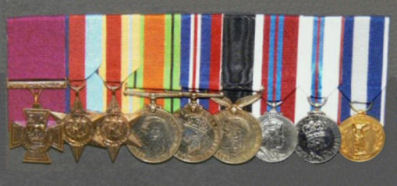
The man took out 33 German snipers by himself in 8 days and still assisted in the withdrawal, after being shot badly enough to put him out for the rest of the war.
Some guys are not to be trifled with.

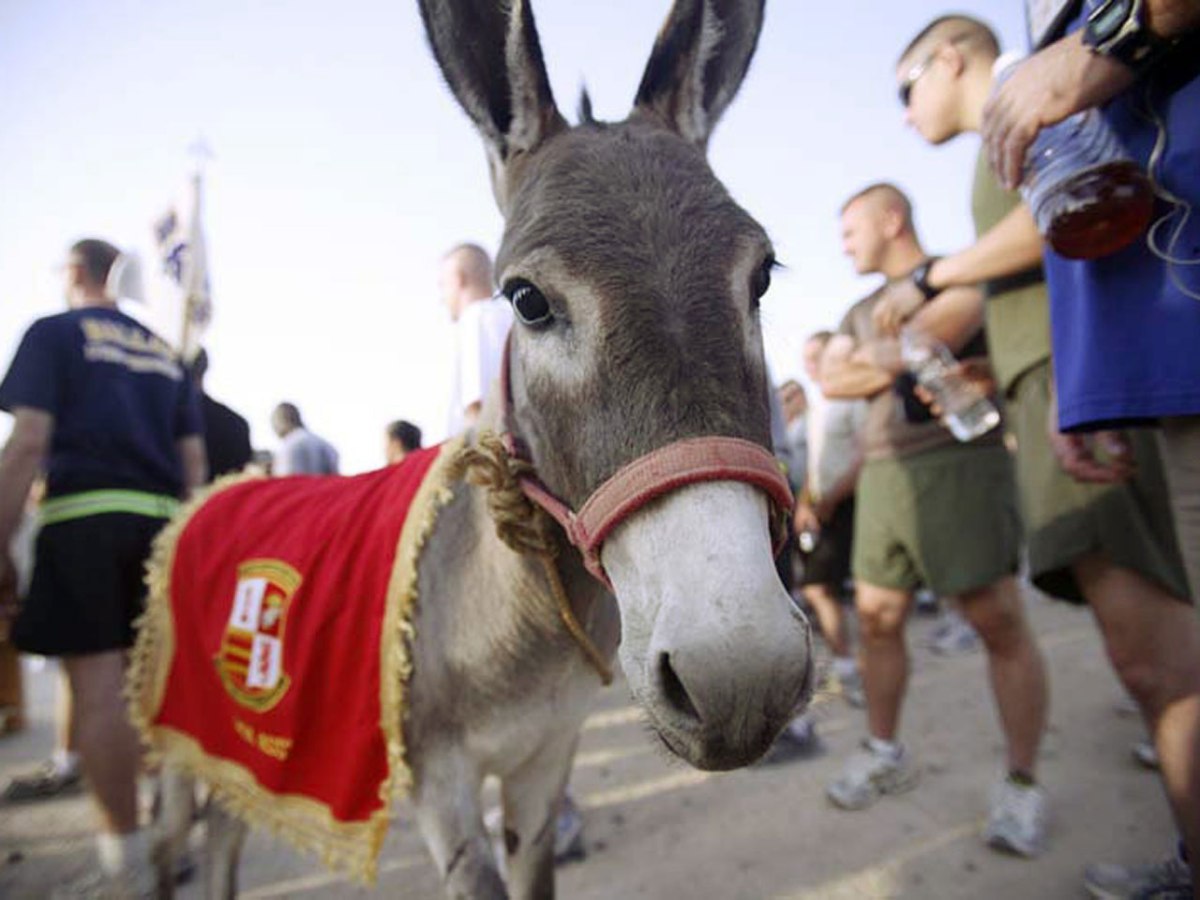

 Marines took him in, this malnourished Iraqi donkey, and built him a stable, and corral. The donkey would stroll into offices where he learned to open desk drawers in search of a goody. An apple, a carrot or some other sweet treat, planted there by some Marine. He loved to steal cigarettes whether lit or unlit and so it was, they called him “Smoke”.
 Smoke had his very own blanket, bright red and emblazoned with unit insignia, for the camp’s September 11 parade. On the side were these words, “Kick Ass”.
 Regulations prohibited keeping the animal on base but Colonel Folsom found a Navy psychologist, willing to designate Smoke a therapy animal. He was good for morale.
 After half a life serving the United States Marine Corps, John Folsom returned home to Omaha. He’d often think of his “battle buddy” and those long walks, around the base.
 Thus began “Operation Donkey Drop”, Folsom’s 18-month odyssey first to raise the funds and then to wrangle the red tape thrown in his way through multiple jurisdictions, on Smoke’s journey to his new home in Nebraska.
 Terri Crisp heads SPCAI’s “Baghdad pups”, reuniting US troops with dogs and cats they had once bonded with, while serving overseas. This was her first donkey.
 For Colonel John Folsom, USMC (retired), “semper fidelis” (“always faithful”) had become “semper fi(nally).”

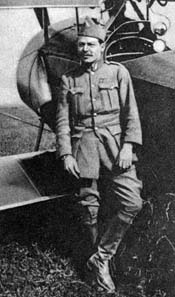
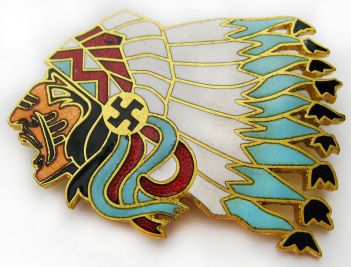
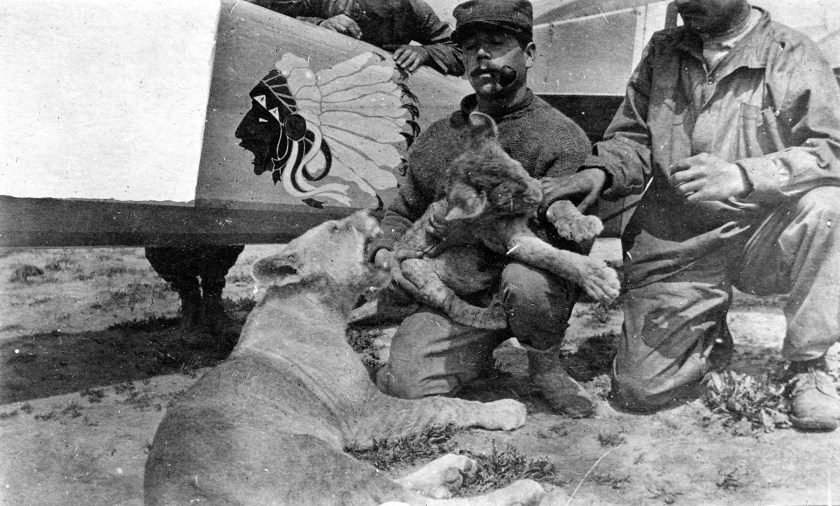
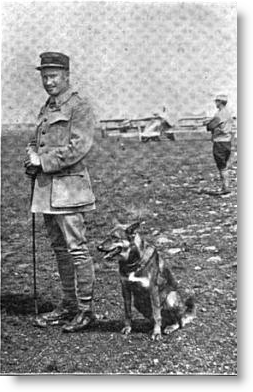 A female lion, “Soda”, was purchased sometime later. The lions were destined to spend their adult years in a Paris zoo but both remembered from whence they had come. Both animals recognized William Thaw on a later visit to the zoo, rolling onto their backs in expectation of a good belly rub.
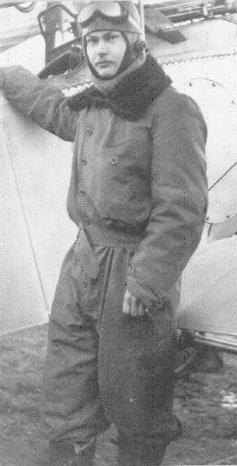
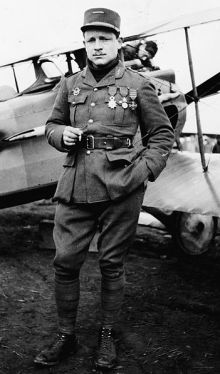
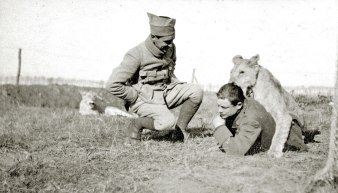 Escadrille N.124 changed its name in December 1916, adopting that of a French hero of the American Revolution. Marie-Joseph Paul Yves Roch Gilbert du Motier, Marquis de Lafayette.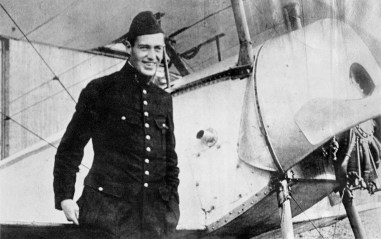


 Burgoyne’s movements began well with the near-bloodless capture of Fort Ticonderoga in early July, 1777. By the end of July, logistical and supply problems caused Burgoyne’s forces to bog down. On July 27, a Huron-Wendat warrior allied with the British army murdered one Jane McCrae, the fiancé of a loyalist serving in Burgoyne’s army. Gone was the myth of “civilized” British conduct of the war, as dead as the dark days of late 1776 and General Washington’s “Do or Die” crossing of the Delaware and the Christmas attack on Trenton.
 Meanwhile, attempts to solve the supply problem culminated in the August 16 Battle of Bennington, a virtual buzz saw in which New Hampshire and Massachusetts militiamen under General John Stark along with the Vermont militia of Colonel Seth Warner and Ethan Allen’s “Green Mountain Boys”, killed or captured nearly 1,000 of Burgoyne’s men.
 Meanwhile Howe’s capture of Philadelphia met with only limited success, leading to his resignation as Commander in Chief of the American station and Sir Henry Clinton, withdrawing troops to New York.
 Fort Moultrie surrendered without a fight on May 7. Clinton demanded unconditional surrender the following day but Lincoln bargained for the “Honours of War”. Prominent citizens were by this time, asking Lincoln to surrender. On May 11, the British fired heated shot into the city, burning several homes. Benjamin Lincoln surrendered on May 12.
 In the summer of 1780, American General Horatio Gates suffered humiliating defeat at the Battle of Camden. Cornwallis idea of turning over one state after another to loyalists failed to materialize, as the ham-fisted brutality of officers like Banastre Tarleton, incited feelings of resentment among would-be supporters. Like the Roman general Fabius who could not defeat the Carthaginians in pitched battle, General Washington’s brilliant protege Nathaniel Greene pursued a “hit & run” strategy of “scorched earth”, attacking supply trains harassing Cornwallis’ movements at every turn.
 Through the Carolinas and on to Virginia, Greene’s forces pursued Cornwallis’ army. With Greene dividing his forces, General Daniel Morgan delivered a crushing defeat, defeating Tarleton’s unit at a place called Cowpens in January, 1781. The battle of Guilford Courthouse was an expensive victory, costing Cornwallis a quarter of his strength and forcing a move to the coast in hopes of resupply.

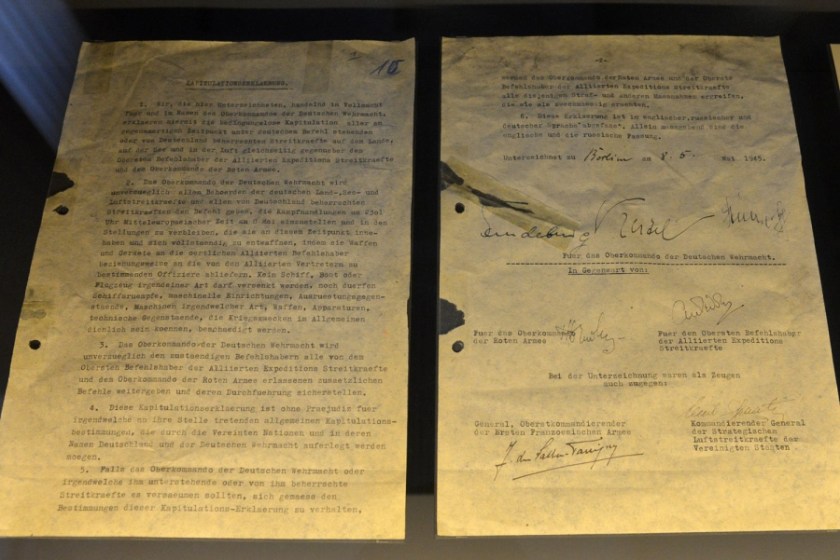 The German government announced the end of hostilities right away to its own people, but most of the Allied governments, remained silent. It was nearly midnight the following day when Field Marshal Wilhelm Keitel signed a second instrument of surrender, in the Berlin headquarters of Soviet General Georgy Zhukov.
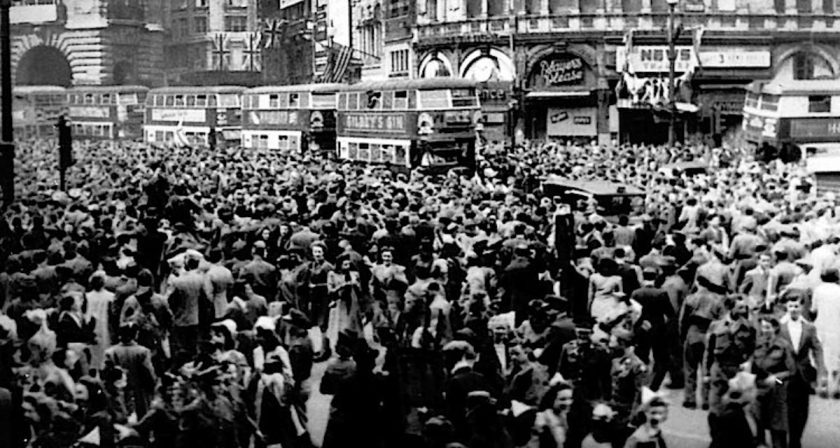 And still, the world waited.
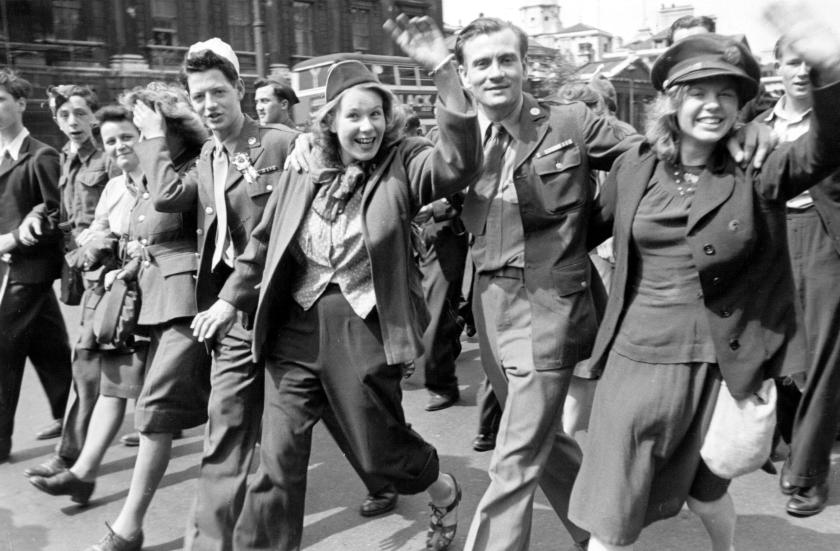 President Truman’s speech begins: “This is a solemn but a glorious hour. I only wish that Franklin D. Roosevelt had lived to witness this day. General Eisenhower informs me that the forces of Germany have surrendered to the United Nations. The flags of freedom fly over all Europe. For this victory, we join in offering our thanks to the Providence which has guided and sustained us through the dark days of adversity”.
 Nearly every extermination camp, death march, ghetto and pogrom now remembered as the Holocaust, occurred on the Eastern Front.

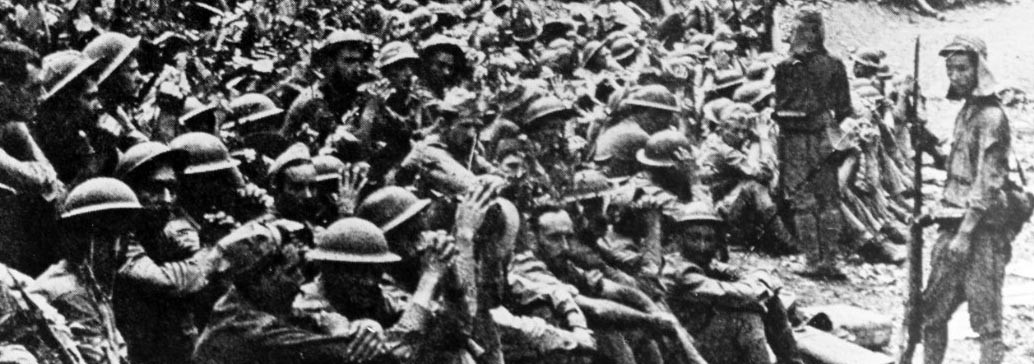
 The United States was grossly unprepared to fight a World War in 1942. The latest iteration of “War Plan Orange” (WPO-3) called for delaying tactics in the event of war with Japan, buying time to gather US Naval assets to sail for the Philippines. The problem was, there was no fleet to gather. The flower of American pacific power in the pacific, lay at the bottom of Pearl Harbor. Allied war planners turned their attention to defeating Adolf Hitler.
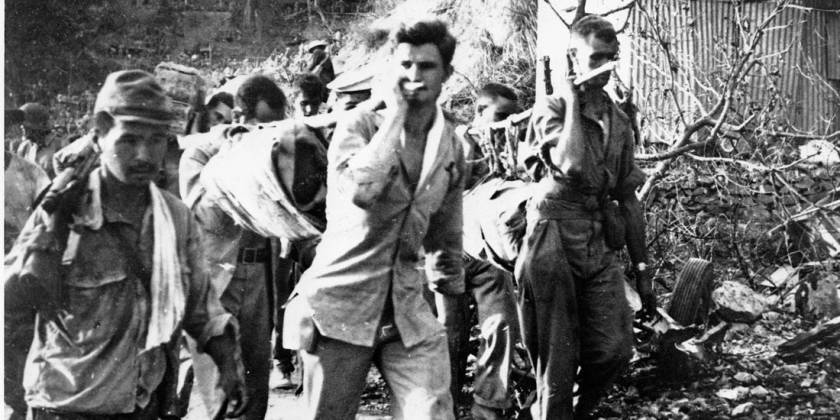 Japanese guards were sadistic. They would beat marchers and bayonet those too weak to walk. Tormented by a thirst few among us can so much as imagine, men were made to stand for hours under a relentless sun, standing by a stream from which none were permitted to drink. The man who broke ranks and dove for the water was clubbed or bayoneted to death, on the spot. Japanese tanks would swerve out of their way to run over anyone who had fallen and was too slow in getting up. Some were burned alive, others buried alive. Already crippled from tropical disease and starving from the long siege of Luzon, w
 United States Marine Corps 1st Lieutenant Austin Shofner came ashore back in November, with the 4th Marines. Shofner and his fellow leathernecks engaged the Japanese as early as December 12 and received their first taste of aerial bombardment, on December 29. Promoted to Captain and placed in command of Headquarters Company, Shofner received two Silver Stars by April 15 in near-constant defense against aerial attack.
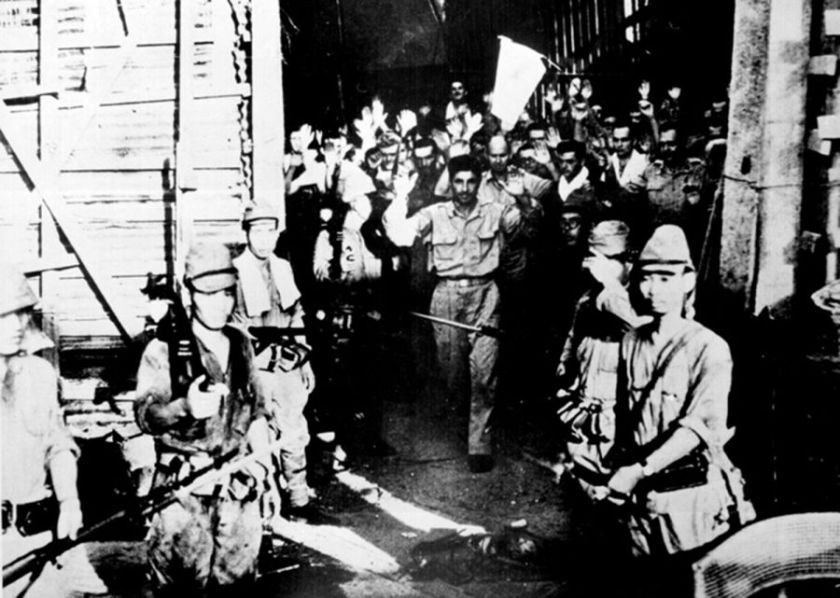 Nearly 150,000 Allied soldiers were taken captive by the Japanese Empire, during World War 2. Clad in unspeakably filthy rags they were fed a mere 600 calories per day of fouled rice, supplemented only by the occasional insect or bird or rodent unlucky enough to fall into desperate hands. Disease such as malaria was all but universal as gross malnutrition led to loss of vision and unrelenting nerve pain. Dysentery, a hideously infectious disease of the large intestine reduced grown men to animated skeletons. Mere scratches resulted in grotesque tropical ulcers up to a foot in length exposing living bone and rotting flesh to swarms of ravenous insects.
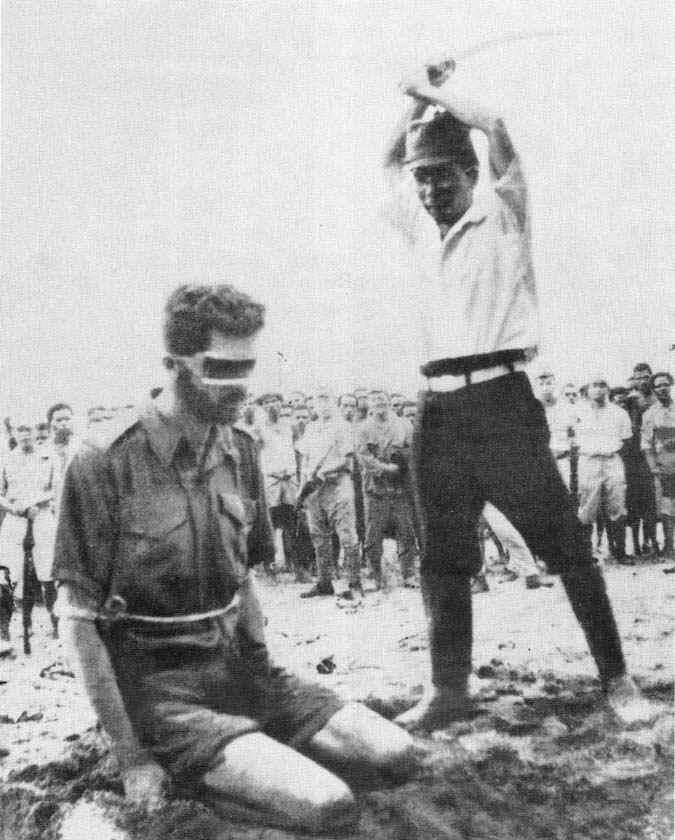 Given such cruel conditions it’s a wonder anyone escaped at all but it did happen. Once.
 Now-Colonel Shofner volunteered to return to the Pacific where his experience helped with the rescue of 500 prisoners of the infamous POW camp at Cabanatuan on January 30, 1945.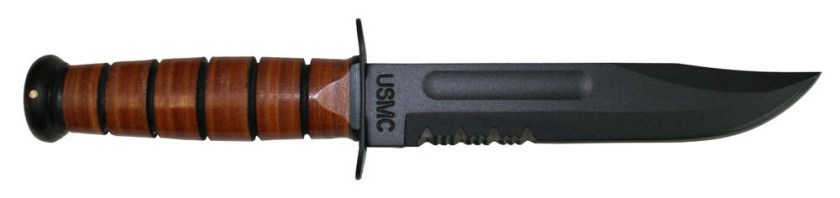

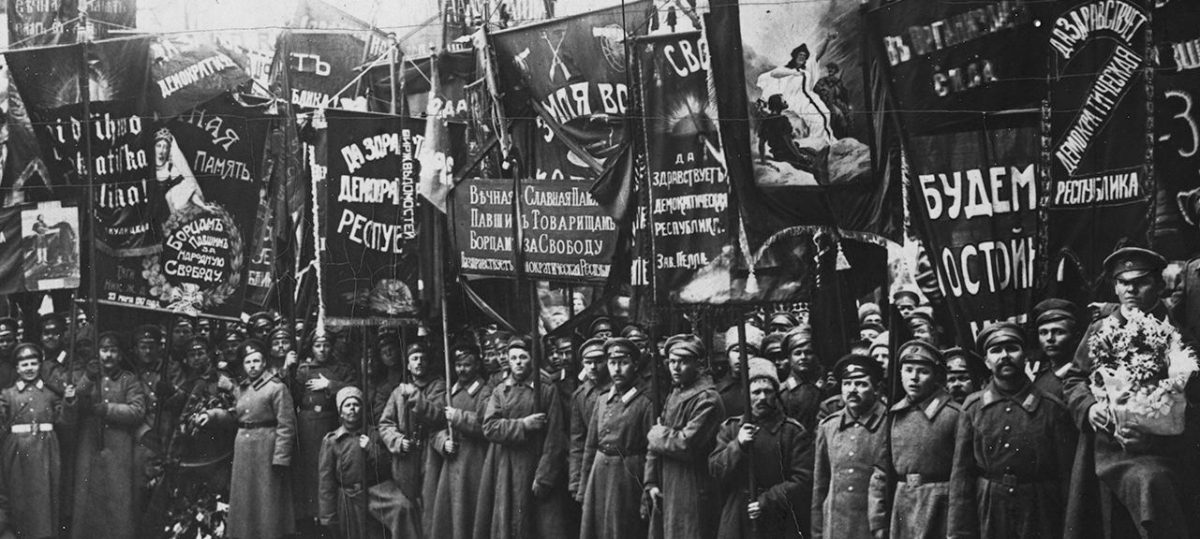
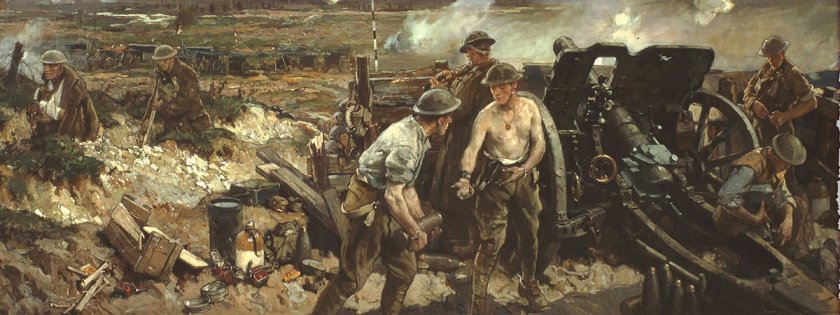 By 1916 it was generally understood in Germany that the war effort was “shackled to a corpse”, referring the Austro-Hungarian Empire where the war had started, in the first place. Italy, the third member of the “Triple Alliance”, was little better. On the “Triple Entente” side, the French countryside was literally torn to pieces, the English economy close to collapse. The Russian Empire, the largest nation on the planet, was teetering on the edge of the precipice.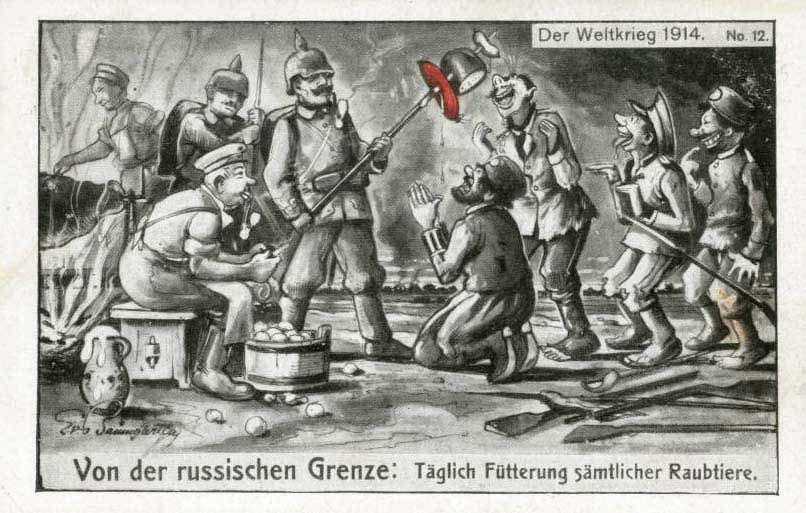

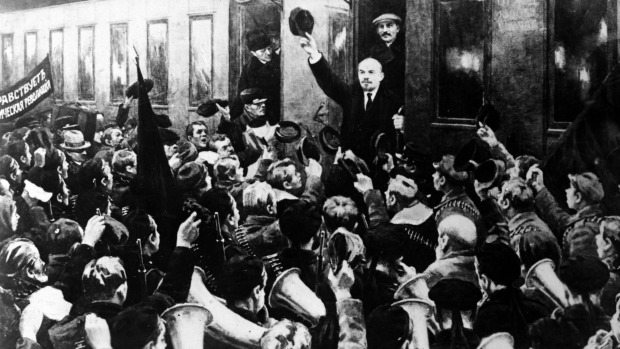 By October, Russia would experience its second revolution of the year. The German Empire could breathe easier. The “Russian Steamroller” was out of the war. And none too soon, too. With the Americans entering the war that April, Chief of the General Staff Paul von Hindenburg and his deputy Erich Ludendorff could now move their divisions westward, in time to face the arrival of the American Expeditionary Force.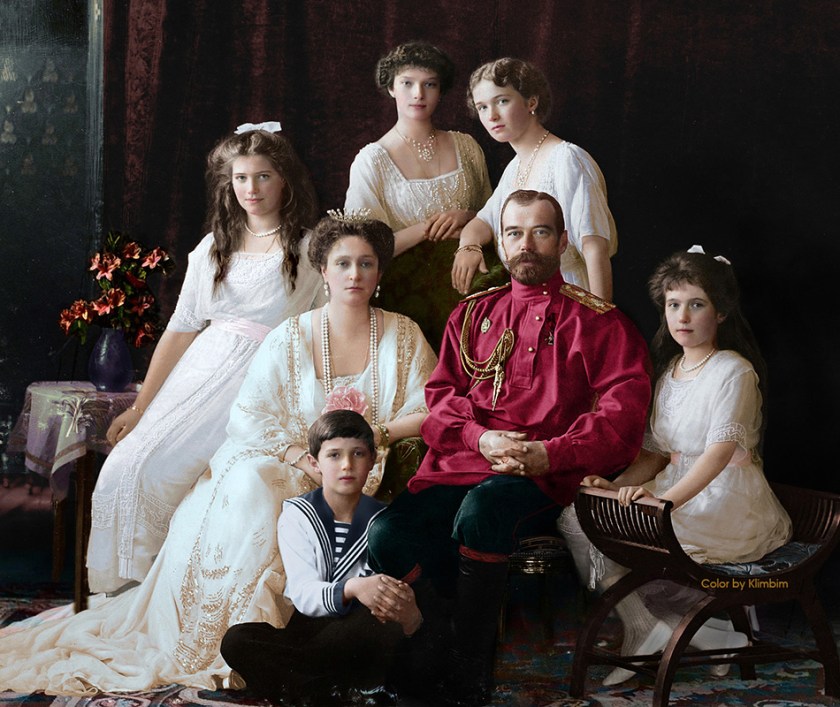


 The fifty gun HMS Romney arrived in May, 1769. Customs officials seized John Hancock’s merchant sloop “Liberty” the following month, on allegations the vessel was involved in smuggling. Already agitated over Romney’s impressment of local sailors, Bostonians began to riot. By October, the first of four regular British army regiments arrived in Boston.
 Edward Garrick was a wigmaker’s apprentice, who worked each day to grease and powder and curl the long hair of the soldier’s wigs.
 The two sides stopped for a few seconds to two minutes, depending on the witness. Then they all fired. A ragged, ill-disciplined volley. There was no order, just the flash and roar of gunpowder on the cold late afternoon streets of a Winter’s day. It was March 5. When the smoke cleared, three were dead. Two more lay mortally wounded and another six, seriously injured.


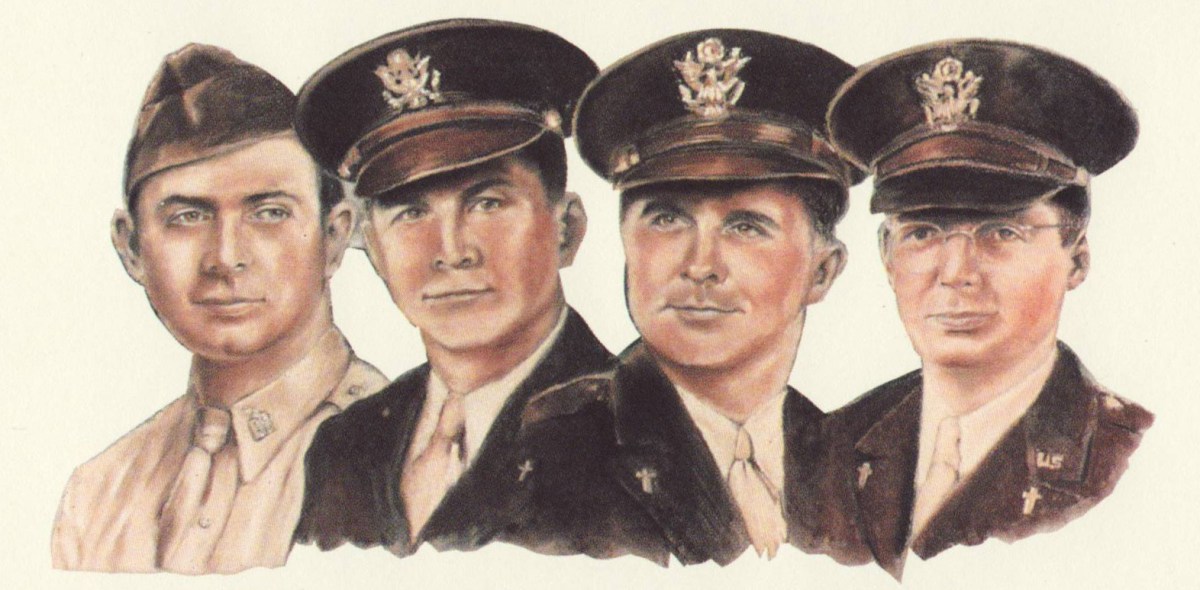
 German submarine wolf packs had already sunk several ships in these waters. Late on the night of February 2, one of the Cutters flashed flashed the light signal “we’re being followed”.
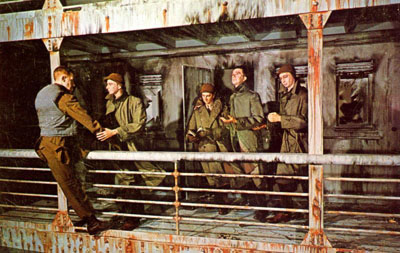 Those who could escape scrambled onto the deck, injured, disoriented, many still in their underwear as they emerged into the cold and darkness.
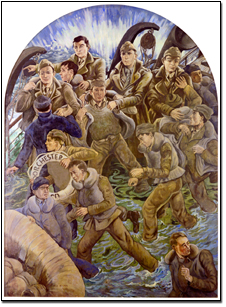 Dorchester was listing hard to starboard and taking on water fast, with only 20 minutes to live. Port side lifeboats were inoperable due to the ship’s angle. Men jumped across the void into those on the starboard side, overcrowding some to the point of capsize. Only two of fourteen lifeboats launched successfully.
 Rushing back to the scene, coast guard cutters found themselves in a sea of bobbing red lights, the water-activated emergency strobe lights of individual life jackets. Most marked the location of corpses. Of the 904 on board, the Coast Guard plucked 230 from the water, alive.
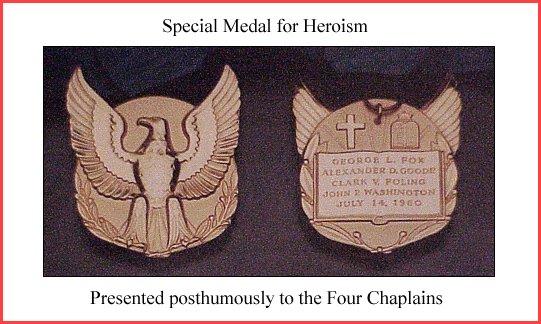 John 15:13 teaches us, “Greater love hath no man than this, that a man lay down his life for his friends”. Rabbi Goode did not call out for a Jew when he gave away his only hope for survival, Father Washington did not ask for a Catholic. Neither minister Fox nor Poling asked for a Protestant. Each gave his life jacket to the nearest man.


 Ernesto Guevara trained and motivated firing squads credited with the summary execution of 16,000 Cubans or more, since the Castro brothers swept out of the Sierra Maestro Mountains in 1959. It was around this time he acquired the nickname “Che” from an odd fondness for the verbal filler che, not unlike the Canadian English “eh” or some Americans’ fondness for the punctuating syllable “Right?”
 Numbers are surprisingly inexact but Guevara is believed personally responsible for the murder of hundreds if not thousands, in the name of “Revolutionary Justice”. Guevara himself described in his diary, the murder of peasant guide Eutimio Guerra: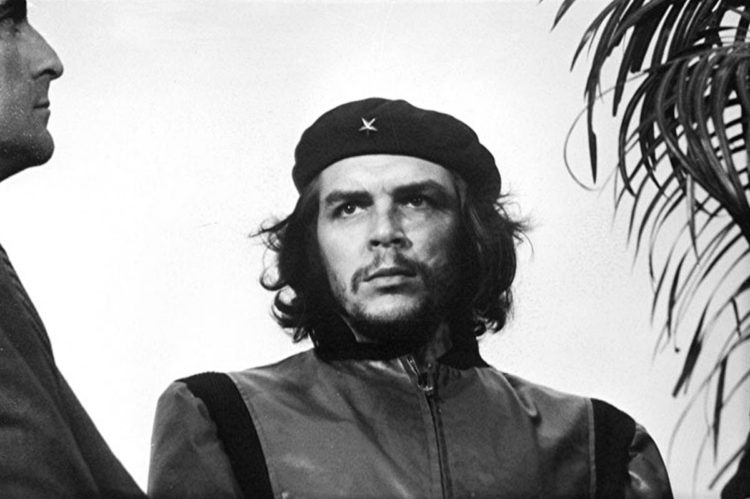
 While Che himself made no secret of his blood-lust, Western Liberals appear pathologically incapable of regarding the man’s history, as it really was.
 “Crazy with fury I will stain my rifle red while slaughtering any enemy that falls in my hands! My nostrils dilate while savoring the acrid odor of gunpowder and blood. With the deaths of my enemies I prepare my being for the sacred fight and join the triumphant proletariat with a bestial howl!…Hatred as an element of struggle; unbending hatred for the enemy, which pushes a human being beyond his natural limitations, making him into an effective, violent, selective, and cold-blooded killing machine. This is what our soldiers must become” – Ernesto Ché Guevara
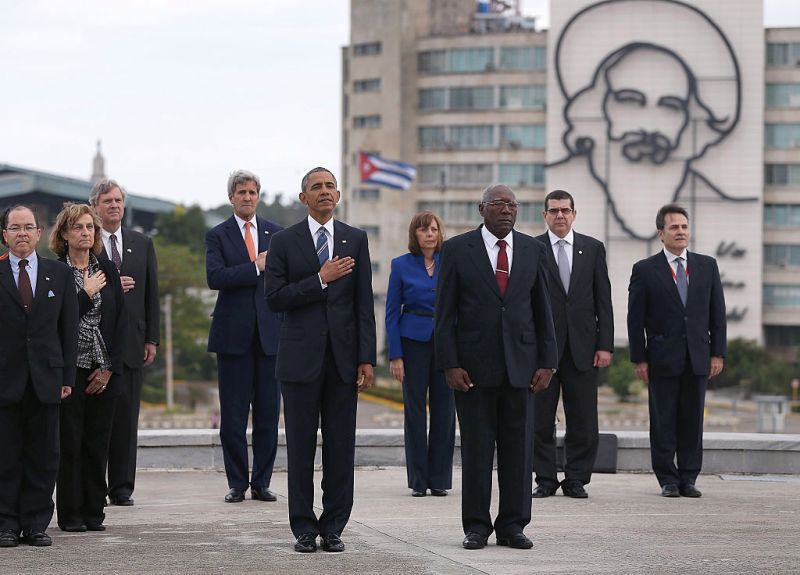
 For many of us, then-President Obama’s March 21, 2016 moment in Havana, Cuba defies understanding, unfolding as it did under a ten-story image of Che Guevara.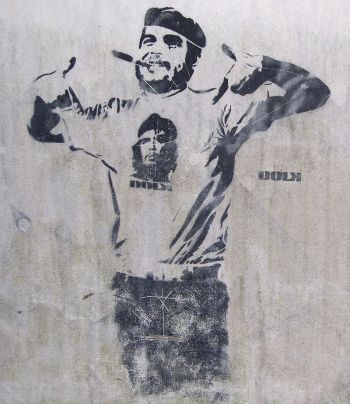

 Historical Easter Eggs - Today in History
You must be logged in to post a comment.