

The Encyclopedia Britannica describes Croton oil as a “poisonous viscous liquid obtained from the seeds of a small Asiatic tree…” Highly toxic and a violent irritant, the substance was once used as a drastic purgative and counter-irritant in human and veterinary medicine, but is now considered too dangerous for medicinal use. Applied externally, Croton oil is capable of peeling your skin off. Taken internally, the stuff may be regarded as the atomic bomb, of laxatives.
The Nazi conquest of Europe began with the annexation of the Sudetenland in 1938, the border districts of Bohemia, Moravia, and German speaking parts of Czechoslovakia. Within two years, every major power on the European mainland was either neutral, or subject to Nazi occupation. France fell to the Nazi war machine in six weeks, in 1940. The armed forces of the island nation of Great Britain were left shattered and defenseless, stranded on the beaches of Dunkirk.
On the Scandinavian Peninsula, longstanding policies of disarmament in the wake of WW1, left the Nordic states of Denmark and Norway severely under-strength, able to offer little resistance to the Nazi invaders.
On this day in 1940, German warships entered Norwegian harbors from Narvik to Oslo, as German troops occupied Copenhagen and other Danish cities. King Christian X of Denmark surrendered almost immediately. To the northwest, Norwegian commanders loyal to former foreign minister Vidkun Quisling ordered coastal defenders to stand down, permitting the German landing to take place, unopposed. Norwegian forces refused surrender demands from the German Minister in Oslo, but the outcome was never in doubt.
Nazi Germany responded with an airborne invasion by parachute. Within weeks, Adolf Hitler could add a second and third scalp to his belt, following the invasion of Poland, six months earlier. The Kingdoms of Denmark and Norway, were out of the war.
Norway was out of the war, but not necessarily out of the fight. A Nazi officer passed an old woman on the street, who complained at his rudeness and knocked his hat off, with her cane. The officer apologized and scurried off. The gray-haired old matron snickered, to herself: “Well, we’ll each have to fight this war as best we can. That’s the fourth hat I’ve knocked into the mud this morning.”
A Norwegian Resistance was quick to form, as patriotic locals united against the Nazi occupier and the collaborationist policies of the Quisling government.
The Norwegian secret army, known as Milorg and led by General Otto Ruge, was at first loath to engage in outright sabotage, for fear of German reprisals against innocent civilians. Later in the war, Milorg commandos attacked the heavy water factory at Rjukan and sank a ferry carrying 1,300 lbs of heavy water, inflicting severe damage to the Nazi nuclear research program.

In the beginning, Resistance activities centered more around covert sabotage and the gathering of intelligence. One of the great but still-unknown dramas of WW2 unfolded across the snow covered mountains of the Scandinavian peninsula, as the civilian-turned-spy Sven Somme fled 200 miles on foot to neutral Sweden, pursued by 900 Wehrmacht soldiers and a pack of bloodhounds.
Operations of all kinds were undertaken, to stymie the Nazi war effort. Some actions seem like frat-boy pranks, such as coating condoms destined for German units, with itching powder. Hundreds of Wehrmacht soldiers (and presumably Norwegian women) showed up at Trondheim hospitals, believing they had contracted God-knows-what kind of plague.
Other operations demonstrate a kind of evil genius. This is where Croton oil comes in.

Norwegian resistance fighters, as dedicated as they were, still had to feed themselves and their families. Many of these guys were subsistence fishermen, and that meant sardines. For centuries, the small fish had been a staple food item across the Norwegian countryside. It was a near-catastrophic blow to civilian and Resistance fighters alike, when the Quisling government requisitioned the entire sardine crop.
The Battle of the Atlantic was in full-swing by this time, as wolf packs of German submarines roamed the north Atlantic, preying on Allied shipping. Thousands of tons of sardines would be sent to the French port of Saint-Nazaire, to feed U-Boat crews on their long voyages at sea.

Norwegian vengeance began with a request to the Special Operations Executive (SOE) in Great Britain, for the largest shipment of Croton oil, possible. The “atomic laxative” was smuggled into canneries across Norway, and used to replace vegetable oil in sardine tins. The plan worked nicely and no one suspected a thing, the pungent taste of the fish covering the strange flavor of Croton oil.
From midget submarines such as the Biber, Hai, Molch, and Seehund models to the behemoth 1,800-ton “Type X“, the Kriegsmarine employed no fewer than fifteen distinct submarine types in WW2, including the workhorse “Type VII”, of which some 700 saw service in the German war effort. In the North Atlantic, the battle raged on with torpedo and depth charge. Under the surface, there unfolded a different story.
Except for the participants in this tale, no one knows what it looks like, when ten thousand submariners simultaneously lose control of their bowels. It could not have been a pretty sight.
Feature image, top of page: “Anti-Nazi graffiti on the streets of Oslo, reading “Live” above the monogram for the Norwegian king, who had fled when the Germans invaded in 1940”. (Photo: Bettmann/Getty Images)



 Finally, even John D. Rockefeller, Jr., a lifelong teetotaler who contributed $350,000 to the Anti-Saloon League, had to announce his support for repeal.
 The night before Roosevelt’s law went into effect, April 6, 1933, beer lovers lined up at the doors of their favorite public houses, waiting for their first legal beer in thirteen years. A million and a half barrels of the stuff were consumed the following day, a date remembered today as “National Beer Day”.

 His two companions were killed. Smith himself was transported to the principle village of Werowocomoco, and brought before the Chief of the Powhatan. His head was forced onto a large stone as a warrior raised a club to smash out his brains. Pocahontas, favorite daughter of Wahunsonacock, rushed in and placed her head on top of his, stopping the execution. Whether it actually happened this way has been debated for centuries. One theory describes the event as an elaborate adoption ceremony, though Smith himself wouldn’t have known that at the time. Afterward, Powhatan told Smith he would “forever esteem him as his son Nantaquoud”.
 Pocahontas was a pet name, variously translated as “playful one” “my favorite daughter” or “little wanton”. Early in life, she bore the secret name “Matoaka”, meaning “Bright Stream Between the Hills”. Later she was known as “Amonute” which, to the best of my knowledge, has never been translated.
 Later descendants of the “Indian Princess” include Glenn Strange, the actor who played Frankenstein in three Universal films during the 1940s, and the character Sam Noonan, the popular bartender in the CBS series, “Gunsmoke”. Astronomer Percival Lowell is a direct descendant of Pocahontas, as is Las Vegas performer Wayne Newton, and former First Lady Edith Wilson, whom some describe as the first female President of the United States. But that must be a story for another day.
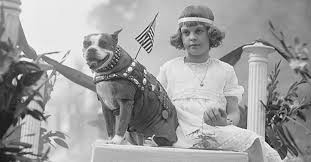
 America’s first war dog, “Stubby”, got there by accident, and served 18 months ‘over there’, participating in seventeen battles on the Western Front.
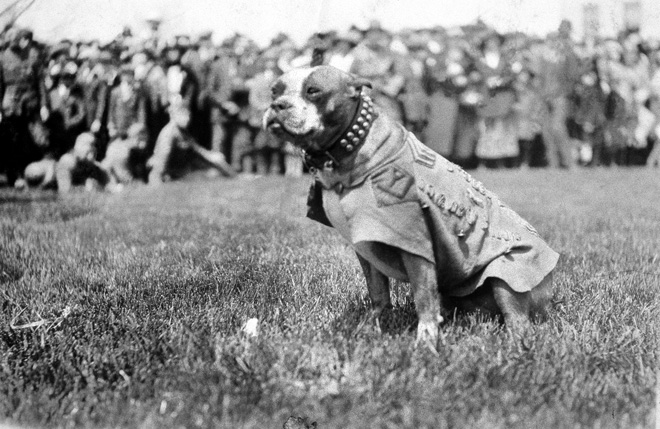 Stubby saw his first action at Chemin des Dames. Since the boom of artillery fire didn’t faze him, he learned to follow the example of ducking when the big ones came close. It became a great game to see who could hit the dugout, first. After a few days, the guys were watching him for a signal. Stubby was always the first to hear incoming fire. We can only guess how many lives were spared by his early warning.
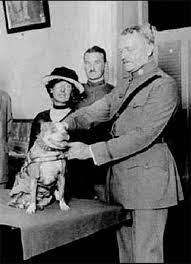 After the Armistice, Stubby returned home a nationally acclaimed hero, eventually received by both Presidents Harding and Coolidge. Even General John “Black Jack” Pershing, who commanded the AEF during the war, presented Stubby with a gold medal made by the Humane Society, declaring him to be a “hero of the highest caliber.”
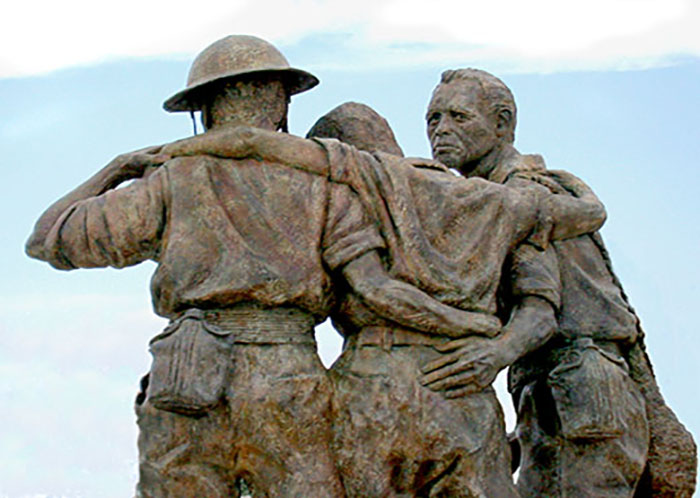
 After a year coaching at Providence College in 1939 and a year playing professional football for the Chicago Cardinals in 1940, Tonelli joined the Army in early 1941, assigned to the 200th Coast Artillery Regiment in Manila.
 Military forces of Imperial Japan appeared unstoppable in the early months of WWII, attacking first Thailand, then the British possessions of Malaya, Singapore, and Hong Kong, as well as US military bases in Hawaii, Wake Island, Guam and the Philippines.
 On April 9, 75,000 surrendered the Bataan peninsula, beginning a 65 mile, five-day slog into captivity through the heat of the Philippine jungle. Japanese guards were sadistic. They would beat the marchers and bayonet those too weak to walk. Japanese tanks swerved out of their way to run over anyone who had fallen and was too slow in getting up. Some were burned alive. Already crippled from tropical disease and starving from the long siege of Luzon, thousands perished in what came to be known as the Bataan Death March.
 Minutes later, a Japanese officer appeared, speaking perfect English. “Did one of my men take something from you?” “Yes”, Tonelli replied. “My school ring”. “Here,” said the officer, pressing the ring into his hand. “Hide it somewhere. You may not get it back next time”. Tonelli was speechless. “I was educated in America”, the officer said. “At the University of Southern California. I know a little about the famous Notre Dame football team. In fact, I watched you beat USC in 1937. I know how much this ring means to you, so I wanted to get it back to you”.
 The hellish 60-day journey aboard the filthy, cramped merchant vessel began in late 1944, destined for slave labor camps in mainland Japan. Tonelli was barely 100 pounds on arrival, his body ravaged by malaria and intestinal parasites. He was barely half the man who once played fullback at Notre Dame Stadium, Soldier Field and Comiskey Park.

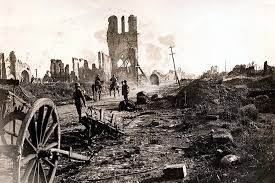 The coming cataclysm would lay waste to a generation, and to a continent.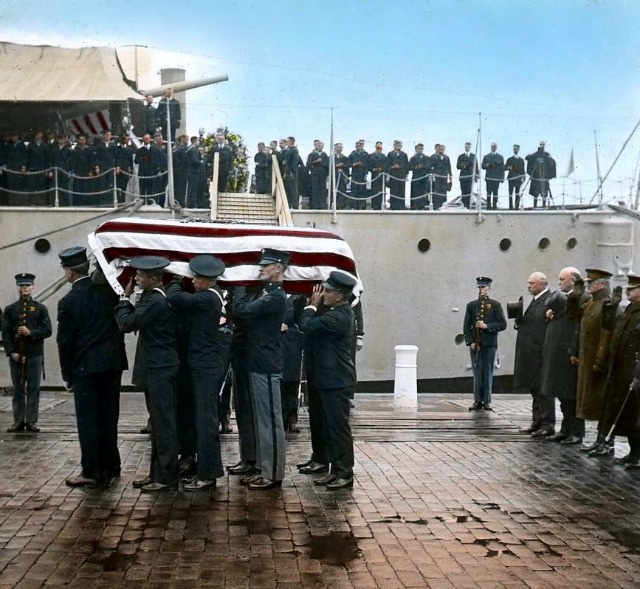

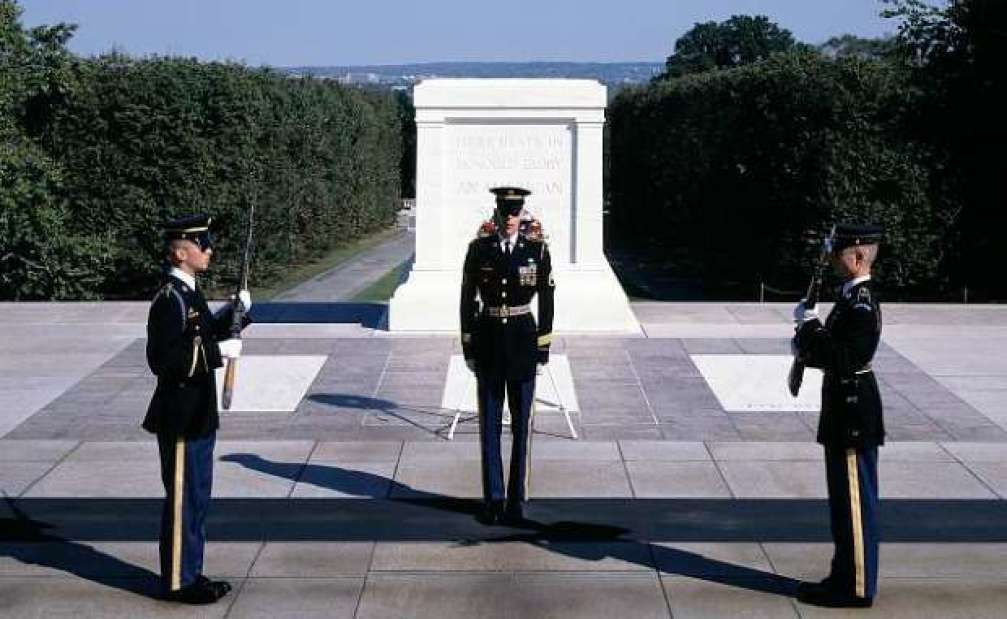
 On November 11, Armistice Day, the casket was removed from the Rotunda of the Capitol and escorted under military guard to the amphitheater at Arlington National Cemetery. In a simple ceremony, President Warren G. Harding bestowed on this unknown soldier the Medal of Honor, and the Distinguished Service Cross.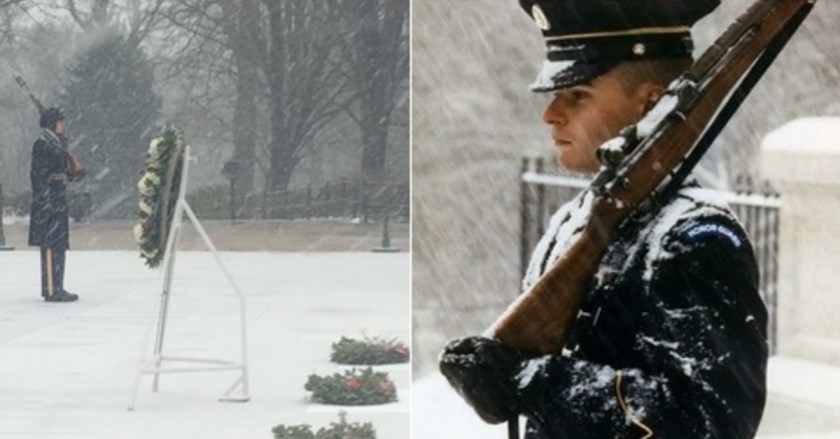


 Many of the secular symbols associated with Easter trace back to the pagan goddess of spring and the dawn, Ēostre or Ostara, from the Old English Ēastre. History fades into mythology in the pre-Christian usage and accounts differ, but this Teutonic deity was frequently depicted with eggs symbolizing the rebirth of Spring. And rabbits.
 The story involves no less a figure than Napoleon Bonaparte. In July 1807, Napoleon had just signed the Treaty of Tilsit, ending the war between the French Empire and Imperial Russia. Looking to celebrate, Napoleon suggested a rabbit hunt, and ordered his Chief of Staff Alexandre Berthier to make it happen.
 The hunt was supposed to start when all those cages opened up but, instead of scattering, a swarm of rabbits thought it was dinner time and pelted straight across the field.
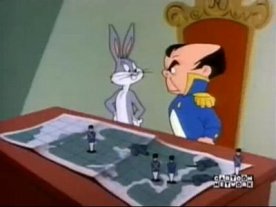 Napoleon retreated to his carriage, but still the attack continued. Historian David Chandler picks up the story. “With a finer understanding of Napoleonic strategy than most of his generals, the rabbit horde divided into two wings and poured around the flanks of the party and headed for the imperial coach.” The tide of bunnies continued. Some even got into the carriage. The assault finally ebbed away, only as the Royal Conveyance, drove out of sight.
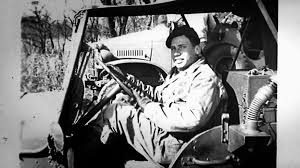
 The boy had a talent for music. He was taught by another kid from Williamsburg, named Buddy Rich. By 14 he was good enough to be playing drums for money.
 At one point, Kaminsky’s unit gathered along a River. The Americans were so close they could hear German soldiers singing a beer hall song, from the other side. Kaminsky grabbed a bullhorn and serenaded the Germans back, crooning out an old tune that Al Jolson used to perform, in black face: “Toot Toot Tootsie, Goodbye”. After he was done, polite applause could be heard, drifting across the river. I can’t imagine many Allied soldiers ever tried singing to their Nazi adversaries, during World War II. The ones who actually pulled it off, must number precisely, one.
 Brooks started doing stand-up, when the regular comedian at one of the clubs was too sick to perform. By ’49 he was “Tummler”, the master entertainer at Grossinger’s, one of the most famous resorts in the Borscht Belt.


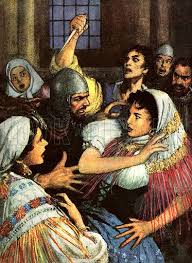 On Easter Monday, March 30, 1282, the Church of the Holy Spirit outside Palermo was just letting out after evening vespers (prayers), when a French soldier thought he’d “inspect” a Sicilian woman for weapons.
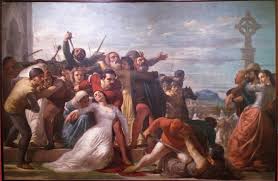 The Italian physician John of Procida had been a loyal subject of Manfred’s, fleeing to Aragon after the Anjou invasion. John proceeded directly to Sicily where he spent several weeks stirring up Sicilian resentment against the French King. Sicily then appealed to the Spanish King to intervene, while John sailed for Constantinople to procure the help of Michael VIII Palaeologus.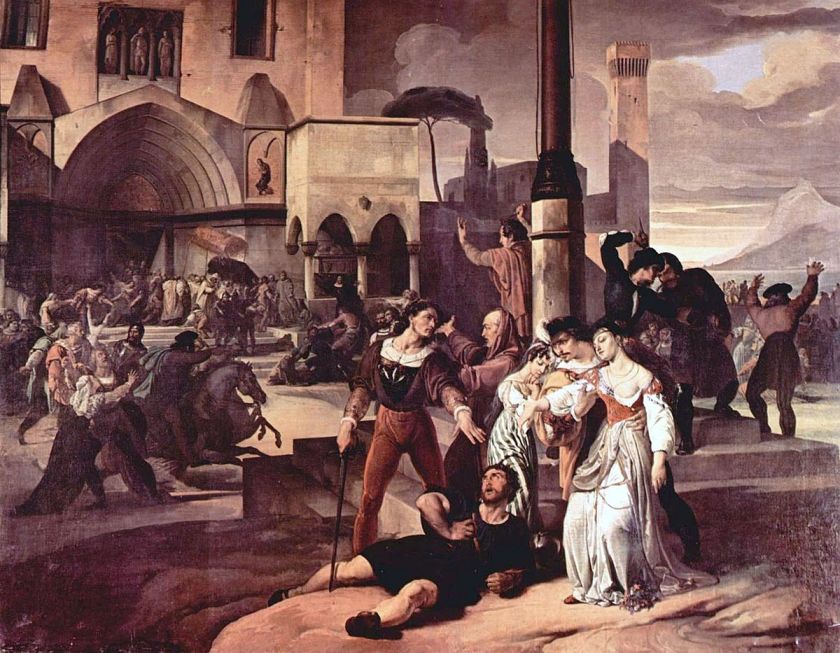

 Historical Easter Eggs - Today in History
You must be logged in to post a comment.