March 3, 1920 Beam me up, Scotty

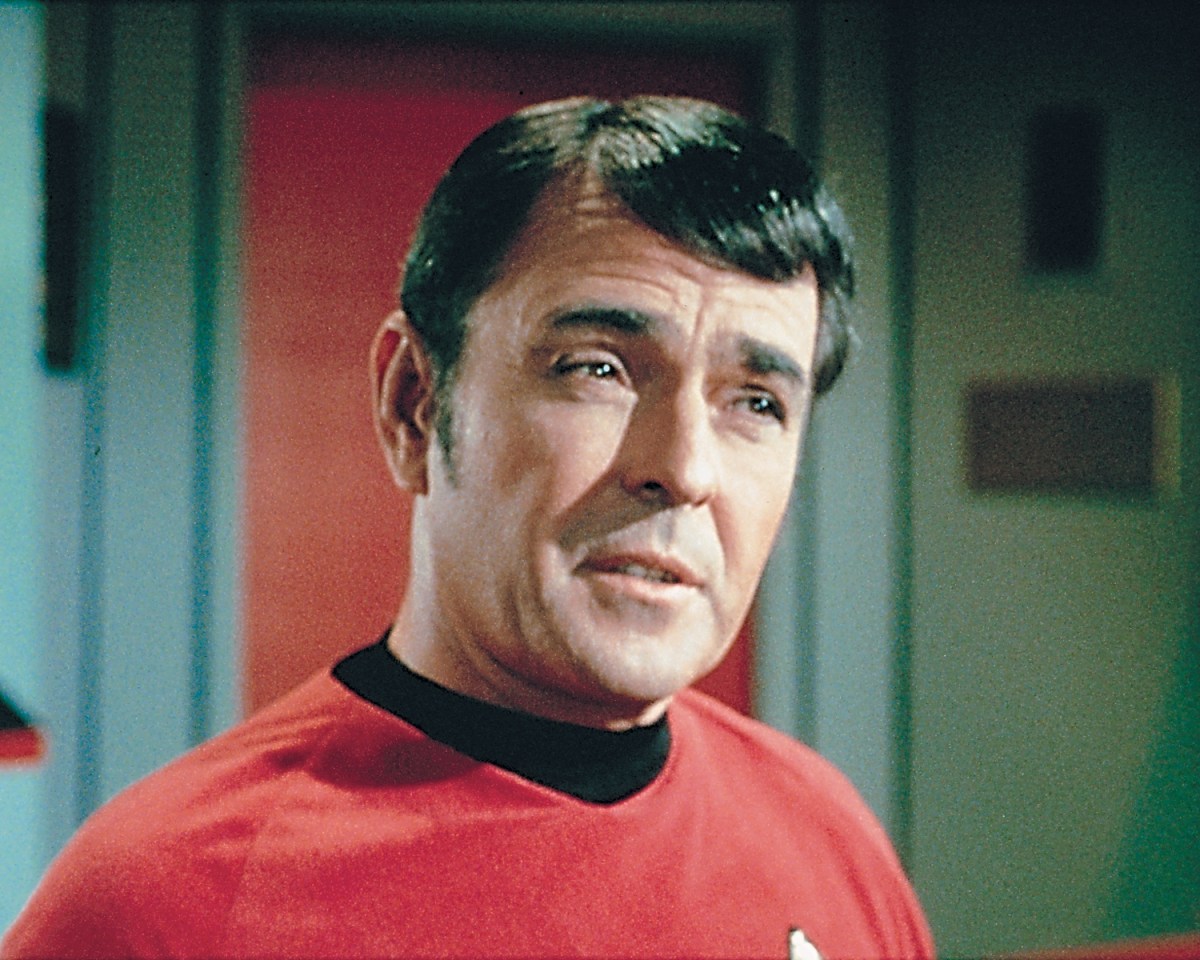
The phrase “Beam me up Scotty” is so iconic even someone who never saw one Star Trek episode, can tell you where it comes from. And yet, the line was never delivered. “Beam us up Mr. Scott” or “Scotty, beam us up’ are common enough but, like “play it again Sam” and “elementary dear Watson” the line, was never spoken.

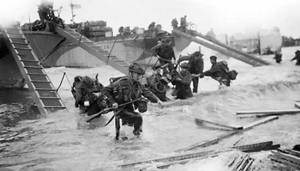
landing

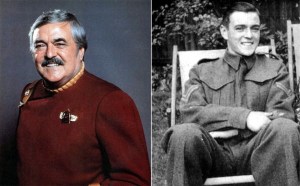
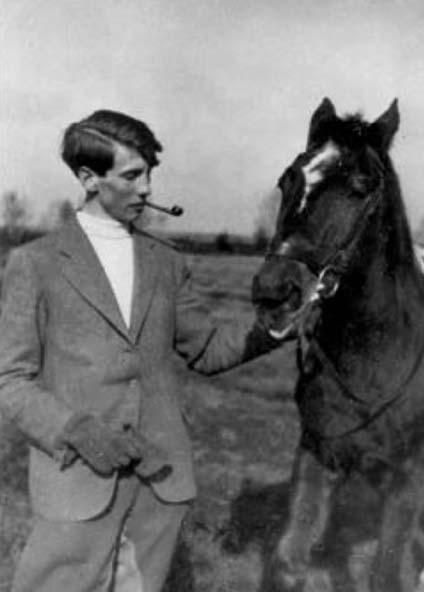
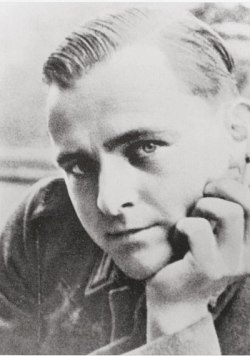
Born March 3, 1920 in Vancouver, British Columbia, James Montgomery Doohan enrolled in the 102nd Royal Canadian Army Cadet Corps in 1938. By the outbreak of WWII “Jimmy” was a Lieutenant in the 14th Field Artillery Regiment of the 3rd Canadian Infantry Division.

Doohan’s first taste of combat took place on D-Day, on the Normandy beach Canadian landing forces remember, as “Juno”. Crossing through a field of anti-tank mines, the Canadian’s luck held.  None of them were heavy enough to set one off.  Leading his men to higher ground, Lieutenant Doohan personally shot two German snipers before taking up positions for the night.

That night, Doohan had just finished a cigarette and was walking back to his command post. A nervous sentry opened up with a Bren light machine gun, striking the Lieutenant four times in the leg, once in the chest and again on the middle finger of his right hand. Fortunately, the chest shot lost much of its punch when the bullet hit a cigarette case his brother had given him, for luck. Doctors were able to save his life but not, the finger. That had to be amputated.

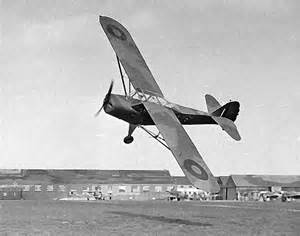
auster

Following a convalescent period Doohan served as courier and artillery spotter aboard a Taylorcraft Auster Mark IV. In spring 1945 he wove his aircraft through telegraph poles like a slalom skier, just to prove it could be done. The man never was a formal member of the CAF, but the stunt forever marked his reputation as “the craziest pilot in the Canadian Air Force”.

Doohan was always interested in voices and accents which he practiced, since he was a kid. He became good at it too, a skill which would serve him well in his later career, as an actor.

After the war, Doohan listened to a radio drama. Knowing he could do it better, he recorded his voice at a local radio station, winning a two year scholarship to study at the Neighborhood Playhouse in New York. There he studied voice and acting with the likes of Leslie Nielsen, Tony Randall, and Richard Boone.

Doohan appeared in over 4,000 radio programs and 450 television shows throughout the 1940s and ’50s. He played “Timber Tom” the northern version of Buffalo Bob, the Canadian production of Howdy Doody. Around this time a young actor named William Shatner was playing Ranger Bill in the American version. In the 1950s, the two would appear together on the Canadian science fiction series “Space Command”. It wasn’t the last time the two would appear together.

Auditioning before Gene Roddenberry in 1965, Doohan performed several accents. Asked which he preferred, he responded “If you want an engineer, in my experience the best engineers are Scotsmen.” He chose the name “Montgomery Scott”, after his grandfather.

scotty

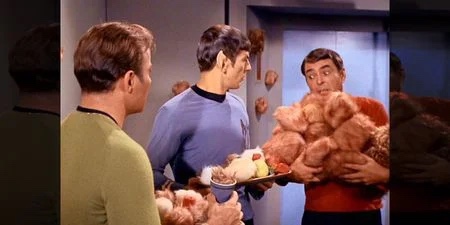
Chief Engineer aboard the Starship Enterprise was supposed to be an occasional role. Roddenberry actually considered killing the character off in episode two but Doohan’s agent, intervened. In the end it was Doohan himself who proved the character, irresistible.
“Scotty” soon became #3 in command, a regular cast member playing alongside William Shatner (Captain James T. Kirk), Leonard Nimoy (Spock) and DeForest Kelley (Dr. McCoy).  Doohan’s voice talents helped behind the scenes as well, developing the Klingon and Vulcan “languages”.

Star Trek was canceled in 1969 due to poor ratings but returned to broadcast syndication in the 70s. The series has since become a cult classic. There is hardly a woman, man, puppy boy or girl among us who isn’t steeped and marinated in the program.

Fun fact: The Vulcan Salute, a hand gesture the New York Times once described as a “double-fingered version of Churchill’s victory sign” comes from a Hebrew blessing Leonard Nimoy witnessed as a child, at an orthodox religious ceremony.

Doohan’s character was so iconic many fans credit him with sparking an interest in the technical fields. Among these was the engineer-turned-astronaut Neil Armstrong, who personally thanked the actor in 2004. Another was a female fan who once mailed the actor, a suicide note. Alarmed, Doohan invited her to a Star Trek convention. The pair stayed in touch for two years before she cut off contact. 8 years later she reached out once again to inform him she had completed a degree in electrical engineering. And to say it was he, who had saved her life.

Doohan learned to hide his injury from the war. For years it was rare to spot the missing digit in the early episodes, a fact which never fails to amuse hard-core “Trekkies“.

It’s a singular part of our electronic age that we live in, isn’t it? We come to know these people sometimes quite well, at least we think we do, and yet they wouldn’t know us, from Adam’s off ox.

In his later years, Doohan’s health began to decline. He developed Parkinson’s disease and diabetes along with fibrosis of the lung, a condition blamed on exposure to noxious chemicals during WWII. By 2004 he’d experienced symptoms of Alzheimer’s, though he was still able to attend the ceremony in his honor marking his star on the Hollywood Walk of Fame.

doohan-1

James Montgomery Doohan passed away on July 20, 2005, survived by his third wife Wende, the couple’s three children, his four adult children from a previous marriage and several grandchildren and great-grandchildren. Doohan’s youngest daughter Sarah was five, at the time of his death.

The actor long wished for his ashes to travel into space and “rest among the stars”. In 2007 a portion of the ashes were launched on a suborbital flight which failed, and fell back to earth. It was three weeks before the capsule containing the ashes, was recovered. In 2008 a second attempt, failed.. Christopher Barrett Doohan, an actor who has followed in his father’s footsteps and himself played the “Scotty” character, had an idea. The American video game developer and entrepreneur Richard Garriott was at this time preparing for a voyage to the International Space Station and under quarantine, in Kazakhstan.

It was all quite clandestine at the time but a portion of the ashes was smuggled in and laminated to the back of a card, bearing the actor’s likeness. Everything that goes up there is carefully catalogued and inventoried but the card, made it. So it is the fictional astronaut Montgomery Scott found his way to the stars where he remains to this day, somewhere on board the ISS. Garriott got the last word on the story twelve years later when the truth, could finally be told. “James Doohan got his resting place among the stars.”

February 19, 1914 Baby Mail

With new postal regulations now in effect, people tested the limits. Bricks were mailed as were snakes and any number of small animals, as long as they didn’t require food or water on the trip. The first parcel mailed from St. Louis Missouri to Edwardsville Illinois contained six eggs. Seven hours later the eggs came back to St. Louis, baked in a cake.

At one time, nations paired up to negotiate postal treaties providing for the direct exchange of mail. The US signed such a treaty with Prussia, in 1853. Germany wasn’t a country in those days in the sense that it is today, more of a collection of independent city-states. Some states in southern Germany sent US-bound mail through France but, there being no Franco-American treaty, mail was forced to travel on British or Belgian cargo vessels. France and the United States wrangled over a postal treaty from 1852 until July 1874 leading the exasperated Minister to France Elihu Washburne to groan: “There is no nation in the world more difficult to make treaties with than France.”

The German Empire was formed in 1871 following victory, in the Franco-Prussian War. The German Reichspost was now free to enact uniform postal regulations within the new nation. Even so, US-bound letters required differing amounts of postage, depending on which ship the letter traveled on. Something had to change.

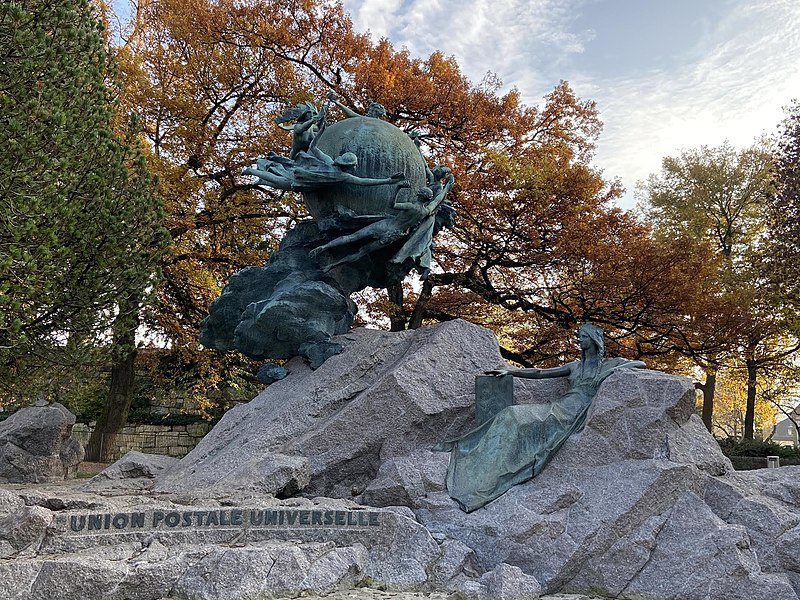
German Postmaster-General Heinrich von Stephan called for an International Postal Congress in 1874. The Treaty of Bern signed on October 9 resulted in a uniform system of postage between nations. That, and a very nice statue in granite and bronze in memory of the new, Universal Postal Union.

All was well between nations but here in the US, the postal service was barely out of diapers. The mail didn’t even go to the “country”. Rural residents were forced to travel days to distant post offices or hire private express companies, to deliver the mail. For years, the National Grange and other farmers’ welfare organizations lobbied Congress for inclusion in the national mail service. The Rural Free Delivery (RFD) act of 1896 opened new worlds to farmers who soon clamored for exotic foodstuffs and tobacco unavailable in rural districts.

Unsurprisingly, rural merchants and express delivery companies fought the measure tooth and nail but they were destined to fail. Parcel post service began on January 1, 1913.

Overnight, parcel limits increased from 4 pounds to fifty. During the first five days alone 1,594 post offices handled over 4 million packages.

People tested the limits. Bricks were mailed as were snakes and any number of small animals, as long as they didn’t require food or water on the trip. The first parcel mailed from St. Louis Missouri to Edwardsville Illinois contained six eggs. Seven hours later the eggs came back to St. Louis, baked in a cake.

You know where this is going, right?

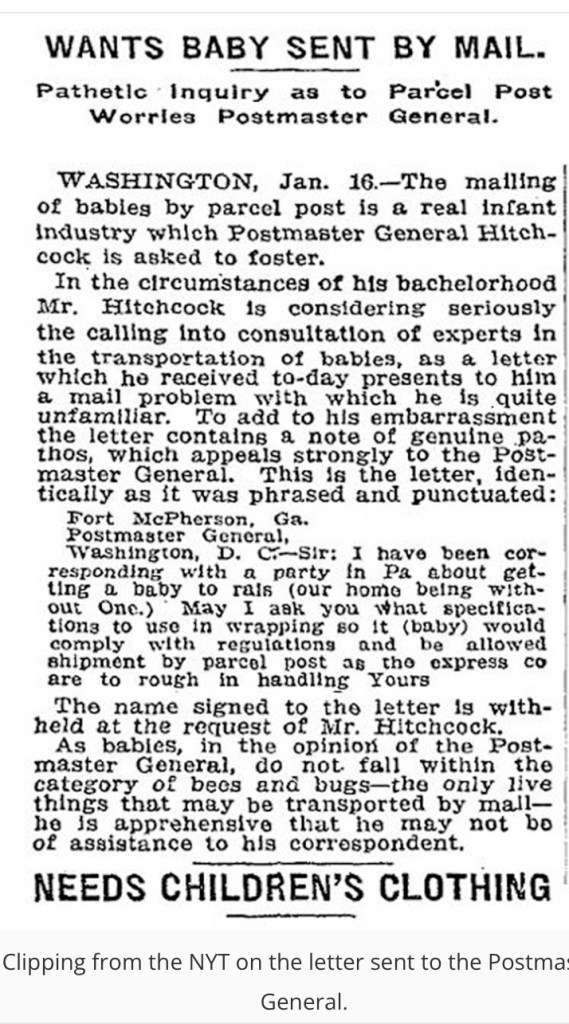
In 1913, Mr. and Mrs. Jesse Beauge of Glen Este, Ohio mailed their baby boy. Seriously. The couple mailed their ten-pound son off to his grandmother’s house a mile away at a cost, of 15¢ postage. History fails to record whether the kid was left in the mailbox or stuffed through a slot in the door, but these people were no cheapskates. The pair popped for 50 bucks’ insurance, “just in case“.

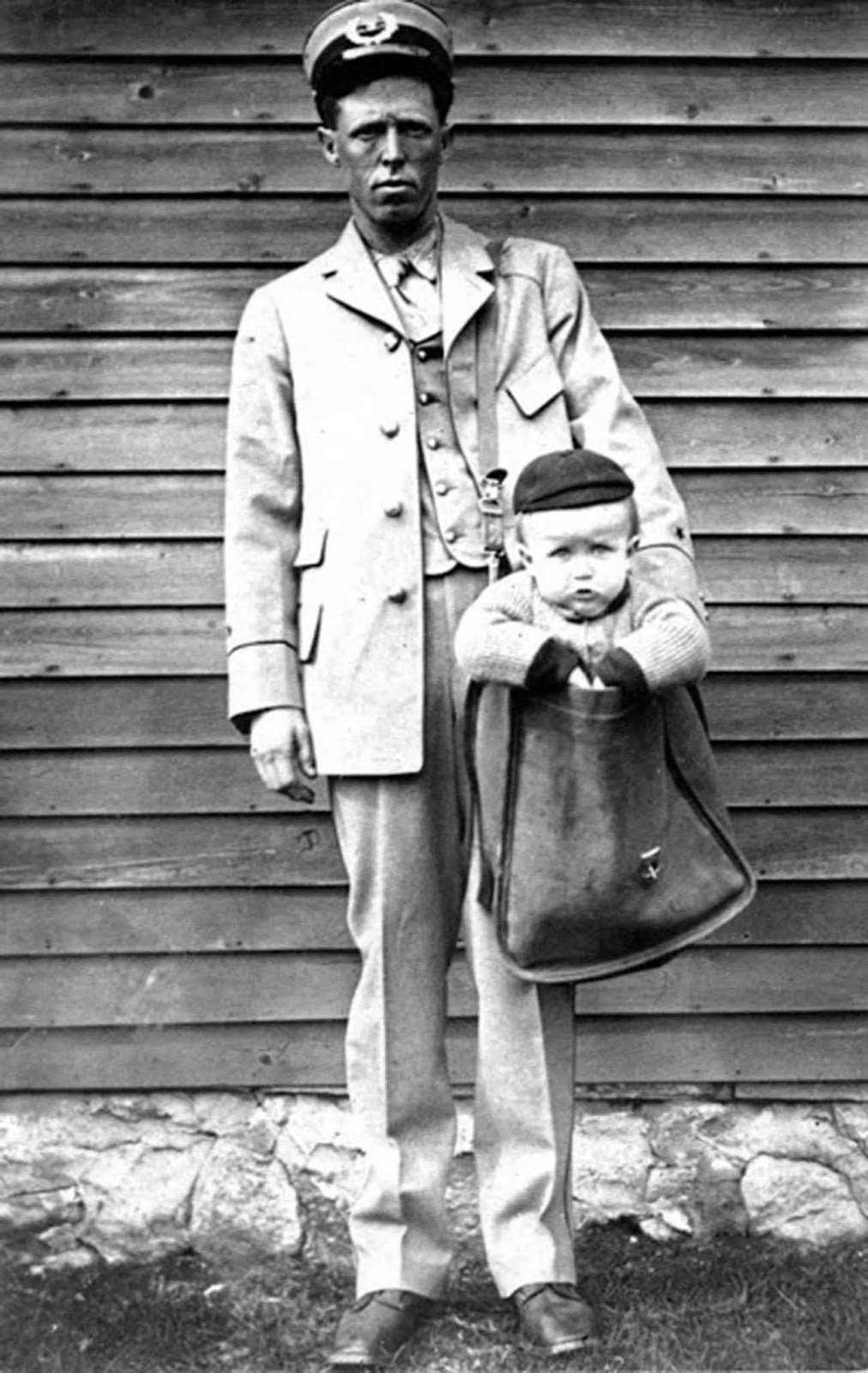
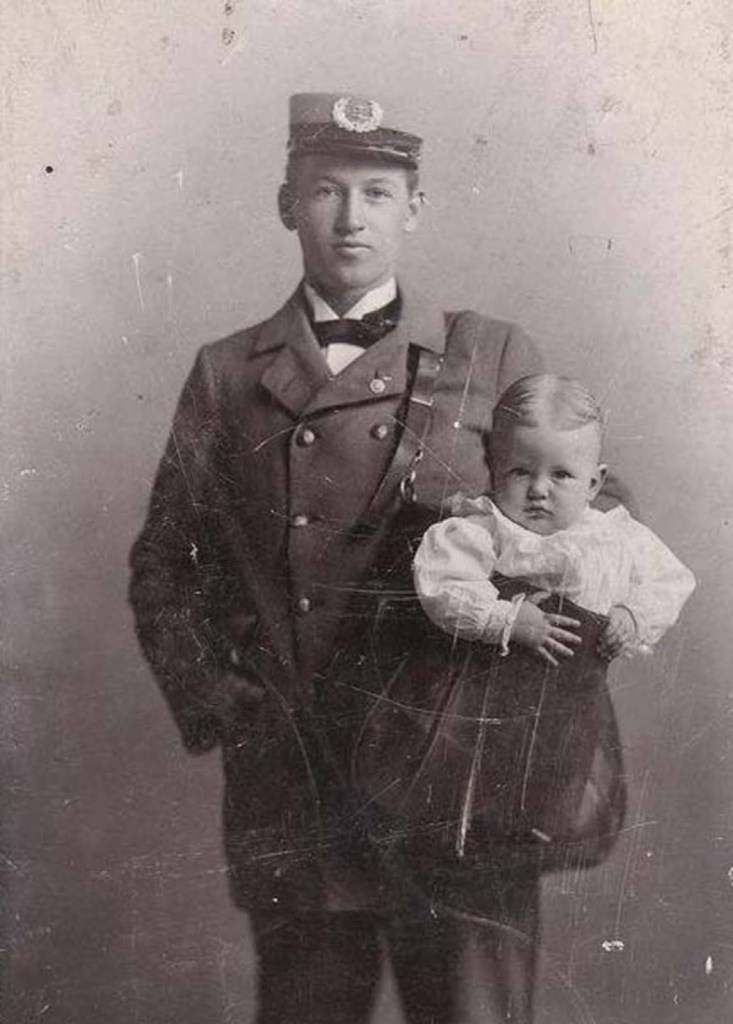
5-year-old May Pierstorff came in just under the weight limit at 48½ pounds. On February 19, 1914, little May was mailed to visit her grandmother in Lewiston Idaho with 53¢ postage, pinned to her coat. She rode the whole way in the postage compartment but hey, postage was cheaper than train fare. Leonard Mochel, the mail clerk on duty delivered the kid to her grandmother’s house, personally.

Six-year old Edna Neff was mailed 720 miles away from Pensacola, Florida to Christiansberg, Virginia, to visit her father.

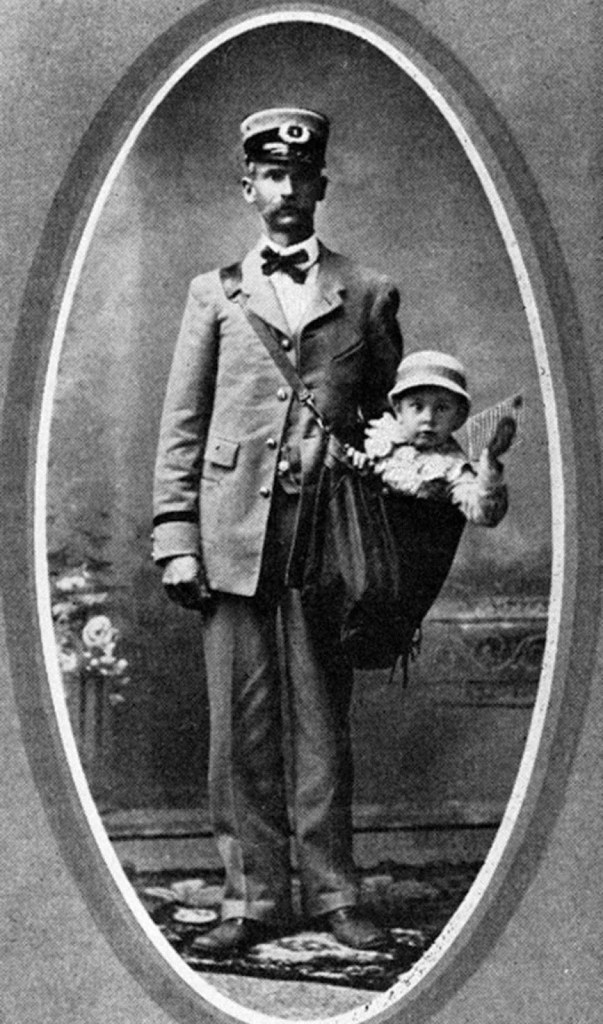
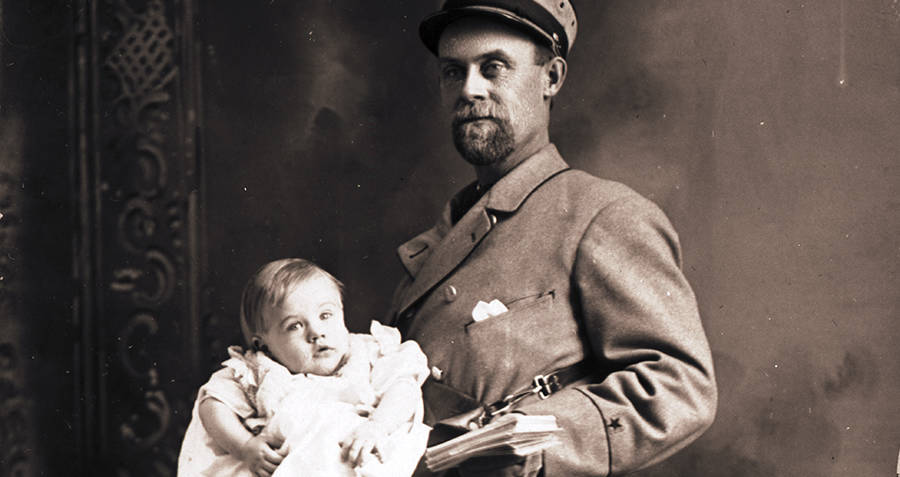
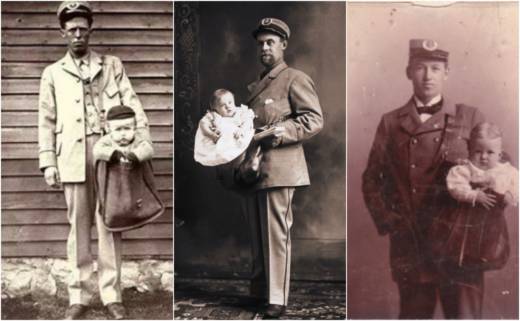
.If you have read thus far with horror permit me to assure you that mailing babies might not be as bad as it sounds. In the rural America of this period the mail carrier was no stranger but a well known and trusted member of a close-knit community. In the case of little May Pierstorff the postal worker who took her by rail, was a relative. No one ever put a child wearing diapers in a mailbox. The photographs above were staged, the sepia-toned faces grinning back over the years at those of us, they have punked.

Be that as it may, Postmaster General Albert S. Burleson heard of the Pierstorff incident and put his foot down. The practice of mailing humans was officially prohibited. The golden age of baby mail had come to an end. Sort of.

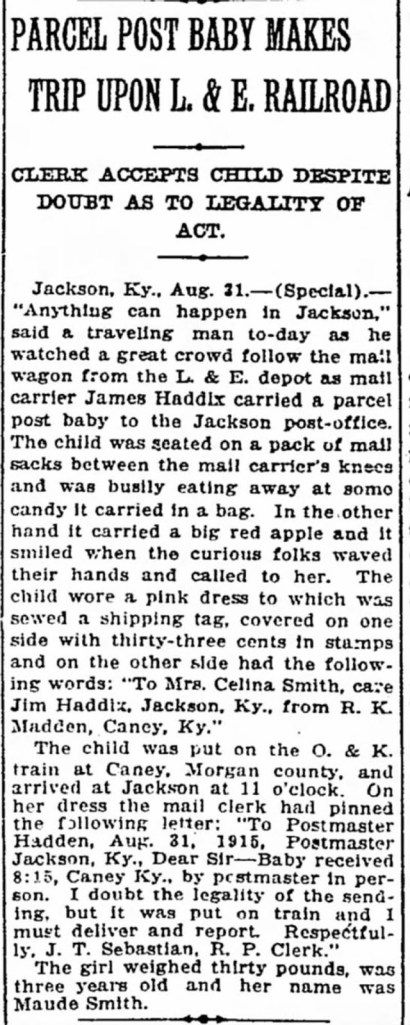
In August 1915 three-year old Maud Smith was mailed forty miles across Kentucky by her grandparents, to visit her sick mother. Hers may be the last human journey by US mail and the postmaster in Caney Kentucky, had some explaining to do.

In June 1920 1st Assistant Postmaster General John C. Coons rejected two applications to mail live children stating they could no longer be classified, as ‘harmless live animals”.

February 18, 1943 Just a Normal Person

“Success is not final, failure is not fatal: it is the courage to continue that counts.” ― Winston S. Churchill

With Hitler’s appointment as chancellor on January 30, 1933, the Nazi party lost little time in eliminating opposition. Two days later, the 876-member democratically elected deliberative body, the “Reichstag”, was dissolved.

As the 1930s wore on it was increasingly dangerous to oppose the Nazi party. History fails to record many of the names of those who simply…disappeared. Forget for a moment the idiocy of our age and the ease with which the word Nazi, is thrown around. Then imagine having the courage to oppose those monsters alone, in the 1930s and ’40s. Many who did so would pay with their lives: Bernhard Lichtenberg. Martin Niemöller. Claus von Stauffenberg. Franz Jägerstätter. Dietrich Bonhoeffer. There were others. Too many to count.

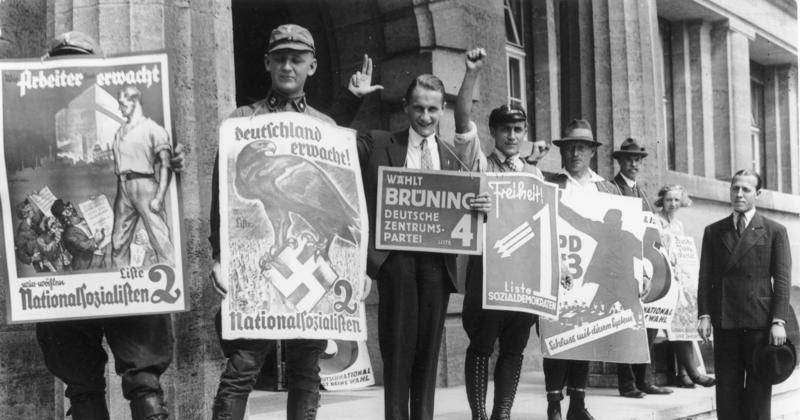
Campaigners outside a polling place during the federal elections, of 1932

Some survived to tell the tale. One such was the Württemberg politician Robert Scholl who criticized the ruling party before, during and after World War 2. Scholl was one of the lucky ones. He lived to tell the story, but not without spending some of the intervening years, behind bars.

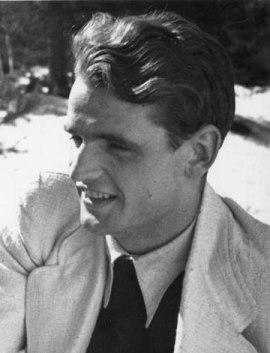
Robert and Magdalena (Müller) Scholl had six children together, four girls and two boys. The older of the two brothers, Hans, joined the Hitler youth, against the express will of his father. 

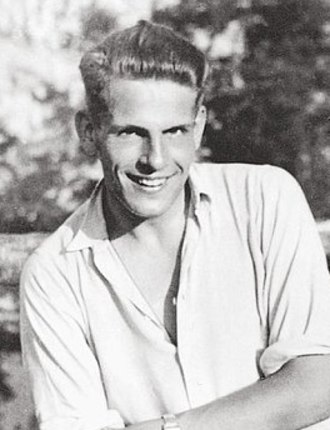
Hans Scholl

Hans even held a leadership position in the Deutsches Jungvolk in der Hitler Jugend (“German Youngsters in the Hitler Youth”), a section of the Hitler Youth aimed at indoctrinating boys, 10-14.

In 1935, Hans was selected to carry the flag at the 1935 Nazi party rally in Nuremberg, one of three standard-bearers, from Ulm.

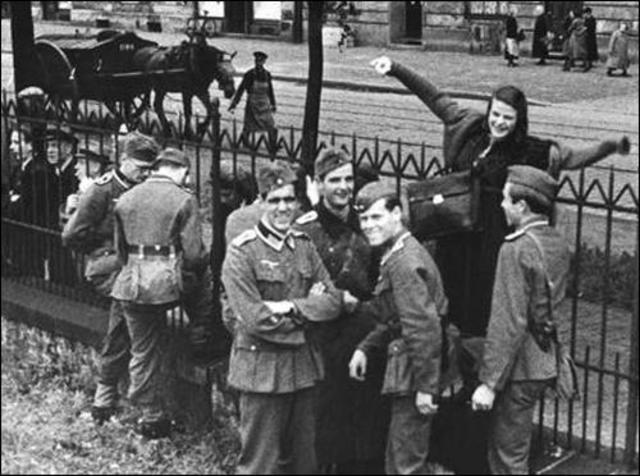
He joined the Reich Labor Service for two years before beginning medical school, in Munich. During a semester break, Scholl was drafted as a medic in the French campaign. Back at school, Scholl began to meet teachers and students, critical of the regime. Theirs was a Christian-ethical world view. One of them was Alexander Schmorrell.

Hugo Schmorell was a German-born doctor, living and working in Russia. He married Natalia Vedenskaya, the daughter of a Russian Orthodox priest. Alexander Schmorell was born to the couple in Orenberg Russia and baptized, in the Russian Orthodox church. 

Hugo remarried after Natalia died of typhus, this time to a German woman who, like himself, grew up in Russia. Alexander grew up bilingual, able to speak German and Russian, like a native.

Following the Russian Revolution, the family moved to Weimar Germany . In later interrogations by the Gestapo, Alexander described himself as a German-Russian Tsarist who hated Bolsheviks. 

Alexander Schmorell

In the Nazi world view, slavs are part of a great horde of Untermenschen, people considered racially or socially, inferior. Alexander Schmorell believed no such thing about himself. He was proud of both his German and his Russian side.

In religion class, Schmorell displayed a stubborn refusal to bend to the will of others, crossing himself right-to-left in the manner of the Russian church and not left to right. Alexander joined the Scharnhorst youth as a boy, mostly for the love of horseback riding. Once the organization was absorbed into the Hitler Youth movement he gradually stopped attending. Like Scholl, Schmorell joined the Wehrmacht, participating in the Anschluss and eventual invasion, of Czechoslovakia.

In 1941, Scholl and Schmorrell were drafted as medical auxiliaries, for service in the east. There the two witnessed the dark underbelly of the regime in whose service, they risked their lives. The Warsaw ghetto. The savage treatment of Russian prisoners. The endless deportations and dark rumors of extermination centers.

Members of the German resistance “White Rose, in 1942

Scholl and Schmorrell wanted better. Back in school the pair discussed this growing dissatisfaction with the regime with Kurt Huber, professor of music and a vocal anti-Nazi. By June 1942 the pair had begun to write pamphlets and calling themselves, the “White Rose”.

“Isn’t it true that every honest German is ashamed of his government these days? Who among us has any conception of the dimensions of shame that will befall us and our children when one day the veil has fallen from our eyes and the most horrible of crimes—crimes that infinitely outdistance every human measure—reach the light of day?”— 1st leaflet of the White Rose

Hans and Sophie Scholl with Christoph Probst

During later gestapo interrogations, Scholl gave differing stories as to the origin of the name. A poem of the same name by the German poet, Clemens Brentano. A work by the Cuban poet, José Martí. Perhaps it was nothing more than the purity of the white rose, in the face of evil. Or maybe Scholl meant to throw his Nazi tormenters off the scent of Josef Söhngen, the anti-Nazi bookseller who had helped them, in so many ways.

Willi Graf

Since the conquest of Poland, 300,000 Jews have been murdered in this country in the most bestial way … The German people slumber on in dull, stupid sleep and encourage the fascist criminals. Each wants to be exonerated of guilt, each one continues on his way with the most placid, calm conscience. But he cannot be exonerated; he is guilty, guilty, guilty!”— 2nd leaflet of the White Rose

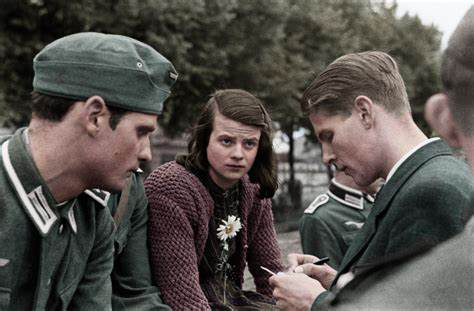
The group added members and supporters. Willi Graf who, unlike the founding members hated the Hitler Youth movement, from the beginning. Christoph Probst whose step-mother was Jewish and considered the Nuremberg laws an affront to human dignity. Hans’ sister Sophie who joined, despite her older brother’s protestations. Like her brother, Sophie detested what the Nazis stood for.

“Why do you allow these men who are in power to rob you step by step, openly and in secret, of one domain of your rights after another, until one day nothing, nothing at all will be left but a mechanised state system presided over by criminals and drunks? Is your spirit already so crushed by abuse that you forget it is your right—or rather, your moral duty—to eliminate this system?”— 3rd leaflet of the White Rose

Sophie Scholl

“The government—or rather, the party—controlled everything: the news media, arms, police, the armed forces, the judiciary system, communications, travel, all levels of education from kindergarten to universities, all cultural and religious institutions. Political indoctrination started at a very early age, and continued by means of the Hitler Youth with the ultimate goal of complete mind control. Children were exhorted in school to denounce even their own parents for derogatory remarks about Hitler or Nazi ideology”.

Surviving White Rose member George J. Wittenstein, M.D., “Memories of the White Rose”, 1979

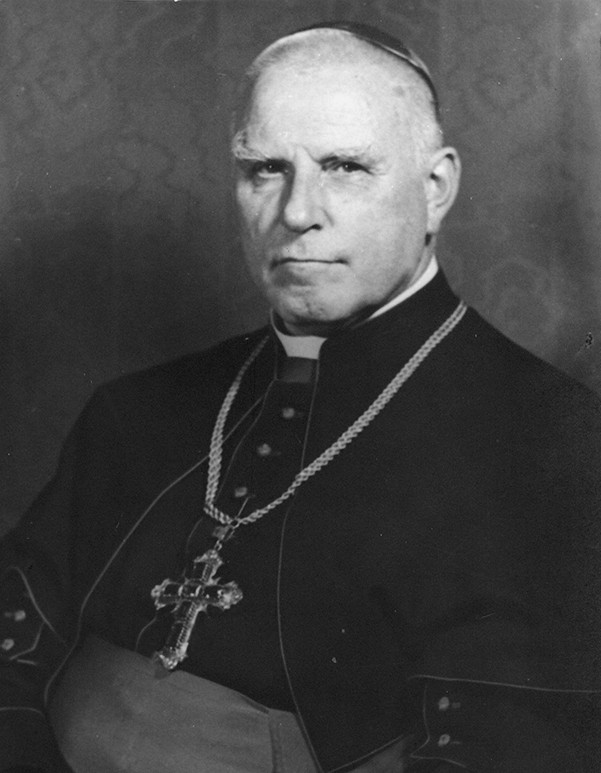
Bishop Clemens August Graf von Galen was critical of the Nazi movement from the beginning, denouncing Hitler’s “Worship of Race” as early as 1934.

Galen excoriated the Nazi euthanization program from the Catholic pulpits of Münster and across the German empire, condemning  “the innocent and defenseless mentally handicapped and mentally ill, the incurably infirm and fatally wounded, innocent hostages and disarmed prisoners of war and criminal offenders, people of a foreign race or descent”.

Bishop Galen’s sermons were seminal in the formation of the White Rose. One of his sermons formed the basis for the first pamphlet.

Hand copied leaflets were inserted into phone books or mailed directly, to teachers and students.

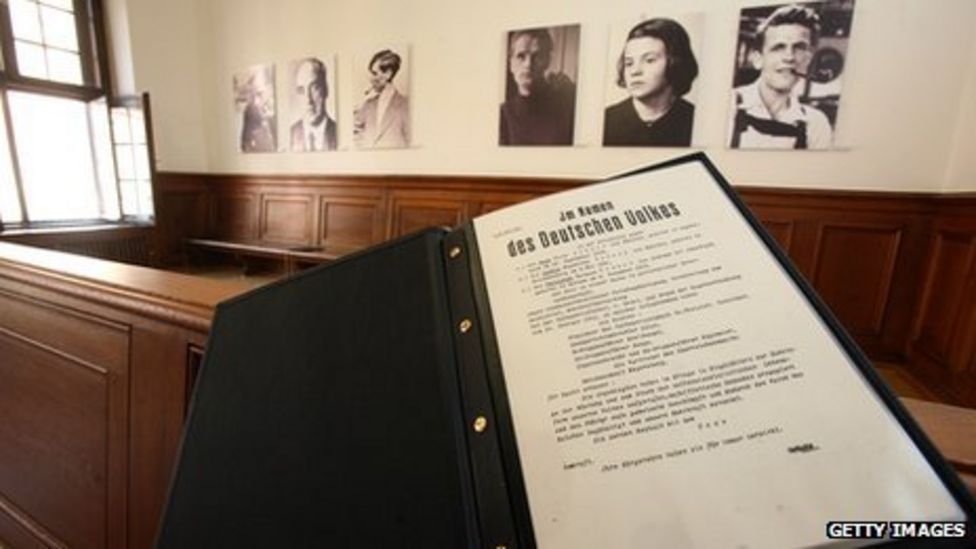
The grotesque sham trials conducted by Hitler’s “Blood Judge” Roland Feisler made short work of any who would oppose “Der Fuhrer”. Today, the “People’s Court” of Nazi Germany is best remembered in the wake of the July 20, 1944 plot to assassinate Adolf Hitler. In reality, this perversion of justice had been around for ten years, handing out death sentences, in the hundreds. This video gives a pretty good idea of “justice” meted out, in Roland Feisler’s court.

“The ultimate test of a moral society is the kind of world that it leaves to its children.”

Dietrich Bonhoeffer

There were Germans throughout the war who objected to the murder of millions, but theirs was a forlorn hope. Clergymen Dietrich Bonhoeffer would state “the ultimate question for a responsible man to ask is not how he is to extricate himself heroically from the affair, but how the coming generation shall continue to live.” For his opposition to the Reich, Bonhoeffer would pay with his life.

Helmuth James Graf von Moltke, great grand-nephew of the famous Helmut von Moltke would lead 28 dissidents of the “Kreisau Circle”, against this “outrage of the Christian conscience.” These too would pay with their lives.

The most successful German opposition party came from the universities of Munich, with connections in Berlin, Hamburg, Stuttgart and Vienna, including the White Rose. These were a surprise to Nazi leaders as Universities had long been stalwart supporters of Nazi ideology. 

Hans and Sophie arrived on campus with a suitcase full of pamphlets, on February 18. This was their 6th. Hurriedly moving through the campus the Scholls left stacks of leaflets outside of full lecture halls: Memorial to the “Weiße Rose” in front of the Ludwig Maximilian University of Munich

Today, the “People’s Court” of the schweinhund Feisler is a district court, in Munich.

“…Fellow Fighters in the Resistance!  Shaken and broken, our people behold the loss of the men of Stalingrad. Three hundred and thirty thousand German men have been senselessly and irresponsibly driven to death and destruction by the inspired strategy of our World War I Private First Class. Fuhrer, we thank you!…” – Excerpt from pamphlet 6

Their task complete, the pair realized they still had a few. From the upper floor of the atrium, Sophie tossed them into the air and watched them flutter to the ground. It was a reckless and stupid act.

If this story is about heroism it also about the opposite, the sort of loathesome toady without who no Nazi regime, would have thrived. One such was the custodian Jakob Schmid, who scurried to the top of the stairs and grasped the two by the collar.

Christoph Probst

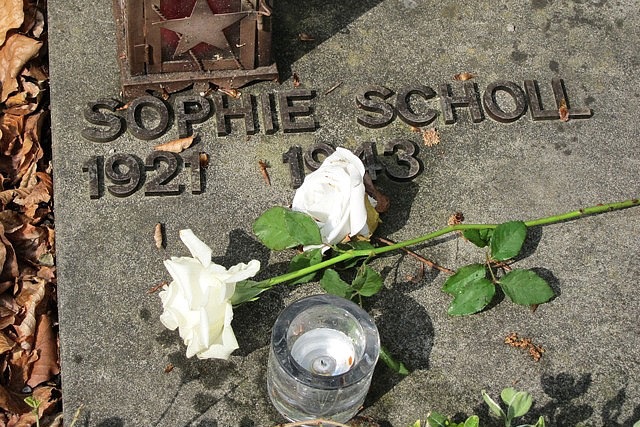
The Scholl siblings were quickly arrested. Hans had on his person the draft of another pamphlet: #7, written by Christoph Probst. He tried to eat it but the Gestapo was too fast. Probst was arrested within hours, eighty more over the following days. On February 22, 1943, all three were tried before judge Feisler’s People’s Court. All three were sentenced to death by guillotine, the execution carried out, the same day. 

Hans Scholl’s last words are recorded as Es lebe die Freiheit! (Let Freedom live!)

Graf, Schmorrell, Huber and 11 others were tried on April 13. All three received the same sentence, death by decapitation. All but one of the others received prison sentences, between 6 months and 10 years.

The last member to be executed was Hans Conrad Leipelt on January 29, 1945.

Despite the execution of the group’s leaders, the White Rose had the last word. That last pamphlet was smuggled out of Germany and copied, by the allies. Millions of copies rained down from the sky, dropped, by allied bombers.

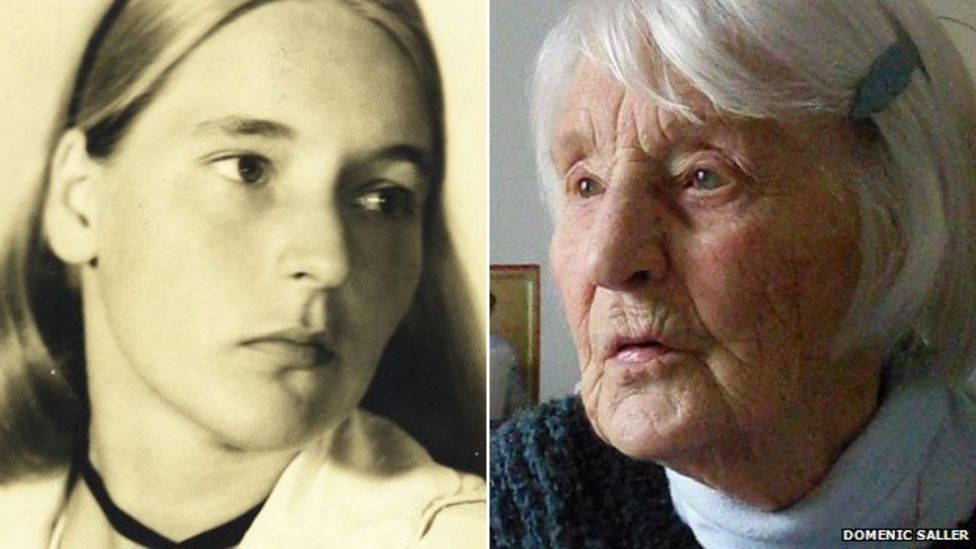
Lieselotte ″Lilo″ Fürst-Ramdohr was a war widow at 29 when she joined the White Rose, hiding pamphlets in an apartment closet and helping to make stencils, for graffiti. In 2013 she gave an interview for BBC Worldwide. It was three months before she died, at the age of 99.

Lieselotte ″Lilo″ Fürst-Ramdohr

Lieselotte was arrested and interrogated for a month by the Gestapo, and released. She thinks they’d hoped she would lead them, to fellow conspirators.

In 2012, Lilo’s friend Alexander Schmorell was awarded sainthood by the Russian Orthodox church. She thought it was all too amusing. “He would have laughed out loud” she said, “if he had known. He wasn’t a saint. He was just a normal person.”

February 14, 1945 The Firebombing of Dresden

“We saw terrible things: cremated adults shrunk to the size of small children, pieces of arms and legs, dead people, whole families burnt to death, burning people ran to and fro, burnt coaches filled with civilian refugees, dead rescuers and soldiers, many were calling and looking for their children and families, and fire everywhere, everywhere fire, and all the time the hot wind of the firestorm threw people back into the burning houses they were trying to escape from”. Eyewitness to the firebombing at Dresden

The most destructive war in history entered its final, apocalyptic phase in January 1945, with another four months of hard fighting yet remaining before Allied forces could declare victory in Europe. In the west, the “Battle of the Bulge” was ended, the last great effort of German arms spent and driven back beyond original lines. In the east, the once mighty German military contracted in on itself, in the face of a massive Soviet advance.

Dozens of German divisions hurried east to meet the threat. Allied intelligence believed the war could be over in April if the major cities to the east, were destroyed. Dresden. Leipzig. Chemnitz. Letting these places stand to serve as bases for retreating German forces, could drag the war out until November.

destroyed-german-equipment-znoymo-czechoslovakia-1945-may
German military equipment lies broken in Czechoslovakia, 1945

Sir Charles Portal, British Chief of the Air Staff, put the problem succinctly: “We should use available effort in one big attack on Berlin and attacks on Dresden, Leipzig, and Chemnitz, or any other cities where a severe blitz will not only cause confusion in the evacuation from the East, but will also hamper the movement of troops from the West.”

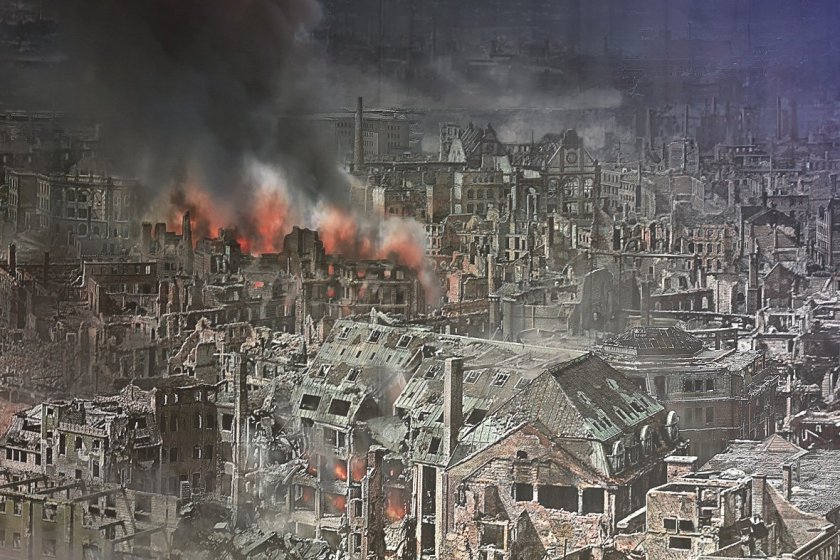
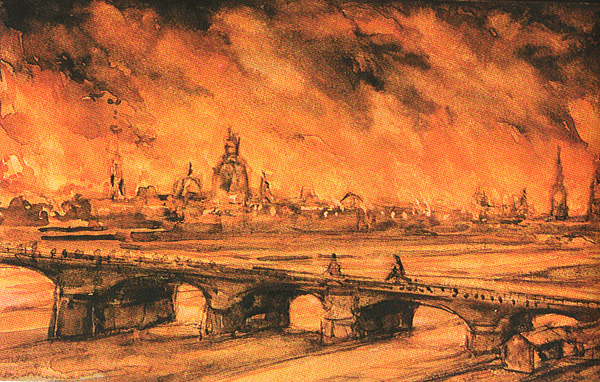
With its baroque and rococo city center, the capital city of Dresden was long described as the “Jewel Box” of the Free State of Saxony, family seat to the Polish monarchs and royal residence to the Electors and Kings of Saxony. Dresden was the seventh-largest city in Germany in 1945, home to 127 medium-to-large sized factories supplying the German war machine, and the largest built-up area in the “thousand-year Reich”, yet to be bombed.

Dresden_montage
Long described as “Florence on the Elbe” Dresden was considered one of the world’s most beautiful cities, a treasure of art and architecture.

For Victor Klemperer, the 13th of February, 1945, was the most terrifying and depressing experience of a lifetime. Once home to well over 6,000 Jews, Dresden now contained a mere forty-one. Klemperer’s marriage to an “Aryan” wife had thus far protected him from the “final solution”, despite the yellow Juden star he was forced to wear on his coat.

Now, the man witnessed notices for final “deportation” being delivered even to those last few. There wasn’t one who received such a notice who didn’t understand what it meant. Terrified that he might be next the process was interrupted by the coming firestorm. Three nights later Klemperer removed the yellow star, an act punishable by death at the time.

Three hundred miles away, bad weather hampered operations for the United States Army Air Force (USAAF).  The first wave in the fire bombing of Dresden would be a Royal Air Force (RAF) operation.

dresden-bombing (2)

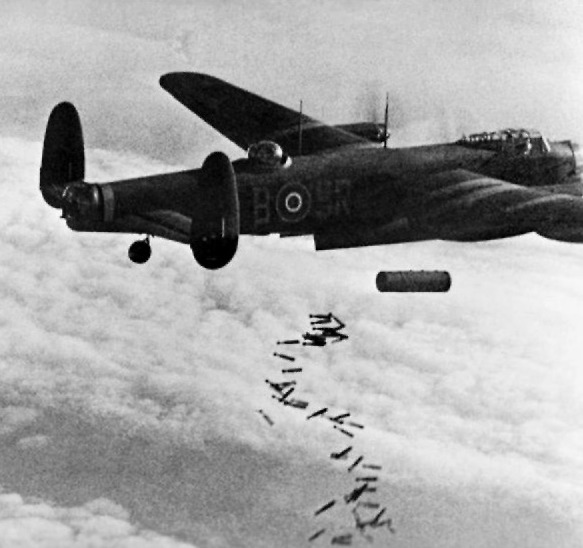
The first group of Lancaster bombers arrived in the skies over Dresden two hours before midnight, February 13. These were the pathfinders, their job to find the place and drop magnesium parachute flares, to light up the target. Then came the marker planes, Mosquito bombers whose job it was to drop 1,000-pound target indicators whose red glare provided something to aim at. Then came the first wave, 254 Lancaster bombers dropping 500 tons of high explosives ranging from 500-pounders to massive, 4,000-pound “blockbusters”. Next came the incendiaries. The “fire bombs”. 200,000 of them.

For those caught on the ground like scared rabbits in oncoming headlights, the horrors had only begun.

dresden

The second wave came in the small hours of February 14, just as rescue operations were getting underway. By now thousands of fires were burning, with smoke rising 15,000 feet into the air. You could see it from the air, from five hundred miles.

Then came another 529 Lancasters, dropping another 1,800 tons of bombs.

Lancaster_I_NG128_Dropping_Blockbuster_-_Duisburg_-_Oct_14,_1944
Lancaster bomber

The USAAF arrived over the target on the afternoon of February 14, the 317 B-17 “Flying Fortresses” of the “Mighty 8th” delivering another 771 tons of bombs.

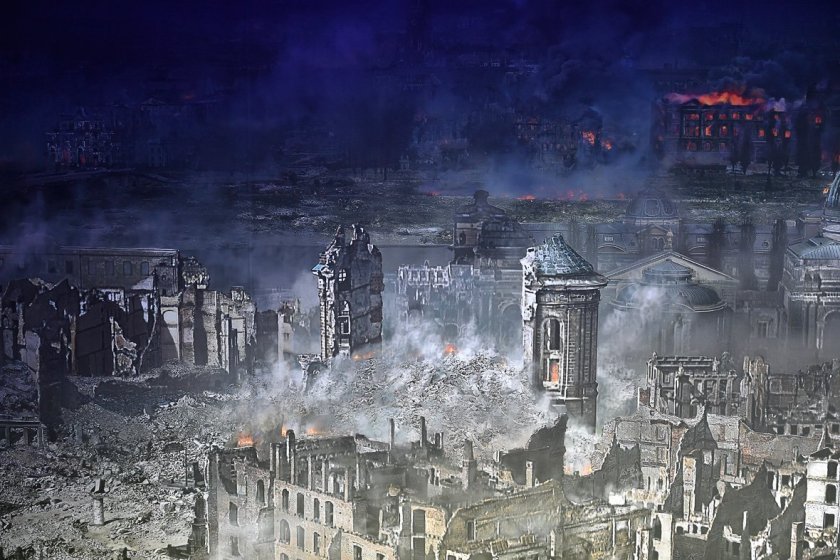
Fires enveloped the city by the tens of thousands growing into a great, howling firestorm. A shrieking, seemingly living demon beast from the blackest pits of hell, devouring all in its path.

A firestorm of this size develops its own weather, fire tornadoes reaching into the sky as pyrocumulonimbus clouds hurl lightning bolts back to earth, starting new fires. Gale force winds scream into the vortex from all points of the compass, powerful enough to hurl grown adults opening doors in an effort to flee, off their feet and into the flames.

Lothar Metzger brings us one of the few eyewitness accounts of the fire bombing of Dresden, as seen from the ground:

“It is not possible to describe! Explosion after explosion. It was beyond belief, worse than the blackest nightmare. So many people were horribly burnt and injured. It became more and more difficult to breathe. It was dark and all of us tried to leave this cellar with inconceivable panic. Dead and dying people were trampled upon, luggage was left or snatched up out of our hands by rescuers. The basket with our twins covered with wet cloths was snatched up out of my mother’s hands and we were pushed upstairs by the people behind us. We saw the burning street, the falling ruins and the terrible firestorm. My mother covered us with wet blankets and coats she found in a water tub.

We saw terrible things: cremated adults shrunk to the size of small children, pieces of arms and legs, dead people, whole families burnt to death, burning people ran to and fro, burnt coaches filled with civilian refugees, dead rescuers and soldiers, many were calling and looking for their children and families, and fire everywhere, everywhere fire, and all the time the hot wind of the firestorm threw people back into the burning houses they were trying to escape from.

I cannot forget these terrible details. I can never forget them”.

He was ten years old at the time.

dresden-bombing (3)

For Victor Klemperer, the fire bombing of Dresden was a last minute reprieve. On the 19th he joined a refugee column fleeing the inferno, for American held territory. He would survive the attack, and live to see the end of the war.

Official death tolls from the burned out city are estimated at 18,500 to 25,000. The real number will never be known. At this point in the war refugees and military forces were streaming through the area by the tens of thousands. Estimates run as high as 200,000. That number if accurate, is more than death tolls resulting from the atomic bombings of Hiroshima and Nagasaki, combined.

February 13, 1945 Of Battles and Beignets

So what does Joan of Arc have in common with pancakes, pigs and potatoes? Why, I’m glad you asked.

We fancy ourselves a land of sand and fun here on Sunny Cape Cod™, not the kind of place for an epoch changing clash of arms. Truth be told the place really IS “Mayberry by the Sea” but even we, have had our moments.

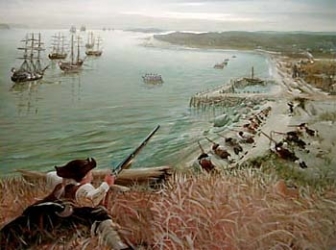
On April 3, 1779, local militia sallied forth to the beaches of Falmouth, to oppose a landing by some 220 of the King’s Regulars. The invaders were indeed repulsed but not before little Falmouth sustained a cannonade of ball and grape lasting from eleven in the morning, until well after dark.

falmouth1779_350

During the War of 1812, locals once again took up squirrel guns along the beaches and fired, on British warships. HMS Nimrod fired back holing no fewer than thirty buildings, with cannon shot. Until recently, three of those buildings yet stood, holes and all. Sadly, the Nimrod Restaurant is no more. Today there are but two cannonball holes but you can still see them still, one at the Elm Arch Inn and the other, at the former home of Captain Silas Bourne.

And who can forget that battle for the ages remembered far and wide, as the “Herring War”. “The Cape” has always been a sport fisherman’s paradise (and still is) but the earliest settlers were more focused on more important things. Like eating. The earliest mill was built in 1700. Others came into service over the next 100 years, mostly grist and woolen mills.

Before the age of internal combustion such enterprises harnessed the power of running water, and there came the rub. There were those who plied the waterways in search of a migratory and tasty little silver fish, called a Herring.

Long simmering animus between the two groups came to blows in 1800 when new mill construction threatened to block a herring run, in East Falmouth. Locals took to a cannon on the town green to express their ire. Packing the barrel with powder and herring they though to touch the thing off but, if some is good then more just has to be better. Right?

A herring left strictly to nature is an unlikely object to put in a cannon, but these guys figured it out. By the time they were done there must have been fish tails, hanging from the muzzle. Match was touched to to powder and the fuse was lit BOOM! The barrel exploded killing the gunner and raining down fish guts, for half a mile.

Thus ends another chapter of the never ending Herring Wars. And yet, this wasn’t the first conflict coming down to us with a funny sounding name. This wasn’t even the first Battle of the Herrings.

Today, the Siege of Orléans during the Hundred Years’ War marks the first appearance of Joan of Arc, at the head of a French Army. On February 12, 1459, Joan was making her final plea for support and safe conduct to enter the battle. The future saint prophesied that very day the King’s forces would suffer a dreadful defeat as indeed they did in an action remembered, as the Battle of the Herrings.

The city of Orléans was under siege for five months when an English supply train of 300 carts and wagons set out to provision the besieging force. Set upon by a vastly superior force of French and Scottish allies the English took refuge behind walls bristling with sharpened wooden stakes and wagons laden with – you guessed it – herring, in barrels. The tactic served them well at Agincourt and again, on February 12. Three to four thousand French forces attacked with gunpowder artillery, a new and poorly understood weapon, at that time. The Scots deplored such unmanly tactics and went to the attack, only to be cut down by a torrent of English arrows. The French cavalry then charged to the rescue while English longbowmen finished the job. The battle ended in a rout resulting in the loss of 500-600 French and Scots allies at the cost of a negligible number of English.

Word of the disaster reached the Dauphin, days later. Plunged into despair the young King-in-waiting and his ministers decided it couldn’t hurt to let this illiterate peasant girl take part. Thus we remember the Battle of the Herrings and the legend, of the Maid of Orléans.

In many Christian nations, Shrove Tuesday is the day before Ash Wednesday, the first day of lent and the last day (for now) to gorge on pancakes, beignets and other sweet treats. Also known as “Fat Tuesday”, “Mardi Gras” and “Pancake Tuesday”, Christians across the nation turn to pantries and supermarket shelves in the quest for some sweet confection. Many of those will see the face of Aunt Jemima smiling back. At least they once did, but then there was 2020.

Sigh.

Speaking of Aunt Jemima, Shrove Tuesday fell on February 13 in 1945, a day marking the continuing effort to evict the Japanese occupier from pre-communist China. In the US, OSS operatives, precursor to the modern CIA, devised an explosive compound with a color and consistency very much like, pancake flour. You could even cook with the stuff and eat it though it wasn’t recommended and probably not very tasty. As it was explosives were easily smuggled into occupied China in Aunt Jemima packages for the use of Chinese patriots, in the war against Imperial Japan.

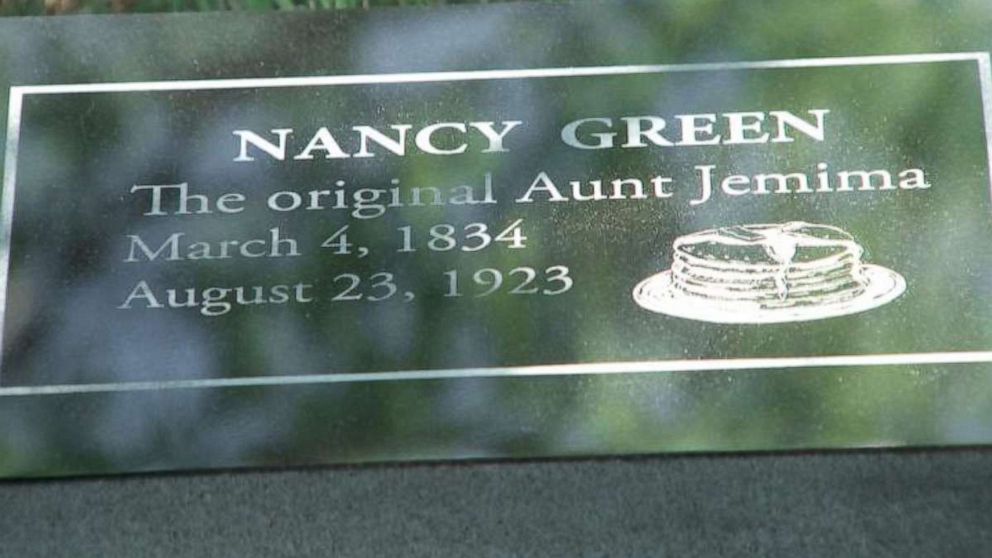
Today Nancy Green, the original (and very real) Aunt Jemima is once again relegated, to anonymity. Her descendants don’t understand and neither does anyone else, why her likeness was removed from grocery store shelves and replaced by the impersonal, “Pearl Milling Company Original”. But hey, who are we to stand in the way of the conspicuous display of meaningless virtue?

Today the United States and the United Kingdom enjoy a “Special Relationship” and may it ever be thus, but it wasn’t always that way. Three epoch changing clashes of arms were to unfold before we got to this place: the American Revolution, the War of 1812 and the Pig and Potato War.

Wait…What?

Yeah. The Oregon treaty of 1846 failed to make clear who governed the tiny but strategically important San Juan Island in the Gulf of Georgia, near Vancouver. Despite the diplomatic limbo British and American settlers alike lived in the place and got along perfectly well. Until June 15, 1859. A pig belonging to an Irishman named Charles Griffin was helping himself to potatoes belonging to the American farmer, Lyman Cutlar. Cutlar shot the pig. Scorning the farmer’s £10 peace offering Griffin insisted the farmer be arrested as indeed, he was. Anger boiled over on both sides and before long, a 461-man force of pissed off Americans armed with with 14 cannon faced over 2,000 British soldiers and five warships.

Very little ends well that begins with armed and angry men but sometimes, cooler heads prevail. British Admiral Robert Baynes had no intention of fighting with Americans over a dead pig. US President James Buchanan felt the same way and, before long, ruffled feathers were soothed. The island was handed over to US administration in 1872 following thirteen years, of mediation.

Now, wouldn’t I just love to talk about the Battle of the Cheeses, and how Mad Honey laid low the legions of Pompey the great? Yes I would, this is too much fun but, sadly, work awaits. That must remain a tale, for another day.

February 10, 1863 Tom Thumb

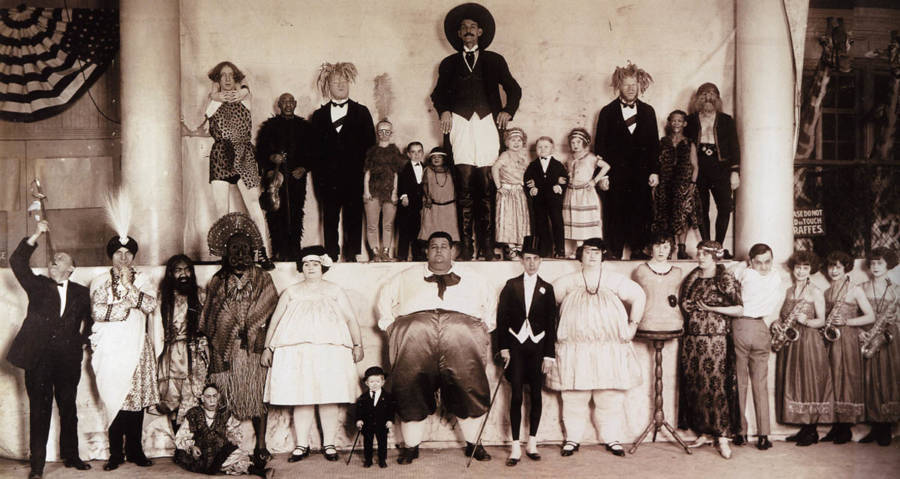
Jack Earle once joined Ringling Brothers circus as the world’s tallest man with a reputed stature, of 8’6″ tall. Apprehensive at first about joining a “freak show”, Clarence Chesterfield Howerton better known as “Major Mite”, had the last word. Standing all of 2-feet 2-inches in his bare feet Howerton told the gentle giant, there are “more freaks in the audience than there are on stage”.

Charles Sherwood Stratton began touring with the legendary showman Phineas Taylor Barnum, when he was only five.  Quick on his feet with a flawless sense of comedic timing , Stratton could sing and dance with the best of performers. 

He was one of the great entertainers of the age and you probably know him even today though not perhaps, by his given name. He was “General Tom Thumb”, a giant among those who strut and fret their hour upon the stage and yet, a man who barely stood 2-feet 10-inches tall, on his 21st birthday.

Apologies to the bard for that one.

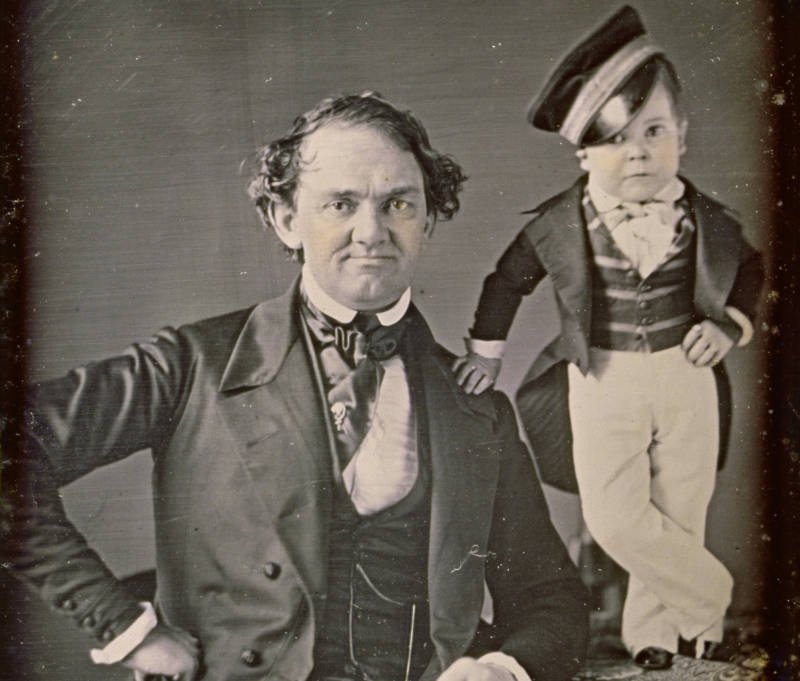
Tom Thumb and P.T. Barnum

Born in 1838 in Bridgeport Connecticut, Tom Thumb was not only a celebrity in the United States but an international star following a European tour in which he personally met several heads of state, including Britain’s Queen Victoria.

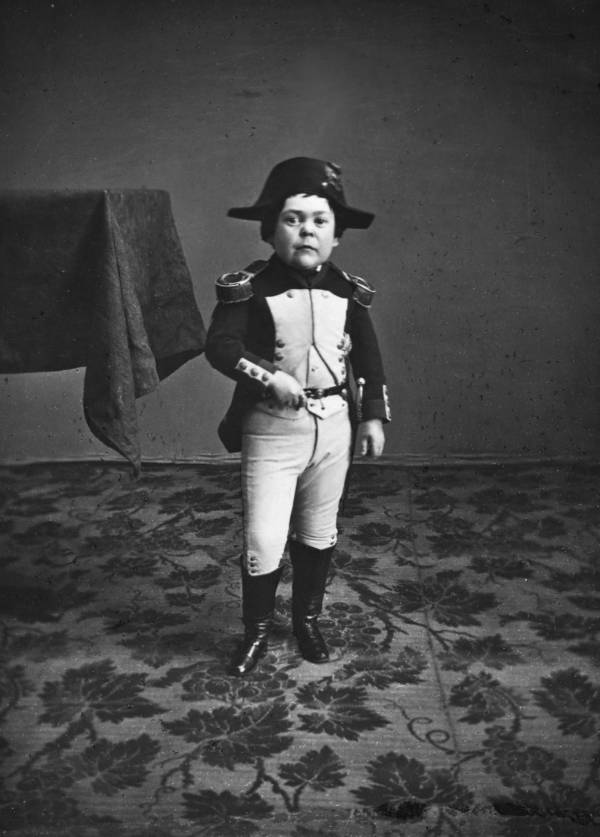
The French couldn’t get enough of “Charley’s” impersonation of Napoleon Bonaparte and all across Europe, ladies lined up for blocks for a kiss from the diminutive superstar.

Tom Thumb as Napoleon Bonaparte, H/T allthatsinteresting.com

Fun Fact: One of the best known of all time among “little people” Tom Thumb was a hefty 9 pounds 8 ounces at birth. He stopped growing at six months. Over a long career some 50 million the world over came to see Tom Thumb at a time the world population stood at only 1.2 billion.

Today some 30,000 Americans are dwarfs with an estimated 651,700, the world over. The term is generally preferred over “dwarves”, a word hearkening back to the fictional dwarves of J.R.R. Tolkien and the legend, of Snow White. Harriet Beecher Stowe used the term “midget” during the 19th century, a term now considered offensive calling forth as it does impressions of a tiny, biting insect.

“P.T. Barnum (left) alongside General Tom Thumb, circa 1850. General Tom Thumb was 12 at the time”. H/T allthatsinteresting.com

The term dwarf stems from the Old English dweorg referring to the mountain dwelling dwarfs of Norse mythology, beings associated with wisdom, metal smithing, mining the earth and handicrafts.

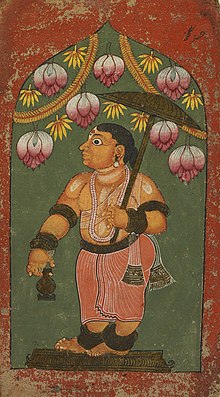
Vāmana

In Sanskrit the term Vāmana refers to one small or short in stature and also the 5th alter ego or “avatar” of the Lord Vishnu, appearing in no fewer than nine chapters of the Bhagavat Purana, one of eighteen Great Texts of all the Hindus.

Entire books could (and should) be written of the mythological “little people” of Native American legend. In the northeast, Delaware and Wampanoag folklore tells of diminutive imps known as the Pukwudgie, translating as “little wild man of the woods that vanishes”. Lewis and Clark expedition notes tell of “spirit mounds” inhabited by fierce little “devils” only 18-inches tall. So ferocious are these little people Lakota folklore tells of 350 warriors once wiped out to the last man, for getting too close to one of their mounds. The Cherokee people originally inhabiting northeast Georgia and Alabama to western South Carolina tell of the “Yunwi Tsunsdi”, a race “hardly reaching up to a man’s knee, but well-shaped and handsome, with long hair falling almost to the ground” escorting their people, along the notorious ‘Trail of Tears”.

Seneb

Seneb was a high ranking official in the ancient court of the Old Kingdom of Egypt (ca 2,520BC) and a “little person”, married to the High Priestess Senetites, a normal sized woman with whom he fathered three children. Seneb’s wealth included cattle by the tens of thousands and no fewer than twenty, palaces.

Some 70% of dwarfs attribute their short stature to the genetic disorder achondroplasia. Most of the remainder result from growth hormone disorders.

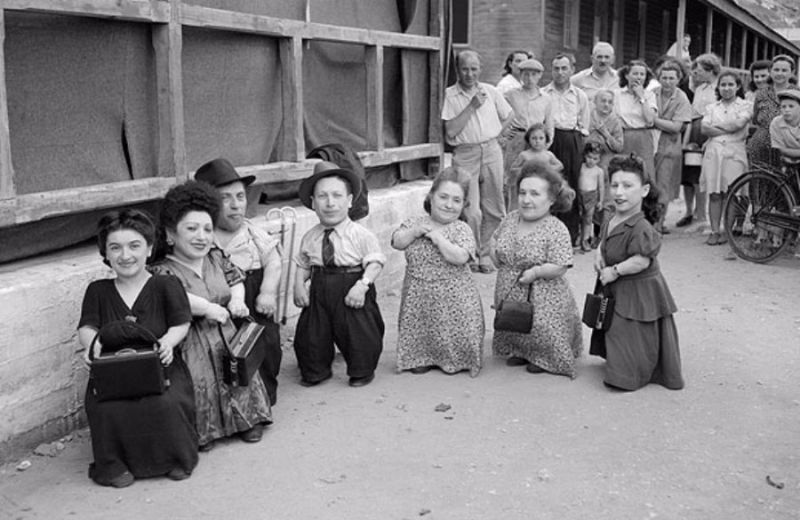
One of the most unlikely stories of World War 2 involved the “Seven Dwarves of Auschwitz“, the Ovitz siblings who fell into the malevolent hands of the “Angel of Darkness” Josef Mengele himself and yet, lived to tell the tale.

The Ovitz siblings, the “Seven Dwarves of Auschwitz”

Physically, dwarfs face any number of challenges and yet, to look up the subject on Johns Hopkins’ website is to learn that dwarfism is not an intellectual disability, nor is it a “disease” which requires a “cure”. Most people with dwarfism have normal intelligence and go on to live long, productive and fulfilling lives.

In 1861 the United States broke in two resulting in Civil War, a conflict so dreadful as to destroy the lives of more Americans than every war from the French and Indian Wars to the War on Terror, combined. We all grew up learning of a death toll in the neighborhood of 632,000, in a nation of only 31 million according to the census, of 1860. Modern investigations of census data reveal much higher death tolls ranging from 650,000 to 850,000 killed. Many historians now settle on the middle figure, of 750,000.

Applied in proportion to the US population in 2012 such a butcher’s bill would reach an astonishing, 7.5 million.

The modern imagination can barely conceive of a such a calamity and yet, the New York Times pushed the thing off the front page for three days straight to cover the wedding, of Tom Thumb.

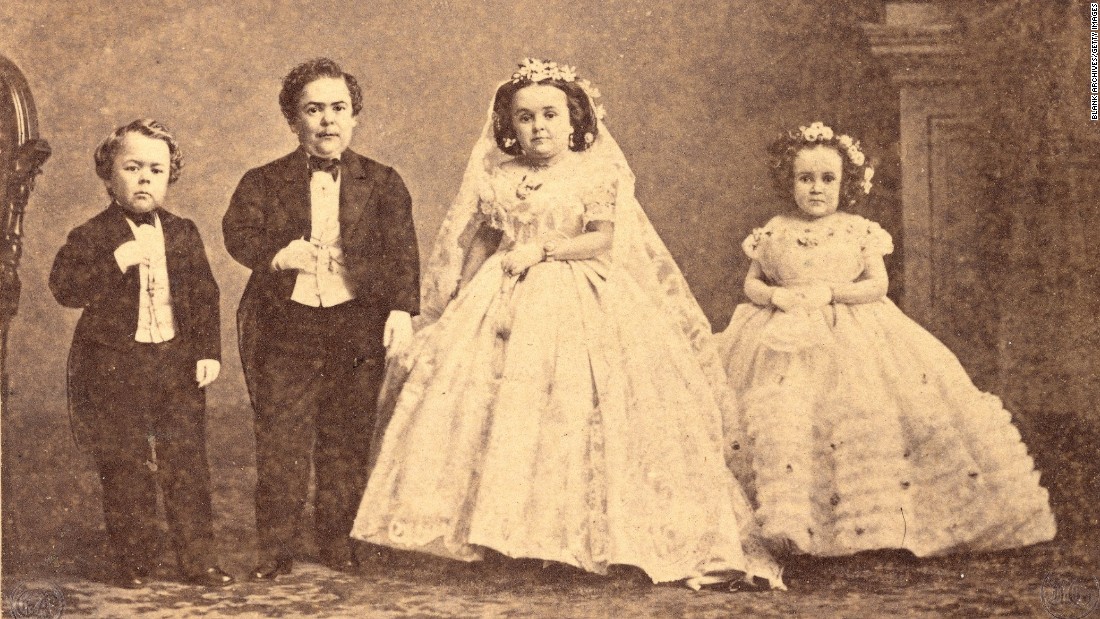
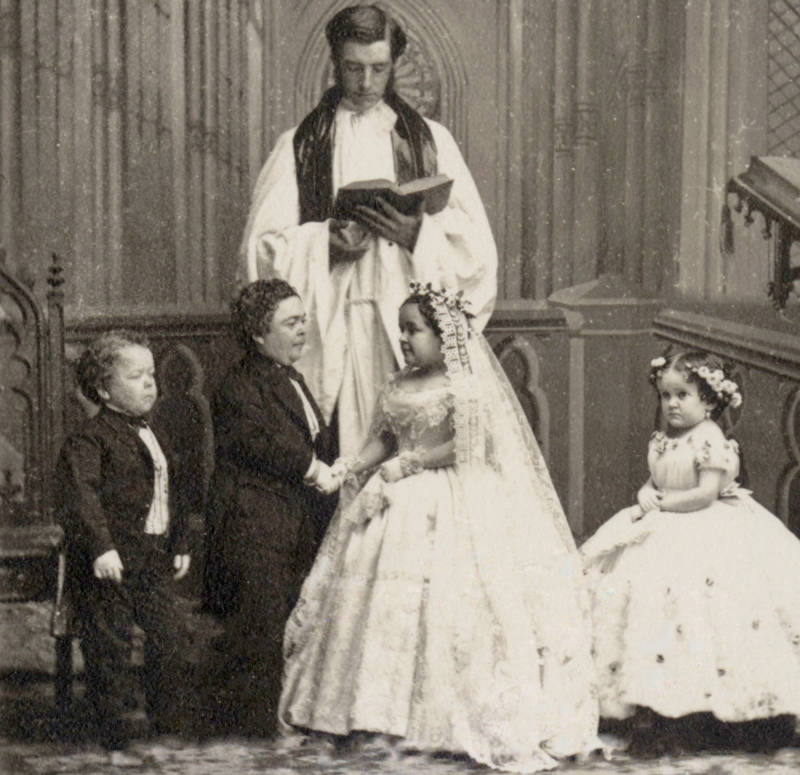
A pretty dwarf woman called Lavinia Warren joined the circus in 1862, romantically pursued by another Little Person and fellow Barnum performer, “Commodore Nutt”. From the moment the two met Lavinia only had eyes for Stratton and for him, the feeling was cordially mutual. The two were married on February 10, 1863 in the social event, of the season.

New York society clamored to get into the “fairy wedding”, an extravagant affair at Grace Episcopal Church followed by a reception at the Metropolitan Hotel. Never one to let a good business opportunity go to waste admission to the wedding was free, the reception open to the first 5,000 guests who ponied up $75 apiece where the happy couple greeted guests from atop a grand piano.

Today the term “freak show” is downright cringeworthy to our ears as well it should but in ages past, such performers lived a range of experience. Some endured lives of humiliation, cruelty and misery while others became celebrities earning more money than anyone in the audience. Some earned even more than their own promoters.

Tom Thumb was one of those whose wealth was such that he once bailed out Barnum himself, when the great showman got into financial trouble.
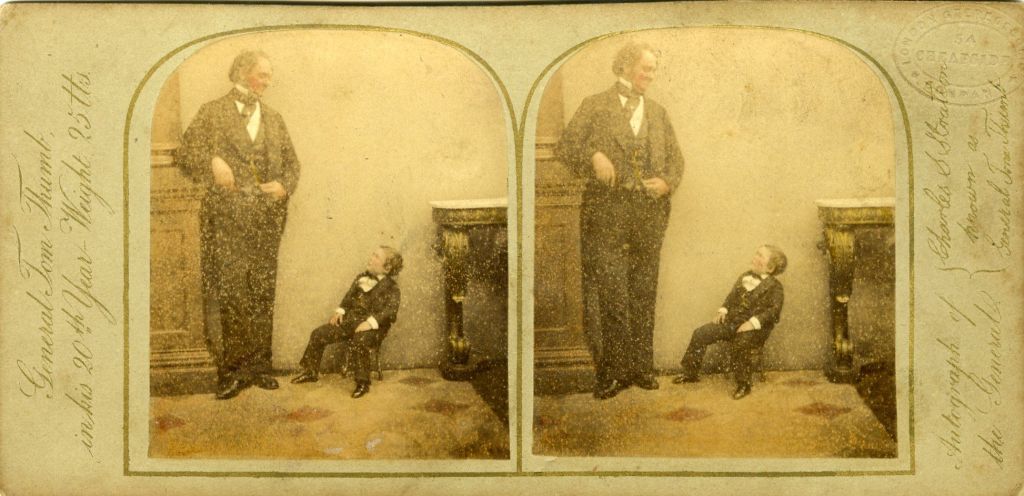
“Left: Jack Earle with fellow performer Major Mite, who stood 2’2″. Right: Earle with an average-sized man”. H/T allthatsinteresting.com

Jack Earle once joined Ringling Brothers circus as the world’s tallest man with a reputed stature, of 8’6″ tall. Apprehensive at first about joining a “freak show”, Clarence Chesterfield Howerton better known as “Major Mite”, had the last word. Standing all of 2-feet 2-inches in his bare feet Howerton told the gentle giant, there are “more freaks in the audience than there are on stage”.

Once a Blood gang member who served ten years, ten months and ten days in Folsom prison, Luigi “Shorty” Rossi turned his life around to found “Shortywood Productions”, to provide career opportunities for his fellow little people in the world, of entertainment. Rossi himself is the star of cable TV’s Animal Planet’s series “Pit Boss” and the founder of Shorty’s Pitbull Rescue, an organization performing rescue, rehabilitation and adoption for abused and neglected pitbulls.

Ex-con or not…anyone who puts that much heart into caring for animals, is alright with me.

February 4, 2008 A History of the Smiley Face

From Betty Boop to the hula hoop, popular culture is always primed and ready to dive into the latest fad.

2981c

Established by act of Congress on July 9, 1918, the Silver Star is the third-highest decoration is the system of military honors awarded to members of US armed services for valor in combat, against an enemy of the United States.  A search of public records reveals a long list of recipients of the Silver Star including the name “Ball, Harvey A. HQ, 45th Infantry Division, G.O. No. 281”.

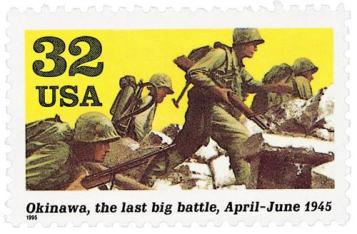
Harvey Ball earned the silver star medal “for Conspicuous Gallantry in Action” in the 1945 battle for Okinawa. He went on to serve most of his life in the United States Army Reserve and retired in 1979 with the rank, of Colonel.

A member of the greatest generation his was a name you may not know but I guarantee you will know the man, by his work.

Harvey Ross Ball worked for a sign painter in Massachusetts while attending Worcester South High School, and went on to study fine arts at the Worcester Art Museum School.

After the war, Ball came home to Worcester and worked for a local advertising firm later opening his own ad agency, Harvey Ball Advertising, in 1959.

Harvey_Ball
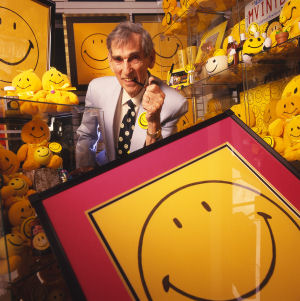
Harvey Ball, surrounded by his creation

In 1963, the State Mutual Life Assurance Company of Worcester (now Hanover Insurance) bought out the Guarantee Mutual Company of Ohio.  Employee morale tanked with the new acquisition.  Director of Promotions Joy Young was tasked with solving the problem.  Young hired Harvey Ball as a freelance artist to create a visual icon. A pin to be worn as part of the company’s ‘friendship campaign’.

First came that silly grin. That part was easy but the pair soon realized, the button could be inverted.  Now we’ve got a “frowny” face and we can’t have that. Ball added eyes, the left drawn just a bit smaller than the right to “humanize” the image.

The work took ten minutes and the artist was paid $45, equivalent to $330 today.  Neither Ball nor State Mutual Felt the need to copyright the graphic.

From Betty Boop to the hula hoop, popular culture is always primed and ready to dive into the latest fad. State Mutual ordered 100 buttons.  It wasn’t long before manufacturers were taking orders for thousands at a time.

Seven years later the Philadelphia brothers Bernard and Murray Spain seized on the image producing coffee mugs, t-shirts, watches and bumper stickers by the millions, emblazoned with the happy face and the slogan “Have a happy day”.  That was later revised to, “Have a nice day”.

The image was everywhere, second only to the ubiquitous “Peace Sign” of the era.

Frenchman Franklin Loufrani copyrighted the graphic in France in 1972, using the image in the “good news” section of the newspaper France Soir and developing a line of imprinted novelty items.  Loufrani’s son Nicolas took over the family business and launched the Smiley Company, in 1996.

Unsurprisingly, the younger Loufrani is skeptical of Harvey Ball’s claim to have created such a simple design, pointing to cave paintings found in France dated to 2500BC and a similar graphic used in radio ad campaigns, of the early 1960s.

Of course, that didn’t prevent the company from seeking US trademark rights to the image and kicking off a years-long legal battle with retail giant WalMart, which had been using the happy face in its “Rolling Back Prices” campaign.

The 2007 film “Smiley” depicts the story of a lazy actress who eats marijuana laced brownies baked by a stoner roommate and embarks on a series of life-changing misadventures. If you don’t remember the film you’re in good company. The thing was delisted less than three months later on February 4, 2008.

The Smiley Company is one of the 100 largest licensing corporations in the world with revenues of $167 million in 2012, holding rights to the Smiley Face in over 100 countries. Notably, the United States is not one of them.

Harvey Ball wasn’t the first to draw a smiley face, or at least something similar. When archaeologists pieced together the broken shards of a Hittite jug there appeared looking back from some 3,700 years in the past a round circle with upturned mouth and two little dots, for eyes.

The Czech monk Bernard Hennet used something like very much like it in his signature, around 1741.

And yet it is one image we remember, the perfect yellow circle with the dots and lines that could only come, from Harvey Ross Ball.

Characters flew to Mars in the 2009 superhero film “Watchmen” , landing in a crater that looks very much, like Harvey Ball’s creation. The red planet’s own smiley face is very real I assure you. It’s an enormous impact basin located in the Argyre quadrangle in the southern highlands of Mars and named after the astronomer, Johann Gottfried Galle.
Would I kid you about something like that?

140226-space-galle_c65701ac3dd494b9ce91bd30c7bbb33b.fit-760w
The Galle Crater, on Mars

As for Ball himself, he didn’t seem to mind never copyrighting his creation. His son Charles says his father never was a money driven kind of guy. “Hey”, he would say, “I can only eat one steak at a time. Drive one car at a time”.

The artist is gone now but his work lives on in the popular imagination. And in the place where Harvey and his wife Winifred went to their eternal rest in the Notre Dame cemetery in Worcester, Massachusetts. If you’re ever in the area stop on by. It’s one of the happier places on earth as cemeteries go with Harvey Ball’s creation emblazoned on both sides and looking back at you as if to say, “Have a Nice Day”.

February 3, 1917 Sink the Housatonic

n the United States, the political tide was turning. Unrestricted submarine warfare…the Housatonic…the California and now the Zimmermann telegram…the events combined to become the last straw.  On April 2 the President who had won re-election on the slogan “He kept us out of war” addressed a joint session of the United States Congress, requesting a declaration of war.

The June 28, 1914 assassination of Archduke Franz Ferdinand  began a cascade of events which would change the course of the 20th century.  Entangling alliances and mutual suspicion combined with slavish dependence on timetables to effect the mobilization and counter-mobilization of armies.  

Remember the 1960s counterculture slogan “what if there was a war and nobody came”? In 1914, no one wanted to show up late in the event of war.  And so, there was war.  By October, the “War to End All Wars” had ground down to the trench-bound hell which would characterize the next four years.

Both the German and British economies were heavily dependent on imports to feed populations at home and to prosecute the war effort. By February 1915, the two powers were attempting to throttle the other through naval blockade.

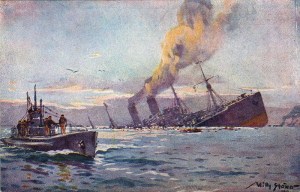
Great Britain’s Royal Navy had superior numbers, while the Imperial German Naval surface fleet was restricted to an area of the North Sea called the German Bight. In other theaters, Germans augmented their small navy with commerce raiders and “unterseeboots”.  More than any other cause it was the German policy of unrestricted submarine warfare which would bring the United States into the war, two years later.

wwi-submarine

On February 4, 1915, Imperial Germany declared a naval blockade against shipping to Britain stating that “On and after February 18th every enemy merchant vessel found in this region will be destroyed, without its always being possible to warn the crews or passengers of the dangers threatening”. “Neutral ships” the statement continued, “will also incur danger in the war region”.

As the war unfolded, German U-boats sank nearly 5,000 ships, close to 13 million gross register ton including the Cunard Liner Lusitania, torpedoed and sunk off Kinsale, Ireland on May 7, 1915. 1,198 were drowned including 128 Americans. 100 of the dead, were children.

lusitania-sinking

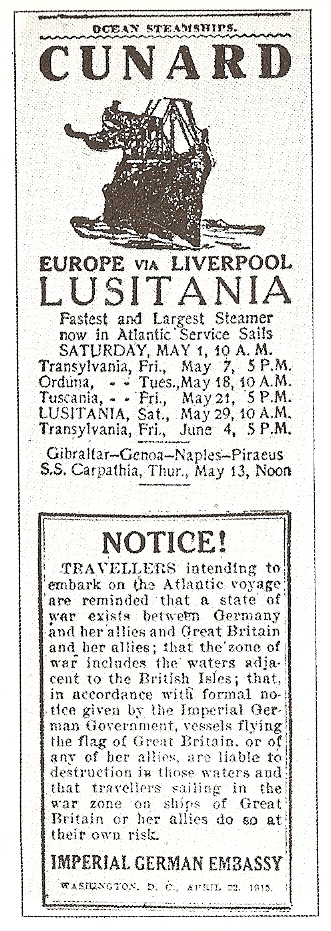
Reaction in the United States and the United Kingdom alike were immediate, and vehement. The sinking was portrayed as the act of barbarians and Huns. For their part the Imperial German government maintained that Lusitania was illegally transporting munitions intended to kill German boys on European battlefields. Furthermore, as the embassy pointed out ads were taken out in the New York Times and other newspapers specifically warning that the liner was subject to attack.

lusitania-warning

Warnings from the German embassy often ran directly opposite ads for the sailing itself. Many dismissed such warnings believing such an attack, was unlikely.

Unrestricted submarine warfare was suspended for a time, for fear of bringing the US into the war.  The policy was reinstated in January 1917 prompting then-Chancellor Theobald von Bethmann Hollweg to comment, “Germany is finished”.  He was right.

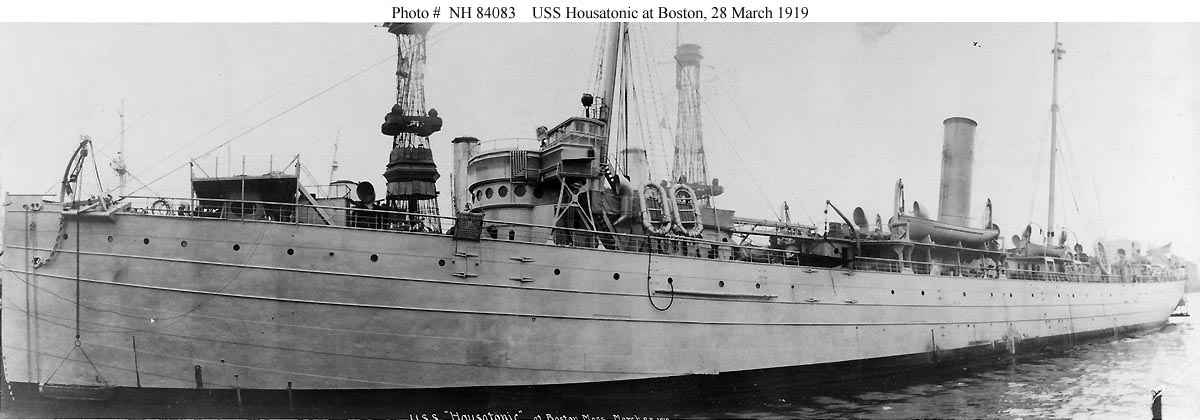
On February 3, 1917, SS Housatonic was enroute from Galveston Texas to Liverpool England bearing a cargo of flour, and grain. Passing the southwest coast of England the liner was stopped and boarded by the German submarine U-53.

American Captain Thomas Ensor was interviewed by Kapitänleutnant Hans Rose, who said he was sorry. Housatonic he said, was “carrying food supplies to the enemy of my country”, and would be destroyed. The American Captain and crew were allowed to launch lifeboats and abandon ship while German sailors raided the American vessel .

Based on what was taken, WWI vintage German subs were especially short on soap.

Abandoned and adrift Housatonic was sunk with a single torpedo, U-53 towing the now-stranded Americans toward the English coast. Sighting the trawler Salvator, Rose fired his deck guns to be sure they’d been seen, and then slipped away.

President Woodrow Wilson retaliated, breaking off diplomatic relations with Germany the same day. Four days later a German U-boat fired two torpedoes at the SS California, off the Irish coast. One missed but the second tore into the port side of the 470-foot, 9,000-ton steamer. California sank in nine minutes killing 43 of her 205 passengers and crew.

zimmerman-note

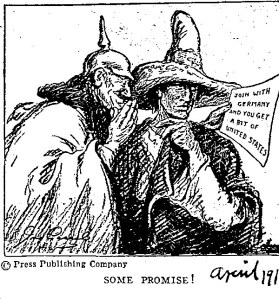
Two weeks later, British Intelligence divulged the Zimmermann note to Edward Bell, secretary to the United States Embassy in Britain.  It was a diplomatic overture from German Foreign Minister Arthur Zimmermann to the Mexican government, promising American territories in exchange for a Mexican declaration of war against the United States.

Zimmermann’s note read, in part:

“We intend to begin on the first of February unrestricted submarine warfare. We shall endeavor in spite of this to keep the United States of America neutral. In the event of this not succeeding, we make Mexico a proposal of alliance on the following basis: make war together, make peace together, generous financial support and an understanding on our part that Mexico is to reconquer the lost territory in Texas, New Mexico, and Arizona…”

In the United States, the political tide was turning. Unrestricted submarine warfare…the Housatonic…the California and now the Zimmermann telegram…the events combined to become the last straw.  On April 2 the President who had won re-election on the slogan “He kept us out of war” addressed a joint session of the United States Congress, requesting a declaration of war.

At the time, the German claim that Lusitania carried contraband munitions seemed to be supported by survivors’ reports of secondary explosions within the stricken liner’s hull. In 2008, the UK Daily Mail reported that dive teams had reached the wreck, lying at a depth of 300′. Divers reported finding tons of US manufactured Remington .303 ammunition, about 4 million rounds, stored in unrefrigerated cargo holds in cases marked “Cheese”, “Butter”, and “Oysters”.

February 3, 1887 Happy Groundhog Day

Fun fact: Bill Murray was bitten not once but twice, by the groundhog used on the set.

Here on sunny Cape Cod, there is a joke about the four seasons. We have “Almost Winter”, “Winter”, “Still Winter” and “Bridge Construction”.

images (16)

Midway between Winter Solstice and Spring Equinox and well before the first crocus of spring has peered out across the frozen tundra, there is a moment of insanity which helps those of us living in northern climes get through to that brief, blessed moment of warmth when the mosquitoes once again have their way with us.

The ancient Romans observed their mid-season festival on February 5, the pagan Irish on February 1. For Christians, it was February 2, Candlemas day, a Christian holiday celebrating the ritual purification of Mary. For reasons not entirely clear, early Christians believed that there would be six more weeks of winter if the sun came out on Candlemas Day.

Clergy would bless and distribute candles needed for winter, their length representing how long and cold the winter was expected to be. Germans expanded on the idea by selecting an animal, a hedgehog, as a means of predicting weather. Once a suitable number of Germans had come to America, they switched over to a more local rodent: Marmota monax.  The common Groundhog.

groundhogpuppet

Groundhogs hibernate for the winter, an ability held in great envy by some people I know. During that time, their heart rate drops from 80 beats per minute to 5, and they live off their stored body fat.  Another ability some of us would appreciate, very much.

The male couldn’t care less about the weather.  He comes out of his burrow in February, in search of a date.  If uninterrupted, he will fulfill his groundhog mission of love and return to earth, not coming out for good until sometime in March.

But then there is the amorous woodchuck’s worst nightmare in a top hat.  The groundhog hunter.

In 1887, a group of Pennsylvania groundhog hunters took to calling themselves the Punxsutawney Groundhog Club. One of them, a newspaper editor, declared on February 2, 1887: you could search far and wide but their groundhog “Phil” was the only True weather forecasting rodent.

Groundhog-Day-1

There are those who would dispute the Gobbler’s Knob crowd and their claims to Punxsutawney Phil’s weather forecasting prowess. Alabama has “Birmingham Bill”, and Canada has Shubenacadie Sam. New York can’t seem to decide between Staten Island Chuck and New York City’s very own official groundhog, “Pothole Pete”. North Carolinians look to “Queen Charlotte” and “Sir Walter Wally”, while Georgia folks can take their choice between “Gus” the Groundhog and “General Beauregard Lee”.

Since the eponymously named Bill Murray film from 1993, nothing seems to rise to the appropriate level of insanity, more than Groundhog Day drinking games. For the seasoned Groundhog enthusiast, “beer breakfasts” welcome the end of winter, across the fruited plain. If you’re in the Quaker state, you can attend the Groundhog day “Hawaiian Shirt Beer Breakfast”, at Philadelphia’s own Grey Lodge Public House. If you’re in Des Moines, stop by the The High Life Lounge, where free Miller High Life beers will be served from 6am, to eleven. And for the late sleeper, there is the annual screening of the Bill Murray Masterpiece, at the Alamo Drafthouse Cinema Beer Dinner.

Fun fact: Bill Murray was bitten not once but twice, by the groundhog used on the set.

groundhog-day-driving

It appears that there is no word for groundhog in Arabic. Accounts of this day in the Arab press translate the word as جرذ الأرض. “Ground Rat”. I was pretty excited to learn that, thank you Al Jazeera.

If anyone was to bend down and ask Mr. Ground Rat his considered opinion on the matter, he would probably cast a pox on all their houses. Starting with the guy in the top hat. It’s been a long winter, and Mr. Ground Rat’s dressed up for a date. He has other things on his mind.

February 1, 1968 Sometimes, Pictures Lie

“The general killed the Viet Cong; I killed the general with my camera. Still photographs are the most powerful weapon in the world. People believe them, but photographs do lie, even without manipulation. They are only half-truths”. Pulitzer prize winning photographer, Eddie Adams

According to some studies, the average World War 2 infantry soldier saw 40 days of combat in the Pacific, over 4 years.  In Vietnam, the average combat infantryman saw 240 days of combat, in a year.

pr070711ii
Gallup poll, 1965 – 1971

By 1967, the Johnson administration was coming under increasing criticism for what many in the American public saw as an endless and pointless stalemate in Vietnam.

Opinion polls revealed an increasing percentage believed that it was a mistake to send more troops into Vietnam, their number rising from 25% in 1965, to 45% by December, 1967.

The Johnson administration responded with a “success offensive” emphasizing “kill ratios” and “body counts”, of North Vietnamese and Viet Cong fighters.  Vice President Hubert Humphrey stated on NBC’s Today show that November, “We are on the offensive. Territory is being gained. We are making steady progress.”

download (9)

In Communist North Vietnam, the massive battlefield losses of 1966-’67 combined with economic devastation wrought by US Aerial bombing, causing moderate factions to push for peaceful coexistence with the south.  More radical factions favoring military reunification on the Indochina peninsula, needed to throw a “hail Mary” pass.  Plans for a winter/spring offensive began, in early 1967.  By the New Year, some 80,000 Communist fighters had quietly infiltrated the length and breadth of South Vietnam.

One of the largest military operations of the war launched on January 30, 1968, coinciding with the Tết holiday, the Vietnamese New Year.  In the first wave of attacks, North Vietnamese troops and Viet Cong Guerillas struck over 100 cities and towns including Saigon, the South Vietnamese capital.

TetMap

Initially taken off-guard, US and South Vietnamese forces regrouped and beat back the attacks inflicting heavy losses on North Vietnamese forces.  The month-long battle for Huế (pronounced “Hway”) uncovered the massacre of as many as 6,000 South Vietnamese by Communist forces, 5-10percent of the entire city.  Fighting continued for over two months at the US combat base at Khe Sanh.

While the Tết offensive was a military defeat for North Vietnamese forces the political effects on the American public, were profound.  Support for the war effort plummeted leading to demonstrations.  Jeers could be heard in the streets.  “Hey! Hey! LBJ! How many kids did you kill today?

Lyndon Johnson’s Presidency, was finished.  The following month, Johnson appeared before the nation in a televised address, saying “I shall not seek, and I will not accept, the nomination of my party for another term as your president.”

In the early morning darkness of February 1, 1968, Nguyễn Văn Lém led a Viet Cong sabotage unit in an assault on the Armor base in Go Vap.  After taking control of the camp, Nguyễn arrested Lieutenant Colonel Nguyen Tuan with his family, demanding that the officer show his guerillas how to drive tanks.  The officer refused and the Viet Cong slit his throat, along with those of his wife, his six children and 80-year-old mother.

The only survivor was one grievously injured 10-year-old boy.

Nguyễn was captured later that morning, near the mass grave of 34 civilians.  He said he was “proud” to have carried out orders to kill them.

AP photographer Eddie Adams was out on the street that day with NBC News television cameraman Võ Sửu, looking for something interesting.  The pair saw a group of South Vietnamese soldiers dragging what appeared to be an ordinary man into the road, and began to photograph the event.

vietnam-execution-arrest

Adams “…followed the three of them as they walked towards us, making an occasional picture. When they were close – maybe five feet away – the soldiers stopped and backed away. I saw a man walk into my camera viewfinder from the left. He took a pistol out of his holster and raised it. I had no idea he would shoot. It was common to hold a pistol to the head of prisoners during questioning. So I prepared to make that picture – the threat, the interrogation. But it didn’t happen. The man just pulled a pistol out of his holster, raised it to the VC’s head and shot him in the temple. I made a picture at the same time.”

The man with the pistol was Nguyễn Ngọc Loan, Chief of the national police.  Loan had personally witnessed the murder of one of his officers, along with the man’s wife and three small children.

di_05292
Composite sequence published by the Dolph Briscoe Center for American History of the University of Texas, at Austin.

Nguyễn Văn Lém had committed atrocities.  He was out of uniform and not engaged in combat when he murdered the General’s subordinates and their families.  The man was a war criminal and terrorist with no protections under the Geneva Conventions, legally eligible for summary execution.

And so he was. Loan drew his .38 Special Smith & Wesson Bodyguard revolver, and fired. The execution was barely a blip on the radar screen.

In February 1968, hard fighting yet remained to retake the capitol.  As always, Nguyễn Ngọc Loan was leading from the front, when a machine gun burst tore into his leg.

vietnam-execution-after-shooting

Meanwhile, Adams’ “Saigon Execution” photograph and Võ’s footage made their way into countless papers and news broadcasts.  Stripped of context, General Nguyễn came to be seen as a “bloodthirsty sadist”, the Viet Cong terrorist his “innocent victim”.

Adams was on his way to winning a Pulitzer prize for that photograph. Meanwhile an already impassioned anti-war movement, lost the faculty of reason.

Photographer Eddie Adams (right), holds up his Pulitzer prize. H/T BBC.com

The political outcry reached all the way to Australia, where General Nguyễn was recuperating from an amputation. An Australian hospital refused him treatment, and so he traveled to America, to recover.

“I was getting money for showing one man killing another,” Adams said at a later awards ceremony. “Two lives were destroyed, and I was getting paid for it. I was a hero.”

H/T BBC

American politics looked inward in the years to come, as the Nixon administration sought the “Vietnamization” of the war. By January 1973, direct US involvement in the war, had come to an end.

d182757927d3e71bd2be3c3ce011ff94
Scenes from the final evacuation of Saigon, April, 1975

Military aid to South Vietnam was $2.8 billion in fiscal year 1973. The US Congress placed a Billion dollar ceiling on that number the following year, cutting it to $300 million, in 1975.  The Republic of Vietnam collapsed some fifty-five days later.

General Nguyễn was forced to flee the country he had served.  American immigration authorities sought deportation on his arrival, in part because of Eddie Adams’ image.  The photographer was recruited to testify against the General but surprised his interrogators, by speaking on his behalf.

General Nguyễn was a devoted Patriot and South Vietnamese Nationalist.  An accomplished pilot who led an airstrike on Việt Cộng forces at Bo Duc in 1967, he was loved and admired by his soldiers. He and his wife were permitted to stay

The couple opened a pizza shop in the Rolling Valley Mall of Virginia and called it, “Les Trois Continents”.  The restaurant was a success for a time, until word got out about the owner’s identity.  Knowing nothing about the man except for Adams’ photograph, locals began to make trouble.  Business plummeted as the owner was assaulted in his own restaurant, his life threatened.

The photographer and the General stayed in touch after the war and even became friends. The last time Adams visited Nguyễn’s pizza parlor, some self-righteous coward had scrawled the words “We know who you are, fucker“,  across the bathroom wall.

vietnam-execution-loan-restaurant

In 1991, the couple was forced to close the restaurant. Seven years later Nguyễn Ngọc Loan died of cancer.

Eddie Adams won his Pulitzer in 1969, but came to regret that he had ever taken that photograph. Years later he wrote in Time Magazine:

‘The general killed the Viet Cong; I killed the general with my camera. Still photographs are the most powerful weapon in the world. People believe them, but photographs do lie, even without manipulation. They are only half-truths. What the photograph didn’t say was, “What would you do if you were the general at that time and place on that hot day, and you caught the so-called bad guy after he blew away one, two or three American soldiers?”‘

Photography has been edited to deceive, for nearly as long as there have been photographs. Consider this image of Leon Trotsky next to Vladimir Lenin. Now you see him, now you don’t. And yet, sometimes images lie, without the aid or even the intent, of dishonesty.

Before Nguyễn died, Adams apologized to the General and his family for what the image had done to his reputation. “The guy was a hero” said the photographer, after the General’s death. “America should be crying. I just hate to see him go this way, without people knowing anything about him.”