

As the son of a speech pathologist and husband to a deaf wife, Alexander Melville Bell was always interested in sound. Since the profoundly deaf can’t hear their own pronunciation, Bell developed a system he called Visible Speech in 1864, to help the deaf learn and improve elocution.
 Édouard Séguin, the Paris-born physician and educator best known for his work with the developmentally disabled and a major inspiration to Italian educator Maria Montessori, called the elder Bell’s work “…a greater invention than the telephone by his son, Alexander Graham Bell”.
As a boy, the younger Bell developed a method of carefully modulating his speech and speaking into his mother’s forehead, a method which allowed her to “hear” him, fairly clearly. The boy followed in his father’s footsteps, mastering his elder’s work to the point of improving on it and teaching the system at the Boston School for Deaf Mutes (which operates today as the Horace Mann School for the Deaf), the American Asylum for Deaf-mutes in Hartford, Connecticut, and the Clarke School for the Deaf in Northampton, Massachusetts.
 It was Alexander Graham Bell who first broke through to Helen Keller, a year before Anne Sullivan. The two developed a life-long relationship closely resembling that of father and daughter. Bell made it possible for Keller to attend Radcliffe and graduate in 1904, the first deaf/blind person, ever to do so.
Keller used a braille typewriter to write her first autobiography in 1903, dedicating The Story of My Life, to her life-long friend, benefactor and mentor: “To Alexander Graham Bell, who has taught the deaf to speak and enabled the listening ear to hear speech from the Atlantic to the Rockies.”

Rival Elisha Gray was working on a similar concept, and filed a caveat (statement of concept) on February 14, 1876, mere hours after Bell applied for patent.
Bell’s device first produced intelligible speech on March 10, that same year. His diary entry describes the event: “I then shouted into M [the mouthpiece] the following sentence: “Mr. Watson, come here – I want to see you.” To my delight he came and declared that he had heard and understood what I said. I asked him to repeat the words. He answered, “You said ‘Mr. Watson – come here – I want to see you.'” We then changed places and I listened at S [the speaker] while Mr. Watson read a few passages from a book into the mouthpiece M. It was certainly the case that articulate sounds proceeded from S. The effect was loud but indistinct and muffled”.

Many of Bell’s innovations came about, much earlier than you might expect. One of his first inventions after the telephone was the “photophone,” a device enabling sound to be transmitted on a beam of light. Bell and his assistant, Charles Sumner Tainter, developed the photophone using a sensitive selenium crystal and a mirror which would vibrate in response to sound. In 1881, the pair successfully sent a photophone message from one building to another, a distance of over 200 yards.
Several innovations would later build on this accomplishment to produce the modern laser.
 In September 1881, Alexander Graham Bell hurriedly invented the first metal detector, as President James Garfield lay dying from an assassin’s bullet. The device was unsuccessful in saving the President, but credited with saving many lives during the Boer War and WW1.
That was the year in which Bell’s infant son Edward died of respiratory problems, leading the bereaved father to design a metal vacuum jacket which would facilitate breathing. This apparatus was a forerunner of the iron lung used in the ’40s and ’50s to aid polio victims. As many as 39 people still used an iron lung to breathe, as late as 2004.
The telephone was a commercial success, but that wasn’t a foregone conclusion. Looking for investors for his new enterprise, Bell approached Samuel Clemens in 1877, as a potential investor. Better known as Mark Twain, the author declined the opportunity, believing the market to be confined to bridge-to-engine room communications, onboard maritime vessels.

One of the towering figures of American literature, Samuel Clemens achieved considerable financial success during his lifetime but, for all his abilities, didn’t have much of an eye for opportunity. Mark Twain turned down a ground-floor invitation to invest in the telephone, choosing instead to buy into a typesetting machine which complicated the setting of type, compared with the age-old printer’s method of setting type, by hand.
Alexander Graham Bell’s creation would change the world but, to the end of his days, his work with the deaf gave him greatest satisfaction.
Bell would sell his invention, to finance his work on devices to aid the hearing-impaired. He didn’t keep a phone on his desk, considering the thing to be an interruption and a nuisance.
Later in life, Alexander Graham Bell described his work with the deaf, as “more pleasing to me than even recognition of my work with the telephone.”



 STS-1, the first mission of the “Space Shuttle” program launched aboard “Columbia” from the Kennedy Space Center on Merritt Island, Florida. It was April 12, 1981, the 20th anniversary of the first human spaceflight, aboard the Russian Vostok 1. This was the first and, to-date only, manned maiden test flight of a new spacecraft system, in the US space program.
 STS-107 launched from the Kennedy Space Center aboard the Space Shuttle Columbia on January 16, 2003. Eighty seconds after launch, a piece of insulating foam the size of a briefcase broke away from the external fuel tank, striking the leading edge of Columbia’s left wing and leaving a hole in the carbon composite tiles.

 Payload Specialist Colonel Ilan Ramon, born Ilan Wolferman, was an Israeli fighter pilot, the first Israeli astronaut to join the NASA space program.


 There are roughly a quadrillion such synapses, meaning that any given thought could wend its way through more pathways than there are molecules in the known universe. This is roughly the case, whether you are Stephen J. Hawking, or Forrest Gump.
 The Alcor Life Extension Foundation, the self-described “world leader in cryonics, cryonics research, and cryonics technology” explains “Cryonics is an effort to save lives by using temperatures so cold that a person beyond help by today’s medicine can be preserved for decades or centuries until a future medical technology can restore that person to full health”.
 In 1988, television writer Dick Clair, best known for television sitcoms “It’s a Living”, “The Facts of Life”, and “Mama’s Family”, was dying of AIDS related complications. In his successful suit against the state of California, “Roe v. Mitchell” (Dick Clair was John Roe), Judge Aurelio Munoz “upheld the constitutional right to be cryonically suspended”, winning the “right” for everyone in California.
 The court battle produced a “family pact” written on a cocktail napkin, which was ruled authentic and allowed into evidence. So it is that Ted Williams’ head went into cryonic preservation in one container, his body in another.
 In April 1773, Benjamin Franklin wrote a letter to Jacques Dubourg. “I wish it were possible”, Franklin wrote, “to invent a method of embalming drowned persons, in such a manner that they might be recalled to life at any period, however distant; for having a very ardent desire to see and observe the state of America a hundred years hence, I should prefer to an ordinary death, being immersed with a few friends in a cask of Madeira, until that time, then to be recalled to life by the solar warmth of my dear country! But…in all probability, we live in a century too little advanced, and too near the infancy of science, to see such an art brought in our time to its perfection”.



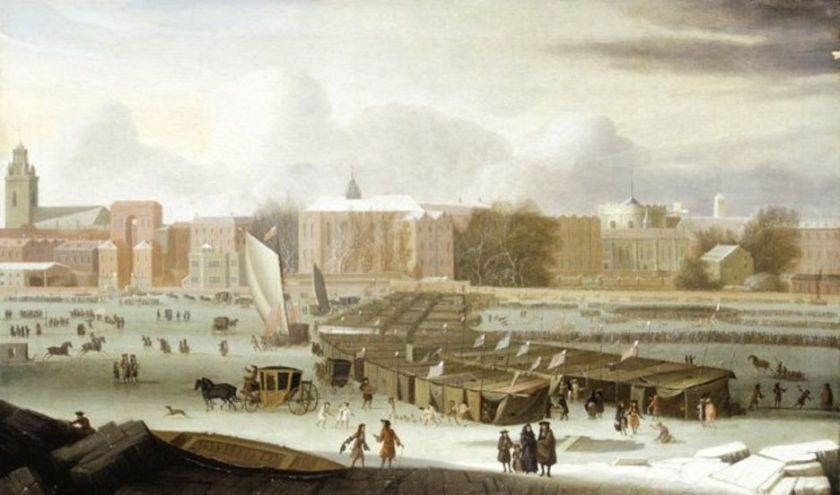
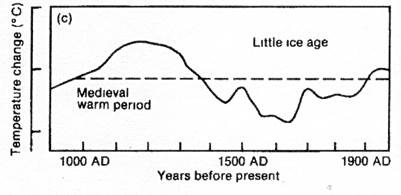 Breaks in cold weather inevitably marked the end of the frost fairs, sometimes all of a sudden. In January 1789, melting ice dragged a ship with it, while tied to a riverside tavern, in Rotherhite. Five people were killed when the building was pulled down on their heads.

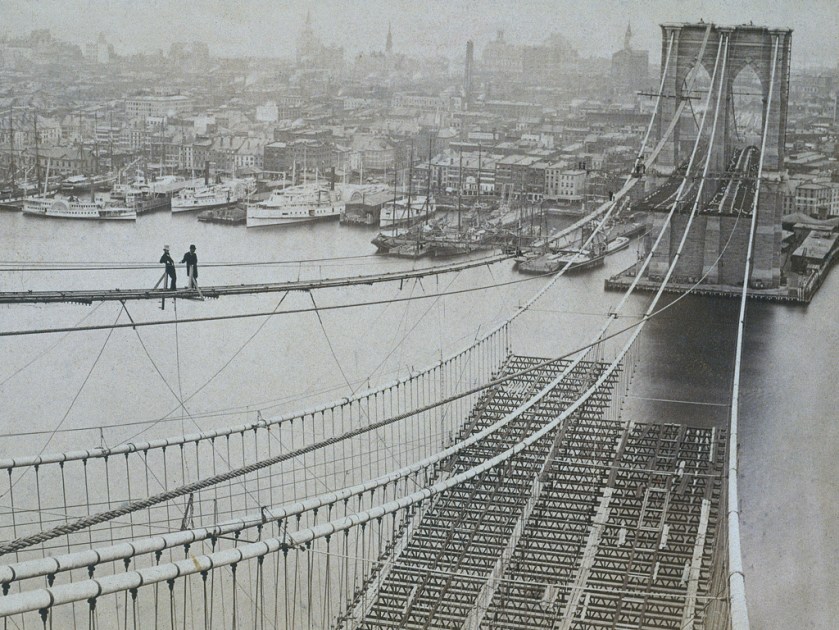
 “Lockjaw” is such a sterile term, it doesn’t begin to describe the condition known as Tetanus. In the early stages, the anaerobic bacterium Clostridium Tetani produces tetanospasmin, a neurotoxin producing mild spasms in the jaw muscles. As the disease progresses, sudden and involuntary contractions effect most skeletal muscle groups, becoming so powerful that bones are fractured and the muscles tear themselves apart. These were the last days of John Roebling, the bridge engineer who would not live to see his most famous work.
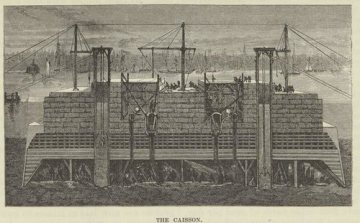 Roebling’s 32-year-old son Washington took over the project, beginning construction on January 3, 1870.
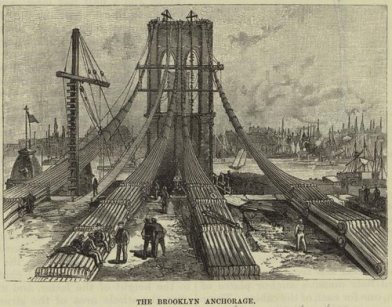 Roebling conducted the entire project looking out his apartment window, designing and redesigning details while his wife, Emily Warren Roebling, became the critical connection between her husband and the job site.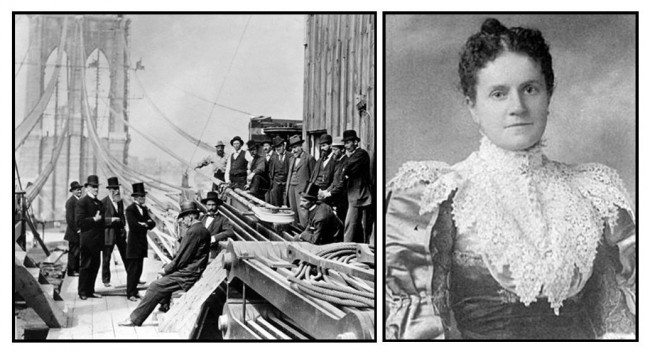



 Once considered mythical but for the old sailor’s stories and the damage inflicted on ships themselves, the first scientific measurement of a rogue wave occurred in the North sea in 1984, when a 36′ wave was measured off the Gorm oil platform, in a relatively placid sea.

 In 1909, the 500-ft. cargo liner SS Waratah disappeared off Durban South Africa, with 211 passengers and crew.


 Early radio experiments by Nikola Tesla and Guglielmo Marconi left both inventors believing they had picked up, in Marconi’s words, “queer sounds and indications, which might come from somewhere outside the earth.”
 The British author H. G. Wells wrote the War of the Worlds in 1897, telling the story of an alien earth invasion by Martians fleeing the desiccation of their own planet. The story was adapted to a


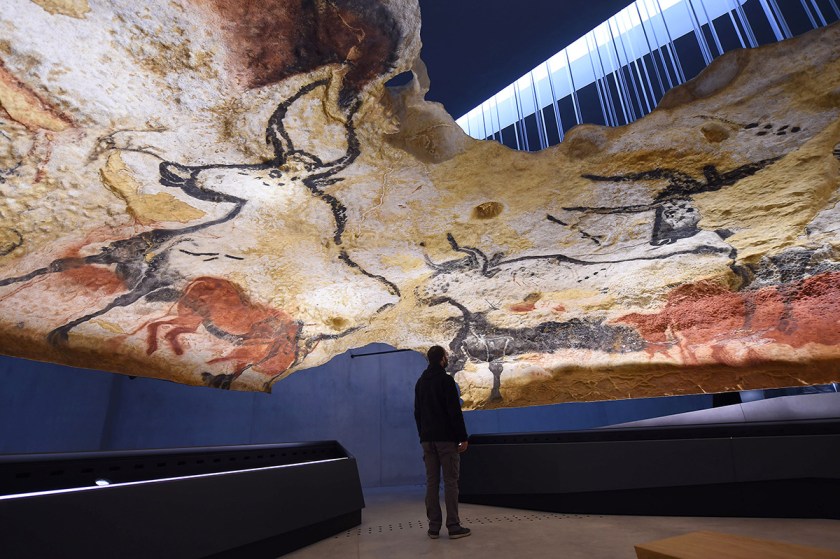
 The Lascaux Caves are located in the Dordogne region, in Southwestern France. Some 17,000 years ago, Upper Paleolithic artists mixed mineral pigments such as iron oxide (ochre), haematite, and goethite, suspending pigments in animal fat, clay or the calcium-rich groundwater of the caves themselves. Shading and depth were added with charcoal.
 The artist or artists who created such images, nearly 2,000 of them occupying some 37 chambers, would have been recognizable as modern humans. Living as they did some 5,000 years before the Holocene Glacial Retreat, (yes, they had “climate change” back then), these cave-dwellers were pre-agricultural, subsisting on what they could find, or what they could kill.
 The purpose served by these images is unclear. Perhaps they tell stories of past hunts, or maybe they were used to call up the spirits for a successful hunt. At least one professor of art and archaeology postulates that the dot and lattice patterns overlying many of these paintings may reflect trance visions, similar to the hallucinations produced by sensory deprivation.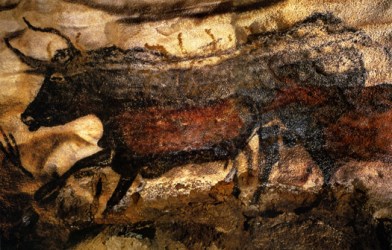



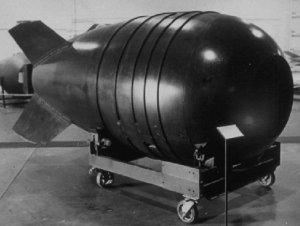
 An emergency landing on open ocean is not an option with such a large aircraft. It would have broken up on impact with the probable loss of all hands. Descending rapidly, the crew would have jettisoned everything they could lay hands on, to reduce weight. Non-essential equipment would have gone first, then excess fuel, but it wasn’t enough. With only 2,500ft and losing altitude, there was no choice left but to jettison those atomic bombs.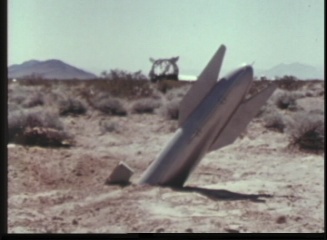


 As of 2016, the Bluetooth Special Interest Group includes 36,000 member companies, managing a complex network of patents and technology to wirelessly connect as many as seven at a time, among tens of millions of Bluetooth compatible devices.
 Historical Easter Eggs - Today in History
You must be logged in to post a comment.