March 17, 432 Saint Patrick’s Day

Interestingly, Patrick is listed among the 10,000 or so Roman Catholic Saints, although it seems he was never actually canonized by a pope.

Born Patricius (Latin) or Pádraig (Modern Irish Gaelic), “Patrick” was a late fifth century Roman subject living in Great Britain. Kidnapped at the age of 16 and brought to Ireland, he was enslaved for 6 years before escaping.  He later returned to Ireland as an ordained priest, to minister to Irish Christians, and to convert others to Christianity.  Patrick would go on to become Bishop of all Ireland, and one of their primary Patron Saints.

Interestingly, Patrick is listed among the 10,000 or so Roman Catholic Saints, although it seems he was never actually canonized by a pope.

Saint PatrickSaint Patrick’s Day is observed on March 17, the date generally agreed to correspond with the date of his enslavement in 432, and with his death in 460. The date is celebrated in Ireland as both a liturgical and non-liturgical holiday, where in some diocese it is both a solemnity and a holy day of obligation. Outside of Ireland, the day has become a general celebration of all things Irish.
The legend that St. Patrick banished the snakes from Ireland likely springs from his work in converting the pagans of his day, many of whom wore snake tattoos on their arms. This idea is supported by a Gallic coin of the time, which carries on its face the Druidic snake.

Be that as it may, today Ireland has no snakes, a trait that it has in common with Antarctica, New Zealand, Iceland, and Greenland.

Another legend involves a walking stick of ash, which Patrick carried with him wherever he went. He would thrust this stick into the ground wherever he was evangelizing. At the place now known as Aspatria, (ash of Patrick), the message took so long to get through to the people there that the stick took root.

The shamrock which came to symbolize the day was seen as sacred by many in pre-MedievalMonkChristian Ireland, with its green color evoking rebirth and eternal life. The three leaves symbolize the “triple goddess” of ancient Ireland. Patrick is said to have taught the Irish about the Holy Trinity, using the three leaves of the shamrock to illustrate the Christian teaching of three persons in one God:  the Father, the Son, and the Holy Spirit.

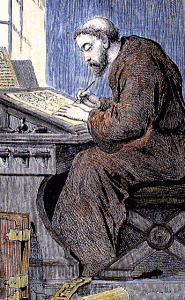
Most of the rest of Europe would suffer barbarian invasion from the fifth century onward, plunging into what are known today as “The Dark Ages”.  Almost alone, cloistered monks in the monasteries of Ireland, spiritual descendants of St. Patrick, acted as repository for Christian civilization, at a time when such advancement was almost extinguished elsewhere. It’s been said of this period that the Irish saved civilization. Who knows, they may have done just that. Happy St. Patrick’s Day.

March 14, 1964 Sparky

Part of the roof had either blown off this joint, or burned off, depending on which version you read. Jack, the owner, tore off the rest of it and kept the insurance money, calling it the “Skyline Lounge”

Jacob Leon Rubenstein was a troubled child, growing up on the west side of Chicago. Marked a juvenile delinquent in his adolescence, Rubenstein was arrested for truancy at age 11, eventually skipping enough school to spend time at the Institute of Juvenile Research.

Barney Google and Spark PlugAs with cartoonist Charles M Shulz, those who knew Jacob Rubenstein called him “Sparky”. Some say the nickname was due to a resemblance to “Sparkplug”, the old nag with the patchwork blanket, from the Snuffy Smith cartoon strip. Rubenstein hated the nickname and was quick to fight anyone who called him that. It may have been that quick temper, that made the name stick.
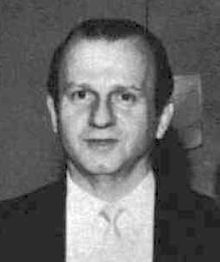
Rubinstein spent the early 40s at racetracks in Chicago and California, until being drafted into the Army Air Forces, in 1943. Honorably discharged in 1946, Rubenstein returned to Chicago, before moving to Dallas the following year.

Rubenstein managed a series of Dallas nightclubs and strip joints, featuring ladies like “Candy Barr” and “Chris Colt and her ’45’s”. Somewhere along the line, he shortened his name to “Ruby”.

Ruby was involved in typical underworld activities, such as gambling, narcotics and Jack Rubyprostitution. There were rumored associations with Mafia boss Santo Trafficante.  The less-than-honest part of the Dallas police force knew that Ruby was always good for free booze, prostitutes, and other favors.   This was one unsavory guy.

Today, you may know Rick Danko, Levon Helm, Garth Hudson and Robbie Robertson as musicians who went on the road with Bob Dylan in 1965, later morphing into “The Band”, and performing such rock & roll standards as “The Night they Drove Old Dixie Down”, “Up on Cripple Creek”, and “The Weight”.

In earlier days, the joints these guys played were so rough, that they performed with blackjacks, hidden in special pockets sewn into their coats. In 1963, they played a week in a Fort Worth nightclub. It was a huge venue, but no one was there that first night, save for two couples, a couple of drunk waiters and a one-armed go-go dancer. The band wasn’t through with their first set before a fight broke out, and someone was tear-gassed. The band played on, coughing and choking, with teargas wafting across the stage, their faces wet with tears.

HawksPart of the roof had either blown off this joint, or burned off, depending on which version you read. Jack, the owner, tore off the rest of it and kept the insurance money, calling it the “Skyline Lounge”. There was no need to pay for security, even without the roof. Jack said “Boys, this building ain’t exactly secure enough for you to leave your musical equipment unattended.” Band members were told they’d best stay overnight, with guns, lest anyone come over the wall to steal their equipment. Problem solved.
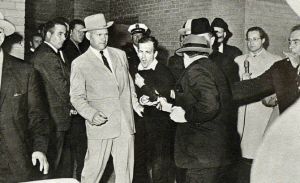
Months later, the country was stunned at the first Presidential assassination in over a half-century. I was 5½ at the time, I remember it to this day. An hour after the shooting, former marine and defector to the Soviet Union Lee Harvey Oswald killed Dallas police officer J.D. Tippit, who had stopped him for questioning. Thirty minutes later, Oswald was arrested in a movie theater.

By Sunday, November 24, Oswald was formally charged with the murders of President John F. Kennedy and Dallas police officer J. D. Tippit.  He was taken to the basement of Dallas police headquarters, where an armored car waited to transport the prisoner to a more secure county jail. The scene was crowded with press and police.

Jack-Ruby-FilesHalf the country watched on live TV, as a man came out of the crowd, firing a single bullet from his .38 into the belly of Lee Harvey Oswald. Four musicians were shocked to realize the shooter was the man they had worked for months earlier, at that burned out dive bar. Jack Ruby.
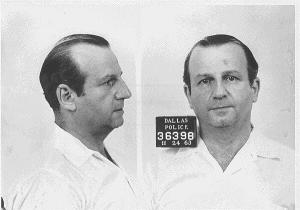
Oswald was taken unconscious to Parkland Memorial Hospital, the same hospital where John F. Kennedy died, two days earlier. He was dead within two hours.

Jack_Ruby_mugshotJack Ruby was sentenced to death in the murder of Lee Harvey Oswald, on March 14, 1964. The Texas Court of Criminal Appeals overturned Ruby’s conviction in October 1966, on the grounds that the trial should have taken place in a different county than that in which his high profile crime had taken place. Ruby died of lung cancer the following January, while awaiting retrial.

The Warren Commission found no evidence linking Jack Ruby’s murder of Lee Harvey Oswald, to any broader conspiracy to assassinate the President.  What became of Jacob Leon “Sparky” Rubenstein’s fine establishment, is unknown to this writer.

March 12, 1894 The Real Thing

Another letter asked for Goizueta’s autograph, since the signature of “one of the dumbest executives in American business history” would probably become valuable in the future.

Europeans long believed that natural mineral waters held medicinal qualities, and favored the beverages over often polluted common drinking water. British chemist Joseph Priestley invented a means of carbonating water in 1772.  Jacob Schweppe’s Geneva, Switzerland company was bottling the stuff by the 1780s. The first soda water manufacturer in the US was Yale University chemist Benjamin Silliman in 1807, though it was Joseph Hawkins of Baltimore who secured the first US patent in 1809.Vintage Soda Foutain

At first sold for their therapeutic value, consumers increasingly bought carbonated beverages for refreshment. By the time of the Civil War, “soft drinks” were flavored with ginger, vanilla, fruits, roots, herbs, and countless other flavorings. The first cola drink appeared in 1881.

Confederate Cavalry officer John Stith Pemberton was wounded by a saber slash across his chest at the Battle of Columbus, Georgia. Like many wounded veterans, he became addicted to the morphine given him to help ease the pain. A chemist in civil life, Pemberton experimented with painkillers to take the place of opiates, landing on a combination of the coca plant and kola nut in 1886. Vicksburg, Mississippi pharmacist Joseph Biedenharn installed bottling equipment in the back of his soda fountain, selling the first bottles of Coca Cola on March 12, 1894.

Coke BottlesThe most famous rivalry in the soft drink business began in the 1930s, when Pepsi offered a 12oz bottle for the same 5¢ as Coca Cola’s six ounces.

The Coca Cola Company’s flagship brand had a 60% share by the end of WWII, but that declined to less than 24% by the early 80s, most of the difference lost to Pepsi and their “Pepsi challenge” blind taste test promotions of the late 70s.

By the 80s, market analysts believed that baby boomers were likely to switch to diet drinks as they aged, and any growth in the full calorie segment was going to come from younger consumers who preferred the sweeter taste of Pepsi.

Roberto Goizueta came on board as Coca Cola Company CEO in 1980, saying that there would beNew coke “no sacred cows” among their products. He meant it. The company launched the top secret “Project Kansas”, to test and perfect the flavor for a new version of Coke. The company’s marketing department fanned out, holding taste tests, surveys, and focus groups.

Early results were favorable, the newer, sweeter mixture overwhelmingly beating both Pepsi and Coke itself. Most tasters said that they would buy the product, but a small minority of 10–12% were angry and alienated at the very thought of it. This small percentage was adamant. They would stop drinking Coke products altogether, and they frequently swayed other members of their focus groups.

The way things turned out, the company should have listened to this group a little more carefully.

New coke taste testOn an April Friday in 1985, Coke let the media know that a major announcement was coming the following Tuesday. Coca Cola officials spent a busy weekend preparing for the re-launch, while Pepsi Executives announced a company-wide holiday, taking out a full page New York Times ad proclaiming that “Pepsi had Won the Cola Wars”.

Skepticism was high on the day of the Big Announcement. Reporters were fed questions by Pepsi officials, and Goizueta fumbled, refusing to state the reason for the change. He certainly wasn’t going to give Pepsi any credit for their performance in taste tests, explaining “[It’s] smoother, uh, uh, rounder yet, uh, yet bolder…a more harmonious flavor”.

The backlash was soon in coming, and closely tracked earlier focus group results. Atlanta based Coca Cola’s southern customers described the change as another surrender to the “Yankees”. Over 400,000 calls and letters came into company headquarters, including one addressed to “Chief Dodo, The Coca-Cola Company”.  Another letter asked for Goizueta’s autograph, since the signature of “one of the dumbest executives in American business history” would probably become valuable in the future. A psychiatrist hired by Coke to listen in on calls, told executives some people sounded as if they were discussing the death of a family member.Time New Coke

Even Max Headroom and his “C-c-c-catch the wave!” couldn’t save the company. Ads for “New Coke” were booed at the Houston Astrodome, while Pepsi ran ads in which a smiling first-time Pepsi drinker said “Now I know why Coke did it!”

Even Fidel Castro weighed in, calling the change a sign of capitalist decadence. Company President Donald Keough realized it was over, on a visit to the Mediterranean Principality of Monaco. A small restaurant owner proudly said that he had “the real thing, it’s a real Coke,” offering Keough’s party a bottle of the old stuff.

And so it was that, in 1985, Coca Cola announced that they’d bring back their 91-year old formula. A reporter asked Keough if the whole thing had been a publicity stunt. Keough’s answer is itself, a classic. “We’re not that dumb,” he said, “and we’re not that smart”.

March 3, 1920 The Craziest Pilot in the Canadian Air Force

Doohan practiced voices and accents ever since he was a kid, and he was good at it. The skills he acquired would serve him well in his later acting career.

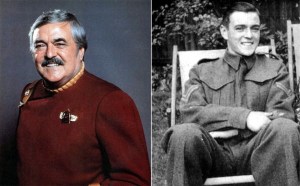
Born March 3, 1920 in Vancouver, British Columbia, James Montgomery “Jimmy” Doohan enrolled in the 102nd Royal Canadian Army Cadet Corps in 1938. By the outbreak of WWII he was commissioned a Lieutenant in the 14th Field Artillery Regiment of the 3rd Canadian Infantry Division.landing

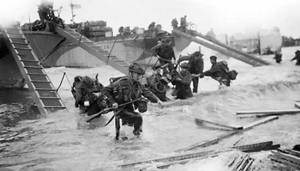
Doohan’s first taste of combat took place on D-Day, on the Normandy beach Canadian landing forces knew as “Juno”. Crossing through a field of anti-tank mines, the Canadian’s luck held.  None of them were heavy enough to set one off.  Leading his men to higher ground, Lieutenant Doohan personally shot two German snipers, before taking up positions for the night.

That night, Doohan had just finished a cigarette and was walking back to his command post.  A nervous sentry opened up on him with a Bren light machine gun, striking him four times in the leg, once in the chest and again on the middle finger of his right hand. The chest shot hit the cigarette case his brother had given him for good luck, and doctors were able to save his life.  Not so much for the finger. That had to be amputated. He would always hide the injury in his later life.

auster

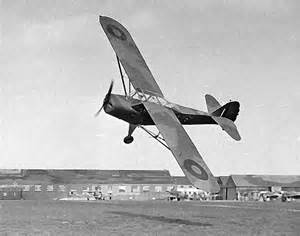
After healing up, Doohan served as courier and artillery spotter, aboard a Taylorcraft Auster Mark IV.  In the spring of 1945, he slalomed his aircraft between telegraph poles, just to prove that it could it be done.  Though the man was never an actual member of the CAF, the stunt forever marked him as “the craziest pilot in the Canadian Air Force”.

Doohan practiced voices and accents ever since he was a kid, and he was good at it. The skills he acquired would serve him well in his later acting career.

He heard a radio drama after the war. Knowing he could do it better, Doohan recorded his voice at a local radio station, winning a two year scholarship to study at the Neighborhood Playhouse in New York and studying with the likes of Leslie Nielsen, Tony Randall, and Richard Boone.

Doohan appeared in over 4,000 radio programs and 450 television shows throughout the forties and fifties. Coincidentally, Doohan played “Timber Tom”, the northern version of Buffalo Bob, in the Canadian production of Howdy Doody. About the same time that a young actor named William Shatner was playing Ranger Bill in the American version. The two would appear together on the 1950s Canadian science fiction series “Space Command”. It wasn’t the last time the two would appear together.

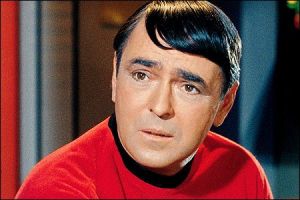
Auditioning before Gene Roddenberry in 1965, Doohan performed several accents. Asked which he preferred, he responded “If you want an engineer, in my experience the best engineers are Scotsmen.” He chose the name “Montgomery Scott”, after his grandfather.

Chief Engineer aboard the Starship Enterprise was supposed to be an occasional role, but Doohan’s character proved irresistible.scotty

Soon he was #3 in command, a regular cast member playing alongside William Shatner (Captain James T. Kirk), Leonard Nimoy (Spock) and DeForest Kelley (Dr. McCoy).  Doohan’s voice talents helped behind the scenes as well.  It was he who helped develop the Klingon and Vulcan languages.

Star Trek was canceled in 1969 due to poor ratings, but returned to broadcast syndication in the 70s.  The series has since become a cult classic. There is hardly a woman, man, puppy boy or girl who isn’t steeped and marinated in the program.

The “Scotty” character was so iconic, that many fans credit him with their interest in the technical fields.  Among them was the engineer-turned-astronaut Neil Armstrong, who personally thanked him in 2004.

doohan-1Doohan’s health declined in his later years. He developed Parkinson’s disease and diabetes, along with fibrosis of the lung, blamed on his exposure to noxious chemicals during WWII. He was experiencing symptoms of Alzheimer’s by 2004, though he was able to attend the ceremony held in his honor after receiving a star on the Hollywood Walk of Fame, that August.

James Montgomery Doohan passed away on July 20, 2005, survived by third wife Wende, their three children, his four adult children from a previous marriage, and several grandchildren and great-grandchildren. His youngest daughter, Sarah, was five at the time of his death.

On April 29, 2007, a SpaceLoft XL rocket lifted off from the Spaceport America launchpad in Las Cruces.  Onboard were the ashes of astronaut Gordon Cooper, and James Montgomery Doohan.  Cooper’s wife Suzan and Wende Doohan pushed the launch button.

In Linlithgow, Scotland, there is a museum, claiming the West Lothian town as the future birthplace of chief engineer Montgomery Scott.  He will be born there, in 2222.

doohan-letter


March 2, 1977 Heeeere’s Johnny

The world’s longest running talk show began in 1954, when Steve Allen sat down at his piano on September 27. This show is gonna go on… forever”, Allen quipped. So far, he seems to have gotten that right.

carson-navy_portrait
US Navy Portrait

With Jack Parr about to sign off the “Tonight Show” for the last time, NBC executives were anxious to find a replacement. Bob Newhart, Jackie Gleason, Groucho Marx, and Joey Bishop all declined the opportunity, when a United States Navy veteran, amateur magician and amateur boxer with a 10/0 record agreed to take the job.

Johnny Carson had himself turned down the job, believing himself unequal to the task of producing 90 minutes a day of fresh content. A series of guest hosts including Merv Griffin, Art Linkletter, Joey Bishop, Jerry Lewis and Groucho Marx followed, as Carson finished out the last six months of an ABC contract. Despite misgivings, Carson started the new gig on October 1, 1962.

No sooner had NBC announced that Johnny Carson was joining “The Tonight Show,” than the national press gaggle came after him, looking for interviews. Carson resisted at first, but finally relented, providing journalists with a list of answers to which they could apply any question they liked: “Yes, I did. Not a bit of truth in that rumor. Only twice in my life, both times on Saturday. I can do either, but prefer the first. NO. Kumquats. I can’t answer that question. Toads and tarantulas. Turkestan, Denmark, Chile, and the Komandorskie Islands. As often as possible, but I’m not very good at it yet. I need much more practice. It happened to some old friends of mine, and it’s a story I’ll never forget”.carson-mcmahon-1963

Carson was joined shortly thereafter by a Marine Corps Colonel and flight instructor, from Lowell, Massachusetts. The Marine had earned his carrier landing qualifications around the time the atomic bomb ended the war in the Pacific, going on to fly 85 combat missions in Korea, and earning six air medals. His name was Ed McMahon.

When the Tonight Show first aired, everyone on the set including Carson himself, smoked. The “Public Health Cigarette Smoking Act” was introduced in Congress in 1969. Ironically, it was President Richard Nixon, an avid pipe smoker who lit up as many as eight bowls a day, who signed the measure into law on April 1, 1970. The measure included a permanent ban on television cigarette advertising, scheduled to take effect January 2 the following year. The last cigarette ad in the history of American television was a Virginia Slims ad, broadcast at 11:59p.m., January 1, 1971, on the Tonight Show, Starring Johnny Carson. Smoking on-air became a thing of the past sometime in the mid-80s, but that cigarette box remained on Carson’s desk until his final episode, in 1992. You’ve come a long way, baby.carson-monolog

For NBC, the Tonight Show was a cash cow. Many years the program grossed over $100 million, accounting for 15-20% of the profits earned by the entire network. Carson threatened to walk in 1980, ending up with a deal unprecedented in the history of American television: $5 million a year and series commitments estimated at $50 million. Just as important, show content would no longer belong to the network, but to Carson himself.

Carson began taking Mondays off in 1972, when the show moved from New York to California. There followed a period of rotating guest hosts, including George Carlin and Joan Rivers, who became permanent guest host from 1983 until 1986.

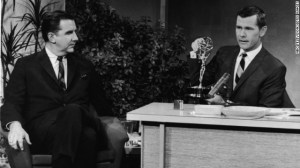
carson-carnac  The Tonight Show Starring Johnny Carson was a late-night fixture through seven US Presidents: John F. Kennedy, Lyndon Johnson, Richard Nixon, Gerald Ford, Jimmy Carter, Ronald Reagan, and George H.W. Bush. Almost every American over the age of 30 will remember “Heeeeeeeeeeere’s Johnny!”. The opening monologue, and the imaginary golf swing. “Carnac the Magnificent”, holding the envelope to his head, reciting the punchline to the joke sealed inside. “Saucepan… Who was Peter Pan’s wino brother?” When the joke bombed, there was the comedic curse. “May a bloated yak change the temperature of your jacuzzi!”
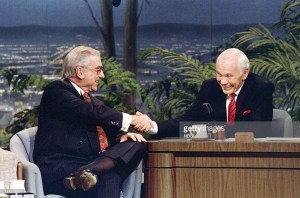
Jay Leno appeared on the Tonight Show with Johnny Carson for the first time on March 2, 1977. He would frequently guest host, and served as permanent from May 1992 to May 2009.

Five years after Carson’s final show, 10,000 taped episodes were moved to a salt mine in Kansas, to protect them from deterioration. There they remain, 54 stories underground, where the average temperature is 68 degrees, with a uniform 40% humidity.

carson-mcmahon-1992
Final episode, 1992

Excepting Conan O’Brien’s eight months in 2010, Leno remained permanent host until February 2014, recording more episodes (4,610) than even Carson himself (4,531). Saturday Night live veteran Jimmy Fallon took over the reins in February 2014, where he remains to this day.

The world’s longest running talk show began in 1954, when Steve Allen sat down at his piano on September 27. This show is gonna go on… forever”, Allen quipped. So far, he seems to have gotten that right.

February 10, 1920 Play Ball!

In a world where classified information is kept on personal email servers, there are still some secrets so pinky-swear-double-probation-secret that the truth may Never be known

Former Boston Braves pitcher Max Surkont once said “Baseball was never meant to be taken seriously — if it were, we would play it with a javelin instead of a ball”.

I’m not sure about javelins, but I know how much we all love to see home runs when we go see a ballgame.

That’s not always how the game was played. The “Hitless Wonders” of the Chicago White Sox won the 1906 World Series with a .230 club batting average. Manager Fielder Jones said “This should prove that leather is mightier than wood”.  Fielder Allison Jones, that’s the man’s real name.  Is that the greatest baseball name ever, or what?

deadballparksIt was the “dead-ball” era, when an “inside baseball” style of play relied on stolen bases, hit-and-run plays and, more than anything else, speed.

That’s not to say there were no power hitters. In some ways, a triple may be more difficult than a home run, requiring a runner to cover three bases in the face of a defense still in possession of the ball. Pittsburgh Pirates outfielder Owen “Chief” Wilson set a record of 36 triples in 1912. “Wahoo” Sam Crawford hit a career record 309 triples in his 18 years in Major League Baseball, playing for the Cincinnati Reds and Detroit tigers between 1899 and 1917. 100 years later, it’s unlikely that either record will ever be broken.

In his 1994 television miniseries “Baseball”, Ken Burns said that “Part of every pitcher’s job was to dirty up a new ball the moment it was thrown onto the field… They smeared it with dirt, licorice, and tobacco juice; it was deliberately scuffed, sandpapered, scarred… and as it came over the plate, [the ball] was very hard to see.”

Spitballs lessened the natural friction with a pitcher’s fingers, reducing backspin anddead-ball causing the ball to drop. Sandpapered, cut or scarred balls tended to “break” to the side of the scuff mark. Balls were rarely replaced in those days.  By the end of a game, the ball was scarred, misshapen and entirely unpredictable.  Major League Baseball outlawed “doctored” pitches on February 10, 1920, though it remained customary to play an entire game with the same ball.
The first ever game to be played “under the lights” was forty years in the past in 1920, but it would be another 15 before the practice became widespread.

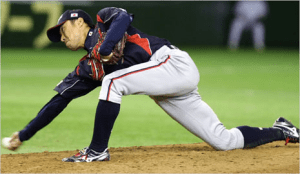
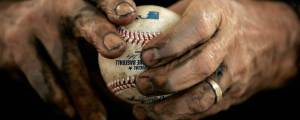
Late afternoon on August 16, the Cleveland Indians were playing the New York Yankees at the Polo Grounds. Cleveland shortstop Ray Chapman took the plate in the top of the 5th, submarine-pitcherfacing “submarine” pitcher Carl Mays.  These are not to be confused with the windmill underhand pitches we see in softball.  Submarine pitchers throw side-arm to under-handed, their upper bodies so low that some of them scuff their hands on the ground, the ball rising as it approaches the strike zone.
Chapman never moved, he seems not to have seen it coming. The crack of the ball hitting his head was so loud that Mays thought he had hit the end of the bat, fielding the ball and throwing to first for the out. Wally Pipp, the first baseman better known for losing his starting position to Lou Gehrig because of a headache, immediately knew something was wrong. The batter made no effort to run, slowly collapsing to the ground with blood streaming out of his left ear.

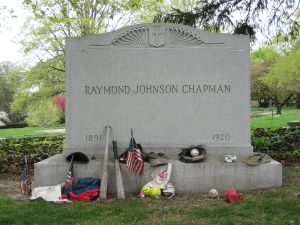
ray_chapman_grave29-year-old Ray Chapman had said this was his last year playing ball.  He wanted to spend more time in the family business he had just married into. The man was right.  Raymond Johnson Chapman died 12 hours later, the only player in the history of Major League Baseball, to die from injuries sustained during a game.
The age of one-ball-per-game died with Ray Chapman, and with it the era of the dead ball. The lively ball era, had begun. Batters loved it, but pitchers complained about having to handle all those shiny new balls.new-balls

MLB rule #3.01(c) states that “Before the game begins the umpire shall…Receive from the home club a supply of regulation baseballs, the number and make to be certified to the home club by the league president. The umpire shall inspect the baseballs and ensure they are regulation baseballs and that they are properly rubbed so that the gloss is removed. The umpire shall be the sole judge of the fitness of the balls to be used in the game”.

Umpires would “prep” the ball using a mixture of water and dirt from the field, but this resulted in too-soft covers, vulnerable to tampering. Something had to take the shine off the ball without softening the cover.

rubbing-mudPhiladelphia Athletics third base coach Lena Blackburne took up the challenge in 1938, scouring the riverbanks of New Jersey for just the right mud. Blackburne found his mud hole, describing the stuff as “resembling a cross between chocolate pudding and whipped cold cream”. By his death in the late fifties, Blackburne was selling his “Baseball Rubbing Mud” to every major league ball club in the country, and most minor league teams.rubbing-mud-2
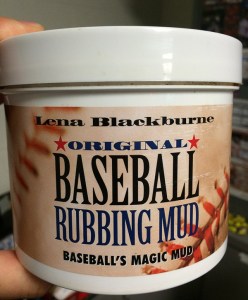
In a world where classified information is kept on personal email servers, there are still some secrets so pinky-swear-double-probation-secret that the truth may Never be known. Among them Facebook “Community Standards” algorithms, the formula for Coca Cola, and the Secret Swamp where Lena Blackburne’s Baseball Rubbing Mud comes from.

Nobody knows, but one thing is certain. The first pitchers will show up to the first spring training camp, a few short days short days from now. Every baseball thrown from pre-season to the 2017 World Series, will first have been de-glossed with Lena Blackburne’s famous, Baseball Rubbing Mud.

Go Sox.

February 8, 1960 Rin Tin Tin

There’s a Hollywood legend that may or may not be true, that Rin Tin Tin received the most votes for Best Actor at the 1st Academy Awards in 1929

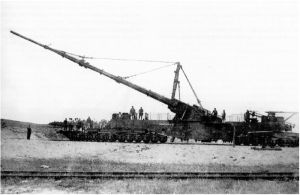
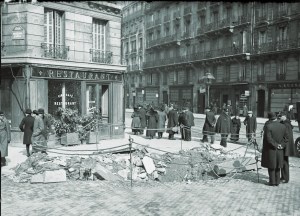
paris-gunAt 256 tons with a barrel of 111′ 7″, the “Paris Gun” hurled 38″ shells into the city from a range of 75 miles. If you were in Paris in 1918, you may never have heard of the German “super gun”. You’d have been well acquainted with the damage it caused. You never knew you were under attack until the explosion. The lucky ones were those who lived to see the 4’ deep, 10’-12’ wide crater.paris-gun-crater
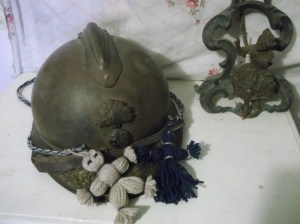
Parisian children made little good luck charms, as “protection” from the Paris gun. They were tiny pairs of handmade dolls, joined together by scraps of yarn. They were said to provide protection for their owners, but only under certain circumstances. You couldn’t make or buy your own, they had to be presented to you. They also had to remain attached, or else the little dolls would lose their protective powers.

nenetteetrintintinThese little yarn dolls had names. They were Nénette and Rintintin.
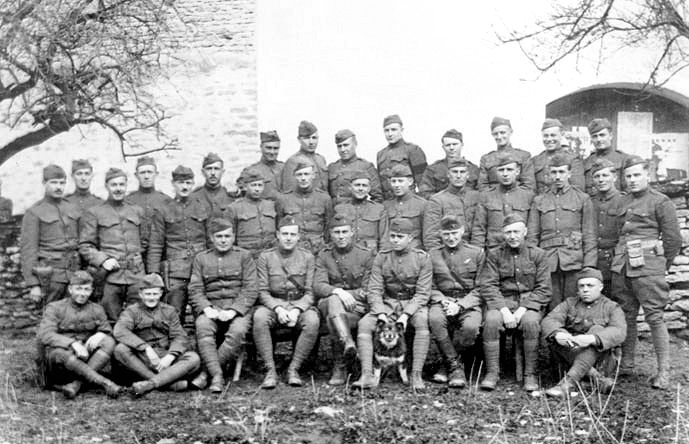
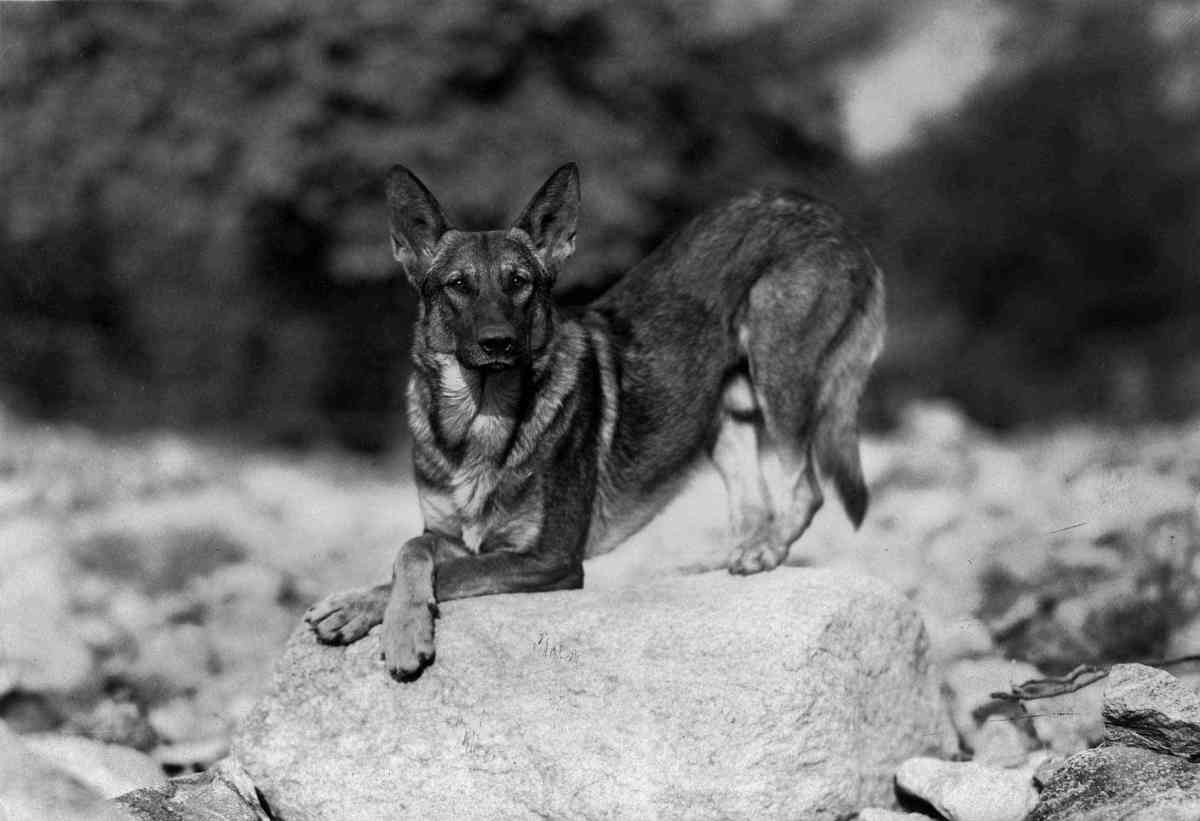
Army Air Service Corporal Lee Duncan was in Paris at this time, with the 135th Aero Squadron. He was aware of the custom, possibly having been given such a talisman himself. In the wake of the Battle of Saint-Mihiel, Corporal Duncan was sent forward to the small village of Flirey, to check out it’s suitability for an airfield. The place was heavily damaged by shellfire, and Duncan came upon the shattered remains of a dog pound. Once, this kennel had provided Alsatians (German Shepherd Dogs) to the Imperial German Army. Now, the only dogs left alive were a starving mother and five nursing puppies, so young that their eyes were still closed.135th_aero_squadron_group

Corporal Duncan cared for them, selling several once the puppies were weaned. He sold the mother to an officer and three puppies to fellow soldiers, keeping two for himself. Like those little yarn dolls that French children gave to American soldiers, Duncan felt these two puppies were his good luck charms. He called them Nanette and Rin Tin Tin.

jane-murfin-with-strongheart
Playwright Jane Murfin with Strongheart

Returning home after the war, Duncan placed the dogs with a police dog breeder and trainer in Long Island. Nanette contracted pneumonia and died, the breeder giving Duncan a female puppy, “Nanette II”, to replace her.

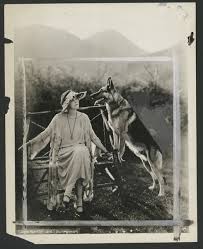
Etzel von Oeringen was born on October 1, 1917 in Germany, coming to America after the Great War and becoming a movie star in the ‘20s. Better known as “Strongheart”, Etzel was a German Shepherd Dog, whose appearance in silent films enormously increased the popularity of the breed.

A friend of silent film actor Eugene Pallete, Duncan became convinced that Rin Tin Tin could become the next canine film star. He later wrote, “I was so excited over the motion-picture idea that I found myself thinking of it night and day.”

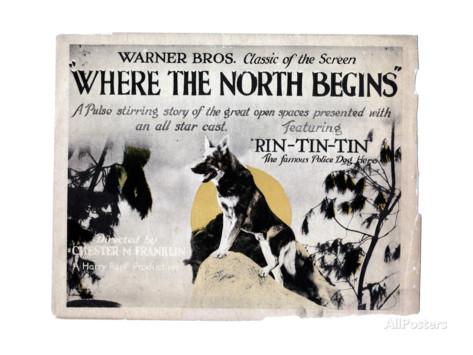
where-the-north-begins-rin-tin-tin-1923Walking the dog on “Poverty Row”, 1920s slang for B movie studios, did the trick. Rin Tin Tin got his first film break in 1922, replacing a camera shy wolf in “The Man from Hell’s River”. His first starring role in the 1923 “Where the North begins”, is credited with saving Warner Brothers Studios from bankruptcy.

Between-the-scenes silent film “intertitles” were easily changed from one language to another, and Rin Tin Tin films enjoyed international distribution. In 1927, Berlin movie audiences voted him Most Popular Actor.

There’s a Hollywood legend that may or may not be true, that Rin Tin Tin received the most votes for Best Actor at the 1st Academy Awards in 1929. Wishing to appear oh-so serious and wanting a human actor, the Academy threw out the ballots. German actor Emil Jannings got Best Actor on the 2nd ballot.

rin-tin-tin-signed-photoRin Tin Tin appeared in 27 feature length silent films, 4 “talkies”, and countless commercials and short films. Regular programming was interrupted to announce his passing on August 10, 1932, at the age of 13. An hour-long program about his life was broadcast the following day.
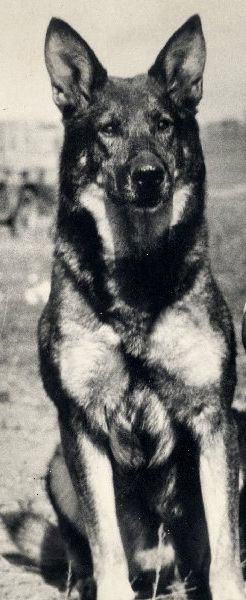
Suffering from the Great Depression like so many others, Duncan couldn’t afford a fancy funeral. By this time he couldn’t afford the house he lived in. Duncan sold the house and returned the body of his beloved German Shepherd to the country of his birth, where Rin Tin Tin was buried in the Cimetière des Chiens et Autres Animaux Domestiques, in the Parisian suburb of Asnières-sur-Seine.

Duncan continued breeding the line, careful to preserve the physical qualities and intelligence of the original, avoiding the less desirable traits that crept into other GSD rin-tin-tinbloodlines. Rin Tin Tin and Nanette II produced at least 48 puppies. Duncan may have been obsessive about it, at least according to Mrs. Duncan. When she filed for divorce, she named Rin Tin Tin as co-respondent.
Rin Tin Tin was awarded his own star on the Hollywood Walk of Fame on February 8, 1960. Lee Duncan passed away later that same year.  At some point, Duncan had written a poem, a tribute to the companion animal who was no more.  If you’ve ever loved a dog, I need not explain his final stanza.

“…A real unselfish love like yours, old pal,
Is something I shall never know again;
And I must always be a better man,
Because you loved me greatly, Rin Tin Tin”.

February 5, 1637 The Day the Bubble Burst

Economic forces had combined with irrationality to bid up prices to the point of collapse. This was neither the first nor the last time

gillette-stadiumOn March 24, 2000, the New England Patriots broke ground on their new stadium home in Foxborough, Massachusetts. The internet company CMGI won naming rights, agreeing to pay $114 million over 15 years for the privilege. The 2002 season opened on September 9 in the Patriots’ new home, tickets bearing the name, CMGI Stadium.

Except by that time, the “Dot-Com” bubble had burst. CMGI had ceased to exist.  The stadium itself would open, bearing the name of a razor and shaving cream manufacturer.

Economic forces had combined with irrationality to bid up prices to the point of collapse, but this was neither the first nor the first time.  We saw it in the housing bubble of the 2000s, and the “Bull Market” of the Roaring 20s.viceroy-tulip

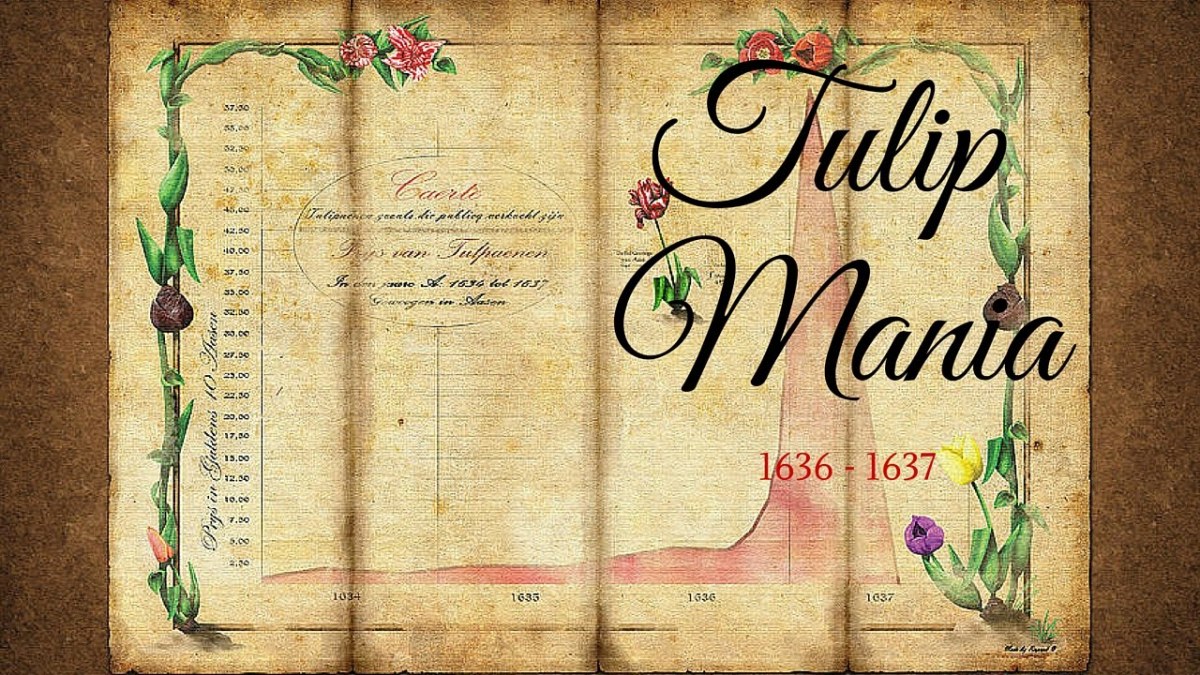
The oddest of these speculative bubbles may be the “Tulpenwoede” (tulip madness) gripping Holland in the 17th century.

The first tulip bulbs came from the Ottoman Empire to Vienna in 1554, introduced to Europe by Ogier de Busbecq, ambassador of the Holy Roman Emperor Ferdinand I to the Sultan of Turkey. The tulip was different from anything in Europe, the intense, saturated colors soon turning the flower into a status symbol.

By the 17th century Holland had embarked on a Golden Age. The East Indies trade Keukenhof Gardens Desktop Backgroundproduced single voyage profits of 400% and more, as merchants built grand estates surrounded by flower gardens. The hyacinth enjoyed early popularity, but the plant at the center of it all was the spectacular, magnificent, tulip.
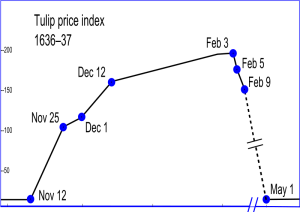
For much of this period, tulip bulbs were primarily of interest to the wealthy. The craze began to catch on with the middle and poorer classes by the mid-1630s.  Soon, increased demand began to drive prices to irrational levels.

The market soared in late 1636, as prices bid up for bulbs planted to bloom the following spring. People mortgaged their homes and businesses, hoping to buy bulbs for resale at higher prices. At one point, “one single root of the rare species called the Viceroy”, sold for “two lasts of wheat, four lasts of rye, four fat oxen, eight fat swine, twelve fat sheep, two hogsheads of wine, four tuns (barrels) of beer, two tuns of butter, One thousands lbs. of cheese, one complete bed, a suit of clothes, and a silver drinking-cup”. In early 1637, single “Viceroy” bulbs bid between 3,000 and 4,200 guilders, at a time when skilled craftsman earned about 300 guilders a year. At one point, 5 hectares (12 acres) of land were offered for a single Semper Augustus bulb.

“Couleren” bulbs were most commonly traded, single hued flowers of yellow, red or white, followed by the multi-colored “Rosen” and “Violettin”. Rarest and most sought after weretulip_price_index the vivid streaks of yellow or white on the red, brown or purple backgrounds of the “Bizarden” (Bizarres).  Ironically, these were the most sickly specimens, victims of a “Tulip breaking virus” which “broke” petals into two or more hues.

Confidence evaporated in 1637 and the market collapsed. The last recorded market data were reported on February 5, as 98 sales were recorded at wildly varying prices. Those who had taken possession of bulbs found their worth to be a fraction of the prices paid. Others were locked into futures contracts, obliged to pay ruinous sums for comparatively worthless flower bulbs.

Afterward

Today, the Federal National Mortgage Association (FNMA), and Federal Home Loan Mortgage Corporation (FHLMC), are Congressionally authorized hybrids or “GSEs” (government-sponsored enterprises), charged with “providing liquidity and stability to the U.S. housing and mortgage markets”. Better known as “Fannie Mae” and “Freddie Mac”, both entities are privately owned by shareholders and backed by taxpayers.

The US Department of Housing and Urban Development (HUD) was charged with regulating Fannie and Freddie in 1992. Before that, these organizations were required to buy only “prime” mortgages, notes which institutional investors would buy on the open market. Such standards made it too difficult for lower income, higher risk buyers to become homeowners, or so it was believed. Regulators imposed “affordable housing” liar_loansguidelines that year, imposing a 30% quota and raising it to 50% by the end of the Clinton era. By 2007 under President Bush, 55% of all mortgages purchased by the mortgage giants were “sub-prime”.

Banks and brokers were happy to sing along, issuing “NINJA” loans (No Income No Job no Assets) to anyone who asked. “Low-doc” and “no-doc” mortgages called “liar loans” sprouted up everywhere, but gone were the days when your home town bank held your mortgage.  No mortgage originator would ever be left holding the bag, should these loans turn bad.  They sold them to Fannie and Freddie.

Fannie, Freddie and others “bundled” high risk mortgages into increasingly exotic financial instruments called “mortgage backed securities”, selling them off to investors and backing transactions with “credit default swaps” (CDS), a two-party agreement impossible to distinguish between an insurance contract and a bet.

The danger signs were there for those who would see, but Barney Frank said it best inhome-made-of-dollar-on-grass 2003: “I want to roll the dice a little bit more in this situation toward subsidized housing.”

Property values doubled and doubled again. You were always going to make money in real estate. Family members sold to one another over and over at ever increasing prices, with none ever moving out of the house.  Aggregate CDS values reached $62 Trillion in 2008, equivalent to a stack of dollar bills, reaching from Earth to the moon. 18 times.

Then, the bubble burst.  Imagine waking one morning to find your entire pension or mutual fund account, was invested in that stuff.

housing-bubbleThat was the year when gas first hit $4/gallon.  Those living closest to the financial cliff began to fall off, and foreclosures went through the roof.  Highest risk mortgage holders were the first to default, people with $20,000 incomes and multiple investment properties. We all remember 2009.  I myself lost a job of 15 years when my employer went under, briefly making my family part of the “zero percent”.  Some will tell you that we haven’t emerged from the “Great Recession”, to this day.
The old subprime “MyCommunityMortgage” program is dead and buried, but not the geniuses who gave it life. Sub-prime has become a dirty word, so, until recently, regulators pushed “alt” mortgage guidelines. Once, your “income” had to be your own, whether or not you could document it. Now, you could claim other people’s income: your aunt, parents, even a roommate. They won’t be on the note, they have no responsibility to repay.  They don’t even have to live there. As long as you can augment your income enough to qualify.  What could go wrong with that?

Speaking of the Patriots, I hear there’s a game today.  I’ll have to check it out. At this point, I’d rather think about football.

Go Patriots.

February 2, 1887 Groundhog Day

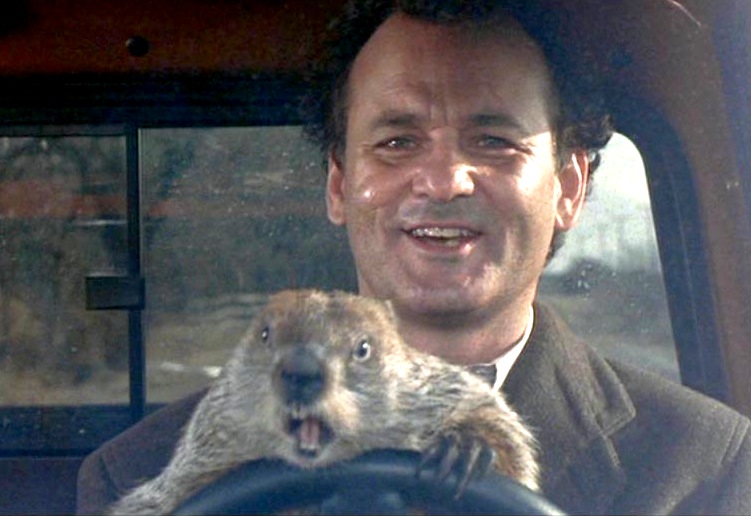
The male couldn’t care less about the weather; he comes out of his burrow in February in search of a mate. If uninterrupted, he will fulfill his groundhog mission of love and return to earth

Here on sunny Cape Cod, there is a joke about the four seasons.  We have “Almost Winter”, “Winter”, “Still Winter” and “Bridge Construction”.  And I thought I moved here for the balmy 70° weather, where a gentle breeze sways the coconut palms.jelly-donuts

Midway between Winter Solstice and Spring Equinox and well before the first crocus of spring has blinked and stretched and peered out across the frozen, windswept tundra, there is a moment of insanity which helps those of us living in northern climes get through to that brief, blessed moment of warmth when the mosquitoes once again have their way with us.

The ancient Romans observed their mid-season festival on February 5, the pagan Irish on February 1. For Christians, it was February 2, Candlemas day, a Christian holiday celebrating the ritual purification of Mary. For reasons which are not entirely clear, early Christians believed that there would be six more weeks of winter if the sun came out on Candlemas Day.

Clergy would bless and distribute candles needed for winter, their length representing how long and cold the winter would be. Germans expanded on the idea by selecting an animal, a hedgehog, as a means of predicting weather. Once a suitable number of Germans had come to America, they switched over to a more local rodent: Marmota Monax. The common Groundhog.

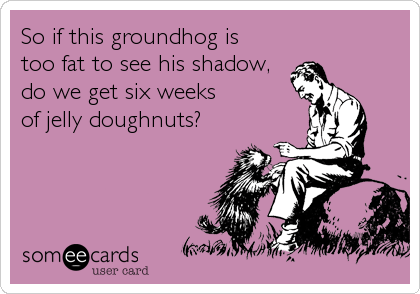
Groundhogs hibernate for the winter, an ability which some people I know would like to possess. During that time, their heart rate drops from 80 beats per minute to 5, and they live off their stored body fat.  Another ability some of us would appreciate, very much.Groundhog Fans Gather In Punxsutawney For Winter Prediction

The male couldn’t care less about the weather; he comes out of his burrow in February in search of a mate. If uninterrupted, he will fulfill his groundhog mission of love and return to earth, not coming out for good until sometime in March.

But then there is the amorous woodchuck’s worst nightmare in a top hat, a fiendish apparition known as the groundhog hunter.

In 1887, there was a group of groundhog hunters in Punxsutawney, Pennsylvania, imaginatively calling themselves the Punxsutawney Groundhog Club. One of them, a newspaper editor, declared on February 2, 1887, that their groundhog “Phil” was the only True weather forecasting rodent.

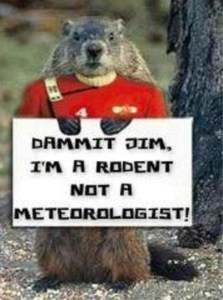
There are those who would dispute the Gobbler’s Knobdammit-jim crowd and their claims to Punxsutawney Phil’s weather forecasting prowess. Alabama has “Birmingham Bill”, and Canada has Shubenacadie Sam. New York can’t seem to decide between Staten Island Chuck and New York City’s very own official groundhog, “Pothole Pete”.

It appears that there is no word for groundhog in Arabic.  Accounts of this day in the Arab press translate the word as جرذ الأرض., or, “Ground Rat”.  Pretty exciting to learn that.  Thanks al Jazeera.

If anyone was to bend down and ask Mr. Ground Rat his considered opinion on the matter, he would probably cast a pox on all our houses. It’s been a long winter. Mr. Ground Rat’s all dressed up for a date.  He has other things on his mind.

January 18, 1943 The Greatest Thing since Sliced Bread

Ohio farmer Roscoe Filburne was ordered to destroy the surplus and pay a fine, even though his “surplus” was being consumed on the farm by the Filburne family and their chickens

The first automatic bread slicer was invented by Otto Frederick Rohwedder of Davenport, Iowa, in 1912. The idea was not at all popular among bakers, who feared that pre-sliced bread would go stale faster, leading to spoiled inventory and dissatisfied customers.
st-_louis_electrical_bread_slicer_1930The project almost ended in a fire in 1917, when the prototype was destroyed along with the blueprints. Rohwedder soldiered on, by 1927 he had scraped up enough financing to rebuild his bread slicer.

Frank Bench, a personal friend of the inventor, was the first to install the machine. The first pre-sliced loaf was sold in July of the following year. Customers loved the convenience and Bench’s bread sales shot through the roof.sliced-bread-wonder

Sliced bread became a national hit when the Continental Baking Company, then owner of the “Wonder Bread” brand, began using a modified version of Rowhedder’s machine in 1930. Sliced bread was here to stay. Sort of.

The United States had been in WWII for two years in 1943, when Claude Wickard, head of the War Foods Administration as well as Secretary of Agriculture, had the hare brained idea of banning sliced bread.

Mr. Wickard was no stranger to hare brained ideas; it is he who lends his name to the landmark Supreme Court case Wickard v. Filburne. Speaking of hare brained ideas. The Agricultural Adjustment Act of 1938 limited the area that farmers could devote to wheat production, in an effort to stabilize the price of wheat on the national market. An Ohio farmer named Roscoe Filburne was producing more than his allotment. The federal government ordered him to destroy the surplus and pay a fine, even though his “surplus” was being consumed on the farm by the Filburne family and their chickens.

constitutionArticle 1, Section 8 of the Constitution includes the “Commerce Clause”, permitting the Congress “To regulate Commerce with foreign Nations, and among the several States, and with the Indian Tribes”. That’s it. The Federal District Court sided with the farmer, but the Federal government appealed to the US Supreme Court, arguing that, by withholding his surplus from the interstate wheat market, Filburne was effecting that market, and therefore fell under federal government jurisdiction under the commerce clause.

The United States Supreme Court, apparently afraid of President Roosevelt and his aggressive and illegal “court packing” scheme, ruled against the farmer. Ever since, what you don’t do can be argued in a court of law to affect interstate commerce, putting what you didn’t do under the jurisdiction of the federal government. Get it? Neither do I, but I digress.

Back to Mr. Wickard, who enacted his ban against sliced bread and put it into effect on January 18, 1943. The push-back, as you might guess, was immediate and vehement. One woman wrote to the New York Times: “I should like to let you know how important sliced bread is to the morale and saneness of a household. My husband and four children are all in a rush during and after breakfast. Without ready-sliced bread I must do the slicing for toast—two pieces for each one—that’s ten. For their lunches I must cut by hand at least twenty slices, for two sandwiches apiece. Afterward I make my own toast. Twenty-two slices of bread to be cut in a hurry!”

The stated reasons for the ban never did make sense. At various times, Wickard claimed that it was to conserve wax paper, wheat and steel, but one reason was goofier than the one before. According to the War Production Board, most bakeries had plenty of wax paper supplies on hand, even if they didn’t buy any. Furthermore, the federal sliced-breadgovernment had a billion bushels of wheat stockpiled at the time, about two years’ supply, and the amount of steel saved by not making bread slicers has got to be marginal, at best.

The ban was rescinded on March 8, 1943, and pre-sliced bread was once again available to the federal government and its subjects. There’s no telling who first used the expression “the greatest thing since sliced bread”, but a reasonable guess may be made as to why.