May 18, 1965  Boldly Going where No Man has Gone Before

Many years from now a boy will be born on March 22, 2233, in Riverside, Iowa.  Destined to become the youngest captain in Star Fleet history, he would boldly go where no man has gone before.  But first, he needed a name.

On May 18, 1965, a World War II fighter pilot, veteran of 89 combat missions named Gene Roddenberry, offered several suggestions.  16 to be exact, among which were Hannibal, Timber, Flagg and Raintree.

Roddenberry decided on James T. Kirk, based on a journal entry of the 18th century British explorer, Captain James Cook: “ambition leads me … farther than any other man has been before me”.

Kirk was killed in 2329 on the Enterprise (B), after the ship was eaten by a Nexus energy ribbon on its maiden voyage. Only he didn’t die, because Jean-Luc Picard found him alive in the timeless Nexus, negotiating hotel deals for Priceline.com.

Or something like that.

In his 1968 book “Making of Star Trek”, Gene Roddenberry says that James Kirk was born in a small town in Iowa. Full-time Trekkie and part-time Riverside Councilman Steve Miller thought “Why not Riverside”. In 1985, Miller moved that Riverside declare itself the Future Birthplace of James T. Kirk.  The motion passed unanimously.

Just like that, the official slogan went from “Where the best begins” to “Where the Trek begins.”  The annual summer festival… that changed from “River Fest” to “Trek Fest”.

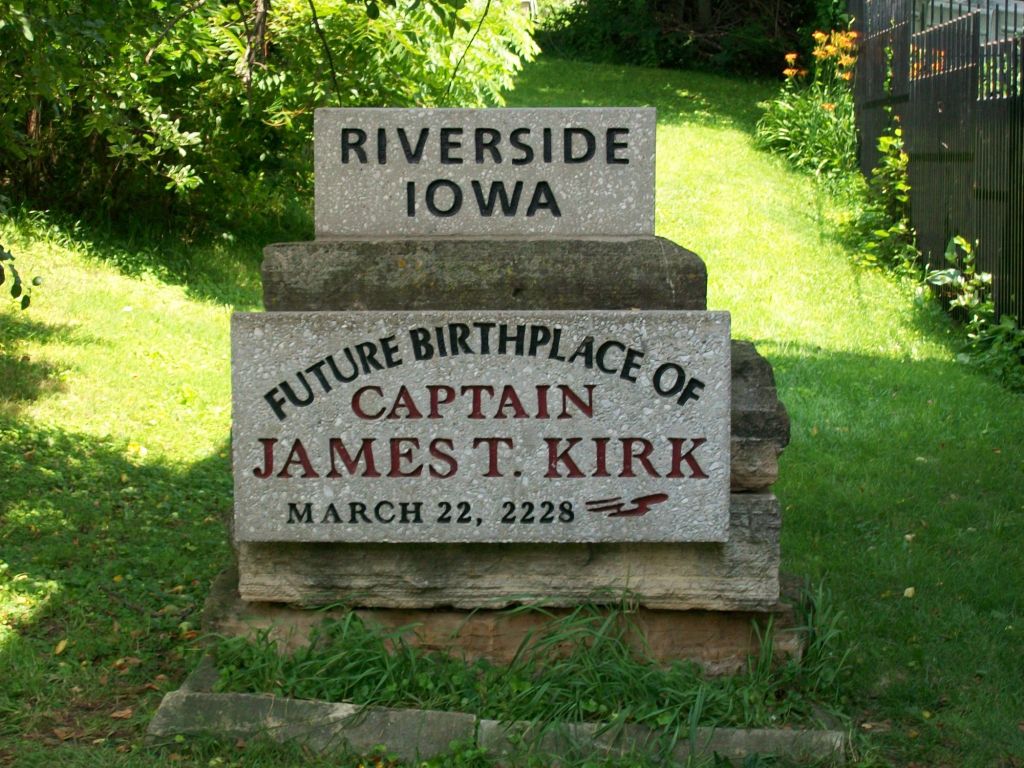
The Riverside connection became Holy Writ when the 2009 film Star Trek identified the place as Kirk’s hometown. Today there is a granite monument in Riverside, population 963, declaring itself the “Future Birthplace of Captain James T. Kirk.

Oh… In case you wanted to know what the “T” stands for… it’s Tiberius.

October 30, 1892 Cabbage Night

It’s October 30, the day before Halloween

In 2013, the New York Times conducted a linguistics survey of regional and vernacular speech in the US.  An unexpected result related to the use of certain terms was that words and phrases predicted with uncanny accuracy, where the respondent had come from.

One such question yielded a surprising result: “What do you call the night before Halloween?”

For Graphics Editor Josh Katz, the answer was, ” Mischief Night.” Growing up in the Philadelphia suburbs, that’s what Everyone called it.

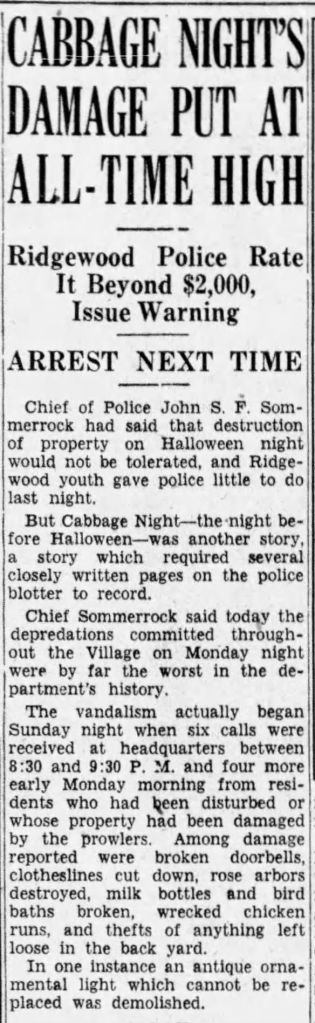
For my reprobate Framingham buddies and me, the answer is “Cabbage Night.” 

For most Americans, this day bears no name, no significance beyond…  October 30.

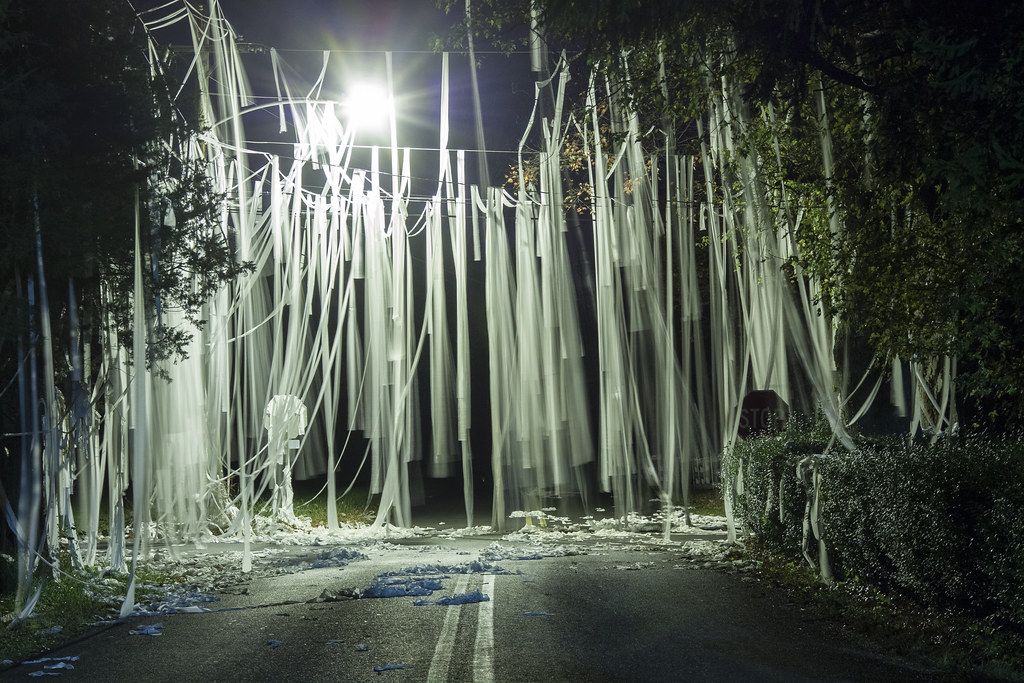
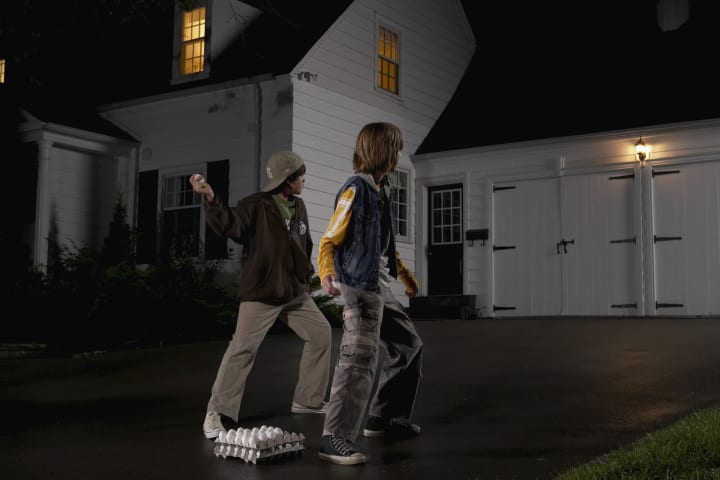
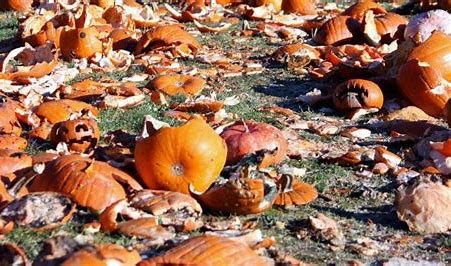
For some of us, this is (or was), a night for those aged out of trick-or-treating to engage in harmless (and sometimes not-so-harmless) mischief.

As early as 1583, the Puritan pamphleteer Phillip Stubbs decried the eve of May Day as “Mischief Night”.

In 1900s England, the event shifted to later in the year and became associated with Guy Fawkes Day, held on November 5. As All-Hallows Eve gained popularity in the US, “Mischief Night” moved to the eve of Halloween.

The pranks were mostly harmless – greased doorknobs or burning bags of dog-poo left on front steps, in hopes that the occupants would come stomp them out.  Sometimes, things got out of control.  In 1991, 160 fires were started in Camden New Jersey.

If you’re from Detroit, you’ll recognize October 30 as Devil’s Night. According to the Detroit Historical Society, Devil’s Night carryings-on were mostly “genteel”, until someone started lighting abandoned properties on fire.  Over 800 such fires were ignited in 1984.

During the late 19th century,  parts of western Massachusetts experienced bumper crops of certain vegetables, prompting local delinquents to pull rotten cabbages out of the ground and throw them at houses. On October 30, 1892, the Berkshire County Eagle lamented “…pent up devilry, accumulated in a year’s time, in the minds of a hundred boys, break[ing] forth on cabbage night in Dalton, and persons admiring safety stay in doors.”

According to the Dictionary of Regional American English (DARE), some parts of Pennsylvania recognize “Chalk Night” as a time to chalk fences and sidewalks and everything else that doesn’t run away, perpetrators sometimes adding a prank or two for good measure.

In parts of New Hampshire, October 30 is “Gate Night,” when livestock is let loose to roam, and a good time for the occasional apple fight.

Local revelers know October 30 as “Corn Night” in Nebraska, “Goosey Night” in parts of New Jersey, and “Beggar’s Night” in central Iowa. Cincinnati cuts right to the chase with “Damage Night”.

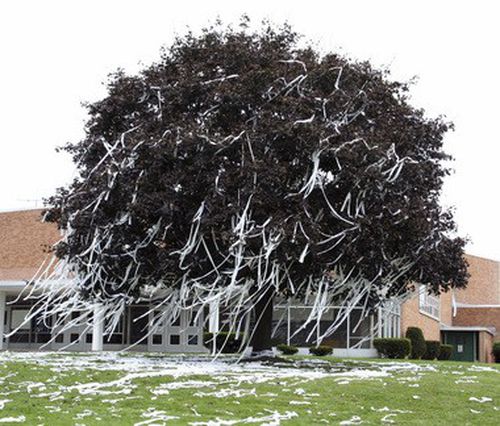
So, go ahead.  Ring the neighbor’s doorbell and run like hell.  Hang a roll of toilet paper on someone’s tree and go toss a cabbage or two.  My buddies and I, we’re going to bed early. We’re all grandfathers now.

April 6, 1933  New Beers Eve

At long last, Prohibition was coming to an end on April 7. Thirsty patrons lined up the night before, waiting for their first legal beer in 13 years.  So it is we remember April 6 as New Beer’s Eve.

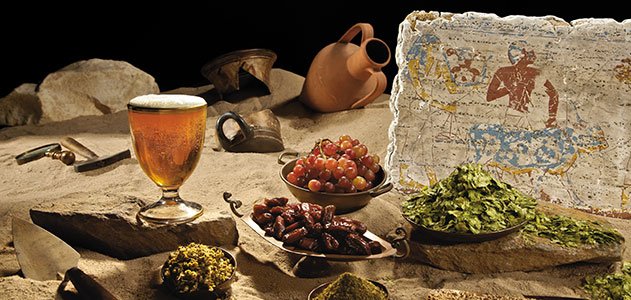
Given the right combination of sugars, almost any cereal will undergo simple fermentation due to the presence of wild yeasts in the air.  Our cave-dwelling ancestors likely experienced their first beer as the result of this process.

Starch dusted stones were found with the remains of doum-palm and chamomile in the 18,000-year old Wadi Kubbaniya in upper Egypt.  While it’s difficult to confirm, University of Pennsylvania archaeologist Dr. Patrick McGovern asserts, “it’s very likely they were making beer there”.

Chemical analysis of pottery shards date the earliest barley beer back to 3400BC, in the Zagros Mountains of Iran.

beer-ingredients

Tacitus maligned the bitter brew of Germanic barbarians.  Wine seemed better suited to the sensibilities of the Roman palate.  Nevertheless, the letters of Roman cavalry commanders from the Roman Britain period, c. 97-103 AD, include requests for more “cerevisia“, for the legionaries.

In North and South America, native peoples brewed fermented beverages from local ingredients including agave sap, the first spring tips of the spruce tree, and maize.

Pilgrims left the Netherlands city of Leiden in 1620, hoping not for the frozen, rocky soil of New England, but for rich farmland and a congenial climate in the New World.  One Mayflower passenger wrote in his diary: “We could not now take time for further search… our victuals being much spent, especially our beer…” Lookouts spotted the wind-swept shores of Cape Cod on November 9, 1620 and may have kept going, had there been enough beer.  
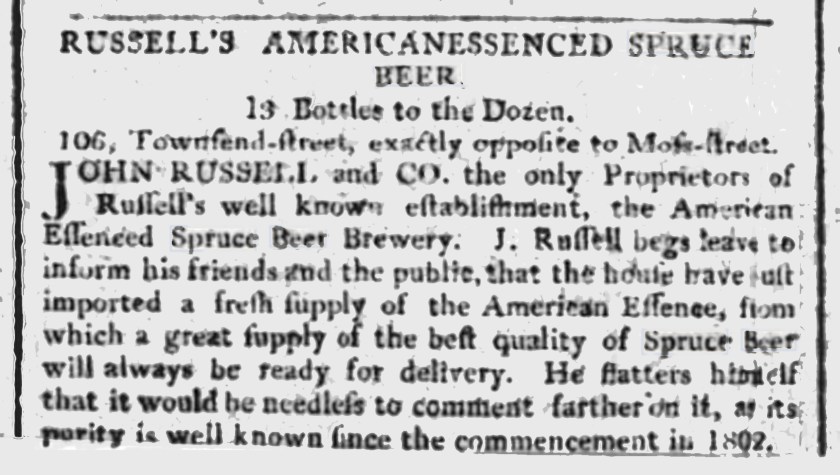
Prior to the drum roaster’s invention in 1817, malt was typically dried over wood, charcoal, or straw fires, leaving a smoky quality which would seem foreign to the modern beer drinker.  William Harrison wrote in his “Description of England” in 1577, “For the wood-dried malt, when it is brewed, beside that the drink is higher of colour, it doth hurt and annoy the head of him that is not used thereto, because of the smoke“.

download (67)

Fun fact: “God made beer because he loves us and wants us to be happy.” The quote is erroneously attributed to Benjamin Franklin. In a circa-1779 letter to the Abbé Morellet, what Franklin really said was, “Behold the rain which descends from heaven upon our vineyards; there it enters the roots of the vines, to be changed into wine; a constant proof that God loves us, and loves to see us happy.”

Smoky flavor didn’t trouble the true aficionado of the age.  When the Meux Brewery casks let go in 1814 spilling nearly 400,000 gallons onto the street, hundreds of Britons hurried to scoop it up in pots and pans.  Some even lapped it up off of the street, doggy-style.

2926-London-Beer-Flood1

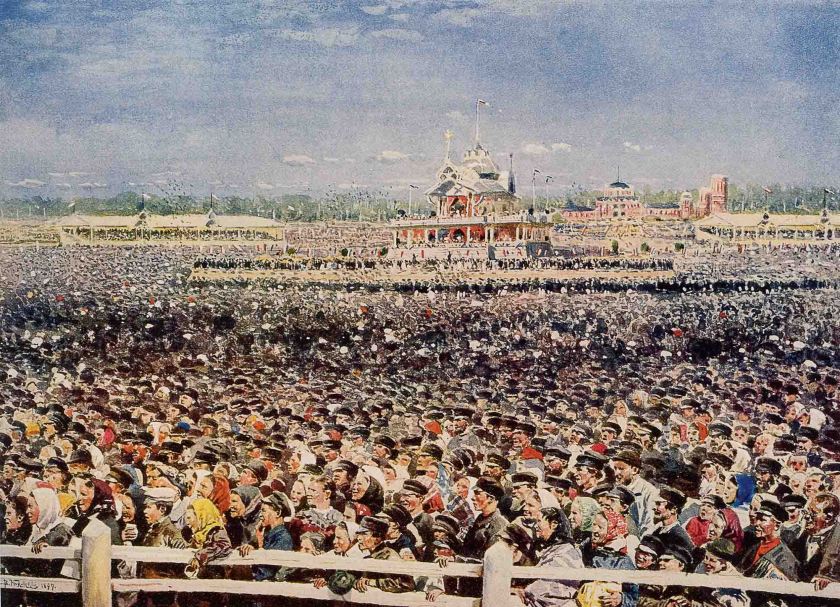
1,389 unfortunates were trampled to death and another 1,300 injured in a stampede for the suds, when someone thought the beer had run out at the coronation of Czar Nicholas II, in 1896.
download (66)

The 18th amendment, better known as “prohibition”, went into effect at midnight, January 16, 1920. For thirteen years it was illegal to import, export, transport or sell liquor, wine or beer in the United States.

Portable stills went on sale within a week. Organized smuggling was quick to follow. California grape growers increased acreage by over 700% over the first five years, selling dry blocks of grapes as “bricks of Rhine” or “blocks of port”. The mayor of New York City sent wine-making instructions to his constituents.

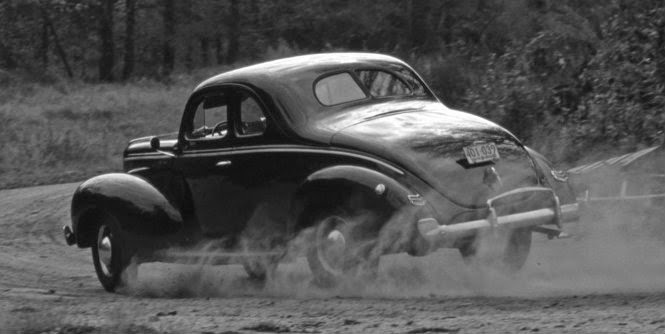
Smuggling operations became widespread, as cars were souped up to outrun “the law”. This would lead to competitive car racing, beginning first on the streets and back roads and later moving to dedicated race tracks.  It’s why we have NASCAR, today.
Moonshine-Cars

Organized crime became vastly more powerful due to the influx of enormous sums of cash.  The corruption of public officials was a national scandal.

Gaining convictions for breaking a law that everyone hated became increasingly difficult. New York alone saw over 7,000 prohibition-related arrests between 1921 and 1923.  Only 27 resulted in convictions.

download (65)

Federal government busybodies went so far as to deliberately poison alcohol leading to the death of hundreds, but all in vain. In the end even lifelong teetotaler John D. Rockefeller, Jr., a man who contributed $350,000 to the Anti-Saloon League, had to announce his support for repeal.

It’s difficult to compare rates of alcohol consumption before and during prohibition.  If death by cirrhosis of the liver is any indication, alcohol consumption never decreased by more than 10 to 20 per cent.

FDR signed the Cullen–Harrison Act into law on March 22, 1933, commenting “I think this would be a good time for a beer.”  The law went effect on April 7, allowing Americans to buy, sell and drink beer containing up to 3.2% alcohol.

A team of draft horses hauled a wagon up Pennsylvania Avenue, delivering a case of beer to the White House. This was the first public appearance of the now-famous Budweiser Clydesdales.

fd3cb0f1f05a3b17a69799cd32a01bcb

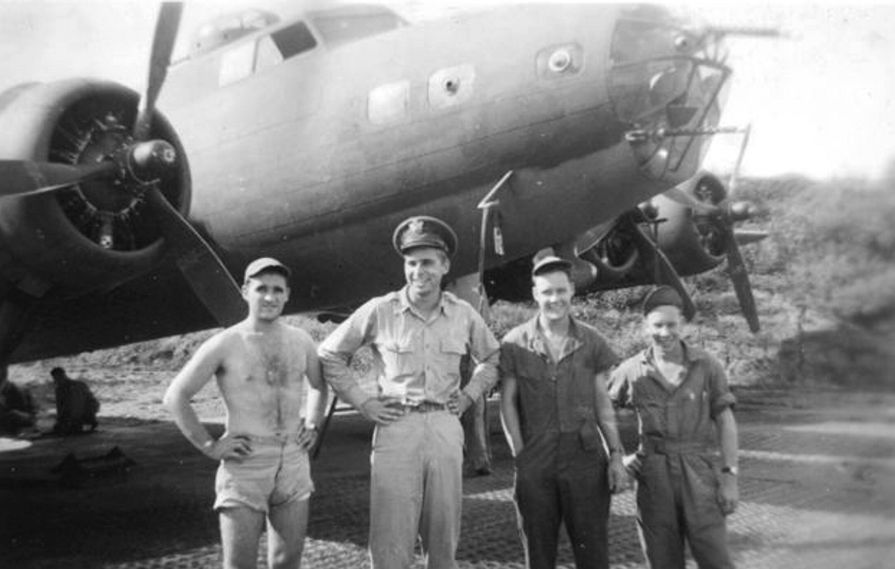
In 1941, “dry” leaders tried to prohibit consumption of alcohol on military bases.  Authorities pushed back, claiming it was good for morale. Brewers were required to allocate 15% of total annual production to be used by the armed forces. So essential were beer manufacturers to the war effort, that teamsters striking Minneapolis breweries were ordered to end their strike. Near the end of WWII, the army developed plans to operate recaptured French breweries to ensure adequate supplies for the troops.

18 states continued prohibition at the state level, the last state finally dropping it in 1966. Nearly two out of three states adopted some form of local option, enabling residents of political subdivisions to vote for or against local prohibition.  Some counties remain dry to this day. 

Ironically, the home of the Jack Daniel distillery is one such dry county, though Shirl and I can tell you from personal experience. Special dispensation is given for tastings, JD being the largest taxpayer in Lynchburg County.

But I digress.

Beer toast

The night before Roosevelt’s law went into effect, April 6, 1933, beer lovers lined up at their favorite watering holes, waiting for the first legal beer in thirteen years.  A million and a half barrels of the stuff were consumed on April 7, a date remembered today as “National Beer Day”.

So it is that, from that day to this, we celebrate April 6 as “New Beer’s Eve”.  Sláinte.

For every wound, a balm.
For every sorrow, cheer. 
For every storm, a calm.
For every thirst, a beer. – Irish toast, author unknown
April 1, 1392 April Fool

In 1974, logger Oliver ‘Porky’ Bickar chartered a helicopter and flew 70 old tires to the peak of the long-dormant Mount Edgecumbe volcano in Alaska. Dousing the pile with gasoline and setting the thing alight, townspeople gaped at the ominous black cloud rising from the volcano. Local police and fire were in on the gag but the Coast Guard, was not. ‘Coasties’flew over to inspect the situation but instead of molten lava, there was a great pile of burning tires surrounded by the giant words April Fool, spray painted on the sides of the crater.

In Chaucer’s Canterbury Tales, “March 32” of 1392 is the day the wily fox tricked the vain cock Chanticleer. The fox appealed to the rooster’s vanity and insisted he would love to hear the cock crow, just as his amazing father had. Standing on tiptoe with neck outstretched and eyes closed, the rooster obliged  with unfortunate, if not unpredictable results.2019_CKS_17294_0141_001(william_james_webbe_chanticleer_and_the_fox)

April Fools.  The ancient Roman festival of Hilaria held on March 25, may be a precursor. The Medieval Feast of Fools, held December 28, remains to this day a time in which pranks are played in Spanish-speaking countries.

april-fishIn 1582, France switched from the Julian calendar to the Gregorian moving New Year to January 1 as specified by the Council of Trent, of 1563. Those who didn’t get the news and continued to celebrate New Year in late March/April 1, quickly became the butt of jokes and hoaxes.
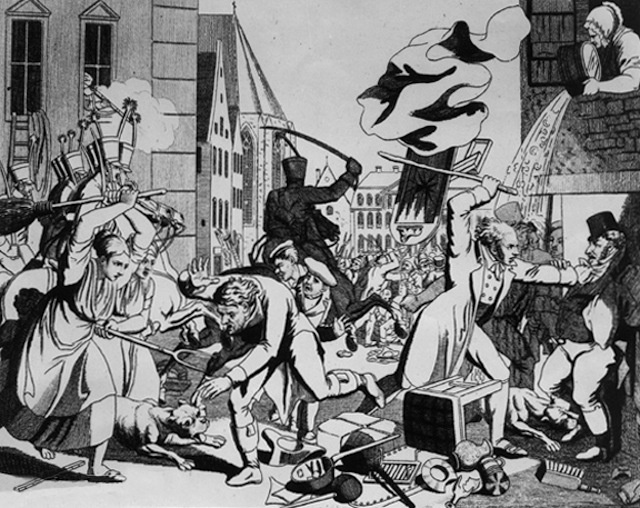
Paper fish were placed on their backs, as these “poisson d’avril” (April fish) were said to symbolize the young, naïve, easily caught first fish of Spring.

The Flemish children of Belgium lock their parents or teachers out, letting them in only if they promise to bring treats that evening or the next day.

In 1539, Flemish poet Eduard de Dene wrote of a nobleman who sent his servants on fool’s errands on April 1.

b59b43022c5e5078d8b3c860306b989fIn Scotland, April Fools’ Day is traditionally called Hunt-the-Gowk Day. Though the term has fallen into disuse, a “gowk” is a cuckoo or a foolish person. The prank consists of asking someone to deliver a sealed message requesting unspecified assistance. The message reads “Dinna laugh, dinna smile. Hunt the gowk another mile”. On reading the message, the recipient will explain that in order to help, he’ll first need to contact another person, sending the victim on down the road with the same message.

In Poland, “Prima Aprilis” is so strong that the anti-Turkish alliance with Leopold I, signed on April 1, 1683, was backdated to March 31.

festival-of-foolsAnimals were kept at the Tower of London since the 13th century, when Emperor Frederic II sent three leopards to King Henry III. In later years, elephants, lions and even a polar bear were added to the collection, the polar bear trained to catch fish in the Thames.
In 1686, John Aubrey referred to the holiday as “Fooles holy day”, the first British reference.

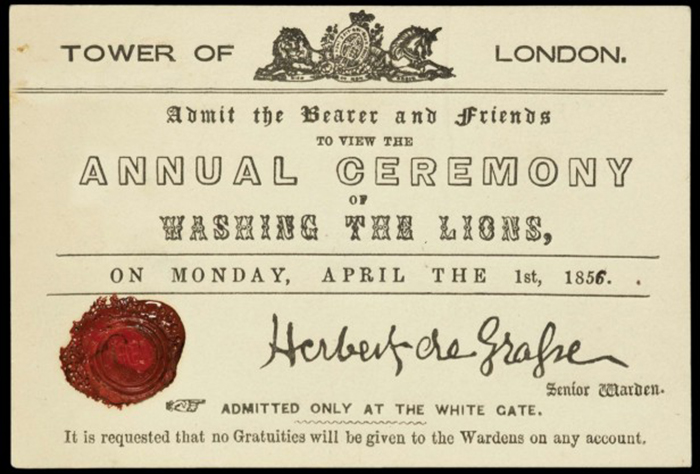
On April 1, 1698, citizens were invited to the Tower of London to witness the “Washing of the Lions” in the tower moat. Quite a few were sucked in. The April 2 edition of Dawks’ News-Letter reported that “Yesterday being the first of April, several persons were sent to the Tower Ditch to see the Lions washed.” The “annual ceremony of washing the lions,” lasted throughout the 18th & 19th centuries, always held on April 1st.

By the mid-19th century the prank became quite elaborate. Tickets were printed and distributed for the event, specifying that attendees be “Admitted only at the White Gate”, and that “It is requested that no Gratuities will be given to the Wardens on any account.”washing-of-the-lions-ticketIn “Reminiscences of an Old Bohemian”, Gustave Strauss laments his complicity in the hoax in 1848. “These wretched conspirators”, as Straus called his accomplices, “had a great number of order-cards printed, admitting “bearer and friends” to the White Tower, on the 1st day of April, to witness…the famous grand annual ceremony of washing the lions”.

Pandemonium broke out when hundreds showed up, only to realize they’d been pranked. “In the midst of the turmoil” Strauss wrote, “some one spotted me to whom I had given an order of admission, and he would have set the whole mob upon me. Knowing of old that discretion is, as a rule, the better part of valour…I had to skedaddle, and keep dark for a time, until the affair had blown over a little”.

8-Spore-April-Fools-Pranks-That-Will-Make-You-Smile-Amid-The-Grim-Covid-19-Outbreak In 1957, (you can guess the date), the BBC reported the delightful news that mild winter weather had virtually eradicated the dread spaghetti weevil of Switzerland.  Swiss farmers were now happily anticipating a bumper crop of spaghetti. Footage showed smiling Swiss, happily picking spaghetti from the trees.spagtree (1)An embarrassingly large number of viewers were fooled, calling BBC offices asking how to grow their own spaghetti tree. Callers were told to “Place a piece of spaghetti in a tin of tomato sauce, and hope for the best.”

Instantly recognizable to a generation of British TV viewers, Sir Patrick Alfred Caldwell-Moore hosted the longest running BBC production hosted by the same presenter, The Sky at Night. The author of over 70 books on astronomy and renowned for his expertise in moon observation, Moore’s signature monocle and stern on-air personae made him The authority for all things, astronomical. In 1976, Moore informed his viewers that a rare alignment of Pluto and Jupiter would temporarily reverse the law of gravity allowing viewers to float through the air. At 9:47am Moore instructed his viewers to ‘Jump Now!‘. Most took the so-called Jovian-Plutonian effect as harmless good fun but many, did not. One caller claimed that she and 11 friends had taken flight and ‘orbited gently around the room’. Another man claimed to have risen so high as to hit his head on the ceiling, demanding compensation for unspecified injuries.

Warby-Barker-Canine-Sunglasses-April-FoolsThe Warby Parker Company website describes a company mission of “offer[ing] designer eyewear at a revolutionary price, while leading the way for socially conscious businesses”.

On April 1, 2012, Warby Parker released a new line of eyeglasses for dogs, appropriately called “Warby Barker”.

For only $95, your hipster pooch could be sporting the latest styles in canine eyeware, in irresistible dog treat shades like “Gravy Burst” and “Dusty Bacon.” There was a monocle option too, for those partial to that Prussian Field Marshall look.

Anyone falling for the gag got an “April Fools!” message on the on-line shopping cart.

Not to be outdone, Burger King announced the introduction of a new Whopper flavored mouthwash, for those who just can’t get enough of a good thing. I know it’s true because I read it on-line, but it should be mentioned here. There is no “White Gate” at the Tower of London. Never was.

lefthandedwhopper

March 29, 1848 The Day Niagara ran Dry

Fish flopped in the dry riverbed as, upstream, factories ground to a halt.  Souvenir hunters and daredevils walked out on the dry river bed.  Some even drove buggies.   One unit of the United States Army cavalry paraded back and forth across the river.  Treasure hunters found artifacts from the War of 1812:  muskets, bayonets, even tomahawks.

Even as Athens and Sparta vied for control of the Peloponnese, half a world away the earliest of indigenous peoples settled the Niagara valley of modern-day Ontario and western New York.  These were the Onguiaahra, a farming people growing corn, beans and squash in the rich soil of the Niagara escarpment, hunting deer and elk and fishing the tributary waterways of the Niagara valley.

The Onguiaahra were some 12,000 in number when the French explorer Samuel de Champlain came to the region in 1615.  French explorers called them “Neutrals”, the peace makers between the perpetually warring tribes of the Seneca, Cayuga, Onondaga, Oneida and Mohawk Nations to the south, and the Huron to the north.  Vying for control of the rich French fur trade, peoples of this “Iroquois Confederacy” systematically destroyed the villages of the neutrals, killing their people or driving them east, toward Albany.  By 1653 the Onguiaahra had ceased to exist in any meaningful sense but their name lives on, in a word translating as “Thunder of Waters”.
Niagara_falls_panorama

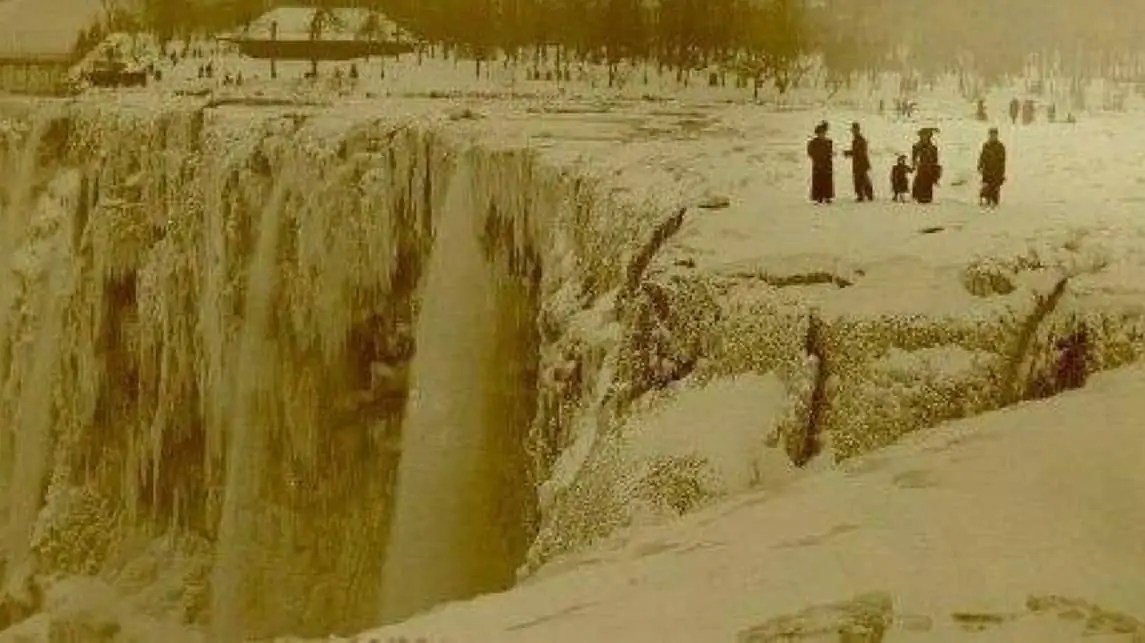
Niagara Falls are three in number, 3,160 tons of water cascading over the precipice every second, hitting the bottom at American and Bridal Veil Falls with 280 tons of force and an astonishing 2,509 striking the Canadian side, at the famous Horseshoe Falls.

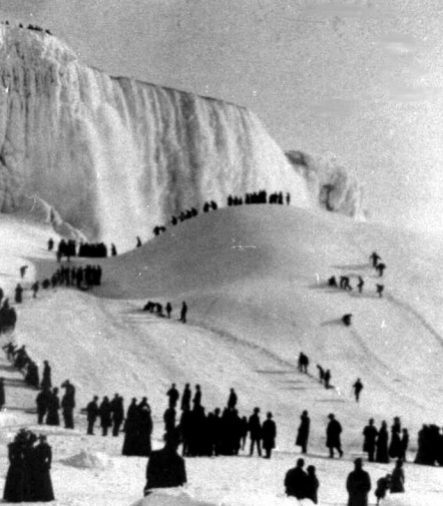
Pictures have been around since the age of photography, purporting to show Niagara Falls “frozen solid”.  That’s not so unusual.  The Washington Post reports:

niagara-frozen-2017-1

“Niagara Falls gets cold every year. The average temperature in Niagara Falls in January is between 16 and 32 degrees. Naturally, it being that cold, ice floes and giant icicles form on the falls, and in the Niagara River above and below the falls, every year. The ice at the base of the falls, called the ice bridge, sometimes gets so thick that people used to build concession stands and walk to Canada on it. It’s nothing out of the ordinary. It is not, to put it bluntly, big polar vortex news”.

niagara-frozen-2017-2
niagara-frozen-2017-3
Niagara “Frozen” in 1906, 1902 and 1936.  Hat Tip Snopes.com

Despite outward appearances, water flows in abundance under those bridges of ice.  Only once in recorded history did Niagara Falls run dry.  On this day in 1848, roughly 212,000 cubic feet per second dried, to a trickle.  Not dried, really, nor did it freeze.  Strong southwest winds had driven massive amounts of ice to the head of Niagara River, effectively putting a cork in the bottle.

March 29, 1848 When Niagara Falls Ran Dry

Fish flopped in the dry riverbed as, upstream, factories ground to a halt.  Souvenir hunters and daredevils walked out on the dry river bed.  Some even drove buggies.   One unit of the United States Army cavalry paraded back and forth across the river.  Treasure hunters found artifacts from the War of 1812:  muskets, bayonets, even tomahawks.  At the base of the Falls, Maid of the Mist owners took the opportunity to dynamite rocks which had endangered their boat.

Meanwhile upstream the pressure built, an that much water is not to be denied.  The ice dam broke on March 31. By that evening, the flow was back to normal.

Lifelong “Stooges” fans will appreciate this classic comedy bit, “Niagara Falls”

The Falls “dried up” once again in 1961 but, this time, it happened on purpose.  Over three days and 1,264 truckloads of fill, the US Army Corps of Engineers built a cofferdam that June, diverting water to the Canadian side.  There was concern that rock falls were going to cause erosion, “shutting down” the Falls. 

Dryniagara

On inspection, engineers determined that removing the rocks would accelerate erosion.  The idea was abandoned by November and the cofferdam, blown up.  To this day, the waters of Niagara flow, unvexed, to the sea.

A Trivial Matter
In 1901, Schoolteacher Annie Edson Taylor became the first person to go over Niagara Falls in a barrel.  Sixteen others have followed, at least on purpose.  Five of them died, including the guy who went over in a kayak, and one on a jet ski.  On Saturday, July 9, 1960, 7-year-old Roger Woodward was accidentally swept over Horsehoe Falls. He miraculously survived the 162-foot plunge wearing only a bathing suit and a life jacket. James Honeycutt did not, losing his life in the attempt to rescue the boy.  They say that 90% of the fish who go over the Falls live to tell the tale.

December 20, 1874 The Beautiful Story of the “Ugliest Woman in the World”

Historical Easter eggs

Wanted: The Ugliest Woman. Nothing Repulsive Maimed or Disfigured. Good Pay Guaranteed and Long Engagement for Successful Applicant. Send Recent Photo – Newspaper advertisement

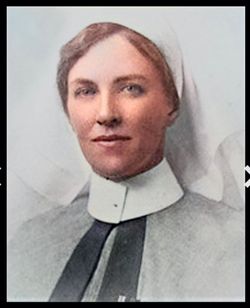
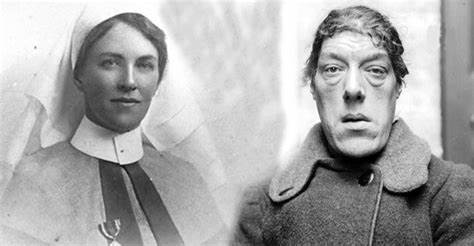
Mary Ann Webster arrived in this world on December 20, 1874, borne of a working class family in the East London township of Plaistow. Hers was a normal childhood, no different than any of her seven siblings. At the age of 20, she qualified to become a nurse.

Mary Ann Webster

If the last three years have taught us anything about the nursing profession, it’s a heartfelt respect for those who care for others. Sometimes, at no small risk to themselves.

Today we revere the profession, but such was not always the case. No less a person than the “mother of modern nursing” Florence Nightingale once described the job, as being for ‘those who were too old, too weak, too drunken, too dirty, too stupid or too bad to do anything else’.

When Mary Ann Webster joined the profession, it certainly wasn’t for the money.

Then came the day Mary Ann met a farmer named Thomas Bevan. The couple fell in love and and were wed in 1903. Over time, the union produced four children. Theirs was a happy marriage until that day in 1914, when Thomas entered their small cottage and dropped dead at her feet. 

A terrible storm was gathering in 1914 Europe, about to plunge a continent into war. Left without her principle source of support with four children to feed Mary Ann Bevan faced a terrible storm of her own, even then taking place within her own body.

Acromegaly is a neuroendocrine disorder, known to cause excess growth hormones in the body. 

“Dalip Singh Rana is an Indian retired professional wrestler and wrestling promoter better known by his ring name The Great Khali” – hat tip wikipedia

Usually caused by a non-malignant tumor on the pituitary gland, Acromegaly results in gigantism when the condition begins before puberty. If you’re a professional wrestling fan, think of the Punjabi wrestler “The Great Khali”, or Andre the Giant.

When contracted in adulthood, Acromegaly results in a thickening of the skin, enlargement of extremities and facial features and a deepened, “husky” voice accompanied by severe headaches and joint pain. 

Today the condition can be dealt with, if detected early. Early 20th century medicine offered no options for the treatment of such a disease.

In a world beset by the catastrophe of World War I, Mary Ann Bevan was left with four children to feed, no husband and a rapidly developing personal horror about to render her own appearance, a thing of the past.

As the condition advanced, coworkers and patients alike were at first put off by her changing facial features and then disgusted. Reviled and alone work went from difficult to impossible, leaving the young widow nothing but odd jobs to support herself and her children.

Then one day the newspaper arrived, in 1920: 

Wanted: The Ugliest Woman. Nothing Repulsive Maimed or Disfigured. Good Pay Guaranteed and Long Engagement for Successful Applicant. Send Recent Photo.

Newspaper ad

If you’ve ever thought to yourself that people seem judgmental in the age of social media, you’re not alone. You’re not wrong either, but that’s nothing new. People have flocked to gawk at and ridicule “freaks of nature” going back to medieval days, if not before. In the court of King Charles I, two conjoined brothers called Lazarus and Joannes Baptista Colloredo were a source of mean-spirited entertainment. 2-foot 5-inch Matthias Buchinger amazed 18th century crowds in England and Ireland with feats of magic, art and music, despite having no hands and no feet.

So minutely detailed was Buchinger’s calligraphy the locks of his own hair seen in the self-portrait above, are actually 7 biblical psalms and the Lord’s Prayer. But I digress.

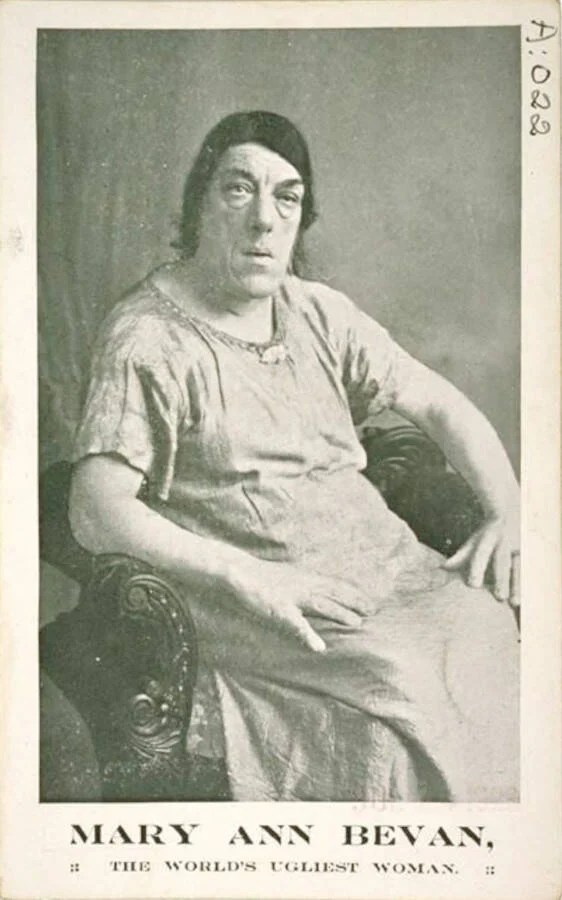
This sort of voyeurism came to a pinnacle in the form of the “Freak Show” of late 19th and early 20th century United States and England. Which brings us back to Mary Ann Bevan. The man behind the newspaper advert was Claude Bartram, agent for the Barnum & Bailey Circus.

Allthatsinteresting.com writes: “She was paraded alongside other notable sideshow acts including Lionel, the Lion-Faced Man, Zip the “Pinhead,” and Jean Carroll, the Tattooed Lady. Dreamland visitors were invited to gawk at the 154 pounds she carried on her 5′ 7″ frame, as well as her size 11 feet and size 25 hands. Bevan bore the humiliating treatment calmly. “Smiling mechanically, she offered picture postcards of herself for sale,” thus securing sufficient money for herself and for her children’s education”.

Postcards like this earned her as much as $12 apiece, sold at fairgrounds.

What it is to appear in a carnival freak show, I leave to the imagination. The sneers and taunts, the comments… Mary Ann found romance in later life with a giraffe keeper, remembered only as Andrew. She even agreed to a beauty makeover one time, at a New York salon. With her face made up complete with a massage, new hairdo and manicure, one of the snottier commenters asserted: ”the rouge and powder and the rest were as out of place on Mary Ann’s countenance as lace curtains on the portholes of a dreadnought.”

Mary Ann herself looked in the mirror and sighed saying simply, “I guess I’ll be getting back to work.”

Mary Ann Bevan performed at Coney Island until the day she died on December 26, 1933. She was only 59. She is buried at Southeast London’s Brockley and Ladywell Cemetery.

Save for aficionados of the American sideshow circuit she faded from history after that, until 2000. The Hallmark greeting card company used her image in an unfunny and cruel joke about blind dates, raising no small storm of criticism from the public. To their credit, Hallmark removed the card from the market.

If there is a last word on the subject of personal appearance, let it go to Mary Ann herself. During two years of performing in New York and enduring the humiliation, sneers and derision of strangers the young mother more than provided for her family, earning the equivalent of 1.6 million dollars in today’s value.

February 16, 600 Bless You

No fewer than 97 languages from Amharic (yimarish for women and yimarih for men) to Māori (manaakitia koe) to Yiddish (tsu gezunt) and even Esperanto (Sanon) offer similar blessings, for those who sneeze.

Emerging as we are following two years of worldwide pandemic, the modern mind can scarcely imagine the world experienced by out medieval ancestors, afflicted with the Bubonic Plague. Yersinia Pestis.

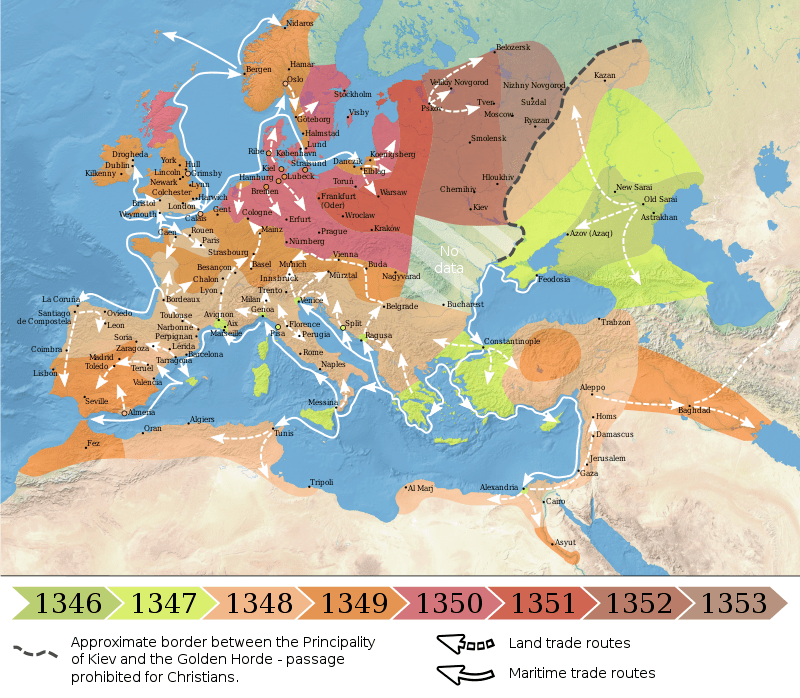
Peaking between 1346 and 1353, the “Black Death” was the most deadly pandemic in human history, killing an estimated 75 to 200 million at a time when worldwide population stood less than a half-million.

European populations took 200 years to recover.

Even so, this was far from the first. Modern research points to the existence of Y. Pestis in ancient Swedish tombs, indicating a possible role in the “Neolithic Decline” in which European populations collapsed, some 5-6 thousand years ago.

The Plague of Justinian (541–542 CE, with recurrences until 750) was the first worldwide pandemic brought about by Y. Pestis. Populations from China to Roman Britain were decimated with particular emphasis, on the Sassanian and Byzantine empires. While numbers are uncertain, Procopius wrote of 10,000 dying every day in Constantinople, alone.

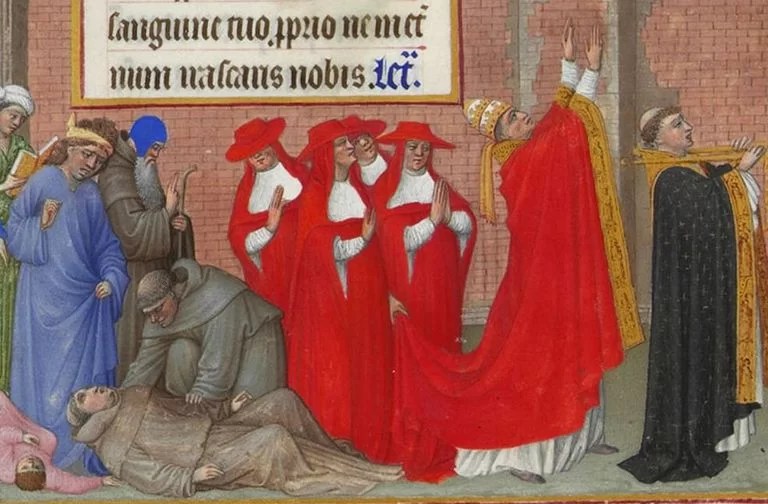
In 590, Pope Pelagius II succumbed to the “Black Death” leading to the election of Gregory I, one of the last popes to retain his baptismal name.

Fun Fact: In the early centuries of the Roman church, popes retained baptismal names. In 533, Mercurius was elected head of the worldwide Catholic Church.  Deeming it inappropriate that the Bishop of Rome carry the name of a pagan Roman god, Mercurius adopted the papal name John II in honor of his predecessor, venerated as a martyr. Since 1555, all Popes have adopted a Pontificial name as well as an Italian name,  in honor of Vatican citizenship.

Today we remember Gregory also for the Gregorian chant, but not for the eponymous calendar. That would come to us from a later Gregory.

Around the time of Gregory I, it was believed (with some justification) that sneezing spread the plague. Many believed in addition, that the soul briefly departed the body during a sneeze, rendering the…err…sneezer, temporarily vulnerable to demonic possession.

So it was on this day, February 16, 600, Pope Gregory I issued a papal bull. A decree, requiring all Christians to invoke the blessings of God, when in the presence of anyone who sneezed.

“The phrase, God bless you, became a sort of protection or verbal talisman to protect the sneezer. We see similar practices in other cultures. For example, the Spanish “Salud” (health), German “Gesundheit” (health), Gaelic “Dia dhuit” (God be with you), and Bengali “Jeebo” (stay alive) are all responses to sneezing”.

H/T compellingtruth.org
ROME, ITALY: This picture taken 26 January 2005 shows Pope John Paul II sneezing during his weekly general audience at the Vatican. Vatican officials 02 February 2005 said they had delayed an early morning health update on the 84-year-old Pope John Paul II, who was admitted to hospital suffering from breathing problems after falling ill with the flu. According to initial reports, the pope spend a “fairly good night” in hospital and was to undergo tests on Wednesday. AFP PHOTO/ PATRICK HERTZOG (Photo credit should read PATRICK HERTZOG/AFP via Getty Images)

While the origins are murky, it seems ol’ Gregory didn’t invent the idea. He just…ordered it. So it is by the year 750, “God Bless You” became the near-universal response to a sneeze and remains so, to this day.

No fewer than 97 languages from Amharic (yimarish for women and yimarih for men) to Māori (manaakitia koe) to Yiddish (tsu gezunt) and even Esperanto (Sanon) offer similar blessings, for those who sneeze.

Today, a sneeze is understood to be the body’s way of ejecting an irritant. But, did you know? An estimated 18% to 35% of the population sneezes, when subjected to sudden, bright light. Gesundheit.

February 10, 1920 Lena Blackburne’s Baseball Rubbing Mud

The age of one-ball-per-game died with Ray Chapman, and with it the era of the dead ball. The lively ball era, had begun. Batters loved it, but pitchers complained about having to handle all those shiny new balls.

Former Boston Braves pitcher Max Surkont once quipped, “Baseball was never meant to be taken seriously — if it were, we would play it with a javelin instead of a ball”. I’m not sure about javelins, but I do know how much we all love to see to see that ball, hit out of the park.

Yes, home runs ae fun, but that’s not always how the game was played. The “Hitless Wonders” of the Chicago White Sox won the 1906 World Series with a .230 club batting average. Manager Fielder Jones said “This should prove that leather is mightier than wood”.  Fielder Allison Jones. Yeah, that’s the man’s real name.  Is that the greatest baseball name ever, or what?

deadballparks

This was the “dead-ball” era, when an “inside baseball” style of play relied on stolen bases, hit-and-run plays and, more than anything else, speed.

That’s not to say there were no power hitters. In some ways, a triple may be more difficult than a home run, requiring a runner to cover three bases in the face of a defense still in possession of the ball. Pittsburgh Pirates outfielder Owen “Chief” Wilson set a record of 36 triples in 1912. “Wahoo” Sam Crawford hit a career record 309 triples during 18 years in Major League Baseball, playing for the Cincinnati Reds and Detroit tigers between 1899 and 1917. 100 years later, it’s unlikely that either record will ever be broken.

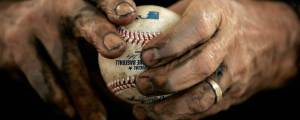
In his 1994 television miniseries “Baseball”, Ken Burns commented that “Part of every pitcher’s job was to dirty up a new ball the moment it was thrown onto the field… They smeared it with dirt, licorice, and tobacco juice; it was deliberately scuffed, sandpapered, scarred… and as it came over the plate, [the ball] was very hard to see.”

dead-ball

Spitballs lessened the natural friction with a pitcher’s fingers, reducing backspin and causing the ball to drop. Sandpapered, cut or scarred balls tended to “break” to the side of the scuff mark. Balls were rarely replaced in those days.  By the end of a game, the ball was scarred, misshapen and entirely unpredictable. 

On February 10, 1920, Major League Baseball outlawed “doctored” pitches, though it remained customary to play an entire game with the same ball.

The first ever game to be played “under the lights” was forty years in the past in 1920, but it would be another 15 before the practice became widespread.

submarine-pitcher

It was late afternoon on August 16 of that year, when the Cleveland Indians were playing the New York Yankees at the Polo Grounds. Cleveland shortstop Ray Chapman took the plate in the top of the 5th, facing “submarine” pitcher Carl Mays.  These are not to be confused with the windmill underhand pitches we see in softball.  Submarine pitchers throw side-arm to under-handed, their upper bodies so low that some of them scuff their hands on the ground, the ball rising as it approaches the strike zone.

Chapman never moved, he seems not to have seen it coming. The crack of the ball hitting his head was so loud that Mays thought he had hit the end of the bat, fielding the ball and throwing to first for the out. Wally Pipp, the first baseman better known for losing his starting position to Lou Gehrig because of a headache, immediately knew something was wrong. The batter made no effort to run, but slowly collapsed to the ground with blood streaming from his left ear.

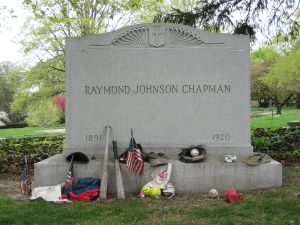
ray_chapman_grave

29-year-old Ray Chapman had said this was his last year playing ball.  He wanted to spend more time in the family business he had just married into. The man was right.  Raymond Johnson Chapman died 12 hours later, the only player in the history of Major League Baseball, to die from injuries sustained during a game.

new-balls

The age of one-ball-per-game died with Ray Chapman, and with it the era of the dead ball. The lively ball era, had begun. Batters loved it, but pitchers complained about having to handle all those shiny new balls.

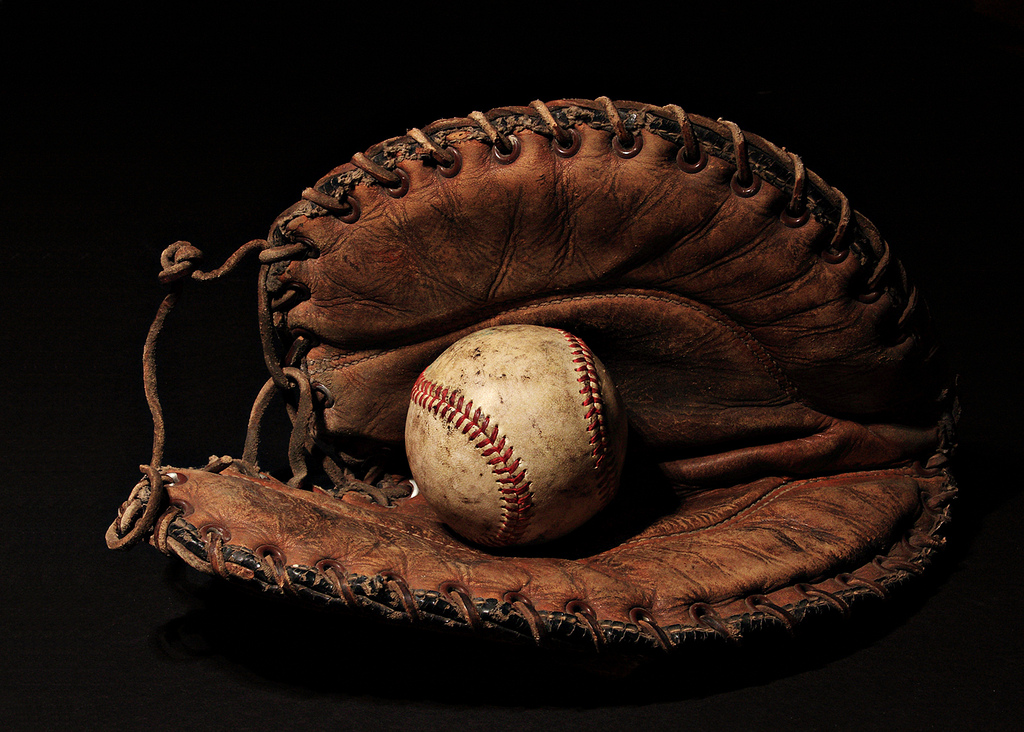
MLB rule #3.01(c) states that “Before the game begins the umpire shall…Receive from the home club a supply of regulation baseballs, the number and make to be certified to the home club by the league president. The umpire shall inspect the baseballs and ensure they are regulation baseballs and that they are properly rubbed so that the gloss is removed. The umpire shall be the sole judge of the fitness of the balls to be used in the game”.

Umpires would “prep” the ball using a mixture of water and dirt from the field, but this resulted in too-soft covers, vulnerable to tampering. Something had to take the shine off the ball without softening the cover.

rubbing-mud

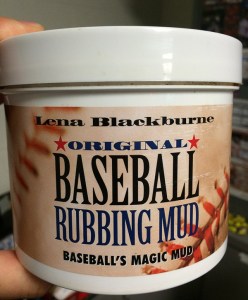
Philadelphia Athletics third base coach Lena Blackburne took up the challenge in 1938, scouring the riverbanks of New Jersey for just the right mud. Blackburne found his mud hole, describing the stuff as “resembling a cross between chocolate pudding and whipped cold cream”. By his death in the late fifties, Blackburne was selling his “Baseball Rubbing Mud” to every major league ball club in the country, and most minor league teams.

rubbing-mud-2

In a world where classified information is kept on personal email servers, there are still some secrets so pinky-swear-double-probation-secret that the truth may Never be known. Among them Facebook “Community Standards” algorithms, the formula for Coca Cola, and the Secret Swamp where Lena Blackburne’s Baseball Rubbing Mud comes from.

Nobody knows, but one thing is certain. The first pitchers will show up to the first spring training camp, a few short days short days from now. From 1938 to the present day, every baseball thrown from pre-season to the World Series, will be first de-glossed using Lena Blackburne’s famous, Baseball Rubbing Mud.

Play ball.

December 27, 1865 Confederados

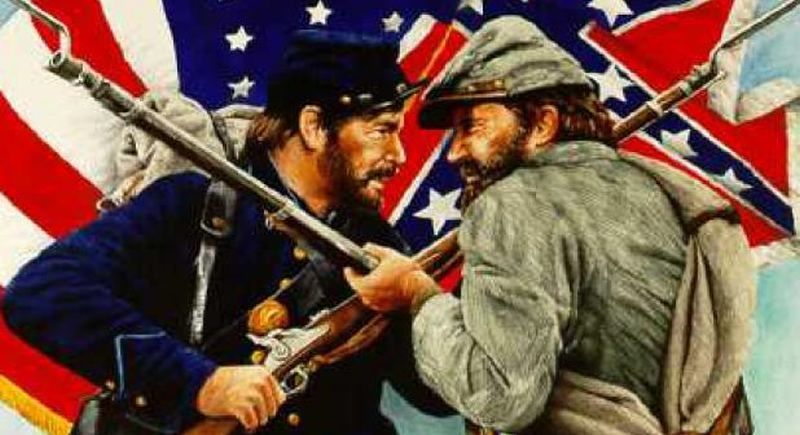
The numbers are hazy, but port records indicate that somewhere between ten and twenty thousand former Confederates moved to Brazil during the twenty years following the Civil War.  A great uncle of former First Lady Rosalynn Carter, was one of them.

Most of us were taught that 600,000+ died during the American Civil War.  618,222 to be precise, more than the combined totals of every conflict in which the United States was ever involved, from the Revolution to the War on Terror.  Recently, sophisticated data analysis techniques have been applied to newly digitized 19th century census figures, indicating that the real figure may be considerably higher.

The actual number may lie somewhere between 650,000 and 850,000. dead.

VIR_362561_27117_cuanto_sabes_sobre_los_estados_confederados_de_america

The cataclysm of the Civil War would leave in its wake animosities which would take generations to heal.  “Reconstruction” would be 12 years in the making but some never did reconcile themselves to the war’s outcome. Vicksburg, Mississippi fell after a long siege on July 4, 1863. The city would not celebrate another Independence Day for 70 years.

In 1865, Emperor Dom Pedro II of Brazil wanted to encourage domestic cultivation of cotton.  Men like Jefferson Davis and Robert E. Lee advised southerners against emigration, but the Brazilian Emperor offered transportation subsidies, cheap land and tax breaks to those who would move.

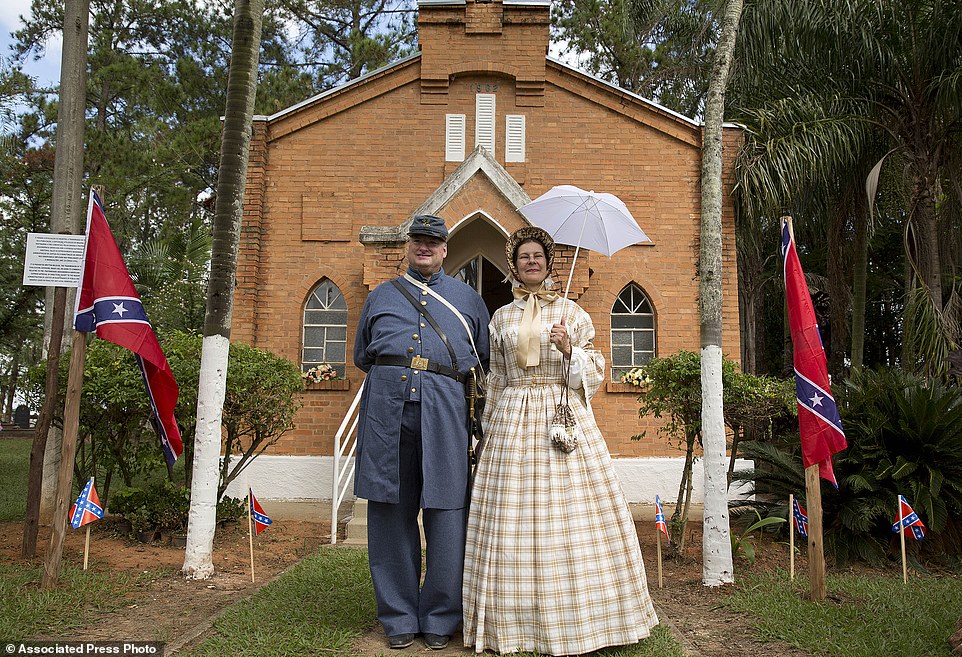
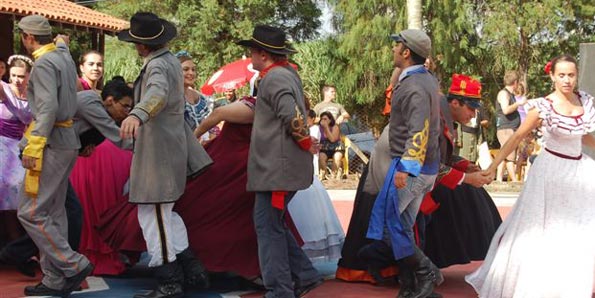
Descendants of American Southerners wearing Confederate-era uniforms pose for a photograph during a party to celebrate the 150th anniversary of the end of the American Civil War in Santa Barbara D'Oeste, Brazil
Descendants of American Southerners wearing Confederate-era uniforms pose for a photograph during a party to celebrate the 150th anniversary of the end of the American Civil War in Santa Barbara D’Oeste, Brazil,

Colonel William Hutchinson Norris, veteran of the Mexican American War and former member of the Alabama House of Representatives and later State Senator, was the first to make the move.  Together with his son Robert and 30 families of the former Confederacy, Norris arrived in Rio de Janeiro on December 27, 1865, aboard the ship “South America”.

The numbers are hazy, but port records indicate that somewhere between ten and twenty thousand former Confederates moved to Brazil during the twenty years following the Civil War.  A great uncle of former First Lady Rosalynn Carter, was one of them.

Confederate flag rally at Stone Mountain Park

Some of these “Confederados” settled in the urban areas of São Paulo. Most made their homes in the northern Amazon region around present-day Santa Bárbara d’Oeste and a place the locals called “Vila dos Americanos”, and the inhabitants called “Americana”.  Some would return to the newly re-united states.  Most would never return. Their descendants, Portuguese speaking Brazilians one and all, remain there to this day.

‘I don’t speak English and the only place I’ve been to in the U.S. is Disneyworld, but I feel the heritage,’ said 77-year-old Alcina Tanner Coltre, whose great-great-grandparents migrated from Mississippi along with their 15-year-old son. ‘My great-grandfather married a Brazilian woman, so he integrated into Brazilian culture pretty quickly, but it’s really important to me to come out every year to remember where we come from.’

UK Daily Mail
Descendants of American Southerners Philip Logan and his wife Eloiza Logan, pose for pictures during a party to celebrate the 150th anniversary of the end of the American Civil War in Santa Barbara d’Oeste, Brazil, Sunday, April 26, 2015. Thousands turn out every year, including many of those who trace their ancestry back to the dozens of families who, enticed by the Brazilian government’s offers of land grants, settled here from 1865 to around 1875, as well as country music enthusiasts, history buffs and locals with a hankering for buttermilk biscuits. (AP Photo/Andre Penner)

Confederados earned a reputation for honesty and hard work. Dom Pedro’s program was judged a success by immigrant and government alike.  The settlers brought modern cultivation techniques and new food crops, all of which were quickly adopted by native Brazilian farmers.

descendentes-confederados-guerra-civil-eua

Small wonder.  Mark Twain once wrote “The true Southern watermelon is a boon apart, and not to be mentioned with common things. It is chief of this world’s luxuries, king by the grace of God over all the fruits of the earth. When one has tasted it, he knows what the angels eat. It was not a Southern watermelon that Eve took; we know it because she repented”.

That first generation kept to itself for the most part, building themselves Baptist churches and town squares, while traditional southern dishes like barbecue, buttermilk biscuits, vinegar pie and southern fried chicken did their own sort of culinary diplomacy with native populations.

Slavery remained legal in Brazil until 1888, but this nation of 51% African or mixed-race ancestry (according to the 2010 census), seems more interested in understanding and celebrating their past, than tearing their culture apart because of it.

Today, descendants of those original Confederados preserve their cultural heritage through the Associação Descendência Americana (American Descendants Association), with an annual festival called the Festa Confederada.  There you’ll find hoop skirts and uniforms in gray and butternut, along with the food, the music and the dances of the antebellum South.

Brazil Confederates

There you will also find the Confederate battle flag.  It seems that Brazilians have thus far resisted that peculiar urge afflicting the American left, to hide from its own history.

‘“This is a joyful event,” said Carlos Copriva, 52, a security guard who described his ancestry as a mix of Hungarian and Italian. He was wearing a Confederate kepi cap that he had bought online as he and his wife, Raquel Copriva, who is Afro-Brazilian, strolled through the bougainvillea-shaded cemetery.  Smiling at her husband, Ms. Copriva, 43, who works as a maid, gazed at the graves around them. “We know there was slavery in both the United States and Brazil, but look at us now, white and black, together in this place,” she said while pointing to the tombstones. “Maybe we’re the future and they’re the past.”’

09BRAZIL-master768-v3 (1)
“A woman in a traditional hoop skirt walked past graves adorned with Confederate battle flags in Santa Bárbara d’Oeste, Brazil. An annual celebration of the area’s many Confederate settlers was held in the cemetery last month”. Hat tip to Mario Tama/Getty Images, New York times, for this image

December 25, 1897 Yes Virginia, There is a Santa Claus

“Only faith, fancy, poetry, love, romance can push aside that curtain and view and picture the supernal beauty and glory beyond. Is it all real? Ah, Virginia, in all this world there is nothing else real and abiding. No Santa Claus! Thank God he lives and he lives forever. A thousand years from now, Virginia, nay 10 times 10 thousand years from now, he will continue to make glad the heart of childhood”.

In the summer of 1897, 25th President of the United States William McKinley, had barely moved into the White House. The nation’s first subway opened in the city of Boston while, in Seattle, the Klondike gold rush was just getting underway. Thomas Edison received the patent for an early projector called a Kinetoscope. Mark Twain penned a rebuttal as only Mark Twain could to his own obituary in the pages of the New York Journal: “The report of my death was an exaggeration.”

Then one day there came the Dread Question asked by eight-year-olds the world over, and answered by fathers since the dawn of time: “Go ask your mother”.

Just kidding. Not that one – the Other dread question. The Santa Claus question.

History fails to record the conversation nor the exact time, or place. Possibly, that little girl went for a walk with her father, on the streets of Manhattan’s upper west side. Maybe it was over dinner or perhaps tucked into bed after a goodnight story and a kiss on the forehead.

“Papa, is there a Santa Claus? My little friends say he isn’t real”.

He was coroner’s assistant, Dr. Philip O’Hanlon. She was his daughter, 8-year-old Laura Virginia O’Hanlon.

Dr. O’Hanlon neither sent his little girl to ask her mother, nor did he try to answer himself. He suggested she write to the New York Sun newspaper. “If you see it in The Sun”, he said, “it’s so.”

So it is a little girl’s note made its way across the city to the New York Sun, to the desk of Edward Page Mitchell. The hard core science fiction buff will remember Mitchell for tales about time travel, invisibility and man-computing-machine cyborgs long before the likes of H.G. Wells ever thought about such things but on this day, the editor and sometimes author had a job to do.

Mitchell believed the letter was worthy of reply. He brought the assignment to copy writer Francis “Frank” Pharcellus Church.

It was an unlikely choice.

Church was not the dilettante, partisan idler who’d style himself today, as “journalist”. This was a hard-bitten News Man of the old school, a cynic, street reporter, atheist and former Civil War correspondent who’d seen it all and didn’t believe the half of it.

Picture Perry White, the irascible editor-in-chief of the fictional Daily Planet newspaper in the old Superman series, and you’ve got a pretty good picture of Frank Church. You can almost hear the walrus-mustachioed old curmudgeon grumbling across the ages as he returned to his desk, a little girl’s note in his hand.

“Why me”?

The old grouch didn’t even want his name associated with the reply.

The New York Sun published Church’s response on September 21, 1897.

Dear Editor, I am 8 years old.
Some of my little friends say there is no Santa Claus.
Papa says, “If you see it in The Sun, it’s so.”
Please tell me the truth, is there a Santa Claus?
Virginia O’Hanlon
115 W. 95th St.

Virginia, your little friends are wrong. They have been affected by the skepticism of a skeptical age. They do not believe except they see. They think that nothing can be which is not comprehensible by their little minds. All minds, Virginia, whether they be men’s or children’s, are little. In this great universe of ours man is a mere insect, an ant, in his intellect, as compared with the boundless world about him, as measured by the intelligence capable of grasping the whole truth and knowledge. You tear apart the baby’s rattle and see what makes the noise inside, but there is a veil covering the unseen world which not the strongest man, nor even the united strength of all the strongest men that ever lived, could tear apart.

Only faith, fancy, poetry, love, romance can push aside that curtain and view and picture the supernal beauty and glory beyond. Is it all real? Ah, Virginia, in all this world there is nothing else real and abiding. No Santa Claus! Thank God he lives and he lives forever. A thousand years from now, Virginia, nay 10 times 10 thousand years from now, he will continue to make glad the heart of childhood”.

Frank Church’s friends, family and colleagues scarcely knew the man had it in him. You can almost imagine the excitement of a little girl, scouring the pages of The Sun for two months to find nothing and then…THAT. Through the rest of that Christmas season of 1897 and on for the rest of her life, Virginia O’Hanlon would never forget that reply.

Frank Church’s letter went on to become the most widely reprinted editorial in the history of the English language albeit anonymously until the year he died, in 1906. According to New York Sun internal policies, that’s when Church was finally revealed as responding editor and author of that timeless response.

Virginia went on to marry one Edward Douglas in 1910, a man who stuck around just long enough to abandon her with the couple’s first child, as yet unborn. Not exactly a credit to his sex, that one.

Perhaps the childlike sense of delight in that newspaper column is what helped the young mother through her darkest hours. Laura Virginia O’Hanlon Douglas went on to devote her life’s work to children.   Following Bachelor’s, Masters and Doctorate degrees at Hunter, Columbia and Fordham University, O’Hanlon went on to become a lifelong teacher, assistant principal and finally principal.

Virginia’s childhood home is now The Studio School offering an academic scholarship, named after Virginia O’Hanlon.

In 1932, The Sun’s response was adapted to a cantata, the only known newspaper editorial ever set to classical music.  The 1989 film Prancer contained a fictional editorial entitled “Yes, Santa, there is a Virginia“.
Every year at Christmas, Virginia’s letter and Frank’s response are read aloud at a Yule log ceremony at Church’s alma mater, Columbia College.

In a 1960 appearance on the Perry Como Show, Virginia told the host her letter has been “answered for me thousands of times.”

Laura Virginia O’Hanlon Douglas kept the name of her long-since absconded husband for the rest of her life, according to the custom of the day. She passed away on May 13, 1971, at the age of 81.

Throughout her long life she received a steady stream of mail about her letter and never failed to pen a personal reply, including a copy of Church’s column. Virginia grew sickly toward the end of her life but, throughout countless interviews over the course of her 81 years she’d always credit the Sun’s editorial with changing her life. For the better.

Perhaps it was the Christmas Spirit or whatever you’d like to call it, that most of us have learned to experience but one time a year. For Virginia O’Hanlon that sense of warmth, of generosity and kindness to be found at the bottom of all human hearts, never really went away.

So, let the cynics and the curmudgeons come to understand on this Christmas day and beyond. Yes, Virginia, there really is a Santa Claus.