January 14, 1967 The Cloud

“The Army disclosed yesterday that it secretly conducted 239 germ warfare tests in open air between 1949 and 1969, some tests releasing live but supposedly harmless microscope [SIC] “bugs” at Washington’s Greyhound bus terminal and National Airport as part of the experiment.” Washington Post, March 9, 1977

Hat tip Wall Street Journal

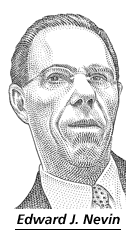
On October 11, 1950, Mr. Edward J. Nevin checked into Stanford hospital in San Francisco with a fever, respiratory and other symptoms. Doctors diagnosed the retired pipefitter, with pneumonia.

Ten other women and men checked into the same hospital at this time, all suffering with the same symptoms. Respiratory difficulty combined with kidney and/or urinary tract infections so rare as to prompt their publication in a prestigious medical journal.

The cause was believed to be exposure to the bacterium, Serratia marcescens. Mr. Nevin, 75, underwent prostate surgery causing S. marcescens to travel through his blood from the urinary tract, to his heart. Three weeks later, he was dead. The other ten recovered.

In 1981 the Nevin grandchildren sued the federal government for the death of their grandfather and the economic destruction wrought on their grandmother, the direct result of ruinously high medical expenses. The alleged cause of death was the deliberate poisoning of the entire city of San Francisco, by the United States Navy.
On January 14, 1967, the New York Times reported the United States Army was conducting secret germ warfare experiments, on its own citizens.

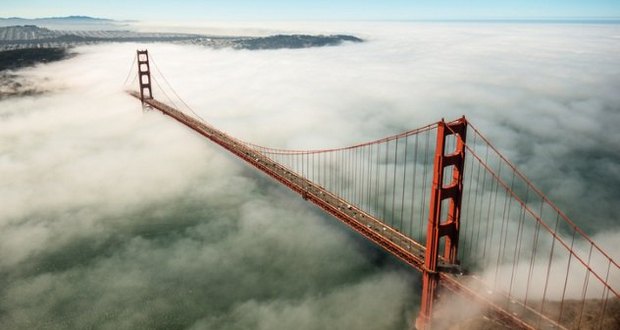
Turns out the San Francisco episode was part of a biowarfare experiment, called “Operation Sea-Spray”. Beginning on September 20, 1950 and continuing for seven days the US Navy sprayed massive amounts of two bacteria into the air believed to be harmless at the time, along with an iridescent agent, to aid with tracking. With cover and assistance from the famous San Francisco fog enough of this stuff was released into the atmosphere, that 43 tracking stations set up across the city determined that every one of the city’s 800,000 residents inhaled no fewer than 5,000 such particles.

Ten years later the U.S. Senate Subcommittee on Health and Scientific Research held a series of hearings, on the matter. On March 9, 1977, the Washington Post reported: “The Army disclosed yesterday that it secretly conducted 239 germ warfare tests in open air between 1949 and 1969, some tests releasing live but supposedly harmless microscope [SIC] “bugs” at Washington’s Greyhound bus terminal and National Airport as part of the experiment…Washingtin [SIC] was one of five cities where the Army released simulated lethal germs i [SIC] public places. Other cities where the public served as unknowing guinea pigs were New York, San Francisco, Key West and panama City, Fla”.

The Wall Street Journal reported on October 22, 2001, “In New York, military researchers in 1966 spread Bacillus subtilis variant Niger, also believed to be harmless, in the subway system by dropping lightbulbs filled with the bacteria onto tracks in stations in midtown Manhattan. The bacteria were carried for miles throughout the subway system, leading Army officials to conclude in a January 1968 report: “Similar covert attacks with a pathogenic [disease-causing] agent during peak traffic periods could be expected to expose large numbers of people to infection and subsequent illness or death.””

The Post reported 27 instances of simulated germ warfare attacks on two tunnels of the Pennsylvania Turnpike and a number of military installations including Fort Detrick, Maryland, Fort Belvoir, Virginia and the Marine training school at Quantico, Virginia.

The Post goes on to report that “Another 504 workers connected with biological warfare activities at Ft. Detrick, Dugway proving Ground and the Deseret test Center in Utah and the Pine Bluff Arsenal in Arkansas suffered infections, according to the Army’s count”. The Army went on to report that “three laboratorers at Fort Detrick died from diseases contracted in the 1950s and 1960s”.

I wasn’t aware that “laboratorers” is a word but the Washington Post seems to think it is.

Utah’s Dugway Proving Ground alone conducted “hundreds, perhaps thousands of open-air tests using bacteria and viruses that cause disease in human, animals, and plants” according to a 1994 report, by the GAO (US General Accounting Office). One such experiment resulted in 3,843 dead animals in an episode known as, the “Skull Valley Sheep Kill“. In the end as many as 6,400 were killed or humanely euthanized as even the rumor of nerve agents renders both the wool and the meat of such an animal, less than worthless. A report which remained classified for thirty years blamed a faulty nozzle left open, as the test aircraft gained altitude.
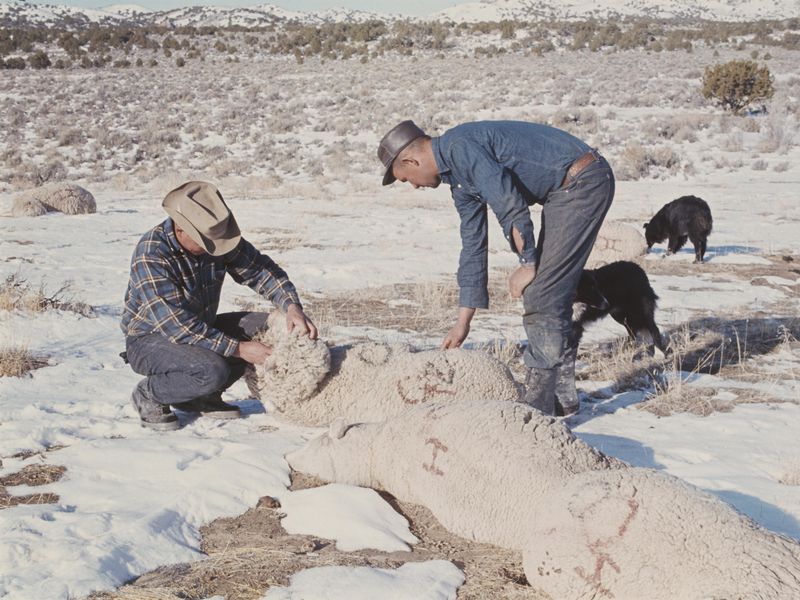
Public backlash was vehement against the US Army Chemical Corps, and nearly lead to its disbanding.  President Richard Nixon ordered a halt to open air testing of “NBC” (Nuclear Biological and Chemical) agents, in 1969.

In the past, military spokesmen have argued that such tests are necessary. That NBC agents are readily available to state and non-state actors such as terrorist organizations and we must know how these agents behave, under real world conditions.

Perhaps they have a point. As does the ancient proverb of the Kikuyu people of Kenya, which tells us, “when elephants fight, it is the grass that suffers”.

January 12, 1913 Man of Steel

Historians differ as to the deaths brought about by this one man. Numbers range from several million to well over twenty million.

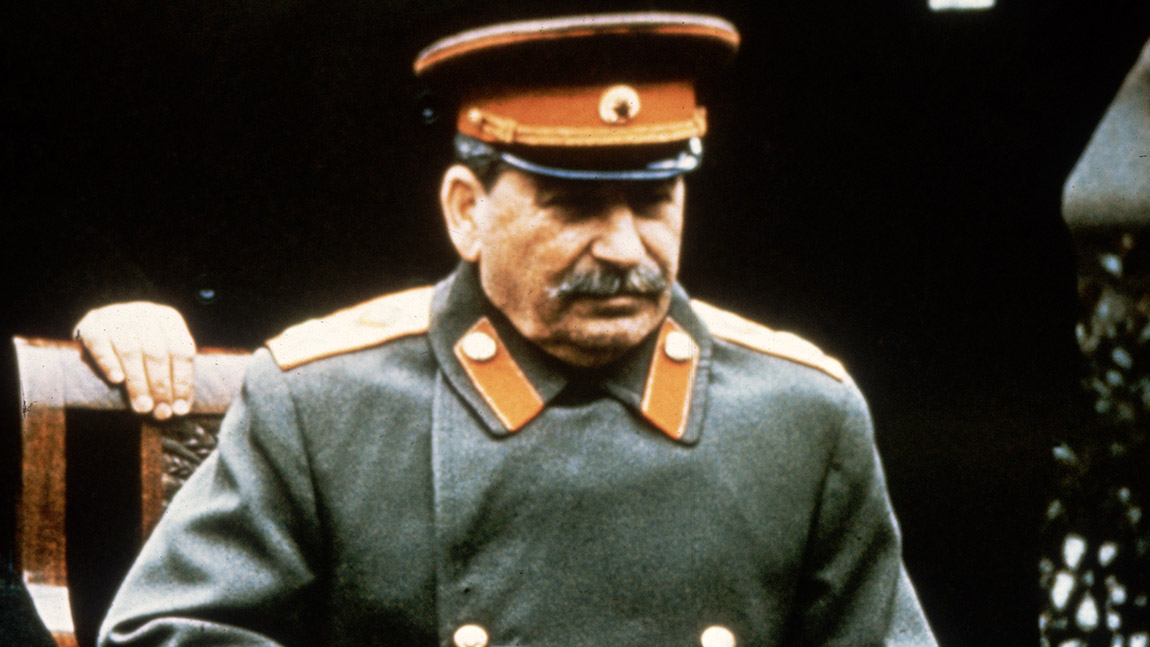
A story comes to us of one Josef Jughashvili, the only child of a laundress and an alcoholic shoemaker, to survive to adulthood. Walking along a rain swollen river a group of boys chanced upon a bleating calf, cut off by the torrent on a small and crumbling island. Taking off his shirt Jughashvili dived into the roiling waters and swam to the terrified animal. Turning first to be sure his buddies were watching Josef proceeded to break the defenseless animal’s legs, one at a time.

The tale may be apocryphal or it may be true but the narrative captures perfectly, the man he would become. One of the great beasts of a century which gave us, no small number of monsters.

In 1884 a bout with smallpox left him disfigured. The other kids called him “pocky”. Though smaller than his classmates he joined a gang and got into many fights from which he never, backed down. He was smart and excelled in academics. He also displayed talent in art, drama and choir. A childhood friend recalled he “was the best but also the naughtiest pupil”.

Police phot at age 23, 1902

He enrolled in the seminary in Tiflis but a life in the priesthood, was never meant to be. A voracious reader, the “Forbidden Book Club” filled young Jughashvili’s head with ideas forbidden, in Czarist Russia. Plato. Checkov. Tolstoy. Zola. So taken was he with the writings of Friedrich Engels and Karl Marx he attempted to learn German, to better appreciate the original text.

Jugashvili proclaimed himself an atheist and thus ended any future, in the Orthodox priesthood. Expelled from seminary before the turn of the century he was now a Marxist agitator, teaching classes in leftist theory from a small flat on Sololaki Street and entering a life of crime, in order to finance the Bolshevik party.

In 1912, Vladimir Ilyich Lenin appointed Josef to the first Central Committee of the Bolshevik Party, while still in exile in Switzerland. On this day in 1913, Josef Dzhugashvili signed a letter to the Social Democrat newspaper, “Stalin”. The Man of Steel.

By 1917, three years of total war had brought the Russian economy, to its knees. Kaiser Wilhelm calculated that all he had to do was “kick the door in” to destroy his adversary to the east. Thus did the famous “sealed train” depart Zurich bound for Petrograd in April, 1917 carrying Lenin, and 31 Marxist revolutionaries.

Kaiser Wilhelm was right. As WW1 continued elsewhere Czarist Russia descended into not one but two civil wars resulting in the triumph of the radical Bolsheviks over the more moderate Mensheviks and the murder of Czar Nicholas, his wife the Czarina and the couple’s children, servants and dogs.

The Union of Soviet Socialist republics (USSR) was officially founded in 1922. Lenin died in 1924. Throughout this period Stalin steadily grew his own base of support, outmaneuvering rivals for the top spot. By the late 1920s he was head of the communist state.

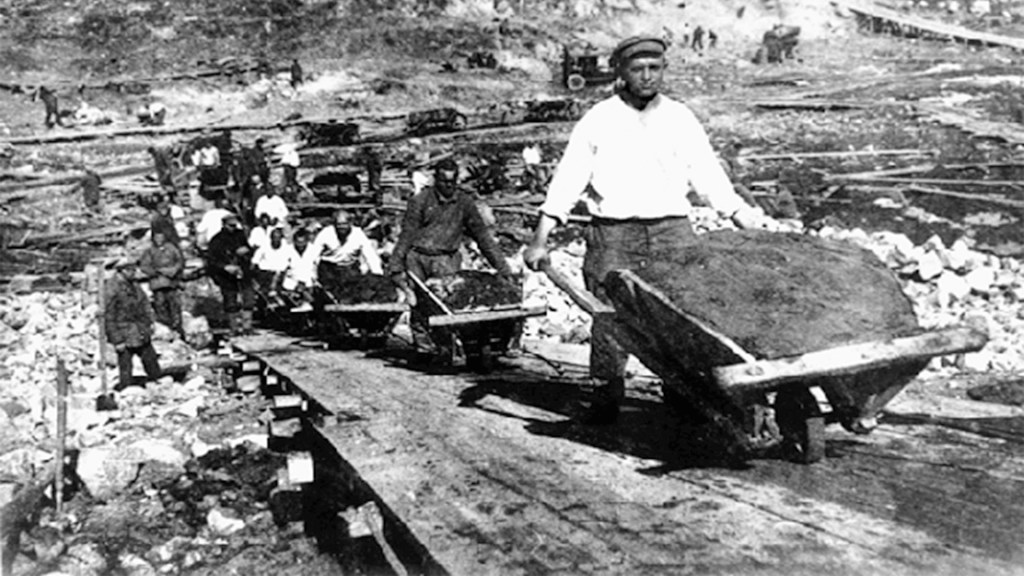
The “Glavnoe Upravlenie Lagerei” or Main Camp Administration system, began in 1919. By 1921 there were 84 such “Gulags”, but this hideous system really came of age, under Josef Stalin.

The Soviet Union was mostly agrarian when Stalin came to power, launching a series of five year plans to bring the USSR into the industrial age. Significant opposition came first from the Kulaks, the more prosperous of the peasant farming class who viewed Stalin’s “collectivization” efforts as a return to the serfdom, of earlier ages.

The ranks of the Gulags swelled to include the educated and ordinary citizens alike. Doctors, intellectuals, students, artists and scientists all disappeared into the Gulags, crude slave labor camps from which many, never returned.

Anyone so much as suspected of holding views contrary to the regime, anyone suspected of association with such persons were “disappeared”. Swept up in the night by Stalin’s terrifying NKVD security police and placed in conditions of such brutality prisoners were known to hack at their hands with axes or thrust their arms into wood stoves to avoid yet another man-killing hour, of slave labor.

“I trust no one, not even myself.

Josef Stalin

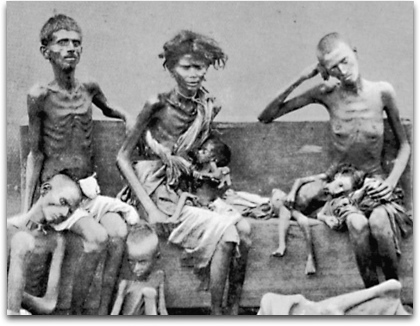
The early 1930s was a time of famine for the Kulaks of Ukraine, the former breadbasket of the Soviet Union. Continuing to resist Stalin’s collectivization, these “enemies of the state” were deliberately starved to death by their own government, their numbers running into the several millions in a period known, as “Holodomor“.

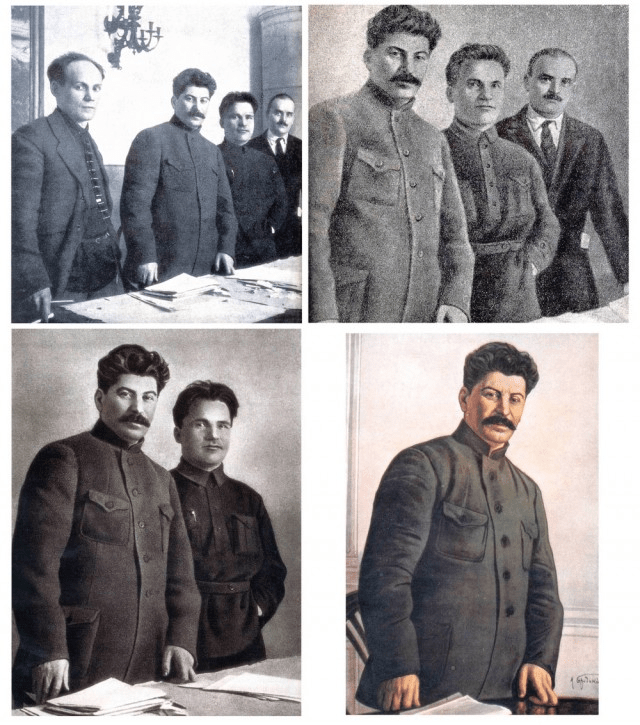
During the late ’30s, nearly 800,000 were summarily executed during the Great Purge, another two million shipped off to the gulags. Official paranoia rose to levels almost comical, but for their deadly consequence. Photo retouching became a cottage industry as former associates were simply…disappeared.

Much may be said of a man, by the company he keeps. Genrikh Yagoda, Nikolai Yezhov, Lavrentiy Beria, they’re not common names for those of us educated in American public schools but these are the men who carried out the Stalinist terror, as heads of the dread NKVD. Though we may not know their names these are beasts as loathsome as Nazi Police Official Reinhard Heydrich, SS Reichsführer Heinrich Himmler or Gestapo Chief Heinrich Müller.

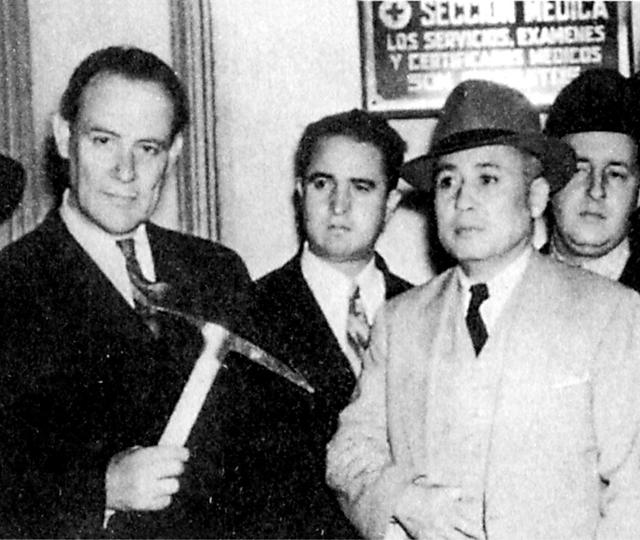
By 1938, Stalin’s purges had crippled the Soviet Union. Entire swathes of the Soviet military, government and popu,ation, had ceased to exist. Head of the security state Nikolai Yezhov was himself outmaneuvered from his position, denounced and murdered by his successor, Lavrentiy Beria. Even Leon Trotsky, founding father that he was of the Bolshevik party was tracked down to his place of exile in Mexico on Stalin’s orders and murdered with an ice axe, in the top of his head.

Investigators display the ice axe used to assassinate Leon Trotsky

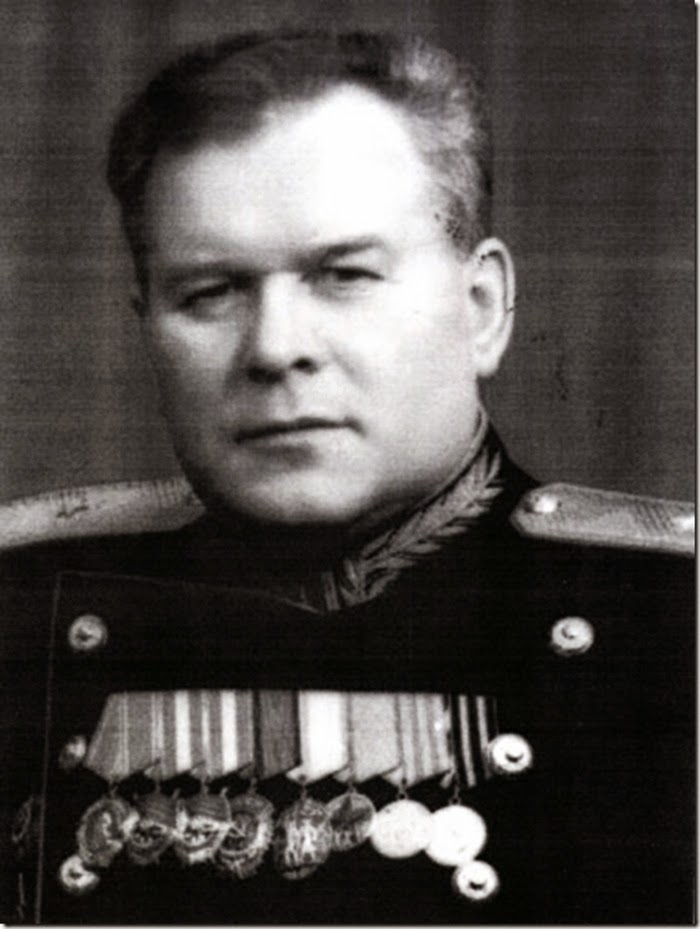
Major General Vasili Blokhin was handpicked by Stalin in 1926 as chief executioner, for the NKVD. To this day the man stands as the world’s most prolific executioner with tens of thousands dead, by his blood soaked hands. During the Spring of 1940 Blokhin personally murdered 7,000 Polish prisoners of war over 28 consecutive nights, each with a bullet to the back of the head.

The man literally kept a briefcase full of German made Walther PPK pistols, lest one of them overheat.

Major General Vasili Blokhin

Today, the 1940 episode is remembered as the Katyn Massacre, the murder of 22,000 defenseless prisoners of war primarily, Polish Army officers. For fifty years the atrocity was believed to have been carried out, by the Nazis.

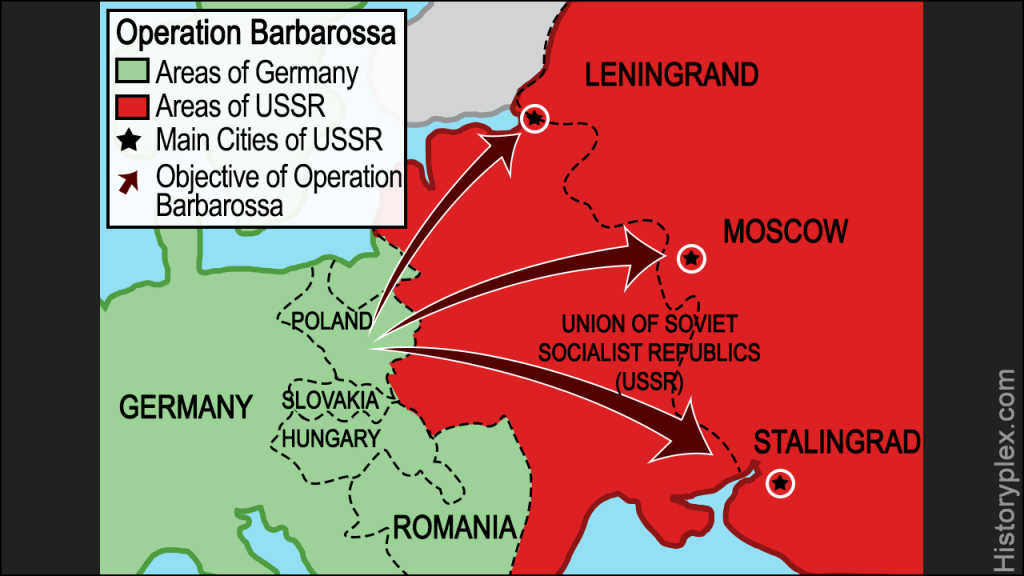
The Molotov Ribbentrop pact of 1939 meant, at east for a time, an alliance between the two great monsters of mid-20th century Europe. That all changed on June 22, 1941. Operation Barbarossa. Adolf Hitler’s surprise attack, on the Soviet Union.

Some 30 million among an estimated 70 to 85 million killed during World War 2 died, on the Eastern Front. The number includes nine million children, killed in an out-and-out race war, Slav against Teuton, that is dreadful even by the horrendous standards of WW2. Order No. 27 became standard operating procedure, for the rest of the war. Between 1942 and 1945 some 422,700 Red Army personnel were executed by their own officers, as the result of Stalin’s order. “Ni shagu nazad”. “Not one step back”.

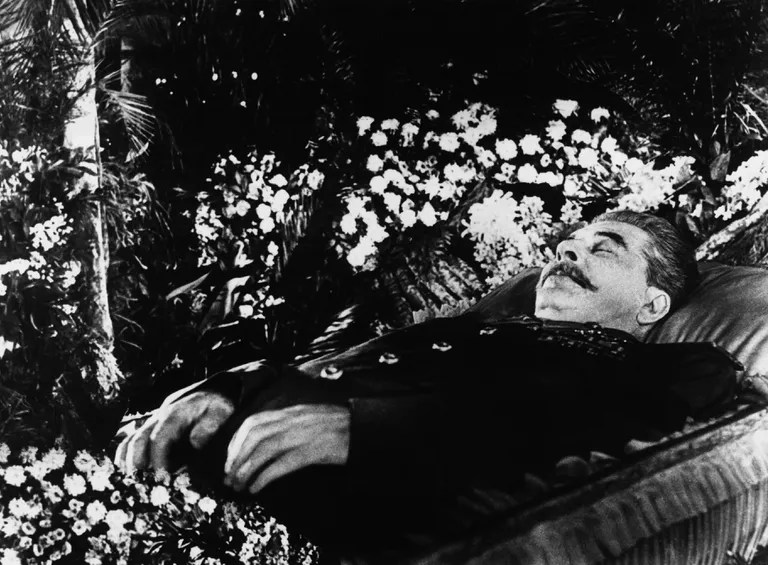
Josef Stalin went to bed sometime after 4:00am on February 28, 1953, with orders that he not be disturbed. 10am came and went, the usual time when the dictator would call for his tea. Morning turned to afternoon and into evening and yet, his terrified guards not wanting themselves to be purged, waited on. It was 10pm when a guard entered the room using as his excuse, the afternoon mail. The Soviet dictator was alive but helpless and unable to speak, laying in a pool of his own urine. His broken watch was stopped at 6:30pm.

The Man of Steel lingered in agony until March 5 as his own doctors languished in the Gulag and none assumed the authority, to make a decision about his care. Whether Stalin was murdered or simply left to die by those too terrified to do anything about it, is a matter for speculation.

Historians differ as to the deaths brought about by this one man. Numbers range from several million to well over twenty million.

Today, public imagination barely registers how fortunate we are that Adolf Hitler chose to turn from a defeated adversary on the beaches of Dunkirk to attack his erstwhile ally, in the east. Where we would be today had Little Boy and Fat Man had a swastika or a hammer and sickle painted on the side is a nightmare, too dismal to contemplate.

November 5, 1605 Remember Remember, the 5th of November

The plan was to decapitate the English state, blowing up King James I along with much of the nation’s religious and political leadership. The Gunpowder Plot would end in failure, and a rhyme known to British school children, from that day to this.

The Tudor King Henry VIII began to take control of the English church in 1533, barely 16 years after Martin Luther is said to have nailed his 95 theses to the church door. The Protestant Reformation was barely underway. With life and eternal damnation at stake both sides would come to regard the other, as heretical.

Henry fell out with Pope Clement VII over the latter’s refusal to grant him an annulment from Catherine of Aragon. By 1540, the break between the Church of England and the Church of Rome was complete.

henryviii

English Catholics became increasingly marginalized for the remainder of Henry’s reign, and that of his daughter, Elizabeth I, who died in 1603 without issue. There were several assassination attempts against Protestant rulers in Europe and England, including a failed plot to poison Elizabeth I and the assassination of French King Henry III, who was stabbed to death by a Catholic fanatic, in 1589.

King James VI of Scotland succeeded the “Virgin Queen” in 1603, to the great disappointment of English Catholics. The moderates among them favored James’ and Elizabeth’s cousin Arbella Stuart, a woman believed to harbor Catholic sympathies. More radical Catholics looked to the infant daughter of Phillip II of Spain, the Infanta Isabella.

There were already at least two plots to remove the King from office, when James discovered that his wife, Queen Anne, had secretly received a rosary from the Pope. James responded by denouncing the Catholic Church, ordering Jesuit and all other Catholic priests to leave the country. He re-imposed “recusancy fees”, which had earlier been implemented by Elizabeth. The sum of such fines soon rose to £5,000 a year, equivalent to well over £10 million today.

Among those who believed that ‘faith need not be kept with heretics’, regicide seemed the only way out.

The “Gunpowder Plot”, also known as the “Jesuit Treason”, was inspired by Robert Catesby, a man of “ancient, historic and distinguished lineage”.

In league with about a dozen others, Catesby planned to blow up the House of Lords on November 5, 1605, killing King James and his Privy Council along with untold MPs and government records. The plan was to spark a popular revolt in the Midlands ending in the installation of James’ 9-year-old daughter, Princess Elizabeth, as Catholic head of state.

gfawkes

Guy Fawkes, who had 10 years of military experience fighting for the King of Spain in the Netherlands by this time, was placed in charge of the explosives.

In those days, goods of all kinds were transported in kegs. The movement of even a large number, was perfectly ordinary. Anticipating the State Opening of Parliament on July 28, 36 kegs of powder were moved to an undercroft on the 20th, a small room beneath the House of Lords. There was a metric ton of the stuff, enough to destroy the parliament building and everything around it, for a radius of 100 meters.

And then the plague reared its head and with it the fear, of gathering in large numbers. Parliament was postponed, until November 5.

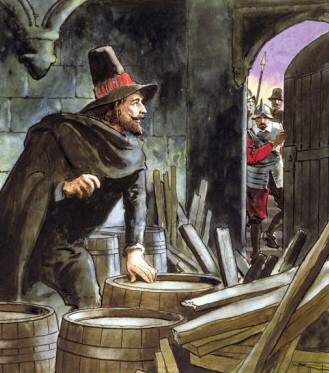
Others were brought into the plot. That was probably it’s undoing. As the day approached an anonymous letter came to light, warning of the plot. Two separate searches on the evening of the 4th revealed the gunpowder barrels, hidden under sticks and coal. Guy Fawkes was discovered nearby carrying a length of slow burning fuse, called a match.

Fawkes was defiant at first saying there was enough powder, to “blow you Scotch beggars back to your native mountains“. Days of torture lay in wait, beginning with shackles and increasing in severity until finally, his body was “broken” on the rack. In January, all but two of the 13 conspirators were hanged, drawn and quartered for their treason. Those two had died in the attempt to flee and these, were dug up and decapitated. Fawkes himself, weakened by torture and weeks of confinement in the tower of London, even now managed to jump from the scaffold and break his neck, and thus to spare himself the ordeal of being emasculated and disemboweled before his own dying eyes.

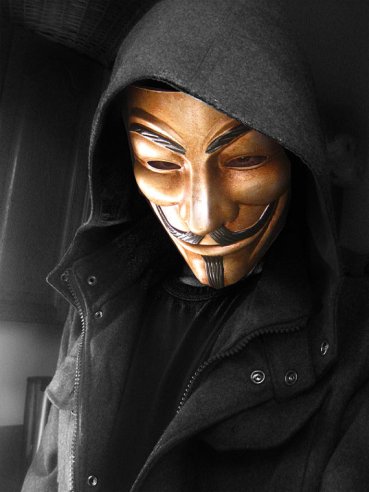
Guy Fawkes Mask

So it is that today, November 5th, is “Guy Fawkes Day”. People all over England will “remember, remember, the 5th of November, gunpowder, treason and plot.” Effigies of Guy Fawkes will be burned throughout the land.

A stylized version of the “Guy Fawkes Mask” came to be in the 1980s, with a comic book series and its later film adaptation, “V for Victory”. The story depicts a vigilante effort to destroy an authoritarian government in a dystopian future, Great Britain.

Since that time, groups ranging from the hacker/activist group Anonymous to Occupy, even radical Libertarians have used the Guy Fawkes mask. A symbol of protest against out of control, tyrannical government, political and banking institutions.

October 28, 1945 Re-Union

It may be the greatest trivia question that ever was: “Who was last to rejoin the Union, following the Civil War?“ It wasn’t who you think…

By the early 1830s, cotton exceeded the value of all other American exports, combined. As secession loomed over the Union, one Chicago Daily Times editorial warned that if the South left “in one single blow, our foreign commerce must be reduced to less than one half of what it is now”.

fernando_wood_(1812-1881)

South Carolina was the first to leave, formally departing the Union in December 1860. The world waited to see who would be next.

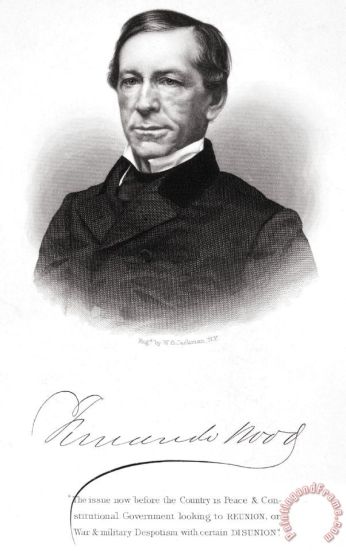
Anyone can tell you it was Mississippi who actually did it but the next to openly discuss secession was New York City, when Mayor Fernando Wood addressed the city’s governing body on January 6: When Disunion has become a fixed and certain fact”, Wood began, “why may not New York disrupt the bands which bind her to a venal and corrupt master…and destroyed the Confederacy of which she was the proud Empire City?”

Economic ties with the south ran deep in New York city and New York state, alike. 40¢ of every dollar paid for southern cotton stayed in New York in the form of insurance, shipping, warehouse fees and profits.

30 minutes’ east of Buffalo, the village of Lancaster contemplated staying with the Union. 500 miles from the nearest Confederate state, George Huber remembered the time. “When war was declared, Lancaster seethed with the news, and many were the nights we stayed up as late as 12 o’clock to talk things out. I was twelve years old at the time, but I remember the stern faces of the elders and the storm of passionate and angry discussion. Soon the town split into two factions, it was a very tense situation…Often the excitement ran so high that if a man in either group had made the slightest sign, neighbors would have been at each other’s throats and fists would have taken the place of words.

town line courthouse
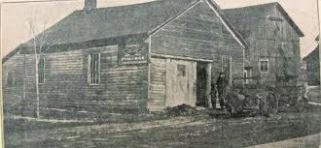
The old blacksmith shop

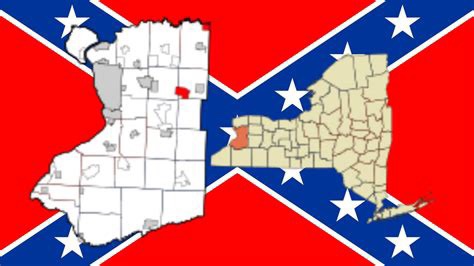
“Town Line”, a hamlet on the village’s eastern boundary, put the matter to a vote. In the fall of 1861, residents gathered in the old schoolhouse-turned blacksmith’s shop. By a margin of 85 to 40, Town Line voted to secede from the Union.

There was angry talk of arresting “Copperheads” for sedition, as casualty reports came back from the front. “Seceders” became quiet, afraid to meet in public amidst angry talk of lynching. A half-dozen or so more ardent secessionists went south to fight for the Confederacy. Others quietly moved north, to Canada. Outside of Lancaster, no one seemed to notice. Taxes continued to be paid. No federal force ever arrived to enforce the loyalty of the small village.

A rumor went around in 1864 that a large Confederate army was building in Canada, poised to invade from the north. Town Line became a dangerous place for the few southern sympathizers left. Most of those remaining moved to Canada and, once again, Lancaster became the quiet little village in upstate New York, that nobody ever heard of.

Impatient to get on with it, Dade County “symbolically” seceded both from Georgia as well as the Union back in 1860. Officially, Dade County seceded with Georgia in 1861, and rejoined with the rest of the state in 1870, but the deal was sealed on July 4, 1945, when a telegram from President Harry S. Truman was read at a celebration marking the County’s “rejoining”, of the Union.

The “Confederate Gibraltar”, Vicksburg Mississippi, fell on July 4, 1863.  The city wouldn’t celebrate another Independence Day for 80 years.

86C8E1D8-4085-47BE-B54D-C3FB11BF0363_w1023_r1_s
In 2011, the residents of Town Line, New York dressed up to mark the town’s sesquicentennial of secession from the Union

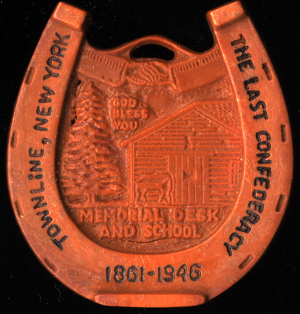
By October 1945 there legally remained but one part of the former Confederate States of America. The tiny little hamlet of Town Line, New York.

Even Georgians couldn’t help themselves, from commenting. 97-year-old Confederate General T.W. Dowling said: “We been rather pleased with the results since we rejoined the Union. Town Line ought to give the United States another try“. Judge A.L. Townsend of Trenton Georgia commented “Town Line ought to give the United States a good second chance“.

Townline-the_last_conferderacy

A courier express note arrived on October 7, 1945. “There are few controversies that are not susceptible to a peace time resolution” read the note, “if examined in an atmosphere of tranquility and calm rather than strife and turmoil. I would suggest the possibility of roast veal as a vehicle of peace. Why don’t you run down the fattest calf in Erie County, barbecue it and serve it with fixin’s in the old blacksmith shop where the ruckus started? Who can tell? The dissidents might decide to resume citizenship.”

The note was signed “Very Sincerely Yours, Harry Truman”.

Fireman’s Hall was the site of the barbecue, “The old blacksmith shop where the ruckus started” being too small for the assembled crowd. On October 28, 1945 residents adopted a resolution suspending the 1861 ordinance of secession by a vote of 90-23. The Stars and Bars of the Confederate States of America was lowered for the last time, outside the old blacksmith shop.

Alabama member of the United States House of Representatives John Jackson Sparkman, may have had the last word when he quipped: “As one reconstructed rebel to another, let me say that I find much comfort in the fact that you good people so far up in Yankee land have held out during the years. However, I suppose we grow soft as we grow older.”

4b4cf0f864c3dabcdb_IMG_7326[1]

October 9, 768 The Holy Roman Empire

The French Enlightenment philosopher Voltaire remarked of “This agglomeration which was called and still calls itself the Holy Roman Empire was neither Holy, nor Roman, nor an Empire”.

In Medieval Europe, most of the government powers that mattered were exercised by a chief officer to the King, called the “Mayor of the Palace”. This Maior Domus, or “Majordomo” was created during the Merovingian Dynasty to manage the household of the Frankish King. By the 7th century, the position had evolved into the power behind the throne of an all but ceremonial monarch.

In 751, the Mayor of the Palace forced King Childeric III off the throne and into a monastery.  He was the younger son of Charles “The Hammer” Martel and his wife Rotrude, destined to become sire to the founding father of the European Middle Ages.  He was Pepin III, “The Short”.

The Hammer
Charles “The Hammer” Martel who Saved Europe from an Invasion by the Ummayad Caliphate in 732 at the Battle of Tours

Pepin’s first act as King was to intercede with King Aistulf of the Lombards, on behalf of Pope Stephen II. Pepin wrested several cities away from the Lombards, forming a belt of central Italian territory which would later become the basis for the Papal States. In the first crowning of a civil ruler by a Pope, Stephen anointed Pepin “Patricius Romanorum” (Patrician of the Romans) in 754, naming his sons Charlemagne and Carloman as his heirs. It was the first vestige of a multi-ethnic union of European territories which would last until the age of Napoleon – the Holy Roman Empire.

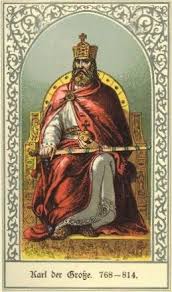
Pepin died on campaign at age 54, his sons crowned co-rulers of the Franks on October 9, 768. Three years later, Carloman’s unexpected and unexplained death left Charlemagne undisputed ruler of the Frankish kingdom.

images (3)

Charlemagne led an incursion into Muslim Spain, continuing his father’s policy toward the Church when he cleared the Lombards out of Northern Italy.  He Christianized the Saxon tribes to his east, sometimes under pain of death.

Pope Leo III was attacked by Italian enemies in the streets of Rome, who attempted unsuccessfully to cut out his tongue. For the third time in a half-century, a Pope had reached out to the Frankish Kingdom, for assistance.

Pope Leo crowned Charlemagne “Emperor” on Christmas day in the year 800, in the old St. Peter’s Basilica. The honor may have been mostly diplomatic, as the seat of what now remained of the Roman Empire, was in Constantinople. Nevertheless, this alliance between a Pope and the leader of a confederation of Germanic tribes, was nothing short of a tectonic shift in western political power.

By the time of his death in 814, Charlemagne was “Pater Europae”, the Father of Europe. German and French monarchies alike have traced their roots to his empire from that day, to this.

The title fell into disuse with the end of the Carolingian dynasty, until Pope John XII once again came under attack by Italian enemies of the Papacy. The crowning of Otto I began an unbroken line of succession, extending out eight centuries. Charlemagne had been the first to bear the title of Emperor. Otto I is regarded as the founder of the Holy Roman Empire, the date of his coronation in 962, as the founding.

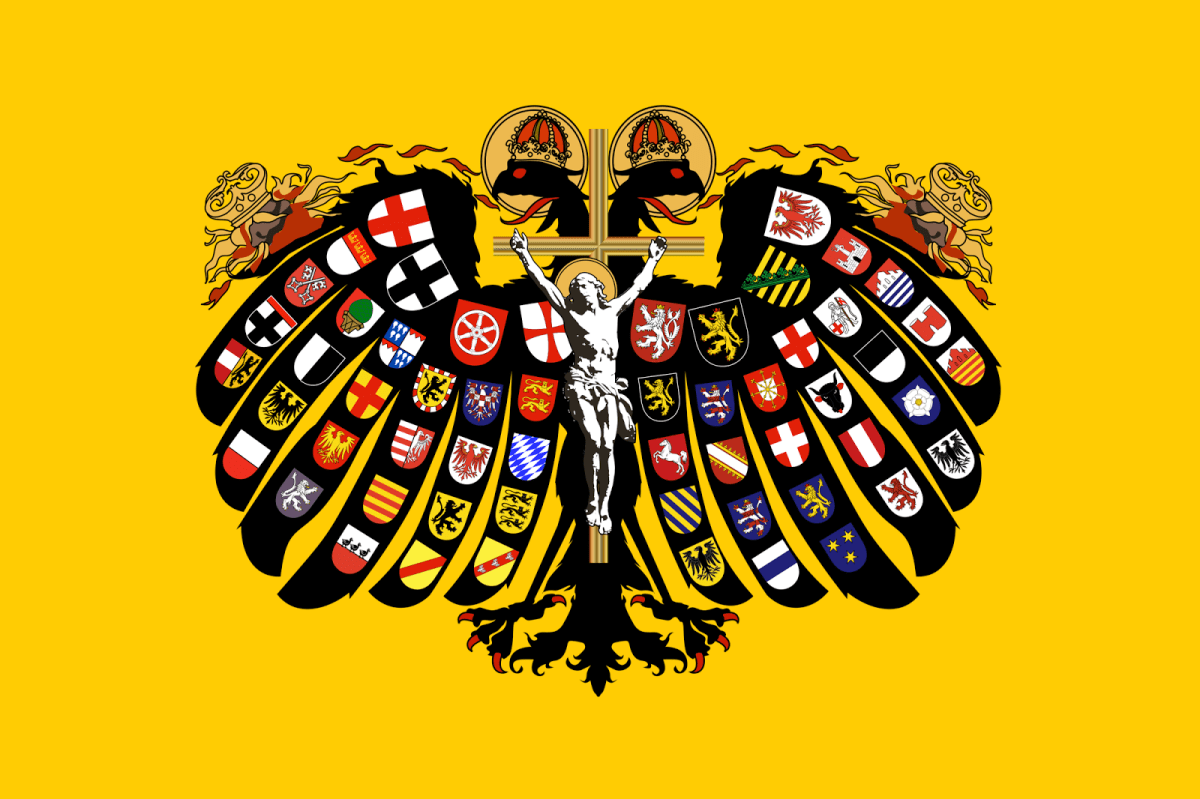
Holy Roman Empire, 972-1000
Holy Roman Empire, 972-1000

Henry III deposed three Popes in 1046, personally selecting four out of the next five, after which a period of tension between the Empire and the Papacy lead to reforms within the church.

Simony (the selling of clerical posts) and other corrupt practices were restricted, ending lay influence in Papal selection.  After 1059, the selection of Popes was exclusively the work of a College of Cardinals.

The Papacy became increasingly politicized in the following years.  Pope Gregory decreed the right of investiture in high church offices to be exclusive to religious authorities.  Great wealth and power was invested in these offices, and secular authorities weren’t about to relinquish that much power.

Schism and excommunication followed.  Urban II, the Pope who preached the first crusade in 1095, couldn’t so much as enter Rome for years after his election in 1088.  The “anti-pope” Clement III ruled over the holy city at that time, with support from Henry IV.

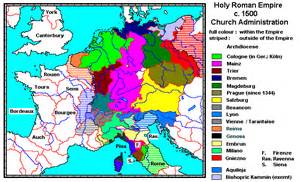
HRE 1500

The Kingdom had no permanent capital, Kings traveled between multiple residences to discharge their duties.  It was an elective monarchy, though most Kings had sons elected during their lifetime, enabling them to keep the crown within the family.  Many of the dynastic families throughout history have their origins in the Holy Roman Empire.  The Hohenstaufen, Habsburg and Hohenzollern among the Germanic Kings, the French Dynasties of the Capetian, Valois and Bourbon, as well as the Iberian dynasties of the Castilla, Aragonia and Pamplona y Navarre.

The French Enlightenment philosopher Voltaire remarked of “This agglomeration which was called and still calls itself the Holy Roman Empire was neither Holy, nor Roman, nor an Empire”.

The Holy Roman Empire became bogged down in struggles of succession in the 18th century. There was the War of Spanish Succession. The War of Polish Succession. The Wars of Austrian Succession and of German Dualism. The Holy Roman Empire peaked in 1050, becoming increasingly anachronistic by the period of the French Revolution. The last Holy Roman Emperor was Franz II, Emperor of Austria and Germany, who abdicated and dissolved the Empire in 1806, following the disastrous defeat of the 3rd Coalition by Emperor Napoleon Bonaparte at Austerlitz, in 1804.

Napoleon sarcastically commented that the German states were always “becoming, not being”. Ironically, the policies of that “little corporal” directly resulted in the rise of German nationalism, clearing the way to a united German state in 1870, a polity which would go on humble the French state, in two world wars.

September 25, 1789 Bill of Rights

Five states ratified the new constitution in quick succession. Others wanted the document to specify those powers left un-delegated to the Federal government, be reserved to the states.

The Founding Fathers ratified the United States Constitution on June 21, 1788.  In so doing, our forebears bestowed on generations yet unborn, a governing system unique in all history.  A system of diffuse authority, checks and balances and authority delegated but Never relinquished, by a sovereign electorate.

The American system is often described as “democracy”, but such a description is in error.  Four wolves and a lamb voting on what to eat for dinner, is democracy.  The genius of the founders is demonstrated in a system which protects the rights of All citizens, including that one.  The proverbial lamb. The specifics are enumerated in our bill of rights, twelve amendments adopted by the first Congress on this day in 1789, and sent to the states for ratification.

bill-of-rightsEven at the Constitutional Convention, delegates expressed concerns about the larger, more populous states holding sway, at the expense of the smaller states. The “Connecticut Compromise” solved the problem, creating a bicameral legislature with proportional representation in the lower house (House of Representatives) and equal representation of the states themselves in the upper house (Senate).
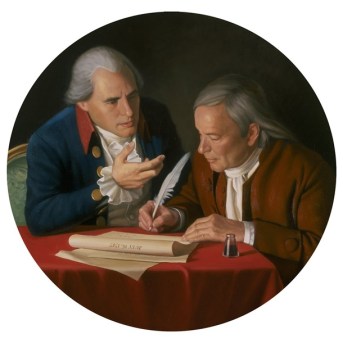
The 62nd Congress proposed a Constitutional amendment in 1912, negating the intent of the founders and proposing that Senators be chosen by popular election.  The measure was adopted the following year, the seventeenth amendment having been ratified by ¾ of the states.  Since that time, it’s difficult to understand what the United States Senate even is, an institution neither democratic nor republican, but I digress.

Five states: Delaware, Pennsylvania, New Jersey, Georgia, and Connecticut, ratified the document in quick succession. Some states objected to the new Constitution, especially Massachusetts, which wanted more protection for basic political rights such as freedom of speech, religion, and of the press. These wanted the document to specify, that those powers left un-delegated to the Federal government, were reserved to the states.

sherman-ellsworth

A compromise was reached in February, 1788 whereby Massachusetts and other states would ratify the document, with the assurance that such amendments would immediately be put up for consideration.

With these assurances, Massachusetts ratified the Constitution by a two-vote margin, followed by Maryland and South Carolina. New Hampshire became the ninth state on June 21. The new Constitutional Government would take effect on March 4 of the following year.

Amendments 2-12 were adopted on December 15, 1791, becoming the “Bill of Rights”.

It’s interesting to note the priorities of that first Congress, as expressed in their original 1st and 2nd amendments.  As proposed to the 1st Congress, the original 1st amendment dictated apportionment of representation. It was ratified by only 11 states, and technically remained pending. Had the states ratified that original first amendment, we would now have a Congress of at least 6,345 members, instead of the 535 we currently have.

The original 2nd amendment was an article related to Congressional compensation, that no future Congress could change their own salaries.   The measure would in fact, pass, becoming the 27th amendment in 1992.  Following a ratification period of 202 years, 7 months, and 10 days.

September 24, 1789 The Supremes

From “separate but equal” to the rights of terrorists SCOTUS rulings are final, inviolate and sometimes imbecilic.

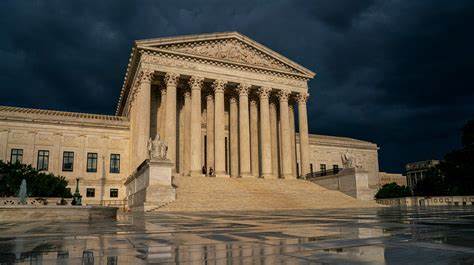
Article III of the United States Constitution establishes the Supreme Court of the United States (SCOTUS), and “such inferior Courts as the Congress may from time to time ordain and establish”.

There is no mention of the number of justices. The first Congress passed the Federal Judiciary Act on September 24, 1789, specifying a six-justice Supreme Court.

Twelve years later, the presidency of John Adams was coming to an end. As a Federalist, Adams wanted nothing more than to stymie the incoming administration of Democratic-Republican Thomas Jefferson. Toward that end, Adams appointed the infamous “midnight judges” in the last hours of his administration: 16 Federalist Circuit Court judges and 42 Federalist Justices of the Peace.

The incoming Jefferson administration sought to block the appointments. Jefferson ordered then-Secretary of State James Madison to hold those commissions as yet undelivered, thus invalidating the appointments. One of the appointees, William Marbury, took the matter to Court.

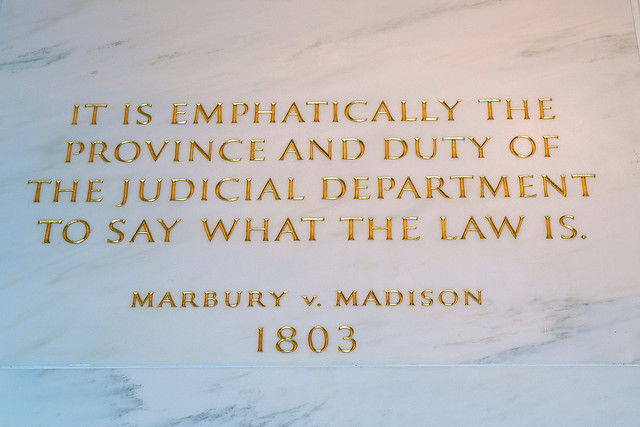
The case advanced all the way to the Supreme Court, which ruled in Marbury v. Madison that the provision of the Judiciary Act enabling Marbury to bring his claim, was unconstitutional.  Marbury lost his case, but the principle of judicial review, the idea that the court could preside Godlike, over laws passed by their co-equal branch of government, has been the law of the land, ever since.

marbury-v-madison

In the early days of the Great Depression, Federal agricultural officials conceived the hare brained idea that artificially introducing scarcity would increase prices, and therefore wages, in the agricultural sector. Six million hogs were destroyed in 1933. Not harvested, just destroyed and thrown away. 470,000 cattle were shot in Nebraska alone. Vast quantities of milk were poured down sewers, all at a time of national depression, when malnutrition was widespread.

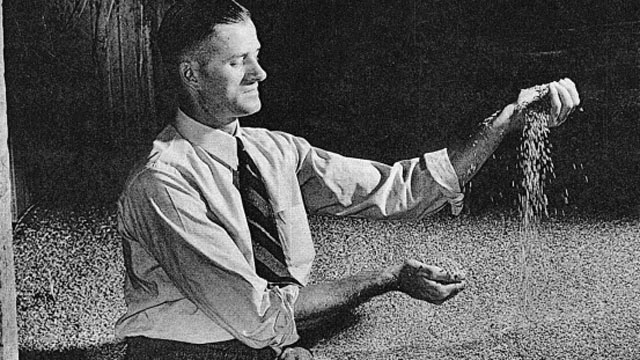
With the Agricultural Adjustment Act of 1938, Washington began to impose production quotas on the nation’s farmers. Ohio farmer Roscoe Filburne was ordered to grow 223 bushels of wheat in the 1941 season. Filburne grew 462.

Article 1, Section 8 of the Constitution permits Congress “To regulate Commerce with foreign Nations, and among the several States, and with the Indian Tribes”. That is all but, on this flimsy basis, the Federal Government took Roscoe Filburne to court.

The farmer argued that the “surplus” stayed on his farm, feeding his family and his chickens. Lower Courts sided with Filburne. The government appealed all the way to the Supreme Court, arguing that, by withholding his surplus, Filburne was effecting interstate market conditions, thereby putting him under federal government jurisdiction.

ht_roscoe_filburn_nt_120130_wmain

Intimidated by the Roosevelt administration’s aggressive and illegal “court packing scheme“, SCOTUS decided the Wickard v. Filburne case, against the farmer. Ever since, what you don’t do can be held against you in a court of law. Get it? Neither do I.

Over time, SCOTUS has proven itself to be as imperfect as any other institution. There have only been 17 Chief Justices and 101 Associate Justices in the entire history of the court. Five Chiefs having previously sat as Associate Justices, there are only 113 in all.  Should Brett Kavanaugh be confirmed, he would be #114.

Some among those 113 have been magnificent human beings, and some of them cranks. There have been instances of diminished capacity ranging from confusion to outright insanity. One justice spent part of his term in a debtor’s prison. Another killed a man. There have been open racists and anti-Semites.

There is no official portrait of the 1924 court because Justice James C. McReynolds wouldn’t stand next to Louis Brandeis, the court’s first Jewish Justice. One Justice was known to chase flight attendants around his quarters, while another spent his time in chambers, watching soap operas.

There’s the former Klan lawyer turned Justice who took a single phrase, “separation of church and state”, from a private letter of Thomas Jefferson, and turned the constitutional freedom OF religion into an entirely made up freedom FROM religion.

Separation-of-Church-and-State

The Supreme Court reinforced chattel slavery with the Dred Scott decision. The Korematsu ruling gave us the forced incarceration of Americans of Japanese descent. Buck v. Bell gave Americans the “gift” of forced sterilization, and Stenberg v. Carhartt enshrined the constitutional “right” to the hideous and detestable “procedure” known as partial birth abortion. From “Separate but Equal” to the “rights” of terrorists, SCOTUS’ rulings are final, inviolate, and sometimes imbecilic.

Chief Justice John Roberts, who once said “remember that it’s my job to call balls and strikes, and not to pitch or bat,” invented a whole new definition of taxation, enshrining the “Affordable Care Act” as the law of the land.

The framers gave us a Constitutional Republic with co-equal branches of government, with power diffused and limited by a comprehensive set of checks and balances.

They gave us two distinct means to amend that Constitution, should circumstances require it.

Traditionally, Congress proposes amendments, submitting them to the states for ratification. The problem is that many believe Congress itself to be part of the problem, and a broken institution is unlikely to fix itself.

Article V gives us a way to amend the constitution, if we would take it. Instead of Congress proposing amendments, an Article V convention of state legislatures would propose amendments, to take effect only if ratified by a super majority of states. We could start with an amendment permitting 2/3rds of the People’s representatives in Congress, to overturn a SCOTUS decision. Then we could term limit these people.

article-5

Unless, that is, you believe it’s fine for the Federal Government to prohibit a farmer from growing wheat for his own use, that one man in a black robe can force you to buy a product you don’t want and call it a “tax”, or you believe that “established by the state” means by the state or federal government, at the sole discretion of the man who says, “I’m from the Government. I’m here to help”.

August 23, 1784 The Lost State of Franklin

The Free Republic of Franklin went on for four years despite them all with it’s own Indian treaties, its own constitution and its own system of barter, taking the place of currency.

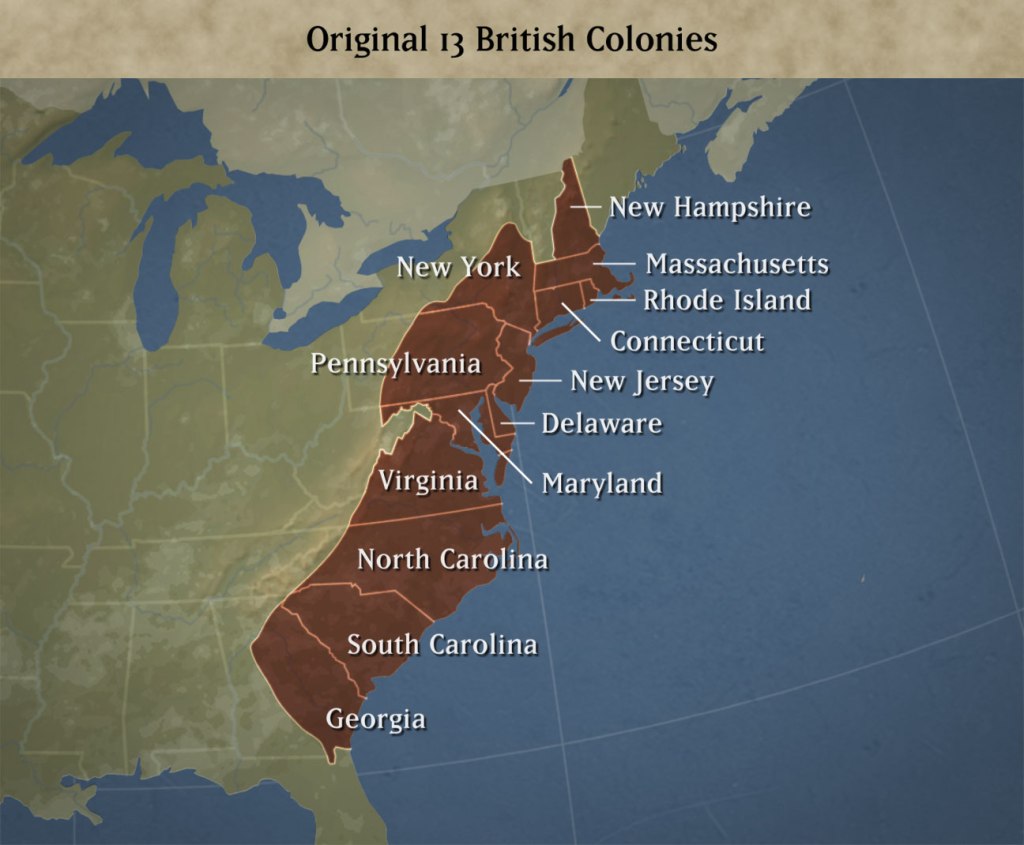
The American Revolution came to an end with the Treaty of Paris of September 3, 1783. Thirteen former colonies were now independent states, an experiment in self-government encompassing a relative sliver along the eastern shore of a nation one day destined to measure some 2,680 miles across and 1,582 miles from north, to south.

By no means was it foreordained that the United States, would have a Pacific coastline.

In the 18th century, factions developed between established coastal cities and farms and the western pioneers eking out a living, along the frontier. Many so-called eastern “elites” considered these to be outside of the fledgling nation and, for them, that was alright. Frontier communities had a choice between forming jurisdictions within existing states, creating new states or going off on their own to build entirely new countries.

Most of us are well aware that Texas was once such an independent Republic. Many know the same of the Republic of West Florida, the Original Lone Star Republic. (Sorry, Texas). But who knew the modern US contains no fewer than Ten formerly independent states: The Republic of Vermont (1777-1791), Kingdom of Hawaii (1795-1898), Republic of West Florida (1810), Republic of Texas (1836-1846), Republic of Rio Grande (1840), Provisional Government of Oregon (1843-1849), Republic of California (1846), State of Deseret (1849-1850), Republic of Sonora (1853-1854) and the Republic of Baja California (1853-1854).

Republic of West Florida

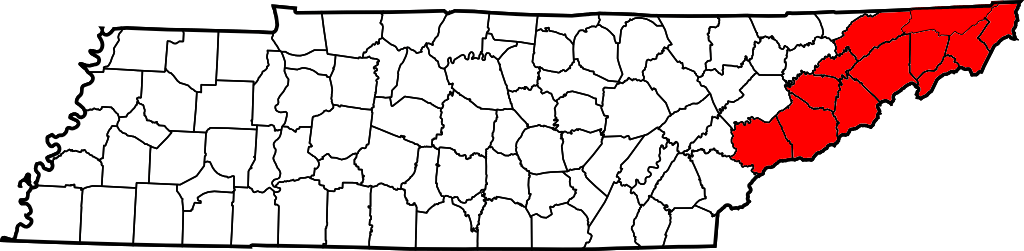
The war had yet to be formally ended when the state of North Carolina ceded the four western counties between the Alleghenies, and the Mississippi River. Representatives from Washington, Sullivan, Spencer (modern-day Hawkins) and Greene counties declared independence from North Carolina on August 23, 1784.

Congress had yet to act on the matter and North Carolina rescinded its cession nearly a year later and began to organize an administration, within the counties. That the federal government was considering selling the region to France or Spain at this time to settle war debt had nothing to do with any of it, I’m sure.

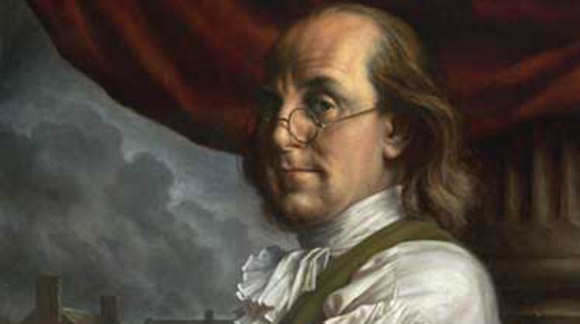
The following May, the counties petitioned for statehood. They called it “Frankland” at first but that was changed to Franklin, to gain the support of Benjamin Franklin and his allies.

The Republic won over a majority of the congress but never did achieve the 2/3rds required to make statehood, a reality.

The Free Republic of Franklin went on for four years despite them all with it’s own Indian treaties, its own constitution and its own system of barter, taking the place of currency.

North Carolina ran a parallel government the whole time, within the state of Franklin. This did little to strengthen an already weak economy when Governor John Sevier petitioned the Spanish, for foreign aid. Horrified at the idea of a Spanish client state at its border North Carolina, arrested the Governor.

Cherokee, Chickamauga and Chickasaw war bands piled on attacking settlements, within the borders of Franklin. It was all over by 1788 as Franklin rejoined North Carolina to gain the protection, of the state militia.

Today, the formerly Free Republic of Franklin makes up the easternmost 12 counties of Tennessee admitted as the 16th state on June 1, 1796.

Of the ten independent Republics listed above plus four others who tried and failed, Franklin remains unique in that the state resulted from both a cession, and secession.

Tennessee went on to earn the nickname “The Volunteer State” during the War of 1812 and cement the label during the Mexican-American war when the secretary of War requested 2,800 volunteers and got, 30,000. Tennessee was the last of the southern states to secede from the union and the first to rejoin, having provided more Confederate soldiers of any state save Virginia and more units of soldiers for the Union army, than any of the Confederate states.

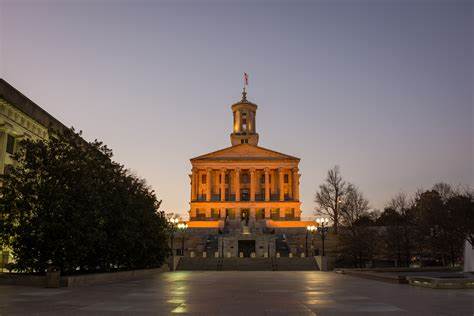
Fun Fact: William Strickland, the engineer and architect who built the Tennessee State Capitol in Nashville, died in 1854 before the building’s completion. At Strickland’s request he was entombed within the walls of the structure and remains there, still.

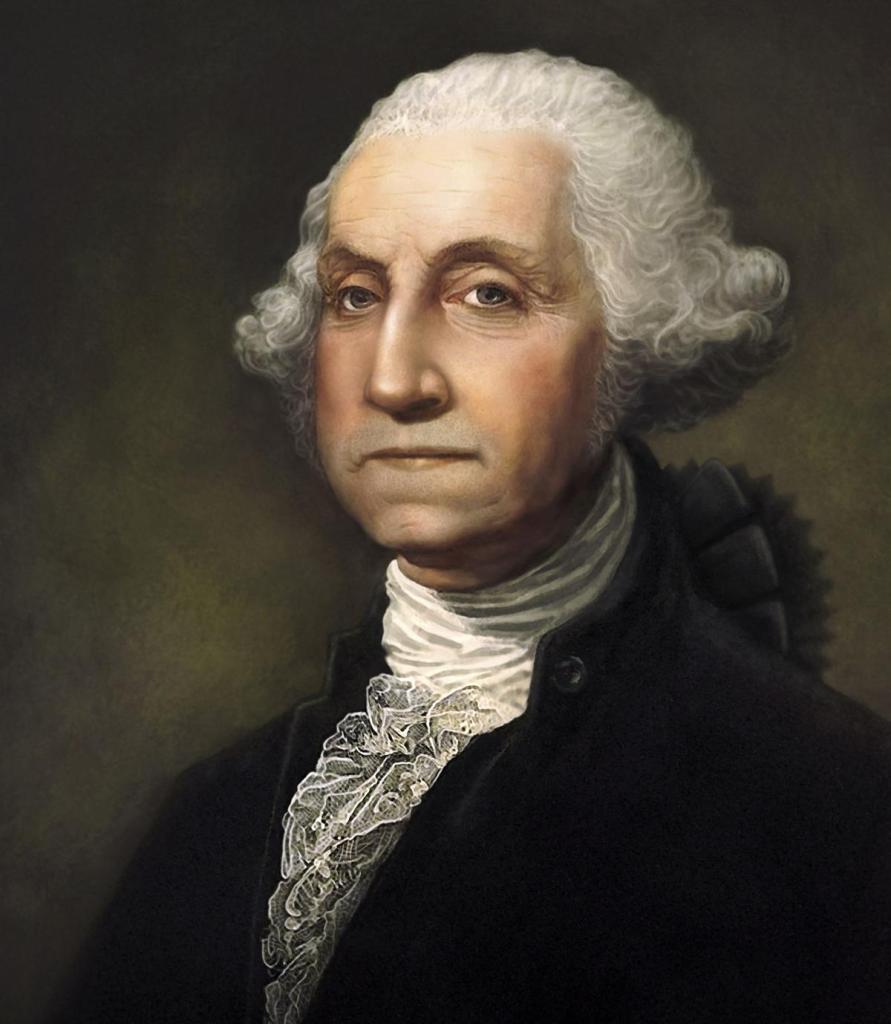
George Washington, the only politically Independent President in our nation’s history warned against factions dividing Americans into “distinct peoples”. He had seen how parties had driven England to civil war with the Jacobite uprising, of 1745-’46. He well understood the murderous tendencies unleashed by the politics, of the French Revolution. He detested the endless sniping of factions within his own government and the “infamous scribblers” of the newspapers, of his day.

Washington warned us all against political parties in his farewell address, parties already well formed and tearing, at the nation’s fabric:

“…They serve to organize faction, to give it an artificial and extraordinary force; to put, in the place of the delegated will of the nation the will of a party, often a small but artful and enterprising minority of the community; and, according to the alternate triumphs of different parties, to make the public administration the mirror of the ill-concerted and incongruous projects of faction…”

George Washington, farewell address

I wonder what the Father of the Country would say about our politics, today.

August 22, 1992 Ruby Ridge

“The nine most terrifying words in the English language are: I’m from the government and I’m here to help”. – Ronald Reagan

Randall Claude “Randy” Weaver came into the world in 1948, one of four children born to Claude and Wilma Weaver, a farming couple from Villisca, Iowa. Deeply religious people, the Weavers moved among several Evangelical, Presbyterian, and Baptist churches, in search of a spiritual ‘home’ to fit with their faith.

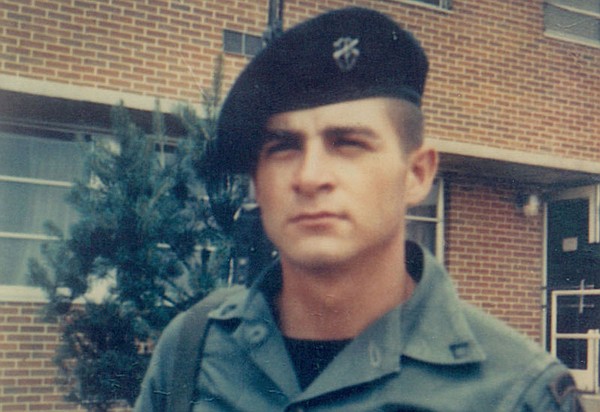
Weaver dropped out of community college at age 20 and enlisted in the Army, stationed at Fort Bragg and serving three years before earning an honorable discharge.

AE_Ruby_Ridge_2_t600

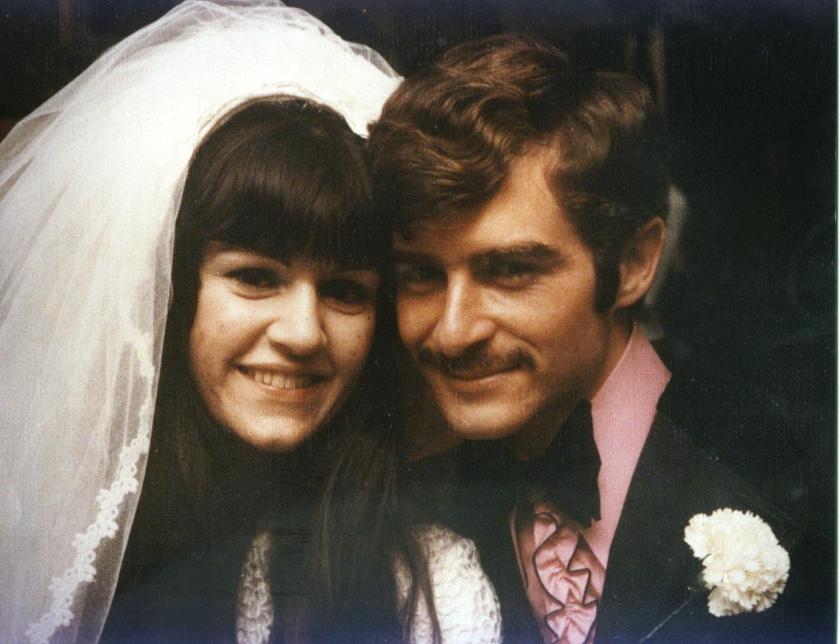
A month after leaving the Army, Weaver married Victoria Jordison and soon enrolled at the University of Northern Iowa to study criminal justice. At the time, Weaver wanted to become an FBI agent, but the high cost of tuition put an end to that. Randy found work at a local John Deere factory while “Vicki” became first a secretary and later a homemaker, as the Weaver family grew.

Over time, the couple came to hold increasingly fundamentalist views, all the while becoming more and more distrustful of the government. Vicki came to believe that the Apocalypse, was imminent.  The answer to the family’s survival lay in moving ‘off the grid’ and away from ‘corrupt civilization’.

RANDALL_VICKI_WEAVER_t1170

In the early 1980s, the couple paid $5,000 cash plus a moving truck for a piece of property, and built a cabin on the remote Ruby Ridge in the north of Idaho.

In 1984, Randy Weaver had a falling out with neighboring Terry Kinnison, over a $3,000 land deal. Kinnison lost the ensuing lawsuit and was ordered to pay Weaver an additional $2,100 in court costs and damages. Kinnison took his vengeance in letters written to the FBI, Secret Service, and county sheriff, claiming that Weaver had threatened to kill Pope John Paul II, President Ronald Reagan, and Idaho governor John Evans.

Randy and Vicki Weaver were interviewed by FBI as well as Secret Service agents, and the County sheriff. Investigators were told that Weaver was a member of the white supremacist Aryan Nation and that he had a large gun collection in his cabin. Weaver denied the allegations, and no charges were filed.

AE_Ruby_Ridge_7_t600
Sarah and Samuel on family property

There was no small amount of paranoia and mutual mistrust, in what came next. The Weavers filed an affidavit in 1985, claiming their enemies were plotting to provoke the FBI into killing them. The couple wrote a letter to President Reagan, claiming a threatening letter may have been sent to him, over a forged signature. No such letter ever materialized but, seven years later, prosecutors would cite the 1985 note as evidence of a Weaver family conspiracy against the government.

White supremacist Frank Kumnick was a member of the Aryan Nations, and target of an investigation by the federal bureau of Alcohol, Tobacco and Firearms. Weaver attended his first meeting of the World Aryan Congress in 1986 where he met a confidential ATF informant, posing as a firearms dealer. In 1989, Weaver invited the informant to his home, to discuss forming a group to fight the “ZOG”, the “Zionist Occupation Government” of anti-Semitic and paranoid conspiracy theory.

Ruby-Ridge

ATF charged Weaver that same year, with selling its informant two sawed-off shotguns. The government offered to drop the charges in exchange for Weaver’s becoming an informant. Weaver declined, and ATF filed illegal weapons indictments, claiming the subject was a bank robber, with an extensive criminal record. Subsequent United States Senate investigation revealed that Weaver had no such criminal convictions, but Weaver was ensnared, by a  government bureaucracy as unreasoningly suspicious, as himself.

Trial was set for February 20, 1991 and subsequently moved to February 21, due to a federal holiday. Weaver’s parole officer sent him a letter, erroneously stating that the new date was March 20. A bench warrant was issued when Weaver failed to show in court, for the February date.

AE_Ruby_Ridge_5_t700

Randy Weaver was now a “Fugitive from Justice”.

The U.S. Marshals Service agreed to put off execution of the warrant until after the March 20 date, but the U.S. Attorney’s Office called a grand jury, a week earlier. It’s been said that a grand jury could indict a ham sandwich and the adage proved true, particularly when the prosecution failed to reveal parole officer Richins’ letter, with the March 20 date.

The episode fed into the worst preconceptions, of both sides. Marshalls developed a “Threat Profile” on the Weaver family and an operational plan: “Operation Northern Exposure”. Weaver, more distrustful than ever, was convinced that if he lost at trial, the government would seize his land and take his four children leaving Vicki, homeless.

AE_Ruby_Ridge_1_t600
Surveillance photos of Weavers with guns, on their own property

Marshalls attempted to negotiate over the following months, but Weaver refused to come out. Several people used as go-betweens, proved to be even more radical than the Weavers themselves. In a rare show of reason under the circumstances, Deputy Marshal Dave Hunt asked Bill Grider: “Why shouldn’t I just go up there … and talk to him?” Grider replied, “Let me put it to you this way. If I was sitting on my property and somebody with a gun comes to do me harm, then I’ll probably shoot him.”

On April 18, 1992, a helicopter carrying media figure Geraldo Rivera for the Now It Can Be Told television program was allegedly fired on, from the Weaver residence. Surveillance cameras then being installed by US Marshalls showed no such shots fired and Pilot Richard Weiss, denied the story.  Even so, a lie gets around the world, before the truth can get its pants on. (Hat tip, Winston Churchill, for that bit of wisdom). The ‘shots fired narrative’ now became a media feeding frenzy. The federal government drew up ‘rules of engagement’.

Surveillance_photograph_of_Vicki_Weaver_21_Aug_1992
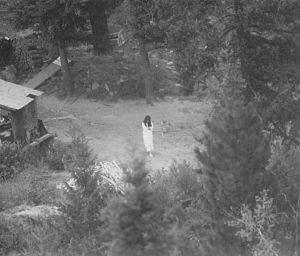
US Marshall Recon Team photo of Vicki Weaver, taken August 21, 1992

On August 21, a six-man armed Recon team arrived to scout the property, for a suitable spot to ambush and arrest Randy Weaver. Deputy Art Roderick threw rocks at the cabin to see how the dogs would react. The cabin was at this time out of meat and, thinking the dog’s reaction may have been provoked by a game animal, Randy, a friend named Kevin Harris and Weaver’s 14-year-old son Samuel came out with rifles, to investigate. Vicki, Rachel, Sarah and baby Elisheba, remained in the cabin.

Marshalls retreated to a place out of sight of the cabin, while “Sammy” and Harris followed the dog ‘Striker’ into the woods. Later accounts disagree on who fired first but a firefight erupted, between Sammy, Harris, and the Marshall’s team. When it was over, the boy, the dog and Deputy US Marshall William “Billy” Degan, lay dead.

The standoff now spun out of control, with National Guard Armored personnel carriers, SWAT, State Police and FBI Hostage Rescue Teams, complete with snipers.

On August 22, Harris, Weaver and sixteen-year old daughter Sarah were entering a shed to visit the body of Weaver’s dead son, when FBI sniper Lon Horiuchi fired from a position some 200 yards distant. The bullet tore into Weaver’s back and out his armpit. The three raced back to the cabin. Horiuchi’s second round entered the door as Harris dove for the opening, injuring him in the chest before striking Vicki in the face as she held baby Elisheba, in her arms.

AE_Ruby_Ridge_8_t600
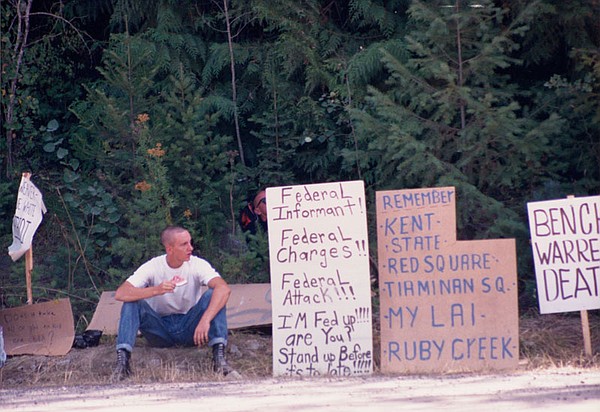
Protesters were quick to form at the base of Ruby Ridge

Two days later, FBI Deputy Assistant Director Danny Coulson wrote the following memorandum, unaware that Vicki Weaver lay dead:

Something to Consider
1. Charge against Weaver is Bull Shit.
2. No one saw Weaver do any shooting.
3. Vicki has no charges against her.
4. Weaver’s defense. He ran down the hill to see what dog was barking at. Some guys in camys shot his dog. Started shooting at him. Killed his son. Harris did the shooting [of Degan]. He [Weaver] is in pretty strong legal position.”

The siege of Ruby Ridge dragged on for ten days. Kevin Harris was brought out on a stretcher on August 30, along with Vicki’s body. Randy Weaver emerged the following day. Subsequent trials acquitted Harris of all wrongdoing and Weaver of all but his failure to appear in court, for which he received four months and a $10,000 fine.

AE_Ruby_Ridge_3_t600
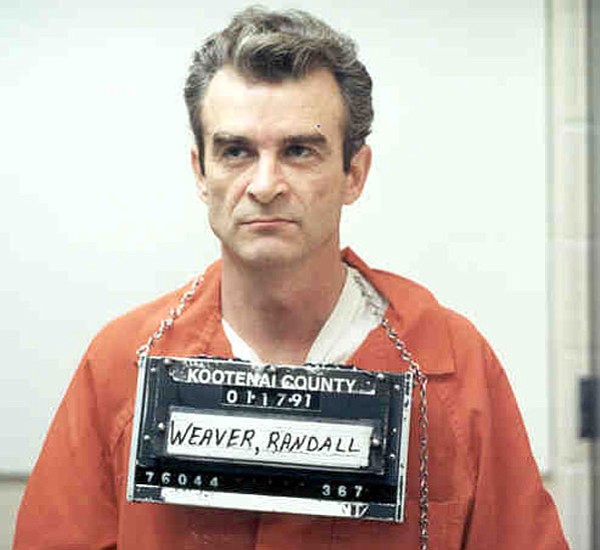
Randy Weaver, mugshot

Questions persist about the government’s ham-fisted approach at Ruby Ridge, and intensified after the Branch Davidian conflagration six months later in Waco Texas, involving many of the same agencies and federal officials.

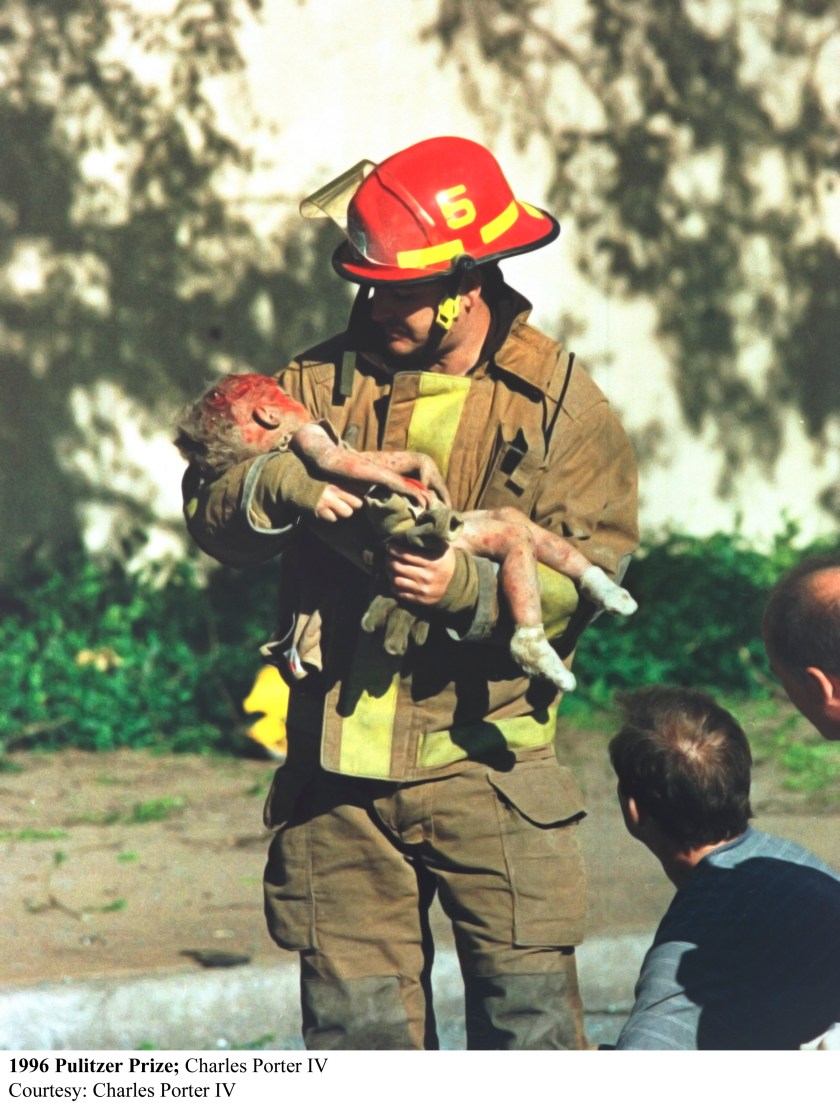
In 1995, two reprobates carried out their own act of “revenge” on the government, blowing up a federal office building in Oklahoma City and killing 168 innocent people, injuring 680 others.  Nineteen of the dead, were children.

Oklahoma-City-bombing-1996

Subsequent Senate hearings criticized Ruby Ridge “rules of engagement” as unconstitutional, the use of deadly force unwarranted, under the circumstances.  Kevin Harris was awarded $380,000 damages for pain and suffering.  Weaver was awarded $100,000 and his three daughters, $1 million each.

FBI sniper Lon Horiuchi was indicted for manslaughter in 1997, charges later dismissed on grounds of sovereign immunity.

Deadly force procedures were brought about, intending to bring the government into line with Supreme Court precedent resulting in a kinder, gentler federal law enforcement apparatus.  That was the idea. 

You might want to ask Elian Gonzalez, how that worked out.

170427-zimmerman-tribeca-tease_nx9wef

August 17, 1661 Party Like it’s 1661

Back when newspapers printed the news, Hearst columnist Ambrose Bierce (my favorite curmudgeon) was surely looking at New York corruption when he labeled politics “A strife of interests masquerading as a contest of principles. The conduct of public affairs for private advantage“.

Having once been rolled by two officers of the “law” in a certain neighbor to our south (it was a very polite mugging), government graft is near and dear to my heart. History is replete with official avarice on levels great and small, far more than a couple meagerly compensated cops, looking for a “gratuity”.

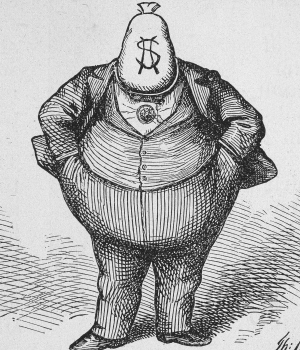
New York’s own Boss Tweed elevated graft to heights previously unknown in American politics, to where construction of a single courthouse cost taxpayers more than the entire Alaska purchase. Nearly twice as much.

Tammany Hall’s kickbacks were so lavish a single carpenter billed the city $360,751, for a month’s work. One plasterer billed $133,187 for two days’ work.

Back when newspapers printed the news, Hearst columnist Ambrose Bierce (my favorite curmudgeon) was surely looking at New York corruption when he labeled politics “A strife of interests masquerading as a contest of principles. The conduct of public affairs for private advantage“.

Rodrigo de Borja served as Pope Alexander VI, at a time when the job of Bishop of Rome was not always that of a pious man. Rodrigo bribed his way to the top and used the papacy to benefit family and friends making the name Borja synonymous, with licentiousness and greed. A man utterly devoid of morals the man sold his beautiful and fair-haired daughter Lucrezia no fewer than three times, to cement alliances. He openly fathered seven children by two married mistresses appointing one of their brothers Cardinal, who then went on to be known as “Cardinal of the Skirts”. Alexander’s October 30, 1501 “Banquet of Chestnuts” was an all-night feast and orgy featuring no fewer than fifty prostitutes Italian officialdom remains happy to sweep under the rug, to this day.

When the Florentine friar Girolamo Savonarola chided Alexander for his behavior the Pope is said to have laughed, out loud.

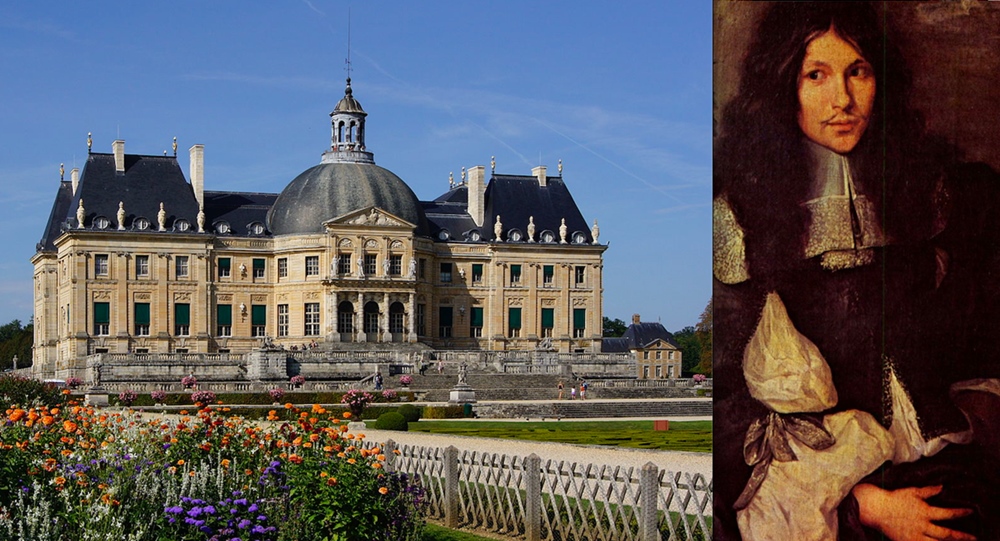
And yet, these are all as amateurs compared with French finance minister Nicolas Fouquet, a man who made King Louis XIV, the “Sun King” himself, blush.

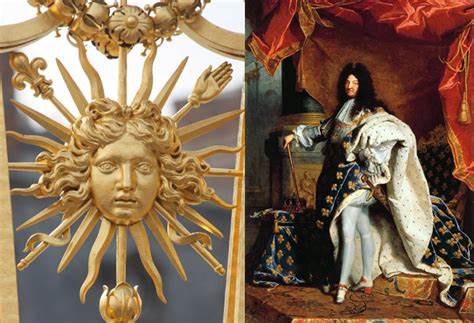
Europe’s longest reigning monarch once commented “l’état, c’est moi”. I Am the state. Such arrogance is hard to understand for the political descendants of the generation, who threw King George’s tea over the side. It wasn’t at all difficult for the hoi polloi of Louis’ France who were expected to pay up, and shut up. Such was the world of Nicolas Fouquet, marquis de Belle-Île, vicomte de Melun et Vaux and Louis’ minister, of finance.

In 1651 Fouquet married his not inconsiderable wealth to that of Marie de Castille, herself the daughter of a wealthy Spanish family. The interminable wars of the age and the greed of courtiers frequently caused the new minister to borrow, against his own credit. Public and private accounts soon became so intertwined as to become indistinguishable from one another. Fouqet came to wield even greater wealth than his own chief benefactor Cardinal Mazarin, chief minister to Kings Louis XIII and XIV.

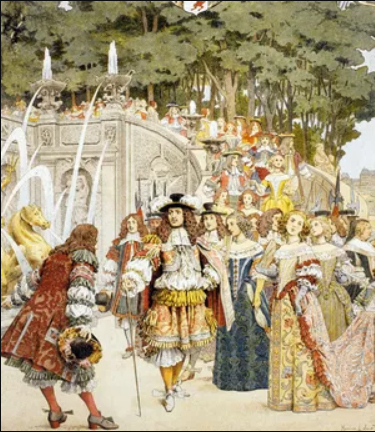
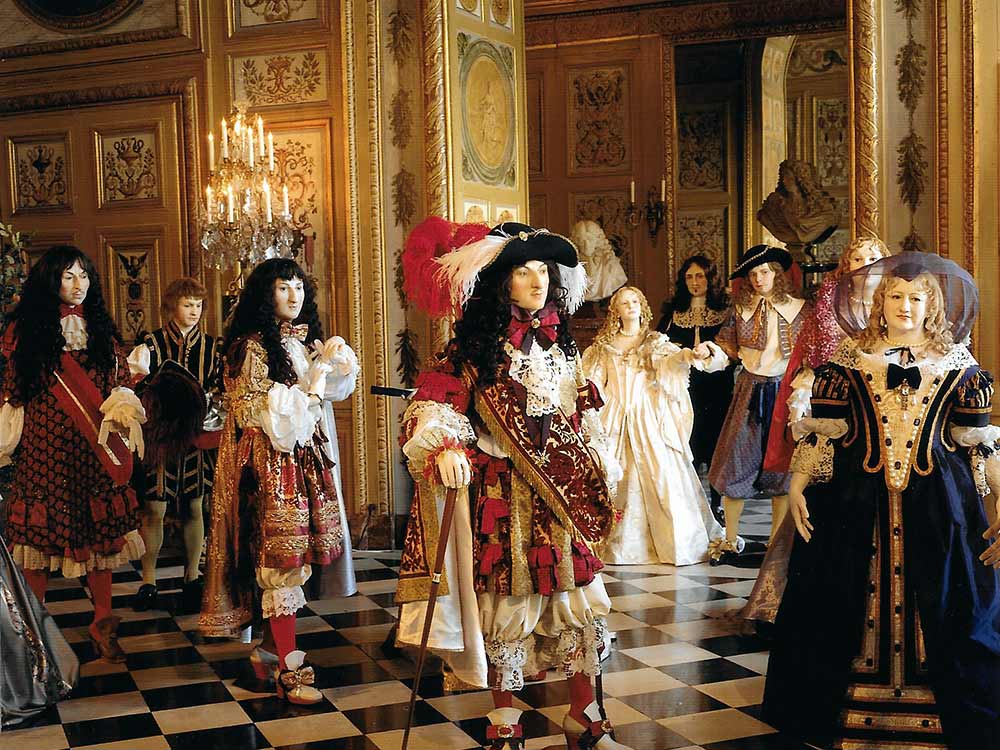
The minister completed construction in 1661 of the Château de Vaux-le-Vicomte, his own personal palace of Versailles before there was, a palace of Versailles. That’s him and his modest little three room bungalow, at the top of this page. The man even used three of the same artists for the Château’s lavish appointments, as Louis himself would later use for that most famous, of royal shanties.

Worried that he might have gone a little too far, Fouquet bought himself and fortified a place off the west coast of France, a modest little island some 5 by 15 miles across called Belle-Île-en-Mer. You know, just in case of…disgrace.

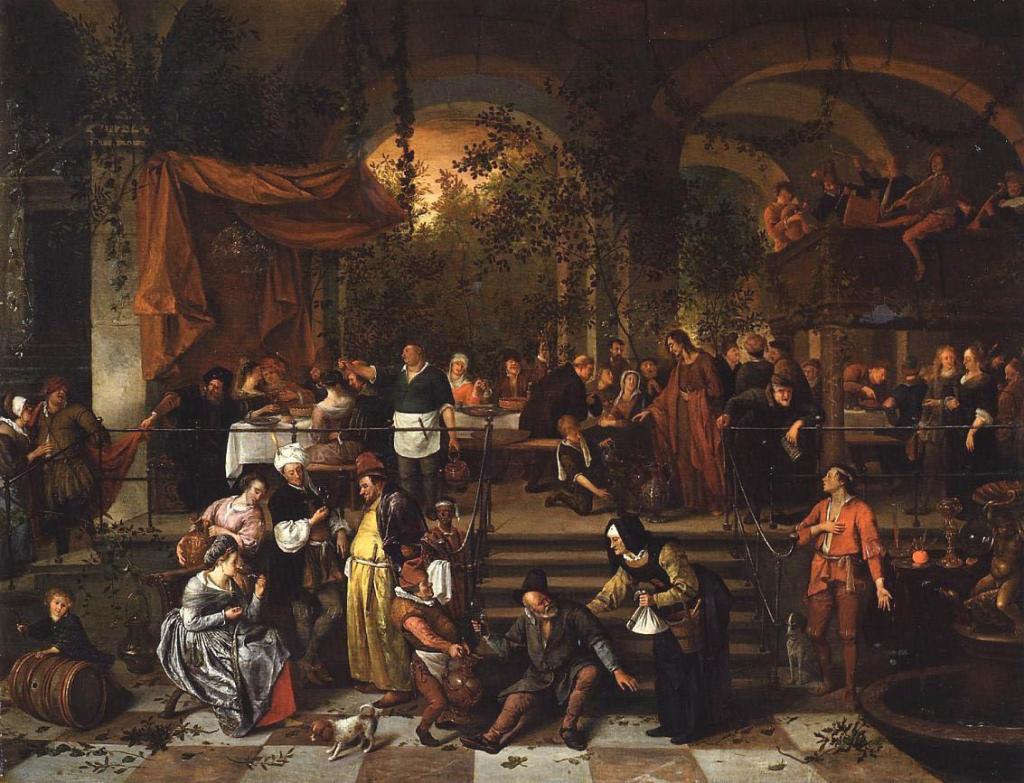
But none of it stopped the party of parties, a celebration for the ages held on August 17, 1661, at Fouquet’s petit Château .

There were 6,ooo guests including the Sun King himself. Gifts were given to party goers, a diamond brooch for the ladies and a thoroughbred horse, for the gents. A performance was presented specifically written for the occasion by none other than the playwright, Molière.

A spectacular fireworks display lit the skies above lavish gardens and splendid paths. Fouquet’s little soirée was supposed to impress the King but instead turned him into, a party pooper. Apparently, such “unashamed and audacious luxury,” is what it takes to embarrass, a Sun King. Louis ordered his finance minister, arrested.

The trial stretched on for three years. The judges found the defendant guilty and ordered banishment but, Louis would have none of that. For the first and last time in French history a King overruled the verdict and ordered, imprisonment for life. The Mrs. was exiled and Fouquet’s crib snatched up, by the state.

EVENING OF AUGUST 17, 1661, ARRIVAL OF LOUIS XIV ACCOMPANIED BY THE COURT, hat tip Daniel Druet, sculptor

Fouquet spent the rest of his life in prison and died in his cell at Pignerol on March 23, 1680. His remains weren’t removed for another year. Just in case…I guess.

In his 1964 State of the Union address, President Lyndon Johnson stated, “This administration today, here and now, declares unconditional war on poverty in America.” Since that time the American taxpayer has plunked down $22 Trillion on Johnson’s War on Poverty.

Even with Social Security and Medicare excluded that’s still three times the cost of every military war from the Revolution to the unfolding collapse of Afghanistan, combined.

Rates of poverty as measured by the United States Census Bureau remain basically, unchanged.

So hey, never you mind a conga line of public “servants” leaving offices of trust wealthier, than when they went in. You don’t need to worry about who’s paying the kid $500,000 for those finger paintings either, or government debt your grandbabies’ grandbabies will never pay back. Just pull out the credit card & have a party. Like it’s 1661.